• 10 Reasons to Remember…
  • A Brief Word About…
  • About
  • For One Week Only
  • Happy Birthday
  • Monthly Roundup
  • Old-Time Crime
  • Other Posts
  • Poster of the Week
  • Question of the Week
  • Reviews
  • Trailers

thedullwoodexperiment

~ Viewing movies in a different light

thedullwoodexperiment

Tag Archives: End of the world

For One Week Only: Unnecessary Sequels – 6. S. Darko (2009)

15 Sunday May 2016

Posted by dullwood68 in Movies

≈ 2 Comments

Tags

Briana Evigan, Chris Fisher, Conejo Springs, Daveigh Chase, Donnie Darko, Drama, End of the world, For One Week Only, Iraq Jack, Jackson Rathbone, James Lafferty, Meteorite, Review, Sci-fi, Sequel, Thriller

Introduction

Cult movies are often beloved by their admirers beyond all other movies – passionately, fiercely, and with little truck for anyone or anything that tarnishes that movie’s reputation or their belief in it. Tell a fan of The Rocky Horror Picture Show (1975) that anyone who attends a midnight screening in costume is a few sexual peccadilloes short of an orgy, and you’re likely to be slapped round the face with a posing pouch. But cult movies, by the nature of their fans’ love for them, will often attract producers with an eye to making a quick buck by exploiting said fans’ love and affection. Here’s one such movie, apparently made with the best of intentions but which in practice proved to be as far from those intentions as it’s possible to get.

S. Darko (2009) / D: Chris Fisher / 103m
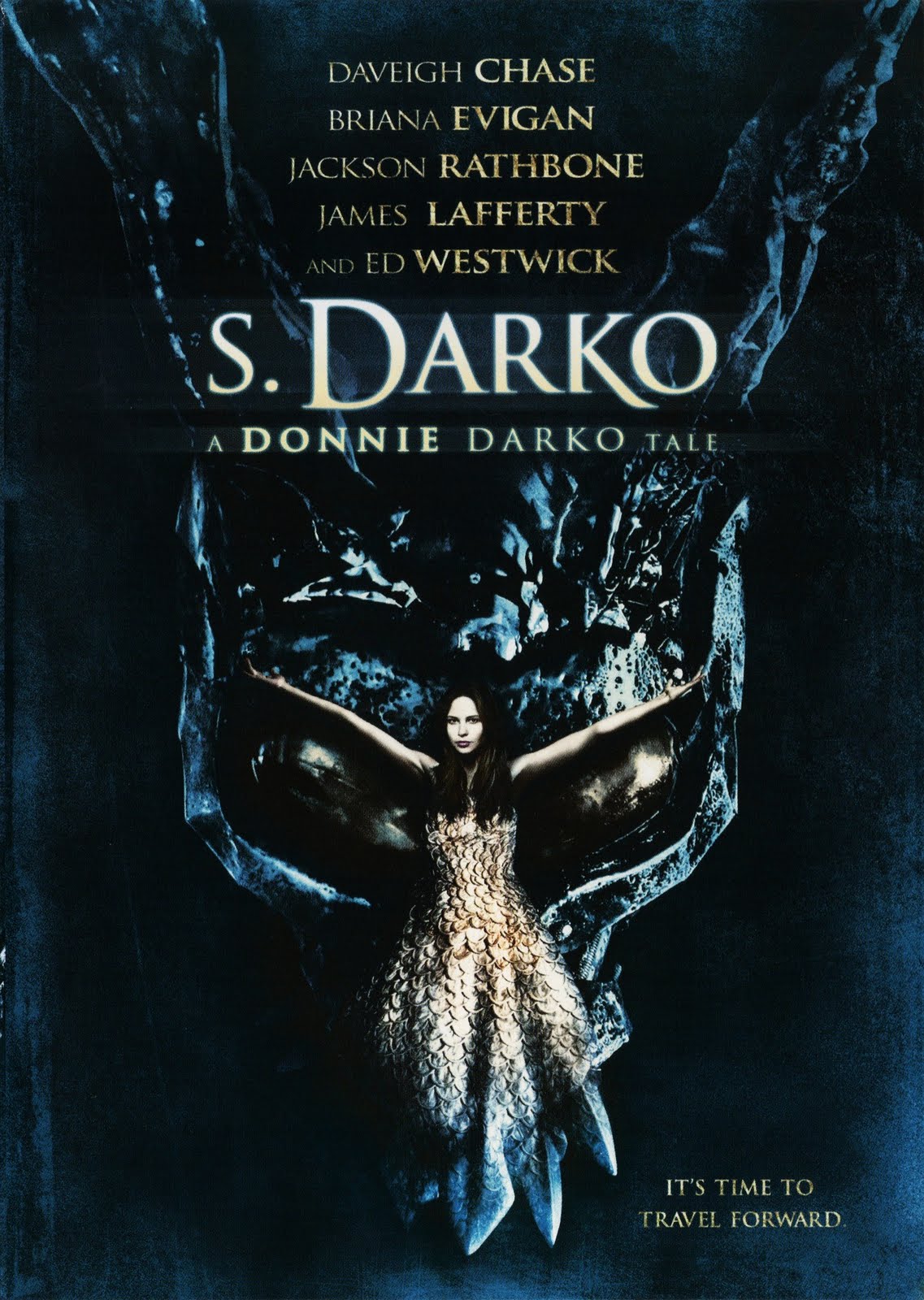
S. Darko

Cast: Daveigh Chase, Briana Evigan, Jackson Rathbone, James Lafferty, Ed Westwick, Matthew Davis, John Hawkes, Bret Roberts, Elizabeth Berkley

By now – unless they’re trapped somewhere in the Fragmentary Universe – fans of Donnie Darko (2001) will have realised or heard that S. Darko is a less than satisfactory follow up to Richard Kelly’s surreal mindbender of a movie. With zero involvement from Kelly himself (not even a “good luck guys!”), this independently made sequel was created with the intention of taking place in “a similar world of blurred fantasy and reality”. Watching the movie, one thing is abundantly clear: neither director Chris Fisher nor screenwriter Nathan Atkins has any real idea of the world that Kelly created for Donnie Darko, or more importantly, the elements that made it all work.

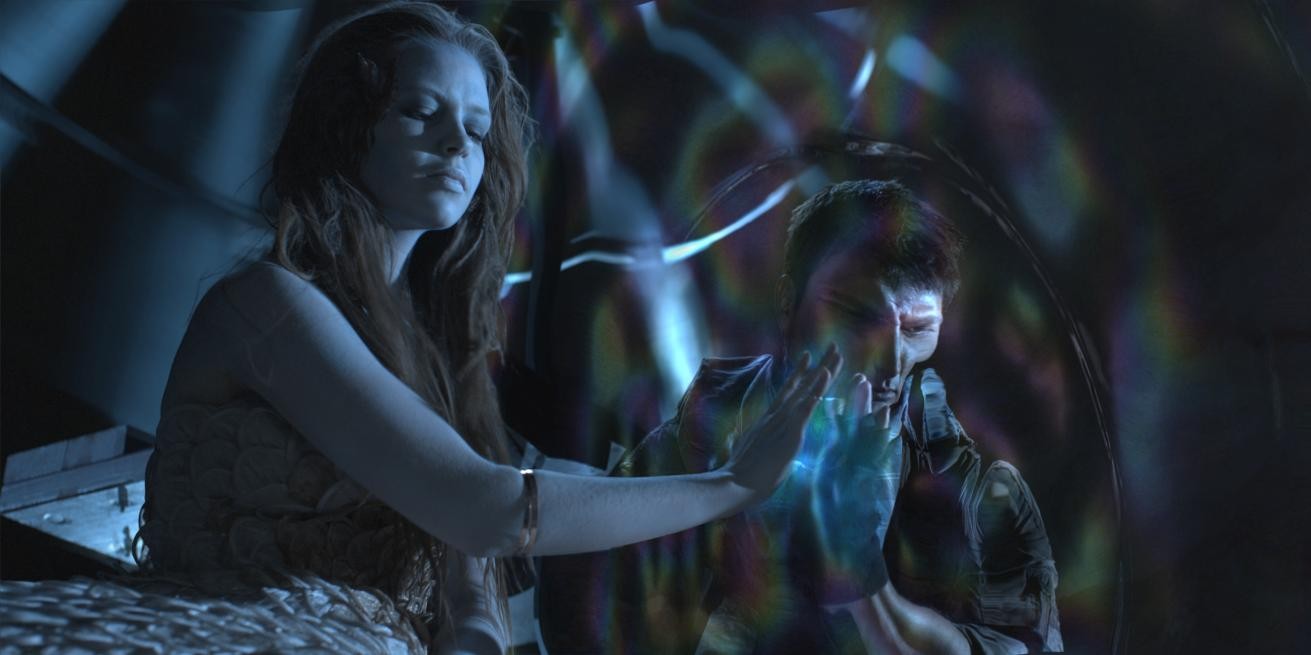
The worst idea they have is to focus on Donnie’s younger sister, Samantha (Chase), as if by using one of Kelly’s original characters (and persuading the original actress to return to the role) it will lend their movie a degree of legitimacy it otherwise wouldn’t have. That this doesn’t work is evidenced by the way in which the character is treated. Samantha has run away from home, aged seventeen, with her best friend Corey (Evigan). When their car breaks down in Utah, the two friends accept a lift into the nearest town, Conejo Springs. Once there, Samantha finds herself sleepwalking; in this state she sees a future version of herself talking to a disturbed man nicknamed Iraq Jack (Lafferty). She tells him that the world will end in a few days’ time on July 4th.
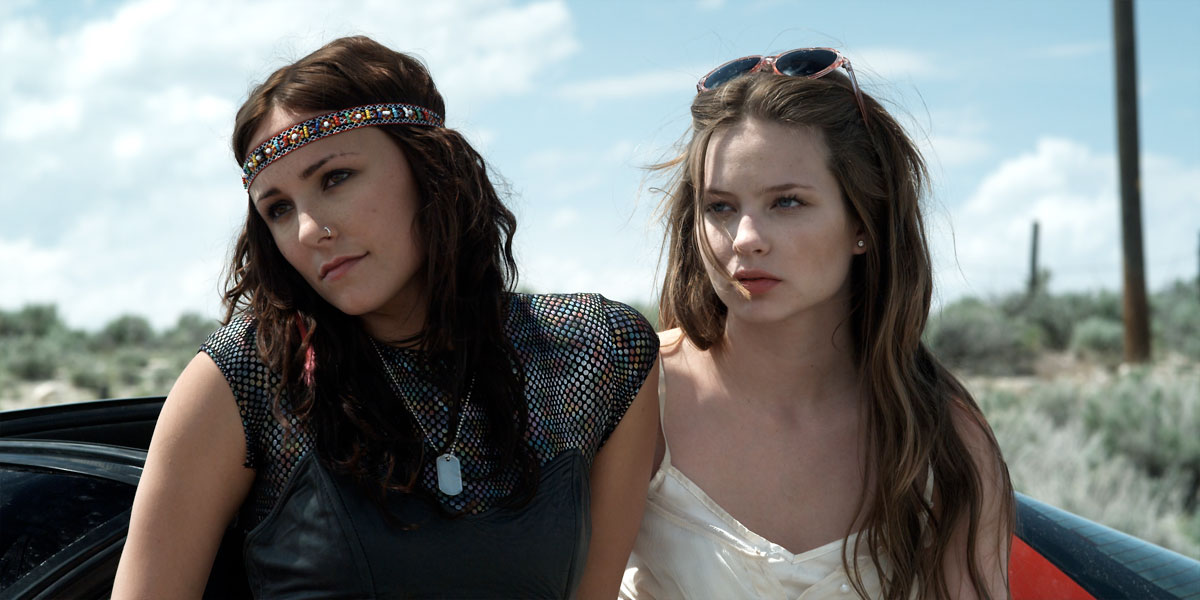
S. Darko - scene3

Aside from passing on these messages, Samantha tends to wander aimlessly around town bumping into various locals and being treated like a bystander in her own storyline. She does get involved in the mystery of a missing child but it’s a subplot that, like large portions of the movie, hasn’t been thought through enough, and it feels like a distraction from the larger story. References to Donnie are made but Samantha’s reactions are muted, as if both Atkins and Chase don’t really know how to articulate her feelings over what happened to him at the end of Donnie Darko. What the script does do however, is saddle both the character (and the unfortunate Chase) with little motivation and even less development, preferring instead to treat Samantha in a callous (and careless) manner not once but twice (you’ll know how when you see the movie – not that you should, of course).
S. Darko - scene1

Atkins’ script is further muddled by its end of the world plotting, incoherent notions of time travel, secondary characters such as creepy bride of Jesus Trudy Kavanagh (Berkley), and inclusion of local nerd Jeremy (Rathbone) who develops a nasty looking rash that remains unexplained and immaterial to the narrative. There are further problems that Atkins can’t overcome, but the main one is his inability to craft dialogue that sounds like a real human being would say it. Here’s just one deathless exchange, between Samantha and local bad boy Randy (Westwick):

Samantha: I didn’t tell you something before. My brother died too. I was ten. Ever since that day, nothing’s ever been the same.

Randy: Never will be. We can’t change that.

Samantha: Think it’ll ever get easier?

Randy: Probably get worse.

Samantha: Maybe it’s up to us.

Randy: No.

Samantha: Wake up, start over?

Randy: I wish I could believe that. We have the same holes in our hearts, you and me.

That exchanges like that one are delivered with such po-faced sincerity makes it almost impossible to take the movie seriously. It’s like watching a teen movie where the leads are trying to make sense of relationship issues rather than fathom the mystery they’re all involved in. The plot – such as it is – is developed in fits and starts, and in such a haphazard manner that when it’s all wrapped up neatly (and with the cinematic equivalent of a bow on top), the viewer who’s managed to reach the end will be wondering what the previous ninety-five minutes were all about (or for).

S. Darko - scene2

Fisher may well be a fan of Kelly’s (emphasis on the) original movie, and he and Atkins may have set out to make a companion piece to that movie, but they show their complete lack of understanding of what made Donnie Darko such an extraordinary experience at every turn. Even on its own merits the movie struggles to perform effectively, with Fisher failing to inject any tension into the material, and leaving scenes feeling listless and uninvolving. The spirit of the original is missing entirely, as is the sense of mystery and chaos just beyond the veil of everyday life. And anyone waiting to see Frank put in an appearance, be prepared for disappointment; here his presence is entirely symbolic.

Rating: 3/10 – while using time lapse shots of clouds as indications of a portentous enigma may work in some movies, in S. Darko it merely serves to remind viewers of just how devoid of purpose and originality the movie really is; jumbled and unnecessary, it’s a movie that doesn’t even try hard enough to match its predecessor for subtlety or thought-provoking drama.
Share this:

  • Click to share on X (Opens in new window) X
  • Click to share on Facebook (Opens in new window) Facebook
  • More
  • Click to print (Opens in new window) Print
  • Click to email a link to a friend (Opens in new window) Email
Like Loading...

Tomorrowland: A World Beyond (2015)

23 Saturday May 2015

Posted by dullwood68 in Movies

≈ 1 Comment

Tags

1964 World's Fair, Brad Bird, Britt Robertson, Drama, End of the world, Fantasy, George Clooney, Hugh Laurie, Jet pack, Pin, Raffey Cassidy, Review, Sci-fi, Tomorrowland

Tomorrowland

aka Tomorrowland

D: Brad Bird / 130m

Cast: George Clooney, Hugh Laurie, Britt Robertson, Raffey Cassidy, Tim McGraw, Kathryn Hahn, Keegan-Michael Key, Thomas Robinson, Pierce Gagnon, Matthew MacCaull

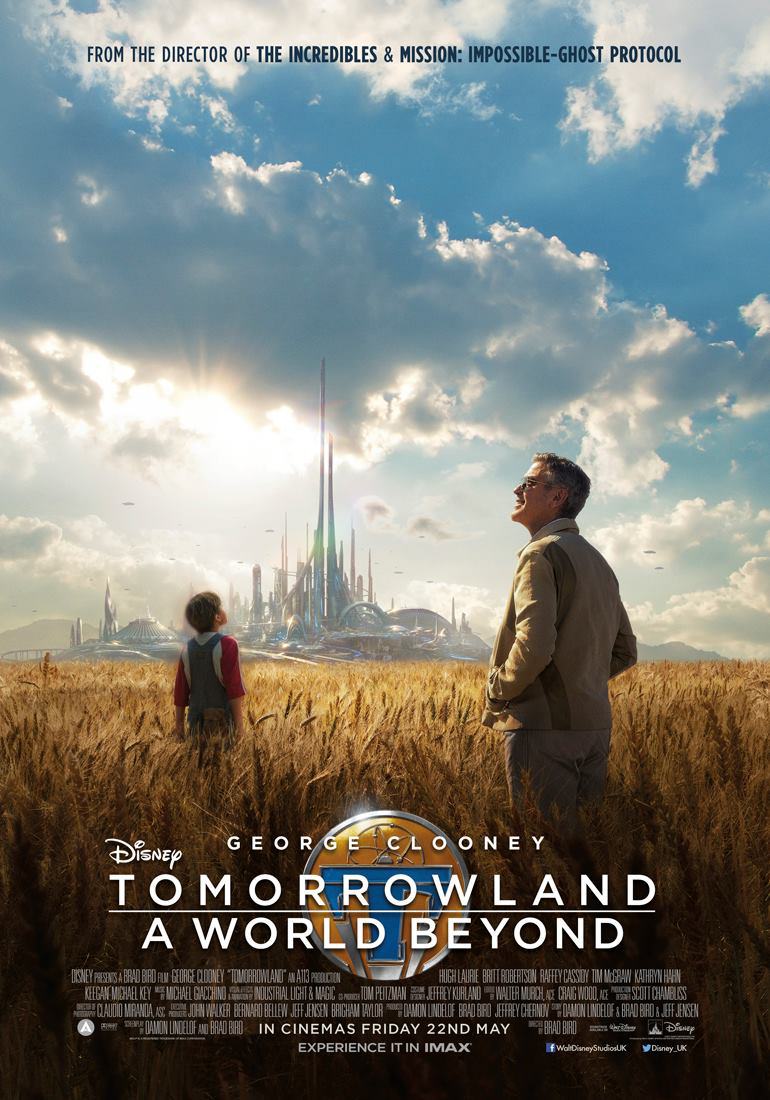
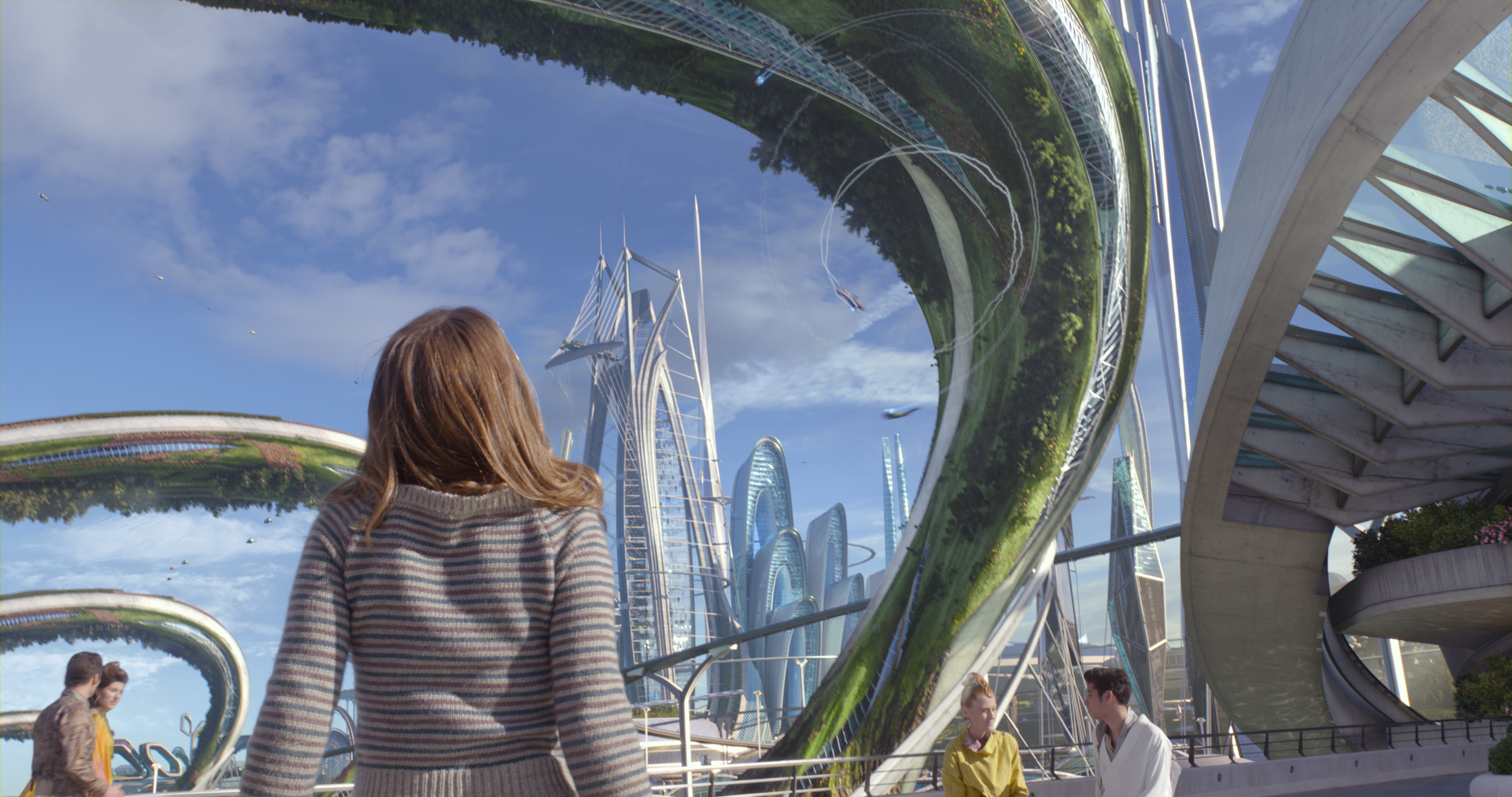
At the 1964 World’s Fair, a boy named Frank Walker (Robinson) takes his latest invention, a jet pack, to the science tent in the hopes of winning a $50 prize. But as his jet pack doesn’t actually work properly, the presiding judge, David Nix (Laurie), tells him to come back when it does. As he leaves he’s approached by a young girl called Athena (Cassidy), who gives him a pin with a bright blue T on it, and tells him to follow her when she gets on one of the rides. When he does he finds himself transported to a strange futuristic world where there are tall, shining buildings, trains and vehicles that travel on air, and a launch site for spaceships. There, his jet pack is adjusted to work properly and he’s accepted as a member of Tomorrowland, a world where the brightest and the best – the geniuses of Earth – have gone to create a utopian world devoid of war, social inequality, famine, natural disasters and greed.

Fifty years later, teenager Casey Newton (Robertson) lives near Cape Canaveral with her dad, Eddie (McGraw), and younger brother Nate (Gagnon). Eddie is an engineer working for NASA, and helping to dismantle the nearby Apollo launch site. Casey “knows how things work”, but is using her skills to delay the site’s demolition. When she’s caught and arrested, she finds a pin with a bright blue T on it in amongst her belongings when she’s released. She touches it and is immediately transported to a wheat field where, in the distance, is a city of tall gleaming spires. She drops the pin and is back in her own world. Unable to convince her father that the pin is special, she looks for information about it online, and learns that there is a store in Texas that will buy them.

She travels there but the store owners, Ursula (Hahn) and Hugo (Key), try to take the pin from her by force. Casey is rescued by Athena, who doesn’t look a day older than when she met Frank. Athena explains a little about Tomorrowland but not enough to fully satisfy Casey’s questions. They travel to a remote farmhouse where Casey is left to meet the owner, a now older Frank Walker (Clooney). When agents from Tomorrowland arrive and try to abduct Casey, Frank and Casey manage to escape, and both are reunited with Athena. From there they head for Paris and the Eiffel Tower, which, aside from being a national monument, is also the launch site for a hidden rocket ship. The ship takes them to Tomorrowland, but when they arrive, the trio find it in ruins, and Nix in charge of everything. And it becomes very clear that our world is on the brink of complete destruction, unless Casey can “fix” it, something that Nix doesn’t want her to do…

Disney's TOMORROWLAND..Casey (Britt Robertson) ..Ph: Film Frame..©Disney 2015

The movie that Bird passed on directing Star Wars Episode VII for, Tomorrowland: A World Beyond arrives with no small amount of hype attached to it, and an appropriately high level of anticipation. And up until we meet Casey it’s exactly the movie we’ve been expecting: a richly detailed, nostalgic look back at a time when the future seemed brighter than ever, and technological miracles were being produced that were poised to make our lives all the better. There’s a wistfulness about these early scenes, and a joy in the discovery of Tomorrowland that is infectious and intoxicating, and Bird and his co-writer Damon Lindelof give us an unforgettable introduction to the unforgettable world they’ve created.

And then it all goes horribly wrong. In placing our world in peril, but with the solution located in Tomorrowland, Bird and Lindelof have managed to come up with one of the murkiest, most unconvincing – or clearly explained – storylines in recent years. So much happens that doesn’t make sense, and so much happens that isn’t followed through, that the movie becomes unwieldy and bogged down by too many scenes that fail to advance the plot or deepen the characters. It’s like being given a box of assorted chocolates, only to find that they all have the same centre. For a movie that touches on so many different aspects and themes – nostalgia, individualism, collectivism, fate, unfulfilled love, the benefits of technology, looking to the future, nihilism, hope, manifest destiny – it develops not into a thrilling adventure that matches the joie de vivre of its opening section, but a tired, downbeat, dystopian odyssey that squeezes the life out of its characters and its plot.

What this leads to is an impending worldwide catastrophe that you just can’t care about, and if filmmakers of the calibre of Bird and Clooney can’t make an audience care about the end of the world then there’s definitely something wrong (although, ironically, the idea fits neatly with Nix’s disparaging remarks about everyone else on Earth). It’s as if the initial idea was settled on, but fleshing it out proved too difficult, so any way the story could be continued was seized upon and no further development took place. There’s no tension, an abstract sense of impending doom, and too much reliance on Athena to bail out Frank and Casey when they get in trouble.

The cast struggle gamely with characters who lack shading and depth, though Cassidy is a minor revelation as Athena, her poise and command of her dialogue helping her performance immeasurably (and showing the others how it should be done). Hahn and Key provide some much needed respite (though too early on) from the drudgery, and Robinson is so cute he shouldn’t be allowed. But it’s still not enough to offset the awkward miscalculations made by Messrs. Bird and Lindelof, and the strangely disaffected tone the movie adopts when it returns to Tomorrowland. However, the movie does have a wonderful sheen to it, Claudio Miranda’s cinematography proving an exquisite treat, his mix of light and colour at the World’s Fair being particularly gratifying. If only as much attention had gone into the script.

Rating: 5/10 – with just enough on display to keep it from being a complete disappointment, Tomorrowland: A World Beyond starts out fresh and engaging and ends like a lame athlete finally crossing the finishing line; Bird directs as if he were absent from the set, and it all has the air of a movie that “will just do for now”.

Share this:

  • Click to share on X (Opens in new window) X
  • Click to share on Facebook (Opens in new window) Facebook
  • More
  • Click to print (Opens in new window) Print
  • Click to email a link to a friend (Opens in new window) Email
Like Loading...

The End (2012)

03 Thursday Jul 2014

Posted by dullwood68 in Movies

≈ Leave a comment

Tags

Adaptation, Clara Lago, Daniel Grao, Drama, End of the world, Fin, Jorge Terregrossa, Maribel Verdú, Mountains, Sci-fi, Spain, The Prophet, Vanishing people

Fin

Original title: Fin

D: Jorge Terregrossa / 92m

Cast: Maribel Verdú, Daniel Grao, Clara Lago, Carmen Ruiz, Andrés Velencoso, Miquel Fernández, Blanca Romero, Antonio Garrido, Eugenio Mira, Sofía Herraiz

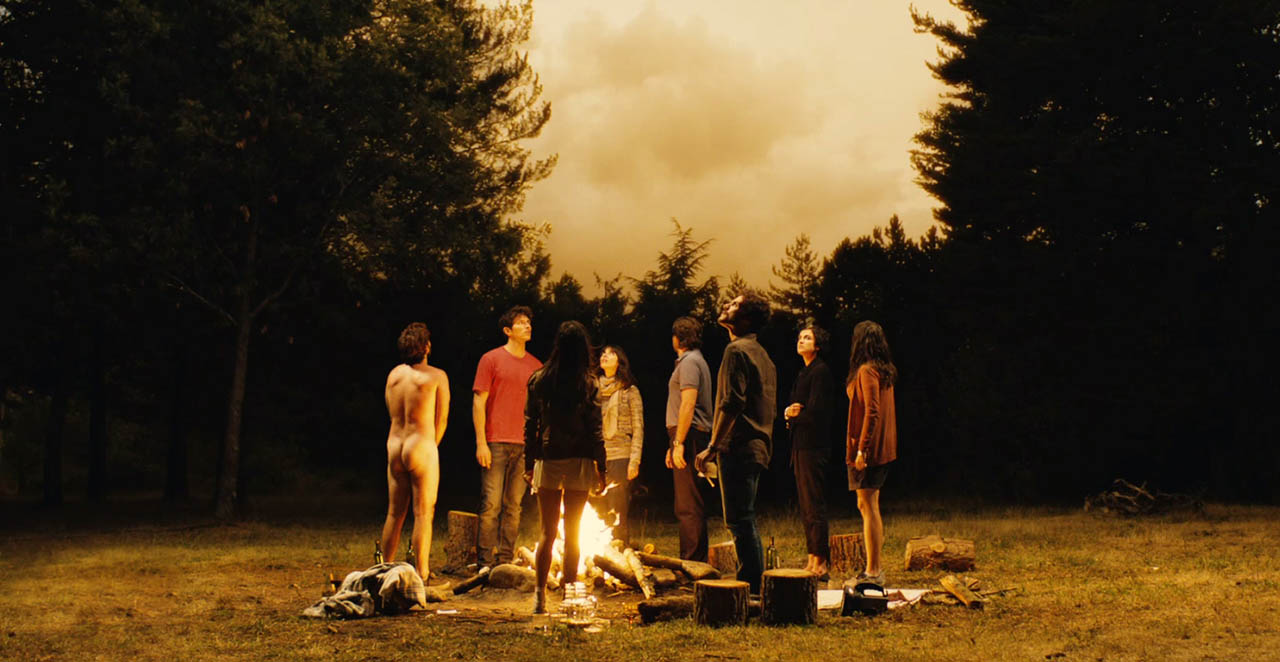
Six friends who haven’t gotten together in twenty years meet up at a cabin in the mountains for a reunion.  Félix (Grao) brings along his new girlfriend, Eva (Lago), while Hugo (Velencoso) brings his wife, Cova (Romero).  Sara (Ruiz), who contacted everyone, is single, as is Sergio (Fernández).  This leaves the two friends who have married each other, Maribel (Verdú) and Rafa (Garrido).  With everyone arrived, there’s only Ángel (Mira) to wait for.  Ángel isn’t well-liked by the men in the group, their behaviour toward him in the past leading to Ángel having a breakdown and spending most of the next twenty years in a mental institution; only Sara has kept in touch with him.  It’s not long before old feuds and animosities begin to be aired, and round a campfire that first night, various personal grievances are revealed as still being close to the surface.  And with Ángel still not having arrived, things get heated until there they all hear a strange sound that seems to tear apart the very air. Moments later, they realise that there is no electrical power, and that batteries won’t work either.

The next morning, the group learns that there is still no mains power, that the telephone doesn’t work, and that Rafa has disappeared.  Everyone hikes down to the nearest house but they find it deserted, though there is evidence that whoever lived there, they left in a hurry.  Deciding to carry on to the nearest town, the group takes a short cut through a gorge but along the way, a member of the group vanishes into thin air.  Frightened by all these strange events, and by the realisation that any one of them might be the next to disappear, they continue to head for the nearest town.  The next morning, someone else has disappeared but the remainder continue their journey; the scene of a car crash provides a startling discovery, and stopping at a pool later on, the group is reduced to four.  At one house they find themselves pursued by a pack of hungry dogs, and this leads to four becoming three.  These three reach the town, and there they encounter a little girl.  The girl runs from them but when they finally catch up with her, it’s only one of them who discovers exactly what’s happening…

End, The - scene

Adapted from the novel by David Monteagudo, The End is a somewhat languidly paced end-of-the-world drama that, wisely, never attempts to explain what’s happening or why, and keeps itself focused settled on the characters and how they cope with the mystery unfolding around them.  The early scenes, with the friends’ long-buried grievances quickly being disinterred, suggest that the movie’s title may well be a metaphor for the end of the group’s closeness and love for each other (though the inter-relationships do appear fragile from the outset).  But from the moment when Félix notices that Sirius is no longer visible in the night sky, the movie begins to shift into something more threatening and mysterious.  Practical considerations give way to a growing sense of unease as their journey sees their numbers dwindle, and hidden truths are revealed.  It’s a deliberately low-key approach, with the screenplay by Sergio G. Sánchez and Jorge Guerricaechevarría providing sparse character histories and yet making Ángel a key player despite his absence.

There’s much to like here but under the direction of Torregrossa there’s also a lack of heightened tension, with only one disappearance given its proper due, a beautifully awful moment that occurs in the aftermath of the remaining group being chased by dogs.  The rest of the journey fails to match up to that one moment and is more a matter of guessing which character will vanish next (and even that’s not too difficult to work out).  With such a limitation built in from the outset, The End risks underselling the gravity and enormity of its central conceit, and there are too many instances where the same observations are made over and over again, but thanks to some enthusiastic, resolute performances, the movie overcomes these obstacles with a large measure of understated confidence.  As one-time lovers, Verdú and Grao give the most appealing and solid performances, and there’s able support from Lago and newcomer Velencoso, but it’s Ruiz who captures the attention, her growing panic and fear realised with sweaty intensity.

The movie makes the most of its mountain locations and the sweeping vistas are breathtakingly filmed by cinematographer José David Montero (indeed, some shots wouldn’t have gone amiss in the Lord of the Rings trilogy).  There’s an interesting, relaxed score courtesy of Lucio Godoy that supports the emotional and dramatic currents that run throughout the movie, and despite the slow, deliberate pace, the whole thing is assiduously edited by Carolina Martínez Urbina.  Torregrossa handles the themes of betrayal, regret and redemption with assurance, and if not every plot strand is resolved or addressed it’s because the nature of the drama prevents it.  And the ending, despite all that’s gone before, ends on a hopeful note that stops the movie from being completely nihilistic.

Rating: 7/10 – a quietly atmospheric drama that unsettles its audience in small, unobtrusive ways, The End builds uncomfortably to an ending that is both tragic and promising; far more affecting than at first viewing, this is one movie that makes a virtue of being modest.

Share this:

  • Click to share on X (Opens in new window) X
  • Click to share on Facebook (Opens in new window) Facebook
  • More
  • Click to print (Opens in new window) Print
  • Click to email a link to a friend (Opens in new window) Email
Like Loading...

21/12/12 (2010)

10 Tuesday Dec 2013

Posted by dullwood68 in Movies

≈ Leave a comment

Tags

Chris Scheuerman, Drama, End of the world, Murders, New Image College of the Arts, Review, Short film, Suicide, Taylor Hastings

21:12:12

D: Chris Scheuerman / 16m

Cast: Taylor Hastings, Chris Donoghue, Aaron Baker, Edna Rojas, Beth Cantor, Anthony MacLean, Jordan Smith, Marianne Tikkanen

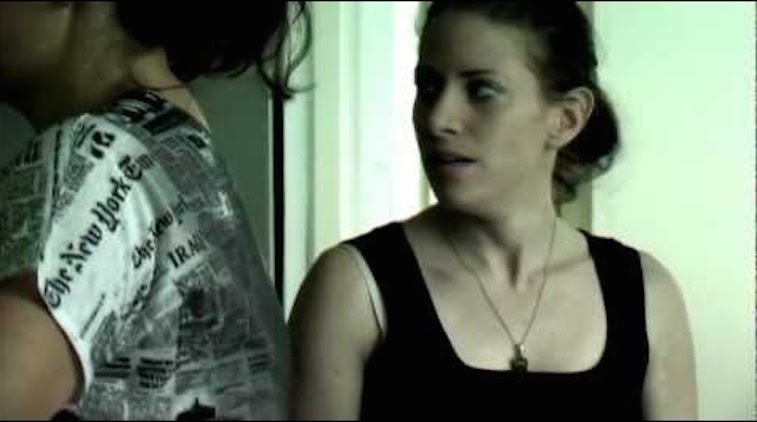
An intriguing short film from the New Image College of the Arts in Vancouver, 21/12/12 is set an hour before a mysterious event is due to bring about the end of the world.  Various individuals’ lives collide and interconnect, and each tries to deal with what’s happening in different ways.  One man tries to unburden himself by telling the woman he loves about two murders he committed, another gets himself shot while visiting an apartment to buy drugs, and the woman who shoots him finds herself stopping another man from jumping off their building.  At the end, two women witness for themselves the mysterious event.

The question, What would you do if you only had an hour to live, is answered here in a variety of ways.  The would-be suicide is reminded he doesn’t have to go to all the trouble when the event is bound to kill him anyway.  A woman leaves her deluded boss – he wants to make last-minute transactions on the stock market to make himself a rich man when he dies – to find the woman she has been looking for for some time; it’s they who witness the mysterious event.  And the woman who shoots the drug addict, goes out for some air.

21:12:12 - scene

A collection of untidy vignettes that vary in quality and significance, what stops 21/12/12 from being the small gem its writer/director/producer Scheuerman probably hoped for are its unexceptional characters, one-note for the most part, and matter-of-fact approach to the end of the world.  Nobody displays any signs of panic or look upset, everybody is going about their business – the murderer aside – almost as if it were just another normal day in the big city.  On the soundtrack there’s the sounds of rioting and looting, but again, the characters remain unaffected by it.  If Scheuerman is saying that, even facing impending doom, people will remain self-centred and insular – even with the end of the world an hour away – then as an hypothesis he has a sound anthropological idea.

However, the dialogue is awkward and occasionally stilted, and not all the cast are as adept at coping with its idiosyncrasies as the rest.  Two scenes, meant to be overtly dramatic, are undermined by the cast – and Scheuerman’s – inexperience.  One is rushed, the other played more for laughs than it should be.  The photography helps isolate the characters as they face the end, but the editing could have been a bit tighter: some scenes play out a little longer than necessary.

Rating: 5/10 – not bad for a college short film but 21/12/12 is worryingly vague about its intentions; a good idea that works intermittently and at the expense of a cohesive narrative.

Share this:

  • Click to share on X (Opens in new window) X
  • Click to share on Facebook (Opens in new window) Facebook
  • More
  • Click to print (Opens in new window) Print
  • Click to email a link to a friend (Opens in new window) Email
Like Loading...

Blog Stats

  • 486,803 hits

Recent Posts

  • 10 Reasons to Remember Bibi Andersson (1935-2019)
  • Fantasia (1940)
  • Dances With Wolves (1990) – The Special Edition
  • Kiss of the Spider Woman (1985)
  • The Three Musketeers (1973)

Top Posts & Pages

  • Lost for Life (2013) - Another Look
    Lost for Life (2013) - Another Look
  • Lost for Life (2013)
    Lost for Life (2013)
  • About
    About
  • A Brief Word About La La Land (2016)
    A Brief Word About La La Land (2016)
  • Exposed (2016)
    Exposed (2016)
  • Cardboard Boxer (2016)
    Cardboard Boxer (2016)
  • My Top 10 Guilty Pleasures
    My Top 10 Guilty Pleasures
  • The Monuments Men (2014)
    The Monuments Men (2014)
  • BFI London Film Festival 2015
    BFI London Film Festival 2015
  • A Brief Word About Netflix Original Comedies
    A Brief Word About Netflix Original Comedies
Follow thedullwoodexperiment on WordPress.com

Blogs I Follow

  • Rubbish Talk
  • Film 4 Fan
  • Fast Film Reviews
  • The Film Blog
  • All Things Movies UK
  • Interpreting the Stars
  • Let's Go To The Movies
  • Movie Reviews 101
  • TMI News
  • Dan the Man's Movie Reviews
  • Film History
  • Jordan and Eddie (The Movie Guys)

Archives

  • April 2019 (13)
  • March 2019 (28)
  • February 2019 (28)
  • January 2019 (32)
  • December 2018 (28)
  • November 2018 (30)
  • October 2018 (29)
  • September 2018 (29)
  • August 2018 (29)
  • July 2018 (30)
  • June 2018 (28)
  • May 2018 (24)
  • April 2018 (21)
  • March 2018 (31)
  • February 2018 (25)
  • January 2018 (30)
  • December 2017 (30)
  • November 2017 (27)
  • October 2017 (27)
  • September 2017 (26)
  • August 2017 (32)
  • July 2017 (32)
  • June 2017 (30)
  • May 2017 (29)
  • April 2017 (29)
  • March 2017 (30)
  • February 2017 (27)
  • January 2017 (32)
  • December 2016 (30)
  • November 2016 (28)
  • October 2016 (30)
  • September 2016 (27)
  • August 2016 (30)
  • July 2016 (30)
  • June 2016 (31)
  • May 2016 (34)
  • April 2016 (30)
  • March 2016 (30)
  • February 2016 (28)
  • January 2016 (35)
  • December 2015 (34)
  • November 2015 (31)
  • October 2015 (31)
  • September 2015 (34)
  • August 2015 (31)
  • July 2015 (33)
  • June 2015 (12)
  • May 2015 (31)
  • April 2015 (32)
  • March 2015 (30)
  • February 2015 (37)
  • January 2015 (39)
  • December 2014 (34)
  • November 2014 (34)
  • October 2014 (36)
  • September 2014 (25)
  • August 2014 (29)
  • July 2014 (29)
  • June 2014 (28)
  • May 2014 (23)
  • April 2014 (21)
  • March 2014 (42)
  • February 2014 (38)
  • January 2014 (29)
  • December 2013 (28)
  • November 2013 (34)
  • October 2013 (4)

Create a free website or blog at WordPress.com.

Rubbish Talk

Film 4 Fan

A Movie Blog

Fast Film Reviews

The Film Blog

The official blog of everything in film

All Things Movies UK

Movie Reviews and Original Articles

Interpreting the Stars

Dave Examines Movies

Let's Go To The Movies

Film and Theatre Lover!

Movie Reviews 101

Daily Movie Reviews

TMI News

Latest weather, crime and breaking news

Dan the Man's Movie Reviews

All my aimless thoughts, ideas, and ramblings, all packed into one site!

Film History

Telling the story of film

Jordan and Eddie (The Movie Guys)

Movie Reviews & Ramblings from an Australian Based Film Fan

Privacy & Cookies: This site uses cookies. By continuing to use this website, you agree to their use.
To find out more, including how to control cookies, see here: Cookie Policy
  • Subscribe Subscribed
    • thedullwoodexperiment
    • Join 481 other subscribers
    • Already have a WordPress.com account? Log in now.
    • thedullwoodexperiment
    • Subscribe Subscribed
    • Sign up
    • Log in
    • Report this content
    • View site in Reader
    • Manage subscriptions
    • Collapse this bar
 

Loading Comments...
 

    %d