• 10 Reasons to Remember…
  • A Brief Word About…
  • About
  • For One Week Only
  • Happy Birthday
  • Monthly Roundup
  • Old-Time Crime
  • Other Posts
  • Poster of the Week
  • Question of the Week
  • Reviews
  • Trailers

thedullwoodexperiment

~ Viewing movies in a different light

thedullwoodexperiment

Tag Archives: George C. Wolfe

The Immortal Life of Henrietta Lacks (2017)

31 Wednesday May 2017

Posted by dullwood68 in Movies

≈ Leave a comment

Tags

Cells, Drama, George C. Wolfe, HeLa immortal cell line, History, Johns Hopkins, Medical research, Oprah Winfrey, Renée Elise Goldsberry, Review, Rose Byrne, True story

D: George C. Wolfe / 93m

Cast: Oprah Winfrey, Rose Byrne, Renée Elise Goldsberry, Reg E. Cathey, Courtney B. Vance, Rocky Carroll, Leslie Uggams, Reed Birney, John Douglas Thompson, Adriane Lenox, Roger Robinson, John Beasley, Peter Gerety, Gabriel Ebert, John Benjamin Hickey, Ruben Santiago-Hudson, Byron Jennings

Without the HeLa immortal cell line, it’s unlikely that many solutions to many medical conditions would have been arrived at as quickly as they have. A breakthrough in medical research, the cancer cells taken from then thirty-year-old Henrietta Lacks during the summer of 1951, have meant literally the difference between life and death for people all over the world. In the years since their discovery, it’s estimated that scientists have grown around twenty tons of Henrietta’s cells, and there have been approximately eleven thousand patents registered that involve HeLa cells. But even though Henrietta’s cells have contributed greatly to the advancement of medical research, the method of their attainment has been the cause of much debate about US medical ethics in the 1950’s, and the treatment of patients during that time. Put simply, Henrietta Lacks’s cells were taken from her by the staff at Johns Hopkins without her permission, or her being aware that it was happening.

Revelations surrounding the source of the HeLa immortal cell line arose during the 1970’s when Henrietta’s family were asked to provide blood samples in order to help researchers replace a batch of contaminated cells. A dinner table conversation in 1975 made the family aware that her cells were still being used. However, Henrietta’s family didn’t pursue the matter, and although Henrietta’s contribution to medical science began to be recognised more and more during the 1990’s, it wasn’t until Rebecca Skloot, a freelance science writer who’d already written two articles about HeLa in 2000 and 2001, approached the family through daughter Deborah Lacks with a view to writing a book about it all.

And so we have the movie version of Skloot’s multi-award-winning non-fiction book, The Immortal Life of Henrietta Lacks. In gestation since the book’s publication in 2010, the movie arrives courtesy of HBO and Oprah Winfrey (who plays Deborah), and seeks to examine the medical, ethical, moral and human dilemmas surrounding the harvesting of a person’s cells without their consent. And though these issues are raised at various times during the movie, it soon becomes obvious that these aren’t going to be the issues the movie focuses on. Instead, the focus is on Rebecca Skloot (Byrne) herself, and Deborah Lacks, a woman whose personal demons dictate a high level of erratic, and sometimes paranoid, behaviour.

What also becomes obvious is that in adapting Skloot’s book, screenwriters Peter Landesman, Alexander Woo, and director George C. Wolfe, have bitten off quite a bit more than they can chew. As the central character, Skloot deservedly takes centre stage, but we never really get to know too much about her other than that she’s using her own money to fund all her research into learning about Henrietta and what happened both to her, and to her family. Skloot’s motivation for pursuing the story remains unanswered (though the question is asked), and she’s often reduced to being a bystander, an observer on the periphery of everything. But then the script will bring her to the forefront, leaving the viewer to wonder just how important she is to what is happening on screen.
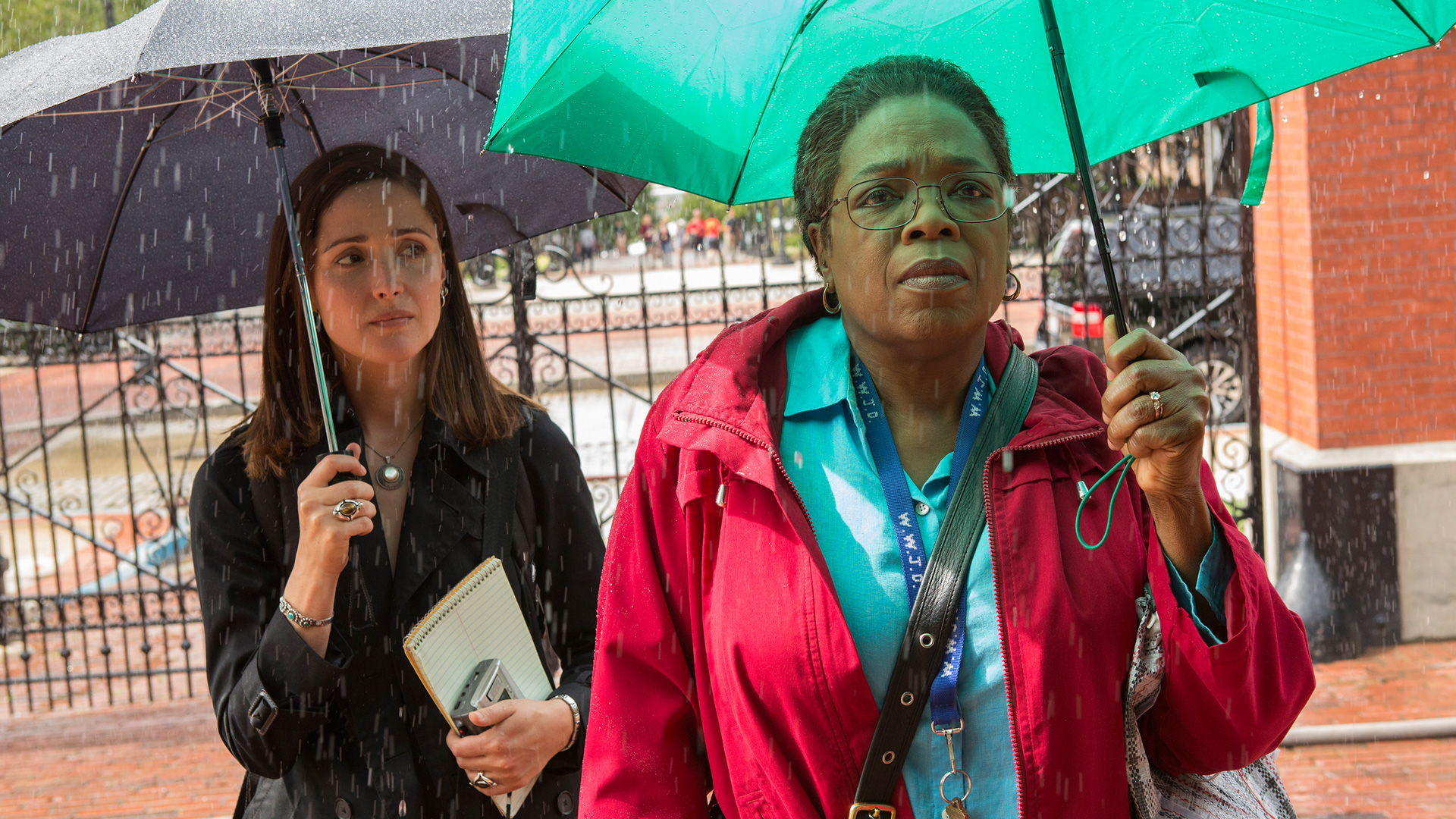
Byrne plays Skloot, at first, as an awkward, nervously grinning, seemingly out-of-her-depth journalist hooked on a great idea for a book but unsure if she can make it work when Henrietta’s family don’t exactly welcome her with open arms. She perseveres though (as does Byrne), but it’s all to too little effect; Skloot remains a cypher throughout, a stable character that everyone else can use as either a sounding board or an emotional punchbag. There are times when Byrne seems to be a little bit behind everyone else, as if she’s always running to catch up, and while her performance is adequate, there’s a feeling that the script has subordinated her character in order to give the movie’s first-billed star more room to impress.

As Deborah Lacks, Winfrey gives an impressive, emotive portrayal that serves as a reminder that when she’s engaged fully with a role, she’s a very fine actress indeed. Ironically though, her performance is so strong, and so compelling, that it dominates the rest of the movie entirely, and upsets the movie’s otherwise sedentary nature whenever Winfrey appears. It’s hard to tell if this has been a deliberate move on the part of Wolfe and his co-screenwriters, or the actress herself. Either way, the movie becomes more intense and more dramatic whenever she’s on screen, and then becomes quieter whenever she isn’t. Only Cathey as Deborah’s older brother Zakariyya matches her for intensity, and that’s largely because Zakariyya has acute anger issues that threaten to flare up at any moment.
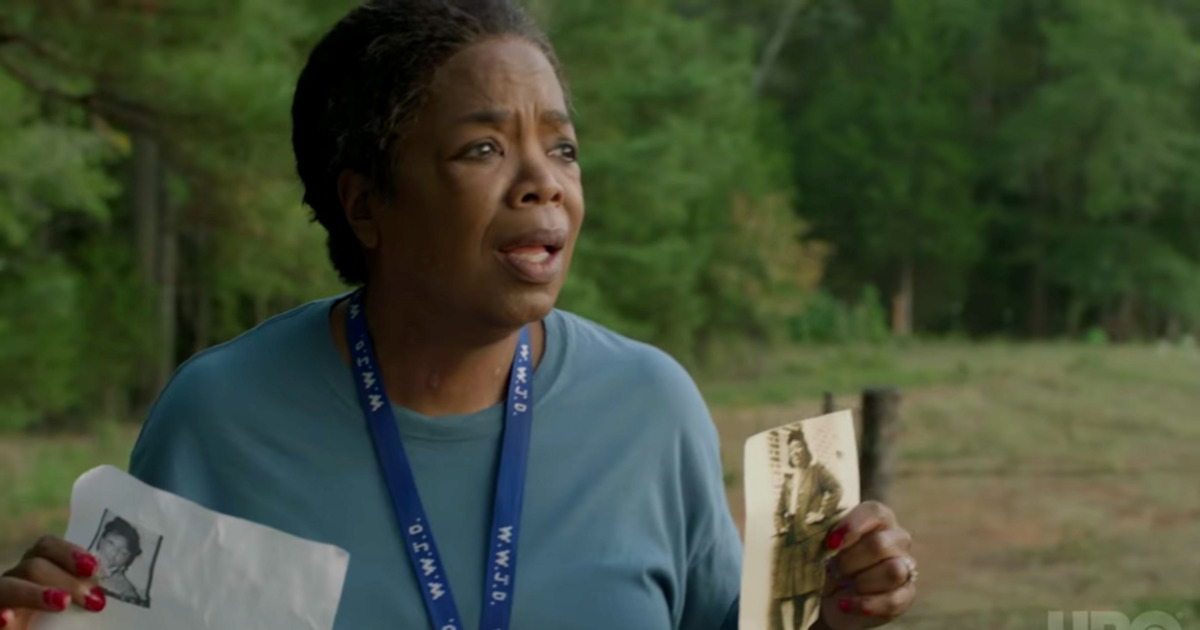
There are further problems that centre around the movie’s focus, with too many subplots and minor storylines brought into play only to be left unexplored, and too many supporting characters given only a scene or two to make an impact. Wolfe and co. have attempted to cram in as much information, incident and development as they can but it all proves detrimental in telling a coherent and cohesive story. There’s outrage too, but instead of being directed at the way in which Henrietta was, and has been exploited all these years, it’s all to do with Deborah’s younger sister, Elsie, who was committed to the appallingly named Hospital for the Negro Insane when she was just eleven years old. And while this subplot works better than many others, it’s more about Deborah than it is Henrietta.

All in all, The Immortal Life of Henrietta Lacks is less about the unwitting donor of the HeLa immortal cell line than it is about her immediate family, and the journalist who felt compelled to reveal her story to a wider audience. Somewhere during the movie’s production the focus was allowed to shift away from Henrietta, and in letting that happen, the movie manages to do her a massive disservice. Perhaps it’s ironic, but in reducing Henrietta’s involvement in a movie about the most significant thing that ever happened to her, to that of a supporting role, the makers have continued to keep a woman of tremendous influence back in the shadows where she’s already spent too long.

Rating: 5/10 – a movie that never manages to work out which story it wants to tell at any given time, The Immortal Life of Henrietta Lacks flits from subplot to minor storyline in an effort to cram in as much as possible, but all to no avail; more of a tribute to the tenacity of Deborah Lacks in wanting to learn more about her mother than a tribute to Henrietta herself, it’s a patchwork piece where the sum of its parts doesn’t add up to a purposeful whole.

Share this:

  • Click to share on X (Opens in new window) X
  • Click to share on Facebook (Opens in new window) Facebook
  • More
  • Click to print (Opens in new window) Print
  • Click to email a link to a friend (Opens in new window) Email
Like Loading...

You’re Not You (2014)

27 Friday Mar 2015

Posted by dullwood68 in Movies

≈ Leave a comment

Tags

ALS, Caregiver, Classical pianist, Drama, Emmy Rossum, George C. Wolfe, Hilary Swank, Josh Duhamel, Literary adaptation, Michelle Wildgen, Relationships, Review

You're Not You

D: George C. Wolfe / 102m

Cast: Hilary Swank, Emmy Rossum, Josh Duhamel, Stephanie Beatriz, Jason Ritter, Julian McMahon, Frances Fisher, Marcia Gay Harden, Ali Larter, Andrea Savage, Loretta Devine, Ernie Hudson, Ed Begley Jr

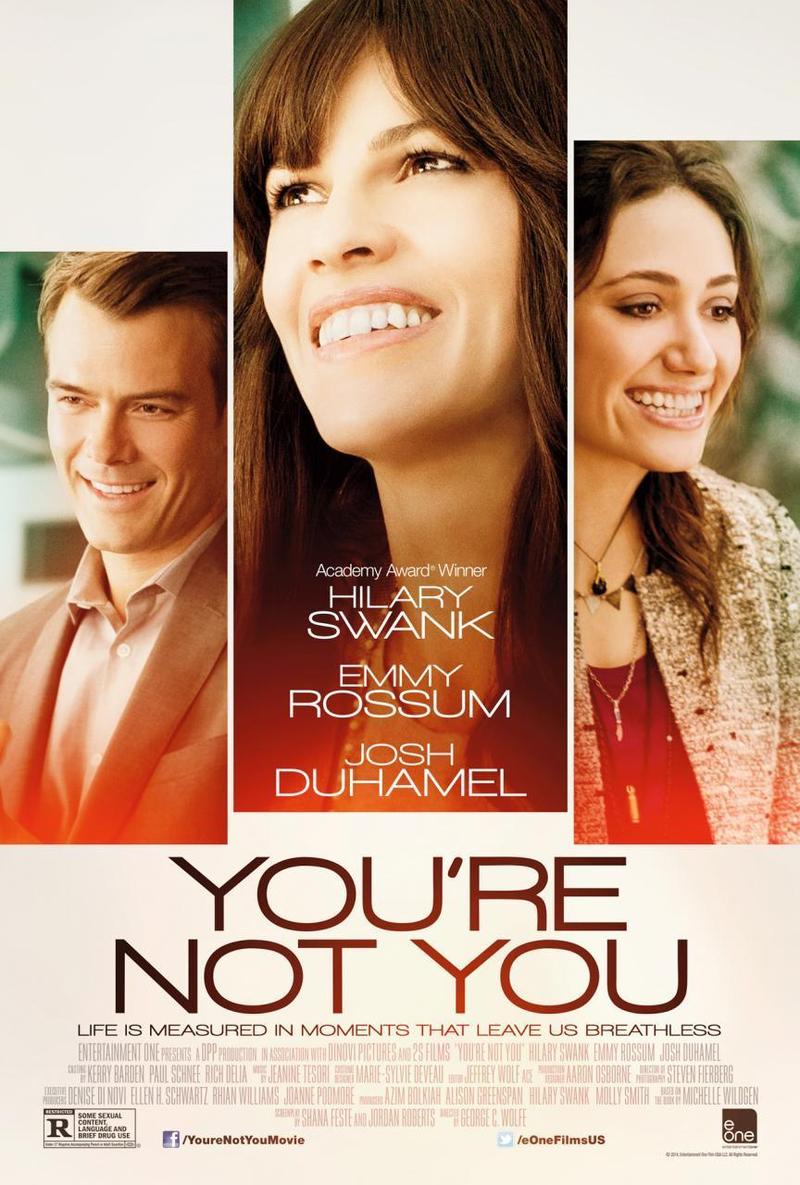
Kate (Swank) is a successful classical pianist who begins to experience muscle spasms in her hands that affect her playing. Eighteen months later, Kate has been diagnosed with Amyotrophic Lateral Sclerosis (ALS) and needs daily personal care. With her regular caregiver having left, Kate is being looked after by her husband, Evan (Duhamel), but he works full-time and is unable to look after her during the day. Kate makes arrangements to interview a replacement caregiver. The first interviewee is Bec (Rossum), a college student who, despite her lack of experience, makes enough of an impression on Kate to be hired. And despite a first day that goes less than smoothly, and against Evan’s objections, Kate determines that Bec should continue as her caregiver.

While Bec and Kate get used to each other and develop a bond, they also learn that Evan has had a short affair with one of the women in his office. It leads to Kate feeling that she’s holding Evan back; she tries to get Bec to take her to an assisted living facility but Bec refuses to go through with the visit and instead they go to Evan’s office where Kate tells him she wants a divorce. Meanwhile, Bec has relationship problems of her own: she’s been sleeping with one of her tutors, Liam (MacMahon), but while she wants to end things, he doesn’t. And she’s attracted the interest of a young man named Wil (Ritter), who she believes is too nice for her.

Kate and Bec meet another couple where the wife has ALS, Marilyn (Devine) and John (Hudson). Their positive attitude and obvious love for each other give Kate the boost she needs to deal with her illness more effectively and she becomes more outgoing; she even allows Evan to express his feelings and regrets to her. At Xmas, Bec’s parents pay a visit, but a heated conversation between Bec and her mother (Harden) has Kate feeling that she’s holding Bec back from living her own life. Consequently, she fires Bec and arranges for her mother, Gwen (Fisher) to look after her. When Kate’s breathing becomes so bad she ends up hospitalised, Gwen wants her to be put on a ventilator but it’s revealed that Kate has given Bec authority to make any medical decisions relating to treatment or care. Knowing that being on a ventilator isn’t what Kate wants, and against Gwen and Evan’s wishes, she takes Kate home…

You're Not You - scene

Adapted from the novel by Michelle Wildgen, You’re Not You provides pretty much everything you could ever want from a movie trying its very best to make having a debilitating disease seem not so bad. This type of movie – or indeed any type of movie where the protagonist faces a difficult personal battle – always strives to “accentuate the positive”, making the illness/life changing event/seemingly insurmountable problem/horrible setback the trigger that allows the affected character to display resilience and fortitude in the face of such a terrible obstacle. It’s wish fulfilment on an adversarial basis, where triumph of the will trumps, if only temporarily, the problem that can’t be beaten (or which will require a high level of personal sacrifice). And so it proves, with Swank’s ALS sufferer fighting her husband’s selfishness, her dwindling social status, her own growing physical disablement, and a script that coats everything with the rosy glow of female empowerment.

This is a movie that ticks all the boxes. Main character shows stubborn attitude to dealing with illness? Check. Secondary main character shows increased ability to deal with own issues as a result of spending time with main character? Check. Family and friends of main character show complete lack of understanding re: issue main character is dealing with? Check. Main character has “dark moment” where suicide seems like an attractive option? Check. These and more pop up throughout the movie, making it seem like a “greatest hits” disease movie, rather than the heartfelt drama it wants to be.

What doesn’t help as well is that we never really get to know Kate as a person. Sure, she’s an accomplished pianist, and sure she’s bright and funny in the way that accomplished people are, and sure she appears to have reconciled herself to the eventual outcome having ALS dictates, but all this has happened before Bec comes on the scene. Swank is an accomplished actress but even she struggles to make Kate more than a cypher to hang an illness on. And when her speech necessarily worsens, Kate – and Swank – becomes even less of a presence in the movie. Thanks to Jordan Roberts and Shana Feste’s superficial screenplay, there’s no real depth that allows Swank to adequately portray anything like the absolute terror someone must feel as their body slowly but surely shuts down. All we’re left with is a selection of expressions that show patient acceptance or occasional, brief disappointment.

Rossum fares better, but that’s because she has more screen time (and not because Bec’s problems are any more interesting than Kate’s), while Duhamel flits in and out of the narrative as the penitent Evan, looking sheepish and lost for the most part, and blander than a beige throw rug. The rest of the cast come and go without making much of an impact, and as we head toward the inevitable outcome, emotions rise to a level where heartstrings are plucked to predictable effect but still without any depth behind them. Wolfe – making only his second feature – adopts a slightly diffident, low key approach to the material that keeps the audience from getting too involved, and which stops the movie from being as dramatic as it should be. Ultimately, it’s a movie that flirts with the tragedy of Kate’s dilemma without fully embracing it.

Rating: 5/10 – too derivative of every other “disease of the week” movie, You’re Not You struggles to attain any dramatic traction, and wastes the talents of its star; a so-so attempt that is likely to leave viewers wondering how patient they have to be before they’ll be able to connect with the storyline.

Share this:

  • Click to share on X (Opens in new window) X
  • Click to share on Facebook (Opens in new window) Facebook
  • More
  • Click to print (Opens in new window) Print
  • Click to email a link to a friend (Opens in new window) Email
Like Loading...

Blog Stats

  • 486,660 hits

Recent Posts

  • 10 Reasons to Remember Bibi Andersson (1935-2019)
  • Fantasia (1940)
  • Dances With Wolves (1990) – The Special Edition
  • Kiss of the Spider Woman (1985)
  • The Three Musketeers (1973)

Top Posts & Pages

  • Lost for Life (2013) - Another Look
    Lost for Life (2013) - Another Look
  • Lost for Life (2013)
    Lost for Life (2013)
  • About
    About
  • BFI London Film Festival 2015
    BFI London Film Festival 2015
  • Mr. Topaze (1961)
    Mr. Topaze (1961)
  • Hunt for the Wilderpeople (2016)
    Hunt for the Wilderpeople (2016)
  • Shock and Awe (2017)
    Shock and Awe (2017)
  • Cardboard Boxer (2016)
    Cardboard Boxer (2016)
  • Exposed (2016)
    Exposed (2016)
  • Billy Lynn's Long Halftime Walk (2016)
    Billy Lynn's Long Halftime Walk (2016)
Follow thedullwoodexperiment on WordPress.com

Blogs I Follow

  • Rubbish Talk
  • Film 4 Fan
  • Fast Film Reviews
  • The Film Blog
  • All Things Movies UK
  • Interpreting the Stars
  • Let's Go To The Movies
  • Movie Reviews 101
  • TMI News
  • Dan the Man's Movie Reviews
  • Film History
  • Jordan and Eddie (The Movie Guys)

Archives

  • April 2019 (13)
  • March 2019 (28)
  • February 2019 (28)
  • January 2019 (32)
  • December 2018 (28)
  • November 2018 (30)
  • October 2018 (29)
  • September 2018 (29)
  • August 2018 (29)
  • July 2018 (30)
  • June 2018 (28)
  • May 2018 (24)
  • April 2018 (21)
  • March 2018 (31)
  • February 2018 (25)
  • January 2018 (30)
  • December 2017 (30)
  • November 2017 (27)
  • October 2017 (27)
  • September 2017 (26)
  • August 2017 (32)
  • July 2017 (32)
  • June 2017 (30)
  • May 2017 (29)
  • April 2017 (29)
  • March 2017 (30)
  • February 2017 (27)
  • January 2017 (32)
  • December 2016 (30)
  • November 2016 (28)
  • October 2016 (30)
  • September 2016 (27)
  • August 2016 (30)
  • July 2016 (30)
  • June 2016 (31)
  • May 2016 (34)
  • April 2016 (30)
  • March 2016 (30)
  • February 2016 (28)
  • January 2016 (35)
  • December 2015 (34)
  • November 2015 (31)
  • October 2015 (31)
  • September 2015 (34)
  • August 2015 (31)
  • July 2015 (33)
  • June 2015 (12)
  • May 2015 (31)
  • April 2015 (32)
  • March 2015 (30)
  • February 2015 (37)
  • January 2015 (39)
  • December 2014 (34)
  • November 2014 (34)
  • October 2014 (36)
  • September 2014 (25)
  • August 2014 (29)
  • July 2014 (29)
  • June 2014 (28)
  • May 2014 (23)
  • April 2014 (21)
  • March 2014 (42)
  • February 2014 (38)
  • January 2014 (29)
  • December 2013 (28)
  • November 2013 (34)
  • October 2013 (4)

Create a free website or blog at WordPress.com.

Rubbish Talk

Film 4 Fan

A Movie Blog

Fast Film Reviews

The Film Blog

The official blog of everything in film

All Things Movies UK

Movie Reviews and Original Articles

Interpreting the Stars

Dave Examines Movies

Let's Go To The Movies

Film and Theatre Lover!

Movie Reviews 101

Daily Movie Reviews

TMI News

Latest weather, crime and breaking news

Dan the Man's Movie Reviews

All my aimless thoughts, ideas, and ramblings, all packed into one site!

Film History

Telling the story of film

Jordan and Eddie (The Movie Guys)

Movie Reviews & Ramblings from an Australian Based Film Fan

Privacy & Cookies: This site uses cookies. By continuing to use this website, you agree to their use.
To find out more, including how to control cookies, see here: Cookie Policy
  • Subscribe Subscribed
    • thedullwoodexperiment
    • Join 481 other subscribers
    • Already have a WordPress.com account? Log in now.
    • thedullwoodexperiment
    • Subscribe Subscribed
    • Sign up
    • Log in
    • Report this content
    • View site in Reader
    • Manage subscriptions
    • Collapse this bar
 

Loading Comments...
 

    %d