• 10 Reasons to Remember…
  • A Brief Word About…
  • About
  • For One Week Only
  • Happy Birthday
  • Monthly Roundup
  • Old-Time Crime
  • Other Posts
  • Poster of the Week
  • Question of the Week
  • Reviews
  • Trailers

thedullwoodexperiment

~ Viewing movies in a different light

thedullwoodexperiment

Tag Archives: Ghosts

Ghost Stories (2017)

11 Wednesday Apr 2018

Posted by dullwood68 in Movies

≈ Leave a comment

Tags

Alex Lawther, Andy Nyman, Drama, Ghosts, Horror, Jeremy Dyson, Martin Freeman, Paranormal investigator, Paul Whitehouse, Review

D: Jeremy Dyson, Andy Nyman / 98m

Cast: Andy Nyman, Paul Whitehouse, Alex Lawther, Martin Freeman, Leonard Byrne, Samuel Bottomley, Jake Davies, Nicholas Burns

Beginning with fragmented home movie footage set in 1979, Ghost Stories is the latest British horror movie to be granted a wide release, and to be backed by generous praise. The home movie footage shows incidents from the childhood of professor Phillip Goodman (Nyman), a paranormal investigator who has a TV show that debunks self-proclaimed psychics. Goodman receives an invitation from 70’s paranormal investigator Charles Cameron (Byrne), to look into three cases of apparently unexplainable ghostly sightings. The first relates to a nightwatchman (Whitehouse) working in an old, disused women’s asylum. The second relates to a young man (Lawther) who has an encounter with the Devil while driving home one night. And the third concerns a financier (Freeman), who experiences poltergeist activity at his home. Goodman investigates each case in turn, and comes to the conclusion that there is nothing remotely supernatural or paranormal about any of the cases, preferring instead to believe that what each person has experienced is actually the result of their own neuroses and psychological issues. But when he returns to confront Cameron with his findings, what happens next is far more disturbing…

…except, it isn’t. What happens next takes the movie into completely different territory and serves only to dissipate the sense of muted dread that has been achieved so far. It expands on the framing device of Goodman’s investigations, but in a way that abandons the eerie approach of the first hour in favour of a waking nightmare scenario that sees Goodman haunted by events from his childhood. There’s a pay off at the end (which is meant to be clever, but feels contrived instead), but by then it’s too late. The initial promise of the movie – that Goodman’s investigations will reveal a world of horror he can’t explain away rationally – never gets off the ground, and while there are plenty of riffs and echoes on events within the movie, there’s too much that proves superfluous. The title is misleading as well, as only one of the stories, the first, is about an actual ghost. And as the movie progresses, it does what so many other horror movies fall prey to: having inexplicable things happen for no other reason than that it’s a supernatural story and anything can happen… even though they shouldn’t.

The movie is also hampered by its indecisive tone. There’s humour here, and in the second story a little too much (though Lawther’s reply to the Devil’s command to “Stay” is priceless), and some of the situations and the performances veer between serious and comic, often within the same scene. Whitehouse plays his character straight for the most part, but the script can’t resist giving him a few forced one-liners. Lawther is batty with a side order of nuts, while Freeman opts for supercilious, a decision that fits the character but which leaves him looking and sounding as if he’s walked in from another movie altogether (and not a horror movie). Alas, it’s Nyman who really draws the short straw, which is unfortunate given his involvement as co-writer and co-director with Jeremy Dyson. Goodman is a classic naïf, in way over his head, and with no idea what he’s got himself into. As a result, Nyman does baffled a lot, and then afraid without knowing why he should be (aka baffled a bit more). On the plus side, Ole Bratt Birkeland’s widescreen cinematography is a major asset – you’ll be looking in every corner for the next scare – but aside from some knowing references to Seventies British horror, this is standard fare given an unlikely and surprising boost by critics who really should know better.

Rating: 5/10 – an adaptation of the original stage play, Ghost Stories is less the straight up horror movie it looks like, and more of the convoluted psychological thriller with horror overtones that it actually is; less effective than it needs to be, and uneven for much of its running time, it’s a movie that manages to throw in a few good scares, and offers a handful of creepy moments, but very little else to keep real fans of the genre properly entertained.

Share this:

  • Click to share on X (Opens in new window) X
  • Click to share on Facebook (Opens in new window) Facebook
  • More
  • Click to print (Opens in new window) Print
  • Click to email a link to a friend (Opens in new window) Email
Like Loading...

Monthly Roundup – March 2018

31 Saturday Mar 2018

Posted by dullwood68 in Movies

≈ Leave a comment

Tags

5 Headed Shark Attack, Action, Adventure, Airport, Al Capone, Alex Hannant, All the Money in the World, And Then Came Lola, Animation, Anthony Bushell, Archery, Ashleigh Sumner, Barack Obama, Biography, Bob Logan, Braven, Brian Keith, Cenobites, Charlie Bean, Chokeslam, Chris Bruno, Chris Marquette, Christopher Plummer, Comedy, Crime, Damon Carney, Dave Franco, David Bruckner, Deepika Kumari, Documentary, Drama, Dwayne Johnson, Ellen Seidler, Elsa Lanchester, Fantasy, Father/son relationships, Film noir, Foreign policy, Gangster Land, Garret Dillahunt, Gary J. Tunnicliffe, Ghosts, Greg Barker, Hellraiser: Judgment, Heritage Falls, High school reunion, Hiking trip, Horror, Hugh Grant, India, Jackie Chan, Jake Kasdan, Japan, Jason Momoa, Jumanji: Welcome to the Jungle, Kevin Hart, Kidnapping, Ladies First, LGBTQ+, Lilli Palmer, Lin Oeding, Logan Huffman, Luke Rivett, Matt Jones, Megan Siler, Michael Barrett, Michelle Williams, Monster, Murder, Nico De Leon, Oasis, Paddington 2, Passport to Destiny, Paul Fisher, Paul King, Puerto Rico, Rafe Spall, Ray McCarey, Ready Player One, Reginald Beck, Relationships, Reviews, Rex Harrison, Ridley Scott, Robert Cuffley, Sci-fi, Sean Faris, Sequel, Shea Sizemore, Something Real and Good, Steven Spielberg, Sweden, SyFy, The Forest, The LEGO Ninjago Movie, The Long Dark Hall, The Ritual, Thriller, Timothy Woodward Jr, Tye Sheridan, Uraaz Bahi, Video game, Virtual reality, World War II, Wrestling

The LEGO Ninjago Movie (2017) / D: Charlie Bean, Paul Fisher, Bob Logan / 101m

Cast: Jackie Chan, Dave Franco, Justin Theroux, Fred Armisen, Kumail Nanjiani, Michael Peña, Abbi Jacobson, Zach Woods, Olivia Munn
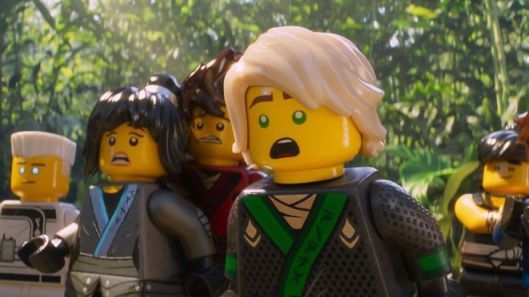
Rating: 6/10 – when you’re the despised son (Franco) of an evil warlord (Theroux), there’s only one thing you can do: vow to defeat him with the aid of your ninja friends; after a superhero mash-up and a solo Batman outing, The LEGO Ninjago Movie brings us ninjas, but in the process forgets to provide viewers with much in the way of story, though the visual  innovation is still there, as is (mostly) the humour, making this something that is only just more of a hit than a miss.

Braven (2018) / D: Lin Oeding / 94m

Cast: Jason Momoa, Garret Dillahunt, Stephen Lang, Jill Wagner, Zahn McClarnon, Brendan Fletcher, Sala Baker, Teach Grant, Sasha Rossof

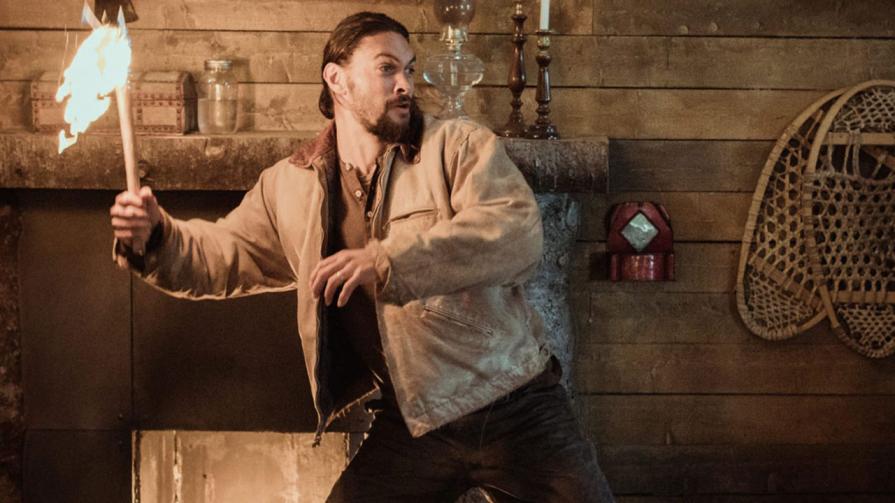
Rating: 4/10 – a trip for Joe Braven (Momoa) and his father (Lang) to their family cabin located in the Canadian wilderness sees them fighting for their lives when drug runners come to claim a shipment that has been hidden in the cabin; an unsophisticated action thriller, Braven has an earnestness to it that sees it through some of its more absurdist moments, but its Nineties vibe works against it too often for comfort, and despite the occasional effort, Dillahunt remains an unconvincing villain.

Passport to Destiny (1944) / D: Ray McCarey / 61m

Cast: Elsa Lanchester, Gordon Oliver, Lenore Aubert, Lionel Royce, Fritz Feld, Joseph Vitale, Gavin Muir, Lloyd Corrigan
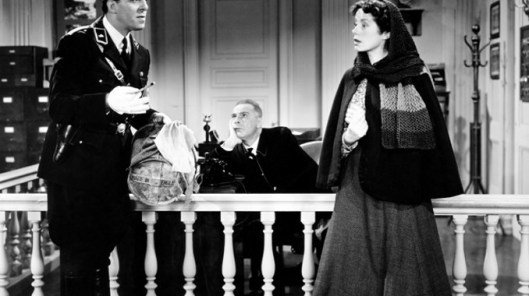
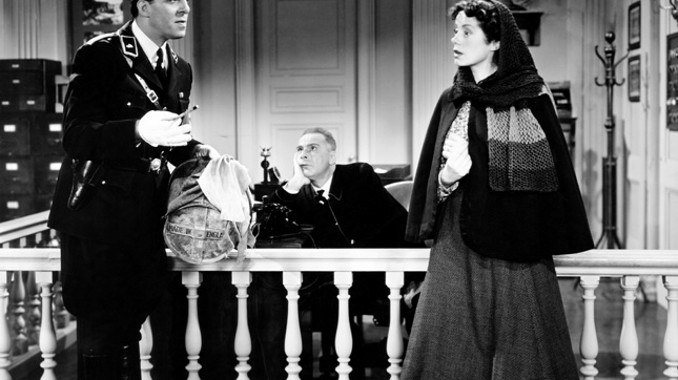
Rating: 6/10 – in World War II, a cleaning woman, Ella Muggins (Lanchester), who believes herself to be protected from harm thanks to a magical glass eye, determines to travel to Berlin and kill Hitler; a whimsical comic fantasy that somehow manages to have its heroine save a German officer (Oliver) and his girlfriend, Passport to Destiny is an uneven yet enjoyable product of its time, with a terrific central performance by Lanchester, and a winning sense of its own absurdity.

Hellraiser: Judgment (2018) / D: Gary J. Tunnicliffe / 81m

Cast: Damon Carney, Randy Wayne, Alexandra Harris, Paul T. Taylor, Gary J. Tunnicliffe, Helena Grace Donald, Heather Langenkamp

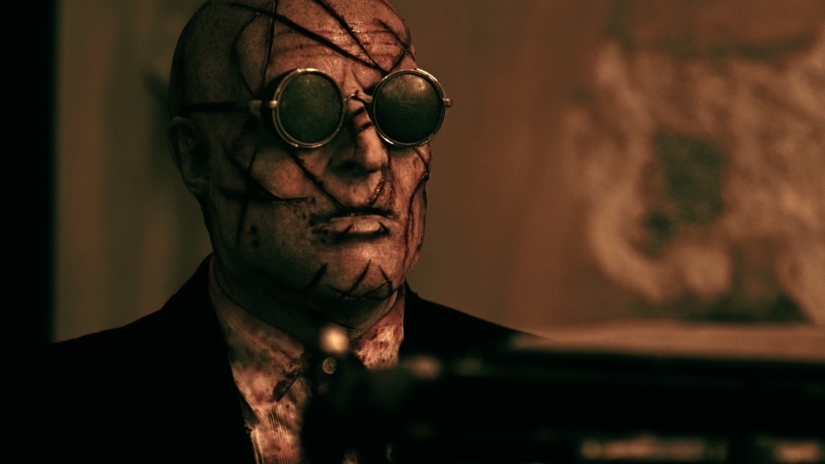
Rating: 3/10 – the hunt for a serial killer finds its lead detective (Carney) coming face to face with the Cenobites – still led by Pinhead (Taylor) – but the solution to the case isn’t as obvious as it seems; the tenth movie in the series, Hellraiser: Judgment at least tries to offer something new in terms of the Cenobites’ involvement, but in the end it can’t escape the fact that Pinhead et al are no longer frightening, the franchise’s penchant for sado-masochistic violence has lost any impact it may once have had, and as with every entry since Hellbound: Hellraiser II (1988), it fails to introduce one single character for the viewer to care about.

The Final Year (2017) / D: Greg Barker / 89m

With: Ben Rhodes, Samantha Power, John Kerry, Barack Obama
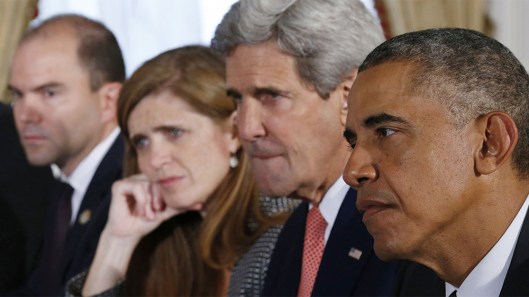
Rating: 7/10 – a look at the final year of Barack Obama’s second term as President of the United States focuses on his foreign policy team and their diplomatic efforts on the global stage; featuring contributions from some of the key players, The Final Year is an interesting if not fully realised documentary that never asks (or finds an answer for) the fundamental question of why Obama’s administration chose to concentrate so much on foreign policy in its last days, something that keeps all the good work that was achieved somewhat in isolation from the viewer.

And Then Came Lola (2009) / D: Ellen Seidler, Megan Siler / 71m

Cast: Ashleigh Sumner, Jill Bennett, Cathy DeBuono, Jessica Graham, Angelyna Martinez, Candy Tolentino, Linda Ignazi

Rating: 4/10 – in a series of Groundhog Day-style episodes, the undisciplined Lola (Sumner) is required to rush a set of photographs to her interior designer girlfriend, Casey (Bennett), so she can seal the deal at a job interview – but she has varying degrees of success; an LGBTQ+ comedy that stops the action every so often to allow its female cast to make out with each other, And Then Came Lola doesn’t put enough spins on its central conceit, and doesn’t make you care enough if Lola comes through or not.

The Ritual (2017) / D: David Bruckner / 94m

Cast: Rafe Spall, Arsher Ali, Robert James-Collier, Sam Troughton, Paul Reid, Maria Erwolter

Rating: 7/10 – following the tragic death of one of their friends, four men embark on a memorial hiking trip in Sweden, but when one of them is injured, taking a short cut through a forest puts all their lives in jeopardy; a creature feature with a nasty edge to it and above average performances for a horror movie, The Ritual employs mystery as well as terror as it creates a growing sense of dread before it runs out of narrative steam and tries to give its monster a back story that brings the tension up short and leads to a not entirely credible denouement.

Jumanji: Welcome to the Jungle (2017) / D: Jake Kasdan / 119m

Cast: Dwayne Johnson, Kevin Hart, Jack Black, Karen Gillan, Rhys Darby, Bobby Cannavale, Nick Jonas, Alex Wolff, Ser’Darius Blain, Madison Iseman, Morgan Turner

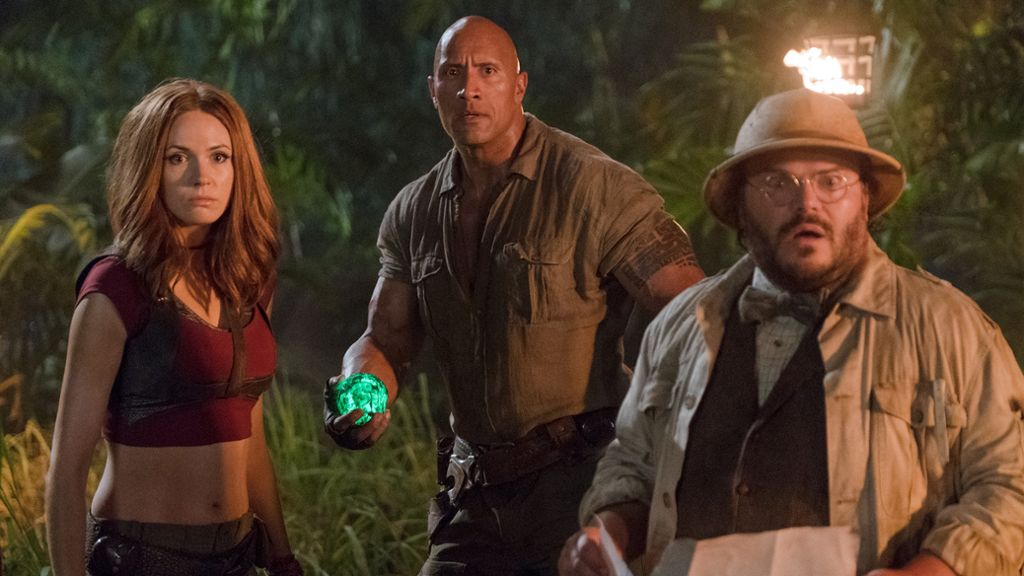
Rating: 7/10 – four teenagers find themselves transported into a video game called Jumanji, where, transformed into avatars, they are charged with thwarting the dastardly plans of the game’s chief villain (Cannavale); a reboot more than a sequel, Jumanji: Welcome to the Jungle has the benefit of well-drawn, likeable characters, winning performances from Johnson, Hart, Black and Gillan, and confident direction from Kasdan, all things that serve to distract from the uninspired game levels and the predictable nature of its main storyline.

Paddington 2 (2017) / D: Paul King / 103m

Cast: Hugh Bonneville, Sally Hawkins, Ben Whishaw, Hugh Grant, Brendan Gleeson, Julie Walters, Jim Broadbent, Peter Capaldi, Imelda Staunton, Sanjeev Bhaskar, Ben Miller, Jessica Hynes, Noah Taylor, Joanna Lumley

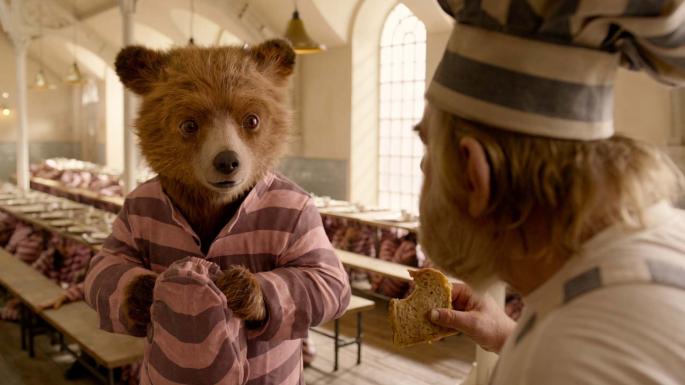
Rating: 9/10 – the theft of a unique pop-up book sees Paddington (Whishaw) end up in jail while the Brown family do their best to track down the real thief, Phoenix Buchanan (Grant); an absolute joy, Paddington 2 is just so unexpectedly good that even just thinking about it is likely to put a smile on your face, something that’s all too rare these days, and which is thanks to an inspired script by director King and Simon Farnaby, terrific performances from all concerned, and buckets of perfectly judged humour.

Gangster Land (2017) / D: Timothy Woodward Jr / 113m

Original title: In the Absence of Good Men

Cast: Sean Faris, Milo Gibson, Jason Patric, Jamie-Lynn Sigler, Peter Facinelli, Mark Rolston, Michael Paré

Rating: 4/10 – the rise of boxer Jack McGurn (Faris) from potential champion to right-hand man to Al Capone (Gibson), and his involvement in Capone’s feud with ‘Bugs’ Moran (Facinelli); a biopic that’s hampered by lacklustre performances and a leaden script, Gangster Land wants to be thought of as classy but budgetary constraints mean otherwise, and Woodward Jr’s direction doesn’t inject many scenes with the necessary energy to maintain the viewer’s interest, something that leaves the movie feeling moribund for long stretches.

Pitch Perfect 3 (2017) / D: Trish Sie / 93m

Cast: Anna Kendrick, Rebel Wilson, Brittany Snow, Anna Camp, Hailee Steinfeld, John Lithgow, Ruby Rose, Matt Lanter, Elizabeth Banks, John Michael Higgins, DJ Khaled

Rating: 4/10 – the Borden Bellas are back for one last reunion before they all go their separate ways, taking part in a European tour and competing for the chance to open for DJ Khaled; a threequel that adds nothing new to the mix (even if you include Lithgow as Wilson’s scoundrel father), and which is as empty-headed as you’d expect, Pitch Perfect 3 isn’t even well thought out enough to justify its existence and trades on old glories in the hope that the audience won’t notice that’s what they are.

Something Real and Good (2013) / D: Luke Rivett / 81m

Cast: Matt Jones, Alex Hannant, Colton Castaneda, Marla Stone

Rating: 4/10 – he (Jones) meets her (Hannant) in an airport lounge, and over the next twenty-four hours, get to know each other, flirt, have fun, and stay in a hotel together due to their flight being cancelled; the slightness of the story – boy meets girl, they talk and talk and talk and talk – is further undermined by the cod-philosophising and trite observations on life and relationships that they come out with, leaving Something Real and Good as a title that’s a little over-optimistic, though if it achieves anything, it’ll be to stop people from striking up random conversations with strangers in airports – and that’s now a good thing.

Ladies First (2017) / D: Uraaz Bahi / 39m

With: Deepika Kumari, Geeta Devi, Shiv Narayan Mahto, Dharmendra Tiwari

Rating: 8/10 – the story of Deepika Kumari, at one time the number one archer in the world, and her efforts to obtain Olympic gold in 2012 and 2016; a sobering documentary that for a while feels like it’s going to be a standard tale of triumph over adversity (here, relating to Indian culture and gender equality), Ladies First offers a much deeper examination of success and failure than might be expected, and shows that in India, as in many other countries, there are precious few opportunities for women to be anything more than wives and mothers.

Heritage Falls (2016) / D: Shea Sizemore / 88m

Cast: David Keith, Coby Ryan McLaughlin, Keean Johnson, Sydney Penny, Nancy Stafford, Devon Ogden

Rating: 4/10 – three generations of males head off for a bonding weekend designed to overcome the divisions that are keeping them distant or apart from each other; a mixed bag of drama and lightweight comedy, Heritage Falls wants to say something sincere and relevant about father-son relationships, but falls way short in its ambitions thanks to a script that can’t provide even one of its protagonists with a convincing argument for their position, a bland visual style, and even blander direction from Sizemore, making this a turgid exercise in emotional dysfunction.

The Long Dark Hall (1951) / D: Anthony Bushell, Reginald Beck / 86m

Cast: Rex Harrison, Lilli Palmer, Denis O’Dea, Reginald Huntley, Anthony Dawson, Brenda de Banzie, Eric Pohlmann
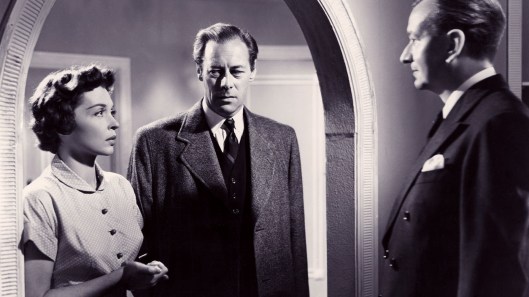
Rating: 7/10 – when an actress is murdered in the room she rents, suspicion falls on her lover, married man Arthur Groome (Harrison), but even though he goes on trial at the Old Bailey, his wife, Mary (Palmer), stands by him; an early UK attempt at film noir, The Long Dark Hall has its fair share of tension, particularly in a scene at the Groome home where Mary is alone with the real killer (Dawson), but Harrison doesn’t seem fully committed (it wasn’t one of his favourite projects), and the screenplay lurches too often into uncomfortable melodrama, though overall this has an air of fatalism that keeps it intriguing for viewers who are used to their crime thrillers being a little more straightforward.

Ready Player One (2018) / D: Steven Spielberg / 140m

Cast: Tye Sheridan, Olivia Cooke, Ben Mendelsohn, Lena Waithe, T.J. Miller, Simon Pegg, Mark Rylance, Philip Zhao, Win Morisaki, Hannah John-Kamen

Rating: 7/10 – in 2045, people have become obsessed with a virtual reality game called Oasis where anything can happen, but when its creator (Rylance) reveals there’s a hidden prize within the game, one that will give overall control of the game and its licence to the winner, it’s up to a small group of gamers led by Parzifal (Sheridan) to stop a rival corporation from winning; an elaborate sci-fi fantasy that provides a nostalgia overload for fans of Eighties pop culture in particular, Ready Player One has plenty of visual pizzazz, but soon runs out of steam in the story department, and offers way too much exposition in lieu of a proper script, a situation it tries to overcome by being dazzling if empty-headed, but which in the hands of Steven Spielberg still manages to be very entertaining indeed – if you don’t give it too much thought.

The Temple (2017) / D: Michael Barrett / 78m

Cast: Logan Huffman, Natalia Warner, Brandon Sklenar, Naoto Takenaka, Asahi Uchida

Rating: 4/10 – three American tourists – best friends Chris (Huffman) and Kate (Warner), and Kate’s boyfriend, James (Sklenar) – are travelling in Japan when they hear about an abandoned temple and decide to go there, little knowing what will happen to them once they get there; even with its post-visit framing device designed to add further mystery to events, The Temple is a chore to sit through thanks to its being yet another horror movie where people behave stupidly so that a number of uninspired “shocks” can be trotted out, along with dreary dialogue and the (actually) terrible realisation that movie makers still think that by plundering legends and myths from other countries then their movies will be much more original and scary… and that’s simply not true.

Chokeslam (2016) / D: Robert Cuffley / 102m

Cast: Chris Marquette, Amanda Crew, Michael Eklund, Niall Matter, Gwynyth Walsh, Mick Foley

Rating: 5/10 – a 10-year high school reunion gives deli owner Corey (Marquette) the chance to reconnect with the girl he loved, Sheena (Crew), who is now a famous female wrestler; a lightweight romantic comedy that pokes moderate fun at the world of wrestling, Chokeslam is innocuous where it should be daring, and bland when it should be heartwarming, making it a movie that’s populated almost entirely by stock characters dealing with stock situations and problems, and which, unsurprisingly, provides them with entirely stock solutions.

All the Money in the World (2017) / D: Ridley Scott / 132m

Cast: Michelle Williams, Christopher Plummer, Mark Wahlberg, Romain Duris, Timothy Hutton, Charlie Plummer, Marco Leonardi, Giuseppe Bonifati

Rating: 8/10 – a recreation of the kidnapping in 1973 of John Paul Getty III (Charlie Plummer), and the subsequent attempts by his mother, Gail (Williams), to persuade his grandfather (Christopher Plummer) to pay the ransom, something the then world’s richest man refuses to do; Scott’s best movie in years, All the Money in the World is a taut, compelling thriller that tells its story with ruthless expediency and features yet another commanding performance from Williams, something that takes the spotlight away from the presence of Christopher Plummer (who’s good but not great), and which serves as a reminder that money isn’t the central concern here, but a mother’s unwavering love for her child.

5 Headed Shark Attack (2017) / D: Nico De Leon / 98m

Cast: Chris Bruno, Nikki Howard, Lindsay Sawyer, Jeffrey Holsman, Chris Costanzo, Amaanda Méndez, Ian Daryk, Jorge Navarro, Lorna Hernandez, Michelle Cortès, Nicholas Nene

Rating: 3/10 – a four-headed shark terrorises the waters off Palomino Island in Puerto Rico before mutating into a five-headed shark, and being hunted by both the island’s police force, and a team of marine biologists from a local aquarium; operating at the bargain bucket end of the movie business, 5 Headed Shark Attack, SyFy’s latest cheaply made farrago, references Sharknado (2013) early on (as if it’s being clever), and then does it’s absolute best to make its audience cringe and wince and wish they’d never started watching in the first place, something the awful screenplay, dialogue, acting, special effects and direction all manage without even trying.

Share this:

  • Click to share on X (Opens in new window) X
  • Click to share on Facebook (Opens in new window) Facebook
  • More
  • Click to print (Opens in new window) Print
  • Click to email a link to a friend (Opens in new window) Email
Like Loading...

Backtrack (2015)

21 Thursday Apr 2016

Posted by dullwood68 in Movies

≈ Leave a comment

Tags

Adrien Brody, Drama, False Creek, George Shevtsov, Ghosts, Michael Petroni, Repressed memories, Review, Robin McLeavy, Sam Neill, Thriller, Train crash

Backtrack

D: Michael Petroni / 90m

Cast: Adrien Brody, George Shevtsov, Robin McLeavy, Sam Neill, Malcolm Kennard, Jenni Baird, Chloe Bayliss, Emma O’Farrell, Bruce Spence, Anna Lise Phillips

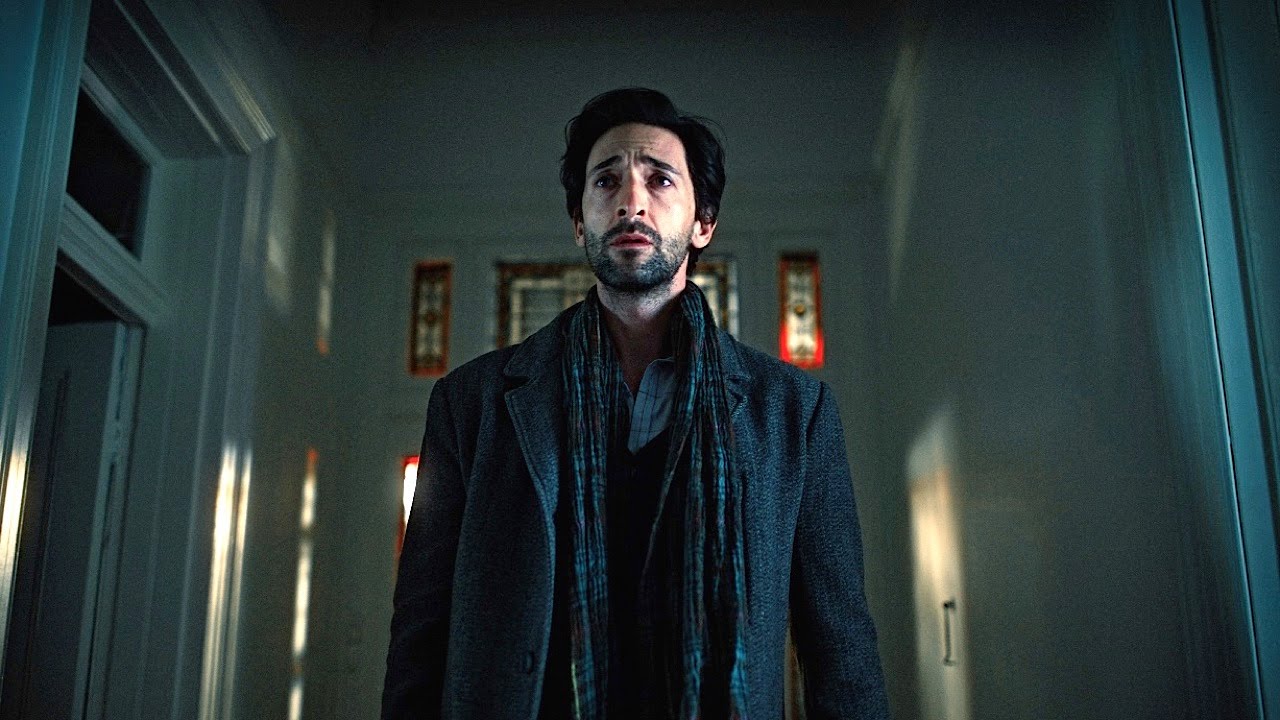
Psychotherapist Peter Bowers (Brody) has his own problems. His daughter has recently been killed in a road accident, and his career is being propped up thanks to the help of his mentor, Duncan Stewart (Neill). He seems to be managing his grief but is prone to moping about with a withdrawn, brooding demeanour that his wife (Baird) prefers to sleep through rather than engage with. As Bowers gets back into the routine of seeing patients, some of their eccentricities – one, a musician (Spence), swears he performed the night before at a club that closed down long ago – begin to worry him. He can’t put his finger on what’s bothering him, and a new patient, a young girl, Elizabeth Valentine (Bayliss), who won’t speak, adds further to his sense that something isn’t quite right.

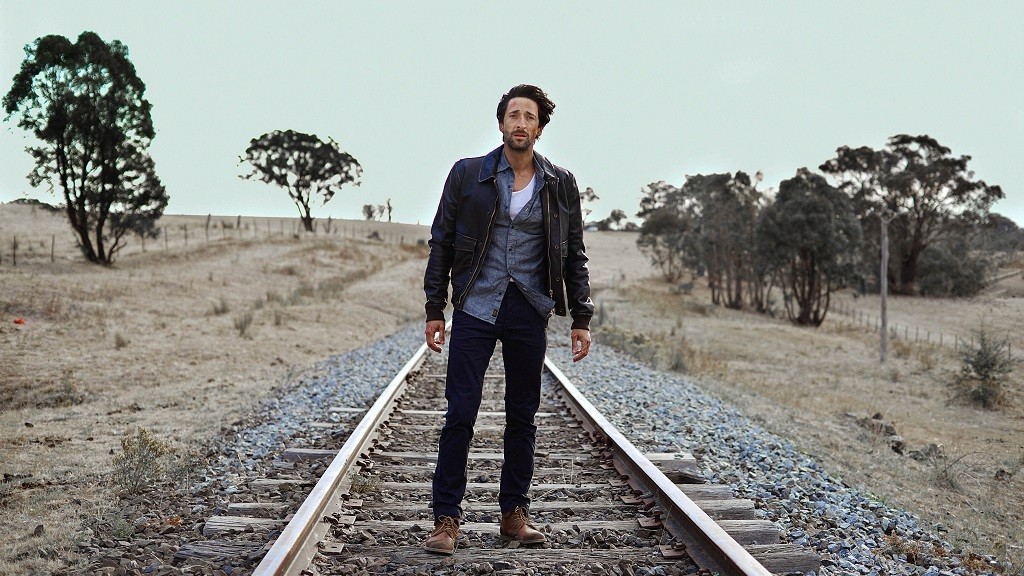
When the mystery surrounding his patients deepens, Bowers does some detective work and discovers they all have something in common, something that sends him back to his hometown of False Creek and an event that happened twenty years before. As he starts to piece together the facts of what happened when he was a boy, Bowers attempts to reconnect with his father, William (Shevtsov), while also piquing the interest of local police officer, Barbara Henning (McLeavy). And when Bowers thinks he’s got to the bottom of it all, he’s unprepared for yet another revelation that puts his life in danger.

Backtrack - scene3

The above synopsis is deliberately vague because it would be unfair to divulge the movie’s central conceit (though there are plenty of websites that will tell you if you absolutely have to know in advance what it is). The movie itself reveals this “twist” around the half hour mark, and once it does, the movie transforms from awkwardly staged psychodrama with supernatural overtones to mystery thriller with supernatural overtones. It’s not an entirely comfortable switch, and there are more than enough clues to suggest that the movie’s narrative is a combination of two separate story ideas that weren’t strong enough on their own.

However, the switch is also welcome, as writer/director Michael Petroni isn’t as sure-footed exploring Bowers’ grief over the loss of his daughter as he is with letting Bowers loose to solve a twenty-year mystery that nobody – including him – knew was a mystery in the first place. Before Bowers arrives at False Creek, Petroni has him questioning his own sanity, but in such a crude, rudimentary way that his behaviour has all the hallmarks of having been created by someone who’s heard that grief-stricken fathers all behave in the same way. Adrien Brody is a very, very talented actor (and Petroni has been lucky to nab him), but even he can’t do anything with a character who alternates between emotionally devastated and psychologically damaged, and does so without any consistency of reasoning.

Backtrack - scene2

But once Bowers is deposited in the rural backwater that serves as his birthplace and the location of a twenty year old tragedy, Brody is freed from all that brooding and is free to loosen up in his portrayal. Unfortunately, the mystery he’s required to solve is one that will have viewers scratching their heads and wondering if they’re missing something. Coincidence is piled atop coincidence with increasing disregard for credibility, and Brody visits the scene of the tragedy so many times it becomes embarrassing as he remembers “everything”. In between times he argues with his father, arouses the suspicions of Officer Henning, and manages to remember – thanks to some ghostly visitations – that he should still be grieving. His actions appear more selfish and cathartic than altruistic, and even when the scope of the tragedy is revealed (and the mystery that goes with it), Bowers ensures that it’s all still about him.

There’s the germ of a good idea for a movie here, but under Petroni’s watch it’s not allowed to develop fully. The script repeatedly makes leaps of faith that are either baffling or absurd, Neill’s character should have all the answers but disappears too quickly, Officer Henning’s connection to the tragedy is handled as awkwardly as Bowers initial malaise, and a secondary character’s fate is decided on entirely so that one particular clue can be introduced and drive the movie forward. But by this time, most viewers will be beginning to wonder just how silly it can all get; the last ten minutes will reassure them: very.

Backtrack - scene4

Backtrack is a movie with a handful of competent performances, but they’re not allowed to flourish thanks to the vagaries of Petroni’s script, and it’s insistence on being two parts obvious thriller and one part supernatural mishmash. Brody must be wondering what’s happened to his career (The Grand Budapest Hotel seems like such a long time ago now), while Shevtsov and McLeavy are reduced to playing pawns at the mercy of the script and Petroni’s wayward sense of direction (in both senses of the phrase), while Neill is lucky enough to escape with a minor role.

And for a movie shot entirely in Australia, this may be one of the few occasions where an Australian movie looks so nondescript. The early scenes in Melbourne could have been filmed in any large city in any number of countries, and the town of False Creek wouldn’t look out of place anywhere in America’s Deep South. DoP Stefan Duscio did some great work on his last feature, The Mule (2014), but here it’s as if he’s been instructed to make everything look bland and/or neutral. With so little to engage with on an emotional level, it’s one last disappointment to have a movie that’s so insipid to look at as well.

Rating: 4/10 – Petroni asks too much of both his cast and the audience in telling such a dreary tale, with the result that Backtrack is a movie that never really gets started; it doesn’t help that it gets sillier and sillier as it progresses, until by the end whatever positives it possessed at the start have been abandoned in favour of a generic thriller outcome that is as tedious as it is absurdly set up.

Share this:

  • Click to share on X (Opens in new window) X
  • Click to share on Facebook (Opens in new window) Facebook
  • More
  • Click to print (Opens in new window) Print
  • Click to email a link to a friend (Opens in new window) Email
Like Loading...

Crimson Peak (2015)

17 Saturday Oct 2015

Posted by dullwood68 in Movies

≈ 1 Comment

Tags

Allerdale Hall, Charlie Hunnam, Drama, Ghosts, Gothic romance, Guillermo del Toro, Horror, Jessica Chastain, Mia Wasikowska, Murder, Review, Thriller, Tom Hiddleston

Crimson Peak

D: Guillermo del Toro / 119m

Cast: Mia Wasikowska, Jessica Chastain, Tom Hiddleston, Charlie Hunnam, Jim Beaver, Burn Gorman, Leslie Hope, Doug Jones, Jonathan Hyde, Bruce Gray

When Edith Cushing (Wasikowska) is a young child her mother dies unexpectedly. After the funeral, Edith is visited by the ghost of her mother who warns her to “beware of Crimson Peak”. Fourteen years later, Edith is trying to establish herself as a writer. She has written a novel about ghosts but her intended publisher wants her to include a romance (though she feels this is unnecessary). Her father (Beaver), a self-made industrialist, is supportive of her efforts, and lets her type up her manuscript at his offices. There she meets Sir Thomas Sharpe, a visiting aristocrat from England, who is looking for financial backing for an invention of his that will aid in the mining of red clay at his home in Northumberland. But while Edith finds herself attracted to Thomas, her father takes a dislike to him and refuses to back him.

When a secret about Thomas is discovered it leads to the death of Edith’s father. Heartbroken, she turns to Thomas and his sister, Lady Lucille (Chastain) for support, and soon agrees to marry him. Together, they travel to England and the Sharpe family home, a towering gothic edifice called Allerdale Hall. The house is falling apart, and stands atop a clay mine that it is slowly sinking into. As she settles into her new life, Edith comes to discover that the house harbours secrets that neither Thomas nor Lucille want her to know about. Meanwhile, back in New York, Edith’s childhood friend Dr Alan McMichael (Hunnam), already suspicious of the way in which her father died, begins his own investigation.

Plagued by ghostly visions, Edith begins to unravel the secrets of Allerdale Hall, secrets that lead her to believe that Thomas’s mother was murdered there, and that there is some connection with his recent trips to places such as Edinburgh and Milan. The discovery of luggage engraved with the initials E.S. provides a further clue that links to the visions she has. At the same time she begins to fall ill, while McMichael learns the same secret that led to her father’s death and believing Edith to be in danger, he decides to leave for England.

Crimson Peak - scene

A project that del Toro has been looking to film since 2006, Crimson Peak arrives with a great deal of anticipation and hype preceeding it, and with the enviable status of being the only movie of its kind – a gothic romance with distinct horror overtones – to be released in 2015. It’s a movie that splits its narrative in two, and in the process ends up making the first part more effective than the second, which has the unfortunate effect of leaving viewers with the impression that del Toro and co-screenwriter Matthew Robbins had a firmer grasp of what they were trying to achieve with the scenes set in New York than they did with the ones at Allerdale Hall.

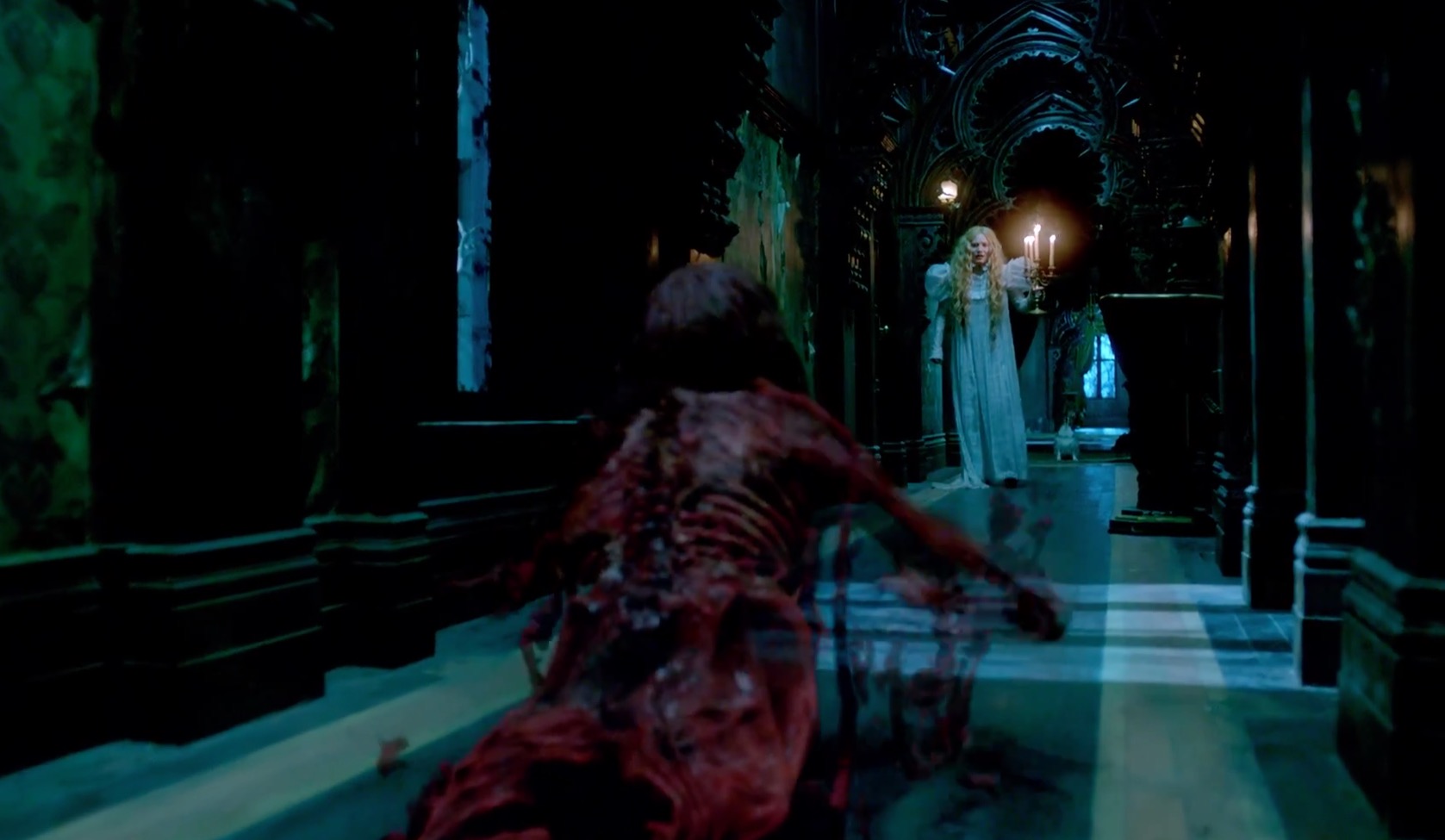
This leads to the movie lacking a sense of true development once we’re ensconced in the Sharpe ancestral family home. It should be the other way round but while del Toro and Robbins expand on the mystery behind Thomas and Lucille’s motives, it soon becomes apparent that the ghostly visions Edith experiences are less of a threat to her and more of a series of clues as to what has happened at the Hall in the past. With this in mind, it’s puzzling that del Toro has decided to make these apparitions as scary as possible, and in particular the spectral wraith that is Edith’s mother (played by the erstwhile Doug Jones), a depiction that seems at odds with her role as a guardian in death of her daughter’s safety – did she have to be so frightening?

But while the recreation of pre-1900 New York is achieved with considerable success, it’s not until we reach Allerdale Hall that del Toro reveals the true focus of the movie: making that towering creation feel like a living, breathing character in its own right. The Hall is a triumph of production and set design, and is endlessly fascinating in its construction, with darkness leeching from the walls and corridors that look like they’ve been carved out of the vertebrae and rib cages of dead whales. Everywhere you look there’s another interesting detail to take in, some new quirk of the architecture to observe, but so good is this attention to detail that it overwhelms the story, leaving Edith’s plight of secondary importance. And with a subterranean level thrown in for good measure, the house and its “personality” become far more interesting than the pallid-by-comparison storyline involving Edith and the conspiring Sharpes (though you might wonder where all the leaves that tumble continuously through the roof are coming from, as the house is shown to sit proudly alone at the top of a hill).

As a gothic romance, the movie is on better ground, with Thomas’s pursuit of Edith feeling more than expedient from the beginning, and as he becomes less and less sure of the path that he and Lucille have embarked upon, it becomes obvious that his true feelings will cause his doom. Hiddleston relays the torment and indecision that Thomas endures with a great deal of yearning for a chance to be free of his family burden, and makes the character more sympathetic than his initial actions would warrant. As the wounded and betrayed Edith, Wasikowska ensures her would-be author isn’t shown as too soft or easily dominated, but is still asked to rein in Edith’s assertiveness in moments where the script requires it. She and Hiddleston do well in making their characters’ relationship more credible than most, but despite their good work there’s just not enough passion on display to make their feelings for each other too convincing.

Crimson Peak - scene2

The same can’t be said for Chastain, an actress who it seems can turn her hand to any character in any genre. As the taciturn and tightly controlled Lucille she’s a riveting presence in any scene she’s in, even when she’s in the background. By the movie’s end she’s asked to abandon all the subtleties she’s imbued her performance with in favour of a more traditional approach required by the material. Before this, Chastain is quietly chilling, her manipulative, simmering-with-anger personality more compelling in its intensity than any of the house’s blood-slicked apparitions. (In comparison, Hunnam is the movie’s anodyne hero, and one who almost operates as an historical forerunner of Hallorann from Kubrick’s The Shining.)

By the time the mystery has been revealed and the machinations of the plot (loosely) explained and sewn up, the movie has descended into the kind of bloody, violent showdown that audiences will be expecting, but it isn’t the best showdown you’re ever likely to see, and it lacks vitality. Partly this is due to the pacing, and partly due to the editing, which never picks up the pace, and never seems likely to add any kind of punch to proceedings. It all leads to an oddly melancholy ending that befits a gothic romance, but not the thriller this movie has become. With so much effort having gone into the look and feel of the movie, viewers may well feel let down by this half-hearted denouement, and they’d be right to, but the movie retains a strange fascination even at the end, and one that lingers long after the closing credits.

Rating: 7/10 – not as chilling or impressive on the plot or storyline front as it is when it comes to how the movie looks, Crimson Peak falls short on delivering the chills and thrills it promises to provide; del Toro has made better movies, and will probably make better ones in the future, but for now this will have to serve as a reminder, however disappointing, that there’s no one else out there who can make this kind of movie and with this kind of ardour.

Share this:

  • Click to share on X (Opens in new window) X
  • Click to share on Facebook (Opens in new window) Facebook
  • More
  • Click to print (Opens in new window) Print
  • Click to email a link to a friend (Opens in new window) Email
Like Loading...

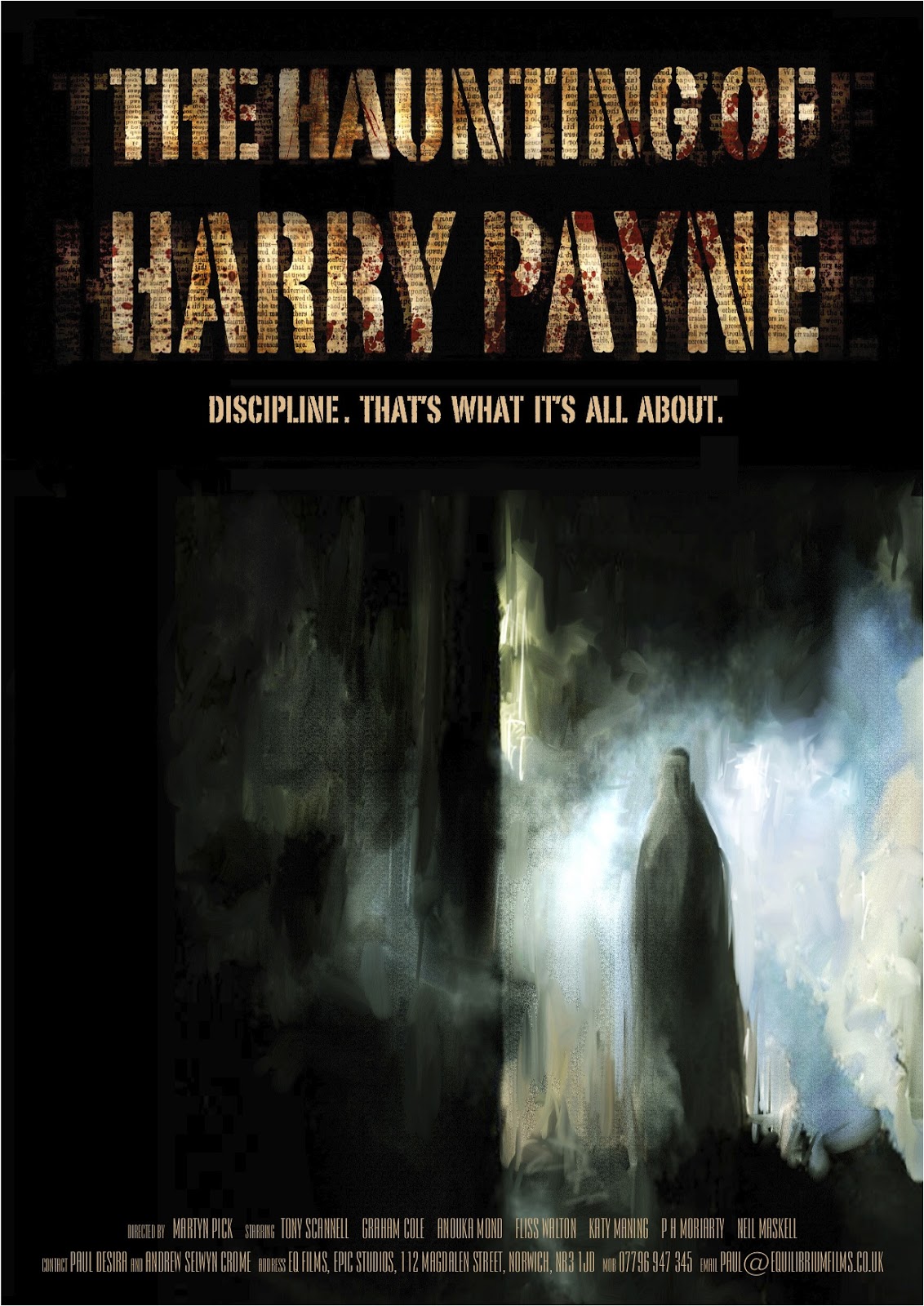
The Haunting of Harry Payne (2014)

16 Wednesday Apr 2014

Posted by dullwood68 in Movies

≈ 4 Comments

Tags

Crime, Gangster, Ghosts, Graham Cole, Horror, John Mangan, Martyn Pick, Norfolk, P.H. Moriarty, Rayleton, Review, Sickle, Tony Scannell, White Lady

Haunting of Harry Payne, The

aka Evil Never Dies

D: Martyn Pick / 73m

Cast: Tony Scannell, Graham Cole, Anouska Mond, Fliss Walton, Katy Manning, P.H. Moriarty, Neil Maskell, John Mangan, Louis Selwyn

These days, British horror – Hammer’s recent resurgence aside – is almost entirely the preserve of low-budget filmmakers.  Within the broad spectrum of horror movies that are being made, there is a sub-genre involving a rural setting and a lot of blood-letting.  The Haunting of Harry Payne fits the mould quite nicely, and adds a gangster back story for its troubled title character.  It’s an awkward mash-up, but it is at least an attempt to do something a little different, even if the end results are as unstable as the movie’s chief villain.

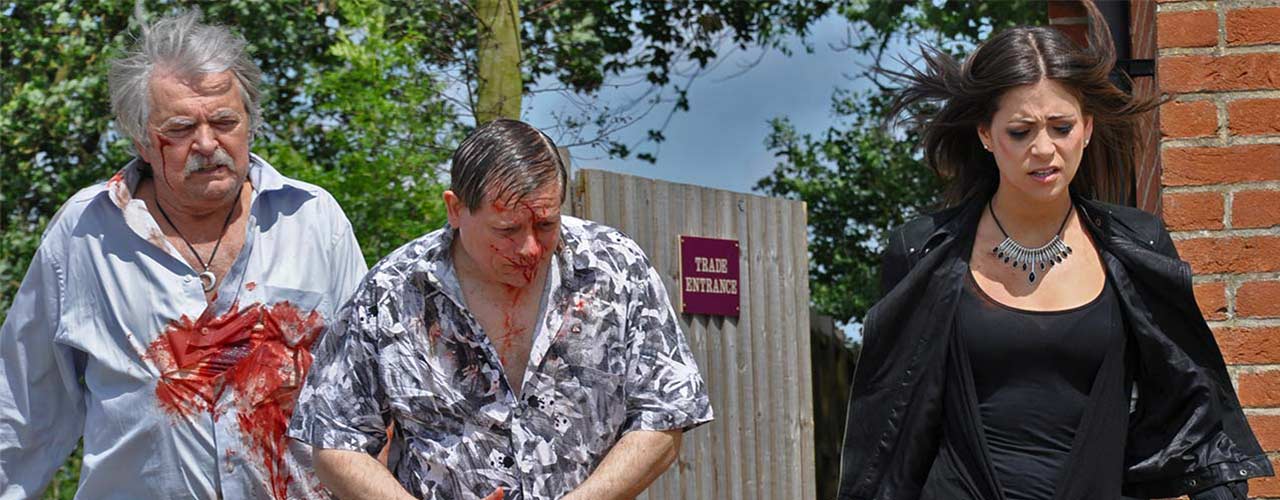
Harry Payne (Scannell) is released from prison after serving ten years for the murder of his friend and gang boss, Eugene McCann (Moriarty).  He leaves London for the Norfolk countryside and the sleepy village of Rayleton, where he is the new owner of the pub.  He’s also able to visit his wife, Susan (Manning), who lives at a nearby sanitarium.  On his first night in Rayleton a young woman is brutally killed and dismembered.  Payne is immediately accused of the crime by Detective Inspector Bracken (Cole) who knows about Payne’s gangster past.  Along with Detective Sergeant Churchill (Walton), Bracken does his best to implicate Payne in the murder but doesn’t even have circumstantial evidence to proceed, just an intense dislike for Payne and his history.  When another murder occurs, Payne becomes embroiled in both the murders and the local legend of a Lady in White, a ghostly apparition that may or may not be responsible for the deaths.

To complicate matters, Payne has violent headaches that leave him with no memory of what he’s done, and flashbacks to his days working for McCann.  McCann was an extremely vicious gangster with a penchant for torture and cold-blooded murder.  This back story impacts on the events at Rayleton in a surprising fashion and leads to revelations that affect Payne and his wife, Bracken and Churchill and local occult store owner, Angela (Mond).  There’s a further twist to proceedings which I won’t spoil by revealing here, but it adds a little depth to the storyline, and gives Payne an extra layer of characterisation.

Haunting of Harry Payne, The - scene

From the outset, The Haunting of Harry Payne shows evidence of its low-budget origins and continues to do so throughout.  The flashbacks to Payne working with McCann are shot in large, open warehouse spaces that feature little or no props or set design.  The roads outside Rayleton are actually the same road through the woods each time, plus the same village road is used (but is shot from different angles).  There’s too much footage of a predatory presence prowling through the woods at ankle height, replaying the roving camerawork from The Evil Dead (1983) and dozens of other horror movies from the last thirty years.  And the gore effects are reduced to the results or after affects of an attack, making the various blood spurts that are seen almost abstract in their presentation.  The painfully short running time is another clear indicator of the movie’s low budget, though it does mean that the movie doesn’t outstay its (potential) welcome.

The script, by Mangan (who also appears as pub manager Tark), packs a lot in, but sacrifices characterisation and effective dialogue for a melange of ideas and plot contrivances in an effort to hold the audience’s attention.  Events happen quickly, almost overlapping themselves at times, with Payne striving to make sense of what’s going on, and in particular, how the Lady in White fits into everything.  The filmmakers’  ambition should be rewarded; however, in its execution the movie falls flat, and it’s like watching an am-dram attempt at making a gangster/horror movie.

Director Martyn Pick (better known as an animator), fails to rein in his cast’s preference for hamming it up – Moriarty and Cole are the worst offenders while Manning misjudges her role completely – and his inexperience leaves the movie looking distinctly ramshackle and visually unappealing.  He’s aided by John Fensom’s scattershot editing – some scenes look and feel like they’ve been taken from a work print – and an overbearing score courtesy of Alex Ball.  As Payne, Scannell looks uncomfortable throughout, as if he’s having second thoughts about being in the movie, and leaves what little acting kudos there is to Mond, who takes a severely malnourished character and makes more of her than would seem possible from the script.

With so much of contemporary British horror lying in the doldrums, The Haunting of Harry Payne could have been a welcome addition to the rural terror sub-genre, but its botched attempts at creating menace, and its awkward shoe-horning of McCann’s evil nature into the scheme of things serve only to show – once again – that horror is incredibly difficult to get right, and especially on a low budget.

Rating: 3/10 – with so much crammed in, it’s no surprise that The Haunting of Harry Payne lacks focus, or that it often looks rushed; at best an interesting failure, at worst a terrible mess that ought to be missed off everyone’s CV.

Share this:

  • Click to share on X (Opens in new window) X
  • Click to share on Facebook (Opens in new window) Facebook
  • More
  • Click to print (Opens in new window) Print
  • Click to email a link to a friend (Opens in new window) Email
Like Loading...

Jekhane Bhooter Bhoy (2012)

03 Tuesday Dec 2013

Posted by dullwood68 in Movies

≈ Leave a comment

Tags

Anath Babur Bhoy, Bhut Bhabishyat, Brown Saheber Bari, Drama, Ghost stories, Ghosts, Horror, India, Paran Banerjee, Review, Sandip Ray, Satyajit Ray, Tarini Khuro

jekhane Bhooter Bhoy

D: Sandip Ray / 105m

Cast: Paran Banerjee, Dwijen Banerjee, Abir Chatterjee, Bhaswar Chatterjee, Biswajit Chakraborty, Saswata Chatterjee, Abanti Mohan Bandyopadhyay

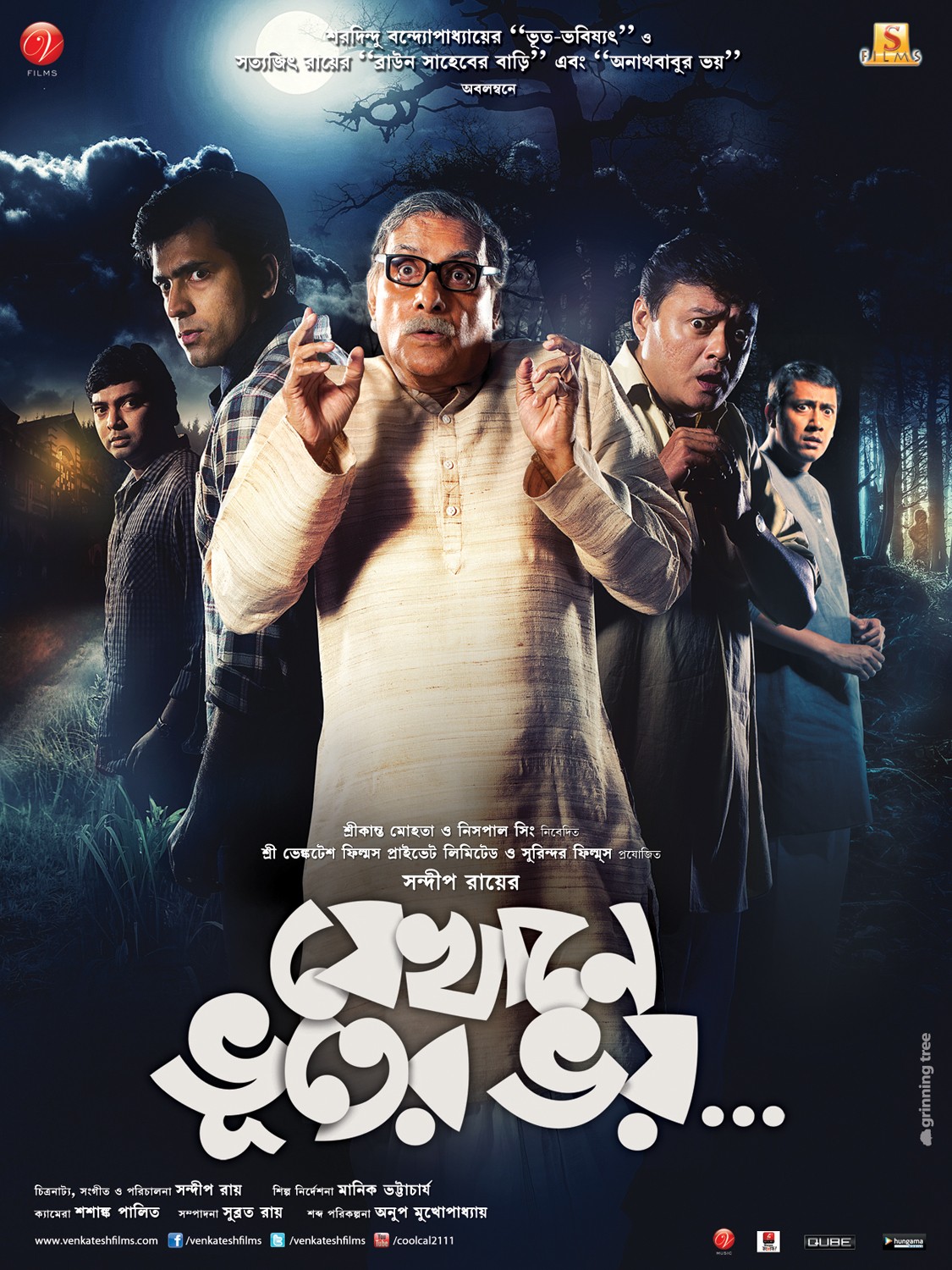
A trio of ghost stories – two by Satyajit Ray, one by Saradindu Bandopadhyay – Jekhane Bhooter Bhoy (roughly translated it means “where there is a fear of ghosts”) opens with a character created by Satyajit Ray, Tarini Khuro (Paran Banerjee), travelling to the home of a friend. There are five children there and once settled with tea, Khuro begins to tell the first of the three stories, Anath Babur Bhoy. On a trip to Raghunathpur, a writer meets Anath Babu (Dwijen Banerjee), a semi-famous ghost hunter on his way to visit the reputedly haunted Halder Bari, a dilapidated mansion on the outskirts of the town. Babu aims to spend the night there and see for himself if the story that no one who spends the night there is alive the next morning.

The second tale, Brown Saheber Bari, concerns a diary that has come into the possession of a bank employee, Ranjan Sengupta (Abir Chatterjee). The diary was written by a man named Brown, and in it there are constant references to someone called Simon. Ranjan is convinced that Simon’s ghost haunts the house where Brown lived, and with his friend Aneek (Bhaswar Chatterjee) and associate Mr Banerjee (Chakraborty), arranges to stay there for the night in the hope of proving his theory.

The final tale, Bhut Bhabishyat, sees a writer, Pratap Sarkar (Saswata Chatterjee), renting a place in Raipur where he aims to write his latest novel. One night he is surprised by a ghost, Nandadulal Nandy (also Paran Banerjee). Initially astonished but unafraid, when the ghost reappears, Sarkar speaks to him, and so discovers a tale of woe that leads him to helping the ghost ensure his family, who are struggling financially, are taken care of.

Jekhane Bhooter Bhoy - scene

As a compendium of classic ghost stories, Jekhane Bhooter Bhoy works only occasionally, with the framing device of only minimal interest, and each story lacking any real scares. There’s a reverence to the material that undermines the effectiveness of each tale, and while Ray directs efficiently and elicits good performances from all concerned, the movie fails to make much of an impact. The first tale has an impressive haunted house, the location being creepy all by itself, and the set up is well handled but the payoff is predictable and banal. The second tale takes quite a while to get going, and though the cast in this segment do their best to “sell” the supernatural elements, the twist in the tale is badly executed and skirts dangerously close to being unintentionally humorous. Humour, though, is essential to the third tale, as the machinations of Nandy are played deliberately for laughs, and of the three stories, this is the most successful. That said, it sits uneasily against the other stories, played as they are for their scare factors, and while the playing by both Saswata Chatterjee and Paran Banerjee is a delight to watch, it’s this change in direction that undercuts the (minor) power of the two previous segments.

Visually, the movie isn’t all that impressive either. It’s a bit murky at times, and while the lighting of the first two tales is shadowy in relation to the mood and content of the stories, it serves only to make things look unnecessarily gloomy. A spooky atmosphere is supplied only in the first tale (courtesy of the dilapidated mansion and its locale), while any sense of unease is diminished due to a distancing from the material that doesn’t help the viewer get involved in what’s happening on screen. It’s almost as if Ray was loathe to try anything new with the material. As a result it’s hard to feel anything other than a kind of creeping lassitude.

Rating: 5/10 – an overly safe retelling of three classic Indian ghost stories, bolstered by good performances but ultimately falling short in its ambition; worth a look to see how it’s done elsewhere, just don’t expect anything too compelling, or scary.

Share this:

  • Click to share on X (Opens in new window) X
  • Click to share on Facebook (Opens in new window) Facebook
  • More
  • Click to print (Opens in new window) Print
  • Click to email a link to a friend (Opens in new window) Email
Like Loading...

Blog Stats

  • 491,182 hits

Recent Posts

  • 10 Reasons to Remember Bibi Andersson (1935-2019)
  • Fantasia (1940)
  • Dances With Wolves (1990) – The Special Edition
  • Kiss of the Spider Woman (1985)
  • The Three Musketeers (1973)

Top Posts & Pages

  • Cardboard Boxer (2016)
    Cardboard Boxer (2016)
  • A Monster Calls (2016)
    A Monster Calls (2016)
  • 7:19 (2016)
    7:19 (2016)
  • Virginity (1937)
    Virginity (1937)
  • The Town That Dreaded Sundown (1976)
    The Town That Dreaded Sundown (1976)
  • Where There's a Prank, There's a Pay Off: Spider (2007) and Family Values (2011)
    Where There's a Prank, There's a Pay Off: Spider (2007) and Family Values (2011)
  • The Hippopotamus (2017)
    The Hippopotamus (2017)
  • 10 Reasons to Remember Carrie Fisher (1956-2016)
    10 Reasons to Remember Carrie Fisher (1956-2016)
  • A Brief Word About Cineworld Unlimited
    A Brief Word About Cineworld Unlimited
  • Murder on a Sunday Morning (2001)
    Murder on a Sunday Morning (2001)
Follow thedullwoodexperiment on WordPress.com

Blogs I Follow

  • Rubbish Talk
  • Film 4 Fan
  • Fast Film Reviews
  • The Film Blog
  • All Things Movies UK
  • Interpreting the Stars
  • Let's Go To The Movies
  • Movie Reviews 101
  • TMI News
  • Dan the Man's Movie Reviews
  • Film History
  • Jordan and Eddie (The Movie Guys)

Archives

  • April 2019 (13)
  • March 2019 (28)
  • February 2019 (28)
  • January 2019 (32)
  • December 2018 (28)
  • November 2018 (30)
  • October 2018 (29)
  • September 2018 (29)
  • August 2018 (29)
  • July 2018 (30)
  • June 2018 (28)
  • May 2018 (24)
  • April 2018 (21)
  • March 2018 (31)
  • February 2018 (25)
  • January 2018 (30)
  • December 2017 (30)
  • November 2017 (27)
  • October 2017 (27)
  • September 2017 (26)
  • August 2017 (32)
  • July 2017 (32)
  • June 2017 (30)
  • May 2017 (29)
  • April 2017 (29)
  • March 2017 (30)
  • February 2017 (27)
  • January 2017 (32)
  • December 2016 (30)
  • November 2016 (28)
  • October 2016 (30)
  • September 2016 (27)
  • August 2016 (30)
  • July 2016 (30)
  • June 2016 (31)
  • May 2016 (34)
  • April 2016 (30)
  • March 2016 (30)
  • February 2016 (28)
  • January 2016 (35)
  • December 2015 (34)
  • November 2015 (31)
  • October 2015 (31)
  • September 2015 (34)
  • August 2015 (31)
  • July 2015 (33)
  • June 2015 (12)
  • May 2015 (31)
  • April 2015 (32)
  • March 2015 (30)
  • February 2015 (37)
  • January 2015 (39)
  • December 2014 (34)
  • November 2014 (34)
  • October 2014 (36)
  • September 2014 (25)
  • August 2014 (29)
  • July 2014 (29)
  • June 2014 (28)
  • May 2014 (23)
  • April 2014 (21)
  • March 2014 (42)
  • February 2014 (38)
  • January 2014 (29)
  • December 2013 (28)
  • November 2013 (34)
  • October 2013 (4)

Blog at WordPress.com.

Rubbish Talk

Film 4 Fan

A Movie Blog

Fast Film Reviews

The Film Blog

The official blog of everything in film

All Things Movies UK

Movie Reviews and Original Articles

Interpreting the Stars

Dave Examines Movies

Let's Go To The Movies

Film and Theatre Lover!

Movie Reviews 101

Daily Movie Reviews

TMI News

Latest weather, crime and breaking news

Dan the Man's Movie Reviews

All my aimless thoughts, ideas, and ramblings, all packed into one site!

Film History

Telling the story of film

Jordan and Eddie (The Movie Guys)

Movie Reviews & Ramblings from an Australian Based Film Fan

Privacy & Cookies: This site uses cookies. By continuing to use this website, you agree to their use.
To find out more, including how to control cookies, see here: Cookie Policy
  • Subscribe Subscribed
    • thedullwoodexperiment
    • Join 481 other subscribers
    • Already have a WordPress.com account? Log in now.
    • thedullwoodexperiment
    • Subscribe Subscribed
    • Sign up
    • Log in
    • Report this content
    • View site in Reader
    • Manage subscriptions
    • Collapse this bar
 

Loading Comments...
 

    %d