• 10 Reasons to Remember…
  • A Brief Word About…
  • About
  • For One Week Only
  • Happy Birthday
  • Monthly Roundup
  • Old-Time Crime
  • Other Posts
  • Poster of the Week
  • Question of the Week
  • Reviews
  • Trailers

thedullwoodexperiment

~ Viewing movies in a different light

thedullwoodexperiment

Tag Archives: Haley Joel Osment

Izzy Gets the Fuck Across Town (2017)

07 Sunday Oct 2018

Posted by dullwood68 in Movies

≈ Leave a comment

Tags

Alia Shawkat, Carrie Coon, Christian Papierniak, Comedy, Drama, Engagement, Haley Joel Osment, Los Angeles, Mackenzie Davis, Review, Romance
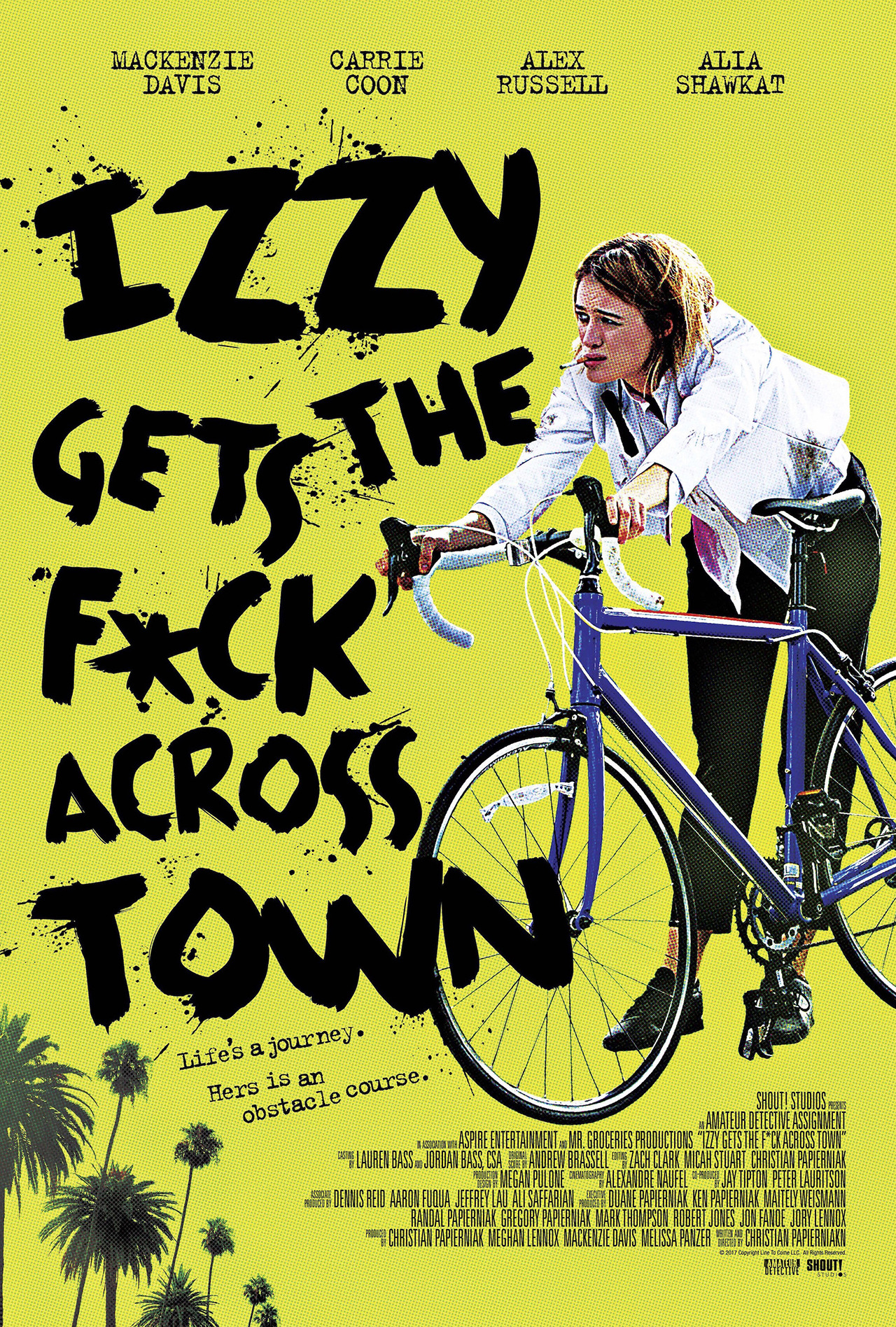
D: Christian Papierniak / 87m

Cast: Mackenzie Davis, Carrie Coon, Alex Russell, Alia Shawkat, Haley Joel Osment, Lakeith Stanfield, Annie Potts, Rob Huebel, Brandon T. Jackson, Sarah Goldberg, Meghan Lennox, Dolly Wells

Izzy (Davis) wakes one morning to find herself in the bed of a stranger (Stanfield). As she navigates leaving without waking him, she learns that her ex-boyfriend, Roger (Russell), is getting engaged to her best friend, Whitney (Goldberg), and there’s a party to celebrate that evening. Determined to get to the party and stop Roger from going through with it – she’s convinced he still loves her – Izzy sets off with plenty of time to get there. But obstacles soon present themselves. Her car isn’t ready at the garage, she can’t get enough money for cab fare, she takes a tumble on the bike she borrows and it’s too damaged to keep using, and the one person (Shawkat) who does give her a lift leaves her stranded in a neighbourhood she doesn’t know after going just a short distance. It’s only thanks to the help of another stranger (Potts) that Izzy is able to finally get to the engagement party. But when she does, things don’t exactly go as well as she’d planned…
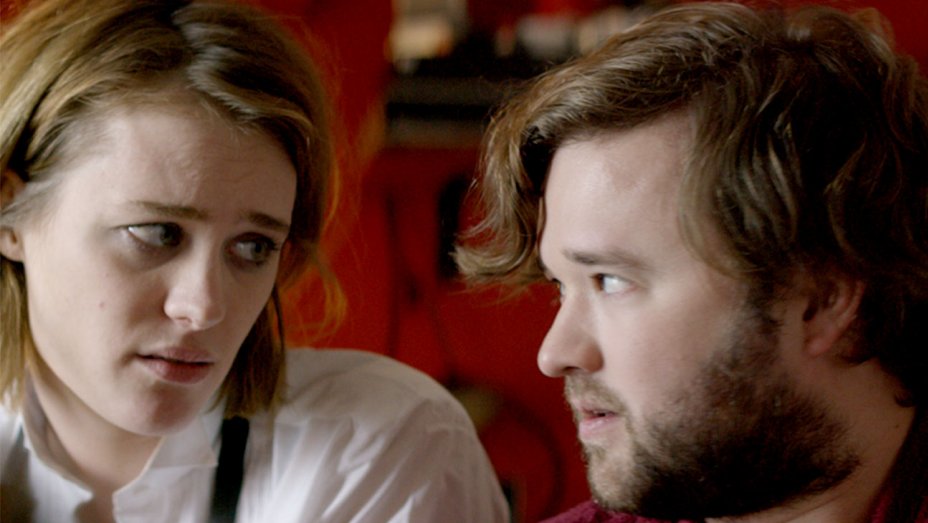
There’s much to like in Christian Papierniak’s feature debut, not the least of which is Davis’s bullish, spiky performance, but Izzy Gets the Fuck Across Town is a movie whose episodic structure hampers both its flow and its effectiveness. It’s to be expected that Izzy will encounter setbacks in her journey to her ex’s engagement party, but it’s whether or not those setbacks are interesting or reflect on Izzy’s own emotional state that is the key. And that’s where Papierniak’s screenplay lacks consistency. Too preoccupied with trying to make eloquent statements about the nature of fate, or the validity of personal expectations and needs in relationships, the script often stops the action to contemplate these matters, and in doing so, negates the urgency of Izzy’s journey. What should be a more and more desperate race against time as the movie progresses, becomes instead a kind of semi-serious, semi-humorous series of bunny hops across Los Angeles as Izzy deals with one uninterested potential Samaritan after another (until Potts’s sympathetic romantic idealist comes along). Izzy herself is someone it’s well worth spending time with, and Papierniak is on firmer ground when she’s the focus of a scene, but the other characters don’t have anywhere near the same impact.

Again, this is largely due to the uneven nature of the script, and Papierniak not fully realising his thematic and subtextual ambitions. But it’s also due to a remarkable performance by Davis, who dominates the movie in a way that makes everyone else seem like they weren’t paying attention when Papierniak gave out notes. As Izzy, Davis is mercurial, fiery, amusing, good-natured at heart, abrasive when pushed, and altogether a person rather than an indie caricature (the drawback of both Shawkat and Osment’s characters). Only Coon as Izzy’s estranged sister, Virginia – they were a musical duo once before Virginia split them up – is as compelling, contrasting Davis’s messed up free spirit with a steely-eyed turn as a woman whose sense of responsibility is just as skewed as Izzy’s but in a way that has deadened her emotionally (there’s a hint that this could be Izzy’s ultimate fate but it isn’t developed any further). When it’s not trying to be serious about life and love, the movie is on much better footing, with a sly sense of humour that elevates the material, and there’s a bittersweet ending that feels antithetical to what’s gone before, but actually proves to be a bold move by Papierniak, and one that rounds off the movie much more effectively than if – well, you’ll just have to see for yourself.

Rating: 6/10 – although Davis steals the limelight and gives an indelible, finely-tuned performance, Izzy Gets the Fuck Across Town is let down by an uneven script and less than interesting secondary characters; that said, Papierniak isn’t afraid to throw in some odd stylistic choices that at least show he’s trying to do something different, and there’s a terrific moment that involves a bathroom, a change of lighting, and the exposure of past regrets.
Share this:

  • Click to share on X (Opens in new window) X
  • Click to share on Facebook (Opens in new window) Facebook
  • More
  • Click to print (Opens in new window) Print
  • Click to email a link to a friend (Opens in new window) Email
Like Loading...

Tusk (2014)

13 Saturday Dec 2014

Posted by dullwood68 in Movies

≈ 1 Comment

Tags

Drama, Genesis Rodriguez, Haley Joel Osment, Horror, Howard Howe, Justin Long, Kevin Smith, Manitoba, Michael Parks, Mr Tusk, Podcast, Review, Thriller, Transformation, Walrus

Tusk

D: Kevin Smith / 102m

Cast: Michael Parks, Justin Long, Haley Joel Osment, Genesis Rodriguez, Guy Lapointe

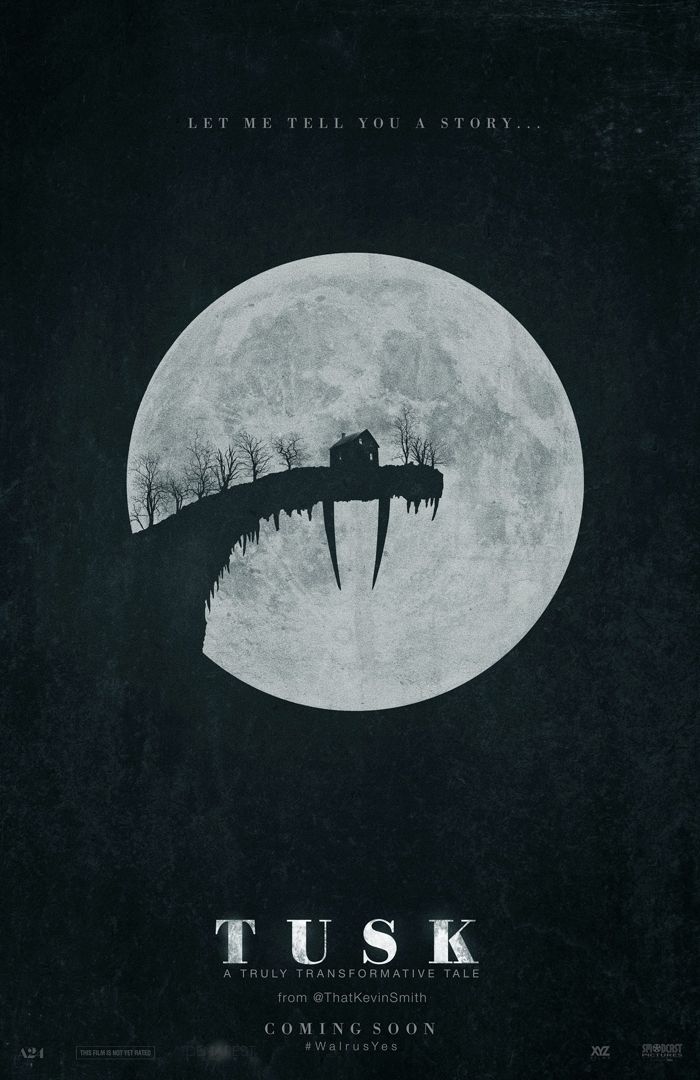
Popular podcast hosts Wallace Bryton (Long) and Teddy Craft (Osment) have built up their following by finding videos of people doing stupid and/or humiliating things and re-broadcasting them. When they find a video of a young Canadian whose swordplay proves disastrous, Wallace determines to follow it up by meeting him. His girlfriend, Ally (Rodriguez), wants to go with him but he dissuades her. When Wallace arrives in Manitoba, though, he finds the story is a dead end. Later that night in a bar, he comes across a flyer from someone offering free lodging in return for listening to a lifetime of interesting stories. Intrigued, Wallace calls the man, Howard Howe (Parks) and arranges to meet him where he lives.

Their initial meeting goes well. Howe does indeed have some remarkable stories to tell, and Wallace is fascinated by them. Howe’s home is also full of mementoes and keepsakes from his travels. But as he begins to tell Wallace about the time he was stranded on a small Russian island with only a walrus for company, the podcaster begins to feel tired. Soon he passes out. When he comes to he finds himself in a wheelchair and very groggy. Howe explains that Wallace was bitten by a poisonous spider – which caused him to pass out – but he’s been seen by a doctor, though in order to stop the poison from spreading, Wallace’s left leg has been removed below the knee.

Wallace soon learns that the story of the spider is untrue, and that Howe has plans for Wallace that involve transforming him into a walrus. Wallace manages to call both Ally and Teddy but his calls go to voicemail. Howe finds out what he’s doing, and so speeds up his plan. The next morning, Ally and Teddy find Wallace’s calls and head for Manitoba. When they get there they find there is little evidence to go on, but the local police put them in touch with an ex-detective of the Sûreté du Québec, Guy Lapointe. Lapointe has been chasing a serial killer who’s been responsible for dismembering and mutilating young men for years, twenty-three in total. Together, he, Ally and Teddy trace Wallace’s journey from Manitoba to Howe’s home. But will they be in time to save Wallace from an awful fate?

Tusk - scene

The last few years have seen writer/director Kevin Smith broaden his cinematic horizons away from his New Jersey roots – and the dialogue heavy movies he made there – to incorporate ideas and places far removed from the kind of movies we’ve become used to. Cop Out (2010) was a serious misstep, working from someone else’s script and having no real feel for the material; in many ways it looked like a movie made by someone who didn’t give a toss (it also has one of the most embarrassing tag lines ever: “Rock out with your Glock out”). Red State (2011) was a better choice of material but was too unsure of what it wanted to be to be entirely successful. Now, with Tusk, Smith returns with a more focused, more accessible movie, but one which also has its fair share of needless longueurs.

Using Long and Osment as on screen versions of himself and long-time producer/friend Scott Mosier, Smith opens the movie with a podcast that recreates the vibe of his own podcasts: funny, irreverent, and with a healthy disdain for “holding back” (the video they show is both predictable and yet shocking at the same time). It sets up Wallace as a bit of a horrible jerk, something that is confirmed later on when we learn that he doesn’t want Ally to go on trips with him because it cuts down on his opportunities to get some “road head”. He’s not a likeable guy, but as he tells Ally, he’s the new Wallace, whereas the old, pre-podcast Wallace was a loser. It’s a neat trick on Smith’s part, that the object of a painful physical transformation has already undergone a mental one, and it’s this that will (hopefully) see him through his ordeal. Long makes Wallace objectionable and crass in his dealings with others, but this makes it difficult for the audience to fully sympathise with him when Howe’s plan swings into action. It’s a measure of Smith’s confidence as a director, and Long’s performance, that this hesitancy doesn’t undercut the movie’s effectiveness, and instead, adds to the tension.

However, with the introduction of Lapointe, Smith scuppers both the momentum he’s built up up to that point, and a large portion of the goodwill the movie needs to keep the audience with it (it’s a far-fetched tale requiring a healthy dose of acceptance, especially in the later stages). Lapointe is played by a very well known actor who is simply credited as Guy Lapointe, but it’s a mannered caricature of a performance that stops the movie cold and ruins the tone completely. Lapointe is in many ways the comic relief, but it’s an extended turn that doesn’t work and includes an awkward flashback that adds little to the movie other than the chance to see Parks play old and bordering on senile (as opposed to old and way past disturbed).

Parks is on fine form, his verbose dialogue made into polite expressions of personal experience in his opening scenes with Long, and then given a more florid, cod-Shakespearean approach once his plan is under way. It’s an operatic performance in many ways, and leans toward tragedy by the end, but Parks is quietly, authoritatively magnificent in a role that could so easily have descended into high farce (especially when Smith’s script skirts it quite often). In support, Osment has a subdued role that doesn’t allow him to stretch as an actor, while Rodriguez gets to emote to camera but with very little reason for her to be doing so.

Tusk is an odd little movie that will likely divide audiences, and in certain quarters will find itself the object of unintentional laughter, but the nature of the story is such that this is unavoidable. Like many of Smith’s movies it’s not the most visually compelling of projects to watch, and the score by Christopher Drake doesn’t highlight the drama as well as it could have done, often feeling perfunctory rather than part of the movie’s fabric. However, in the editor’s chair, Smith really shows his strengths – the sequence with Guy Lapointe in the diner aside – and he makes good use of long shots to evoke menace (Howe walking the length of the dining table to see to Wallace’s cries for help is a great example).

Rating: 7/10 – with often superb dialogue that any actor would relish delivering, and a sense of the truly macabre that most horror movies can’t even fake properly, Tusk sees Smith on fine form; this may well turn out to be a future cult movie, while its scenes of Cronenberg-style body horror are grim and uncompromising to watch.

Share this:

  • Click to share on X (Opens in new window) X
  • Click to share on Facebook (Opens in new window) Facebook
  • More
  • Click to print (Opens in new window) Print
  • Click to email a link to a friend (Opens in new window) Email
Like Loading...

I’ll Follow You Down (2013)

12 Tuesday Aug 2014

Posted by dullwood68 in Movies

≈ 1 Comment

Tags

1947, Albert Einstein, Disappearance, Drama, Gillian Anderson, Haley Joel Osment, Missing scientist, Review, Rufus Sewell, Sci-fi, Time machine, Time travel

I'll Follow You Down

D: Richie Mehta / 93m

Cast: Haley Joel Osment, Gillian Anderson, Rufus Sewell, Victor Garber, Susanna Fournier, John Paul Ruttan, Sherry Miller

When scientist Gabe Whyte (Sewell) flies off to New York for a convention, his wife Marika (Anderson) and young son Erol (Ruttan) have no idea that it’s the last time they’ll ever see him.  The mystery deepens when they discover that he never checked out of his hotel room, and he never attended the conference.  With the aid of her father, Sal (Garber), a physics professor, Marika discovers a basement laboratory that Gabe was using, along with his wallet and mobile phone, and crates of equipment.

Twelve years pass.  Erol is now attending university, while Marika is a successful artist though she has yet to come to terms with Gabe’s disappearance.  They have an uneasy relationship, both excelling in their relative fields but also going through the motions in many respects.  When Sal approaches Erol with details about Gabe’s work, details which indicate that Gabe was working on some kind of time travel device, Erol’s reaction is that it’s all a fantasy and he walks away from it.  He puts Sal’s revelation behind him, but when Marika takes an overdose it spurs him on to replicate his father’s work, and to try and find out if his father really did travel back to 1947 as his notebooks indicate, and if he met Albert Einstein as he’d planned.

But certain elements elude him and the project always fails.  Erol also learns that a man similar in description to his father was killed in 1947.  Now Erol has a twofold mission: to save his father, and to bring him back to the present in order that his family’s lives can resume from when his father was due back from New York.  In the meantime his relationship with his girlfriend Grace (Fournier) runs aground when she finds out what he’s trying to do; if Erol succeeds then the life they’ve built together from when they were children, and the child she is carrying, will disappear, leaving no guarantee that she and Erol will have the same life if his father goes back.  Undeterred, he redoubles his efforts and having solved the problem that had been eluding him, travels back to 1947 with a plan to make sure his father returns home.

I'll Follow You Down - scene

More of a family drama than a sci-fi movie, I’ll Follow You Down downplays the science in favour of a measured approach to its domestic tribulations.  Sadly, this decision makes for a somewhat dour, unattractive looking movie that relies heavily on its cast’s commitment to the material, but which never really springs to life, despite its intriguing premise.  Its low budget doesn’t help either, lending the movie the look of a TV drama of the week, with its drab lighting and flat photography exacerbating things from start to finish.

The performances are the best thing here: from Osment’s tortured son, to Anderson’s depressed wife and mother, to Fournier’s challenging girlfriend, the cast do wonders with a script that skirts banality with uncomfortable regularity.  As Erol, Osment has a tough time developing his character beyond that of the enfant terrible whose genius outshines his father’s, and while he’s convincing enough, when he reveals his solution for persuading his father to return to his own time, it’s hard to credit that Erol would do what he does, as sudden and unexpected as it is.  Before that, Erol is a young man adrift in the world, his father’s disappearance having caused an impediment to his emotional development.  In his scenes with his girlfriend, Grace (Fournier), his lack of understanding of her needs make him seem ungrateful rather than appreciative, and in these scenes his single-mindedness leaves a lingering aftertaste that undermines any sympathy the audience is supposed to feel for him.  But Osment makes Erol as fatally determined as his father, and this symmetry works in the movie’s favour.  It’s not a great performance, but it’s better than the character deserves.

As his overwhelmed mother, Anderson gives a persuasive portrayal of a woman as adrift as her son, but who struggles to lead a normal life after her husband vanishes.  It’s the mystery surrounding his disappearance – the unexplained nature of it – that swamps her and causes her to withdraw from so much of her “normal” life.  Thanks to Anderson, Marika draws the audience’s sympathy in ways that Erol isn’t even close to, and she does it with a minimum of fuss, eliciting the viewer’s support without them being aware of it.  The same can’t be said for Gabe, who in the opening scenes is seen as a doting father, loving husband and all-round good guy.  By the end, these aspects of his character seem more like a charade, as he is revealed to be self-centred and not as considerate of his family as you’d expect him to be.  Sewell has probably the most difficult job of all in trying to make Gabe as credible as he should be, but the script is against him, and never fully expands on his reasons for creating the time machine in the first place.

Garber and Fournier are fine in supporting roles, but again it’s the script – by writer/director Mehta – that lets things down, its plotting too contrived at times (and also, strangely predictable) to be entirely coherent (not to mention that it avoids any philosophical or metaphysical implications relating to the issue of time travel).  In addition, Mehta’s direction fails to add any tension to proceedings, and leaves the final confrontation between Erol and his father lacking in both drama and plausibility; it’s as if the movie needed to end as quickly as possible by this point, and this scene was the only thing Mehta could come up with to do so.  I’ll Follow You Down could have been a deeper, richer, more cinematic experience but instead it opts for a level tone that it rarely deviates from, and which ultimately stops it from being as absorbing and entirely worthwhile.

Rating: 5/10 – viewers expecting a sombre drama centred around the impact of a father’s disappearance on his family, will be disappointed, while sci-fi fans will find the haphazard focus on time travel quite annoying; a bit of a misfire, then, I’ll Follow You Down lacks both emotional substance and a fervent approach to the material, leading to a movie that hopes the viewer will engage with it, while it makes almost the least amount of effort.

Share this:

  • Click to share on X (Opens in new window) X
  • Click to share on Facebook (Opens in new window) Facebook
  • More
  • Click to print (Opens in new window) Print
  • Click to email a link to a friend (Opens in new window) Email
Like Loading...

Blog Stats

  • 480,326 hits

Recent Posts

  • 10 Reasons to Remember Bibi Andersson (1935-2019)
  • Fantasia (1940)
  • Dances With Wolves (1990) – The Special Edition
  • Kiss of the Spider Woman (1985)
  • The Three Musketeers (1973)

Top Posts & Pages

  • Lost for Life (2013) - Another Look
    Lost for Life (2013) - Another Look
  • Lost for Life (2013)
    Lost for Life (2013)
  • Cardboard Boxer (2016)
    Cardboard Boxer (2016)
  • Spotlight (2015)
    Spotlight (2015)
  • Jungle (2017)
    Jungle (2017)
  • Lost and Delirious (2001)
    Lost and Delirious (2001)
  • About
    About
  • Poster of the Week - The Best Years of Our Lives (1946)
    Poster of the Week - The Best Years of Our Lives (1946)
  • The Book Thief (2013)
    The Book Thief (2013)
  • Bone Tomahawk (2015)
    Bone Tomahawk (2015)
Follow thedullwoodexperiment on WordPress.com

Blogs I Follow

  • Rubbish Talk
  • Film 4 Fan
  • Fast Film Reviews
  • The Film Blog
  • All Things Movies UK
  • Interpreting the Stars
  • Let's Go To The Movies
  • Movie Reviews 101
  • TMI News
  • Dan the Man's Movie Reviews
  • Film History
  • Jordan and Eddie (The Movie Guys)

Archives

  • April 2019 (13)
  • March 2019 (28)
  • February 2019 (28)
  • January 2019 (32)
  • December 2018 (28)
  • November 2018 (30)
  • October 2018 (29)
  • September 2018 (29)
  • August 2018 (29)
  • July 2018 (30)
  • June 2018 (28)
  • May 2018 (24)
  • April 2018 (21)
  • March 2018 (31)
  • February 2018 (25)
  • January 2018 (30)
  • December 2017 (30)
  • November 2017 (27)
  • October 2017 (27)
  • September 2017 (26)
  • August 2017 (32)
  • July 2017 (32)
  • June 2017 (30)
  • May 2017 (29)
  • April 2017 (29)
  • March 2017 (30)
  • February 2017 (27)
  • January 2017 (32)
  • December 2016 (30)
  • November 2016 (28)
  • October 2016 (30)
  • September 2016 (27)
  • August 2016 (30)
  • July 2016 (30)
  • June 2016 (31)
  • May 2016 (34)
  • April 2016 (30)
  • March 2016 (30)
  • February 2016 (28)
  • January 2016 (35)
  • December 2015 (34)
  • November 2015 (31)
  • October 2015 (31)
  • September 2015 (34)
  • August 2015 (31)
  • July 2015 (33)
  • June 2015 (12)
  • May 2015 (31)
  • April 2015 (32)
  • March 2015 (30)
  • February 2015 (37)
  • January 2015 (39)
  • December 2014 (34)
  • November 2014 (34)
  • October 2014 (36)
  • September 2014 (25)
  • August 2014 (29)
  • July 2014 (29)
  • June 2014 (28)
  • May 2014 (23)
  • April 2014 (21)
  • March 2014 (42)
  • February 2014 (38)
  • January 2014 (29)
  • December 2013 (28)
  • November 2013 (34)
  • October 2013 (4)

Create a free website or blog at WordPress.com.

Rubbish Talk

Film 4 Fan

A Movie Blog

Fast Film Reviews

The Film Blog

The official blog of everything in film

All Things Movies UK

Movie Reviews and Original Articles

Interpreting the Stars

Dave Examines Movies

Let's Go To The Movies

Film and Theatre Lover!

Movie Reviews 101

Daily Movie Reviews

TMI News

Latest weather, crime and breaking news

Dan the Man's Movie Reviews

All my aimless thoughts, ideas, and ramblings, all packed into one site!

Film History

Telling the story of film

Jordan and Eddie (The Movie Guys)

Movie Reviews & Ramblings from an Australian Based Film Fan

Privacy & Cookies: This site uses cookies. By continuing to use this website, you agree to their use.
To find out more, including how to control cookies, see here: Cookie Policy
  • Subscribe Subscribed
    • thedullwoodexperiment
    • Join 481 other subscribers
    • Already have a WordPress.com account? Log in now.
    • thedullwoodexperiment
    • Subscribe Subscribed
    • Sign up
    • Log in
    • Report this content
    • View site in Reader
    • Manage subscriptions
    • Collapse this bar
 

Loading Comments...
 

    %d