• 10 Reasons to Remember…
  • A Brief Word About…
  • About
  • For One Week Only
  • Happy Birthday
  • Monthly Roundup
  • Old-Time Crime
  • Other Posts
  • Poster of the Week
  • Question of the Week
  • Reviews
  • Trailers

thedullwoodexperiment

~ Viewing movies in a different light

thedullwoodexperiment

Tag Archives: Humour

Marjorie Prime (2017)

09 Monday Oct 2017

Posted by dullwood68 in Movies

≈ 1 Comment

Tags

Artificial intelligence, Drama, Geena Davis, Humour, Jon Hamm, Lois Smith, Memory, Michael Almereyda, Review, Tim Robbins
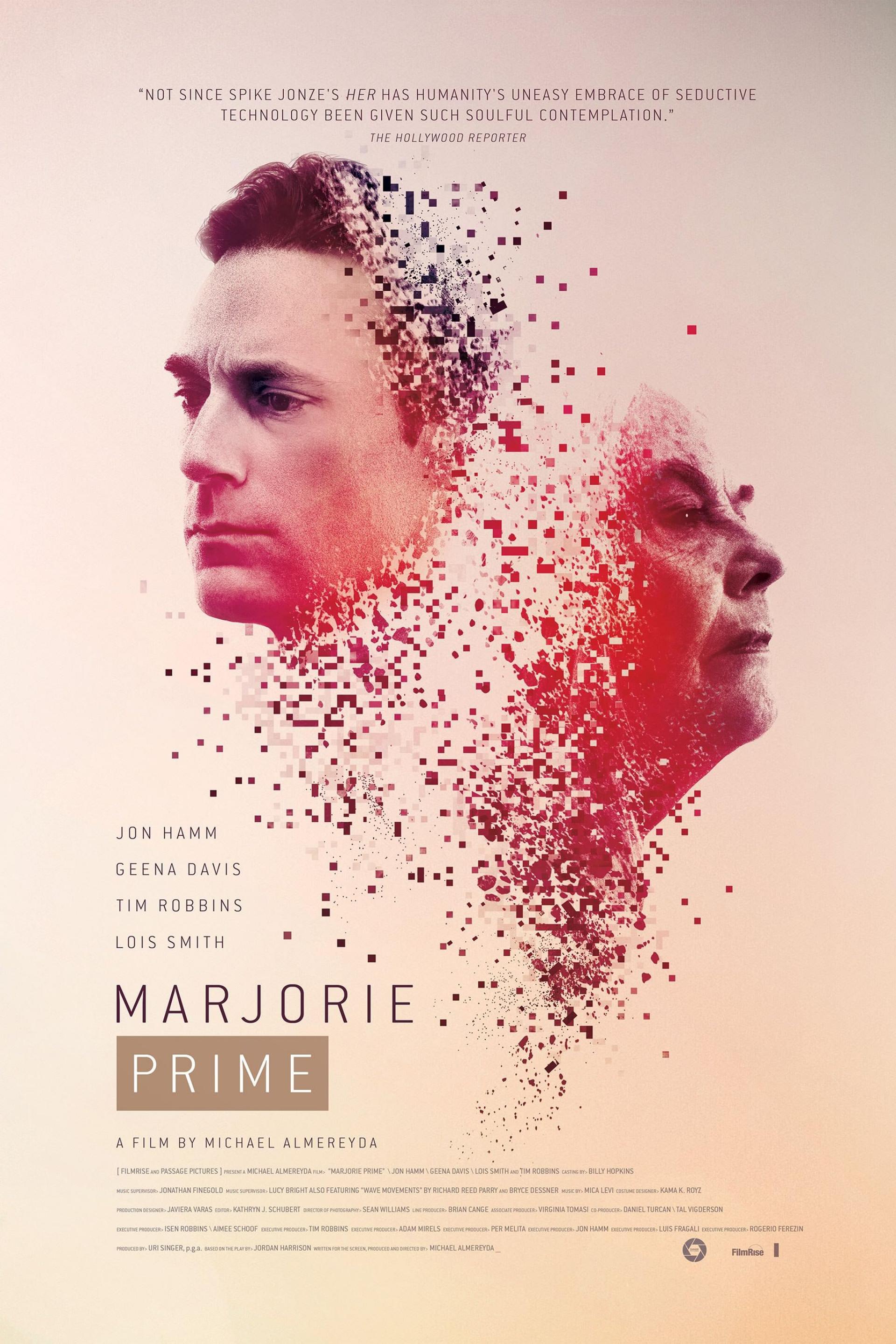
D: Michael Almereyda / 99m

Cast: Jon Hamm, Lois Smith, Geena Davis, Tim Robbins, Stephanie Andujar, Hannah Gross

How much do you trust your memories? Or rather, how much can you trust your memories? And where do they come from? Are they exclusively made up of your own recollections, or are they a combination of what you can remember and the recollections of others? And can they ever be really regarded as true memories, an accurate representation of something that happened in the past? These are just some of the questions that Marjorie Prime asks as it ponders the nature of memory, its provenance, and its importance in our lives.

Michael Almereyda’s latest movie is a challenging examination of how we remember things, and why. The why is perhaps more important than the how, but it’s how our memories shape our character and our personalities, and help us connect our past and present lives that seems to be more important. But if memory can be elusive, if it can be confusing, or contrary, or unreliable, then how can we know if a memory carries the weight that it should do? How can it retain the meaning it relies on to be an accurate memory? Almereyda’s answer – adapted from the Pulitzer Prize-nominated play by Jordan Harrison – is that, ultimately, we can’t be sure of anything related to memory because there are just too many variables. And many of those variables are the memories of other people.

The movie begins with Marjorie (Smith) having a conversation with a younger facsimile of her late husband, Walter (Hamm) (Walter is a computer programme, an example of artificial intelligence used as memory therapy). Together they probe various memories and attitudes towards memory that are largely to do with Marjorie’s attempts at building a coherent narrative out of her past. Walter is a computer-driven replica of Marjorie’s husband at the time of their engagement. He already knows a lot about Marjorie and the man he represents, but his knowledge is far from complete. In order to further his knowledge, and his usefulness to Marjorie – whose own memory is under threat from the early onset of Alzheimer’s – he discusses their shared past and allows her to correct him whenever he gets something wrong. Walter at first believes that they were watching My Best Friend’s Wedding (1997) when he proposed to her, but Marjorie is eqaully sure that it was Casablanca (1942), or at least that Michael Curtiz’s perennial classic seems more likely. Marjorie’s memory of that event is eluding her, so she creates a memory that sounds like it could be true, and once it’s accepted by the programme acting as Walter, then it passes into memory, and into truth.

And then there’s the input from Marjorie’s daughter, Tess (Davis), and her husband, Jon (Robbins). Both talk to Walter and both express their own feelings and views on events that happened to Marjorie during her life, and they don’t confine themselves to moments that they have direct knowledge or recollection of. Walter accepts what they tell him without verification or any kind of fact-checking being carried out. And when he relays their recollections to Marjorie – like him – she accepts these as having really happened. But how can such memories truly be “real” when they’re an amalgam of various sources?  With the frailty of the human mind being explored in this way, Almereyda shows us how unreliable our memories really are, and how our need to provide context for them can often mean we overlook any contentious issues that may arise from remembering them. The more we remember, Almereyda seems to be saying, the more we actually forget.
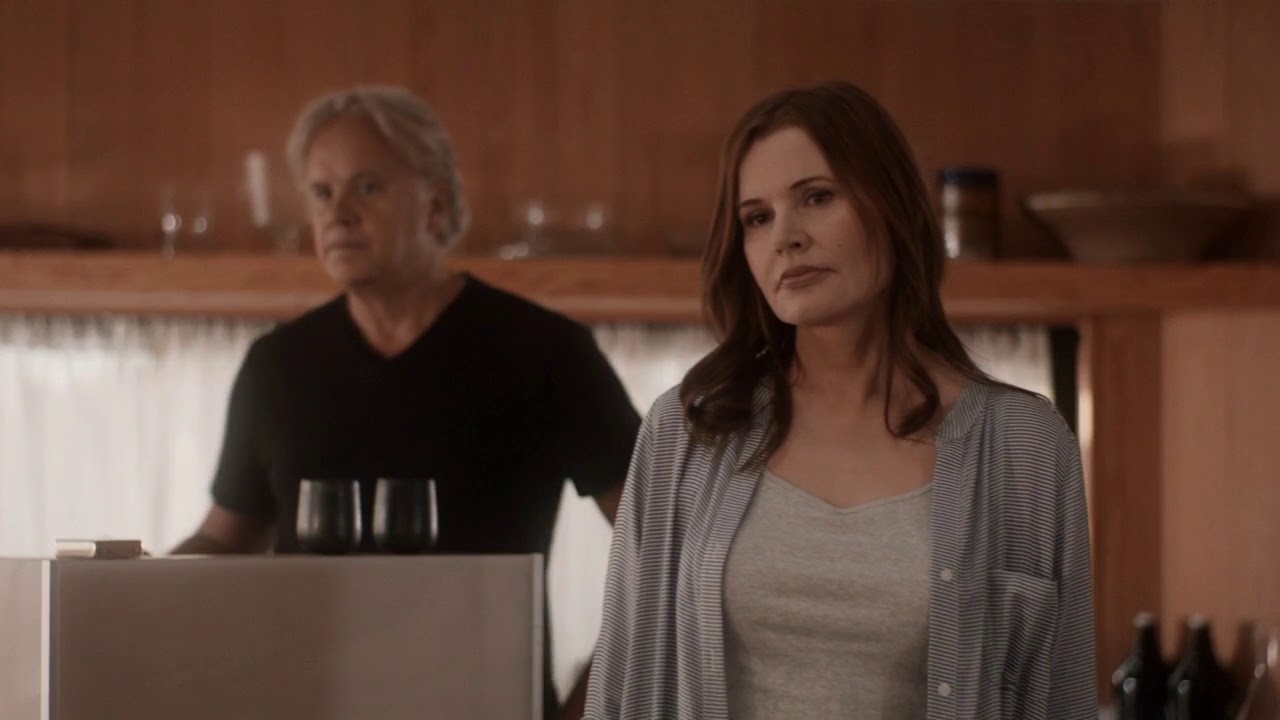
By showing the pitfalls of allowing future technology to “guide” us through the labyrinth of our reminiscences, Marjorie Prime highlights just how memory and truth can be ephemeral and an unreliable witness to our own experiences. Tess refers to the way in which we remember the emotion of an experience rather than the fact of it, and how this informs the details of that experience. From this we can understand that feelings and emotions are often more important than the facts, and can help us to derive a better appreciation or understanding of what we’re trying to remember. But these impressions can be just as subjective or erroneous as the memory itself, and as the movie progresses, and focuses more and more on Tess and Jon’s relationship and their own recollections, Almereyda uses the shift in perspective to show how relative memory really is. And there are further narrative shifts that provide even more examples of how memory can collude with us in providing the kind of recollections that help us make sense of our world and the world around us (and especially, other people). Layer upon layer upon layer, and soon the source can no longer be recognised. But is that a good thing or a bad thing?

Sensibly, Almereyda doesn’t provide the viewer with any conclusions, merely more and more questions, some of which can be answered within the narrative itself, and others that remain a mystery, fleeting notions of recognition that may or may not be reliable. The movie regards these questions as components in a kind of mental jigsaw puzzle, and in trying to piece them together, the characters all behave as though their own memories are more credible than others. Even Marjorie, whose moments of lucid behaviour grow fewer and further apart, believes what she remembers, and when she discusses with Walter their shared history, there are moments where she is creating rather than looking back. The same can be said for Tess and Jon, who want to help Marjorie retain her memory for as long as possible, but who also create incidents and details out of a misguided sense of being supportive. As in so many areas of life, lies become truth, and the boundaries between the two become irrevocably blurred, no matter how good the original intention.

Marjorie Prime is a small movie about big ideas, but important ones nevertheless, and the dialogue is smart, funny and precise in its statements and observations. The cast all give measured, thoughtful performances, with Smith (reprising her role in the original stage production) offering a particularly sprightly portrayal of Marjorie that is both sympathetic and endearing. Against this, Hamm has the more challenging role as Walter, a synthetic approximation of a person who has no life experience except that which is given to him by others. As the sometimes feuding Tess and Jon, Davis and Robbins give expression to the rituals that they go through in order to provide certainty for their own memories, and then Marjorie’s as well, but without seeing the problems inherent in doing this. All four actors are mesmerising, especially Davis, who plays a character who’s increasingly conflicted over the benefits of (re-)constructed memories, and who is stricken by memories of her own that are unwanted.

Viewers may find the opening exchange between Marjorie and Walter a little slow going, and the introduction of several minor characters later on may make the movie feel a little fragmented, but otherwise this is intelligent, thought-provoking stuff that isn’t afraid to tackle big ideas head on. It has a wintry, melancholy feel to it, highlighted by the starkly beautiful cinematography of Sean Price Williams, and a deftly supportive, and unobtrusive score by Mica Levi that provides an effective counterpoint to the emotional turmoil experienced by the characters. But it’s Almereyda’s confident, assured direction that remains the movie’s most impressive element, and proof – if it were needed – that he is one of the most distinctive and talented voices working in movies today.

Rating: 9/10 – an award winner at this year’s Sundance Film Festival, few movies made at the moment have the rigorousness or the attention to detail that infuses Marjorie Prime and which make it a movie to admire and to lose oneself in; if you’re a fan of cinema as a reflection of real life and all its flaws and imperfections, then this is a movie that will reward you over and over again.

Share this:

  • Click to share on X (Opens in new window) X
  • Click to share on Facebook (Opens in new window) Facebook
  • More
  • Click to print (Opens in new window) Print
  • Click to email a link to a friend (Opens in new window) Email
Like Loading...

Can We Take a Joke? (2015)

20 Monday Mar 2017

Posted by dullwood68 in Movies

≈ Leave a comment

Tags

Comedy, Documentary, Free Speech, Gilbert Gottfried, Humour, Jim Norton, Lisa Lampanelli, Obscenity, Offense, Outrage, Penn Jillette, Ted Balaker

D: Ted Balaker / 75m

Narrator: Christina Pazsitzky

With: Jim Norton, Lisa Lampanelli, Gilbert Gottfried, Karith Foster, Penn Jillette, Heather McDonald, Christopher Lee, Noam Dworman, Greg Lukianoff, Jonathan Rauch, Adam Carolla, Jon Ronson

They say that humour is subjective, that what one person finds funny is likely to leave another person unmoved. But what if a joke is deemed offensive? And what if that joke, or comment, is deemed so offensive that the person making the joke is condemned by an audience member, or perhaps the whole audience, or worse still, thousands (perhaps millions) of social media users? How does that work, and why is it happening so often in the United States? Why has free speech come under so much threat, and why is one person’s idea of free speech more important than someone else’s? Why, in short, are so many people now quick to be or feel offended?

This is the central conundrum of Can We Take a Joke?, a documentary that explores the notion that if you tell a joke that’s offensive, and someone takes offence against that joke, then they’re right to do so, and it’s the comedian’s fault for stepping over the line – deliberately or not. It seems outrage is all the rage now, as jokes have to pass a kind of cultural litmus test of what’s acceptable and what’s not. And woe betide you if you’re the one stepping over that line, because you will be pilloried. And don’t think that you’ll find support from the liberals in America, because in reality, they’ve become even more stringent than the conservatives. What’s a comedian to do? The answer’s easy: keep on doing what you’re doing.

The movie takes us back to the early Sixties and the rise to prominence of Lenny Bruce, the godfather of modern comedy. Bruce was uncompromising and he regularly skewered the fascist tendencies of a heirarchy that ensured the police were in attendance at his shows, waiting to arrest him if he said anything the authorities deemed offensive or inflammatory or obscene. The point here is that no one in the audience at a Lenny Bruce gig ever complained or said they were outraged or offended. The end result of Bruce’s several arrests? Since then, not one comedian has been arrested for being offensive, inflammatory or obscene. Progress, then. Except, as Can We Take a Joke? shows, in the years since, there has been a sea change, a growing reluctance by some people to accept that comedians can, and will, use offensive material in their routines.

Unfortunately, the movie doesn’t ask why this has happened. It makes the point – and it’s rightly a bit of a blow to realise – that some audiences are now less tolerant of political satire, or attacks on sexist and racist attitudes, or just about anything that they don’t like. And they are increasingly vocal about it, whether they’re heckling performers (sometimes they’re organised, as at a college show that was advertised as deliberately offensive), or taking to social media outlets such as Facebook and/or Twitter in order to make their intolerance known. The movie shows just how pervasive this intolerance can be through the restrictions put on comedians when they do campus gigs – some, like Chris Rock and Jerry Seinfeld won’t perform at campuses because they have to self-censor their material – and the unfortunate tale of Justine Sacco, who in 2013 tweeted, “Going to Africa. Hope I don’t get AIDS. Just kidding. I’m white!” She tweeted this while at Heathrow Airport, then turned off her mobile phone. Eleven-and-a-half hours later, she arrived in South Africa, turned her mobile back on, and discovered that her tweet had generated enough online outrage that she lost her job.

Sacco’s tweet was clearly ill-considered, but the sheer scale of the backlash against her was also clearly disproportionate. So why is comedy targeted in this way, and why do the complainers and the outraged respond with such venom? Again, the movie doesn’t have an answer. What it does have is a roster of comedians who are recognised for their use of offensive material in their acts. The movie’s quick to make the point: what do audiences expect if they go to see comedians like Lisa Lampanelli or Gilbert Gottfried? These are comedians who are renowned for the offensive nature of their material, for the challenging, uncomfortable mirror they hold up to the rest of society. And they’re condemned for doing so, and all because it seems that modern audiences have no idea about context, or perversely, won’t tolerate the idea of free speech if it goes against their own ideas about what’s funny and what isn’t.

So, with the battle lines drawn, what’s a comedian to do? The answer appears to be, go on the offensive (no pun intended). None of the interviewees are prepared to back down, and some, like comedian and podcaster Adam Carolla are actively attempting to challenge the anti-free speech brigade while continuing to engage in the kind of comedy routines that are likely to rile said brigade in the first place. There’s a hint that Carolla is just as militant in his opinions as the people who take exception to offensive jokes or routines or shows. But the movie skirts round this particular possibility, and provides a succession of comic talking heads who espouse their own distaste with the people who don’t like their material. There’s an irony here that seems lost on director Balaker and his production team, and which allows for a certain amount of mirth as we see nominally thick-skinned comedians criticise the people who criticise them.

In the end, the movie asks a lot of questions, makes several relevant points, provides a few clever insights (mostly thanks to author and activist Jonathan Rauch), but lacks both balance and answers. That the movie lacks balance isn’t necessarily a negative, as it’s clear that Can We Take a Joke? is intended as a riposte to the very hyperbolic hysteria that seems to follow in the wake of offensive material being aired. That it doesn’t offer the “other side” a voice is likely to upset some viewers, but the idea that a fair-minded approach should be mandatory in documentaries is ridiculous; how would any debate on any issue ever get started? And as for answers, the movie’s relatively short running time and plethora of questions doesn’t allow for too many answers, and those that it includes are all from the comedians getting to air their views unchallenged.

If there is one answer that the movie does accept (and wholeheartedly at that) is the one to its title. That answer is definitely: no. But if it’s no because tastes have changed, or because society is less tolerant of so-called taboo subjects (for some reason), or because of some hidden agenda within society itself – well, these are the questions that aren’t addressed but could have been. The movie’s one over-riding consensus is that offensive comedy is good and venomous criticism is bad. This may be true (if a little trite), but then we’re back to the same point made at the beginning of this review: that humour is subjective, and that will always be the case.

Rating: 7/10 – a documentary that has a tendency to waste too much of its short running time on repeating the same claims re: the necessity for offensive comedy, Can We Take a Joke? is nevertheless a caustic response to those who feel it isn’t; by accepting that there is a need (though without explaining why), the movie doesn’t always do justice to the questions it asks, but as a platform for debate, it’s much more successful.

Share this:

  • Click to share on X (Opens in new window) X
  • Click to share on Facebook (Opens in new window) Facebook
  • More
  • Click to print (Opens in new window) Print
  • Click to email a link to a friend (Opens in new window) Email
Like Loading...

The Lady in the Van (2015)

28 Sunday Feb 2016

Posted by dullwood68 in Movies

≈ Leave a comment

Tags

Alan Bennett, Alex Jennings, Camden, Drama, Humour, Literary adaptation, Maggie Smith, Nicholas Hytner, Review, Road accident, True story

The Lady in the Van

D: Nicholas Hytner / 104m

Cast: Maggie Smith, Alex Jennings, Jim Broadbent, Frances de la Tour, Roger Allam, Deborah Findlay, Gwen Taylor, David Calder, Claire Foy, Cecilia Noble

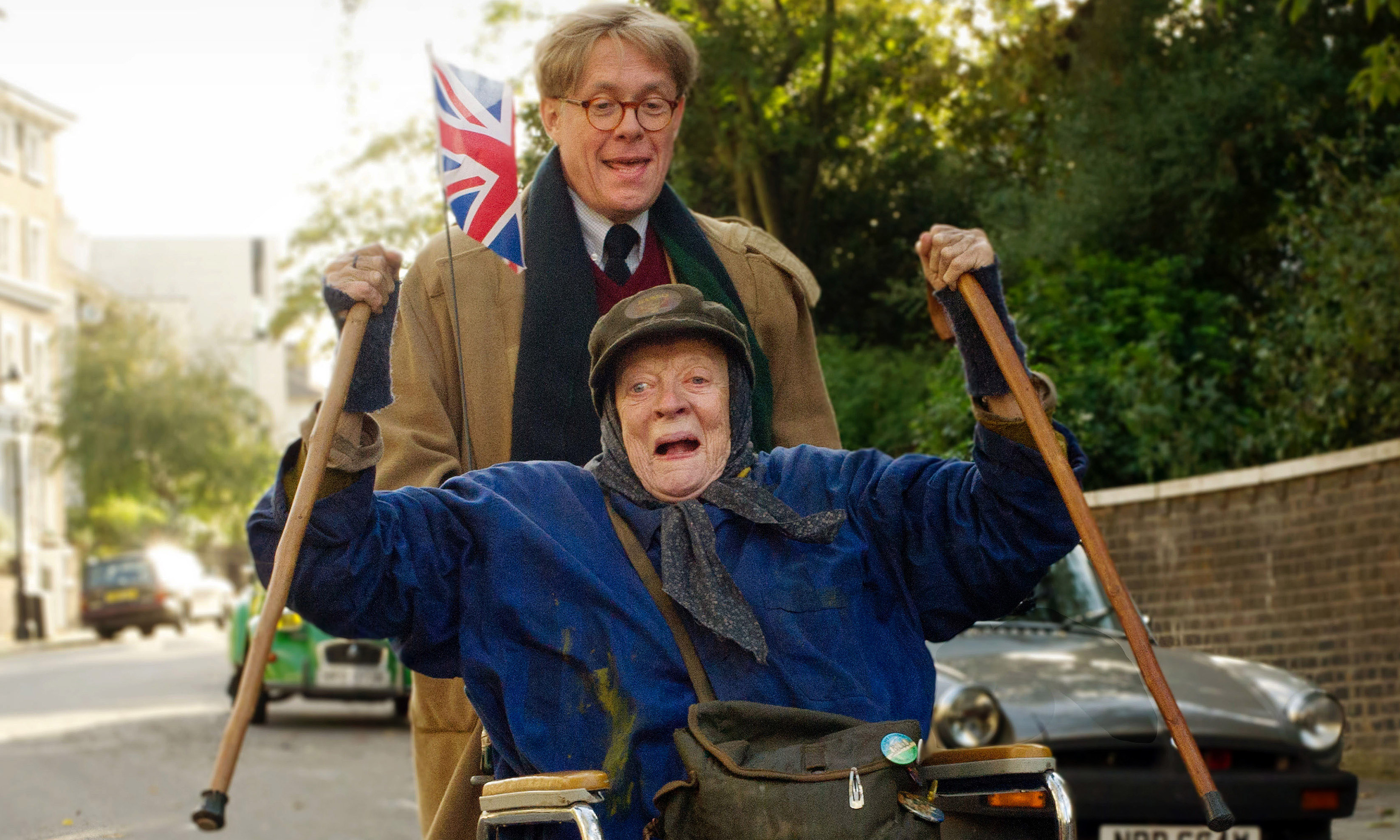
If you lived in a certain road in Camden, London in the early Seventies, then you would have known about, and probably encountered, the lady in the van, otherwise known as Miss Shepherd (Smith). She lived in and out of her Bedford van, a dilapidated vehicle that she’d owned for years, and would park outside people’s properties as and when she decided, and for as long as she wished. She was cantankerous, eccentric, less than hygienic, and lived in fear of the police, from whom she was “on the run” following a road accident that occurred several years before and for which she blamed herself.

When the playwright Alan Bennett (Jennings) moved into that certain road, he too became aware of Miss Shepherd – along with all the other residents – and her appearance and lifestyle (for lack of a better word) intrigued him. He maintained a respectful distance though, and though he was generally polite to her, like everyone else he tried to have as little to do with her as possible. But as his time there went on, Bennett began to have more and more to do with her, until one day she mentioned that the solution to the problem of her parking outside people’s homes was off-road parking, in someone’s drive perhaps. Bennett later agreed that Miss Shepherd could park her van on his driveway.

TLITV - scene3

An arrangement that was supposed to last a few months, until Miss Shepherd got herself “sorted out” eventually lasted a lot longer: fifteen years. During that time, Bennett began to discover things about Miss Shepherd that indicated she was the victim of not just the road accident’s effect on her, but also a series of personal tragedies that happened before then. His understanding of her behaviour, and the ways in which he dealt with her suspicious attitudes, while gaining a degree of trust, took years to develop, but Bennett’s patient, attentive nature worked where few other people would have succeeded – even if she did drive him mad.

In adapting his own original work – a book and subsequent stage play performed in 1999 – Bennett has retained the charm and wit of his original dialogue, while keeping things fresh for today’s audiences. There’s a faint whiff of nostalgia that lingers in some of the scenes though, as Miss Shepherd’s continued presence in the road is tolerated with much more civility and resigned acceptance than would probably be the case today. Bennett’s neighbours range from the property-price conscious Rufus (Allam) and Pauline (Findlay), to the elegant widow of the composer Vaughan Williams (de la Tour), but all of them treat Miss Shepherd with a bemused affability once her van is on Bennett’s drive. She’s like the dotty (slightly smelly) old aunt that a lot of families have, and who is left to her own devices. It may well have been a different story behind the other residents’ curtains, but in public this is the face of a united community, and one that doesn’t entirely resent an outsider’s imposition on their way of life.

As for Bennett, his reactions to Miss Shepherd are viewed through the device of having two of him: the Alan Bennett who lives his life, and the Alan Bennett who writes about everything. The former is more timid but has to deal with Miss Shepherd on a daily basis; the latter is a clever construct that serves to highlight the former’s timidity while also driving him to make better decisions regarding himself (themselves?) and Miss Shepherd. (It’s a little like having an author challenge himself as to the veracity of the story he’s telling.) Bennett confers with himself on numerous occasions, and the effect is to see into Bennett’s mind at the time, and the contradictions that resided there, such as his dislike for Miss Shepherd having to battle with his concern for her as a human being.

THE LADY IN THE VAN

Once Miss Shepherd is established on Bennett’s drive, the movie begins to explore in richer detail the tragedies that befell her in her earlier life. As the evidence mounts up and we see a succession of betrayals and the impact they’ve had on her, we see just how Miss Shepherd has come to be living this unfortunate existence. These betrayals also help to explain her behaviour, including a strange aversion to music. And as the picture becomes clearer, it becomes almost impossible not to sympathise with her misfortune (even if her behaviour is still mostly the other side of obnoxious).

In portraying these reversals of fortune, Bennett also manages to relay the inner strength and determination that Miss Shepherd must have armoured herself with in order to survive. Her abrupt nature may push people away, but this also keeps her safe. It’s a terrible way to live, and Bennett makes it clear that he feels her attitude was unnecessary, but understandable as well. It’s this poignancy that pervades the movie’s second half and enriches it at the same time. With Hytner taking a measured, somewhat sedate approach to the narrative, Bennett’s tale becomes incredibly, unfathomably sad, until the extent of the tragedies Miss Shepherd has suffered is put into such sharp relief that it’s almost unbearable to watch.

TLITV - scene2

This being an Alan Bennett tale there’s still plenty of droll humour to enjoy, as well as Miss Shepherd’s more caustic comments, and the relationship between Bennett and himself – like an old married couple – is beautifully observed. As the wounded Miss Shepherd, Smith is superb, peeling back the layers of pain that she’s hid behind to reveal a woman whose dulled ambitions and stalled emotions have left her unable to live the life she so desperately needed. Smith played the role originally on stage, and you can sense how comfortable she is in the role, and how focused she is on showing the various contradictions that make up Miss Shepherd’s fractured personality. She’s matched by Jennings, who gives an equally impressive performance(s) as Bennett, capturing the writer’s fey manner, natural petulance, and eye for little details.

It’s an impressive movie over all, with only a couple of aspects proving problematical. Broadbent’s turn as an ex-policeman who knows about the road accident and uses it for his own selfish ends doesn’t seem likely, and his reason for doing so is never properly explained by the script. And there are brief cameos from the cast of Hytner’s movie of The History Boys (2006), which instead of being pleasing are often distracting and take the viewer out of the movie (oh, look it’s James Corden; oh, hang on, that’s Dominic Cooper). Otherwise, The Lady in the Van maintains a rewarding sense of a tale well told, and remains a fitting tribute to a woman whose acceptance of her way of life was life-affirming in ways we may never fully appreciate (though the movie does its best to help us along).

Rating: 8/10 – while it may feel slight and lacking in depth at first, The Lady in the Van soon proves itself to be a moving, insightful look at human perseverance and how someone can adapt to diminished opportunities when necessary; with dry, contemplative moments of comedy and a surfeit of winning moments, Bennett’s tale is a pleasure to witness, and an absorbing tribute to the life of one Margaret Fairchild.

Share this:

  • Click to share on X (Opens in new window) X
  • Click to share on Facebook (Opens in new window) Facebook
  • More
  • Click to print (Opens in new window) Print
  • Click to email a link to a friend (Opens in new window) Email
Like Loading...

Bone Tomahawk (2015)

12 Monday Oct 2015

Posted by dullwood68 in Movies

≈ 9 Comments

Tags

Broken leg, Cannibals, Drama, Horror, Humour, Kurt Russell, Matthew Fox, Opium, Patrick Wilson, Review, Richard Jenkins, S. Craig Zahler, Thriller, Troglodytes, Western

Bone Tomahawk

D: S. Craig Zahler / 132m

Cast: Kurt Russell, Patrick Wilson, Matthew Fox, Richard Jenkins, Lili Simmons, David Arquette, Kathryn Morris, Fred Melamed, Sean Young, Sid Haig, Evan Jonigkeit

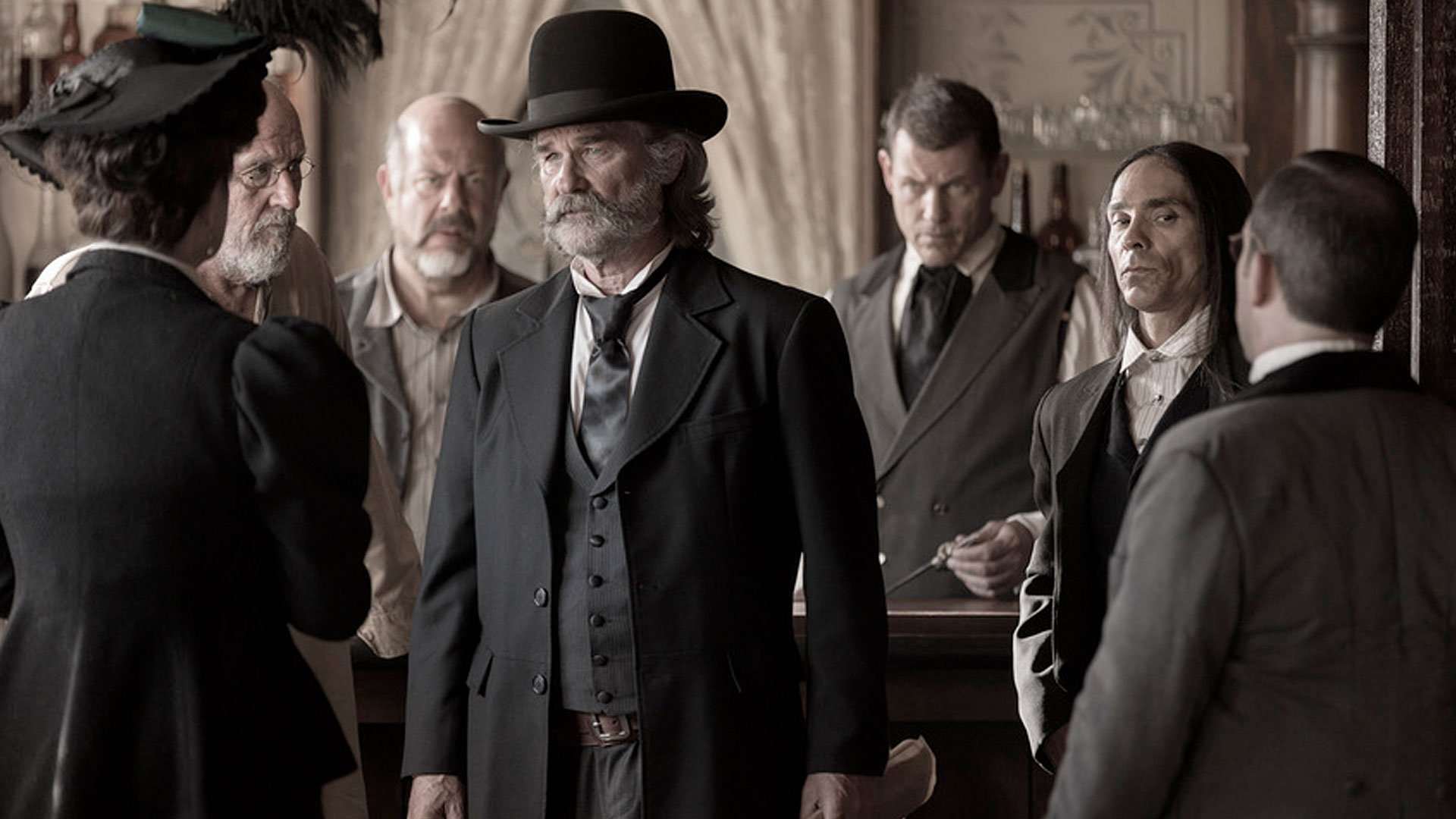
The quiet town of Bright Hope finds itself host to thief and murderer Purvis (Arquette). With his behaviour proving suspicious to town deputy, Chicory (Jenkins), Purvis’s attempt to resist arrest by the sheriff, Franklin Hunt (Russell) leads to his being shot in the leg and put in jail. Later the same night, while being tended by the town’s medic, Samantha O”Dwyer (Simmons), and guarded by young deputy Nick (Jonigkeit), the jail is attacked and the trio are abducted.

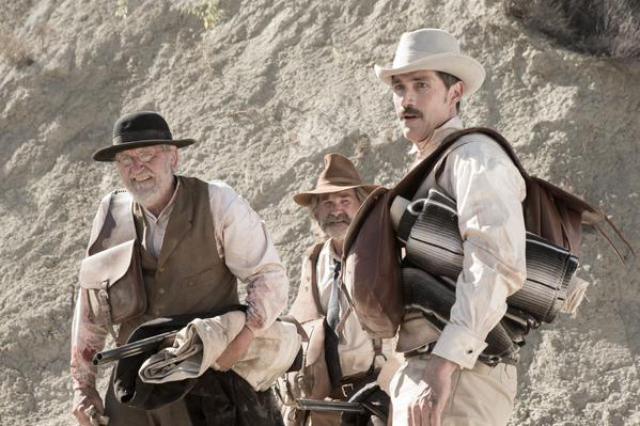
When this is discovered the next morning, Hunt seeks advice from a local Indian scout as to who could have done such a thing, as a peculiarly shaped arrow was found at the scene. The scout is quick to tell Hunt that it’s the work of troglodytes, a flesh-eating “clan” that live in the nearby hills; he also tells Hunt he won’t go with him as any attempt to rescue the missing will be guaranteed to fail, and anyone who goes will die. Hunt has no choice but to go, as does Samantha’s husband, Arthur (Wilson), even though he recently broke his right leg and it’s still in a splint. John Brooder (Fox), the man who introduced the O’Dwyer’s to each other, feels obliged to go, and despite Hunt’s objections, Chicory insists on going as well.

The four set out alone into the nearby hills. They encounter a couple of Mexicans who prove to be scouts for a larger group of bandits. When the bandits attack one night, Brooder is injured, and O’Dwyer’s broken leg is further damaged. With no choice but to reset his leg, and leave him to recover – and if able to, follow them later – Hunt, Brooder and Chicory continue on. As they get nearer to the hills where the troglodytes are supposed to live, the trio begin to hear strange unearthly noises. Hunt is convinced these are warnings; the discovery of human and animal skulls near to a gulley serves as a further caution. When they’re ambushed by a group of troglodytes, Brooder suffers a more serious injury, while Hunt’s left arm is hit by an arrow, and Chicory recieves a nasty head wound. With Brooder too injured to continue, Hunt and Chicory make their way nearer to the cave that appears to be the troglodytes home. But they’re ambushed again and this time they’re captured and taken to the troglodytes’ cave. Meanwhile, O’Dwyer regains consciousness, and sets out to follow the others and  rescue his wife…

Bone Tomahawk - scene

A strange, mercurial hybrid of Western and Horror, Bone Tomahawk is a movie that consistently outdoes its low budget in terms of originality, unexpected twists and turns in the narrative, and a recurring sense of humour that often threatens to undermine the seriousness of the drama, but which actually works as an escape valve for the tension that first-time director Zahler seems able to pull together at will. At times, this isn’t a movie for the faint-hearted or the squeamish – Nick’s fate is particularly gruesome – but in amongst the sometimes extreme violence and the matter-of-fact tone that accompanies it, Zahler manages to explore themes of masculinity, comradeship, loss, self-sacrifice, and most surprisingly of all, manifest destiny.

From the outset, this is a Western that isn’t interested in telling a typical Western story, and although it bears a (very) basic resemblance to John Ford’s The Searchers (1956), it soon abandons any pretense at wanting to emulate that classic movie by taking a no-nonsense approach to the times, and the events that unfold. It also steers away from traditional Western motifs by having its quartet of lawful avengers put at a disadvantage right from the start, with O’Dwyer’s broken leg proving exactly the type of hindrance that’s likely to get them all killed. When they’re forced to leave him behind, not only does the size of their task increase, but also the likelihood of their ending up as buffet for the troglodytes increases too; they soldier on because they want to for each other, not because they have to for the abductees, which was how they set out.

By changing this kind of stance along the way, and by making their opponents so animalistic as to be unreasonable, Zahler avoids any sentimentality that might occur in a regular Western, and isn’t afraid to put his characters through the wringer, so much so that there are times when the viewer isn’t sure if any of the quartet will survive, or if they do, how intact they’ll be. With a rugged, inhospitable looking backdrop to the action (expertly rendered by DoP Benji Bakshi), the main characters’ confidence is slowly eroded by their surroundings and the troglodytes’ uncompromising ferocity, and this is where Zahler’s ability to ratchet up the tension is most prevalent – how are they going to get out of this alive? It’s an interesting question, as by the movie’s end it’s not about the survival of the fittest, but survival at any cost.

With so many weighty themes to incorporate, and with the violence and escalating tension proving so effective, it’s left to Jenkins’ daft, lovably clueless deputy to provide some much needed humour. There’s a lovely moment when he insists a travelling flea circus was operated by real live fleas, and he continually misunderstands things that have been said or done. Jenkins strikes just the right note of encroaching senility mixed with amiable foolishness and is a joy to watch as a result. Elsewhere, Russell’s flinty portrayal of Hunt will remind viewers of his turn as Wyatt Earp in Tombstone (1993), and his whiskers should by rights be given a movie of their own. It’s good to see him play a character who makes so many mistakes, and if he maintains a degree of unshakeable tenacity throughout, then the movie is all the better for it (even if it’s cruelly undermined by the troglodyte leader’s treatment of him).

Bone Tomahawk - scene2

As the equally tenacious O’Dwyer, Wilson is headstrong, determined and completely focused on the task ahead, even though O’Dwyer will suffer for it. As his captive wife, Simmons is appealing and vulnerable, and more resigned to her fate than anyone would surmise. Both give credible performances and are matched by Fox’s belligerent martinet Brooder, a man as out of place in the quartet as he is oddly appealing. With Arquette and Morris (as Hunt’s wife) offering strong support, the movie benefits from having assembled a fine cast who are all committed to telling the tale at hand, and their are fine turns from the likes of Haig and Melamed in minor roles that add to the richness of the characters.

With a low budget fixed in place, Zahler is forced to resort to some necessary sleight of hand in telling his story. The troglodytes’ cave is reduced to one static location that features little in the way of set dressing, and there’s a sense that the exterior scenes were all shot in the same place but from different angles to hide the repetition. There’s also a problem with the pace, as some scenes – notably those where Hunt et al travel to the hills – are flat and in need of tightening up. Otherwise, Zahler’s debut is a taut, gripping endeavour that breathes new life into a (mostly) moribund genre, and is a great way of announcing there’s a new director in town who’s definitely worth watching out for.

Rating: 8/10 – a surprise on so many levels, Bone Tomahawk is an uncompromising,  unapologetic movie that revels in its ability to subvert the Western genre, and gives us a tribe of inbred cannibals that easily surpasses the cartoon equivalents in the Wrong Turn series; with a great cast clearly relishing their roles, and assured writing and direction from Zahler, this is meaty stuff indeed, and a rare treat.

Share this:

  • Click to share on X (Opens in new window) X
  • Click to share on Facebook (Opens in new window) Facebook
  • More
  • Click to print (Opens in new window) Print
  • Click to email a link to a friend (Opens in new window) Email
Like Loading...

Blog Stats

  • 486,528 hits

Recent Posts

  • 10 Reasons to Remember Bibi Andersson (1935-2019)
  • Fantasia (1940)
  • Dances With Wolves (1990) – The Special Edition
  • Kiss of the Spider Woman (1985)
  • The Three Musketeers (1973)

Top Posts & Pages

  • Lost for Life (2013) - Another Look
    Lost for Life (2013) - Another Look
  • Lost for Life (2013)
    Lost for Life (2013)
  • About
    About
  • Mr. Topaze (1961)
    Mr. Topaze (1961)
  • Billy Lynn's Long Halftime Walk (2016)
    Billy Lynn's Long Halftime Walk (2016)
  • Winter's Tale (2014)
    Winter's Tale (2014)
  • The Hitman's Bodyguard (2017)
    The Hitman's Bodyguard (2017)
  • 5 Famous Movie Roles That Nearly Went to Someone Else
    5 Famous Movie Roles That Nearly Went to Someone Else
  • The Layover (2017)
    The Layover (2017)
  • Transcendence (2014)
    Transcendence (2014)
Follow thedullwoodexperiment on WordPress.com

Blogs I Follow

  • Rubbish Talk
  • Film 4 Fan
  • Fast Film Reviews
  • The Film Blog
  • All Things Movies UK
  • Interpreting the Stars
  • Let's Go To The Movies
  • Movie Reviews 101
  • TMI News
  • Dan the Man's Movie Reviews
  • Film History
  • Jordan and Eddie (The Movie Guys)

Archives

  • April 2019 (13)
  • March 2019 (28)
  • February 2019 (28)
  • January 2019 (32)
  • December 2018 (28)
  • November 2018 (30)
  • October 2018 (29)
  • September 2018 (29)
  • August 2018 (29)
  • July 2018 (30)
  • June 2018 (28)
  • May 2018 (24)
  • April 2018 (21)
  • March 2018 (31)
  • February 2018 (25)
  • January 2018 (30)
  • December 2017 (30)
  • November 2017 (27)
  • October 2017 (27)
  • September 2017 (26)
  • August 2017 (32)
  • July 2017 (32)
  • June 2017 (30)
  • May 2017 (29)
  • April 2017 (29)
  • March 2017 (30)
  • February 2017 (27)
  • January 2017 (32)
  • December 2016 (30)
  • November 2016 (28)
  • October 2016 (30)
  • September 2016 (27)
  • August 2016 (30)
  • July 2016 (30)
  • June 2016 (31)
  • May 2016 (34)
  • April 2016 (30)
  • March 2016 (30)
  • February 2016 (28)
  • January 2016 (35)
  • December 2015 (34)
  • November 2015 (31)
  • October 2015 (31)
  • September 2015 (34)
  • August 2015 (31)
  • July 2015 (33)
  • June 2015 (12)
  • May 2015 (31)
  • April 2015 (32)
  • March 2015 (30)
  • February 2015 (37)
  • January 2015 (39)
  • December 2014 (34)
  • November 2014 (34)
  • October 2014 (36)
  • September 2014 (25)
  • August 2014 (29)
  • July 2014 (29)
  • June 2014 (28)
  • May 2014 (23)
  • April 2014 (21)
  • March 2014 (42)
  • February 2014 (38)
  • January 2014 (29)
  • December 2013 (28)
  • November 2013 (34)
  • October 2013 (4)

Blog at WordPress.com.

Rubbish Talk

Film 4 Fan

A Movie Blog

Fast Film Reviews

The Film Blog

The official blog of everything in film

All Things Movies UK

Movie Reviews and Original Articles

Interpreting the Stars

Dave Examines Movies

Let's Go To The Movies

Film and Theatre Lover!

Movie Reviews 101

Daily Movie Reviews

TMI News

Latest weather, crime and breaking news

Dan the Man's Movie Reviews

All my aimless thoughts, ideas, and ramblings, all packed into one site!

Film History

Telling the story of film

Jordan and Eddie (The Movie Guys)

Movie Reviews & Ramblings from an Australian Based Film Fan

Privacy & Cookies: This site uses cookies. By continuing to use this website, you agree to their use.
To find out more, including how to control cookies, see here: Cookie Policy
  • Subscribe Subscribed
    • thedullwoodexperiment
    • Join 481 other subscribers
    • Already have a WordPress.com account? Log in now.
    • thedullwoodexperiment
    • Subscribe Subscribed
    • Sign up
    • Log in
    • Report this content
    • View site in Reader
    • Manage subscriptions
    • Collapse this bar
 

Loading Comments...
 

    %d