• 10 Reasons to Remember…
  • A Brief Word About…
  • About
  • For One Week Only
  • Happy Birthday
  • Monthly Roundup
  • Old-Time Crime
  • Other Posts
  • Poster of the Week
  • Question of the Week
  • Reviews
  • Trailers

thedullwoodexperiment

~ Viewing movies in a different light

thedullwoodexperiment

Tag Archives: Jake Gyllenhaal

The Sisters Brothers (2018)

10 Thursday Jan 2019

Posted by dullwood68 in Movies

≈ 1 Comment

Tags

Action, Drama, Gold Rush, Jacques Audiard, Jake Gyllenhaal, Joaquin Phoenix, John C. Reilly, Literary adaptation, Manhunt, Review, Riz Ahmed, Western
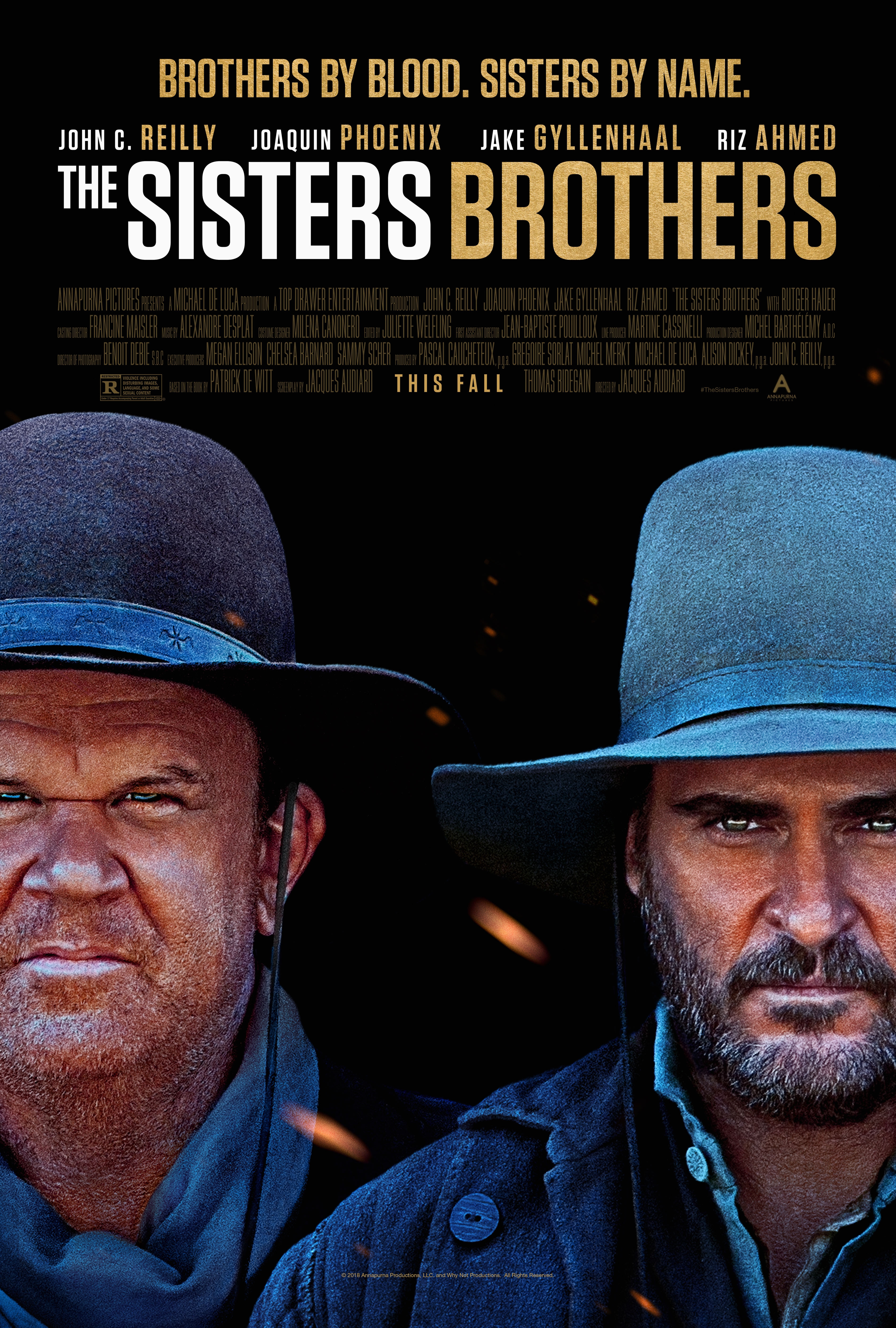
D: Jacques Audiard / 122m

Cast: John C. Reilly, Joaquin Phoenix, Jake Gyllenhaal, Riz Ahmed, Rebecca Root, Allison Tolman, Rutger Hauer, Carol Kane

Oregon, 1851. The Sisters brothers, Charlie (Phoenix) and Eli (Reilly), work as assassins for a wealthy magnate known as the Commodore (Hauer). Tasked with killing a chemist called Hermann Kermit Warm (Ahmed), the brothers are obliged to travel south to Jacksonville where they are due to rendezvous with another man in the Commodore’s employ, John Morris (Gyllenhaal), who has located Warm and befriended him. However, Warm discovers Morris’s true allegiance, and manages to persuade him into joining Warm on his journey to the California gold fields, where a formula he has created will allow them to locate gold located on any river bed. Charlie and Eli find themselves tracking two men instead of one, and follow them all the way to San Francisco. The brothers have a temporary falling out before discovering the location of Warm’s claim site. However, when they get there, Warm and Morris outwit them and the brothers are captured. Before they can decide what to do with them, though, they are attacked by mercenaries. Forced to free Charlie and Eli in order to overcome their attackers, what begins as a necessary truce later becomes something else entirely…

Westerns made by non-American directors usually have a distinct visual look to them, with the Old West looking as though it’s been filtered through an atypical perspective. Somehow the vistas look markedly different: less awe inspiring and more prosaic, and the overall mise-en-scene feels a little off, as if the locations were chosen as a last resort, the desired ones proving unavailable. Such is the case with Jacques Audiard’s first English language feature, the marvellously droll and appealing The Sisters Brothers. But while this may seem like a handicap – and elsewhere that’s entirely apt – here it suits the material, which is itself broadly interchangeable with the demands of a traditional Western and those of a Western that portrays events with a wry, modernist detachment. Though its story is slight – it’s basically that staple of the Western movie, the manhunt – it’s also a story that is allowed to go off at several tangents, and in doing so, it provides several unexpected delights, from Eli’s encounter with a prostitute (Tolman) who is unused to kindness, to Warm’s desire to create a Utopian society in (of all places) Dallas, Texas. Odd moments such as these, and more besides, add a richness to the material that makes the movie more engaging and more enjoyable in equal measure.
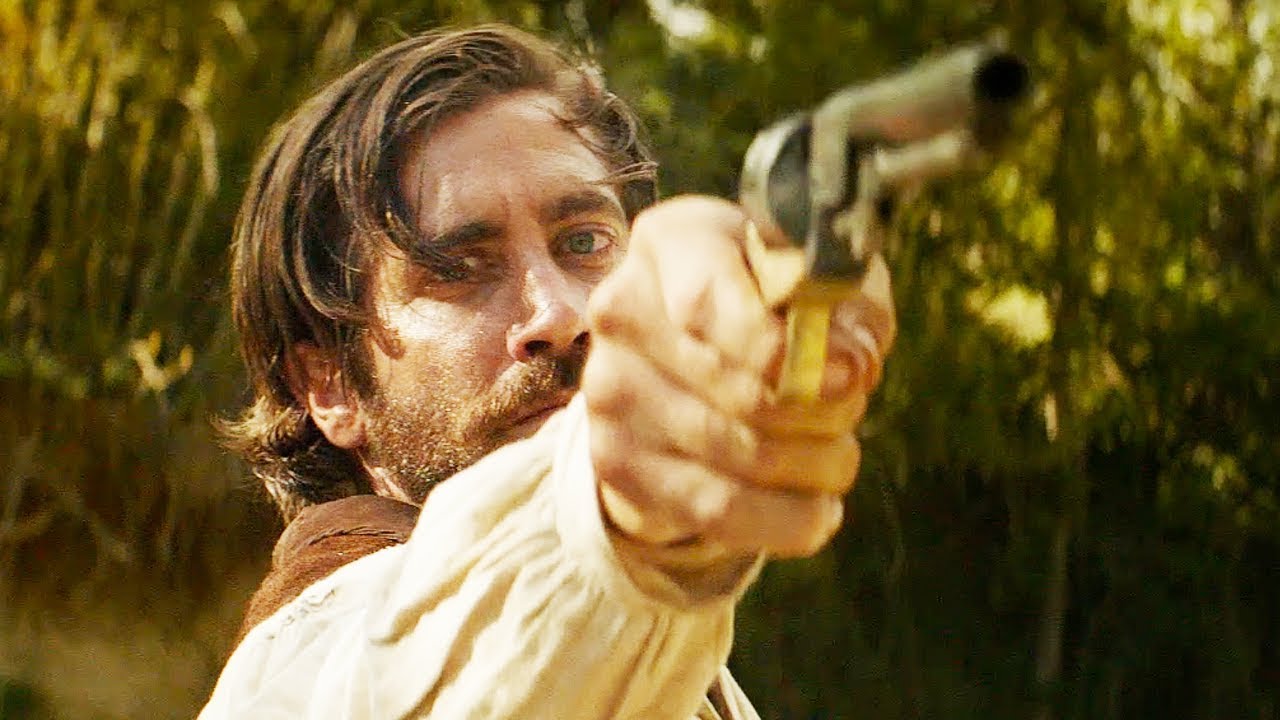
There’s also a melancholy undercurrent to the narrative, as evidenced by Eli’s wish to settle down and open a store and to put the brothers’ violent life and times behind them, while the progress seen in San Francisco – a hotel with indoor plumbing – acknowledges that times are changing, and progress is fast making the brothers’ role in the West obsolete (well, eventually it will). With all this going on in the background, Audiard is equally adept at littering the foreground with moments of rare inspiration and flashes of mordaunt humour. As the two brothers, often feuding but always there for each other, Reilly and Phoenix are a terrific duo, displaying a chemistry that makes you wish they could make further Sisters movies, while the same can be said for Gyllenhaal and Ahmed, another perfect pairing that improves the movie whenever they’re on screen. These are roles that include a great deal of subtlety, and Audiard never misses a trick in letting his very talented cast wring every last drop of emotion and misguided motivation out of their characters and their characters’ ambitions. The movie is ambitious as well, and succeeds more often than not in telling its story with wit and a clever use of atmosphere. And thanks to DoP Benoît Debie (who is Gaspar Noe’s cinematographer of choice), it all looks strangely beautiful and beautifully strange.

Rating: 8/10 – adapted from the novel by Patrick DeWitt, and pulling off a number of narrative tricks that enhance the material immensely, The Sisters Brothers is a refreshing take on the otherwise overworked Western, and a movie that offers genuine surprises along the way; it’s also very funny indeed, and Phoenix is the most relaxed he’s been for ages, another unexpected aspect in a movie that treats the unexpected as something of a challenge that’s been gladly accepted.

Share this:

  • Click to share on X (Opens in new window) X
  • Click to share on Facebook (Opens in new window) Facebook
  • More
  • Click to print (Opens in new window) Print
  • Click to email a link to a friend (Opens in new window) Email
Like Loading...

Stronger (2017)

17 Sunday Dec 2017

Posted by dullwood68 in Movies

≈ 1 Comment

Tags

Biography, Boston Marathon bombing, David Gordon Green, Drama, Erin Hurley, Jake Gyllenhaal, Jeff Bauman, Literary adaptation, Miranda Richardson, Review, Romance, Tatiana Maslany, True story

D: David Gordon Green / 119m

Cast: Jake Gyllenhaal, Tatiana Maslany, Miranda Richardson, Clancy Brown, Richard Lane Jr, Nate Richman, Lenny Clarke, Patty O’Neil, Kate Fitzgerald, Danny McCarthy, Frankie Shaw, Carlos Sanz

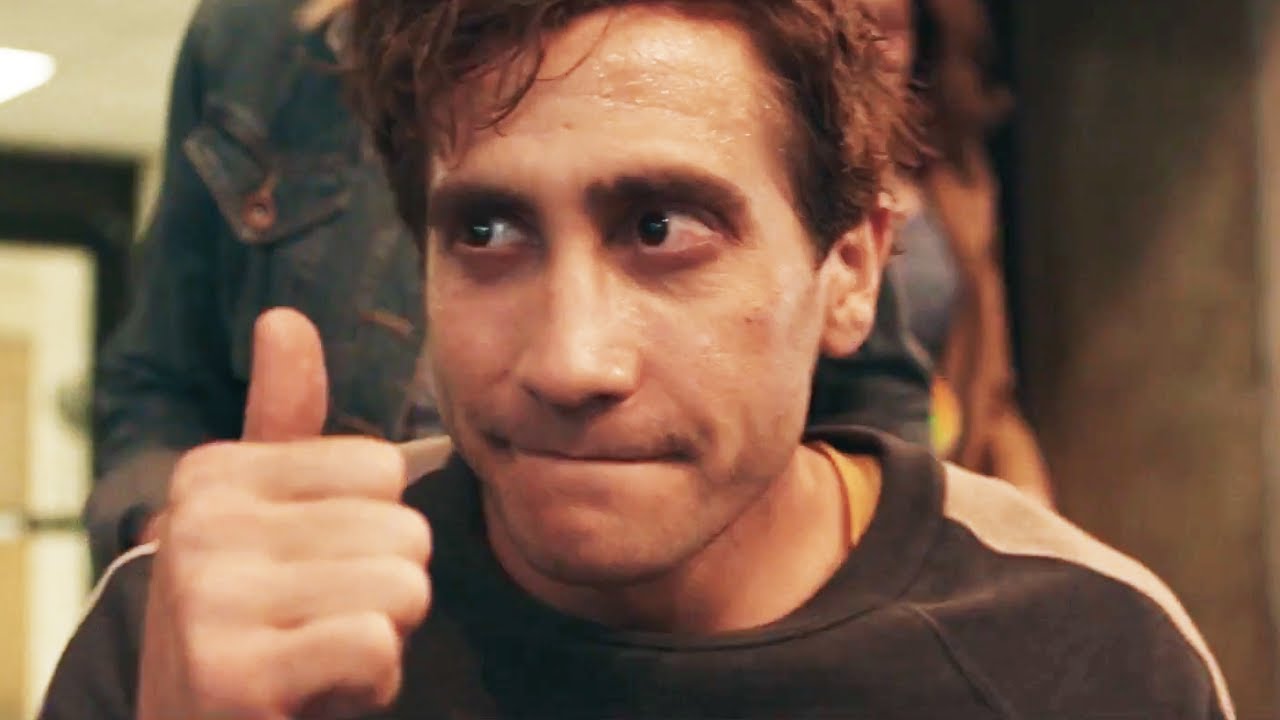
Following in the wake of Patriots Day (2016), Peter Berg’s excellent recreation of the manhunt for the Boston Marathon bombers, we have Stronger, a movie that focuses on one of the victims on that occasion, a Costco employee called Jeff Bauman (Gyllenhaal). Adapted from the book he wrote about his experiences after losing both his legs from above the knee down, Bauman’s tale is one of physical and emotional hardship, but most of all, how his relationship with on again, off again girlfriend, Erin Hurley (Maslany), made all the difference to his rehabilitation. It’s another true story of triumph over adversity, but while Jeff’s story – by itself – is inspiring, the movie itself isn’t quite as satisfactory.

Biopics often have a hard time avoiding the clichés of the genre. In recounting the trials and tribulations of someone who has suffered greatly through personal trauma, there’s usually a list of stock situations to be worked through. Most of them adhere to the various stages of grief, and so audiences can almost tick off these stock situations as they go along, but while Stronger does its best to avoid these clichés, in doing so it actually robs the movie of a lot of what would involve the audience more. Sure, we see Jeff falling off the toilet because his centre of gravity is out of whack, and yes, he tries to push Erin away because of self-pity, and of course, he misses rehab appointments because he can’t motivate himself, but while these are all established staples, here they’re downplayed to the point where the movie runs the risk of feeling a little detached from its subject matter and main character. There’s a matter-of-fact approach adopted by director David Gordon Green that stops the viewer from fully engaging with Jeff and his struggle to walk again.

Partly this is due to the way in which John Pollono’s script tackles the various stages of Jeff’s recovery. It always feels like a piecemeal attempt to tell a larger story, and while the focus on Jeff and Erin’s fractious relationship is to be commended, it doesn’t take long for the viewer to realise that without it the movie would be a lot shorter and a lot less interesting. Stripped of this central relationship, and once he’s lost his legs, the movie would consist merely of scenes between Jeff and his alcoholic mother, Patty (Richardson), a handful of other scenes featuring Jeff and his friends, Jeff being feted as a living breathing incarnation of the Boston Strong ideal, and further scenes where he’s told off for not going to his rehab appointments. All these are exactly the kind of things you’d expect to see in a movie such as this, and in that respect, the movie doesn’t disappoint. But there have been far too many other movies made along similar lines, and there’s not enough effort made to make this stand out from the crowd.

Bauman’s story, however, is made more interesting through his relationship with Erin. Pre-bombing, Jeff isn’t the most committed of boyfriends, but Erin has always allowed herself to give him another chance after splitting up with him. The irony of what happened to Jeff isn’t lost on the movie, as the only reason he was near the finishing line when the first bomb went off, was because he was there to support Erin (who was taking part in the race), and to show that she could rely on him more than in the past. Their connection is strengthened by Erin’s innate decency in supporting Jeff through the days and months that follow, and also by his need to have someone capable of looking after him; Patty is a semi-functioning alcoholic who admits she hasn’t been the greatest of mothers. With his father, Jeff Sr (Brown), reduced to hanging around in the background the longer the movie goes on, Jeff leans on Erin quite heavily, and as the dynamic of their relationship shifts and changes, it’s Erin’s own sense of self-respect that allows her to make a decision that, along with meeting the man who saved his life, Carlos Arredondo (Sanz), helps Jeff to dig himself out of the mire of self-pity and self-doubt that he’s surrounded himself with.

As Jeff, Gyllenhaal puts in another committed, powerful performance that sees the actor express Jeff’s confusion and anguish and dismay and anger at being placed in such a difficult position. However, his commitment to the role is hampered by the script’s determination not to make things too difficult for Jeff, as each obstacle he encounters is quickly overcome so that he can move on to the next – and overcome that one just as easily. If anything, this approach comes as something of a surprise, especially when it becomes obvious that Maslany’s portrayal of Erin is the movie’s strong suit, instead of Gyllenhaal’s portrayal of Jeff. It’s a career best performance from Maslany, who takes charge of the role and makes Erin the movie’s heart and soul. She’s simply mesmerising, and she finds new and different ways to make Erin more than the eternally supportive and self-sacrificing (i.e. stock) girlfriend that she could have been in other hands. In their scenes together, Maslany is so good that she’s always the focus and not Gyllenhaal; when the camera’s on him, you want it to shift back to her as quickly as possible.

There are many elements that are allowed to play out without any resolution, and a lot of things that are left unaddressed, such as the marital status of Jeff’s parents (are they divorced, separated, taking a break?), and though Green directs with his usual flair for exploiting emotional undercurrents, he’s not given too many occasions where he can do this. Certain scenes lack purpose – the script could have done with some judicious pruning – and there are times when Jeff’s family and friends seem present only to provide the movie with a sense of humour, but the overall problem with the movie is that its efforts to avoid the clichés of the genre don’t always work. And when you have a character who needs to learn to walk again but on prosthetic legs, and that aspect is reduced to a smattering of scenes, that raises another issue: just what is the movie’s focus if it isn’t that?

Rating: 6/10 – neither great nor awful but somewhere maddeningly in between, Stronger cleaves to audience expectations of what is, in cinematic terms, a very familiar story, and only manages to deviate from it when examining Jeff and Erin’s relationship; good performances all round help to alleviate the feeling of déjà vu that pervades the material and which holds it back from being more effective, leaving the whole thing feeling like a missed opportunity, and a curious one at that.

Share this:

  • Click to share on X (Opens in new window) X
  • Click to share on Facebook (Opens in new window) Facebook
  • More
  • Click to print (Opens in new window) Print
  • Click to email a link to a friend (Opens in new window) Email
Like Loading...

Trailers – Bronx Gothic (2017), Stronger (2017) and The Hippopotamus (2017)

27 Tuesday Jun 2017

Posted by dullwood68 in Movies

≈ Leave a comment

Tags

Andrew Rossi, Boston Marathon bombing, Comedy, Dance piece, David Gordon Green, Documentary, Drama, Jake Gyllenhaal, Literary adaptation, Okwui Okpokwasili, Previews, Roger Allam, Stephen Fry, Tatiana Maslany, Trailers, True story

If you’ve seen the New York-based writer, performer and choreographer Okwui Okpokwasili then you’ll be aware of just how magnetic a stage presence she is, and how impressive is her ability to manipulate her frame in such a way as to give full expression to an incredible range of feelings and desires and emotions. In 2014, Okpokwasili performed her one-woman dance piece, Bronx Gothic, where she used a series of letters sent between two young girls in the Bronx – and her remarkable body – to illustrate how little one of them knew about her body, and how they were able to connect with each other. It was a tour-de-force performance, and is now the subject of Andrew Rossi’s latest documentary. Rossi, who also made Page One: Inside the New York Times (2011) and The First Monday in May (2016), goes behind the scenes of Bronx Gothic and examines the way in which Okpokwasili conceived and created the piece, and how she used elements from her own life in the process. This may not attract a particularly wide audience base, but it promises to be one of the more original and impressively mounted documentaries of 2017. And with Okpokwasili being such an incredible performer to watch, any chance to see her is absolutely worth taking.


Following on the heels (no pun intended) of Peter Berg’s gripping Patriots Day (2016), Stronger tells the smaller scale story of one of the victims of the 2013 Boston Marathon bombing. Jeff Bauman (played by Jake Gyllenhaal) was caught in the first blast and lost both his legs. The movie, based on the book of the same name written by Bauman and Bret Witter, charts Bauman’s recovery and readjustment to life in the wake of the tragedy, and how his rehabilitation affected him, and his relationship with his girlfriend, Erin Hurley (played by Tatiana Maslany). Without trying to denigrate or undermine Bauman’s efforts to learn how to walk again, and overcome the emotional trauma he experienced, the trailer for Stronger hints at the movie being a straightforward re-telling of Bauman’s struggle, and the trailer’s content seems to include all the clichés you’d expect, right down to the moment where Bauman cries, “I showed up for you!” Let’s hope then that director David Gordon Green has a tighter grip on the material than is evident from the trailer, and that Bauman’s story is given a better handling than what we’ve seen so far.


When he’s not appearing on television or in the movies, Stephen Fry is also a well regarded writer with a string of successful books to his name. The Hippopotamus was his second novel to be published, and if you’ve read it then you’ll know that it’s ripe for a big screen adaptation (or a small screen mini-series). And at last that big screen adaptation is here, and for once, with the perfect choice for its lead character, disgraced poet Ted Wallace, in the form of Roger Allam. Allam’s crumpled features and unimpressed demeanour are a terrific combination for the part, and from the trailer it’s clear that the actor has the measure of the role and is also enjoying himself immensely. Whether or not the script will allow him to be the singular focus of Fry’s typically erudite comedy of manners remains to be seen, but if so then this could be the movie that provides a well-earned boost to Allam’s career. Let’s hope then, that Fry’s eccentric yet amusing novel has been given the adaptation it deserves.

Share this:

  • Click to share on X (Opens in new window) X
  • Click to share on Facebook (Opens in new window) Facebook
  • More
  • Click to print (Opens in new window) Print
  • Click to email a link to a friend (Opens in new window) Email
Like Loading...

Life (2017)

17 Monday Apr 2017

Posted by dullwood68 in Movies

≈ Leave a comment

Tags

Calvin, Daniel Espinosa, Drama, International Space Station, Jake Gyllenhaal, Mars, Rebecca Ferguson, Review, Ryan Reynolds, Sci-fi, Thriller

D: Daniel Espinosa / 104m

Cast: Jake Gyllenhaal, Rebecca Ferguson, Ryan Reynolds, Hiroyuki Sanada, Ariyon Bakare, Olga Dihovichnaya

It’s a good day on the International Space Station (ISS). A probe that has been collecting soil samples from the Mars surface is on its way back and is about to be intercepted by the team on board the ISS. The hope is that the soil samples will contain evidence of extraterrestrial life. The team – medical officer Dr David Jordan (Gyllenhaal), quarantine officer Dr Miranda North (Ferguson), systems engineer Rory “Roy” Adams (Reynolds), ISS pilot Sho Murakami (Sanada), biologist Hugh Derry (Bakare), and ISS commander Ekaterina Golovkina (Dihovichnaya) – are all excited at the prospect. They’re further excited when they discover a dormant cell in amongst the samples. Derry manages to revive it, and it’s not long before it grows into a multi-celled organism. Back on Earth, the news is received with even greater excitement, and the organism is given the name Calvin.

However, Calvin enters another period of dormancy. Derry elects to use a low-level electric shock to help re-stimulate it, but this approach has an unexpected result: Calvin attaches itself to Derry’s hand and begins to crush it. Derry manages to free himself, and while Calvin devours a lab rat, Adams rushes in to the quarantine area to rescue him. Derry gets out but Adams isn’t so lucky: Calvin attaches itself to his leg, leaving Jordan no option but to keep them both locked inside the quarantine area. Adams does his best to kill Calvin but the creature escapes into the vents. As it continues to grow it causes further problems for the crew, leading them to realise that it’s far more intelligent than they could ever have expected.

With their communication with Earth cut off, and an attempt to send Calvin into deep space failing, the ISS enters a decaying orbit, one that will see it burn up on re-entry to Earth’s atmosphere. Certain that Calvin would survive such an event, the crew have to come up with a plan that will see Calvin stopped from reaching Earth’s surface, while also ensuring their own safety, but further events dictate that this won’t be as easy as they’d hoped, and soon time is running out for everyone – both on the ISS and on Earth…

The first thing that anyone will tell you about Life is that it’s so obviously an Alien (1979) rip-off (and that’s supposed to make it a bad thing). And while it does share certain elements with that movie, it’s also a little unfair to damn the whole movie with such faint praise. With Ridley Scott poaching his own genre classic in Prometheus (2012), and no doubt the upcoming Alien: Covenant (2017) as well, accusing Life of being a rip-off isn’t exactly fair criticism. And if imitation really is the sincerest form of flattery, then Life has taken a pretty good template from which to tell its story. What screenwriters Rhett Reese and Paul Wernick have done is taken the bare bones of the Alien premise, and from that they’ve created an intense, thrill-ride of a movie that – if it has a real problem – only falls short when it focuses on the characters.

One aspect where the movie doesn’t emulate Alien is in the speed with which it puts the ISS crew in danger. There’s no leisurely build-up, no time to get to know anyone, and as a result, no one to care about. The characters express themselves solely through their roles on board the ISS, and when they do stop to express any philosophical or moral implications to the situation they’ve found themselves in, it all feels trite and under-developed. It’s all a bit Screenwriting 101: give the characters an inner life for the audience to connect with. But these interludes only serve to stall the movie and stop it from what it does best, which is ramp up the tension, exert as much pressure on the crew as possible, and reduce the odds of anyone surviving the longer the movie progresses.

To this end, director Daniel Espinosa and his editors, Mary Jo Markey and Frances Parker, have fashioned a series of encounters and showdowns between Calvin and the ISS crew that equate to good old-fashioned, edge-of-your-seat sequences designed to have audiences holding their breath as they wait to see what’s going to happen next. Life is like a rollercoaster ride, but an often grim, horrific rollercoaster ride, one that doesn’t let up (except for those pesky dialogue scenes), and which isn’t afraid to be nasty when it wants to be. Like the Nostromo before it, the ISS is a claustrophobic, up-is-down environment where Calvin could strike at any time. Espinosa lets the camera – operated with his usual aplomb by Seamus McGarvey – roam the corridors and remote areas of the ISS with an eerie stealth, emulating Calvin’s point of view or just setting up a scare that may or may not happen (you’ll never be too sure).

With the majority of the movie given over to these sequences, Life holds the attention and plays out its simple storyline with a great deal of confidence and a gripping visual style to it. The cast, however, are hampered by the script’s need for their characters to be introspective from time to time – too often, actually – and when they’re not debating whether Calvin should be feared or admired or both, they’re action figures floating around the ISS trying to survive. Gyllenhaal has a back-story that involves wanting to be completely alone, and which gives you a clue as to the eventual resolution, but it doesn’t resonate enough to feel important, just contrived. Ferguson is the tough decision-maker who won’t feel pity or remorse for killing another living creature, even if it is just trying to survive on its own terms, while Reynolds adds yet another semi-anarchic risk-taker to his resumé, a role he does well but which he could probably do in his sleep by now. Sanada and Bakare have their moments, and both actors are well-cast in their roles, bringing a much-needed sincerity to characters who could have been entirely forgettable. Which is almost the sad fate of Dihovichnaya, except that her encounter with Calvin is one of the movie’s more impressive set ups.

Fans of serious science fiction will find lots to annoy them, and though there are many occasions where disbelief is suspended too easily for the movie’s own good, Life isn’t going to be regarded as a modern classic like its genre forbear, but in terms of what it sets out to do – that is, entertain an audience – it succeeds for the most part, and its cheesy, forehead-slapping conclusion aside, is a lot more effective than most people will give it credit for. This isn’t a movie that will change your life, nor will it prompt anyone to become an astronaut and work on the ISS, but it is a solid piece of sci-fi entertainment, and in Calvin it has an alien life form that is one of the most well-conceived creatures ever seen on our screens; and it’s eerily beautiful too.

Rating: 7/10 – boasting superb production design and a vivid sense of impending doom, Life isn’t entirely successful, but it does more than enough to justify its existence (Alien clone or not); a popcorn movie for anyone seeking an undemanding hour and three quarters to kill, it’s unashamedly populist moviemaking and none the worse for being so.

Share this:

  • Click to share on X (Opens in new window) X
  • Click to share on Facebook (Opens in new window) Facebook
  • More
  • Click to print (Opens in new window) Print
  • Click to email a link to a friend (Opens in new window) Email
Like Loading...

Nocturnal Animals (2016)

16 Wednesday Nov 2016

Posted by dullwood68 in Movies

≈ 4 Comments

Tags

Aaron Taylor-Johnson, Amy Adams, Art gallery, Drama, Ex-husband, Isla Fisher, Jake Gyllenhaal, Literary adaptation, Michael Shannon, Murder, Novel, Review, Thriller, Tom Ford

nocturnal-animals-new-poster

D: Tom Ford / 117m

Cast: Amy Adams, Jake Gyllenhaal, Michael Shannon, Aaron Taylor-Johnson, Isla Fisher, Ellie Bamber, Armie Hammer, Karl Glusman, Robert Aramayo, Laura Linney, Andrea Riseborough, Michael Sheen, India Menuez, Graham Beckel, Jena Malone

Back in 2009, Tom Ford, once the creative director at Gucci between 1994 and 2004, made a movie called A Single Man. He produced it, he wrote it, and he directed it. In the process, he ensured Colin Firth received his first Oscar nomination as the single man of the title, a grief-stricken English professor who finds it difficult to deal with the death of his partner. It won a shedload of awards, and Ford was heralded as an exciting new voice in contemporary cinema. But even in amongst the sterling notices, reviewers and critics were largely in agreement: Firth’s performance saved the movie from being an empty exercise in style over content. Now, seven years later, he’s back with another adaptation, this time swapping Christopher Isherwood’s work for that of Austin Wright, and his novel, Tony and Susan. Should be good, eh?

Well, actually, no. This is a movie that can be admired for several reasons. For instance, there’s Seamus McGarvey’s often exquisite cinematography, whether he’s using the lens to amplify the sterile environments lead character Susan (Adams) spends her life inhabiting, or the tactile desert locations where the novel within the movie takes place. And then there’s Abel Korzeniowski’s string-driven score, which adds a delicious sense of impending doom to both storylines. But despite these solid, unassailable elements, what Ford attempts with the twin narratives doesn’t pan out quite as well.

nocturnal-animals

With its performance art opening sequence, Nocturnal Animals wants to keep the viewer wrong-footed, and it wants to keep its secrets all to itself. As you’re confronted by several large, ultra-wobbly ladies who are gyrating in the nude, Ford has already placed the viewer on the back foot. What you’re seeing, he seems to be saying, will be explained; just not right away. And this is how the tone of the movie is set from the beginning: you’ll see a lot of things that won’t immediately make sense, but in time they will… except for the things Ford has no intention of making clear. So, the naked ladies are part of an art exhibition at the gallery Susan owns. But Susan doesn’t seem to be too impressed by this particular exhibit. She appears to be elsewhere, caught up in her own thoughts. But again – already – Ford isn’t about to tell you what those thoughts are, or what they’ll mean (if anything) going forward.

We soon learn that Susan is on her second marriage, to a diffident, disconnected lump of a man called Hutton (Hammer). It’s obvious he doesn’t love her anymore, and he’s likely having an affair, but Susan doesn’t seem interested either way. She makes an effort toward they’re going away together but Hutton is too busy, and Susan is too lethargic to insist or get him to clarify the dates they can go. And while the viewer wonders if this is going to be yet another mannered, “arthouse” examination of a marriage break up with plenty of wistful stares into the distance by the wife, while the husband is unable to talk in meaningful sentences, Ford changes tack and introduces Susan’s ex-husband, Edward (Gyllenhaal).

But not in person. No, instead, Edward is introduced to us through a novel he’s written, and one that he’s dedicated to Susan. Surprised – but more importantly so that the movie can proceed in a viable fashion, intrigued – Susan begins to read it. It’s not what she expects, though. But let’s think about that. What was she expecting? And why? Because, as we later discover, Susan had no faith in Edward’s abilities as a writer. So why does she even read it? Curiosity? To reinforce her opinion about his talent (or lack of it)? Because she’s bored? (At home, Susan doesn’t appear to do very much apart from drink the occasional glass of wine.) Actually, it doesn’t matter, as it’s one of the things Ford isn’t going to take the time to explain.

noct

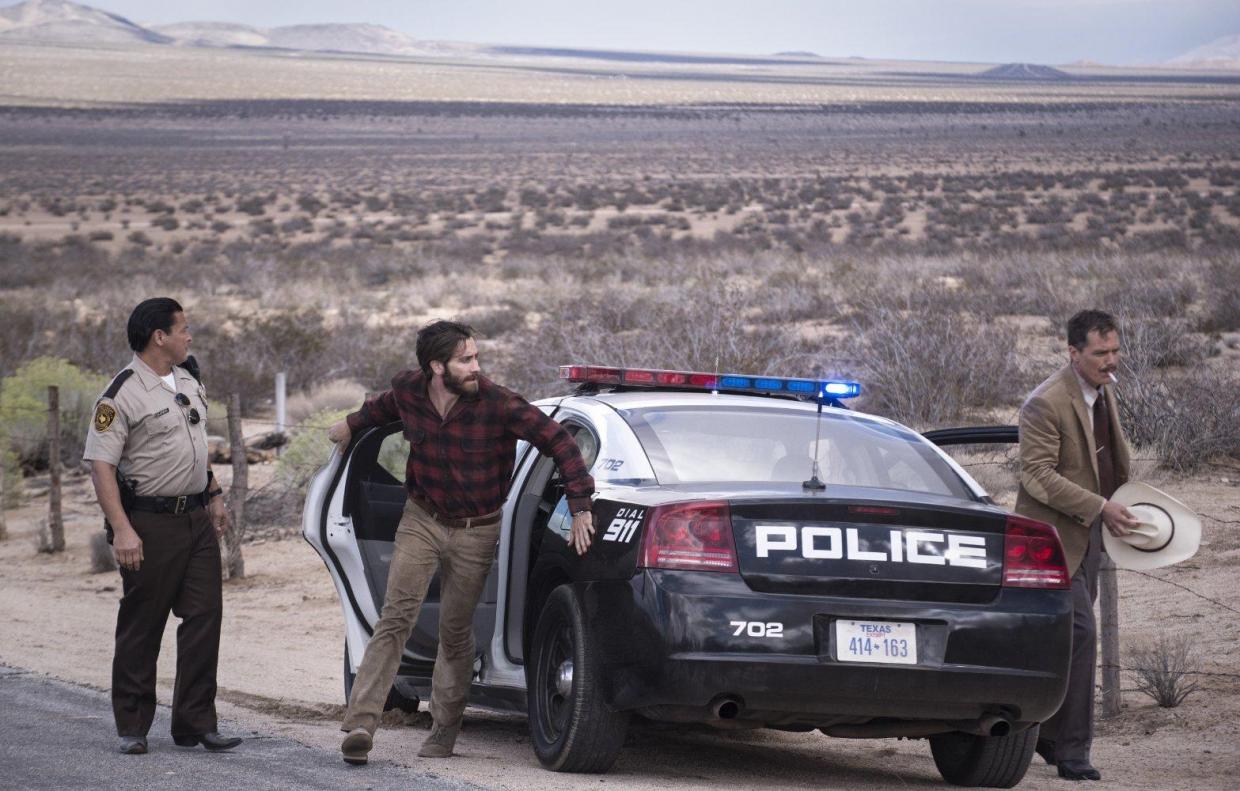
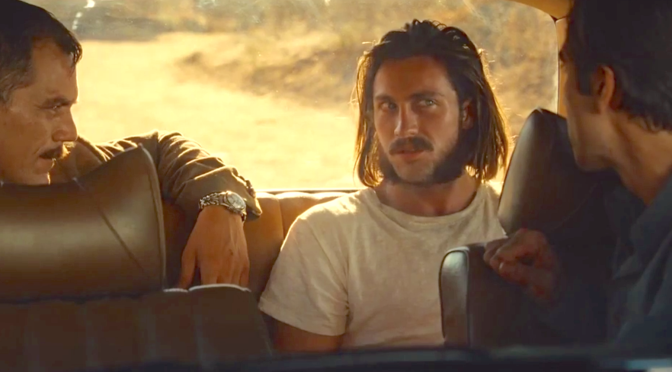
The story is a brutal one. Tony Hastings (Gyllenhaal) is travelling through the desert with his wife, Laura (Fisher), and daughter India (Bamber). Run off the road by a trio of men led by the would-be charming Ray (Taylor-Johnson), the family is threatened and verbally abused until chance sees Ray and one of his cohorts take the Hastings’ car – with Laura and India in it – and drive off, leaving Tony at the mercy of remaining “drunk baby” Lou (Glasman). Tony is made to drive after them, but it soon becomes obvious that Lou is just stringing him along, and Lou eventually makes Tony stop the car and get out; and then he drives off. Ray makes it back to the highway and hitches a ride to the nearest town. There he meets Detective Bobby Andes (Shannon) who agrees to go back out into the desert and check for the whereabouts of Tony’s family. They find them, both dead, but no sign of Ray and his buddies.

At this point, viewers should notice one of two things: that the character of Bobby Andes is at once more interesting and vital than anyone else in the movie (even Taylor-Johnson, who’s menacing and feral in equal measure), and secondly, that Edward’s novel, while intended to act as an emotional counterpoint to Susan’s life up until then, does get less involving and more straightforward as it continues. This allows two other, distinct things to happen: one) for Susan to begin to rethink her tidily tucked away feelings toward Edward, and two) for Ford to indulge in the kind of macho Western-style movie making once epitomised by the likes of Nicholas Ray and Budd Boetticher. But by then it’s all too late. Tony’s story can only have one outcome (which it does in such a contrived way you can hardly credit Ford the director agreeing with Ford the writer that it’s even partway acceptable dramatically), and the resolution to Susan’s immediate tale hints at a new beginning that she won’t be able to grasp.

nocturnal-animals-2016-michael-shannon-aaron-taylor-johnson-jake-gyllenhaal2

Throughout, Ford places great stock on having Adams stare off into space and think deep thoughts about her past with Edward and her present with Hutton, but it’s largely to little or no effect. Part of the problem is that Susan isn’t particularly likeable. In her time with Edward we witness what a horrible person she is beneath the surface veneer of respectability that she’s gained by being a gallery owner. This leaves her storyline feeling (and looking) like a succession of still-life paintings waiting to be given three-dimensional expression. But this isn’t on Ford’s agenda; more shots of Adams staring into space most definitely are though. Adams is a fine actress – see Arrival (2016) if you’re not sure – but here she’s wasted in a role that requires her to internalise her character’s feelings… and then leave them there. The actress is called upon to make so little of her role it’s almost insulting; why hire someone who’s capable of doing so much more than you’ll let them?

Fortunately, Shannon and Taylor-Johnson are on hand to breathe distinct and recognisable life into their respective roles, elevating the material through sheer force of skill, and making it difficult to look away from either of them, even if they’re in a scene together. Gyllenhaal, though, is a cypher, playing two roles and being made to appear as more of a supporting actor than someone given second billing and the responsibility of portraying two important characters. There are times when Gyllenhaal can only shine when the material challenges him in such a way that he has no choice but to commit himself wholly to the part. Movies such as Enemy (2013) and Nightcrawler (2014) show this, but here Ford makes the character of Tony a bystander in his own story, while Edward’s contribution to Susan’s tale is limited by the decision to focus on that particular story from Susan’s entirely subjective point of view (you can’t trust her memories).

Ultimately, Ford makes the mistake of believing that his adaptation carries the necessary weight and complexity to make each narrative work both against and for each other. And this leads to the viewer being unable to connect with any of the characters, or feel able to show any sympathy towards them (only Shannon’s ailing cop elicits any credible feeling in the audience). It’s as if Ford has decided he wants to make a movie where the idea of leading a self-contained life (Susan’s) is preferable to one where hazards and risks (Tony’s) are more likely to happen. Either way, the one-time Gucci guru has made something that plays to its strengths as the new Tom Ford movie, but which lacks a clear identity all of its own.

Rating: 5/10 – too much smoke and too many mirrors means Nocturnal Animals isn’t as effective as its writer/director would like you to believe – or as persuasive; it goes without saying that the movie has a tremendous visual sense, but it’s a shame that a similar level of effort wasn’t afforded the script or the characters.

Share this:

  • Click to share on X (Opens in new window) X
  • Click to share on Facebook (Opens in new window) Facebook
  • More
  • Click to print (Opens in new window) Print
  • Click to email a link to a friend (Opens in new window) Email
Like Loading...

Trailers – Christine (2016), Nocturnal Animals (2016) and Annabelle 2 (2017)

15 Thursday Sep 2016

Posted by dullwood68 in Movies

≈ Leave a comment

Tags

Amy Adams, Annabelle 2, Antonio Campos, Christine, David F. Sandberg, Drama, Horror, Jake Gyllenhaal, Literary adaptation, Miranda Otto, Previews, Rebecca Hall, Suicide, Tom Ford, Trailers, True story, TV reporter

Thankfully, Christine is not an unwanted, unexpected remake of the 1983 John Carpenter movie about a haunted car, but instead the true life tale of a haunted woman, Christine Chubbuck. Chubbuck was a US TV news reporter working in Florida during the late Sixties, early Seventies. She battled depression and suicidal thoughts before killing herself live on TV in July 1974. In telling her story, director Antonio Campos and screenwriter Craig Shilowich have created a compelling, richly detailed account of Chubbuck’s life and struggle with her personal demons, and the movie features what many critics are already describing as a “career-best” performance from Rebecca Hall. From the trailer we can see that the era when Chubbuck was alive has been painstakingly recreated, and that the cinematography by Joe Anderson is an integral part of what makes the movie look and feel so fresh and nostalgic at the same time. A tragic tale, to be sure, but Christine seems keen to be true to Chubbuck’s awkward yet painfully endearing persona, and which also doesn’t appear to shrink from exploring the “issues” that led to her untimely death at the age of just twenty-nine.


Based on the novel Tony and Susan by Austin Wright, Nocturnal Animals is Tom Ford’s first movie since A Single Man (2009). A movie that features a narrative full of twists and turns, it sees Amy Adams’ art gallery owner apparently threatened by the existence of a novel written by her ex-husband (played by Jake Gyllenhaal). The novel reads like a revenge tale, a way of his getting back at her for something she did to him that was really terrible. She recognises herself in the story, and comes to believe that he’s written it deliberately to make her afraid that the story will come true. Adams, after her disappointing turns in the likes of Big Eyes (2014) and the less than stellar DC outings involving Superman, here gets to grip with a meaty, dramatic role that better suits her abilities than having to play second fiddle to a green screen. But it’s still, first and foremost, a Tom Ford movie: stylish, elliptical in places, and beautifully lensed by Seamus McGarvey, making it a feast for the senses as well as the intellect.


The inclusion here of the first, teaser trailer for a sequel to a spin-off movie that nobody really wanted, is, on the face of it, a little strange in itself (the original didn’t even merit inclusion in the Monthly Roundup it should have been a part of; yes, it’s that bad). But three things warrant giving the trailer for Annabelle 2 the equivalent of a hall pass: one, that’s Miranda Otto holding the cross, an actress who rarely makes bad movies; two, its director is David F. Sandberg, fresh from his success as the main creative force behind Lights Out (2016); and three, it keeps things commendably brief and doesn’t rely on a manufactured jump scare to get you, well… jumping out of your seat. These may not be enough to stop the movie from being as bad as its predecessor, but for the moment, this is one teaser trailer which understands that, when it comes to horror, less really is more.

Share this:

  • Click to share on X (Opens in new window) X
  • Click to share on Facebook (Opens in new window) Facebook
  • More
  • Click to print (Opens in new window) Print
  • Click to email a link to a friend (Opens in new window) Email
Like Loading...

Demolition (2015)

28 Tuesday Jun 2016

Posted by dullwood68 in Movies

≈ Leave a comment

Tags

Bereavement, Car accident, Champion Vending Company, Chris Cooper, Drama, Grief, Jake Gyllenhaal, Jean-Marc Vallée, Judah Lewis, Mother/son relationship, Naomi Watts, Review, Vending machine

Demolition

D: Jean-Marc Vallée / 102m

Cast: Jake Gyllenhaal, Naomi Watts, Chris Cooper, Judah Lewis, C.J. Wilson, Polly Draper, Heather Lind

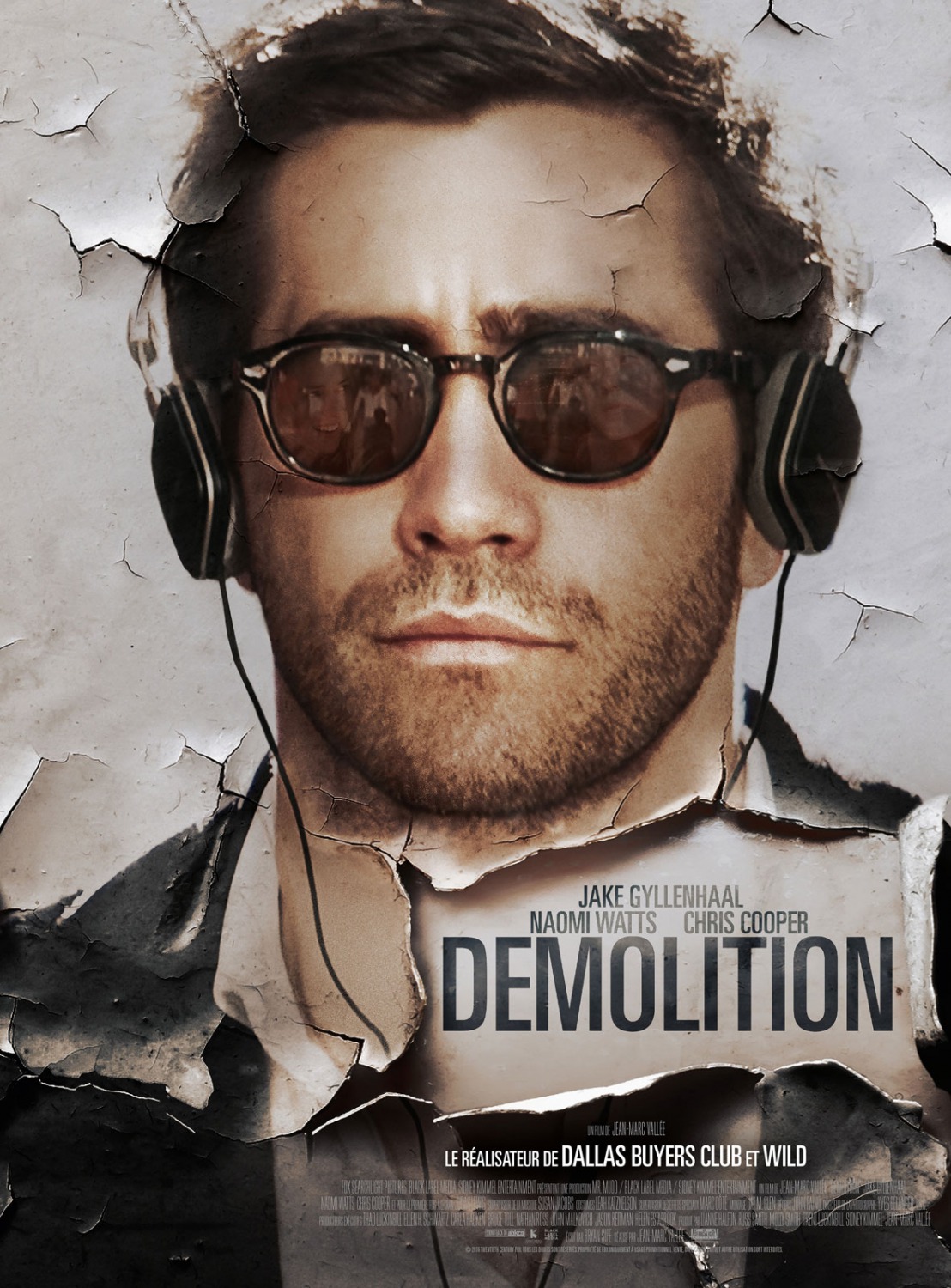
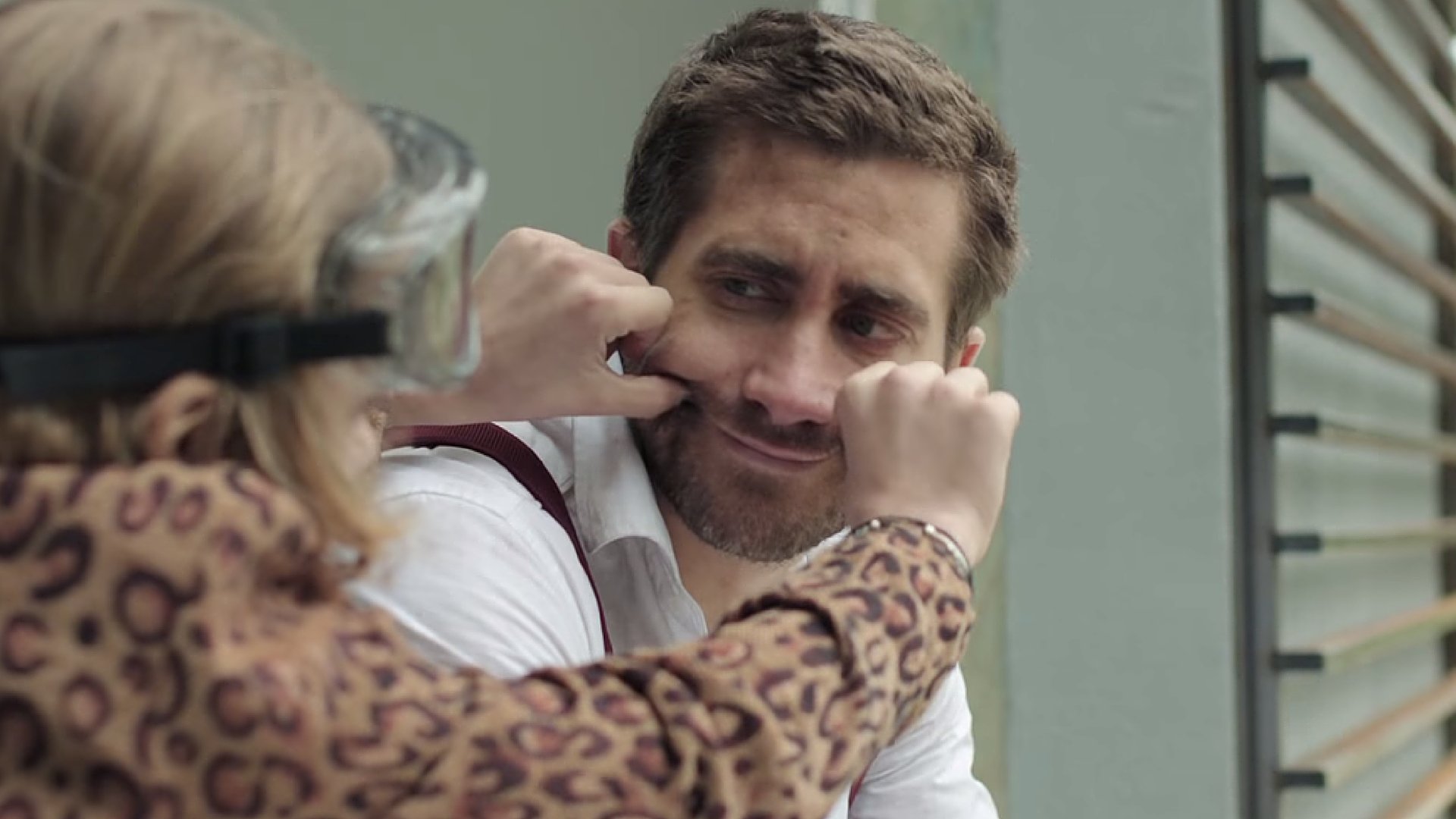
There’s a scene early on in Demolition, the latest feature from the director of Wild (2014) and Dallas Buyers Club (2013), where Jake Gyllenhaal’s character, an investment banker named Davis Mitchell, attempts to get some M&M’s from a hospital vending machine, but the M&M’s don’t drop down. He hits it a couple of times, then asks one of the hospital staff if they can open it; the answer is no, because it’s not owned by the hospital. This prompts Davis to write a letter of complaint to the Champion Vending Company, which begins, “Dear Champion Vending Company: I put five quarters in your machine and proceeded to push B2, which should have given me peanut M&M’s. Regrettably, it did not. I found this upsetting, as I was very hungry, and also my wife had died ten minutes earlier.”

Now, on the face of it, this is a great way in which to begin exploring the mindset of a recently bereaved husband, but Bryan Sipe’s unconvincing screenplay hasn’t told us enough about Davis so far for the audience to make a judgment as to whether or not this is funny, sad, poignant, or revealing. Instead, it invites the viewer into Davis’s world by getting him to expand on his relationship and marriage with his recently deceased wife, Julia (Lind), but through the medium of letters to the vending company. It’s an awkward plot device because we don’t know if this is a legitimate way for Davis to deal – initially – with his grief at losing his wife in a tragic car accident. It’s awkward because, outside of these letters, Davis acts like he’s okay and he’s dealing with it all pretty well.

Demolition - scene1

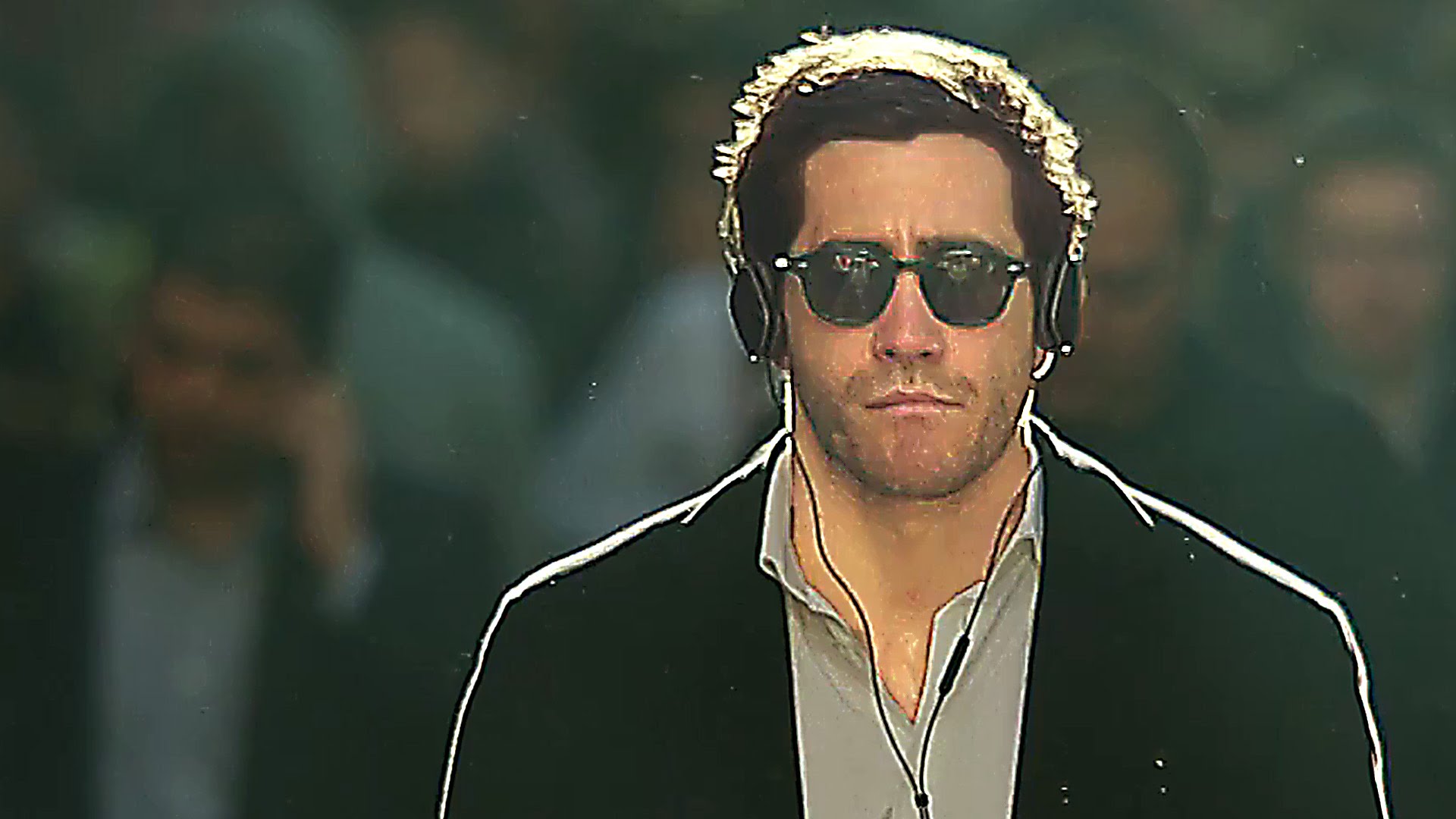
At first, at least. Something his father-in-law, and boss, Phil (Cooper), says to him sends Davis off on another tack, that of dismantling things to see what they’re made of, and how they work. To this end he dismantles light fixtures and bathroom stalls at his place of work, along with his computer, and at home, a coffee machine. He takes these things apart, lines the various component parts in neat groups, and then leaves them where they are. At work it all leads to Davis being told to take some time off, while at home it leaves him restless and unfocused. When he receives a late night call from a woman called Karen Moreno (Watts), the vending company’s customer service manager and someone who has read and connected with his letters, Davis is intrigued enough by her call to want to learn more about her.

Again, though, Sipe’s screenplay – and Vallée’s direction – doesn’t make it clear just why Karen connects with Davis, and vice versa. It’s true that Davis is behaving oddly, and it’s true that Karen is a needy single mother who has the ability to behave in an equally odd manner (she stalks him until he talks to her on a train), but just why these two people find support and a degree of comfort in each other is left floating in the wind. You could argue that the script requires them to, and that would be a reasonable enough answer, but the script doesn’t legitimise their relationship, even as it develops, and especially with the introduction of Karen’s fifteen year old son, Chris (Lewis). Here, Davis is pared away from Karen and inxplicably, takes on the role of father figure to Chris.

Demolition - scene2

It’s another decision made by the movie that takes Davis further and further away from the grief and (implied) despair he’s meant to be feeling following Julia’s death, and into an area where he becomes an unofficial member of Karen and Chris’s disjointed family. Meanwhile, Phil decides to use Julia’s memory to start a foundation and needs Davis to sign off on it. But Davis drags his heels, and again, the script doesn’t provide any ready answers as to why. By the two thirds mark, most viewers would be forgiven for wondering if any of Davis’s decisions have a point to them or are based on any recognisable emotions. This is because the movie is a frustrating exercise in character development and emotional withdrawal that coasts along with little regard for cause and effect, or the demands of a cohesive narrative.

It will come as no surprise that Demolition ends with everything wrapped up neatly (and with a pretty bow on top), and viewers who do manage to make it this far will be asking themselves what all the fuss was about in terms of the storyline and a handful of subplots that pop up every so often but don’t add anything to the overall narrative (a revelation regarding Julia comes out of nowhere and goes back there pretty quickly without having any real effect whatsoever). It’s hard to engage with any of the characters except on a superficial level, and the quality of the characterisations is such that even Gyllenhaal and Watts – two extremely capable actors – can only do so much with them before repetition sets in and their efforts fail to have any impact.

Demolition - scene3

Vallée’s direction is also a problem. While there’s a kernel of a great idea here – widower tries to make sense of his own grief by rebuilding his life from the ground up – Vallée doesn’t have any answers to the problems that are inherent in the script. This leaves the movie plodding along for several stretches (particularly when Davis enlists Chris in the demolition of his home), and any emotional high points lacking punch or dramatic intensity. It’s a visually well-constructed movie, however, with Vallée proving once again that he has an eye for composition and filling a frame with relevant information in support of the story, and he’s ably supported by his regular DoP Yves Bélanger. But it’s not enough to hide the ways in which Sipe and his wayward screenplay fails to explore Davis’s grief and Karen’s lack of confidence.

Rating: 5/10 – given Vallée’s previous movies (and their success), his work on Demolition and partnership with Gyllenhaal seems like a guarantee of quality, but there are too many problems with the script for even this combination to improve things; the movie aims for a kind of heightened realism at times, and while this is an admirable ambition, the fact that it doesn’t even come near is a good indication of how difficult it’s been to translate Sipe’s undercooked screenplay for the screen.

Share this:

  • Click to share on X (Opens in new window) X
  • Click to share on Facebook (Opens in new window) Facebook
  • More
  • Click to print (Opens in new window) Print
  • Click to email a link to a friend (Opens in new window) Email
Like Loading...

Mini-Review: Southpaw (2015)

04 Tuesday Aug 2015

Posted by dullwood68 in Movies

≈ Leave a comment

Tags

Antoine Fuqua, Billy Hope, Boxing, Curtis '50 Cent' Jackson, Drama, Forest Whitaker, Jake Gyllenhaal, Legal custody, Light heavyweight, Naomie Harris, Oona Laurence, Rachel McAdams, Review, Shooting, Wills' Gym, World Champion

Southpaw

D: Antoine Fuqua / 124m

Cast: Jake Gyllenhaal, Forest Whitaker, Rachel McAdams, Oona Laurence, Curtis ’50 Cent’ Jackson, Naomie Harris, Skylan Brooks, Victor Ortiz, Beau Knapp, Miguel Gomez

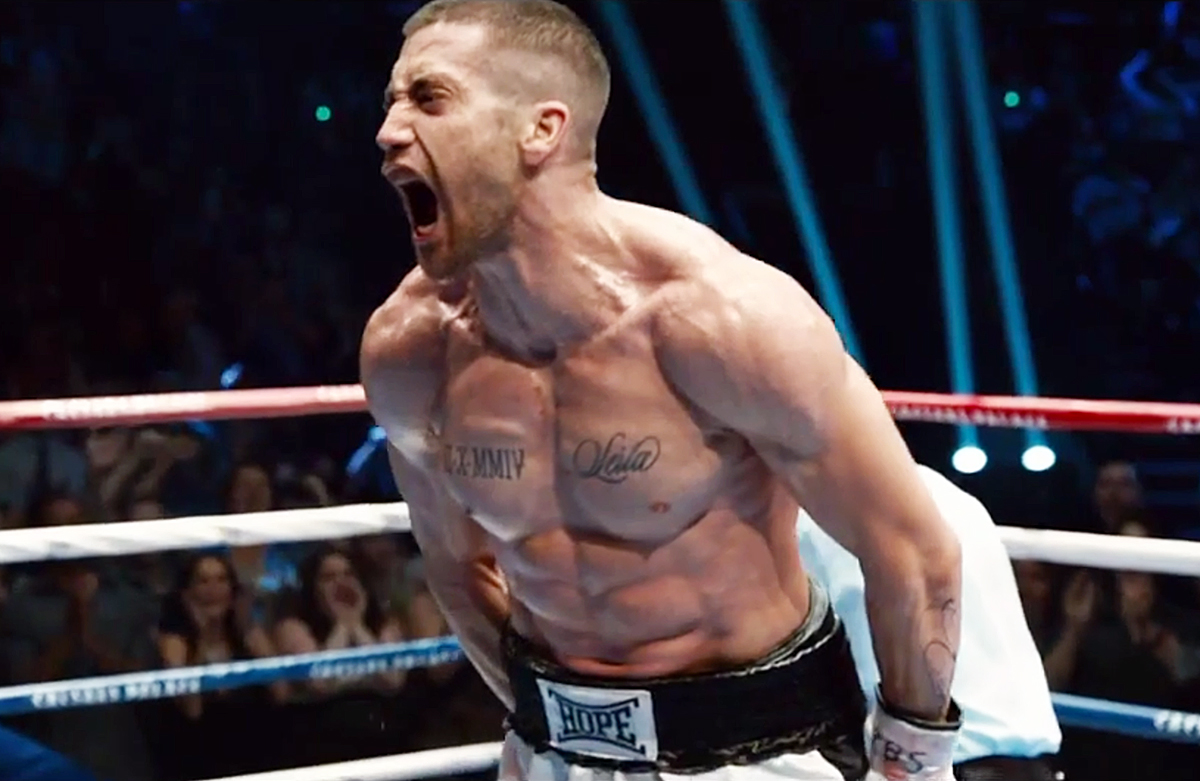
Billy ‘The Great’ Hope (Gyllenhaal) is both the light heavyweight boxing champion of the world and undefeated in forty-three professional fights. Defending his title against the latest challenger, Billy’s lack of defence causes the fight to last longer and take more of a toll. His wife, Maureen (McAdams) feels he should take some time off to fully recover, while his manager, Jordan Mains (Jackson), wants him to sign a lucrative contract with a TV network for three further fights. And another boxer, young and cocky Miguel ‘Magic’ Escobar (Gomez), is trying to goad Billy into letting him challenge for the title.

At a charity event, a brawl between Billy and Miguel ends in tragedy when one of Miguel’s entourage accidentally shoots and kills Maureen. Devastated, Billy retreats from his daughter, Leila (Laurence), and embarks on a self-destructive path that sees him accept the TV network offer but lose the first fight in embarrassing fashion when he punches the referee, lose his licence to box professionally, be let go by Mains, lose his home and property through mounting debts, and when he tries to kill himself, he loses custody of Leila as well. Charged by the court to straighten himself out, Billy turns to boxing coach Tate Wills (Whitaker) to help him get back in the ring and in turn, regain custody of Leila. When it’s clear he’s back in shape and boxing better than ever, Mains reappears and offers him a fight he can’t refuse: against Miguel, now the light heavyweight champion of the world.

Southpaw - scene

On paper at least, Southpaw should have been a sure-fire winner (or in boxing parlance, a knockout). With a director known for his visual flair and aptitude for strong male characters, a lead actor who – Accidental Love (2015) aside – is on one of the hottest streaks of recent years, and the screenwriter who created Sons of Anarchy, this tale of riches to rags to redemption should have been a gripping examination of one man’s descent into despair, and his journey back to a more stable life.

But alas, Southpaw is a movie that consistently disappoints the viewer and sticks to such a precisely engineered, formulaic script that when there is a moment of unexpected originality, it sticks out like a sore thumb. And all this despite another physically demanding performance from Gyllenhaal, but one that is strangely lacking in  the kind of passion that would have made Billy a lot more sympathetic. As it is, he’s a sullen presence throughout, and not very likeable either. McAdams and Whitaker fare better, taking the flimsiness of their characters and making them appear to have more depth than they actually have. But in the acting stakes it’s Laurence who steals the show (and somebody needed to), giving yet another outstanding child performance. Behind the lens, Fuqua doesn’t seem to have the energy to vary the tempo, leaving some scenes feeling flatter than others, while the estimable Mauro Fiore’s photography is reduced to showcase scenes that are so underlit that it makes you wonder if the production couldn’t afford lighting rigs or spots.

Rating: 6/10 – too predictable and too bland despite the punishing boxing matches and the various attempts at emotionally manipulating its audience, Southpaw falls short of being a great boxing movie; it ticks all the boxes marked cliché, and never once tries to lift itself up off the canvas and land a killer blow.

Share this:

  • Click to share on X (Opens in new window) X
  • Click to share on Facebook (Opens in new window) Facebook
  • More
  • Click to print (Opens in new window) Print
  • Click to email a link to a friend (Opens in new window) Email
Like Loading...

Nightcrawler (2014)

26 Thursday Feb 2015

Posted by dullwood68 in Movies

≈ 1 Comment

Tags

Bill Paxton, Dan Gilroy, Drama, Gunmen, Home invasion, Jake Gyllenhaal, Murders, News footage, Rene Russo, Review, Riz Ahmed, Thriller, TV News

Nightcrawler

D: Dan Gilroy / 117m

Cast: Jake Gyllenhaal, Rene Russo, Riz Ahmed, Bill Paxton, Ann Cusack, Kevin Rahm, Kent Shocknek, Leah Fredkin

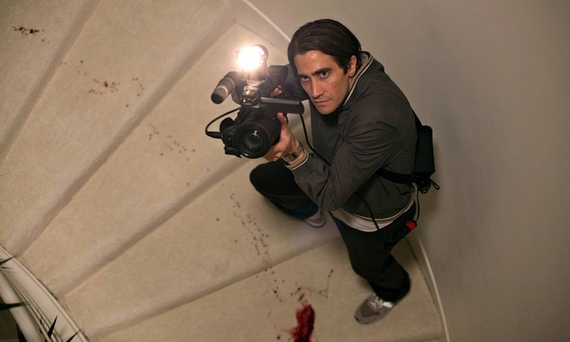
Louis “Lou” Bloom (Gyllenhaal) unemployed; to make ends meet he steals things and then sells them. When he sees a freelance film crew working at the scene of a car crash, he asks their boss, Joe Loder (Paxton) how they make a living from what they do. Loder tells him about selling the footage to the TV stations; this inspires Bloom to steal a racing bicycle and trade it for a radio scanner and a camcorder. Later that same night, Bloom gets in close at the scene of a carjacking and films the victim dying. This gets both Bloom and Loder moved on and they become rivals as a result. Bloom takes his footage to a local TV station where he meets morning news director Nina Romina (Russo) who not only buys the footage but encourages him as well.

Bloom hires an assistant, Rick Carey (Ahmed), and together they start visiting as many crime scenes as they can but even though Bloom has no compunction about manipulating the scenes to provide himself with better footage, Loder still beats him to several important stories. However, his work begins to be shown more and more, and he’s able to get better equipment. Knowing she can’t do without his footage, Bloom also blackmails Nina into having sex with him. When Loder beats him to a major plane crash story, it leads to Bloom sabotaging Loder’s van. When Loder crashes his van and is severely injured, it’s Bloom who gets the footage of his rival being loaded into an ambulance.

Later that night, Bloom and Carey arrive at the site of a home invasion. Leaving Carey outside to sound an alert when the police get there, Bloom sees the gunmen leaving and films them. Going inside the house he finds three dead bodies, all of whom he films. He gives Romina a copy that doesn’t include the gunmen, and the footage is shown, even though some of Nina’s colleagues feel it’s unethical. The police become involved and ask for Bloom’s footage but he gives them another edited version. Then, using the footage he’s held back, Bloom tracks down the gunmen and he and Carey follow them to a nearby restaurant. They tip off the police, but when they arrive, things don’t go quite as Bloom planned.

Jake Gyllenhaal plays an unscrupulous news cameraman in the thriller Nightcrawler

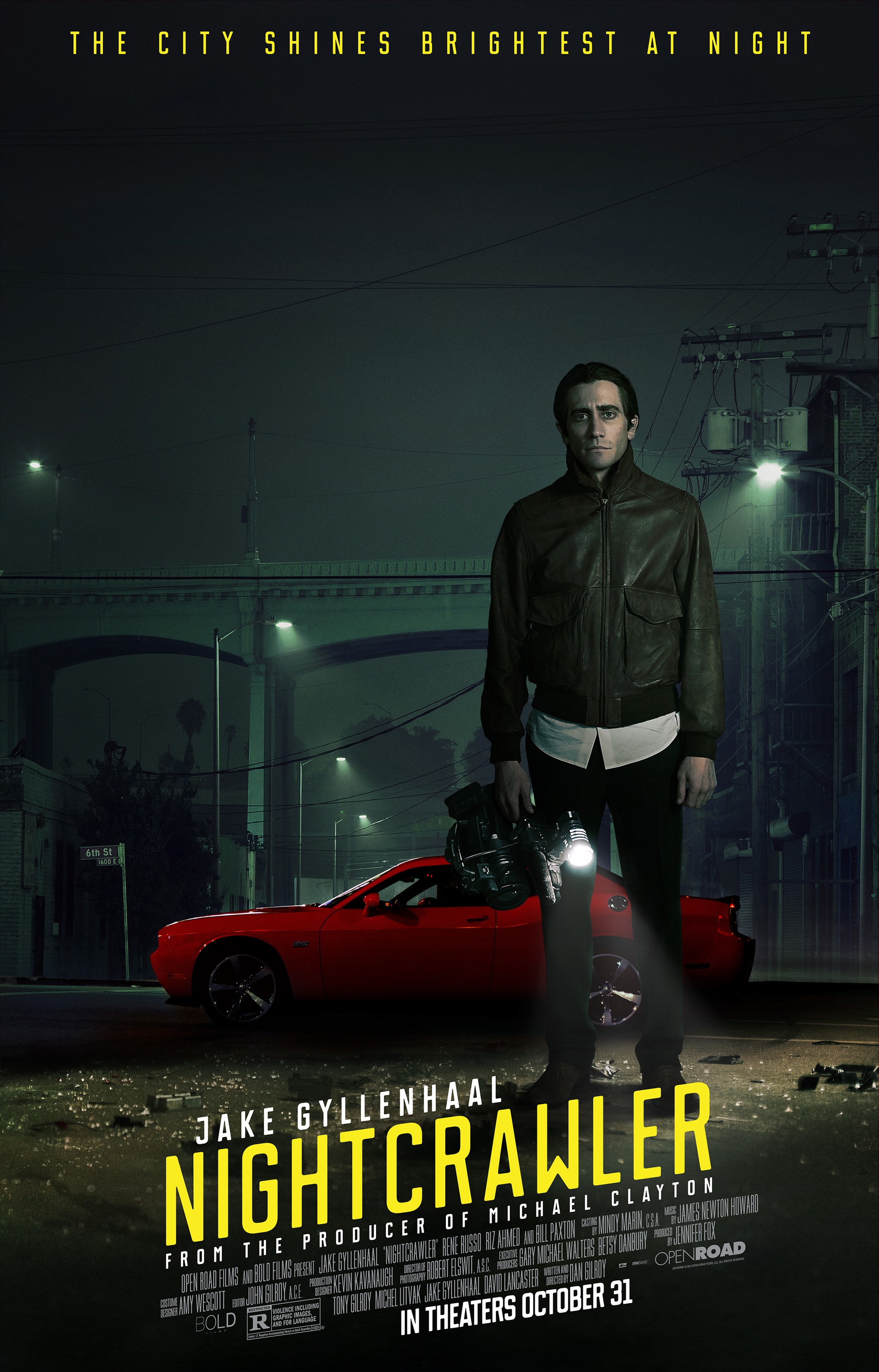
A mesmerising, audacious drama set against the backdrop of a Los Angeles that’s never looked so foreboding at night as it does here, Nightcrawler features a powerhouse performance from Gyllenhaal, and makes for a riveting viewing experience. It all hinges on writer/director Gilroy’s script, a fervid foray into the dark underbelly of daily news gathering that exposes the often desperate need for more and more “potent” material, and the betrayal of ethical concerns in the search for ratings. It’s a bravura piece, challenging and appalling in equal measure, and in the character of Louis Bloom, shows how little appreciation can be given to the feelings of others in the pursuit of fame (and presumably fortune).

Bloom is a grim-faced, skeletal-looking, fixed-eyed monster, oozing an unstable charm, flattering just enough to get his foot in the door, dismissive when someone can’t or won’t help him. He’s the upbeat loner whose interaction with others is continually designed to improve his lot in life, to make things better for him before anyone else. As charismatic as he seems, there’s a mania lurking close beneath the surface that serves as a warning to everyone around him. But Bloom is adept at reading others; he knows when and how to press their buttons, to manipulate them, or if necessary, threaten them into doing what he wants. And if threats don’t work, well, he’s not averse to making sure he still gets what he wants, anyway he can. He’s a ruthless, predatory menace.

As the amoral stringer, Gyllenhaal gives a super-charged performance that is easily his best yet, his gaunt physical appearance a perfect fit for the rapacious Bloom. Gyllenhaal makes him uncomfortable to watch, a creepy, unsettling presence wherever he goes, those big eyes of his hinting at madness and danger. Even when he’s silent he gives off a dispiriting air, as if even what he’s thinking (and no matter how banal) is somehow as poisonous to others as anything he could actually say. Gilroy has created one of the most defiantly unprincipled characters in movie history, and Gyllenhaal has seized his chance with undisguised relish. (It’s still a mystery that he wasn’t nominated for an Oscar for the role.) Working on what seems like nervous energy, Gyllenhaal paints a convincing portrait of a man willing to do anything in order to succeed, and whose sociopathy is frightening. In the aftermath of the police’s arrival at the restaurant, the true nature and extent of his emotional detachment is revealed – and Gyllenhaal makes it truly disturbing.

It’s one of many scenes that Gilroy artfully constructs that keeps the viewer on the edge of their seat and which is anchored by Gyllenhaal’s impressive performance. As Bloom’s career blossoms, his amoral nature finds its mirror in Nina’s equally amoral disregard for conventional programming rules. In some ways she’s worse than Bloom, her lust for the material he provides as uncomfortable to watch as the ways in which he’ll procure it. When she sleeps with him the idea that she’s being blackmailed lacks currency; if anyone is being exploited it’s Bloom. Russo is superb in the role, giving ample expression to Nina’s vicious impropriety and matching Gyllenhaal for intensity. It’s been a long time since The Thomas Crown Affair (1999), and while she’s made a couple of interesting movies in the meantime, she’s not had a role that is as challenging as this one, and it’s great to see her inhabit the part with such fierce intelligence.

In presenting such a couple of despicable characters (made for each other but otherwise doomed to be alone), Gilroy has taken a considerable risk in making a movie without a sympathetic main character. But such is the awfulness of Bloom (and Nina’s) behaviour, and so complicit do we become as an audience, that we can’t take our eyes off them. In the same way that Bloom produces highly upsetting footage and Nina watches it with barely disguised impatience, Gilroy engineers things so that we too are drawn inexorably into a world we would otherwise avoid. Just how far will Bloom go? Will he film anything that Nina won’t be put off by? How much further can they take all this? All questions that the audience feels compelled to discover the answers to.

Nightcrawler - scene2

As well as his talented cast – Ahmed and Paxton provide sterling support as Bloom’s naïve employee and experienced rival respectively – Gilroy has surrounded himself with a pretty talented crew. Bringing his script to life, the movie is beautifully shot by DoP Robert Elswit, the night-time scenes having a luminosity to them that makes L.A. a character in itself. In the editor’s chair is Gilroy’s fraternal twin brother, John Gilroy, who has assembled the material with such care and attention to the movie’s emotional moods that each scene has a resonance that exists both alone and in conjunction with other scenes (and to add to the charges of nepotism he’s also Russo’s brother-in-law). And there’s a marvellously evocative score by James Newton Howard that subtly underpins the action without overwhelming it.

Rating: 9/10 – with a riveting, powerful performance from Gyllenhaal at its centre, Nightcrawler is a nightmarish journey into the heart of one man’s personal darkness; formidable and emotionally rigorous, it’s also a movie that rewards with each successive viewing, and stays in the mind long after it’s ended.

Share this:

  • Click to share on X (Opens in new window) X
  • Click to share on Facebook (Opens in new window) Facebook
  • More
  • Click to print (Opens in new window) Print
  • Click to email a link to a friend (Opens in new window) Email
Like Loading...

Enemy (2013)

11 Friday Jul 2014

Posted by dullwood68 in Movies

≈ 1 Comment

Tags

Actor, Denis Villeneuve, Double, Drama, History teacher, Jake Gyllenhaal, Mélanie Laurent, Mystery, Psychological thriller, Sarah Gadon, Toronto

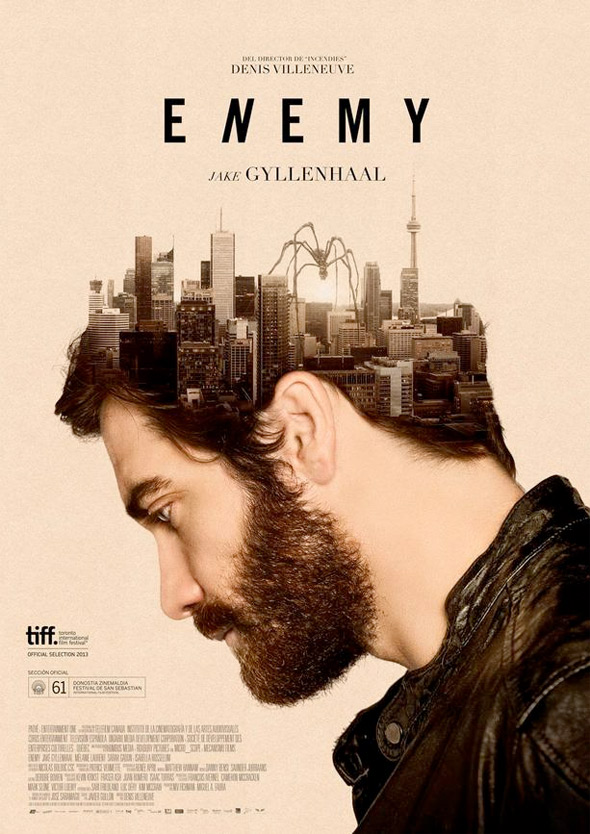
Enemy

D: Denis Villeneuve / 90m

Cast: Jake Gyllenhaal, Mélanie Laurent, Sarah Gadon, Isabella Rossellini, Joshua Peace, Tim Post

Adam Bell (Gyllenhaal) is an associate professor of history, a little removed from his colleagues and students, but in a relationship with Mary (Laurent), though this has its ups and downs.  On the advice of a fellow teacher (Peace), Adam rents a movie called Where There’s a Will There’s a Way.  That night he watches the movie, but it’s only later that same night that he’s awoken by the realisation that one of the bellhops in the movie – played by Daniel Saint Claire (Gyllenhaal) – looks exactly like him.  Fascinated by his discovery, Adam decides to track down the actor; an online search reveals the talent agency that represents him.  Adam visits the building where the agency is based and is mistaken for Saint Claire.  He receives an envelope that contains a letter addressed to Anthony Claire (the actor’s real name) at his home.  Adam goes there but is too nervous to call at the man’s apartment.  Instead he telephones Claire but his wife Helen (Gadon) answers.

Adam calls again when Anthony is home but the actor tells him not to call again.  Later, he changes his mind and agrees to meet Adam at a hotel.  Meanwhile, Helen, suspecting Anthony is cheating on her, goes to where Adam teaches and briefly speaks to him (though she doesn’t tell him who she is).  Adam and Anthony meet and find they are entirely identical, even down to a scar they both have on their chest.  Scared by this, Adam flees.  Now it’s Anthony’s turn to be fascinated by Adam: he finds out where Adam lives and sees him with Mary.  Anthony becomes infatuated with Mary and manipulates Adam into letting him take Mary away overnight.  Adam goes to Anthony’s apartment and stays there until  Helen arrives home, and as the evening progresses, the two couples’ lives become inextricably entwined…

Enemy - scene

Right from the start, with its opening scene set in an underground sex club, Enemy lets its audience know that it’s not going to be the type of psychological drama/thriller where things are explained too easily.  That scene, with its ritualised stage show, serves as an introduction to the wider mystery that envelops Adam, and yet it remains frustratingly unexplored (though it is referred to later on in the movie).  For the casual viewer, frustration is the one constant the movie cleaves to, as scene after scene fails or refuses to give an explicit reason for what’s happening; very little can be accepted or relied upon at face value.  Enemy is a movie where inference and supposition will only get the viewer so far, and where the plot’s strange twists and turns only serve to make things more convoluted and disorienting.

And while some might find this counter-productive in terms of getting the most out of the movie, ultimately it enhances the experience, with director Villeneuve’s decision to make some scenes completely enigmatic while lacing others with complex misdirection, adding to the sense of unease that the movie builds up.  It’s an accomplished piece of deconstruction, removing key elements that most other movies would rush to include in order to make things easier for the audience.  Here Villeneuve avoids any attempt at clarity, and by doing so, creates a deceptively elegant, thought-provoking movie that rewards more and more with each repeat viewing.

He’s aided by an impressively layered script by Javier Gullón (adapted from the novel, The Double, by José Saramago), that makes a virtue of ambiguity and provokes as many questions as can be reasonably squeezed into ninety minutes.  It’s a delicate balancing act, providing just enough information to keep the viewer intrigued and baffled at the same time, while choosing to reveal very little through either characterisation or dialogue (unless you’re paying very close attention).  Between them, Gullón and Villeneuve have designed a movie that defies conventions and exceeds expectations with a great deal of audacity and artistic brio.

Of course, none of this would be possible without the participation of Gyllenhaal, who excels as Adam and Anthony, his performances so finely attuned to the material that he doesn’t put a foot wrong throughout, whether he’s required to play nervous and scared (Adam) or confident and predatory (Anthony).  It’s his finest role to date, and proof (if any were needed) that he is one of the best actors around today.  He’s ably supported by Laurent in a role that appears to be underwritten but which fits perfectly with the storyline, and Gadon (also seen in Belle), whose portrayal of Anthony’s loyal but emotionally scarred wife matches Gyllenhaal’s performance for intensity and poignancy.

The look of the movie (bearing in mind it’s set in Toronto) is suitably chilly, and the colour scheme – a mix of dark browns and greys – complements the often oppressive nature of the storyline, and the movie’s sense of impending doom.  There’s also a fantastic, unnerving score by Danny Bensi and Saunder Jauriaans that is both portentous and imposing at the same time, adding a dark undercurrent to proceedings that is strikingly effective.  Technically daring, Enemy succeeds by grounding its ambiguous, sometimes fantastical, storyline and plot in a world where the mystery surrounding Adam and Anthony can be perceived as both rational and weird… and it still works.

Rating: 9/10 – a modern classic, precisely assembled and without an ounce of cinematic fat to it, Enemy is a psychological thriller that mesmerises with ease and ends with a visual punch to the gut that you definitely won’t see coming; the first of (hopefully) many more remarkable collaborations between Villeneuve and Gyllenhaal, and deserving of a much wider audience.

Share this:

  • Click to share on X (Opens in new window) X
  • Click to share on Facebook (Opens in new window) Facebook
  • More
  • Click to print (Opens in new window) Print
  • Click to email a link to a friend (Opens in new window) Email
Like Loading...

Blog Stats

  • 491,594 hits

Recent Posts

  • 10 Reasons to Remember Bibi Andersson (1935-2019)
  • Fantasia (1940)
  • Dances With Wolves (1990) – The Special Edition
  • Kiss of the Spider Woman (1985)
  • The Three Musketeers (1973)

Top Posts & Pages

  • Cardboard Boxer (2016)
    Cardboard Boxer (2016)
  • I Origins (2014)
    I Origins (2014)
  • Logan (2017)
    Logan (2017)
  • The Corpse of Anna Fritz (2015)
    The Corpse of Anna Fritz (2015)
  • The Black Panther (1977)
    The Black Panther (1977)
  • The White Orchid (2018)
    The White Orchid (2018)
  • Bang Gang (A Modern Love Story) (2015)
    Bang Gang (A Modern Love Story) (2015)
  • Breaking and Exiting (2018)
    Breaking and Exiting (2018)
  • Honeytrap (2014)
    Honeytrap (2014)
  • Groundhog Day (1993)
    Groundhog Day (1993)
Follow thedullwoodexperiment on WordPress.com

Blogs I Follow

  • Rubbish Talk
  • Film 4 Fan
  • Fast Film Reviews
  • The Film Blog
  • All Things Movies UK
  • Interpreting the Stars
  • Let's Go To The Movies
  • Movie Reviews 101
  • TMI News
  • Dan the Man's Movie Reviews
  • Film History
  • Jordan and Eddie (The Movie Guys)

Archives

  • April 2019 (13)
  • March 2019 (28)
  • February 2019 (28)
  • January 2019 (32)
  • December 2018 (28)
  • November 2018 (30)
  • October 2018 (29)
  • September 2018 (29)
  • August 2018 (29)
  • July 2018 (30)
  • June 2018 (28)
  • May 2018 (24)
  • April 2018 (21)
  • March 2018 (31)
  • February 2018 (25)
  • January 2018 (30)
  • December 2017 (30)
  • November 2017 (27)
  • October 2017 (27)
  • September 2017 (26)
  • August 2017 (32)
  • July 2017 (32)
  • June 2017 (30)
  • May 2017 (29)
  • April 2017 (29)
  • March 2017 (30)
  • February 2017 (27)
  • January 2017 (32)
  • December 2016 (30)
  • November 2016 (28)
  • October 2016 (30)
  • September 2016 (27)
  • August 2016 (30)
  • July 2016 (30)
  • June 2016 (31)
  • May 2016 (34)
  • April 2016 (30)
  • March 2016 (30)
  • February 2016 (28)
  • January 2016 (35)
  • December 2015 (34)
  • November 2015 (31)
  • October 2015 (31)
  • September 2015 (34)
  • August 2015 (31)
  • July 2015 (33)
  • June 2015 (12)
  • May 2015 (31)
  • April 2015 (32)
  • March 2015 (30)
  • February 2015 (37)
  • January 2015 (39)
  • December 2014 (34)
  • November 2014 (34)
  • October 2014 (36)
  • September 2014 (25)
  • August 2014 (29)
  • July 2014 (29)
  • June 2014 (28)
  • May 2014 (23)
  • April 2014 (21)
  • March 2014 (42)
  • February 2014 (38)
  • January 2014 (29)
  • December 2013 (28)
  • November 2013 (34)
  • October 2013 (4)

Create a free website or blog at WordPress.com.

Rubbish Talk

Film 4 Fan

A Movie Blog

Fast Film Reviews

The Film Blog

The official blog of everything in film

All Things Movies UK

Movie Reviews and Original Articles

Interpreting the Stars

Dave Examines Movies

Let's Go To The Movies

Film and Theatre Lover!

Movie Reviews 101

Daily Movie Reviews

TMI News

Latest weather, crime and breaking news

Dan the Man's Movie Reviews

All my aimless thoughts, ideas, and ramblings, all packed into one site!

Film History

Telling the story of film

Jordan and Eddie (The Movie Guys)

Movie Reviews & Ramblings from an Australian Based Film Fan

Privacy & Cookies: This site uses cookies. By continuing to use this website, you agree to their use.
To find out more, including how to control cookies, see here: Cookie Policy
  • Subscribe Subscribed
    • thedullwoodexperiment
    • Join 481 other subscribers
    • Already have a WordPress.com account? Log in now.
    • thedullwoodexperiment
    • Subscribe Subscribed
    • Sign up
    • Log in
    • Report this content
    • View site in Reader
    • Manage subscriptions
    • Collapse this bar
 

Loading Comments...
 

    %d