• 10 Reasons to Remember…
  • A Brief Word About…
  • About
  • For One Week Only
  • Happy Birthday
  • Monthly Roundup
  • Old-Time Crime
  • Other Posts
  • Poster of the Week
  • Question of the Week
  • Reviews
  • Trailers

thedullwoodexperiment

~ Viewing movies in a different light

thedullwoodexperiment

Tag Archives: Jamie Bell

Film Stars Don’t Die in Liverpool (2017)

29 Saturday Sep 2018

Posted by dullwood68 in Movies

≈ Leave a comment

Tags

Annette Bening, Cancer, Drama, Gloria Grahame, Jamie Bell, Julie Walters, Liverpool, Oscar winner, Paul McGuigan, Review, Romance, True story

D: Paul McGuigan / 105m

Cast: Annette Bening, Jamie Bell, Julie Walters, Kenneth Cranham, Stephen Graham, Vanessa Redgrave, Frances Barber, Leanne Best

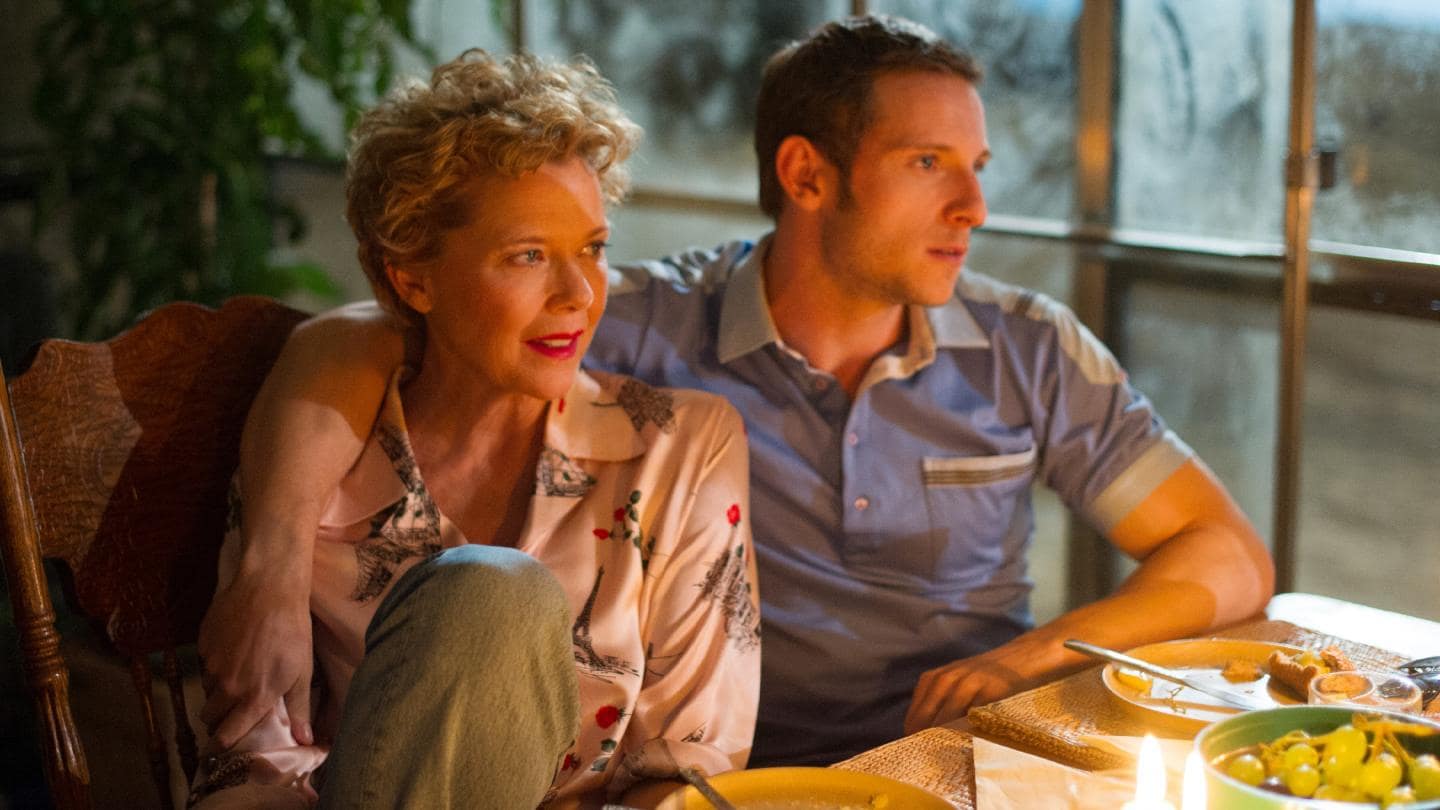
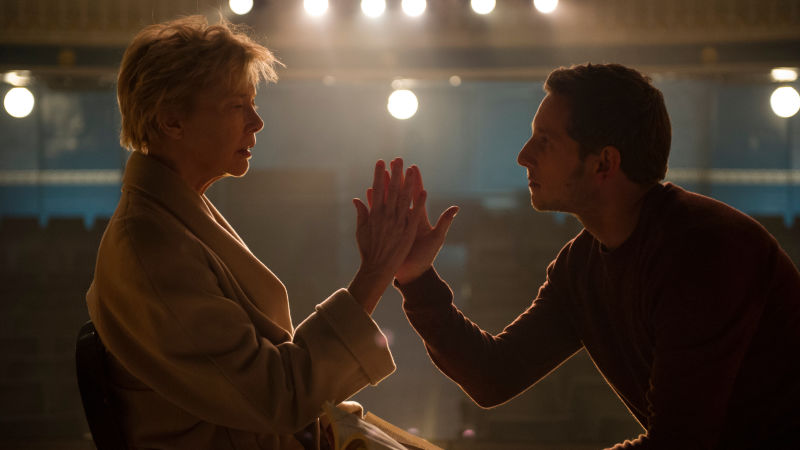
In London in 1979, aspiring young actor Peter Turner (Bell) met Oscar-winning actress Gloria Grahame (Bening). Although theirs was an unlikely friendship (at first), the pair soon found themselves in a romantic relationship, one that saw Grahame being introduced to Turner’s family – mum Bella (Walters), dad Joe (Cranham), and brother Joe Jr (Graham) – and in turn, Turner travelling to the US and meeting Grahame’s mother, Jean (Redgrave), and her sister, Joy (Barber). But it wasn’t long before their relationship foundered, and Turner returned home to continue his acting career. Two years later, while appearing in a production of The Glass Menagerie in the UK, Grahame was taken ill, but instead of staying in hospital, she contacted Turner and asked to stay at his family’s home in Liverpool. Despite her assertions that her illness was nothing serious, Grahame was actually suffering from cancer, but she didn’t want anyone to know, and made Turner swear not to tell anyone, not even her family. In the days that followed, Grahame’s health worsened, and Turner found it increasingly difficult to look after her, and in the end, the secrecy she wanted couldn’t be maintained…

Based on Peter Turner’s memoir of the same name, Film Stars Don’t Die in Liverpool is a tragic tale given muted relevance by the nature of its origins and its refusal to show just why Grahame was, during the early Fifties at least, such a big deal. Thanks to Matt Greenhalgh’s script, which focuses more on Turner than it does Grahame, the movie makes pointed comments about Grahame the woman – her four marriages (one of them to her stepson from her second marriage), her fading career, her frightened refusal to acknowledge the seriousness of having cancer – while giving audiences little in the way of examples as to why she became a star (a short clip from Naked Alibi (1954) doesn’t really cut it). Bening is superb in the role, and captures Grahame’s carefree nature and nagging insecurities with impressive precision, but there’s also a sense that she’s working extra hard to create such a telling portrayal, almost as if she’s filling in the blanks in the script. As the movie’s deus ex machina, she’s an essential component, but this is about Turner’s relationship with Grahame, not the other way round, and how her illness affects him.

The problem with this is that Turner isn’t that well-developed a character either. What’s missing is the spark that brought them together in the first place, because personable though he is, Turner remains something of a cipher, a young man swept up by the glamour surrounding Grahame and her fame, and a little too easily for comfort. Motives are missing on both sides, and again Greenhalgh’s script isn’t interested in exploring these issues, and McGuigan seems content to follow the dictates of the script. Thankfully, Bell is just as good as Bening in overcoming the drawbacks inherent in the script, and gives a nuanced, detailed performance that impresses as much as his co-star’s. Elsewhere, the movie is an odd combination of visual styles, with the scenes set in London and Liverpool having a naturalistic, somewhat dour look to them, while the scenes set in California and New York are bright, over-saturated, and almost rose-tinted in their representation. Maybe this is intended to reflect Turner’s memories of those visits, but the US scenes are jarring and feel like they should belong in another movie (or at least a different cut of this one). In the end, and no matter how much the two storylines are intriguingly intertwined, this is one tragic romance that doesn’t have the impact it should have.

Rating: 6/10 – despite two magnificent central performances, Film Stars Don’t Die in Liverpool isn’t as persuasive or emotionally devastating as it wants to be; there’s a distance here that stops the viewer from becoming too involved, and though it’s handsomely mounted and shot, it never seems to be aiming for anything other than perfectly acceptable.

Share this:

  • Click to share on X (Opens in new window) X
  • Click to share on Facebook (Opens in new window) Facebook
  • More
  • Click to print (Opens in new window) Print
  • Click to email a link to a friend (Opens in new window) Email
Like Loading...

6 Days (2017)

21 Saturday Oct 2017

Posted by dullwood68 in Movies

≈ Leave a comment

Tags

Abbie Cornish, DFRLA, Drama, Hostages, Iranian Embassy, Jamie Bell, Kate Adie, Literary adaptation, London, Mark Strong, Review, Rusty Firmin, SAS, Thriller, Toa Fraser, True story

D: Toa Fraser / 94m

Cast: Jamie Bell, Mark Strong, Abbie Cornish, Martin Shaw, Ben Turner, Emun Elliott, Aymen Hamdouchi, Andrew Grainger, Colin Garlick, Te Kohe Tuhaka, Tim Pigott-Smith

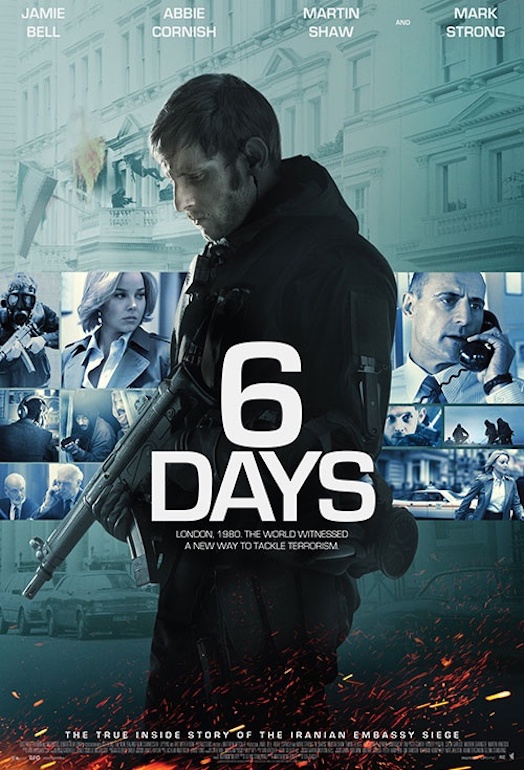
Between 30 April and 5 May 1980, the Iranian Embassy in London came under siege from six armed men whose aim was to secure the release of ninety-one Arab prisoners being held in Iran. Taking twenty-six hostages, they also demanded safe passage out of the United Kingdom once their goal was achieved. Of course, the outcome was very much different from what they were hoping for. Following the killing of one of the hostages, the order was given to send in the SAS. On the evening of the sixth day of the siege, they stormed the building and in the ensuing seventeen minutes killed five of the six armed men, rescued all but one of the remaining hostages (five had been released over the previous days), and gave notice to the world that the UK would not tolerate terrorism on any level.

What 6 Days does is to cover that dramatic period from a variety of angles in an effort to provide the viewer with a comprehensive overview of what was going on at the time both inside the embassy and outside it. So we see the six members of the Democratic Revolutionary Front for the Liberation of Arabistan (DRFLA), led by Salim (Turner), as they try to control the situation from an ever decreasing state of authority, as well as the Metropolitan Police’s chief negotiator, Max Vernon (Strong), as he does his best to keep things from escalating out of control. We also see the SAS teams that would eventually end the siege gathering intelligence on how best to enter the building, BBC reporter Kate Adie (Cornish) establish her reputation as a serious news journalist, and the political manoeuvring that went on behind the scenes involving the Home Secretary, William Whitelaw (Pigott-Smith), and the various decision makers who would debate and interpret the government’s policy of non-compliance in terrorist matters.

With such an intense, dramatic situation, and one whose violent conclusion was played out – deliberately – in front of a number of assembled news cameras, you might expect 6 Days to be as equally intense and dramatic, but sadly, whatever tension is achieved is arrived at accidentally. Glenn Standring’s screenplay, adapted from the awkwardly titled Go! Go! Go!: The SAS. The Iranian Embassy Siege. The True Story (2011) by Rusty Firmin and Will Pearson, alternates between each angle with an initial promise that soon falls away to offer routine exchanges between all concerned, a worrying number of occasions where we see the SAS fail in their preparations, Cornish’s role as Kate Adie built up so that her billing is made more credible, and negotiations between Vernon and Salim that consist of Vernon reassuring Salim that he wants to help, while Salim insists that he’ll kill a hostage if his demands aren’t met – over and over. (If there was ever any intention of exploring the psychological aspects of hostage negotiation, they certainly didn’t make it into the final script.)

There are other problems, some that relate to the movie’s pacing, and others that relate to director Toa Fraser’s handling of the material. Fraser made the enjoyably quirky Dean Spanley (2008), but here the confidence he showed with that movie appears to have deserted him. With an array of characters and situations to be exploited, Fraser leaves many scenes high and dry in terms of their potential effectiveness, opting for a flatness of tone that proves wearying the more it happens. As a result, he often leaves his talented cast looking as if they’ve been cast adrift from the narrative and are wondering where the lifeboats are. Bell, as the same Rusty Firmin whose book this is based on, can’t quite convince as a lance corporal in the SAS, and he’s too bland a character to make much of an impact. Cornish is kept on standby until the siege is broken, which is the point at which Adie came into her own and sealed her journalistic reputation by reporting events as they happened (though the movie has her standing heroically out in the open, whereas in reality Adie wisely hid behind a car door). Cornish also attempts a vocal interpretation of Adie that is off-putting to say the least.

But if you have to spare a thought for anyone in the movie it’s Mark Strong, a fine actor with an impressive range, but here reduced to staring continually in anguished sincerity while his character tries to keep things from going very wrong very quickly. In comparison with much of the rest of the movie, he’s one of the best things in it, but he’s hamstrung by the demands of the script and his director’s inability to make each scene anything more than flat and undemanding. This inattention leads to the movie having an equally flat and undemanding tone that negates any sense of urgency about the siege and the political machinations surrounding it. It’s not until the SAS storm the building that the movie wakes up and remembers it’s as much a thriller as a political drama, but even then there’s a great deal of confusion as to what’s happening where and, in the case of the SAS themselves, to whom.

Again, there are pacing issues as well, and too much repetition to make 6 Days anything other than a pedestrian representation of an event that made international headlines and kept a nation glued to their televisions and radios throughout its duration. There are flashes of humour that are largely muted (though a comment from an embassy staff member to Firmin is priceless by itself), the odd attempt at post-ironic commentary, contemporary footage that sits side by side with the movie’s recreations of the same images, and an eerily effective opening shot that sees the six terrorists passing by the Royal Albert Hall, but they’re not enough on their own to make the movie more engaging or gripping. There’s a great deal of earnestness and melodramatic sincerity on display, but it’s all in service to a script that feels as if it’s trying to tell its story at a remove from the actual events, and which compresses those fateful six days into an hour and a half and still finds the need to pad out the narrative with unnecessary detours and longueurs.

Rating: 4/10 – muddled and far from absorbing, 6 Days is an undemanding viewing experience that doesn’t try too hard to make its true story anything other than perfunctory and banal; by the time the SAS storm the embassy you’ll be thinking “at last” – not because the movie is finally going to be halfway exciting, but because it means the movie is close to being over.

Share this:

  • Click to share on X (Opens in new window) X
  • Click to share on Facebook (Opens in new window) Facebook
  • More
  • Click to print (Opens in new window) Print
  • Click to email a link to a friend (Opens in new window) Email
Like Loading...

Fantastic Four (2015)

26 Saturday Sep 2015

Posted by dullwood68 in Movies

≈ 1 Comment

Tags

Drama, Jamie Bell, Josh Trank, Kate Mara, Marvel, Michael B. Jordan, Miles Teller, Mr Fantastic, Origin story, Reboot, Review, Sci-fi, Stan Lee, Superheroes, The Human Torch, The Invisible Woman, The Thing, Tim Blake Nelson, Toby Kebbell, Victor Von Doom

Fantastic Four

D: Josh Trank / 100m

Cast: Miles Teller, Michael B. Jordan, Kate Mara, Jamie Bell, Toby Kebbell, Reg E. Cathey, Tim Blake Nelson

Telephone call from Fantastic Four director Josh Trank to Marvel head Stan Lee:

Trank: Hi, is that Stan Lee?

Lee: Yes. Who’s this?

Trank: Hi, it’s Josh Trank, I’m directing the new Fantastic Four movie.

Lee: How’s it going?

Trank: It’s going very well, very well indeed. I think you’re going to be pleasantly surprised.

Lee: That’s good. I hear you’ve made some interesting casting choices.

Trank: That’s true, but I think Toby Kebbell will be the definitive Victor Von Doom.

Lee: Ah, that wasn’t what I meant… Anyway, what can I do for you?

Trank: Well, I was calling to find out when you can come out to Louisiana to film your cameo role.

Lee: I’ll need to get back to you on that. I’m really snowed under at the moment. By the way, can you let me see any footage if you have some?

Trank: Sure, we’ve got some great early footage of Reed and Ben as grade school kids, and then seven years later when they’re played by Miles Teller and Jamie Bell.

Lee: Seven years? Okay… Well, if you could let me see it, that would be great.

Trank: Okay, I’ll get it sent to you.

Lee: Great. And I’ll let you know about the cameo.

Trank: Terrific. Well it was great talking to you. You take care now.

Lee: You too. Bye.

Trank: Bye.

Fantastic Four - scene

E-mail sent from Stan Lee to Josh Trank six days later:

Dear Josh – Thanks for sending the early footage, it was… illuminating. I don’t think I’ll be able to find the time to film a cameo, though.

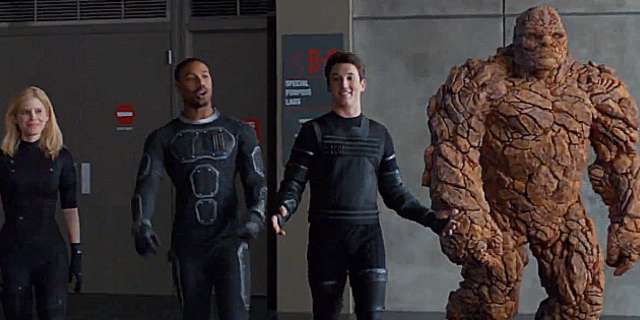
Rating: 3/10 – when your superhero team only works together as a team out of narrative necessity, and the actors portraying that team appear to have all the chemistry of fire and water, then you know you’re in trouble – unless you’re Josh Trank, writers Jeremy Slater, Simon Kinberg (and Trank), and the executives at Twentieth Century Fox, in which case you plough on hoping that no one will notice just how bad the reboot you’re making really is; an appalling mess that features a badly rendered Human Torch to add insult to injury, Fantastic Four is enough to make viewers pine for the 2005 and 2007 movies that should now be reassessed in the light of this movie’s failure to provide anything other than an incoherent plot, dreadful dialogue, even worse characterisations, and one of the all-time worst superhero movies ever (seriously, even Roger Corman’s 1994 version is more enjoyable than this farrago).


Share this:

  • Click to share on X (Opens in new window) X
  • Click to share on Facebook (Opens in new window) Facebook
  • More
  • Click to print (Opens in new window) Print
  • Click to email a link to a friend (Opens in new window) Email
Like Loading...

Nymph()maniac Vol. II (2013)

28 Saturday Jun 2014

Posted by dullwood68 in Movies

≈ 1 Comment

Tags

Charlotte Gainsbourg, Jamie Bell, Joe, Lars von Trier, Nymphomania, Sado-masochism, Sex, Sexuality, Shia LaBeouf, Stellan Skarsgård

Nymphomaniac Vol. II

D: Lars von Trier / 123m

Cast: Charlotte Gainsbourg, Stellan Skarsgård, Stacy Martin, Shia LaBeouf, Jamie Bell, Mia Goth, Willem Dafoe, Michael Pas, Jean-Marc Barr, Kate Ashfield, Christian Slater, Udo Kier, Caroline Goodall, Sophie Kennedy Clark, Ananya Berg

Now living with Jerôme but still unable to achieve orgasm, Joe falls pregnant; she has a son, Marcel, but her maternal instincts are dulled by her efforts to reclaim her ability to orgasm.  Her sexual demands begin to alienate Jerôme, who suggests she takes other lovers as it’s clear he can’t give her what she wants.  She does so but it triggers a jealous reaction in Jerôme and proves unsatisfactory as well.  Joe then learns about K (Bell), a sadist, and visits him in the hope that by exploring this aspect of sexuality it might help her.  Her visits require the services of a babysitter while she is gone, and one afternoon the sitter fails to show up; Joe leaves to see K anyway, leaving Marcel alone in their apartment.  When she returns, Marcel is safe but Jerôme is aware of her desertion, and eventually he challenges her: be a better mother or he will leave with Marcel, and Joe will never see them again.  Unable to stop seeing K, Joe visits him again; when she returns home, Jerôme and Marcel are gone.

Having stopped seeing K, Joe reverts to having sex with any man she wants, particularly at work.  Told by her boss that her behaviour is unacceptable, Joe is pressured into attending a therapy group for sex addicts.  The counsellor (Goodall) tells Joe that in order to control her sexual addiction she must first remove anything that might provoke a sexual response; this will make controlled abstinence that much easier.  This proves impossible and Joe realises she is denying her true nature.  When she next attends the group, she rails against them before leaving for good.

The next part of Joe’s story sees her working for a man called L (Dafoe).  She works for him as a debt collector, using her knowledge of the darker aspects of men’s natures to get them to pay up.  Joe is successful in her work, but as the years go by, L suggests she takes on and train a successor.  L has a candidate for her, a fifteen year old girl called P (Goth) who comes from a family of hardened criminals and who is lonely and shy.  Unconvinced at first, Joe takes P under her wing.  Their relationship deepens over the years until, when P is of age, Joe reveals the work she does and P’s planned part in it.  P isn’t put off and begins to take a more active role in Joe’s work, though when she pulls out a gun and threatens to shoot a debtor, Joe is angry with her.  This leads to an estrangement between the two that leads to disaster when P is given her first solo assignment.  The debtor proves to be Jerôme (Pas).  Unbeknownst to Joe, they begin a relationship, seeing each other whenever P has to collect a payment for the debt Jerôme owes.  On the night of the last collection, Joe follows P to Jerôme’s house and sees them together.  She is unsure at first at what to do, but decides to kill Jerôme and is making her way through the alleyway where Seligman found her when she hears Jerôme’s voice.  He is with P.  Joe tries to shoot him but the gun doesn’t work and he beats her up, thus bringing the story full circle.

Nymphomaniac Vol. II - scene

With the playfulness and abundant humour of Vol. I toned down from the outset, Nymph()maniac Vol. II is a different movie altogether, darker, more austere, less spirited (there is still humour to be found, though).  Joe’s quest to reclaim her orgasm makes her more sexually adventurous, but it also makes her more vulnerable, and her brief foray into motherhood shows how self-destructive she really is, placing her physical needs over the needs of her child.  The correlation between drug addict and sex addict is also given its strongest expression through her visits to K, as Joe desperately seeks a solution to her predicament.  In the same way that a drug addict will take stronger and stronger drugs in an effort to boost their being high, so too does Joe seek more extreme sexual experiences in her attempt to feel again.  (There’s an argument that Joe is also punishing herself during this period but as she finds release by manipulating the mode of K’s sadism, it doesn’t really hold true.)

If Joe’s addiction leads her into more and more “dangerous” territory, it also leads her to the re-confirmed belief that her sexual appetite is validated by her refusal to love.  But, in truth, it’s a defence mechanism, and shows just how scared Joe is of commitment; her inability to feel anything is brought about through Jerôme’s return and their relationship becoming more meaningful.  By reinforcing Joe’s avoidance of her emotions, von Trier shows the loneliness that she tries to hide, and how it distances her from the people around her.  Having her become a debt collector makes a certain kind of sense, as her neutrality in the face of others’ fear or pain makes her a perfect enforcer.

But as with all the best melodramas – and ultimately this is exactly that – Joe falls in love again, unexpectedly, with P.  But it’s a brief, not too convincing affair, with Joe seemingly ambushed by P’s feelings for her.  As P begins to assert her own identity, it becomes inevitable that Joe will not survive the encounter emotionally, and P’s betrayal of her with Jerôme sees her become an avenging angel, determined to destroy forever whatever fragile happiness she’s ever had.  It’s inevitable though that Joe’s plan will backfire because she’s only ever had control over her own body, and her distance from others precludes any influence she thinks she might have (except when she’s backed up by two heavies collecting money).

In the end, the viewer will find Joe’s emotional detachment either difficult to appreciate – it makes her hard to like, particularly in Vol. II – or a necessary conceit without which the movie would struggle to maintain any sense of coherence.  Either way, her selfish attitude to those around her, and her efforts to control them, make Joe a bold but regrettably galling human being to spend four hours with.  Some of her assertions during her badinage with Seligman are so pompous as to defy von Trier’s obvious intelligence: anyone who knows even the slightest bit about organised religion will know that the statement, “the Western church is the church of suffering and the Eastern church is the church of happiness” is so far from the truth to be almost (in its own way) heretical.  With quotes like these weighing things down, Joe’s assertions serve only to highlight just how remote she is from the rest of society, and even though von Trier champions her need to be true to herself, her lack of real introspection makes her appear, by the movie’s end (or beginning), shallow and intransigent.

There have been complaints that Vol. II, by being darker etc., is less of a movie than Vol. I.  But Joe’s story is one that follows a natural progression and the decision to split the movie in two appears to be more of a commercial decision than a creative one.  It is better to see both volumes in succession so as to retain the natural flow of what was always meant to be one four-hour movie, but, ultimately, von Trier’s decision to split the narrative makes no difference to the effect of the overall story.

On the performance side, Gainsbourg’s fearless approach to the material benefits the movie enormously and there’s rarely a moment where her conviction is in doubt.  She does her best to make Joe a sympathetic character but is equally unafraid to show her in a less than pleasant light, her commitment to the role going some way to mitigating the missteps in von Trier’s script.  As the outwardly concerned Seligman, Skarsgård maintains his inquisitive, supportive stance in the light of Joe’s revelations, but is given an horrendous final scene that destroys everything the character has come to stand for.  Martin’s presence, despite Gainsbourg’s proficiency, is not as missed as might be expected, while LaBeouf remains as hard to watch as in Vol. I.  The newcomers to the tale – Dafoe, Goth, Bell – acquit themselves well (Bell in particular is unexpectedly creepy as K), and it’s nice to see Slater and Berg (ten year old Joe) in flashback.

As before, von Trier’s technical control over the material remains in place, though some of the aforementioned missteps make it difficult to give him the benefit of the doubt when some scenes appear included merely for effect (the restaurant scene involving a number of spoons is a case in point, but it redeems itself by being very, very funny).  He’s on less firmer ground with the philosophical digressions that occupy Joe’s time with Seligman, and they become more and more contrived as the movie develops.  And the photography by Manuel Alberto Claro is as beautiful and decorous as in the first movie (which shouldn’t be a surprise).

Rating: 7/10 – no better or worse than Vol. I, Nymph()maniac Vol. II concludes Joe’s story in semi-triumphant style but maintains the faults found in the first movie; archly effective in places, and dismaying in others, von Trier’s conclusion to his Trilogy of Depression shows the wily old fox of arthouse cinema still as infuriating and entertaining (in equal measure) as he’s always been.


Share this:

  • Click to share on X (Opens in new window) X
  • Click to share on Facebook (Opens in new window) Facebook
  • More
  • Click to print (Opens in new window) Print
  • Click to email a link to a friend (Opens in new window) Email
Like Loading...

Snowpiercer (2013)

17 Saturday May 2014

Posted by dullwood68 in Movies

≈ 2 Comments

Tags

Chris Evans, CW7, Ed Harris, Ice Age, Jamie Bell, John Hurt, Joon-ho Bong, Kang-ho Song, Le Transperceneige, Protein meal, Review, Sacred engine, Tilda Swinton, Train

snowpiercer_3a25f386

D: Joon-ho Bong / 126m

Cast: Chris Evans, Kang-ho Song, Jamie Bell, Tilda Swinton, John Hurt, Ah-sung Ko, Octavia Spencer, Alison Pill, Ed Harris, Luke Pasqualino, Ewen Bremner, Vlad Ivanov, Clark Middleton, Emma Levie

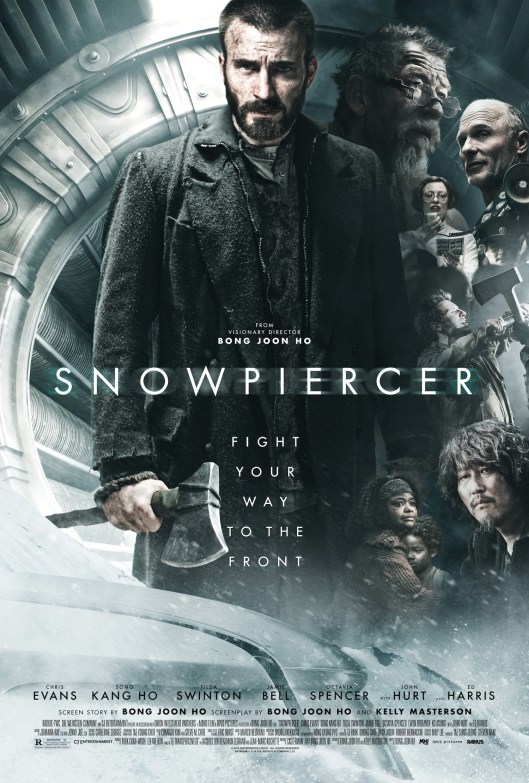
In 2014 global warming has reached such a level it threatens the entire human race with extinction. To combat this, scientists release a reversing agent, CW7, into the atmosphere. To the world’s horror, CW7 destroys all life on the planet and returns it to the ice age. The only survivors are those on a train that circumnavigates the globe without ever stopping, the brain child of reclusive Mr Wilford (Harris). But even on the train there is a class system: those at the tail end exist in cramped, overcrowded conditions, while those at the front of the train live a life of conspicuous luxury. Seventeen years later, the people at the tail are guided by Gilliam (Hurt), but place their trust for a planned revolution in the hands of Curtis Everett (Evans). Aided by Edgar (Bell), Curtis is planning to reach the front of the train and take control of the “sacred engine”, thus allowing him control over the whole train (he is also receiving cryptic messages written on red paper from a mystery source).

When two of the tail people’s children are taken by the armed guards that oversee the tail section, the agony experienced by the mother of one, Tanya (Spencer), and the father of the other, Andrew (Bremner), prompts Curtis to seize his chance to move forward through the train earlier than planned. At the first section, the de facto jail, they free Namgoong Minsu (Song), a security expert whose knowledge of the train and its systems will help them get through each door they come to; they also free his daughter, Yona (Ko). As the tail people make their way from one car to the next, they discover all manner of disturbing facts about life on the train, and are hindered continually in their progress by Miss Mason (Swinton), Mr Wilford’s representative on the train.

Despite overwhelming odds, Curtis reaches the front of the train sections of the train and the gap between the people there and at the tail is thrown into sharp relief. At a classroom run by Teacher (Pill), he learns more about Mr Wilford and his plan for the train, as well as learning that the person who is sending him the messages is part of the hierarchy he seeks to overthrow. With Mr Wilford’s guards, as well as the citizens of the front sections, determined to stop him from reaching the “sacred engine”, Curtis is forced to make some difficult decisions to achieve his aim, but when he does he’s faced with an even more difficult, unexpected decision to make, one that threatens to overturn everything he’s ever believed about the train, and himself.

Snowpiercer - scene

Snowpiercer is an odd movie, a mix of high concept filmmaking supported by cod-literate meditations on the nature of existence and the need for balance in a world that’s a microcosm of the world we still live in. It’s a long, uneven movie as a result, with an expected emphasis on bone-crunching action while it attempts to say something about a range of subjects, from rampant consumerism to notions of self-sacrifice to carefully monitored euthanasia to the morality of keeping one set of passengers in what amounts to a rigorously controlled ghetto. Some of these aspects are handled adroitly (the euthanasia), others less so (the ghetto), but the movie is largely thought-provoking in its approach, and while some of the twists and turns can be seen a snow-covered mountain away, there’s still enough here to surprise the average viewer.

What stops the movie dead in its tracks sometimes (no pun intended), are the moments when something is revealed that immediately makes no logical sense. One of the biggest of these moments occurs when Curtis and his companions reach the abattoir car, and there are row upon row of chicken carcasses on display – after seventeen years, really? Another is why, considering the lethal sub-zero temperatures outside the train, none of the rails have ever split or buckled? And the biggest flaw concerns the train itself and its route: was Mr Wilford so prescient he knew CW7 wasn’t going to work even before it was conceived, because the movie makes it seem as if everything was in place from the moment the reagent was launched. (There are other moments that give pause for credulity but then the whole idea is inherently nonsensical; criticising it further would be like taking a blind man to task for failing to pin the tail on a donkey… that isn’t there.)

These lapses aside, there is still much to admire in Bong’s adaptation of the graphic novel Le Transperceneige by Jacques Lob, Benjamin Legrand and Jean-Marc Rochette (Rochette also supplies the artwork seen in the tail end of the train). As Curtis makes his way to the “sacred engine”, discovering more and more unpalatable truths about the workings of the train, there is a marked sense that he is becoming physically more restricted than he was at the tail, despite the increase in space in which to move. Bong makes being at the front just as bad as being at the end, if not worse, and Evans gives a performance that sees his character become more and more insular and compacted than he was at the beginning (he also gets to deliver an emotionally charged, yet chilling, speech towards the end that resonates even more when he reaches the “sacred engine”). Evans is one of those actors who can easily subvert his handsome looks, and here his grimy appearance is offset by a physical, tightly coiled performance that fits the mood perfectly. He’s ably supported by Swinton as the tombstone-dentured Mason (and in another, blink-and-you’ll-miss-her smaller role), Spencer as the mother obsessed with retrieving her child, and Song as the drug-addled security expert. Bell, however, has little chance to make anything of Curtis’s young follower, while Hurt lends the necessary gravitas to a role that is as close to underwritten as you’d expect.

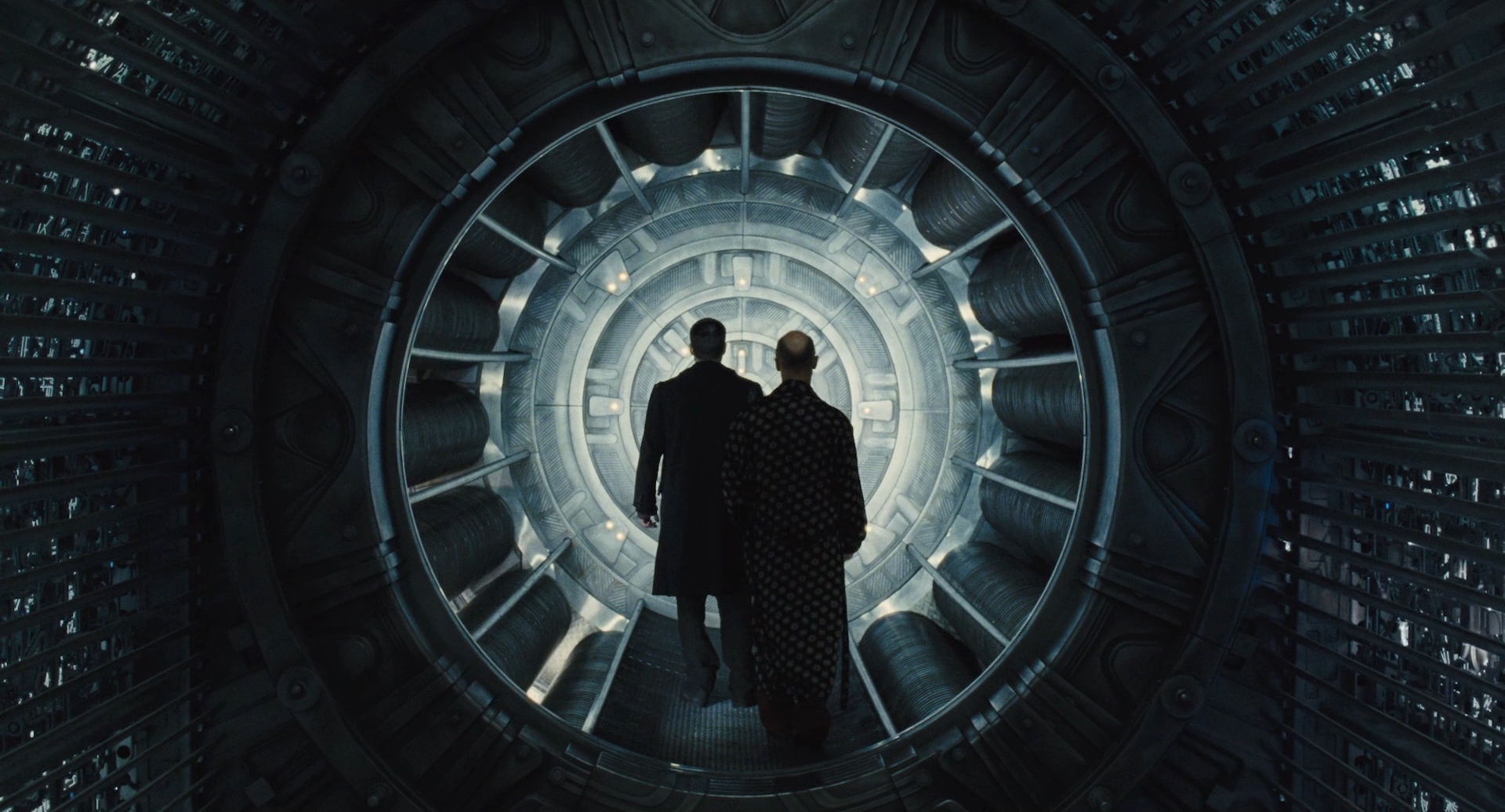
The depiction of a new ice age is effectively maintained throughout, and the cities the train passes through are thankfully anonymous. The functions of the various train cars are imaginatively handled (the woman knitting in the garden car is a particular favourite), while the special effects are, for the most part, seamlessly integrated into the physical action. Bong directs with a visual flair that suits the movie’s mise-en-scene, and despite filming in English for the first time, doesn’t miss a nuance or moment of subtle shading. He’s ably supported by Kyung-pyo Hong’s often striking photography, and the tremendous production design by Ondrej Nekvasil, continually supporting the notion of people living in one place for so long and often surprising in its details as a result. There’s also an impressive score by Marco Beltrami that skilfully avoids the musical clichés that usually clog up dystopian flavoured movies such as this.

Rating: 7/10 – not the sci-fi masterpiece some may have been expecting (the hype surrounding proposed cuts of twenty minutes for the US release hasn’t helped), Snowpiercer is an often thought-provoking movie that tries its best to add political and social content to its storyline without skimping on the action; sometimes awkward in its execution, this still has more going on than most sci-fi movies out there these days, and is well worth seeking out.

Share this:

  • Click to share on X (Opens in new window) X
  • Click to share on Facebook (Opens in new window) Facebook
  • More
  • Click to print (Opens in new window) Print
  • Click to email a link to a friend (Opens in new window) Email
Like Loading...

Mini-Review: Filth (2013)

16 Sunday Feb 2014

Posted by dullwood68 in Movies

≈ Leave a comment

Tags

Black comedy, Drama, Drug addiction, Eddie Marsan, Homophobia, Irvine Welsh, James McAvoy, Jamie Bell, John Sessions, Jon S. Baird, Racism, Review, Sex addiction, Sexism

Filth

D: Jon S. Baird / 97m

Cast: James McAvoy, Jamie Bell, Eddie Marsan, Martin Compston, Imogen Poots, John Sessions, Shirley Henderson, Gary Lewis, Kate Dickie, Joanne Froggatt, Jim Broadbent, Emun Elliott

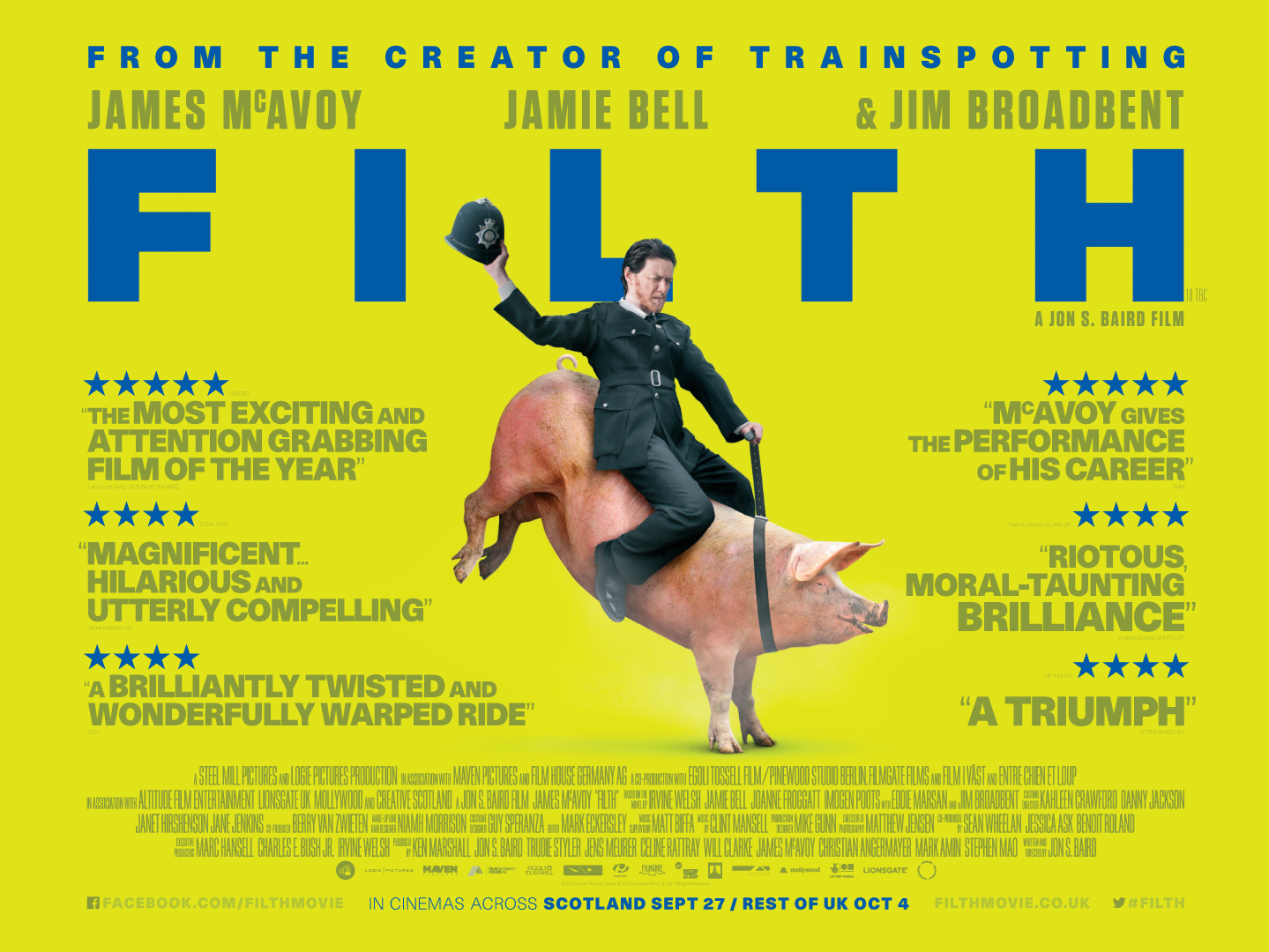
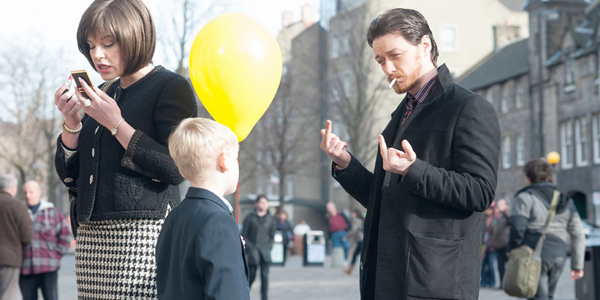
Freewheeling, offensive, scabrous adaptation of Irvine Welsh’s novel that pushes so many boundaries it’s hard to keep track of them all. No politically incorrect aspect is ignored: homophobia, sexism, racism, substance abuse – all indulged in to within an inch of the script’s life. McAvoy is Detective-Sergeant Bruce Robertson, angling for promotion to Detective-Inspector, but saddled with the small matter of the murder of a Japanese tourist to deal with first. Add to that the manoeuvrings of his fellow Detecive-Sergeants – Poots, Lewis, Bell and Elliott – as well as a subplot involving his wife (Shauna Macdonald), and the mystery of who is making obscene phone calls to fellow lodge member Bladesey’s wife (a panting Henderson), and Bruce has got his work cut out for him. It’s a shame then he has such a dependency for drugs, booze and illicit sex. As the pressure on him builds and he becomes ever more desperate to secure his promotion, Bruce’s world slowly but surely falls apart, and in the process, he starts to see things that aren’t there: from his younger brother Davey, killed in a childhood accident, to increasingly bizarre sequences involving his doctor (Broadbent).

Filth - scene

This is a potent adaptation, with plenty of energy and ‘they-didn’t-did-they?” moments of humour. McAvoy continues to cement his reputation as one of our finest young actors (okay, so he is 34), while amongst the supporting cast, both Marsan (as Bladesey) and Sessions (as Robertson’s boss) shine in their respective roles (it’s particularly good to see Sessions back on the big screen, and in a comic role as well). Baird directs with confidence and integrates the fantasy sequences with aplomb; he also manages the cast effectively and with a firm eye for avoiding caricature. There are times when the movie isn’t for the faint-hearted (“Have you started yet, baby cock?”), but anyone with a fondness for the novel or a penchant for politically incorrect humour will have a ball, especially when it comes to the photocopier game. Much better than you might expect and driven by a powerhouse performance by McAvoy, Filth is a breath of often rancid air that is all the better for not pulling its punches.

Rating: 8/10 – with a title that is far from ironic, Filth lives up to its name but is often searingly funny; a descent into one man’s nightmare that isn’t afraid to look into the abyss and then tell it to f**k off.

Share this:

  • Click to share on X (Opens in new window) X
  • Click to share on Facebook (Opens in new window) Facebook
  • More
  • Click to print (Opens in new window) Print
  • Click to email a link to a friend (Opens in new window) Email
Like Loading...

Blog Stats

  • 486,575 hits

Recent Posts

  • 10 Reasons to Remember Bibi Andersson (1935-2019)
  • Fantasia (1940)
  • Dances With Wolves (1990) – The Special Edition
  • Kiss of the Spider Woman (1985)
  • The Three Musketeers (1973)

Top Posts & Pages

  • Lost for Life (2013) - Another Look
    Lost for Life (2013) - Another Look
  • Lost for Life (2013)
    Lost for Life (2013)
  • About
    About
  • Mr. Topaze (1961)
    Mr. Topaze (1961)
  • Hunt for the Wilderpeople (2016)
    Hunt for the Wilderpeople (2016)
  • Shock and Awe (2017)
    Shock and Awe (2017)
  • Billy Lynn's Long Halftime Walk (2016)
    Billy Lynn's Long Halftime Walk (2016)
  • Winter's Tale (2014)
    Winter's Tale (2014)
  • BFI London Film Festival 2015
    BFI London Film Festival 2015
  • 10 Reasons to Remember Arthur Hiller (1923-2016)
    10 Reasons to Remember Arthur Hiller (1923-2016)
Follow thedullwoodexperiment on WordPress.com

Blogs I Follow

  • Rubbish Talk
  • Film 4 Fan
  • Fast Film Reviews
  • The Film Blog
  • All Things Movies UK
  • Interpreting the Stars
  • Let's Go To The Movies
  • Movie Reviews 101
  • TMI News
  • Dan the Man's Movie Reviews
  • Film History
  • Jordan and Eddie (The Movie Guys)

Archives

  • April 2019 (13)
  • March 2019 (28)
  • February 2019 (28)
  • January 2019 (32)
  • December 2018 (28)
  • November 2018 (30)
  • October 2018 (29)
  • September 2018 (29)
  • August 2018 (29)
  • July 2018 (30)
  • June 2018 (28)
  • May 2018 (24)
  • April 2018 (21)
  • March 2018 (31)
  • February 2018 (25)
  • January 2018 (30)
  • December 2017 (30)
  • November 2017 (27)
  • October 2017 (27)
  • September 2017 (26)
  • August 2017 (32)
  • July 2017 (32)
  • June 2017 (30)
  • May 2017 (29)
  • April 2017 (29)
  • March 2017 (30)
  • February 2017 (27)
  • January 2017 (32)
  • December 2016 (30)
  • November 2016 (28)
  • October 2016 (30)
  • September 2016 (27)
  • August 2016 (30)
  • July 2016 (30)
  • June 2016 (31)
  • May 2016 (34)
  • April 2016 (30)
  • March 2016 (30)
  • February 2016 (28)
  • January 2016 (35)
  • December 2015 (34)
  • November 2015 (31)
  • October 2015 (31)
  • September 2015 (34)
  • August 2015 (31)
  • July 2015 (33)
  • June 2015 (12)
  • May 2015 (31)
  • April 2015 (32)
  • March 2015 (30)
  • February 2015 (37)
  • January 2015 (39)
  • December 2014 (34)
  • November 2014 (34)
  • October 2014 (36)
  • September 2014 (25)
  • August 2014 (29)
  • July 2014 (29)
  • June 2014 (28)
  • May 2014 (23)
  • April 2014 (21)
  • March 2014 (42)
  • February 2014 (38)
  • January 2014 (29)
  • December 2013 (28)
  • November 2013 (34)
  • October 2013 (4)

Create a free website or blog at WordPress.com.

Rubbish Talk

Film 4 Fan

A Movie Blog

Fast Film Reviews

The Film Blog

The official blog of everything in film

All Things Movies UK

Movie Reviews and Original Articles

Interpreting the Stars

Dave Examines Movies

Let's Go To The Movies

Film and Theatre Lover!

Movie Reviews 101

Daily Movie Reviews

TMI News

Latest weather, crime and breaking news

Dan the Man's Movie Reviews

All my aimless thoughts, ideas, and ramblings, all packed into one site!

Film History

Telling the story of film

Jordan and Eddie (The Movie Guys)

Movie Reviews & Ramblings from an Australian Based Film Fan

Privacy & Cookies: This site uses cookies. By continuing to use this website, you agree to their use.
To find out more, including how to control cookies, see here: Cookie Policy
  • Subscribe Subscribed
    • thedullwoodexperiment
    • Join 481 other subscribers
    • Already have a WordPress.com account? Log in now.
    • thedullwoodexperiment
    • Subscribe Subscribed
    • Sign up
    • Log in
    • Report this content
    • View site in Reader
    • Manage subscriptions
    • Collapse this bar
 

Loading Comments...
 

    %d