• 10 Reasons to Remember…
  • A Brief Word About…
  • About
  • For One Week Only
  • Happy Birthday
  • Monthly Roundup
  • Old-Time Crime
  • Other Posts
  • Poster of the Week
  • Question of the Week
  • Reviews
  • Trailers

thedullwoodexperiment

~ Viewing movies in a different light

thedullwoodexperiment

Tag Archives: Jeff Daniels

Allegiant (2016)

03 Sunday Apr 2016

Posted by dullwood68 in Movies

≈ 1 Comment

Tags

Ansel Elgort, Bureau of Genetic Welfare, Chicago, Divergent Series, Drama, Jeff Daniels, Literary adaptation, Miles Teller, Naomi Watts, Providence, Review, Robert Schwentke, Sci-fi, Sequel, Shailene Woodley, Theo James, Thriller, Veronica Roth

Allegiant

D: Robert Schwentke / 120m

Cast: Shailene Woodley, Theo James, Naomi Watts, Octavia Spencer, Jeff Daniels, Zoë Kravitz, Ansel Elgort, Miles Teller, Keiynan Lonsdale, Daniel Dae Kim, Maggie Q, Bill Skarsgård, Jonny Weston, Ray Stevenson, Mekhi Phifer, Ashley Judd

And so Jeanine is dead, killed by Four’s mother, Evelyn (Watts). Everything’s okay and peace has been restored. Except that Evelyn is making sure it comes at a further price: everyone who was on Erudite’s side has to be put on trial and their “crimes” answered for. This means executions on a wide scale, and although Tris (Woodley) has disowned her brother, Caleb (Elgort), he faces the same fate. With the message from outside Chicago still indicating that there are more answers to be found outside the city than in, Tris and Four (James) opt to breach the wall and go in search of those answers. Four decides to help Caleb escape, and the trio are joined by Christina (Kravitz), Tori (Maggie Q), and Peter (Teller). Despite an attempt to stop them by Evelyn’s lieutenant, Edgar (Weston), they climb over the wall and down to the other side.

There they find a toxic wasteland, where the earth is a scorch blasted red. Having been followed by Edgar, the group are relieved when they reach a force field that opens to reveal an armed force. This group protects Tris and her friends from Edgar, and with his threat neutralised, they take Tris and company to their base far out in the wasteland, the so-called Bureau of Genetic Welfare, where Tris in particular is welcomed by the Bureau’s director, David (Daniels). With Tris being the fruit of an experiment to right a wrong perpetrated long ago, David is keen to run tests on her, while keeping Four and the others occupied and away from her as much as possible. But Four is quick to suspect that David isn’t as honest as he makes out, but Tris doesn’t see it.
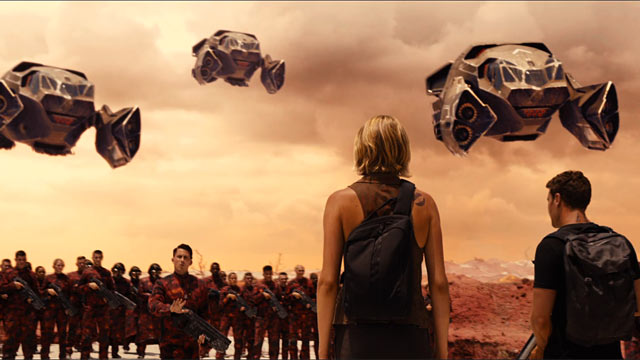
Allegiant - scene2

Meanwhile, back in Chicago, Johanna (Spencer) has formed a group she calls Allegiant, and who are at odds with Evelyn’s way of running things. Another war of attrition is about to take place between the two factions, and though Tris wants David to intervene – after all, he has been monitoring Chicago for a long time because of the experiment – but instead of doing so, he sends Peter back with a nerve gas that will render everyone who comes into contact with it, unable to remember anything that happened to them before they were exposed. And while David takes Tris to meet the Council who ultimately decide everyone’s fate, Four discovers what the gas has been used for in the wasteland. And when Tris finally becomes aware of David’s duplicity, she and Four, along with Christina and Caleb, return to Chicago to stop Evelyn from using the gas on Allegiant.

Three movies in and the Divergent series is showing serious signs that it’s running out of ideas. Allegiant is superficially entertaining, but in comparison with parts one and two, it lacks anything fresh to entertain either fans or newcomers. It’s also the first time that the series gives up on Tris as an independent, strong-minded female, and instead hands over leadership duties to Four – which wouldn’t be such a bad idea if he wasn’t written as a bit of a pompous told-you-so kind of character. (Throughout the series, Four has been the gloomiest character of them all, unable to smile or express his feelings about anything without a frown.) And with Tris relegated to a secondary role, there’s only Daniels left to pick up the slack, as everyone else (James excepted) is afforded only enough screen time to either provide any relevant exposition, or keep the plot ticking over (Spencer and Watts are wasted, while Judd is brought back yet again to add some more of her character’s turgid back story).

Allegiant - scene1

The problem with the movie is twofold: one, it’s the first half of the third book in the series, and as such, doesn’t have a credible ending, just another narrowly avoided cliffhanger that leaves things open for part four (or should that be part three-point-five?); and two, the action seems more than usually contrived once Tris et al leave Chicago. The wasteland is less than threatening, and the Bureau is predictably shiny on the surface (and in David’s “office”), while the barracks Four and Christina are assigned to are remarkably similar to those inhabited by Dauntless in the first movie. It’s all brightly lit and commendably shot by esteemed DoP Florian Ballhaus (returning from Insurgent (2015) and already hired for the next instalment), but it’s becoming hard to care what happens to anyone.

At its heart, the Divergent series is about DNA profiling and the perils that can follow on from it. It’s a concept that’s been there in the first two movies, but which hasn’t been addressed directly. But now that it has, and through the medium of video no less, the truth behind the use of Chicago as a test ground, and the true meaning of being Divergent, all sounds quite dull and unexciting. The movie fails to make Tris’s nature important to its own story, and instead opts for being yet another race-against-time thriller, abandoning the ethical and moral debate it wants to engage in and relying on tried and trusted action movie clichés to wind up its narrative.
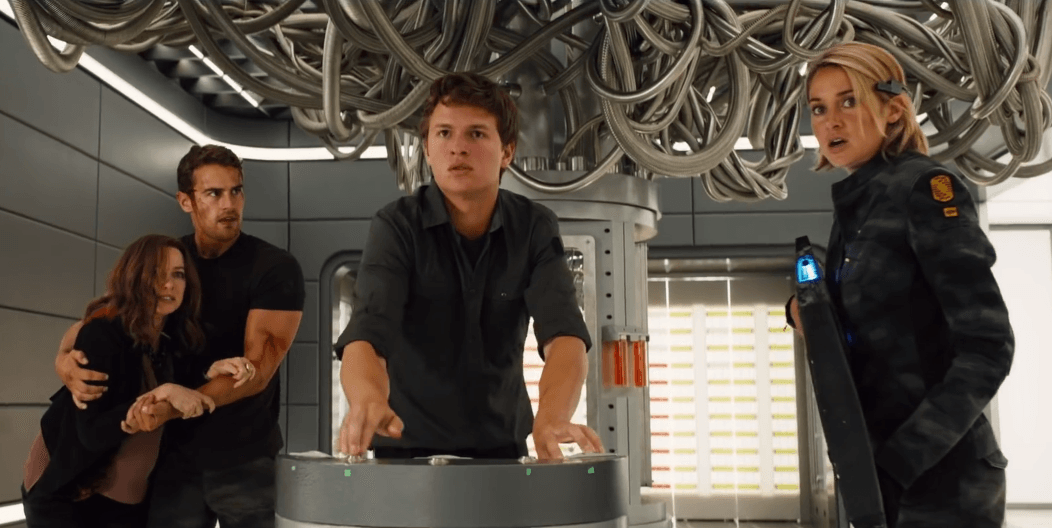
Allegiant - scene3

It’s no surprise that the movie has underperformed at the box office (leading to the final movie, Ascendant, due next year, having its budget cut), because even though Tris makes it out of Chicago, once she does, the movie doesn’t know what to do with her, and for a character as intriguing and interesting as Tris, that’s a terrible decision to make on any level. And it doesn’t help that your central villain is ultimately a harried bureaucrat, a futuristic pen-pusher if you will. That’s another stumble, and especially bad after having Kate Winslet fill the villain’s shoes for the first two movies. It all adds up to a movie that coasts on the success of its predecessors, and feels and looks like a stopgap before the real conclusion in part four.

Rating: 5/10 – another series instalment that will have newcomers wondering what all the fuss has been about, Allegiant is a movie that has little to offer in terms of its characters’ development, or in terms of expanding the wider narrative; Woodley – this series’ biggest asset – is sidelined for much of the movie, and though James is a competent enough actor, he doesn’t have his co-star’s presence on screen, which makes large chunks of the movie something of a chore to sit through.
Share this:

  • Click to share on X (Opens in new window) X
  • Click to share on Facebook (Opens in new window) Facebook
  • More
  • Click to print (Opens in new window) Print
  • Click to email a link to a friend (Opens in new window) Email
Like Loading...

Steve Jobs (2015)

21 Thursday Jan 2016

Posted by dullwood68 in Movies

≈ Leave a comment

Tags

1984, 1988, 1998, Aaron Sorkin, Apple, Biography, Black cube, Computers, Computing, Danny Boyle, Drama, Father/daughter relationship, History, iMac, Jeff Daniels, Kate Winslet, Literary adaptation, Macintosh, Michael Fassbender, NeXT, Product launches, Review, Seth Rogen, True story

Steve Jobs

D: Danny Boyle / 122m

Cast: Michael Fassbender, Kate Winslet, Seth Rogen, Jeff Daniels, Michael Stuhlbarg, Katherine Waterston, Ripley Sobo, Makenzie Moss, Perla Haney-Jardine, Sarah Snook, John Ortiz

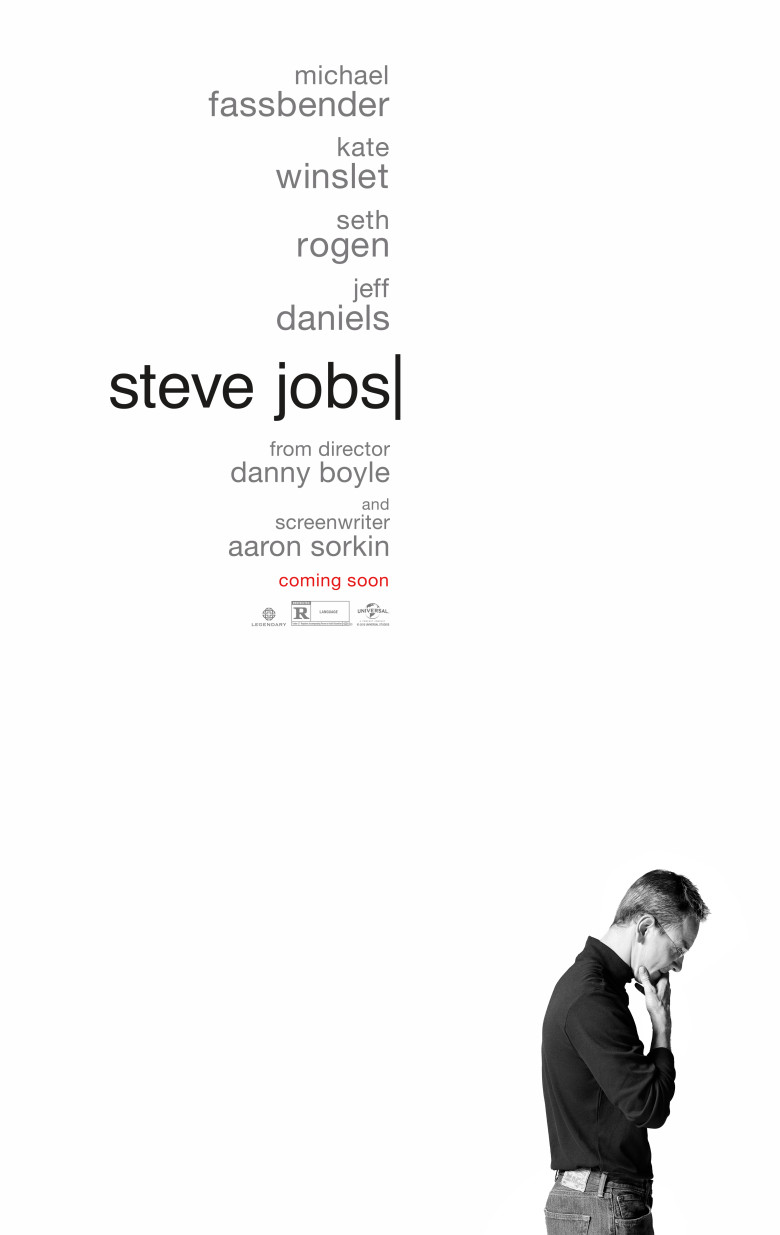
Steve Jobs – maverick genius, arrogant manipulator, or indifferent human being? In Danny Boyle’s latest movie we get to learn that the late founder and CEO of Apple was all three, which shouldn’t be a surprise as each description isn’t exclusive of itself. But where Aaron Sorkin’s script, adapted from Walter Isaacson’s book, impresses most is when we see Jobs being all three at the same time.

The structure of the movie allows us to see Jobs at three separate points in his life, and each time in the immediate lead up to a product launch. So in 1984 we see him trying to launch the Macintosh, Apple’s first new product in seven years since the Apple II. In 1988 he’s on his own, attempting to impress everyone with the NeXT computer, an item that is doomed to failure. And we end on a high note in 1998 with the launch of the first iMac and Jobs’ ensuring he would never be forgotten. It’s like a crazy rollercoaster ride, as the advances in computer innovation are revealed to be less important than marketing and design. As Jobs so aptly puts it, “They won’t know what they’re looking at or why they like it but they’ll know they want it”.

Steve Jobs - scene2

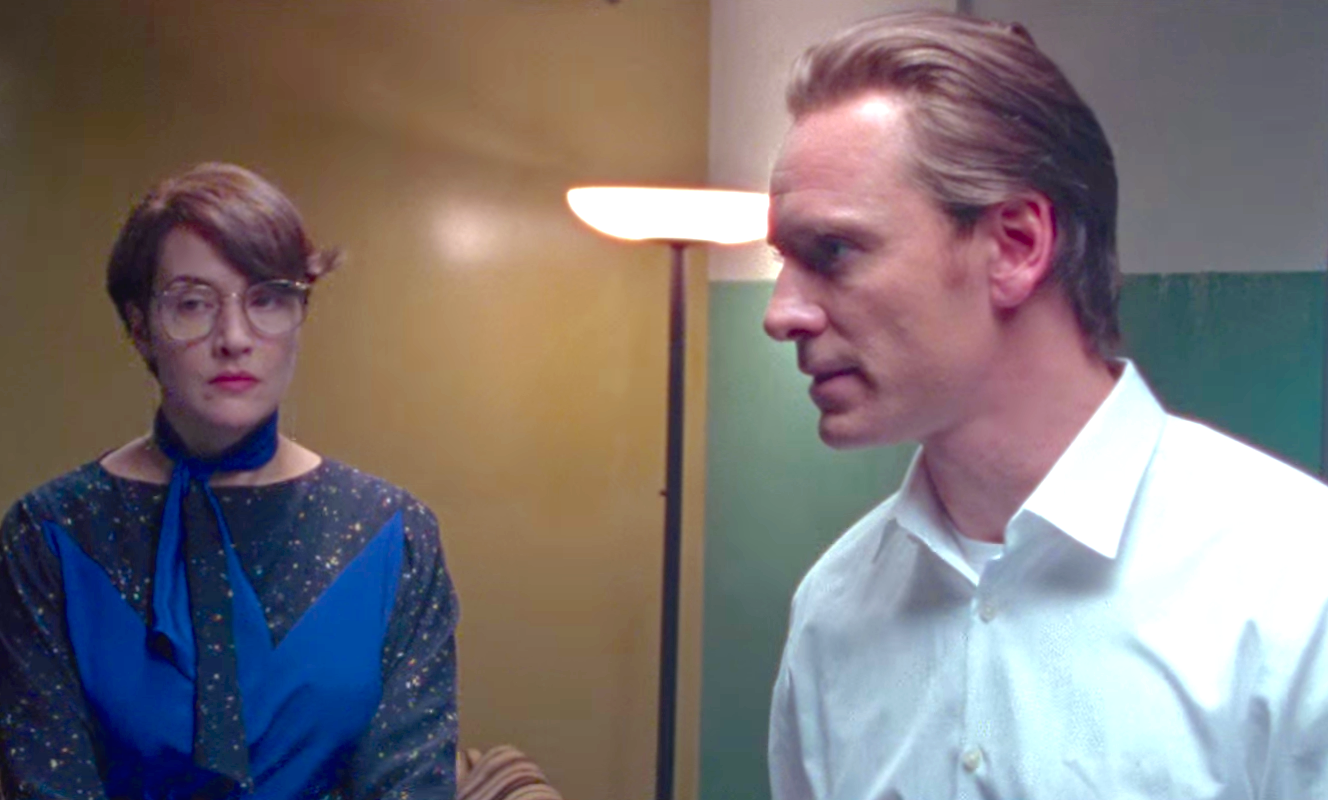
By telling Jobs’ story in three distinct episodes, Boyle and Sorkin, with the aid of a very talented cast, reveal how Jobs started with an idea and kept pursuing it for over fifteen years. That idea may have gone through some variations in all that time, but the movie paints a very convincing portrait of a man driven by the need to do things differently and in a way that’s at odds with everyone around him. In his pursuit of excellence in home computing, Jobs brooked very little compromise, and we see this in the meticulous nature of his product launches, where even the Exit signs have to be switched off so that the visual presentation can have the most impact. Jobs doesn’t compromise, and he doesn’t recognise the value and support of the people around him, including his old friend and co-creator of the Macintosh, Steve Wozniak (Rogen), and his long-suffering personal assistant Joanna Hoffman (Winslet).

Each launch brings its own set of issues and problems for Jobs to overcome, from the first Macintosh’s failure to say “hello”, to the NeXT computer’s lack of an operating system, to Wozniak’s public insistence that the iMac launch should include an acknowledgment of the work put in by the team who made Apple II so successful. Jobs refuses to accept that any of these will interfere with his plans for success, and he drives the people around him with a fierce determination that is both alienating and patronising. The movie keeps Jobs focused and uncompromising in his self-belief, right until the end, and as an anti-hero he fits the bill entirely.

But while the behind the scenes manoeuvrings that show how each phase of Jobs’ career were a necessary, evolutionary step (for him and his computers) all make for compelling viewing, the movie is less successful with its three act structure than it realises. Each section relies on a lot of repetition, as encounters and personal problems are examined each time, albeit from slightly different angles. Jobs’ condescending treatment of Wozniak is a case in point, as is his dismissive treatment of computer engineer Andy Hertzfeld (Stuhlbarg). And then there’s Lisa, the daughter he tried to deny having.

Film Title: Steve Jobs

Jobs’ relationship with Lisa is one of the bigger subplots in the movie, and as an attempt by Boyle and Sorkin to show the man’s more “human” side, it’s nevertheless quite clumsy and unconvincing in its execution. At the first launch, Lisa is five years old; up until she uses a Macintosh to draw a picture, Jobs is distant toward her, and to her mother, Chrisann (Waterston). But the picture changes his feelings about her, and in the other two acts we see the same sort of thing happen again, as Jobs begins to treat Lisa as a person and not a Court-confirmed inconvenience (Jobs was so arrogant that upon learning that a paternity test showed it was 94% certain he was Lisa’s father, he came up with an algorithm that counter-claimed that the 6% difference meant Chrisann could have slept with any one of twenty-eight million men and the result would have been the same). While it’s a creditable attempt to humanise Jobs, it’s these scenes that carry the least weight, and the least credibility. By the time Lisa is nineteen and on the verge of wanting nothing to do with him, all it takes is for Jobs to say he was “poorly made” and she forgives him just like that (as well as a hastily improvised bribe that promises she’ll have one of the first iPods).

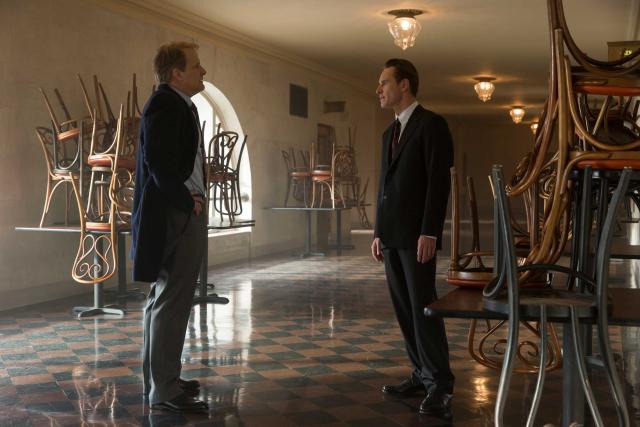
More potent is the relationship Jobs has with John Sculley (Daniels), the CEO he poached from Pepsi to run Apple in the Eighties. It was Sculley who had Jobs ousted from Apple following the disastrous sales of the Macintosh, and Sorkin’s script soars whenever it focuses on the pair’s uneasy relationship. There’s a bravura scene where Jobs confronts Sculley over what he sees as the CEO’s betrayal of him, and Boyle intercuts with flashbacks that show the depth of Jobs’ own complicity, giving the audience a balanced view of what happened and why. Both Fassbender and Daniels are superb in these scenes, and the movie has a fire and an energy that it lacks elsewhere.

As expected, Boyle elicits strong performances from his cast, with Fassbender giving a superb performance as the empathy-lite Jobs, and Winslet stealing the movie out from under him as Joanna. Winslet is simply in a class of her own, adding subtlety and shading to a role that would otherwise have been quite bland. When she confronts Jobs over his treatment of Lisa before the ’98 launch, the pent-up emotions she releases are as liberating for the viewer as they are for Joanna. In support, Rogen shows fleeting glimpses of the actor he can be when he’s not channelling Seth Rogen, and Daniels is magnificent as Sculley.

Steve Jobs - scene1

Jobs is frequently challenged as to what he can actually do, and at one point he tells Wozniak that “musicians play their instruments. I play the orchestra”. With Jobs, Boyle shows himself to be a great conductor as well, but thanks to some uncomfortable narrative decisions borne out of Sorkin’s script, this isn’t as rewarding as some of his other movies, and his control over the material, while evident throughout, isn’t enough to overcome the movie’s built-in deficiencies. That said, and as with all of Boyle’s movies, it’s visually stimulating and in tandem with editor Elliot Graham, he maintains a pace and a rhythm that propel the viewer along effortlessly.

Rating: 7/10 – slickly, professionally made with Boyle firmly in charge and full of impressive performances, Jobs is nevertheless a movie that fails to do full justice to its central character; as a result Jobs the human being proves less interesting than Jobs the arrogant perfectionist, and any insights into the man that can be gleaned are at the expense of soap opera elements that, unfortunately, compromise his more acerbic nature.

Share this:

  • Click to share on X (Opens in new window) X
  • Click to share on Facebook (Opens in new window) Facebook
  • More
  • Click to print (Opens in new window) Print
  • Click to email a link to a friend (Opens in new window) Email
Like Loading...

The Martian (2015)

14 Wednesday Oct 2015

Posted by dullwood68 in Movies

≈ 1 Comment

Tags

Andy Weir, Ares III, Chiwetel Ejiofor, Drama, Hermes, Jeff Daniels, Jessica Chastain, Kristen Wiig, Literary adaptation, Mark Watney, Mars, Matt Damon, NASA, Pathfinder, Potato crop, Review, Ridley Scott, Sci-fi, Thriller

Martian, The

D: Ridley Scott / 144m

Cast: Matt Damon, Chiwetel Ejiofor, Jessica Chastain, Jeff Daniels, Kristen Wiig, Michael Peña, Sean Bean, Kate Mara, Sebastian Stan, Aksel Hennie, Benedict Wong, Mackenzie Davis, Donald Glover

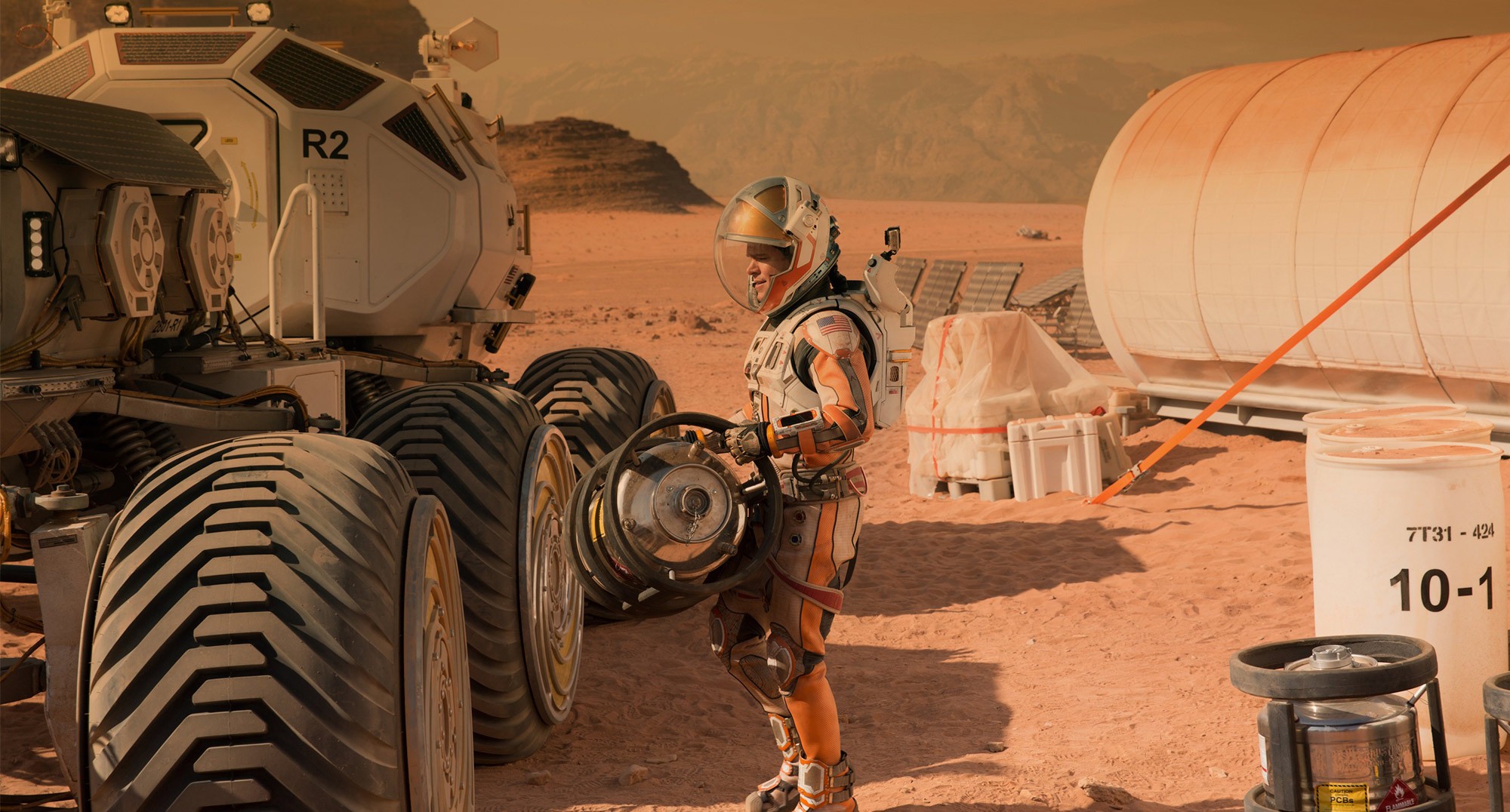
On Mars to explore the terrain and collect samples, the crew of the spaceship Hermes, headed by Commander Melissa Lewis (Chastain), have established a habitat station (the Hab) that allows them to check their samples before sending the results back to NASA. It’s also a living space for them. When a fierce storm approaches more quickly than expected, and some of the team are caught outside, botanist Mark Watney (Damon) is struck by debris and catapulted out of sight. With little option but to abandon the habitat centre and return to the Hermes, Lewis makes the decision to leave Mars even though she wants to find Watney. When NASA learns what’s happened, its director, Teddy Sanders (Daniels), holds a press conference that details the mission’s current status, and Watney’s unfortunate death.

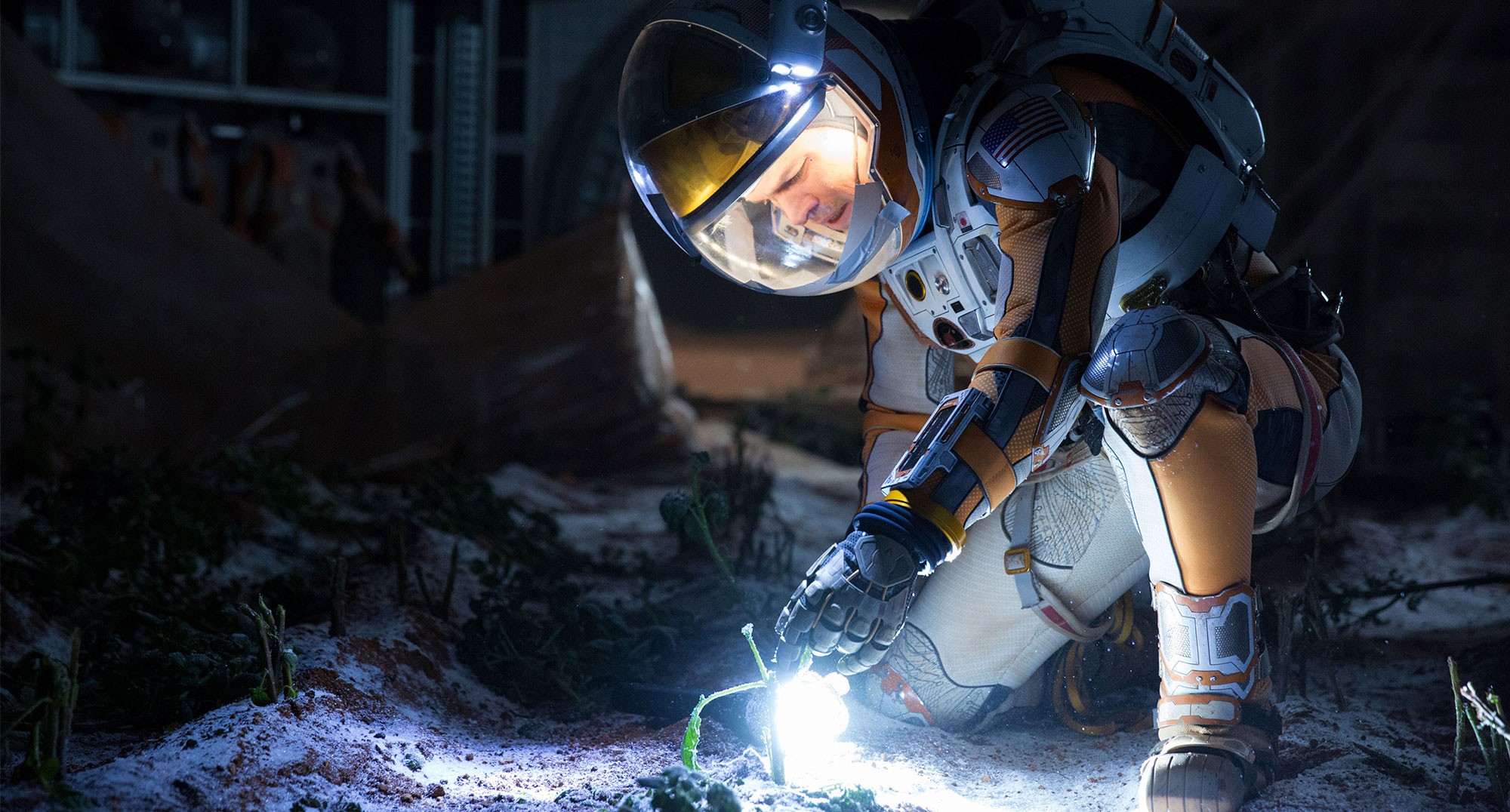
But Sanders’ declaration proves to be wrong. Watney is still alive, though when he wakes after the storm has passed, he has a piece of antenna sticking out of his torso. He makes it back to the habitat station where he removes the antenna and staples shut the wound. He then starts to work out how long he can survive on the rations left in the Hab, but quickly realises that he doesn’t anywhere near enough to sustain him until a rescue mission can reach him. Drawing on his knowledge as a botanist, Watney decides to use the Hab’s resources (including his and the crew’s waste), and the Martian soil to grow potatoes. Meanwhile, back at NASA, mission director Vincent Kapoor (Ejiofor) is alerted to the fact that there is unexpected movement occurring on Mars, and soon it becomes apparent to everyone that Watney is alive.

Watney travels to where the Pathfinder probe lies abandoned and manages to get it to transmit images back to Earth. He and NASA come up with a means of communicating with each other (even if it is a bit slow due to the distance between them), and soon Watney is able to establish a more stable comms link. With NASA determined to rescue Watney, they finally decide to tell his crewmates that he’s alive. They’re all pleased but angry as well for being left out of the loop. But disaster strikes, when an airlock decompression at the Hab destroys the potato crop, leaving Watney with only enough rations for around 200 days, and a rocket supply drop arranged by NASA malfunctions and blows up before it even leaves Earth’s atmosphere. With time running out, NASA must find a way of getting to Watney before his food runs out, and he has to find a way of making his food last as long as possible.

Martian, The - scene

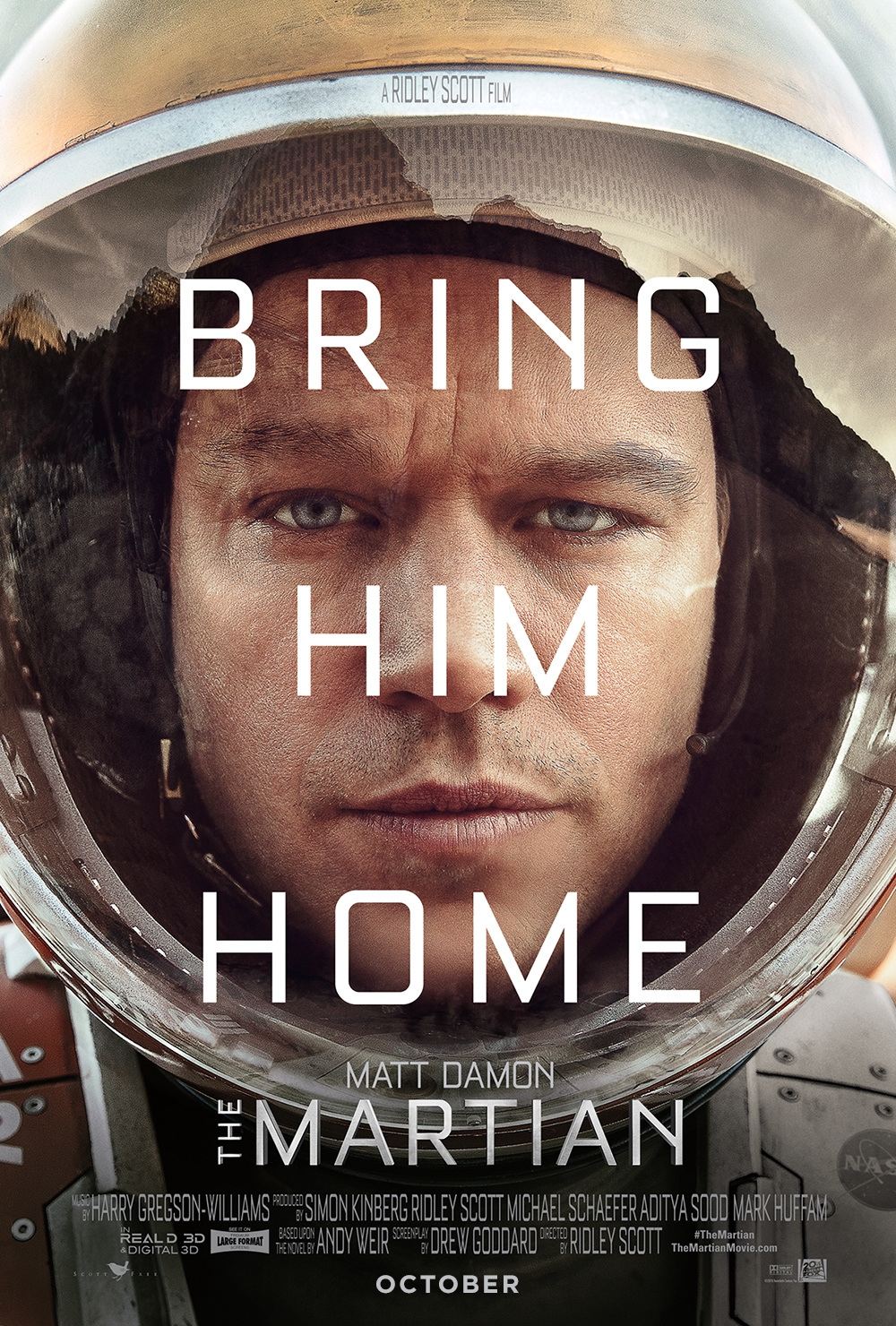
An adaptation of the bestseller by Andy Weir, The Martian is something of a return to form for Ridley Scott, with the septuagenarian director making his most accessible and expertly constructed movie for some time. This is largely due to Drew Goddard’s assured, though not entirely flawless screenplay, which juggles successfully not only the hard science that keeps Watney alive (and making it relatable to the average viewer), but a myriad cast of characters, all of whom had the potential to become stereotypes. But Scott keeps all this in check and presents us with a sci-fi thriller that feels fresher than most recent outings (despite some obvious antecedents), and which features an impressive central performance from Matt Damon that helps ground the movie immeasurably.

So good, in fact, is Damon as the embattled astronaut of the title, that sometimes the events happening on Earth come as a bit of an intrusion. Yes, it’s good to see the effort being put in to rescue one man (even though you could argue that the cost of doing so would be too prohibitive for even the most caring of space agencies to consider), but these scenes too often feel like second cousins to those in Apollo 13 (1995), and Ejiofor’s character also feels like a close relative to his character from 2012 (2009). With this element of the narrative ticking several expected boxes, even down to the plucky, rule-bending astrodynamicist (Glover) who comes up with a plan to save Watney that no one else has thought of, it’s thanks to Goddard’s understanding of the necessity for these scenes, and Scott’s accomplished direction, they’re intrusion becomes less worrisome, and as Watney’s continued survival comes closer and closer to connecting with his rescue, the viewer can root for both camps.

But with so much happening back on Earth (and with such a large ensemble cast to cater to), the script doesn’t put Watney in as much jeopardy as Weir’s novel does. Part of the fun of reading the novel was that Weir consistently came up with ways to put Watney in danger, and he consistently made it seem as if Mars itself was conspiring to make Watney pay for being there. But here the suspense is lessened in favour of Watney’s unflagging determination to survive, which is admirable in itself, but there needs to be more in the way of peril, even if we can all guess the outcome. Harking back to Apollo 13, it was the way in which problems continued to mount on that mission that heightened the drama, and the way in which each problem was overcome that made it all the more engrossing and exciting. Here, Watney’s methodical, never-say-die attitude ensures that each setback is dealt with matter-of-factly and in double-quick time (and usually by virtue of a montage). By taking some of the natural tension of the situation away, the gravity of Watney’s dilemma is lessened when it should have had us on the edge of our seats.

But Damon holds it all together, making Watney a pleasure to spend time with, and be sympathetic of. The little dance and shouts of joy he makes when he discovers he can talk to NASA is a small moment of inspiration, especially when he looks round to check if anyone has seen him. And Damon is equally good at expressing the character’s somewhat arrogant sense of humour and keeping the viewer on his side, even with lines such as “They say once you grow crops somewhere, you have officially colonised it. So technically, I colonised Mars. In your face, Neil Armstrong!” There are few actors audiences would want to spend an entire movie with, alone, but Damon is one of them, and he keeps the viewer focused on what is essentially one man’s battle for survival against (almost) impossible odds.

Martian, The - scene2

He’s supported by a great ensemble cast headed up by the ever reliable Ejiofor, with Wiig playing serious for once, and Daniels giving Sanders a sardonic air that fits well with his job as director of NASA. Chastain and Peña grab most of the limelight from Mara, Stan and Hennie as Watney’s fellow astronauts, and The Martian marks one of the few occasions when Sean Bean’s character in a movie doesn’t get killed (he’s also part of a great joke involving The Lord of the Rings). As you’d expect from a movie directed by Ridley Scott, it all looks incredible, with Jordan standing in for Mars, Arthur Max’s expressive production design, and very impressive cinematography from Dariusz Wolski (Scott’s go-to DoP for his last few movies). And on the music front, anyone expecting to hear David Bowie’s Life on Mars? at some point will find that Scott has gone for Starman instead, and there’s the completely unexpected use of ABBA’s Dancing Queen, which should feel out of place but is surprisingly apt for the point at which it’s used.

Rating: 8/10 – good sci-fi these days is rare (as anyone who’s seen Prometheus (2012) should know – sorry, Ridley), but The Martian is that rare beast, and is intelligent enough overall to overcome a few narrative concerns; with Damon in commanding form, and the drama of the situation sufficiently gripping, being stranded on another planet has never seemed so tempting.

Share this:

  • Click to share on X (Opens in new window) X
  • Click to share on Facebook (Opens in new window) Facebook
  • More
  • Click to print (Opens in new window) Print
  • Click to email a link to a friend (Opens in new window) Email
Like Loading...

Dumb and Dumber To (2014)

08 Thursday Jan 2015

Posted by dullwood68 in Movies

≈ 1 Comment

Tags

Adopted daughter, Comedy, Harry Dunne, Jeff Daniels, Jim Carrey, KEN conference, Kidney transplant, Lloyd Christmas, Review, Rob Riggle, Sequel, The Farrelly Brothers

Dumb and Dumber To

D: Bobby Farrelly, Peter Farrelly / 109m

Cast: Jim Carrey, Jeff Daniels, Rob Riggle, Laurie Holden, Rachel Melvin, Kathleen Turner, Steve Tom, Don Lake, Patricia French, Brady Bluhm, Tembi Locke

Ever since his failed romance with “Mary Samsonite”, Lloyd Christmas (Carrey) has been in a mental institution where he appears to be in a persistent vegetative state. Visited two or three times every week by his best friend, Harry Dunne (Daniels), Lloyd eventually reveals he’s okay and that he’s been playing an elaborate prank on Harry the whole time. Back at their old apartment, Harry tells Lloyd he needs a kidney transplant soon or he’ll die. They visit Harry’s parents in the hope one of them will be a donor, but Harry learns he was adopted. As they leave, Harry is given all the mail that’s been piling up since he moved out; amongst it all is a twenty-two year old postcard from Fraida Felcher (Turner) telling Harry she’s pregnant and to call her.

The duo track Fraida down and she reveals she had a daughter she named Fanny (Melvin) who she gave up for adoption. She also tells them she’s written to her but the letter was returned with a request not to try and contact Penny (her adopted name) ever again. Undeterred by this, Lloyd and Harry determine to find Penny and save Harry’s life. They travel to Maryland where Penny lives with her adoptive parents, famed scientist Bernard Pinchelow (Tom) and his wife Adele (Holden). Unfortunately, they just miss her, as Penny has gone to El Paso to represent her father at a KEN conference, but she’s forgotten to take a special gift for the conference’s organiser that Pinchelow says will be of major benefit to everyone worldwide.

Lloyd and Harry – accompanied by Travis (Riggle), the Pinchelow’s housekeeper – take the gift and head to El Paso. What they don’t know is that Travis is having an affair with Adele, and that they’re plotting to kill Pinchelow; they’re also looking to steal the gift and make millions from it. Along the way, Travis attempts to kill Lloyd and Harry but is thwarted by a freight train and killed. Harry and Lloyd continue on to El Paso, while Adele learns of Travis’s demise from his twin brother (Riggle); he agrees to help her with her plan.

At the conference, Harry is mistaken for Pinchelow and gains admittance, telling the organisers that Lloyd is a colleague. But when Lloyd lets slip that he’s attracted to Penny, Lloyd has him thrown out. Lloyd arranges a meeting with Penny and she reads the letter Fraida sent her; from it, Lloyd deduces that he is Penny’s father and not Lloyd. Penny leaves to get back to the convention, but Adele and Travis’s brother are there as well, and so is Fraida. It all leads to a showdown in a bathroom that sees Lloyd reappear having made the most generous gesture of his life.

Dumb and Dumber To - scene

How do you follow a cult favourite twenty years on? Do you keep to the same formula that made the first movie so successful, or do you try another approach with the same characters and hope it’s not too jarring for fans? Well, if you’re the Farrelly Brothers and you’ve got Jim Carrey and Jeff Daniels back on board, the weight of expectations can only lead to one answer: give ’em more of the same.

Dumb and Dumber To was always going to be a sequel that critics would have little time for, but the Farrellys, aided by their committed stars, have come up with a movie that honours the first one without entirely sullying its reputation. True, the plot is unsophisticated (not that the first movie’s was any more original or complex), and the humour is broad, puerile and often farcical, but this is a concept that lives or dies not by its content but its willingness to be as relentlessly silly as possible. And silly it is – unremittingly, gloriously, stupidly silly.

Leaving restraint at the door, the tone is set by Harry’s attempt to remove Lloyd’s catheter, an uncomfortably wrong moment that encapsulates the Farrellys approach to both Lloyd and Harry, and the movie as a whole – nothing is too out there. After almost twenty-five years of cinematic gross-out humour it’s got to be difficult to push that particular envelope but there are moments of inspiration that more than make up for the banality of the plot and the supporting cast’s perfunctory acting. The catheter joke gives way to a series of sight gags and one liners that are effortlessly sold by Carrey and Daniels, and it’s clear that the two actors are having a whale of a time, their efforts at raising laughs proving infectious. Carrey, an actor whose facial gurning was overplayed during the Nineties, brings that particular skill back to the big screen and reminds us just how talented he is when “silly” is a movie’s prime objective. But it’s Daniels who steals the show, his big rubbery face the perfect foil for Carrey’s sharp-edged contortions. Daniels is lovable in a way that Carrey can’t be because of the way the characters are written, and he takes full advantage, making Harry not only funnier to watch, but more endearing as well.

There are, inevitably, problems with the script – Lloyd’s selfless gesture involves a trip to Mexico he couldn’t possibly have made, references to the first movie are crammed in for no other reason than to have them there, the conference scenes are not as sharp as they could have been – but it’s the laughs that count, and the Farrellys deliver when it matters, including (for this reviewer) a brilliant moment when Lloyd and Harry think they’ve reached Penny’s home in Maryland (and if you ever end up in a situation where Lloyd is offering you goji berries, just don’t, okay?). The movie also runs around  ten minutes too long and some scenes could have done with some more judicious editing, but on the whole, this is much better than you might expect.

Rating: 7/10 – not the travesty some critics would have you believe, Dumb and Dumber To ends with an advert for Dumb and Dumber For (in 2034); if we do get to spend some more time with Lloyd and Harry, and it’s up to the standard of this outing, then 2034 can’t come round soon enough.

Share this:

  • Click to share on X (Opens in new window) X
  • Click to share on Facebook (Opens in new window) Facebook
  • More
  • Click to print (Opens in new window) Print
  • Click to email a link to a friend (Opens in new window) Email
Like Loading...

Blog Stats

  • 486,848 hits

Recent Posts

  • 10 Reasons to Remember Bibi Andersson (1935-2019)
  • Fantasia (1940)
  • Dances With Wolves (1990) – The Special Edition
  • Kiss of the Spider Woman (1985)
  • The Three Musketeers (1973)

Top Posts & Pages

  • Lost for Life (2013) - Another Look
    Lost for Life (2013) - Another Look
  • Lost for Life (2013)
    Lost for Life (2013)
  • About
    About
  • Homefront (2013)
    Homefront (2013)
  • Mini-Review: Knock Knock (2015)
    Mini-Review: Knock Knock (2015)
  • Spotlight (2015)
    Spotlight (2015)
  • Irrational Man (2015)
    Irrational Man (2015)
  • The Better Angels (2014)
    The Better Angels (2014)
  • Pixels (2015)
    Pixels (2015)
  • A Brief Word About La La Land (2016)
    A Brief Word About La La Land (2016)
Follow thedullwoodexperiment on WordPress.com

Blogs I Follow

  • Rubbish Talk
  • Film 4 Fan
  • Fast Film Reviews
  • The Film Blog
  • All Things Movies UK
  • Interpreting the Stars
  • Let's Go To The Movies
  • Movie Reviews 101
  • TMI News
  • Dan the Man's Movie Reviews
  • Film History
  • Jordan and Eddie (The Movie Guys)

Archives

  • April 2019 (13)
  • March 2019 (28)
  • February 2019 (28)
  • January 2019 (32)
  • December 2018 (28)
  • November 2018 (30)
  • October 2018 (29)
  • September 2018 (29)
  • August 2018 (29)
  • July 2018 (30)
  • June 2018 (28)
  • May 2018 (24)
  • April 2018 (21)
  • March 2018 (31)
  • February 2018 (25)
  • January 2018 (30)
  • December 2017 (30)
  • November 2017 (27)
  • October 2017 (27)
  • September 2017 (26)
  • August 2017 (32)
  • July 2017 (32)
  • June 2017 (30)
  • May 2017 (29)
  • April 2017 (29)
  • March 2017 (30)
  • February 2017 (27)
  • January 2017 (32)
  • December 2016 (30)
  • November 2016 (28)
  • October 2016 (30)
  • September 2016 (27)
  • August 2016 (30)
  • July 2016 (30)
  • June 2016 (31)
  • May 2016 (34)
  • April 2016 (30)
  • March 2016 (30)
  • February 2016 (28)
  • January 2016 (35)
  • December 2015 (34)
  • November 2015 (31)
  • October 2015 (31)
  • September 2015 (34)
  • August 2015 (31)
  • July 2015 (33)
  • June 2015 (12)
  • May 2015 (31)
  • April 2015 (32)
  • March 2015 (30)
  • February 2015 (37)
  • January 2015 (39)
  • December 2014 (34)
  • November 2014 (34)
  • October 2014 (36)
  • September 2014 (25)
  • August 2014 (29)
  • July 2014 (29)
  • June 2014 (28)
  • May 2014 (23)
  • April 2014 (21)
  • March 2014 (42)
  • February 2014 (38)
  • January 2014 (29)
  • December 2013 (28)
  • November 2013 (34)
  • October 2013 (4)

Create a free website or blog at WordPress.com.

Rubbish Talk

Film 4 Fan

A Movie Blog

Fast Film Reviews

The Film Blog

The official blog of everything in film

All Things Movies UK

Movie Reviews and Original Articles

Interpreting the Stars

Dave Examines Movies

Let's Go To The Movies

Film and Theatre Lover!

Movie Reviews 101

Daily Movie Reviews

TMI News

Latest weather, crime and breaking news

Dan the Man's Movie Reviews

All my aimless thoughts, ideas, and ramblings, all packed into one site!

Film History

Telling the story of film

Jordan and Eddie (The Movie Guys)

Movie Reviews & Ramblings from an Australian Based Film Fan

Privacy & Cookies: This site uses cookies. By continuing to use this website, you agree to their use.
To find out more, including how to control cookies, see here: Cookie Policy
  • Subscribe Subscribed
    • thedullwoodexperiment
    • Join 481 other subscribers
    • Already have a WordPress.com account? Log in now.
    • thedullwoodexperiment
    • Subscribe Subscribed
    • Sign up
    • Log in
    • Report this content
    • View site in Reader
    • Manage subscriptions
    • Collapse this bar
 

Loading Comments...
 

    %d