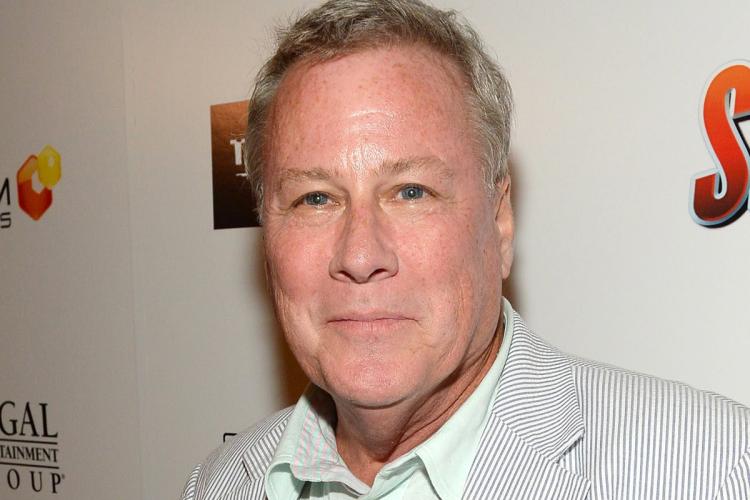
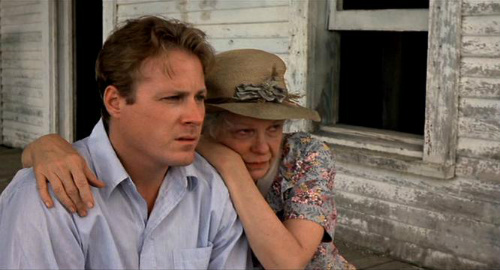
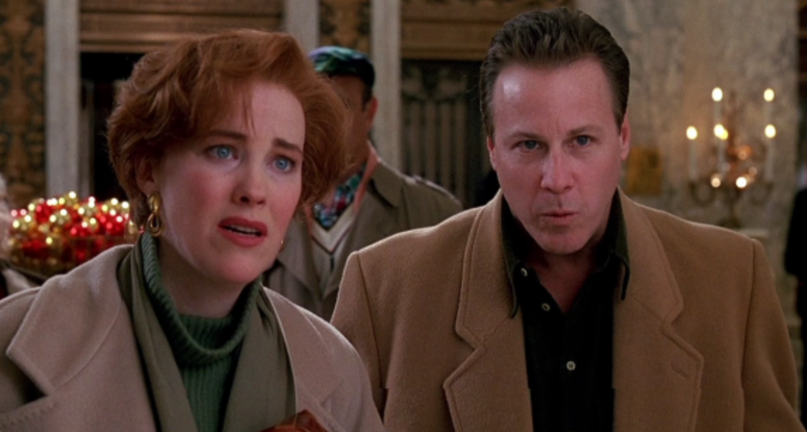
John Heard was an actor who could have been a star – and briefly he was. Early on in his career, it looked as if A-list status was only a movie or two away. But it wasn’t to be, and though Heard continued to work steadily on both the big screen and on TV, he never achieved the level of fame or fortune that his skill as an actor warranted. He was sanguine about his lack of success, and in 2008 he had these very perceptive words to say about his career:
“I guess I went from being a young leading man to being just kind of a hack actor. When I came to Hollywood, I was pretty much a stage actor, and I expected everybody to be quiet. And they weren’t. They were doing their job, and you’re expected to do your job, and you’re sort of this ongoing co-existence. I was a little bit of an arrogant jerk. Now, it’s a little bit more like, ‘Okay, I realize you have to pat me down with powder every three seconds.’ And I stand there, and I’m a little more tolerant…. I think I had my time. I dropped the ball, as my father would say. I think I could have done more with my career than I did, and I sort of got sidetracked. But that’s OK, that’s all right, that’s the way it is. No sour grapes. I mean, I don’t have any regrets. Except that I could have played some bigger parts.”
Event though from the Eighties onwards he could be found quite low down on cast lists in often minor supporting roles, Heard could still infuse the characters he played with an honesty and a sincerity that often made them better roles than intended. Even in something as bad as Sharknado (2013), he was still worth watching, and he gave several other movies a boost just by being in them. Some careers don’t pan out in the way that actors expect or plan for, and even though Heard was capable of much better roles than he was given, and much better performances when given the chance, he was still an actor who could surprise an audience, as the Emmy nomination for his role as Detective Vin Makazian in The Sopranos (1999/2004) proved. However his career may be viewed now, one thing can be said with certainty: his was a talent that was never fully exploited, and that was, and continues to be, a detriment to us all.
Cast: Samuel L. Jackson, John Heard, Kelly Rowan, Clifton Collins Jr (as Clifton Gonzalez Gonzalez), Tony Plana, Karina Arroyave, Lobo Sebastian, Jack Kehler, Jonah Rooney, Demetrius Navarro, Richard Riehle
If you were a regular moviegoer in the mid- to late-Nineties then you’ll remember there was a spate of inspirational movies that revolved around teachers going into difficult schools and classrooms and making an impact on the lives of their – up ’til then at least – rowdy and supposedly unreachable pupils. In 1995 we had both Dangerous Minds with Michelle Pfeiffer, and Mr. Holland’s Opus with Richard Dreyfuss. 1997 also saw Good Will Hunting, with Robin Williams mentoring Matt Damon’s maths prodigy. And 1999 gave us Music of the Heart with Meryl Streep. All of these movies had one thing in common: they pitted a committed individual against both institutional and cultural apathy within the US education system. But in amongst all those valiant portrayals and feelgood endings, one movie took an opposite stance. (Can you guess which one?)
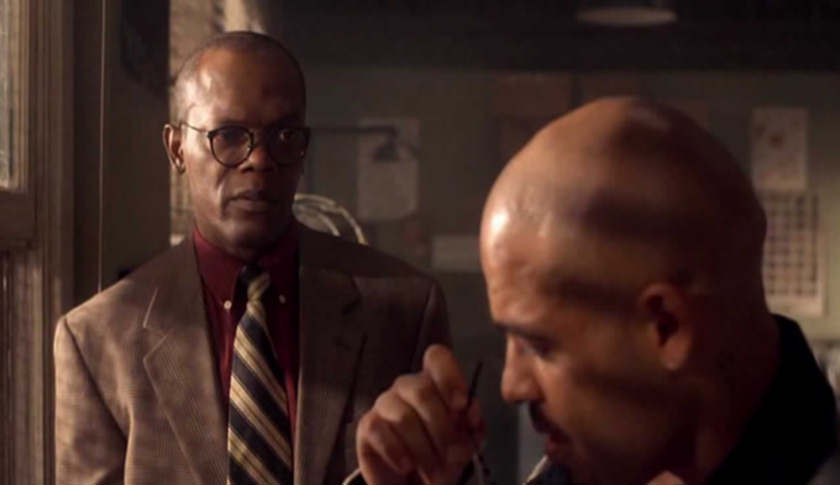
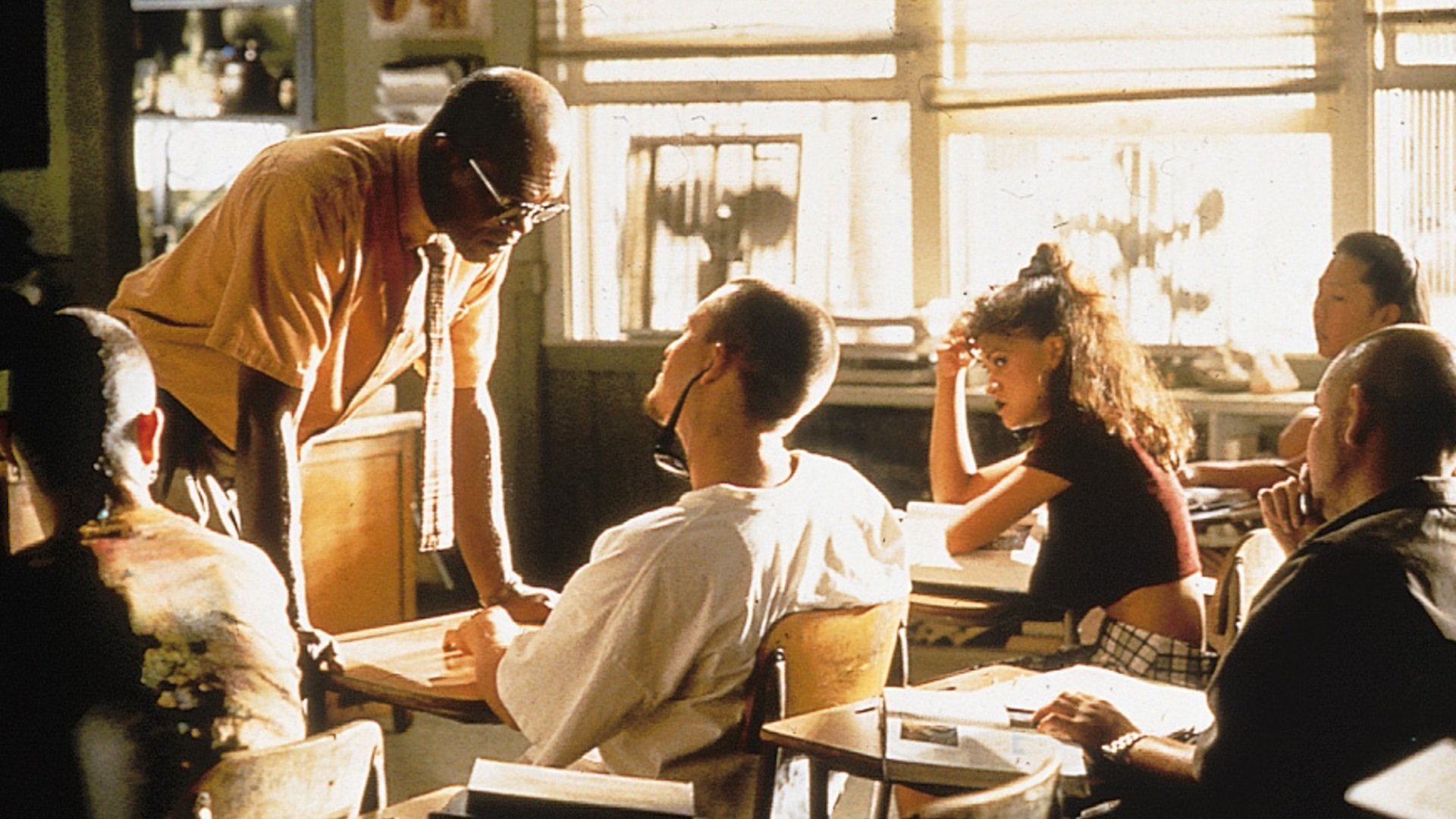
Trevor Garfield (Jackson) is a science teacher working at a Brooklyn high school. One of the students in his class stabs him repeatedly with a shiv after being given a failing grade. Fifteen months later, and Garfield is living in the San Fernando Valley area of Los Angeles, and working as a substitute teacher. He gets a call to sub at John Quincy Adams High School for four days. Day one is something of a disaster. He starts off in the wrong classroom, and when he’s in the right one he finds himself having to deal with a disrespectful student called Benny Chacón (Sebastian). Benny is the leader of a local Chicano gang that go by the name K.O.S. (Kappin’ Off Suckers). When another teacher, Ellen Henry (Rowan), tells Garfield that Benny has threatened her in the past, Garfield is sympathetic but doesn’t have any answers for her.
Garfield’s time at the school is extended, and Benny disappears. Garfield and Ellen start seeing each other, and things seem to be settling down until Garfield’s watch is stolen during a class. Knowing that the new leader of K.O.S., César Sanchez (Collins Jr), is responsible, he reports it to the school principal (Plana). The principal appears more concerned with avoiding any potential law suits than investigating or backing up Garfield’s claim, and Garfield has to take matters into his own hands in order to get his watch back. This sets in motion a war of attrition between Garfield and Sanchez that is brought to a halt when Sanchez is attacked one night and one of his fingers is cut off. Knowing that Garfield is responsible but unable to prove it to the police, it’s only a matter of time before Sanchez decides to get even with Garfield. However their home invasion-cum-execution plan doesn’t go exactly the way they planned…
At the end of One Eight Seven, a caption advises the viewer that “a teacher wrote this movie”. If it’s meant to convey a truthfulness to the events depicted in the movie then it misses that particular mark by a wide, country mile. There’s little about this movie that makes any sense, and even less that appears credible. Narrative problems begin to make themselves known in the opening scenes, with Jackson’s earnest and more than a little worried Garfield talking to a superior, Walter (Riehle), about the death threat he’s received from a student. Walter behaves like an ass, and refuses to take the threat seriously. It’s an unlikely scene, and while it’s there to make a point that will become more relevant later on, it’s astonishingly clumsy. And it’s the first moment where the movie takes the viewer by the hand and lays everything out for them as if their ability to grasp the criticism that the schools system is managed by incompetent administrators is beyond them.
From then on, Scott Yagemann’s screenplay does its best to tick all the boxes relating to school-based clichés, and even throws in the talented student who lacks confidence/is bullied or abused (or both) (Arroyave), and who Garfield takes under his wing (he also agrees to tutor her at his home unsupervised, something that no teacher in his or her right mind would contemplate; more cynically, it’s an excuse for Arroyave to be shown naked). Equally problematic is the relationship that develops between Garfield and Ellen. On the one hand it’s yet another mixed race semi-romance that won’t go anywhere (they’re only allowed to kiss in this movie), and on the other, Ellen is there solely as the Voice of Reason, the one character who will remind audiences that vigilantism is a bad thing, and all while the movie promotes the opposite.
Because at its core, One Eight Seven isn’t about the schools system being in crisis, or how teachers are increasingly under threats of violence from alienated pupils. Instead it’s a movie taking a very provocative and very conservative stance. It’s saying, if you’re a teacher and you can’t get through to certain pupils because they aren’t responding to your teaching methods, then it’s okay to maim or kill them (the movie does try to make it seem as if Garfield’s innocent of harming Benny and Sanchez, but it’s too obvious that he’s not). It’s hard to believe that this is a recommendation being made by a former teacher (Yagemann worked for over seven years in the Los Angeles public schools system), but even if you dismiss it as a form of artistic licence, it still leaves a nasty taste in the mouth, and one that director Kevin Reynolds seems unaware of. Though not exactly known for making “message movies”, Reynolds still seems way out of his depth here, and the movie lacks consistency, with many scenes failing to engage the viewer or advance the plot.
For the most part the performances are adequate, with Jackson building up to the kind of vocal pyrotechnics that are expected of him even more these days, and Heard underused as usual as a fellow teacher who takes a concealed firearm to work (this isn’t challenged either; is Yagemann saying this is normal, or even okay?). Rowan has little to do beyond acting as a bundle of nerves, Plana is only required to behave obsequiously in a couple of scenes, and Arroyave is the Dangerous Minds alumni with a bigger, yet cruelly underwritten role. Only Collins Jr, for whom this was a break-out role and a break-out movie, injects any real passion or commitment into his portrayal, and his is the one performance that offers anything more than what seems to have been in the script.
Rating: 4/10 – flawed, and taking a reactionary stance that it tries to be ambivalent about, One Eight Seven crosses a line early on and never looks back to see if it should have crossed it in the first place; uninspired and leaden for long stretches, it’s a movie with an unpalatable message, and no idea (or intention) of providing a balanced viewpoint that might allow the audience to entertain any doubts about the issues under discussion. (8/31)
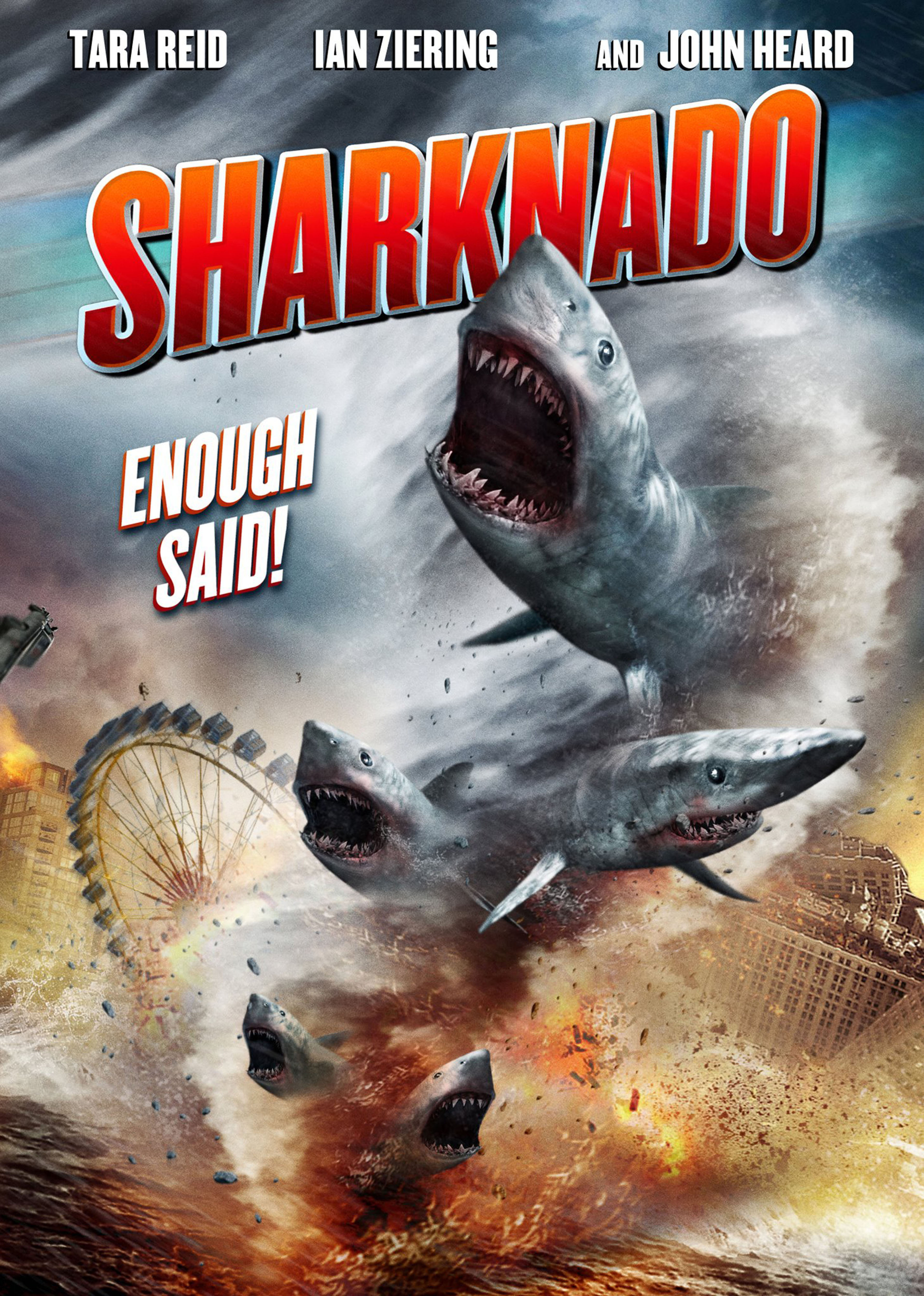
Cast: Ian Ziering, Tara Reid, Cassie Scerbo, Jaason Simmons, John Heard, Alex Arleo, Chuck Hittinger, Aubrey Peeples
With a title like Sharknado, this movie already has one strike against it. That it’s also made by The Asylum for the SyFy Channel makes two more. And… it’s out!
Any movie should be given the benefit of the doubt. As the saying correctly has it, don’t criticise what you haven’t seen. But there are times when to say this would be wrong, when the whole concept of a fair hearing, and leaving your prejudices at the door, is completely, totally and utterly a lost cause. And ladies and gentlemen, here is one of those times.
Let’s not beat around the bush: Sharknado isn’t so bad it’s good, it’s just plain awful, and in ways that you can’t anticipate. It takes the idea of low-concept movie making to somewhere below the acceptable nadir, and stakes its claim as the most inept, appalling movie ever made. There are levels of bad this movie practically races past in its efforts to be dreadful. If there was a clear intention to make the worst movie possible, and the filmmakers actually sat down and planned it to look and sound like this then, ladies and gentlemen of the jury, there can be only one verdict handed down this day: life imprisonment without hope of parole.
Beginning with a confusing scene set aboard a fishing boat, Sharknado sets out its stall of fake goods from the start. A storm hoves into view and before you can say “holy flying sharks” the crew are all eaten by sharks that are being thrown about like tooth picks by the violent winds. The movie then switches focus to the California coastline and bar owner/surfer Fin (Ziering). When sharks that are attempting to outrun the storm – hey, I’m guessing here – start chewing on the local surfers and swimmers, including Fin’s pal Baz (Simmons), Fin, along with feisty bar girl Nova (Scerbo) and permanent lush George (Heard), decides that everyone needs to get to higher ground, as it’s a sure thing the storm – now upgraded to a hurricane – is going to cause untold devastation and, wait a minute! Aren’t those sharks swirling around in the hurricane? And aren’t they liable to just fall out of the sky at any minute and chomp on whoever’s unfortunate to hang around for dinner?
With his estranged family – ex-wife April (Reid), son Matt (Hittinger), and daughter Claudia (Peeples) – living up in the hills, Fin and his entourage head over to rescue them. With all sorts of obstacles in their way – flooded roads, marauding sharks popping up at every turn, the hurricane getting nearer as well – it looks unlikely they’ll live long enough to make it. But they’re a plucky bunch, and before you can say “holy plot contrivances” they reach Fin’s family; once April’s new boyfriend is reduced to so much chum, they make a break for the airbase where Matt is doing some ATC work, and from there devise a plan to kill all the sharks, stop the hurricane in its tracks (it’s now subdivided into three huge water spouts), and save the California coastline from further devastation/a colossal insurance bill/being the source of the end of the world. (Any of these could be true.)
Just writing that synopsis is difficult enough. Seeing Sharknado in all its non-glory is harder still. Yes, The Asylum make bad movies, yes the SyFy Channel is home to some of the worst monster mash-ups in recent history (Sharktopus (2010) anyone?), but this is just the worst kind of cynical movie making, with a script that makes no sense at all, where the characters behave like they were lobotomised a short while before everything went wrong, where the direction has all the style and originality of a toddler’s tea party, where the cast struggle and then give up quickly with any attempts at real acting (“just say the lines, keep your head down and it’ll all soon be over”), where the woeful special effects plumb new depths of ineptitude, where cutaways and inserts provide most of the photographic style, where the editing seems less fluid and more cut and splice with a hacksaw, and where the occasional gore effects are – surprise! – the only halfway decent aspect of the movie. Sharknado is so bad it’s appalling, and so appalling it’s devoid of any worth at all.
If you have to watch Sharknado, and I suspect there are plenty of you out there for whom this will be as much a challenge as a must-see, then take this one piece of advice with you into the living room/lounge/den/bedroom/wherever: have no expectations whatsoever; that way you’ll survive the experience relatively intact.
Rating: 1/10 – saved from my first ever 0/10 rating by the acceptable gore effects (too few and far between though); atrocious, incompetent and utterly irredeemable as cinema, all those involved should hang their heads in shame.




 thedullwoodexperiment