• 10 Reasons to Remember…
  • A Brief Word About…
  • About
  • For One Week Only
  • Happy Birthday
  • Monthly Roundup
  • Old-Time Crime
  • Other Posts
  • Poster of the Week
  • Question of the Week
  • Reviews
  • Trailers

thedullwoodexperiment

~ Viewing movies in a different light

thedullwoodexperiment

Tag Archives: Lola Kirke

Viper Club (2018)

17 Sunday Feb 2019

Posted by dullwood68 in Movies

≈ Leave a comment

Tags

Drama, Edie Falco, ER nurse, Journalist, Kidnapping, Lola Kirke, Maryam Keshavarz, Matt Bomer, Ransom, Review, Susan Sarandon, Thriller

D: Maryam Keshavarz / 109m

Cast: Susan Sarandon, Edie Falco, Matt Bomer, Lola Kirke, Julian Morris, Sheila Vand, Adepero Oduye, Patrick Breen, Amir Malaklou, Damian Young

Helen Sterling (Sarandon) is an ER nurse whose son, Andrew (Morris), is a journalist who covers war zones. When he’s kidnapped by terrorists, Helen approaches the FBI for help, but their lack of urgency in dealing with Andrew’s abduction causes Helen to become frustrated and angry at how long it’s taking to get him back. A fleeting visit from a friend of Andrew’s, Sheila (Vand), prompts Helen into exploring different options than the ones “official channels” want her to pursue. She is given the number of Charlotte (Falco), someone else whose son was abducted, and who got him back with the help of the Viper Club. Helen learns that the Viper Club lobbies individuals to help with ransom payments, and has a network of contacts that can allow those payments to reach the right destinations (Helen has been repeatedly advised that paying terrorists, under any circumstances, is a criminal offence). When she receives a message from the terrorists asking for $20 million for Andrew’s safe return, and both the FBI and the State Department show no further sense of urgency, Helen decides to ask the Viper Club for their help…

A straightforward “issue” movie that tries to deal sincerely with the efforts of one lone mother to have her kidnapped son returned to her safely and well, Viper Club wears its sincerity and seriousness like a badge of honour, and though it tries hard – sometimes too hard – it often finds itself mired under a welter of good intentions. At its heart is another tremendous performance from Sarandon (who seems drawn to these kinds of roles and stories), but although her portrayal of Helen is nuanced and intelligently handled, and passionate too, it’s in service to a screenplay by director Keshavarz and Jonathan Mastro that doesn’t live up to its star’s efforts. Instead of this being a movie about the determination of a mother to rescue her son no matter what, there are too many stretches in the movie where that story is held up while the narrative explores Helen’s work life, and in particular, the case of a young car accident victim who’s in a coma, and the victim’s mother (Kirke). This leads the overall story nowhere (except occasionally into soap opera land), and though it highlights Helen’s compassionate nature and willingness to bend the rules, we already know this through the main thrust of the material.

Away from the ER, the movie is on firmer ground, but there are still problems to be overcome. It’s no surprise to find the FBI and the State Department represented as bureaucratic suits who believe there should be only one way of dealing with kidnappings by terrorists: their way. And Helen is kept in the dark about a lot of things that the Viper Club are doing on her behalf, more so for dramatic purposes than for any logical reasons (she’s treated quite patronisingly when there’s no need for it). Secondary characters such as Falco’s facilitator, and Bomer’s journalist-cum-Viper Club liaison officer, Sam, have a place in the narrative but it’s largely expositional, while flashbacks to when Andrew was last home and when he was a child are meant to be poignant, but only achieve this on a superficial level. Making only her second feature, Keshavarz has aimed high with her story and been blessed by obtaining Sarandon’s services, but there’s a pervading sense that she hasn’t worked out fully what she’s trying to say – or if she has, then she hasn’t worked out the best way of getting that message across. Some individual scenes work well in themselves and there’s a spirited energy to others that also helps, but this is a patchwork movie that doesn’t do itself – or its main character – the justice it needs.

Rating: 5/10 – anchored and improved by a powerful performance by Sarandon, Viper Club is another movie where the sum of its parts adds up to less than what was needed; well intentioned, and with a pertinent story to tell in today’s troubled times, it’s a shame that the focus shifts so often, and in ways that makes it very diffcult for the movie to make up all the ground that it loses by doing so.


Share this:

  • Click to share on X (Opens in new window) X
  • Click to share on Facebook (Opens in new window) Facebook
  • More
  • Click to print (Opens in new window) Print
  • Click to email a link to a friend (Opens in new window) Email
Like Loading...

Untogether (2018)

13 Wednesday Feb 2019

Posted by dullwood68 in Movies

≈ Leave a comment

Tags

Ben Mendelsohn, Billy Crystal, Comedy, Drama, Emma Forrest, Jamie Dornan, Jemima Kirke, Lola Kirke, Love, Relationships, Review, Romance

D: Emma Forrest / 99m

Cast: Jamie Dornan, Lola Kirke, Jemima Kirke, Ben Mendelsohn, Billy Crystal, Alice Eve, Jennifer Grey, Scott Caan

Andrea (Jemima Kirke) is a recovering heroin addict (straight for a year now) who wrote a successful literary novel when she was twenty-one, but who hasn’t written a word since. She has a one night stand with a doctor, Nick (Dornan), who has had recent literary success himself with a memoir of his time in a war zone. For the first time since her recovery, she feels a connection to Nick and finds herself pursuing a relationship with him. Meanwhile, her younger sister, Tara (Lola Kirke), is in a relationship with Martin (Mendelsohn), a former musician who’s much older than she is. When she meets a rabbi, David (Crystal), and he offers to help her reconnect with her faith, Tara finds herself smitten by him, and unsure suddenly about her feelings for Martin. Both sisters find themselves dealing with their own insecurities as they navigate these new relationships, and having to also deal with the fallout of the decisions they’ve made. Things are made even more difficult when Tara doesn’t attend a comeback gig that Martin has arranged, and an unexpected truth about Nick’s memoir is revealed…

The feature debut of English writer/director Emma Forrest, Untogether is another of those LA fables that revel in presenting a handful of characters with a surfeit of insecurities, and traits that keep them from ever being happy, no matter how hard they try. Your patience for this sort of thing will be dependent on how many similar movies you’ve seen already, because although there’s no shortage of pointed humour and affecting drama in Forrest’s debut, ultimately the problems and the issues her characters face aren’t all that original. Andrea is another in the long line of movie novelists who struggle to find that elusive second book, and detest the negative attention that comes with it. Nick isn’t a writer, and his easy success rankles with her, and it’s this and her own doubts as to whether she’ll ever write again that causes Andrea to do what she can to sabotage her relationship with Nick, and take steps toward self-harming. However, a lot of this perceived angst is just that, perceived, as Forrest’s script never takes Andrea to a dark enough place to make her as sympathetic as she should be. You just want her to get over herself and stop brooding about what she hasn’t got, and to focus instead on what she has got.

Unfortunately, the same is true of Tara. While we can assume that she likes older men given her relationship with Martin, her sudden attraction for David is never convincingly portrayed, despite good work from the ever reliable Kirke, and Crystal in a serio-comic role that carries a lot of warmth. This leaves the relationship between Tara and Martin to founder more and more as the movie goes on, becoming less and less interesting as Forrest moves her characters from Point A to Point B by way of convenience instead of natural progression. As for Nick, Dornan is stuck with a role that has no arc, and makes little impact, leaving Andrea’s infatuation for him something that comes across as more curious than plausible. Though her script struggles to avoid the clichés inherent in such intertwined stories, Forrest has better luck in the director’s chair, and keeps the viewer involved thanks to a combination of placing the emotion in a scene front and centre, and a cast that enters into the spirit of things with a commitment and gusto that smooths over the screenplay’s rougher patches. By the end, you may be glad that it’s all over, and that the journey wasn’t worth the time and the effort, but there are enough good moments along the way to make sticking with it a reward in itself.

Rating: 6/10 – another tale of lost souls in LA (just how many can there be?), Untogether sees its characters tasked with taking risks in their lives, but having no idea what to do, or being too afraid to do so in the first place; frustrating for its lack of a coherent message, but worth it for the performances (Mendelsohn is particularly effective), perhaps it’s an indication that Forrest should focus on directing instead of writing.

Share this:

  • Click to share on X (Opens in new window) X
  • Click to share on Facebook (Opens in new window) Facebook
  • More
  • Click to print (Opens in new window) Print
  • Click to email a link to a friend (Opens in new window) Email
Like Loading...

Gemini (2017)

31 Friday Aug 2018

Posted by dullwood68 in Movies

≈ Leave a comment

Tags

Aaron Katz, Actress, Drama, Film noir, John Cho, Lola Kirke, Murder, Mystery, Paparazzi, Review, Superfan, Thriller, Zoë Kravitz

D: Aaron Katz / 93m

Cast: Lola Kirke, Zoë Kravitz, Greta Lee, John Cho, Michelle Forbes, Nelson Franklin, Reeve Carney, Jessica Parker Kennedy, James Ransone, Ricki Lake

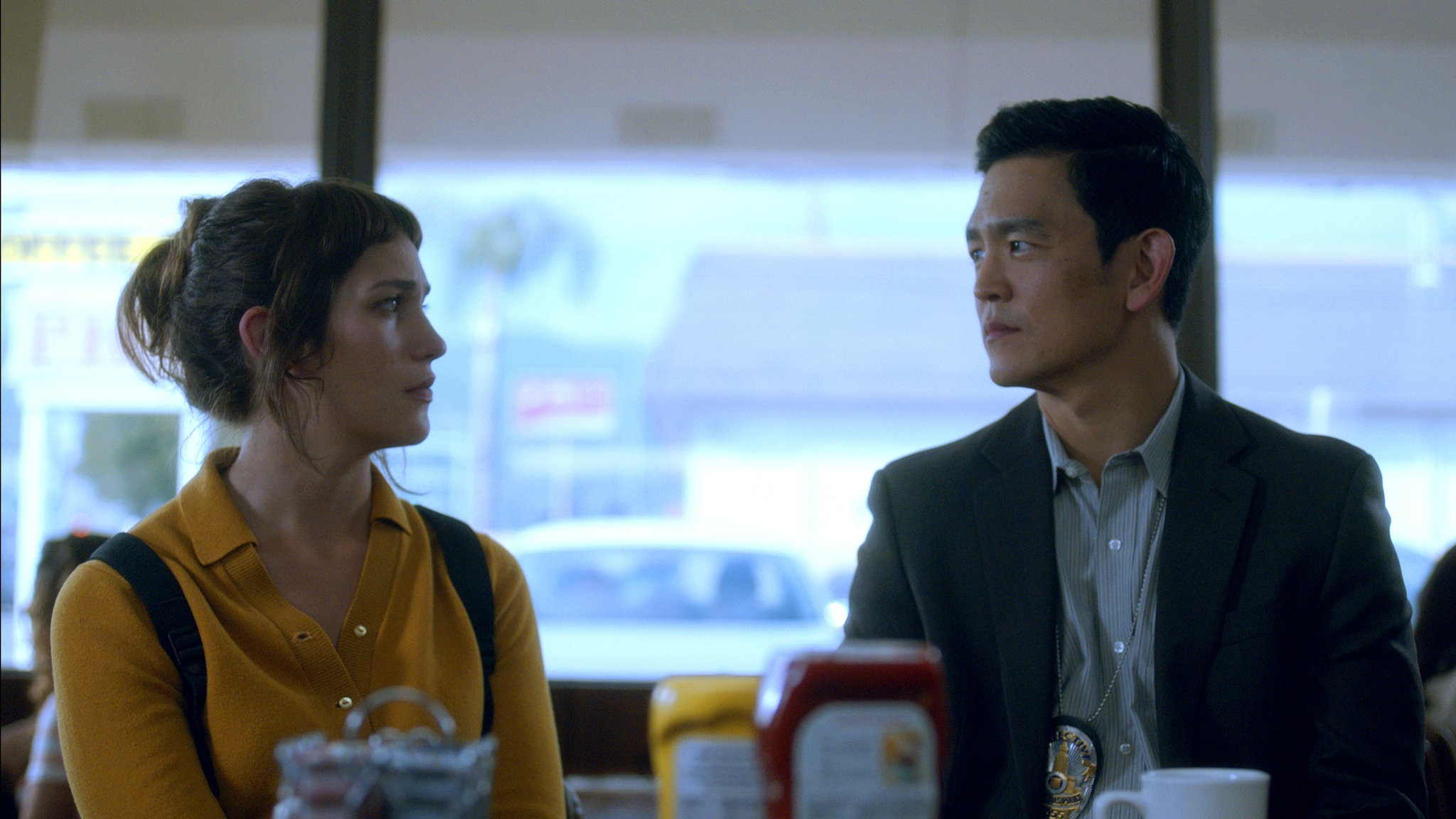
Jill LeBeau (Kirke) is the personal assistant to famous actress Heather Anderson (Kravitz). Heather has been in talks to make a new movie but has decided to take a break for a while instead. She persuades Jill to tell one of the producers, Greg (Franklin), the news, and he’s predictably angry. Ensuing attention from a self-proclaimed superfan (Kennedy), as well as a paparazzi, Stan (Ransone), adds further stress to Heather’s decision. When Heather asks Jill to borrow her gun because she doesn’t feel “safe”, Jill reluctantly agrees. At Heather’s home one morning, Jill tries to take back the gun but it goes off accidentally. No one is hurt, but Heather keeps the weapon. However, when Jill comes back later, she finds Heather dead from multiple gun shot wounds. It isn’t long before the police, led by Detective Ahn (Cho), deduce that Jill was the last person to see Heather alive, and that only her fingerprints are on the gun. With the residue from the misfire on her hand as well, Jill quickly becomes the prime suspect in the eyes of the police, but she determines to find out for herself just who did kill Heather…

For much of the first twenty minutes of Gemini, the nature of the relationship between Jill and Heather is somewhat blurred, and perhaps deliberately so. There’s a hint that they might be lovers, something that’s given a degree of credence when one of Heather’s ex-boyfriends, Devin (Carney), calls to say that he knows “what’s going on” (and to make a convenient death threat). Later, when the superfan asks if they’re an item, Heather’s response is indignant, but she doesn’t deny it outright. Nor does she when Stan the paparazzi asks the same question. But on another night, they share a bed at Heather’s home, and Heather whispers “I love you” while Jill sleeps. With the possibility of a deeper emotional relationship existing between the pair, writer-director Katz establishes a more profound meaning for Jill’s solo investigation of Heather’s murder: she’s not just keeping herself out of jail, she wants to find the killer of someone she truly cared about. This informs much of Jill’s quest to keep one step ahead of the police, while also providing the narrative with a depth that is both unexpected and entirely welcome.

What also helps is the modern day film noir vibe that the movie gives off, with Jill in the role of erstwhile private investigator, and the list of suspects such that any one of them could have done it. Katz manipulates the various clues and potential culprits with a great deal of skill, even including a scene where Jill speaks to Greg and he tells her who he thinks is the killer – if he were writing the whole thing as a script. Clever touches such as this, along with a number of visual flourishes, keep the movie from feeling stale or inevitable, and it’s further embellished by a terrific performance from Kirke, giving Jill a resourcefulness that keeps her focused and willing to take calculated risks, whether it’s sneaking into Devin’s hotel room or evading the police on a motorcycle. It’s a confident portrayal of a confident woman, and Kirke proves throughout that Katz was right to choose her for the role. In support, Kravitz is sweet natured yet nervy as Heather, while Cho is charmingly off kilter as the detective who would usually believe in the heroine’s innocence but instead is convinced she’s guilty. It’s another quirky, atypical choice from Katz, and like much else, makes Gemini more than just a pleasant diversion.

Rating: 8/10 – an conventional murder mystery given an unconventional spin, Gemini is an unexpected delight, thanks to Kirke’s self-assured performance, Katz’s witty screenplay, and a tremendously atmospheric mise en scene; only occasionally betraying its modest budget, it’s a movie that provides far more than meets the eye for the viewer willing to delve deeper into its seemingly straightforward plotting.

Share this:

  • Click to share on X (Opens in new window) X
  • Click to share on Facebook (Opens in new window) Facebook
  • More
  • Click to print (Opens in new window) Print
  • Click to email a link to a friend (Opens in new window) Email
Like Loading...

Free the Nipple (2014)

01 Friday Apr 2016

Posted by dullwood68 in Movies

≈ Leave a comment

Tags

Casey LeBow, Censorship, Drama, Girlrillaz, Lina Esco, Lola Kirke, Monique Coleman, Nipples, Protest, Public nudity, Review, Topless women, True story

Free the Nipple

D: Lina Esco / 79m

Cast: Lina Esco, Lola Kirke, Casey LeBow, Monique Coleman, Griffin Newman, Zach Grenier, Jen Ponton, Sarabeth Stroller, Janeane Garofalo

Originally filmed in 2012, Free the Nipple occupies a curious place in both movie history and the history of feminist activism. Made to highlight the lack of conformity in the US when it comes to a woman appearing topless in public – some states have legalised it, many more haven’t – the movie failed to attract a distributor, and it seemed it would never be released, even to the home market. In order to combat this, the movie’s director and star, Lina Esco, started the movement that can be seen in the movie itself, and with the real life campaign gaining enough publicity, Free the Nipple eventually secured a release date towards the end of 2014 (and is now available to own).

It must be an odd situation for a movie maker to find themselves in: in order to get their movie noticed, they’ve got to orchestrate the very movement their movie is depicting. Is it life imitating art, or art defining life? Either way, Esco should be congratulated for not giving up on her movie, because even though it’s an uneven mix of female empowerment, feminist polemic and relationship drama, the movie has a great deal of charm, and a great deal of low budget energy.

vlcsnap-00001

Esco plays With, a journalist whose friendship with Liv (Kirke) leads to her writing an article on Liv’s views that society discriminates against women by allowing men to go bare chested in public without being challenged, whereas if a woman does it she’s likely to be arrested for indecency. But With’s article is dismissed, and she loses her job. Liv is secretly pleased: now With can devote her energies full time to challenging the law over public nudity. But With is initially hesitant, not knowing where to begin, but she seeks help from her friend Orson (Newman), and her mentor Jim (Grenier), and soon she and Liv are interviewing women who are prepared to support their efforts in gaining attention to the issue, and being a part of an organisation that is dedicated to “free the nipple”.

Of course, there are obstacles along the way, financial ones and personal ones, and when Liv is arrested, but With refuses to give up, partly out of loyalty to the cause, partly out of guilt surrounding Liv’s arrest and subsequent detention pending bail. In-fighting in the group also takes its toll, but throughout all the drama and the setbacks and the struggle to organise a rally in Washington D.C. featuring a hundred thousand topless women, the issue of gender equality is maintained at the forefront of what With and Liv are trying to achieve.

As mentioned above, Free the Nipple has a great deal of charm, and its indie vibe is a welcome approach, but while it’s a likeable movie that has much to say about the issue of gender equality, not all the elements fit so well together. Too often, Hunter Richards’ script opts for downplaying the difficulties of kickstarting a politically motivated movement – With et al are always broke, unable to get permits, ignored by the media – but they always come through, and while the mechanisms that keep them going don’t have to be seen in detail, an acknowledgment as to how they’ve managed it would have made quite a difference. As it is, each crisis that comes along appears easily dealt with, leaving the inherent drama feeling trivial and under-developed.

vlcsnap-00003

There’s also something of a romantic subplot involving Liv’s obvious attraction to With. Esco the director serves up several lingering shots of Liv looking at With longingly, and even has Esco the actress returning said looks with a degree of emotional uncertainty from time to time, but the script offers no resolution or definitive outcome. It’s almost as if, with all the other gender issues the movie is doing its best to address, that the idea of a same sex relationship being added to the mix was perhaps one “issue” too many. It’s a shame, as the concept of love borne out of political activism isn’t one that cinema tackles very often.

The movie also downplays the contributions of the secondary characters, preferring to focus on With and Liv. As a result, most of these characters remain overshadowed throughout, with only LeBow (as the perpetually doubting Cali) and Grenier making much of an impact. Esco gives a spirited, invigorating performance, balancing With’s sense of injustice with her all too reasonable self-doubts, though With’s initial reluctance to go topless herself seems more of a clumsy storyline device than a real piece of character motivation. Kirke, meanwhile, cements her rising reputation as an actress to watch, with a portrayal of Liv that combines vulnerability, emotional longing, an impetuous nature, and enough quirky behaviour to make her immensely likeable at first meeting (even if she is a little naïve as well). And there are some lovely moments when Liv’s need to be a follower rather than a leader are expressed with just the right amount of insecurity and unspoken pliancy.

vlcsnap-00002

Elsewhere, the political elements hold sway, but while these are the movie’s main focus, sometimes it gets itself caught up in its own rhetoric. One minor character is heard to say that revolution isn’t the right word for what is happening; instead it should be an evolution. Unfortunately the script, and Esco’s direction, doesn’t make it clear if this is meant to be satirical or not, so the viewer is left with the uneasy feeling that the character is being serious. The movie also makes more of the movement’s “struggle” than it needs to. There are times when their cause is regarded – by its followers at least – as world-changing, even though most countries already have a relaxed approach to women going topless (legally or otherwise), and the which is worse argument, violence or sexual imagery, is trotted out as if it was the only argument needed to settle the debate (though to be fair, there’s very little debate involved; the Girlrillaz, as they’re dubbed, organise their rally quite easily in the end, and other groups in other countries follow suit, and there you have it).

For a movie that espouses the freedom to go topless in public, Free the Nipple does evidence some confusion over whether to show the “offending” objects or not. Early on, and at different times in the movie, women seen going about New York with their breasts exposed have them pixellated. It’s only when Kirke and Esco go topless later in the movie that the pixels are (mostly) abandoned for good. If there’s any kind of message here then it seems to have been lost in the editing stage because there doesn’t appear to be any reason for it. And while Esco the director eventually does as the title suggests, there’s lot of occasions where her framing and shot choices still leave any exposure struggling to be just that. This leaves the movie looking like somewhat of a tease in certain scenes (which Esco is unlikely to have intended), whereas if the viewer had been confronted with bare breasts from the start, their very matter-of-factness may well have achieved exactly what the movement wanted in the first place: for no one to be bothered by the sight of a free nipple.

Rating: 6/10 – though it struggles from time to time in telling its story with a clear sense of purpose, Free the Nipple is nevertheless an enjoyable, if disappointing, look at how distorted our view of the female form has become over the years; when it’s able to overcome its more zealous moments, the movie has some pertinent things to say about sexist attitudes in general, but they’re not always easy to find amongst all the distractions provided by the script.

Share this:

  • Click to share on X (Opens in new window) X
  • Click to share on Facebook (Opens in new window) Facebook
  • More
  • Click to print (Opens in new window) Print
  • Click to email a link to a friend (Opens in new window) Email
Like Loading...

Mistress America (2015)

21 Monday Mar 2016

Posted by dullwood68 in Movies

≈ Leave a comment

Tags

Comedy, Drama, Greta Gerwig, Indie, Investors, Lit Group, Lola Kirke, Matthew Shear, Mom's, Noah Baumbach, Review, Step-sisters

Mistress America

D: Noah Baumbach / 84m

Cast: Greta Gerwig, Lola Kirke, Matthew Shear, Heather Lind, Michael Chernus, Jasmine Cephas Jones, Kathryn Erbe, Cindy Cheung, Dean Wareham

Though not as prolific as Woody Allen, writer/director Noah Baumbach has made a name for himself by operating in the same milieu as Allen (though without the need for including May-December relationships), and for making witty, intelligent comedies that examine the human condition in a warm, deeply rewarding manner. Since his debut with Kicking and Screaming (1995), Baumbach has consistently entertained audiences with his mix of angst-ridden characters facing uncertain futures and sparkling dialogues. He’s a clever, erudite writer and a carefree, spontaneous director, and with movies such as The Squid and the Whale (2005) and Margot at the Wedding (2007) propping up his resumé, he’s a movie maker whose indie sensibilities often make for an enjoyable viewing experience. (By now you’re probably thinking, “there’s a but coming”, and you’d be right, though it’s not coming right now.)

In his latest, Baumbach, along with star and co-writer Gerwig, has fashioned a tale of self-imposed isolation and longing that finds itself butting heads with an examination of self-deception and longing. Tracy (Kirke) is a college student with a superiority complex and a consuming need to be accepted by the Lit Group, the one group she feels are of the same intellectual merit as herself (so it’d be okay to be a member). She submits a short story but is rejected. Faced with spending the approaching Thanksgiving by herself – unsurprisingly, Tracy has no real friends – a reminder from her mother (Erbe) that her soon-to-be step-sister Brooke lives in New York as well leads her to getting in touch and the two of them meeting up.

MA - scene3

In comparison to Tracy’s mostly solitary, mostly unfulfilling existence, Brooke is gregarious, constantly upbeat, well-liked, and in a relationship with a man who is helping her to open a restaurant. Tracy is dazzled by the range of Brooke’s social, personal and business involvements, and the evening (and next morning) they spend together inspires her to write another story for the Lit Group. Before she submits it she shows it to a fellow student who’s also keen to join the Lit Group, Tony (Shear). Tracy once had a crush on Tony but since they met he’s started dating Nicolette (Jones), a development Tracy doesn’t quite understand or agree with.

Tracy begins spending more and more time with Brooke and their sisterly relationship grows stronger and deeper. But Brooke’s plans to open her restaurant are thrown into disarray when her boyfriend dumps her and pulls out of the deal. Advised by a psychic that she needs to reconnect with someone from her past, someone who owes her money, Brooke is convinced she should visit an old friend, Mamie-Claire (Lind). Mamie-Claire not only stole Brooke’s boyfriend, Dylan (Chernus) and married him, she also stole Brooke’s T-shirt design (“hard flowers”) and made a mint out of it. Tracy enlists the aid of Tony (who has a car) to get there, and Nicolette goes too, her jealousy unable to let her stay behind if Tony is going to be alone with two other women.

mistressamerica

At Mamie-Claire’s, Brooke’s old friend proves to be less than agreeable to the idea of investing in the restaurant. Brooke persists, wanting to speak to Dylan who isn’t there. When he finally arrives home he’s more enthusiastic than Mamie-Claire and agrees to lend Brooke the money she needs but not for the same reason as she needs it. Meanwhile, Nicolette confronts Tony over her belief that he and Tracy are sleeping together, and when the opportunity to read Tracy’s story (which is about Brooke and isn’t exactly flattering) presents itself, Nicolette uses it to confront Tracy. In the end, everyone there reads it, but it’s Brooke’s reaction that has the biggest effect on Tracy, an effect that has unexpected implications.

(Now for that but.)

Maybe it’s the involvement of Gerwig in the writing process, or maybe Baumbach was just having an off-script, but Mistress America – the title refers to a female superhero Brooke can see herself being – has one crucial flaw that it never overcomes, or even appears likely to overcome: that in Tracy and Brooke it has two central characters that it’s almost impossible to care about. Tracy is an emotional and social leech, a hanger-on to Brooke’s coat-tails who has little or no discernible personality away from the people she manages to be around. She mirrors everyone and reflects nothing of herself – because there’s nothing to reflect. She should be a sympathetic character because of this, but in the hands of Baumbach and Gerwig she’s just another sad, lonely character who’s chosen to be that way; she doesn’t even try to be different, or change, and at the movie’s end we see exactly the same person we met at the beginning.

Brooke (Greta Gerwig) takes Tracy (Lola Kirke) under her wing in Mistress America.

In contrast, Brooke is so self-absorbed, so lacking in emotional acuity and self-awareness that when she talks about the problems she faces it’s like listening to someone who has no idea that all the things she’s feeling are no different to what anyone else feels. Take this for example: “Of course it’s possible to hurt me. I’m the most sensitive person.” It’s said at a moment when the movie attempts to be dramatic and ironic at the same time, but the irony is miscued and the drama is heavy handed, leaving the viewer to either laugh because it’s probably expected, or shake their heads in disappointment. (It’s also the one time in the movie where the “action” really feels like action and not passive observation, a trait the movie relies on far too often.)

In their roles, Gerwig is garrulous and whiny, while Kirke is listless and needy, four qualities that would cause most people to look the other way, and with Mistress America it’s no different. And faced with such an uphill struggle, the viewer has no choice but to hope that character arcs will be achieved, lessons will be learnt, and personalities will be rebuilt for the better. Alas, Baumbach and Gerwig have other ideas and none of these things happen. In the end it’s better to spend time with Tony and Nicolette, whose romantic war of attrition is one of the movie’s better attractions (Jones in particular is a deadly delight as the disbelieving Nicolette, all spite and anger and acid one-liners). In fact, it’s a better idea to spend time with any of the supporting characters, as they generate far more interest than the movie’s two spinsters in the making.

It also doesn’t help that he movie feels self-congratulatory throughout, as if it’s pulled off a clever piece of artistry. But while there are flashes of the confidence and the brio that Baumbach brought to some of his earlier work, there aren’t enough to make Mistress America more interesting or intriguing. If Brooke had been a little less erratic in her thinking, and Tracy a little less uptight about her social position then the viewer might have had a better understanding and/or liking of them, but without these tweaks it leaves said viewer wondering why they, like Brooke’s business partners, shouldn’t just get up and walk away.

Rating: 5/10 – a misfire that only occasionally engages its audience, Mistress America proves difficult to like thanks to the limited scope of its central characters and their misplaced sense of entitlement; when a line such as “Why don’t you just put pasta up her pussy?” (yes, it’s Nicolette) carries more weight and emotional honesty than the patronising “Being a beacon of hope for lesser people is a lonely business”, then you know something isn’t right in indie land.

Share this:

  • Click to share on X (Opens in new window) X
  • Click to share on Facebook (Opens in new window) Facebook
  • More
  • Click to print (Opens in new window) Print
  • Click to email a link to a friend (Opens in new window) Email
Like Loading...

Blog Stats

  • 480,361 hits

Recent Posts

  • 10 Reasons to Remember Bibi Andersson (1935-2019)
  • Fantasia (1940)
  • Dances With Wolves (1990) – The Special Edition
  • Kiss of the Spider Woman (1985)
  • The Three Musketeers (1973)

Top Posts & Pages

  • Lost for Life (2013) - Another Look
    Lost for Life (2013) - Another Look
  • Cardboard Boxer (2016)
    Cardboard Boxer (2016)
  • Lost for Life (2013)
    Lost for Life (2013)
  • Bone Tomahawk (2015)
    Bone Tomahawk (2015)
  • Spotlight (2015)
    Spotlight (2015)
  • Jungle (2017)
    Jungle (2017)
  • Lost and Delirious (2001)
    Lost and Delirious (2001)
  • The Monuments Men (2014)
    The Monuments Men (2014)
  • About
    About
  • Homefront (2013)
    Homefront (2013)
Follow thedullwoodexperiment on WordPress.com

Blogs I Follow

  • Rubbish Talk
  • Film 4 Fan
  • Fast Film Reviews
  • The Film Blog
  • All Things Movies UK
  • Interpreting the Stars
  • Let's Go To The Movies
  • Movie Reviews 101
  • TMI News
  • Dan the Man's Movie Reviews
  • Film History
  • Jordan and Eddie (The Movie Guys)

Archives

  • April 2019 (13)
  • March 2019 (28)
  • February 2019 (28)
  • January 2019 (32)
  • December 2018 (28)
  • November 2018 (30)
  • October 2018 (29)
  • September 2018 (29)
  • August 2018 (29)
  • July 2018 (30)
  • June 2018 (28)
  • May 2018 (24)
  • April 2018 (21)
  • March 2018 (31)
  • February 2018 (25)
  • January 2018 (30)
  • December 2017 (30)
  • November 2017 (27)
  • October 2017 (27)
  • September 2017 (26)
  • August 2017 (32)
  • July 2017 (32)
  • June 2017 (30)
  • May 2017 (29)
  • April 2017 (29)
  • March 2017 (30)
  • February 2017 (27)
  • January 2017 (32)
  • December 2016 (30)
  • November 2016 (28)
  • October 2016 (30)
  • September 2016 (27)
  • August 2016 (30)
  • July 2016 (30)
  • June 2016 (31)
  • May 2016 (34)
  • April 2016 (30)
  • March 2016 (30)
  • February 2016 (28)
  • January 2016 (35)
  • December 2015 (34)
  • November 2015 (31)
  • October 2015 (31)
  • September 2015 (34)
  • August 2015 (31)
  • July 2015 (33)
  • June 2015 (12)
  • May 2015 (31)
  • April 2015 (32)
  • March 2015 (30)
  • February 2015 (37)
  • January 2015 (39)
  • December 2014 (34)
  • November 2014 (34)
  • October 2014 (36)
  • September 2014 (25)
  • August 2014 (29)
  • July 2014 (29)
  • June 2014 (28)
  • May 2014 (23)
  • April 2014 (21)
  • March 2014 (42)
  • February 2014 (38)
  • January 2014 (29)
  • December 2013 (28)
  • November 2013 (34)
  • October 2013 (4)

Blog at WordPress.com.

Rubbish Talk

Film 4 Fan

A Movie Blog

Fast Film Reviews

The Film Blog

The official blog of everything in film

All Things Movies UK

Movie Reviews and Original Articles

Interpreting the Stars

Dave Examines Movies

Let's Go To The Movies

Film and Theatre Lover!

Movie Reviews 101

Daily Movie Reviews

TMI News

Latest weather, crime and breaking news

Dan the Man's Movie Reviews

All my aimless thoughts, ideas, and ramblings, all packed into one site!

Film History

Telling the story of film

Jordan and Eddie (The Movie Guys)

Movie Reviews & Ramblings from an Australian Based Film Fan

Privacy & Cookies: This site uses cookies. By continuing to use this website, you agree to their use.
To find out more, including how to control cookies, see here: Cookie Policy
  • Subscribe Subscribed
    • thedullwoodexperiment
    • Join 481 other subscribers
    • Already have a WordPress.com account? Log in now.
    • thedullwoodexperiment
    • Subscribe Subscribed
    • Sign up
    • Log in
    • Report this content
    • View site in Reader
    • Manage subscriptions
    • Collapse this bar
 

Loading Comments...
 

    %d