• 10 Reasons to Remember…
  • A Brief Word About…
  • About
  • For One Week Only
  • Happy Birthday
  • Monthly Roundup
  • Old-Time Crime
  • Other Posts
  • Poster of the Week
  • Question of the Week
  • Reviews
  • Trailers

thedullwoodexperiment

~ Viewing movies in a different light

thedullwoodexperiment

Tag Archives: Musician

Juliet, Naked (2018)

28 Sunday Oct 2018

Posted by dullwood68 in Movies

≈ Leave a comment

Tags

Chris O'Dowd, Comedy, Drama, Ethan Hawke, Jesse Peretz, Literary adaptation, Musician, Review, Romantic comedy, Rose Byrne, Sandcliff, Tucker Crowe

D: Jesse Peretz / 97m

Cast: Rose Byrne, Ethan Hawke, Chris O’Dowd, Azhy Robertson, Lily Brazier, Ayoola Smart, Phil Davis

For Duncan Thomson (O’Dowd), there is only one recording artist of any merit: Tucker Crowe (Hawke), a singer-songwriter who twenty years before walked away from a promising career as a musician after making a highly regarded first album called Juliet. Duncan has set up a blog site dedicated to Crowe and his short-lived career, and this takes up most of his spare time. Which doesn’t leave much room for his partner, Annie (Byrne). Having been together for fifteen years, Annie is beginning to realise that Duncan isn’t going to change, and things such as having children, or cutting back on the time he spends in Crowe-land, aren’t going to happen. When Duncan receives a CD that contains demo versions of the tracks on Juliet, the fact that she listens to it first causes a row between them. This leads to Annie posting a disparaging review of the demo versions on Duncan’s blog, which in turn leads to Annie receiving a response from Tucker himself. They begin corresponding (a fact that Annie keeps to herself), and soon find they’re able to be really honest with each other about their lives. And then Tucker reveals that he’s coming to London…

An adaptation of the novel by Nick Hornby, Juliet, Naked is one of the most easy-going romantic comedies of recent years. Treading a delicate path between meandering introspection and trifling whimsy, it’s a movie that could be the very cinematic definition of flimsy, so thin is its storyline and narrative arc. It’s also a movie that will have you wondering out loud about the characters and their pasts, and how they’ve come to be leading their lives now, from Tucker’s slacker muso and proto-dad, to Annie’s emotionally doused museum manager. Both Tucker and Annie seem to be treading water, waiting for someone or something to come along and free them from the traps they’ve fallen into. Tucker has allowed his talent to fray to nothing through fear of responsibility, while Annie has gone the opposite route and allowed responsibility to wither her creativity. They’re practically perfect for each other, albeit in an anodyne, nondescript fashion that makes their inevitable romance as cautious as they both are with everything else. Only Duncan remains true to himself throughout, even if he is thoroughly self-absorbed and operating entirely out of self-interest. Selfish he may be, but at least he’s doing what he really wants.

Thankfully, and despite the often vapid nature of the whole venture, the movie is rescued from being overwhelmingly twee by a trio of performances that elevate the material and make the characters more than the slavishly opaque stereotypes that the script – by Evgenia Peretz, Jim Taylor and Tamara Jenkins – seems determined to make them. Byrne makes Annie gentle yet resilient, put upon perhaps but not entirely a victim, and willing to take a stand when she needs to. Hawke plays Tucker as a man adrift from his own life but also willing to make amends for the mistakes he’s made; it’s a carefully crafted portrayal that Hawke pulls off with ease. O’Dowd appears to have the hardest task of all, that of making Duncan more than the arrogant, annoying arse that he clearly is, but there’s no small amount of pathos in his performance, and Duncan emerges as more rounded than expected. Elsewhere, Tucker’s family issues occupy a good deal of the running time, and though they feel very much like the movie’s token dramatic thread, they at least offset the predictable nature of the romantic elements. Peretz directs with an emphasis on keeping things light and airy, and succeeds in making both the romance and the comedy as agreeable as possible, but in the end, at the expense of achieving anything new or different.

Rating: 7/10 – so thin it’s almost diaphanous, Juliet, Naked is a tribute to the efforts of its cast and director in making a movie that borders constantly on being insubstantial without actually crossing that line; engaging enough to be enjoyable without being anywhere near memorable, it’s a light-hearted tale told with a sprinkling of playfulness that makes it all the more tolerable, and on this occasion, that’s entirely okay.

Share this:

  • Click to share on X (Opens in new window) X
  • Click to share on Facebook (Opens in new window) Facebook
  • More
  • Click to print (Opens in new window) Print
  • Click to email a link to a friend (Opens in new window) Email
Like Loading...

And Punching the Clown (2016)

01 Friday Dec 2017

Posted by dullwood68 in Movies

≈ Leave a comment

Tags

Comedy, Ellen Ratner, Gregori Viens, Henry Phillips, J.K. Simmons, Musician, Review, Sequel, Singer/songwriter, Tig Notaro

aka Punching Henry

D: Gregori Viens / 94m

Cast: Henry Phillips, Ellen Ratner, Tig Notaro, J.K. Simmons, Mark Cohen, Sarah Silverman, Mike Judge, Jim Jefferies, Stephanie Allynne, Michaela Watkins, Wayne Federman, Doug Stanhope, Adam Nee, Clifton Collins Jr

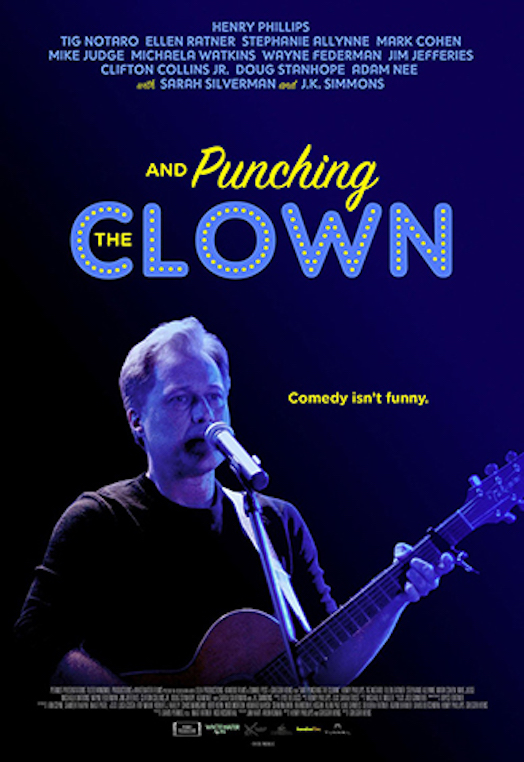
Ladies and gentlemen, please welcome to the stage… singer, songwriter, and rambling troubadour extraordinaire… Henry Phillips! Five years after leaving L.A. under a cloud of misperceived anti-Semitism, the comic with the deadpan yet whimsical delivery is tempted back to the City of Angels by his agent, the ever-optimistic Ellen Pinsky (Ratner). Last time round it was the promise of a recording contract, this time it’s to meet a TV producer, Jay Warren (Simmons), who’s interested in using Henry’s act and dogged determination to avoid stardom as the basis for a new TV show. But L.A. still isn’t Henry’s town. Less than thirty minutes after he arrives at the home of his friend, Jillian (Notaro), his car is stolen, and at the first gig he plays – with Warren watching – he’s heckled off the stage. But Warren isn’t dissuaded by Henry’s misfortune, and if anything his interest is piqued even further. A meeting is set up with the Noww Channel, and everything looks set to make Henry a star…

Of course, this is Henry Phillips we’re talking about, and so the idea that everything will go smoothly and all work out for the best is about as likely as Liam Hemsworth winning a Best Actor Oscar. Henry is one of Life’s eternal losers, always running to catch up but never quite getting there. Whether he’s losing a battle of wills with a cab despatcher (Stanhope), or accepting a joint at the wrong time, Henry only seems able to snatch defeat from the jaws of victory. It would be painful if it wasn’t so funny. And as with Punching the Clown (2009), this is what makes the movie so enjoyable, and so appealing at the same time. Henry is a lovable schlemiel, someone who keeps plugging away despite every drawback, insult, and injury. Henry doesn’t know what else to do; it’s his life after all. Yes he fails more often than he succeeds, but as he himself says at one point, he has no problem “failing, doing what I love”.

But whether or not Henry is a failure is to miss the point of Phillips’ and director Viens’ script, which artfully makes Henry a man of principle in a world where the people around him seem to have abandoned theirs in order that their lives are simpler. He’s content with his lot, has modest ambitions, and actually enjoys playing the crummy dives and comedy clubs that pay badly or sometimes, not at all. Henry knows his milieu, and it’s a fine distinction to make when judged against the craving for stardom and recognition that seem to be the norm these days. Fame, the movie is trying to say, isn’t all that it’s made out to be. It’s an obvious message, perhaps, but how many other movies make it an integral part of the narrative, or have their central character battle to retain their own idea of their own integrity? (And the clock is ticking…)

Henry is also strangely liberated by his behaviour, even when he gets it badly wrong. A request from Jillian to impregnate her partner, Zoe (Allynne), so they can have a child together proves as difficult a task for Henry to overcome as getting through a set without suffering some disaster. And when he walks off stage because his audience is behaving disrespectfully, what seems like the reaction of a man who hates confrontation, is rather the act of a man who won’t indulge that unpleasant behaviour. Henry may suffer Shakespeare’s “slings and arrows of outrageous fortune” (he’s regularly belittled by people, and often to his face), but he does so with good grace and the understanding that if he was to behave as obtusely as some of the people he encounters, then it will always backfire on him (as with the cab despatcher, a game of one-upmanship that Henry loses at every turn, even when he thinks he’s winning).

Phillips’ awareness of his alter ego’s foibles and habits, adds greatly to the movie’s sense of verisimilitude, whether he’s discussing why he’s in L.A. with radio show host Sharon Levine (Silverman) – a similar framing device to the one employed in Punching the Clown – or pointing out the obvious flaws in the format of the TV show Noww want to produce. And along the way he uses Henry’s experiences to highlight the way in which talent is increasingly manufactured, how broad, focus-based public opinion dictates what consitutes quality, and how even the smallest amount of individual power can be used carelessly or inappropriately and to the detriment of others. Heavy stuff, perhaps, but layered with a winning streak of humour that affords plenty of laughs along the way, whether it’s from lines such as, “It’s Sisyphus meets Charlie Brown!” (the TV show), visual gags such as Henry falling off stage (and going viral), or songs such as Dog-Type Girl (a highlight).

In the end, it’s Henry’s ability to shrug off adversity and make the best of things that makes him so endearing and so easy to spend time with. Phillips the actor is more accomplished than he was in his first outing as Phillips the troubadour extraordinaire, and he’s surrounded by a great cast, from Ratner to Jefferies and Notaro (so dry she’s virtually a desert), and the welcome presence of Simmons whose turn as Warren is shot through with a sense of melancholy that underpins the character and his lifetime in producing perfectly. Viens too is more confident this time around, and the movie’s faux-documentary shooting style is used to much better effect. And for once, the many ways in which this movie apes its predecessor proves to be a boon rather than a burden. Henry has remained consistent in his outlook and his needs, and in doing so has retained the sympathy that audiences can relate to, and he doesn’t let them down when it comes time for him to take to the stage.

Rating: 8/10 – similar in tone and approach to its predecessor, And Punching the Clown (the title is cleverer than it sounds) is a solid, rewarding and very funny second entry in the life and times of Henry Phillips, failing singer and comedian; smarter than your average low budget indie comedy, this will keep fans of the original very happy indeed, and if caught by newcomers, work as a terrific introduction to Phillips’ and the way in which he is able to “satisfy his satisfaction”.

Share this:

  • Click to share on X (Opens in new window) X
  • Click to share on Facebook (Opens in new window) Facebook
  • More
  • Click to print (Opens in new window) Print
  • Click to email a link to a friend (Opens in new window) Email
Like Loading...

Punching the Clown (2009)

15 Friday Jul 2016

Posted by dullwood68 in Movies

≈ Leave a comment

Tags

Audrey Siegel, Captain Chaotic, Comedy, Drama, Ellen Ratner, Espresso Yourself, Gregori Viens, Henry Phillips, Los Angeles, Matthew Walker, Musician, Review, Singer/songwriter, Songs, Wade Kelley

Punching the Clown

D: Gregori Viens / 90m

Cast: Henry Phillips, Ellen Ratner, Wade Kelley, Matthew Walker, Audrey Siegel, Guilford Adams, Mik Scriba, Evan Arnold, Mark Cohen

Movies about comedians and how they struggle to get noticed or challenge their audiences are few and far between. Dustin Hoffman portrayed Lenny Bruce in the succinctly titled Lenny (1974), Tom Hanks played a fictional comedian in Punchline (1988), and Robert De Niro’s role as Rupert Pupkin in The King of Comedy (1982) is still a benchmark performance in terms of the darkness that (reputedly) lies within the heart of each and every comedian. There’s always a toll to be endured, and whether it’s rejection, disappointment, or outright failure, success – true success – is rarely found at the end of the comedian’s journey.

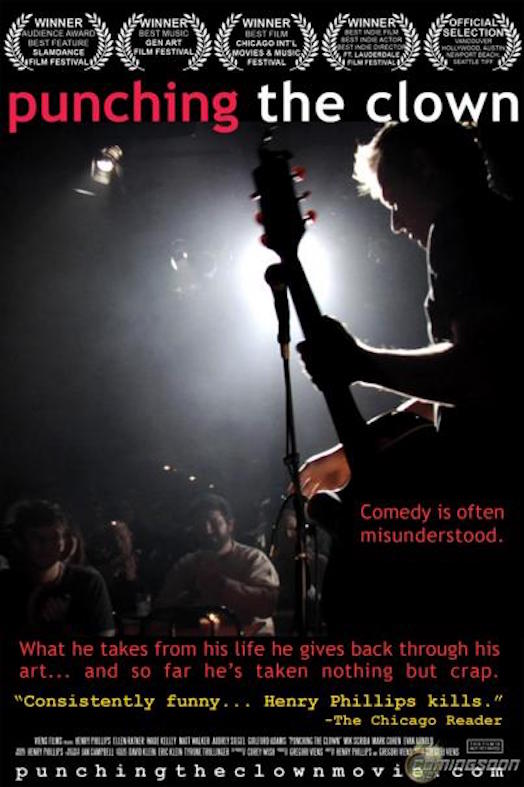
And so it goes with Punching the Clown (which is a line from one of Henry Phillips’s songs, and refers to something other than actually punching a clown). Having toiled long and hard travelling across America, and taken on gigs at places as diverse as coffee shops and bowling alleys, singer/songwriter Phillips lands a spot at a pizza restaurant. But his performance doesn’t go down so well, particularly with the Christian fund raisers in the audience, and he’s not even paid fully. Deciding it’s time he tried his luck in L.A., he goes to stay with his brother Matt (Walker). Matt is a struggling actor reduced to dressing up as Batman at children’s parties, but he puts Henry in touch with an agent, Ellen Pinsky (Ratner). Ellen takes a shine to Henry but needs to see his act. At a local coffee bar, Espresso Yourself, Henry takes to the stage on an open mic night, and promptly wins over the audience with his songs, which are a mix of droll observational comedy and trenchant psychopathy.

PTC - scene1

Ellen gets Henry an invite to a party being held by a record company executive but his attempt at performing backfires. However, a chance encounter with one of the guests there the next day, along with an overheard comment that is misconstrued, leads Henry to being wooed by a record company with the offer of a recording contract. While he makes up his mind, Henry continues playing at the coffee bar, and begins a very tentative relationship with one of the barmaids, Becca (Siegel). But just as Henry’s star begins to wax brightly, a further misunderstanding over the provenance of some bagels leads to accusations that he’s anti-semitic. As this misunderstanding gathers more and more acceptance, Henry finds himself losing his grip not only on the recording contract, but also his relationship with Becca, and his now regular spot at the coffee bar. As things begin to spiral out of control, Henry has to decide if staying in L.A. is still as good an idea as it seemed when he first arrived.

If you haven’t heard of Henry Phillips, don’t worry. Unless you’re familiar with the YouTube series Henry’s Kitchen, then chances are you have no more idea of who he is than you do in knowing who your partner’s seeing behind your back (this is the kind of humour Phillips brings out in his songs; nobody is saying your partner’s seeing anyone behind your back). In songs such as Gotta Get a Girlfriend and Hello Michelle, Phillips spins twisted yarn after twisted yarn as he cuts through the niceties of modern relationships and gets right to the heart of what we’re all really thinking about when it comes to love, sex, and all the selfish motivations that go with them. He’s caustic, witty, keeps just on the right side of being offensive, and has a winning stage presence that’s enhanced by his self-deprecating approach.

PTC - scene2

Punching the Clown was a labour of love for Phillips – it took around a decade to get made – and the inclusion of so much material he’d already honed by the time of the movie’s release has the effect of making his stage performances the undisputed highlights of a feature that otherwise lacks the bite needed to make Henry’s odyssey as engaging. As noted above, Phillips has a winning presence on stage, but off it he takes too much of a back seat in his own story, adopting the role of the persistent loser who never gets the respect or acknowledgment he deserves (throughout the movie his act is unfairly compared to that of another singer, Stupid Joe (Cohen), whose clarion call to audiences is, “Are you ready to get guitarded?”). It makes him an entirely sympathetic character, and someone you can root for with ease, but at the same time undercuts the drama when Henry’s “anti-semitism” begins to ruin his newfound success.

That said, there are some quite trenchant comments made about the difficult road to stardom, and the party at the record company executive’s house features a deliciously malicious sequence where each guest rebuffs another guest and is then rebuffed themselves, often with unnecessary cruelty. And when Henry finally gets to begin recording an album, he’s tasked with singing his funniest song, and then a song that’s funny from the very first line, a situation that highlights the common notion that in La La Land, taste is a concept misunderstood by many. Henry’s relationship with his agent is a sweet-natured one, and if it has a whiff of wishful thinking about it, it’s to Phillips’ credit that it’s still affecting (and benefits from a wonderful performance from Ratner, who, it should be noted, is also a White House correspondent when she’s not acting).

PTC - scene3

The movie is structured around a radio interview that Henry gives to DJ Captain Chaotic (Kelley), and while some of the scenes in the studio cause an unnecessary disruption to the narrative, Kelley’s portrayal is acerbic, disarming and damn funny. Henry’s relationship with Becca avoids some of the more predictable pitfalls but is set up to fail in such an obvious manner that it’s a little dispiriting (but Phillips makes up for this later). In the director’s chair, Viens holds it all together with a great deal of panache, the movie’s unsurprisingly low budget stretched to good use, and in conjunction with DoP Ian Campbell provides proceedings with a suitably cinema verité look that anchors the “action”. It’s all rounded off by Phillips’ songs, the true heart of the movie, and what makes it work as well as it does.

Rating: 8/10 – some narrative stumbles aside, Punching the Clown is still hugely enjoyable, though if you’re expecting it to be a laugh-a-minute comedy, you’ll be sorely disappointed; far more subtle than it may look, the movie acts as a clever, knowing, well-constructed introduction to the weird and wonderful world of Phillips’ stage persona, and on that basis, is entirely successful.

Share this:

  • Click to share on X (Opens in new window) X
  • Click to share on Facebook (Opens in new window) Facebook
  • More
  • Click to print (Opens in new window) Print
  • Click to email a link to a friend (Opens in new window) Email
Like Loading...

10 Reasons to Remember David Bowie (1947-2016)

11 Monday Jan 2016

Posted by dullwood68 in Movies

≈ Leave a comment

Tags

Actor, Career, David Bowie, Musician

David Bowie (8 January 1947 – 10 January 2016)

David Bowie

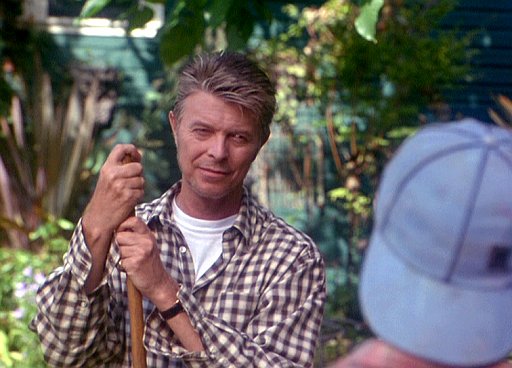
Although David Bowie will always be better known for his musical career, when it came to appearing in movies he made some tremendous choices. And when you consider he appeared in only twenty-one features it makes those choices even more impressive (this list is testament to that). He was a mercurial actor in much the same way he was a mercurial musician, always reinventing his screen persona as much as his musical one. He worked with directors of the calibre of Martin Scorsese, Nagisa Ôshima, Nicolas Roeg, and Christopher Nolan, and even found time to play Lord Royal Highness in an episode of SpongeBob SquarePants (which in some quarters is probably regarded as being even cooler than working with Scorsese et al). That he made so few movies (many of which contain cameo appearances) is understandable, but there is one performance of his that stands out from all the others; it’s also the one that was never actually filmed: his stage portrayal of John Merrick in The Elephant Man. Now if we had that to remember him by, then we would be truly blessed.

The Man Who Fell to Earth

1 – The Man Who Fell to Earth (1976)

2 – Just a Gigolo (1978)

3 – Baal (1982)

4 – The Hunger (1983)

5 – Merry Christmas Mr. Lawrence (1983)

6 – Absolute Beginners (1986)

7 – Labyrinth (1986)

8 – The Last Temptation of Christ (1988)

9 – Basquiat (1996)

10 – Mr. Rice’s Secret (2000)

Mr. Rice's Secret

Share this:

  • Click to share on X (Opens in new window) X
  • Click to share on Facebook (Opens in new window) Facebook
  • More
  • Click to print (Opens in new window) Print
  • Click to email a link to a friend (Opens in new window) Email
Like Loading...

Ricki and the Flash (2015)

06 Friday Nov 2015

Posted by dullwood68 in Movies

≈ Leave a comment

Tags

Comedy, Diablo Cody, Drama, Dysfunctional family, Jonathan Demme, Kevin Kline, Mamie Gummer, Meryl Streep, Mother/daughter relationship, Music, Musician, Review, Rick Springfield, Suicide attempt, Wedding

Ricki and the Flash

D: Jonathan Demme / 101m

Cast: Meryl Streep, Kevin Kline, Mamie Gummer, Rick Springfield, Sebastian Stan, Nick Westrate, Audra McDonald, Hailey Gates, Ben Platt

Let’s agree to disagree (perhaps): Meryl Streep can sing… sort of. She can carry a tune, certainly, but does she have the voice to be a rock singer? Well, as it turns out, it depends very much on the song (and particularly if it’s Bruce Springsteen’s My Love Will Not Let You Down, where she doesn’t). But thanks to Diablo Cody’s poorly constructed and focus-lite screenplay, maybe that’s the point, because Ricki, Meryl’s aging rock chick character, has been playing at the same bar for years, and has only managed to release one album in all the time she’s been a musician. She’s following her muse, and has sacrificed her family to pursue said muse, but it really seems as if Ricki hasn’t realised that her muse “left the building” ages ago.

On paper, Ricki and the Flash looks appealing and fun. The idea of La Streep strapping on a guitar and rocking out alongside Rick Springfield was no doubt more than enough to get the movie greenlit, and there’s plenty of songs included for Streep to wrap her larynx around, but while these scenes are fun to watch in a straightforward, head-on kind of way, the rest of the movie hangs around them like a groupie who’s only just realising they’re at the wrong gig. (And said groupie is likely to run for the exit as soon as Streep launches into an awkward, grating version of Lady Gaga’s Bad Romance.)

Ricki and the Flash - scene

What’s confounding about the movie is that it never seems to go anywhere. We’re supposed to believe that Ricki is a long-absent mother who no longer talks to her family – ex-husband Pete (Kline), sons Josh (Stan) and Adam (Westrate), and daughter Julie (Gummer, Streep’s real-life daughter) – and whose selfish behaviour informs her every decision. But she drops everything when Pete calls to tell her that Julie’s husband has left her and it might be a good idea for Ricki to come and visit. Once she arrives, Julie is antagonistic toward her, as is Adam, though Josh, who is about to get married, is more sympathetic. With the family dynamics now firmly established, Cody’s script resolves each issue in turn with incredible non-credible ease, and does so to ensure that Streep gets to rock out again (and again… and again).

Things wouldn’t have been so bad if the various “issues” weren’t of such a poor standard that even the most desperate of soap operas would pass on them. The dialogue is just as bad, and begs the question is this really a script created by the writer of Juno (2007)? There’s a scene between Ricki and Pete’s second wife, Maureen (McDonald), that contains so many clichés – on both sides – that the viewer could be forgiven for thinking the lines were improvised and the scene was a rehearsal that somehow made it into the final cut, except you’d be convinced they could have come up with dialogue that was a lot, lot better. It’s a childish tit-for-tat exchange that neither actress can do much with, and it sits like an ugly child in the middle of a pretty girls’ photoshoot.

But it’s not just Cody’s banal script that makes it all so frustrating, it’s also Demme’s disinterest, which emanates from the director’s chair in waves. He never so much as comes close to engaging with the material, and scenes go by that are tonally flat and lacking in flair. The material is already less than exhilarating, but Demme’s approach harms the movie further, leaving it feeling like a bland TV movie. It’s left to the cast to try and inject some energy into the proceedings, and Streep is certainly game when called upon to belt out another rock staple, but the likes of Kline, Gummer and Stan aren’t given enough to do to make much of an impression.

Julie (Mamie Gummer) and Ricki (Meryl Streep) in TriStar Pictures' RICKI AND THE FLASH.

In the end the script plumps for an eye-watering feelgood ending that wraps everything up nicely and without properly resolving any of the issues it’s tried to address earlier on, such as emotional abandonment, and robs itself of any dramatic resolution. It all ends with yet another excuse to put Streep behind the mike, and features a wedding party that seems to be made up entirely of professional dancers.

Rating: 4/10 – aimless, pointless, dreary, lifeless, meandering, ill-focused – all these are apt descriptions of Ricki and the Flash, a movie that never provides the viewer with a plausible reason for its existence; Streep somehow manages to hold it all together, but this is still a movie that wastes the talents of its cast, and suffers endlessly thanks to its wayward script and Demme’s absentee direction.

Share this:

  • Click to share on X (Opens in new window) X
  • Click to share on Facebook (Opens in new window) Facebook
  • More
  • Click to print (Opens in new window) Print
  • Click to email a link to a friend (Opens in new window) Email
Like Loading...

No Way Jose (2015)

09 Thursday Jul 2015

Posted by dullwood68 in Movies

≈ Leave a comment

Tags

Adam Goldberg, Ahna O'Reilly, Anna Belknap, Children's parties, Comedy, Drama, Eric Siegel, Gillian Jacobs, Indie movie, Mexico, Musician, Pat Healy, Relationships, Review, Romance, The Borges

MrsMiracle_DVD_Sleeve

D: Adam Goldberg / 98m

Cast: Adam Goldberg, Ahna O’Reilly, Eric Siegel, Anna Belknap, Pat Healy, Greg Pritikin, Gillian Jacobs, Emily Osment, Brendan Hines

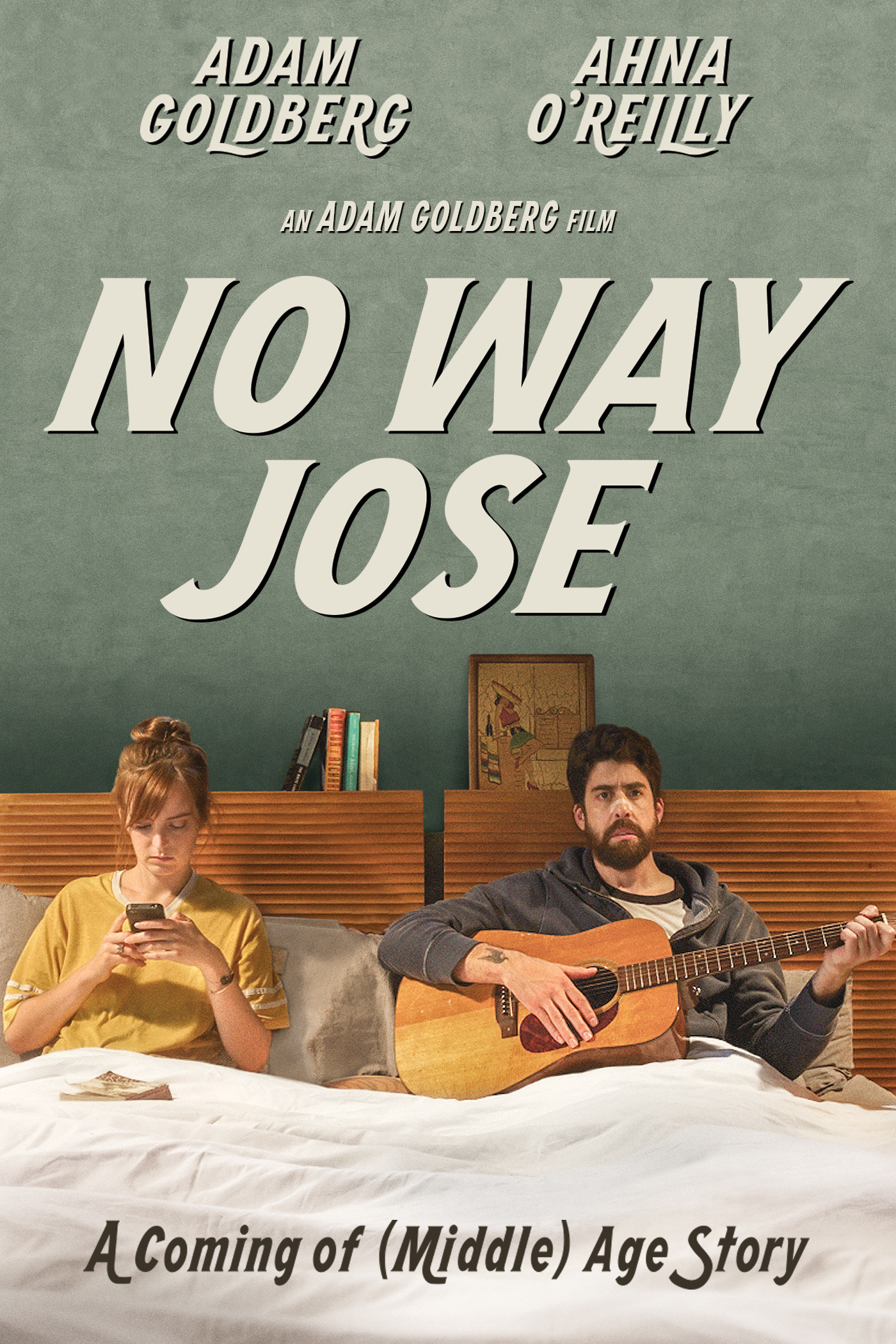
Musician Jose Stern (Goldberg) is fast approaching forty and is reduced to playing children’s parties with his band, the Borges. He’s also engaged to Dusty (O’Reilly), and though they haven’t set a date, they have decided on where to go for their honeymoon: Mexico (as you can’t drive to Hawaii). When best friends Gabe and Kate (Siegel, Belknap) suggest that they hold a joint birthday party for Jose and their young daughter Violet, Jose is initially ambivalent, but thanks to Dusty’s urging, agrees to the idea. Later that night in their new apartment, Dusty downloads an app to her phone that brings to light something about Jose that she doesn’t know. For Dusty it proves to be a deal breaker, despite Jose’s explanation of what she’s learnt.

Their relationship over, Jose crashes on Gabe and Kate’s couch. Kate goes out to work while Gabe stays at home to look after Violet and their infant son, Fred, and provide piano lessons to children. They row a lot, but in-between times, Jose manages to get them to give their opinions on what to do next. Their answer (based on having two impressionable children in the home): frog Dusty and move on. But Jose can’t quite do that, even though he won’t contact her. Instead he hooks up with an old girlfriend, Penny (Jacobs), when she calls him out of the blue, but the evening they spend together proves disappointing.

With his friends, Lawrence (Healy) and Mickey (Pritikin), Jose begins to put Dusty behind him (though he still feels strongly about her). When he learns that Dusty has decided to cash in their honeymoon tickets and go by herself, Jose – who doesn’t fly – follows her there in a last ditch effort to win her back. But when he gets there, he gets a surprise, one that’s exacerbated by Dusty telling him something unexpected…

No Way Jose - scene

Adam Goldberg’s fourth directorial feature since 1998 (the last one, I Love Your Work, was released in 2003), No Way Jose is an acerbic, drily witty look at the pitfalls of modern relationships. Co-written with Sarah Kate Levy, Goldberg’s take on the middle-aged man-child coming to terms with commitment has a couple of comedic set pieces – Jose struggling to talk to Dusty while strung out on Ativan; Kate coming home and yelling coarsely at someone on the phone – but is mostly a sedate, considered drama that  features some great performances while never quite saying anything too profound about the differences between men and women.

From the outset it’s clear that Jose is out of his depth, somehow having reached the age of forty without getting married or having children. His musical career is in the doldrums, and while his relationship with Dusty seems like a dream come true (you know she’s far too good for him), his cavalier attitude and need for approbation marks him out as an outsider, jogging along but without much purpose or direction. Faced with having to grow up and find some meaning in his life, Jose’s reaction is to cling even tighter to his sense of freedom, even though losing Dusty has made him begin (without realising) to reassess what he wants from Life.

Goldberg is a quirky, unpredictable actor, but here he tones down his usual schtick to give us a character who’s more unsure than confident, and who’s only a few steps away from being a complete loser. As such it’s hard to sympathise with him completely as a lot of his problems are caused by a lack of consideration of others; he’s his own worst enemy. By making Jose so insecure, and with so little ambition, Goldberg has painted himself into a bit of a corner. It doesn’t take long to realise that Jose’s coasting along is robbing the movie of a good deal of drama, and with that realisation, most viewers may find themselves less interested in how things play out. It doesn’t help either that Dusty is sidelined once their relationship is over, and disappears until the movie’s end, when she’s required to respond to Jose’s lovelorn melancholy in a way that will be familiar to anyone who’s seen more than a few romantic dramas.

With Jose being less than completely interesting, it falls to the supporting cast to provide most of the entertainment. It’s here that Goldberg and Levy have done the movie a favour, investing the supporting characters with enough humorous foibles to offset the moodiness of the central storyline. Siegel and Belknap are terrific as a warring couple continually trying to score points off each other and offloading their parental responsibilities on each other at every opportunity (the phrase “Violet’s done a bad thing” will linger in the memory). Healy and Pritikin also provide sterling performances, their characters’ idiosyncrasies played to the fore and fully recognisable as the kind of friends most of us have despite our best wishes or intentions.

On the distaff side, O’Reilly is a pleasure to watch as Jose’s engaging other half, and she makes enough of an impact that her enforced departure from the story feels calamitous. As the “coconut water” drinking Penny, Jacobs soon turns into the ex we’d all like to forget, but instead of enhancing the drama by having Jose sleep with her (or just be seen with her by Dusty), Goldberg elects to have Jose refuse her overtures and not go through with anything, reaffirming his inability to take chances.

Where Goldberg does get things right is in his choice of music to support the emotional beats within the movie – the songs that play in Jose’s car shortly after Dusty dumps him, including One Is the Loneliest Number, are inspired – and his choice of cinematographer, Mark Putnam, his go-to guy when making features. Putnam is great at coming up with shots that provide maximum effect, and guided by Goldberg, keeps things continually interesting within the frame. It all serves to make the visual aspect of the movie more compelling than expected.

Rating: 7/10 – flawed but still mostly enjoyable, No Way Jose is an indie drama with comedic overtones that tells its simple story without much embellishment or pretentiousness; alas this makes for a movie that feels somewhat underdeveloped, and while there are good performances throughout, there’s too little of substance going on to improve things.

Share this:

  • Click to share on X (Opens in new window) X
  • Click to share on Facebook (Opens in new window) Facebook
  • More
  • Click to print (Opens in new window) Print
  • Click to email a link to a friend (Opens in new window) Email
Like Loading...

Lucky Them (2013)

02 Monday Jun 2014

Posted by dullwood68 in Movies

≈ 2 Comments

Tags

Disappearance, Documentary, Drama, Ex-boyfriend, Lost love, Megan Griffiths, Music journalist, Musician, Oliver Platt, Review, Road trip, Ryan Eggold, Stax magazine, Thomas Haden Church, Toni Collette

Lucky Them

D: Megan Griffiths / 97m

Cast: Toni Collette, Thomas Haden Church, Oliver Platt, Ryan Eggold, Nina Arianda, Ahna O’Reilly

Ellie Klug (Collette) is a music journalist working for Stax magazine.  Ten years before, her then boyfriend – and well-loved musician – Matthew Smith disappeared; his car was found abandoned and it was assumed he’d committed suicide, though his body was never found.  Ellie has never really recovered from Matthew’s disappearance, and has yet to put it behind her.  Her boss, Giles (Platt), challenges her to write a story about Matthew and how much his music means ten years on.  Ellie is hesitant but grudgingly accepts the assignment, though she’s unsure of just what she’s going to write.  Her friend, Dana (Arianda), asks the all-important question: doesn’t Ellie want to know, once and for all, what happened?

Ellie is still unsure.  While she works out the best way to approach the assignment she meets aspiring musician Lucas (Eggold).  They begin a tentative relationship, but Ellie isn’t sure about about committing to this either.  At a bar she bumps into Charlie (Church), an ex-boyfriend who decides it would be a great idea if he made a documentary about Ellie’s search for Matthew (as he’s just completed a documentary filmmaking course).  They embark on a road trip, visiting places that were important in the early days of Ellie and Matthew’s relationship, including his home.  They also have a lead on Matthew’s whereabouts, footage of a singer in a club who may or may not be the missing musician.  Although the man who says he shot the footage turns out to be a fraud, Ellie comes to believe the footage really is of Matthew.  Meanwhile her relationship with Lucas becomes more serious, and when Charlie announces his engagement to Charlotte (O’Reilly), Ellie and Lucas are happy to go as a couple.

With the story on hold, Ellie attends Charlie’s wedding by herself, Lucas having gone to L.A. for talks with a record company (though he promises he’ll be back in time).  When Lucas fails to turn up, Ellie winds up in bed with one of the other guests.  Lucas discovers them together; to make matters worse she insults Charlie as well.  Ellie hides away in her apartment, ignoring her calls and fixating on the supposed footage of Matthew.  It’s only when Dana shows up to jolt her out of her misery that Ellie realises she may know a way of finding Matthew after all.  She apologises to Charlie and they resume their road trip…

Lucky Them - scene

Lucky Them has several themes woven through its meandering script, though none of them are particularly original.  There’s lost love, perceived betrayal, irreconciled emotions, and they all lead to Ellie’s unwitting withdrawal from Life.  She’s a close approximation of the person she was ten years before, surrounded by reminders of the time she spent with Matthew, and tortured by not knowing why he disappeared (and if she’d only admit it, still in love with him).  Ellie hasn’t moved on from that time, hasn’t found a way to let go of the past.  She takes part in Life at a superficial level and derives no real enjoyment from it; she lacks passion, though it’s instructive that she becomes more expressive when talking about Matthew’s disappearance to a woman in a bar, almost defending him.  She’s also easily led, allowing Giles to dictate the nature of the assignment to her, allowing Lucas to pursue her and almost force their relationship into being, letting Charlie decide about the documentary and cajoling her to reveal more and more about herself during the filming.  Without the people around her, Ellie would be living her life completely in the past.

As Ellie, Collette has a tough time making the character sympathetic.  She’s a walking bundle of apathy and negativity, and while the reasons for her being so are clearly outlined, it doesn’t help draw the viewer in; there’s no point at which you’re hoping that she’ll turn everything around (though obviously she will).  With Ellie being so emotionally constipated, Collette doesn’t quite manage to make her a more interesting character, and settles for a kind of low-key cynicism in order to provide Ellie with a defining trait.  Charlie refers to relationships being unable to last if they can be summed up in a single sentence (e.g. “I was the exotic aesthete to her mid-Western homebody”).  For Ellie, the extrapolation would be, “A woman who refuses to see the good life going on around her”.  With this obstacle established from the beginning, Lucky Them struggles to give the viewer anyone to root for.

That said, it’s a relief that screenwriters Huck Botko and Emily Wachtel have come up with the character of Charlie, a socially awkward, dry-humoured man who doesn’t always appreciate the finer points of social interaction or etiquette.  In Church’s more-than-capable hands, Charlie is the movie’s saving grace, a direct, emotionally distant demi-pedagogue who’s funny throughout and the kind of true friend that Ellie really doesn’t deserve.  Church adopts an almost stentorian way of speaking that makes Charlie sound pompous at first until you realise just how awkward his manner is.  He’s also a bit of a bully, but in a caring, let’s-have-none-of-that-nonsense kind of way.  As the movie progresses, Ellie warms to him, and they bring each other out of their respective shells.  It’s these moments that have the greatest resonance in the movie, and as played by Collette and Church are also the most emotionally rewarding.

With Ellie proving such a poorly drawn character, and with her troubles being entirely self-inflicted, Lucky Them often goes off at a tangent in its efforts to hold its audience’s attention, and the search for Matthew often takes a back seat while Ellie continues to behave selfishly.  The answer to the question, is Matthew alive after all, is resolved in a satisfying manner, but without all the digressions could have been arrived at a lot sooner.  The subplot involving Lucas is both predictable and dull, while Giles is the kind of patrician mentor figure who seems out of place in today’s publishing world.  It’s not surprising then that the movie is directed in unspectacular fashion by Griffiths, and there’s little in the way of visual styling or flair, while the soundtrack is populated by a succession of indie tracks that only occasionally enhance what’s happening on screen (though fans of Rachael Yamagata will enjoy the end credits song she provides).

Rating: 5/10 – a disappointing exploration of how someone copes when the person they love most disappears suddenly without explanation, Lucky Them flounders for most of its running time and rarely convinces; saved (rescued even) by Church’s note-perfect performance, and best approached as a curious mix of emotional apathy and (very) low-key romanticism.

Share this:

  • Click to share on X (Opens in new window) X
  • Click to share on Facebook (Opens in new window) Facebook
  • More
  • Click to print (Opens in new window) Print
  • Click to email a link to a friend (Opens in new window) Email
Like Loading...

Blog Stats

  • 486,829 hits

Recent Posts

  • 10 Reasons to Remember Bibi Andersson (1935-2019)
  • Fantasia (1940)
  • Dances With Wolves (1990) – The Special Edition
  • Kiss of the Spider Woman (1985)
  • The Three Musketeers (1973)

Top Posts & Pages

  • Lost for Life (2013) - Another Look
    Lost for Life (2013) - Another Look
  • Lost for Life (2013)
    Lost for Life (2013)
  • About
    About
  • A Brief Word About La La Land (2016)
    A Brief Word About La La Land (2016)
  • Exposed (2016)
    Exposed (2016)
  • Cardboard Boxer (2016)
    Cardboard Boxer (2016)
  • Irrational Man (2015)
    Irrational Man (2015)
  • The Monuments Men (2014)
    The Monuments Men (2014)
  • Removal (2010)
    Removal (2010)
  • My Top 10 Guilty Pleasures
    My Top 10 Guilty Pleasures
Follow thedullwoodexperiment on WordPress.com

Blogs I Follow

  • Rubbish Talk
  • Film 4 Fan
  • Fast Film Reviews
  • The Film Blog
  • All Things Movies UK
  • Interpreting the Stars
  • Let's Go To The Movies
  • Movie Reviews 101
  • TMI News
  • Dan the Man's Movie Reviews
  • Film History
  • Jordan and Eddie (The Movie Guys)

Archives

  • April 2019 (13)
  • March 2019 (28)
  • February 2019 (28)
  • January 2019 (32)
  • December 2018 (28)
  • November 2018 (30)
  • October 2018 (29)
  • September 2018 (29)
  • August 2018 (29)
  • July 2018 (30)
  • June 2018 (28)
  • May 2018 (24)
  • April 2018 (21)
  • March 2018 (31)
  • February 2018 (25)
  • January 2018 (30)
  • December 2017 (30)
  • November 2017 (27)
  • October 2017 (27)
  • September 2017 (26)
  • August 2017 (32)
  • July 2017 (32)
  • June 2017 (30)
  • May 2017 (29)
  • April 2017 (29)
  • March 2017 (30)
  • February 2017 (27)
  • January 2017 (32)
  • December 2016 (30)
  • November 2016 (28)
  • October 2016 (30)
  • September 2016 (27)
  • August 2016 (30)
  • July 2016 (30)
  • June 2016 (31)
  • May 2016 (34)
  • April 2016 (30)
  • March 2016 (30)
  • February 2016 (28)
  • January 2016 (35)
  • December 2015 (34)
  • November 2015 (31)
  • October 2015 (31)
  • September 2015 (34)
  • August 2015 (31)
  • July 2015 (33)
  • June 2015 (12)
  • May 2015 (31)
  • April 2015 (32)
  • March 2015 (30)
  • February 2015 (37)
  • January 2015 (39)
  • December 2014 (34)
  • November 2014 (34)
  • October 2014 (36)
  • September 2014 (25)
  • August 2014 (29)
  • July 2014 (29)
  • June 2014 (28)
  • May 2014 (23)
  • April 2014 (21)
  • March 2014 (42)
  • February 2014 (38)
  • January 2014 (29)
  • December 2013 (28)
  • November 2013 (34)
  • October 2013 (4)

Blog at WordPress.com.

Rubbish Talk

Film 4 Fan

A Movie Blog

Fast Film Reviews

The Film Blog

The official blog of everything in film

All Things Movies UK

Movie Reviews and Original Articles

Interpreting the Stars

Dave Examines Movies

Let's Go To The Movies

Film and Theatre Lover!

Movie Reviews 101

Daily Movie Reviews

TMI News

Latest weather, crime and breaking news

Dan the Man's Movie Reviews

All my aimless thoughts, ideas, and ramblings, all packed into one site!

Film History

Telling the story of film

Jordan and Eddie (The Movie Guys)

Movie Reviews & Ramblings from an Australian Based Film Fan

Privacy & Cookies: This site uses cookies. By continuing to use this website, you agree to their use.
To find out more, including how to control cookies, see here: Cookie Policy
  • Subscribe Subscribed
    • thedullwoodexperiment
    • Join 481 other subscribers
    • Already have a WordPress.com account? Log in now.
    • thedullwoodexperiment
    • Subscribe Subscribed
    • Sign up
    • Log in
    • Report this content
    • View site in Reader
    • Manage subscriptions
    • Collapse this bar
 

Loading Comments...
 

    %d