• 10 Reasons to Remember…
  • A Brief Word About…
  • About
  • For One Week Only
  • Happy Birthday
  • Monthly Roundup
  • Old-Time Crime
  • Other Posts
  • Poster of the Week
  • Question of the Week
  • Reviews
  • Trailers

thedullwoodexperiment

~ Viewing movies in a different light

thedullwoodexperiment

Tag Archives: Muslims

Ali’s Wedding (2016)

15 Friday Jun 2018

Posted by dullwood68 in Movies

≈ Leave a comment

Tags

Arranged marriage, Australia, Comedy, Don Hany, Drama, Helana Sawires, Jeffrey Walker, Muslims, Osamah Sami, Review, Romance, True story, Wedding

D: Jeffrey Walker / 110m

Cast: Osamah Sami, Don Hany, Helana Sawires, Robert Rabiah, Khaled Khalafalla, Asal Shenaveh, Rodney Afif, Ghazi Alkinani, Majid Shokor, Shayan Salehian, Ryan Corr

Ali (Sami) and his family live in Australia, but are originally from Iraq. His father (Hany) is the cleric of the local mosque, and wants Ali to become a doctor. Ali isn’t so sure that’s going to happen as he doesn’t have a natural aptitude for medicine and struggles with his studies; when he only gets 68.5 on his university entrance exam, it confirms what he already knows. However, because he doesn’t want to disappoint his father, Ali keeps the result to himself, but when another student boasts of getting a high score, Ali tells everyone he scored even higher. And when he learns that the girl he’s attracted to, Dianne (Sawires), has also passed, Ali determines to attend the university anyway. Meanwhile, Ali’s parents reveal that they are arranging a bride for him (now that he’s on his way to being a successful doctor), and are making plans for their upcoming wedding. As Ali fights to keep his secret from being revealed, he has to find a way of getting out of the arranged marriage, and ensuring that he and Dianne can be together – even though she’s Lebanese…
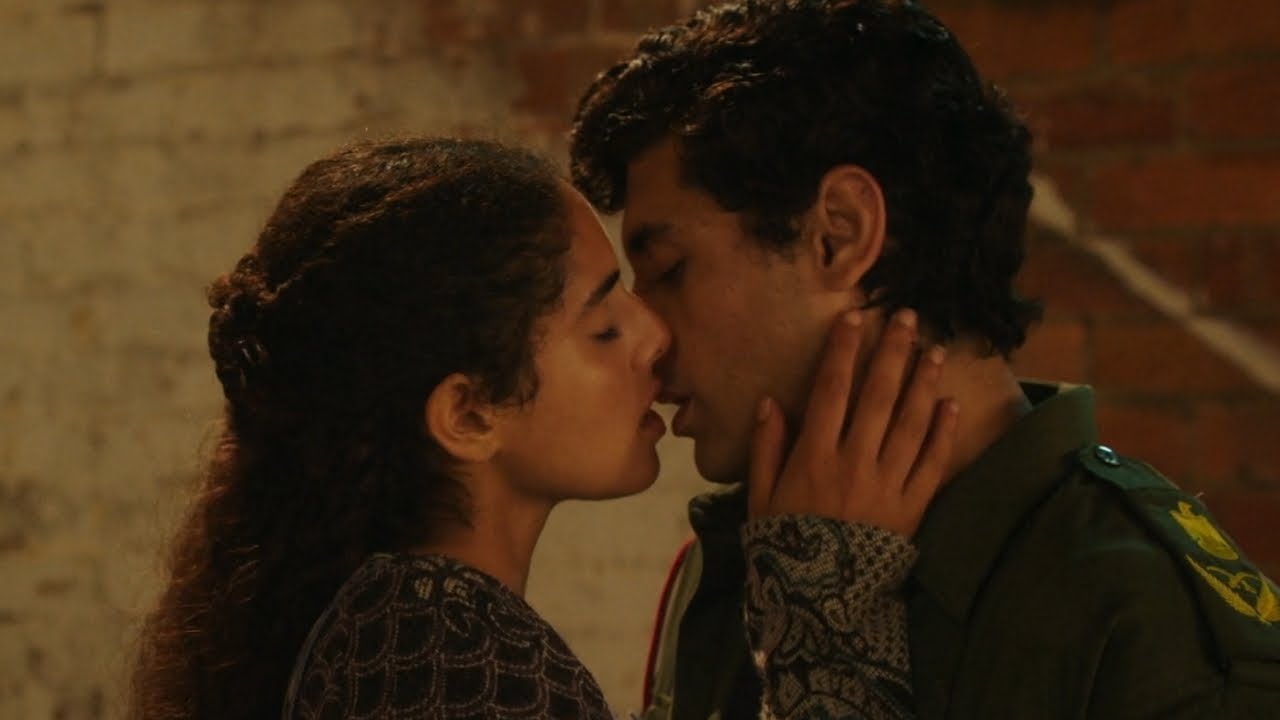
Based on Sami’s own experiences, Ali’s Wedding is something of a first: a Muslim romantic comedy that manages to be respectful of Muslim traditions and his family’s transplanted way of life, while also acknowledging that his generation may not be as “wedded” to those traditions as elder generations would expect them to be. It’s a movie that avoids the usual condemnation that you’d expect when young love rears its socially unacceptable head and challenges the status quo, or entrenched religious sensibilities, and part of the movie’s charm is that Sami, along with co-writer Andrew Knight, recognises the validity of both points of view. So there’s no demonising of the Muslim religion, no stereotypical characterisations, and no deciding if one side is “better” than the other. Arguments are made for both sides of the cultural divide, and it’s left to the viewer to decide which one they agree with most. That said, Sami’s unwavering fairness to both sides should be enough, as he makes sure that the movie’s nominal bad guy, a would-be usurper of his father’s role of cleric, is undone by an outburst of arrogant pride.
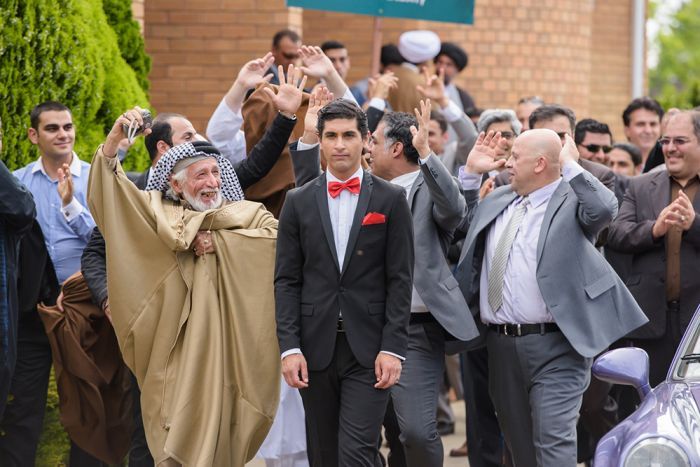
Having set the tone for the movie’s cultural and religious backdrop, Sami is free to build a lightweight yet likeable romance out of Ali’s relationship with Dianne, and to pepper proceedings with the kind of knowing humour that wouldn’t necessarily work outside of the movie’s framework. Hence we have Saddam The Musical (all true), and an abortive trip to the US to stage the show (the principal cast are all returned home in handcuffs). And that’s without a tractor ride that ends in disaster, and a joke about community service that is both beautifully timed and arrives out of the blue. Walker lets the narrative breathe, and doesn’t rush things, allowing the material and the performances to progress naturally and to good effect. As himself, Sami has a mischievous twinkle in his eye that at times is infectiously winning, and he’s supported by a great cast who all contribute greatly to the movie’s likeability (though Hany’s Aussie accent slips through from time to time, which can be off-putting). There are themes surrounding trust and respect, community and togetherness that are played out with a directness and simplicity that enhance the material, and though the ending is never in doubt, there’s still an awful lot of fun to be had in getting there.

Rating: 8/10 – an agreeable and amusing romantic comedy, Ali’s Wedding does what all the best rom-coms do, and puts its hero through the ringer before giving him a chance at coming up trumps; the romance between Ali and Dianne is entirely credible, as are the various inter-relationships within families and the wider Muslim community, making this an unexpected, but modestly vital, success.

Share this:

  • Click to share on X (Opens in new window) X
  • Click to share on Facebook (Opens in new window) Facebook
  • More
  • Click to print (Opens in new window) Print
  • Click to email a link to a friend (Opens in new window) Email
Like Loading...

The Ottoman Lieutenant (2017)

11 Monday Jun 2018

Posted by dullwood68 in Movies

≈ Leave a comment

Tags

Ben Kingsley, Christians, Drama, Hera Hilmar, Hospital, Joseph Ruben, Josh Hartnett, Michiel Huisman, Muslims, Review, Romance, Turkey, World War I

D: Joseph Ruben / 110m

Cast: Michiel Huisman, Hera Hilmar, Josh Hartnett, Ben Kingsley, Haluk Bilginer, Affif Ben Badra, Paul Barrett, Jessica Turner

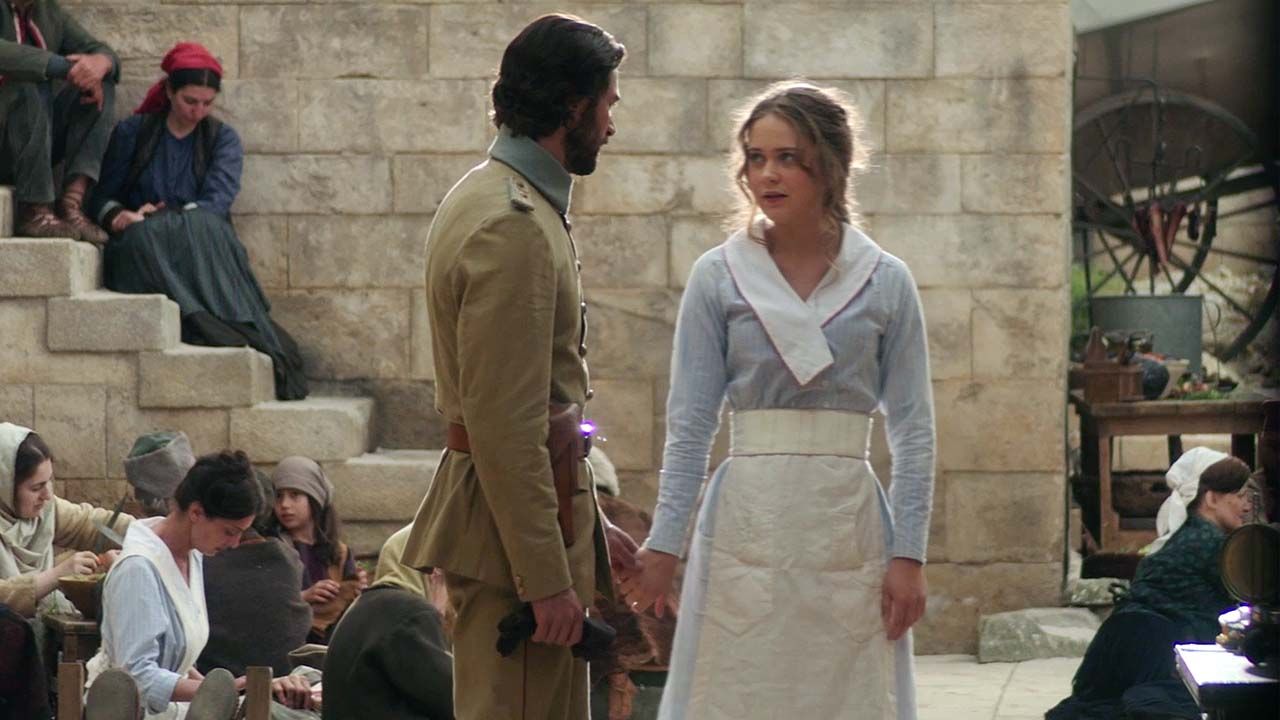
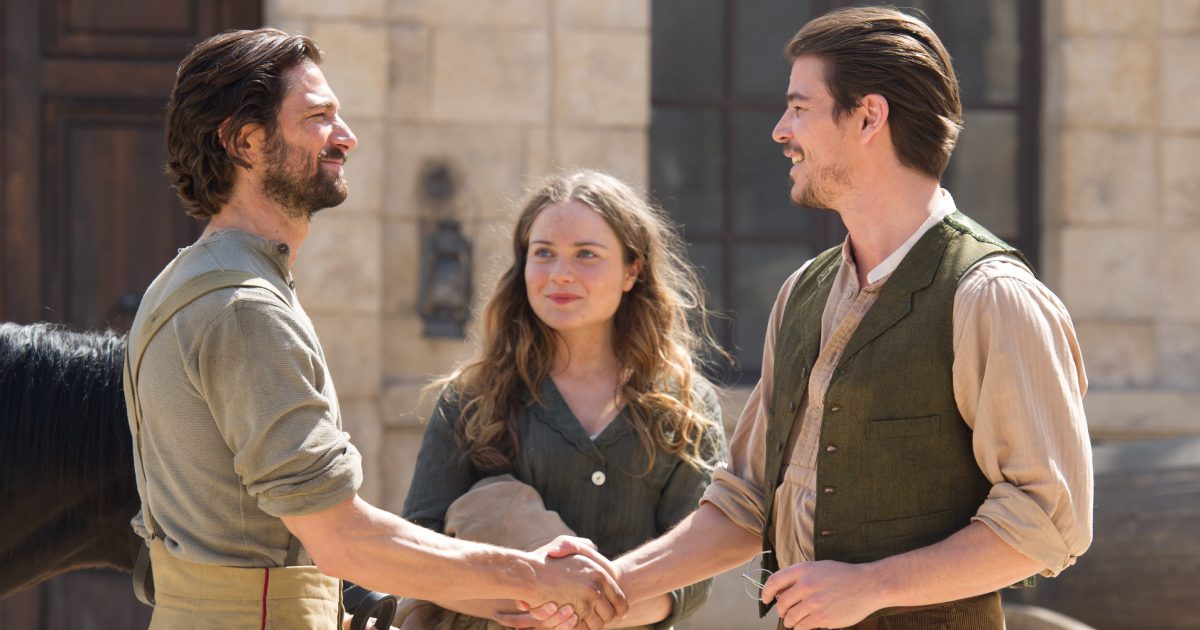
It’s 1914, and in Philadelphia, Lillie Rowe (Hilmar), the daughter of well-to-do society parents is trying to make her way in the world as a nurse. It’s not easy, what with class and racial prejudice making it more and more difficult to treat those needing treatment, so when she meets Dr Jude Gresham (Hartnett) at one of her parents’ soirées, and learns he works at a hospital in a remote part of Turkey that offers medical aid to anyone who needs it, Christian or Muslim, she decides to take a truck full of medical supplies there all by herself. Needing a military escort, Lillie is guided to the hospital by Lieutenant Ismail Veli (Huisman), who is stationed at a nearby garrison. They develop romantic feelings for each other, despite the difference in their faiths, and despite the objections of Gresham (who loves Lillie himself), and the advice of the hospital’s founder, Dr Garrett Woodruff (Kingsley). When World War I breaks out, their romance is put under further pressure thanks to the political upheavals the war brings, and the difficulty in keeping the hospital a neutral place for all…

Despite the tumultuous events that occurred during the period it covers, The Ottoman Lieutenant is largely unconcerned with such minor details as the Armenian genocide that began in 1915, or in exploring too closely the religious, political, ethnic and historical realities of the time. Instead, it sidesteps these issues (for the most part) in order to focus on one of the most excruciatingly bland three-way romances seen in quite some time. If you’re expecting the movie to be a grand, sweeping romantic drama set against a turbulent backdrop, and full of passion and fire, then be prepared: it’s not that kind of movie, and the combination of Jeff Stockwell’s anodyne screenplay, Joseph Ruben’s pedestrian direction, and three tired-from-the-word-go performances by Huisman, Hilmar and Hartnett, ensure that the movie never gets out of the starting gate. And that’s without Geoff Zanelli’s by-the-numbers score, and cinematography by Daniel Aranyó that only seems to fizz when depicting the beautiful Turkish countryside; any interiors appear drab and unappealingly flat in their presentation. Apparently, the movie was given a limited release in December 2016 to allow it to qualify for Oscar consideration. If so, the obvious question is: why?

All round, it’s a woeful lump of a movie, uninspired, straining for momentum and merit, and unable to raise any interest especially when its lacklustre love story is pushed to the forefront. It’s hard to care about Veli and Lillie when their love affair is played out with all the perfunctory flair of a dismal soap opera, and it’s worse that neither Huisman or Hilmar seem interested in doing anything more than going through the (e)motions (there’s certainly no chemistry between them). Hartnett is no better, which means that, performance-wise, it’s only Kingsley who appears to be putting any effort in. Making more out of his character, and some truly awful dialogue, than his three co-stars put together, Kingsley is the movie’s sole saving grace; without him it would be even more tortuous. Even when the movie throws in a couple of action sequences, the viewer’s pulse is unlikely to quicken, and any tension is dismissed early on when it becomes obvious that, one character aside, no one is in any real danger from the Turks, the Russians, or anyone else – though the viewer is at risk of succumbing to terminal lethargy. Best advice: if you have to make one trip to Turkey this year, make sure it isn’t this one.

Rating: 3/10 – what was probably intended to be a good old-fashioned romantic adventure yarn with a plucky heroine and a dashing suitor, is instead the opposite: trite, run-of-the-mill, and poorly executed; when it’s not addressing the issues of the period (which is most of its running time), The Ottoman Lieutenant remains firmly in dramatic limbo, unable to rouse itself beyond the mundane and the banal.

Share this:

  • Click to share on X (Opens in new window) X
  • Click to share on Facebook (Opens in new window) Facebook
  • More
  • Click to print (Opens in new window) Print
  • Click to email a link to a friend (Opens in new window) Email
Like Loading...

Viceroy’s House (2017)

22 Wednesday Mar 2017

Posted by dullwood68 in Movies

≈ Leave a comment

Tags

Drama, Gillian Anderson, Gurinder Chadha, Hindus, Historical drama, Hugh Bonneville, Huma Qureshi, India, Manish Dayal, Michael Gambon, Muslims, Pakistan, Partition, Politics, Review, Sikhs, True story

D: Gurinder Chadha / 106m

Cast: Hugh Bonneville, Gillian Anderson, Manish Dayal, Huma Qureshi, Michael Gambon, Om Puri, Simon Callow, Lily Travers, Tanveer Ghani, Denzil Smith, Neeraj Kabi, Darshan Jariwala

The awkwardly titled Viceroy’s House opens with a quote by Winston Churchill: “History is written by the victors.” Bearing in mind the story that follows, it’s hard to see why this particular quote has been chosen to open the movie. Perhaps director Gurinder Chadha is using it in an ironic fashion; any winners borne out of the terrible circumstances and outcomes surrounding the partition of India in 1947 may not have been aware of their having “won” anything at the time – even those who wanted the creation of Pakistan.

One thing that soon becomes apparent from watching the movie is that it’s going to be a politics-lite experience, with little depth beyond that given to an adaptation being shown on UK Sunday evening television. This means that some viewers, especially those with little awareness of the period when the British withdrew from India, and the terrible consequences that followed, will take much of what the movie tells them to heart. What should be made clear from the start is that Viceroy’s House is better viewed as an impression of those events than as a recreation.

The problem here is that one of the most traumatic upheavals of the 20th Century that involved a country and fifteen million of its inhabitants – those who were displaced – is given an unremarkable soap opera sheen that paints the British as saviours, and the Indian people as the authors of their own downfall. As an interpretation of what actually occurred on the Indian sub-continent, the movie takes several factual liberties with the events surrounding partition, and panders to the idea that the frustration experienced by Lord Louis Mountbatten (known more familiarly as “Dickie”) (Bonneville) is somehow more affecting and deserving of our sympathy than the political and social upheavals being experienced by India’s Hindu, Muslim and Sikh communities. As a dramatic approach to the material, it’s akin to asking an audience to be more sympathetic towards someone with a slight case of sunburn than someone who’s lost a limb.

The obvious comparison here is with the TV series Upstairs, Downstairs (or Downton Abbey for that matter, which also stars Bonneville). By attempting to focus on both the political machinations going on above stairs and the social upheavals occurring below stairs, Viceroy’s House tries to show the effect of partition on the British and the Indians alike. But the script – by Paul Mayeda Berges, Moira Buffini, and Chadha – takes an uncomfortable approach to the historical material, and tries to add a standard Romeo and Juliet-style romance to proceedings through the attraction between valet Jeet Kumar (Dayal) and lady’s attendant Aalia Noor (Qureshi). Alas, and despite the best efforts of Dayal and Qureshi, their romance is a tepid affair that occupies too much screen time, and lacks the kind of epic passion that could be seen as a compelling reflection of the violent passions of a country expressing itself through mounting conflict.

Other members of the Viceroy’s staff have arguments and cause problems from time to time, and Mountbatten is seen to berate them as if they were all naughty children. It’s a condescending attitude that extends to Mountbatten’s meetings with India’s leading politicians. Whether it’s Nehru (Ghani), Jinnah (Smith) or Ghandi (Dabi), the movie has “Dickie” treating them as if they should all just get along because he needs them to. And as a sop to the current need for strong female characters in pretty much every movie being made, Lady Edwina Mountbatten (Anderson) is portrayed as the “brains of the outfit”, while at the same time falling victim to the idea that their predicament is worse than that of the Indian people (“How can it be getting worse under us?”).

As the inevitability of partition looms ever nearer, and outbreaks of violence become the norm, Mountbatten is pushed into a corner and forced to accept that there can’t be a united India. With Pakistan now a certainty, he’s required to divide India into two, and enlists British lawyer Sir Cyril Radcliffe (Callow) to carry out the task. But it proves too difficult, until he’s advised by General Ismay (Gambon), Mountbatten’s advisor on all things Indian and political, that there is a solution. It’s here that the movie cements its appreciation and sympathy for the Viceroy by showing him as having been tricked by the British Government and set up for a fall if the violence continues and/or escalates out of control. It’s a moment that should elicit a good deal of compassion for “poor old” Mountbatten, but instead makes the viewer realise that Chadha feels more for him than she does for the Indian people.

Much else in the movie is perfunctory stuff designed to move the story forward with the least amount of effort or acknowledgment as to how dry and uninvolving it all is. Chadha directs with a minimum of fuss or apparent enthusiasm, leaving some scenes feeling cursory and superficial. Against this, the cast can only do their best, though Anderson manages to imbue Lady Mountbatten with a supportive, agreeable nature that makes her feel like more of a fully rounded character than anyone else. Bonneville is a good choice for “Dickie” (though he doesn’t look anything like him), but even he’s held back by a script that paints Mountbatten, somewhat plainly, as a good man in a bad situation (though if you need someone to portray “pained frustration” then Bonneville’s your man).

For someone whose family were involved in the partition and the subsequent resettlement of so many people, Chadha doesn’t always seem interested in telling a coherent, responsible story. Muslims are unlikely to be happy about the way in which they are shown to be the main instigators of the violence depicted, while the religious enmities between Muslims and Hindus are reduced to petty squabbling, a direction that is extended to the encounters between Nehru and Jinnah – if you believe the movie, then neither man could be in the same room as the other without resorting to childish bickering. By reducing the key players’ importance in this way, and by playing up the ineffective nature of Mountbatten’s tenure as Viceroy, the movie ends up paying lip service to a terrible period in India’s history, a period that deserves a much more focused and intelligent approach than is featured here.

Rating: 4/10 – sporadically effective as a heritage picture, Viceroy’s House is let down by its one-sided consideration of British colonialism, and by its insistence on depicting Indians of the time as quarreling malcontents; nowhere is freedom from oppression expressed as forcibly as needed, and the movie’s tacit exoneration of Great Britain’s often brutal occupation makes for an uncomfortable viewing experience throughout.

Share this:

  • Click to share on X (Opens in new window) X
  • Click to share on Facebook (Opens in new window) Facebook
  • More
  • Click to print (Opens in new window) Print
  • Click to email a link to a friend (Opens in new window) Email
Like Loading...

Blog Stats

  • 486,528 hits

Recent Posts

  • 10 Reasons to Remember Bibi Andersson (1935-2019)
  • Fantasia (1940)
  • Dances With Wolves (1990) – The Special Edition
  • Kiss of the Spider Woman (1985)
  • The Three Musketeers (1973)

Top Posts & Pages

  • Lost for Life (2013) - Another Look
    Lost for Life (2013) - Another Look
  • Lost for Life (2013)
    Lost for Life (2013)
  • About
    About
  • Mr. Topaze (1961)
    Mr. Topaze (1961)
  • Winter's Tale (2014)
    Winter's Tale (2014)
  • Billy Lynn's Long Halftime Walk (2016)
    Billy Lynn's Long Halftime Walk (2016)
  • The Hitman's Bodyguard (2017)
    The Hitman's Bodyguard (2017)
  • Shock and Awe (2017)
    Shock and Awe (2017)
  • 5 Famous Movie Roles That Nearly Went to Someone Else
    5 Famous Movie Roles That Nearly Went to Someone Else
  • The Layover (2017)
    The Layover (2017)
Follow thedullwoodexperiment on WordPress.com

Blogs I Follow

  • Rubbish Talk
  • Film 4 Fan
  • Fast Film Reviews
  • The Film Blog
  • All Things Movies UK
  • Interpreting the Stars
  • Let's Go To The Movies
  • Movie Reviews 101
  • TMI News
  • Dan the Man's Movie Reviews
  • Film History
  • Jordan and Eddie (The Movie Guys)

Archives

  • April 2019 (13)
  • March 2019 (28)
  • February 2019 (28)
  • January 2019 (32)
  • December 2018 (28)
  • November 2018 (30)
  • October 2018 (29)
  • September 2018 (29)
  • August 2018 (29)
  • July 2018 (30)
  • June 2018 (28)
  • May 2018 (24)
  • April 2018 (21)
  • March 2018 (31)
  • February 2018 (25)
  • January 2018 (30)
  • December 2017 (30)
  • November 2017 (27)
  • October 2017 (27)
  • September 2017 (26)
  • August 2017 (32)
  • July 2017 (32)
  • June 2017 (30)
  • May 2017 (29)
  • April 2017 (29)
  • March 2017 (30)
  • February 2017 (27)
  • January 2017 (32)
  • December 2016 (30)
  • November 2016 (28)
  • October 2016 (30)
  • September 2016 (27)
  • August 2016 (30)
  • July 2016 (30)
  • June 2016 (31)
  • May 2016 (34)
  • April 2016 (30)
  • March 2016 (30)
  • February 2016 (28)
  • January 2016 (35)
  • December 2015 (34)
  • November 2015 (31)
  • October 2015 (31)
  • September 2015 (34)
  • August 2015 (31)
  • July 2015 (33)
  • June 2015 (12)
  • May 2015 (31)
  • April 2015 (32)
  • March 2015 (30)
  • February 2015 (37)
  • January 2015 (39)
  • December 2014 (34)
  • November 2014 (34)
  • October 2014 (36)
  • September 2014 (25)
  • August 2014 (29)
  • July 2014 (29)
  • June 2014 (28)
  • May 2014 (23)
  • April 2014 (21)
  • March 2014 (42)
  • February 2014 (38)
  • January 2014 (29)
  • December 2013 (28)
  • November 2013 (34)
  • October 2013 (4)

Blog at WordPress.com.

Rubbish Talk

Film 4 Fan

A Movie Blog

Fast Film Reviews

The Film Blog

The official blog of everything in film

All Things Movies UK

Movie Reviews and Original Articles

Interpreting the Stars

Dave Examines Movies

Let's Go To The Movies

Film and Theatre Lover!

Movie Reviews 101

Daily Movie Reviews

TMI News

Latest weather, crime and breaking news

Dan the Man's Movie Reviews

All my aimless thoughts, ideas, and ramblings, all packed into one site!

Film History

Telling the story of film

Jordan and Eddie (The Movie Guys)

Movie Reviews & Ramblings from an Australian Based Film Fan

Privacy & Cookies: This site uses cookies. By continuing to use this website, you agree to their use.
To find out more, including how to control cookies, see here: Cookie Policy
  • Subscribe Subscribed
    • thedullwoodexperiment
    • Join 481 other subscribers
    • Already have a WordPress.com account? Log in now.
    • thedullwoodexperiment
    • Subscribe Subscribed
    • Sign up
    • Log in
    • Report this content
    • View site in Reader
    • Manage subscriptions
    • Collapse this bar
 

Loading Comments...
 

    %d