• 10 Reasons to Remember…
  • A Brief Word About…
  • About
  • For One Week Only
  • Happy Birthday
  • Monthly Roundup
  • Old-Time Crime
  • Other Posts
  • Poster of the Week
  • Question of the Week
  • Reviews
  • Trailers

thedullwoodexperiment

~ Viewing movies in a different light

thedullwoodexperiment

Tag Archives: Neil Patrick Harris

The 87th Annual Academy Awards – The Oscars 2015

23 Monday Feb 2015

Posted by dullwood68 in Movies

≈ Leave a comment

Tags

Academy Awards, Movies, Neil Patrick Harris, Nominees, Oscar, Speeches

Oscars 2014, The

Yes, folks, it’s that time of year again, when fashion designers get a free plug for some of their more expensive creations, when various stars generally fail to look happy for their fellow nominees when they win the coveted statuette, and when millions of us tune in to see a veritable orgy of fixed smiles, congratulatory backslapping, and a stream of actors and actresses who usually prove unable to read a teleprompter or tell poorly written jokes (and not forgetting the predictable round of halting acceptance speeches and several winners’ attempts to thank everybody and their auntie’s next door neighbour’s cat).

Hosted by first-timer Neil Patrick Harris, there was the traditional opening number celebrating the movies (and with help from Anna Kendrick and Jack Black), followed by a heartfelt speech about the power of the movies to inspire and move us. There was a fitfully amusing running gag involving Harris’s predictions locked away in a clear plastic box and being overseen by Octavia Spencer. A highlight was Harris’s “tribute” to Birdman or (the Unexpected Virtue of Ignorance) as he came from backstage in his underwear.

Meryl Streep provided a moving introduction to the In Memoriam section, and there was a tribute to The Sound of Music (now fifty years old) that featured clips from the movie and a performance by Lady Gaga that was – gasp! – actually pretty good (and received a standing ovation). And who should come out afterwards but Julie Andrews herself.

Winners in bold.

Best Performance by an Actor in a Supporting Role

Robert Duvall – The Judge; Ethan Hawke – Boyhood; Edward Norton – Birdman or (the Unexpected Virtue of Ignorance); Mark Ruffalo – Foxcatcher; J.K. Simmons – Whiplash
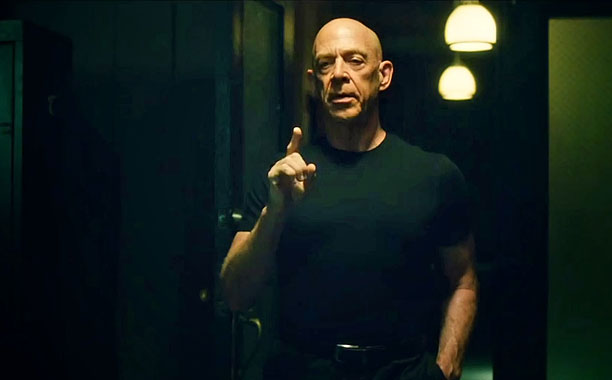
Whiplash (2014) -- Screengrab from exclusive EW.com clip.

Not much of a surprise but definitely well deserved, Simmons’ speech was mainly a tribute to his wife and children, and parents everywhere. Presented by Lupita Nyong’o.

Best Achievement in Costume Design

The Grand Budapest Hotel – Milena Canonero; Inherent Vice – Mark Bridges; Into the Woods – Colleen Atwood; Maleficent – Anna B. Sheppard; Mr. Turner – Jacqueline Durran

Completely expected and Canonero’s fourth win, she was gracious and thanked Wes Anderson profusely. Presented by Jennifer Lopez and Chris Pine.

Best Achievement in Makeup and Hairstyling

Foxcatcher – Bill Corso, Dennis Liddiard; The Grand Budapest Hotel – Frances Hannon, Mark Coulier; Guardians of the Galaxy – Elizabeth Yianni-Georgiou, David White

The second win for The Grand Budapest Hotel and entirely deserved, members of the team and Wes Anderson were thanked with gratitude. Presented by Reese Witherspoon.

Best Foreign Language Film of the Year

Ida; Leviathan; Tangerines; Timbuktu; Wild Tales
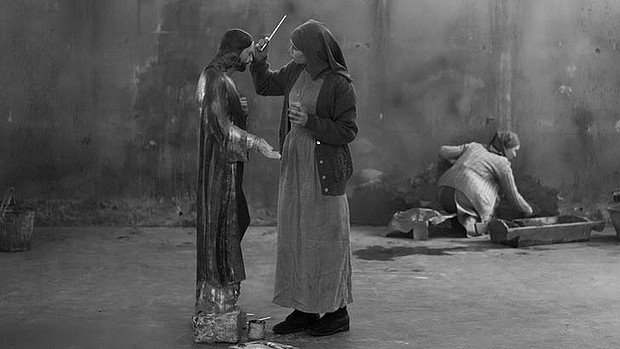
Ida - scene2

Superb result and a great moment for its director, Pawel Pawlikowski, who made a witty speech and was clearly overwhelmed by it all (and was the first who overran his time… and got a big cheer for it). Presented by Chiwetel Ejiofor and Nicole Kidman.

Best Short Film, Live Action

Aya; Boogaloo and Graham; Butter Lamp; Parvaneh; The Phone Call

This award was open to all and one of the winners called Oscar a “big bugger”, and a nod to Sally Hawkins for providing her services on the movie for free – and they went over their time. Presented by Kerry Washington and Jason Bateman.

Best Documentary, Short Subject

Crisis Hotline: Veterans Press 1; Joanna; Our Curse; The Reaper; White Earth

Too close to call but the winner has poignancy to spare, and the winners thanked everyone involved, particularly their families. Presented by Kerry Washington and Jason Bateman.

Best Achievement in Sound Mixing

American Sniper – Alan Robert Murray, Bub Asman; Birdman or (the Unexpected Virtue of Ignorance) – Jon Taylor, Frank A. Montaño, Thomas Varga; Interstellar – Gary Rizzo, Gregg Landaker, Mark Weingarten; Unbroken – Jon Taylor, Frank A. Montaño, David Lee; Whiplash – Craig Mann, Ben Wilkins, Thomas Curley

The second win of the evening for Whiplash in a category that could have been won by any of the nominees. Presented by Sienna Miller and Chris Evans.

Best Achievement in Sound Editing

American Sniper – Alan Robert Murray, Bub Asman; Birdman or (the Unexpected Virtue of Ignorance) – Aaron Glascock, Martín Hernández; The Hobbit: The Battle of the Five Armies – Brent Burge, Jason Canovas; Interstellar – Richard King; Unbroken – Becky Sullivan, Andrew DeCristofaro

Without Whiplash as a nominee, this was almost a fait accompli, and the winners thanked everyone connected with the movie, as well as their families. Presented by Sienna Miller and Chris Evans.

Best Performance by an Actress in a Supporting Role

Patricia Arquette – Boyhood; Laura Dern – Wild; Keira Knightley – The Imitation Game; Emma Stone – Birdman or (the Unexpected Virtue of Ignorance); Meryl Streep – Into the Woods
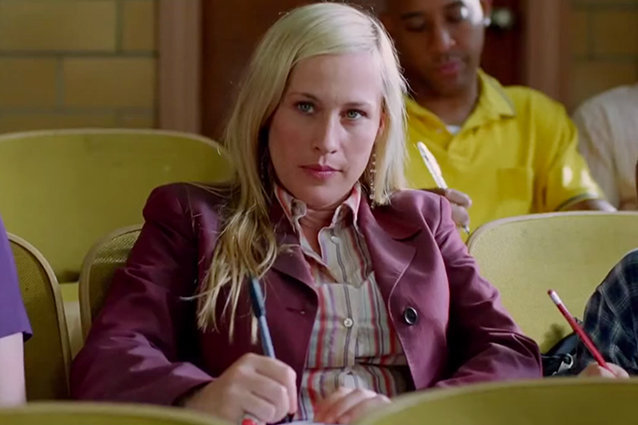
Patricia Arquette

One of the more predictable results of the evening, Arquette thanked a plethora of people and threw in a plea for equal rights for women in America – which got a huge round of applause. Presented by Jared Leto.

Best Achievement in Visual Effects

Captain America: The Winter Soldier – Dan DeLeeuw, Russell Earl, Bryan Grill, Daniel Sudick; Dawn of the Planet of the Apes – Joe Letteri, Dan Lemmon, Daniel Barrett, Erik Winquist; Guardians of the Galaxy – Stephane Ceretti, Nicolas Aithadi, Jonathan Fawkner, Paul Corbould; Interstellar – Paul J. Franklin, Andrew Lockley, Ian Hunter, Scott R. Fisher; X-Men: Days of Future Past – Richard Stammers, Lou Pecora, Tim Crosbie, Cameron Waldbauer

Not really a surprise (though it should have gone to Dawn…), the winners thanked everyone in general and gave a special mention to Kip Thorne. Presented by Ansel Elgort and Chloë Grace Moretz.

Best Short Film, Animated

The Bigger Picture; The Dam Keeper; Feast; Me and My Moulton; A Single Life

Well deserved – it really is a great movie – and the winners were appropriately humble. Presented by Anna Kendrick and Kevin Hart.

Best Animated Feature Film of the Year

Big Hero 6; The Boxtrolls; How to Train Your Dragon 2; Song of the Sea; The Tale of the Princess Kaguya

BigHero6

Disney win again (without a Pixar movie in contention), but this was the best result for the category, the movie having so much heart. Presented by Zoe Saldana and Dwayne Johnson.

Best Achievement in Production Design

The Grand Budapest Hotel – Adam Stockhausen, Anna Pinnock; The Imitation Game – Maria Djurkovic, Tatiana Macdonald; Interstellar – Nathan Crowley, Gary Fettis; Into the Woods – Dennis Gassner, Anna Pinnock; Mr. Turner – Suzie Davies, Charlotte Watts

It was either this or Mr. Turner but a good result nevertheless, and another heap of praise for Wes Anderson (and deservedly so). Presented by Chris Pratt and Felicity Jones.

Best Achievement in Cinematography

Birdman or (the Unexpected Virtue of Everything) – Emmanuel Lubezki; The Grand Budapest Hotel – Robert D. Yeoman; Ida – Łukasz Żal, Ryszard Lenczewski; Mr. Turner – Dick Pope; Unbroken – Roger Deakins

Lubezki’s second Oscar in a row (and the first award for Birdman…) was expected but it really should have gone to Ida. Presented by Idris Elba and Jessica Chastain.

Best Achievement in Editing

American Sniper – Joel Cox, Gary Roach; Boyhood – Sandra Adair; The Grand Budapest Hotel – Barney Pilling; The Imitation Game – William Goldenberg; Whiplash – Tom Cross

As at the BAFTAs, the absolutely positively must-win choice, and an absolutely positively deserved award, and a great nod to Damien Chazelle. Presented by Naomi Watts and Benedict Cumberbatch.

Best Documentary, Feature

CITIZENFOUR; Finding Vivian Maier; Last Days in Vietnam; The Salt of the Earth; Virunga
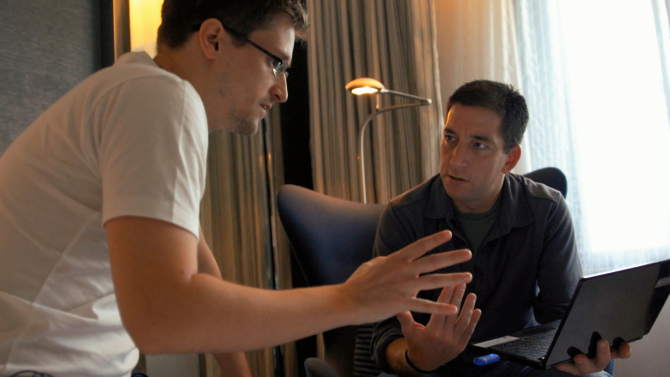
Citizenfour2

A superb result for such a superb movie, and great to see director Laura Poitras accepting the award, and condemning the powers that be over their treatment of ordinary people. Presented by Jennifer Aniston and David Oyelowo.

Best Achievement in Music Written for Motion Pictures, Original Song

Begin Again – Lost Stars (Gregg Alexander, Danielle Brisebois); Beyond the Lights – Grateful (Diane Warren); Glen Campbell: I’ll Be Me – I’m Not Gonna Miss You (Glen Campbell, Julian Raymond); The Lego Movie – Everything Is Awesome (Shawn Patterson); Selma – Glory (Common, John Legend)

Maroon 5 performed Lost Stars, while there was a cast of (what seemed like) thousands led by Tegan and Sara who reaffirmed that Everything Is Awesome. Tim McGraw subbed for Glen Campbell on I’m Not Gonna Miss You, then Rita Ora sang Grateful surrounded by laser lights, and in keeping with their original collaboration, John Legend and Common performed Glory against the backdrop of the Edmund Pettus Bridge (though Common’s hand gestures were a little too distracting). And Glory received a standing ovation, with many in the audience in tears.

Pretty much the only choice and Common gave an impassioned speech about democracy that revolved around the Edmund Pettus Bridge, while Legend reiterated the need for freedom and justice and continued voting rights. Presented by Idina Menzel and John Travolta.

Best Achievement in Music Written for Motion Pictures, Original Score

The Grand Budapest Hotel – Alexandre Desplat; The Imitation Game – Alexandre Desplat; Interstellar – Hans Zimmer; Mr. Turner – Gary Yershon; The Theory of Everything – Jóhann Jóhannsson

With Desplat finally winning an Oscar (and seeing off the challenge from himself), this was a great result and Desplat was a gracious winner. Presented by Julie Andrews.

Best Writing, Screenplay Written Directly for the Screen

Birdman or (the Unexpected Virtue of Ignorance) – Alejandro González Iñárritu, Nicolás Giacobone, Alexander Dinelaris, Armando Bo; Boyhood – Richard Linklater; Foxcatcher – E. Max Frye, Dan Futterman; The Grand Budapest Hotel – Wes Anderson, Hugo Guinness; Nightcrawler – Dan Gilroy

The movie’s second win and highly regarded, though not as cut and dried a result as it seemed. Iñárritu gave a bit of a rambling speech but it was heartfelt and didn’t go on for too long. Presented by Eddie Murphy.

Best Writing, Screenplay Based on Material Previously Produced or Published

American Sniper – Jason Hall; The Imitation Game – Graham Moore; Inherent Vice – Paul Thomas Anderson; The Theory of Everything – Anthony McCarten; Whiplash – Damien Chazelle

An unexpected result given Moore’s “treatment” of Turing’s life, the writer gave an awkward speech that mentioned his attempted suicide at sixteen and some life-affirming sentiments – but he still got some of the audience to stand and applaud him. Presented by Oprah Winfrey.

Best Achievement in Directing

Wes Anderson – The Grand Budapest Hotel; Alejandro González Iñárritu – Birdman or (the Unexpected Virtue of Ignorance); Richard Linklater – Boyhood; Bennett Miller – Foxcatcher; Morten Tyldum – The Imitation Game

As the tide swung in Birdman‘s direction (excuse the pun), Iñárritu gave an initially humorous speech that evolved into an expression of the effort that artists put into their work, and then into a big Thank You to everyone connected to the movie. Presented by Ben Affleck.

Best Performance by an Actor in a Leading Role

Steve Carell – Foxcatcher; Bradley Cooper – American Sniper; Benedict Cumberbatch – The Imitation Game; Michael Keaton – Birdman or (the Unexpected Virtue of Ignorance); Eddie Redmayne – The Theory of Everything
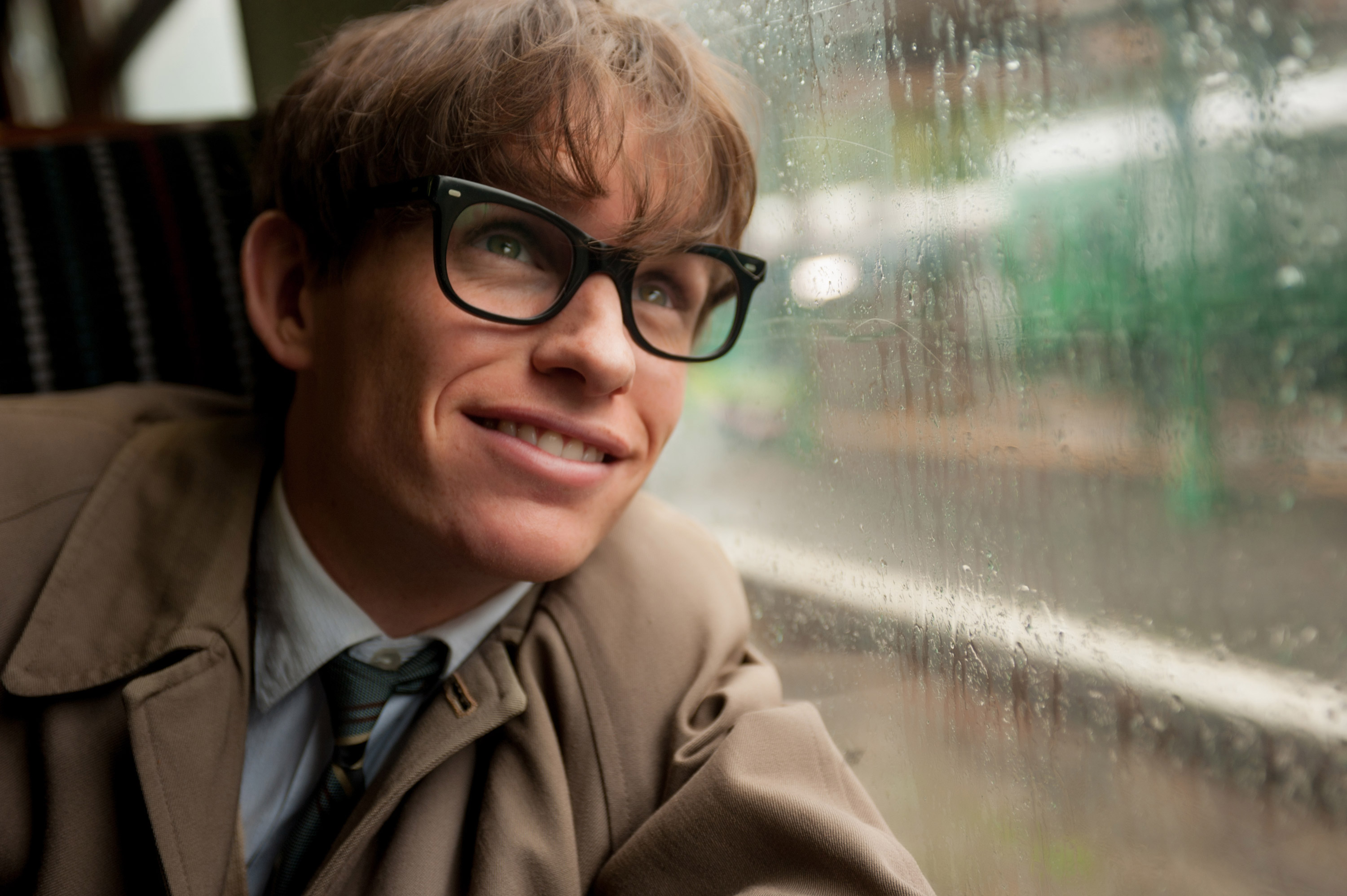
Eddie Redmayne

Despite the growing possibility that Michael Keaton would take the Oscar, this was a great result that saw Redmayne overjoyed by his win and giving praise to everyone in sight. Presented by Cate Blanchett.

Best Performance by an Actress in a Leading Role

Marion Cotillard – Two Days, One Night; Felicity Jones – The Theory of Everything; Julianne Moore – Still Alice; Rosamund Pike – Gone Girl; Reese Witherspoon – Wild
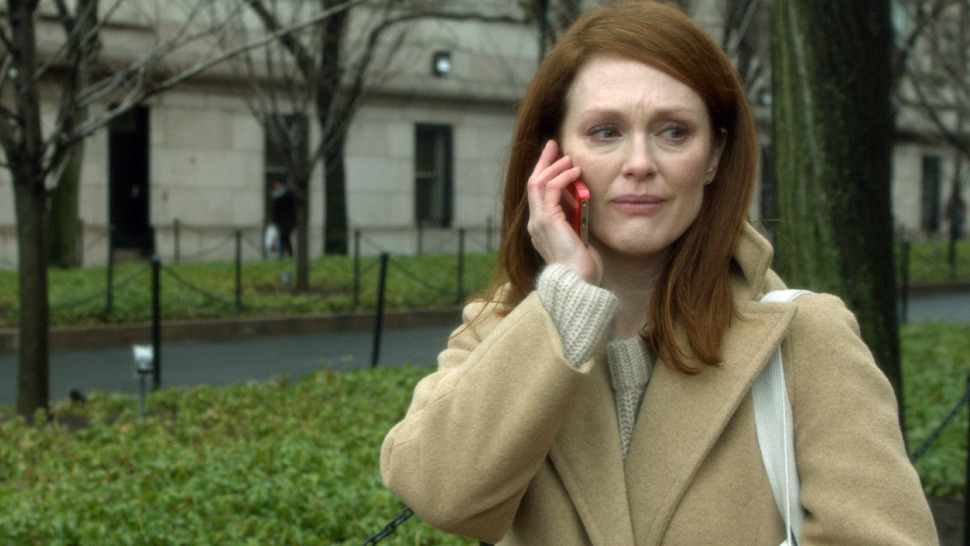
Julianne Moore

As with the BAFTAs Moore won but both Jones and Cotillard gave better performances. However, her speech acknowledged her co-nominees, and then she thanked pretty much everyone connected with the movie, before mentioning Alzheimer’s and thanking her family. Presented by Matthew McConaughey.

Best Motion Picture of the Year

American Sniper; Birdman or (the Unexpected Virtue of Ignorance); Boyhood; The Grand Budapest Hotel; The Imitation Game; Selma; The Theory of Everything; Whiplash

Birdman2

Iñárritu got everyone associated with the movie to come up on stage, and found even more people to thank, including Keaton who briefly showed how grateful he was to be there, before Iñárritu rounded things off by making a short political speech about Mexican immigration. Presented by Sean Penn.

And so it was a tie between Birdman or (the Unexpected Virtue of Everything) and The Grand Budapest Hotel with four wins each. With a few unexpected results amid all the predictable ones. The show as a whole became less and less interesting as it went on and Harris’s initial enthusiasm seemed to waver until even some of his jokes weren’t getting a laugh (though his predictions provided some amusement, even if they arrived too late). And the most valuable award of the evening? The Lego Oscars of course.

Share this:

  • Click to share on X (Opens in new window) X
  • Click to share on Facebook (Opens in new window) Facebook
  • More
  • Click to print (Opens in new window) Print
  • Click to email a link to a friend (Opens in new window) Email
Like Loading...

Gone Girl (2014)

09 Thursday Oct 2014

Posted by dullwood68 in Movies

≈ 1 Comment

Tags

Amazing Amy, Ben Affleck, David Fincher, Drama, Gillian Flynn, Literary adaptation, Marital problems, Murder, Neil Patrick Harris, Relationships, Review, Rosamund Pike, Thriller, Unhappy marriage

Gone Girl

D: David Fincher / 149m

Cast: Ben Affleck, Rosamund Pike, Neil Patrick Harris, Tyler Perry, Carrie Coon, Kim Dickens, Patrick Fugit, David Clennon, Lisa Banes, Missi Pyle, Emily Ratajkowski, Casey Wilson, Lola Kirke, Boyd Holbrook, Sela Ward, Scoot McNairy

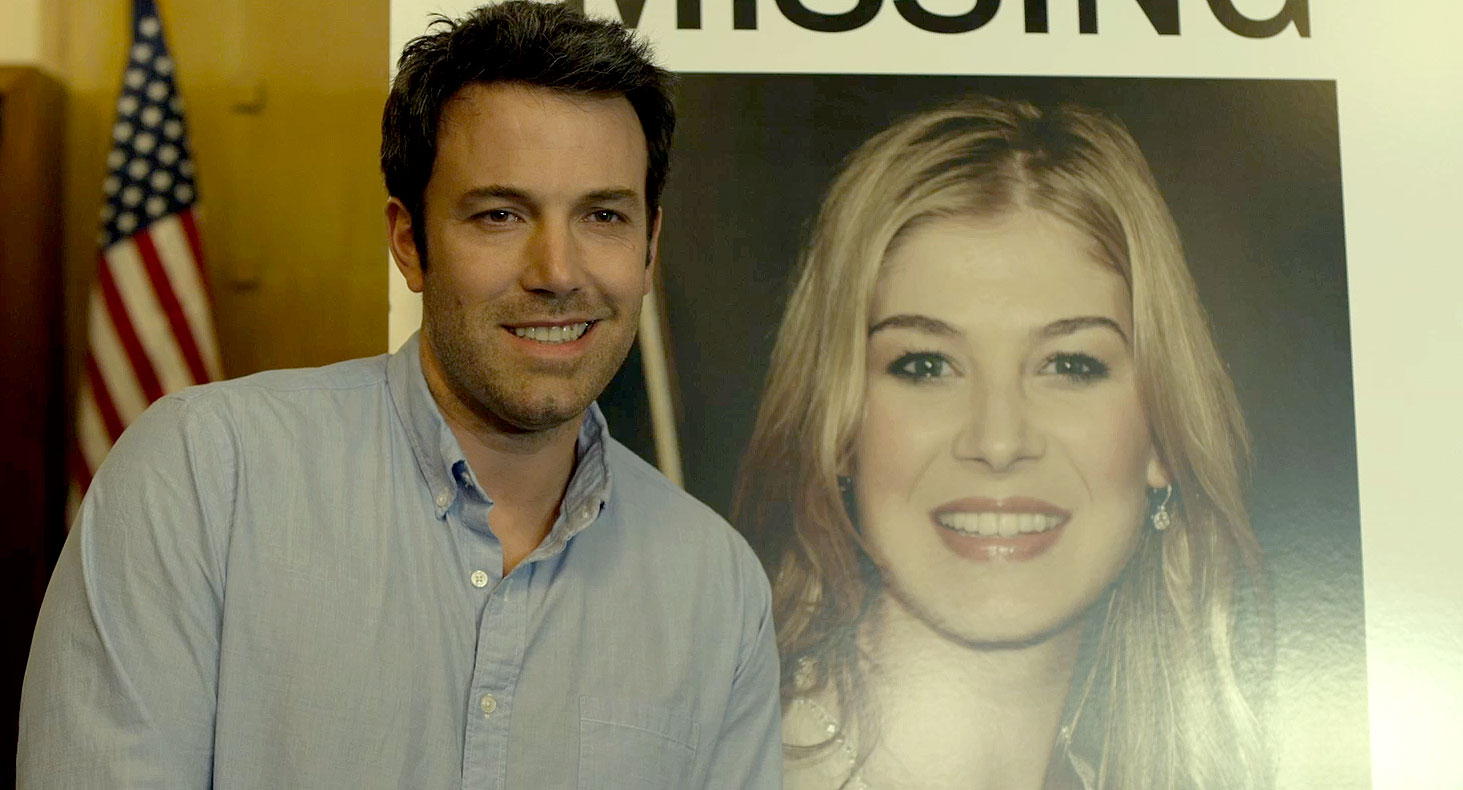
One morning in July, Nick Dunne (Affleck) comes home to find signs of a violent struggle and his wife, Amy (Pike), missing.  He calls the police and when they arrive, Detective Boney (Dickens) and Officer Gilpin (Fugit), soon find further evidence that something bad has happened.  Soon, Amy’s face is everywhere, and while it’s assumed at first that she’s been abducted, Nick’s behaviour doesn’t ring true and he becomes a suspect in what may be his wife’s death.  With evidence building up against him, Nick and his sister Margo (Coon) try to figure out what’s going on, but they’re stumped at every turn.  It’s only when they make a startling discovery in a woodshed on Margo’s property that they begin to realise what’s really happening.

At this point in the movie, as well as in Gillian Flynn’s original novel, there is a major plot twist, and both incarnations of the story begin to move in a new direction, opening out what is a fairly claustrophobic small-town mystery into something that strains credulity and begins to founder under the weight of its attempts to be cleverer than it needs to be.  There are many, many problems with the plot against Nick Dunne, not least Nick’s conveniently inappropriate responses in front of the police and the media, but also the introduction of Amy’s diary.  This offers a disjointed view of Nick and Amy’s marriage that’s meant to put doubts in the minds of the audience as to Nick’s innocence, but which has its effectiveness rendered null and void by the aforementioned plot twist.

It’s not unusual to watch a thriller and find yourself questioning the logic of what’s happening, but with Gone Girl it’s a constant process.  There’s little doubt that Flynn’s tale of marital discord has a degree of cultural relevancy, and her examination of the hidden duplicities and feelings within a marriage is sharper than expected, but ultimately, what we’re talking about here is an above averagely presented potboiler that marries trenchant observations on the media and modern marriage with more traditional thriller elements, and which muddles its way through to an ending which can be seen as either depressingly nihilistic or just desserts for a character – Nick – who has been outclassed from the beginning (though it seems at first glance that it’s all happening because the person doing it all really holds a grudge).

Gone Girl - scene

What happens in the movie’s second half, as Nick attempts to regain control of his life, and defend himself from the police and the media, is confidently arranged and presented by Fincher, but with what the audience knows is happening elsewhere, the movie maintains its measured, effective pacing but at the expense of the tension that’s been built up before.  It’s not the movie’s fault; it is, after all a very faithful adaptation by Flynn of her own novel, and Fincher seems happy to go along with the twists and turns and her reliance on dramatic licence to steer her characters through.  The weaknesses that plague the second half of the novel are present in the movie, and have the same effect: they make everything too unbelievable, and lead to a denouement that will either have audiences who haven’t read the novel shaking their heads in disbelief and asking, “Is that it?”, or audiences who have read the novel shaking their heads in disbelief and asking, “Is that still it?”

So – is Gone Girl then a bad movie?  The answer is very definitely No.  In Fincher’s hands, Gone Girl overcomes it’s cod-psychological thriller origins to become a dark, unsettling movie that picks at the conventional notions of love and marriage and finds murky, troubled waters flowing just below the surface.  As an examination of how two people can fall out of love with each other so easily, and be so ready to hurt each other in the process, the movie scores on all counts.  Nick and Amy, once so right for each other, are now adversaries, both looking to come out on top.  It’s an unfair fight; after all, if Nick was a box-cutter, he’d be the last one you’d use to open up something (he’s just not that sharp).  But Amy is sharp, smart as a whip in fact.  She’s Amazing Amy, the ultimate version of herself that her parents created when she was a little girl, a prodigy who always excels, who always ends up the winner, just because she’s Amazing Amy.  (Amy has always been in competition with her literary alter-ego, but the movie only mentions it in passing, while the novel explores the idea in greater, and more rewarding, depth.  It’s important to take in, though.)

Fincher excels at fleshing out the characters.  Nick is smug and stupid and reckless and self-satisfied and callow and foolish, and he has no idea how idiotically he behaves.  He’s like Bambi in a hunter’s sights, a prize just waiting to be claimed.  Affleck gives perhaps his best performance in years, earning our initial sympathy then dashing it to the ground in one superbly orchestrated scene that pulls the rug out from under the audience with undisguised pleasure.  Nick is twitchy, nervous, anxious, panicky – all the things you’d expect when someone is increasingly viewed as having killed their wife, but Affleck never puts a foot – or an inappropriate grin – wrong, imbuing Nick with an easy-to-warm-to naïveté that hardens as the movie plays out, his nervous energy transformed into a need for redemption in the public’s eye.  As mentioned before, Nick is a frustratingly obtuse character, but Affleck makes it a positive.  Even when Nick is doing or saying something witless, like posing with a woman for a selfie, it’s witless because it’s part of his nature, his way of dealing with people.  He’s like a puppy: he just wants to be loved.

Gone Girl - scene2

Conversely, Amy has always been loved, her parents’ books about her excelling alter-ego having made her treasured by default.  But that affection comes with an expectation that everyone around Amy will feel the same way about her, and if she’s in a relationship then it’s all or nothing, her way or no way.  Pike is a revelation here: as we learn more and more about Amy, she reveals more and more of the fractured person Amy really is.  It’s a role that would test any actress, but Pike – who probably wasn’t most people’s first choice for the part – claims the role as her own and pulls off a devastating performance.  She’s an actress who shows everything with her eyes; watch those and you’ll know everything her character is thinking and feeling, and some things you might not want to know.  She complements Affleck’s performance superbly, and she even manages to make some of Flynn’s more tortured dialogue sound appropriate and convincing.

In support, Dickens is excellent as the detective who never feels entirely satisfied with the way things keep happening, her experience telling her that there’s more going on than meets the eye.  As one of Amy’s old boyfriends, Desi Collings, Harris is awkwardly emotional and manipulative at the same time, the kind of creepy paramour most women would run a mile from.  Coon offers solid support as Nick’s sister but the role is  stereotypically rendered: she believes in him no matter what, even when he does something really stupid.  And Perry – as Nick’s lawyer, Tanner Bolt – has fun with a role that could have done with a bit more bluster, and he provides some much needed levity from the seriousness of the situation.

Marshalling the production into something much greater than its origins, though, is Fincher, a director able to elevate any material he’s given – save Alien³ (1992) – and make it riveting to watch.  In hand with cinematographer Jeff Cronenweth, Fincher makes Gone Girl an impressively visual experience, with shots and images that linger in the memory, and never so cleverly as with Nick and Amy’s home, a large, airy property that serves to highlight how far apart from each other they actually are.  Fincher also takes the more outlandish aspects of Flynn’s story and makes them more credible (though even he’s powerless to override the flimsy psychology that underpins the ending), and he makes the audience want to know what happens next, even if it might be obvious.  With two commanding central performances as well, Gone Girl cements Fincher’s reputation even further, and if at some point down the road Flynn decides to revisit Nick and Amy’s marriage, there shouldn’t be any question as to who should direct the movie version.

While it may divide some audiences – especially those who like their endings to be unequivocal (although this is, in its way) – Gone Girl is nonetheless superior movie-making, and should be regarded as such.  Fincher shows a complete understanding of the characters and their motivations, and delivers one of the most unexpectedly energised movies of the year.  It’s a thriller, yes, but at its heart it’s a movie about the expectations of love and the slow decay of a relationship, where passion turns to pain and love turns to hate.  And it’s relentless.

Rating: 8/10 – the script’s deficiencies knock this one down a point, but this is still very impressive stuff indeed; a taut, engrossing thriller that impresses with every scene, Gone Girl is that rare movie that grips the audience despite its faults and becomes a movie that everyone will want to talk about afterwards.

Share this:

  • Click to share on X (Opens in new window) X
  • Click to share on Facebook (Opens in new window) Facebook
  • More
  • Click to print (Opens in new window) Print
  • Click to email a link to a friend (Opens in new window) Email
Like Loading...

A Million Ways to Die in the West (2014)

04 Wednesday Jun 2014

Posted by dullwood68 in Movies

≈ Leave a comment

Tags

Amanda Seyfried, Charlize Theron, Comedy, Gunfights, Liam Neeson, Neil Patrick Harris, Old Stump, Outlaw, Review, Romance, Seth MacFarlane, Sheep farmer, The Old West, Western

Million Ways to Die in the West, A

D: Seth MacFarlane / 116m

Cast: Seth MacFarlane, Charlize Theron, Amanda Seyfried, Liam Neeson, Giovanni Ribisi, Neil Patrick Harris, Sarah Silverman, Christopher Hagen, Wes Studi, Matt Clark, John Aylward, Evan Jones

It’s 1882, and on the edge of the wild frontier is the town of Old Stump, a place that epitomises the daily fight for survival, where “everything that isn’t you, wants to kill you”.  So believes Albert Stark (MacFarlane), a sheep farmer with low self esteem and a girlfriend, Louise (Seyfried) who dumps him after he chickens out of a gunfight.  Hurt, angry and depressed, Albert hides away at his farm until his best friend, Edward (Ribisi) persuades him to come back into town and try and win back Louise.  It soon becomes clear though that Louise has moved on, and she’s now seeing smarmy moustache salesman Foy (Harris).  Meanwhile, vicious outlaw Clinch Leatherwood (Neeson), riding nearby on his way to rob a stagecoach with his gang, decides to keep his wife, Anna (Theron) out of harm’s way and tells her to hide out in Old Stump until he can come back for her.

When a fight breaks out in Old Stump’s saloon, Albert saves Anna from being injured and a friendship develops between them.  He tells her about Louise and Anna agrees to help Albert win her back.  At the County Fair, Albert’s attempts to make Louise jealous by pretending Anna is his new girlfriend backfires when he ends up challenging Foy to a gunfight in a week’s time.  Albert has never fired a gun before and proves to be the worst shot in the world, but with Anna teaching him he slowly improves.  As the week progresses, Albert grows in confidence, and he and Anna begin to fall in love.  When Clinch comes to Old Stump he learns that Anna has been seen kissing another man, and he makes it clear that unless the man in question meets him at high noon the next day, he’ll keep killing the townspeople until he does.

Anna is forced to reveal Albert’s identity to Clinch.  She gets away from him and warns Albert who runs away.  An encounter with Cochise (Studi) and some serious peyote reveals Albert’s true courage and he returns to town to face Clinch and go through with the gunfight.

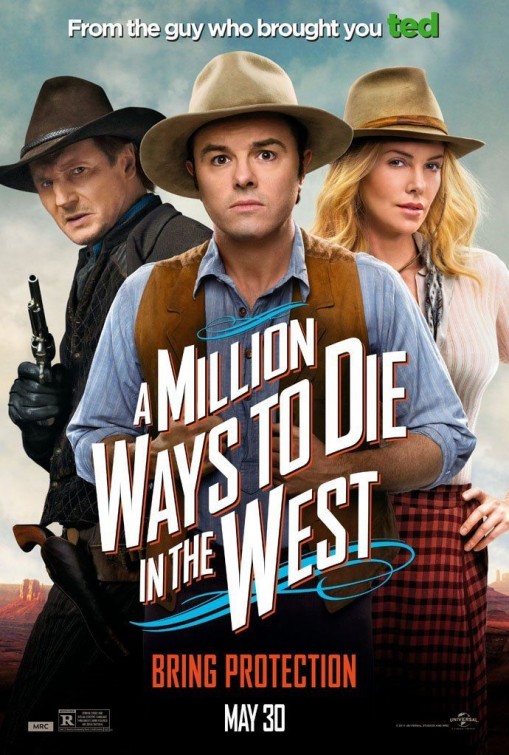
A Million Ways to Die in the West

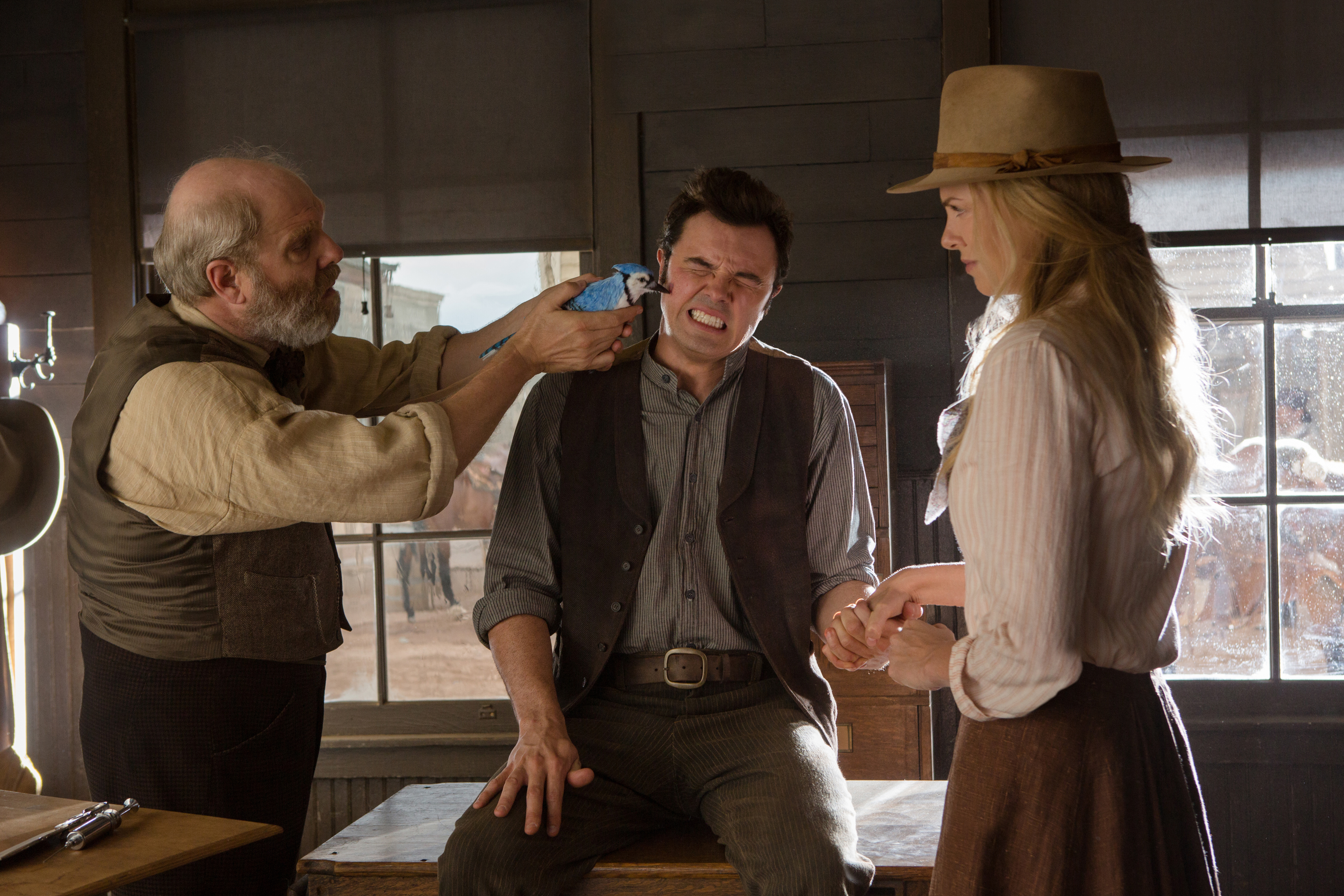
As you’d expect from a movie starring, and written and directed by, Seth MacFarlane, A Million Ways to Die in the West does its best to raise big laughs, and there are plenty of laugh out loud moments that are either inspired or just plain funny (the movie’s best gag is also its most contentious, the Runaway Slave Shooting Gallery).  But there are also too many occasions when the humour falls flat, though to be fair it’s the attempts at injecting modern, gross-out gags into the mix that generally don’t work (except for one priceless combination of sound effect and line of dialogue that sounds like an outtake from Family Guy).  Albert’s claim that the West is a horrible place to live in is reinforced by some great sight gags, and Foy’s need for a hat at one point is a joy to watch.  And then there’s Edward’s girlfriend Ruth (Silverman), a prostitute who believes they shouldn’t have sex until they’re married, but who sleeps with around ten men each day (when things are slow).  All these aspects help to make A Million Ways to Die in the West one of the most entertaining comedies of recent years (though your appreciation for MacFarlane’s line in humour will go some way to determining that).

What does come as a surprise is MacFarlane’s handling of some of the other elements.  The romance between Albert and Anna is well thought out and handled with care, making it quite affecting, and MacFarlane ups his game during these scenes, matching Theron for soulfulness and charm.  Their romance is the heart of the movie and MacFarlane takes more care with these scenes than he does with most of the comedy, and proves himself a better director here than elsewhere.  He’s matched by Theron – who’s clearly enjoying herself – and even though the movie slows down a bit to accommodate this particular subplot, there’s no harm done.  There’s also some beautiful location photography, with the glories of Monument Valley on display throughout, and the score encapsulates nods to all the great Western musical themes without descending entirely into pastiche.  MacFarlane obviously has a love of the genre, and even though he spends as much time spoofing it as he does celebrating it, that appreciation shines through and provides the soul of the movie.

He’s helped by a great cast.  Theron, as noted above, has a whale of a time.  She hasn’t made a comedy since Waking Up in Reno (2002) – though the uncharitable of you out there might opt for Æon Flux (2005) – but on this evidence casting directors need to be looking at her anew.  She has a lightness of touch that makes her comic timing quite subtle.  Seyfried, unfortunately, is given very little to do except hang on Harris’s arm, though the sight of Louise giving head to Foy’s moustache is definitely an image not to be forgotten.  Harris is an appropriately hissable secondary villain, while Neeson plays it straight as the dastardly Clinch.  As the “virginal” lovers, Edward and Ruth, Ribisi and Silverman are given plenty of opportunities to shine as all good sidekicks should be, and there’s a number of cameos that add to the overall feel good vibe that MacFarlane engenders from start to finish (one in particular, featuring a character from another movie series altogether, is an unexpected delight).

On the minus side, and despite all the positives, MacFarlane’s script is in need of some judicious pruning, and as a result the movie is uneven and the various elements don’t always gel.  Scenes overrun, while others feel in need of further development, as if MacFarlane has thought of a great idea but isn’t sure where to take it; the end result is an addition to the movie that doesn’t feel right (the hallucination sequence toward the end is a good case in point).  Again, there are too many jokes that don’t work, or seem forced, and while the cast all acquit themselves well, there are too many occasions when they’re foundering trying to make a joke work.  Also, the last third plays much as if MacFarlane hadn’t quite worked out the ending, and there’s an air of settlement about the whole thing, as if it was the best conclusion he could think of.  Considering the attention given to the build-up, it’s a major disappointment (and to make matters worse, MacFarlane adds an unnecessary explanation into the mix as well).

Rating: 7/10 – there’s more to like here than not, but a lot will depend on your tolerance for MacFarlane’s sense of humour; not quite the edgy, smut-filled laugh-fest you might be expecting, and with a bigger heart as well, and topped off by a great cast clearly entering into the spirit of things (and we need more Westerns anyway).


Share this:

  • Click to share on X (Opens in new window) X
  • Click to share on Facebook (Opens in new window) Facebook
  • More
  • Click to print (Opens in new window) Print
  • Click to email a link to a friend (Opens in new window) Email
Like Loading...

Blog Stats

  • 486,761 hits

Recent Posts

  • 10 Reasons to Remember Bibi Andersson (1935-2019)
  • Fantasia (1940)
  • Dances With Wolves (1990) – The Special Edition
  • Kiss of the Spider Woman (1985)
  • The Three Musketeers (1973)

Top Posts & Pages

  • Lost for Life (2013) - Another Look
    Lost for Life (2013) - Another Look
  • Lost for Life (2013)
    Lost for Life (2013)
  • About
    About
  • Exposed (2016)
    Exposed (2016)
  • Cardboard Boxer (2016)
    Cardboard Boxer (2016)
  • A Brief Word About La La Land (2016)
    A Brief Word About La La Land (2016)
  • The Monuments Men (2014)
    The Monuments Men (2014)
  • BFI London Film Festival 2015
    BFI London Film Festival 2015
  • A Brief Word About Netflix Original Comedies
    A Brief Word About Netflix Original Comedies
  • Removal (2010)
    Removal (2010)
Follow thedullwoodexperiment on WordPress.com

Blogs I Follow

  • Rubbish Talk
  • Film 4 Fan
  • Fast Film Reviews
  • The Film Blog
  • All Things Movies UK
  • Interpreting the Stars
  • Let's Go To The Movies
  • Movie Reviews 101
  • TMI News
  • Dan the Man's Movie Reviews
  • Film History
  • Jordan and Eddie (The Movie Guys)

Archives

  • April 2019 (13)
  • March 2019 (28)
  • February 2019 (28)
  • January 2019 (32)
  • December 2018 (28)
  • November 2018 (30)
  • October 2018 (29)
  • September 2018 (29)
  • August 2018 (29)
  • July 2018 (30)
  • June 2018 (28)
  • May 2018 (24)
  • April 2018 (21)
  • March 2018 (31)
  • February 2018 (25)
  • January 2018 (30)
  • December 2017 (30)
  • November 2017 (27)
  • October 2017 (27)
  • September 2017 (26)
  • August 2017 (32)
  • July 2017 (32)
  • June 2017 (30)
  • May 2017 (29)
  • April 2017 (29)
  • March 2017 (30)
  • February 2017 (27)
  • January 2017 (32)
  • December 2016 (30)
  • November 2016 (28)
  • October 2016 (30)
  • September 2016 (27)
  • August 2016 (30)
  • July 2016 (30)
  • June 2016 (31)
  • May 2016 (34)
  • April 2016 (30)
  • March 2016 (30)
  • February 2016 (28)
  • January 2016 (35)
  • December 2015 (34)
  • November 2015 (31)
  • October 2015 (31)
  • September 2015 (34)
  • August 2015 (31)
  • July 2015 (33)
  • June 2015 (12)
  • May 2015 (31)
  • April 2015 (32)
  • March 2015 (30)
  • February 2015 (37)
  • January 2015 (39)
  • December 2014 (34)
  • November 2014 (34)
  • October 2014 (36)
  • September 2014 (25)
  • August 2014 (29)
  • July 2014 (29)
  • June 2014 (28)
  • May 2014 (23)
  • April 2014 (21)
  • March 2014 (42)
  • February 2014 (38)
  • January 2014 (29)
  • December 2013 (28)
  • November 2013 (34)
  • October 2013 (4)

Blog at WordPress.com.

Rubbish Talk

Film 4 Fan

A Movie Blog

Fast Film Reviews

The Film Blog

The official blog of everything in film

All Things Movies UK

Movie Reviews and Original Articles

Interpreting the Stars

Dave Examines Movies

Let's Go To The Movies

Film and Theatre Lover!

Movie Reviews 101

Daily Movie Reviews

TMI News

Latest weather, crime and breaking news

Dan the Man's Movie Reviews

All my aimless thoughts, ideas, and ramblings, all packed into one site!

Film History

Telling the story of film

Jordan and Eddie (The Movie Guys)

Movie Reviews & Ramblings from an Australian Based Film Fan

Privacy & Cookies: This site uses cookies. By continuing to use this website, you agree to their use.
To find out more, including how to control cookies, see here: Cookie Policy
  • Subscribe Subscribed
    • thedullwoodexperiment
    • Join 481 other subscribers
    • Already have a WordPress.com account? Log in now.
    • thedullwoodexperiment
    • Subscribe Subscribed
    • Sign up
    • Log in
    • Report this content
    • View site in Reader
    • Manage subscriptions
    • Collapse this bar
 

Loading Comments...
 

    %d