• 10 Reasons to Remember…
  • A Brief Word About…
  • About
  • For One Week Only
  • Happy Birthday
  • Monthly Roundup
  • Old-Time Crime
  • Other Posts
  • Poster of the Week
  • Question of the Week
  • Reviews
  • Trailers

thedullwoodexperiment

~ Viewing movies in a different light

thedullwoodexperiment

Tag Archives: Paul Dano

The Ballad of Jack and Rose (2005)

06 Thursday Jul 2017

Posted by dullwood68 in Movies

≈ Leave a comment

Tags

1986, Camilla Belle, Catherine Keener, Commune, Daniel Day-Lewis, Drama, Father/daughter relationship, Paul Dano, Rebecca Miller, Review, Ryan McDonald

D: Rebecca Miller / 107m

Cast: Daniel Day-Lewis, Camilla Belle, Catherine Keener, Ryan McDonald, Paul Dano, Jason Lee, Beau Bridges, Jena Malone, Susannah Thompson

When Daniel Day-Lewis announced his retirement from acting recently, it’s likely that many of us felt the need to revisit one of his movies and remind ourselves of what a prodigious acting talent he possesses. That being said, it’s unlikely that anyone decided to watch The Ballad of Jack and Rose, a somewhat dour, slow-paced drama that he made between Gangs of New York (2002) and There Will Be Blood (2007). It’s a movie that benefits from Day-Lewis’s usual commitment to his roles, but aside from a grating Scottish-US accent and obvious weight loss late on, his role as Jack is perhaps his most low-key performance to date.

The movie is set in 1986 on an island off the East Coast of America (actually Prince Edward Island). Jack (Day-Lewis) is an environmentalist who first came to the island in 1967 when it was home to a hippie commune. Now, only Jack and his teenage daughter, Rose (Belle) live at the commune, which is largely rundown. Jack has a heart problem, and is trying to prepare Belle so that she can move on from the island and begin living her adult life. But Belle is resistant to the idea, and tells Jack that when he dies she will commit suicide because she doesn’t want to live without him. Looking for another way of getting Belle to interact with the wider world, Jack arranges for the woman he sees on the mainland, Kathleen (Keener), to come live on the island with them, and to bring her two children, Rodney (McDonald) and Thaddius (Dano), with her.

Their arrival upsets Belle immensely, and she withdraws from Jack while finding a friend in Rodney. Jack has a mission of his own to deal with, though, in the form of property developer Marty Rance (Bridges), who is building several houses on an adjoining part of the island. Jack is adamant that one of the houses is being built on government protected wetland, and he does his best to halt the building work. Meanwhile, the adjustments that everyone is having to make are beginning to cause friction. Rose’s feelings become murderous towards Kathleen while she also tries to get Rodney to sleep with her. He rebuffs her, and though Rose doesn’t like him, she turns to Thaddius. When Jack realises what she’s done he becomes angry with her, and tells Thaddius he has to leave the next day. But that night, an incident happens that causes Jack to rethink things in relation to Kathleen’s presence on the island, and following a further incident, his relationship with Belle.

For many, The Ballad of Jack and Rose will be about the performances rather than the story, with particular attention paid to Day-Lewis and Belle’s easy chemistry. After so many roles where Day-Lewis has been required to access his more macho side, seeing him here in a more vulnerable and sympathetic role acts as a reminder of both his range and his skill as an actor. Jack is a man of conviction who lacks self-doubt in the decisions he makes. And if Rose ever questions one of his decisions, his reply is the same: “new chapter”. He refers to the arrival of Kathleen and her sons as an experiment, but this is a sop to Rose’s animosity towards the idea, and he expects everything to go well without really thinking through the potential consequences. Day-Lewis portrays Jack’s oblique, trusting nature with a quiet yet detached authority that’s in keeping with the character’s attitude to those around him. He’s an instigator and a promoter but aside from Rose, he keeps himself aloof from other people. Even with Kathleen there’s a detachment that refuses to take her feelings about being on the island into consideration.
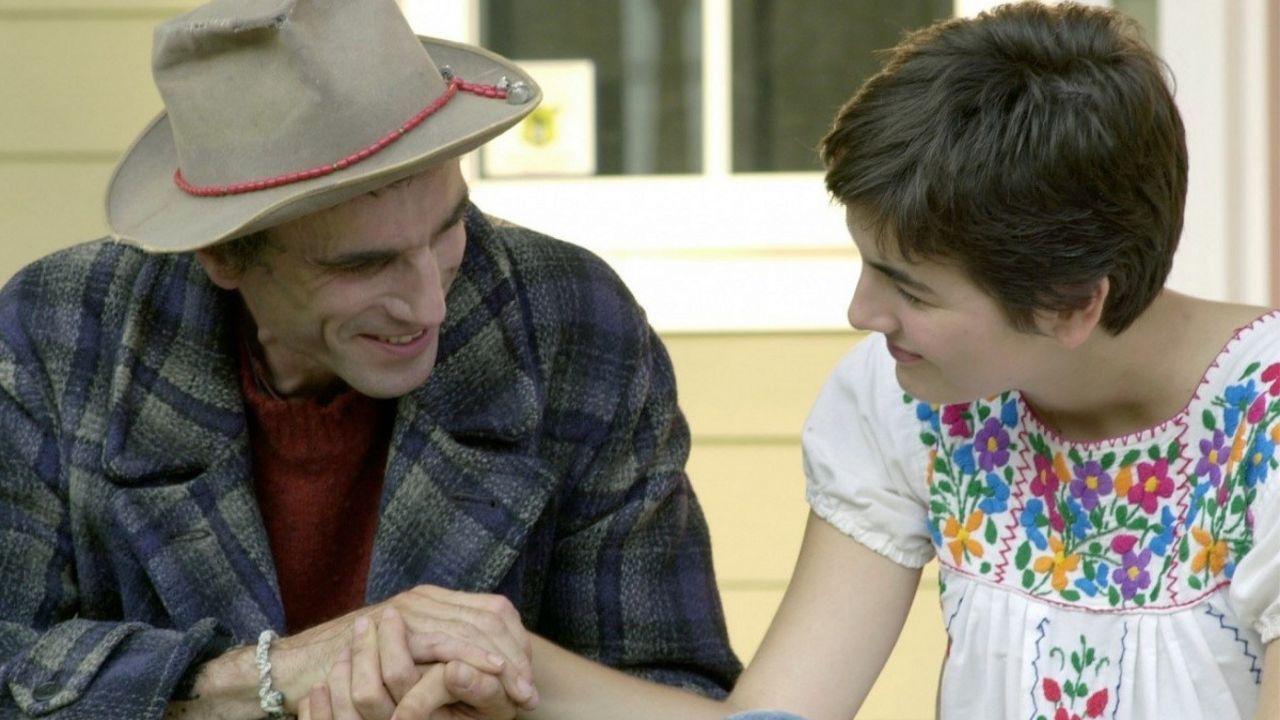
As Rose, Belle excels as Jack’s conflicted, emotionally inexperienced daughter whose need for his attention has grown into something unhealthy. Early on there are hints that Rose has inappropriate feelings for her father, but thanks to Belle’s ability to mask her character’s feelings whenever Rose is challenged about her behaviour, any suspicions remain fleeting. Her attraction for Rodney arises out of sexual jealousy, and her subsequent liaison with Thaddius is borne out of need and Rose’s capricious nature. Rose is very similar to her father in that she has assimilated his lack of foresight, and inability to consider any negative consequences for his actions. As such, she operates with no regard for other people’s feelings, and if she wants to punish him, even her father’s. As Rodney says to Rose at one point, “You’re innocent. Innocent people are just dangerous.” Belle’s portrayal of Rose as an emotionally stunted young woman whose development has stalled thanks to living in virtual isolation with her father is earnest and sagacious; it’s a shame her career hasn’t been more successful.

Other than McDonald’s sympathetic turn as Rodney, the rest of the performances aren’t as well crafted as those of Day-Lewis and Belle, but that’s due to Miller’s script and the ways in which she loses interest in them, picks them up, and then forgets all about them again. Miller’s script loses its focus from time to time, and as a result, it’s not as gripping in places as it might have been, and some of the arguments between Jack and Rose sound like the petulant exchanges you’d expect from teenagers. In the end, Miller resolves everything a little too neatly and in doing so requires Jack to make a complete volte face, something that Day-Lewis manages somehow to make convincing – even though in dramatic terms it isn’t. These and other aspects of the script’s construction stop the movie from being as compelling as it should be, and allied with Miller’s erratic framing, make this a movie experience that only partially succeeds in its somewhat limited ambitions.

Rating: 6/10 – if The Ballad of Jack and Rose had remained a two-hander throughout then it might have been able to offer better rewards for its audience, but as it is, it falls short of being entirely involving; too many distractions rob the movie of any lasting impact, leaving Day-Lewis and Belle’s contributions and Ellen Kuras’ splendid cinematography to save the day. (6/31)

Share this:

  • Click to share on X (Opens in new window) X
  • Click to share on Facebook (Opens in new window) Facebook
  • More
  • Click to print (Opens in new window) Print
  • Click to email a link to a friend (Opens in new window) Email
Like Loading...

Swiss Army Man (2016)

26 Monday Sep 2016

Posted by dullwood68 in Movies

≈ 1 Comment

Tags

Corpse, Daniel Kwan, Daniel Radcliffe, Daniel Scheinert, Drama, Manny, Mary Elizabeth Winstead, Paul Dano, Review

swiss-army-man

D: Daniel Scheinert, Daniel Kwan / 97m

Cast: Paul Dano, Daniel Radcliffe, Mary Elizabeth Winstead, Antonia Ribero, Timothy Eulich, Richard Gross

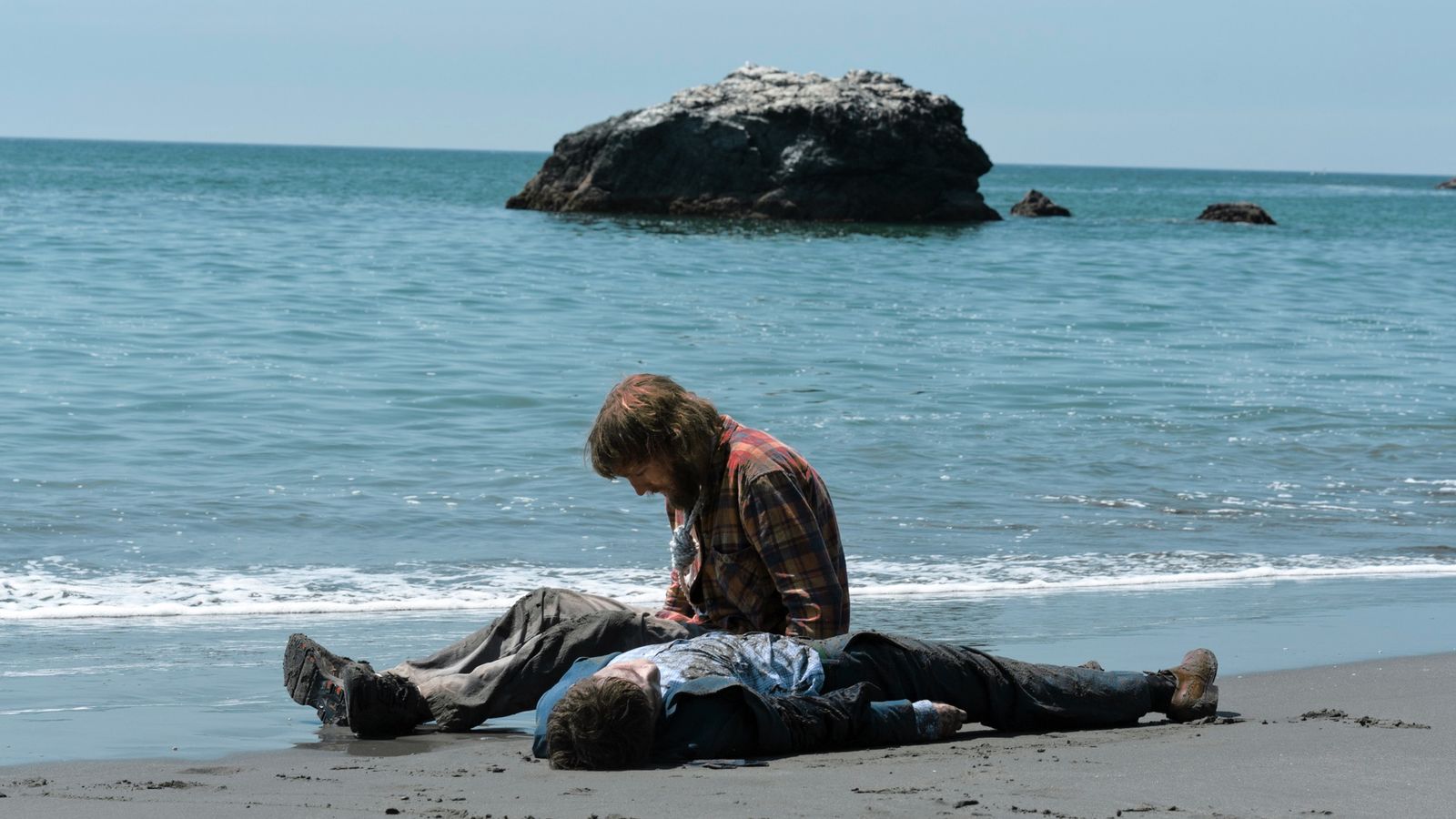
Stranded and alone on an island in the Pacific, Hank Thompson (Dano) has decided to end it all. He’s going to hang himself. But as he’s about to do so he spies a man’s body lying on the shoreline. Hoping the man (Radcliffe) is still alive, Hank forgets about killing himself and rushes to the man’s side. But he’s too late. The man looks as if he’s been in the water for too long, and it’s also not long before the accumulation of the gases inside his body begin to make themselves known. At first, Hank is annoyed and dismayed by the noises (and smells) coming from the man’s corpse, but when the tide starts to carry him back out to sea, Hank realises that the dead man’s flatulence is the answer to his being stranded on the island. Hank straddles the dead man’s back, points him away from the island and lets the escaping gases propel them both across the open ocean. And then he falls off…

Hank comes to on another beach, but this time he’s not on an island somewhere. He’s made it to US soil. And so has the dead man. Feeling a debt of gratitude to the dead man, Hank takes his corpse with him as he begins his trek back to civilisation. That first night he seeks shelter in a cave. The next morning, the corpse begins to speak, hesitantly at first, and then with increasing fluency. His conversation, though, is naïve and childlike, and Hank finds himself having to explain much about life and love and the nature of relationships. The corpse, who Hank names Manny, sees a picture of Hank’s “girlfriend”, Sarah (Winstead), on Hank’s mobile phone. He becomes obsessed with meeting her, so much so that to appease him, Hank constructs a hideout in the woods where he can teach Manny the best way to approach her, and how to talk to her without sounding stupid.

swiss-army-man-scene1

When they move on, they discover that they’ve been nearer to civilisation than either could have expected. And by chance they find themselves in Sarah’s back yard, where her daughter, Chrissy (Ribero) is playing. She’s curious about them at first, but Manny starts talking about being dead and then alive thanks to Hank. Chrissy becomes scared, and Sarah comes out to see what’s going on. When she sees Hank and Manny, she calls the police. In turn, EMT’s arrive to take away Manny’s body, and Hank’s dad (Gross), whom he’s distant from, also turns up. But Hank can’t bear to be separated from Manny, and so he makes one last desperate act of compassion, one that astounds everyone.

At one point in Swiss Army Man, Hank tells Manny that, “You can’t just say anything that comes into your head, that’s bad talking.” Judged against the things that Hank doesn’t say, it’s a self-serving rebuke that highlights just how uncomfortable he is with his own thoughts. If, as seems likely – and despite the best efforts of writers/directors Scheinert and Kwan to make it seem otherwise – that Hank is imagining Manny’s return to life as a way of coping with his own issues of being alone (and not just on the island), then Hank is arguing with himself. Or more accurately, attempting to persuade himself that he doesn’t have to be alone, and that he can find happiness in a relationship with Sarah. But where you might expect Manny to act as a deus ex machina, a source of resolution for Hank’s emotional fragility, what Scheinert and Kwan do in their script – and achieve thanks to two standout performances by Dano and Radcliffe – is make Manny the unbridled id to Hank’s more cautious super-ego.

swiss-army-man-scene2

It all makes for a fascinating and delicately balanced examination of one man’s lack of faith in himself. In the same way that we never learn how Hank came to be on the island in the first place, we never learn who Manny really is and why he came to be washed up there either. But it makes perfect sense if you accept that Manny’s physical self is real, and that his subsequent, miraculous ability to talk is due to Hank’s attempts to work out, or through, his own emotional distance from everyone. For Hank, Manny offers him a chance to examine his life and begin to make a difference. But Manny’s “approach” to life is the antithesis of how Hank approaches life; it’s no coincidence that Manny appears to be more “alive” than Hank.

By “resurrecting” Manny and making him Hank’s companion and eventual friend, Scheinert and Kwan have created a unique cinematic relationship. There’s a troubling sequence around the hour mark where Hank dresses up as Sarah in order to teach Manny what to say and how to behave around her. From this we can discern the exact nature of Hank’s relationship with Sarah, and also just how important it is to him. The sequence is troubling for the way in which Hank readily becomes Sarah, and readily accepts the off-kilter “courtship” that ensues. It all leads to a moment that is both uncomfortable for the audience and potentially cathartic for Hank, but he backs away at the last second, content still to grab defeat from the jaws of victory.

swiss-army-man-scene3

It’s been said elsewhere, but Swiss Army Man is definitely unlike any other movie you’ve ever seen. As if its basic premise isn’t bizarre enough, Scheinert and Kwan’s decision to include metaphysical and reality-bending aspects to the narrative makes it even more extraordinary, and so too is their decision not to shy away from the more singular side effects of being a corpse (“Manny, I think your penis is guiding us home”). As mentioned before, the movie benefits greatly from the performances of Dano and Radcliffe, both actors unsurprisingly committed to their roles and unsurprisingly affecting, and effective, as two halves of the same person. Dano’s offbeat acting style suits Hank immensely, his tremulous delivery and poignant facial expressions matched perfectly by Radcliffe’s mostly static gaze and conscience-free dialogue.

Aside from Dano and Radcliffe’s involvement, the movie has plenty else to recommend it, from the two Daniels’ sense of the absurdity of Hank’s situation and his decreasing mental stability, to the crisp, carefully composed cinematography of Larkin Seiple, a catchy indie soundtrack, and a deliciously tart sense of humour that helps alleviate the inherent darkness of the material. It’s not a perfect movie – amongst other things there are too many continuity problems for that – but it is one that brings its own rewards if you’re willing to go along with it. Scheinert and Kwan are to be congratulated for coming up with such an unusual, and diverting, cinematic experience.

Rating: 8/10 – a movie that defies easy categorisation – and for once, that’s a good thing – Swiss Army Man is likely to divide audiences, and be unapologetic for doing so; if you go with it then it’s an outlandish yet entertaining treat, but if you don’t then you’re missing out on one of the most original, inventive and surprising movies made in recent years, and one replete with enough fart jokes to keep anyone and everyone happy.

Share this:

  • Click to share on X (Opens in new window) X
  • Click to share on Facebook (Opens in new window) Facebook
  • More
  • Click to print (Opens in new window) Print
  • Click to email a link to a friend (Opens in new window) Email
Like Loading...

12 Years a Slave (2013)

10 Friday Jan 2014

Posted by dullwood68 in Movies

≈ 1 Comment

Tags

Benedict Cumberbatch, Chiwetel Ejiofor, Edwin Epps, Lupita Nyong'o, Michael Fassbender, Patsey, Paul Dano, Plantation, Review, Sarah Paulson, Slavery, Solomon Northup, Steve McQueen, True story, US history, Whipping

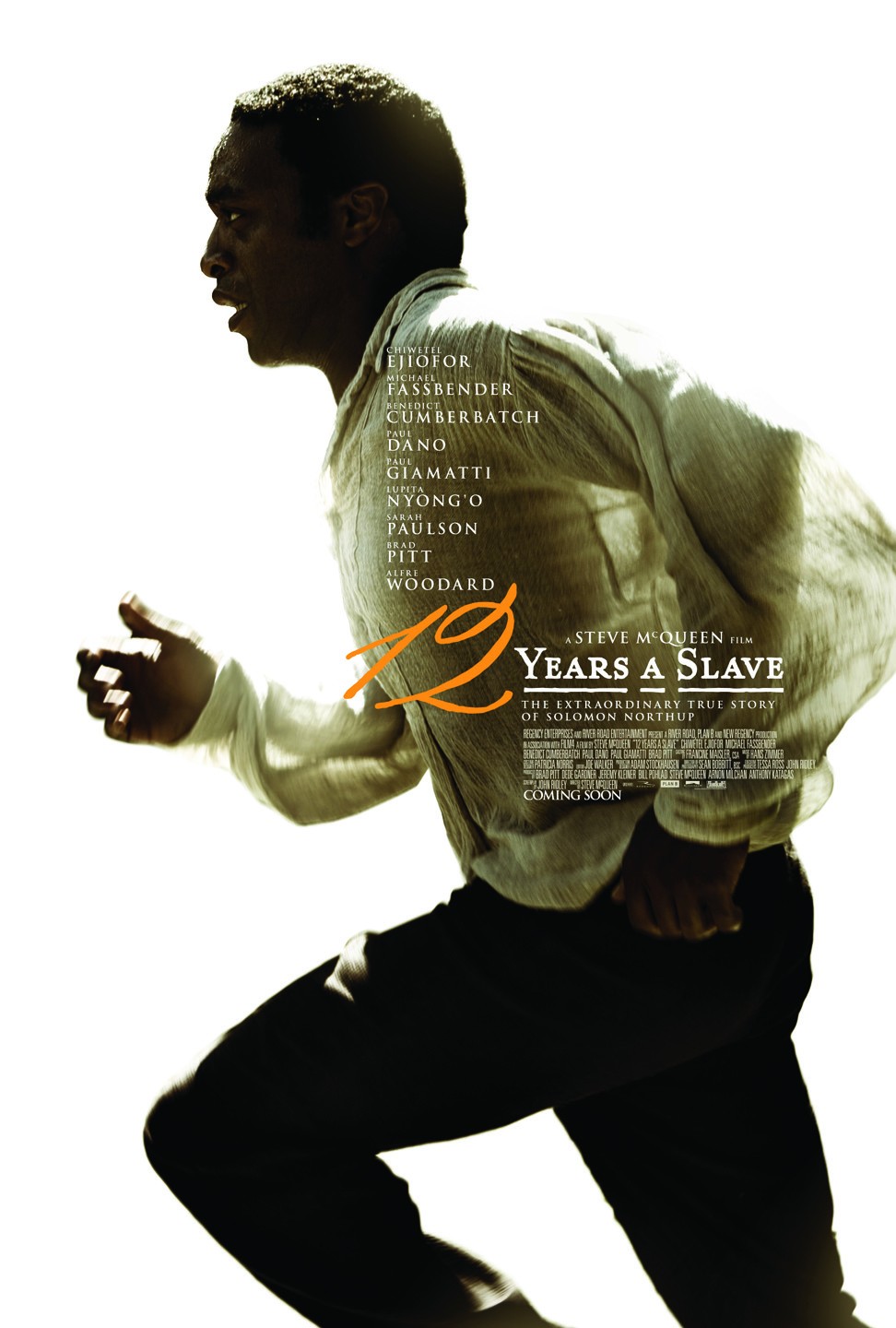
12 Years a Slave

D: Steve McQueen / 134m

Cast: Chiwetel Ejiofor, Michael Fassbender, Lupita Nyong’o, Benedict Cumberbatch, Paul Dano, Sarah Paulson, Adepero Oduye, Paul Giamatti, Garret Dillahunt, Brad Pitt, Alfre Woodard, Scoot McNairy, Taran Killam

In 2013 the movie that drew most people to the cinema was the third solo outing for Marvel’s high-tech reboot of the Tin Man, Iron Man 3. That movie was fun, a well-made piece of confectionery that was hyped, trailed and previewed to within an inch of its life. Enjoyable as it was though, it was still the equivalent of a Big Mac and fries, offering a quick fix for the Geek Squads and providing little or no nourishment for anyone not au fait with Marvel’s plan for Cinematic World Domination. But if 2013 is to be remembered as the year a man in a can was seen by more people than any other movie, what of that other way of remembering any given year: by the movie that was easily the best the year had to offer.

In some years, that “choice” has been easy. In 1930, All Quiet on the Western Front. In 1945, Les enfants du paradis. In 1962, Lawrence of Arabia. In 1974, The Godfather Part II. In 1993, Schindler’s List. And in 2013…a movie most of us won’t see until 2014. A movie called 12 Years a Slave.

Directed by McQueen from the account written by Solomon Northup, a free man living in New York with his wife and two children in 1841, 12 Years a Slave is a devastating account of one man’s abduction into slavery, and his subsequent experiences on the plantations of Louisiana. Northup is an accomplished musician, well-respected, and flattered when two members of a circus troupe approach him to join their company.  He journeys from New York to Washington with them only to wake up after a night’s drinking to find himself in chains and told he is now a slave; his name is also denied him and he is told he is to answer to Platt.  At first he finds himself at the mercy of (the ironically named) slave trader Freeman (Giamatti), until he is sold, along with a woman called Eliza (Oduye), to plantation owner Mr Ford (Cumberbatch).  Ford is in the process of adding extra buildings to his land, and has a master carpenter Tibeats (Dano) who oversees the construction. Northup impresses Ford with his engineering skills but soon makes an enemy of Tibeats.  Before long, Tibeats pushes Northup too far and Northup beats him with his own whip. Tibeats swears revenge against Northup and returns with two men; they proceed to hang Northup but are stopped by Ford’s overseer, Chapin (J.D. Evermore).  Although Chapin stops Northup from being killed, he leaves him hanging from the tree with his toes barely touching the ground to save himself from being strangled; it’s only when Ford returns at the end of the day that he is cut down.  But Ford’s leniency comes at a price: he must sell Northup on in order to save his plantation from Tibeats’ wrath.

Where Ford has been a considerate and compassionate man, Northup’s new owner, Edwin Epps is anything but.  He has his slaves  whipped if they don’t make the daily quota for picking cotton, and when his wife complains that he is paying too much attention to one of the female slaves, Patsey (Nyong’o), he tells her coldly that he will see the back of her before he will rid himself of Patsey.  Northup becomes Patsey’s confidante, and he does his best to keep Epps from bothering her, but it doesn’t always work.  It’s only when a carpenter named Bass (Pitt) comes to work on the plantation, and speaks of equality, that Northup takes courage and explains his situation.  Bass agrees to help him, and some time later, Northup is freed and reunited with his family.

12 Years a Slave - scene

From the outset, 12 Years a Slave grabs the attention and keeps its audience riveted.  The topic of slavery is one that has been only fitfully addressed in cinema, and while movies such as Amistad (1997), and Amazing Grace (2006) have taken a political approach to the issue, there hasn’t been a movie that has looked at it from both the financial side of things, and the actual day-to-day living experience.  Throughout the movie it’s made clear that slavery is a business, and a lucrative one for people such as the trader Freeman, and for the plantation owners who invest in slaves as a means of reaping huge profits.  Against this wellspring of money, a slave’s life is worth nothing at all, and the movie delivers this message on several occasions.  When Northup is on tiptoe trying not to hang, it’s heartbreaking to see the other slaves carry on with their tasks as if he isn’t there; only by going about their business can they add value to their lives.

12 Years a Slave is also quite graphic in its depiction of the violence endemic in slavery, with one on-screen whipping being truly horrifying, and its the casual nature of it all that the movie depicts so well, along with the hateful racism that fuelled so much of it.  Early on, before Northup is placed with Freeman, he is beaten with a paddle.  The scene is shocking both for what happens to Northup, and for the sustained nature of the beating.  Epps’s wife throws a decanter in Patsey’s face, her racism mixed with jealousy and injured pride.  There are other moments where violence escalates from nothing, and there is a palpable sense of the violent undercurrents that were prevalent during this period.  If the movie presents these aspects unflinchingly, then it is to show the full horror of the constant threat of injury or death that slaves experienced.  (And to anyone who feels these scenes were unnecessary or uncomfortable to watch, then you are missing the point.  The life of a slave was far worse than anything depicted here, and by showing us the things that we do see, the movie reinforces the fact that, so far removed from both those times and those circumstances as we are in our daily lives, we can easily fail to realise how terrible slavery actually was.)

Thankfully, in amongst the brutal violence and the despair there are quiet moments of hope to offset the horror.  Northup’s relationship with Patsey is affecting and desperately sad at the same time, and shows how two people can still retain a measure of their humanity despite existing under appalling conditions.  Thanks to both Ejiofor and Nyong’o, their scenes together are both emotionally charged and riveting viewing.

The heart of the film is Ejiofor’s towering performance, a career best that is breathtaking to watch as he depicts a man who somehow retains his dignity and his sense of self through twelve years of degradation and terror.  Ejiofor holds the attention in every scene he’s in, deflecting focus even from Fassbender, whose performance as Epps is mesmerising in its intensity.  The audience is drawn to Ejiofor as their moral compass and guide; without him, the movie would be a series of vignettes without a central point of reference.  He displays a clear understanding of the emotions that governed Northup’s reactions and response to his situation: the despair, the anger, the resignation to his plight, the fear, the barely acknowledged hope of regaining his freedom, the sadness, the sense of loss, and most effective of all, the will to survive.  It’s a magnificent achievement.

As already mentioned, Fassbender is on brilliant form as the tortured, torturing Epps, adding layers to a character who could have been portrayed more matter-of-factly and with less attention to nuance and interpretation.  His performance is mercurial, adding a sense of uncertainty to Epps that makes his unpredictable nature more dangerous.  His scenes with Ejiofor are akin to an acting masterclass.  In the various supporting roles, Dano stands out as the mealy-mouthed, insecure Tibeats, all puffed-up pride and coiled hostility, while Cumberbatch continues to impress as the fair-minded, socially conscious Ford.  Paulson also impresses as Mistress Epps, her eyes never once betraying any emotion other than disgust.  And making her feature debut, Nyong’o is superb as the object of Epps’s lust, imbuing Patsey with an inner strength and determination that offsets the cruelty she receives at the hands of Epps and his wife.

This is McQueen’s third feature – after Hunger (2008) and Shame (2011) – and serves to reinforce how talented a director he is.  His control of the material is confident and assured, and he elicits strong performances from everyone in the cast.  In conjunction with cinematographer Sean Bobbitt, McQueen places the camera in exactly the right place in each scene, framing the action expertly and with close attention to the physical and emotional requirements of each set-up.  His decision to make 12 Years a Slave has proved to be a wise one, and the way in which he’s overcome the difficulties inherent in telling such a complex story is compelling.

12 Years a Slave is a harrowing, disturbing look at a shameful period in US history, and while some people might say that we don’t need to see the barbarity of the times to know it was evil, a reminder as powerful as this one is should always be welcome.  With stand-out performances, an insightful, intricate script courtesy of John Ridley, and a score by Hans Zimmer that perfectly supports the emotional and dramatic moments in the film, 12 Years a Slave is a movie deserving of everyone’s attention.

Rating: 9/10 – a modern masterpiece, with much to say about the nature of evil as the will to survive it; an engrossing, deeply moving account of one man’s journey through a contemporary hell and his eventual salvation.

Share this:

  • Click to share on X (Opens in new window) X
  • Click to share on Facebook (Opens in new window) Facebook
  • More
  • Click to print (Opens in new window) Print
  • Click to email a link to a friend (Opens in new window) Email
Like Loading...

Blog Stats

  • 486,637 hits

Recent Posts

  • 10 Reasons to Remember Bibi Andersson (1935-2019)
  • Fantasia (1940)
  • Dances With Wolves (1990) – The Special Edition
  • Kiss of the Spider Woman (1985)
  • The Three Musketeers (1973)

Top Posts & Pages

  • Lost for Life (2013) - Another Look
    Lost for Life (2013) - Another Look
  • Lost for Life (2013)
    Lost for Life (2013)
  • About
    About
  • BFI London Film Festival 2015
    BFI London Film Festival 2015
  • Mr. Topaze (1961)
    Mr. Topaze (1961)
  • Hunt for the Wilderpeople (2016)
    Hunt for the Wilderpeople (2016)
  • Shock and Awe (2017)
    Shock and Awe (2017)
  • Cardboard Boxer (2016)
    Cardboard Boxer (2016)
  • Billy Lynn's Long Halftime Walk (2016)
    Billy Lynn's Long Halftime Walk (2016)
  • Winter's Tale (2014)
    Winter's Tale (2014)
Follow thedullwoodexperiment on WordPress.com

Blogs I Follow

  • Rubbish Talk
  • Film 4 Fan
  • Fast Film Reviews
  • The Film Blog
  • All Things Movies UK
  • Interpreting the Stars
  • Let's Go To The Movies
  • Movie Reviews 101
  • TMI News
  • Dan the Man's Movie Reviews
  • Film History
  • Jordan and Eddie (The Movie Guys)

Archives

  • April 2019 (13)
  • March 2019 (28)
  • February 2019 (28)
  • January 2019 (32)
  • December 2018 (28)
  • November 2018 (30)
  • October 2018 (29)
  • September 2018 (29)
  • August 2018 (29)
  • July 2018 (30)
  • June 2018 (28)
  • May 2018 (24)
  • April 2018 (21)
  • March 2018 (31)
  • February 2018 (25)
  • January 2018 (30)
  • December 2017 (30)
  • November 2017 (27)
  • October 2017 (27)
  • September 2017 (26)
  • August 2017 (32)
  • July 2017 (32)
  • June 2017 (30)
  • May 2017 (29)
  • April 2017 (29)
  • March 2017 (30)
  • February 2017 (27)
  • January 2017 (32)
  • December 2016 (30)
  • November 2016 (28)
  • October 2016 (30)
  • September 2016 (27)
  • August 2016 (30)
  • July 2016 (30)
  • June 2016 (31)
  • May 2016 (34)
  • April 2016 (30)
  • March 2016 (30)
  • February 2016 (28)
  • January 2016 (35)
  • December 2015 (34)
  • November 2015 (31)
  • October 2015 (31)
  • September 2015 (34)
  • August 2015 (31)
  • July 2015 (33)
  • June 2015 (12)
  • May 2015 (31)
  • April 2015 (32)
  • March 2015 (30)
  • February 2015 (37)
  • January 2015 (39)
  • December 2014 (34)
  • November 2014 (34)
  • October 2014 (36)
  • September 2014 (25)
  • August 2014 (29)
  • July 2014 (29)
  • June 2014 (28)
  • May 2014 (23)
  • April 2014 (21)
  • March 2014 (42)
  • February 2014 (38)
  • January 2014 (29)
  • December 2013 (28)
  • November 2013 (34)
  • October 2013 (4)

Create a free website or blog at WordPress.com.

Rubbish Talk

Film 4 Fan

A Movie Blog

Fast Film Reviews

The Film Blog

The official blog of everything in film

All Things Movies UK

Movie Reviews and Original Articles

Interpreting the Stars

Dave Examines Movies

Let's Go To The Movies

Film and Theatre Lover!

Movie Reviews 101

Daily Movie Reviews

TMI News

Latest weather, crime and breaking news

Dan the Man's Movie Reviews

All my aimless thoughts, ideas, and ramblings, all packed into one site!

Film History

Telling the story of film

Jordan and Eddie (The Movie Guys)

Movie Reviews & Ramblings from an Australian Based Film Fan

Privacy & Cookies: This site uses cookies. By continuing to use this website, you agree to their use.
To find out more, including how to control cookies, see here: Cookie Policy
  • Subscribe Subscribed
    • thedullwoodexperiment
    • Join 481 other subscribers
    • Already have a WordPress.com account? Log in now.
    • thedullwoodexperiment
    • Subscribe Subscribed
    • Sign up
    • Log in
    • Report this content
    • View site in Reader
    • Manage subscriptions
    • Collapse this bar
 

Loading Comments...
 

    %d