• 10 Reasons to Remember…
  • A Brief Word About…
  • About
  • For One Week Only
  • Happy Birthday
  • Monthly Roundup
  • Old-Time Crime
  • Other Posts
  • Poster of the Week
  • Question of the Week
  • Reviews
  • Trailers

thedullwoodexperiment

~ Viewing movies in a different light

thedullwoodexperiment

Tag Archives: Poland

Cold War (2018)

28 Friday Dec 2018

Posted by dullwood68 in Movies

≈ Leave a comment

Tags

Drama, France, Joanna Kulig, Lukasz Zal, Music, Pawel Pawlikowski, Poland, Review, Romance, Tomasz Kot

Original title: Zimna wojna

D: Pawel Pawlikowski / 88m

Cast: Joanna Kulig, Tomasz Kot, Borys Szyc, Agata Kulesza, Cédric Kahn, Jeanne Balibar, Adam Woronowicz

In the wake of World War II, and with Poland trying to establish a new identity for itself under Communist rule, Wiktor (Kot) and Zula (Kulig) meet at the musical academy where he is one of the directors, and she is a pupil. The academy has been set up as a training ground for performing musicians tasked with spreading Communist propaganda, but despite all the rules and restrictions that prohibit any kind of relationship between them, Wiktor and Zula fall in love. While on a foreign tour, they grab the opportunity of escaping to the West, but their plan means travelling separately, something that leads to both of them making decisions that affect their reunion. When they are eventually reunited in Paris, they renew their love affair while Zula is approached to become a recording artist. Jealousy and distrust begin to undermine their love for each other, and Zula becomes unhappy with her life in France. Looking for a solution to her problems, Zula makes an independent decision that has a far-reaching impact on both her life, and Wiktor’s also…

With Ida (2013), writer/director Pawel Pawlikowski made good on the promise hinted at in the four movies he’d made up ’til then, and showed that he was a movie maker of extraordinary skill and talent. In case anyone thought that movie might be a flash in the pan, here’s Cold War to prove them wrong. Loosely based on the experiences of his own parents, Pawlikowski’s ode to the power and perseverance of love is an impressive, heart-wrenching experience that has flashes of profundity and a clarity of purpose that is outstanding. Everything about Cold War has a note of authenticity about it, from the opening recitations of Polish folk songs, to the austere functionality of the academy and its rural surroundings, to the smoky clubs and bars of late Fifties Paris, and the heady milieu that gave birth to the cultural and artistic explosion that was beginning to make itself felt. But looking and sounding even more authentic is the relationship between Wiktor and Zula, an incandescent, tender, desperate, imploring, fiery, all-consuming romance that can only be sustained in bursts before it tears them apart. Pawlikowski shows the pain and the anguish they feel, and also the need for each other that drives them on, their love prompting them to make sacrifices for each other that may appear foolish to others, but which are true expressions of the depth of their love.
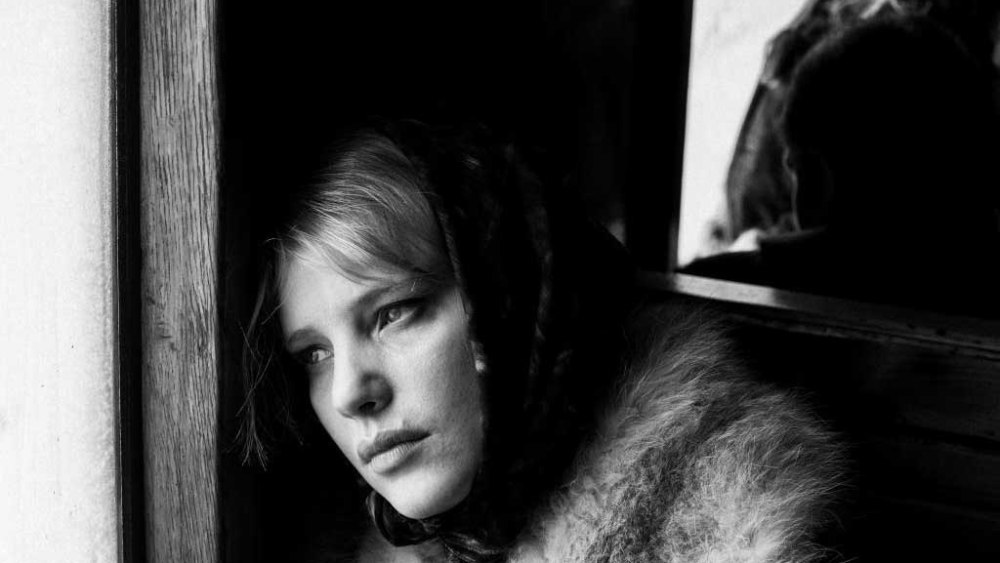
As with Ida, Pawlikowski has chosen to shoot Cold War in black and white, and the decision is yet another reason why he’s such a skilled cinematic interpreter and technician. Working again with DoP Lukasz Zal, Pawlikowski ensures the movie is often breathtaking to look at, whether we’re looking at wintry rural Polish landscapes, or the interior of the garret apartment where Wiktor and Zula live in Paris. Individual frames and compositions leap out, but they’re always in service to the material, and never feel gratuitous. This visual flare is matched by the flawless choice of music that enhances and enthralls, whether it’s the aforementioned (and melancholy sounding) Polish folk songs, or the jazz breakouts, or even the unexpected use of Rock Around the Clock. Pawlikowski melds it all together with a singular ease, tying the characters’ moods and emotions to the music, and enhancing the narrative so much and so effectively that the movie winds up feeling like a lost Sixties New Wave classic being given a long overdue, big screen re-issue. Kulig and Kot give powerful, indelible performances, highlighting their characters’ strengths and shortcomings with equal measures of sympathy and persuasion, and Pawlikowski rounds it all up with a final shot (and line) that is so affecting it almost takes the breath away. It’s simple, and it’s audacious, and it sums up the movie completely.

Rating: 9/10 – a prime contender for best movie of 2018, Cold War is a passionate, beautifully shot tale that exceeds expectations at every turn, and which provides ample rewards for the interested viewer; with this and Ida, Pawlikowski seems to have found his oeuvre, and on this form if he wants to make further features in a similar fashion and/or vein, then he absolutely should be allowed to do so.

Share this:

  • Click to share on X (Opens in new window) X
  • Click to share on Facebook (Opens in new window) Facebook
  • More
  • Click to print (Opens in new window) Print
  • Click to email a link to a friend (Opens in new window) Email
Like Loading...

Hurricane (2018)

11 Sunday Nov 2018

Posted by dullwood68 in Movies

≈ Leave a comment

Tags

David Blair, Drama, History, Iwan Rheon, Milo Gibson, Poland, RAF, Review, Stefanie Martini, True story, World War II

aka Hurricane: Squadron 303

D: David Blair / 108m

Cast: Iwan Rheon, Milo Gibson, Stefanie Martini, Marcin Dorociński, Krystof Hádek, Christopher Jaciow, Slawomir Doliniec, Radoslaw Kaim, Adrian Zaremba, Hugh Alexander, Nicholas Farrell, Rosie Gray

Having seen their country overrun by the Nazis, a number of Polish fighter pilots, including Jan Zumbach (Rheon) and Witold Urbanowicz (Dorociński), find their way to England where they join the Royal Air Force. It’s 1940, and Britain is suffering heavy casualties in the air, and is fast running out of both planes and pilots. With the RAF top brass unwilling to let them fly their best planes because of doubts about their skills and experience, it takes a while for the Poles to find a role in the War. Eventually, they form 303 Squadron, based at RAF Northolt aerodrome, and take to the skies during the Battle of Britain. Their courage and determination brings them aerial glory, and despite some resentment among some of the British pilots, the Poles soon find themselves highly regarded. Jan begins a relationship with a WAAF called Phyllis (Martini), but as the war continues and inevitably, his comrades are killed, Jan begins to experience an ambivalence about the war that sees him become angrier and more reckless…

Of the many stories to come out of World War II, the story of the Polish fighter pilots who served in the RAF is one of the more remarkable. In the first six weeks of combat, they claimed an unprecedented hundred and twenty six kills, and by the end of the war, 303 Squadron had the highest ratio of enemy aircraft destroyed to their own lost. With such a notable history, it’s a shame then that Hurricane resorts to lazy soap opera dramatics in telling the Poles’ story. The tone is set when we see Jan steal a plane in France in order to reach England: instead of being a perilous endeavour that could go wrong at any moment, it’s treated as something of a practical joke on Jan’s part. Good-natured banter ensues between the Poles while they wait to be put to good use, and only when the RAF top brass assign lucky Canadian John Kent (Gibson) to oversee their training. Rule-breaking and insubordination are the order of the day from then on, alongside skirmishes with British pilots who are brought in to be unpleasantly racist, something that’s heightened by Phyllis dumping her usual man (Alexander) in favour of Jan. It’s history perhaps, but played out in a distant, modern fashion that doesn’t suit the period.

While the movie does get darker as the war continues – and the Polish body count rises – we see flashbacks to the fates of Jan and Witold’s spouses at the hands of the Nazis. This sobering of the narrative is necessary but feels underwhelming; there’s always another soap opera moment waiting just around the corner, such as when Jan seeks to repay the hospitality of a working class family, only to find their home has been destroyed in a bombing raid (the inference is clear but Jan never actually checks to see if they’re dead or alive). Elsewhere, there’s a member of the squadron suffering from cowardice, plenty of stiff upper lip moments, and the strange sight of a book on Rudimentary Polish that’s the size of War and Peace. Thankfully the aerial dogfights rescue the movie from its self-inflicted doldrums, though the anonymity of the pilots in these sequences (despite as many cockpit close ups as possible), lessens the impact when one of them is killed. The cast are proficient without being asked to do too much, and TV veteran Blair does his best to cope with the few demands of Robert Ryan and Alistair Galbraith’s patchy screenplay. All in all, it’s a great story, but here it’s also one that never seems like it’s being encouraged to truly “take off”.

Rating: 5/10 – lacklustre, though enjoyable in a basic, just-go-with-the-flow kind of way, Hurricane is the kind of movie that doesn’t even tell you its title is the make of plane its main characters are flying; without the requisite energy needed to make it as compelling as it should have been, the movie founders under a weight of good intentions and unrealised ambitions, something that can’t be said of its Polish pilots in real life – dzięki Bogu.

Share this:

  • Click to share on X (Opens in new window) X
  • Click to share on Facebook (Opens in new window) Facebook
  • More
  • Click to print (Opens in new window) Print
  • Click to email a link to a friend (Opens in new window) Email
Like Loading...

10 Reasons to Remember Andrzej Wajda (1926-2016)

11 Tuesday Oct 2016

Posted by dullwood68 in Movies

≈ Leave a comment

Tags

Andrzej Wajda, Career, Director, Movies, Poland

Andrzej Wajda (6 March 1926 – 9 October 2016)

ostpor050706

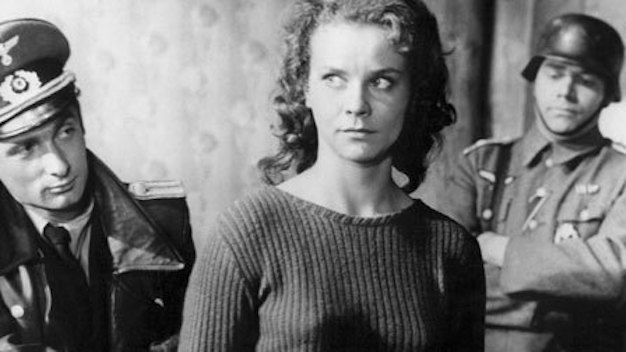
The most prominent movie maker to come out of Poland, Andrzej Wajda was also a director with a strong European sensibility, even as he was chronicling the turbulent political times he lived in. His father was killed in the Katyn Massacre in 1940 (an event Wajda would revisit in 2007), but he survived along with his mother and brother. After the war he went to Kraków’s Academy of Fine Arts, and then in the early Fifties the Łódź Film School, where he was an apprentice to the director Aleksander Ford. He made his first movie, A Generation in 1955; it was also the first in a trilogy of movies that would take an anti-war stance then unpopular in Poland itself, which was still under Soviet rule.

He worked in the theatre as well, but focused more and more on movie making. His work gained international recognition – Kanal (1956) shared the Special Jury Prize at Cannes in 1957 with Ingmar Bergman’s The Seventh Seal – and he was able to explore more of the topics that interested him, as in Lotna (1959), a tribute to the Polish Cavalry that his father had been a part of. Throughout the Sixties he made movies that were more and more allegorical and symbolic, and his reputation increased accordingly. He was most successful in the Seventies, making a string of films that cemented his position as the foremost Polish movie maker of his generation.

In the Eighties he continued to make movies but more and more of his time was taken up with supporting Lech Wałęsa’s Solidarity movement. This involvement angered the Polish government to such an extent that it forced the closure of Wajda’s production company. Undeterred, Wajda continued to make the movies he wanted to make, and his career continued to go from strength to strength. In 1990 he was honoured by the European Film Awards with a Lifetime Achievement award (only the third director to have the honour, after Fellini and Bergman). Wajda won numerous other awards during his lifetime, and he was a tireless innovator who held a light up to the social and political upheavals and troubles that were occuring in his beloved Poland. His movies had a rigid formalism to them that was always undermined (and deliberately so) by Wajda’s own innate sympathy for humanity. He was a passionate, discerning movie maker who could make audiences laugh, cry, be angry or sad, but never bored or uninvolved.

a-generation

1 – A Generation (1955)

2 – Kanal (1957)

3 – Ashes and Diamonds (1958)

4 – The Birch Wood (1970)

the-birch-wood

5 – The Promised Land (1975)

6 – Man of Marble (1977)

7 – Man of Iron (1981)

man-of-iron

8 – Danton (1983)

9 – Korczak (1990)

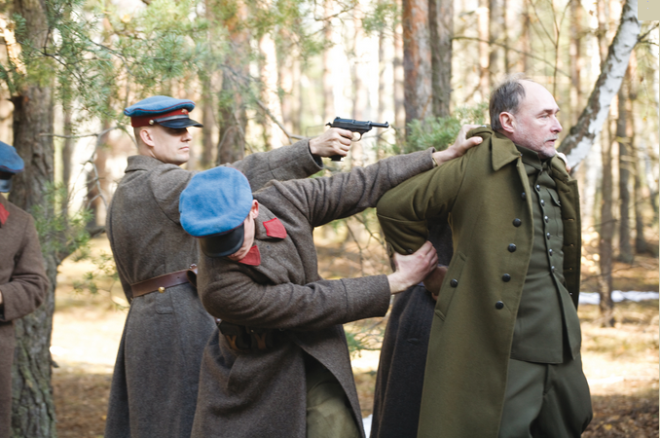
10 – Katyn (2007)

katyn

Share this:

  • Click to share on X (Opens in new window) X
  • Click to share on Facebook (Opens in new window) Facebook
  • More
  • Click to print (Opens in new window) Print
  • Click to email a link to a friend (Opens in new window) Email
Like Loading...

Ida (2013)

08 Sunday Feb 2015

Posted by dullwood68 in Movies

≈ 1 Comment

Tags

Agata Kulesza, Agata Trzebuchowska, Convent, Drama, Novitiate, Pawel Pawlikowski, Poland, Polish Jews, Review, World War II

MCDIDAA EC008

D: Pawel Pawlikowski / 82m

Cast: Agata Kulesza, Agata Trzebuchowska, Dawid Ogrodnik, Jerzy Trela, Adam Szyszkowski, Halina Skoczynska

Poland, the early Sixties. Anna (Trzebuchowska) is a novitiate nun at a convent in the countryside. She has an aunt, Wanda Gruz (Kulesza), who is her only living relative; before Anna takes her vows, the Mother Superior (Skoczynska) advises her that she should visit her. She goes to the city where she finds her aunt is well off through her work as a judge (she’s also an alcoholic who enjoys one night stands). She isn’t there very long when Wanda tells Anna that she’s Jewish and her real name is Ida; also that her parents are killed during the war. At first, Anna doesn’t believe her, but Wanda shows her some photos, including those of a little boy, and tells her that her mother was very artistic.

Anna wants to visit their graves but Wanda tells her that no one knows where they are buried. Anna persists in wanting to find them. She and her aunt travel to her parents’ home in order to begin their search. There, Wanda speaks to the current owner, Feliks (Szyszkowski), looking for the whereabouts of the man’s father, Szymon (Trela), who lived there during the war, and who was sheltering Anna’s parents. Szymon is in hospital, so Wanda and Anna travel to see him. Along the way they pick up a hitchhiker, Lis (Ogrodnik), a sax player heading to play a gig in the same town; there is an immediate attraction between him and Anna. When they visit Szymon he tells them nothing.

However, Feliks turns up at their hotel room and promises to show them where the bodies are buried, but only if Anna signs away all rights to the house and the land. She agrees. He takes them straight to a wooded area where he begins to dig until bones start to appear. There are three bodies in all: Anna’s parents and the little boy from the photos who proves to be Wanda’s son. Feliks confesses to having killed them all, but leaving Anna at a local church as she could pass for Christian. Anna and Wanda take the bones and bury them in a nearby Jewish cemetery.

Anna decides to return to the convent, but her exposure to the outside world has filled her with doubts about becoming a nun. She leaves again and heads back to the city, partly to test her faith and partly to attend an unexpected funeral.

Ida - scene

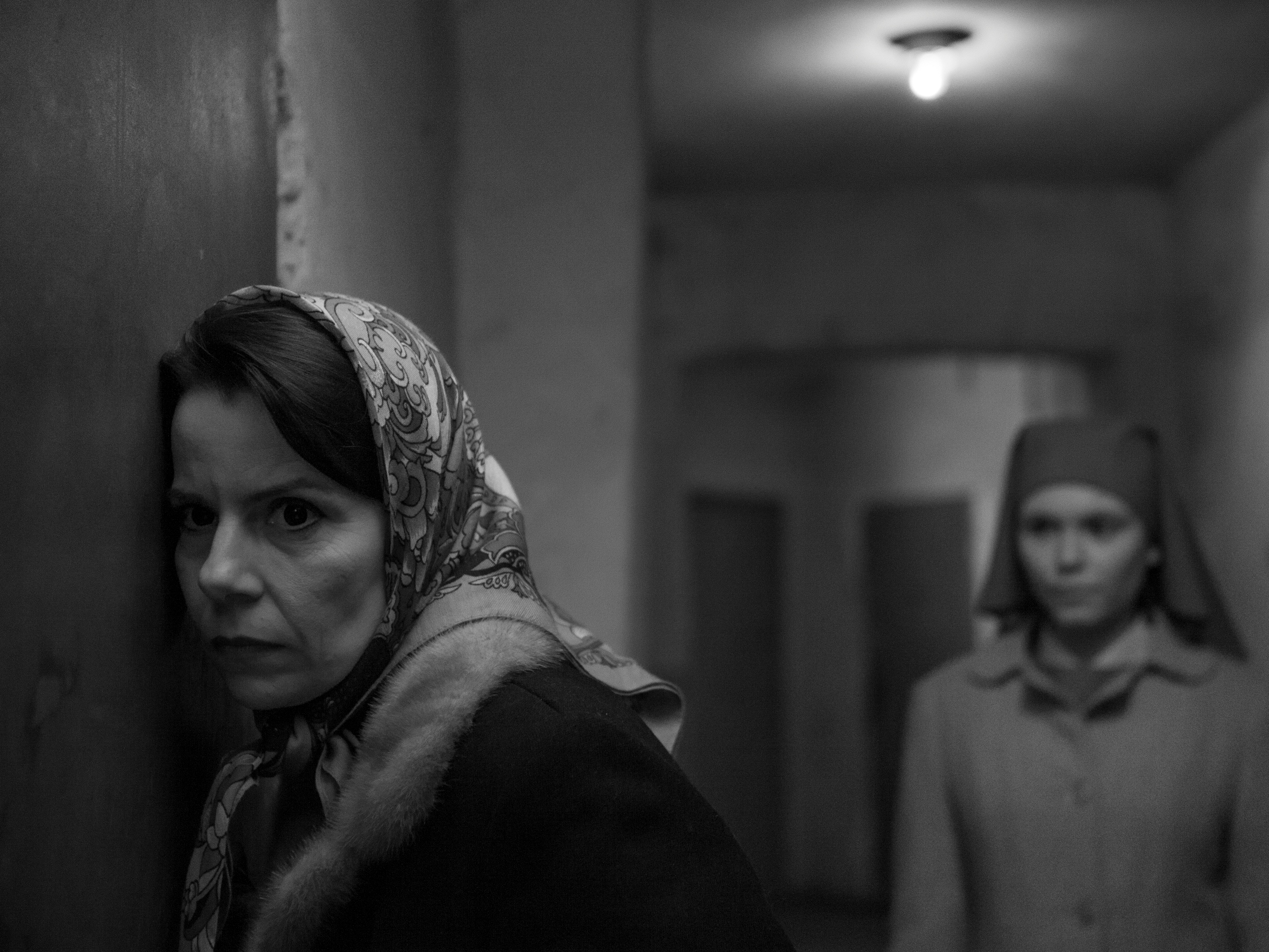
An austere, rigorously shot movie in starkly beautiful black and white, Ida is one of the most powerful movies of recent years. There is a tangible layer of history that seeps through the narrative, colouring the actions of Wanda, and making its effects known at all times. Poland lost a fifth of its population during World War II – including three million Jews – and this terrible statistic is hinted at in the fate of Anna’s parents, their remains recovered but unlike so many buried in unmarked graves across the country. Using this as a backdrop to the main storyline, Pawlikowski and co-screenwriter Rebecca Lenkiewicz, have fashioned a compelling, disturbing movie whose emotional undertones are never far from the surface, and when they do break through, have a devastating effect.

The movie also maintains a strict, religious overtone, Anna’s faith tested on several levels but always giving her the strength to carry on. Trzebuchowska (a devout atheist in real life) gives a magnificent performance as Anna, her pale gaze appearing like a blank canvas with nothing to reveal, but it’s her eyes that always tell you how she’s feeling, seeming at times to be looking at something far away and yet as close to her as to be touching. It’s a quiet, well-modulated performance, the movie’s backbone and its source of inquiry as well, as Anna’s exposure to the horrors of the past and the pleasures of the present help inform the audience of the wider issues the movie deals with.

She’s matched by Kulesza’s angry, demoralised Wanda, a cog in the wheel of the state system who once prosecuted Poles who resisted the Nazis, and now finds herself leading a solitary, unfulfilling life accompanied by the lingering loss of her son. Wanda’s reluctance at first to help Anna find her parents is understandable given that she already knows what she’ll find. It also makes her anger and lack of compassion for others all the more reasonable, and Kulesza treads a very careful path between Wanda being unlikeable and sympathetic, making her a credible mixture of both. As both women make their journey into the past, it becomes all too clear that Wanda’s strength and determination are all too hollow.

Those viewers with a penchant for European arthouse compositions will be enthralled by Ida, its sense of space highlighted by the many scenes where the characters are anchored firmly to the bottom of the screen, or pressed into one corner, while vast expanses tower over them. Anyone familiar with Polish movies from the early Sixties will be impressed by the way that Pawlikowski and cinematographers Łukasz Żal and Ryszard Lenczewski have emulated the filming style of that time, and the way in which scenes are shot in such a way as to prove a little intimidating or uncomfortable. This, combined with the often spartan quality of the black and white images, makes the movie a constant joy to engage with, although the casual viewer might not be aware of the design and its planned execution.

In throwing some light on events that happened in Poland over seventy years ago, and how its legacy was still being felt nearly twenty years on, Pawlikowski has put together a movie that is breathtaking in its simplicity and timeless in its subject matter. It’s a welcome return to form after the serious misstep that was The Woman in the Fifth (2011), and is an impressive reminder that the Polish movie maker is one of the most innovative and compelling directors working today.

Rating: 9/10 – beneath its bleak yet elegant exterior, Ida is an emotionally charged masterpiece that is enthralling, bold and intensely complex; with two powerful central performances, it’s a triumph for Pawlikowski, and is without doubt one of the finest movies of 2013.

Share this:

  • Click to share on X (Opens in new window) X
  • Click to share on Facebook (Opens in new window) Facebook
  • More
  • Click to print (Opens in new window) Print
  • Click to email a link to a friend (Opens in new window) Email
Like Loading...

Blog Stats

  • 480,695 hits

Recent Posts

  • 10 Reasons to Remember Bibi Andersson (1935-2019)
  • Fantasia (1940)
  • Dances With Wolves (1990) – The Special Edition
  • Kiss of the Spider Woman (1985)
  • The Three Musketeers (1973)

Top Posts & Pages

  • Lost for Life (2013) - Another Look
    Lost for Life (2013) - Another Look
  • Lost for Life (2013)
    Lost for Life (2013)
  • Irrational Man (2015)
    Irrational Man (2015)
  • About
    About
  • Bone Tomahawk (2015)
    Bone Tomahawk (2015)
  • Trailers - xXx: Return of Xander Cage (2017), Hands of Stone (2016) and In a Valley of Violence (2016)
    Trailers - xXx: Return of Xander Cage (2017), Hands of Stone (2016) and In a Valley of Violence (2016)
  • Mini-Review: Good Kill (2014)
    Mini-Review: Good Kill (2014)
  • Cardboard Boxer (2016)
    Cardboard Boxer (2016)
  • Jack and the Beanstalk (1902)
    Jack and the Beanstalk (1902)
  • Removal (2010)
    Removal (2010)
Follow thedullwoodexperiment on WordPress.com

Blogs I Follow

  • Rubbish Talk
  • Film 4 Fan
  • Fast Film Reviews
  • The Film Blog
  • All Things Movies UK
  • Interpreting the Stars
  • Let's Go To The Movies
  • Movie Reviews 101
  • TMI News
  • Dan the Man's Movie Reviews
  • Film History
  • Jordan and Eddie (The Movie Guys)

Archives

  • April 2019 (13)
  • March 2019 (28)
  • February 2019 (28)
  • January 2019 (32)
  • December 2018 (28)
  • November 2018 (30)
  • October 2018 (29)
  • September 2018 (29)
  • August 2018 (29)
  • July 2018 (30)
  • June 2018 (28)
  • May 2018 (24)
  • April 2018 (21)
  • March 2018 (31)
  • February 2018 (25)
  • January 2018 (30)
  • December 2017 (30)
  • November 2017 (27)
  • October 2017 (27)
  • September 2017 (26)
  • August 2017 (32)
  • July 2017 (32)
  • June 2017 (30)
  • May 2017 (29)
  • April 2017 (29)
  • March 2017 (30)
  • February 2017 (27)
  • January 2017 (32)
  • December 2016 (30)
  • November 2016 (28)
  • October 2016 (30)
  • September 2016 (27)
  • August 2016 (30)
  • July 2016 (30)
  • June 2016 (31)
  • May 2016 (34)
  • April 2016 (30)
  • March 2016 (30)
  • February 2016 (28)
  • January 2016 (35)
  • December 2015 (34)
  • November 2015 (31)
  • October 2015 (31)
  • September 2015 (34)
  • August 2015 (31)
  • July 2015 (33)
  • June 2015 (12)
  • May 2015 (31)
  • April 2015 (32)
  • March 2015 (30)
  • February 2015 (37)
  • January 2015 (39)
  • December 2014 (34)
  • November 2014 (34)
  • October 2014 (36)
  • September 2014 (25)
  • August 2014 (29)
  • July 2014 (29)
  • June 2014 (28)
  • May 2014 (23)
  • April 2014 (21)
  • March 2014 (42)
  • February 2014 (38)
  • January 2014 (29)
  • December 2013 (28)
  • November 2013 (34)
  • October 2013 (4)

Create a free website or blog at WordPress.com.

Rubbish Talk

Film 4 Fan

A Movie Blog

Fast Film Reviews

The Film Blog

The official blog of everything in film

All Things Movies UK

Movie Reviews and Original Articles

Interpreting the Stars

Dave Examines Movies

Let's Go To The Movies

Film and Theatre Lover!

Movie Reviews 101

Daily Movie Reviews

TMI News

Latest weather, crime and breaking news

Dan the Man's Movie Reviews

All my aimless thoughts, ideas, and ramblings, all packed into one site!

Film History

Telling the story of film

Jordan and Eddie (The Movie Guys)

Movie Reviews & Ramblings from an Australian Based Film Fan

Privacy & Cookies: This site uses cookies. By continuing to use this website, you agree to their use.
To find out more, including how to control cookies, see here: Cookie Policy
  • Subscribe Subscribed
    • thedullwoodexperiment
    • Join 481 other subscribers
    • Already have a WordPress.com account? Log in now.
    • thedullwoodexperiment
    • Subscribe Subscribed
    • Sign up
    • Log in
    • Report this content
    • View site in Reader
    • Manage subscriptions
    • Collapse this bar
 

Loading Comments...
 

    %d