• 10 Reasons to Remember…
  • A Brief Word About…
  • About
  • For One Week Only
  • Happy Birthday
  • Monthly Roundup
  • Old-Time Crime
  • Other Posts
  • Poster of the Week
  • Question of the Week
  • Reviews
  • Trailers

thedullwoodexperiment

~ Viewing movies in a different light

thedullwoodexperiment

Tag Archives: Psychological thriller

Unsane (2018)

21 Wednesday Mar 2018

Posted by dullwood68 in Movies

≈ Leave a comment

Tags

Claire Foy, Drama, Jay Pharoah, Joshua Leonard, Juno Temple, Murder, Psychological thriller, Review, Stalker, Steven Soderbergh
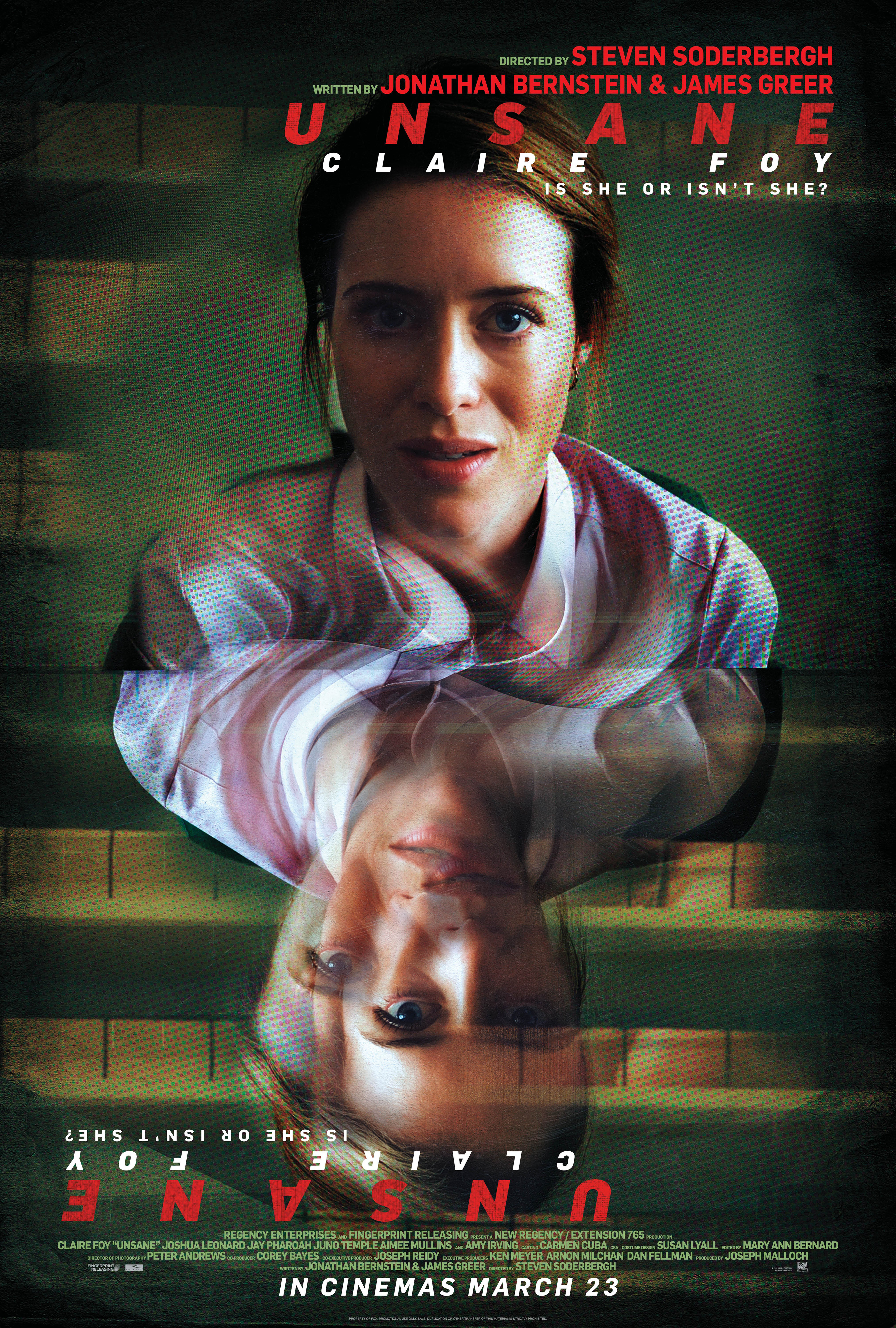
D: Steven Soderbergh / 97m

Cast: Claire Foy, Joshua Leonard, Jay Pharoah, Juno Temple, Amy Irving, Polly McKie, Gibson Frazier, Aimee Mullins, Myra Lucretia Taylor, Sarah Stiles

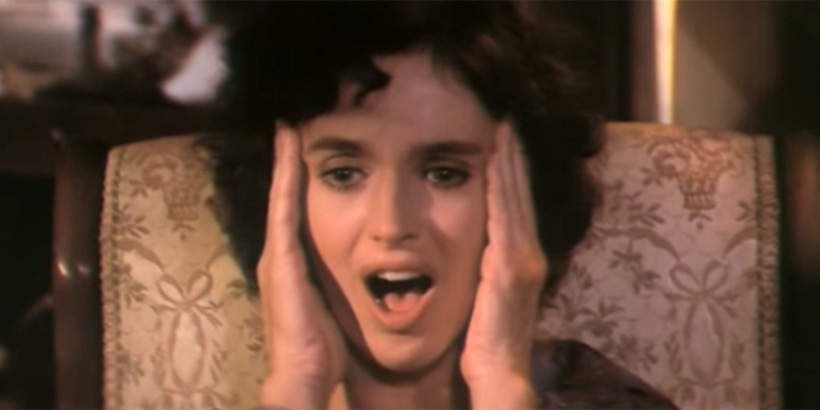
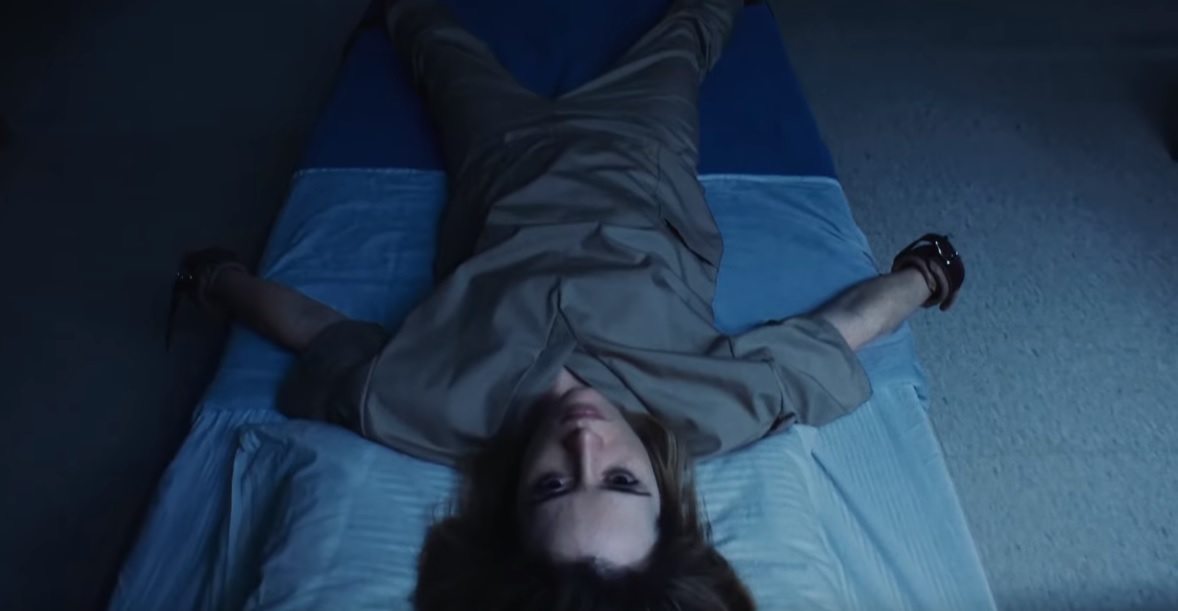
In Steven Soderbergh’s first stab at directing a horror movie, Sawyer Valentini (Foy) is a smart businesswoman making a fresh start for herself in a new town and with a new job. The reason for the fresh start is David Strine (Leonard), the man who stalked her for two years before she managed to get a court to issue a restraining order. But Sawyer begins to see him in various places – not directly, but out of the corner of her eye, or at a distance. Troubled by this and seeking a sympathetic ear, Sawyer attends a facility that purports to help victims of stalkers. But instead of helping her, the staff at the facility mislead her into voluntarily committing herself for twenty-four hours. When she realises this, Sawyer’s agitation leads her to strike an orderly; this results in her stay being extended to seven days. Things go from bad to worse when one of the night orderlies turns out to be Strine, masquerading as “George Shaw”. With the help of a fellow patient, Nate (Pharoah), Sawyer gets word to her mother (Irving), but with the facility legally in the right, she must rely on her wits to see out the seven days, and to stay away from Strine…
While watching Unsane it’s worth remembering that as a director, Steven Soderbergh has an eclectic, and distinctly personal approach to his projects. Touted as his first attempt at horror, the movie is actually a psychological thriller laced with horror elements, but even with that caveat, it’s clear from very early on that Soderbergh isn’t really interested in making a horror movie. Instead, Soderbergh – working from a script by Jonathan Bernstein and James Greer – appears to be more interested in making a feminist statement, one that supports the idea that women, even now, with the MeToo movement and all, still aren’t being listened to. Instead, the movie is saying, women have to be resourceful and work things out for themselves. Now, this isn’t necessarily a bad thing as a theme or a message, but as Sawyer is initially presented as a strong, more than competent businesswoman, the idea that she could be tricked into committing herself into a mental health institution – that she wouldn’t check the small print, as it were – strains credulity from the start.
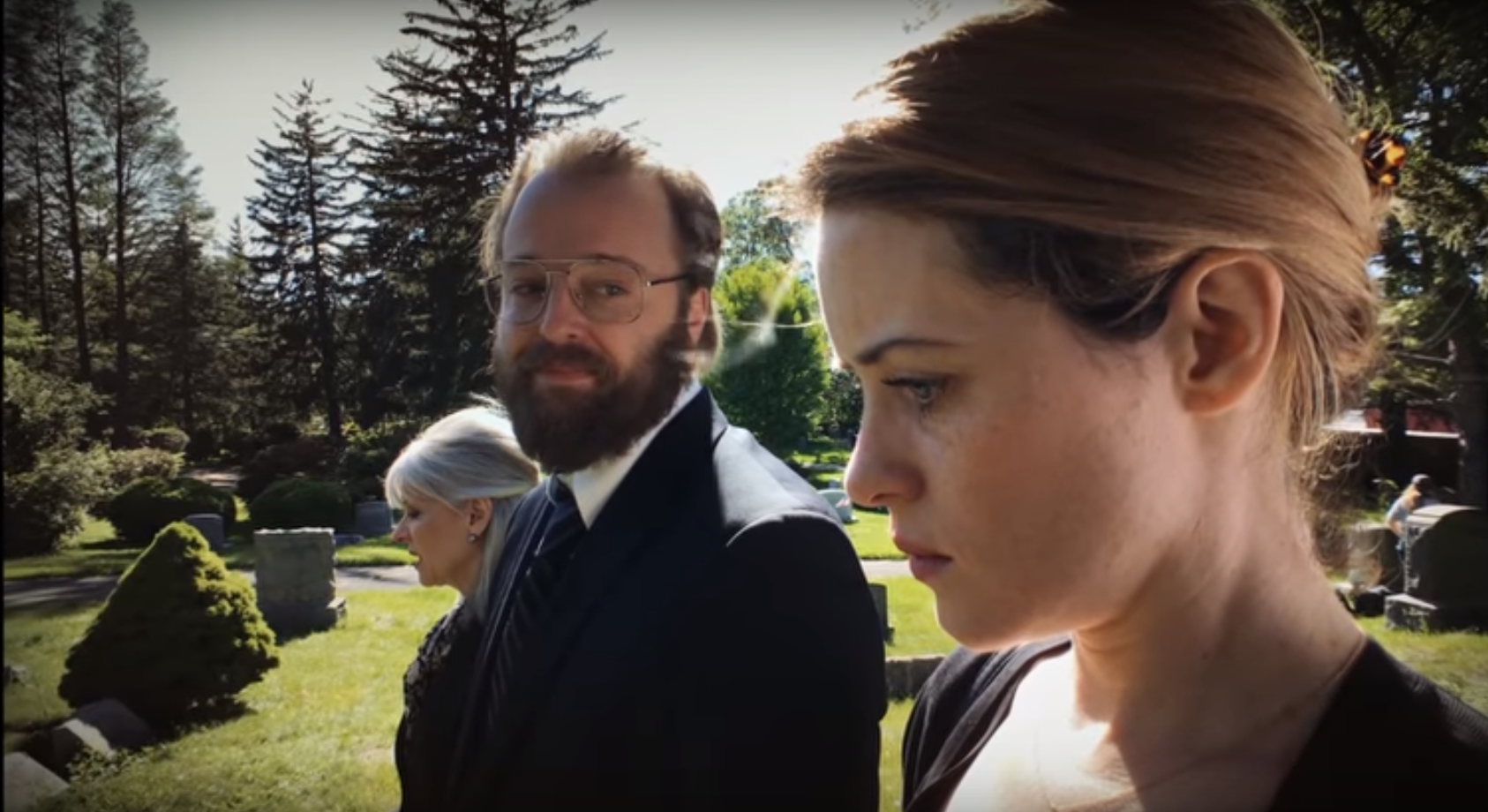
There is much else that is problematical, from Strine popping up on Day Two (how does he know Sawyer is going to be committed, or that she’ll have her stay extended?), to the intransigence of the facility’s staff, and the uninspired laziness of the local police force (which seems to consist almost entirely of two patrol car officers). At least the script doesn’t belabour the whole is-it-or-isn’t-it-all-in-her-head approach, choosing instead to come down firmly on one side of the fence quite soon after Sawyer’s confinement. This allows the movie to switch from being a woman in peril movie to a woman still in peril but resilient enough to win through in the end movie. Foy is very good indeed as Sawyer, determined and tough even when she’s feeling vulnerable, while Leonard is the epitome of creepiness as Strine, his teddy bear countenance belying his twisted mindset. But while the script is saved in part by the quality of the performances, it’s Soderbergh who saves it the most, his visual approach to the material energising certain scenes and providing an unsettling mise-en-scène in others. There are moments where Sawyer’s sense of isolation is highlighted by having the background stretching away unnaturally behind her, and it’s these kinds of moments that are the most effective. But when all is said and done, this is still just another generic thriller, with too many plot holes, and too many occasions where the phrase, “Oh, come on!” seems entirely appropriate.

Rating: 5/10 – more of an exercise in style and visual representation – Sawyer having a psychotropic break is brilliantly realised – Unsane is a movie that, on the surface, appears to have more depth to it than it actually has; standard fare then, and emboldened in places by Soderbergh’s mercurial direction, but not the edge-of-your-seat thriller that it so obviously wants to be.

Share this:

  • Click to share on X (Opens in new window) X
  • Click to share on Facebook (Opens in new window) Facebook
  • More
  • Click to print (Opens in new window) Print
  • Click to email a link to a friend (Opens in new window) Email
Like Loading...

Siembamba (2017)

24 Saturday Feb 2018

Posted by dullwood68 in Movies

≈ Leave a comment

Tags

Brandon Auret, Darrell Roodt, Drama, Eden Rock, Horror, Midwife, Post-partum depression, Psychological thriller, Reine Swart, Review, South Africa, Thandi Puren

aka The Lullaby

D: Darrell Roodt / 86m

Cast: Reine Swart, Thandi Puren, Brandon Auret, Deànré Reiners, Dorothy Ann Gould

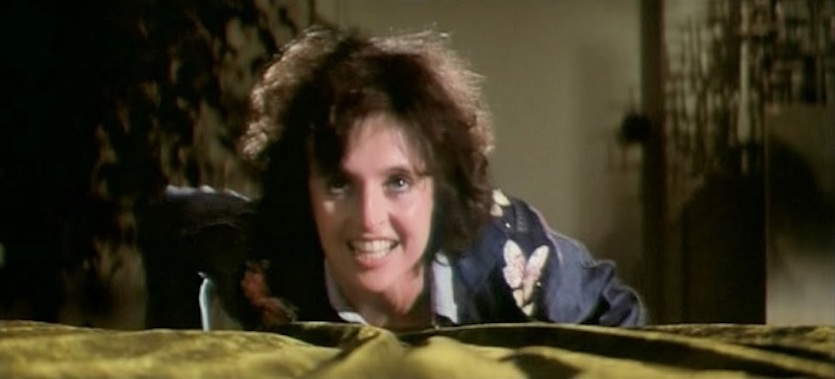
Touted as the first horror movie from South Africa, Siembamba is as much a psychological thriller as it is a straight-out chiller, and it juggles both interpretations with a degree of confidence as it tells the story of nineteen year old Chloe van Heerden (Swart), returning to her home in Eden Rock with a newborn baby, Liam, in tow. Chloe ran away after a row with her mother, Ruby (Puren). What happened to her, and why she fell pregnant, Chloe won’t – or can’t – explain, but she is resigned to being back home and being a young mother. Soon, strange things begin happening around the house, and Chloe becomes convinced that there is a strange presence there, and it wants Liam. She sees and hears things, including a nightmarish vision of a woman, a midwife, wearing a black bonnet. Ruby shares her own concerns with Dr Reed (Auret), who wonders if Chloe is merely suffering from post-partum depression. But Chloe’s visions become more and more violent, and she even begins to doubt her mother’s role in everything, her paranoia and distrust building with each new frightening experience. And then, on Dr Reed’s advice, Chloe is left by herself for the evening…

If you’re a country that’s never made an out and out horror movie before, but you don’t want to make just another slasher movie, then what better way to start off than by adapting a poem by South African poet Louis Leipoldt that, with some slight re-wording, goes as follows: Siembamba, mother’s little baby / Siembamba, mother’s little child / Wring his neck, throw him in the ditch / Step on his head, make sure he is dead. And the movie sets out its stall right from the beginning with a baby having its neck broken within the first five minutes; as a statement of intent it’s up there with Georgie Denbrough getting his arm torn off by Pennywise in It (2017). This is strong, mature stuff (albeit shot in a distressed, found-footage style that grates more than it should), and as the movie delves into Chloe’s tortured present and past, Tarryn-Tanille Prinsloo’s script finds ever more horrible and unsettling ways to put little Liam in harm’s way, including a nerve-wracking moment where Chloe is trimming his fingernails – or is she cutting off his fingers? The movie is at its best in moments like these, when the viewer can’t be sure if it’s all in Chloe’s mind or if there really is a supernatural presence in the house.

But while the movie goes to great pains to keep the audience guessing, it does so with little regard to pacing or the overall tone. Like many horror movies it makes the mistake of having strange events happen as soon as Chloe gets home after giving birth. There’s no appreciable build-up, and the adversarial nature of Chloe and Ruby’s relationship is exacerbated by the script’s refusal to have them actually talk to each other unless it involves recriminations on each side. Likewise, when Chloe sees Dr Reed, a scene that could have provided audiences with a deeper understanding of the folklore the movie is based on, instead remains a missed opportunity. But these issues are to be expected in a modern horror movie, whereas the pacing is seriously off, with scenes lacking energy and purpose at times, making the movie as a whole a somewhat frustrating experience. Roodt is an experienced director, and in many ways a good choice for South Africa’s first horror movie, but the fractured imagery and off-kilter visual style he’s adopted along with editor Leon Gerber hampers the movie instead of helping it. There are a couple of good scares to be had along the way, but much of what frights there are involve the midwife, a character that wouldn’t feel out of place in the Insidious franchise. As things progress, the movie relies on her presence more and more, though without her, the psychological aspects could have been used to make things even more unsettling. For a first attempt, Siembamba overcomes some hurdles with ease, but it also manages to knock down too many others in its efforts to stand out from the crowd.

Rating: 6/10 – good performances from Swart and Puren keep Siembamba from dissembling under the weight of its (modest) ambitions, and though there is much that doesn’t work as well as it should, genre enthusiasts should seek this one out because of its provenance; neither great nor terrible, it’s to be hoped that South Africa doesn’t stop here in its attempts to make horror movies, because even though a lot of the movie is derivative of other work, there’s enough here to be hopeful for better things to come.

Share this:

  • Click to share on X (Opens in new window) X
  • Click to share on Facebook (Opens in new window) Facebook
  • More
  • Click to print (Opens in new window) Print
  • Click to email a link to a friend (Opens in new window) Email
Like Loading...

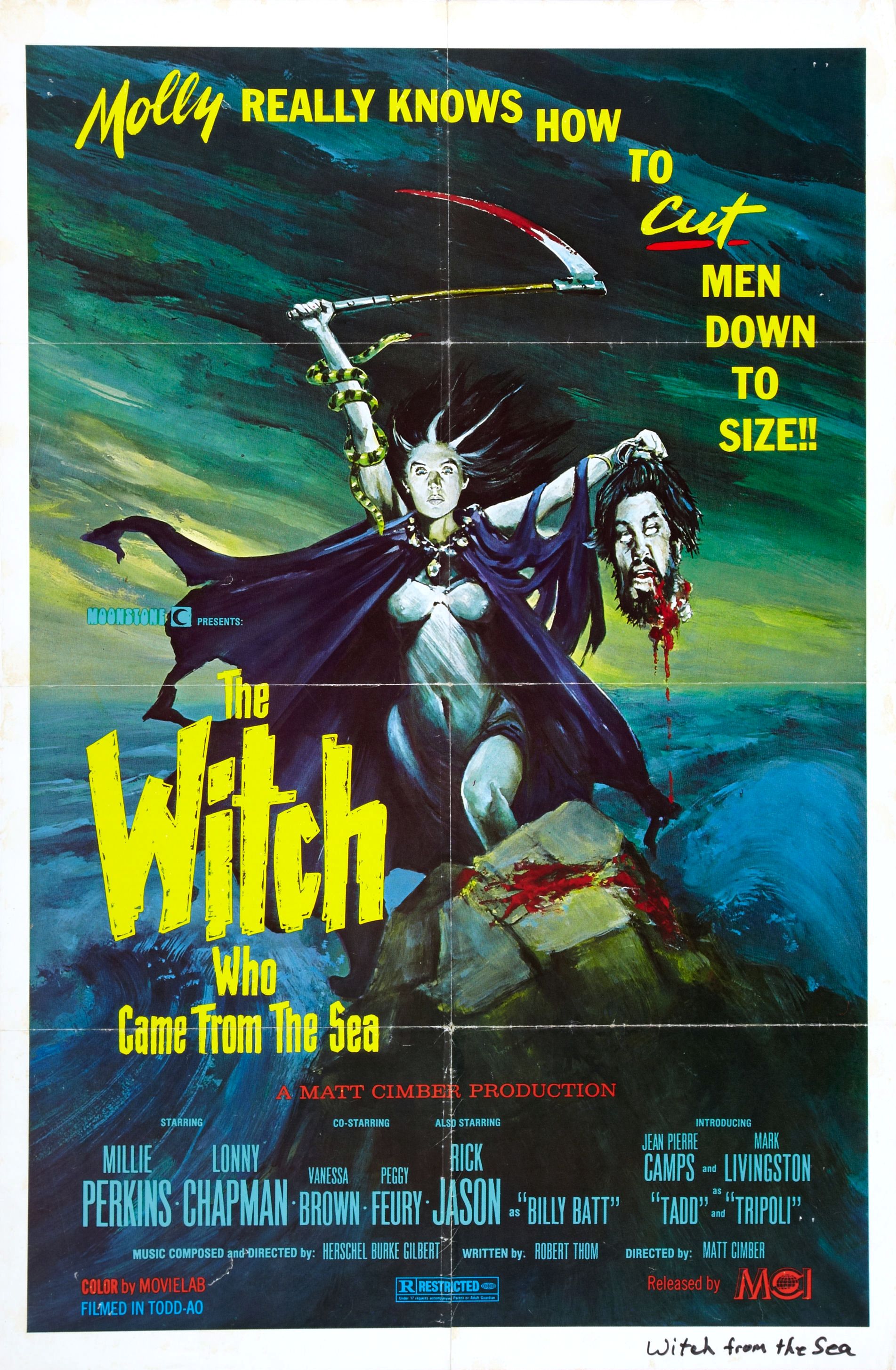
The Witch Who Came from the Sea (1976)

27 Saturday Jan 2018

Posted by dullwood68 in Movies

≈ Leave a comment

Tags

Abuse, Drama, Lonny Chapman, Matt Cimber, Millie Perkins, Murder, Psychological thriller, Review, Robert Thom, Vanessa Brown, Video nasty

D: Matt Cimber / 87m

Cast: Millie Perkins, Lonny Chapman, Vanessa Brown, Peggy Feury, Jean Pierre Camps, Mark Livingston, Rick Jason, Stafford Morgan, Richard Kennedy, George ‘Buck’ Flower, Roberta Collins

As a child, Molly (Perkins) was sexually abused by her father. As an adult, Molly works in a bar called the Boathouse, and is in a relationship with the owner, Long John (Chapman). She has a sister, Cathy (Brown), and two young nephews she adores, Tadd (Camps) and Triploi (Livingston). She regales her nephews with tales of their grandfather and what a kind, loving man he was, a captain of a ship who was lost at sea when she was much younger. The two boys believe her stories completely, but these fantasies are indicative of the struggle that Molly is having in dealing with the psychological trauma of her childhood. She experiences a fever dream in which she kills two famous football players, but when the two men are found dead, Molly faces an even greater struggle to stop herself from falling victim to the murderous rages that come over her whenever she’s around men who remind her of her father, or who project a certain masculine image through television adverts.

A movie that was once regarded in the UK as a “video nasty”, The Witch Who Came from the Sea is an under-rated psychological thriller (with horror overtones) that charts one woman’s descent into madness in a way that is both haunting and disturbing. The movie is directed with great skill by Cimber, and there’s a terrific central performance from Perkins, but the key player here is sceenwriter Robert Thom. During the Seventies, Thom wrote the screenplays for Bloody Mama (1970), Death Race 2000 (1975), this, and several others. All were low budget movies that like this one, thrived on Thom’s ability to exceed audience expectations thanks to his unerring ability to ground even the most extreme incidents, and his sharp ear for dialogue. Thom started out writing for the theatre, and there are moments where the movie feels like it’s a play that has been adapted for the screen. This gives the movie a greater sense of depth, and a greater sense of tragedy as events unfold. As Molly drifts between reality and fantasy, and becomes increasingly unable to differentiate between the two, Thom’s layered screenplay, Perkins’ bold portrayal, and Cimber’s restrained yet visceral direction, combine to create a movie that is hard to look away from – but in a good way.

For an actress who has never been entirely comfortable with the trappings of being an actress, Perkins gives a formdiable performance, investing Molly with a forlorn, anxious appearance that affords glimpses of self-awareness in amongst her mostly irrational behaviour. She’s also able to make Molly’s dialogue sound at times like an interior monologue, an effect that further illustrates the emotional and psychological dysfunction she’s experiencing. Perkins is provided with fine support from the likes of Chapman, Brown and Feury (as another Boathouse waitress who provides Molly with “pharmaceutical assistance”), and Cimber ensures that even the smallest of roles fits in neatly with the overall scenario. The visual look of the movie is quite subdued, with mostly grey and brown tones used throughout, but the cinematography – by Ken Gibb and Dean Cundey – is a good match for the dark emotional undercurrents that pepper the screenplay. Also effective is the decision to distort the audio during those sequences when Molly can’t tell if she’s fantasising about killing someone, or is actually doing it. It’s all done very cleverly, and takes the movie far from the exploitation trappings that viewers might be expecting.

Rating: 8/10 – far better than it perhaps has any right to be on paper, The Witch Who Came from the Sea is a first-rate psychological thriller that is unsettling, and oppressive, for much of its running time; Perkins gives an exceptional performance, and the whole tortured narrative feels disarmingly organic, with any missteps serving only to highlight just how good this movie is, and how well it’s been put together.

Share this:

  • Click to share on X (Opens in new window) X
  • Click to share on Facebook (Opens in new window) Facebook
  • More
  • Click to print (Opens in new window) Print
  • Click to email a link to a friend (Opens in new window) Email
Like Loading...

The Skin I Live In (2011)

13 Thursday Jul 2017

Posted by dullwood68 in Movies

≈ 1 Comment

Tags

Artificial skin, Catch Up movie, Drama, Elena Anaya, Horror, Jan Cornet, Marisa Parades, Pedro Almodóvar, Psychological thriller, Review

Original title: La piel que habito

D: Pedro Almodóvar / 120m

Cast: Antonio Banderas, Elena Anaya, Marisa Paredes, Jan Cornet, Roberto Álamo, Eduard Fernández, José Luis Gómez, Blanca Suárez, Susi Sánchez, Bárbara Lennie

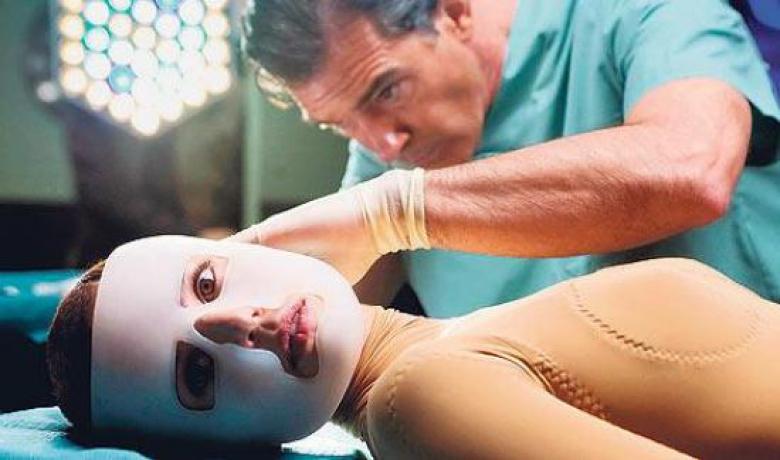
What happens when a multi-award winning and very well respected director gets it completely wrong? The answer is a movie called The Skin I Live In. Since making his first feature, the anarchic Folle… folle… fólleme Tim! (1978), Pedro Almodóvar has presided over Spanish moviemaking like a benevolent enfant terrible, promoting home grown talent while making his own idiosyncratic movies and gaining an international reputation for flamboyance, passion and high-camp melodrama. He’s a true original, and a writer/director who has always been unapologetic about the movies he’s made, and their content (anyone who’s seen the opening five minutes of Matador (1986) will know what I mean). But sometimes, even the most innovative and instinctive of directors will take on a project they really should have steered well away from, and The Skin I Live In is Almodóvar’s. In attempting to fuse his usual movie making style with a genre he’s never worked in before, the director of such modern classics as Women on the Verge of a Nervous Breakdown (1988) and High Heels (1991) has made his most unconvincing and mundane movie to date.

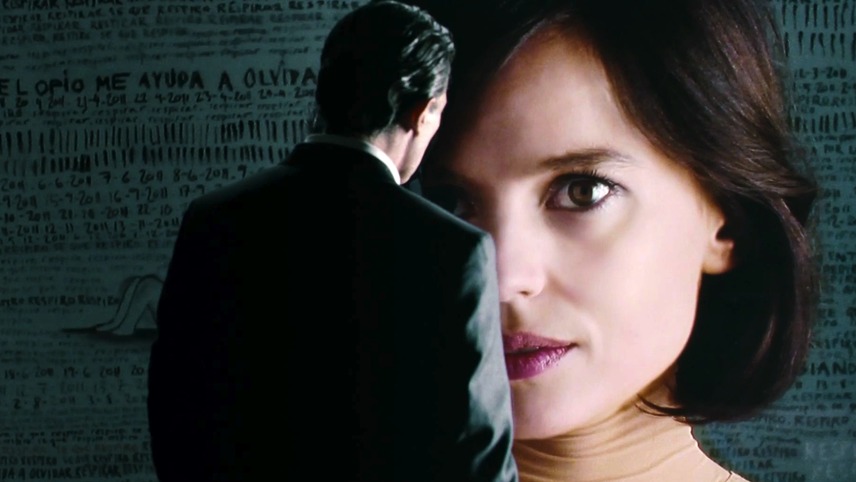
The movie begins with an old-fashioned two-pronged mystery; who is the woman (Anaya) being kept in a locked room by renowned surgeon Dr Robert Ledgard (Banderas), and why? As with all good mystery thrillers, there are no answers that are immediately forthcoming, just a number of clues and a few clever hints. What is clear is that Ledgard has been researching and cultivating an artificial skin that is resistant to fire and insect bites. And soon it becomes clear that he has been using this artificial skin on the young woman (whose name we learn is Vera). And for a while, that’s the movie. There’s a housekeeper, Marilia (Paredes), but she doesn’t appear relevant to the storyline or the plot. Oh, wait, here comes her criminal son, Zeca (Álamo), who’s on the run and needs a place to hide. When he realises there’s an attractive young woman in the house, he has one thing on his mind: sex, and whether she’s willing or not. Fortunately, Ledgard returns home (a little late, to be fair) and Zeca is “taken care of”.

It’s at this point that the script, by Almodóvar and his brother Agustín, decides its time to reveal just what is going on, and why. Cue a late-night confession from Marilia, a flashback from Ledgard’s perspective, and then, more intriguingly, a lengthier flashback from Vera’s point of view. This passage reveals almost everything you could need to know about what’s happening, why it’s happening, and how it’s all happened in the first place. The why, somewhat inevitably, is borne out of revenge, with Ledgard targeting a young man, Vicente (Cornet), for a particular misdeed that has gone unpunished. This futher explains what’s happening, and how it has all come about, but with the flashbacks out of the way, the movie begins to unravel as it heads for a melodramatic but also muted ending. And that’s without a coda that would work better as the beginning of a whole other movie.

Almodóvar has been quoted as saying that The Skin I Live In is “a horror story without screams or frights”. That may sound clever, or even something of a challenge to achieve, but the problem is that while Almodóvar may be good at exploring the lives of those living on the margins of Spanish society (very good in fact), when it comes to horror it’s obvious he doesn’t have the grounding or the knowledge to put together the kind of terrifying experience required of genuinely good horror movies. Instead, Almodóvar plays with his Frankenstein-lite scenario in such a way that he leeches all the horror out of it and leaves the audience with a soap opera melodrama that occasionally acts as a psychological or psycho-sexual thriller. Almodóvar isn’t really interested in making a horror movie; instead he seems more interested in seeing if he can fit horror themes into one of his standard dysfunctional family tragedies.

The result is a movie that proves disjointed and erratic when it comes to the characters and their motivations (Ledgard does a lot of things that are baffling or poorly thought through by the script), and which seems happier in observing things from a distance – much as Ledgard does with Vera. This makes it harder for the audience to engage or sympathise with the characters, and scenes where this might be regarded as essential in terms of building or maintaining tension, remain flat and unremarkable. Almodóvar is better off having his characters express their emotions, no matter how histrionic they might be, but here he opts for a restrained approach that gives the movie a chilly, displaced feel. It’s another bad decision that affects the movie greatly, and leaves the cast adrift completely. Banderas (reuniting with Almodóvar after a twenty-one year gap) plays Ledgard as a man determined on revenge but who makes some very strange choices along the way, while Anaya has the awkward task of denying her character’s back story while at the same time, needing it to perform her role adequately.

Ultimately, it’s a movie that doesn’t work because its director doesn’t know what kind of movie it should be in order to work. With that in mind, Almodóvar’s attempts at making his audience squirm, end up doing so, but for all the wrong reasons. Dread is replaced by unwarranted black humour, terror never has enough time to establish itself, and outright horror is knocked down and killed by a reliance on turgid melodrama. The movie may look good – Antxón Gómez’s production design is perfect for expressing the clinical, sterile environment that Ledgard inhabits – and it may have a surprisingly romantic score courtesy of Alberto Iglesias, but these are plusses that are unable to make up for the wayward, tonally artless moments that Almodóvar peppers his script with. When a horror movie fails in asserting itself as a horror movie and never quite realises where and why it’s going wrong, therein lies the true horror.

Rating: 4/10 – despite occasional moments where Almodóvar reminds us of his auteur status, The Skin I Live In is a movie whose purpose and raison d’être is never compelling enough to warrant the viewer’s full investment of their time; with way too many scenes in its last half hour that provide bafflement instead of suspense, the movie is proof that some directors should stick to what they know, and know what they should stick to. (13/31)

Share this:

  • Click to share on X (Opens in new window) X
  • Click to share on Facebook (Opens in new window) Facebook
  • More
  • Click to print (Opens in new window) Print
  • Click to email a link to a friend (Opens in new window) Email
Like Loading...

Trailers – Hacksaw Ridge (2016), Split (2017) and King Arthur: Legend of the Sword (2017)

11 Thursday Aug 2016

Posted by dullwood68 in Movies

≈ Leave a comment

Tags

Andrew Garfield, Charlie Hunnam, Desmond T. Doss, Fantasy, Guy Ritchie, Hacksaw Ridge, James McAvoy, King Arthur: Legend of the Sword, M. Night Shyamalan, Mel Gibson, Previews, Psychological thriller, Split, Trailers, True story, War

If you don’t know who Desmond T. Doss was, then prepare to be amazed. The trailer for Hacksaw Ridge introduces us to a man whose pacifist leanings led to his being the only non-weapons carrying member of the US Army during World War II, and who was awarded the Medal of Honor for his bravery and courage in rescuing over seventy-five men during the Battle of Okinawa. It’s an incredible tale, and judging from the trailer this could very well be in contention for a whole slew of awards once it goes on general release in November 2016. Advance word is overwhelmingly positive, and many people who’ve seen the movie already are praising its director, Mel Gibson – making his first movie behind the camera since Apocalypto (2006) – for the way in which he presents both the intensity and horror of the conflict on Okinawa, and Doss’s personal faith and its effect on the men around him. Andrew Garfield looks to have finally found a movie that allows him to step up to the mark in terms of his acting ability, and there’s advance word that Vince Vaughn (seen briefly here as a drill sergeant) gives his best performance yet in a movie. If all this early praise is to be believed, then this could prove to be one of the finest war movies ever made, and a reminder that Gibson, whatever his personal problems in recent years, is still a damn fine movie maker.


The latest from writer/director M. Night Shyamalan, Split looks like an attempt at making a disturbing psychological thriller based around the notion that a kidnapper with multiple personalities – 23, in fact – is doing so at the behest of the strongest, most fearful personality of the lot… the Beast. It remains to be seen if Shyamalan can pull off this particular storyline with anything like the degree of credibility it needs (and having James McAvoy playing the central character, Kevin(!), will certainly help his chances), or if the mechanics of the narrative will require McAvoy to shift personalities at too rapid a speed for things to remain plausible. This being Shyamalan, it’s hard to tell, but what can be discerned from Split‘s first trailer is that he’s going for a taut, gripping viewing experience, the kind he hasn’t really tried before, and one without any supernatural elements either. It’s easy to dismiss Shyamalan as a writer/director, but The Visit (2015) was a welcome semi-return to form, and he’s such a strong, distinctive, visually arresting director that it’s about time his skills as a writer were able to once again match those he has as a director.


At first sight, King Arthur: Legend of the Sword looks like a spirited romp through an alternative Arthurian timeline, one where the fabled King begins life as a child of the streets, but still ends up removing Excalibur from its stone and ruling a kingdom. And while there’s nothing remotely wrong with the idea of retelling the Arthur legend in such a way, what is obviously, clearly, undoubtedly, unquestionably and visibly wrong here is the way in which that idea has been executed. Guy Ritchie may be a very talented director, and he may have assembled a very talented cast – Charlie Hunnam, Jude Law, Eric Bana, Djimon Hounsou, Aidan Gillen, Astrid Bergès-Frisbey, and, erm, David Beckham – but the tone of the movie is plainly off by a country mile. Martial arts fight sequences, modern day humour, large-scale battle sequences straight out of the Peter Jackson Middle Earth Playbook, and a visual style that apes any number of other fantasy movies made in recent years; all these aspects and more make the movie feel derivative and lacking in originality. While it’s evidently been created with the intention of being one of 2017’s must-see tentpole movies, here’s a prediction: come next March we’ll all be asking the same question, “Why, Guy, why?”

Share this:

  • Click to share on X (Opens in new window) X
  • Click to share on Facebook (Opens in new window) Facebook
  • More
  • Click to print (Opens in new window) Print
  • Click to email a link to a friend (Opens in new window) Email
Like Loading...

Borgman (2013)

18 Saturday Apr 2015

Posted by dullwood68 in Movies

≈ Leave a comment

Tags

Alex van Warmerdam, Angels, Civil rights, Demons, Drama, Hadewych Minis, Holland, Incubus, Jan Bijvoet, Jeroen Perceval, Murder, Psychological thriller, Review, Thriller

Borgman

D: Alex van Warmerdam / 108m

Cast: Jan Bijvoet, Hadewych Minis, Jeroen Perceval, Sara Hjort Ditlevsen, Tom Dewispelaere, Alex van Warmerdam, Eva van de Wijdeven, Annet Malherbe, Elve Lijbaart, Dirkje van der Pijl, Pieter-Bas de Waard, Mike Weerts

In a forest, three men (including a priest) hunt for a man (Bijvoet) who lives in an underground hideout. The man escapes and alerts two others, Pascal (Dewispalaere), and Ludwig (van Warmerdam), to the presence of the three men. The man heads into a nearby town where he tries to find somewhere to have a bath and clean up. At the home of the van Schendel’s he’s rebuffed by the husband, Richard (Perceval), until he says that he knows his wife, Marina (Minis). Although she denies this, Richard becomes angry and attacks the man, knocking him to the ground. Later, after Richard has gone to work, Marina finds the man, who is called Camiel Borgman, hiding in their summer house. She lets him have a bath and some food and he persuades her to let him stay in the summer house for a few days, though Marina makes it clear he has to avoid being seen.

However, Borgman is soon finding reasons to be in the house, and is seen by her three children and their nanny, Stine (Ditlevsen). As problems in their marriage become apparent, Marina begins to lean towards Borgman for support and he stays for longer than planned. Borgman asks if their gardener is a friend or someone they’re close to; Marina says no. The next day, the gardener is shot with a poisoned dart by Borgman who takes him to his home and where he arranges for two of his associates, Olinka (van de Wijdeven) and Brenda (Malherbe) to meet him. The three of them kill the gardener and his wife and later dispose of the bodies.

Marina and Richard’s relationship continues to deteriorate, and when Borgman applies for the job of replacement gardener, Richard doesn’t recognise him, and he’s hired straight away. His friends Pascal and Ludwig arrive to help with the work needed to be done. Suffering from nightmares in which Richard is violent towards her, Marina grows ever more distant toward him and closer – at least on her part – to Borgman. With the children and Stine beginning to act strangely, and Marina becoming more and more desperate to be with Borgman, she asks him if there is something he can do about Richard. He can, and events converge on the night of a dinner party that includes Marina’s family, Borgman and his two friends, and Stine and her boyfriend, Arthur (Weerts).

Borgman - scene

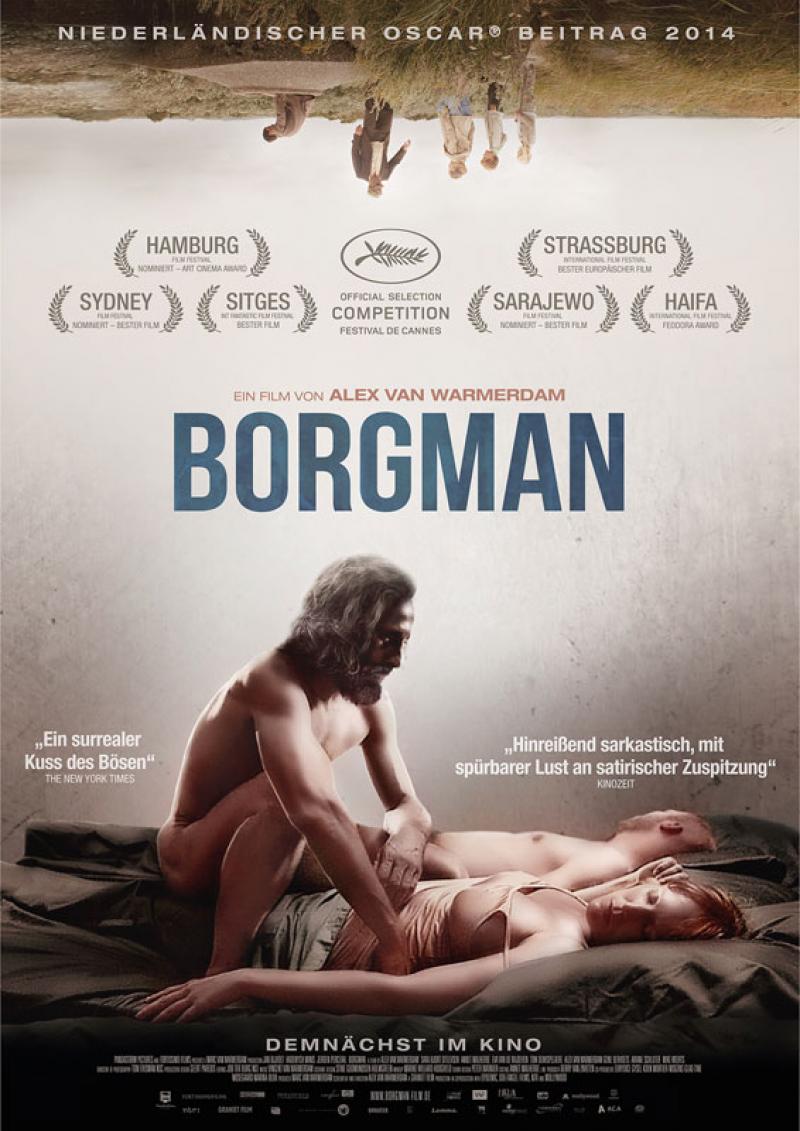
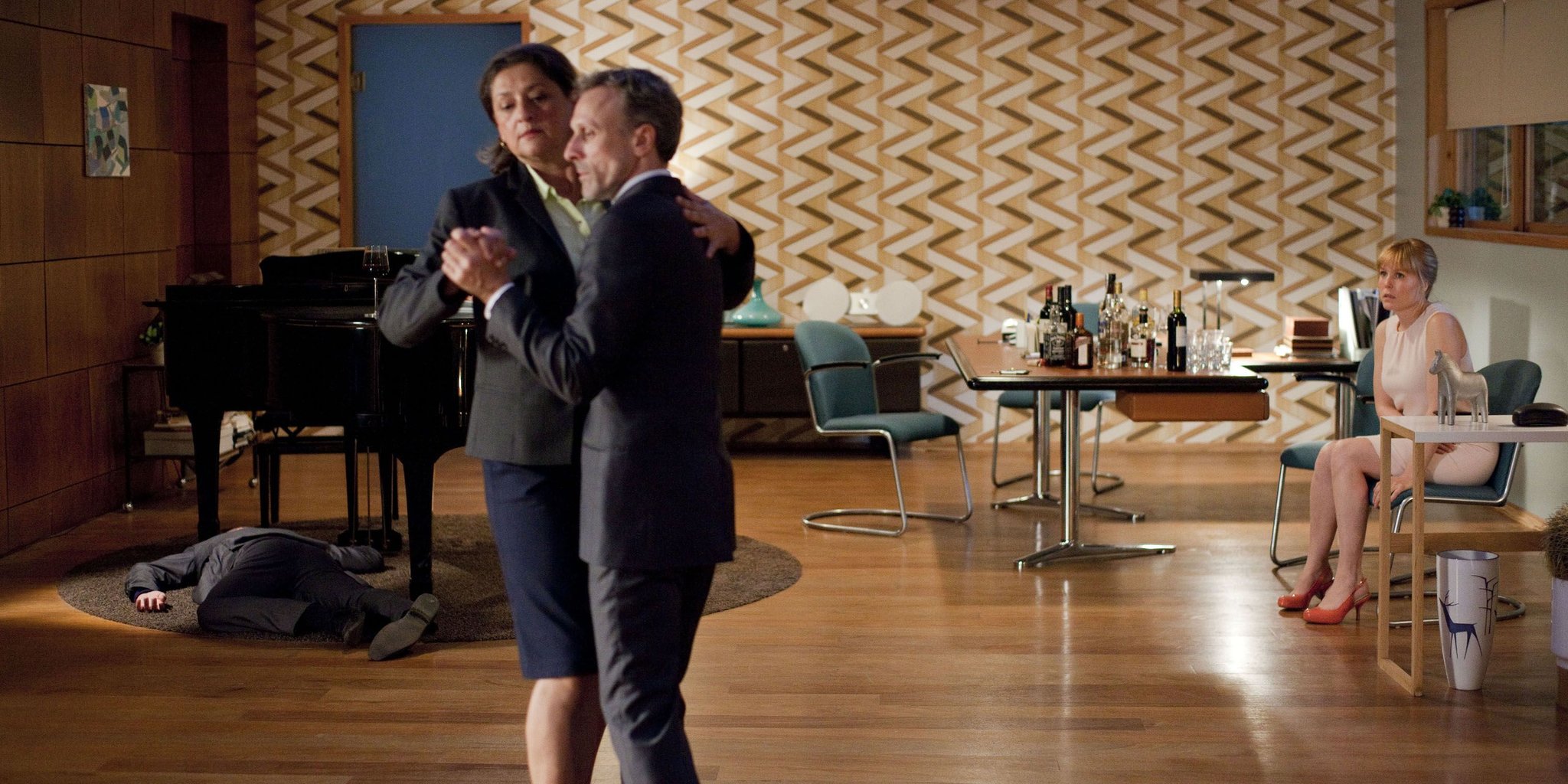
The first Dutch movie in thirty-eight years to be selected for the Cannes Film Festival, Borgman is a dark, psychological thriller that comes replete with supernatural overtones. It’s a strange movie, uneven in places, disconcerting in others, and too much of its narrative feels arbitrary, or is left unexplained, for it to work fully. The mystery of Camiel Borgman and his associates is never completely revealed (though there are clues sprinkled throughout the movie), and the relationship between Marina and Richard lacks sufficient exploration to be completely convincing. And yet the movie is deceptively fascinating despite all this, taking hold from the start and keeping the viewer’s attention until the very (disappointing) end.

What stops the movie from being as rewarding or effective as it could be is the curious motivations behind Borgman’s activities and those of his associates. With writer/director van Warmerdam appearing unsure of which side of the coin he wants to come down on – are they angels or demons? – the resulting uncertainty is reflected in the tone and the imagery of the movie. There’s a repeated visual reference to Henry Fuseli’s The Nightmare, where an incubus sits atop a sleeping woman (several times Borgman is seen astride Marina while she sleeps), but there’s also a scar on Borgman’s back that may represent the absence of wings. This causes a fair degree of confusion about the character’s motives and his reasons for choosing the van Schenkels as his targets (at first it seems as if they’ve been chosen at random but as the movie continues it seems more appropriate to think of them as having been picked out deliberately). It also leads to an unsatisfactory conclusion that is as puzzling as it is abrupt.

With the movie proving inconsistent – even though it’s absorbing at the same time – it’s left to the cast to help maintain any semblance of continuity. Bijvoet is mesmerising as the title character, his remote gaze and dispassionate regard for the people around him so exactingly portrayed it makes his performance completely unnerving; you just never know what he’s thinking. There’s a degree of urbanity about him that’s contrasted by his manipulative behaviour, but Bijvoet handles the various differences in the character of Borgman with ease. As the troubled, frustrated Marina, Minis is equally as good, and equally as mesmerising as Bijvoet, and she helps ground the more elaborate, metaphysical aspects of the script. Alas, Perceval isn’t given enough leeway to make Richard anything more than a bully and a probable victim of Borgman’s scheme to see the pair fall into his trap. With the remaining characters used to widen the narrative, but often to very little effect, the movie remains essentially a two-hander.

But again, Borgman is consistently absorbing and intriguing, and van Warmerdam works hard to stop the movie from becoming too abstruse, creating a tone that combines mystery, very dark humour, and psychological suspense to impressive effect. He’s aided by Tom Erisman’s clinical photography and Job ter Burg’s ascetic editing style, each adding to the somewhat distant effect used by van Warmerdam to highlight the dysfunction of the characters and their actions. There’s also some clever lighting effects used when necessary, and the score by Vincent van Warmerdam is cleverly suited and adapted to the material’s even pace and disturbing moments.

Rating: 6/10 – with the resolution of its central mystery proving so unsatisfying, Borgman wastes a lot of time setting things up only to forget to follow through; Bijvoet and Minis make for superb protagonists but can’t prop up van Warmerdam’s unwieldy script enough to save it completely.

Share this:

  • Click to share on X (Opens in new window) X
  • Click to share on Facebook (Opens in new window) Facebook
  • More
  • Click to print (Opens in new window) Print
  • Click to email a link to a friend (Opens in new window) Email
Like Loading...

Enemy (2013)

11 Friday Jul 2014

Posted by dullwood68 in Movies

≈ 1 Comment

Tags

Actor, Denis Villeneuve, Double, Drama, History teacher, Jake Gyllenhaal, Mélanie Laurent, Mystery, Psychological thriller, Sarah Gadon, Toronto

Enemy

D: Denis Villeneuve / 90m

Cast: Jake Gyllenhaal, Mélanie Laurent, Sarah Gadon, Isabella Rossellini, Joshua Peace, Tim Post

Adam Bell (Gyllenhaal) is an associate professor of history, a little removed from his colleagues and students, but in a relationship with Mary (Laurent), though this has its ups and downs.  On the advice of a fellow teacher (Peace), Adam rents a movie called Where There’s a Will There’s a Way.  That night he watches the movie, but it’s only later that same night that he’s awoken by the realisation that one of the bellhops in the movie – played by Daniel Saint Claire (Gyllenhaal) – looks exactly like him.  Fascinated by his discovery, Adam decides to track down the actor; an online search reveals the talent agency that represents him.  Adam visits the building where the agency is based and is mistaken for Saint Claire.  He receives an envelope that contains a letter addressed to Anthony Claire (the actor’s real name) at his home.  Adam goes there but is too nervous to call at the man’s apartment.  Instead he telephones Claire but his wife Helen (Gadon) answers.

Adam calls again when Anthony is home but the actor tells him not to call again.  Later, he changes his mind and agrees to meet Adam at a hotel.  Meanwhile, Helen, suspecting Anthony is cheating on her, goes to where Adam teaches and briefly speaks to him (though she doesn’t tell him who she is).  Adam and Anthony meet and find they are entirely identical, even down to a scar they both have on their chest.  Scared by this, Adam flees.  Now it’s Anthony’s turn to be fascinated by Adam: he finds out where Adam lives and sees him with Mary.  Anthony becomes infatuated with Mary and manipulates Adam into letting him take Mary away overnight.  Adam goes to Anthony’s apartment and stays there until  Helen arrives home, and as the evening progresses, the two couples’ lives become inextricably entwined…

Enemy - scene

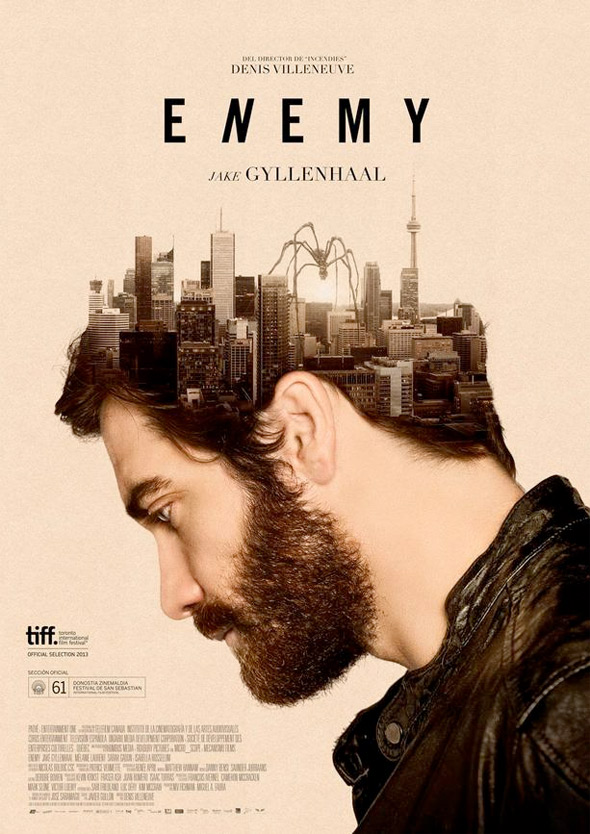
Right from the start, with its opening scene set in an underground sex club, Enemy lets its audience know that it’s not going to be the type of psychological drama/thriller where things are explained too easily.  That scene, with its ritualised stage show, serves as an introduction to the wider mystery that envelops Adam, and yet it remains frustratingly unexplored (though it is referred to later on in the movie).  For the casual viewer, frustration is the one constant the movie cleaves to, as scene after scene fails or refuses to give an explicit reason for what’s happening; very little can be accepted or relied upon at face value.  Enemy is a movie where inference and supposition will only get the viewer so far, and where the plot’s strange twists and turns only serve to make things more convoluted and disorienting.

And while some might find this counter-productive in terms of getting the most out of the movie, ultimately it enhances the experience, with director Villeneuve’s decision to make some scenes completely enigmatic while lacing others with complex misdirection, adding to the sense of unease that the movie builds up.  It’s an accomplished piece of deconstruction, removing key elements that most other movies would rush to include in order to make things easier for the audience.  Here Villeneuve avoids any attempt at clarity, and by doing so, creates a deceptively elegant, thought-provoking movie that rewards more and more with each repeat viewing.

He’s aided by an impressively layered script by Javier Gullón (adapted from the novel, The Double, by José Saramago), that makes a virtue of ambiguity and provokes as many questions as can be reasonably squeezed into ninety minutes.  It’s a delicate balancing act, providing just enough information to keep the viewer intrigued and baffled at the same time, while choosing to reveal very little through either characterisation or dialogue (unless you’re paying very close attention).  Between them, Gullón and Villeneuve have designed a movie that defies conventions and exceeds expectations with a great deal of audacity and artistic brio.

Of course, none of this would be possible without the participation of Gyllenhaal, who excels as Adam and Anthony, his performances so finely attuned to the material that he doesn’t put a foot wrong throughout, whether he’s required to play nervous and scared (Adam) or confident and predatory (Anthony).  It’s his finest role to date, and proof (if any were needed) that he is one of the best actors around today.  He’s ably supported by Laurent in a role that appears to be underwritten but which fits perfectly with the storyline, and Gadon (also seen in Belle), whose portrayal of Anthony’s loyal but emotionally scarred wife matches Gyllenhaal’s performance for intensity and poignancy.

The look of the movie (bearing in mind it’s set in Toronto) is suitably chilly, and the colour scheme – a mix of dark browns and greys – complements the often oppressive nature of the storyline, and the movie’s sense of impending doom.  There’s also a fantastic, unnerving score by Danny Bensi and Saunder Jauriaans that is both portentous and imposing at the same time, adding a dark undercurrent to proceedings that is strikingly effective.  Technically daring, Enemy succeeds by grounding its ambiguous, sometimes fantastical, storyline and plot in a world where the mystery surrounding Adam and Anthony can be perceived as both rational and weird… and it still works.

Rating: 9/10 – a modern classic, precisely assembled and without an ounce of cinematic fat to it, Enemy is a psychological thriller that mesmerises with ease and ends with a visual punch to the gut that you definitely won’t see coming; the first of (hopefully) many more remarkable collaborations between Villeneuve and Gyllenhaal, and deserving of a much wider audience.

Share this:

  • Click to share on X (Opens in new window) X
  • Click to share on Facebook (Opens in new window) Facebook
  • More
  • Click to print (Opens in new window) Print
  • Click to email a link to a friend (Opens in new window) Email
Like Loading...

Twixt (2011)

16 Saturday Nov 2013

Posted by dullwood68 in Movies

≈ 1 Comment

Tags

Bruce Dern, Drama, Edgar Allan Poe, Elle Fanning, Francis Ford Coppola, Horror, Murder investigation, Murders, Old Chickering hotel, Psychological thriller, Review, Swann Valley, Thriller, Val Kilmer

D: Francis Ford Coppola / 88m

Cast: Val Kilmer, Bruce Dern, Elle Fanning, Ben Chaplin, Joanne Whalley, David Paymer, Anthony Fusco, Alden Ehrenreich, Bruce A. Miroglio

Several years ago, Francis Ford Coppola announced he would be making only personal films, and since then we’ve had Youth Without Youth (2007), Tetro (2009), and now Twixt, ostensibly a horror movie but one that veers off down several different paths before its conclusion.

Hall Baltimore (Kilmer) is a moderately successful writer of witchcraft-themed horror novels.  He’s also in a bit of a creative slump.  While on a book tour, he finds himself in the small town of Swann Valley. He meets Sheriff Bobby LeGrange (Dern) who tells him about a mystery that involves a dead girl and a group of teens camped out across the lake. The girl is recently deceased, “obviously the victim of a serial killer”, according to LaGrange, and still in the sheriff’s office-cum-morgue with a stake through her heart. That night, Baltimore falls asleep and dreams of walking through town and out into the surrounding woods. There he meets V (Fanning), a young girl who looks drained of blood. They go to the Old Chickering Hotel where Baltimore learns that the bodies of twelve children are buried under the floor. This adds to the mystery, and when Baltimore wakes up he realises the answers to both his creative slump and the murder of the dead girl are to be found in his dreams.

To give a fuller description of the plot would take a while as Coppola, serving as writer, producer and director, piles layer upon layer of story onto the already overloaded plotting.  There’s several appearances by Edgar Allan Poe (Chaplin) who helps Baltimore in his dreams but also provides some literary allusions to the main plot. There’s a sub-plot involving a seven-sided clock tower where each clock face tells a different time. The twelve children were the charge of Pastor Allan Floyd (Fusco); there’s a protracted sequence involving a Jim Jones-style massacre. LaGrange acts strangely throughout, at one point knocking Baltimore unconscious out of anger (but also as a handy device for getting him to the next dream sequence). Baltimore is also mourning the death of his teenage daughter, while fending off the financial needs of his wife Denise (Whalley). The teens across the river, led by Beaudelaire-quoting Flamingo (Ehrenreich), provide temporary relief from the increasing pretentiousness of all the other proceedings. Oh, and there’s a scene involving a Ouija board, and Baltimore fighting writer’s block by impersonating Marlon Brando (with a near-quote from Apocalypse Now) and James Mason amongst others, and an ending so abrupt you might wonder if you’ve nodded off and missed a few minutes.

Twixt - scene

From all this you could be forgiven for thinking that Twixt is a bit of a mess, and largely it is. Coppola has applied a kind of kitchen sink approach to the movie, and it would be a dedicated viewer – one prepared to watch it several times in fact – who could find a strict, coherent storyline that runs through the movie, and who could adequately explain the various diversions that Coppola includes. However, it’s unclear if Coppola himself knows exactly what’s going on, or why, and if he doesn’t, then the rest of us don’t stand a chance.

Visually, though, the movie is often stunning to look at, the initial dream sequences – at the Old Chickering hotel, Baltimore’s chat with Poe in the same location – all have a weird, surreal quality that suits the action that’s unfolding. The characters speak with a slight hollowness, and the colour scheme, all grey, metallic hues, looks wonderfully unsettling. This is where Twixt works best, in the dreamworld that Baltimore inhabits as often as he can. Coppola pulls out all the stops in these sequences, imbuing them with a sense of predatory menace that elevates them from perfunctory scenes of exposition to something more disquieting. Alas, the scenes in the real world lack any kind of sense or coherence, and as a result, bog down the movie unnecessarily.

The cast do their best under the circumstances, Kilmer injecting some humour when he can at the absurdity of LaGrange’s eccentricities, but otherwise going with the flow and committing to the script’s vagaries. Dern adds another oddball character to his repertoire, while Fanning plays the girl who may or may not have gotten away from the pastor (it’s never made clear) with an appropriate detachment. Chaplin copes well with some really dense, literary dialogue, and rest of the supporting cast do the best they can as well, particularly Miroglio as Deputy Arbus.

Ultimately, the best that can be said about Twixt is that it’s no better or worse than a lot of other horror movies made in the last five years, but definitely a step up visually.  Coppola still knows how to construct a scene and have it play out – even if the internal logic is skewed – and he still has the confidence borne out of his many years as a director.  He may not have made the best decision in working from his own script, and if truth be told, this may not be the best version of that script (some of the cast have apparently seen an earlier, different version), but despite the absurdities and the incoherent plot, Twixt still has enough going for it to make it worth watching, even if it’s just to say you have.

Rating: 6/10 – Coppola delivers what appears to be a train wreck of a movie, but on closer inspection, there’s still a few carriages on the track to rescue things; worth seeing for its hallucinogenic visuals and Kilmer back on form after too many low-budget thrillers.

Share this:

  • Click to share on X (Opens in new window) X
  • Click to share on Facebook (Opens in new window) Facebook
  • More
  • Click to print (Opens in new window) Print
  • Click to email a link to a friend (Opens in new window) Email
Like Loading...

Blog Stats

  • 486,528 hits

Recent Posts

  • 10 Reasons to Remember Bibi Andersson (1935-2019)
  • Fantasia (1940)
  • Dances With Wolves (1990) – The Special Edition
  • Kiss of the Spider Woman (1985)
  • The Three Musketeers (1973)

Top Posts & Pages

  • Lost for Life (2013) - Another Look
    Lost for Life (2013) - Another Look
  • Lost for Life (2013)
    Lost for Life (2013)
  • About
    About
  • Mr. Topaze (1961)
    Mr. Topaze (1961)
  • Winter's Tale (2014)
    Winter's Tale (2014)
  • Billy Lynn's Long Halftime Walk (2016)
    Billy Lynn's Long Halftime Walk (2016)
  • The Hitman's Bodyguard (2017)
    The Hitman's Bodyguard (2017)
  • Shock and Awe (2017)
    Shock and Awe (2017)
  • 5 Famous Movie Roles That Nearly Went to Someone Else
    5 Famous Movie Roles That Nearly Went to Someone Else
  • The Layover (2017)
    The Layover (2017)
Follow thedullwoodexperiment on WordPress.com

Blogs I Follow

  • Rubbish Talk
  • Film 4 Fan
  • Fast Film Reviews
  • The Film Blog
  • All Things Movies UK
  • Interpreting the Stars
  • Let's Go To The Movies
  • Movie Reviews 101
  • TMI News
  • Dan the Man's Movie Reviews
  • Film History
  • Jordan and Eddie (The Movie Guys)

Archives

  • April 2019 (13)
  • March 2019 (28)
  • February 2019 (28)
  • January 2019 (32)
  • December 2018 (28)
  • November 2018 (30)
  • October 2018 (29)
  • September 2018 (29)
  • August 2018 (29)
  • July 2018 (30)
  • June 2018 (28)
  • May 2018 (24)
  • April 2018 (21)
  • March 2018 (31)
  • February 2018 (25)
  • January 2018 (30)
  • December 2017 (30)
  • November 2017 (27)
  • October 2017 (27)
  • September 2017 (26)
  • August 2017 (32)
  • July 2017 (32)
  • June 2017 (30)
  • May 2017 (29)
  • April 2017 (29)
  • March 2017 (30)
  • February 2017 (27)
  • January 2017 (32)
  • December 2016 (30)
  • November 2016 (28)
  • October 2016 (30)
  • September 2016 (27)
  • August 2016 (30)
  • July 2016 (30)
  • June 2016 (31)
  • May 2016 (34)
  • April 2016 (30)
  • March 2016 (30)
  • February 2016 (28)
  • January 2016 (35)
  • December 2015 (34)
  • November 2015 (31)
  • October 2015 (31)
  • September 2015 (34)
  • August 2015 (31)
  • July 2015 (33)
  • June 2015 (12)
  • May 2015 (31)
  • April 2015 (32)
  • March 2015 (30)
  • February 2015 (37)
  • January 2015 (39)
  • December 2014 (34)
  • November 2014 (34)
  • October 2014 (36)
  • September 2014 (25)
  • August 2014 (29)
  • July 2014 (29)
  • June 2014 (28)
  • May 2014 (23)
  • April 2014 (21)
  • March 2014 (42)
  • February 2014 (38)
  • January 2014 (29)
  • December 2013 (28)
  • November 2013 (34)
  • October 2013 (4)

Create a free website or blog at WordPress.com.

Rubbish Talk

Film 4 Fan

A Movie Blog

Fast Film Reviews

The Film Blog

The official blog of everything in film

All Things Movies UK

Movie Reviews and Original Articles

Interpreting the Stars

Dave Examines Movies

Let's Go To The Movies

Film and Theatre Lover!

Movie Reviews 101

Daily Movie Reviews

TMI News

Latest weather, crime and breaking news

Dan the Man's Movie Reviews

All my aimless thoughts, ideas, and ramblings, all packed into one site!

Film History

Telling the story of film

Jordan and Eddie (The Movie Guys)

Movie Reviews & Ramblings from an Australian Based Film Fan

Privacy & Cookies: This site uses cookies. By continuing to use this website, you agree to their use.
To find out more, including how to control cookies, see here: Cookie Policy
  • Subscribe Subscribed
    • thedullwoodexperiment
    • Join 481 other subscribers
    • Already have a WordPress.com account? Log in now.
    • thedullwoodexperiment
    • Subscribe Subscribed
    • Sign up
    • Log in
    • Report this content
    • View site in Reader
    • Manage subscriptions
    • Collapse this bar
 

Loading Comments...
 

    %d