• 10 Reasons to Remember…
  • A Brief Word About…
  • About
  • For One Week Only
  • Happy Birthday
  • Monthly Roundup
  • Old-Time Crime
  • Other Posts
  • Poster of the Week
  • Question of the Week
  • Reviews
  • Trailers

thedullwoodexperiment

~ Viewing movies in a different light

thedullwoodexperiment

Tag Archives: Ralph Fiennes

The LEGO Batman Movie (2017)

24 Friday Feb 2017

Posted by dullwood68 in Movies

≈ 1 Comment

Tags

Action, Alfred, Animation, Batman, Chris McKay, Comedy, Drama, Lego, Michael Cera, Ralph Fiennes, Review, Robin, Rosario Dawson, The Joker, The Phantom Zone, Will Arnett, Zach Galifianakis
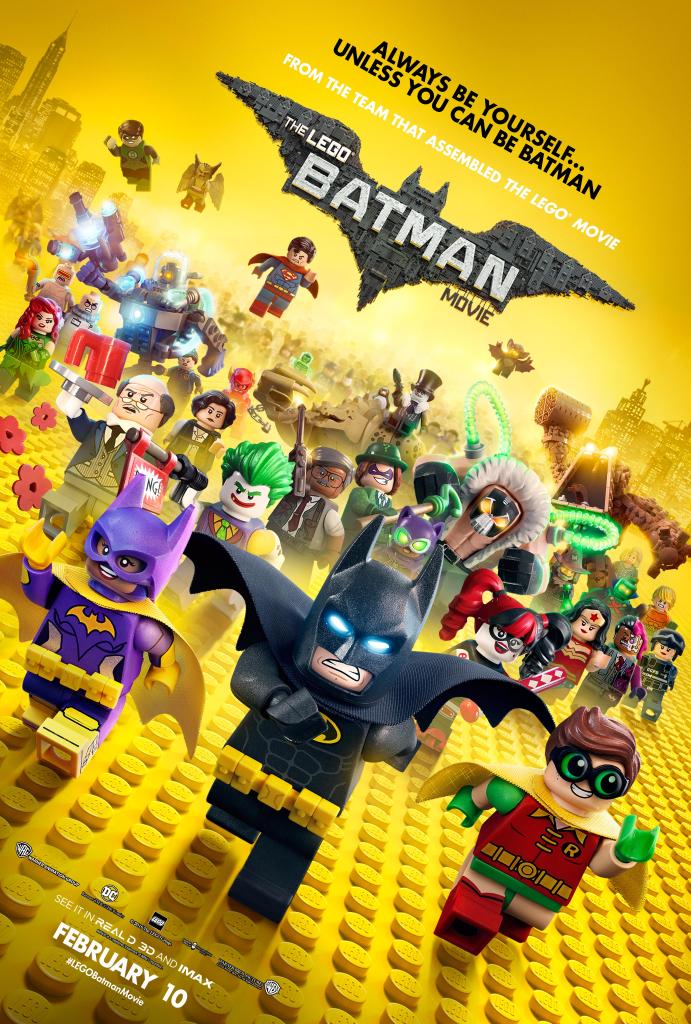
cym_yo1w8aqqn_z

D: Chris McKay / 104m

Cast: Will Arnett, Zach Galifianakis, Michael Cera, Rosario Dawson, Ralph Fiennes, Hector Elizondo, Jenny Slate, Channing Tatum, Jason Mantzoukas, Conan O’Brien, Doug Benson, Billy Dee Williams, Zoë Kravitz, Kate Micucci, Riki Lindhome, Eddie Izzard, Seth Green, Jemaine Clement, Ellie Kemper, Jonah Hill, Adam Devine, Mariah Carey

A black screen. And then… “Black. All important movies start with a black screen. And music. Edgy, scary music that would make a parent or studio executive nervous. And logos. Really long and dramatic logos. Warner Bros. Why not Warner Brothers? I dunno. DC. The house that Batman built. Yeah, what Superman? Come at me bro. I’m your kryptonite. Hmm, not sure what RatPac does but that logo is macho. I dig it. Okay, get yourself ready for some… reading. If you wanna make the world a better place, take a look at yourself and make a change. Hoooo. [attributed to Michael Jackson] No, I said that. Batman is very wise. I also have huge pecs and a nine pack. Yeah, I’ve got an extra ab. Now lets start the movie.” …and that’s just the first couple of minutes.

After the success of The LEGO Movie (2014), it was inevitable that a spin-off movie featuring the Caped Crusader would eventually hit our screens. Above all the other superheroes in that movie, it was Batman (Arnett), and his wonderfully egotistical repartee that grabbed the audience’s attention (“Bruce Wayne? Uh… who’s that? Sounds like a cool guy”). Now, he’s back, and this time he faces his biggest challenge. No, not the Joker (Galifianakis), or Catwoman (Kravitz), or Scarecrow (Mantzoukas), but… accepting he’s part of a family.

thelegobatman_trailer4

After foiling another of the Joker’s dastardly plans to destroy Gotham, and flatly denying the Joker’s assertion that he is Batman’s greatest enemy, the (brick)Bat heads back to the Batcave and a lonely evening at Wayne Manor (now on Wayne Island). The next night, at a gala to celebrate the retirement of Commissioner Gordon (Elizondo), his successor, his daughter Barbara (Dawson), announces that she intends to restructure Gotham’s police force to function without Batman’s help. The Joker turns up unexpectedly with all the other Gotham villains, and surrenders. Batman is immediately suspicious that the Joker is up to something, and aware that his arch-rival Superman (Tatum) banished General Zod to the Phantom Zone, decides this is what should happen to the Joker.

Before he can acquire Superman’s Phantom Zone Projector (PZP from now on), Batman is reminded by his butler, Alfred (Fiennes), that while he was at the gala, he inadvertently adopted an orphan (“My name is Richard Grayson. The other kids call me Dick.” “Well, children can be cruel.”). Batman allows “Dick” to help him and his young ward takes on the superhero identity, Robin. Together they steal the PZP from Superman’s Fortress of Solitude, and visit Arkham Asylum where they use it on the Joker. The new Commissioner reacts badly to this, and she has both Batman and Robin locked up. But Harley Quinn (Slate), the one villain who didn’t surrender, steals the PZP and uses it to free the Joker. In turn he uses it to free all the villains trapped in the Phantom Zone, a group that includes Lord Voldemort (Izzard), the Daleks, and the Eye of Sauron (Clement) (but strangely, not General Zod).

lego-batman-sdcc-1_9b94b532939c45c0b268d9d8bde646ea

With Gotham once again facing terrible ruin and destruction, Commissioner Gordon (or Babs as Batman calls her) realises she needs Batman and Robin’s help, and the three of them team up with Alfred to take on all the super-villains now loose in Gotham. Attacked on all sides, the quartet manage to see off the Eye of Sauron (and an embarrassed Kraken) before making it to Wayne Island and a showdown with the Joker. But Batman can’t risk losing the three people who now mean the most to him, and so he tricks them, and faces the Joker alone. But his plan quickly backfires on him, and the Caped Crusader finds himself in the Phantom Zone, while his new “family” do their utmost to try and save him…

The LEGO Batman Movie, like its predecessor, crams an awful lot into its running time, but although the plot thickens at a fast pace, and the jokes come even thicker and faster (a second viewing is practically unavoidable if you want to “get” all the in-jokes and references to previous Batman movies and comics), but thanks to a script by Seth Grahame-Smith, Chris McKenna, Erik Sommers, Jared Stern and John Whittington that defies the idea that “too many cooks spoil the broth”, the storyline is easy to follow, and the main subplot involving Batman not going it alone is stressed over and over (in fact, a little too much). It also provides one of the best Batman/Joker story arcs seen for quite some time, as the Joker’s need to be hated by Batman casts their adversarial relationship in the light of an unrequited bromance.

the-lego-batman-movie-villains-harley-quinn-231392

But while the script adds layers that you wouldn’t necessarily expect to find in a semi-sequel animated movie, it certainly doesn’t skimp on the comedy, and like The LEGO Movie, it’s a riot of visual gags, verbal one-liners, and sit-com moments that all gel together into a splendidly anarchic whole. It also takes as many opportunities as it can to poke fun at previous Batman movies – at one point, Alfred chides Batman’s behaviour as something he’s seen “in 2016 and 2012 and 2008 and 2005 and 1997 and 1995 and 1992 and 1989 and that weird one in 1966 (cue LEGO versions of Batman’s previous big screen outings; well, except for that weird one) – while taking a few sideswipes at other superhero movies. If anything, there’s a greater success rate here than in 2014, and the writing team should be congratulated for making this feel as fresh and as appealing as its forerunner.

Of course, the cast have a lot to do with it as well, with Arnett now in a position to lay claim to the title of Best Batman Voice Artist Ever. Whether he’s being arrogantly charming, obtuse, horrified by Robin’s liking for disco music, or struggling to say the word “sorry”, Arnett’s performance is immensely entertaining, and it’s clear the actor is having a blast. This is reflected in the performances of the rest of the cast, with Galifianakis, Cera, Fiennes, and Slate all on top form, while Dawson is unfortunately stuck with being the straight (wo)man to Arnett’s comic embellishments. The movie looks wonderful as well, with the LEGO sets combining beautifully with the CGI elements, and there’s a level of inspired visual invention that you can only get from an animated movie. If there’s one criticism to be made in this respect, it’s that some of the super-villains – the Daleks, the Gremlins, and the Kraken in particular – don’t look as good as most of the others do. But when a movie is otherwise as visually and comedically ingenious as this is, then what’s a few dodgy character designs between super-villains?

Rating: 8/10 – in amongst all the vivid action and the crunching noise, The LEGO Batman Movie is a good-natured, entertaining… movie that doesn’t waste a frame or the chance to put a smile on its audience’s faces; better by far than its live action brethren, it does more with the character in one outing than ever before, and does so in a way that’s still respectful of the source material, even though said material is being pulled around and twisted out of shape in the pursuit of gags, gags, and more gags.

Share this:

  • Click to share on X (Opens in new window) X
  • Click to share on Facebook (Opens in new window) Facebook
  • More
  • Click to print (Opens in new window) Print
  • Click to email a link to a friend (Opens in new window) Email
Like Loading...

Kubo and the Two Strings (2016)

30 Wednesday Nov 2016

Posted by dullwood68 in Movies

≈ 3 Comments

Tags

Adventure, Animation, Art Parkinson, Charlize Theron, Drama, Fantasy, Laika, Matthew McConaughey, Moon King, Ralph Fiennes, Review, Travis Knight

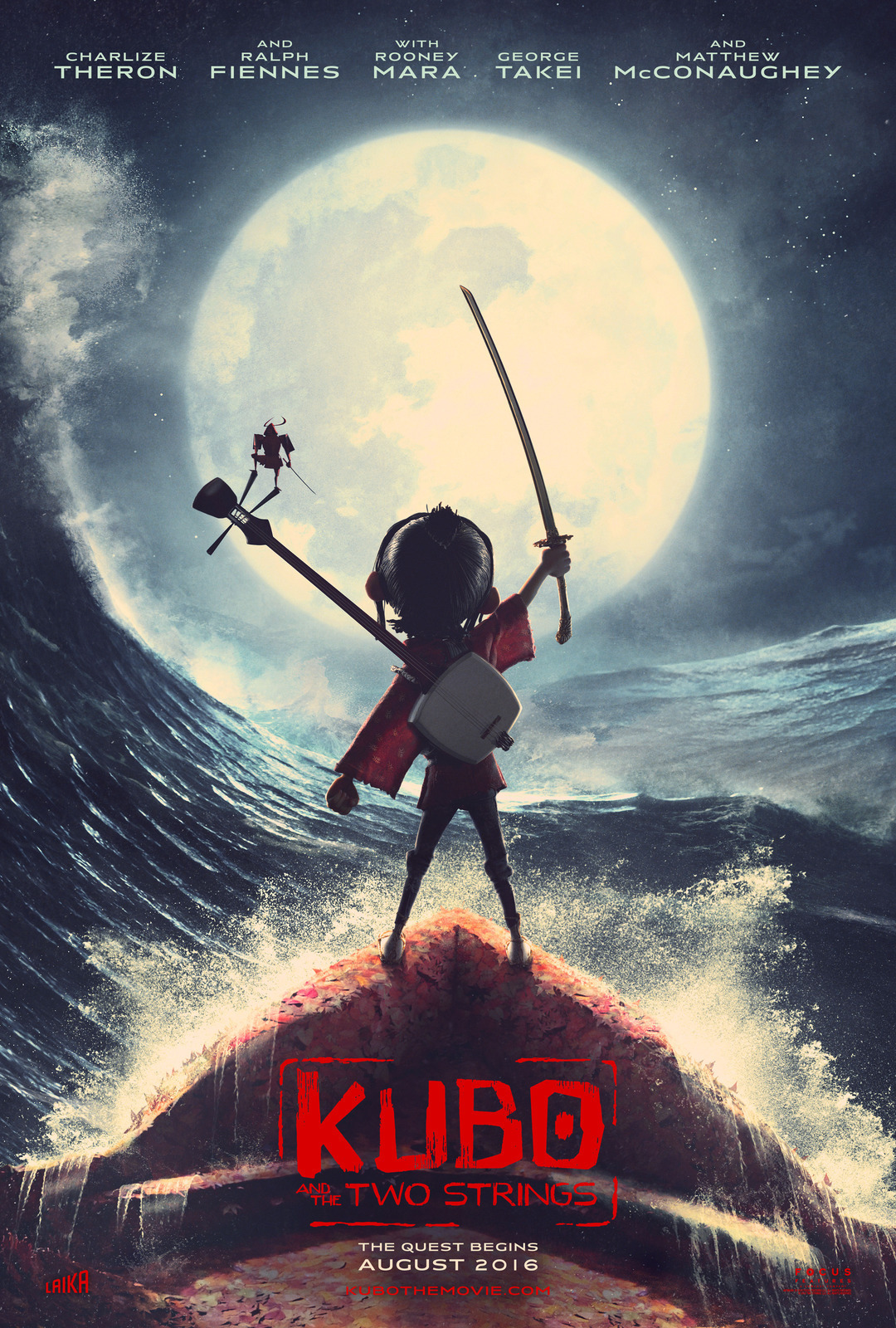
kubo

D: Travis Knight / 102m

Cast: Charlize Theron, Art Parkinson, Matthew McConaughey, Ralph Fiennes, Rooney Mara, Brenda Vaccaro, George Takei, Cary-Hiroyuki Tagawa

In Ancient Japan, a young mother, Sariatu (Theron), is washed ashore with her infant son, Kubo. She is fleeing her family: her father, the Moon King (Fiennes) and her two sisters (both Mara). Her sisters have killed her husband, Hanzo, and stolen Kubo’s left eye for their father; and now he wants Kubo’s other eye. The infant grows into a young boy (Parkinson) who looks after his mother by night, and by day, tells stories to the folk in the nearby village, and who uses the magic he’s inherited from his mother to animate pieces of paper to help tell his tales. Kubo is well-liked, but often he can’t finish his stories because he has to be back before sunset, or his aunts will find him.

When an Obon festival proves too tempting to miss, Kubo finds himself still near the village when night – and his aunts – descend. They attack him, but he’s saved by the intervention of his mother; later she succumbs to her sisters and Kubo is left alone… though not for long. He finds he has a companion on a trek to track down his father’s sword, armour and helmet. The companion is called Monkey (Theron), and she was once a little wooden snow monkey charm that Kubo carried with him everywhere. Now she acts as his guide and protector, as the pair set off to find Hanzo’s equipment. Along the way they meet Beetle (McConaughey), one of Hanzo’s apprentices, who agrees to go with them.

kubo-and-the-two-strings-screenshot-11-1200x675-c

They find the sword in a cave full of bones, and cross the Long Lake in a boat woven together by leaves and thanks to Kubo’s magic. But they’re attacked by Sariatu’s sisters, just as Kubo attempts to retrieve the armour from the bottom of the lake. With only the helmet to be retrieved, the trio travel to Hanzo’s home where Kubo has a dream about an old man (Fiennes). Tricked into travelling to the village near where he lived, Kubo must face the Moon King alone, and find a way of avoiding the fates of his mother and father.

A vibrant, multi-layered fantasy adventure, Kubo and the Two Strings is animation company Laika’s fourth release, following Coraline (2009), ParaNorman (2012), and The Boxtrolls (2014). With such a track record already firmly in place, the chances of Kubo… not adding to that run of successes seems unlikely, and on a critical level, so it proves. But in a year when animation has accounted for three of the top five grossing movies, Laika’s latest has stumbled at the box office, only just earning back its budget. And yet, it’s easily better than two of those three top grossing movies – Finding Dory and The Secret Life of Pets – and on a par with the third, Zootopia. With its impressive visuals, cleverly constructed storyline, and accessible characters, Kubo and the Two Strings is a triumph that brings together those aforementioned elements, and compliments them with style, originality and verve.

kubo-and-the-two-strings-review-02

It’s all due to the script by Marc Haimes and Chris Butler, and the efforts of first-time director Knight (he’s also Laika’s president and CEO). There’s such a richess of detail, both in the dialogue and the characters, that the visual backgrounds and their immediate surroundings don’t always register as the beautifully created world that said characters exist in. Ancient Japan has been witnessed in so many other movies over the years that it should be hard to bring a fresh perspective to the period and the milieu. But Laika’s expert team of animators – working with CGI and traditional stop-frame animation – achieve the movie’s distinctive look with ease, blending the two animation formats to perfection and helping the viewer immerse themselves in this beautiful yet dangerous environment.

The animators have done their homework too. The sisters’ fighting styles are straight out of several highly successful martial arts/wire-fu movies, and there’s a crispness to the movements of the characters when in combat that is both arresting and profound (if you think that’s a little over the top for an animated movie, then just watch the scene where the sisters attack the boat, and see just how much effort has gone into making their actions so intense and so precise, and so exciting). There’s also an energy in these scenes that doesn’t appear anywhere else in the movie, and while that may sound like a criticism, there’s nothing anyone could – or should – do about it. (And that goes for the eyes in the sea, one of the most remarkable visual effects seen in recent years.)

kubo_and_the_two_strings-900x489

With its themes of loss and regret, and love and perseverance, the movie isn’t quite the children’s feature that some viewers may be expecting, but Laika have always been most impressive when introducing adult themes into their projects, and Kubo… is no exception. By adding depth to Kubo’s quest, and by introducing a layer of melancholy to it all, Knight and his team create a dynamic among the characters – good and bad – that can be appreciated by viewers of (nearly) all ages. It’s a delicate balancing act but one they pull off with unwavering conviction. And the way in which Kubo’s quest is resolved, and the Moon King’s threat is neutralised, it’s all accomplished in such a constructive, intelligent – and affecting – way that it offers viewers a much more satisfying conclusion all round.

As usual with a Laika production, the voice cast has been chosen with care. Theron brings a tenderness and subtlety to her performances that works perfectly for both characters, while McConaughey injects a mix of broad and pointed humour into his role as Beetle (even if his Southern drawl is allowed to slip through too often to maintain any consistency of voice). Parkinson effectively portrays the sadness and hopeful determination that combine to push Kubo ever forward, Mara essays the sisters as chilling echoes of each other, and Fiennes is formidable as the Moon King.

Rating: 9/10 – very minor quibbles aside, Kubo and the Two Strings is another triumph for Laika, and one of the very best animated movies of this or any other year; touching, poignant and thrilling, it features ravishing animation, terrifying villains, and speaks to the viewer on an emotional level that most live action movies fail to come even close to.

Share this:

  • Click to share on X (Opens in new window) X
  • Click to share on Facebook (Opens in new window) Facebook
  • More
  • Click to print (Opens in new window) Print
  • Click to email a link to a friend (Opens in new window) Email
Like Loading...

Spectre (2015)

10 Tuesday Nov 2015

Posted by dullwood68 in Movies

≈ Leave a comment

Tags

007, Action, Adventure, Andrew Scott, Ben Whishaw, Christoph Waltz, Daniel Craig, Dave Bautista, Eon Productions, Franchise, Ian Fleming, James Bond, Jesper Christensen, Léa Seydoux, M, MI5, Miss Moneypenny, Monica Bellucci, Mr Hinx, Mr White, Naomie Harris, Q, Ralph Fiennes, Sam Mendes, Sequel, Thriller

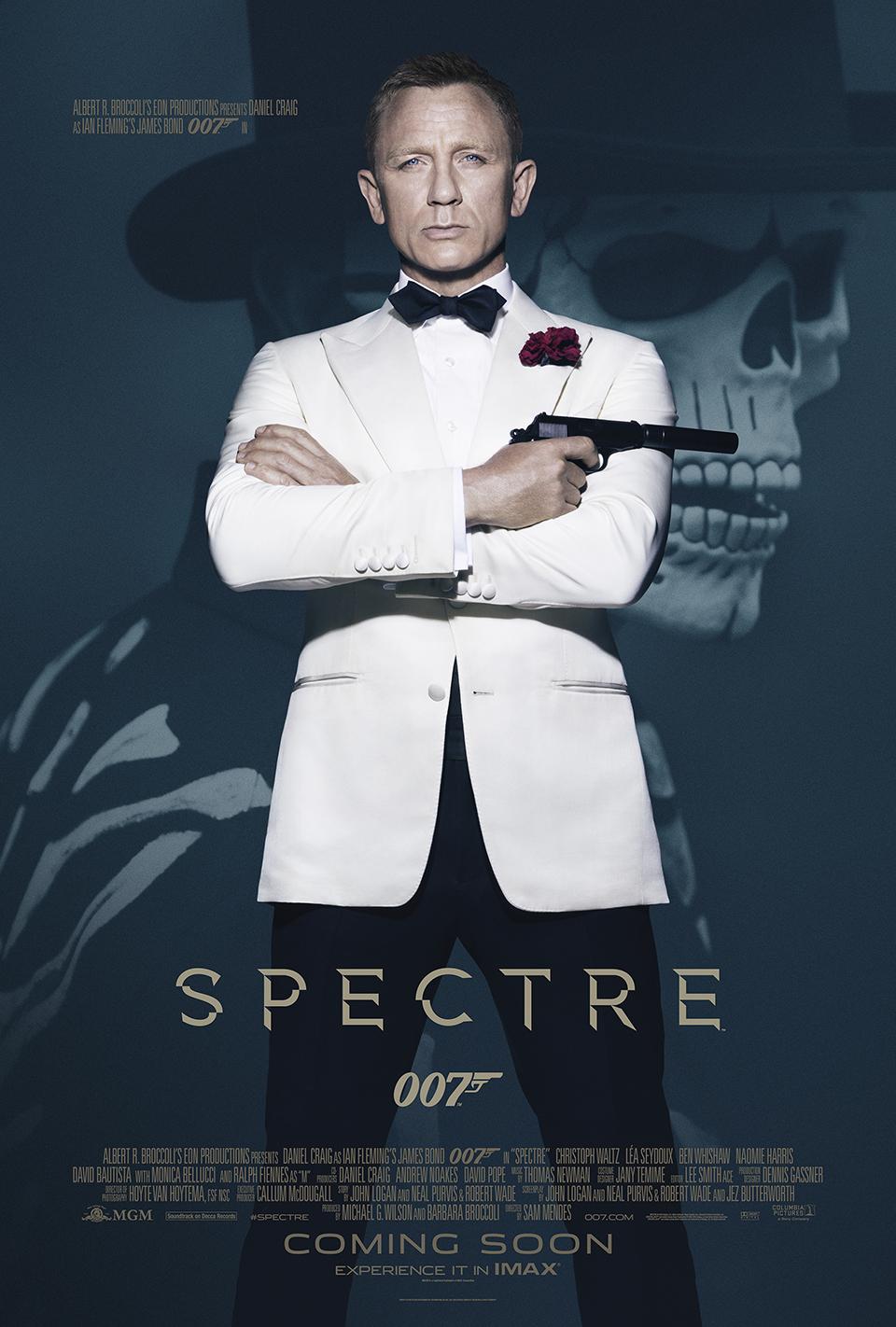
Spectre

D: Sam Mendes / 148m

Cast: Daniel Craig, Christoph Waltz, Léa Seydoux, Ralph Fiennes, Ben Whishaw, Naomie Harris, Monica Bellucci, Dave Bautista, Andrew Scott, Rory Kinnear, Jesper Christensen, Alessandro Cremona

And so, here we are again, back in familiar territory: after a run of three movies with a new actor playing James Bond, and with the material getting worse and worse, we arrive at a fourth movie that neither grips or excites, boasts a decent script or direction, and which labours through its extended running time like an asthmatic running a half-marathon. We could be talking about Die Another Day (2002), but instead we’re talking about Spectre, the latest in the oft-rebooted franchise, and possibly Daniel Craig’s last outing as Bond (he may do one more but nothing’s definite yet).

It’s been a relatively short nine years since Casino Royale exploded onto our screens in a welter of frenzied, punishing action sequences, and one of the best Bond scripts ever. It was everything you could ever hope for from a Bond movie, and then some, and for many fans it went straight to the top of their favourite Bond movie list. There were some psychological aspects to it in terms of Bond’s behaviour, the best Bond villain for an age, and as an “origin story” it worked much better than most. But most of all it was fun with a capital F.

And then there came the inevitable stumble with Quantum of Solace (2008). A straight-out revenge flick but with James Bond as the central character, it was basically a direct follow-up to Casino Royale that suffered from a weak villain and a mid-section that dragged as if the writers had lost focus on the story they were telling. But it did have some great action sequences, just as tough and brutal as before, and a great performance from Craig. (If you watch it back to back with Casino Royale as a four hour movie it plays a lot better than on its own.)

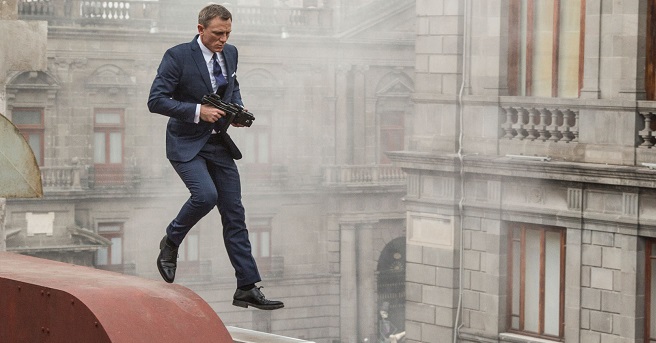
Spectre - scene2

Now at this stage, the producers brought on board Sam Mendes to helm the third outing for Craig, and he delivered the most successful Bond movie to date: Skyfall (2012). But while critics and fans heaped praise on the first Bond movie to make over a billion dollars at the box office, less easily swayed viewers could see the cracks starting to show as the writers tried to include a mystery relating to Bond’s past. And there were problems elsewhere, where the script showed signs of laziness (the train crash – how could Silva have “known” that he and Bond would meet at that particular place and time for the train to come crashing through the ceiling?).

That laziness has been extended to Spectre, with its tired action sequences (only the fight on the train between Bond and Mr Hinx has any energy or verve about it), eggshell thin characterisations (why does it seem as if Vesper Lynd is the only female character in the Bond franchise with any depth?), nonsensical reason for the villain’s actions (whatever happened to blackmailing the world’s leaders into not killing them with hijacked nukes?), and nods to previous entries in the franchise that only serve to remind audiences of the good old days when Bond just got on with the job and didn’t have to deal with questions about his lifestyle or any emotional scarring arising out of his childhood.

There’s also the absurd plot about linking all the world’s security systems under one (though it looks as if Waltz’s character is already doing that anyway), and then there’s Christoph Waltz’s ersatz-Blofeld scampering around like an escaped inmate from Bellevue, and providing none of the menace required to make his character a match for Bond’s determination and drive; in fact, he has more in common with Elliot Carver, Jonathan Pryce’s crazed media tycoon in Tomorrow Never Dies (1997) (but that’s still not a recommendation). Waltz is a good actor, but he’s all too often an actor making his own decisions about playing a role, and without, it seems, much instruction from the director. Here he tries the playful über-villain too often for comfort, and for the head of an organisation that included Le Chiffre and Raoul Silva as mere agents, looks entirely like someone’s younger brother who finally gets to play with his bigger brother’s toys.

Spectre - scene

Once again, the female characters are there for decoration, with Seydoux going to sleep in a hotel room fully clothed and then waking up some time later in her slip, and Bellucci wasted as the wife of a man Bond kills in the opening sequence. Harris though, does get more to do as Miss Moneypenny (we even get a glimpse of her home life), but beyond that it’s business as usual, with no other female roles of note, and the focus firmly on the macho posturing that occurs elsewhere throughout (even Whishaw gets a moment out in the field where he encounters some danger). Fiennes is a grumpy-looking M (though he does get the movie’s best line), Scott is a slimy-looking C, and Bautista is all the more imposing for being dressed in bespoke tailoring throughout. The returning Christensen is a welcome sight but he’s only there to reiterate what he said in Quantum of Solace (though “we have people everywhere” now becomes “he’s everywhere”), and his one scene is over far too quickly.

Returning as well, of course, is Mendes, whose handling of Skyfall meant he was always going to be asked to return, but perhaps it would have been better to go with someone who could inject some much needed energy into proceedings. Mendes is good at the MI6 stuff, prowling the corridors of power and highlighting the power games surrounding the shake up of the security services that serves as the political backdrop for the movie, but “out in the field” he’s less confident, and on this evidence, less engaged. There are too many scenes that go by without making much of an impact, and too many scenes that could have been more judiciously pruned in the editing suite. Instead, Mendes does just enough to make Spectre a facsimile of Skyfall, but without the emotional ending (here Bond rides off into the sunset with Seydoux’s character, but you know she won’t be back for the next movie).

If Craig decides not to play Bond one more time then the producers will need to go back to square one and start afresh – again. If they do, then let’s hope this whole let’s-give-Bond-an-origin-story-he-doesn’t-need angle is dropped in favour of seeing him do what he does best: being a one-man wrecking crew with no time for niceties. In many ways, Ian Fleming’s creation is a “sexist, misogynist dinosaur”, but it’s what we’ve loved about him for over fifty years now, and in their efforts to give us a “new” Bond for contemporary times, the producers have lost sight of what makes him truly Bond: he doesn’t do introspection or guilt, and because of that he’s good at his job. (And if a reboot is in order, then let’s get Martin Campbell back in the director’s chair – he seems to know what he’s doing.)

Rating: 5/10 – not a complete stinker – it’s production values, along with Craig’s still committed performace see to that – but not the best Bond outing you’re likely to see either, and proof that the series, in this stretch at least, is heading downhill fast; when even the action sequences in Spectre feel tired and lacklustre, then it’s time for the producers to take a step back and work out where they really want to take Bond next, because right now, it doesn’t look as if they know.

Share this:

  • Click to share on X (Opens in new window) X
  • Click to share on Facebook (Opens in new window) Facebook
  • More
  • Click to print (Opens in new window) Print
  • Click to email a link to a friend (Opens in new window) Email
Like Loading...

The Grand Budapest Hotel (2014)

25 Tuesday Mar 2014

Posted by dullwood68 in Movies

≈ 1 Comment

Tags

Adrien Brody, Boy with Apple, Concierge, Hotel, Lobby boy, M. Gustave, Military police, Painting, Ralph Fiennes, Review, Tony Revoroli, Wes Anderson, Will

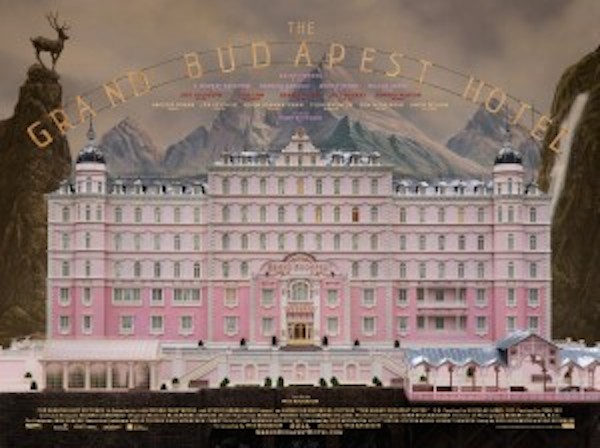
Grand Budapest Hotel, The

D: Wes Anderson / 100m

Cast: Ralph Fiennes, Tony Revolori, F. Murray Abraham, Mathieu Amalric, Adrien Brody, Willem Dafoe, Jeff Goldblum, Harvey Keitel, Jude Law, Bill Murray, Edward Norton, Saoirse Ronan, Jason Schwartzman, Léa Seydoux, Tilda Swinton, Tom Wilkinson, Owen Wilson

There’s nothing quite like a Wes Anderson movie, and each one that comes along is a reason to hang out the bunting, crack open the bubbly, and give thanks to the cinematic gods.  Even when one of Anderson’s movies isn’t quite as involving or engaging as usual – step forward The Life Aquatic with Steve Zissou (2004) – it’s still something to treasure, a respite from the formulaic and humdrum offerings of (most) other filmmakers.  His last feature, Moonrise Kingdom (2012), was my movie of the year, and quite possibly his best movie yet.  That movie is a tough act to follow – will The Grand Budapest Hotel match, or better it?

The movie begins with a young girl approaching a statue in a cemetery in the Middle European city of Lutz.  The statue is dedicated to the Author.  She begins to read from one of his books.  The author (Wilkinson) takes over the narrative and we see him speaking to camera.  He begins to tell the story of when he was a young man, and his stay at the titular hotel.  Here the narrative is taken over by the author as that younger version of himself.  The young author (Law) tells of his meeting with the mysterious owner of the hotel, Mr. Moustafa (Abraham).  In turn, Moustafa tells the young author how he came to own the hotel, beginning with his arrival at the hotel in 1932 as a young man called Zero (Revolori), and his tutelage as a lobby boy under the hotel’s concierge, M. Gustave (Fiennes).

M. Gustave has a penchant for the hotel’s elderly female guests, in particular, Madame D. (Swinton).  When she leaves the hotel to return to her family home in Lutz, she tells M. Gustave she has a premonition that something will happen to her.  Her prediction proves true, and she is found dead, poisoned.  M. Gustave and Zero go to pay their respects and find themselves at the reading of the will.  With the whole family in attendance, including son Dmitri (Brody), M. Gustave learns he has inherited a valuable painting, Boy with Apple.  Dmitri is outraged and threatens M. Gustave that he will never have the painting.  So the concierge and the lobby boy steal the painting and hide it back in the Grand Budapest Hotel.

With a missing document holding up the disbursement of the will’s provisions, the sudden disappearance of Madame D.’s servant Serge X (Amalric), and the approaching onset of war with a neighbouring country, M. Gustave finds himself arrested and charged with Madame D.’s murder (and despite a clear lack of evidence to incriminate him).  Once in jail, M. Gustave makes friends with some of the inmates, including Ludwig (Keitel), and they propose an escape.  With the help of Zero and his girlfriend, baker’s assistant Agatha (Ronan), M. Gustave breaks out of jail, and using the combined talents of several other concierges across the continent, tracks down Serge X who reveals Madame D. made a second will that the family believes is destroyed.  There is a copy, though, and it’s hidden in the back of the painting.  M. Gustave and Zero must return to the hotel, retrieve the painting, and avoid being killed by Jopling (Dafoe), a psychotic investigator in Dmitri’s employ.

GRAND BUDAPEST HOTEL_c371.JPG

In the world of cinema, nobody does “quirky” or “off the wall” like Anderson, and The Grand Budapest Hotel is no different.  With its tale within a tale within a tale within a tale, the movie delights and amuses on so many different levels it’s hard to keep track of them all.  There’s the inevitable visual humour – M. Gustave making a run for it when he realises the military police led by Inspector Henckels (Norton) believe he murdered Madame D.; the entrance to Field Post 19; the painting put in place of Boy with Apple – verbal wisecracks and one-liners, and plotting that never falters in its ability to raise a smile.  There’s a sure hand at work here, and Anderson steers things with astounding ease, making each development seem as plausible as possible given the layers of absurdity and beautifully judged lunacy that have already gone before.

The world he’s created, with all its foibles and social hierarchies, is beautifully rendered, each scene a glorious testament to Anderson’s exquisite eye for composition and framing, each aspect of the costumes and the set design and the props supporting his vision to the point where this is a completely credible world, even if the events are often incredible.  This is a movie that has something going on in almost every frame, and is ravishing to look at on so many levels.  The performances are uniformly excellent, from Fiennes’ effortless turn as the exacting lothario M. Gustave, to Revolori’s deadpan incarnation of the younger Moustafa, to the minor roles (watch for the other concierges); everyone is pitch perfect.

So, is The Grand Budapest Hotel as good as, if not better than Moonrise Kingdom?  Alas, it’s not, but it’s very close.  There are some jarring elements – the modern-day swearing comes across as harsh and out-of-place – and the framing devices (the tales within tales) don’t add anything to the mix, while there’s not quite the heart that infused Moonrise Kingdom and made it so impressive.  But this is still one of Anderson’s best, and an absolute must-see nevertheless.

Rating: 8/10 – a beautiful, funny adventure set in a fairytale location and brimming with wit and inventiveness; a chocolate box of goodies that will fill you up but leave you still wanting more.

Share this:

  • Click to share on X (Opens in new window) X
  • Click to share on Facebook (Opens in new window) Facebook
  • More
  • Click to print (Opens in new window) Print
  • Click to email a link to a friend (Opens in new window) Email
Like Loading...

Blog Stats

  • 486,528 hits

Recent Posts

  • 10 Reasons to Remember Bibi Andersson (1935-2019)
  • Fantasia (1940)
  • Dances With Wolves (1990) – The Special Edition
  • Kiss of the Spider Woman (1985)
  • The Three Musketeers (1973)

Top Posts & Pages

  • Lost for Life (2013) - Another Look
    Lost for Life (2013) - Another Look
  • Lost for Life (2013)
    Lost for Life (2013)
  • About
    About
  • Mr. Topaze (1961)
    Mr. Topaze (1961)
  • Billy Lynn's Long Halftime Walk (2016)
    Billy Lynn's Long Halftime Walk (2016)
  • Winter's Tale (2014)
    Winter's Tale (2014)
  • The Hitman's Bodyguard (2017)
    The Hitman's Bodyguard (2017)
  • 5 Famous Movie Roles That Nearly Went to Someone Else
    5 Famous Movie Roles That Nearly Went to Someone Else
  • The Layover (2017)
    The Layover (2017)
  • Transcendence (2014)
    Transcendence (2014)
Follow thedullwoodexperiment on WordPress.com

Blogs I Follow

  • Rubbish Talk
  • Film 4 Fan
  • Fast Film Reviews
  • The Film Blog
  • All Things Movies UK
  • Interpreting the Stars
  • Let's Go To The Movies
  • Movie Reviews 101
  • TMI News
  • Dan the Man's Movie Reviews
  • Film History
  • Jordan and Eddie (The Movie Guys)

Archives

  • April 2019 (13)
  • March 2019 (28)
  • February 2019 (28)
  • January 2019 (32)
  • December 2018 (28)
  • November 2018 (30)
  • October 2018 (29)
  • September 2018 (29)
  • August 2018 (29)
  • July 2018 (30)
  • June 2018 (28)
  • May 2018 (24)
  • April 2018 (21)
  • March 2018 (31)
  • February 2018 (25)
  • January 2018 (30)
  • December 2017 (30)
  • November 2017 (27)
  • October 2017 (27)
  • September 2017 (26)
  • August 2017 (32)
  • July 2017 (32)
  • June 2017 (30)
  • May 2017 (29)
  • April 2017 (29)
  • March 2017 (30)
  • February 2017 (27)
  • January 2017 (32)
  • December 2016 (30)
  • November 2016 (28)
  • October 2016 (30)
  • September 2016 (27)
  • August 2016 (30)
  • July 2016 (30)
  • June 2016 (31)
  • May 2016 (34)
  • April 2016 (30)
  • March 2016 (30)
  • February 2016 (28)
  • January 2016 (35)
  • December 2015 (34)
  • November 2015 (31)
  • October 2015 (31)
  • September 2015 (34)
  • August 2015 (31)
  • July 2015 (33)
  • June 2015 (12)
  • May 2015 (31)
  • April 2015 (32)
  • March 2015 (30)
  • February 2015 (37)
  • January 2015 (39)
  • December 2014 (34)
  • November 2014 (34)
  • October 2014 (36)
  • September 2014 (25)
  • August 2014 (29)
  • July 2014 (29)
  • June 2014 (28)
  • May 2014 (23)
  • April 2014 (21)
  • March 2014 (42)
  • February 2014 (38)
  • January 2014 (29)
  • December 2013 (28)
  • November 2013 (34)
  • October 2013 (4)

Create a free website or blog at WordPress.com.

Rubbish Talk

Film 4 Fan

A Movie Blog

Fast Film Reviews

The Film Blog

The official blog of everything in film

All Things Movies UK

Movie Reviews and Original Articles

Interpreting the Stars

Dave Examines Movies

Let's Go To The Movies

Film and Theatre Lover!

Movie Reviews 101

Daily Movie Reviews

TMI News

Latest weather, crime and breaking news

Dan the Man's Movie Reviews

All my aimless thoughts, ideas, and ramblings, all packed into one site!

Film History

Telling the story of film

Jordan and Eddie (The Movie Guys)

Movie Reviews & Ramblings from an Australian Based Film Fan

Privacy & Cookies: This site uses cookies. By continuing to use this website, you agree to their use.
To find out more, including how to control cookies, see here: Cookie Policy
  • Subscribe Subscribed
    • thedullwoodexperiment
    • Join 481 other subscribers
    • Already have a WordPress.com account? Log in now.
    • thedullwoodexperiment
    • Subscribe Subscribed
    • Sign up
    • Log in
    • Report this content
    • View site in Reader
    • Manage subscriptions
    • Collapse this bar
 

Loading Comments...
 

    %d