• 10 Reasons to Remember…
  • A Brief Word About…
  • About
  • For One Week Only
  • Happy Birthday
  • Monthly Roundup
  • Old-Time Crime
  • Other Posts
  • Poster of the Week
  • Question of the Week
  • Reviews
  • Trailers

thedullwoodexperiment

~ Viewing movies in a different light

thedullwoodexperiment

Tag Archives: Richard Armitage

Brain on Fire (2016)

08 Thursday Jun 2017

Posted by dullwood68 in Movies

≈ Leave a comment

Tags

Anti-NMDA receptor encephalitis, Carrie-Anne Moss, Chloë Grace Moretz, Drama, Gerard Barrett, Journalist, Literary adaptation, New York Post, Review, Richard Armitage, Susannah Cahalan, Thomas Mann, True story

D: Gerard Barrett / 89m

Cast: Chloë Grace Moretz, Thomas Mann, Richard Armitage, Carrie-Anne Moss, Jenny Slate, Tyler Perry, Navid Negahban, Robert Moloney, Vincent Gale, Janet Kidder, Alex Zahara, Jenn McLean-Angus

Susannah Cahalan (Moretz) is a young reporter working at the New York Post. Life for Susannah is good: she’s working at her dream job, she still has the love of her divorced parents, Tom (Armitage) and Rhona (Moss), and she’s in a relationship with budding musician Stephen (Mann). At the Post, her boss, Richard (Perry), is encouraging and acknowledges her good work, while one of her colleagues, Margo (Slate), has become a firm friend. But one day, while celebrating her birthday with her parents, their respective new partners, and Stephen, Susannah experiences a dissociative moment where she’s unable to focus on what’s being said or whether she should be responding. The moment passes without anyone noticing, and Susannah forgets about it, thinking it’s just a one-off.

But it happens again. And again. And again. Soon, Susannah is experiencing these dissociative moments five or six times a day, but she doesn’t mention them to anyone. She does mention bites on her arm that she thinks are caused by bed bugs, but when anyone else looks at her arm, they don’t see anything there. One night, while she’s with Stephen, Susannah has a fit, but while he gets her to hospital, the tests they carry out don’t reveal anything wrong. She sees a doctor (Gale) who has further tests carried out, but when they come back normal as well, his diagnosis is that Susannah is drinking too much and her symptoms are those of alcohol withdrawal. Tom and Rhona aren’t impressed by this, and they take turns in looking after Susannah at their respective homes. But Susannah’s beahviour worsens and she becomes paranoid and delusional. Another fit ensures a longer stay in hospital, where her condition worsens. As she edges into a semi-catatonic state, the hospital staff admit they have no idea what’s causing Susannah’s illness. It’s only the last-minute attendance of physician Dr Najjar (Negahban) that offers Susannah a chance at regaining her life, and finding a solution – and a cure – to the illness that’s crippling her.

The disease that was eventually diagnosed as causing the dissociative moments, the hallucinations, the manic outbursts, the paranoia and the semi-catatonia, was anti-NMDA receptor encephalitis. It was also a disease that had only been identified a mere three years before Susannah Cahalan was diagnosed as having it. Her subsequent memoir, Brain on Fire: My Month of Madness (2012), told her story from the viewpoint of when she woke up after having been in hospital after a month and couldn’t remember anything that she’d done, or had happened, during that period. Gerard Barrett’s adaptation of Cahalan’s book eschews that approach for a more linear, traditional way of presenting her story. It’s not an entirely surprising direction for the movie to take, but it does mean that many of the standard tropes associated with good old-fashioned disease-of-the-week TV movies are all present and correct.

It also means that the viewer has to contend with an ill-advised and unalterably trite opening voice over that has Susannah forewarn them that something is going to go terribly, terribly wrong (as if we couldn’t have already worked that one out for ourselves), and a succession of scenes that reinforce the idea that Susannah is leading a wonderful life. But when Susannah begins “zoning out” she doesn’t say anything to anyone, and attempts to carry on as if her “zoning out” is a minor inconvenience. But then the disease pulls the rug out from under her: an assignment that she believes she’s written on a Thursday for inclusion in the Post on Saturday, is rubbished by her boss on the ensuing Monday – the day he’s received it. Watching Brain on Fire, this is the point at which many viewers will be saying to themselves, Why doesn’t she say anything? Sure, she goes to the doctor but when that proves inconclusive of anything and her illness begins to worsen, her behaviour is written off as either an alcohol problem or potentially psychiatric in nature.
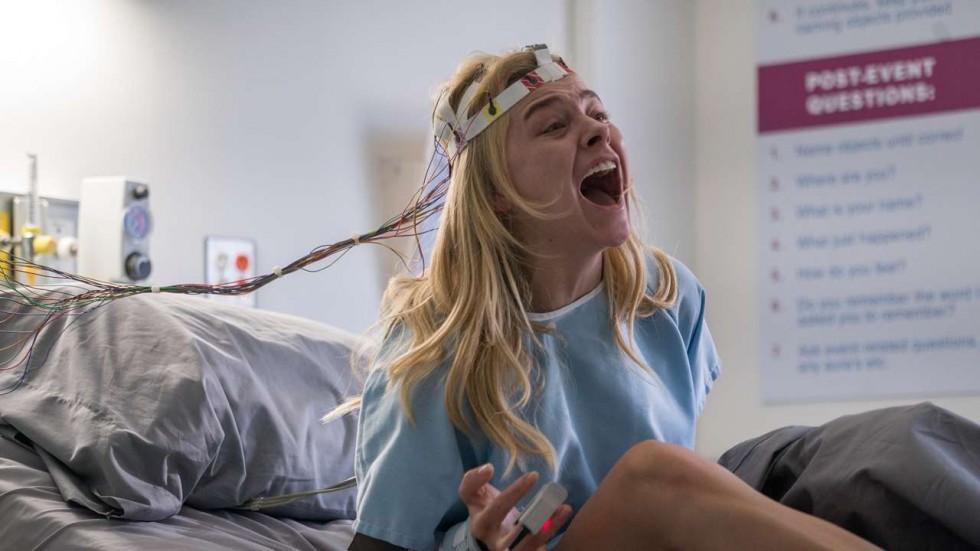
That the various medical professionals who examine Susannah fail to diagnose her condition properly, makes for another staple of this kind of movie, but while it’s a familiar presentation, what makes it particularly invidious on this occasion is a caveat that the movie avoids providing. Anti-NMDA receptor encephalitis was only identified three years before Susannah was affected by it, and the number of patients who had been diagnosed up until then was relatively small. This allows for Dr Najjar’s actions to appear almost miraculous in relation to the rapid decline that Susannah experiences (in her book if not in the movie; here her illness and its development is allowed to take place over what seems far longer than a month). Again, this is tried and tested stuff, as predictable as it is anodyne, and Barrett makes sure the audience knows just how terrible it all is by having Moretz looking spaced out and/or wasted at every opportunity.

Susannah herself is given short shrift by Barrett’s script, with too much emphasis on the illness instead of the character. This leaves Moretz adrift for much of the movie, looking vacuous for the most part, and never ensuring that the audience really cares about Susannah and her plight. As she stumbles through her life, effectively dismantling it from the inside out as she goes, Susannah (as portrayed by Moretz) is a helpless witness to what’s happening, and where this should offer some poignancy or even outright sympathy, it never quite pays off as it should. The viewer can readily acknowledge that what’s happening to Susannah is terrible, but beyond that it’s difficult to maintain any empathy for her. Moretz struggles with a number of scenes where she’s under the influence of her illness and either self-diagnosing – “I’m bipolar; I have multiple personality disorder” – or attempting to deal with it on her own. By the time Susannah is in a semi-catatonic state, the audience could be excused for breathing a sigh of relief: now we’re getting somewhere…
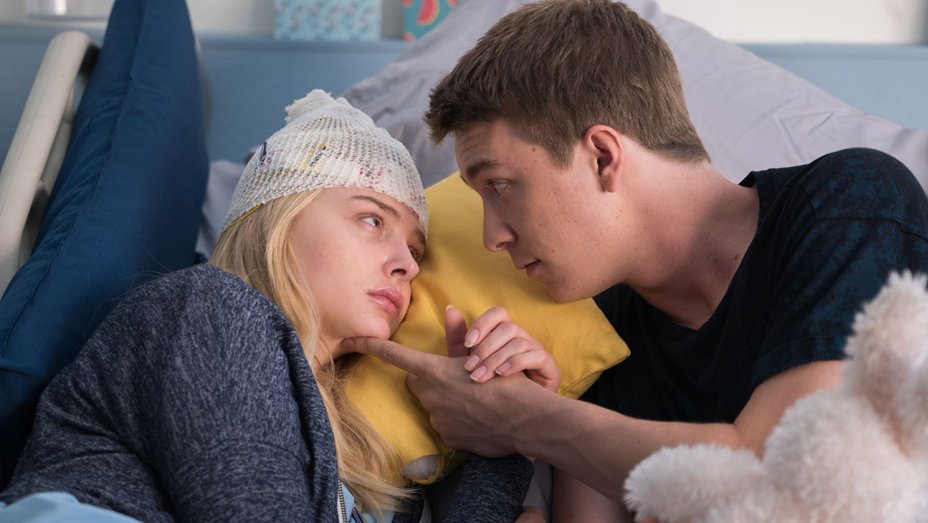
The characters around Susannah are mostly stereotypical, with Stephen’s initial self-absorption giving way to his staying resolutely at her bedside, while Tom agonises over her situation at every turn and Rhona acts calmly yet decisively and keeps it all together. Her doctors are either blasé or baffled, Margo is the concerned friend who makes just the one visit to her in the hospital, and her boss, Richard, behaves in a manner that stretches credulity as when Susannah botches an important interview and he doesn’t fire her. Throughout all this, these characters remain cyphers, given just enough to do to avoid being bystanders to it all, but at the same time, not having any depth that would prompt a connection with the audience.

Barrett’s script lacks the edge or the energy to make Susannah’s story compelling enough for more than a cursory investment by the viewer, and there are several stretches – mostly where Susannah wanders the streets of New York in an apparent daze – where the editing needed to be more judicious. As a director, Barrett doesn’t seem to know how to build on the story to make it more affecting and effective, and there are times when the movie’s pace founders and becomes less measured than at other times. All in all, the movie fails to engage properly with its audience, and though it’s a valiant attempt by Barrett et al to tell a fascinating story, there’s not enough attention to detail, and not enough in place to make this stand out from the crowd.

Rating: 5/10 – with its less than gripping plot and inconsistent narrative, Brain on Fire is persistent in its efforts to bring its audience on board, though its under-developed script makes it hard to pull that off; Moretz’s strained performance, the movie’s pedestrian tone, and its preponderance of fugue moments, all serve to make this a potentially intriguing movie that never quite makes the most of its incredible real life story.
Share this:

  • Click to share on X (Opens in new window) X
  • Click to share on Facebook (Opens in new window) Facebook
  • More
  • Click to print (Opens in new window) Print
  • Click to email a link to a friend (Opens in new window) Email
Like Loading...

The Hobbit: The Battle of the Five Armies (2014)

23 Tuesday Dec 2014

Posted by dullwood68 in Movies

≈ 1 Comment

Tags

Bard the Bowman, Bilbo Baggins, Cate Blanchett, Erebor, Galadriel, Gandalf, Ian McKellen, J.R.R. Tolkien, Legolas, Literary adaptation, Martin Freeman, Middle Earth, Orlando Bloom, Peter Jackson, Richard Armitage, Sauron, Smaug, Thorin Oakenshield

Hobbit The Battle of the Five Armies, The

D: Peter Jackson / 144m

Cast: Ian McKellen, Martin Freeman, Richard Armitage, Orlando Bloom, Evangeline Lilly, Ken Stott, Lee Pace, Luke Evans, Aidan Turner, Dean O’Gorman, Graham McTavish, Cate Blanchett, Hugo Weaving, Christopher Lee, Sylvester McCoy, Stephen Fry, Ryan Gage, Billy Connolly, James Nesbitt, Ian Holm, John Bell, Mikael Persbrandt, Manu Bennett, John Tui, Benedict Cumberbatch

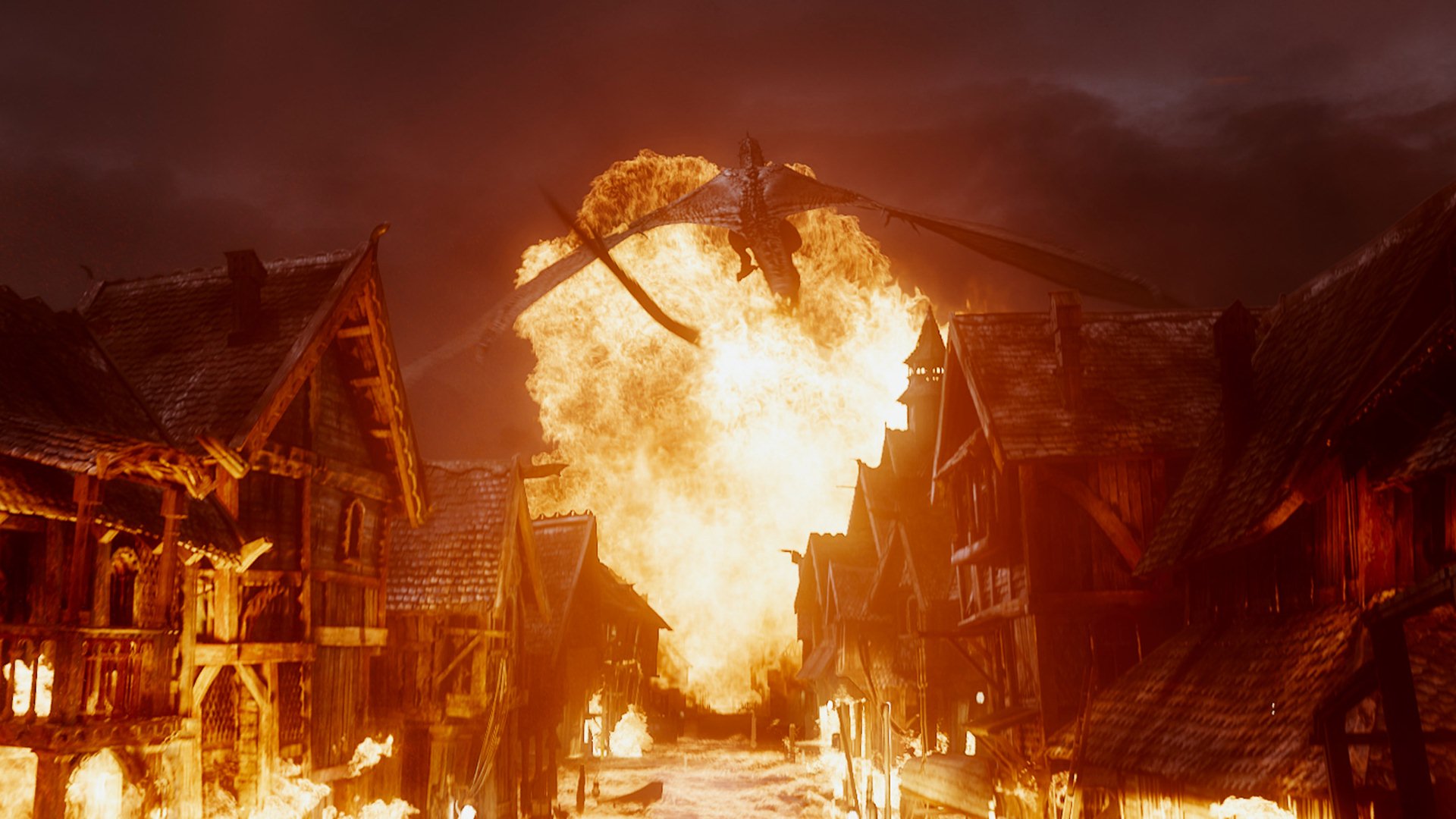
Angered by the attempt to kill him, Smaug (Cumberbatch) leaves the Lonely Mountain and the dwarf city of Erebor to wreak his vengeance on Laketown and its people. As he lays fiery waste to the doomed town, Bard the Bowman (Evans) seeks a way to defeat the dragon. With the aid of his son, Bain (Bell), Bard succeeds, but the town is in ruins. With winter fast approaching the inhabitants of Laketown look to Erebor and the promise made by Thorin (Armitage) when he was aided by Bard. But Thorin is in the grip of dragon sickness, his mind fixed on protecting the gold in the mountain, and he refuses to give the people of Laketown shelter; instead they are forced to take refuge in the ruined town of Dale.

Inside Erebor, Thorin’s madness worsens with the absence of the Arkenstone, the jewel that ensures his position as king of the dwarves. It transpires that Bilbo (Freeman) was able to take the jewel during his encounter with Smaug, but he fears giving it to Thorin. Meanwhile, the woodland elves, led by Thranduil (Pace), arrive in Dale with supplies for the humans and with the intention of reclaiming some jewels that are owed to him by Thorin’s forebears. Bard attempts to reason with Thorin but the dwarf leader refuses to yield. With an army of Orcs led by Azog the Defiler (Bennett) almost upon them, Gandalf (McKellen) arrives in time to provide support for the human-elf alliance.

Bilbo sneaks out of Erebor and gives the Arkenstone to Thranduil. One last attempt is made to avoid bloodshed but Thorin is adamant he will have war. With the arrival of a dwarf army led by Thorin’s cousin Dain (Connolly), a battle between the dwarves and the elves begins but is interrupted by the arrival of Azog’s forces. The dwarves and the elves and the humans all join forces against the orcs, while in Erebor, Thorin is on the brink of being completely subsumed by madness. And to make matters worse, Legolas (Bloom) and Tauriel (Lilly) discover that there is a second army of orcs heading for Erebor as well.

Hobbit The Battle of the Five Armies, The - scene

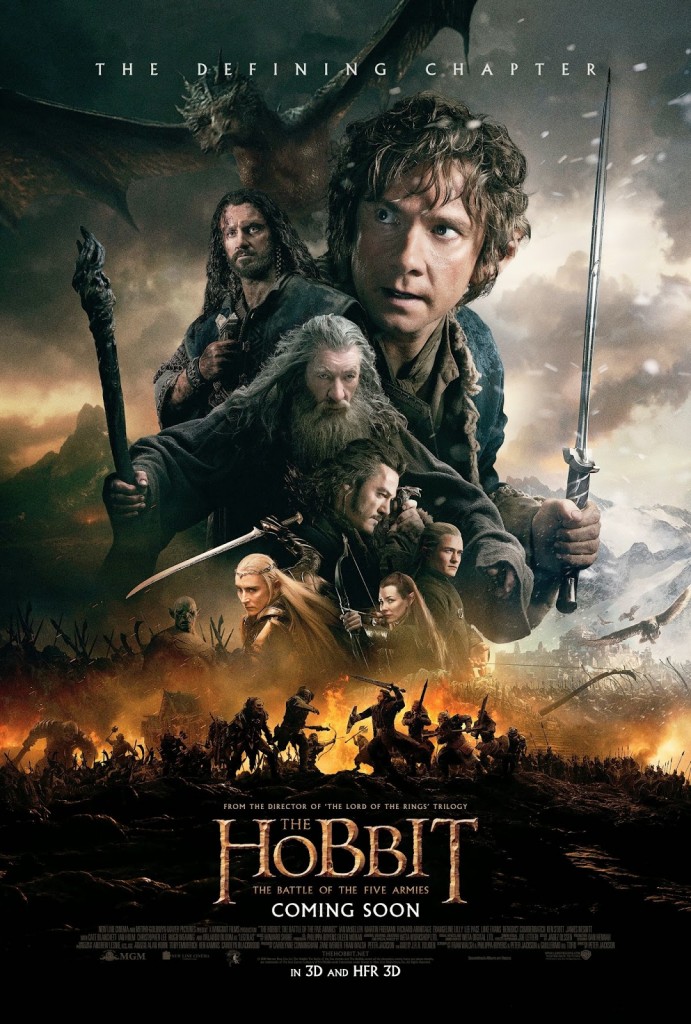
And so, in true George Lucas/Star Wars fashion, we come to the end of the journey – in the middle of it. Heralded as the “defining chapter” this is the movie that Jackson needed to get right above all the other Hobbit movies. Everything has been a prelude to this, the linking chapter in a six film series that has come to define fantasy movie-making on an epic, unprecedented scale, while always retaining a true sense of what’s most important: the characters. Whatever your thoughts on the idea that two movies would have been better than three, what can’t be disputed is the care and attention that Jackson and co-scripters Fran Walsh and Philippa Boyens (with additional input from Guillermo del Toro) have taken in their efforts to bring Tolkien’s short novel to the screen.

Dispensing with the traditional prologue that shows previous events, The Battle of the Five Armies picks up directly after The Desolation of Smaug and throws us into one of the trilogy’s most exciting action sequences, as the dragon vents its wrath on the unfortunate Laketown. It’s a bravura piece of movie making, each burst and eruption of flame so convincingly rendered it’s hard to believe that most of the action has been created in a computer. With Smaug’s death it’s full speed ahead to the climactic battle that involves dwarfs, men, elves, orcs and eagles. It’s a fast-paced, often relentless movie, tilting headlong from one skirmish to another, barely pausing for breath, and yet able to maintain an emotional intensity that other fantasy movies can’t even begin to come near. It also shows Jackson near the height of his directorial powers – that honour goes to The Lord of the Rings: The Return of the King (2003) – firmly in command of the material and assembling it all in a way that looks far too easy.

Jackson’s decision to make The Battle of the Five Armies the shortest of the Hobbit movies is a wise one, making it a more immediate, thrilling experience, but still with that depth of emotion that we’ve come to know and expect from each trip to Middle Earth. The relationship between Bilbo and Thorin is this movie’s finest flourish, so adroitly handled and acted by Freeman and Armitage that their scenes together are capable of making the viewer hold their breath. The added romance between Tauriel and Kili (Turner) is perhaps more perfunctory but is still touching enough to warrant its inclusion. In truth, the whole cast excel, with McKellen, Armitage and Evans the standouts in a movie with more than its fair share of superb performances. It’s been said before, but Jackson has created such a vivid world that even when he introduces creatures that very closely resemble the worms from Tremors (1990), they still feel a part of Middle Earth. This attention to detail, this “world building”, is what separates these movies from all the rest. And of course, there’s the action, inventive, compelling, and wonderfully choreographed for maximum effect. It’s impressive stuff – as you’d expect – and full of horror, humour, seamless CGI (unless, for some reason, it involves Radagast the Brown), and stirring feats of physicality (Legolas vs Bolg). But best of all, and after all has been said and done, and the battle is over, Jackson treats us to a wordless scene between Bilbo and Gandalf that is perfect in its simplicity.

With an ending that blends effortlessly with the beginning of The Lord of the Rings: The Fellowship of the Ring (2001), the movie also doesn’t outstay its welcome, but mostly because this isn’t the end of an era, but the opening chapter in a much grander tale. As such its shorter running time is to be applauded; though don’t be fooled, the movie packs so much in it’s a masterclass of concise plotting and scripting. Some fans may still complain about the treatment of certain characters – Beorn (Persbrandt) has even less to do here than before – and the similarities between the Battle of the Pelennor Fields and this one are self-apparent, but all in all, Jackson’s adaptation of The Hobbit has been a success. To those who say The Hobbit trilogy is less dramatic or satisfying than The Lord of the Rings trilogy, it should be mentioned that they are very different “beasts”, one originally intended as a children’s novel, its follow-up more for older audiences. What Jackson has done is to keep the essential ingredients of the novels and expanded the material around them to make one long story albeit in two sections and with sixty years between them. It’s still a staggering achievement and worthy of as much high praise as can be doled out.

The same can also be said for the movie’s crew, including director of photography Andrew Lesnie, production designer Dan Hennah, and composer Howard Shore (and not forgetting the sterling work of second unit director Andy Serkis). These and the thousands of other people who have worked on the movies deserve some kind of reward for their efforts.

Rating: 9/10 – a rip-roaring, spectacular action movie to wind up the trilogy, The Hobbit: The Battle of the Five Armies is guaranteed to put a smile on the face of fans, and reassure those doubters that Jackson had made a mistake by manipulating the novel into three movies; but take heart anyone who thinks they’ve seen the last of all things Middle Earth, there’s still an extended edition of the movie to come.

Share this:

  • Click to share on X (Opens in new window) X
  • Click to share on Facebook (Opens in new window) Facebook
  • More
  • Click to print (Opens in new window) Print
  • Click to email a link to a friend (Opens in new window) Email
Like Loading...

Into the Storm (2014)

16 Tuesday Sep 2014

Posted by dullwood68 in Movies

≈ Leave a comment

Tags

Action, Disaster movie, Documentary filmmakers, Donk & Reevis, Drama, Eye of the storm, Matt Walsh, Review, Richard Armitage, Sarah Wayne Callies, Silverton, Steven Quale, Titus, Tornado Hunters, Tornados

Into the Storm

D: Steven Quale / 89m

Cast: Richard Armitage, Sarah Wayne Callies, Matt Walsh, Max Deacon, Nathan Kress, Alycia Debnam Carey, Arlen Escarpeta, Jeremy Sumpter, Lee Whittaker, Kyle Davis, Jon Reep

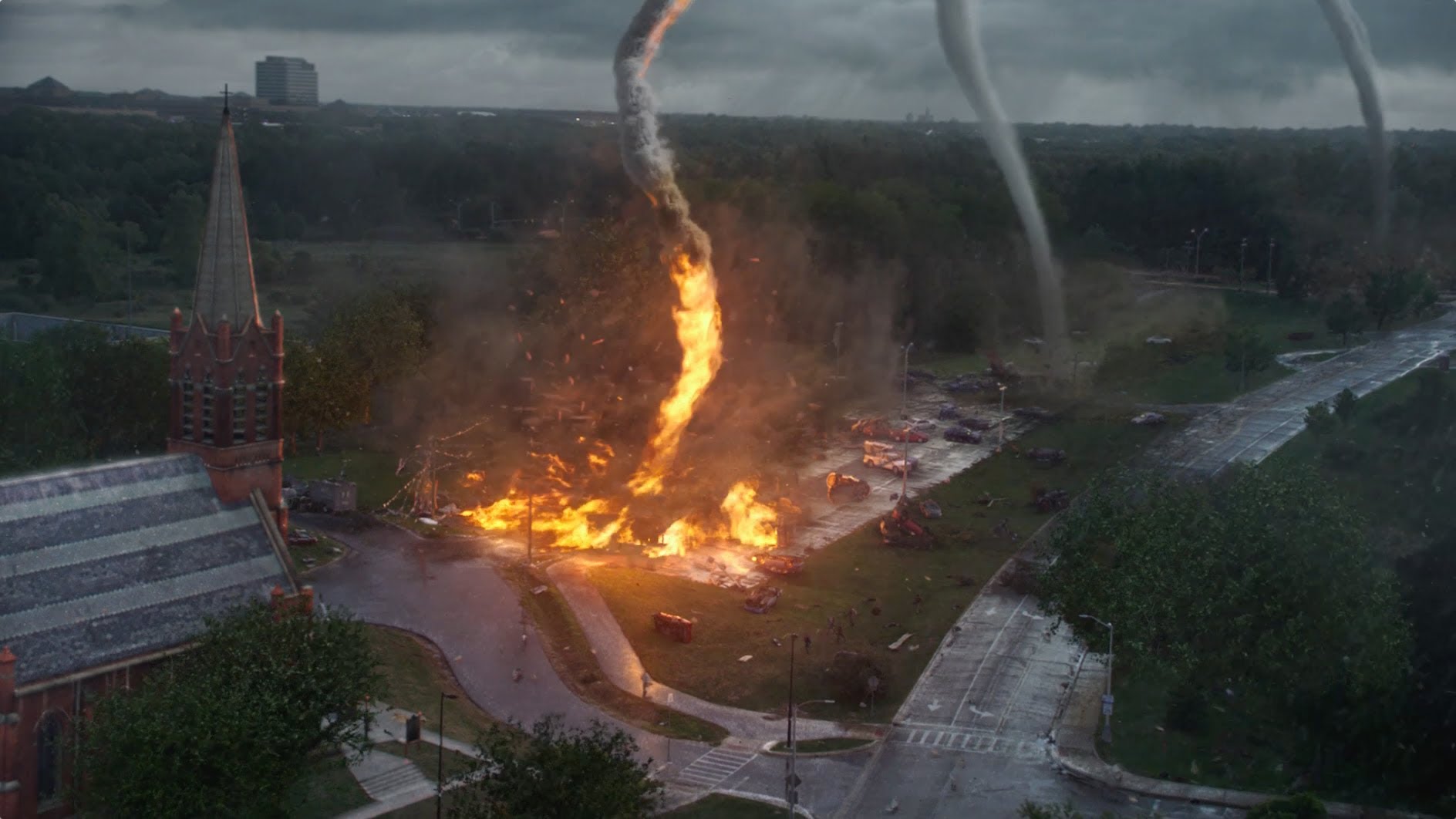
Documentary filmmaker Pete Moore (Walsh) is having a hard time finding tornados to film for his latest project, despite help from meteorologist, Allison Stone (Callies).  When a storm warning is given out near Silverton, Oklahoma, Pete and his team rush there only for the storm to peter out.  Meanwhile, at the high school, the senior class is having its graduation day.  Assistant principal Gary Fuller (Armitage) is worried about the impending weather spoiling the day and wants the ceremony postponed.  He’s overruled and it goes ahead; partway through, the storm hits and a tornado causes damage to the school buildings and grounds.  At the same time, Fuller’s eldest son, Donnie (Deacon), is several miles away with fellow student, Kaitlyn (Carey), filming a project at an abandoned paper mill.  When the tornado hits there, they find themselves trapped beneath the debris.

Moore and his team continue to chase the ever-increasing number of tornados that keep springing up, while Fuller, accompanied by his younger son, Trey (Kress) try to rescue Donnie and Kaitlyn.  Their paths cross and they team up to find the youngsters (though Moore is still more interested in getting footage for his documentary).  They find them, but realise that a tornado the size of which has never been seen before is heading for the high school, and only they can save the people taking shelter there.

Into the Storm - scene

Into the Storm invites obvious comparisons with Jan de Bont’s Twister (1996), and while the special effects certainly look more impressive, there’s a level of detail in the earlier movie that’s missing here, and though this movie’s super-tornado dwarfs anything seen before, its scale and ferocity keeps changing (it chucks 747s around like so much matchwood, but can’t lift Moore’s tank-like tornado chaser until the screenplay says so).  What’s also missing is a decent script, John Swetnam’s attempts at excitement falling flatter than a pancake, and his characters behaving and sounding exactly like the stereotypes they are (they even behave predictably: Moore is a boorish ass for three quarters of the movie then suddenly acts selflessly – as if).

The script isn’t helped by Quale’s flaccid direction and a cast who look as if they know just how poor the script is, and have decided to do just as much as is needed to get their lines out with a minimum of effort.  Armitage is stranded in his role as the tough widower trying to raise two wayward sons, while Callies keeps stopping to (try to) have unnecessary phone calls with her five year old daughter.  And then there’s the dumbest duo on the planet, Donk (Davis) and Reevis (Reep), the redneck comic relief, who put themselves in harm’s way in the hope of becoming famous on YouTube.

While the movie aims for incredible scenes of destruction in between the banal theatrics of its characters, Into the Storm ultimately fails because there’s no one to care about, and the tornado scenes are about as thrilling as watching ice cream melt.  But it is a short movie, and while the decision to shoot found footage-style adds a level of immediacy to the devastation, it’s not enough to rescue the movie from falling far short of where the cow ends up.

Rating: 3/10 – adequate special effects and a mercifully short running time can’t make amends for the paucity of imagination and delivery on show here; the only area in which Into the Storm succeeds is that it’s a step up from being a SyFy Channel release.

Share this:

  • Click to share on X (Opens in new window) X
  • Click to share on Facebook (Opens in new window) Facebook
  • More
  • Click to print (Opens in new window) Print
  • Click to email a link to a friend (Opens in new window) Email
Like Loading...

Blog Stats

  • 486,772 hits

Recent Posts

  • 10 Reasons to Remember Bibi Andersson (1935-2019)
  • Fantasia (1940)
  • Dances With Wolves (1990) – The Special Edition
  • Kiss of the Spider Woman (1985)
  • The Three Musketeers (1973)

Top Posts & Pages

  • Lost for Life (2013) - Another Look
    Lost for Life (2013) - Another Look
  • Lost for Life (2013)
    Lost for Life (2013)
  • About
    About
  • Exposed (2016)
    Exposed (2016)
  • Cardboard Boxer (2016)
    Cardboard Boxer (2016)
  • A Brief Word About La La Land (2016)
    A Brief Word About La La Land (2016)
  • The Monuments Men (2014)
    The Monuments Men (2014)
  • Removal (2010)
    Removal (2010)
  • My Top 10 Guilty Pleasures
    My Top 10 Guilty Pleasures
  • BFI London Film Festival 2015
    BFI London Film Festival 2015
Follow thedullwoodexperiment on WordPress.com

Blogs I Follow

  • Rubbish Talk
  • Film 4 Fan
  • Fast Film Reviews
  • The Film Blog
  • All Things Movies UK
  • Interpreting the Stars
  • Let's Go To The Movies
  • Movie Reviews 101
  • TMI News
  • Dan the Man's Movie Reviews
  • Film History
  • Jordan and Eddie (The Movie Guys)

Archives

  • April 2019 (13)
  • March 2019 (28)
  • February 2019 (28)
  • January 2019 (32)
  • December 2018 (28)
  • November 2018 (30)
  • October 2018 (29)
  • September 2018 (29)
  • August 2018 (29)
  • July 2018 (30)
  • June 2018 (28)
  • May 2018 (24)
  • April 2018 (21)
  • March 2018 (31)
  • February 2018 (25)
  • January 2018 (30)
  • December 2017 (30)
  • November 2017 (27)
  • October 2017 (27)
  • September 2017 (26)
  • August 2017 (32)
  • July 2017 (32)
  • June 2017 (30)
  • May 2017 (29)
  • April 2017 (29)
  • March 2017 (30)
  • February 2017 (27)
  • January 2017 (32)
  • December 2016 (30)
  • November 2016 (28)
  • October 2016 (30)
  • September 2016 (27)
  • August 2016 (30)
  • July 2016 (30)
  • June 2016 (31)
  • May 2016 (34)
  • April 2016 (30)
  • March 2016 (30)
  • February 2016 (28)
  • January 2016 (35)
  • December 2015 (34)
  • November 2015 (31)
  • October 2015 (31)
  • September 2015 (34)
  • August 2015 (31)
  • July 2015 (33)
  • June 2015 (12)
  • May 2015 (31)
  • April 2015 (32)
  • March 2015 (30)
  • February 2015 (37)
  • January 2015 (39)
  • December 2014 (34)
  • November 2014 (34)
  • October 2014 (36)
  • September 2014 (25)
  • August 2014 (29)
  • July 2014 (29)
  • June 2014 (28)
  • May 2014 (23)
  • April 2014 (21)
  • March 2014 (42)
  • February 2014 (38)
  • January 2014 (29)
  • December 2013 (28)
  • November 2013 (34)
  • October 2013 (4)

Blog at WordPress.com.

Rubbish Talk

Film 4 Fan

A Movie Blog

Fast Film Reviews

The Film Blog

The official blog of everything in film

All Things Movies UK

Movie Reviews and Original Articles

Interpreting the Stars

Dave Examines Movies

Let's Go To The Movies

Film and Theatre Lover!

Movie Reviews 101

Daily Movie Reviews

TMI News

Latest weather, crime and breaking news

Dan the Man's Movie Reviews

All my aimless thoughts, ideas, and ramblings, all packed into one site!

Film History

Telling the story of film

Jordan and Eddie (The Movie Guys)

Movie Reviews & Ramblings from an Australian Based Film Fan

Privacy & Cookies: This site uses cookies. By continuing to use this website, you agree to their use.
To find out more, including how to control cookies, see here: Cookie Policy
  • Subscribe Subscribed
    • thedullwoodexperiment
    • Join 481 other subscribers
    • Already have a WordPress.com account? Log in now.
    • thedullwoodexperiment
    • Subscribe Subscribed
    • Sign up
    • Log in
    • Report this content
    • View site in Reader
    • Manage subscriptions
    • Collapse this bar
 

Loading Comments...
 

    %d