• 10 Reasons to Remember…
  • A Brief Word About…
  • About
  • For One Week Only
  • Happy Birthday
  • Monthly Roundup
  • Old-Time Crime
  • Other Posts
  • Poster of the Week
  • Question of the Week
  • Reviews
  • Trailers

thedullwoodexperiment

~ Viewing movies in a different light

thedullwoodexperiment

Tag Archives: Riz Ahmed

The Sisters Brothers (2018)

10 Thursday Jan 2019

Posted by dullwood68 in Movies

≈ 1 Comment

Tags

Action, Drama, Gold Rush, Jacques Audiard, Jake Gyllenhaal, Joaquin Phoenix, John C. Reilly, Literary adaptation, Manhunt, Review, Riz Ahmed, Western
D: Jacques Audiard / 122m

Cast: John C. Reilly, Joaquin Phoenix, Jake Gyllenhaal, Riz Ahmed, Rebecca Root, Allison Tolman, Rutger Hauer, Carol Kane

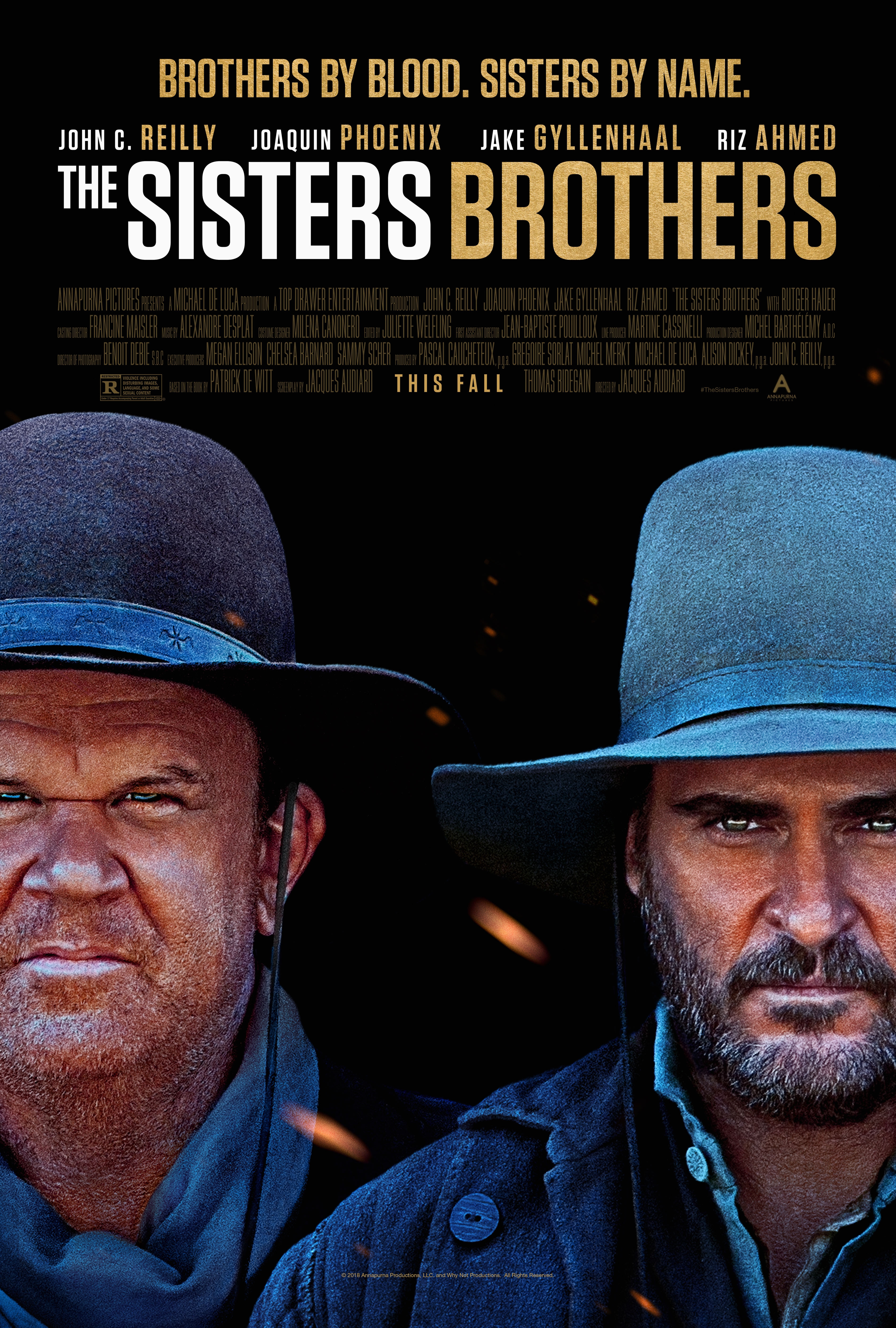
Oregon, 1851. The Sisters brothers, Charlie (Phoenix) and Eli (Reilly), work as assassins for a wealthy magnate known as the Commodore (Hauer). Tasked with killing a chemist called Hermann Kermit Warm (Ahmed), the brothers are obliged to travel south to Jacksonville where they are due to rendezvous with another man in the Commodore’s employ, John Morris (Gyllenhaal), who has located Warm and befriended him. However, Warm discovers Morris’s true allegiance, and manages to persuade him into joining Warm on his journey to the California gold fields, where a formula he has created will allow them to locate gold located on any river bed. Charlie and Eli find themselves tracking two men instead of one, and follow them all the way to San Francisco. The brothers have a temporary falling out before discovering the location of Warm’s claim site. However, when they get there, Warm and Morris outwit them and the brothers are captured. Before they can decide what to do with them, though, they are attacked by mercenaries. Forced to free Charlie and Eli in order to overcome their attackers, what begins as a necessary truce later becomes something else entirely…

Westerns made by non-American directors usually have a distinct visual look to them, with the Old West looking as though it’s been filtered through an atypical perspective. Somehow the vistas look markedly different: less awe inspiring and more prosaic, and the overall mise-en-scene feels a little off, as if the locations were chosen as a last resort, the desired ones proving unavailable. Such is the case with Jacques Audiard’s first English language feature, the marvellously droll and appealing The Sisters Brothers. But while this may seem like a handicap – and elsewhere that’s entirely apt – here it suits the material, which is itself broadly interchangeable with the demands of a traditional Western and those of a Western that portrays events with a wry, modernist detachment. Though its story is slight – it’s basically that staple of the Western movie, the manhunt – it’s also a story that is allowed to go off at several tangents, and in doing so, it provides several unexpected delights, from Eli’s encounter with a prostitute (Tolman) who is unused to kindness, to Warm’s desire to create a Utopian society in (of all places) Dallas, Texas. Odd moments such as these, and more besides, add a richness to the material that makes the movie more engaging and more enjoyable in equal measure.

There’s also a melancholy undercurrent to the narrative, as evidenced by Eli’s wish to settle down and open a store and to put the brothers’ violent life and times behind them, while the progress seen in San Francisco – a hotel with indoor plumbing – acknowledges that times are changing, and progress is fast making the brothers’ role in the West obsolete (well, eventually it will). With all this going on in the background, Audiard is equally adept at littering the foreground with moments of rare inspiration and flashes of mordaunt humour. As the two brothers, often feuding but always there for each other, Reilly and Phoenix are a terrific duo, displaying a chemistry that makes you wish they could make further Sisters movies, while the same can be said for Gyllenhaal and Ahmed, another perfect pairing that improves the movie whenever they’re on screen. These are roles that include a great deal of subtlety, and Audiard never misses a trick in letting his very talented cast wring every last drop of emotion and misguided motivation out of their characters and their characters’ ambitions. The movie is ambitious as well, and succeeds more often than not in telling its story with wit and a clever use of atmosphere. And thanks to DoP Benoît Debie (who is Gaspar Noe’s cinematographer of choice), it all looks strangely beautiful and beautifully strange.

Rating: 8/10 – adapted from the novel by Patrick DeWitt, and pulling off a number of narrative tricks that enhance the material immensely, The Sisters Brothers is a refreshing take on the otherwise overworked Western, and a movie that offers genuine surprises along the way; it’s also very funny indeed, and Phoenix is the most relaxed he’s been for ages, another unexpected aspect in a movie that treats the unexpected as something of a challenge that’s been gladly accepted.
Share this:

  • Click to share on X (Opens in new window) X
  • Click to share on Facebook (Opens in new window) Facebook
  • More
  • Click to print (Opens in new window) Print
  • Click to email a link to a friend (Opens in new window) Email
Like Loading...

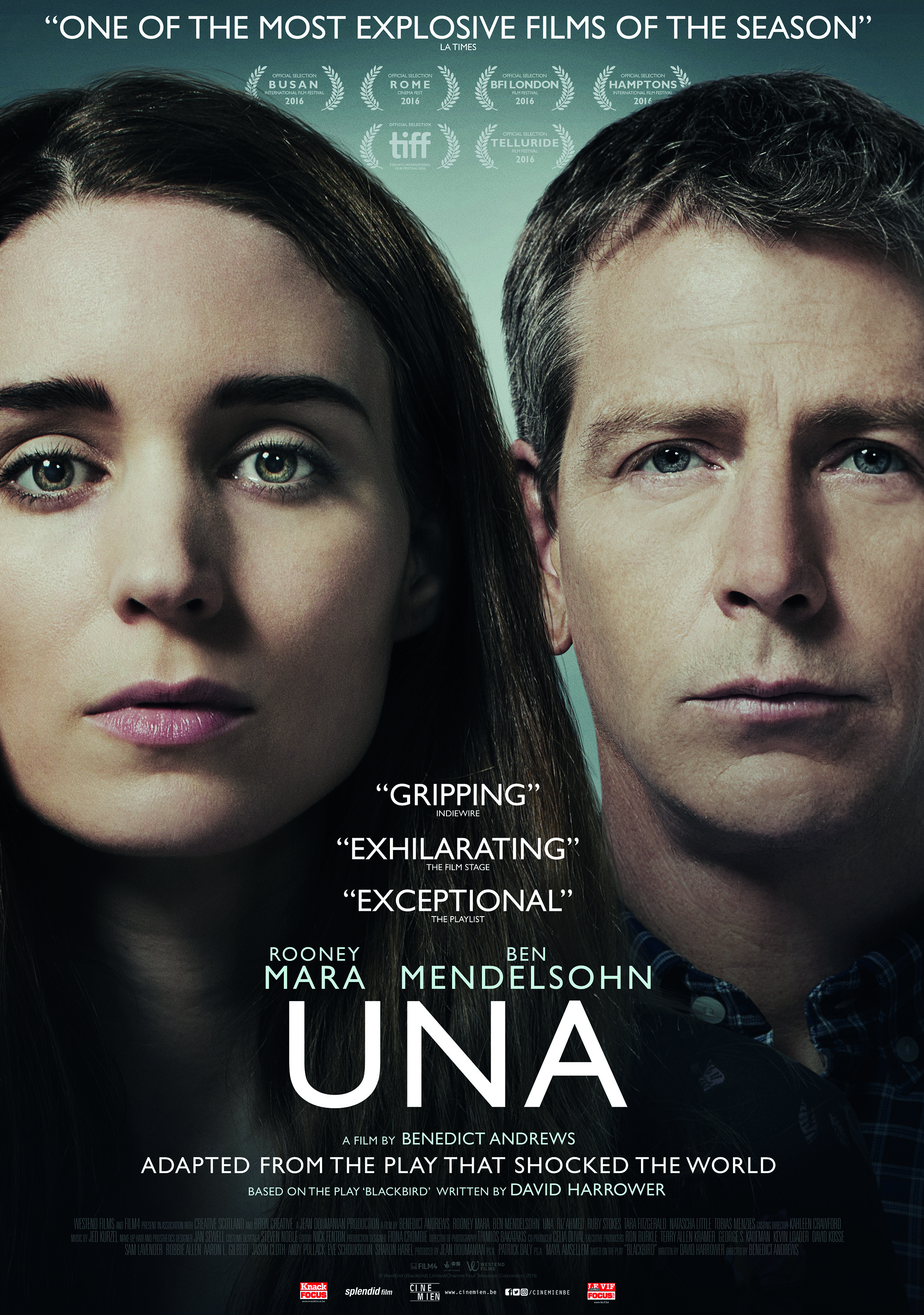
Una (2016)

13 Sunday Aug 2017

Posted by dullwood68 in Movies

≈ Leave a comment

Tags

Ben Mendelsohn, Benedict Andrews, Blackbird, Child abuse, David Harrower, Drama, Review, Riz Ahmed, Rooney Mara, Theatrical adaptation

D: Benedict Andrews / 90m

Cast: Rooney Mara, Ben Mendelsohn, Riz Ahmed, Ruby Stokes, Tara Fitzgerald, Natasha Little, Tobias Menzies

Very occasionally a movie comes along that makes you question why it was made, or maybe what message it was trying to get across. Such a movie makes the viewer question the validity or the purpose of its existence. Sometimes it’s because the movie is lacking in several important areas, such as acting, or being competently directed. At other times it could be down to the script, or the way the movie has been shot; it could even be all four reasons at once. If it’s an adaptation of an existing novel or play or television series, or something similar, then sometimes it’s all about whether or not the movie is faithful to the original, or whether the adaptation works on its own merits.  And sometimes it’s purely because the movie itself is just plain bad, on every level.

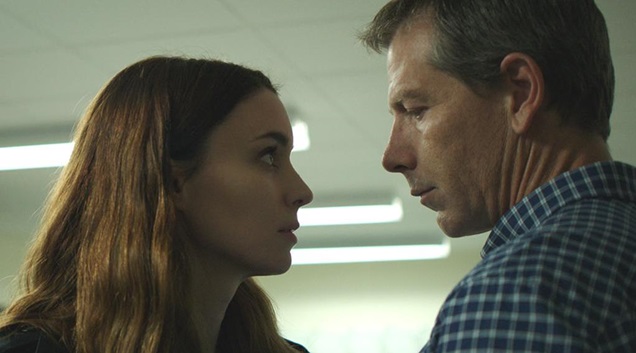
Una isn’t bad on every level, but it is a movie that makes the viewer question why they’re watching it, while they’re watching it. Adapted from the stage play, Blackbird by David Harrower, Una is about the titular character (Mara) and her ex-neighbour, Ray (Mendelsohn), who seduced her when she was thirteen. It’s about the consequences and the ramifications of that illicit, and illegal, relationship, and the ways that it has affected both characters in the fifteen years since. Una has remained single, and still lives in her childhood home with her mother (Fitzgerald). We learn little about her except that she has sex with men she doesn’t know in night clubs, and that her relationship with her mother is fragile, partly because her mother isn’t well, and partly because of what happened fifteen years ago. One day she skips work and heads to a large warehouse where she asks to see Ray. Ray, it turns out, is now called Pete, and is a manager at the warehouse. He steers Una into a break room, and clearly unnerved by her arrival, asks her what she wants.

What Una wants, we discover, is very simple: she wants to know why he left her all those years ago, when they were on the verge of eloping to Europe. The answer proves not to be as clear-cut as we, or Una, might expect, but before we learn what that answer is, Ray’s attendance at a meeting leads to uproar amongst the workforce, and Ray having to hide from everyone. He and Una stay one step ahead of everyone else, including Scott (Ahmed), one of Ray’s co-workers, and senior management honcho, Mark (Menzies). As Ray waits for everyone to leave, he and Una talk about their relationship, what it meant for both of them at the time, and what it means for them now. Ray served four years in jail, and has since gotten married, and found a stable way of living his life. Una has no such stability, only the same house she’s lived in her whole life, and in a neighbourhood where everyone knows her and knows what happened to her.

What follows should be absorbing and fascinating at the same time, as both Una and Ray reflect on events from their past, and the feelings they each had at the time. Inevitably, it takes their combined memories to provide the truth of what happened at the end for both of them; whether this will be enough for Una is a different matter. Suffice it to say, it isn’t, and the movie insists on making the same points in slightly different ways, until it heads off into the night with no clearer idea of where it’s going than Una has of what she’s going to do next. What she does do next depends entirely on the kindness of Scott, and leads to a contrived ending that takes the movie out of the realm of psychological drama and into the realm of unvarnished melodrama. But while the last third of the movie is unsatisfying and unrewarding, and relies on the good will of Harrower’s screenplay to move its characters from Point A to Point B, the cracks in said screenplay start appearing much earlier on.

Whatever the merits of the stage production (and it did win the Laurence Olivier Award for Best New Play in 2007), this new screen adaptation somehow manages to highlight a number of faults with the overall scenario that perhaps aren’t as noticeable under the proscenium arch. The reason for Una being at the warehouse, ostensibly to ask Ray why he left her, lacks conviction precisely because of the period of time that has elapsed. Harrower’s script never seeks to answer the question why this is still so important to her. Does she want to pick up where they left off? Does she still love Ray? Is her visit less about slaying the demons from her past, and more about breathing new life into them? These questions remain unexplored as the movie clatters along spewing out platitudes and clichés on both sides, with Ray bemoaning his time in prison, and Una blaming her father’s death on Ray’s predatory sexual behaviour. It also tries to show Una as being complicit in their affair, as if this is some kind of mitigating circumstance for what happened. The aim here may have been to make the issue more complex, but a paedophile is a paedophile, and what happened remains inexcusable.

Alas, very little of what is brought up is relatable or convincing, and with Una’s motives remaining obscure and possibly ill-considered throughout, the movie struggles to make us care what happened to her (which is concerning in itself). Mara gives a very good performance as the emotionally disturbed Una, but remains a figure we can’t relate to very well. Mendelsohn, however, is better served by the script, and makes Ray an untrustworthy character from the start. He lies to everyone, and probably about everything, and he’s good at it. Mendelsohn makes Ray self-serving and arrogant, and he rarely says anything important without thinking about it first. Ray may now be called Pete, and he may have a new life, but he’s still Ray, and with all that that entails. In bringing Una to the screen, theatre director Andrews makes his feature debut, but rarely seems comfortable in exploring the medium effectively. Within the warehouse, its crisp, clean lines and polished surfaces act as a stringent counterpoint to the raw emotions being mauled over in the break room (and a store cupboard and the ladies’ – of course), while the ending, which seems designed to leave the audience feeling appalled and shocked, plays out awkwardly and with scant regard for its backdrop.

Rating: 6/10 – a psychological drama that’s been given an arthouse makeover by its director, Una looks and feels austere, and lacks the passion to be truly effective as a movie about the lingering effects of child abuse; Mara and Mendelsohn make a good pairing but are unable to compensate for the wayward structure imposed on the material, and the script’s attempts at complexity inhibit the material even further, making it feel sterile rather than impassioned.

Share this:

  • Click to share on X (Opens in new window) X
  • Click to share on Facebook (Opens in new window) Facebook
  • More
  • Click to print (Opens in new window) Print
  • Click to email a link to a friend (Opens in new window) Email
Like Loading...

Nightcrawler (2014)

26 Thursday Feb 2015

Posted by dullwood68 in Movies

≈ 1 Comment

Tags

Bill Paxton, Dan Gilroy, Drama, Gunmen, Home invasion, Jake Gyllenhaal, Murders, News footage, Rene Russo, Review, Riz Ahmed, Thriller, TV News

Nightcrawler

D: Dan Gilroy / 117m

Cast: Jake Gyllenhaal, Rene Russo, Riz Ahmed, Bill Paxton, Ann Cusack, Kevin Rahm, Kent Shocknek, Leah Fredkin

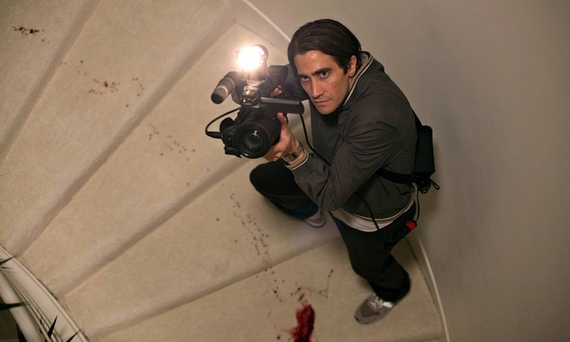
Louis “Lou” Bloom (Gyllenhaal) unemployed; to make ends meet he steals things and then sells them. When he sees a freelance film crew working at the scene of a car crash, he asks their boss, Joe Loder (Paxton) how they make a living from what they do. Loder tells him about selling the footage to the TV stations; this inspires Bloom to steal a racing bicycle and trade it for a radio scanner and a camcorder. Later that same night, Bloom gets in close at the scene of a carjacking and films the victim dying. This gets both Bloom and Loder moved on and they become rivals as a result. Bloom takes his footage to a local TV station where he meets morning news director Nina Romina (Russo) who not only buys the footage but encourages him as well.

Bloom hires an assistant, Rick Carey (Ahmed), and together they start visiting as many crime scenes as they can but even though Bloom has no compunction about manipulating the scenes to provide himself with better footage, Loder still beats him to several important stories. However, his work begins to be shown more and more, and he’s able to get better equipment. Knowing she can’t do without his footage, Bloom also blackmails Nina into having sex with him. When Loder beats him to a major plane crash story, it leads to Bloom sabotaging Loder’s van. When Loder crashes his van and is severely injured, it’s Bloom who gets the footage of his rival being loaded into an ambulance.

Later that night, Bloom and Carey arrive at the site of a home invasion. Leaving Carey outside to sound an alert when the police get there, Bloom sees the gunmen leaving and films them. Going inside the house he finds three dead bodies, all of whom he films. He gives Romina a copy that doesn’t include the gunmen, and the footage is shown, even though some of Nina’s colleagues feel it’s unethical. The police become involved and ask for Bloom’s footage but he gives them another edited version. Then, using the footage he’s held back, Bloom tracks down the gunmen and he and Carey follow them to a nearby restaurant. They tip off the police, but when they arrive, things don’t go quite as Bloom planned.

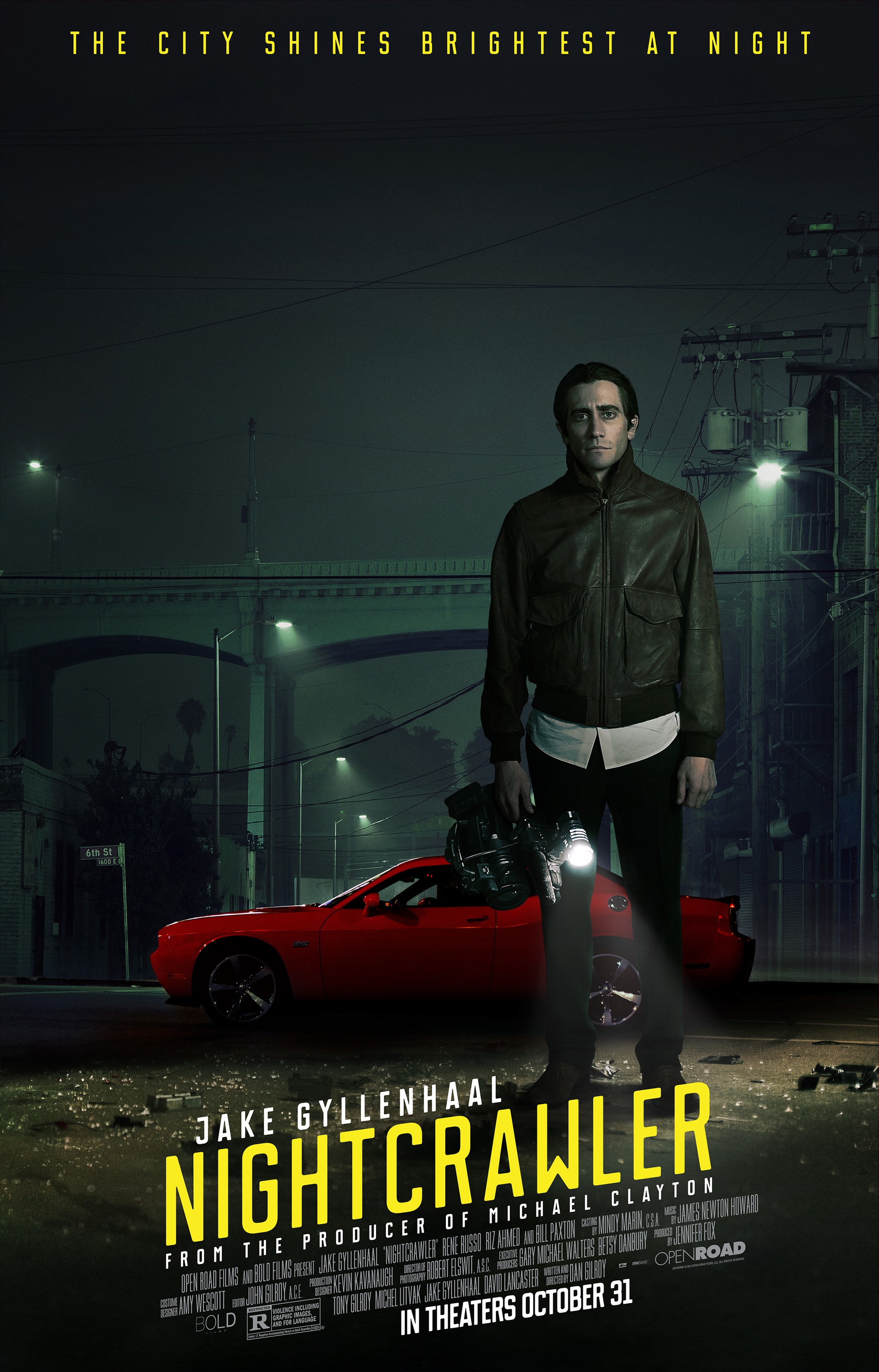
Jake Gyllenhaal plays an unscrupulous news cameraman in the thriller Nightcrawler

A mesmerising, audacious drama set against the backdrop of a Los Angeles that’s never looked so foreboding at night as it does here, Nightcrawler features a powerhouse performance from Gyllenhaal, and makes for a riveting viewing experience. It all hinges on writer/director Gilroy’s script, a fervid foray into the dark underbelly of daily news gathering that exposes the often desperate need for more and more “potent” material, and the betrayal of ethical concerns in the search for ratings. It’s a bravura piece, challenging and appalling in equal measure, and in the character of Louis Bloom, shows how little appreciation can be given to the feelings of others in the pursuit of fame (and presumably fortune).

Bloom is a grim-faced, skeletal-looking, fixed-eyed monster, oozing an unstable charm, flattering just enough to get his foot in the door, dismissive when someone can’t or won’t help him. He’s the upbeat loner whose interaction with others is continually designed to improve his lot in life, to make things better for him before anyone else. As charismatic as he seems, there’s a mania lurking close beneath the surface that serves as a warning to everyone around him. But Bloom is adept at reading others; he knows when and how to press their buttons, to manipulate them, or if necessary, threaten them into doing what he wants. And if threats don’t work, well, he’s not averse to making sure he still gets what he wants, anyway he can. He’s a ruthless, predatory menace.

As the amoral stringer, Gyllenhaal gives a super-charged performance that is easily his best yet, his gaunt physical appearance a perfect fit for the rapacious Bloom. Gyllenhaal makes him uncomfortable to watch, a creepy, unsettling presence wherever he goes, those big eyes of his hinting at madness and danger. Even when he’s silent he gives off a dispiriting air, as if even what he’s thinking (and no matter how banal) is somehow as poisonous to others as anything he could actually say. Gilroy has created one of the most defiantly unprincipled characters in movie history, and Gyllenhaal has seized his chance with undisguised relish. (It’s still a mystery that he wasn’t nominated for an Oscar for the role.) Working on what seems like nervous energy, Gyllenhaal paints a convincing portrait of a man willing to do anything in order to succeed, and whose sociopathy is frightening. In the aftermath of the police’s arrival at the restaurant, the true nature and extent of his emotional detachment is revealed – and Gyllenhaal makes it truly disturbing.

It’s one of many scenes that Gilroy artfully constructs that keeps the viewer on the edge of their seat and which is anchored by Gyllenhaal’s impressive performance. As Bloom’s career blossoms, his amoral nature finds its mirror in Nina’s equally amoral disregard for conventional programming rules. In some ways she’s worse than Bloom, her lust for the material he provides as uncomfortable to watch as the ways in which he’ll procure it. When she sleeps with him the idea that she’s being blackmailed lacks currency; if anyone is being exploited it’s Bloom. Russo is superb in the role, giving ample expression to Nina’s vicious impropriety and matching Gyllenhaal for intensity. It’s been a long time since The Thomas Crown Affair (1999), and while she’s made a couple of interesting movies in the meantime, she’s not had a role that is as challenging as this one, and it’s great to see her inhabit the part with such fierce intelligence.

In presenting such a couple of despicable characters (made for each other but otherwise doomed to be alone), Gilroy has taken a considerable risk in making a movie without a sympathetic main character. But such is the awfulness of Bloom (and Nina’s) behaviour, and so complicit do we become as an audience, that we can’t take our eyes off them. In the same way that Bloom produces highly upsetting footage and Nina watches it with barely disguised impatience, Gilroy engineers things so that we too are drawn inexorably into a world we would otherwise avoid. Just how far will Bloom go? Will he film anything that Nina won’t be put off by? How much further can they take all this? All questions that the audience feels compelled to discover the answers to.

Nightcrawler - scene2

As well as his talented cast – Ahmed and Paxton provide sterling support as Bloom’s naïve employee and experienced rival respectively – Gilroy has surrounded himself with a pretty talented crew. Bringing his script to life, the movie is beautifully shot by DoP Robert Elswit, the night-time scenes having a luminosity to them that makes L.A. a character in itself. In the editor’s chair is Gilroy’s fraternal twin brother, John Gilroy, who has assembled the material with such care and attention to the movie’s emotional moods that each scene has a resonance that exists both alone and in conjunction with other scenes (and to add to the charges of nepotism he’s also Russo’s brother-in-law). And there’s a marvellously evocative score by James Newton Howard that subtly underpins the action without overwhelming it.

Rating: 9/10 – with a riveting, powerful performance from Gyllenhaal at its centre, Nightcrawler is a nightmarish journey into the heart of one man’s personal darkness; formidable and emotionally rigorous, it’s also a movie that rewards with each successive viewing, and stays in the mind long after it’s ended.

Share this:

  • Click to share on X (Opens in new window) X
  • Click to share on Facebook (Opens in new window) Facebook
  • More
  • Click to print (Opens in new window) Print
  • Click to email a link to a friend (Opens in new window) Email
Like Loading...

Blog Stats

  • 490,516 hits

Recent Posts

  • 10 Reasons to Remember Bibi Andersson (1935-2019)
  • Fantasia (1940)
  • Dances With Wolves (1990) – The Special Edition
  • Kiss of the Spider Woman (1985)
  • The Three Musketeers (1973)

Top Posts & Pages

  • The White Orchid (2018)
    The White Orchid (2018)
  • Lost for Life (2013) - Another Look
    Lost for Life (2013) - Another Look
  • Captain Fantastic (2016)
    Captain Fantastic (2016)
  • Miss Baek (2018)
    Miss Baek (2018)
  • Two Shorts by François Ozon: A Summer Dress (1996) and X2000 (1998)
    Two Shorts by François Ozon: A Summer Dress (1996) and X2000 (1998)
  • Central Intelligence (2016)
    Central Intelligence (2016)
  • The Dark Tower (2017)
    The Dark Tower (2017)
  • Taken (2008)
    Taken (2008)
  • Deer Crossing (2012)
    Deer Crossing (2012)
  • Cardboard Boxer (2016)
    Cardboard Boxer (2016)
Follow thedullwoodexperiment on WordPress.com

Blogs I Follow

  • Rubbish Talk
  • Film 4 Fan
  • Fast Film Reviews
  • The Film Blog
  • All Things Movies UK
  • Interpreting the Stars
  • Let's Go To The Movies
  • Movie Reviews 101
  • TMI News
  • Dan the Man's Movie Reviews
  • Film History
  • Jordan and Eddie (The Movie Guys)

Archives

  • April 2019 (13)
  • March 2019 (28)
  • February 2019 (28)
  • January 2019 (32)
  • December 2018 (28)
  • November 2018 (30)
  • October 2018 (29)
  • September 2018 (29)
  • August 2018 (29)
  • July 2018 (30)
  • June 2018 (28)
  • May 2018 (24)
  • April 2018 (21)
  • March 2018 (31)
  • February 2018 (25)
  • January 2018 (30)
  • December 2017 (30)
  • November 2017 (27)
  • October 2017 (27)
  • September 2017 (26)
  • August 2017 (32)
  • July 2017 (32)
  • June 2017 (30)
  • May 2017 (29)
  • April 2017 (29)
  • March 2017 (30)
  • February 2017 (27)
  • January 2017 (32)
  • December 2016 (30)
  • November 2016 (28)
  • October 2016 (30)
  • September 2016 (27)
  • August 2016 (30)
  • July 2016 (30)
  • June 2016 (31)
  • May 2016 (34)
  • April 2016 (30)
  • March 2016 (30)
  • February 2016 (28)
  • January 2016 (35)
  • December 2015 (34)
  • November 2015 (31)
  • October 2015 (31)
  • September 2015 (34)
  • August 2015 (31)
  • July 2015 (33)
  • June 2015 (12)
  • May 2015 (31)
  • April 2015 (32)
  • March 2015 (30)
  • February 2015 (37)
  • January 2015 (39)
  • December 2014 (34)
  • November 2014 (34)
  • October 2014 (36)
  • September 2014 (25)
  • August 2014 (29)
  • July 2014 (29)
  • June 2014 (28)
  • May 2014 (23)
  • April 2014 (21)
  • March 2014 (42)
  • February 2014 (38)
  • January 2014 (29)
  • December 2013 (28)
  • November 2013 (34)
  • October 2013 (4)

Create a free website or blog at WordPress.com.

Rubbish Talk

Film 4 Fan

A Movie Blog

Fast Film Reviews

The Film Blog

The official blog of everything in film

All Things Movies UK

Movie Reviews and Original Articles

Interpreting the Stars

Dave Examines Movies

Let's Go To The Movies

Film and Theatre Lover!

Movie Reviews 101

Daily Movie Reviews

TMI News

Latest weather, crime and breaking news

Dan the Man's Movie Reviews

All my aimless thoughts, ideas, and ramblings, all packed into one site!

Film History

Telling the story of film

Jordan and Eddie (The Movie Guys)

Movie Reviews & Ramblings from an Australian Based Film Fan

Privacy & Cookies: This site uses cookies. By continuing to use this website, you agree to their use.
To find out more, including how to control cookies, see here: Cookie Policy
  • Subscribe Subscribed
    • thedullwoodexperiment
    • Join 481 other subscribers
    • Already have a WordPress.com account? Log in now.
    • thedullwoodexperiment
    • Subscribe Subscribed
    • Sign up
    • Log in
    • Report this content
    • View site in Reader
    • Manage subscriptions
    • Collapse this bar
 

Loading Comments...
 

    %d