• 10 Reasons to Remember…
  • A Brief Word About…
  • About
  • For One Week Only
  • Happy Birthday
  • Monthly Roundup
  • Old-Time Crime
  • Other Posts
  • Poster of the Week
  • Question of the Week
  • Reviews
  • Trailers

thedullwoodexperiment

~ Viewing movies in a different light

thedullwoodexperiment

Tag Archives: Saoirse Ronan

Mary Queen of Scots (2018)

29 Tuesday Jan 2019

Posted by dullwood68 in Movies

≈ Leave a comment

Tags

Drama, Elizabeth I, Guy Pearce, History, Jack Lowden, Joe Alwyn, Josie Rourke, Margot Robbie, Review, Saoirse Ronan, Scotland, True story

D: Josie Rourke / 124m

Cast: Saoirse Ronan, Margot Robbie, Jack Lowden, Joe Alwyn, Guy Pearce, Adrian Lester, Martin Compston, Ian Hart, James McArdle, David Tennant, Gemma Chan, Ismael Cruz Cordova, Brendan Coyle

Scotland, 1561. Following the death of her French husband, Mary Stuart (Ronan) returns to take up her rightful place as Queen. Her return is viewed with dismay and suspicion by the English court, as Mary has a claim to the English throne should Elizabeth I (Robbie) die without issue. Elizabeth suggests that Mary wed an Englishman, Robert Dudley (Alwyn), and despite Dudley being her lover. Aware that this is a ploy designed to weaken her claim, Mary agrees on one condition: that she be named heir to the throne. With Elizabeth unwilling to consent to this, she sends Henry Darnley (Lowden) to infiltrate Mary’s court, but Mary and Henry fall in love and marry. In time, Mary gives birth to a son, James, but political intrigue sees her own half-brother, the earl of Moray (McArdle) mount an insurgency against her. She quashes this, but further unrest is whipped up by militant preacher John Knox (Tennant), and Mary finds herself being forced to abdicate when James is taken from her by her former protector, Lord Bothwell (Compston). She flees to England, where she seeks help from Elizabeth…
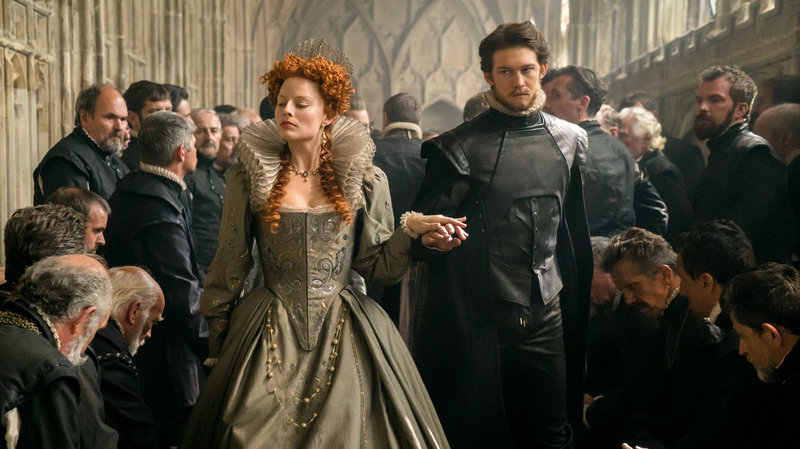
If you have a keen interest in Scottish history, and in Mary Stuart in particular, you might be perplexed by some of the “revelations” that Mary Queen of Scots includes as part of its adaptation of the book Queen of Scots: The True Life of Mary Stuart by John Guy. For instance, who knew that Henry Darnley and David Rizzio (Cordova), Mary’s “gay friend” (in reality her private secretary) slept together shortly after Mary and Henry were married? (That’s a rhetorical question.) It’s one of many historical inaccuracies and inventions that the movie comes up with to heighten the drama, as if the real story wasn’t exciting or dramatic enough. Also, the action takes place over twenty-six years, from Mary’s return to Scotland, to her execution in 1887. Not that you’d necessarily realise this as the movie appears to take place in a timeless period where no one ages, and plot developments come so thick and fast, that by the time you’ve absorbed one, two more have already gone by. With so much to cram in in two hours, Beau Willimon’s screenplay can only act as a yardstick for excessive historical exposition. But conversely, the movie is strangely reticent when it really matters, such as when Mary pardons Moray and others for their part in the insurgency, leaving the viewer to wonder if they really have missed something.
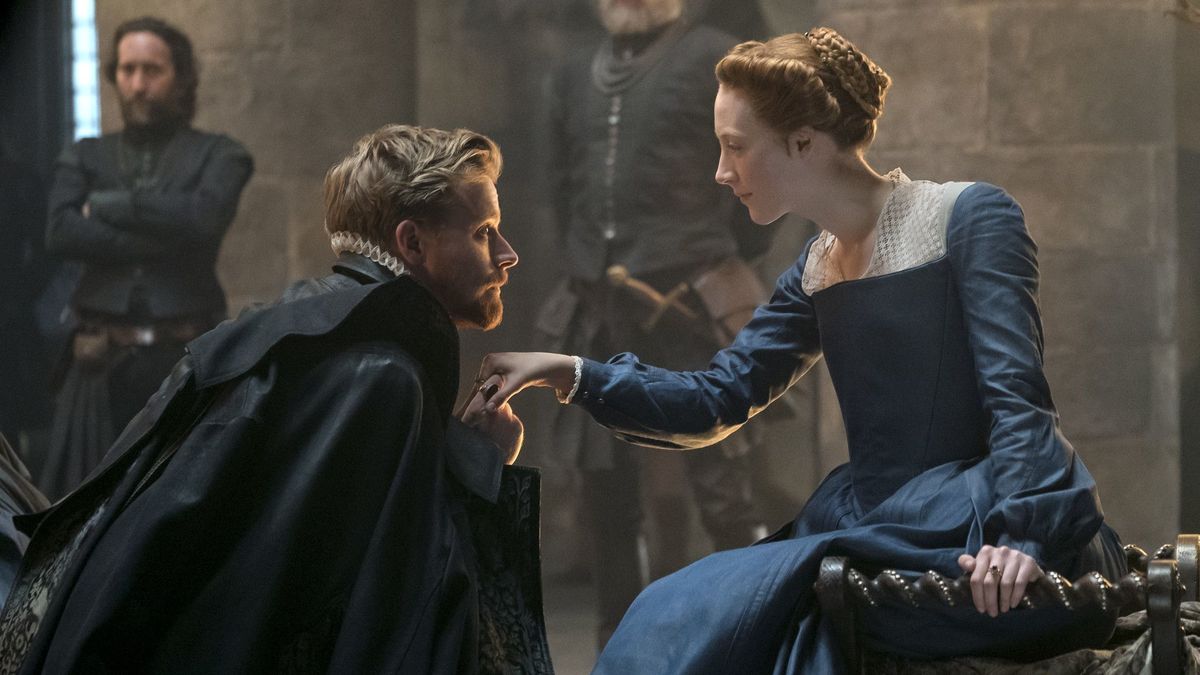
As the movie progresses, it becomes less and less involving, and less and less impactful, as all efforts to make Mary’s plight appear tragic slowly evaporate, and the narrative trundles on from one historical action point to the next with all the energy of someone trudging through treacle. First time director Josie Rourke, whose background is in theatre, does elicit two compelling performances from Ronan and Robbie, but hasn’t adapted her talents to meet the needs of her movie, and the result is a patchwork of disparate scenes that don’t always allow for a consistent narrative, or characterisations (Bothwell’s change of conscience is particularly troubling). But this is first and foremost a movie that affords Ronan and Robbie the opportunity to reveal just why they are two of the best actresses working today. Ronan is appropriately fiery as Mary, passionate and determined, but unable to combat the forces that lead her to tragedy. Good as Ronan is, though, Robbie is superb as Elizabeth, making her a tragic figure who knows what must be done to protect her kingdom, but whose conscience leaves her feeling sad and isolated. There’s good support too from Pearce and McArdle, and the sets and costumes are a highlight, but ultimately, this is a movie for those who don’t mind if their history lessons are compromised from start to finish.

Rating: 5/10 – coming away from Mary Queen of Scots, the realisation soon sinks in that as a retelling of tumultous events and times in Scotland’s history, it’s not as robust as it needs to be, or as insightful; inevitably, it’s the modernism that lets it down, with Willimon’s script making a bad hash of trying to make the movie feel relevant to today’s feminist outlook, but worse than that, it just doesn’t hold the interest in a way that would make it more compelling.
Share this:

  • Click to share on X (Opens in new window) X
  • Click to share on Facebook (Opens in new window) Facebook
  • More
  • Click to print (Opens in new window) Print
  • Click to email a link to a friend (Opens in new window) Email
Like Loading...

Lady Bird (2017)

31 Sunday Dec 2017

Posted by dullwood68 in Movies

≈ 2 Comments

Tags

Comedy, Drama, Greta Gerwig, High School, Laurie Metcalf, Lucas Hedges, Mother/daughter relationship, Review, Sacramento, Saoirse Ronan, Timothée Chalamet, Tracy Letts

D: Greta Gerwig / 93m

Cast: Saoirse Ronan, Laurie Metcalf, Tracy Letts, Lucas Hedges, Timothée Chalamet, Beanie Feldstein, Lois Smith, Stephen McKinley Henderson, Odeya Rush, Jordan Rodrigues, Marielle Scott

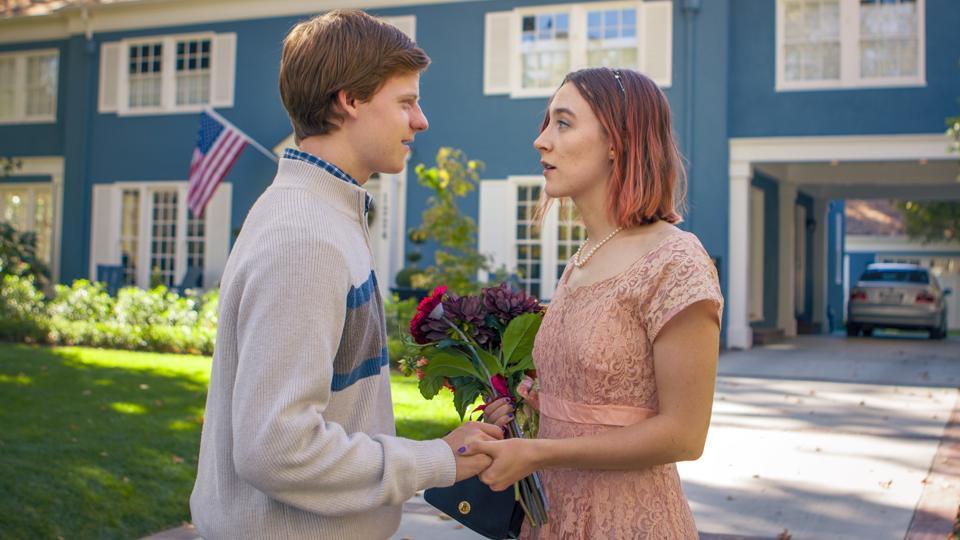
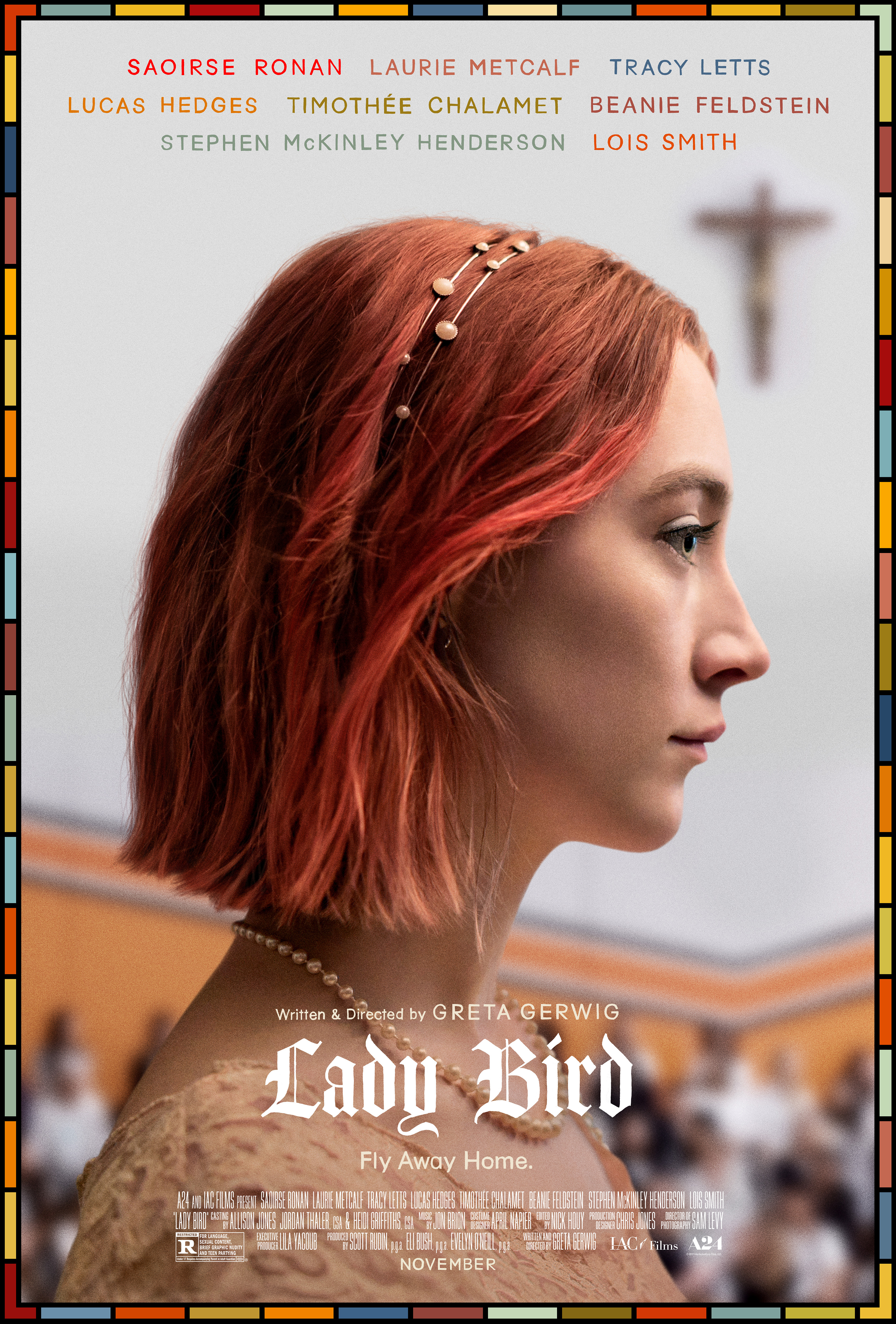
Warm and inviting, actress Greta Gerwig’s debut as a writer/director is a coming of age tale that involves Christine McPherson (Ronan), a seventeen year old high schooler who lives in Sacramento with her parents, Marion (Metcalf) and Larry (Letts), her adopted older brother Miguel (Rodrigues) and his girlfriend, Shelly (Scott), and who prefers to be known by her given name (as in given to her by herself) of Lady Bird. Lady Bird is a senior student who is looking to swap what she views as the culturally barren West Coast for the more eclectic and intellectual East Coast when she graduates and heads off to college. Currently attending a Catholic high school, she feels and acts like an outsider, and aside from having one friend, Julie (Feldstein), doesn’t do much to combat this. When she and Julie decide to audition for the upcoming school musical though, she meets Danny (Hedges), and they begin dating.

But while she navigates the uncharted waters of her first romantic relationship, Lady Bird has other problems to deal with. Her father is in danger of losing his job, and increasing financial difficulties have left the family living – literally – on the wrong side of the tracks. Also, Lady Bird’s relationship with her mother is an adversarial one, with the two of them constantly arguing and battling against each other. Marion is painfully honest about her belief in Lady Bird’s ability to get into a good college, and rarely ever compliments her. Her father is more supportive, and between them, he and Lady Bird endeavour to get her on to a college Wait List. While she waits for a response, Lady Bird’s relationship with Danny stalls due to an unexpected development, and she drops Julie in favour of Jenna (Rush), a more popular girl in school. At the same time she meets Kyle (Chalamet), who’s a musician in a band. But Lady Bird soon finds that dropping one small set of friends for another doesn’t solve any of her self-perceived problems, and her fractious home life doesn’t improve either. In fact, events lead to it being quite the opposite…

The idea of actors or actresses deciding to step behind the camera is far from unusual, but writing and directing as a first choice, and on the first occasion, is a little rarer. It’s a tribute to Greta Gerwig’s efforts that Lady Bird is not only an accomplished first feature, but a movie that will bear up under repeated viewings. Coming of age movies are ten a penny these days, and the highs and lows of being a teenager have been the subject of so many movies that you could be forgiven for wondering if there is anything new to be said. And while this does remain the case, what Gerwig does that makes her movie so effective, and so good, is write convincing dialogue. There’s not one line that feels false or contrived or sounds clichéd, and with this so ably taken care of, the cast have no problem in sounding like real people, and the various interactions their characters have all have an air of authenticity, as if Gerwig has eavesdropped on actual conversations and recorded them verbatim. This also gives the movie a rhythm and a flow that allows the viewer to be drawn along in the characters’ wake, something that adds immeasurably to the enjoyment the movie provides. And with that enjoyment comes a hopefulness that everything will eventually work out well for everyone concerned.

Lady Bird herself is a terrific character, challenging and challenged at almost every turn, and behaving in contradictory fashion throughout, just as a regular teenager would be who was trying to work out their place in the world. She wants to be her own individual, independent and assured despite having only limited experience of relationships and the wider world – everything happening with her father comes as a surprise to her – and trying to do her best as long as she benefits most. Gerwig focuses on Lady Bird’s selfish behaviour with a precision that if it isn’t autobiographical then it means that she’s very, very observant. There are moments where sympathy for the character is deliberately withdrawn by Gerwig, but there are also moments that follow on where Lady Bird shows more self-awareness than before, and sympathy is restored accordingly. It’s all played out with great skill and directorial acumen, and Gerwig accurately captures the confusion and longing that goes with being seventeen and wanting to be loved by family, friends, and/or the opposite sex.

She’s aided by a tremendously assured performance from Ronan, an actress who seems to be getting better and better with every role. Ronan brings a versatility and an understanding of the character that is impressive for the consistency that she achieves in maintaining Lady Bird’s obdurate character. It’s an appealing, generous performance and has a sincerity about it that allows the viewer to overlook much of Lady Bird’s poor behaviour. As Lady Bird’s mother, Metcalf is also on tremendous form, channelling the pain and frustration Marion feels at where Life has brought her, and the additional pain that comes of finding herself unable to do anything about the emotional discord between herself and her daughter (though the reason why is perfectly encapsulated in a single line of dialogue). In support, Letts is tender and more approachable, Hedges is a flawed Prince Charming, Chalamet is the pretentious rebound boyfriend, and Feldstein shines as the best friend who’s kicked to the kerb out of social expediency.

For the most part, Lady Bird is a keenly observed drama, but Gerwig is able to infuse her tale with an abundance of humour that acts as a necessary counterpoint to the emotional trials and tribulations that her heroine faces. The humour is varied from scene to scene, but like the majority of Gerwig’s script is only included when it suits or supports the material; there are no easy laughs here. Gerwig also shows that she has a keen sense of the spaces that her characters inhabit. Lady Bird and Marion are often shot in close proximity to each other so as to highlight the closeness of their relationship, while her other relationships – the ones that aren’t so emotionally acute – are allowed greater room in which to play out. DoP Sam Levy does a terrific job in allowing Sacramento (with which Lady Bird has a love-hate relationship) to become a secondary character all its own, while Nick Huoy’s editing is perfectly in sync with the tempo of Gerwig’s screenplay and directing style. As first features go, Gerwig has made a formidable debut. If she has any other ideas for a movie, then let’s hope we get to see them real soon, because on this evidence, her career as an actress doesn’t have to be her only one.

Rating: 9/10 – modest in scope and presentation, but perfectly realised for all that, Lady Bird is a movie with a big heart, grander ambitions than expected, and the courage to attain them all; in making this movie so completely irresistible, Gerwig has put her indie colleagues on notice: there’s a new movie maker in town and worst of all, she knows exactly what she’s doing.

Share this:

  • Click to share on X (Opens in new window) X
  • Click to share on Facebook (Opens in new window) Facebook
  • More
  • Click to print (Opens in new window) Print
  • Click to email a link to a friend (Opens in new window) Email
Like Loading...

Brooklyn (2015)

18 Monday Jan 2016

Posted by dullwood68 in Movies

≈ Leave a comment

Tags

1952, Colm Tóibín, Domhnall Gleeson, Drama, Emory Cohen, Enniscorthy, Ireland, John Crowley, Julie Walters, Literary adaptation, New York, Review, Romance, Saoirse Ronan, The Fifties

Brooklyn

D: John Crowley / 111m

Cast: Saoirse Ronan, Emory Cohen, Domhnall Gleeson, Jim Broadbent, Julie Walters, Jane Brennan, Brid Brennan, Jessica Paré, Fiona Glascott, Emily Bett Rickards, Eve Macklin, Nora-Jane Noone, Michael Zegen, Eva Birthistle, Eileen O’Higgins

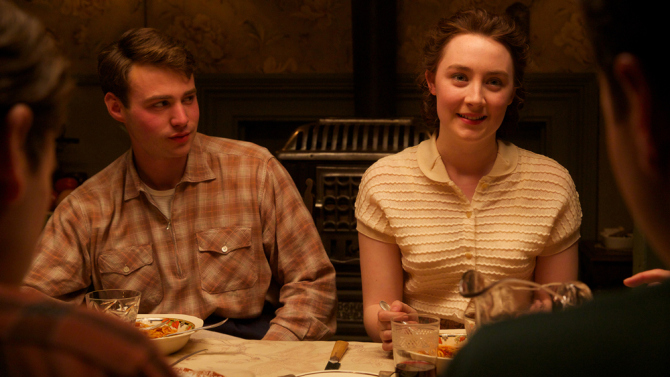
Adapted from the novel by Colm Tóibín, Brooklyn is the tale of a young Irish girl, Eilis (pronounced A-lish) (Ronan) who, in 1952, travels from the small town where she’s lived all her life, to the Big Apple, and specifically the borough of Brooklyn. It’s a chance for her to make a future for herself, to escape the narrow confines of rural Irish life. She’s supported by the local Catholic diocese, in the form of Father Flood (Broadbent), and goes to live in a boardinghouse run by God-fearing, opinionated Mrs Keogh (Walters). With a job in a department store lined up for her as well, Eilis has all she needs to do well.

But she misses home, and her widowed mother (Jane Brennan) and well-liked sister, Rose (Glascott). She writes to Rose a lot to try and combat her feelings of homesickness, and at first, finds it hard to fit in with the other young women at Mrs Keogh’s. As she struggles to find her place in this overwhelming new world, she meets a young Italian boy, Tony Fiorello (Cohen), at a dance. He’s sweet, good-natured, and has a winning smile. Eilis likes him straight away, and they begin seeing each other. He meets her when she gets out of her evening bookkeeping course; they go to the movies together and to other dances; and they go to Coney Island where Eilis learns the tricky etiquette behind wearing a bathing suit.

Saoirse Ronan in Brooklyn

Their relationship makes Eilis more confident and self-assured. She helps out at the local shelter at Xmas time, providing food for the homeless Irish. She gains the respect and approval of her supervisor (Paré) at the department store, and she sails through her first year at night school, earning Father Flood’s admiration. And then Tony tells her he loves her. At first she doesn’t know how to respond to this, and Tony believes she doesn’t love him back, but Eilis overcomes her fears and admits she loves him too (though she’s still a little uncomfortable about it). Unexpected, tragic news comes from home, and Eilis feels compelled to go back. Tony urges her to marry him before she goes, afraid that if they don’t have such a strong tie to bind them, Eilis will never come back. They tie the knot and Eilis returns to her home town of Enniscorthy.

Though she agrees to stay until after the wedding of her close friend, Nancy (O’Higgins), Eilis’s return is viewed by many in the town as a permanent one. She lands a job at a local firm doing their books for them, and attracts the attention of Jim Farrell (Gleeson), a young man who’s regarded as a bit of a catch. Eilis and Jim begin spending time with each other, and she begins to feel conflicted over her marriage to Tony; she leaves his letters to unopened in a drawer in her room. With the weight of local expectations pressing down on her, will Eilis stay in Enniscorthy, or will she return to Brooklyn and her husband?

If you’ve already seen Brooklyn, then you’ll already know that the summary above covers most of the main points in the movie, and that Eilis’s journey from smalltown girl to big city woman isn’t without its fair share of ups and downs. But you’ll also be aware – hopefully – that these ups and downs lack a certain dramatic impact. It’s not that Eilis’s story is short of incident, far from it, but what incidents there are just don’t have any weight behind them, making the movie feel under-developed. Despite being adapted from Tóibín’s novel by Nick Hornby, this is one screenplay that doesn’t do the source material justice.

Brooklyn - scene2

Having said that, it’s likely any subsequent adaptation would have the same problem that Hornby had: much of what transpires is only moderately dramatic, and it’s very difficult to see how the material could be strengthened without harming the observant nature of the narrative. In essence, we’re invited to watch how Eilis Lacey deals with the various problems and positives that come along in her life, but we’re not really asked to participate in them, or to become involved with her. It’s like hearing about someone from someone else: you only get the flavour of a person and their life, and not the detail.

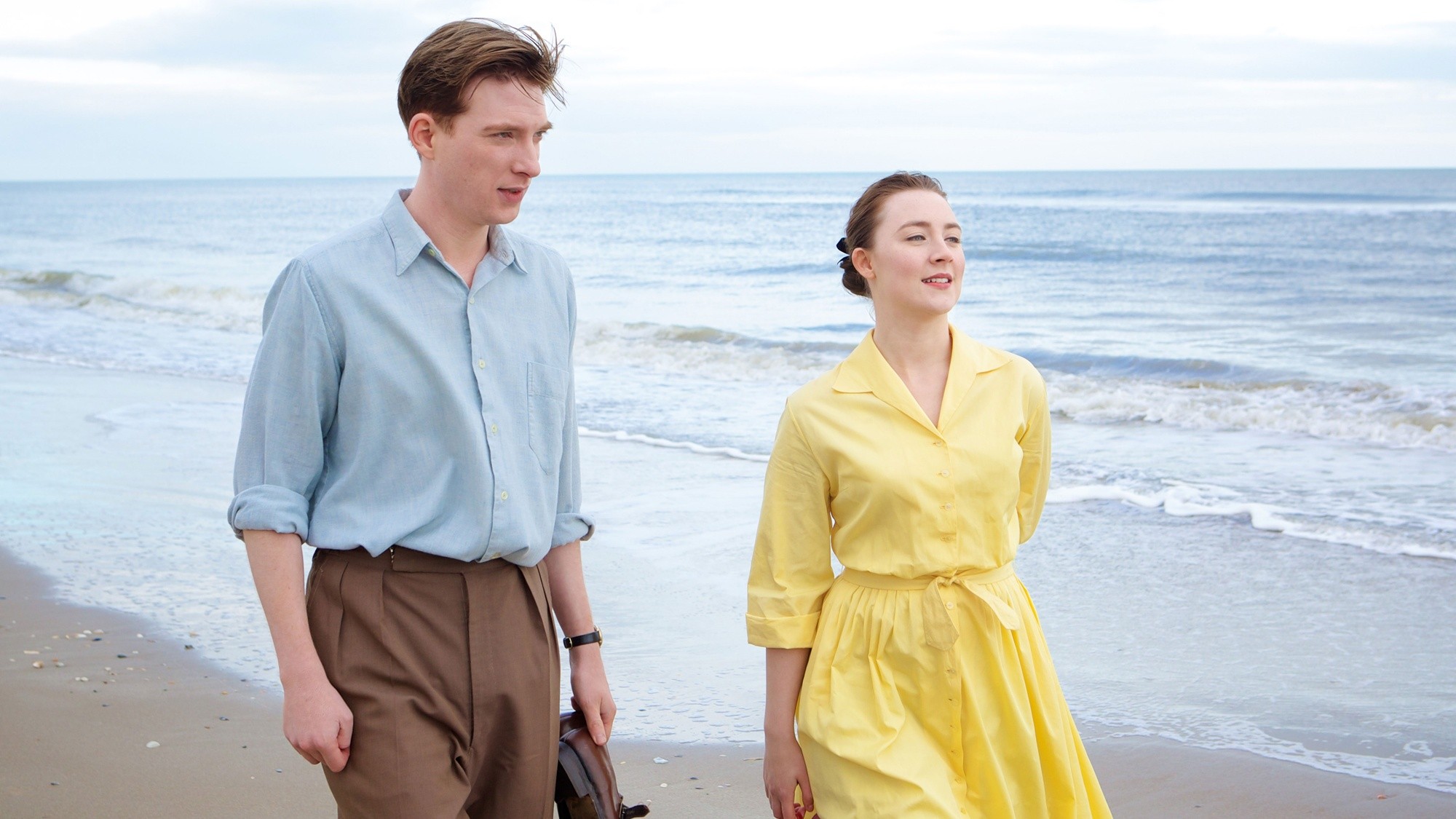
Part of the problem is that nothing really happens, certainly not enough for Eilis to feel as emotionally burdened as she does for a lot of the time. And the script never really puts Eilis in a place where she has to make any really important decisions. Yes, she agrees to marry Tony, yes, she has to make a choice between staying in Enniscorthy or going back to Brooklyn, but that’s it. Even the notion that she might fall for Jim Farrell and stay becomes unlikely as soon as the viewer realises that all they do is go for walks on the beach together, and Eilis isn’t showing the slightest romantic interest in him. Iin a movie lasting nearly two hours, there should be more drama than that, and as romantic love triangles go it’s bland and unconvincing.

Despite all this, the movie still has plenty of things going for it, not the least of which is Ronan’s performance as Eilis. Ronan is a gifted actress, and while she’s not given too much heavy lifting to do, she still impresses as the awkward young girl who grows to adulthood in a foreign land. Her oval features are used to good effect as Eilis becomes more self-assured, and her faltering grasp on love allows Ronan to display a guarded excitement that is entirely appropriate to the character. She’s ably supported by Cohen and Gleeson as the men in her life, though Gleeson has a hard time making Farrell seem more than just a puppy dog waiting for Eilis to play with him. Walters provides a good deal of the comedy, and Broadbent is a capable substitute figure for Eilis’s father.

Brooklyn - scene1

Behind the camera, Crowley, who has yet to make a movie that fully realises its potential – his last was Closed Circuit (2013) – does a great job in recreating the period, and with DoP Yves Bélanger, keeps the camera focused on Ronan’s face, all the better to catch her slowly dawning self-awareness and confidence. Bélanger also keeps the movie looking rich and inviting while Eilis is in Brooklyn, and naturally beautiful when she’s in Ireland. But with the material lacking bite, there’s only so much he and Crowley can do to keep the audience involved and following along in Eilis’s wake. Things aren’t helped either by an intrusive score by Michael Brook that doesn’t so much amplify what little drama there is, as try and become it.

Rating: 7/10 – though it tells its story plainly and with few attempts made to elevate the drama, Brooklyn is the kind of movie that would suit on a wintry Sunday afternoon in front of the fire; that it never really achieves any great dramatic heights is a shame, but it’s nevertheless an enjoyable watch if you don’t expect too much from it.

Share this:

  • Click to share on X (Opens in new window) X
  • Click to share on Facebook (Opens in new window) Facebook
  • More
  • Click to print (Opens in new window) Print
  • Click to email a link to a friend (Opens in new window) Email
Like Loading...

Violet & Daisy (2011)

01 Friday Aug 2014

Posted by dullwood68 in Movies

≈ Leave a comment

Tags

Alexis Bledel, Assassins, Crime, Geoffrey Fletcher, James Gandolfini, Murder, Rival killers, Saoirse Ronan, Teenagers

Violet & Daisy

D: Geoffrey Fletcher / 88m

Cast: Saoirse Ronan, Alexis Bledel, James Gandolfini, Marianne Jean-Baptiste, Danny Trejo, Tatiana Maslany, Lynda Gravatt

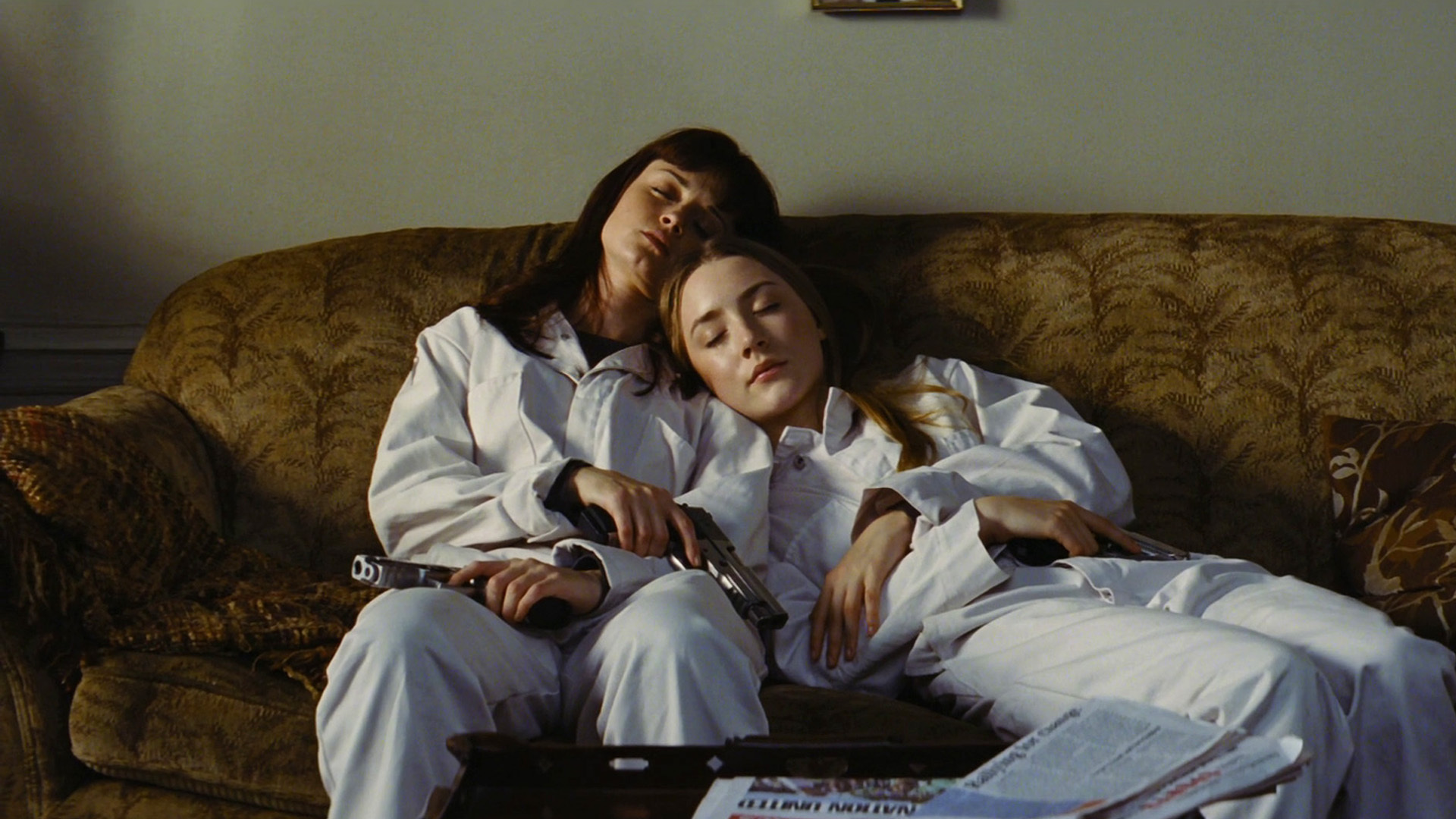
Two teenagers, Violet (Bledel) and Daisy (Ronan), when they’re not obsessing over singing sensation Barbie Sunday, are professional assassins.  They work for a man called Chet but they’ve never met him; instead they’re given their jobs via an intermediary, Russ (Trejo).  When their next assignment – to kill a man who’s stolen from Chet – is given to them the set up seems a little strange: the man has contacted Chet and given his name and address.  As planned, the pair wait for the man at his apartment, but fall asleep while waiting for him to come home.  When they wake, they find he’s covered them with a quilt and is unsurprised to see them; in fact, he tells them he’s been expecting them.  With the hit already not going to plan, Violet and Daisy decide to just shoot the man and have done with it but when they try – blasting away at where he was sitting moments before – they find he’s got up and made them cookies.

Now out of bullets, Violet leaves the apartment to get some more, leaving Daisy and the man alone.  They start to talk, learning about each other, and a bond develops between them.  The man reveals he’s also expecting another set of killers to pay him a visit as he’s stolen from their boss as well.  They’re part of a rival organisation and when they arrive at the man’s apartment, Daisy stalls them long enough for Violet to return and kill them.  Learning more about the man, and discovering he has terminal cancer, Violet once more leaves the flat to re-stock their arsenal, still determined to carry out their mission.  The man tells Daisy about his daughter, April (Maslany), and his regret over the way his relationship with her has deteriorated.  As it becomes increasingly clear that the man has engineered his death by stealing from Chet and his rival, it’s down to the two girls to decide if this is one hit that shouldn’t be carried out.

Violet & Daisy - scene

The feature debut of the screenwriter of Precious (2009), Violet & Daisy is a singularly adventurous movie that does its best to wrong foot its audience throughout, and maintains a quirky, offbeat charm through its sometimes whimsical script and its trio of lead performances.  The set up is intriguing, and provides a lot of laughs as Violet and Daisy try and get the measure of a man who isn’t afraid of them, or the fact that they’re there to kill him.  While their confidence doesn’t quite desert them, it is undermined by the man’s calmness, and how nicely he treats them.  It’s fun to see the pair heading off to another room (while remaining in earshot) in an effort to decide what to do, their experience counting for little in the face of such cooperation and concern for them as individuals.

This basic premise is fleshed out by the inclusion of the rival killers and the history that Violet has with them, as well as a nosy neighbour, Dolores (Gravatt), and the threat of Chet’s number one assassin (Jean-Baptiste) lurking outside the building (to take out the man or Violet and Daisy is never clear).  The girls’ relationship is explored as well, giving both actresses the chance to provide strong, compelling performances that highlight the disparity between the girls’ feelings about the way their mission has gone awry.  Ronan is superb as always, Daisy’s somewhat gauche behaviour during the early part of the movie giving way to a measured, more emotional response to the situation, her growing liking for the man giving her a confidence that she didn’t have before.  As the initially controlling Violet, Bledel has the more obviously showy role but as the movie progresses, she shows the vulnerability beneath the confidence, and while it would be taking it too far to say their roles are reversed, by the end there’s a balance that actually compromises their working relationship.  And Gandolfini is as artless and affecting as ever, imbuing his character with a quiet determination that perfectly illustrates his need to give meaning to the end of his life.

Fletcher organises his cast and the material with a poise and assurance that belies the fact this is his first director’s credit, and the movie’s mix of violence, black humour and indie drama makes Violet & Daisy a real pleasure to watch.  With top-notch performances, and an unshowy, yet deadpan approach to the situation, Fletcher creates a winning crime drama that has a strong visual approach and features equally strong performances.  The references to the singer Barbie Sunday are probably the movie’s main weakness, giving Violet and Daisy a fairly spurious reason for taking on the job in the first place, and there are a few moments where the humour does a disservice to the drama it’s meant to offset.  But these are minor issues, and don’t hinder the movie at all.

Rating: 8/10 – an underrated gem, Violet & Daisy has lots to offer, and rewards the viewer from start to finish; Ronan and Bledel make a great team, and the movie’s indie sensibility means it provides a fresh take on what could have been a much more straightforward and predictable tale.

Share this:

  • Click to share on X (Opens in new window) X
  • Click to share on Facebook (Opens in new window) Facebook
  • More
  • Click to print (Opens in new window) Print
  • Click to email a link to a friend (Opens in new window) Email
Like Loading...

Blog Stats

  • 486,528 hits

Recent Posts

  • 10 Reasons to Remember Bibi Andersson (1935-2019)
  • Fantasia (1940)
  • Dances With Wolves (1990) – The Special Edition
  • Kiss of the Spider Woman (1985)
  • The Three Musketeers (1973)

Top Posts & Pages

  • Lost for Life (2013) - Another Look
    Lost for Life (2013) - Another Look
  • Lost for Life (2013)
    Lost for Life (2013)
  • About
    About
  • Mr. Topaze (1961)
    Mr. Topaze (1961)
  • Billy Lynn's Long Halftime Walk (2016)
    Billy Lynn's Long Halftime Walk (2016)
  • Winter's Tale (2014)
    Winter's Tale (2014)
  • The Hitman's Bodyguard (2017)
    The Hitman's Bodyguard (2017)
  • 5 Famous Movie Roles That Nearly Went to Someone Else
    5 Famous Movie Roles That Nearly Went to Someone Else
  • The Layover (2017)
    The Layover (2017)
  • Transcendence (2014)
    Transcendence (2014)
Follow thedullwoodexperiment on WordPress.com

Blogs I Follow

  • Rubbish Talk
  • Film 4 Fan
  • Fast Film Reviews
  • The Film Blog
  • All Things Movies UK
  • Interpreting the Stars
  • Let's Go To The Movies
  • Movie Reviews 101
  • TMI News
  • Dan the Man's Movie Reviews
  • Film History
  • Jordan and Eddie (The Movie Guys)

Archives

  • April 2019 (13)
  • March 2019 (28)
  • February 2019 (28)
  • January 2019 (32)
  • December 2018 (28)
  • November 2018 (30)
  • October 2018 (29)
  • September 2018 (29)
  • August 2018 (29)
  • July 2018 (30)
  • June 2018 (28)
  • May 2018 (24)
  • April 2018 (21)
  • March 2018 (31)
  • February 2018 (25)
  • January 2018 (30)
  • December 2017 (30)
  • November 2017 (27)
  • October 2017 (27)
  • September 2017 (26)
  • August 2017 (32)
  • July 2017 (32)
  • June 2017 (30)
  • May 2017 (29)
  • April 2017 (29)
  • March 2017 (30)
  • February 2017 (27)
  • January 2017 (32)
  • December 2016 (30)
  • November 2016 (28)
  • October 2016 (30)
  • September 2016 (27)
  • August 2016 (30)
  • July 2016 (30)
  • June 2016 (31)
  • May 2016 (34)
  • April 2016 (30)
  • March 2016 (30)
  • February 2016 (28)
  • January 2016 (35)
  • December 2015 (34)
  • November 2015 (31)
  • October 2015 (31)
  • September 2015 (34)
  • August 2015 (31)
  • July 2015 (33)
  • June 2015 (12)
  • May 2015 (31)
  • April 2015 (32)
  • March 2015 (30)
  • February 2015 (37)
  • January 2015 (39)
  • December 2014 (34)
  • November 2014 (34)
  • October 2014 (36)
  • September 2014 (25)
  • August 2014 (29)
  • July 2014 (29)
  • June 2014 (28)
  • May 2014 (23)
  • April 2014 (21)
  • March 2014 (42)
  • February 2014 (38)
  • January 2014 (29)
  • December 2013 (28)
  • November 2013 (34)
  • October 2013 (4)

Blog at WordPress.com.

Rubbish Talk

Film 4 Fan

A Movie Blog

Fast Film Reviews

The Film Blog

The official blog of everything in film

All Things Movies UK

Movie Reviews and Original Articles

Interpreting the Stars

Dave Examines Movies

Let's Go To The Movies

Film and Theatre Lover!

Movie Reviews 101

Daily Movie Reviews

TMI News

Latest weather, crime and breaking news

Dan the Man's Movie Reviews

All my aimless thoughts, ideas, and ramblings, all packed into one site!

Film History

Telling the story of film

Jordan and Eddie (The Movie Guys)

Movie Reviews & Ramblings from an Australian Based Film Fan

Privacy & Cookies: This site uses cookies. By continuing to use this website, you agree to their use.
To find out more, including how to control cookies, see here: Cookie Policy
  • Subscribe Subscribed
    • thedullwoodexperiment
    • Join 481 other subscribers
    • Already have a WordPress.com account? Log in now.
    • thedullwoodexperiment
    • Subscribe Subscribed
    • Sign up
    • Log in
    • Report this content
    • View site in Reader
    • Manage subscriptions
    • Collapse this bar
 

Loading Comments...
 

    %d