• 10 Reasons to Remember…
  • A Brief Word About…
  • About
  • For One Week Only
  • Happy Birthday
  • Monthly Roundup
  • Old-Time Crime
  • Other Posts
  • Poster of the Week
  • Question of the Week
  • Reviews
  • Trailers

thedullwoodexperiment

~ Viewing movies in a different light

thedullwoodexperiment

Tag Archives: Sexism

Soni (2018)

25 Friday Jan 2019

Posted by dullwood68 in Movies

≈ Leave a comment

Tags

Drama, Geetika Vidya Ohlyan, Gender politics, India, Indie movie, Ivan Ayr, Mohit Chauhan, New Delhi, Police force, Review, Saloni Batra, Sexism, Vikas Shukla
D: Ivan Ayr / 97m

Cast: Geetika Vidya Ohlyan, Saloni Batra, Mohinder Gujral, Mohit Chauhan, Vikas Shukla, Gauri Chakraborty, Simrat Kaur, Dimple Kaur, Dalip Kumar Gulati, Prateek Pachori, Upasya Goswami

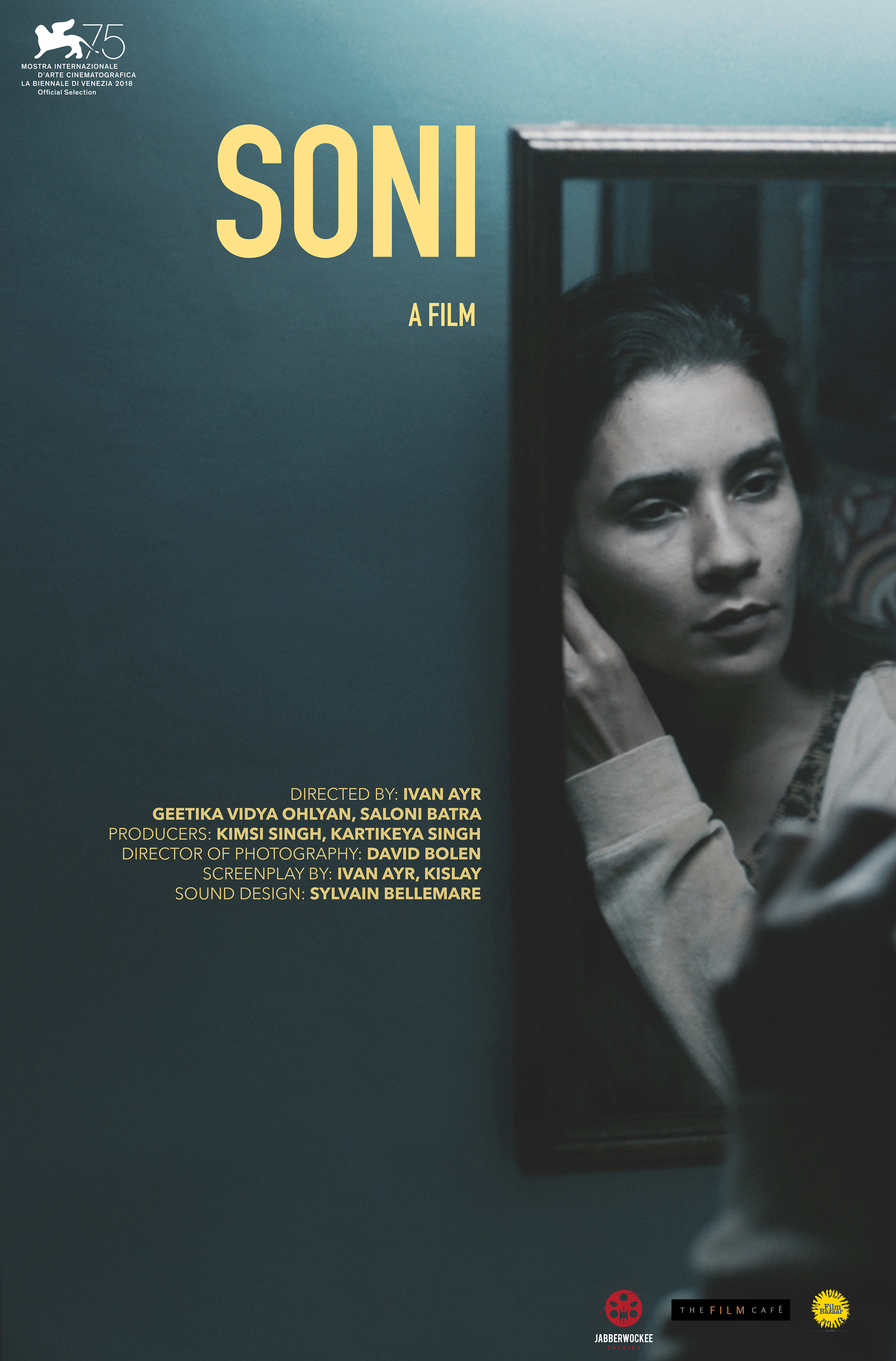
Soni (Ohlyan) is an inspector working for the New Delhi police force. Based in the team that deals with crimes against women, Soni works the night shift, placing herself in dangerous situations in order to arrest men who attack or harass lone women. When Soni beats a man who tries to assault her, it highlights her own propensity for violence, and the anger she keeps pent up inside her. As well as causing problems for Soni, it also makes life difficult for her boss, Kalpana (Batra), who recognises Soni’s worth as an officer, but has to keep persuading her superiors that Soni is more of an asset than a liability. A further violent incident involving a drunken naval officer sees an investigation opened into Soni’s behaviour. At the same time, Soni’s estranged husband, Naveen (Shukla), attempts to reconcile with her, while Kalpana’s own marriage becomes strained because her husband, Sandeep (Chauhan), a senior officer at the same station, believes she’s too soft on Soni. Torn between defending Soni and acting appropriately as her superior, a further violent incident puts Kalpana in an awkward position and threatens Soni’s future with the police…
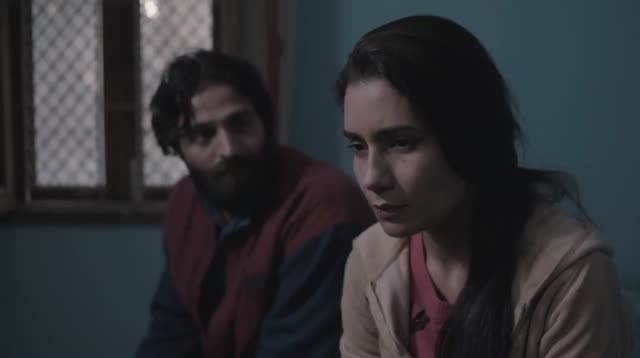
From its opening scene, which sees its lead character called a “dirty c*nt” before she viciously pummels her would-be attacker, it’s clear that Soni isn’t going to be your standard run-of-the-mill police-based drama. Although first-time feature director Ivan Ayr is interested in exploring the effects of violence on women working as police officers, his movie is also keen to examine the motivations that have prompted them to join in the first place, and what keeps them in the job. To do this, Ayr paints two very different portraits. Soni is a loner, her marriage having fallen apart due to events that we remain ignorant of until late on, and with few friends both within the force and outside. She’s deliberately isolated herself, and Ayr shows the extent of her isolation in the various ways she avoids being helped by others. She’s punishing herself, even at work where she feels most comfortable; such is the depth of her self-imposed misery. Kalpana is her polar opposite, a career policewoman with a stable marriage and brighter prospects. But even Kalpana has a number of problems to face, from the chiding attitude of her husband, to the awkward position she finds herself in through defending Soni.
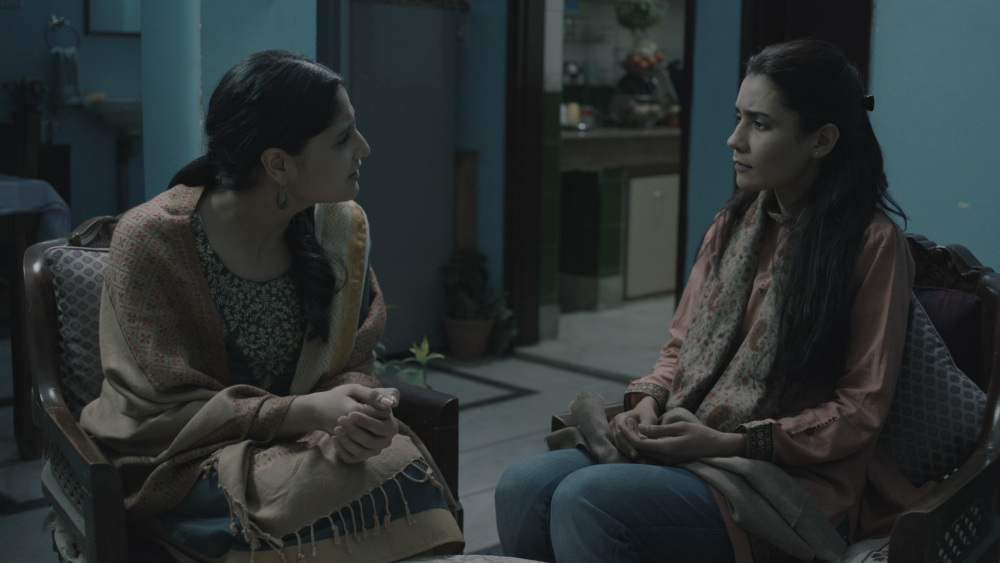
For both women, being a part of the police force in New Delhi is an important part of who they are, and Ayr further explores the gender politics and endemic sexism that surrounds them. He does so with a quiet assurance and empathy that is evidenced by terrific performances from newcomers Ohlyan and Batra. They ensure Soni and Kalpana remain believable at all times, with the developing bond between the two women played sincerely and honestly, and their restrained, sincere portrayals prove as gripping for their emotional acuity as they are for the way they conduct themselves physically, with Ohlyan moving purposefully and with a minimum of effort, and Batra appearing as if she’s hemmed in by the demands of Kalpana’s uniform. Shot on a small budget – Ayr is also co-screenwriter and editor – the movie belies this thanks to impressive camera work from DoP David Bolen, and Ayr’s decision to shoot in long takes that lend an unexpected and nuanced immediacy to the action. The lack of a score or soundtrack is fortuitous too, allowing the viewer to concentrate on the material without the distraction of musical cues to take them by the hand and guide them towards the emotion of a scene. All in all, it’s remarkable debut, and one that lifts the lid on an aspect of Indian gender politics that cinema depicts all too rarely.

Rating: 9/10 – shot through with a mournful pessimism but still allowing a modicum of hope for both its main characters, Soni is a terrific example of an Indian indie movie; authoritative without being forthright, bold without being melodramatic, and insightful of its characters internal lives, it’s a movie that is both subtle and precise, and which exerts a powerful grip from beginning to end.

Share this:

  • Click to share on X (Opens in new window) X
  • Click to share on Facebook (Opens in new window) Facebook
  • More
  • Click to print (Opens in new window) Print
  • Click to email a link to a friend (Opens in new window) Email
Like Loading...

Support the Girls (2018)

14 Sunday Oct 2018

Posted by dullwood68 in Movies

≈ Leave a comment

Tags

Andrew Bujalski, Comedy, Double Whammies, Drama, Female solidarity, Haley Lu Richardson, James Le Gros, Regina Hall, Review, Sexism, Sports bar

D: Andrew Bujalski / 90m

Cast: Regina Hall, Haley Lu Richardson, James Le Gros, AJ Michalka, Dylan Gelula, Shayna McHayle, Lea DeLaria, Jana Kramer, Brooklyn Decker, John Elvis, Lawrence Varnado

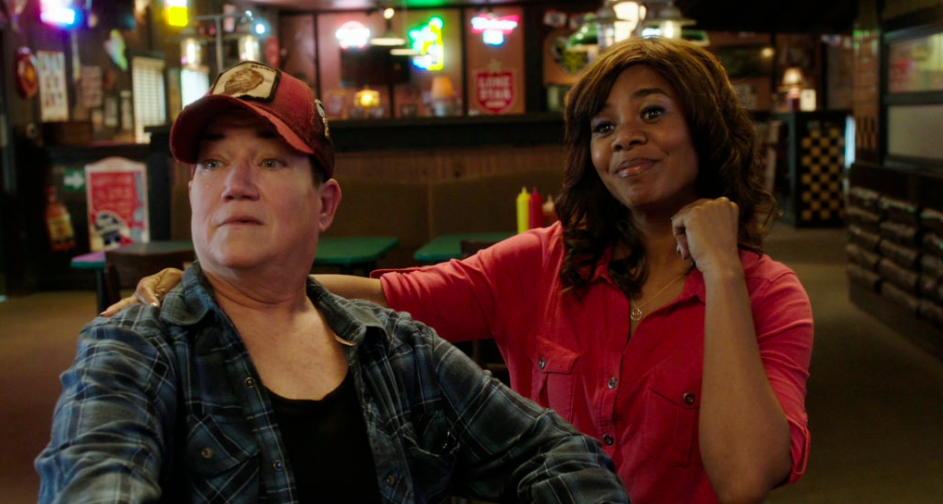
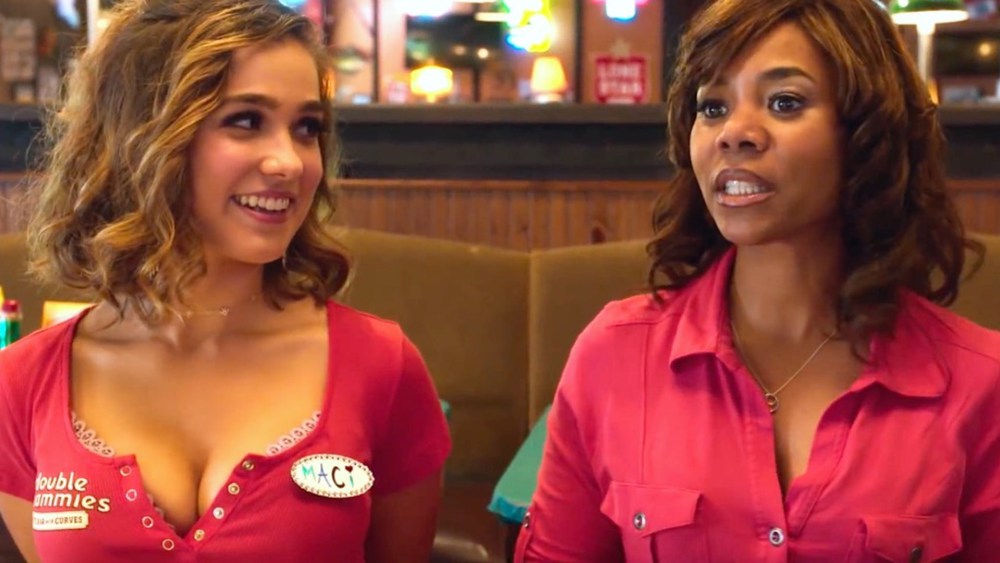
It’s another day of problems at Double Whammies, a Hooters-style sports bar-cum-restaurant (or ‘breastaurant’) managed by the ever-reliable and ever-resourceful Lisa (Hall). What with having to carry out interviews before the bar opens, dealing with a man stuck in one of the air vents, organising a car wash with the proceeds going to a staff member who’s in financial difficulties, solving the issue of the TV screens having lost their signal, and the unwanted management advice of bar owner Cubby (Le Gros), as well as the prospect of a similar, rival company opening a restaurant nearby, Lisa has her work cut out for her – and that’s without providing support and practical advice to the staff, who have their own issues. Lisa is more of a den mother than a manager, but her expertise lies in treating everyone like family, and for this she gets back a lot of respect and loyalty. As she sidesteps further potential problems that arise as the day progresses, it’s not until an encounter with Cubby that she begins to question whether or not it’s time to move on…

Although the setting for Support the Girls is a tacky, less than appealing restaurant that promotes “family values” and which has a zero tolerance policy on customers who are disrespectful to the waitstaff, this isn’t about the restaurant itself, but about those waitstaff, and their manager, and the sisterhood that they promote amongst themselves. It’s this sense of solidarity, and everyone pulling together, that gives the movie much of its heart and soul, as writer/director Bujalski paints a portrait of ordinary women working in a low paid, low reward job but finding a purpose in supporting each other that makes up for the problems that said job throws at them on a daily basis, whether it be unruly patrons, unfair rules and prohibitions (Cubby won’t allow two black women to work the same shift), or their own unrealised needs and/or ambitions. Lisa does her best to juggle all these things and to keep Double Whammies running as smoothly as possible, but she’s like the classic image of a swan: on the surface she seems able to deal with anything, but below the surface she’s paddling like mad to maintain that semblance of being in control.

Adding depth to proceedings are themes surrounding perpetuated sexist attitudes, the socio-economic climate that keeps workers such as these from doing any better for themselves, and how senior management or owners are divorced from the day-to-day realities of managing such a business. These issues are given their due without the need for strident politicising or deftly written monologues bemoaning the current state of employment matters in the US, and this is because Bujalski is focused on how female solidarity allows the staff to feel and be more fulfilled than perhaps they would be otherwise. It’s a positive message given in the unlikeliest of locations, but it’s also the reason why it works so well. These are women who are working in an environment where it’s not just their gender that can come under attack but their sexuality, their physical appearance, their class, their race, and that’s without any challenges to their ability to do the job. That the movie balances all this without being too blunt or obvious, is a testament to the skill of Bujalski’s screenplay, and his confidence in handling the material. It’s also due to the talents of a terrific cast, with Hall giving her best performance yet as a woman doing her best to keep everything going, and by being that rare thing in the movies: consistently nice.

Rating: 8/10 – a comedy that avoids clumsy attempts at satire by being sincere in its approach to its characters’ environment, and their hopes and dreams, Support the Girls does just that, and in an affecting, heartwarming manner; as a snapshot of what it’s like to be a woman in 2018 America, it could be construed as dispiriting, but what it shows instead is that female solidarity is alive and well and ready for anything – and on its own terms.

Share this:

  • Click to share on X (Opens in new window) X
  • Click to share on Facebook (Opens in new window) Facebook
  • More
  • Click to print (Opens in new window) Print
  • Click to email a link to a friend (Opens in new window) Email
Like Loading...

Battle of the Sexes (2017)

20 Monday Nov 2017

Posted by dullwood68 in Movies

≈ 1 Comment

Tags

Andrea Riseborough, Billie Jean King, Bobby Riggs, Drama, Emma Stone, Jonathan Dayton, Review, Sexism, Sport, Steve Carell, Tennis, True story, Valerie Faris

D: Valerie Faris, Jonathan Dayton / 121m

Cast: Emma Stone, Steve Carell, Andrea Riseborough, Natalie Morales, Sarah Silverman, Bill Pullman, Alan Cumming, Elisabeth Shue, Austin Stowell, Eric Christian Olsen, Jessica McNamee

Ah, the Seventies, a golden era for cinema, but not quite so good if you were a woman, or more specifically, a sportswoman. The disparity between what the men were paid and what the women were lucky to receive, by comparison with modern standards, was insulting. Battle of the Sexes, the latest from the directors of Little Miss Sunshine (2006), is very loosely based on the efforts of women tennis players such as then champion Billie Jean King (Stone) and several of her fellow players to break away from the United States Lawn Tennis Association, and establish their own independent, Women’s Tennis Association. In doing so, they not only challenged the entrenched male perspective that women’s tennis was somehow “inferior” to men’s tennis, but also that “people” didn’t want to watch women’s tennis because it wasn’t exciting enough.

This patriarchal view was espoused by the likes of Jack Kramer (Pullman), the head of the USLTA. It was refuted by Billie Jean and her (apparent) agent/manager Gladys Heldman (Silverman). Kramer’s blackballing of the women players who refused to play in any of the USLTA’s tournaments proved to be an unintended blessing in disguise, as it allowed them to find their own sponsorship and play in their own tournaments, and for more approrpriate sums of money (when Billie Jean won the US Open in 1972 she received $15,000 less than men’s champion Ilie Năstase). The movie depicts the effectiveness of this approach in establishing the quality of women’s tennis, and bringing it to a wider public, but then along comes Bobby Riggs (Carell), a one-time world tennis champion in the late Thirties and Forties. Riggs, a tireless self-promoter, challenges King to an exhibition match, asserting that he can beat any of the top women players purely because he’s a man. King initially declines his offer, but when he beats her rival, and current world number one, Margaret Court (McNamee), Billie Jean feels she has no option but to play him, and hopefully, advance the cause of women tennis players immensely. But if she were to fail…

Battle of the Sexes is an enjoyable mix of comedy and drama that has an ambitious streak that’s about a mile wide. Not only does it focus on tennis’s version of the glass ceiling, but it also finds time to explore the wider sexism of the time, as well taking a sideswipe at the era’s unhappy approach to gender equality and sexual liberation. Alongside the grandstanding of the match itself, King’s burgeoning awareness of her true sexual identity is dealt with by her having an affair with a hairdresser, Marilyn Barnett (Riseborough). This aspect of the movie is played out with a great deal of restraint, not just in how it’s presented physically, but also emotionally, with Billie Jean trying to put the genie back in the lamp and pretending nothing has happened. She can’t, of course, but the movie does make the viewer wait for her to stop pretending; after all, everyone else around her knows what’s been going on, including her husband, Larry (Stowell). In the end, the relationship becomes less and less important in the grand scheme of things, and the idea that it was somehow better to address the issue of Billie Jean’s sexual preferences than not, becomes more and more apparent.

Sadly though, and while the movie is enjoyable, it’s ultimately too lightweight for its own good. With themes such as sexism and sexual politics thrown into the mix, there’s ample opportunity for the movie to provide probing examinations of both these themes, but instead it skirts around them, looking to come up with a telling bon mot rather than something more substantial (in one of the movie’s more corny moments, Alan Cumming’s unsurprisingly gay fashion designer, Ted Tinling, tells Billie Jean that one day, they’ll both be able to love freely). There’s also no real sense that anyone is being held back or hampered from doing anything, or that any obstacles can’t be overcome (and at the first opportunity). Billie Jean’s affair with Marilyn relies on Larry being completely understanding about “everything” and not causing a fuss, while Gladys gets their first tour up and running with ease, and every run in with Kramer sees him being knocked down a peg by King at every turn, leaving him looking and sounding like a sexist bogeyman, something that is too simplistic an approach to work effectively (and which even Pullman struggles to pull off). All the real drama is saved for the match, but by then it has to work extra hard to reel in the viewer, who probably has a good idea (if not an actual one) as to the outcome.

Stone is terrific, rescuing some of the milder and less interesting portions of the movie by virtue of her commitment to playing Billie Jean and her ability as an actress to fold herself into the character, so that she brings her own vulnerability as a person to the role and uses her own feelings to establish that character’s interior life. It’s a much subtler performance than you might expect, and Stone is to be congratulated for the layers she brings to her portrayal, shading Billie Jean’s personality in such a way that it helps overcome the script’s more pedestrian moments. Matching her for commitment and sincerity is Carell, a perfect choice for Riggs who plays him as a man whose public persona is used to hide the insecurities he feels since retiring from the one thing that he’s good at (he does play the senior circuit but is unfulfilled by it). Carell has a great deal of fun with the role, and the viewer has every right to have fun right along side him, but Carell also ensures there’s an air of melancholy about Riggs that’s equally affecting.

Faris and Dayton assemble the material with a deft appreciation for the period it’s set in, and the politics of the time, but it’s Simon Beaufoy’s subdued screenplay that holds them back from making this entirely successful (which makes one wonder how the movie would have turned out if original choice Danny Boyle had been able to direct it). Still, they do manage to elicit good performances from the cast, and if there’s not enough in the way of truly emotional or dramatic highs and lows, they do keep things ticking over with a great deal of style and visual panache thanks to Oscar-winning DoP Linus Sandgren. If the movie doesn’t quite achieve its own ambitions, it’s still a good effort that can be enjoyed and appreciated for what it is, even if the material does lack depth and it decides not to take a more extensive look at its various themes and topics.

Rating: 7/10 – a movie that tries hard to draw parallels with modern day issues surrounding sexual politics, Battle of the Sexes is buoyed by Stone and Carell’s performances, and a giddy sense of the absurdity of the whole situation surrounding the “battle”; but while it’s enjoyable on a basic level, any attempt to look deeper under the surface will reveal a movie that trades too heavily on what’s superfluous and not enough on what’s meaningful.

Share this:

  • Click to share on X (Opens in new window) X
  • Click to share on Facebook (Opens in new window) Facebook
  • More
  • Click to print (Opens in new window) Print
  • Click to email a link to a friend (Opens in new window) Email
Like Loading...

Mini-Review: Filth (2013)

16 Sunday Feb 2014

Posted by dullwood68 in Movies

≈ Leave a comment

Tags

Black comedy, Drama, Drug addiction, Eddie Marsan, Homophobia, Irvine Welsh, James McAvoy, Jamie Bell, John Sessions, Jon S. Baird, Racism, Review, Sex addiction, Sexism

Filth

D: Jon S. Baird / 97m

Cast: James McAvoy, Jamie Bell, Eddie Marsan, Martin Compston, Imogen Poots, John Sessions, Shirley Henderson, Gary Lewis, Kate Dickie, Joanne Froggatt, Jim Broadbent, Emun Elliott

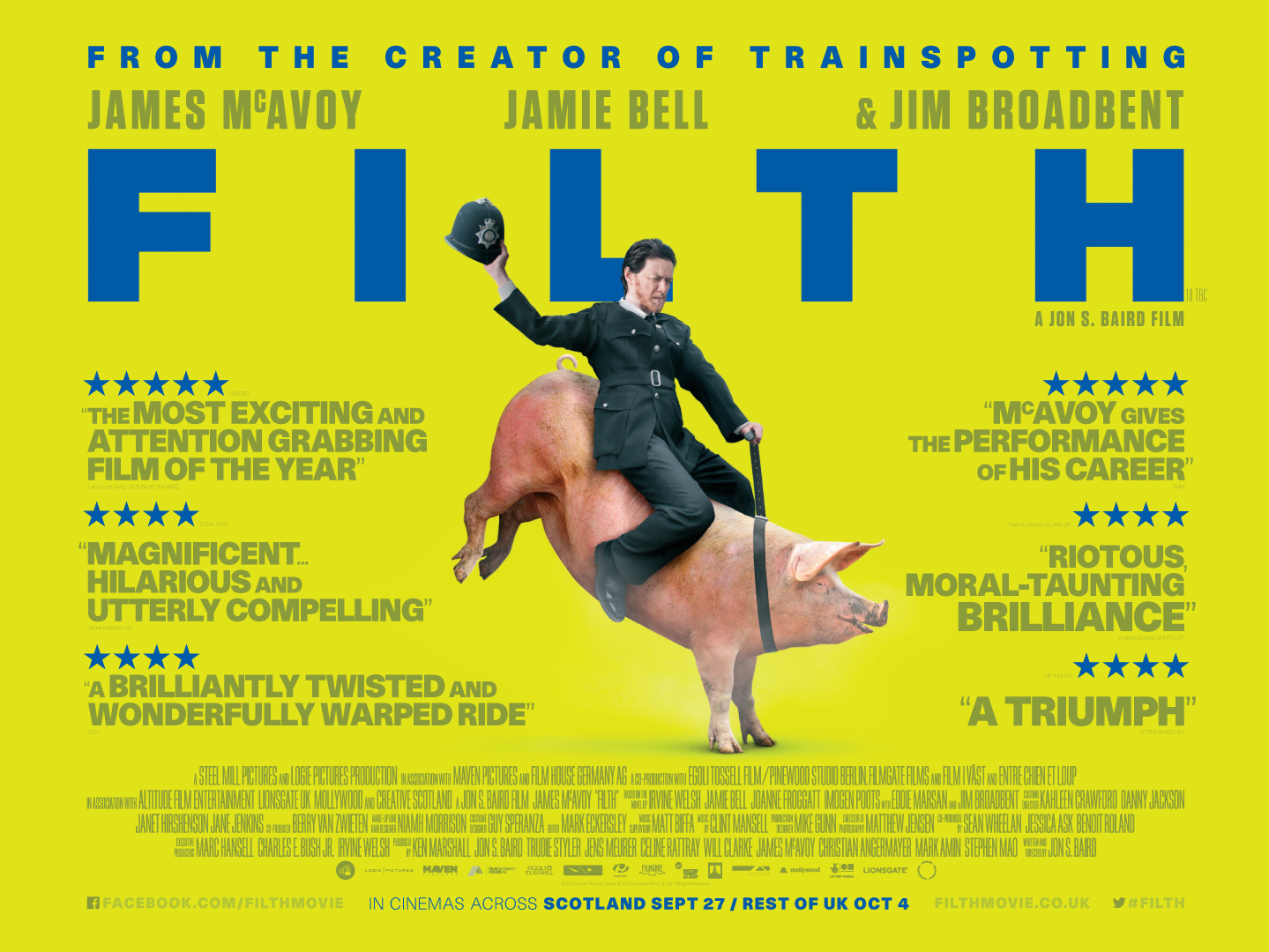
Freewheeling, offensive, scabrous adaptation of Irvine Welsh’s novel that pushes so many boundaries it’s hard to keep track of them all. No politically incorrect aspect is ignored: homophobia, sexism, racism, substance abuse – all indulged in to within an inch of the script’s life. McAvoy is Detective-Sergeant Bruce Robertson, angling for promotion to Detective-Inspector, but saddled with the small matter of the murder of a Japanese tourist to deal with first. Add to that the manoeuvrings of his fellow Detecive-Sergeants – Poots, Lewis, Bell and Elliott – as well as a subplot involving his wife (Shauna Macdonald), and the mystery of who is making obscene phone calls to fellow lodge member Bladesey’s wife (a panting Henderson), and Bruce has got his work cut out for him. It’s a shame then he has such a dependency for drugs, booze and illicit sex. As the pressure on him builds and he becomes ever more desperate to secure his promotion, Bruce’s world slowly but surely falls apart, and in the process, he starts to see things that aren’t there: from his younger brother Davey, killed in a childhood accident, to increasingly bizarre sequences involving his doctor (Broadbent).

Filth - scene

This is a potent adaptation, with plenty of energy and ‘they-didn’t-did-they?” moments of humour. McAvoy continues to cement his reputation as one of our finest young actors (okay, so he is 34), while amongst the supporting cast, both Marsan (as Bladesey) and Sessions (as Robertson’s boss) shine in their respective roles (it’s particularly good to see Sessions back on the big screen, and in a comic role as well). Baird directs with confidence and integrates the fantasy sequences with aplomb; he also manages the cast effectively and with a firm eye for avoiding caricature. There are times when the movie isn’t for the faint-hearted (“Have you started yet, baby cock?”), but anyone with a fondness for the novel or a penchant for politically incorrect humour will have a ball, especially when it comes to the photocopier game. Much better than you might expect and driven by a powerhouse performance by McAvoy, Filth is a breath of often rancid air that is all the better for not pulling its punches.

Rating: 8/10 – with a title that is far from ironic, Filth lives up to its name but is often searingly funny; a descent into one man’s nightmare that isn’t afraid to look into the abyss and then tell it to f**k off.

Share this:

  • Click to share on X (Opens in new window) X
  • Click to share on Facebook (Opens in new window) Facebook
  • More
  • Click to print (Opens in new window) Print
  • Click to email a link to a friend (Opens in new window) Email
Like Loading...

Blog Stats

  • 486,617 hits

Recent Posts

  • 10 Reasons to Remember Bibi Andersson (1935-2019)
  • Fantasia (1940)
  • Dances With Wolves (1990) – The Special Edition
  • Kiss of the Spider Woman (1985)
  • The Three Musketeers (1973)

Top Posts & Pages

  • Lost for Life (2013) - Another Look
    Lost for Life (2013) - Another Look
  • Lost for Life (2013)
    Lost for Life (2013)
  • About
    About
  • Mr. Topaze (1961)
    Mr. Topaze (1961)
  • Winter's Tale (2014)
    Winter's Tale (2014)
  • Hunt for the Wilderpeople (2016)
    Hunt for the Wilderpeople (2016)
  • Shock and Awe (2017)
    Shock and Awe (2017)
  • Cardboard Boxer (2016)
    Cardboard Boxer (2016)
  • Billy Lynn's Long Halftime Walk (2016)
    Billy Lynn's Long Halftime Walk (2016)
  • BFI London Film Festival 2015
    BFI London Film Festival 2015
Follow thedullwoodexperiment on WordPress.com

Blogs I Follow

  • Rubbish Talk
  • Film 4 Fan
  • Fast Film Reviews
  • The Film Blog
  • All Things Movies UK
  • Interpreting the Stars
  • Let's Go To The Movies
  • Movie Reviews 101
  • TMI News
  • Dan the Man's Movie Reviews
  • Film History
  • Jordan and Eddie (The Movie Guys)

Archives

  • April 2019 (13)
  • March 2019 (28)
  • February 2019 (28)
  • January 2019 (32)
  • December 2018 (28)
  • November 2018 (30)
  • October 2018 (29)
  • September 2018 (29)
  • August 2018 (29)
  • July 2018 (30)
  • June 2018 (28)
  • May 2018 (24)
  • April 2018 (21)
  • March 2018 (31)
  • February 2018 (25)
  • January 2018 (30)
  • December 2017 (30)
  • November 2017 (27)
  • October 2017 (27)
  • September 2017 (26)
  • August 2017 (32)
  • July 2017 (32)
  • June 2017 (30)
  • May 2017 (29)
  • April 2017 (29)
  • March 2017 (30)
  • February 2017 (27)
  • January 2017 (32)
  • December 2016 (30)
  • November 2016 (28)
  • October 2016 (30)
  • September 2016 (27)
  • August 2016 (30)
  • July 2016 (30)
  • June 2016 (31)
  • May 2016 (34)
  • April 2016 (30)
  • March 2016 (30)
  • February 2016 (28)
  • January 2016 (35)
  • December 2015 (34)
  • November 2015 (31)
  • October 2015 (31)
  • September 2015 (34)
  • August 2015 (31)
  • July 2015 (33)
  • June 2015 (12)
  • May 2015 (31)
  • April 2015 (32)
  • March 2015 (30)
  • February 2015 (37)
  • January 2015 (39)
  • December 2014 (34)
  • November 2014 (34)
  • October 2014 (36)
  • September 2014 (25)
  • August 2014 (29)
  • July 2014 (29)
  • June 2014 (28)
  • May 2014 (23)
  • April 2014 (21)
  • March 2014 (42)
  • February 2014 (38)
  • January 2014 (29)
  • December 2013 (28)
  • November 2013 (34)
  • October 2013 (4)

Blog at WordPress.com.

Rubbish Talk

Film 4 Fan

A Movie Blog

Fast Film Reviews

The Film Blog

The official blog of everything in film

All Things Movies UK

Movie Reviews and Original Articles

Interpreting the Stars

Dave Examines Movies

Let's Go To The Movies

Film and Theatre Lover!

Movie Reviews 101

Daily Movie Reviews

TMI News

Latest weather, crime and breaking news

Dan the Man's Movie Reviews

All my aimless thoughts, ideas, and ramblings, all packed into one site!

Film History

Telling the story of film

Jordan and Eddie (The Movie Guys)

Movie Reviews & Ramblings from an Australian Based Film Fan

Privacy & Cookies: This site uses cookies. By continuing to use this website, you agree to their use.
To find out more, including how to control cookies, see here: Cookie Policy
  • Subscribe Subscribed
    • thedullwoodexperiment
    • Join 481 other subscribers
    • Already have a WordPress.com account? Log in now.
    • thedullwoodexperiment
    • Subscribe Subscribed
    • Sign up
    • Log in
    • Report this content
    • View site in Reader
    • Manage subscriptions
    • Collapse this bar
 

Loading Comments...
 

    %d