• 10 Reasons to Remember…
  • A Brief Word About…
  • About
  • For One Week Only
  • Happy Birthday
  • Monthly Roundup
  • Old-Time Crime
  • Other Posts
  • Poster of the Week
  • Question of the Week
  • Reviews
  • Trailers

thedullwoodexperiment

~ Viewing movies in a different light

thedullwoodexperiment

Tag Archives: Taiwan

Rebels of the Neon God (1992)

22 Wednesday Apr 2015

Posted by dullwood68 in Movies

≈ Leave a comment

Tags

Arcades, Chen Chao-jung, Drama, Lee Kang-sheng, Relationships, Review, Taipei, Taiwan, Tsai Ming-liang, Wang Yu-Wen

Rebels of the Neon God

Original title: Qing shao nian nuo zha 

D: Tsai Ming-liang / 106m

Cast: Chen Chao-jung, Lee Kang-sheng, Wang Yu-Wen, Lu Yi-Ching, Tien Miao, Jen Chang-bin

Ah-tse (Chen) lives in a flat where the drain in the kitchen has backed up and water covers the floor. He’s not too concerned about it; instead he’s more interested in stealing money from telephone booths with his friend Ah-ping (Jen). He has a relationship with Ah-kuei (Wang) that he’s not fully committed to, and no sense of purpose. Elsewhere, student Hsiao-kang (Lee) is bored with his studies and with his life in general. His relationship with his mother (Lu) and father (Tien) is strained and he spends most of his time in his room.

Hsiao-kang’s father is a taxi driver. When he sees his son out of school one morning he elects to take him there. At a junction, his father is held up by Ah-tse, who is on his motor bike (with Ah-kuei on the back). Ah-tse’s anger at being scolded by a taxi driver prompts him to smash the taxi’s side mirror. Later that night, Ah-tse and Ah-ping meet up with Ah-kuei and they go out. Ah-kuei gets drunk and the two friends take her to a hotel where they leave her to sleep it off. The next day, Hsiao-kang drops out of the tutorial school he’s attending and collects the refund that’s due. He buys a cap gun and heads to a nearby arcade, which is where he sees Ah-tse and Ah-kuei. Recognising them, he decides to watch them. They meet up with Ah-ping at a restaurant then they head back to the arcade; at closing time they hide in the toilets until it’s locked up. Hsiao-kang hides too and sees them pry open several of the arcade machines and remove the motherboards.

The next day, Hsiao-kang’s father discovers he’s no longer enrolled at the tutorial school. Meanwhile, Hsiao-kang has found out that Ah-kuei works at a skating rink. When she meets Ah-tse after her shift is over, they end up at a hotel where they spend the night. While they’re there, Hsiao-kang takes the opportunity to vandalise Ah-tse’s motorbike, rendering it unrideable. He goes home but is refused entry by his father. The next morning, when Ah-tse finds his motor bike, the cost of its repair is more than he can afford, unless he sells the motherboards. But when he and Ah-ping take them to the owner of another arcade, his hopes for a quick sale don’t go as planned…
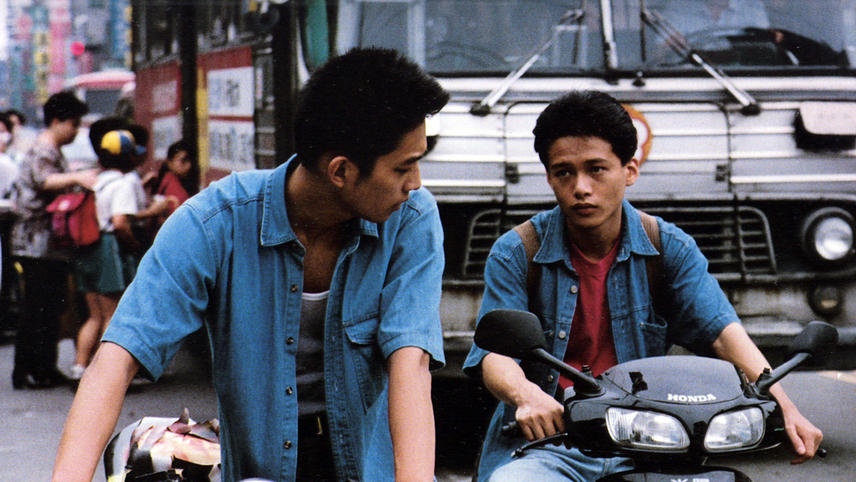
Rebels of the Neon God - scene

There’s a moment towards the end of Rebels of the Neon God when Ah-kuei suggests that she and Ah-tse “leave this place”. Ah-tse responds by asking where she wants to go, but Ah-kuei is unable to answer him. It’s a moment that perfectly encapsulates the message behind writer/director Tsai’s foray into the lives of Taiwanese youth: that disaffection and ennui are powerful motivators toward isolation. None of the three main characters has a place in the world that gives them purpose. Ah-tse appears to be the more focused of the three, his petty larcenies and casual insolence informing his personality and making him seem as if he knows what he’s doing. Ah-kuei has little identity beyond that given to her by being with Ah-tse and Ah-ping; otherwise she’s alone and struggling to connect with others. Hsiao-kang is the most alienated, his intolerance and disdain for others a reaction to his parents’ expectations of him.

As the lives of all three intersect and criss-cross, Tsai focuses on the ways in which they fail to connect emotionally with themselves, each other, and the world around them. Ah-tse uses the people around him, Ah-ping as his willing accomplice in crime, and Ah-kuei as an accessory he’s barely concerned about. When the three of them are together he acts as an unelected leader, deciding what they’ll do and where they’ll go. He looks for power in whichever way he can find it, all to make him feel superior. But it’s a hollow superiority, as shown when his plan to sell the motherboards backfires, and his sense of place in the world is rudely undermined. With his bravado severely compromised and his self-belief in tatters, Ah-kuei’s increasing need to understand the parameters of their relationship forces him to consider someone else for the first time. It’s a transitive moment and allows their relationship a moment of hope.

Hsiao-kang though is completely lost, unable to connect to anyone except in the most basic way and even when it would be of benefit to him; at one point he visits a phone dating service but can’t pick up the phone when someone is calling. His feelings are compromised so badly he can’t even react when he’s thrown out of his own home. His attack on Ah-tse’s motor bike is less of a chance at payback for his father and more of an expression of self-loathing.

Tsai positions his characters against a neon-lit, brightly dramatic background, as Taipei’s nightlife throbs and pivots and vibrates around them. It helps highlight the level of dissociation the characters exhibit, and serves as a dispassionate character all its own. It’s an added layer in a movie that examines the connections and disparities our emotions can lead us into, and which leaves it all open-ended as to where its characters will end up and how withdrawn they’ll continue to be. The cast handle their roles well, though Wang’s character is given little development beyond her need for physical approbation. Lee is moody and recalcitrant as Hsiao-kang, capturing the character’s deep-rooted antagonism with quiet skill. And Chen displays the cocksure bluster that Ah-tse uses to make himself feel important.

With it’s attempts at lyricism amidst the garish neon wasteland of Taipei’s arcade district, offset with the colder austerity of its daytime appearance, and the poorly maintained rooms that Ah-tse uses, the movie paints a vivid portrait of a society and a generation unable to come to terms with its lack of direction.

Rating: 8/10 – with a poster of James Dean from Rebel Without a Cause (1955) as its guide, Rebels of the Neon God is an effective, thought-provoking look at teenage alienation; with a script that provides no easy solutions for its characters, it’s a sombre piece and with an unexpectedly emotional core.

Share this:

  • Click to share on X (Opens in new window) X
  • Click to share on Facebook (Opens in new window) Facebook
  • More
  • Click to print (Opens in new window) Print
  • Click to email a link to a friend (Opens in new window) Email
Like Loading...

What If (2013)

16 Sunday Nov 2014

Posted by dullwood68 in Movies

≈ Leave a comment

Tags

Adam Driver, Comedy, Daniel Radcliffe, Dublin, Michael Dowse, Rafe Spall, Relationships, Review, Romance, Romantic comedy, Taiwan, Toothpaste & Cigars, Zoe Kazan

What If

D: Michael Dowse / 98m

Cast: Daniel Radcliffe, Zoe Kazan, Megan Park, Adam Driver, Mackenzie Davis, Rafe Spall

Following a difficult break-up, Wallace (Radcliffe) wants nothing to do with love. He no longer believes in it, and is in no hurry to hook up with someone new. At a party held by his best friend Alan (Driver) however, he meets Chantry (Kazan), Alan’s cousin. They hit it off, and he walks her home; at this point she reveals she has a boyfriend. Even so, Chantry gives Wallace her number but feeling that nothing good can come of their new association he doesn’t keep it. Sometime later they bump into each other outside a cinema they’ve just been to, and they pick up from where they left off. This time, when they reach Chantry’s home, she asks if they can be friends, to which Wallace agrees.

Their relationship grows as they spend more time together. Chantry invites Wallace to meet her boyfriend, Ben (Spall), and her sister, Dalia (Park). Ben warns Wallace off, while Dalia finds him attractive. An accident leaves Ben in the hospital overnight, and leads to his revealing why he’s so anti-love: his parents were doctors who cheated on each other until they divorced, and while he was a med student his girlfriend (also a med student) cheated on him with another doctor. Now he’s determined not to behave like his parents did.

Ben takes advantage of a job opportunity and moves to Dublin for six months, though he and Chantry commit to keeping their relationship going despite the distance between them. Alan and his girlfriend, Nicole (Davis) realise that Wallace is falling for Chantry, and even though he denies it, they keep pushing him to tell her how he feels about her, even on the day they get married. A disastrous night left naked and stranded at the beach by Alan and Nicole with just a sleeping bag to keep them warm, leads to an estrangement between Wallace and Chantry that neither knows how to fix. Confused about her feelings for Wallace she flies to Dublin and discovers that Ben has been offered a further job in Rio de Janeiro for another six months.

Alan tries once again to get Wallace to come clean to Chantry. Goaded to the point where he feels he has to come clean about his feelings for her, he follows Chantry to Dublin but receives a voicemail message when he gets there from Chantry that tells him she’s returned home and can he meet her. He rushes back and still feeling it’s best that he tells her how she feels, he tells her about his trip to Dublin and how much she means to him. Angry that he went to break up her relationship with Ben – something he’d promised he would never do – Chantry dismisses his claims that she has similar feelings for him, and they part. She accepts a promotion that means her moving to Taiwan. Realising that she’s not handled things too well, Chantry clings to the hope that Wallace will attend her leaving party, and they will have one last chance to make amends to each other.

What If - scene

Romantic comedies, these days at least, come in two forms: the kind that falls back on  gross-out humour to provide something memorable, and the kind that makes an effort to create memorable characters so that the humour flows organically from the actual set up. What If is definitely in the latter category, a rom-com that pitches two of the most appealing, agreeable characters that we’ve seen for a long while, and develops their relationship with patience and a surprising degree of skill.

Adapted from the play Toothpaste & Cigars by T.J. Dawe and Michael Rinaldi, What If scores highly by virtue of the script by Elan Mastai – coming a very long way from his debut script for MVP: Most Vertical Primate (2001) – and the inspired pairing of Radcliffe and Kazan. As the couple living in mutual denial of their feelings for each other, both actors excel, raising the movie’s standard plotting and set up into something much more worthwhile and affecting. (This isn’t to say that Mastai’s screenplay is lacking in any way, it’s just that it does follow the basic formula of boy-meets-girl, boy-keeps-his-feelings-to-himself-for-too-long, boy-finally-reveals-feelings-but-girl-feels-betrayed, boy-and-girl-may-or-may-not-be-reconciled that holds up most romantic comedies.)

Kazan and Radcliffe are both on terrific form, creating a convincing, captivating couple that makes it easier to root for them both through their personal and united travails. Kazan is a remarkably intuitive actress, able to adequately demonstrate the pain and confusion of unexpected love with an intensity that’s not often called for in a rom-com, but it all leads to a well-rounded, vivid characterisation and performance that elevates the material. She’s a beguiling actress, her unconventional looks and line readings adding to the believability of both Chantry as a character and her reactions to the developments in her relationship with Wallace. There are numerous moments where she reveals both the strength and the insecurity inherent in Chantry’s personality, and each moment is rendered beautifully.

Matching Kazan for believability and commitment is Radcliffe, demonstrating once again that he is one of the most talented actors of his generation. As the conflicted, honourably-minded Wallace, Radcliffe nails yet another role where he’s required (or so it seems) to be the engine that drives the movie on. Here he expertly dissects Wallace’s character and shows us the torment of a man whose experience of love has been so cruelly undermined by the people most important to him, and before he’s really had a chance to participate in it properly. It’s a measured, perceptive performance, full of insight and wit, and it complements Kazan’s role perfectly.

The secondary characters are well-drawn even if they’re unsurprisingly not as alluring or interesting as Chantry and Wallace are, but the supporting cast have fun with them nevertheless. Driver and Davis are a great match as the overly physical Alan and Nicole, their free-spiritedness at odds with the more closed in, hesitant natures of Chantry and Wallace, while Park is daffily amusing as Chantry’s predatory sister. And in the often thankless role of partner-who-must-be-shown-the-door, Spall makes Ben more interesting (and sympathetic) than the viewer might expect.

With a great script and great performances, the romantic aspects are handled with a great deal of delicacy and skill – the scene where Wallace helps Chantry out of a dress she’s trying on but has got stuck in is a superb case in point; the longing both characters display for each other is unexpectedly moving and outstandingly played. In the director’s chair, Dowse orchestrates things with poise and sensitivity, and shows an innate understanding of the characters and the material. He also knows when to let the camera linger on his leads, and when to go for the “killer” close up. It all adds up to a movie that’s not afraid to look good while pointing up the intimacy of the feelings on display. And there’s a wonderfully appropriate indie-style score by A.C. Newman that enhances and embellishes the action with casual aplomb.

Rating: 8/10 – funny, sad, heartwarming, quirky and absorbing, What If is a cleverly constructed, endlessly entertaining rom-com with two hugely impressive central performances; the perfect movie for singles looking for reassurance that love is just around the corner, or couples who want to rediscover that first thrill of finding someone special.

Share this:

  • Click to share on X (Opens in new window) X
  • Click to share on Facebook (Opens in new window) Facebook
  • More
  • Click to print (Opens in new window) Print
  • Click to email a link to a friend (Opens in new window) Email
Like Loading...

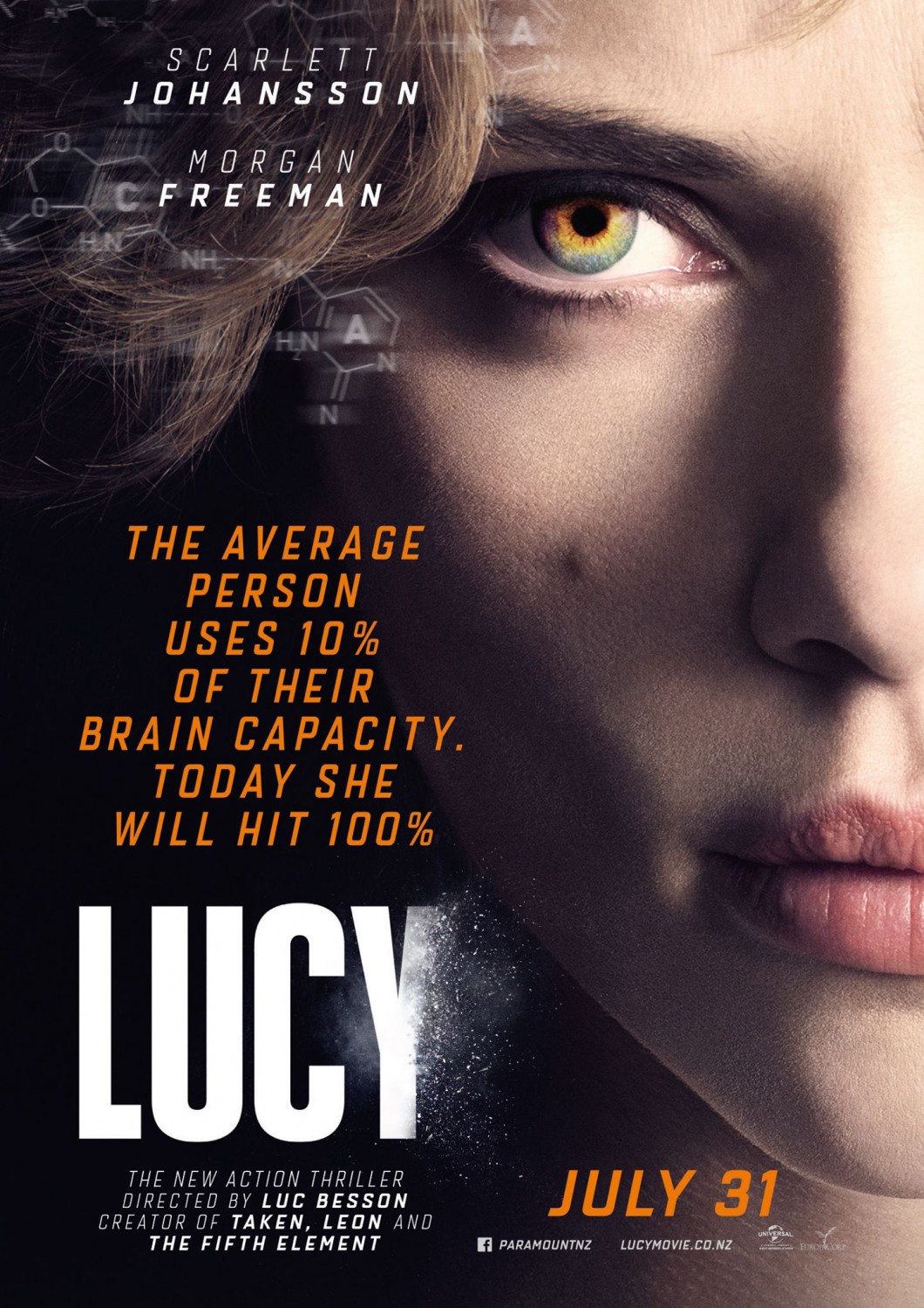
Lucy (2014)

15 Monday Sep 2014

Posted by dullwood68 in Movies

≈ Leave a comment

Tags

Action, Brain function, CPH4, Drug mules, Luc Besson, Min-sik Choi, Morgan Freeman, Mr Jang, Paris, Review, Scarlett Johansson, Taiwan

Lucy

D: Luc Besson / 89m

Cast: Scarlett Johansson, Morgan Freeman, Min-sik Choi, Amr Waked, Julian Rhind-Tutt, Pilou Asbæk, Analeigh Tipton

In Taiwan, Lucy (Johansson) is coerced by her week-long boyfriend, Richard (Asbæk) into delivering a mysterious briefcase to a man called Mr Jang (Choi) at his hotel.  While she waits in reception, she sees Richard killed outside, and then finds herself grabbed and brought to Jang’s room.  The briefcase is opened to reveal four bags of a blue substance.  The substance is tested on a drug addict who is then shot dead by Jang.  He then offers Lucy a job; she refuses and is knocked unconscious.  When she comes to, she finds she’s been operated on.  She’s taken to a room where there are three men who are in the same situation as she is.  Jang’s plan is explained to them: each has a bag of the blue substance inside them.  They will travel to various European destinations where the bags will be removed and they will be paid for their trouble.

Lucy is taken to a cell where she is chained to a wall.  She antagonises one of her captors and he kicks her repeatedly in the stomach, causing the bag inside her to split and release the blue substance into her body.  When another of her captors returns, she overpowers him and escapes; she is shot in the process but is able to remove the bullet without feeling any pain.  She goes to a nearby hospital where she forces a surgeon to remove the bag inside her.  When she tells him it’s something called CPH4, he tells her that it’s something produced by pregnant women at around six weeks that provides nutrients for a foetus.  He also tells her that she’s lucky to be alive with that much CPH4 having leaked into her.

Lucy returns to Jang’s hotel room where she learns the destinations of the three men. She then visits a friend, Caroline (Tipton), and uses her laptop in order to find out about brain function.  She learns about the research of Professor Samuel Norman (Freeman), and with her new abilities allowing her to manipulate electronic systems, contacts him via the television in his hotel room in Paris.  She tells him what she’s able to do and how her brain function is increasing in leaps and bounds, and that she’ll be there to see him in person in twelve hours.  At the airport she contacts French police officer Pierre Del Rio (Waked) and tells him about the drug mules, and convinces him to have them picked up when they land in Rome, Berlin and Paris respectively.

In Paris, and with the drug mules all in French police custody, they are taken to a hospital to have the bags removed.  Jang’s men arrive and grab the bags but Lucy incapacitates them and steals them back.  She and Del Rio head for the university where Norman has assembled some of his colleagues.  Jang and his men follow them and while a pitched battle breaks out in the university between the police and Jang’s men, Lucy ingests a synthesised version of the CPH4 that sees her take the next step in what has become, for Lucy at least, her evolution.

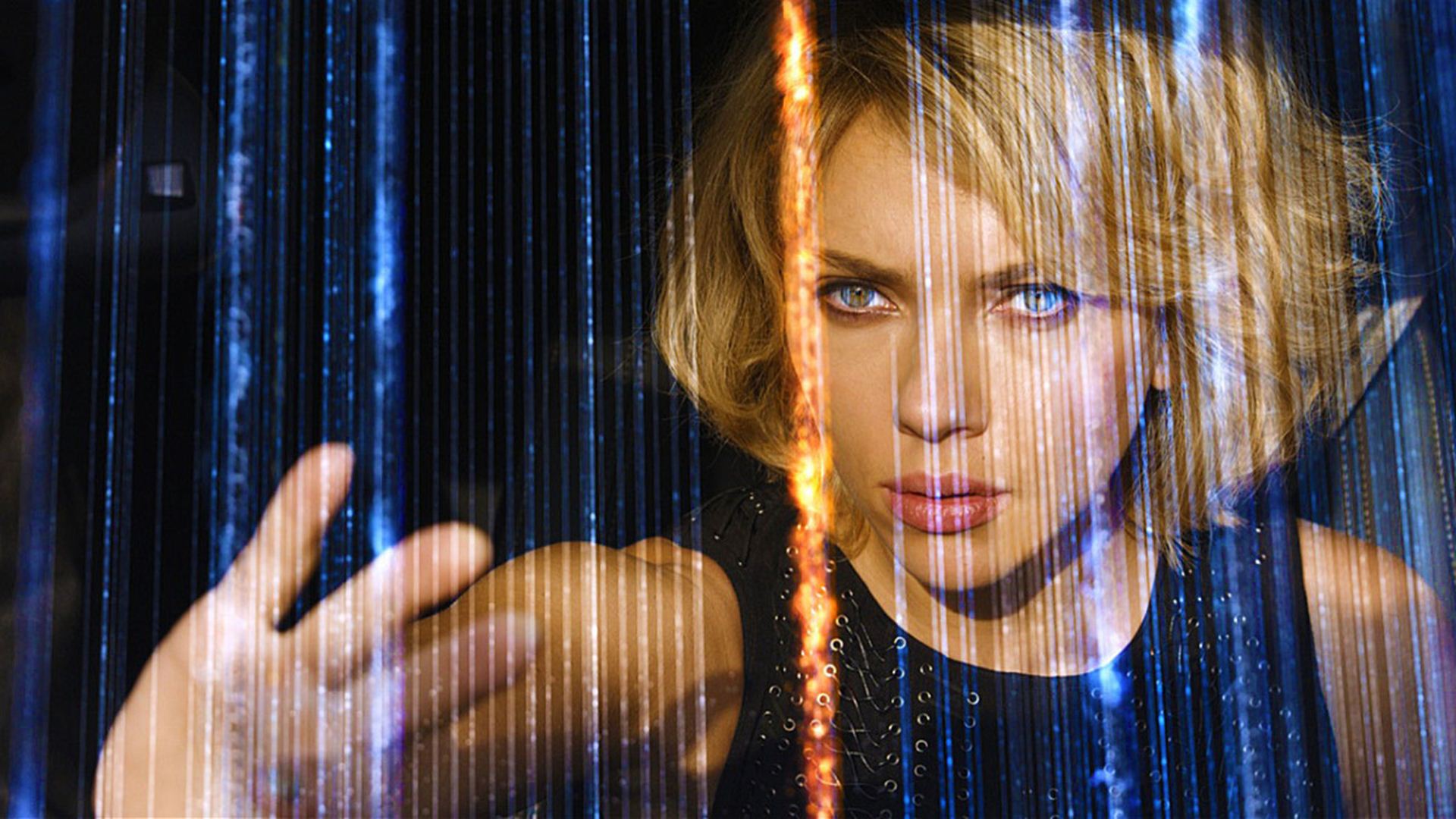
Lucy - scene

At the end of Lucy, French policeman Del Rio asks perpetually puzzled Professor Norman, “where is she?”  The answer is displayed on his mobile phone – viewers will have already guessed the answer – but it’s indicative of the movie’s less than well thought out idea about brain function that it effectively challenges not only our notions of evolution but of God as well.  If Lucy’s use of one hundred per cent of her brain means she no longer exists in human form but continues to live on some other plane of existence, then Besson (directing his own script) seems to be saying we all have the potential to be omnipotent and all-seeing.  If he is, then it means Lucy is perhaps the most philosophical and metaphysical action movie ever created.

However, while Besson is clearly a moviemaker who likes to have fun with his audiences, Lucy is not one of his better efforts, ending up as a ragbag of ideas that doesn’t make any coherent (or cohesive) sense and which often gives the impression that, like Brian in Monty Python’s Life of Brian, “He’s making it up as he goes along”.  As Lucy’s brain function expands towards one hundred per cent, she has a variety of experiences that apparently come and go, or can be turned on and off at will (and with very little effort).  These experiences also happen independently of one another, as if Besson had a tick list of cool effects he wanted to use at each stage of Lucy’s “development” (on the plane to Paris, Lucy begins to disintegrate, but the reason for this is never satisfactorily explained – but, again, it looks cool).  With this “anything goes” approach it’s to Besson’s credit that Lucy becomes less and less of an action heroine as the movie progresses, content in its later stages to just incapacitate Jang’s men and to leave the shootouts and the bloodshed to the French police.

It’s this undermining of accepted action movie devices that adds a level of originality and cleverness to proceedings – witness the car chase sequence where Lucy, driving for the first time, is merely in a hurry to get to the hospital and is unconcerned about the police cars that are trying to stop her; she’s not even trying to outrun them – but the movie’s best moment by far is perhaps it’s quietest, Lucy talking to her mother on the phone and trying to explain how she can feel things like the heat leaving her body before saying goodbye to her for the last time.  Johansson is hypnotic in this scene, and she’s equally good throughout, her questing gaze hinting at secrets that only she can see; it’s hard now to think of another actress in the role.

The rest of the cast are reduced to virtual walk-ons in Besson’s version of The Lucy Show.  Freeman essays another of his bemused expert roles but to even lesser effect than usual, while Choi (still refusing to learn English for a role) plays the urbane gangster Jang with a great deal of muted style.  Waked is little more than a bystander, and Rhind-Tutt comes in for one scene to explain Jang’s dastardly plot before disappearing back from whence he came.

On the whole, Lucy feels like an experiment in cinematic form that was forced to conform to the demands of mainstream movie-making, and as such, falls between the two disciplines.  It’s a shame, because if it had had a more judiciously constructed script, Lucy could have been 2014’s most adventurous and challenging action movie.

Rating: 5/10 – with far more intriguing ideas and concepts about the meaning of existence than it knows what to do with, Lucy is too uneven to be completely effective; but as an action movie with a mind-bending twist, Besson should be applauded for at least trying to be different.

Share this:

  • Click to share on X (Opens in new window) X
  • Click to share on Facebook (Opens in new window) Facebook
  • More
  • Click to print (Opens in new window) Print
  • Click to email a link to a friend (Opens in new window) Email
Like Loading...

Blog Stats

  • 486,528 hits

Recent Posts

  • 10 Reasons to Remember Bibi Andersson (1935-2019)
  • Fantasia (1940)
  • Dances With Wolves (1990) – The Special Edition
  • Kiss of the Spider Woman (1985)
  • The Three Musketeers (1973)

Top Posts & Pages

  • Lost for Life (2013) - Another Look
    Lost for Life (2013) - Another Look
  • Lost for Life (2013)
    Lost for Life (2013)
  • About
    About
  • Mr. Topaze (1961)
    Mr. Topaze (1961)
  • Winter's Tale (2014)
    Winter's Tale (2014)
  • Billy Lynn's Long Halftime Walk (2016)
    Billy Lynn's Long Halftime Walk (2016)
  • The Hitman's Bodyguard (2017)
    The Hitman's Bodyguard (2017)
  • Shock and Awe (2017)
    Shock and Awe (2017)
  • 5 Famous Movie Roles That Nearly Went to Someone Else
    5 Famous Movie Roles That Nearly Went to Someone Else
  • The Layover (2017)
    The Layover (2017)
Follow thedullwoodexperiment on WordPress.com

Blogs I Follow

  • Rubbish Talk
  • Film 4 Fan
  • Fast Film Reviews
  • The Film Blog
  • All Things Movies UK
  • Interpreting the Stars
  • Let's Go To The Movies
  • Movie Reviews 101
  • TMI News
  • Dan the Man's Movie Reviews
  • Film History
  • Jordan and Eddie (The Movie Guys)

Archives

  • April 2019 (13)
  • March 2019 (28)
  • February 2019 (28)
  • January 2019 (32)
  • December 2018 (28)
  • November 2018 (30)
  • October 2018 (29)
  • September 2018 (29)
  • August 2018 (29)
  • July 2018 (30)
  • June 2018 (28)
  • May 2018 (24)
  • April 2018 (21)
  • March 2018 (31)
  • February 2018 (25)
  • January 2018 (30)
  • December 2017 (30)
  • November 2017 (27)
  • October 2017 (27)
  • September 2017 (26)
  • August 2017 (32)
  • July 2017 (32)
  • June 2017 (30)
  • May 2017 (29)
  • April 2017 (29)
  • March 2017 (30)
  • February 2017 (27)
  • January 2017 (32)
  • December 2016 (30)
  • November 2016 (28)
  • October 2016 (30)
  • September 2016 (27)
  • August 2016 (30)
  • July 2016 (30)
  • June 2016 (31)
  • May 2016 (34)
  • April 2016 (30)
  • March 2016 (30)
  • February 2016 (28)
  • January 2016 (35)
  • December 2015 (34)
  • November 2015 (31)
  • October 2015 (31)
  • September 2015 (34)
  • August 2015 (31)
  • July 2015 (33)
  • June 2015 (12)
  • May 2015 (31)
  • April 2015 (32)
  • March 2015 (30)
  • February 2015 (37)
  • January 2015 (39)
  • December 2014 (34)
  • November 2014 (34)
  • October 2014 (36)
  • September 2014 (25)
  • August 2014 (29)
  • July 2014 (29)
  • June 2014 (28)
  • May 2014 (23)
  • April 2014 (21)
  • March 2014 (42)
  • February 2014 (38)
  • January 2014 (29)
  • December 2013 (28)
  • November 2013 (34)
  • October 2013 (4)

Blog at WordPress.com.

Rubbish Talk

Film 4 Fan

A Movie Blog

Fast Film Reviews

The Film Blog

The official blog of everything in film

All Things Movies UK

Movie Reviews and Original Articles

Interpreting the Stars

Dave Examines Movies

Let's Go To The Movies

Film and Theatre Lover!

Movie Reviews 101

Daily Movie Reviews

TMI News

Latest weather, crime and breaking news

Dan the Man's Movie Reviews

All my aimless thoughts, ideas, and ramblings, all packed into one site!

Film History

Telling the story of film

Jordan and Eddie (The Movie Guys)

Movie Reviews & Ramblings from an Australian Based Film Fan

Privacy & Cookies: This site uses cookies. By continuing to use this website, you agree to their use.
To find out more, including how to control cookies, see here: Cookie Policy
  • Subscribe Subscribed
    • thedullwoodexperiment
    • Join 481 other subscribers
    • Already have a WordPress.com account? Log in now.
    • thedullwoodexperiment
    • Subscribe Subscribed
    • Sign up
    • Log in
    • Report this content
    • View site in Reader
    • Manage subscriptions
    • Collapse this bar
 

Loading Comments...
 

    %d