• 10 Reasons to Remember…
  • A Brief Word About…
  • About
  • For One Week Only
  • Happy Birthday
  • Monthly Roundup
  • Old-Time Crime
  • Other Posts
  • Poster of the Week
  • Question of the Week
  • Reviews
  • Trailers

thedullwoodexperiment

~ Viewing movies in a different light

thedullwoodexperiment

Tag Archives: Timothy Spall

Early Man (2018)

21 Sunday Jan 2018

Posted by dullwood68 in Movies

≈ 1 Comment

Tags

Aardman, Bronze Age, Comedy, Drama, Eddie Redmayne, Football, Maisie Williams, Nick Park, Review, Stone Age, Timothy Spall, Tom Hiddleston

D: Nick Park / 89m

Cast: Eddie Redmayne, Tom Hiddleston, Maisie Williams, Timothy Spall, Miriam Margolyes, Rob Brydon, Richard Ayoade, Mark Williams, Kayvan Novak, Johnny Vegas, Gina Yashere, Nick Park

In Nick Park’s debut feature as a solo director (and somehow that doesn’t feel right), we’re asked to take a lot on faith: that football was created by an isolated tribe in the Stone Age, that said tribe have remained isolated until the arrival of the Bronze Age, that they’ve lost the ability to play football during that period, and that they’ve somehow survived all this time purely through hunting rabbits (and though they all wear the skins of much larger animals – whom we never see). All perfectly plausible, right? Right. And especially so in the uniquely weird and wonderful world of Aardman animation. After all, what could be so unlikely about a challenge match between a Stone Age team of under-achievers and a Bronze Age team overseen by a villainous nobleman called Lord Nooth (Hiddleston)? There’s nothing unlikely in that at all. The only thing about it that’s unlikely is that audiences might not be charmed and amused by the exploits of Dug (Redmayne), his pet wild boar Hognob (Park), his tribe, and their bronze coin loving adversary. It’s Aardman; what’s not to like?
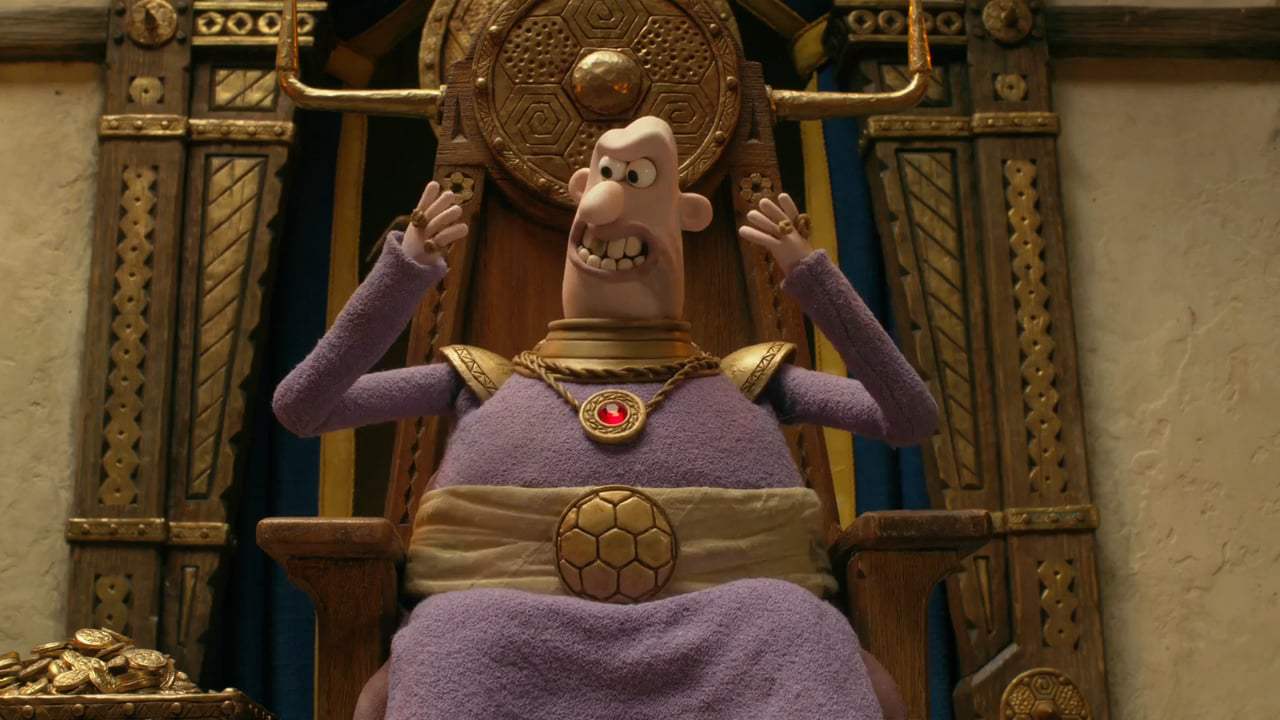
Now if that all sounds like a set up designed to reveal that the movie isn’t very good, then rest assured it is good, and very much so. But Early Man is an Aardman movie that requires audiences to approach it with a certain amount of caution. First of all, it’s very funny, and in the whimsical, very British way that only Aardman can manufacture. Park (who came up with the original story idea) and co-writers Mark Burton and James Higginson have created a world full of inspired sight gags, inspired dialogue, inspired character-based comedy, and a ton of in-jokes. The animation, as expected, is on a par with previous Aardman movies and shorts – meaning it’s excellent – and there is a limited use of CG that, for once, is in support of the Claymation process and doesn’t overwhelm it. Park’s direction is fluid, with an economy of style that matches the material, and there’s terrific voice work from the entire cast, though if you had to highlight anyone’s performance, it would be Brydon as the messenger bird (think Zazu from The Lion King (1994) but with increased attitude). Like all Aardman productions there is a surfeit of riches, and it’s immensely enjoyable.
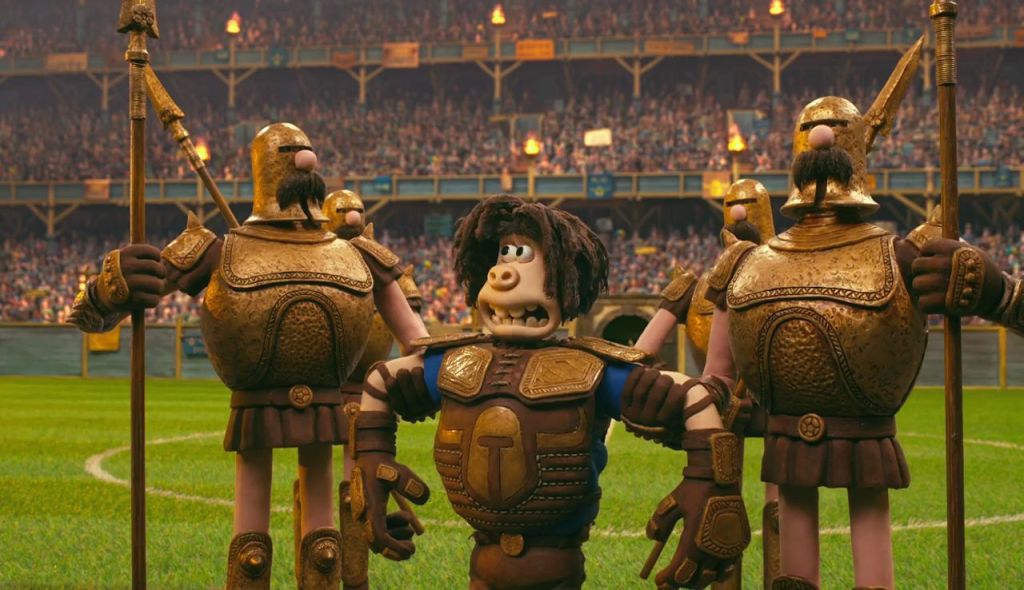
The caution, though, is to do with the storyline. It’s slight, very slight. So slight in fact that there are periods where the movie stalls in its own version of a half-time break. This is where Park and his co-contributors provide more exposition than is actually needed, where the rhythm of the movie slows noticeably and the pace struggles to be regained, and the need to make the movie play out to around the ninety minute mark becomes all too obvious. All these things stop Early Man from being on a par with Chicken Run (2000) or Wallace & Gromit in the Curse of the Were-Rabbit (2005). Here – and despite all the plusses to be found elsewhere – by the time the match starts it’s with some semblance of relief. At this point, the script and the movie both knuckle down and provide a satisfying climax and they earn enough overall merit points to make it all feel as if it’s been time well spent… which it has. It’s an unusual feeling, to be watching something that’s so enjoyable, while at the same time, feeling that there’s something lacking, but that’s the vibe that Early Man gives off. But it’s still a must-see movie, if only to witness once again the absolute pleasure that can be achieved with, and by, lumps of clay.

Rating: 7/10 – like Pixar, Aardman work to very high standards, so when a movie doesn’t quite hit the heights that they or their fans are expecting, it’s always a bit of a disappointment, but though Early Man isn’t as impressive story-wise as it could have been, it’s still a great movie with much to offer; Hognob is like a Stone Age Gromit (no bad thing), there are more football puns than you can shake a woolly mammoth at, and look out for dinosaurs Ray and Harry – a lovely tribute to stop-motion legend Ray Harryhausen.


Postscript: Early Man was given a preview screening at London’s BFI Southbank on 20 January 2018. Following the screening there was a Q&A with Nick Park. Questions were taken from the audience, and one little girl asked, “What was the name of the rabbit?” (a rabbit, a likely ancestor of Hutch from Curse of the Were-Rabbit, is the main target of Dug’s tribe). Park admitted that the rabbit was never given a name, and then he asked the little girl what she thought the rabbit should be called. There was a pause, and then the little girl replied (and with perfect timing), “Rabbit.”

Share this:

  • Click to share on X (Opens in new window) X
  • Click to share on Facebook (Opens in new window) Facebook
  • More
  • Click to print (Opens in new window) Print
  • Click to email a link to a friend (Opens in new window) Email
Like Loading...

The Party (2017)

02 Saturday Dec 2017

Posted by dullwood68 in Movies

≈ Leave a comment

Tags

Black comedy, Bruno Ganz, Cherry Jones, Cillian Murphy, Drama, Emily Mortimer, Kristin Scott Thomas, Minister for Health, Patricia Clarkson, Review, Sally Potter, Timothy Spall

D: Sally Potter / 71m

Cast: Patricia Clarkson, Bruno Ganz, Cherry Jones, Emily Mortimer, Cillian Murphy, Kristin Scott Thomas, Timothy Spall

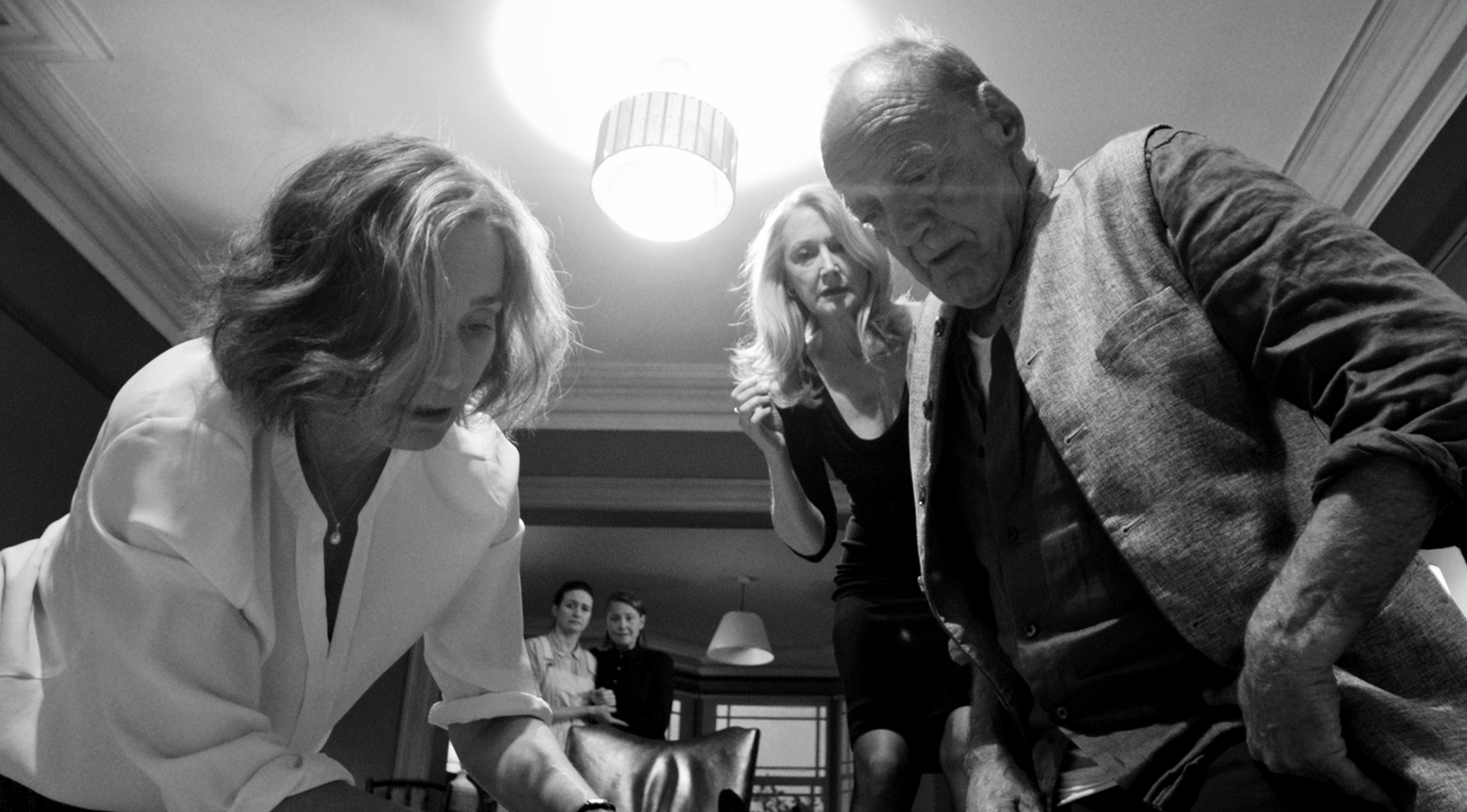
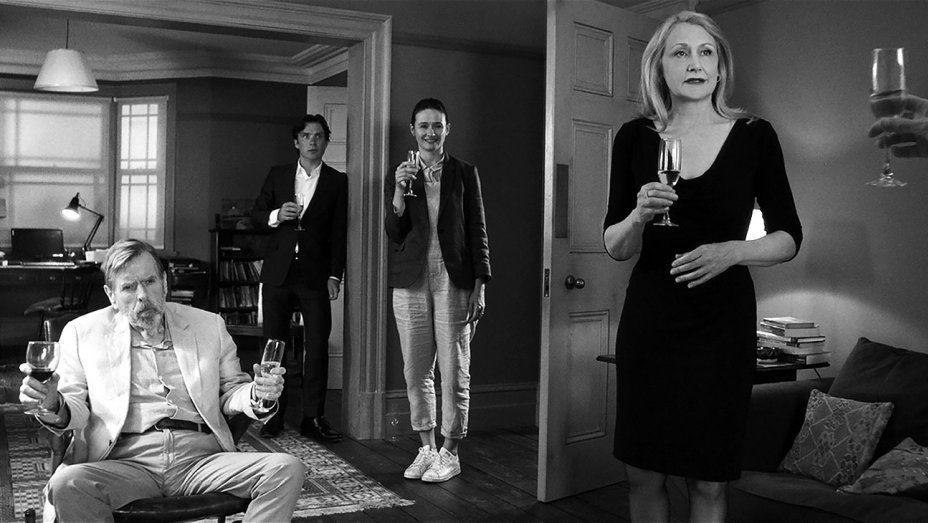
A small, intimate dinner party to celebrate becoming the Shadow Minister for Health – what could possibly go wrong? Well, when a movie begins with one of its characters answering the front door and aiming a gun at the new arrival, the answer must be: plenty. But we’re coming in at the end – naturally – and in order to understand just what has brought this threatening moment to pass, we must allow ourselves to be brought back in time, to an hour or so before, and into the company of Bill (Spall), an elderly man sitting in a chair drinking red wine and looking as if he’s only physically present, and not mentally or cognitively. His wife, Janet (Scott Thomas), is in the kitchen preparing food. Her mobile phone keeps ringing; people are calling to congratulate her on her promotion. Soon, Janet and Bill are joined by April (Clarkson), a long-time friend of theirs, and her current boyfriend, Gottfried (Ganz).

It’s not long before further guests arrive. Martha (Jones) has known Bill since their college days; her partner, Jinny (Mortimer), is expecting their first child. Later, Tom (Murphy), a banker, arrives without his wife, Marianne, who works in the same department as Janet and is one of her colleagues. While Martha and Jinny talk in the walled courtyard that passes for a garden, Tom behaves nervously from the moment he arrives. He rushes into the lavatory and snorts a couple of lines of cocaine and reveals he’s carrying a gun. Composing himself as best he can, he joins the others who are busy discussing everything but Janet’s promotion. April seeks to address this by raising a toast to Janet, but her ploy is over-shadowed by Jinny announcing that she is expecting triplets. But even that news is over-shadowed when Bill reveals that he is seriously ill and hasn’t long to live…

A biting, acerbic comedy of bad manners, the latest from Sally Potter – Orlando (1992), The Man Who Cried (2000) – is a bruising slugfest of a movie, with its characters giving and receiving no quarter in their efforts to maintain (or retain) a sense of their own importance. From the moment April and Gottfried arrive and she mentions that their relationship is over, the mood is gleaned and it’s just a matter of waiting for the inevitable verbal assaults to find their targets (April sets the ball rolling by telling Gottfried to shut up every time he says something). As the movie progresses and we discover the cracks that exist in the relationships of all the couples – even Tom and Marianne – we also see the desperation and the fear that has propelled them into causing these cracks. We learn that Janet is having an affair, and that Bill has no idea about it. But we sense an unhappiness in him that matches hers, what with her continual references to Bill having given up his career to support her own career in politics. The cost to Bill may be more than Janet is aware of: Bill doesn’t just look unwell, he looks positively beaten.

Potter, who wrote the screenplay as well, delves quickly and easily into the lives of everyone, and shows how the dynamics within each relationship shifts and changes with every personal and private confession and revelation that ensues. Janet is devastated by Bill’s news about his health and vows to quit her position within the Shadow Cabinet. Tom is aghast at the sympathy Bill is receiving (for reasons that come to light in time), while Gottfried slips free of April’s yoke and uses his knowledge as a spiritual healer to help Bill come to terms with his impending mortality. April remains stubbornly cynical of everyone else’s motives and opinions, while Martha and Jinny come to a crossroads in their own relationship. Accusations and recriminations fly thick and fast as secrets are revealed and self-preservation becomes the order of the day. By the end, and the opening of that front door, everyone’s lives – with the possible exception of Gottfried – will have been challenged, and changed as a result.

This being a Sally Potter movie, The Party is chock-full of endlessly quotable dialogue, from April’s withering retort, “Please tell me you’re not meditating, Gottfried. Pull yourself together”, to her observation of Martha: “You’re a first class lesbian and a second rate thinker. Must be all those women’s studies.” Clarkson is terrific as a self-confessed realist who can spot a weakness of character from a mile off, and she delivers April’s barbs with an unimpressed, deadpan attitude that is at once fearsome and hilarious. Scott Thomas is also terrific, never quite allowing the viewer to think that Janet’s always behaving like a dyed-in-the-wool politician, while Spall does a mean vacant stare that’s as unnerving as it is impressive (especially later in the movie). Rounding out the cast, Murphy does agitated with aplomb, Ganz is great as someone who thinks Western medicine is “voodoo”, and Jones and Mortimer spar over Martha and Jinny’s commitment issues in ways that add depth to both characters, and overcomes the impression that they have a peripheral involvement with the main storyline.

If all this sounds too heavy, or overly dramatic, rest assured The Party is bitingly funny, and is a black comedy par excellence. Tightly controlled by Potter working at the height of her writing and directing powers, this is short of running time but full of beautifully observed moments that are in service to a fairly straightforward (and predictable, if you look too closely) narrative. The decision to shoot in astonishingly crisp black and white gives the movie a sleek, distinguished feel that works surprisingly well for a movie that could have been adapted from a stage piece (kudos to DoP Aleksei Rodionov), and Potter is helped enormously by some stategic and humorously clever editing choices courtesy of Anders Refn and Emilie Orsini. There’s also a great soundtrack that includes an inspired (if a little predictable) use of Henry Purcell’s When I Am Laid in Earth (Dido’s Lament). All in all, this is a farce wrapped up in a tragedy wrapped up in a cautionary tale, and making the point that you never know what’s waiting for you right around the corner.

Rating: 8/10 – a stellar cast have a great deal of fun with one of Potter’s more approachable screenplays, and the result is a spirited, enjoyable movie that maintains a waspish vibe throughout and piles on the agony for its characters with glee; not to everyone’s tastes though, The Party may seem shallow and derivative at first, but once it gets going it has plenty of trenchant things to say about the nature of trust, and the need to be recognised for who you are in a relationship.

NOTE: The Party is the 15,000th movie that I’ve seen (so far), and it gives me great pleasure to be able to review it here on thedullwoodexperiment. I’ve been doing this for a little over four years now, and to reach such a landmark and to be able to celebrate it here, and with the wider world, is truly incredible. Here’s to reaching 20,000 sometime in 2030!

Share this:

  • Click to share on X (Opens in new window) X
  • Click to share on Facebook (Opens in new window) Facebook
  • More
  • Click to print (Opens in new window) Print
  • Click to email a link to a friend (Opens in new window) Email
Like Loading...

Denial (2016)

05 Sunday Feb 2017

Posted by dullwood68 in Movies

≈ Leave a comment

Tags

Andrew Scott, David Irving, Deborah Lipstadt, Drama, Holocaust, Libel case, Mick Jackson, Rachel Weisz, Review, Timothy Spall, Tom Wilkinson, Trial, True story

denial_movie_poster_p_2016

D: Mick Jackson / 109m

Cast: Rachel Weisz, Tom Wilkinson, Timothy Spall, Andrew Scott, Jack Lowden, Caren Pistorius, Alex Jennings, Harriet Walter, Mark Gatiss, John Sessions, Nikki Amuka-Bird

“The most effective way to destroy people is to deny and obliterate their own understanding of their history.” That quote, made by George Orwell, is a particularly apt phrase when looking at Denial, a movie that explores the libel case brought by Holocaust denier David Irving (Spall) against renowned historian Deborah Lipstadt (Weisz) and her UK publishers, Penguin, back in 2000. In her book, Denying the Holocaust: the Growing Assault on Truth and Memory (1993), Lipstadt had referred to Irving as a “Holocaust denier, falsifier, and bigot”, and also stated “that he manipulated and distorted real documents.” Irving sued Lipstadt in the British courts for one very good reason: in the UK, the burden of proof is on the defendant. In this case it meant that Lipstadt and Penguin had to prove that the Holocaust did actually happen, thereby proving that Irving was a falsifier and the accusations in her book were true.

If you were around in the late Nineties, it’s likely you would have heard of David Irving. He was notorious for his denial of the Holocaust, and the very nature of the trial made it headline news at the time. In bringing this incredible true story to the screen, director Mick Jackson and screenwriter David Hare have managed to somehow make a movie that gets the salient points across but which does so with a minimum of apparent enthusiasm. Perhaps it’s the nature of the subject matter, and the makers have gone for a dour, unspectacular approach in recognition of this. If that’s the case, then they’ve done the movie a massive disservice.

maxresdefault

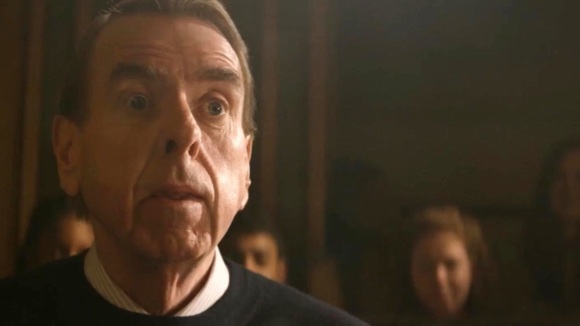
From the moment we see Irving challenge Lipstadt at one of her lectures, the very idea that the Holocaust didn’t happen – and that someone would willingly say such a thing, and then challenge someone to prove it did happen – is so bizarrely unnerving that it should make Irving all the more intriguing, and yet, as played by Spall, he’s more like a kindly uncle who’s gone slightly off his rocker. When he makes his opening speech at the trial – Irving represented himself – his off-kilter rhetoric and less than fashionable beliefs show a man whose disregard for historical truth has brought him to the last place he should ever want to be: in a courtroom, where his beliefs could be challenged under law and where his convictions could be exposed as terrible shams. Irving may have thought he was being clever bringing the case in an English court, but it was hubris that made him do so, and inevitably, he paid the price.

It’s an aspect that the movie fails to grasp, instead highlighting Irving’s sense of self-aggrandisement, and his talent for being a fly in the ointment of accepted historical fact. Spall is good in the role (when was the last time Spall wasn’t good in a role?*), but as written, Irving never appears truly threatening; he never comes across as someone who ever had even the slightest chance of winning, but the movie tries to make it seem as if he did. There are nods to the oxygen of publicity that encourages him in his efforts, but the real question that should be on everyone’s lips is never asked: Why? Why be a naysayer for the Nazis?

denialpic2-600x400

With Irving filling the role of boogeyman to Lipstadt’s crusading historian, the movie settles back, happy with its principal villain, and finds itself struggling to make the defence team just as interesting. As Lipstadt, Weisz brings determination and passion to the role, but it’s directed too often in opposition to her legal team, headed by barrister Richard Rampton QC (Wilkinson), and solicitor Anthony Julius (Scott). She butts heads with them over how she thinks the case should be handled, questions their commitment, and then wonders why her passion isn’t as openly shared as she expects. Wilkinson bounces back and forth between carefree bonhomie and courtroom gravitas, while Scott essays patrician superiority at every turn, all of which leaves little room for the rest of the defence team to make much of an impact.

In the courtroom, any expected fireworks fail to be set off. There’s so little tension, and so few moments where the inherent drama of the case is allowed a bit of breathing room that the viewer can only wonder if Hare somehow forgot that these scenes were meant to be gripping. The same could be said for Jackson’s direction, which relies on the same camera set ups throughout, the cut and thrust of Rampton’s cross-examination of Irving, and a last-minute inference from the judge (Jennings) that the defence’s case might crumble at the final hurdle to instil some heightened drama. But by the time it happens, most viewers will have ceased to care if Irving loses or not, just as long as there’s an end to the story.

denial__2016_5048

All in all, Denial works as a generalised account of an important moment in British legal, and Holocaust, history. But in taking the generalised road – the road most travelled, if you will – the movie loses any sprightliness it might have had, and resorts to plodding along, picking up plot points along the way, and under-utilising its very talented cast. It doesn’t fall down at any point; instead it lumbers along as if it’s about to. The only time it breaks free of its self-imposed shackles, is during a trip to Auschwitz, where Rampton appears to be insensitive to the surroundings. It’s a bleak, mournful sequence that speaks to how gripping the rest of the movie could have been.

All in all, it’s not everyone’s finest hour, but it does do just enough to give people the sense of what it was like back then, with Irving seemingly unassailable and the very real possibility that Lipstadt might lose. But the movie’s dry, methodical approach undermines the material – and the performances – too often for comfort, and though this is a worthy piece, it never gains the necessary traction to make it compelling as well.

Rating: 6/10 – not a straight up fiasco, nor a contentious thriller either, Denial falls somewhere between the two camps in its efforts to be absorbing and persuasive; a movie that could, and should, have been made as a legal thriller, it keeps a respectful distance from the horrors that Irving would have had us dismiss, and only really gets under its own skin when it’s at the real Auschwitz-Birkenau camp.


*The last time Spall wasn’t that great in a role? Sofia aka Assassin’s Bullet (2012). Don’t check it out.

Share this:

  • Click to share on X (Opens in new window) X
  • Click to share on Facebook (Opens in new window) Facebook
  • More
  • Click to print (Opens in new window) Print
  • Click to email a link to a friend (Opens in new window) Email
Like Loading...

Trailers – Denial (2016), Moana (2016) and Before I Wake (2016)

20 Monday Jun 2016

Posted by dullwood68 in Movies

≈ Leave a comment

Tags

Animation, Before I Wake, David Irving, Deborah Lipstadt, Denial, Drama, Holocaust, Horror, John Lasseter, Mike Flanagan, Moana, Movies, Previews, Rachel Weisz, Timothy Spall, Trailers

In 1996, the Holocaust denier David Irving sued the historian Deborah Lipstadt for libel in the English courts over remarks she had made about him in her book, Denying the Holocaust: the Growing Assault on Truth and Memory. With the burden of proof planted firmly in Lipstadt’s corner, she had to prove to a libel court that Irving’s claim that the Holocaust didn’t happen, was false. Now this trial is being brought to the screen with a script by David Hare, and a cast that has more than a little experience in bringing heavyweight drama to the fore. Weisz is a great choice to play Lipstadt (though she has replaced Hilary Swank in the role), and Spall looks both banal and creepy as Irving. With its terrible historical background, Denial looks like it has the potential to be a thought-provoking, morally complex thriller that examines one of the more darker, and disturbing assertions made about the Holocaust in the last thirty years.


If you’re John Lasseter, you’ve got to be feeling pretty satisfied with yourself and the state of play at Disney at the moment. Two out of the three last Disney animated releases have taken over a billion dollars at the international box office, and just in the last few days, the latest movie from Pixar, Finding Dory (2016), has broken all kinds of box office records including the largest opening weekend for an animated feature. Pretty sweet indeed. This must make the next Disney animated release another cause for (probable) celebration. However, this first teaser trailer for Moana doesn’t give anything away, and aside from some beautifully realised sea-faring animation, and a rather scrawny looking chicken as comic relief, there’s nothing to get excited about. Let’s hope Moana‘s first full trailer gives us something more to look forward to.


Mike Flanagan is a name that most mainstream movie goers will be unfamiliar with, but if you’re a fan of horror movies and have been paying attention in recent years then you’ll know that he’s made a handful of features that have tried (and sometimes succeeded) in doing something a little bit different with the genre. Absentia (2011) was a quietly unnerving experience, while Oculus (2013), even though it didn’t work completely, was a stylish and clever exercise in combining two linear narratives to heighten suspense. With Before I Wake, the signs are that Flanagan has found a story that will play to his visual strengths as well as his ability to craft unsettling experiences out of everyday occurrences. And for anyone who thinks the child actor has a familiar face, it’s Jacob Tremblay, from Room (2015).

Share this:

  • Click to share on X (Opens in new window) X
  • Click to share on Facebook (Opens in new window) Facebook
  • More
  • Click to print (Opens in new window) Print
  • Click to email a link to a friend (Opens in new window) Email
Like Loading...

Mr. Turner (2014)

21 Saturday Feb 2015

Posted by dullwood68 in Movies

≈ Leave a comment

Tags

Biography, Dorothy Atkinson, Drama, History, JMW Turner, Marion Bailey, Mike Leigh, Painting, Paul Jesson, Relationships, Review, Royal Academy of Arts, Timothy Spall

Mr. Turner

D: Mike Leigh / 150m

Cast: Timothy Spall, Dorothy Atkinson, Marion Bailey, Paul Jesson, Karl Johnson, Ruth Sheen, Lesley Manville, Martin Savage, David Horovitch, Joshua McGuire, Kate O’Flynn, Leo Bill

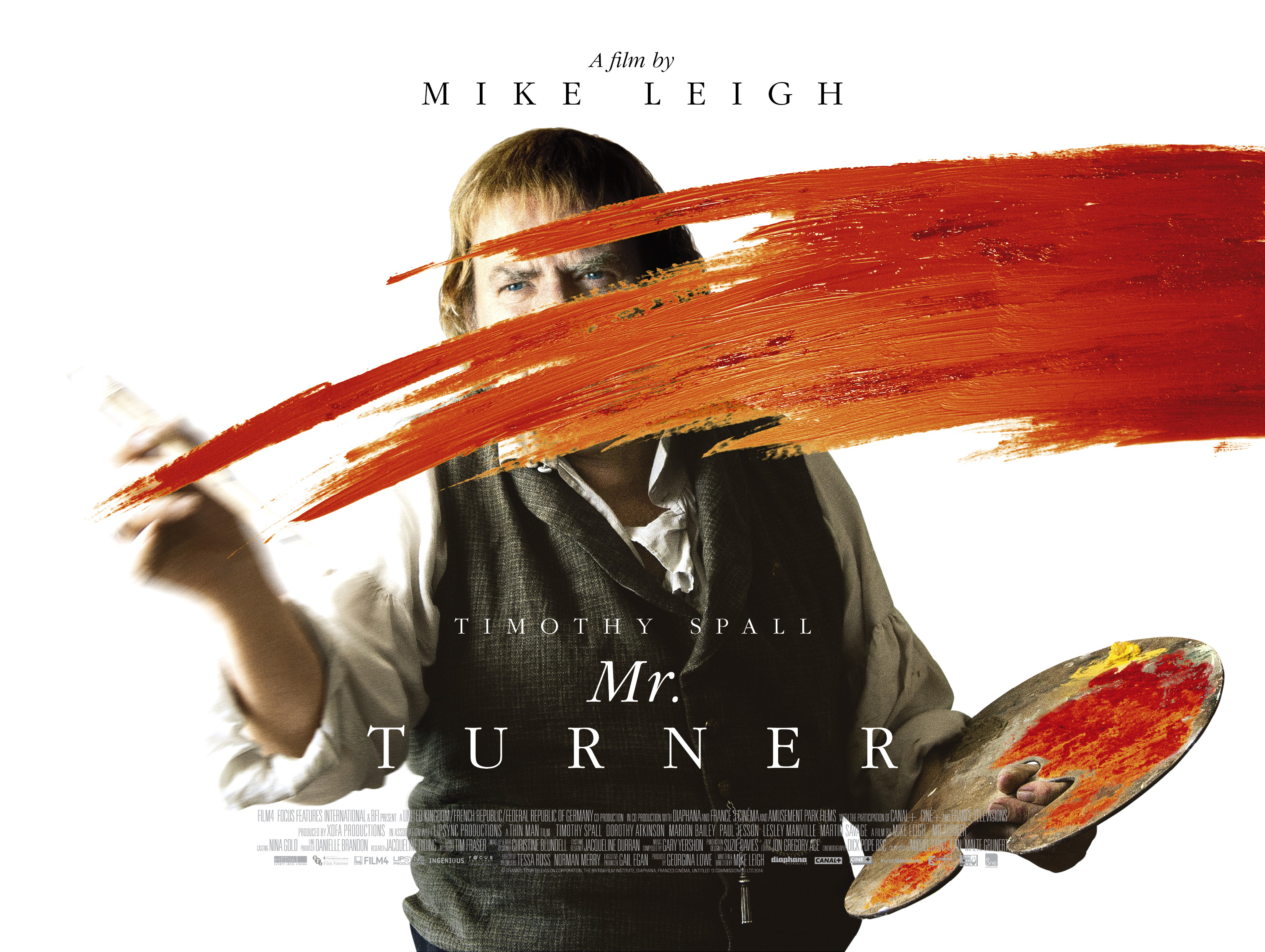
Eminent painter Joseph Mallord William Turner is famous for his land- and seascapes. He lives in a big house in London with his father, William (Jesson) (who acts as his assistant), and his devoted housekeeper, Hannah (Atkinson). He has children he’s estranged from: two daughters from a relationship with Hannah’s aunt Sarah (Sheen). He rejects their attempts to procure financial support from him, even when they visit with his first grandchild. When he’s not at home, Turner travels the country (and sometimes abroad) making sketches that he can expand into paintings when he’s home.

He also visits members of the aristocracy and valued patrons. On one such visit he’s accosted by the struggling artist Benjamin Haydon (Savage), who asks him for the sum of £100 to help him avoid ruin. Haydon’s entreaties lead to Turner promising to lend him £50 instead, which Haydon accepts. When his father dies, Turner becomes depressed but the need to draw and paint is stronger than his despair. Shortly after, Turner visits Margate where he finds lodging with Mrs Booth (Bailey) and her husband (Johnson). He stays there awhile and finds himself enjoying the couple’s company. When he returns a second time he learns that Mrs Booth’s husband has passed away.

In the meantime his anarchic behaviour at the Royal Academy of Arts beguiles and amuses some of his fellow artists, and angers and upsets others, such as Constable. He appears to deface one of his own seascapes with a splotch of red, then removes himself. His associates are appalled and discomfited at this, until he returns and shapes the splotch until it resembles a buoy. At this their respect is renewed, and Turner’s notoriety is upheld, along with the acceptance of his genius. Around this time, Haydon, who has had his run-in with the Academy, visits Turner and tries to repay part of his debt. Turner, whose reputation is that of a curmudgeon, relents and waives the debt.

Returning to Margate he begins a relationship with Mrs Booth; they find a place together in Chelsea where Turner spends most of his time. But when the young Queen Victoria voices her disapproval over one of his paintings, his fame and public support begins to diminish. And following an attempt to experience what it feels like to be in the midst of a snowstorm by having himself strapped to the mast of a sailing ship, his health deteriorates as well.

Mr. Turner - scene

Biopics of famous artists usually depend on their having lived eventful, passionate lives away from the canvas, but what is a director to do when their subject lives a fairly hermetic life, and who feels compelled to sketch at every opportunity (even when they’re with a prostitute and still mourning the loss of their father)? Unfortunately, Mike Leigh never really finds an answer to the question, which leaves Mr. Turner somewhat dry and determinedly episodic.

Turner’s life did have a few memorable moments but they largely occurred when he was much younger (the movie covers the last twenty-five years of his life). His younger sister died aged four and his mother was committed to an asylum where she later died. At the age of fourteen he was admitted to the Royal Academy of Arts school, and into the Academy itself a year later (Sir Joshua Reynolds was on the panel that admitted him). Perhaps the movie should have focused on these events, showing us how the “painter of light” earned that sobriquet.

Instead we have a movie that begins with Turner at the height of his powers and fame, and which seeks to concentrate on his private life, but without convincing the viewer that there’s any connection between the two. Despite his reputation for being a social malcontent, the Turner we encounter here is more open and friendly than expected and appears to be acidulous only with people he actively dislikes – there’s a great scene where the art critic John Ruskin (McGuire) reflects disapprovingly on a style of painting he clearly has no understanding of and Turner soundly rebuffs him. But while Leigh may be attempting to separate the man from his reputation, that he proves to be a more rounded individual shouldn’t come as a surprise.

In his relationships with women things vary between interesting and banal, and with his visit to a prostitute having a much different outcome than might be typical, that his emotional life was unconventional is to miss the point. There’s an element of desperation in his exploitation of Hannah that would border on abuse if she wasn’t such a willing accomplice, while his “wooing” of Mrs Booth speaks more of two lost souls finding each other than anything more dramatic. In both relationships however, Turner remains on the outside, receiving comfort when he needs it, and giving little back in return. It’s indicative of the female role in society at the time, 1826-1851, that Turner does all this without a moment’s consideration (or remorse) for his actions, and Hannah and Mrs Booth remain grateful for being part of his life.

Outside of these relationships there’s little else that serves as a way of learning more about Turner’s life, and as a result, the movie adds scene after scene that either reinforces what we already know about him, or adds nothing more to the narrative than the opportunity to show off some more of Leigh’s fastidious period recreation. This is hugely impressive, though, and is one area in which Mr. Turner can’t be faulted. Suzie Davies’ production design coupled with Charlotte Watts’ set decoration and Jacqueline Durran’s costume design, and all lovingly shot by DoP Dick Pope (and all four of them Oscar nominated for their efforts) make the movie a visual treat that is as richly rewarding as the reproductions of Turner’s paintings. It’s heritage moviemaking of the highest order.

Mr. Turner - scene2

Despite problems with the movie’s narrative and structure, Leigh is still able to show why he’s one of the most distinctive and idiosyncratic directors working today, and why any of his future projects will still command attention and respect. Leigh’s work ethic and methods are well-known, as well as his organic approach to the material he and his cast are working on, and with Mr. Turner those methods are all in place, leading to a clutch of excellent performances and some splendid supporting turns. Spall is simply magnificent, grumbling and grunting his way through scenes with a sour face and occasional flashes of charm. It’s a deceptively simple and sympathetic portrayal, and Spall inhabits the character completely, so much so that you forget he’s acting. He’s matched by Atkinson, whose screen time is much less, but who brings an unforgettable sadness and pathos to her role as Turner’s subjugated housekeeper (and for those who might be wondering why Hannah looks so dreadful by the movie’s end, it’s because she suffered from psoriasis). As Hannah’s “competitor” Mrs Booth, Bailey expresses more in one rueful smile than some actresses manage in an entire movie, and her pleasant, amiable approach to the character serves as a telling counterpoint to the gruff demeanour of Turner himself.

A movie then that requires a great deal of perseverance but which is helped immeasurably by its cast and its presentation, Mr. Turner is likely to divide audiences into two camps: those looking for a story to follow, and those who can forgive its absence. With too many longueurs for its own good, the movie struggles to be as effective as it needs to be, but retains just enough energy to help audiences reach the end. It’s a close run thing, though, and with so little explained throughout, will definitely try some viewers’ patience.

Rating: 7/10 – fans of Leigh’s might be tempted to forgive the lack of a recognisable storyline, but without it Mr. Turner suffers accordingly; strong performances and often beautiful compositions and framing can’t prevent the movie from feeling hollow, nor the material from seeming as if it wasn’t quite as fully developed as it should have been.

Share this:

  • Click to share on X (Opens in new window) X
  • Click to share on Facebook (Opens in new window) Facebook
  • More
  • Click to print (Opens in new window) Print
  • Click to email a link to a friend (Opens in new window) Email
Like Loading...

Mini-Review: The Love Punch (2013)

22 Friday Aug 2014

Posted by dullwood68 in Movies

≈ Leave a comment

Tags

Cap d'Antibes, Celia Imrie, Comedy, Diamond, Emma Thompson, Joel Hopkins, Paris, Pierce Brosnan, Review, Robbery, Romance, Timothy Spall, Wedding

Love Punch, The

D: Joel Hopkins / 94m

Cast: Pierce Brosnan, Emma Thompson, Timothy Spall, Celia Imrie, Louise Bourgoin, Laurent Lafitte, Tuppence Middleton, Jack Wilkinson, Olivier Chantreau, Marisa Berenson

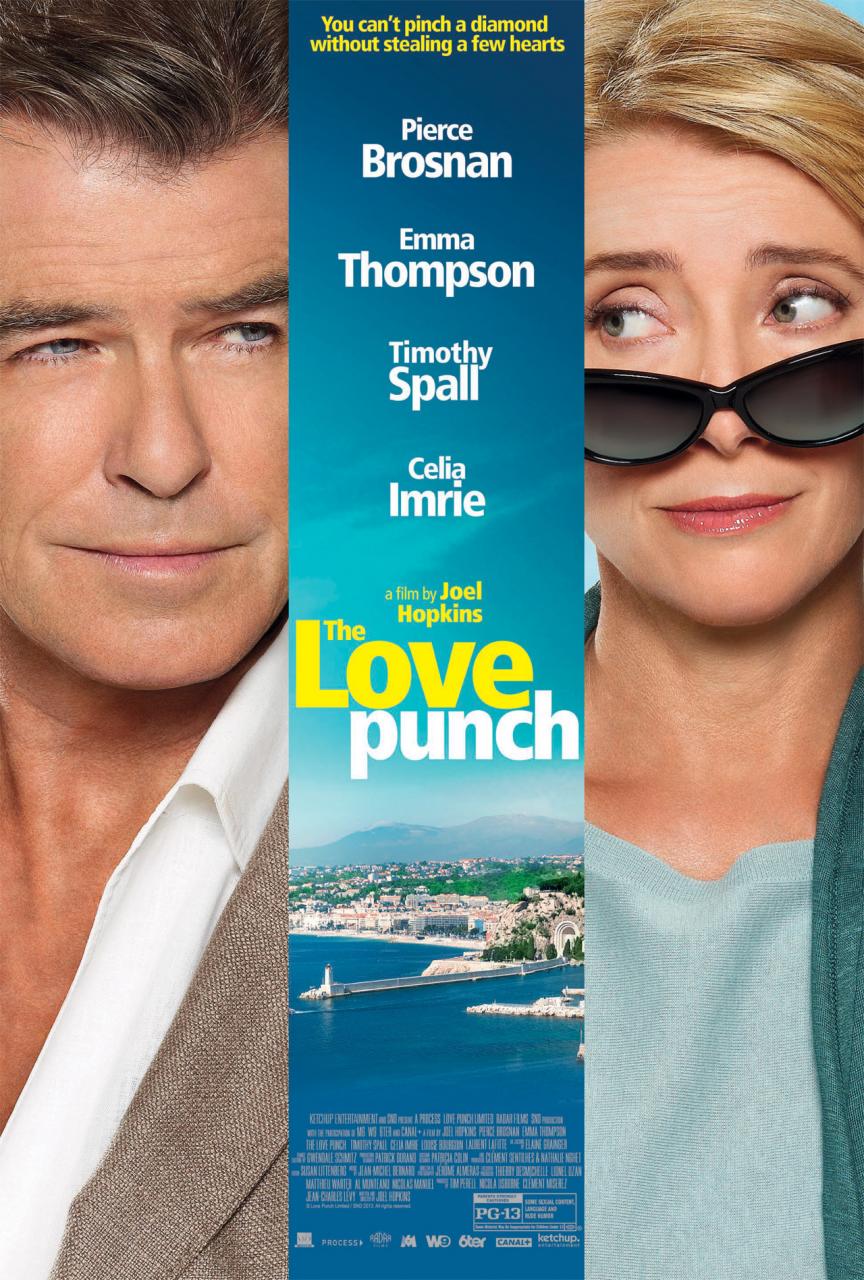
When divorced couple Richard (Brosnan) and Kate (Thompson) discover that their pensions are worthless thanks to a company takeover orchestrated by French businessman Vincent (Lafitte), they put aside their differences and set out to steal a diamond worth $10.8 million that he has just purchased.  Their plan sees them travel to the Cap d’Antibes where Vincent is due to marry supermodel Manon (Bourgoin), and for whom he has had the diamond made into a necklace for their wedding day.

Aided by their friends, Jerry (Spall) and Penelope (Imrie), the still-sparring couple plan to attend the wedding disguised as Texans (there to cement a deal with Vincent), steal the diamond and replace it with a fake, and then head back to the UK to sell the diamond and disperse the money from the sale to everyone who’s lost their pension.  But not everything goes to plan…

Love Punch, The - scene

Look through most actors’ filmographies and you’ll see one or two movies that look like they were made a) for the money, b) because of the location, or c) both.  Well, for Messrs. Brosnan, Thompson, Spall, and Imrie, this is that movie, a dreadfully unfunny romantic comedy/caper hybrid that boasts beautiful locations but little else.  It’s a measure of writer/director Hopkins’ script that belief has to be suspended time and time again, from Kate’s unconvincing faint that gets them into Vincent’s building, to the idea of four Fifty-somethings even planning a diamond robbery.  And when they decide the only way to physically attend the wedding is by climbing a nearby cliff face, then you know rampant absurdity is the order of the day.

The performances are hampered accordingly, though Thompson does her best with what she has.  Brosnan tries too hard, Spall is given a military background that no one knows about, and Imrie revisits the sex-hungry character she’s played so many times before (but without bringing anything new to the idea).  The rest of the cast do what they can but it’s an uphill struggle.

The Love Punch was obviously intended as a bit of a light-hearted romp featuring two of Britain’s most popular actors, but instead it’s a stodgy, lumpen mess that never gets off the ground.  Definitely not one for the promo reel.

Rating: 3/10 – awkward and terrible, The Love Punch should be approached with caution; hampered by a dire script and with too many moments where the audience will be wondering if they’re really seeing what they’re seeing, this is one for fans of the principal cast only.

Share this:

  • Click to share on X (Opens in new window) X
  • Click to share on Facebook (Opens in new window) Facebook
  • More
  • Click to print (Opens in new window) Print
  • Click to email a link to a friend (Opens in new window) Email
Like Loading...

Blog Stats

  • 491,407 hits

Recent Posts

  • 10 Reasons to Remember Bibi Andersson (1935-2019)
  • Fantasia (1940)
  • Dances With Wolves (1990) – The Special Edition
  • Kiss of the Spider Woman (1985)
  • The Three Musketeers (1973)

Top Posts & Pages

  • Cardboard Boxer (2016)
    Cardboard Boxer (2016)
  • I Origins (2014)
    I Origins (2014)
  • Carrie (2013)
    Carrie (2013)
  • Hickey (2016)
    Hickey (2016)
  • Speak (2004)
    Speak (2004)
  • Poster of the Week - For a Few Dollars More (1965)
    Poster of the Week - For a Few Dollars More (1965)
  • Jaws of Justice (1933)
    Jaws of Justice (1933)
  • Lone Survivor (2013)
    Lone Survivor (2013)
  • Iris (2016)
    Iris (2016)
  • Happy Hunting (2017)
    Happy Hunting (2017)
Follow thedullwoodexperiment on WordPress.com

Blogs I Follow

  • Rubbish Talk
  • Film 4 Fan
  • Fast Film Reviews
  • The Film Blog
  • All Things Movies UK
  • Interpreting the Stars
  • Let's Go To The Movies
  • Movie Reviews 101
  • TMI News
  • Dan the Man's Movie Reviews
  • Film History
  • Jordan and Eddie (The Movie Guys)

Archives

  • April 2019 (13)
  • March 2019 (28)
  • February 2019 (28)
  • January 2019 (32)
  • December 2018 (28)
  • November 2018 (30)
  • October 2018 (29)
  • September 2018 (29)
  • August 2018 (29)
  • July 2018 (30)
  • June 2018 (28)
  • May 2018 (24)
  • April 2018 (21)
  • March 2018 (31)
  • February 2018 (25)
  • January 2018 (30)
  • December 2017 (30)
  • November 2017 (27)
  • October 2017 (27)
  • September 2017 (26)
  • August 2017 (32)
  • July 2017 (32)
  • June 2017 (30)
  • May 2017 (29)
  • April 2017 (29)
  • March 2017 (30)
  • February 2017 (27)
  • January 2017 (32)
  • December 2016 (30)
  • November 2016 (28)
  • October 2016 (30)
  • September 2016 (27)
  • August 2016 (30)
  • July 2016 (30)
  • June 2016 (31)
  • May 2016 (34)
  • April 2016 (30)
  • March 2016 (30)
  • February 2016 (28)
  • January 2016 (35)
  • December 2015 (34)
  • November 2015 (31)
  • October 2015 (31)
  • September 2015 (34)
  • August 2015 (31)
  • July 2015 (33)
  • June 2015 (12)
  • May 2015 (31)
  • April 2015 (32)
  • March 2015 (30)
  • February 2015 (37)
  • January 2015 (39)
  • December 2014 (34)
  • November 2014 (34)
  • October 2014 (36)
  • September 2014 (25)
  • August 2014 (29)
  • July 2014 (29)
  • June 2014 (28)
  • May 2014 (23)
  • April 2014 (21)
  • March 2014 (42)
  • February 2014 (38)
  • January 2014 (29)
  • December 2013 (28)
  • November 2013 (34)
  • October 2013 (4)

Blog at WordPress.com.

Rubbish Talk

Film 4 Fan

A Movie Blog

Fast Film Reviews

The Film Blog

The official blog of everything in film

All Things Movies UK

Movie Reviews and Original Articles

Interpreting the Stars

Dave Examines Movies

Let's Go To The Movies

Film and Theatre Lover!

Movie Reviews 101

Daily Movie Reviews

TMI News

Latest weather, crime and breaking news

Dan the Man's Movie Reviews

All my aimless thoughts, ideas, and ramblings, all packed into one site!

Film History

Telling the story of film

Jordan and Eddie (The Movie Guys)

Movie Reviews & Ramblings from an Australian Based Film Fan

Privacy & Cookies: This site uses cookies. By continuing to use this website, you agree to their use.
To find out more, including how to control cookies, see here: Cookie Policy
  • Subscribe Subscribed
    • thedullwoodexperiment
    • Join 481 other subscribers
    • Already have a WordPress.com account? Log in now.
    • thedullwoodexperiment
    • Subscribe Subscribed
    • Sign up
    • Log in
    • Report this content
    • View site in Reader
    • Manage subscriptions
    • Collapse this bar
 

Loading Comments...
 

    %d