• 10 Reasons to Remember…
  • A Brief Word About…
  • About
  • For One Week Only
  • Happy Birthday
  • Monthly Roundup
  • Old-Time Crime
  • Other Posts
  • Poster of the Week
  • Question of the Week
  • Reviews
  • Trailers

thedullwoodexperiment

~ Viewing movies in a different light

thedullwoodexperiment

Tag Archives: Trial

Bomb City (2017)

07 Saturday Apr 2018

Posted by dullwood68 in Movies

≈ Leave a comment

Tags

Amarillo, Brian Deneke, Dave Davis, Drama, Glenn Morshower, Hate crime, Jameson Brooks, Logan Huffman, Review, Trial, True story
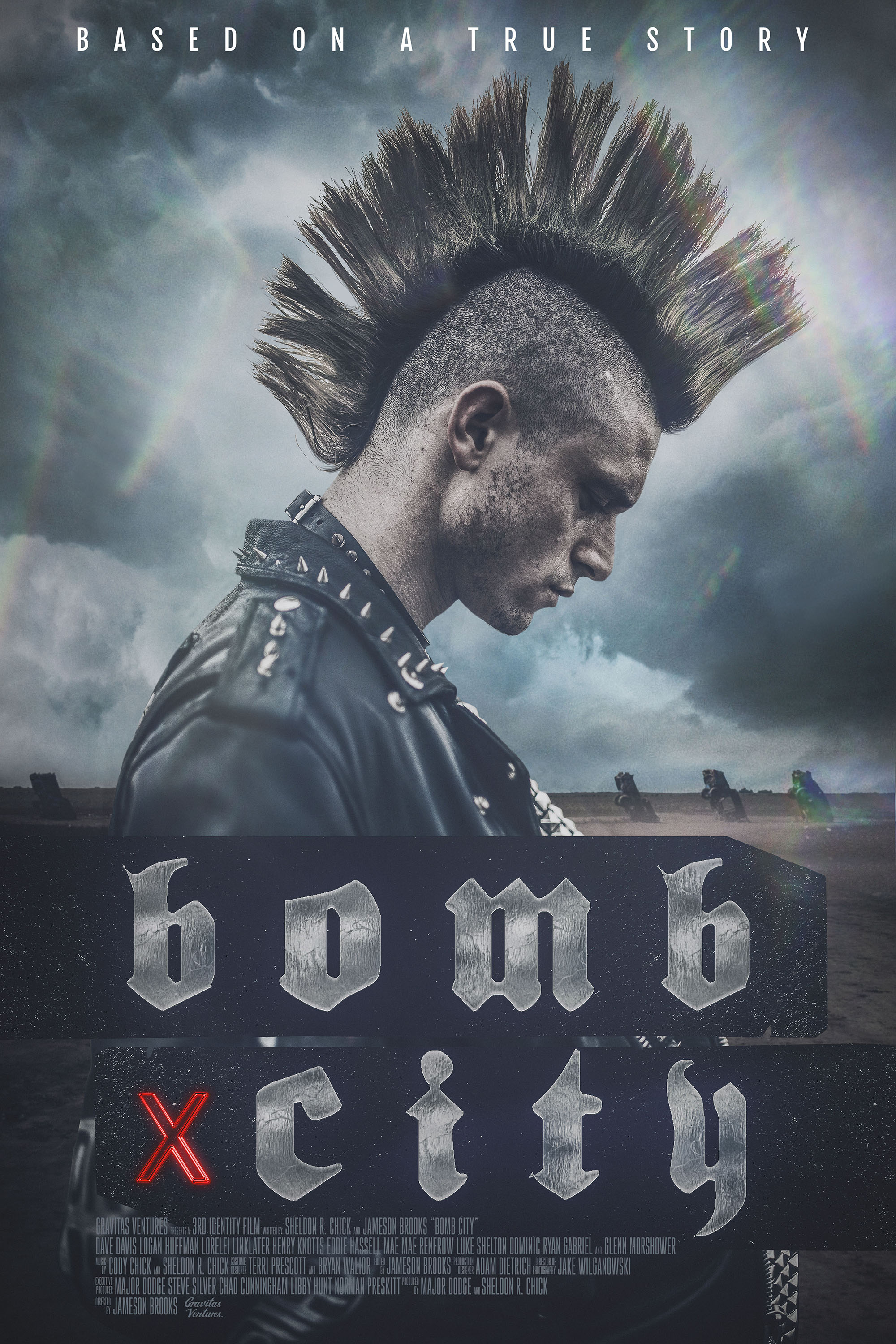
D: Jameson Brooks / 98m

Cast: Dave Davis, Glenn Morshower, Logan Huffman, Lorelei Linklater, Eddie Hassell, Henry Knotts, Dominic Ryan Gabriel, Luke Shelton, Maemae Renfrow, Michael Seitz, Marilyn Manson

In 1997, Brian Deneke (Davis), a nineteen year old resident of Amarillo, Texas returns home after spending time in New York City. He reconnects with his friends in Amarillo’s punk sub-culture – where he’s well regarded and the vocalist of punk band The White Slave Traders – but finds that the long-standing enmity with the members of the local high school football team is still very much in place. A few minor altercations do nothing to diffuse matters, and though Brian uses his influence to try and calm matters, it’s his own friends that want to escalate things. When some of the jocks carry out an act of mindless vandalism on the place where Brian’s friends live, one of them, King (Knotts), chases them to a car park where he’s overwhelmed by greater numbers and badly beaten. King rallies Brian and some others, and carrying weapons, they return to the car park. A fight ensues, and during it, one of the jocks, Cody Cates (Shelton), uses his car to run down one of the punks… and kill them…
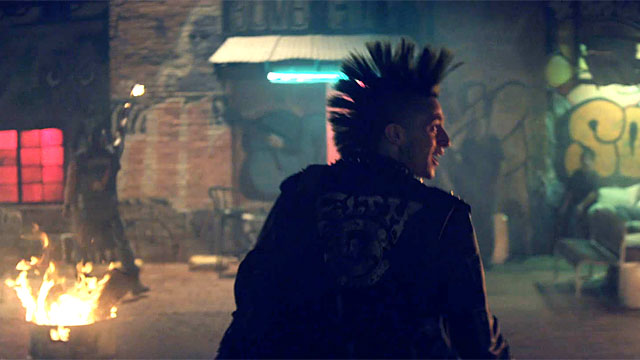
Based on a true story, but changing many of the details of what happened and how, while keeping the basic premise intact, Bomb City – a reference to Amarillo’s being home to one of the largest nuclear weapon facilities in the US – delves deep into the punk sub-culture that existed at the time, and paints a vivid portrait of Brian and his friends that serves to ground the movie as a whole. We get to spend a lot of time with them, and even get to understand them somewhat, and in doing so, Brooks makes his sympathies clear, something that is reinforced by the events that happen after the fight. These events are presented through scenes at a subsequent trial that are woven into the main narrative, but in such a way that they keep the unaware viewer in the dark as to the actual tragedy that occurred, and its highly controversial outcome. But while Brooks – making his feature debut as a director – does a commendable job of making the punks recognisable as individuals, the same can’t be said for the jocks, who remain arrogant stereotypes all the way through.

With the contrast between the two groups highlighted in bold as it were, and the animosity between them based on ignorance and purposeful misunderstanding (and sometimes on both sides), the cultural conservatism of Amarillo, Texas, during the Nineties is brought home powerfully by Morshower’s performance as Cates’s defence attorney, Cameron Wilson. In a chilling summing up before the jury, Wilson’s choice of rhetoric is horrifying, and it’s at this point that the movie reveals the real tragedy of what happened. Everything leads up to this one moment, and Brooks delivers two swift gut punches to the viewer in quick succession. The movie ends on a note of outrage, and it’s left to the viewer to decide if the movie’s themes of prejudice and social xenophobia will ever be addressed fully in the future. Tough though the movie is at times, there’s still much to enjoy before it heads into darker territory, and much of this is there in the script, which has a knowing sense of humour. The performances are solid, with Davis and Huffman making an impact across the divide, and the movie is enhanced by Adam Dietrich’s production design and Jonathan Rudak’s art direction, both of which help to create a convincing milieu for the action.

Rating: 7/10 – an angry movie with purpose, Bomb City explores a real life tragedy with integrity and grit, but takes a little too long in explaining why it’s so angry; still, it deserves a wider audience, and Brooks is someone to keep an eye on, all of which makes the movie a minor gem just waiting to be discovered.
Share this:

  • Click to share on X (Opens in new window) X
  • Click to share on Facebook (Opens in new window) Facebook
  • More
  • Click to print (Opens in new window) Print
  • Click to email a link to a friend (Opens in new window) Email
Like Loading...

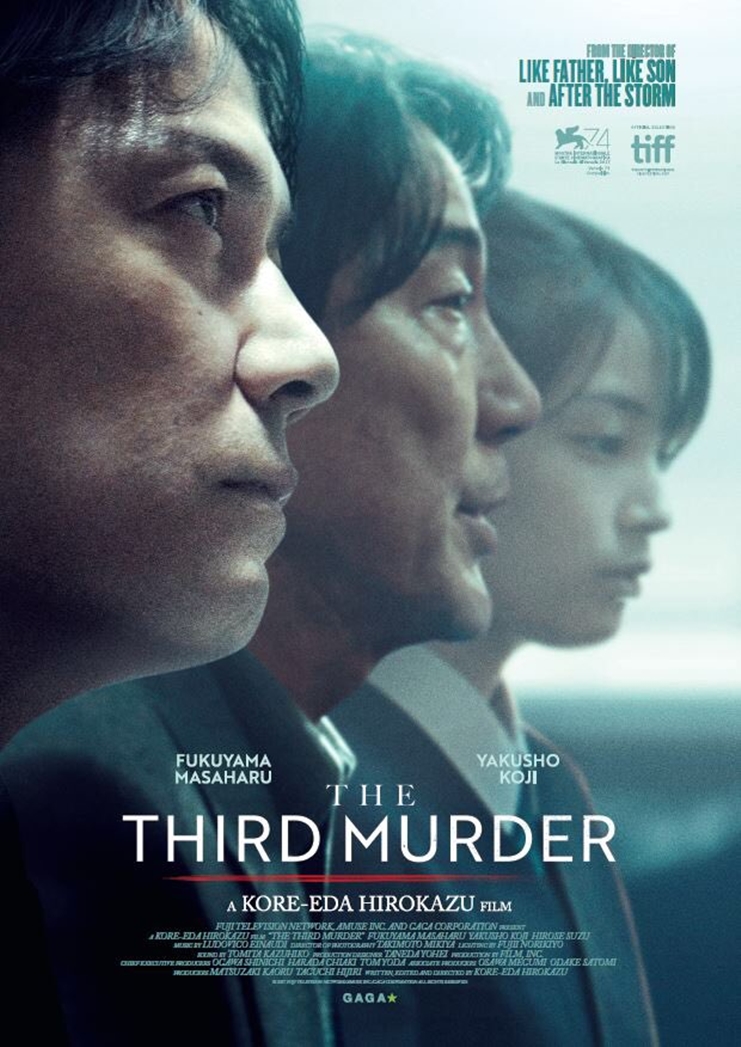
The Third Murder (2017)

04 Wednesday Apr 2018

Posted by dullwood68 in Movies

≈ Leave a comment

Tags

Confession, Crime, Drama, Fukuyama Masaharu, Japan, Kore-eda Hirokazu, Murder, Review, Sandome no satsujin, Thriller, Trial, Yakusho Kôji

Original title: Sandome no satsujin

D: Kore-eda Hirokazu / 125m

Cast: Fukuyama Masaharu, Yakusho Kôji, Hirose Suzu, Saitô Yuki, Yoshida Kōtarō, Mitsushima Shinnosuke, Matsuoka Izumi, Ichikawa Mikako, Makita Aju

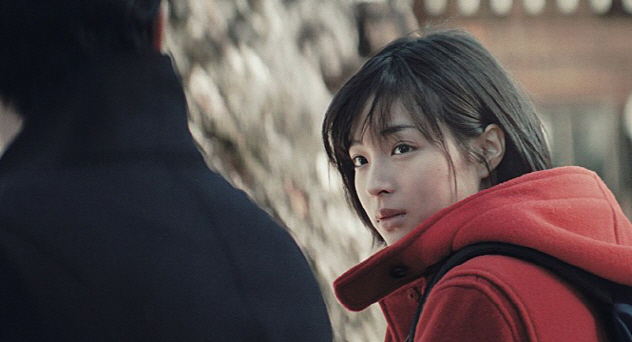
An apparently disgruntled ex-employee persuades the chairman of the company that fired him to go with him to the side of a river at night. There, the ex-employee, named Misumi (Yakusho), kills the chairman and sets light to the body. Misumi is arrested and charged with robbery with homicide (the chairman’s wallet is found on him). Misumi confesses to the crime, though when his initial lawyer Settsu (Yoshida) brings in a hot shot lawyer called Shigemori (Fukuyama), Shigemori begins to have doubts about Misumi’s confession and what actually happened when the chairman was killed. Soon, the chairman’s wife, Yamanaka (Saitô), and his daughter, Sakie (Hirose), are revealed to have things to hide, while there are echoes of a previous crime committed by Misumi thirty years before when he killed two debt collectors. In the run up to the trial, Misumi’s story changes at various times, making it difficult to get at the truth of what happened, and making it difficult for Shigemori to mount a good defence. With his client obscuring matters at every turn, Shigemori finds himself almost desperate to learn if Misumi is really guilty or truly innocent…

A legal drama-cum-thriller, The Third Murder isn’t quite the riveting experience you might hope for – its pace is too slow for that – but it is a compelling examination of the Japanese legal system, where the accused’s guilt or innocence isn’t as important as getting the charges right (or sometimes, the wording of the charges). Of course, the complexities of the Japanese legal system don’t seem like a viable basis for a legal thriller, but in the hands of Kore-eda (who spent several months observing lawyers carrying out mock trials in order to write the screenplay), they form the bedrock on which the wider story is told. With Kore-eda showing us the murder right at the start, and making it clear that Misumi is responsible, doubt is sown through the exploration of the circumstances leading up to the crime. Some of Misumi’s story appears contradictory, and circumstantial evidence appears to paint a potentially different story. And when the chairman’s wife and daughter appear to have colluded in their own separate ways with Misumi, his motive for the murder becomes less straightforward than it had at the beginning. With the narrative shifting at random, the truth – whatever that may be – becomes something that’s slippery and indistinct.

Kore-eda assembles the various layers of Misumi’s story with a great deal of skill, and puts particular emphasis on the scenes where Shigemori visits Misumi in prison. Thanks to Kore-eda’s skill as a director, and Fukuyama and Yakusho’s committed performances, these scenes are less a battle of wits and more a battle for understanding on both sides. There’s a genuine emotional heft to these scenes, and the final confrontation between them sees Kore-eda overlay their heads in a shot that highlights just how important their relationship has become to them. As already mentioned, the movie is slow-paced, but effectively so, and there’s a melancholy feel to much of the material that suits it. The movie looks tremendous as well, thanks to Kore-eda’s decision to shoot in the CinemaScope format, something the writer-director hasn’t used before. As a result, Takimoto Mikiya’s cinematography is often absurdly beautiful to look at, especially when Shigemori and his assistant, Kawashima (Mitsushima) visit the snow-covered area where Misumi committed his first two murders. There’s much more to enjoy, including a fine, understated performance from Hirose, and a subtly emotive score from the under-used Ludovico Einaudi.

Rating: 8/10 – perhaps not everyone will be enamoured of Kore-eda’s latest feature, but The Third Murder sees him on very good form indeed, and creating an intelligent and challenging movie that doesn’t go out of its way to explain everything that’s happening; with its themes of trust and culpability running throughout the movie and affecting how the main characters behave, this is absorbing stuff indeed, and well worth watching if you’re in the mood for something a little different.

Share this:

  • Click to share on X (Opens in new window) X
  • Click to share on Facebook (Opens in new window) Facebook
  • More
  • Click to print (Opens in new window) Print
  • Click to email a link to a friend (Opens in new window) Email
Like Loading...

Denial (2016)

05 Sunday Feb 2017

Posted by dullwood68 in Movies

≈ Leave a comment

Tags

Andrew Scott, David Irving, Deborah Lipstadt, Drama, Holocaust, Libel case, Mick Jackson, Rachel Weisz, Review, Timothy Spall, Tom Wilkinson, Trial, True story

denial_movie_poster_p_2016

D: Mick Jackson / 109m

Cast: Rachel Weisz, Tom Wilkinson, Timothy Spall, Andrew Scott, Jack Lowden, Caren Pistorius, Alex Jennings, Harriet Walter, Mark Gatiss, John Sessions, Nikki Amuka-Bird

“The most effective way to destroy people is to deny and obliterate their own understanding of their history.” That quote, made by George Orwell, is a particularly apt phrase when looking at Denial, a movie that explores the libel case brought by Holocaust denier David Irving (Spall) against renowned historian Deborah Lipstadt (Weisz) and her UK publishers, Penguin, back in 2000. In her book, Denying the Holocaust: the Growing Assault on Truth and Memory (1993), Lipstadt had referred to Irving as a “Holocaust denier, falsifier, and bigot”, and also stated “that he manipulated and distorted real documents.” Irving sued Lipstadt in the British courts for one very good reason: in the UK, the burden of proof is on the defendant. In this case it meant that Lipstadt and Penguin had to prove that the Holocaust did actually happen, thereby proving that Irving was a falsifier and the accusations in her book were true.

If you were around in the late Nineties, it’s likely you would have heard of David Irving. He was notorious for his denial of the Holocaust, and the very nature of the trial made it headline news at the time. In bringing this incredible true story to the screen, director Mick Jackson and screenwriter David Hare have managed to somehow make a movie that gets the salient points across but which does so with a minimum of apparent enthusiasm. Perhaps it’s the nature of the subject matter, and the makers have gone for a dour, unspectacular approach in recognition of this. If that’s the case, then they’ve done the movie a massive disservice.

maxresdefault

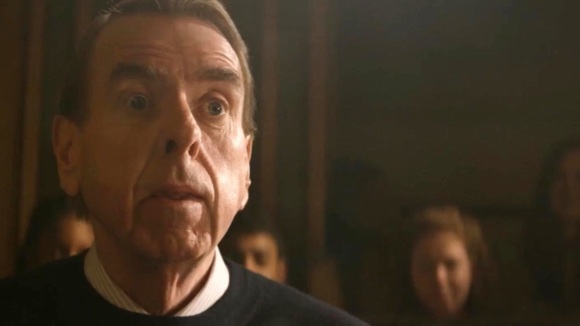
From the moment we see Irving challenge Lipstadt at one of her lectures, the very idea that the Holocaust didn’t happen – and that someone would willingly say such a thing, and then challenge someone to prove it did happen – is so bizarrely unnerving that it should make Irving all the more intriguing, and yet, as played by Spall, he’s more like a kindly uncle who’s gone slightly off his rocker. When he makes his opening speech at the trial – Irving represented himself – his off-kilter rhetoric and less than fashionable beliefs show a man whose disregard for historical truth has brought him to the last place he should ever want to be: in a courtroom, where his beliefs could be challenged under law and where his convictions could be exposed as terrible shams. Irving may have thought he was being clever bringing the case in an English court, but it was hubris that made him do so, and inevitably, he paid the price.

It’s an aspect that the movie fails to grasp, instead highlighting Irving’s sense of self-aggrandisement, and his talent for being a fly in the ointment of accepted historical fact. Spall is good in the role (when was the last time Spall wasn’t good in a role?*), but as written, Irving never appears truly threatening; he never comes across as someone who ever had even the slightest chance of winning, but the movie tries to make it seem as if he did. There are nods to the oxygen of publicity that encourages him in his efforts, but the real question that should be on everyone’s lips is never asked: Why? Why be a naysayer for the Nazis?

denialpic2-600x400

With Irving filling the role of boogeyman to Lipstadt’s crusading historian, the movie settles back, happy with its principal villain, and finds itself struggling to make the defence team just as interesting. As Lipstadt, Weisz brings determination and passion to the role, but it’s directed too often in opposition to her legal team, headed by barrister Richard Rampton QC (Wilkinson), and solicitor Anthony Julius (Scott). She butts heads with them over how she thinks the case should be handled, questions their commitment, and then wonders why her passion isn’t as openly shared as she expects. Wilkinson bounces back and forth between carefree bonhomie and courtroom gravitas, while Scott essays patrician superiority at every turn, all of which leaves little room for the rest of the defence team to make much of an impact.

In the courtroom, any expected fireworks fail to be set off. There’s so little tension, and so few moments where the inherent drama of the case is allowed a bit of breathing room that the viewer can only wonder if Hare somehow forgot that these scenes were meant to be gripping. The same could be said for Jackson’s direction, which relies on the same camera set ups throughout, the cut and thrust of Rampton’s cross-examination of Irving, and a last-minute inference from the judge (Jennings) that the defence’s case might crumble at the final hurdle to instil some heightened drama. But by the time it happens, most viewers will have ceased to care if Irving loses or not, just as long as there’s an end to the story.

denial__2016_5048

All in all, Denial works as a generalised account of an important moment in British legal, and Holocaust, history. But in taking the generalised road – the road most travelled, if you will – the movie loses any sprightliness it might have had, and resorts to plodding along, picking up plot points along the way, and under-utilising its very talented cast. It doesn’t fall down at any point; instead it lumbers along as if it’s about to. The only time it breaks free of its self-imposed shackles, is during a trip to Auschwitz, where Rampton appears to be insensitive to the surroundings. It’s a bleak, mournful sequence that speaks to how gripping the rest of the movie could have been.

All in all, it’s not everyone’s finest hour, but it does do just enough to give people the sense of what it was like back then, with Irving seemingly unassailable and the very real possibility that Lipstadt might lose. But the movie’s dry, methodical approach undermines the material – and the performances – too often for comfort, and though this is a worthy piece, it never gains the necessary traction to make it compelling as well.

Rating: 6/10 – not a straight up fiasco, nor a contentious thriller either, Denial falls somewhere between the two camps in its efforts to be absorbing and persuasive; a movie that could, and should, have been made as a legal thriller, it keeps a respectful distance from the horrors that Irving would have had us dismiss, and only really gets under its own skin when it’s at the real Auschwitz-Birkenau camp.


*The last time Spall wasn’t that great in a role? Sofia aka Assassin’s Bullet (2012). Don’t check it out.

Share this:

  • Click to share on X (Opens in new window) X
  • Click to share on Facebook (Opens in new window) Facebook
  • More
  • Click to print (Opens in new window) Print
  • Click to email a link to a friend (Opens in new window) Email
Like Loading...

The Whole Truth (2016)

22 Saturday Oct 2016

Posted by dullwood68 in Movies

≈ 2 Comments

Tags

Courtney Hunt, Crime, Drama, Gugu Mbatha-Raw, Jim Belushi, Keanu Reeves, Louisiana, Murder, Renée Zellweger, Review, Thriller, Trial

the-whole-truth-2016-movie-poster

D: Courtney Hunt / 93m

Cast: Keanu Reeves, Renée Zellweger, Gugu Mbatha-Raw, Gabriel Basso, Jim Belushi, Jim Klock, Ritchie Montgomery, Christopher Berry, Nicole Barré, Sean Bridgers, Mattie Liptak

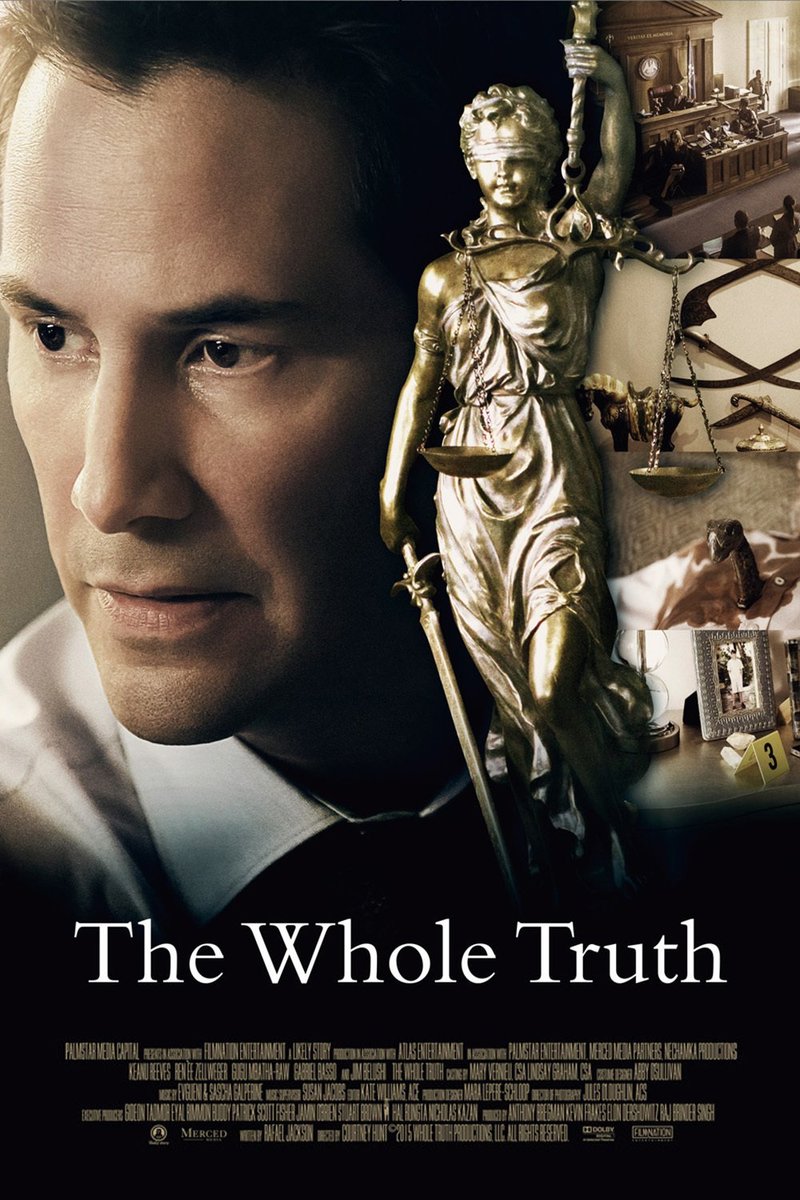
In a small Louisiana town, young Mike Lassiter (Basso) is arrested for the murder of his father, Boone (Belushi). Having confessed to the crime, Mike says nothing more, even to his lawyer, Richard Ramsey (Reeves). Obviously this makes it hard for Ramsey to mount a defence, but as a friend of the family, and someone that Boone helped become a lawyer, he has inside knowledge about Boone that the jury won’t be aware of. With his client staying quiet, Ramsey’s only choice is to malign Boone’s reputation as a good father to Mike and loving husband to Loretta (Zellweger).

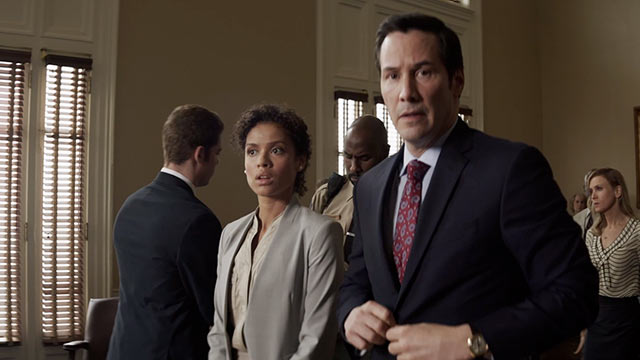
As the trial begins, Ramsey is joined by a junior lawyer, Janelle Brady (Mbatha-Raw). Together they begin to piece together a defence based on Boone’s abusive behaviour towards Mike and Loretta, while the prosecution – led by Leblanc (Klock) – reinforces the details surrounding the murder and Mike’s subsequent confession. The case seems hopeless until Ramsey calls Loretta to the witness stand, where she confirms just how abusive her husband could be. But as the trial continues, Janelle becomes suspicious about what might have really happened; she comes to believe that Mike is taking the fall for his mother. There’s no evidence to support this, however, and when Mike takes the stand and delivers a bombshell that no one could have prepared for, his testimony takes the trial in a direction that no one could have prepared for either.

the-whole-truth-2015-movie-header1

With an introductory voice over by Reeves that sets the tone for the whole movie (he sounds bored and uninterested), The Whole Truth is one of those courtroom dramas where secrets are revealed every so often in an effort to keep the audience guessing as to what’s happened, or is happening, and which should add up to a last-minute revelation that will have said audience saying to themselves, “Wow! I never saw that coming!” Except, in reality, The Whole Truth opts for secrets that have no impact on the movie’s ending, and which are pretty much forgotten about once they’ve been revealed.

You don’t have to have seen hundreds of courtroom dramas to know that ninety-nine per cent of the time, if the defendant has confessed to the crime (but isn’t saying why they did it), then the chances of them actually being guilty are greatly reduced. And while it would be unfair to reveal if this is the case here, let’s just say that there is a formula here that’s being adhered to, and said formula shouldn’t spring too many surprises on anyone familiar with the genre. And thanks to screenwriter Nicholas Kazan (known here as Raphael Jackson, and perhaps wisely), the movie plods along from one unexciting revelation to another in a dour effort to appear exciting. It’s all so sloppily written that, from Ramsey’s “knowing” voice over to both his and Leblanc’s inability to cross-examine witnesses, The Whole Truth acts more as an educational movie about how not to make a courtroom drama than the effective thriller it wants to be.

reevesbar640

Kazan’s script is one of the main offenders, but it’s not alone in handicapping the movie at every turn. Since coming to people’s attention with her well-received debut, Frozen River (2008), director Courtney Hunt has only worked on five TV episodes before taking on the challenge of molding this movie into something that isn’t the cinematic definition of “generic”. That she never gets to grips with the material, and films everything in a bland, TV-movie-of-the-week style, is evident throughout, and the look of the movie – all washed-out and looking as if bright colours were a no-no – further undermines any attempts the movie might make to stand out from the crowd. It’s as if cinematographer Jules O’Loughlin was instructed not to make the movie look attractive.

And then, somewhat inevitably, there’s the cast. Keanu Reeves has the kind of career that fluctuates between godawful and cautiously optimistic with almost absurd regularity. John Wick (2014) was a reminder that when he’s asked to play taciturn and given minimal dialogue, he’s playing to his strengths as an actor. But then he also appears in movies such as Man of Tai Chi (2013 – and which he directed), and Knock Knock (2015), and you’re reminded that he’s only good with certain material. Here he struggles as usual with both his character and his character’s dialogue, with his occasional voice overs further underscoring how often he looks and sounds removed from the movies he makes. He makes for an unconvincing trial lawyer as well, and The Whole Truth teeters on the edge of disaster every time Ramsey gets up to question a witness.

thumbnail_24946

Making her return to acting after a six-year hiatus, Renée Zellweger is, as many people have already pointed out, hard to recognise as Loretta. Even when she speaks you could still be forgiven for thinking she’s someone else, and this proves to be something of a distraction whenever she’s on screen. Why she picked this movie to make her comeback is a mystery that’s more intriguing than the central mystery around who killed Boone, and though she has second billing, Loretta is more of a supporting role than a lead. She’s not asked to do too much, and when Loretta takes the stand, Zellweger treats us to a glimpse of what she’s capable of, but otherwise it’s a performance that dozens of other actresses could have given. Mbatha-Raw is underused as well, her character the inexperienced, somewhat naïve ingenue who gets her one chance to shine in court before being relegated back to the sidelines.

With the performances unable to lift the movie out of its self-imposed narrative doldrums, and Hunt apparently unable to make much out of the material, The Whole Truth proves to be hugely disappointing, and resoundingly flat. There’s no impetus, no energy in the courtroom scenes, and by the end it’s difficult to care who did what, why or how. Courtroom dramas succeed or fail on the quality of the secrets that are revealed during a trial, and the odds against the defence lawyer winning, but here there’s so much apathy on display that any impact is curtailed before any such secrets are fully revealed. This may be a courtroom drama per se, but someone really should have pointed out that the drama was, in legal terms, misrepresented.

Rating: 4/10 – originally set to star Daniel Craig as Ramsey, The Whole Truth is a movie that wouldn’t have turned out any better even if he hadn’t dropped out just days before production was due to begin; clumsy and dull, the movie is like drudge work for the eyes and ears, and never once feels like it’s going to step up a gear and become even slightly interesting.

Share this:

  • Click to share on X (Opens in new window) X
  • Click to share on Facebook (Opens in new window) Facebook
  • More
  • Click to print (Opens in new window) Print
  • Click to email a link to a friend (Opens in new window) Email
Like Loading...

Stranger on Horseback (1955)

09 Tuesday Aug 2016

Posted by dullwood68 in Movies

≈ Leave a comment

Tags

Action, Bannerman, Circuit judge, Drama, Jacques Tourneur, Joel McCrea, John Carradine, John McIntire, Kevin McCarthy, Literary adaptation, Louis L'Amour, Miroslava, Murder, Review, Romance, Trial, Western

Stranger on Horseback

D: Jacques Tourneur / 66m

Cast: Joel McCrea, Miroslava, John McIntire, John Carradine, Kevin McCarthy, Nancy Gates, Emile Meyer, Robert Cornthwaite, Jaclynne Greene, Walter Baldwin, Emmett Lynn, Roy Roberts

Like each decade before it, the Fifties saw Hollywood and the independent studios make low budget Western after low budget Western. Trying to wade through them now is like trying to read a library of books that have no title pages: it’s difficult to tell if any one Western is better or worse than any other. But Stranger on Horseback (a title that’s not entirely accurate), is one low budget Western that deserves a closer look, and perhaps, over sixty years after it was made, a reassessment.

Adapted from the story by Louis L’Amour, the Stranger in question is actually circuit judge Richard Thorne (McCrea). Arriving in a small town on a routine visit, he soon learns that there has been a murder recently, but that the man responsible hasn’t been arrested. When he asks why, he discovers that the town is owned and run by Josiah Bannerman (McIntire), and that the man who committed the killing is Bannerman’s son, Tom (McCarthy). Despite several warnings from the town sheriff, Nat Bell (Meyer), and Bannerman’s legal counsel, Colonel Buck Streeter (Carradine), that Josiah won’t allow it, Thorne voices his determination to ensure that Tom Bannerman is arrested and committed for trial.

SOH - scene1

News of this development reaches Josiah, and he charges Tom with persuading Thorne to accept his hospitality. Tom’s presence in town leads, unsurprisingly, to his arrest, with Thorne being aided by Bell. With Streeter manoeuvring himself into place as the trial prosecutor, and less than veiled threats made by Josiah’s men as to the likelihood of a trial taking place, an uneasy stalemate exists while Tom languishes in jail. In the meantime, Thorne begins to piece together the events surrounding the murder, while also making an impact on Tom’s cousin, Amy Lee (Miroslava). Her attentions lead to Thorne meeting Josiah, and the last chance of a peaceful outcome in regard to Tom going to trial. Realising that there’s no chance of a trial – fair or otherwise – taking place in town, Thorne decides to spirit Tom away during the night and make for the nearest town, Cottonwood. But his ruse is quickly discovered, and Josiah and his men rush to head them off before Thorne and Bell can get Tom, along with two witnesses to the shooting, to the safety of the nearby town.

For a low budget Western that runs a somewhat paltry sixty-six minutes, Stranger on Horseback is definitely deserving of a much better level of recognition amongst modern day audiences. Directed by the hugely talented Tourneur, this was one of a number of Westerns he made in the Forties and Fifties, and his second with McCrea as the lead. One of Tourneur’s strengths as a director was his ability to draw out strong performances from his casts, and then ally them to a palpable sense of mood. In doing so he made his movies stand out by virtue of their credibility and an often surprising emotional depth. Stranger on Horseback is no exception, with McCrea perfectly cast as the tough, no-nonsense judge whose reputation means he doesn’t have to carry a gun unless absolutely necessary. McCrea made a lot of Westerns in the Fifties, but this is easily one of his best, his performance far more subtle and measured than the material might seem to deserve. In tandem with Tourneur’s assured direction, McCrea makes Thorne the kind of hero whose integrity and law-abiding nature is never in question.

SOH - scene2

But it’s not just McCrea who puts in a great performance. This is a movie with a glut of them. As Thorne’s love interest, Amy Lee, Miroslava gives an insightful portrayal of a woman torn between loyalty to her family and the chance of freedom that an unexpected romance gives her (a subplot involving Amy Lee’s impending marriage to the town banker (Cornthwaite) is handled with a sobering disinterest on her part and a tired resignation on his). (Sadly, this was Miroslava’s penultimate movie before she committed suicide aged just thirty, and from her role here it seems certain that her skills as an actress, her ability to find a sympathetic core to the characters she played, would have led to even better performances over time.)

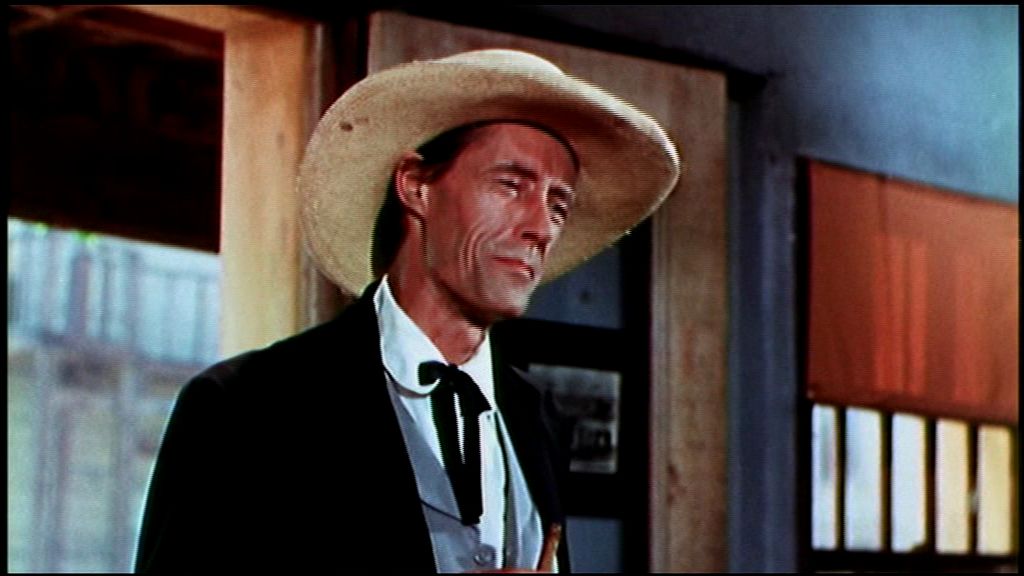
As the proud land baron Josiah Bannerman, McIntire is a terrific adversary for McCrea, his egoism a perfect counterpoint for Thorne’s rectitude. McIntire was a great character actor, often quietly giving memorable performances in the background of bigger movies, and although his presence here requires a degree of repetition in terms of relaying the same threats over and over, he nevertheless imbues Josiah with a sincerity of intent and action that overcomes an awkward last-minute reversal of purpose. And then there’s the wonderful John Carradine, cadaverously charming as ever as the smooth-tongued, lizard-like Colonel Streeter. His scenes with McCrea are a testament to his talent as an actor, his delivery and equanimity in the part a perfect example of what can be done with a supporting role if you have the skill and the encouragement of your director. It’s also a performance that foreshadows his role as Major Cassius Starbuckle in The Man Who Shot Liberty Valance (1962); both portrayals are hugely enjoyable, and both highlight just how good Carradine was when given a halfway decent script to work from.

SOH - scene3

Further down the cast list, McCarthy is appropriately callow as Tom Bannerman, while there’s a beautifully judged performance from Meyer as the sheriff who finds newfound courage thanks to Thorne’s arrival (Meyer is one of those actors whose face is so familiar, you’d swear you’ve seen him in more movies than he’s actually appeared in). Tourneur brings out the best in everyone, and in doing so, elevates the very basic plot and storylines in Herb Meadow and Dan Martin’s screenplay, making it a richer and more rewarding experience than anyone could have predicted.

While the movie is a great, unsung example of low budget Western movie making, unfortunately there is one issue it can’t presently overcome. Existing copies of the movie have become so degraded that the gorgeous Arizona locations – filmed in Ansco-color – are now a riot of over-exposed colours and blurred details. It’s so bad that when we first see McCrea riding into town it looks as if he doesn’t have a face. This is a movie in desperate need of restoration. Let’s hope a pristine copy surfaces at some point, and the movie can be seen as it was meant to be.

Rating: 8/10 – a superior Western thanks to the involvement of Tourneur, Stranger on Horseback is a richly rewarding movie with some outstanding performances to further add to its stature; with only a rushed conclusion to keep it from being a complete and utter classic, this is still a prime example of a low budget Western that shouldn’t be dismissed or ignored purely because of its provenance.

Share this:

  • Click to share on X (Opens in new window) X
  • Click to share on Facebook (Opens in new window) Facebook
  • More
  • Click to print (Opens in new window) Print
  • Click to email a link to a friend (Opens in new window) Email
Like Loading...

True Story (2015)

05 Saturday Sep 2015

Posted by dullwood68 in Movies

≈ Leave a comment

Tags

Christian Longo, Drama, Felicity Jones, James Franco, Jonah Hill, Literary adaptation, Mike Finkel, Murder, New York Times, Review, Rupert Goold, Trial, True story

True Story

D: Rupert Goold / 99m

Cast: Jonah Hill, James Franco, Felicity Jones, Robert John Burke, Ethan Suplee, Gretchen Mol, Maria Dizzia, Byron Jennings

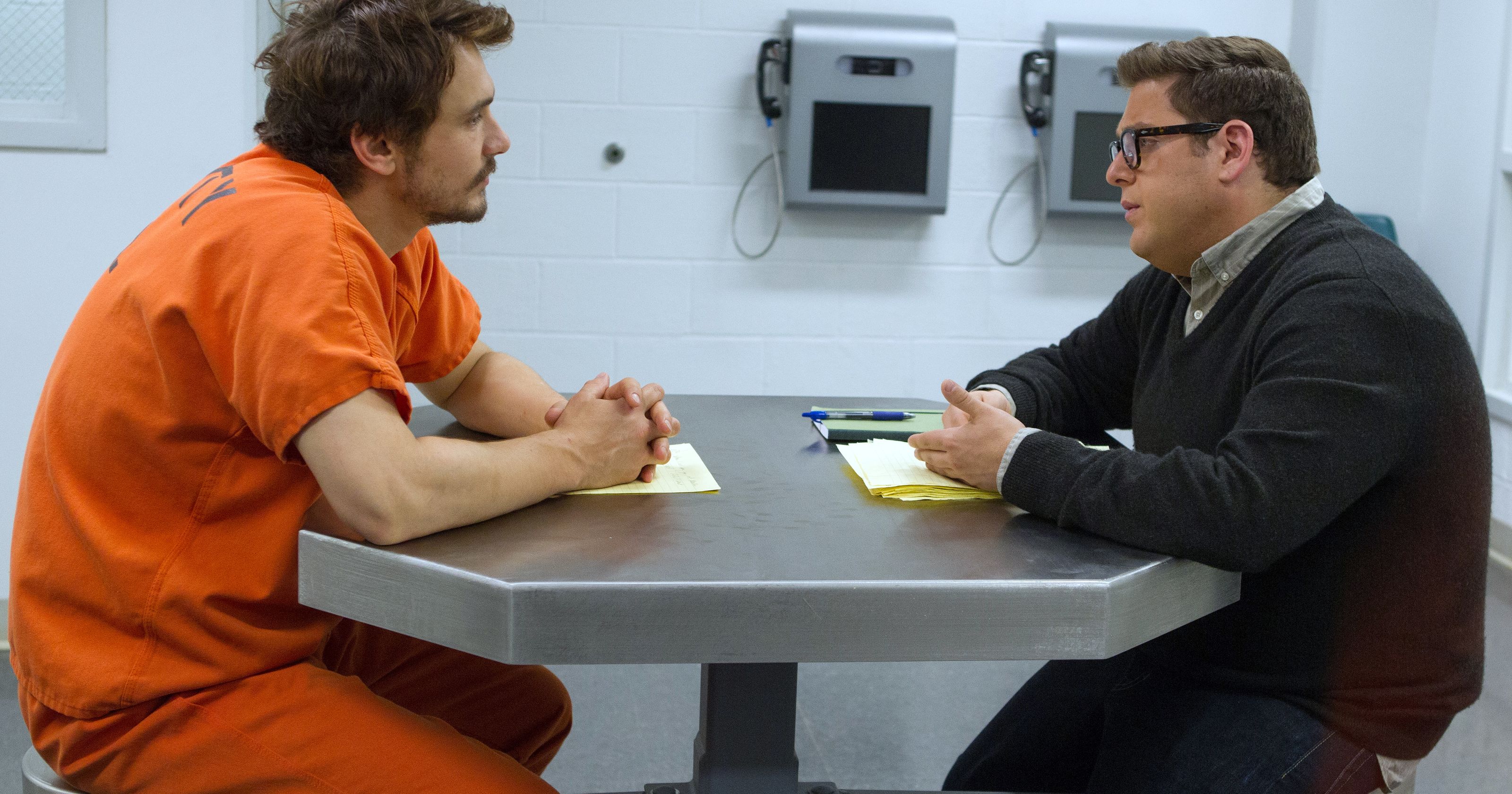
A journalist with the New York Times, Mike Finkel (Hill) hands in an assignment that looks at the African slave trade. It becomes the cover story for the New York Times Magazine, but later it’s discovered that Finkel hasn’t been entirely honest about his research and has created a composite character for the story’s focus. Finkel is subsequently fired and returns to his home in Montana where he lives with his wife Jill (Jones). At around the same time, the discovered bodies of a woman and her three children has led authorities to Mexico where they arrest a man who claims to be Mike Finkel. His real name, though, is Christian Longo (Franco), and he’s accused of having killed his family.

When Finkel becomes aware that Longo claimed to be him, he becomes intrigued. He begins to look into the case, and travels to see Longo in prison. At their first meeting, Longo tells Finkel he’s admired his writing for a long time. They also strike a bargain: in return for Longo’s story, Finkel will teach him to write and he won’t discuss what they talk about until after Longo’s trial. Soon after, Finkel receives a lengthy letter in which Longo describes the events that led up to his wife and children’s murders – but it stops short of going further.

Over the next few months as the two men continue to meet, Longo intimates that he didn’t kill his family, and Finkel begins to believe he may be innocent, even though Longo avoids giving any definitive statement on the matter, and refers to a mysterious “someone” he needs to protect. He tells Finkel he’ll plead Not Guilty at his arraignment, and the journalist begins to believe that there must be another answer to the question of who murdered Longo’s wife and children. But at the arraignment, Longo pleads Not Guilty to the murders of two of his children, and Guilty to the murder of his wife and other child. Feeling betrayed, Finkel confronts him, but Longo hides behind the idea that he’s protecting someone.

As the trial approaches, Finkel – who has been busy turning his and Longo’s correspondence into a book – now begins to doubt the veracity of Longo’s claims, but though he’s approached by one of the detectives who arrested Longo, Greg Ganley (Burke) and asked to provide evidence for the prosecution, he refuses. The trial takes place and the prosecution puts forward a convincing case for Longo’s guilt. But then the defence begins its case, and Longo is called to the stand…

True Story - scene

At one point in True Story, Christian Longo tells Mike Finkel that “sometimes the truth isn’t believable. But that doesn’t mean that it’s not true.” It’s a fine idea, and the movie trades on Longo’s assertion for most of its running time, leading the audience down various dead ends and blind alleys in an attempt to keep the mystery of what really happened to Longo’s family from being revealed too soon. There’s always a degree of fun to be had from a character who is deliberately elliptical, or who hides behind a wall of half-clues and misdirection, but while Franco’s cold-eyed, hooded expressions suit the character’s manipulative nature, the movie isn’t so convincing that anyone would think Finkel could be easily duped. In fact, the way in which their scenes are set up and choreographed, it should have been obvious that Longo was trying to influence Finkel’s thinking, and by doing so, gain an acquittal at his trial.

But as many people say, hindsight is a wonderful thing, but it is something that the movie can’t quite avoid dealing with. As a fairly straightforward retelling of a relationship between two narcissistic, prideful individuals, the movie wisely avoids coming down on the side of one character over the other, but at the same time, Finkel’s credulity is incredibly worrying; he is a seasoned journalist after all, even if he has made an almighty, career-shredding error of judgment. Hill plays him as a kind of eager puppy dog, wanting to be liked and willing to believe in anything that will help him get back on top. He also shows the desperation Finkel feels when the book deal is jeopardised, or when he begins to suspect that Longo is probably guilty – he needs Longo to be innocent so that he won’t look like he’s been fooled.

As the potential murderer of his entire family, Franco keeps Longo self-contained and aloof, meeting Finkel partway but never revealing anything of real substance. He uses a blank expression to convey all the audience needs to know about him, and acts with his eyes for the most part, conveying hurt and innocence and sadness, but failing to show any regret for his family’s demise, or anger at being arrested. (Again, it’s worrying that Finkel never picked up on any of this.) Both actors play well against each other, with Hill slightly edging it by virtue of his being more emotive. As Jill, Jones – in a somewhat underwritten role – is given a remarkable scene in which she’s able to confront Longo and show her contempt for him, but it smacks too much of writer’s licence, and as a result, interrupts the movie’s flow. Elsewhere she’s required to look concerned and irritable by turns, and her participation becomes yet another example of a very talented actress being shamefully underused.

Making his feature debut, Goold steps up from directing British TV dramas to make a solid, if restrained movie that tries its best to examine issues of trust and falsehood, as well as public perception, but ultimately it shies away from looking at them in any depth. Goold is better with his cast, even when his screenplay – co-written with David Kajganich – has them repeating conversations and scenes, and emphasising over and over the “mystery” that Longo implies has happened. There’s also an attempt at some basic psychology that doesn’t come off too well, and it’s a humourless piece for the most part, with only a few ironic statements to leaven the drama.

Rating: 7/10 – absorbing for the most part, True Story tries to be direct and complex at the same time, but the two approaches don’t mix, leaving the audience with a story that leaks vitality and energy as it progresses; Hill and Franco are good value, and Longo’s testimony is a highlight, but there are too many questions left unanswered for it to be entirely successful.

Share this:

  • Click to share on X (Opens in new window) X
  • Click to share on Facebook (Opens in new window) Facebook
  • More
  • Click to print (Opens in new window) Print
  • Click to email a link to a friend (Opens in new window) Email
Like Loading...

Blog Stats

  • 486,528 hits

Recent Posts

  • 10 Reasons to Remember Bibi Andersson (1935-2019)
  • Fantasia (1940)
  • Dances With Wolves (1990) – The Special Edition
  • Kiss of the Spider Woman (1985)
  • The Three Musketeers (1973)

Top Posts & Pages

  • Lost for Life (2013) - Another Look
    Lost for Life (2013) - Another Look
  • Lost for Life (2013)
    Lost for Life (2013)
  • About
    About
  • Mr. Topaze (1961)
    Mr. Topaze (1961)
  • Billy Lynn's Long Halftime Walk (2016)
    Billy Lynn's Long Halftime Walk (2016)
  • Winter's Tale (2014)
    Winter's Tale (2014)
  • The Hitman's Bodyguard (2017)
    The Hitman's Bodyguard (2017)
  • 5 Famous Movie Roles That Nearly Went to Someone Else
    5 Famous Movie Roles That Nearly Went to Someone Else
  • The Layover (2017)
    The Layover (2017)
  • Transcendence (2014)
    Transcendence (2014)
Follow thedullwoodexperiment on WordPress.com

Blogs I Follow

  • Rubbish Talk
  • Film 4 Fan
  • Fast Film Reviews
  • The Film Blog
  • All Things Movies UK
  • Interpreting the Stars
  • Let's Go To The Movies
  • Movie Reviews 101
  • TMI News
  • Dan the Man's Movie Reviews
  • Film History
  • Jordan and Eddie (The Movie Guys)

Archives

  • April 2019 (13)
  • March 2019 (28)
  • February 2019 (28)
  • January 2019 (32)
  • December 2018 (28)
  • November 2018 (30)
  • October 2018 (29)
  • September 2018 (29)
  • August 2018 (29)
  • July 2018 (30)
  • June 2018 (28)
  • May 2018 (24)
  • April 2018 (21)
  • March 2018 (31)
  • February 2018 (25)
  • January 2018 (30)
  • December 2017 (30)
  • November 2017 (27)
  • October 2017 (27)
  • September 2017 (26)
  • August 2017 (32)
  • July 2017 (32)
  • June 2017 (30)
  • May 2017 (29)
  • April 2017 (29)
  • March 2017 (30)
  • February 2017 (27)
  • January 2017 (32)
  • December 2016 (30)
  • November 2016 (28)
  • October 2016 (30)
  • September 2016 (27)
  • August 2016 (30)
  • July 2016 (30)
  • June 2016 (31)
  • May 2016 (34)
  • April 2016 (30)
  • March 2016 (30)
  • February 2016 (28)
  • January 2016 (35)
  • December 2015 (34)
  • November 2015 (31)
  • October 2015 (31)
  • September 2015 (34)
  • August 2015 (31)
  • July 2015 (33)
  • June 2015 (12)
  • May 2015 (31)
  • April 2015 (32)
  • March 2015 (30)
  • February 2015 (37)
  • January 2015 (39)
  • December 2014 (34)
  • November 2014 (34)
  • October 2014 (36)
  • September 2014 (25)
  • August 2014 (29)
  • July 2014 (29)
  • June 2014 (28)
  • May 2014 (23)
  • April 2014 (21)
  • March 2014 (42)
  • February 2014 (38)
  • January 2014 (29)
  • December 2013 (28)
  • November 2013 (34)
  • October 2013 (4)

Create a free website or blog at WordPress.com.

Rubbish Talk

Film 4 Fan

A Movie Blog

Fast Film Reviews

The Film Blog

The official blog of everything in film

All Things Movies UK

Movie Reviews and Original Articles

Interpreting the Stars

Dave Examines Movies

Let's Go To The Movies

Film and Theatre Lover!

Movie Reviews 101

Daily Movie Reviews

TMI News

Latest weather, crime and breaking news

Dan the Man's Movie Reviews

All my aimless thoughts, ideas, and ramblings, all packed into one site!

Film History

Telling the story of film

Jordan and Eddie (The Movie Guys)

Movie Reviews & Ramblings from an Australian Based Film Fan

Privacy & Cookies: This site uses cookies. By continuing to use this website, you agree to their use.
To find out more, including how to control cookies, see here: Cookie Policy
  • Subscribe Subscribed
    • thedullwoodexperiment
    • Join 481 other subscribers
    • Already have a WordPress.com account? Log in now.
    • thedullwoodexperiment
    • Subscribe Subscribed
    • Sign up
    • Log in
    • Report this content
    • View site in Reader
    • Manage subscriptions
    • Collapse this bar
 

Loading Comments...
 

    %d