• 10 Reasons to Remember…
  • A Brief Word About…
  • About
  • For One Week Only
  • Happy Birthday
  • Monthly Roundup
  • Old-Time Crime
  • Other Posts
  • Poster of the Week
  • Question of the Week
  • Reviews
  • Trailers

thedullwoodexperiment

~ Viewing movies in a different light

thedullwoodexperiment

Tag Archives: Truck stop

Black Tar Road (2016)

09 Friday Sep 2016

Posted by dullwood68 in Movies

≈ 2 Comments

Tags

A Junkie Love Story, Abovo Films, Amber Dawn Lee, Drama, Drugs, Love, Noelle Messier, Prostitution, Review, Truck stop

black-tar-road

D: Amber Dawn Lee / 85m

Cast: Amber Dawn Lee, Noelle Messier, James Black, Darin Cooper, Jeff Chassler, Ron Allen, Eugenia Care, Leif Gantvoort

You’re an aspiring actress who wants to be known for more than roles as The Hottie in short The Bigfoot Hunters (2013), or as Hippie Barfly in lame horror Butterfly (2010). So what do you do? Simple: start your own production company and put your other talents as a writer and a producer and a director to the fore. Amber Dawn Lee did exactly that in 2010 when she formed Abovo Films. Six years on and we have the first feature made by Lee through her own production company, the abrasive romantic drama, Black Tar Road.

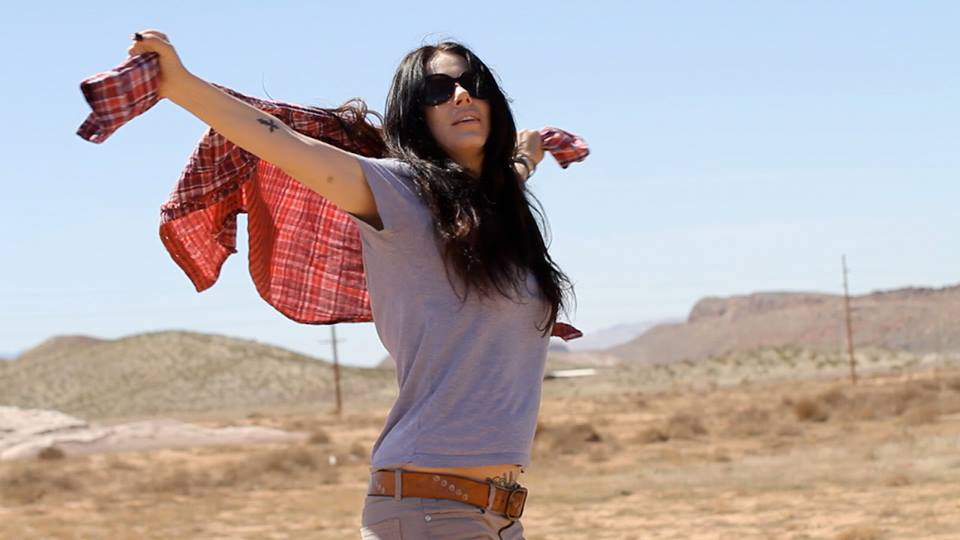
Originally titled A Junkie Love Story before its release, Black Tar Road is a bleak, occasionally disturbing look at love amongst the ruins of two women’s lives as they come together and find a semblance of happiness while nothing around them changes. Heather (Messier) is a hooker who finds her customers at a local truck stop. She’s tall, skinny, and by her own admission, not the prettiest woman to look at. But she has nowhere else to go, and no real ambitions to better herself other than to travel west to Pasadena. But even then she has no idea what she’ll do when she gets there. Charlie (Lee) is a trucker, working off a debt to a criminal gang by transporting illegal items around the American southwest. She’s a drug addict, too, injecting heroin at an often alarming rate but somehow managing to function. Beyond clearing her debt she too has no ambitions or plans; the only difference between her and Heather is that she at least has travelled, even if it is behind the wheel of a truck.
btr-scene2

Their relationship begins in an offhand, casual way, in a bar. There’s an attraction on Charlie’s part that happens straight away, but Heather is looking for a friend to help make her life more bearable. She’s not looking for love as she doesn’t think it’s real anymore. Charlie thinks along similar lines, but the ease with which they come together as friends makes it inevitable that they’ll fall in love. As both director and writer, Lee doesn’t shy away from how broken these two women are, nor how much they want to feel normal (whatever that means for them). As their friendship develops and becomes sexual as well as more emotional, Lee’s script allows them a respite from the pain and disappointment of their regular lives. Together, they can block out all the bad stuff and ignore it for a while, but thanks to their own failings and their own individual problems, all that stuff is still going to be there to trip them up.

As Heather and Charlie become closer and more committed to each other, as well as the idea of their being a couple, there’s the likelihood that we’ll get to know more about them. Up til now, Lee has provided very little back story for either character, and while this doesn’t hinder our understanding of the two women, it does create a distance between them and the viewer that restricts the amount of sympathy we feel for them. Heather was popular in high school, and is reminded of this from time to time, but we don’t know the circumstances that have led her into prostitution. Likewise, Charlie’s addiction to heroin is presented as an integral, and important, part of her lifestyle and character. Lee refrains from exploring each character’s unwillingness to change (or at least try to); instead she makes their determination not to change a kind of feminist badge of honour, as both women try to convince each other, and the audience, that this is who they are and they don’t need to be any different.

btr-scene3

Lee paints a pretty miserable picture of both women’s lives from the outset, and the first half an hour may test the patience of viewers who don’t like their movies to be quite so grim, but once Heather and Charlie begin their relationship in earnest, then Lee allows the movie to breathe a little. She lets the two women experience joy and hope in equal measure, and changes the parameters by which they relate to the world. Lee shoots several scenes in black and white to highlight the difference that their romance means to them, how simple their lives have become in these moments of intimacy and love. These are affecting moments, driven by the closeness and the bond between Heather and Charlie, and by Lee’s careful, though obvious, signposting of the way in which things might change for the worst.

As the beleaguered women, both Lee and Messier are on fine form. Lee plays Charlie as a more internalised role, a mostly quiet(er) counterpoint to Messier’s garrulous Heather. Charlie’s drug habit leaves her looking haggard and on the verge of death a lot of the time, and Lee isn’t afraid to look suitably ghastly. Heather has a nervous laugh that animates her face in a way that shows off her insecurity around other people; like Lee, Messier isn’t afraid to look worn-down or exhausted. Both actresses express a degree of fearlessness in their roles that adds texture and a coarse vitality to their roles, but they’re equally adept at showing the vulnerability and the tenderness that Heather and Charlie are able to show each other, and no one else.

btr-scene1

For all its positive qualities though, Black Tar Road does founder at times, and Lee makes some narrative decisions that don’t make a lot of sense. Charlie does something that should see her pursued by the police, but once it’s done and she’s panicked a bit over it, it’s forgotten and never mentioned again. It’s a very unlikely outcome, and some viewers may well continue watching the movie waiting for this “something” to come back and bite Charlie in the ass. That it doesn’t is unfortunate, and the sequence in which it occurs ends up feeling like an unnecessary addition to Charlie’s storyline. Heather, meanwhile, looks after her grandmother, who is borderline catatonic. This never amounts to anything significant, unless it’s to show that Charlie and Heather aren’t entirely self-centred; if that’s the case, then it’s a very clumsy way of telling viewers something they’ll already have guessed for themselves. There’s also way too many scenes of Charlie shooting up and then waking up – often in the street – some time later; each time, she comes to, she gets up, and carries on as if it’s never happened.

At times unremittingly bleak – Heather contributes a voice over in the opening ten minutes that will have some viewers convinced this is going to be a suicide tale – Black Tar Road uses a framing device to provide a degree of optimism as to the movie’s eventual outcome. But said optimism is ultimately in short supply, and while this is in keeping with the not-so-cautionary tale that Lee is telling, any viewer approaching this movie expecting a happy ending, may be better off looking elsewhere.

Rating: 7/10 – a gritty drama that doesn’t send its main characters on a search for personal redemption – and is all the better for it – Black Tar Road overcomes some narrative fumbles along the way to become a low-key, bittersweet tale of love against the odds; at times earnest and impassioned, and buoyed by two impressive performances from Lee and Messier, the movie may appear too dour for its own good, but it’s a look on the dark sides of hope and personal need that succeeds more often than it fails.
Share this:

  • Click to share on X (Opens in new window) X
  • Click to share on Facebook (Opens in new window) Facebook
  • More
  • Click to print (Opens in new window) Print
  • Click to email a link to a friend (Opens in new window) Email
Like Loading...

Safelight (2015)

19 Sunday Jul 2015

Posted by dullwood68 in Movies

≈ Leave a comment

Tags

Christine Lahti, Drama, Evan Peters, Juno Temple, Kevin Alejandro, Lighthouses, Photography competition, Prostitute, Relationships, Review, Tony Aloupis, Truck stop

Safelight

D: Tony Aloupis / 83m

Cast: Evan Peters, Juno Temple, Christine Lahti, Kevin Alejandro, Jason Beghe, Ariel Winter, Will Peltz, Don Stark, Joel Gretsch, Ever Carradine, Meaghan Martin, Gigi Rice

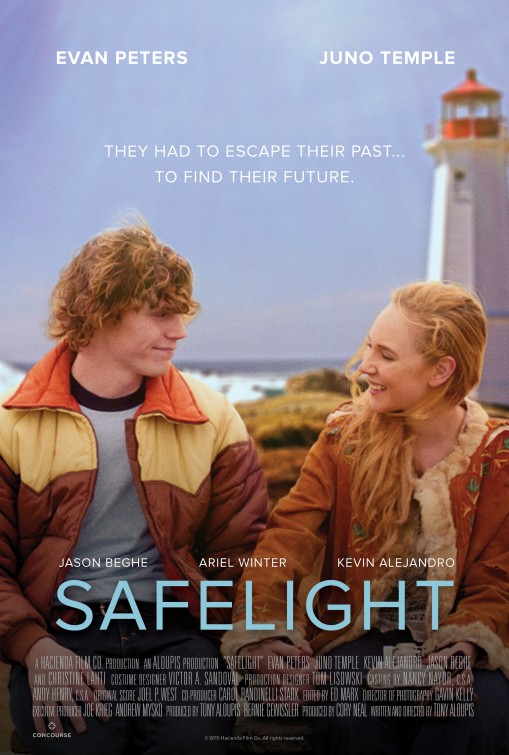
California, the Seventies. Charles (Peters) is seventeen, attends high school, has an absent mother, a deceased older brother, a seriously ill father (Beghe), legs that cause him difficulty in walking, and a job working in the diner at a truck stop. One night he sees a teenage girl named Vicki (Temple) accosted by a man called Skid (Alejandro). Charles intervenes and threatens Skid with a baseball bat. Skid is amused by Charles’s attitude and drives off. Over the next few nights, Vicki – who is a prostitute – comes into the diner for coffee, and she and Charles begin a fledgling relationship.

Meanwhile, Charles decides to enter a school photography competition. For his theme he picks the lighthouses of the California coast but his disability stops him from driving. However, when he mentions his idea to Vicki she volunteers to drive him to each location. With each successive trip they grow a little bit closer, and Charles introduces Vicki to his father and his boss at the diner, Peg (Lahti). She impresses them, so much so that Peg invites Vicki and Charles to a girls’ night at a local bar. They dance together for the first time, and later, Vicki takes Charles back to the hotel room where she lives (and which Skid, who’s her pimp, doesn’t know about).

Some time later, Charles persuades Vicki to visit her estranged family: mother Lois (Carradine), and younger sisters Kate (Winter) and Sharon (Martin). The visit doesn’t go as well as Charles had hoped, with recriminations on both sides, and it leads to Vicki disappearing. When Skid begins asking Charles if he’s seen her, he can honestly say no, but Skid makes it clear he’ll find her, no matter what. Charles completes his entry for the photography competition, and goes back to his regular life at the truck stop. It’s when Skid finally does locate Vicki that things take a desperate turn, one that will either bond them together forever, or part them irrevocably.

Safelight - scene

Slow moving but character driven, Safelight is a contemplative look at how two teenagers (Vicki is eighteen) form a relationship while viewing themselves as outsiders, Charles because of his physical condition, Vicki because of her occupation. It’s an often wistful tale, with sterling performances from Peters and Temple, and assured writing and direction from Aloupis.

But for every positive footstep the movie makes there’s an annoying misstep – sometimes in the very next scene – as Aloupis tries to explore aspects of both lead characters’ lives that don’t immediately add to the central storyline or overall plot. A case in point is the harassment Charles receives at the hands of three bullies. It serves to highlight just how difficult his life is, and the problems he has to face, but it all seems contrived and unnecessary, as if having legs that don’t work properly isn’t enough. It also leads to a scene where Vicki arrives in the nick of time and scares off the bullies with a handgun that she conveniently has in her bag – as if that’s nothing more than the writer/director adding in a bit of wish fulfilment to perk up the audience.

Vicki’s visit to her family is another area in which the script dares to travel where it has no need to go. By the time of the visit, Vicki has already told Charles about her upbringing, and her mother’s abusive boyfriend, so any information we glean has been rendered redundant, and the whole thing isn’t helped by an awkwardly judged performance by Rice as the mother doing her best not to feel guilty at failing to protect her daughter. It leads to the necessary break up of Charles and Vicki, but still it seems like an afterthought in the scriptwriting process.

Thankfully, these missteps don’t hurt the bulk of the (short) running time, but they do seem like intruders, disrupting the movie’s flow and causing the viewer to stop short. Away from these errors of judgment, Apoulis is on firmer ground when dealing with the nascent relationship between Charles and Vicki, and garnering the aforementioned sterling performances from his leads, and in particular, from Alejandro. Where Peters gives Charles a diffidence and lack of confidence that makes him immediately sympathetic, Temple takes Vicki in the opposite direction, making her too worldly-wise yet with a streak of tough vulnerability that she can drawn on when needed. The two characters complement each other, and Peters and Temple display a winning chemistry. At odds with their more structured performances, Alejandro is a sweaty, broiling, unpredictable Skid, his manic movements and unnerving laughter leaving the viewer uncertain as to what he’s going to do next (it sometimes feels as if even Alejandro didn’t know). The movie also picks up some energy when he’s on screen, a valuable counterpoint to the considered perspective offered by Peters and Temple.

At its heart, of course, the movie is an unconventional love story, and it’s here that it’s at its most effective. While the idea of two professed outsiders finding common ground isn’t unusual in the movies, what Aloupis has done is to make a virtue of Charles’ emotional reticence, and Vicki’s need to be loved for herself and not just her body (which leads to an uncomfortable and telling moment in Vicki’s motel room). With their relationship falling into place so neatly and plausibly, Aloupis moves the supporting characters around with ease, eliciting strong performances from Lahti and Beghe, and showing a flair for spare, unshowy dialogue. The desert landscapes and coastal cliffs are beautifully photographed by DoP Gavin Kelly, and Charles’s photographs of the lighthouses and Vicki are rendered in wonderful black and white by Darrell Lloyd, making the movie a visual treat at times and surprisingly poetic.

Rating: 7/10 – some narrative flaws stop Safelight from being more accomplished, but there’s lots to enjoy here, from the performances to the writing, and all backed by an evocative visual style that keeps the drama from becoming too gloomy; while some elements may be predictable to seasoned viewers it’s Apoulis’ approach to the material that keeps it interesting.

Share this:

  • Click to share on X (Opens in new window) X
  • Click to share on Facebook (Opens in new window) Facebook
  • More
  • Click to print (Opens in new window) Print
  • Click to email a link to a friend (Opens in new window) Email
Like Loading...

Blog Stats

  • 486,528 hits

Recent Posts

  • 10 Reasons to Remember Bibi Andersson (1935-2019)
  • Fantasia (1940)
  • Dances With Wolves (1990) – The Special Edition
  • Kiss of the Spider Woman (1985)
  • The Three Musketeers (1973)

Top Posts & Pages

  • Lost for Life (2013) - Another Look
    Lost for Life (2013) - Another Look
  • Lost for Life (2013)
    Lost for Life (2013)
  • About
    About
  • Mr. Topaze (1961)
    Mr. Topaze (1961)
  • Billy Lynn's Long Halftime Walk (2016)
    Billy Lynn's Long Halftime Walk (2016)
  • Winter's Tale (2014)
    Winter's Tale (2014)
  • The Hitman's Bodyguard (2017)
    The Hitman's Bodyguard (2017)
  • 5 Famous Movie Roles That Nearly Went to Someone Else
    5 Famous Movie Roles That Nearly Went to Someone Else
  • The Layover (2017)
    The Layover (2017)
  • Transcendence (2014)
    Transcendence (2014)
Follow thedullwoodexperiment on WordPress.com

Blogs I Follow

  • Rubbish Talk
  • Film 4 Fan
  • Fast Film Reviews
  • The Film Blog
  • All Things Movies UK
  • Interpreting the Stars
  • Let's Go To The Movies
  • Movie Reviews 101
  • TMI News
  • Dan the Man's Movie Reviews
  • Film History
  • Jordan and Eddie (The Movie Guys)

Archives

  • April 2019 (13)
  • March 2019 (28)
  • February 2019 (28)
  • January 2019 (32)
  • December 2018 (28)
  • November 2018 (30)
  • October 2018 (29)
  • September 2018 (29)
  • August 2018 (29)
  • July 2018 (30)
  • June 2018 (28)
  • May 2018 (24)
  • April 2018 (21)
  • March 2018 (31)
  • February 2018 (25)
  • January 2018 (30)
  • December 2017 (30)
  • November 2017 (27)
  • October 2017 (27)
  • September 2017 (26)
  • August 2017 (32)
  • July 2017 (32)
  • June 2017 (30)
  • May 2017 (29)
  • April 2017 (29)
  • March 2017 (30)
  • February 2017 (27)
  • January 2017 (32)
  • December 2016 (30)
  • November 2016 (28)
  • October 2016 (30)
  • September 2016 (27)
  • August 2016 (30)
  • July 2016 (30)
  • June 2016 (31)
  • May 2016 (34)
  • April 2016 (30)
  • March 2016 (30)
  • February 2016 (28)
  • January 2016 (35)
  • December 2015 (34)
  • November 2015 (31)
  • October 2015 (31)
  • September 2015 (34)
  • August 2015 (31)
  • July 2015 (33)
  • June 2015 (12)
  • May 2015 (31)
  • April 2015 (32)
  • March 2015 (30)
  • February 2015 (37)
  • January 2015 (39)
  • December 2014 (34)
  • November 2014 (34)
  • October 2014 (36)
  • September 2014 (25)
  • August 2014 (29)
  • July 2014 (29)
  • June 2014 (28)
  • May 2014 (23)
  • April 2014 (21)
  • March 2014 (42)
  • February 2014 (38)
  • January 2014 (29)
  • December 2013 (28)
  • November 2013 (34)
  • October 2013 (4)

Create a free website or blog at WordPress.com.

Rubbish Talk

Film 4 Fan

A Movie Blog

Fast Film Reviews

The Film Blog

The official blog of everything in film

All Things Movies UK

Movie Reviews and Original Articles

Interpreting the Stars

Dave Examines Movies

Let's Go To The Movies

Film and Theatre Lover!

Movie Reviews 101

Daily Movie Reviews

TMI News

Latest weather, crime and breaking news

Dan the Man's Movie Reviews

All my aimless thoughts, ideas, and ramblings, all packed into one site!

Film History

Telling the story of film

Jordan and Eddie (The Movie Guys)

Movie Reviews & Ramblings from an Australian Based Film Fan

Privacy & Cookies: This site uses cookies. By continuing to use this website, you agree to their use.
To find out more, including how to control cookies, see here: Cookie Policy
  • Subscribe Subscribed
    • thedullwoodexperiment
    • Join 481 other subscribers
    • Already have a WordPress.com account? Log in now.
    • thedullwoodexperiment
    • Subscribe Subscribed
    • Sign up
    • Log in
    • Report this content
    • View site in Reader
    • Manage subscriptions
    • Collapse this bar
 

Loading Comments...
 

    %d