In an effort to maintain a link with thedullwoodexperiment website (until I take it down), I’ll be importing the reviews from that site into this one. There’ll be a note at the bottom of each review that this relates to. Some will be modified from their original content, mainly due to a re-think on my part.
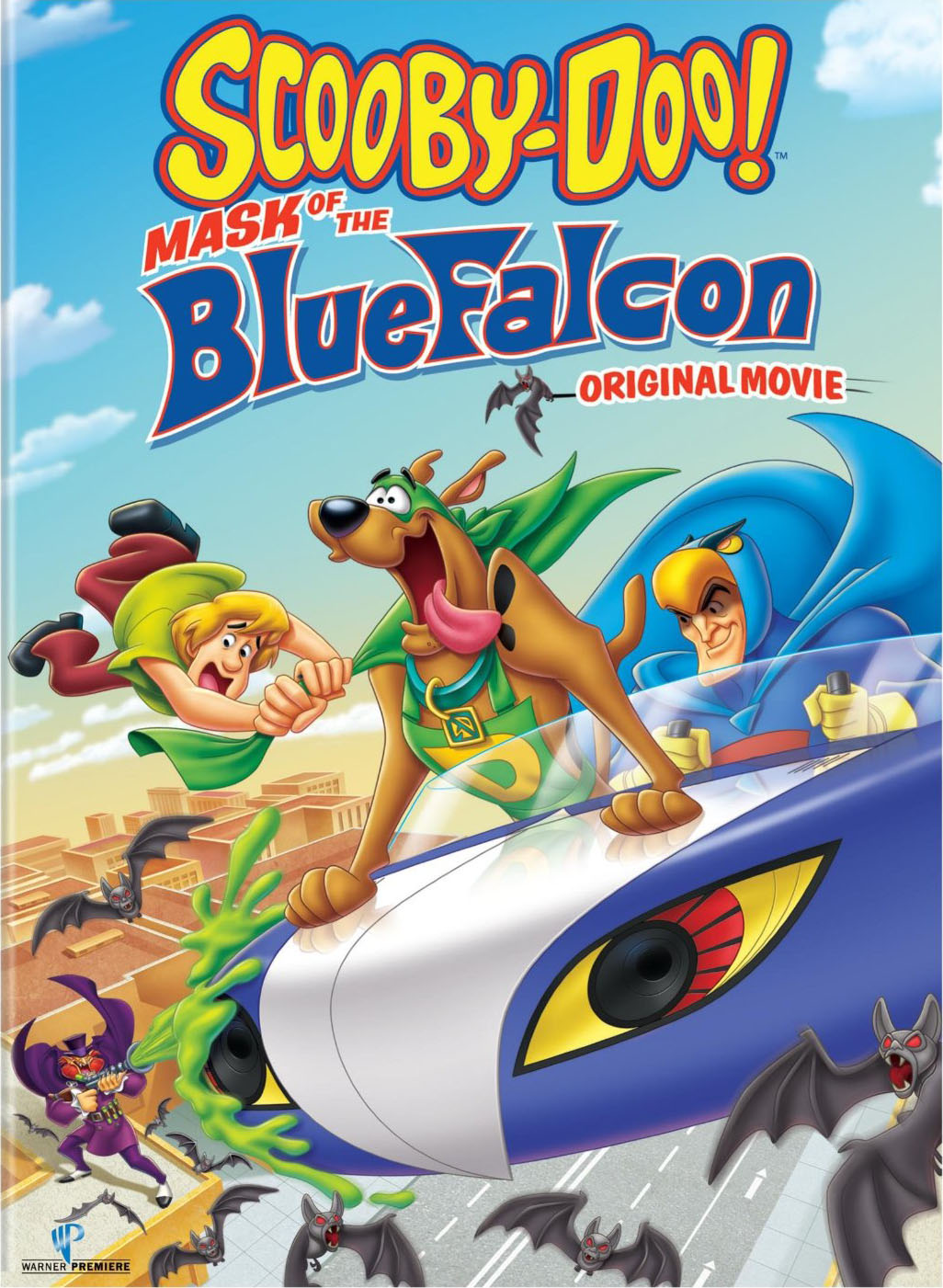
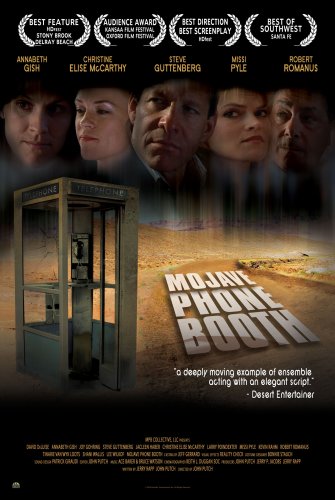
So far, this practice relates to the following movies: Invasion of the Star Creatures, Mojave Phone Booth and Scooby-Doo! Mask of the Blue Falcon.
Cast: Frank Welker, Mindy Cohn, Grey DeLisle, Matthew Lillard, Jeff Bennett, Diedrich Bader, John Di Maggio, Kevin Michael Richardson
With Warner Bros. animation being a joy to watch these days*, you just know that the latest in the series of Scooby-Doo! movies is going to be a visual treat if nothing else. (The company’s Batman movies are worth checking out too.)
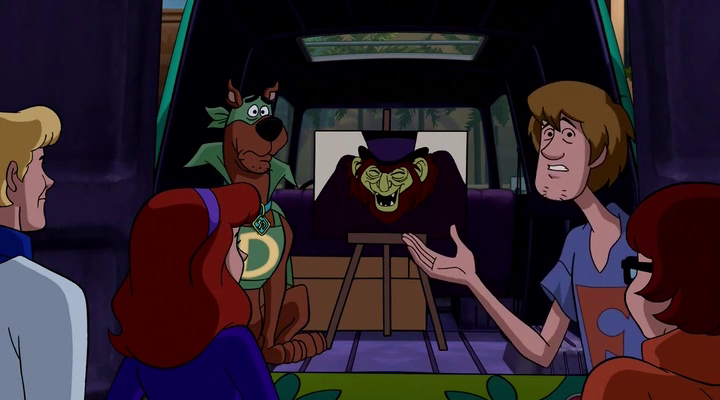
Mask of the Blue Falcon opens with the Mystery Team investigating a haunting by the Manic Minotaur of Mainsley Manor. Once that mystery is solved, they head off to a fantasy convention in San de Pedro, California. Shaggy (Lillard) and Scooby (Welker) are excited to go as it will mean they get to meet their hero, Owen Garrison (Bennett). Garrison played the character of Blue Falcon years before on TV with his canine sidekick Dynomutt. To Shaggy and Scooby the original Blue Falcon shows are much better than the new high-tech film version that’s being premiered at the convention. And it seems a character from the old series agrees with them: Mr Hyde, Blue Falcon’s arch-nemesis. He causes chaos using bats, a devil hound, and a toxic green goo. With the film premiere under threat, it’s up to the Mystery Team to get to the bottom of things and unmask Mr Hyde. Naturally this involves Shaggy and Scooby dressing up as their heroes.
It’s fun to see the Mystery Team back in action in a movie that actually works. The last few movies, by general consensus, have been below par, but this outing is the best for some time, mixing the right amount of comedy, thrills and spectacle. The storyline holds the attention and although the identity of the villain is never in doubt to anyone who’s seen a Scooby-Doo movie or TV episode before, it doesn’t detract from the enjoyment the movie provides.
The animation is crisp, the colours rich and realistic, and the voice work is exemplary; Jeff Bennett in particular merits a mention. His Owen Garrison sounds so much like Adam West that it makes the verisimilitude between Blue Falcon and Batman almost surreal. If it was the producers’ intention to sound like that then full marks to them, it was an inspired idea. The script, by Marly Halpern-Graser and Michael F. Ryan, is full of one-liners (Velma: We solve mysteries. Shaggy: And run away a lot.), credible motivations for the chief suspects, exciting chases and villainous characters, and pulls the wool over everyone’s eyes by seeming to end the movie ten minutes before the end is actually due. If Warner Bros. have any sense they’ll keep these guys on the payroll for the next Scooby-Doo! movie.
For those with a sharp eye there are cameos – walk-ons really – by Bram from Scooby-Doo! Music of the Vampire and Wulfric von Rydingsvard from Big Top Scooby-Doo!, and that’s beside the fun to be had from spotting other cartoon characters such as Space Ghost at the convention (I’ll let you search out the others).
Rating: 8/10 – a welcome return to form for the series and a reminder that when he’s on top form there is only one Scooby-Doo – accept no substitutes!
*This review was originally written in January 2013, and posted on thedullwoodexperiment website.
Cast: Annabeth Gish, Christine Elise, Tinarie van Wyk Loots, Robert Romanus, Steve Guttenberg, Missi Pyle, Joy Gohring, David DeLuise, Jacleen Haber, Kevin Rahm, Larry Poindexter, Shani Wallis
Based around a real phone booth that was situated in the Mojave desert and which people would call in the hope that someone would answer, Mojave Phone Booth tells four stories set in and around Las Vegas. The first concerns Beth (Gish). Beth is in a relationship she is having trouble committing to; she’s also overly curious about all the audio tape that litters the area; she can’t help but wonder why these tapes have been discarded, and what may be on them. The second story concerns Mary (Loots). Mary is in financial trouble. When she gets fired she goes to stay with her friend Rachel (Haber). Rachel offers her a chance to make some money and get herself out of trouble. But there’s a catch…
The third story concerns Alex (Elise). Alex is in a relationship with Glory (Gohring), but Glory is convinced she is being persecuted by aliens. When she meets Michael (DeLuise), online and he tells her he can help her, Alex and Glory’s relationship is put under further strain. The last story concerns Richard (Romanus). Richard’s marriage has broken down. He tries desperately to win back his wife Sarah (Pyle) by compiling a videotape of what he believes are happy moments in their marriage, and showing it to her. All four main characters use the titular phone booth to speak to the mysterious Greta (Wallis).
Mojave Phone Booth begins slowly, with Beth’s story appearing somewhat elliptical. Her relationship with Tim (Rahm) revolves around his wanting Beth to move in with him, but Beth is unsure if she should. There’s an understated reluctance by Beth to engage with Tim on an emotional level, and Gish plays her with an instinctive fragility of character. Mary’s story is more straightforward. She is struggling to get by and wants to get into real estate. When Rachel offers her a way of overcoming her problems, a way that involves both women sleeping with businessman Barry (Guttenberg), the internal struggle that results is credibly portrayed. Loots gives a fine performance, imbuing Mary with a toughness that belies the character’s vulnerability.
The story of Alex and Glory is the lightest in tone, with its alien parasite conceit, and the growing certainty that Michael isn’t all he seems. Elise and Gohring both put in good performances, and there’s a connection between the two actresses that helps their on-screen relationship tremendously. Lastly, Richard’s story is the darkest, his descent into post-marital depression both pathetic and affecting in equal measure. Romanus matches his female co-stars for quality, while Pyle makes the most of her brief screen time.
The stories are the key here, and the movie’s running time helps ensure that none outstay their welcome. They’re all made entirely believable by the sharpness of the script by director Putch and co-writer Jerry Rapp. The characters’ emotional lives are well-drawn and depicted, and the sporadic inclusions of humour ensure the drama doesn’t overwhelm the narrative. The performances are exemplary, with special mentions going to Gish and Romanus. Mojave Phone Booth is an indie treat – by turns intelligent, funny, thought-provoking, and absorbing from start to finish.
Rating: 8/10 – deserving of a wider audience, Mojave Phone Booth works on several levels and makes it all look easy; it’s a bona fide gem.
Originally posted on thedullwoodexperiment website.
Cast: Robert Ball, Frankie Ray, Gloria Victor, Dolores Reed, Trustin Howard, Mark Ferris
Made on what looks like a shoestring budget (that didn’t include the shoe), Invasion of the Star Creatures tells the story of two privates in the Army, Philbrick (Ball) and Penn (Ray), who yearn for duties more adventurous than garbage disposal. Following a nuclear test carried out nearby, they are ordered to investigate the crater that has been left behind. Led by their sergeant, Glory, a fast-talking hipster with all the groovy catchphrases of the time, Philbrick and Penn join three other privates on the mission, and discover more adventure than they ever could have expected.
The crater proves to be the hideout of two aliens from the planet Callar in the Belfar star system, Dr Tanga (Victor) and her assistant Dr Puna (Reed). They have been on Earth for ten years, learning about mankind until they have enough information about us to enable them to return to their home planet and organise an invasion force. To help them they are assisted by slaves called Vege-Men. Philbrick and Penn risk being lobotomised, then imprisonment before escaping and attempting to bring help before saving the day by themselves… with a little help from the concept of love.
An Impossible Picture presented by R.I. Diculous, Invasion of the Star Creatures never rises above its low-budget origins, but it does move along at a decent pace, aside from the sequence where our hapless heroes encounter a group of less-than-helpful American Indians. Ball and Ray, while they appear to be a comedy double act who’ve worked together in the past, are appearing together for the first and only time, and have obviously modelled their performances on Abbott and Costello, Ball in particular adopting many of Costello’s mannerisms. Ray brings some impressions to the mix (Peter Lorre, James Cagney, Bela Lugosi, Edward G. Robinson), and acts as the straight man. Together they’re not a bad team and while the script by Jonathan Haze gives them enough corny lines to choke a horse, they’re amusing in an old vaudeville kind of way.
As the improbably named aliens, Victor and Reed (now that sounds like a double act) are perfectly cast as statuesque Amazonians, although when called upon to act, let the side down badly (this was Reed’s third and last movie). Of course, the acting level is that of very broad comedy and Victor and Reed are required to be serious, but the moment when Victor looks to camera and raises her eyebrows sums things up perfectly.
Director VeSota – who also directed the 1958 cult classic The Brain Eaters – does his best but is hamstrung by the limitations of both the script and the budget (he also appears as a passing motorist who gets knocked out by Philbrick in a fantasy sequence). The sets are typically minimal: one depicts a series of cave paths that the characters use to go backwards and forwards several times in their efforts to leave the aliens’ lair; it’s a static shot that involves the cast appearing from left or right at will. Several sequences are shot outdoors and as you may have guessed already, the crater never appears; the aliens are hiding out in a cave instead.
The Vege-Men are worth a mention. They’re created by the aliens and have sackcloth heads with twigs and grasses sticking out of them. They’re absurd and laughable at the same time and serve, as if further proof were needed, of the paucity of the budget. They’re even worse than the creature in 1953’s Robot Monster.
On the whole, Invasion of the Star Creatures is pretty bad. But it does have a certain charm and if you go into it accepting it’s a (very) low budget production and does the best it can then it’s actually quite enjoyable. Ball and Ray make for an entertaining double act, while Victor and Reed look appropriately attractive in their silver outfits. If the movie gets incredibly silly – and it does on several occasions – then it’s a reflection on the time it was made, and what audiences were used to.
Rating: 4/10 – laughable in all the wrong ways at times but still worth a look despite the often wince-inducing humour.
Originally posted on thedullwoodexperiment website.
Cast: Ray Milland, Ruth Hussey, Donald Crisp, Gail Russell, Cornelia Otis Skinner, Alan Napier, Barbara Everest, Dorothy Stickney
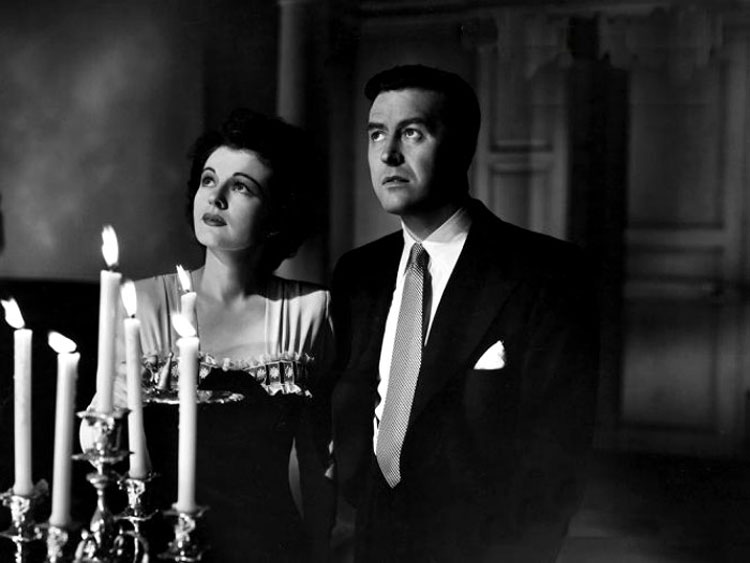
Adapted from the novel, Uneasy Freehold, by Dorothy Macardle, The Uninvited is Hollywood’s first attempt at a ‘serious’ ghost story. When siblings Roderick and Pamela Fitzgerald (Milland and Hussey) discover Windward House on the rugged Devon coast, they have no idea what they’re letting themselves in for when they purchase it from the house’s owner, Commander Beach (Crisp). Their dog won’t venture upstairs, the studio room is unnaturally cold, and a previous resident, Mary Meredith, fell to her death from the cliff at the end of the garden. Add to this some ghostly weeping in the pre-dawn hours, the mysterious relationship between Mary Meredith and a trained nurse, Miss Holloway (Skinner), an unfolding back story involving the Commander’s granddaughter Stella (Russell) – who may or may not be the key to all the strange occurrences – and you have the makings of one of the best scary movies ever made.
The movie starts strongly with an unnerving voiceover by Milland; it sets the scene perfectly for the events that follow. Once the Fitzgeralds have moved in the sense of foreboding is cleverly and effectively evoked, and the scenes that increase the tension are well-played and directed. The mystery elements are handled with aplomb, and the unfolding of the back story involving Mary Meredith, Stella and Miss Holloway is absorbing and intelligently revealed. The movie uses humour too to underpin the sense of unease, and in Milland’s practiced hands, it’s never over-played or becomes grating. As the movie plays out, the tension thickens until the truth of what really happened in the past is realised, and the showdown with the ghost of Windward House grips like a vise.
The Uninvited is a great movie, superbly and confidently directed by Lewis Allen, with an often chilling, evocative script by the playwright/novelist Dodie Smith (The Hundred and One Dalmatians) and Frank Partos. The roles are well-cast: Milland and Hussey are credible as brother and sister, while Russell excels as the focus of the haunting (sadly, Crisp was distant to her during filming: this was only her third movie and he felt she was too much the amateur). Skinner adds an exotic, otherworldly presence as the trained nurse who knows more than she’s telling, and there’s further comic relief from Barbara Everest as the Fitzgerald’s Irish housekeeper Lizzie Flynn. There’s striking, atmospheric cinematography courtesy of Charles Lang, and a playful yet dramatic score by Victor Young that includes the now-classic composition Stella by Starlight. But it’s art directors Hans Dreier and Ernst Fegté who deserve the most credit, for creating a haunted house that is open and airy and devoid of the usual dark corners and hidden passages that were the staple of previous haunted house movies. It’s this ‘ordinary house’ approach that helps ground the scares when they happen, and which makes for a refreshing change after all the old dark house movies of the 30’s and early 40’s.
Rating: 9/10 – a classic tale that is as fresh today as it was on first release, The Uninvited remains one of the best ghost stories ever committed to the big screen; recommended viewing.
Cast: Josh Duhamel, Dan Fogler, Christie Burson, Miracle Laurie
When two friends, Mitchell (Duhamel) and Carter (Fogler), take a road trip together and the truck they’re in breaks down, the stage is set for a tense battle of wills – first against each other, and then against the elements as they fight to survive being stranded in the desert.
Taking the basic premise that these two long-time friends are both failing in their lives and their ambitions, and are equally embittered, Scenic Route wastes no time in peeling back the layers of each character and showing them for the disillusioned, desperate people they are. Mitchell is trapped in a marriage he feels obliged to continue with, while Carter is homeless and failing to get his writing career off the ground. Both men are unable to break the chains they have wrapped around themselves. As they argue and fight over their respective failures – each summing up the other’s deficiencies – their arguments spiral out of control and become violent. To make matters worse, the stretch of road they’re on is miles from anywhere, and there’s almost no traffic.
On the whole, Scenic Route is a tense, involving movie that fares better than perhaps it should. Kyle Killen’s script is punctuated by the kind of smart one-liners that nobody in this kind of situation would come up with – the two men’s initial exchanges are needlessly verbose – and one or two plot developments (which I won’t spoil here) smack of convenience rather than organic advancement. What saves the day is the committed performances of Duhamel and Fogler. Duhamel gets an extreme makeover that looks odd at first but then really suits his character, while Fogler displays a depth and range that hasn’t been evident from his comic performances. This is a tough, physical movie (shot in Death Valley) and neither actor outshines the other, making this a movie about two men who begin as equals, struggle to maintain that equality and then who learn how to survive by fighting for each other.
Aside from the 1998 short Mass Transit, Kevin and Michael Goetz haven’t directed a movie before, and while this is their first feature, they keep things tightly focused on the truck and its immediate environs, placing an emphasis on keeping Mitchell and Carter in close relation to the vehicle. Even when they move away from the truck the frame remains obstinately restricted in its point of view. There are some long shots but these serve only to highlight how isolated and alone the two men are. The photography by Sean O’Dea emphasises the rugged natural beauty of the surroundings, while editor Kindra Marra ensures each scene is played out to maximum effect, including the extended coda that tries to take the movie into another territory altogether.
The movie does have its faults. Some, as mentioned above, are due to the script and hinge largely on the dialogue. Developments in the plot detract from the straightforward telling of the story – a flashback proves unnecessary and distracting – and the likelihood of the final outcome will always be in doubt. The two men also seem to get by without any food or water for over three days. How much these things will detract from a viewer’s enjoyment of the movie, though, will be down to the individual.
Rating: 7/10 – a modest suspenser/drama that plays well throughout and is bolstered by two above average performances; not as clever as it would like to be, perhaps, but still worth a look.
Cast: Rosemarie DeWitt, Ellen Page, Josh Pais, Allison Janney, Scoot McNairy, Ron Livingston, Tomo Nakayama
Shelton’s follow-up to Your Sister’s Sister is a disappointment in comparison, focusing on the problems of massage therapist Abby (DeWitt), her brother Paul (Pais) and his daughter Jenny (Page). Abby is afraid to commit to her current boyfriend Jesse (McNairy); her anxiety over this leads to a sudden aversion to skin, and to touching it. Conversely, her dentist brother finds that he may have “healing hands” and begins to explore this further with the help of Abby’s mentor Bronwyn (Janney). While all this is going on, Jenny struggles with her need to help her father at his practice and her desire to move on to college.
From the start this is a movie that lacks focus. The opening scene introduces the main characters, and while we realise that each has their own problem, the banality of those problems stop them from being interesting: Abby’s commitment issues, Paul’s insular view of the world and the people around him, Jenny’s need to seek new horizons, and Jesse’s lack of ambition – we’ve seen these issues a thousand times before. But where we might hope for a new take on all this, and for the movie to take us in directions we haven’t seen before, instead, Shelton’s script takes us on several unrewarding journeys that all end with pat and distinctly underwhelming resolutions. There’s also a major issue with the movie’s timeframe: Paul’s conversion to Reiki therapy obviously takes place over at least a matter of weeks, but in the meantime the other story lines remain held in stasis. When they do resume it’s as if only a day or two has passed.
The cast do well the lacklustre script, Pais in particular, who creates a quiet man-child entirely comfortable with stifling his daughter’s ambitions, while DeWitt and Page cope with roles that are clearly underwritten. Of the supporting cast, McNairy has the thankless role of confused boyfriend, while Livingston pops up in the background of a couple of scenes until he’s wheeled centre stage for a sequence near the end that feels as contrived as it looks.
Shelton directs ably enough but there’s too little drama to really hold the interest throughout. There’s not enough real angst to get your teeth into. The film is also drab to look at, its Seattle setting doing nothing to enhance the mood (though it does match the characters’ unhappiness). That said, DoP Benjamin Kasulke frames each scene well and makes the often static shots more interesting than they have a right to be. The film moves at a deliberately slow pace, and while that’s not necessarily a bad thing, here it just adds to the disappointment at having to spend time with a bunch of humourless malcontents.
Hopefully, Touchy Feely is a blip in Shelton’s directorial career, and her next feature, Laggies, will show a return to form. It’s a good time for female directors and the more we see from them, the better.
Rating: 5/10 – a soggy, undercooked mess of a movie saved by its cast and a just-about-right running time; for Lynn Shelton completists only.
It began as a website that I set up back in January 2013. The idea was to provide reviews of the kinds of movies you don’t usually see reviews of, such as the Air Bud series, and lots of low-budget indie/horror/sci-fi/drama/comedy movies. Watching the movies was often fun, but too much of a “good” thing (as they say) lead to a kind of critical overload, and I began to want to expand into broader film territories: the big-budget Hollywood movies we all flock to see at the cinema, as well as foreign movies and movies that are all pretty good but often get a 7/10 or 3/5 review. I also had a problem with the time I needed to maintain the site and post the reviews – often I might spend 90 minutes watching a film, only to find I needed the same amount of time – or longer – to post the review. As I work full-time and have a shed-load of other activities and responsibilities to deal with, something had to give…
And so, here we have thedullwoodexperiment reincarnated as a blog. There’ll be more reviews covering a wider selection of movies, and hopefully, posts that will comment on the past, present and future of cinema. My hope is that people will find thedullwoodexperiment an enjoyable place to visit, and that the reviews will trigger a degree of debate.








 thedullwoodexperiment