• 10 Reasons to Remember…
  • A Brief Word About…
  • About
  • For One Week Only
  • Happy Birthday
  • Monthly Roundup
  • Old-Time Crime
  • Other Posts
  • Poster of the Week
  • Question of the Week
  • Reviews
  • Trailers

thedullwoodexperiment

~ Viewing movies in a different light

thedullwoodexperiment

Tag Archives: Abuse

Minding the Gap (2018)

19 Tuesday Feb 2019

Posted by dullwood68 in Movies

≈ Leave a comment

Tags

Abuse, Best friends, Bing Liu, Documentary, Illinois, Keire Johnson, Manhood, Review, Rockford, Skateboarding, Zack Mulligan
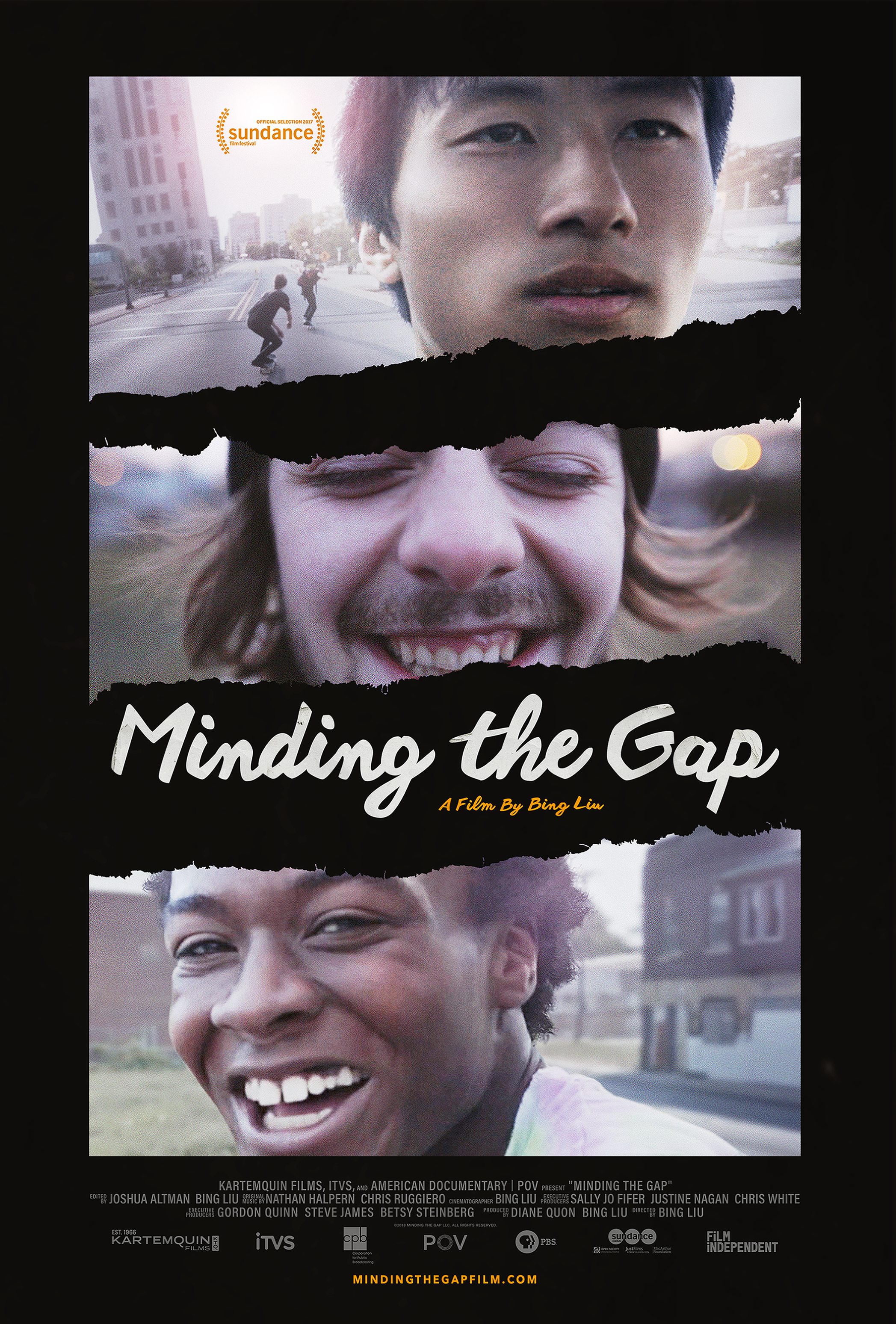
D: Bing Liu / 93m

With: Zack Mulligan, Keire Johnson, Bing Liu, Nina Bowgren, Kent Abernathy, Mengyue Bolen, Roberta Moore

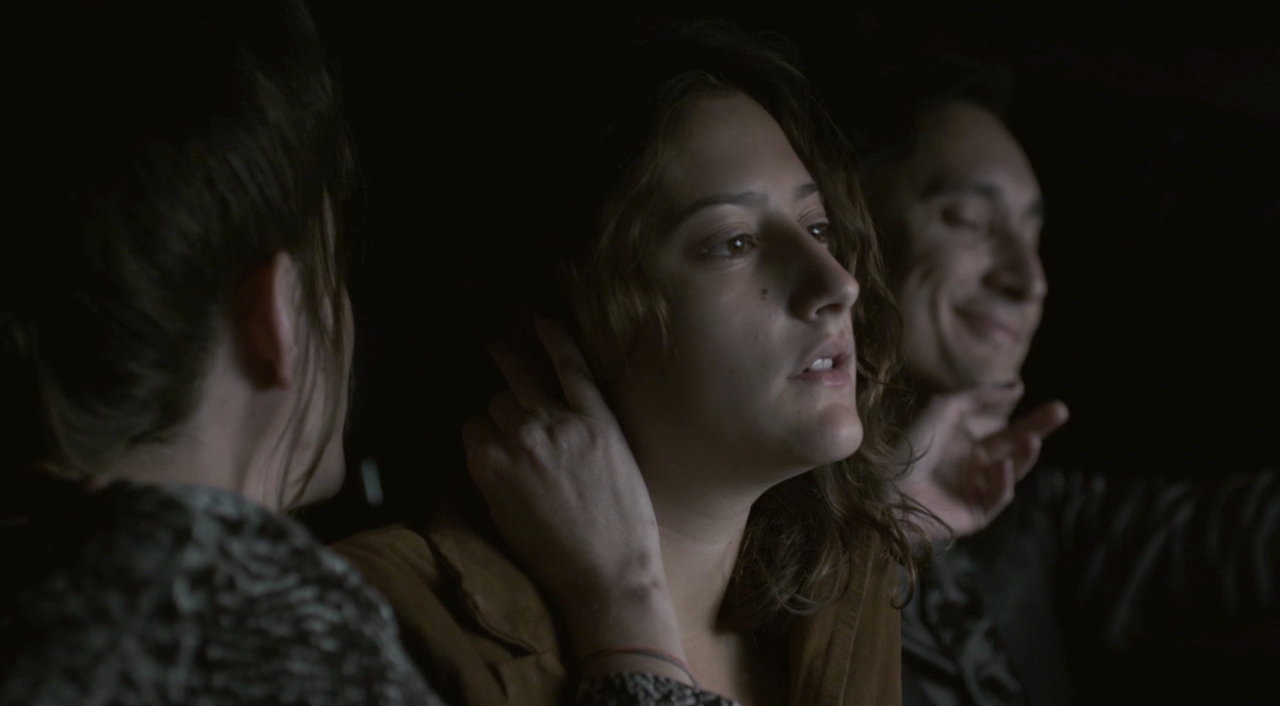
in the city of Rockford, Illinois, three friends have grown up with a love of skateboarding that has kept them united in the face of personal tragedies, mutual family dysfunctions, and the trials of becoming adults along with all the expectations that come with that. Zack works as a roofer. He drinks a lot, spends as much time skateboarding as he can, and work aside, shows no sign of adopting any other responsibilities. That all changes when his girlfriend, Nina, becomes pregnant and they have a baby, Elliot. Keire is quieter, still living with his mother, Roberta, while trying to decide what he’s going to do with his life. He finds a job as a dish washer in a restaurant, but only seems truly happy when he’s skateboarding. Bing is a would-be movie maker, always filming his friends, and as time goes on, he begins to explore how they all feel about becoming “men”, while also examining what it means in today’s terms. Over the passage of time, Bing also learns that all three of them have been affected by events in their childhood, events that it appears none of them have fully, or even partly, dealt with…
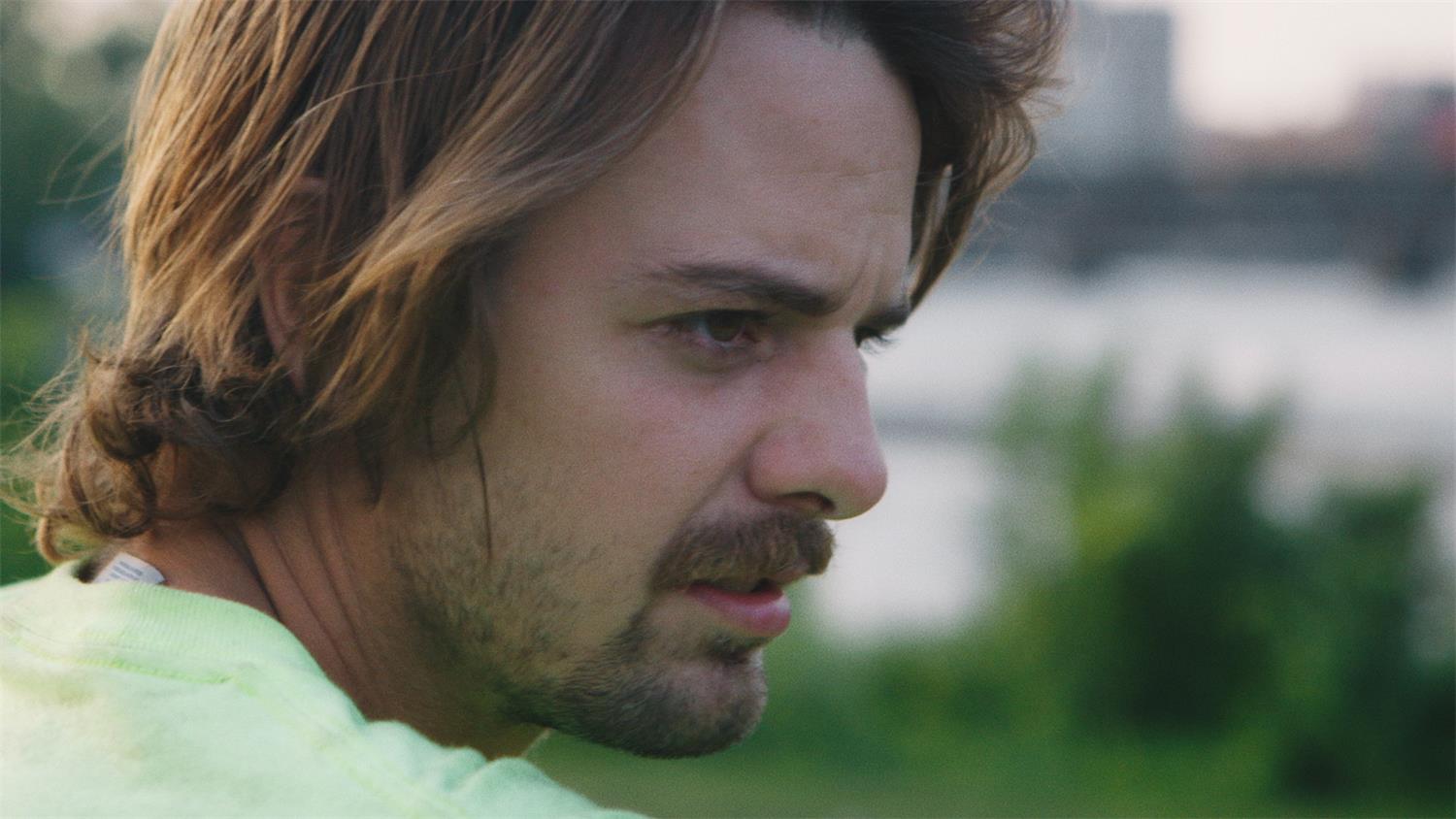
If you’re thinking, “gee, skateboard movies seem to be all the rage these days”, what with this and Skate Kitchen and Mid90s (both 2018, and both worth watching) out there, then you’d only be half right, as the beauty of Bing Liu’s impressive documentary debut is that skateboarding is just the launching point for an extraordinarily perceptive, and moving, examination of issues such as domestic abuse, casual racism, and social and economic deprivation. Made over a period of twelve years, Liu captures those painful moments when he and his friends come face to face with the realisation that they have to step up and become the men they’re expected to be, but without any male guidance in each of their lives to help them. As the movie unfolds, Liu reveals that each of them have had to endure emotional and physical abuse as children, and all from their fathers or stepfathers. This has left each of them with issues that they are struggling to overcome, and Liu shows how well or how badly they cope with those issues, from the deterioration of Zack and Nina’s relationship and their eventual separation, to how the absence of Keire’s father from his life (he died when he was young) has left a void in Keire’s life, to how Bing’s mother, Mengyue, was (possibly) oblivious to the physical abuse that Bing suffered at the hands of her second husband.

Thanks to the closeness and the bonds shared by the three friends, Liu is able to get a number of candid admissions, and confessions, from Zack and Keire that might not have been possible if the movie had been made by an “outsider”. From these admissions and confessions, Liu is able to paint a subtly devastating portrait of compromised and misunderstood notions of manhood, as well as the social and familial backdrop that promotes these notions. As he delves deeper and deeper into this, he reveals how domestic abuse is something that one of his friends feels can be justified, while the other views the discipline he received when he was young in this offhand manner: “Well, they call it child abuse now, but…” (nothing further is said, there’s just a shrug). Violence is another recurring theme in the movie, and Liu expertly ties all these strands together to make a movie that is astonishing for its awareness of the depth of the problems it’s exploring, and the heartfelt sincerity with which the camera stays focused on the bad moments just as much as the good ones. For a first movie, this is powerful, enlightening, and disturbing at times, but always astonishing for the way in which Liu dissects such complex topics with precision and grace, and recognises that there aren’t any easy answers to the questions he raises.

Rating: 9/10 – there are a slew of tremendously good documentaries out there right now – Free Solo, Won’t You Be My Neighbor?, Three Identical Strangers (all 2018) to name but a few – but Minding the Gap is a seriously great documentary that stands in a league of its own; insightful and intimate on so many levels, and holding up a less than flattering mirror to the tattered social fabric of the American working class, Liu has crafted a moving and substantial movie that continues to resonate long after it’s over.

Share this:

  • Click to share on X (Opens in new window) X
  • Click to share on Facebook (Opens in new window) Facebook
  • More
  • Click to print (Opens in new window) Print
  • Click to email a link to a friend (Opens in new window) Email
Like Loading...

Bastards (2013)

01 Friday Jun 2018

Posted by dullwood68 in Movies

≈ Leave a comment

Tags

Abuse, Chiara Mastroianni, Claire Denis, Drama, France, Mystery, Review, Suicide, Thriller, Vincent Lindon

Original title: Les salauds

D: Claire Denis / 100m

Cast: Vincent Lindon, Chiara Mastroianni, Julie Bataille, Michel Subor, Lola Créton, Alex Descas, Grégoire Colin, Florence Loiret Caille, Christophe Miossec, Yann Antoine Bizette, Laurent Grévill

Following the death by suicide of his brother-in-law Jacques (Grévill), supertanker captain Marco Silvestri (Lindon) returns home at the behest of his sister, Sandra (Bataille). Sandra is convinced Jacques killed himself because of his involvement with successful businessman Edouard Laporte (Subor), though she has no proof. Marco moves into the apartment above Laporte’s, and begins a relationship with his mistress, Raphaëlle (Mastroianni); she lives there with their son, Joseph (Bizette). While Marco investigates Jacques’ death, he also discovers that his teenage niece, Justine (Créton), is in hospital having tried to take her life. He also learns that she has been sexually abused, but she won’t reveal who by. As his relationship with Raphaëlle becomes more intense, evidence seems to support the idea that Laporte is the person who assaulted Justine. Proof of what happened comes in the form of video footage, but it complicates things for Marco, and matters are further exacerbated when Justine runs away from the hospital where she’s convalescing, and Laporte tells Raphaëlle that Joseph is going to live with him…

A dark and moody thriller that, in Denis’s customary style, plays with notions of time and space and its characters physical connections to both, Bastards is a deliberately downbeat movie that is like taking a bath in multiple levels of corruption and moral culpability. Marco is a nominal hero, the nearest we get to a crusader looking for the truth, but even he’s not above behaving selfishly or violently in order to get the answers he’s looking for. He’s still the most sympathetic character in the movie – and that includes Justine, who is lost to both her family and the audience through her actions – but Denis, along with co-screenwriter Jean-Pol Fargeau, ensures Marco isn’t above reproach for his actions, even though he’s doing his best to unravel the mystery of Jacques’s death, and Justine’s assault. He’s a good man with good intentions, but his actions are often as unsavoury as his nemeses. Lindon plays him with a taciturn, no-nonsense approach that hides deep-rooted feelings of inadequacy and failure, the self-imposed distance between him and his family causing guilt to be the driving force behind his actions. Lindon is a strong masculine presence, powerful and stocky in a blunt, uncompromising way, and his casting is one of Denis’s best decisions.

There’s good support from Mastroianni as the compromised Raphaëlle, and though Subor is perhaps a little too reptilian for Laporte, he’s still an appropriately chilling figure (a moment where he takes Joseph’s hand in his is uncomfortable for the implication that goes with it). Denis has crafted an adroit though straightforward thriller that teases out its characters’ secrets and motivations in revelatory moments that are impactful dramatically if not quite promoting an emotional response in the viewer. Combined with the way in which the movie is assembled – Annette Dutertre’s editing, overseen by Denis, allows for scenes that feel disjointed and at times, out of place – this is as much an intellectual movie making exercise as it is a polished if gloomy thriller. It’s still a movie to admire in terms of its construction and the way it unfolds, but the lack of sympathetic characters makes it difficult to engage with, or care about the outcome, which is meant to be shocking, both for what is revealed, and for what it means overall. That being the case, the movie falls short of reaching its full potential, and remains a triumph of style over content.

Rating: 7/10 – not one of Denis’s best movies, but still intriguing to watch nevertheless, Bastards has a distinctly grim atmosphere to it, and a nihilistic streak that adds to its intensity; not entirely successful, but even a below par Denis movie is better than ones made by some movie makers operating at the top of their game.

Share this:

  • Click to share on X (Opens in new window) X
  • Click to share on Facebook (Opens in new window) Facebook
  • More
  • Click to print (Opens in new window) Print
  • Click to email a link to a friend (Opens in new window) Email
Like Loading...

The Witch Who Came from the Sea (1976)

27 Saturday Jan 2018

Posted by dullwood68 in Movies

≈ Leave a comment

Tags

Abuse, Drama, Lonny Chapman, Matt Cimber, Millie Perkins, Murder, Psychological thriller, Review, Robert Thom, Vanessa Brown, Video nasty

D: Matt Cimber / 87m

Cast: Millie Perkins, Lonny Chapman, Vanessa Brown, Peggy Feury, Jean Pierre Camps, Mark Livingston, Rick Jason, Stafford Morgan, Richard Kennedy, George ‘Buck’ Flower, Roberta Collins

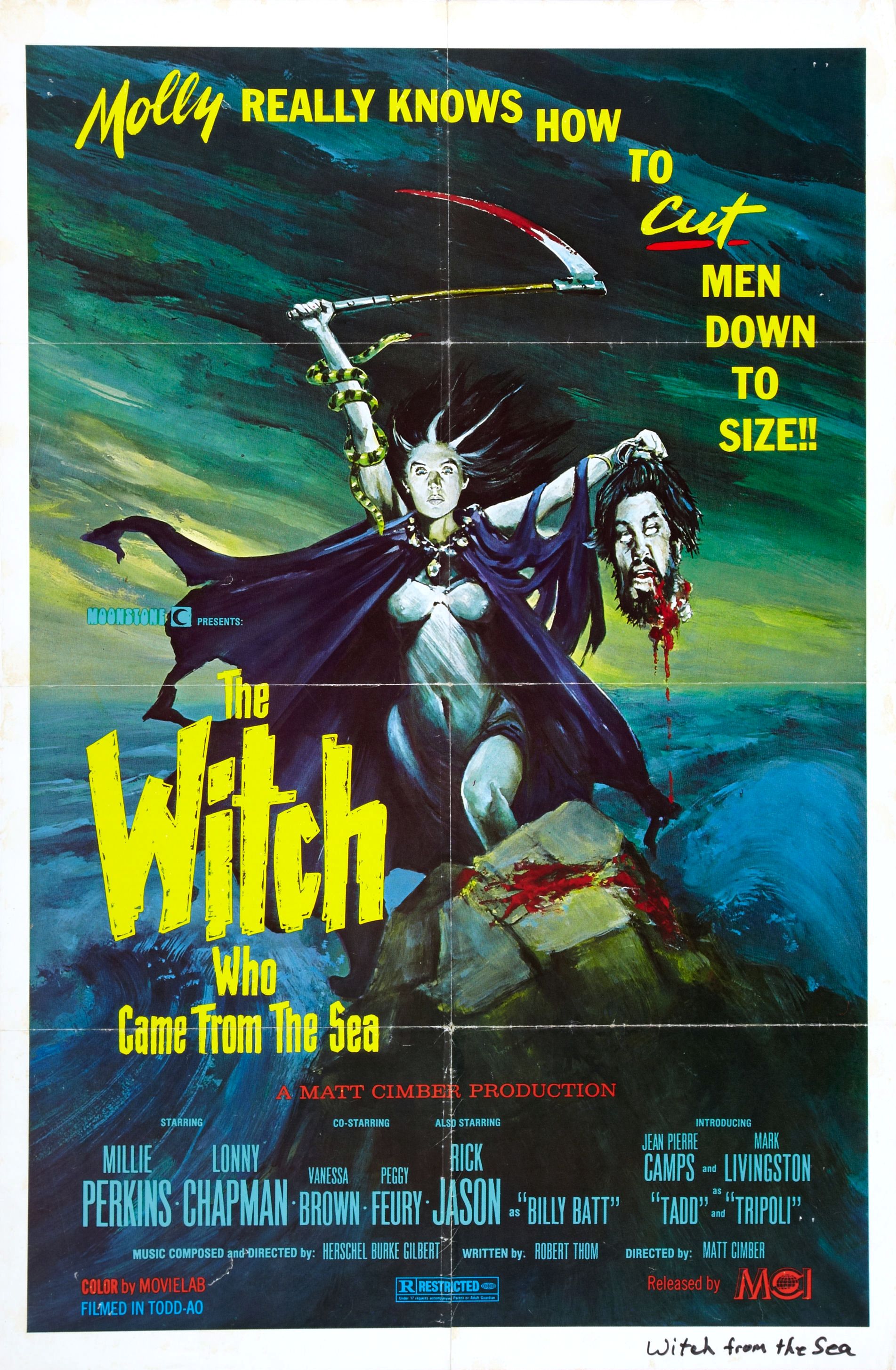
As a child, Molly (Perkins) was sexually abused by her father. As an adult, Molly works in a bar called the Boathouse, and is in a relationship with the owner, Long John (Chapman). She has a sister, Cathy (Brown), and two young nephews she adores, Tadd (Camps) and Triploi (Livingston). She regales her nephews with tales of their grandfather and what a kind, loving man he was, a captain of a ship who was lost at sea when she was much younger. The two boys believe her stories completely, but these fantasies are indicative of the struggle that Molly is having in dealing with the psychological trauma of her childhood. She experiences a fever dream in which she kills two famous football players, but when the two men are found dead, Molly faces an even greater struggle to stop herself from falling victim to the murderous rages that come over her whenever she’s around men who remind her of her father, or who project a certain masculine image through television adverts.

A movie that was once regarded in the UK as a “video nasty”, The Witch Who Came from the Sea is an under-rated psychological thriller (with horror overtones) that charts one woman’s descent into madness in a way that is both haunting and disturbing. The movie is directed with great skill by Cimber, and there’s a terrific central performance from Perkins, but the key player here is sceenwriter Robert Thom. During the Seventies, Thom wrote the screenplays for Bloody Mama (1970), Death Race 2000 (1975), this, and several others. All were low budget movies that like this one, thrived on Thom’s ability to exceed audience expectations thanks to his unerring ability to ground even the most extreme incidents, and his sharp ear for dialogue. Thom started out writing for the theatre, and there are moments where the movie feels like it’s a play that has been adapted for the screen. This gives the movie a greater sense of depth, and a greater sense of tragedy as events unfold. As Molly drifts between reality and fantasy, and becomes increasingly unable to differentiate between the two, Thom’s layered screenplay, Perkins’ bold portrayal, and Cimber’s restrained yet visceral direction, combine to create a movie that is hard to look away from – but in a good way.

For an actress who has never been entirely comfortable with the trappings of being an actress, Perkins gives a formdiable performance, investing Molly with a forlorn, anxious appearance that affords glimpses of self-awareness in amongst her mostly irrational behaviour. She’s also able to make Molly’s dialogue sound at times like an interior monologue, an effect that further illustrates the emotional and psychological dysfunction she’s experiencing. Perkins is provided with fine support from the likes of Chapman, Brown and Feury (as another Boathouse waitress who provides Molly with “pharmaceutical assistance”), and Cimber ensures that even the smallest of roles fits in neatly with the overall scenario. The visual look of the movie is quite subdued, with mostly grey and brown tones used throughout, but the cinematography – by Ken Gibb and Dean Cundey – is a good match for the dark emotional undercurrents that pepper the screenplay. Also effective is the decision to distort the audio during those sequences when Molly can’t tell if she’s fantasising about killing someone, or is actually doing it. It’s all done very cleverly, and takes the movie far from the exploitation trappings that viewers might be expecting.

Rating: 8/10 – far better than it perhaps has any right to be on paper, The Witch Who Came from the Sea is a first-rate psychological thriller that is unsettling, and oppressive, for much of its running time; Perkins gives an exceptional performance, and the whole tortured narrative feels disarmingly organic, with any missteps serving only to highlight just how good this movie is, and how well it’s been put together.

Share this:

  • Click to share on X (Opens in new window) X
  • Click to share on Facebook (Opens in new window) Facebook
  • More
  • Click to print (Opens in new window) Print
  • Click to email a link to a friend (Opens in new window) Email
Like Loading...

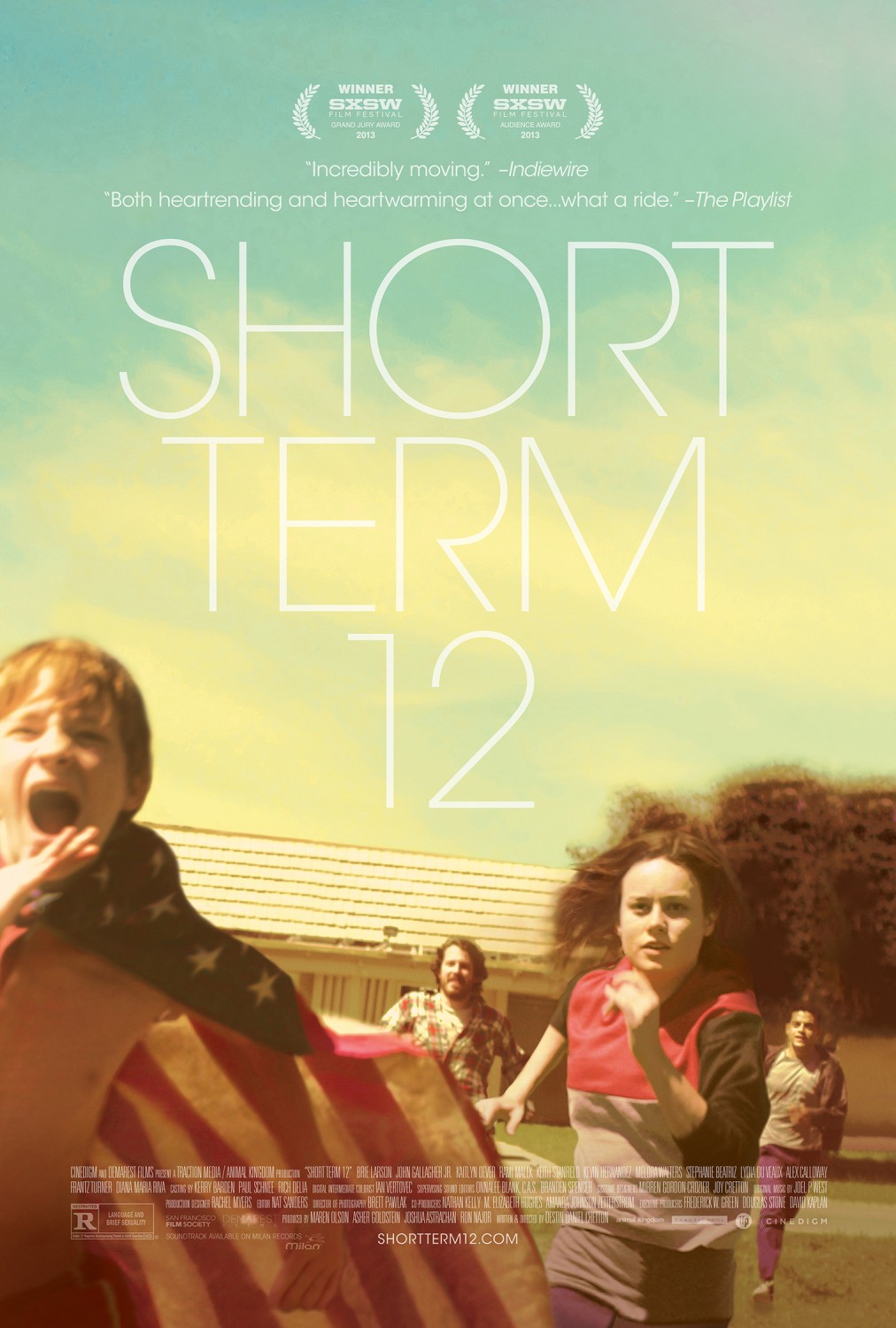
Short Term 12 (2013)

28 Friday Jul 2017

Posted by dullwood68 in Movies

≈ Leave a comment

Tags

Abuse, Brie Larson, Care home, Catch Up movie, Destin Daniel Cretton, Drama, John Gallagher Jr, Kaitlyn Dever, Rami Malek, Review

D: Destin Daniel Cretton / 97m

Cast: Brie Larson, John Gallagher Jr, Kaitlyn Dever, Rami Malek, Lakeith Stanfield, Kevin Balmore (as Kevin Hernandez), Stephanie Beatriz, Frantz Turner, Alex Calloway

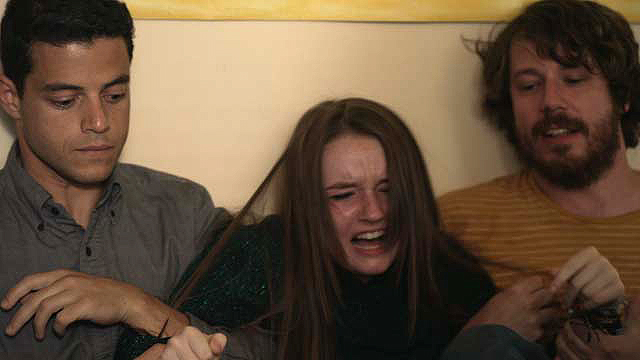
Some movies catch you by surprise, literally as you’re watching them. Sometimes it’s like a switch going on inside your head, a moment when everything suddenly falls into place, or is lit up like the night sky at a fireworks party. Everything about what you’re seeing and hearing now makes perfect sense, and everything continues in that same vein, rewarding you more and more and more. Short Term 12 is one of those movies, a small-scale, low budget feature expanded by its writer/director, Destin Daniel Cretton, from his 2009 short movie of the same name. It begins simply enough at a group home for troubled teenagers, with new member of staff, Nate (Malek), being regaled on his first day at work with a story that involves a runaway teen, a support worker, and an unfortunate bowel problem. It’s a funny story, well told by the support worker himself, Mason (Gallagher Jr), but interrupted by an attempt at escaping by one of the children.

As the day progresses we’re introduced to the home’s facilitator, Jack (Turner), who advises another of the support workers, Grace (Larson) that a new girl, Jayden (Dever), will be coming to stay for a while. Grace already has plenty of children to look after at the home, from nearly eighteen year old and ready to leave Marcus (Stanfield), to the would-be escapee, Sammy (Calloway). Away from the home she and Mason are in a relationship, but Grace has recently discovered that she’s pregnant, something she hasn’t told him or anyone else. As she deals with that issue, Jayden’s arrival and her background cause Grace to assess her own past, something that she hasn’t done for some time (she and Jayden share similarities in behaviour and the emotional trauma they’ve experienced). She and Jayden start to get to know each other, but it’s not all plain sailing.

Grace eventually tells Mason that she’s pregnant, and though he’s initially shocked, he’s pleased as well, and at a party to honour Mason’s foster parents he asks Grace to marry him. She accepts, but the next day her happiness is deflated by news relating to her father. The news upsets her, but not as much as the news that the previous night, Jayden was collected by her father and won’t be returning. She berates her boss and nearly loses her job over it. Things become even worse when one of the children tries to commit suicide. With everything piling on top of her, Grace becomes withdrawn and uncommunicative with Mason, and tells him she can’t marry him or have his child. But hope comes in an unexpected form, as Grace makes one last effort to help Jayden, and by extension, herself as well.

A movie about the staff and children at a group care home that could have turned out to be mawkish, unconvincing, and trite, instead is sincere, moving, and pleasantly unsentimental. Based on writer/director Cretton’s own experiences working at a group facility for teenagers for two years, Short Term 12 (the name of the home) is a marvel of concise, effective storytelling, restrained yet emotive direction, and features a clutch of heartfelt, honest performances. It’s a movie that avoids the cliché trap with ease, and never once talks down to its audience or undermines its characters by making their issues and problems stereotypical or sensational. From Sammy’s borderline autism to the abuse Jayden is subject to, each child is given a background and a history that informs their behaviour and neutralises any notion that their actions aren’t credible. Cretton found most of the children through open casting calls (Stansfield is the only returnee from the 2009 version), and it’s a tribute to the casting team of Kerry Barden, Rich Delia and Paul Schnee that they were able to find so many children with little or no acting experience who were able to portray these characters in such a realistic manner.

But ultimately, and with no disrespect to Gallagher Jr or Dever, who both put in exemplary work, this is Larson’s movie, pure and simple. She is simply magnificent in her first leading role, imbuing Grace with a caring, resilient nature that’s slowly eroded by the overwhelming feelings that she tries so hard to avoid or ignore, feelings that are brought to the fore by becoming pregnant and meeting Jayden. Larson offers a performance that is never less than truthful, and which is fearless in presenting the emotional devastation that Grace experiences, and the pain that keeps her from enjoying any happiness beyond helping the children at the home. And as Larson explores the depths of Grace’s increasingly dissociative behaviour, she also ensures that the lifeline offered to her by helping Jayden isn’t taken up for purely selfish reasons but because Grace genuinely needs and wants to help others like her. Just the various degrees of subtlety that Larson employs is impressive enough, but she also transforms herself physically, turning in on herself as things get worse for Grace and her survivor’s guilt begins to gnaw at her. She’s aided by Cretton’s decision to frame her in close up for much of the movie, so that we get to see in detail the effect everything is having on her.

Making only his second feature, Cretton shows an assurance and a confidence in the material that some directors who’ve been making movies for far longer never achieve. In conjunction with DoP Brett Pawlak, Cretton uses a hand-held camera to tremendous effect, following his characters around as they peer into rooms and travel down hallways and gather together at break times to shoot the breeze and reestablish some sense of normalcy (if that’s at all possible) in the face of days where they’re run ragged by the demands of both the chidren and the system they’re stuck with. Cretton is clever enough not to criticise the system and its failings directly, either in relation to the staff or the children, but he does throw in some well aimed barbs that hit home with stunning accuracy. Also, he takes the issue of parental abuse and makes sure that there is no attempt to understand or condone such abuse, or to put it into a context that might offer an excuse for it. There are broader issues here that could have been addressed, but Cretton leaves them be in order to concentrate on the terrible trials endured on a daily basis by a still traumatised young woman and a devalued teenager. And it’s the best decision he could have made by far.

Rating: 8/10 – a small miracle of a movie that stumbles only once or twice in its search for emotional and social verisimilitude, Short Term 12 is impressive in a restrained, deliberate way, but it’s also one of the most emotionally honest movies seen in recent years; with an incredible performance by Larson, and the kind of intuitive screenplay that only comes along once in a while, this is a dazzlingly simple yet powerful movie that lingers in the mind long after you’ve seen it. (26/31)

Share this:

  • Click to share on X (Opens in new window) X
  • Click to share on Facebook (Opens in new window) Facebook
  • More
  • Click to print (Opens in new window) Print
  • Click to email a link to a friend (Opens in new window) Email
Like Loading...

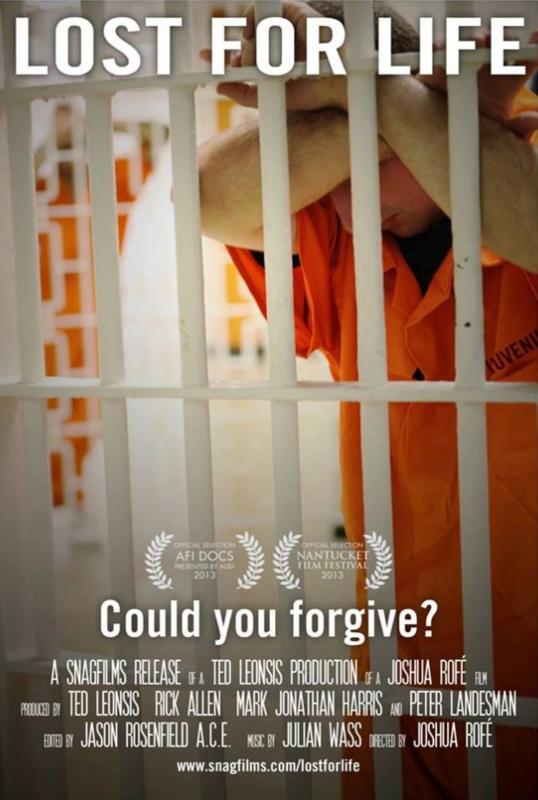
Lost for Life (2013) – Another Look

25 Sunday Oct 2015

Posted by dullwood68 in Movies

≈ 25 Comments

Tags

Abuse, Brian Lee Draper, Documentary, Jacob Ind, Joshua Rofé, Josiah Ivy, Life sentences, Murder, Review, Sean Taylor, Torey Adamczik, Update

Lost for Life

On 7 August 2014 I posted a review of the documentary, Lost for Life. It was a movie that I’d discovered by accident, but it looked interesting, and the subject matter – a look at five teen killers and whether they should be forgiven for their homicidal actions – was certainly compelling. I watched the movie and found it both horrific and uplifting in equal measure.

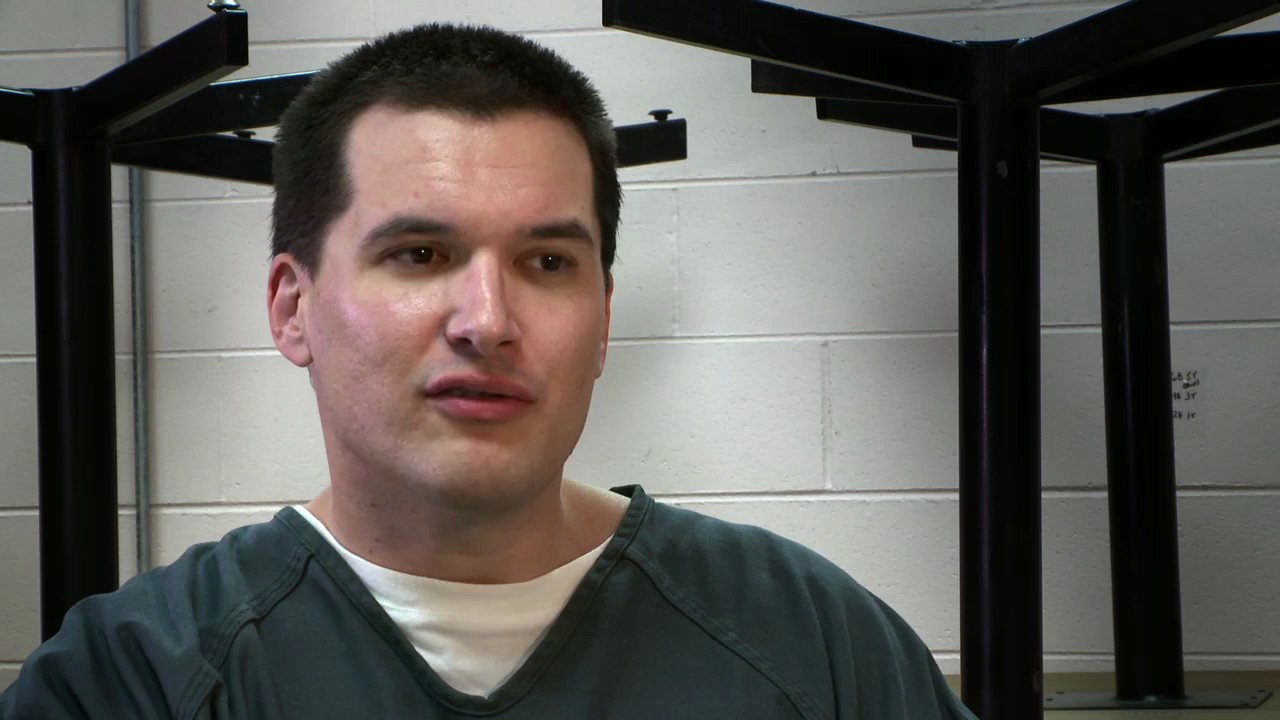
Over time, Lost for Life has become thedullwoodexperiment‘s most viewed post. It’s also the post I’ve had the most feedback about. A lot of that feedback has concerned Jacob Ind (see picture below), whose story makes up the second part of the movie. Along with his brother Charles, Jacob was regularly abused by his mother and stepfather, both physically and emotionally, and he had nursed ideas of killing them for two or three years before they were murdered. His defenders state that his actions were the result of the abuse he’d suffered, but what helps to muddy the waters for anyone paying even the slightest attention to Jacob’s case, is his decision to persuade a classmate, Gabrial Adams to kill his parents for him (and for $2,000 Jacob didn’t have). A loner, Adams botched the job, and Jacob took over from him, successfully shooting and killing Pamela and Kermode Jordan.

In my review, I said that there was “something not quite right about his responses and the moments when he closes his eyes – which happen quite a lot – it’s as if he’s reliving the memories of killing his mother and stepfather”. Having watched the movie again, I still have that same feeling, that Jacob is so divorced from the concepts of personal responsibility and guilt that it’s all a puzzle to him – and one he has no interest in trying to decipher. Looking further into all the surrounding arguments I found a quote made by Jacob after the killings: “I thought that when they were gone, my whole world was going to be better. I thought all the weight was going to be off my shoulders, all the misery would be gone. But it wasn’t, and I said, ‘Man, I screwed up.'” Reading this, it’s not hard to think that Jacob’s only regret is that he didn’t get away with it.

Jacob Ind

The person I most felt sorry for was Josiah Ivy (see picture below), an abused teenager whose level of disconnection from those around him prompted him to kill two strangers “just to see what it felt like”. Josiah suffered abuse as a child, but where Jacob Ind looks unfazed and unconcerned by his crime, Josiah looks adrift in his own mind, a victim of mental ill health who’ll never quite manage to acclimatise to society (even if by some miracle he’s ever allowed out). Josiah, like Jacob and co-murderers Brian Lee Draper and Torey Adamczik, has an awareness of the magnitude of what he’s done, but it seems so overwhelming to him he doesn’t know how to properly express himself.

Josiah Ivy

Of course, the question of individual responsibility is one the movie tackles throughout, and whether or not the teen killers in question were cognisant of what they were doing at the time. Some commentators argue that teenage minds aren’t as sharply defined in their thinking as an adult’s, but to me that’s a specious argument; everyone learns from an early age that it’s wrong to kill someone, but it’s an awareness that means nothing when placed up against a greater driver: that person’s level of self-interest. Aside from the final story involving ex-gang member Sean Taylor, whose random firing of a gun led to the death of a rival gang member, these are all stories of teens who deliberately set out to kill someone: random strangers, a friend, family members. You could argue that the victims were “convenient”, such was their murderers’ feelings about them at the time, and such was the brutality levelled at them. The question isn’t whether or not we should feel sorry for them – clearly the answer is No – nor is it whether they should be given a second chance as adults. The real question is how can we stop these types of killings from happening again.

Murder in any form is abhorrent, but what Joshua Rofé’s thought-provoking movie also does is to make the viewer doubt whether or not murder is ever so clear-cut. By focusing on three such horrific cases – Taylor’s story acts as a necessary rebuttal to the idea that rehabilitation is a waste of time – the movie broaches the possibility that murder can be understood and forgiven, even murders as heinous as the ones recorded here. This is true, but it’s down to the individual to decide, and is a brave choice to make with such an emotive issue. This is why the participation of Jennifer Bishop-Jenkins and Sharletta Evans is so important: without them (and Taylor) the movie would be unremittingly bleak, and wouldn’t fairly reflect the ways in which the human spirit can overcome the darkness that often blights people’s lives (it’s all about personal empowerment, but that’s a whole different movie).

At this moment in time, Draper, Adamczik, Ind and Ivy are all still in prison, and all still living out their very steep sentences. Ind’s accomplice, Gabrial Adams committed suicide in prison in March 2014, while the families of the victims still struggle to come to terms with what happened to their loved ones, and why. But again, the why is the easy bit: it’s because Draper, Adamczik, Ind and Ivy all wanted to do what they did. For the underlying reasons that drove them to murder, well, those are things we’re never likely to know for definite – but it would be fascinating if we did.

Brian Lee Draper

Share this:

  • Click to share on X (Opens in new window) X
  • Click to share on Facebook (Opens in new window) Facebook
  • More
  • Click to print (Opens in new window) Print
  • Click to email a link to a friend (Opens in new window) Email
Like Loading...

90 Minutes (2012)

04 Saturday Apr 2015

Posted by dullwood68 in Movies

≈ Leave a comment

Tags

Abuse, Aksel Hennie, Bjørn Floberg, Drama, Eva Sørhaug, Mads Ousdal, Marital problems, Norway, Pia Tjelta, Relationships, Review

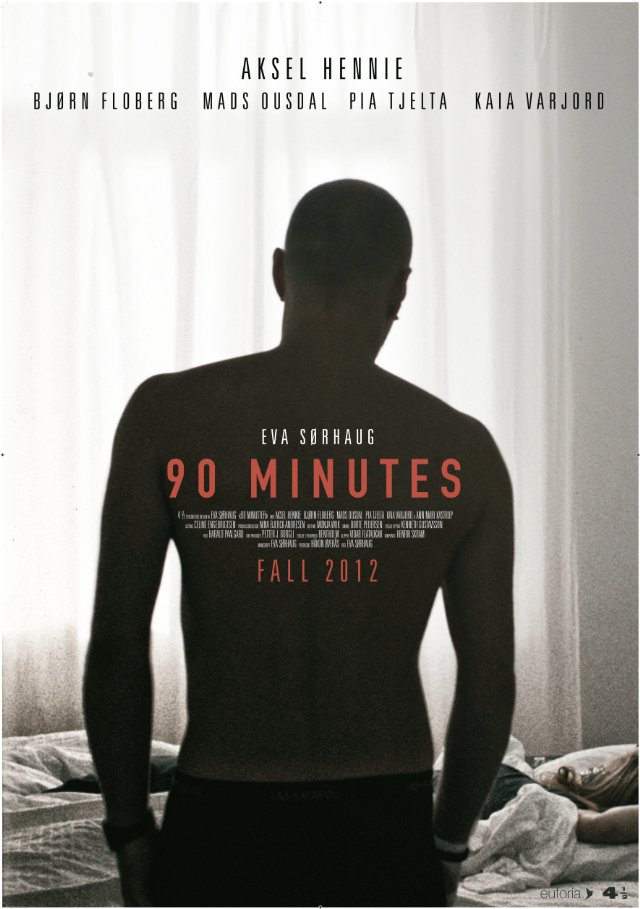
90 Minutes

Original title: 90 minutter

D: Eva Sørhaug / 89m

Cast: Bjørn Floberg, Mads Ousdal, Pia Tjelta, Aksel Hennie, Annmari Kastrup, Kaia Varjord

Johan (Floberg) has reached a point in his life where he’s made a profound decision as to his immediate future. He’s determined to put several aspects of his life behind him, such as the room he rents and a subscription he’s taken out. As he makes these changes, he’s goes about them with a sense of finality and sadness. Fred (Ousdal) is a cop who’s marriage to Elin (Tjelta) has ended in divorce. They have two young children, both girls, and Fred’s presence in their home while Elin plans a party is being tolerated by his ex-wife. When she takes a call from someone who is coming to the party and is currently playing golf, Fred assumes the man is the new love in her life, something that he isn’t happy about. Trond (Hennie) is a young man who appears to be living alone in a sparsely furnished apartment. He listens to the radio and tapes up his right hand but otherwise seems unmotivated. He goes into his bedroom, where he strips and has sex with a woman (Varjord) who is gagged and tied to the bed. Also in the room is a baby, which starts crying.

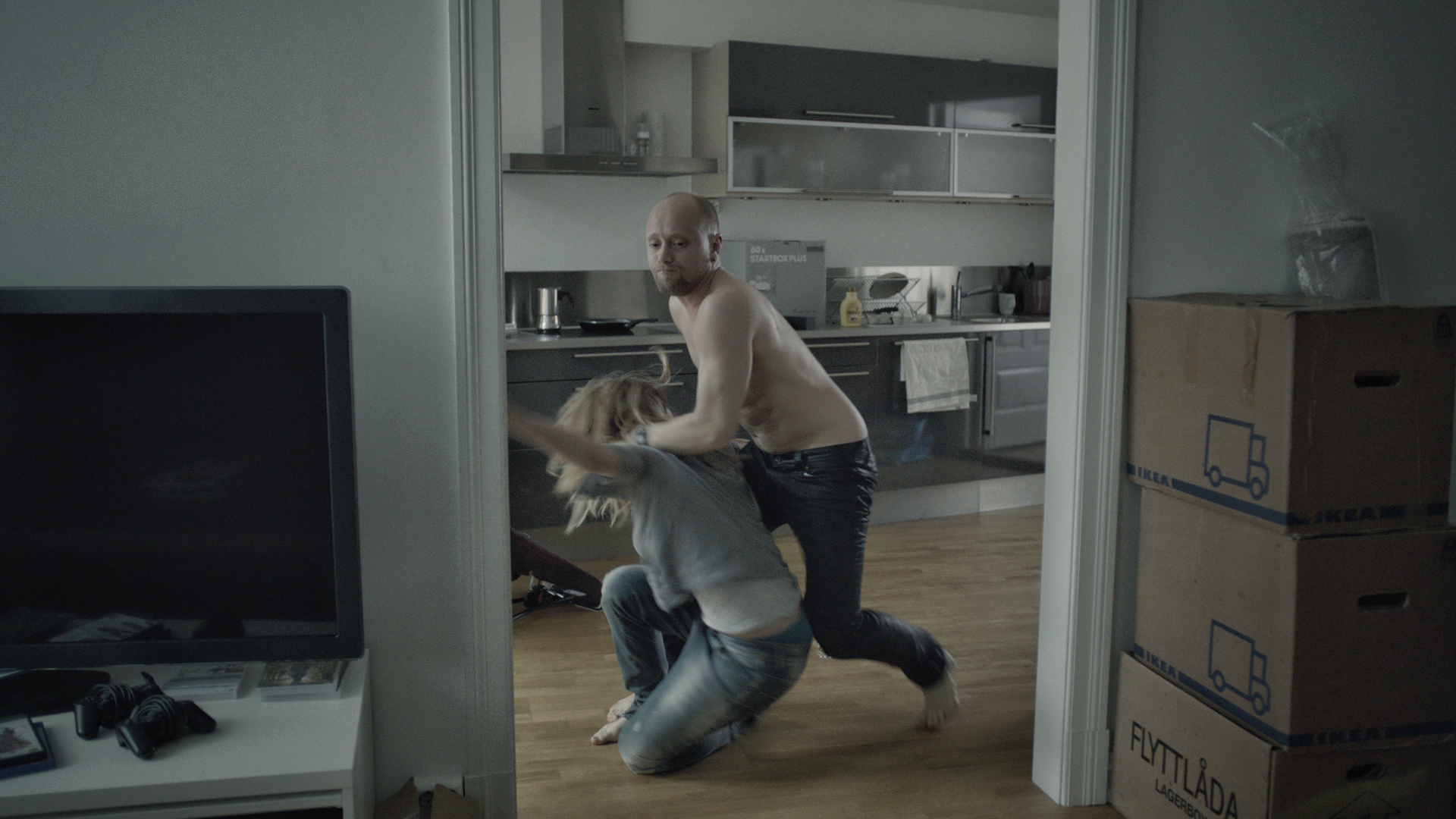
Johan arrives back home from a trip out. His wife, Hanna (Kastrup), is there. He begins to prepare dinner for them while Hanna has a shower. He is methodical and precise and makes sure that everything is just so. Fred begins to antagonise Elin by refusing to leave when she asks him to, and by complaining that she never seemed interested in golf before. He also finds excuses to remain there that involve either their children, or a neighbour. Elin loses her patience and insists that he leave. He eventually does so, and drives off angrily. Trond releases the woman tied to his bed to see to the baby. She is his partner, Karianne, and the baby is theirs. With the baby seen to, she begins to cook for them both, but when she looks out of the window, Trond becomes angry and attacks her. He drags her back into the bedroom and reties her to the bed. He snorts some cocaine, then arranges to meet a friend in order to get some more.

During their dinner, Johan prepares some gravy that he lets his wife try first. She becomes woozy and soon passes out. Fred drives around until he ends up back at his old home. He gets out of his car and goes inside to confront his family. Trond is visited by his friend and another man, who assault him and take his TV as repayment for his drug debts. Angry at being humiliated he decides to take it out on Karianne. He forces her to have sex and in the process nearly suffocates her, but stops just short of doing so. All three men find themselves on the verge of having their lives changed forever.

90 Minutes - scene

Only the second feature by talented director Sørhaug after Cold Lunch (2008), 90 Minutes is a bleak, uncompromising slice of Norwegian angst that gives the barest amount of detail for each man’s behaviour, and is coldly judgmental when it comes to the outcomes of each story. We meet each man at a stage where their individual journeys have reached a point of no return (though Trond’s is a little less cut and dried).

Johan’s actions are calculated and, in their own way, heartless and cruel. There may be an element of love involved in his actions toward Hanna, but the absence of any concrete reason for his actions doesn’t allow for any sympathy from the viewer. It’s clear he does have a reason for doing what he’s doing but Sørhaug is clever enough to make that reason irrelevant; his sadness tells us enough, and as we watch Johan carry out his plan, the sense of foreboding that builds is carefully orchestrated to the point where inevitability and hope collide, leaving a melancholy chill over the storyline that is quietly and unquestionably effective. Floberg is subdued, almost absent throughout, his careworn face providing all the information we need as to what he’s feeling. Of the three men he’s the most restrained and the most agonised, and Floberg gives perhaps the best performance as a result.

Fred is a man with unresolved marital issues and a simmering layer of anger lurking beneath an outwardly pleasant façade. Of the three men he’s the most recognisable and understandable, his jealous possessiveness a staple of marital dramas the world over. Sadly, this very familiarity stops Sørhaug from making his and Elin’s storyline from being anything more than entirely predictable, and his return to their home has all the surprise of presents at Xmas, especially after we learn he’s “taking a break” from active duty as a cop and is behind a desk. Nevertheless, Ousdal steers clear of making Fred too obvious, and makes his face almost mask-like when around other people. It’s only when he’s in his car that we see the full range of the emotions he’s feeling and realise just where those emotions will take him. As a transformation it’s unnerving and unexpectedly affecting.

As for Trond, he’s perhaps the most tormented of the three, his drug dependency exacerbating his paranoia and abusive behaviour towards Karianne. He’s an ogre, pitiless and self-absorbed, a rapist whose abusive nature has robbed him of every last ounce of decency. His actions are abominable, and it’s a measure of Sørhaug’s script, and Hennie’s abilities as an actor, that Trond isn’t allowed even the faintest hint of understanding or redemption; he’s unlikeable all the way through. Of the three storylines, Trond’s is the most difficult to watch, with its moments of domestic violence and sexual assault, and Sørhaug (again) is clever enough to thwart the audience’s expectations. The ultimate fate of Trond and Karianne and the baby is one that allows the movie to end on a note of cautious hope, but a note that nevertheless comes without any guarantees.

90 Minutes is a hard movie to like as such, its unremittingly grim mise en scene and examination of extreme misogynistic behaviour making it tough to engage with. But Fred’s story aside, Sørhaug’s script is still intrepid enough to make the other two storylines surprisingly engrossing. She also makes the camera more of an observer than a participant, allowing a more dispassionate approach to the material that offsets the horrors being witnessed. Henrik Skram’s icy score adds another dimension to the austere proceedings, and there’s sterling camera work from Harald Gunnar Paalgard, particularly in Trond’s apartment.

Rating: 7/10 – by making Johan, Fred and Trond so unsympathetic, writer/director Sørhaug runs the risk of making 90 Minutes too unpalatable for the average viewer, but there’s enough to admire in the stringent, uncompromising set ups to make up for any distaste at the characters’ actions; one that will linger in the memory and with a cathartic moment that remains appropriately unsatisfying.

Share this:

  • Click to share on X (Opens in new window) X
  • Click to share on Facebook (Opens in new window) Facebook
  • More
  • Click to print (Opens in new window) Print
  • Click to email a link to a friend (Opens in new window) Email
Like Loading...

The Sin of Nora Moran (1933)

25 Tuesday Nov 2014

Posted by dullwood68 in Movies

≈ Leave a comment

Tags

Abuse, Alan Dinehart, Circus, District attorney, Drama, Execution, Governor, Literary adaptation, Love affair, Murder, Paul Cavanagh, Phil Goldstone, Review, W. Maxwell Goodhue, Zita Johann

Sin of Nora Moran, The

D: Phil Goldstone / 65m

Cast: Zita Johann, Paul Cavanagh, Alan Dinehart, Claire Du Brey, John Miljan, Henry B. Walthall, Sarah Padden, Cora Sue Collins, Aggie Herring, Otis Harlan

Edith Crawford (Du Brey), the wife of a state governor, goes to visit her brother John Grant (Dinehart), the District Attorney. She shows him several letters that prove her husband, Dick (Cavanagh) has been having an affair. She wants to know the woman’s name, but her brother tries to reassure her there could be other explanations for the letters, but then he lets slip that he knew what was going on. Pushed to reveal the woman’s name he hands his sister a newspaper cutting that reports the imminent execution of a woman named Nora Moran (Johann). At first, Edith doesn’t see the connection, but then her brother begins to explain.

He tells her of an orphaned child called Nora (Collins) who is adopted by an elderly but loving couple, the Morans (Herring, Harlan). When Nora is twenty-one the Morans are both killed in a car crash. Using her inheritance, Nora determines to be a dancer and seek her fame and fortune in the theatre. But she encounters disappointment after disappointment, until, almost broke, she gets a job working in a circus as the assistant for lion wrestler, Paulino (Miljan). Paulino proves to be a sexually abusive boss; with the aid of one of her co-workers, Mrs Watts (Padden), Nora flees the circus and heads to New York where she finds work in a nightclub. There she meets Dick Crawford, and their romance begins.

Grant becomes aware of his brother-in-law’s affair and pays the lovers a visit at Dick’s country hideaway. He confronts the pair; Nora pretends to have “known” several men during her time at the circus. This causes Dick to leave, and after she assures Grant she won’t hang around anymore, he leaves too. Later, Nora telephones Grant and asks him to return to the hideaway, where she shows him the dead body of a man, a man she has murdered. Fearing a scandal, Grant helps Nora dispose of the body, and she leaves town. Later, Nora is arrested for the man’s murder, and at her trial, and with Nora refusing to give any evidence to save herself, she is sentenced to be electrocuted.

Sin of Nora Moran, The - scene

A somewhat surreal, non-linear drama, The Sin of Nora Moran is a strange, visually inventive movie that resists easy categorisation – it has elements of murder, mystery, romance, redemption and sacrifice – and gives Johann her best role by far. It’s also a far cry from the more usual romantic dramas of the period, and doesn’t shy away from showing the terrors of pre-execution incarceration.

Dark and brooding, this adaptation of W. Maxwell Goodhue’s story Burnt Offering, features a narrative that begins in the office of the District Attorney and then flits about from place to place – and from time to time – in its efforts to tell a very plain tale and infuse it with some flair. At one point, Grant makes Dick look at Nora in her coffin; it’s a fantasy sequence but unsettling all the same for not being signposted. Or there’s the shot of Nora’s head being encased in imaginary flames (a none-too blatant example of how badly she’s being treated, as well as being indicative of her expected post-mortem destination). With imagery such as this, the  movie has a vivid, sometimes hallucinatory quality that perfectly complements the more melodramatic twists and turns of the script.

Full credit for this must go to the director, as well as the screenplay by Frances Hyland that, together, forge a significantly darker tragedy than perhaps even audiences of the time might have expected. Faced with the man she loves being exposed as a love cheat in the press, and his reputation tarnished irrevocably, Nora does what every lovestruck young woman would do: she keeps quiet, and by doing so, keeps him safe. The theme of self-sacrifice is given probably its best expression when Grant’s intrusion leads to Nora’ almost immediate, and selfless, decision to withdraw from Dick’s life; she believes with all her heart that his reputation and character mustn’t be sullied. (Of course, these days, Dick would probably be left to fend for himself, and would probably be asked to do whatever fun things someone could come up with.)

With all the symbolism on display, and no end of metaphors for those viewers who aren’t quite up to speed on the visual clues, The Sin of Nora Moran features several broad acting performances from the likes of Dinehart and Miljan, while sadly confirming what contemporary audiences must have known all along: that Cavanagh was an actor with the range of a large piece of wood. As the titular heroine, Johann gives an assured, sympathetic performance as the young woman looking for some fleeting happiness to make her life all the more worthwhile.

Rating: 7/10 – shot in an unfussy yet often severe style by DoP Ira H. Morgan, and with a suitably intense score by an uncredited Heinz Roemheld, The Sin of Nora Moran is a cautionary tale of love gone awry that is often enthralling, and visually arresting; Johann shines in the title role, and the expected sentimentality is given short shrift thanks to the script’s determined sobriety.

Share this:

  • Click to share on X (Opens in new window) X
  • Click to share on Facebook (Opens in new window) Facebook
  • More
  • Click to print (Opens in new window) Print
  • Click to email a link to a friend (Opens in new window) Email
Like Loading...

Calvary (2014)

26 Saturday Apr 2014

Posted by dullwood68 in Movies

≈ 1 Comment

Tags

Abuse, Atonement, Attempted suicide, Brendan Gleeson, Chris O'Dowd, Guilt, John Michael McDonagh, Kelly Reilly, Murder, Priesthood, Review

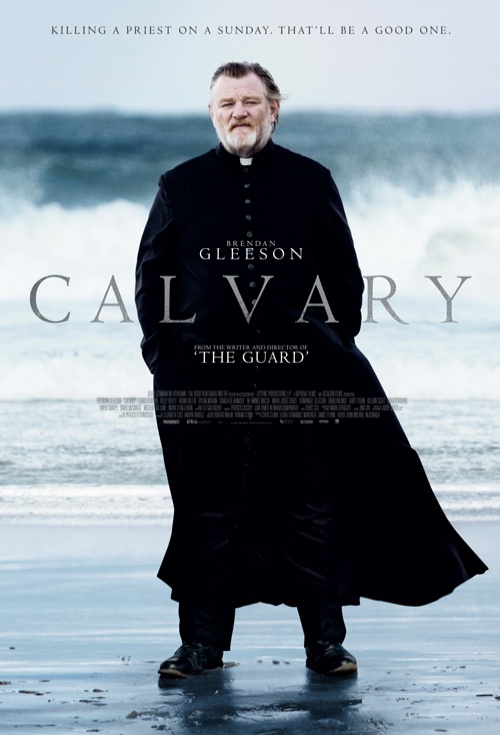
Calvary

D: John Michael McDonagh / 100m

Cast: Brendan Gleeson, Chris O’Dowd, Kelly Reilly, Aiden Gillen, Dylan Moran, Isaach De Bankolé, M. Emmet Walsh, Marie-Josée Croze, Domhnall Gleeson, David Wilmot, Pat Shortt, Gary Lydon, Killian Scott, Orla O’Rourke, Leo Sharpe

Calvary opens with a confession, not of sins committed, but of a sin to be carried out.  The priest hearing the confession, Father Lavelle (Gleeson), is flippant at first, then astounded as the proposed sin is murder, and the victim will be himself.  The parishioner was abused as a child by another priest (now dead) and wants his revenge; what better way to offend God than to kill a good priest, rather than a bad one?  It’s a powerful opening, and one that is bookended by an equally powerful conclusion.  What occurs in between, in the week leading up to the proposed murder, is often wryly humorous, sometimes emotionally uplifting, occasionally absurd, but alas, rarely convincing.

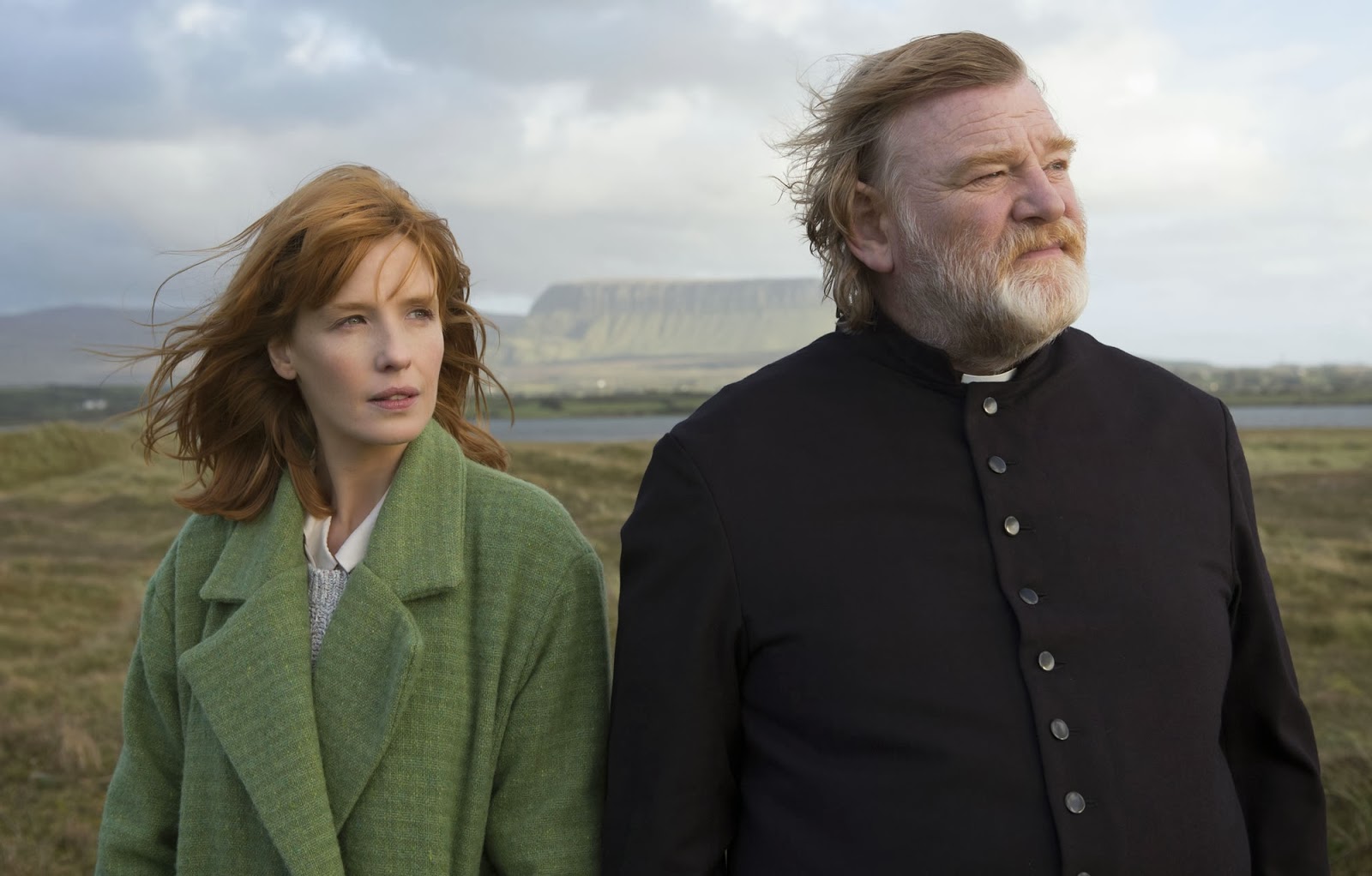
The main problem Calvary has is what to do with Father Lavelle once his death sentence is announced.  His superior, Bishop Montgomery (David McSavage), offers no real support or advice, and the priest he shares duties with, Father Leary (Wilmot), is so ineffectual he eventually leaves the parish.  A visit from his daughter, Fiona (Reilly), reveals his inadequacy a a biological father – she’s recovering from a suicide attempt and has been estranged from him since the death of her mother – and while some inroads are made in their relationship, his interaction with the rest of the village is less successful.  As he alienates more and more people, his intended murderer’s assertion that he’s a good priest becomes more and more untenable, and his failings as a man and a priest are increasingly highlighted.  This is a man whose own demons, once banished, are coming back to claim him.  (There’s an argument here that the man planning to kill him would know all this, making his choice of Lavelle as a “good priest” less a case of conviction, and more likely, of convenience.)

Calvary - scene

But while Father Lavelle continually fails to understand or support his parishioners – wife-beater and butcher Jack (O”Dowd), his errant wife Veronica (O’Rourke) and her lover Simon (De Bankolé), local businessman Fitzgerald (Moran), angry doctor Frank Harte (Gillen), local policeman Inspector Stanton (Lydon) and his rent boy lover Leo (Sharpe) – the audience is left wondering just how he managed to become a priest in the first place.  The number of ways in which he misunderstands the villagers is increasingly impressive, but becomes tiring after a (very short) while, so when he comforts the widow (Croze) of a French tourist who’s been killed in a car accident, it’s great to find he can be appropriately sympathetic and contrite (the movie has several quiet moments like this one, but it’s by far the most effective).

As events conspire to push Lavelle closer to the edge of a breakdown, and violence becomes a bitter factor in his involvement with the village, Calvary becomes a much darker movie and one that seems determined to offer no ray of hope for its embattled cleric.  Gleeson is a perfect choice for the dour, embittered character he portrays, a man who has come late to the priesthood, and now finds himself the target of someone’s hatred of the institution he represents.  In the hands of director and screenwriter McDonagh, this premise should have been the basis for a trenchant examination of faith, responsibility and social exclusion.  What it serves up instead is a treatise on bad decisions and atonement, with unresolved guilt as a side order.  Aside from the village’s odd assortment of inhabitants, there’s little in terms of the drama taking place that we haven’t seen before (and with more sharply defined characters).  It’s not that Calvary is a bad film per se, just that it promises much more than it delivers.

Rating: 7/10 – strong performances and beautiful location photography side, Calvary doesn’t quite draw the audience in as planned; still worth watching though as there are few movies out there that take these kind of risks with both the material and its performances.

Share this:

  • Click to share on X (Opens in new window) X
  • Click to share on Facebook (Opens in new window) Facebook
  • More
  • Click to print (Opens in new window) Print
  • Click to email a link to a friend (Opens in new window) Email
Like Loading...

Philomena (2013)

07 Friday Mar 2014

Posted by dullwood68 in Movies

≈ 1 Comment

Tags

Abuse, Adoption, Catholic Church, Judi Dench, Martin Sixsmith, Michael Hess, Nuns, Philomena Lee, Review, Roscrea, Sean Ross Abbey, Stephen Frears, Steve Coogan, True story

Philomena

D: Stephen Frears / 98m

Cast: Judi Dench, Steve Coogan, Michelle Fairley, Sophie Kennedy Clark, Mare Winningham, Barbara Jefford, Ruth McCabe, Peter Hermann, Sean Mahon, Anna Maxwell Martin

In 2004, and finding himself at a bit of a loss as to what to do after losing his job as a Labour government advisor, ex-journalist Martin Sixsmith (Coogan) is approached by the daughter of Philomena Lee (Dench) who suggests he writes a story about her.  Fifty years before, Philomena was forced to give up her baby boy, Anthony, by the nuns she was staying with at Sean Ross Abbey in Roscrea.  She has been trying to find him ever since but the nuns have always said they are unable to provide any information as to his whereabouts.

Intrigued, Sixsmith agrees to pursue the story after he meets Philomena, and they travel to Roscrea to see if they can find out anything further.  Advised by Mother Barbara (McCabe) that the records relating to Philomena were lost in a fire, they later discover that the records were destroyed by the nuns in a bonfire.  They also learn that the nuns were selling the children under their care, and mostly to Americans.

Martin and Philomena follow Anthony’s trail to the US.  Through Martin’s contacts, he discovers that Anthony was adopted by Doc and Marge Hess, and that they renamed him Michael; they also adopted another child, Mary, the daughter of one of Philomena’s friends at the abbey.  Michael grew up to be a lawyer and senior official in both the Reagan and Bush administrations, but sadly, he died in 1995.  Philomena decides she wants to meet some of the people who knew Michael, including his adopted sister, Mary (Winningham).  This leads to revelations about Michael’s life, and his death, that lead Philomena and Martin back to Roscrea.

_D3S1363.NEF

With such an emotive subject, the script by Coogan and Jeff Pope, combines drama and humour and outrage in (nearly) equal measure.  The early scenes, showing some of the experiences the young Philomena (Clark) endured at the abbey are quite disturbing, and while we’ve seen a more systematic, and horrifying, appraisal of this type of religious “care” in Peter Mullen’s The Magdalene Sisters, they’re still distressing enough to get across the unfeeling and harsh approach of the nuns to the young women’s “sin of fornication”.  As their attempts to find out what happened to Anthony are blocked by the nuns, the movie deftly sidesteps the wider issue of Church-sanctioned neglect, and focuses on Philomena’s story instead.  It’s a wise move, and allows the movie to progress almost as a mystery, with discoveries made that add to the depth of the nuns’ deception.

Once in the US, the script adds elements of Philomena’s naïveté, at the same time as revealing she knows more about certain subjects than might be expected.  While there’s a certain amount of gentle mockery in these moments – she refers to several people as being “one in a million” – they’re offset by Philomena’s certainty in her own behaviour and outlook.  As played by Dench, Philomena is by turns, sad, angry, resourceful, determined, resigned, grieving, and ultimately, quite heroic.  There are several moments where Dench, in close-up, displays a range of emotions, and the viewer is left in no doubt as to what those emotions are, thanks to Dench’s skill as an actress.  There’s not one false note in her whole performance.

Thankfully, she’s matched by Coogan, whose performance begins more as a comic turn but soon develops into a dramatic one, his character finding his way into the story more and more and becoming as determined to discover the truth as Philomena.  As depicted here, Sixsmith is a bit ill-mannered, very dismissive of religion, and at times, manipulative.  His attitude compliments the more open and receptive nature that Philomena displays, and as a “team” their respective strengths make them both resourceful and disarming.  As they discover more and more about Michael, their reactions compliment each other as well.

Philomena is also buoyed up by confident, often impressive direction courtesy of Stephen Frears.  Frears is one of the most consistently thought-provoking directors working today, and he’s particularly good at taking complex material and making it accessible to audiences.  He’s helped here by the script, and by the wonderful performances, and orchestrates the various developments with great skill, making Philomena a particular pleasure to watch.  In many ways, it’s British filmmaking at its best: thoughtful, intelligent, humorous, well-mounted and inspiring.

Rating: 9/10 – aside from some deviations to the actual course of events, Philomena is a poignant, uplifting tale that can raise a tear as often as a smile; a triumph for all concerned and entirely deserving of the awards it’s won so far.

Share this:

  • Click to share on X (Opens in new window) X
  • Click to share on Facebook (Opens in new window) Facebook
  • More
  • Click to print (Opens in new window) Print
  • Click to email a link to a friend (Opens in new window) Email
Like Loading...

Blog Stats

  • 486,528 hits

Recent Posts

  • 10 Reasons to Remember Bibi Andersson (1935-2019)
  • Fantasia (1940)
  • Dances With Wolves (1990) – The Special Edition
  • Kiss of the Spider Woman (1985)
  • The Three Musketeers (1973)

Top Posts & Pages

  • Lost for Life (2013) - Another Look
    Lost for Life (2013) - Another Look
  • Lost for Life (2013)
    Lost for Life (2013)
  • About
    About
  • Mr. Topaze (1961)
    Mr. Topaze (1961)
  • Billy Lynn's Long Halftime Walk (2016)
    Billy Lynn's Long Halftime Walk (2016)
  • Winter's Tale (2014)
    Winter's Tale (2014)
  • The Hitman's Bodyguard (2017)
    The Hitman's Bodyguard (2017)
  • 5 Famous Movie Roles That Nearly Went to Someone Else
    5 Famous Movie Roles That Nearly Went to Someone Else
  • The Layover (2017)
    The Layover (2017)
  • Transcendence (2014)
    Transcendence (2014)
Follow thedullwoodexperiment on WordPress.com

Blogs I Follow

  • Rubbish Talk
  • Film 4 Fan
  • Fast Film Reviews
  • The Film Blog
  • All Things Movies UK
  • Interpreting the Stars
  • Let's Go To The Movies
  • Movie Reviews 101
  • TMI News
  • Dan the Man's Movie Reviews
  • Film History
  • Jordan and Eddie (The Movie Guys)

Archives

  • April 2019 (13)
  • March 2019 (28)
  • February 2019 (28)
  • January 2019 (32)
  • December 2018 (28)
  • November 2018 (30)
  • October 2018 (29)
  • September 2018 (29)
  • August 2018 (29)
  • July 2018 (30)
  • June 2018 (28)
  • May 2018 (24)
  • April 2018 (21)
  • March 2018 (31)
  • February 2018 (25)
  • January 2018 (30)
  • December 2017 (30)
  • November 2017 (27)
  • October 2017 (27)
  • September 2017 (26)
  • August 2017 (32)
  • July 2017 (32)
  • June 2017 (30)
  • May 2017 (29)
  • April 2017 (29)
  • March 2017 (30)
  • February 2017 (27)
  • January 2017 (32)
  • December 2016 (30)
  • November 2016 (28)
  • October 2016 (30)
  • September 2016 (27)
  • August 2016 (30)
  • July 2016 (30)
  • June 2016 (31)
  • May 2016 (34)
  • April 2016 (30)
  • March 2016 (30)
  • February 2016 (28)
  • January 2016 (35)
  • December 2015 (34)
  • November 2015 (31)
  • October 2015 (31)
  • September 2015 (34)
  • August 2015 (31)
  • July 2015 (33)
  • June 2015 (12)
  • May 2015 (31)
  • April 2015 (32)
  • March 2015 (30)
  • February 2015 (37)
  • January 2015 (39)
  • December 2014 (34)
  • November 2014 (34)
  • October 2014 (36)
  • September 2014 (25)
  • August 2014 (29)
  • July 2014 (29)
  • June 2014 (28)
  • May 2014 (23)
  • April 2014 (21)
  • March 2014 (42)
  • February 2014 (38)
  • January 2014 (29)
  • December 2013 (28)
  • November 2013 (34)
  • October 2013 (4)

Blog at WordPress.com.

Rubbish Talk

Film 4 Fan

A Movie Blog

Fast Film Reviews

The Film Blog

The official blog of everything in film

All Things Movies UK

Movie Reviews and Original Articles

Interpreting the Stars

Dave Examines Movies

Let's Go To The Movies

Film and Theatre Lover!

Movie Reviews 101

Daily Movie Reviews

TMI News

Latest weather, crime and breaking news

Dan the Man's Movie Reviews

All my aimless thoughts, ideas, and ramblings, all packed into one site!

Film History

Telling the story of film

Jordan and Eddie (The Movie Guys)

Movie Reviews & Ramblings from an Australian Based Film Fan

Privacy & Cookies: This site uses cookies. By continuing to use this website, you agree to their use.
To find out more, including how to control cookies, see here: Cookie Policy
  • Subscribe Subscribed
    • thedullwoodexperiment
    • Join 481 other subscribers
    • Already have a WordPress.com account? Log in now.
    • thedullwoodexperiment
    • Subscribe Subscribed
    • Sign up
    • Log in
    • Report this content
    • View site in Reader
    • Manage subscriptions
    • Collapse this bar
 

Loading Comments...
 

    %d