• 10 Reasons to Remember…
  • A Brief Word About…
  • About
  • For One Week Only
  • Happy Birthday
  • Monthly Roundup
  • Old-Time Crime
  • Other Posts
  • Poster of the Week
  • Question of the Week
  • Reviews
  • Trailers

thedullwoodexperiment

~ Viewing movies in a different light

thedullwoodexperiment

Tag Archives: Adrien Brody

Backtrack (2015)

21 Thursday Apr 2016

Posted by dullwood68 in Movies

≈ Leave a comment

Tags

Adrien Brody, Drama, False Creek, George Shevtsov, Ghosts, Michael Petroni, Repressed memories, Review, Robin McLeavy, Sam Neill, Thriller, Train crash

Backtrack

D: Michael Petroni / 90m

Cast: Adrien Brody, George Shevtsov, Robin McLeavy, Sam Neill, Malcolm Kennard, Jenni Baird, Chloe Bayliss, Emma O’Farrell, Bruce Spence, Anna Lise Phillips

Psychotherapist Peter Bowers (Brody) has his own problems. His daughter has recently been killed in a road accident, and his career is being propped up thanks to the help of his mentor, Duncan Stewart (Neill). He seems to be managing his grief but is prone to moping about with a withdrawn, brooding demeanour that his wife (Baird) prefers to sleep through rather than engage with. As Bowers gets back into the routine of seeing patients, some of their eccentricities – one, a musician (Spence), swears he performed the night before at a club that closed down long ago – begin to worry him. He can’t put his finger on what’s bothering him, and a new patient, a young girl, Elizabeth Valentine (Bayliss), who won’t speak, adds further to his sense that something isn’t quite right.

When the mystery surrounding his patients deepens, Bowers does some detective work and discovers they all have something in common, something that sends him back to his hometown of False Creek and an event that happened twenty years before. As he starts to piece together the facts of what happened when he was a boy, Bowers attempts to reconnect with his father, William (Shevtsov), while also piquing the interest of local police officer, Barbara Henning (McLeavy). And when Bowers thinks he’s got to the bottom of it all, he’s unprepared for yet another revelation that puts his life in danger.

Backtrack - scene3

The above synopsis is deliberately vague because it would be unfair to divulge the movie’s central conceit (though there are plenty of websites that will tell you if you absolutely have to know in advance what it is). The movie itself reveals this “twist” around the half hour mark, and once it does, the movie transforms from awkwardly staged psychodrama with supernatural overtones to mystery thriller with supernatural overtones. It’s not an entirely comfortable switch, and there are more than enough clues to suggest that the movie’s narrative is a combination of two separate story ideas that weren’t strong enough on their own.

However, the switch is also welcome, as writer/director Michael Petroni isn’t as sure-footed exploring Bowers’ grief over the loss of his daughter as he is with letting Bowers loose to solve a twenty-year mystery that nobody – including him – knew was a mystery in the first place. Before Bowers arrives at False Creek, Petroni has him questioning his own sanity, but in such a crude, rudimentary way that his behaviour has all the hallmarks of having been created by someone who’s heard that grief-stricken fathers all behave in the same way. Adrien Brody is a very, very talented actor (and Petroni has been lucky to nab him), but even he can’t do anything with a character who alternates between emotionally devastated and psychologically damaged, and does so without any consistency of reasoning.
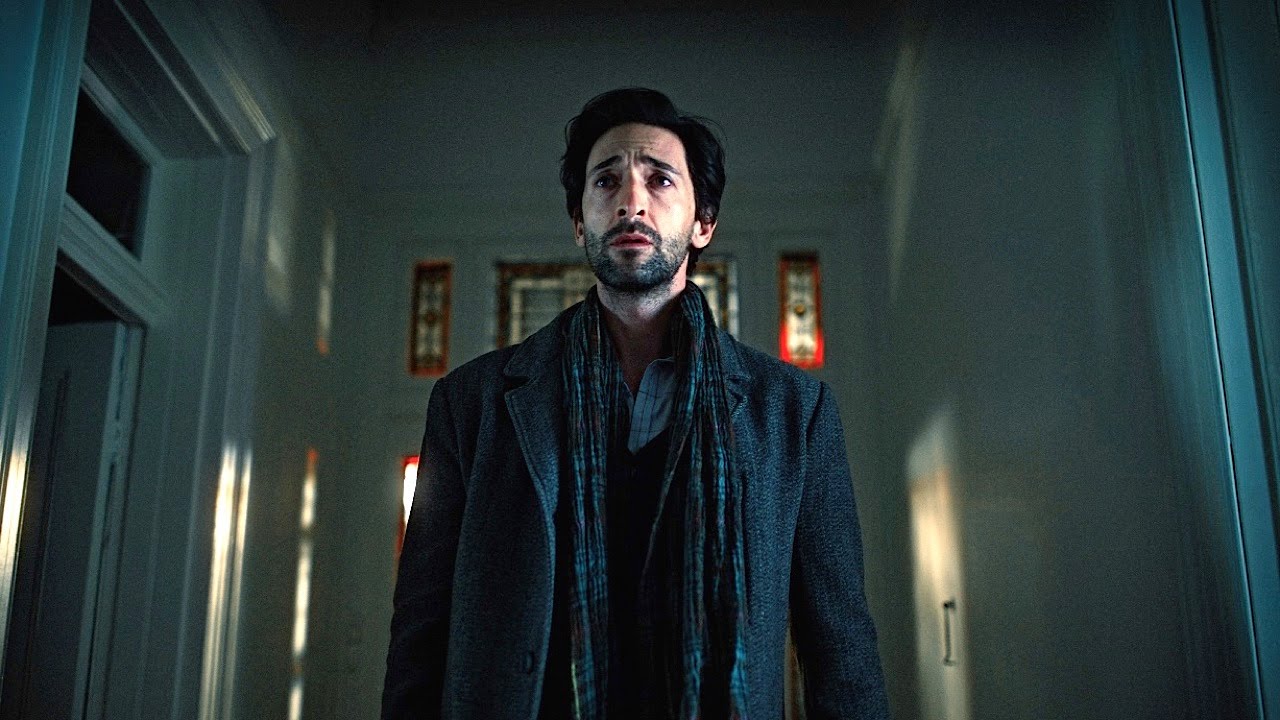
Backtrack - scene2

But once Bowers is deposited in the rural backwater that serves as his birthplace and the location of a twenty year old tragedy, Brody is freed from all that brooding and is free to loosen up in his portrayal. Unfortunately, the mystery he’s required to solve is one that will have viewers scratching their heads and wondering if they’re missing something. Coincidence is piled atop coincidence with increasing disregard for credibility, and Brody visits the scene of the tragedy so many times it becomes embarrassing as he remembers “everything”. In between times he argues with his father, arouses the suspicions of Officer Henning, and manages to remember – thanks to some ghostly visitations – that he should still be grieving. His actions appear more selfish and cathartic than altruistic, and even when the scope of the tragedy is revealed (and the mystery that goes with it), Bowers ensures that it’s all still about him.

There’s the germ of a good idea for a movie here, but under Petroni’s watch it’s not allowed to develop fully. The script repeatedly makes leaps of faith that are either baffling or absurd, Neill’s character should have all the answers but disappears too quickly, Officer Henning’s connection to the tragedy is handled as awkwardly as Bowers initial malaise, and a secondary character’s fate is decided on entirely so that one particular clue can be introduced and drive the movie forward. But by this time, most viewers will be beginning to wonder just how silly it can all get; the last ten minutes will reassure them: very.
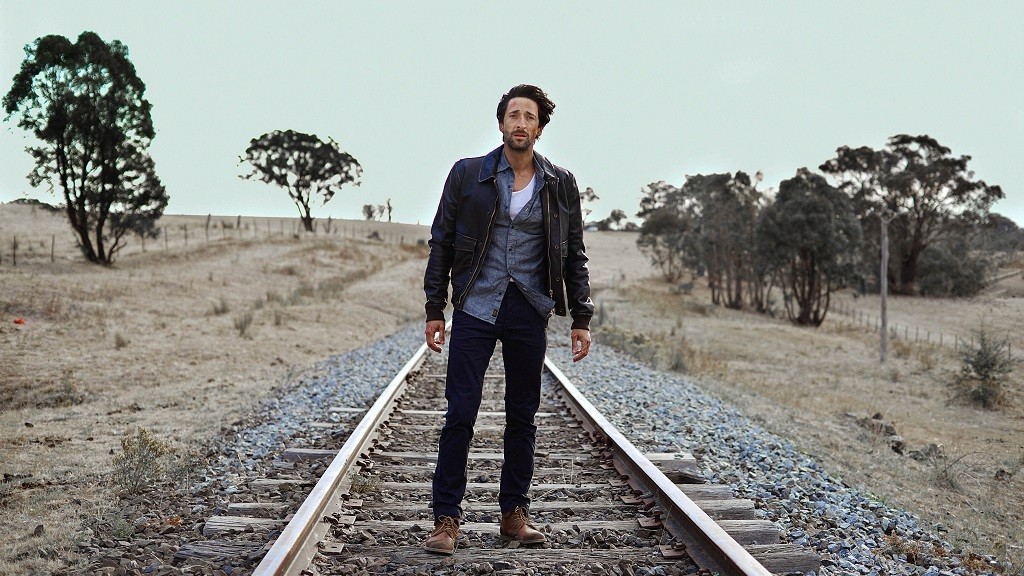
Backtrack - scene4

Backtrack is a movie with a handful of competent performances, but they’re not allowed to flourish thanks to the vagaries of Petroni’s script, and it’s insistence on being two parts obvious thriller and one part supernatural mishmash. Brody must be wondering what’s happened to his career (The Grand Budapest Hotel seems like such a long time ago now), while Shevtsov and McLeavy are reduced to playing pawns at the mercy of the script and Petroni’s wayward sense of direction (in both senses of the phrase), while Neill is lucky enough to escape with a minor role.

And for a movie shot entirely in Australia, this may be one of the few occasions where an Australian movie looks so nondescript. The early scenes in Melbourne could have been filmed in any large city in any number of countries, and the town of False Creek wouldn’t look out of place anywhere in America’s Deep South. DoP Stefan Duscio did some great work on his last feature, The Mule (2014), but here it’s as if he’s been instructed to make everything look bland and/or neutral. With so little to engage with on an emotional level, it’s one last disappointment to have a movie that’s so insipid to look at as well.

Rating: 4/10 – Petroni asks too much of both his cast and the audience in telling such a dreary tale, with the result that Backtrack is a movie that never really gets started; it doesn’t help that it gets sillier and sillier as it progresses, until by the end whatever positives it possessed at the start have been abandoned in favour of a generic thriller outcome that is as tedious as it is absurdly set up.

Share this:

  • Click to share on X (Opens in new window) X
  • Click to share on Facebook (Opens in new window) Facebook
  • More
  • Click to print (Opens in new window) Print
  • Click to email a link to a friend (Opens in new window) Email
Like Loading...

Summer of Sam (1999)

01 Sunday Mar 2015

Posted by dullwood68 in Movies

≈ Leave a comment

Tags

1977, Adrien Brody, Ben Gazzara, CBGB's, David Berkowitz, Disco, Drama, Drugs, Homosexuality, Jennifer Esposito, John Leguizamo, Mira Sorvino, Punk, Relationships, Serial killings, Sex, Son of Sam, Spike Lee, True story

Summer of Sam

D: Spike Lee / 142m

Cast: John Leguizamo, Adrien Brody, Mira Sorvino, Jennifer Esposito, Michael Rispoli, Saverio Guerra, Brian Tarantina, Al Palagonia, Ken Garito, Bebe Neuwirth, Patti LuPone, Mike Starr, Anthony LaPaglia, Roger Guenveur Smith, Ben Gazzara, John Savage, Michael Badalucco, Spike Lee, Jimmy Breslin

New York City, 1977. The serial killer known as Son of Sam (Badalucco) is terrorising the city, randomly shooting people. He sends taunting messages to the police who are no nearer to catching him after seven murders than they were after the first. Against this backdrop, a group of friends try to make sense of what’s happening as well as trying to deal with their own problems. Vinny (Leguizamo) is a hairdresser working in the Bronx. He’s married to Dionna (Sorvino) but cheats on her every chance he gets. His best friend, Ritchie (Brody) has adopted a punk lifestyle, complete with spiked hair and punk clothing. It bothers Vinny and the rest of their friends, but proves attractive to Ruby (Esposito), who’s treated poorly by everyone else because she’s perceived as “easy”.

With the police struggling to make any headway in the Son of Sam case, the lead detective, Petrocelli (LaPaglia) approaches local crime boss, Luigi (Gazzara) for help in catching him. His men begin compiling a list of suspects, an idea that spreads throughout the neighbourhood and which is taken up by Vinny’s friends, led by Joey T (Rispoli). Suspicious of Ritchie’s new lifestyle, they add him to their list. Meanwhile, Vinny and Dionna’s marriage is unravelling. Vinny is still seeing other women – including his boss, Gloria (Neuwirth) – and he’s flirting more and more with drugs. He and Dionna are invited to a gig that Ritchie’s band is playing at CBGB’s but Dionna refuses to go inside. Vinny suggests they go to Studio 54 instead but they’re not able to get in. A photographer (Savage) who’s coming out of Studio 54 takes a liking to Vinny and they go with him to Plato’s Retreat, a swingers club. There, Dionna and Vinny have sex with other people, but on the way home Vinny becomes resentful and accuses Dionna of being a “lesbian freak”. Outraged by his accusation (and his double standards) she reveals she knows about his affairs and leaves him stranded at the side of the road.

Ritchie’s relationship with Ruby, however, is going from strength to strength, even though he dances at a gay club and prostitutes himself with the clientele. When Brian (Garito), one of Vinny’s friends, discovers this and tells Joey, it serves to make Ritchie more suspicious in everyone’s eyes, and when an artist’s impression of Son of Sam is published in the newspapers it looks enough like Ritchie for Joey to believe he is the killer. With Dionna having ended things with Vinny, and his reliance on drugs taking over his life, he’s persuaded by Joey to lure Ritchie out into the street where he can be attacked by his “friends”. But what none of them realise is that the police have made a breakthrough in the case, and that a terrible injustice is about to be carried out.

Summer of Sam - scene

Filmed in and around the actual areas where David Berkowitz killed six people and wounded seven others between July 1976 and July 1977, Summer of Sam is a jarring, hedonistic movie that paints an hallucinatory portrait of the time, and which acts like a fever dream of desire and mistrust. It’s a scurrilous, profane movie, sometimes scabrous and full of bile, as its characters deal with their own personal hells, all potent counterpoints to the madness experienced by Berkowitz. It deals with themes of betrayal and promiscuity, xenophobia and suspicion, and is unforgiving in its attempts to shine an unforgiving light on the social mores of the time.

The time period is recreated with verve and attention to detail (though it does get quite a few of the punk-related details wrong), and Ellen Kuras’ cinematography captures the vibrancy of the era, as disco battled with punk, and misogynism and distrust maintained a firm stronghold in Italian neighbourhoods. The lighting often makes scenes, and especially interiors, look grimy and slightly soiled, a trenchant reflection of the characters and their rude approach to life and each other. Lee explores and exploits the late Seventies with gusto, ramping up the intensity of the emotions and the spirit of the times, and encouraging a handful of career-best performances from his cast. The movie benefits enormously from its depiction of the fear and terror people felt in the wake of Berkowitz’s murderous activities, and the closed-minded vigilantism that grew out of them.

The movie generates such a speed and a momentum that it propels the viewer toward its denouement with alacrity, and through the machinations of Vinny and his friends, with undisguised relish. All this leads to a movie that operates at such a pitch that there’s little room for subtlety or tenderness. However, Lee’s confident handling of the narrative more than compensates for any rough handling or delirious imagery. When the heatwave of the time results in a power outage which in turn leads to rioting and vandalism, it’s depicted with a torrid matter-of-fact quality that it fits in completely with Lee and co-scripters Victor Colicchio and Michael Imperioli’s aggressive, no holds barred approach to the various storylines.

Lee is incredibly well served by his cast, who enter into things with complete commitment. Leguizamo, one of the most prolific and versatile actors working today – he currently has five movies in various stages of post-production – puts in a career best performance, expertly displaying the narcissistic selfishness of a man who projects strength but who is battling his fear of commitment every day. It’s a riveting portrayal, and even when he’s not the focus of a scene the viewer’s eye is drawn to him, as if at any moment he’s going to demand their attention again. He’s matched by Sorvino, whose quiet, unassuming portrayal of Dionna in the movie’s early stages gives way to a gutsy, impassioned performance that matches Leguizamo’s for emotional ferocity. Like her co-star, it’s a career best outing, and it’s a shame that post-Summer of Sam she’s not appeared in any movies that have allowed her to shine as she does here.

Brody offers strong support though he’s given less and less to do as the movie progresses, while Esposito suffers the same fate. Badalucco is an imposing presence as Berkowitz, and sharp-eared viewers will recognise John Turturro’s voice as Harvey the Dog (who tells Berkowitz to “kill”). LaPaglia’s detective flits in and out of the narrative (and is nowhere to be seen when Berkowitz is arrested), Gazzara coasts as the local mob boss, and Savage is on screen for all of a minute. The soundtrack consists of a great mix of contemporary songs alongside Terence Blanchard’s driving score, and there’s terrific use of The Who’s Baba O’Riley two thirds of the way in to accompany a brilliant montage (another song by The Who, Won’t Get Fooled Again, is used near the end for another very dramatic sequence, but it’s not as effective).

Rating: 9/10 – Summer of Sam won’t be to everyone’s taste, but it is one of Lee’s most daring, uncompromising movies, and has a charge that few other movie makers could achieve or maintain over such a long running time; demanding and uncompromising, it’s a movie that doesn’t pull any punches and is all the better for it.

Share this:

  • Click to share on X (Opens in new window) X
  • Click to share on Facebook (Opens in new window) Facebook
  • More
  • Click to print (Opens in new window) Print
  • Click to email a link to a friend (Opens in new window) Email
Like Loading...

The Grand Budapest Hotel (2014)

25 Tuesday Mar 2014

Posted by dullwood68 in Movies

≈ 1 Comment

Tags

Adrien Brody, Boy with Apple, Concierge, Hotel, Lobby boy, M. Gustave, Military police, Painting, Ralph Fiennes, Review, Tony Revoroli, Wes Anderson, Will

Grand Budapest Hotel, The

D: Wes Anderson / 100m

Cast: Ralph Fiennes, Tony Revolori, F. Murray Abraham, Mathieu Amalric, Adrien Brody, Willem Dafoe, Jeff Goldblum, Harvey Keitel, Jude Law, Bill Murray, Edward Norton, Saoirse Ronan, Jason Schwartzman, Léa Seydoux, Tilda Swinton, Tom Wilkinson, Owen Wilson

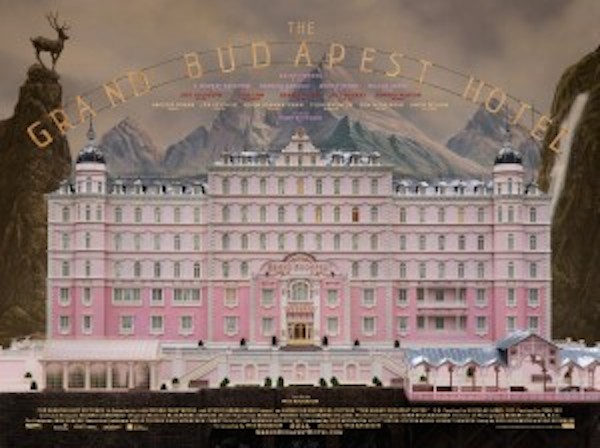
There’s nothing quite like a Wes Anderson movie, and each one that comes along is a reason to hang out the bunting, crack open the bubbly, and give thanks to the cinematic gods.  Even when one of Anderson’s movies isn’t quite as involving or engaging as usual – step forward The Life Aquatic with Steve Zissou (2004) – it’s still something to treasure, a respite from the formulaic and humdrum offerings of (most) other filmmakers.  His last feature, Moonrise Kingdom (2012), was my movie of the year, and quite possibly his best movie yet.  That movie is a tough act to follow – will The Grand Budapest Hotel match, or better it?

The movie begins with a young girl approaching a statue in a cemetery in the Middle European city of Lutz.  The statue is dedicated to the Author.  She begins to read from one of his books.  The author (Wilkinson) takes over the narrative and we see him speaking to camera.  He begins to tell the story of when he was a young man, and his stay at the titular hotel.  Here the narrative is taken over by the author as that younger version of himself.  The young author (Law) tells of his meeting with the mysterious owner of the hotel, Mr. Moustafa (Abraham).  In turn, Moustafa tells the young author how he came to own the hotel, beginning with his arrival at the hotel in 1932 as a young man called Zero (Revolori), and his tutelage as a lobby boy under the hotel’s concierge, M. Gustave (Fiennes).

M. Gustave has a penchant for the hotel’s elderly female guests, in particular, Madame D. (Swinton).  When she leaves the hotel to return to her family home in Lutz, she tells M. Gustave she has a premonition that something will happen to her.  Her prediction proves true, and she is found dead, poisoned.  M. Gustave and Zero go to pay their respects and find themselves at the reading of the will.  With the whole family in attendance, including son Dmitri (Brody), M. Gustave learns he has inherited a valuable painting, Boy with Apple.  Dmitri is outraged and threatens M. Gustave that he will never have the painting.  So the concierge and the lobby boy steal the painting and hide it back in the Grand Budapest Hotel.

With a missing document holding up the disbursement of the will’s provisions, the sudden disappearance of Madame D.’s servant Serge X (Amalric), and the approaching onset of war with a neighbouring country, M. Gustave finds himself arrested and charged with Madame D.’s murder (and despite a clear lack of evidence to incriminate him).  Once in jail, M. Gustave makes friends with some of the inmates, including Ludwig (Keitel), and they propose an escape.  With the help of Zero and his girlfriend, baker’s assistant Agatha (Ronan), M. Gustave breaks out of jail, and using the combined talents of several other concierges across the continent, tracks down Serge X who reveals Madame D. made a second will that the family believes is destroyed.  There is a copy, though, and it’s hidden in the back of the painting.  M. Gustave and Zero must return to the hotel, retrieve the painting, and avoid being killed by Jopling (Dafoe), a psychotic investigator in Dmitri’s employ.

GRAND BUDAPEST HOTEL_c371.JPG

In the world of cinema, nobody does “quirky” or “off the wall” like Anderson, and The Grand Budapest Hotel is no different.  With its tale within a tale within a tale within a tale, the movie delights and amuses on so many different levels it’s hard to keep track of them all.  There’s the inevitable visual humour – M. Gustave making a run for it when he realises the military police led by Inspector Henckels (Norton) believe he murdered Madame D.; the entrance to Field Post 19; the painting put in place of Boy with Apple – verbal wisecracks and one-liners, and plotting that never falters in its ability to raise a smile.  There’s a sure hand at work here, and Anderson steers things with astounding ease, making each development seem as plausible as possible given the layers of absurdity and beautifully judged lunacy that have already gone before.

The world he’s created, with all its foibles and social hierarchies, is beautifully rendered, each scene a glorious testament to Anderson’s exquisite eye for composition and framing, each aspect of the costumes and the set design and the props supporting his vision to the point where this is a completely credible world, even if the events are often incredible.  This is a movie that has something going on in almost every frame, and is ravishing to look at on so many levels.  The performances are uniformly excellent, from Fiennes’ effortless turn as the exacting lothario M. Gustave, to Revolori’s deadpan incarnation of the younger Moustafa, to the minor roles (watch for the other concierges); everyone is pitch perfect.

So, is The Grand Budapest Hotel as good as, if not better than Moonrise Kingdom?  Alas, it’s not, but it’s very close.  There are some jarring elements – the modern-day swearing comes across as harsh and out-of-place – and the framing devices (the tales within tales) don’t add anything to the mix, while there’s not quite the heart that infused Moonrise Kingdom and made it so impressive.  But this is still one of Anderson’s best, and an absolute must-see nevertheless.

Rating: 8/10 – a beautiful, funny adventure set in a fairytale location and brimming with wit and inventiveness; a chocolate box of goodies that will fill you up but leave you still wanting more.

Share this:

  • Click to share on X (Opens in new window) X
  • Click to share on Facebook (Opens in new window) Facebook
  • More
  • Click to print (Opens in new window) Print
  • Click to email a link to a friend (Opens in new window) Email
Like Loading...

Blog Stats

  • 486,598 hits

Recent Posts

  • 10 Reasons to Remember Bibi Andersson (1935-2019)
  • Fantasia (1940)
  • Dances With Wolves (1990) – The Special Edition
  • Kiss of the Spider Woman (1985)
  • The Three Musketeers (1973)

Top Posts & Pages

  • Lost for Life (2013) - Another Look
    Lost for Life (2013) - Another Look
  • Lost for Life (2013)
    Lost for Life (2013)
  • About
    About
  • Mr. Topaze (1961)
    Mr. Topaze (1961)
  • Shock and Awe (2017)
    Shock and Awe (2017)
  • Hunt for the Wilderpeople (2016)
    Hunt for the Wilderpeople (2016)
  • Cardboard Boxer (2016)
    Cardboard Boxer (2016)
  • Billy Lynn's Long Halftime Walk (2016)
    Billy Lynn's Long Halftime Walk (2016)
  • Winter's Tale (2014)
    Winter's Tale (2014)
  • Exposed (2016)
    Exposed (2016)
Follow thedullwoodexperiment on WordPress.com

Blogs I Follow

  • Rubbish Talk
  • Film 4 Fan
  • Fast Film Reviews
  • The Film Blog
  • All Things Movies UK
  • Interpreting the Stars
  • Let's Go To The Movies
  • Movie Reviews 101
  • TMI News
  • Dan the Man's Movie Reviews
  • Film History
  • Jordan and Eddie (The Movie Guys)

Archives

  • April 2019 (13)
  • March 2019 (28)
  • February 2019 (28)
  • January 2019 (32)
  • December 2018 (28)
  • November 2018 (30)
  • October 2018 (29)
  • September 2018 (29)
  • August 2018 (29)
  • July 2018 (30)
  • June 2018 (28)
  • May 2018 (24)
  • April 2018 (21)
  • March 2018 (31)
  • February 2018 (25)
  • January 2018 (30)
  • December 2017 (30)
  • November 2017 (27)
  • October 2017 (27)
  • September 2017 (26)
  • August 2017 (32)
  • July 2017 (32)
  • June 2017 (30)
  • May 2017 (29)
  • April 2017 (29)
  • March 2017 (30)
  • February 2017 (27)
  • January 2017 (32)
  • December 2016 (30)
  • November 2016 (28)
  • October 2016 (30)
  • September 2016 (27)
  • August 2016 (30)
  • July 2016 (30)
  • June 2016 (31)
  • May 2016 (34)
  • April 2016 (30)
  • March 2016 (30)
  • February 2016 (28)
  • January 2016 (35)
  • December 2015 (34)
  • November 2015 (31)
  • October 2015 (31)
  • September 2015 (34)
  • August 2015 (31)
  • July 2015 (33)
  • June 2015 (12)
  • May 2015 (31)
  • April 2015 (32)
  • March 2015 (30)
  • February 2015 (37)
  • January 2015 (39)
  • December 2014 (34)
  • November 2014 (34)
  • October 2014 (36)
  • September 2014 (25)
  • August 2014 (29)
  • July 2014 (29)
  • June 2014 (28)
  • May 2014 (23)
  • April 2014 (21)
  • March 2014 (42)
  • February 2014 (38)
  • January 2014 (29)
  • December 2013 (28)
  • November 2013 (34)
  • October 2013 (4)

Blog at WordPress.com.

Rubbish Talk

Film 4 Fan

A Movie Blog

Fast Film Reviews

The Film Blog

The official blog of everything in film

All Things Movies UK

Movie Reviews and Original Articles

Interpreting the Stars

Dave Examines Movies

Let's Go To The Movies

Film and Theatre Lover!

Movie Reviews 101

Daily Movie Reviews

TMI News

Latest weather, crime and breaking news

Dan the Man's Movie Reviews

All my aimless thoughts, ideas, and ramblings, all packed into one site!

Film History

Telling the story of film

Jordan and Eddie (The Movie Guys)

Movie Reviews & Ramblings from an Australian Based Film Fan

Privacy & Cookies: This site uses cookies. By continuing to use this website, you agree to their use.
To find out more, including how to control cookies, see here: Cookie Policy
  • Subscribe Subscribed
    • thedullwoodexperiment
    • Join 481 other subscribers
    • Already have a WordPress.com account? Log in now.
    • thedullwoodexperiment
    • Subscribe Subscribed
    • Sign up
    • Log in
    • Report this content
    • View site in Reader
    • Manage subscriptions
    • Collapse this bar
 

Loading Comments...
 

    %d