Cast: Jeremy Sisto, David Walton, Amy Smart, J.K. Simmons, Joshua Rush, Adam DeVine, Chris Parnell, Vincent Ventresca, Jenny Wade, Cy Admundson
Jimmy Price (Sisto) is a pro tennis player who’s successfully alienated every doubles partner he’s ever played with. When his latest partner walks out on him, Jimmy tries to find a new one but his past behaviour catches up with him, and he’s turned down by everyone he contacts. Knowing that he has one last chance at taking part in a grand slam tournament, he has no option but to ask his brother, Darren (Walton), who is a substitute teacher, to be his partner. Darren is less than enthusiastic, as when they were younger Jimmy dumped him for another player during a tournament.
Darren eventually comes around to the idea, and he and Jimmy begin to practice together. They’re joined by one of Darren’s pupils, a precocious eleven year old called Barry (Rush) who has attached himself to Darren for the summer break. Supported and encouraged by their veterinarian father, Jack (Simmons), and his assistant Heather (Smart), they get through a qualifying tournament despite Jimmy’s confrontational antics. With one more qualifying match to play, a meet and greet sees Jimmy talking to several of the other pro players, leading Darren to suspect that history is about to repeat itself.
A broad mix of lightweight drama and affable comedy, Break Point is easy-going fare for those times when thinking about a movie isn’t required. It’s amiable and it pretty much does what it says on the tin, leading the viewer through a predictable yet enjoyable story that avoids any lows but equally doesn’t hit the heights either. A bit of a pet project for Sisto – as well as being its star, he’s the co-writer and one of the producers – the movie allows him to give another man-child performance that’s flecked with occasional moments of introspection. Sisto is good in the role but like all the characters, Jimmy is a step up from being one-dimensional, and nothing he does or says will come as a surprise to anyone.
With Sisto getting to play the “fun guy”, it falls to Walton to be the straight man, and while he’s more than up to the task, he has little to do beyond acting peevish or doubtful about his brother’s motives. With the exception of Rush as the cute but borderline annoying Barry, the rest of the cast are sidelined for much of the movie, with Simmons wasted as the brothers’ dad, and Smart roped in for the last third as a romantic partner for Darren. Karas directs ably but routinely, and even the tennis matches remain formulaic in both the way they’re shot and edited, with little in the way of any real excitement. All in all it’s a sweet movie, but not one you’re likely to remember for long.
Rating: 5/10 – while not a bad movie, Break Point is too laid-back for its own good, and it never really gets off the ground; a pleasant enough experience but it’s likely that the average viewer will be left wanting a whole lot more in order to feel rewarded for their time.
Cast: Leslie Bibb, Jamie Chung, Ryan Kwanten, Amy Smart, Jerry Ferrara, Scout Taylor-Compton, Nicky Whelan, Alex Frost, Christian Serratos, Rick Kelly, Johnathan Schaech
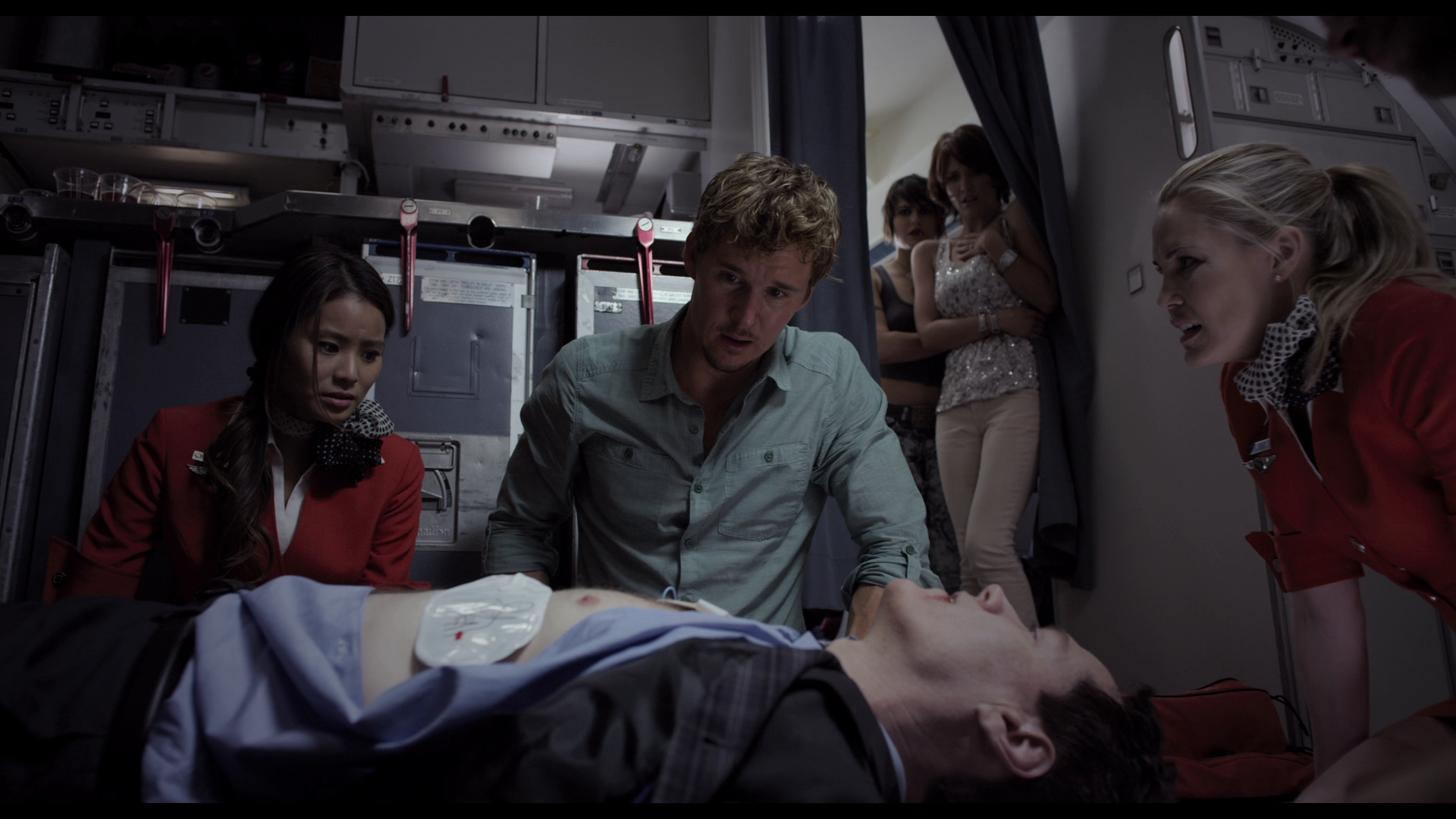
Vista Pacific Flight 7500 is an overnight flight from Los Angeles to Tokyo. While the take off is routine, a bout of severe turbulence leads to a passenger (Kelly) having a seizure; despite the best efforts of travelling paramedic Brad (Kwanten) and stewardesses Laura (Bibb) and Suzy (Chung), he dies. With no immediate reason to turn back, the flight continues on but the passengers and crew encounter ever stranger events, including a life-threatening cabin depressurisation, the disappearance of the dead passenger’s body, and the lack of radio contact with Tokyo air control. As a supernatural explanation for things seems to be the most likely, Brad, his wife Pia (Smart), Laura, Suzy, and newlyweds Rick (Ferrara) and Liz (Whelan), with occasional help from fellow passenger Jacinta (Taylor-Compton), come to believe it’s all connected to the dead man, and look through his belongings for an answer. But what they find is even stranger still…
At first glance, this latest offering from the director of The Grudge movies (Japanese and American) has all the hallmarks of an intriguing mystery thriller, with its characters trapped in a confined space, supernatural elements, strange occurrences, and growing sense of menace. But as so often happens with this type of movie, the script is unable to support its own premise and soon gets bogged down in one unexplained phenomena after another, making several attempts to increase the tension and heighten the dread the passengers and crew are experiencing, but falling short each time.
Further problems arise from the characters themselves, with perfunctory back stories for all that resist any depth being added, and wallow in cliché: the stewardesses with relationship problems (are there any stewardesses in the movies that don’t have relationship problems?), the couple splitting up who re-commit through being put in peril, the “wild child” who just happens to have the explanation for what’s happening, and the new wife whose OCD traits are jettisoned at the first opportunity. With so little to work with, the more than capable cast are left adrift, with Shimizu opting to focus on poorly lit visuals and less than satisfying “scares”.
By the movie’s end, 7500 has descended into a collection of disjointed and there-for-the-sake-of-it scenes that fracture the narrative beyond any possibility of recovery, and it concludes with a scene so derivative and redundant it beggars belief. (It shouldn’t be surprising then that the movie was filmed back in 2012 and has only now found a release via home video.)
Rating: 3/10 – with its cast doing just enough to achieve lacklustre performances, and Shimizu matching them with his direction, 7500 soon plummets into mediocrity; this is definitely one flight that can be missed in favour of the next one.
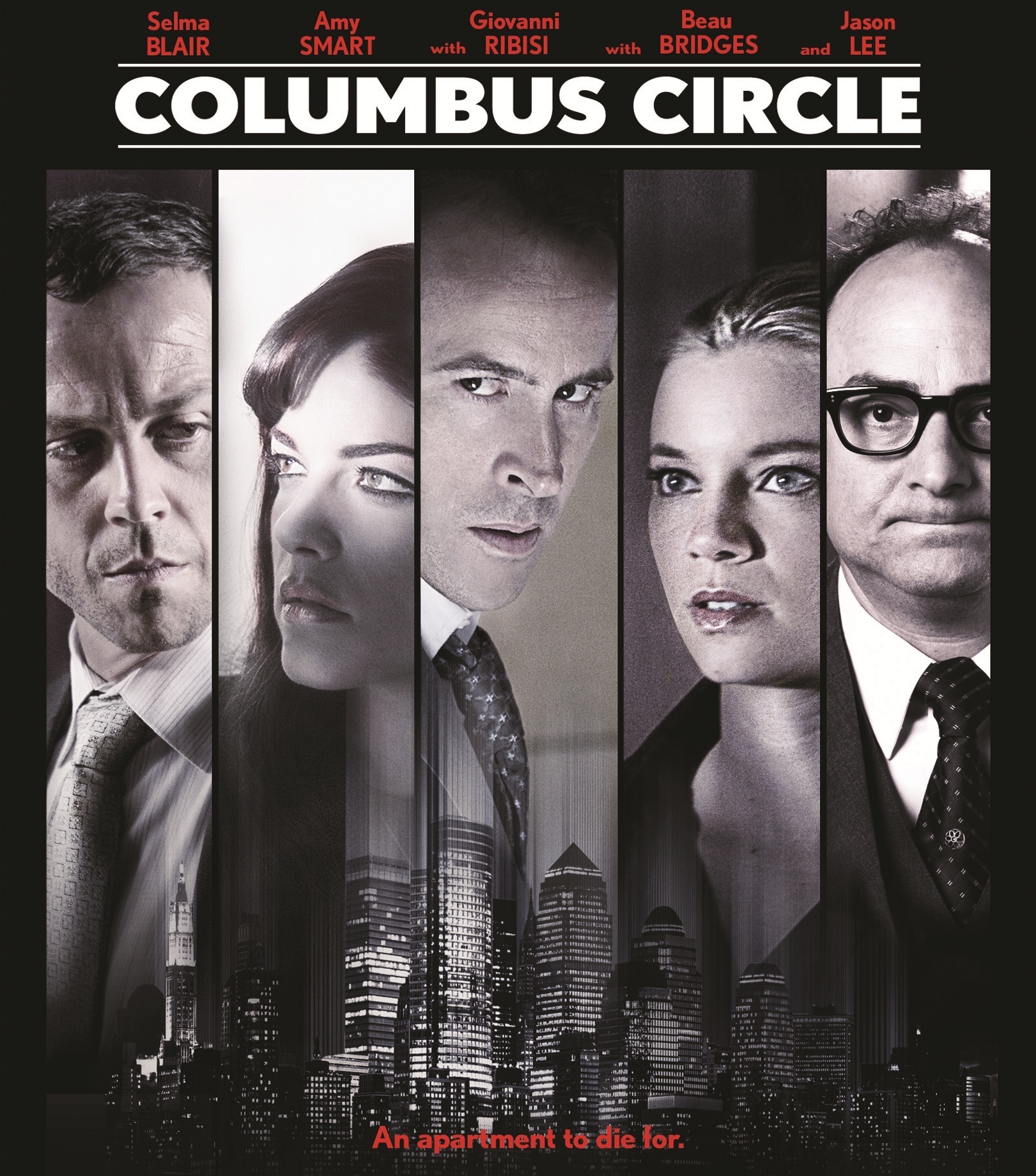
Cast: Selma Blair, Amy Smart, Jason Lee, Beau Bridges, Kevin Pollak, Giovanni Ribisi, Jason Antoon, Robert Guillaume
Abigail Clayton (Blair) lives alone in her penthouse apartment overlooking Columbus Circle, and has done so for nearly twenty years. She communicates with only two people: in person with her physician and long-time family friend Raymond Fontaine (Bridges), and by note with concierge Klandermann (Pollak). Her quiet, ordered life is disrupted following the death of her neighbour. The investigating detective, Frank Giardello (Ribisi), isn’t convinced it’s the accidental death it looks like. He speaks to Abigail (much to her dislike); she in turn alerts Fontaine who reassures her that Giardello’s talking to her was just routine.
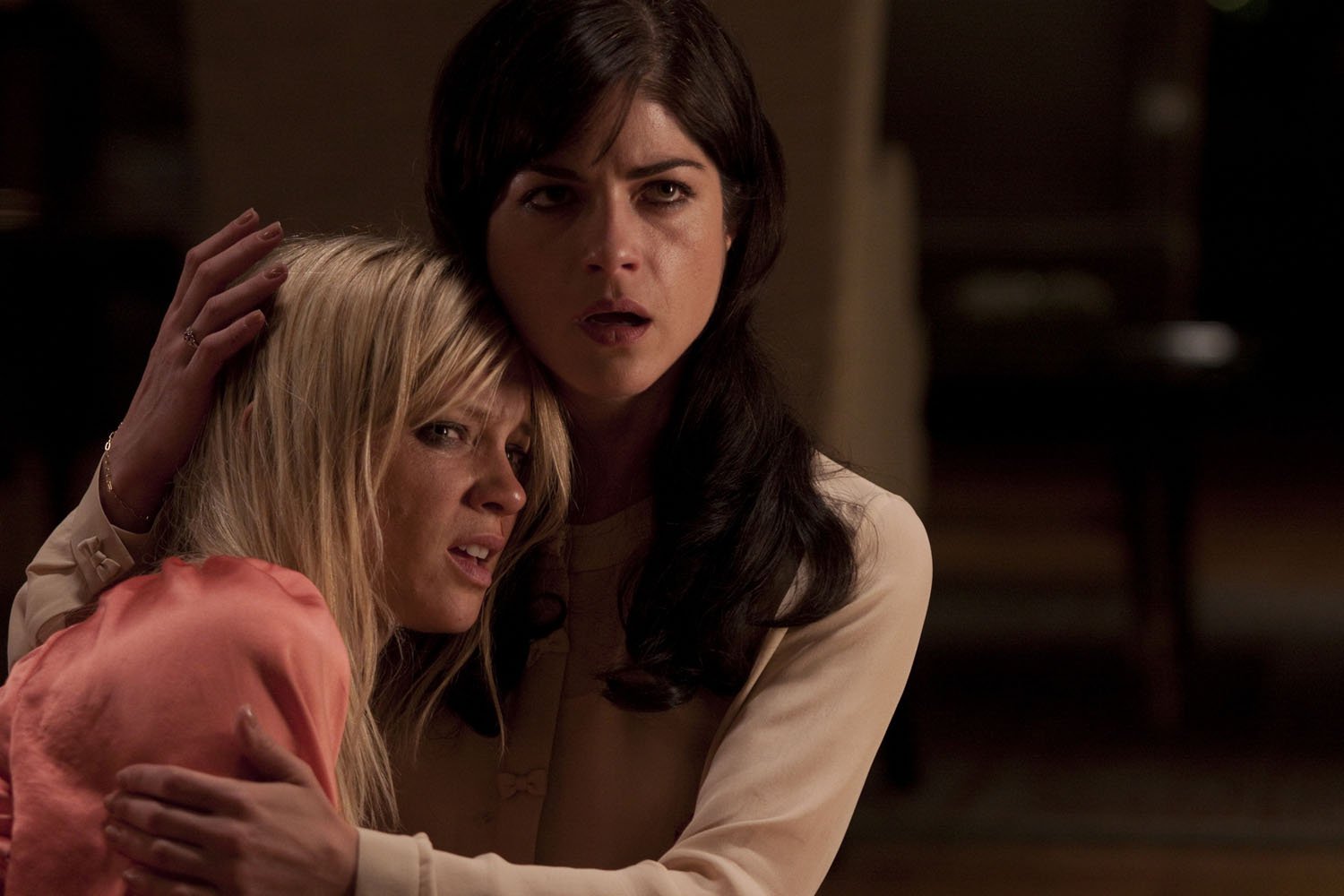
Abigail attempts to buy her neighbour’s apartment to further maintain her privacy but to her dismay a couple move in shortly afterward. Charles (Lee) and Lillian (Smart) seem like a young, prosperous, happy couple but one night, Abigail overhears an argument the couple have in the corridor. The argument becomes violent and Lillian is hit by her husband. Lillian’s cries for help prompt Abigail to do something she would never have thought possible: help the injured woman. Once inside Abigail’s apartment, Lillian makes excuses for Charles’s behaviour before she falls asleep. The next morning she thanks Abigail for her help and the beginnings of a friendship are established.
Meanwhile, Giardello’s investigation reveals a link between Abigail’s neighbour and Fontaine. When Giardello visits him, Fontaine lets slip that he knows Abigail as well. The detective begins to suspect that Abigail isn’t who she seems to be, and is probably wealthy heiress Justine Waters, who disappeared on her eighteenth birthday and hasn’t been seen since.
Abigail and Lillian grow closer, while Charles becomes more and more aggressive in his behaviour. One evening, he and Klandermann are in the elevator together when the concierge remarks that Charles is familiar to him but he can’t place where they might have met. Charles thinks it unlikely but Klandermann is convinced that he’ll remember. When he does, it brings to light a conspiracy that involves the search for a missing heiress…
Making out like a Hitchcockian thriller, Columbus Circle has a basic plot that seems clever at the outset but which quickly abandons plausibility in favour of a more tired and derivative approach, and wraps things up so awkwardly that it makes you wonder if co-scripters Pollak and Gallo really had an ending in the first place. With any thriller there’s an accepted – indeed, expected – amount of suspension of disbelief, and Columbus Circle is no different in this respect, but sometimes it’s a matter of how many times that suspension is required that defeats everything. No matter how much good will a movie generates during its running time, sometimes it’s never enough. And so it proves here.
Abigail’s reclusive lifestyle is explained via a mix of flashbacks and exposition, and is used as the basis for her helping Lillian. So far, so good. But when we see Lillian playing amateur therapist and helping Abigail down the corridor in an attempt to conquer her fear of leaving her apartment, then things begin to tumble downhill with ever increasing speed. And even later still, when the movie requires Abigail to leave the safety of her apartment altogether, she does so without a backward glance. It’s moments like these that prompt the question, why make Abigail a recluse in the first place? For ultimately it doesn’t matter. Nor does the issue of whether or not she’s really a missing heiress (something the movie gives up quite early on). What Columbus Circle does, and with a clumsiness that does itself no favours, is to take a fairly run-of-the-mill scenario and then try to make it more intriguing by having its lead character driven by a deep-rooted phobia – which it then ignores/drops/abandons in order to provide the movie with a “satisfying” ending.
Long-time mystery fans will spot the mechanics of what’s happening from a mile off, while even newcomers shouldn’t have too many problems spotting the bad guys. It all leaves the movie appearing less effective than it should be given the calibre of the cast involved. Blair is a perfect choice for Abigail, her injured looks and awkward physicality providing more character development than her dialogue, but the rest of the cast struggle to make more of their characters than is on the page or the script allows. As a result, generic performances abound, particularly from Pollak who you’d be forgiven for thinking would have given himself a better role. Ribisi takes a secondary role and employs his trademark blank-faced stare to minimal effect, and Bridges (sadly) reminds us once again why his brother gets all the good roles. Worst of all, Lee and Smart fail to convince as Charles and Lillian, displaying a lack of chemistry that hurts the movie whenever they’re on screen together.
Organising it all, Gallo starts off strong but fumbles things almost from the moment Giardello talks to Abigail. Their encounter is stiff and unfriendly and it sets the tone for many of the scenes that follow, even amongst other characters. As the mystery unfolds and the movie heads into unashamed thriller territory, Gallo loses his grip completely, leading to a final fifteen minutes that defies the movie’s own logic and screams “convenience” at the top of its lungs. The movie also looks like it was made for TV, with Anastasia Michos’ photography battling against an incredibly bland lighting design. Add an equally bland score by Brian Tyler and you have a movie that seems content to settle for second best in its endeavours.
Rating: 4/10 – of passing interest only, Columbus Circle undermines itself by dispensing with its mystery elements early on, leaving any tension or drama feeling forced and artless; the only puzzle here is why Gallo and Pollak thought this would pass muster as either a mystery or a thriller.
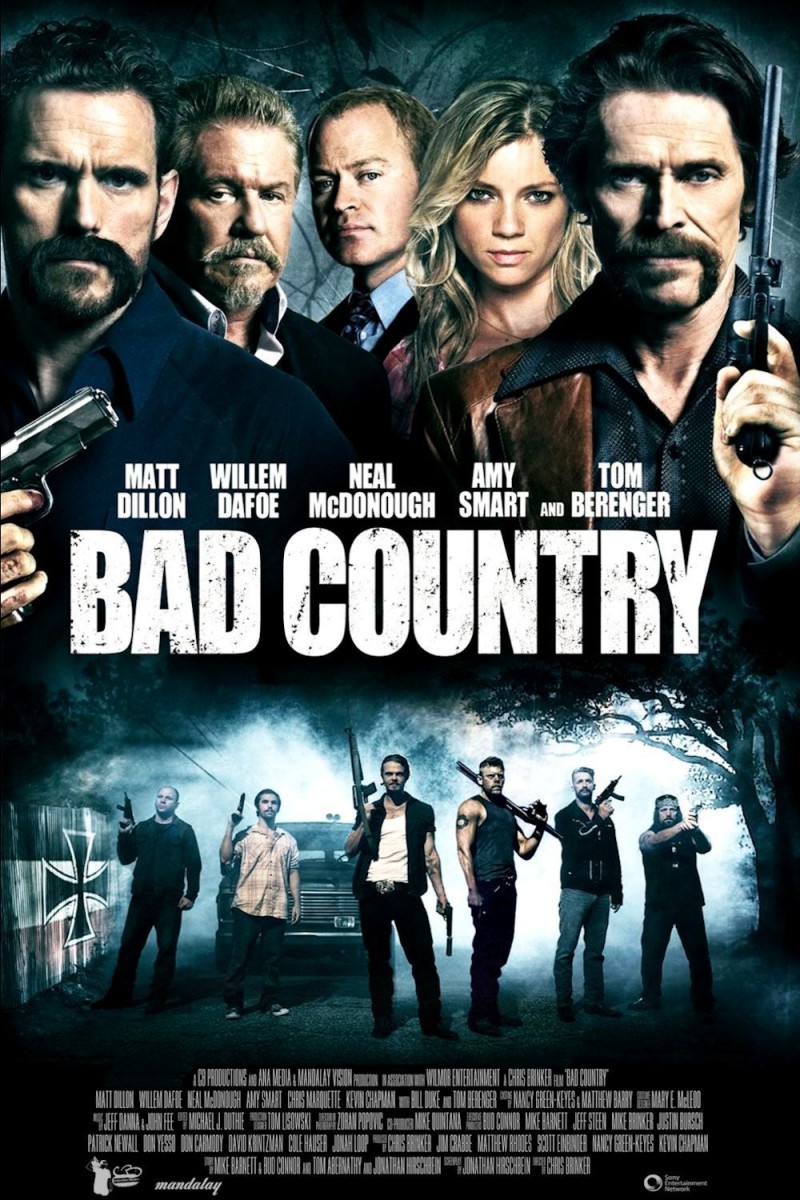
Cast: Matt Dillon, Willem Dafoe, Neal McDonough, Amy Smart, Tom Berenger, Chris Marquette, Don Yesso, John Edward Lee, Alex Solowitz, Christopher Denham, Bill Duke
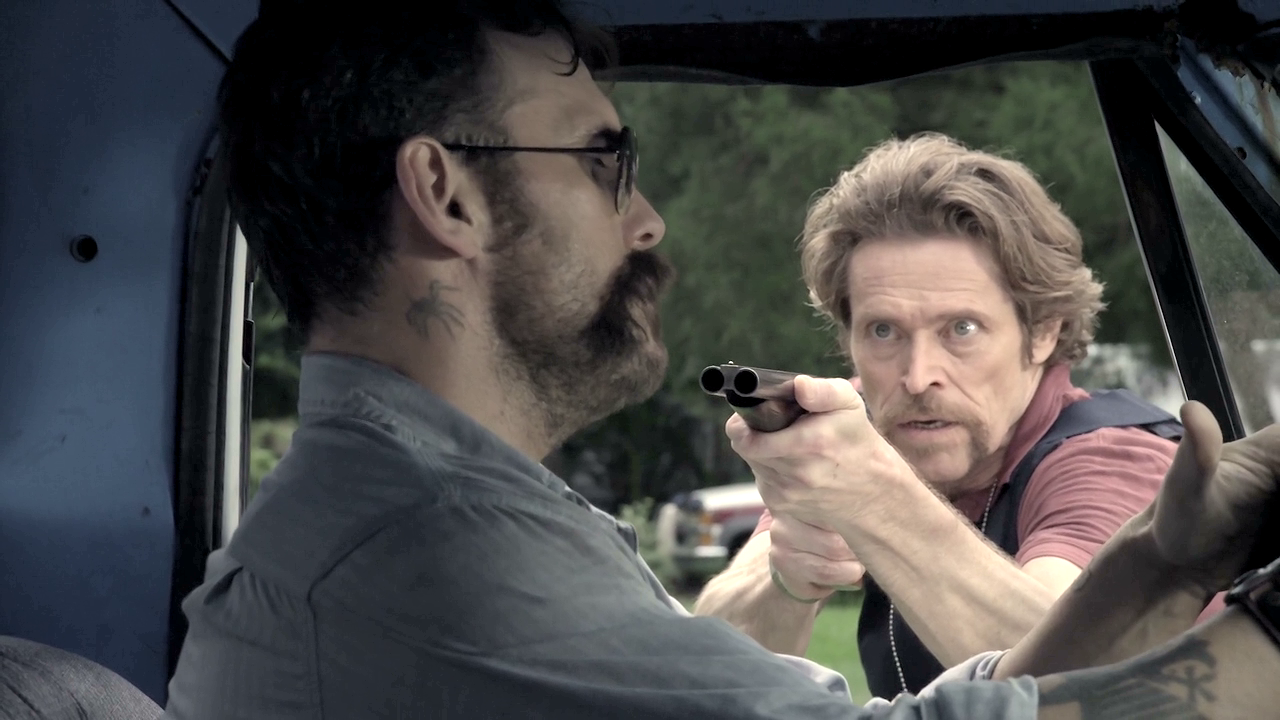
At times, Bad Country seems like an Eighties throwback, a Walking Tall-type movie that swaps Tennessee for Louisiana, and Buford Pusser for Willem Dafoe’s detective Bud Carter. Its production design and filming style is reminiscent of other movies from that era, and while that’s no bad thing by itself, this grounding doesn’t add anything to the movie, or make it stand out.
With an opening statement that gives the impression the movie is based on a true story (but it’s not), Bad Country sees Carter bust a small-time gang of thieves. Their arrest leads him to Jesse Weiland (Dillon). Weiland is a safecracker-cum-enforcer for local syndicate kingpin Lutin Adams (Berenger); he also has a wife, Lynn (Smart) and baby son. Adams is in Carter’s sights and he turns Jesse, aided by Jesse’s animosity towards Adams for having his brother killed, and his need to provide for Lynn and the baby (which will be difficult if he ends up in jail). With the Feds, represented by rookie Fitch (Marquette), muscling in on Carter’s operation, the original plan is hijacked and things quickly go sour, with further loss of life on both sides. When an attempt is made on Weiland’s life, he goes after Adams himself.
There’s little that’s fresh or new here, and the movie trundles along in fits and starts and never really springs to life. The plot is perfunctory and often banal, while Chris Brinker’s direction is drab and uninvolving. The cast do their best – Dafoe gives his usual impassioned performance, despite the material – but Smart and McDonough are given short shrift, while Dillon often seems on auto-pilot. The Baton Rouge locations are well-used but not enough to make them a feature, and there’s one too many scenes that fade to black, as if those scenes should have continued a bit longer but the script didn’t know how to manage it. There’s plenty of gunfire, and a final shootout that lacks energy and focus when it should be thrilling.
Rating: 5/10 – more ho-hum than humdinger, Bad Country plods along without ever really getting going; set against other, more recent crime thrillers, it lacks more than most, and the Eighties setting ends up being of no benefit at all.




 thedullwoodexperiment