• 10 Reasons to Remember…
  • A Brief Word About…
  • About
  • For One Week Only
  • Happy Birthday
  • Monthly Roundup
  • Old-Time Crime
  • Other Posts
  • Poster of the Week
  • Question of the Week
  • Reviews
  • Trailers

thedullwoodexperiment

~ Viewing movies in a different light

thedullwoodexperiment

Tag Archives: Andrew Scott

Handsome Devil (2016)

10 Saturday Feb 2018

Posted by dullwood68 in Movies

≈ Leave a comment

Tags

Andrew Scott, Boarding school, Comedy, Coming of age, Drama, Fionn O'Shea, Ireland, John Butler, Nicholas Galitzine, Review, Rugby, Talent show
D: John Butler / 95m

Cast: Fionn O’Shea, Nicholas Galitzine, Andrew Scott, Michael McElhatton, Moe Dunford, Ruairi O’Connor, Jay Duffy, Ardal O’Hanlon, Amy Huberman, Stephen Hogan

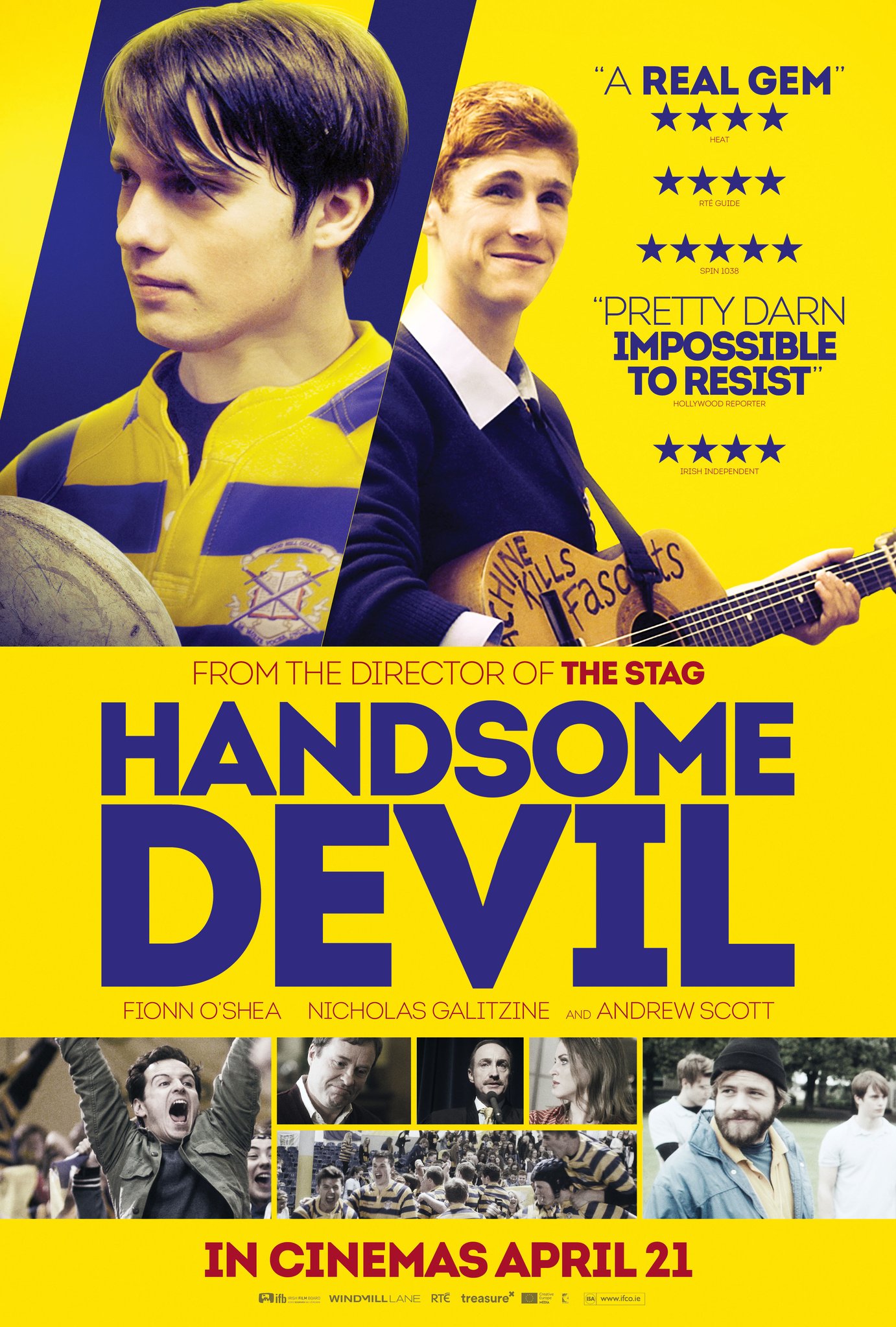
Ned (O”Shea) is returning to boarding school for another year of being the outsider, the one pupil in the entire school for whom rugby – which the school is obsessed by – doesn’t mean anything. Ned prefers reading and music, but this has earned him the enmity of some of the other pupils, including Weasel (O”Connor), who is on the current team. However, there is good news: this year he has a room to himself. But this good fortune doesn’t last long. A new pupil called Connor (Galitzine), is assigned to Ned’s room. First impressions don’t help and the pair initially don’t get along. An incident in their English class allows for the barriers they’ve erected (literally and figuratively) to be broken down, and soon they share a genuine friendship. A joint love of music sees them cajoled by their English teacher, Mr Sherry (Scott), into taking part in a local talent show. But Connor has also made the school rugby team and is proving to be their star player. But Connor has a secret, one that Ned discovers by accident, and one that leads to their friendship becoming strained, as well as forcing Connor to make a difficult choice if he wants to remain at the school.
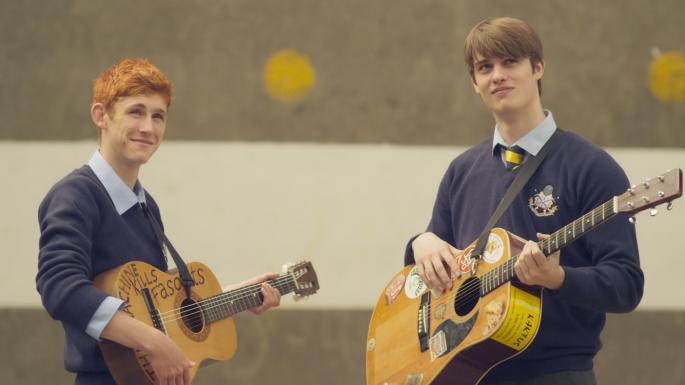
Told in the form of an extended flashback as Ned recounts the events of the previous months, Handsome Devil is another very likeable, very enjoyable movie that serves as a reminder that when it comes to coming-of-age tales, Ireland has assembled a pretty good track record in recent years. Irish movie makers seem to know instinctively how to balance comedy and drama in their movies, and John Butler’s follow up to The Stag (2013) is no exception. And more importantly, one isn’t allowed to overshadow the other. It’s sometimes a precarious balancing act, but here the dramatics surrounding Connor’s secret (an obvious one but treated with sympathy and understanding by Butler’s screenplay) are played out with a credibility lacking in many other movies, and thanks to a deftly handled performance by Galitzine. Connor’s friendship with Ned is another aspect that’s handled well, growing organically out of their shared appreciation for music. Butler gives both characters the chance to grow as the movie progresses, and they both emerge from their self-imposed shells more confident and more determined not to return to them.
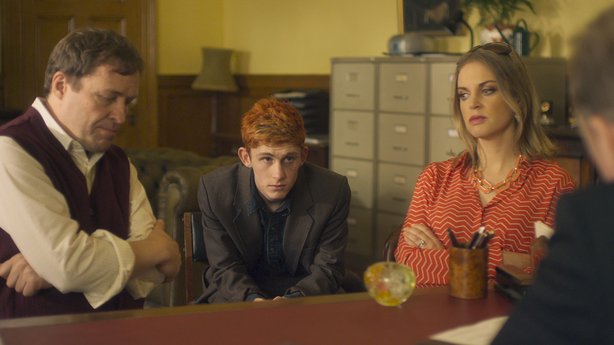
There’s plenty of humour to be had as well, and the movie makes several salient points about the highs and lows to be experienced in a boarding school environment. There’s also a devil and angel scenario whereby Connor’s “soul” is the concern of both Mr Sherry and his rugby coach, Mr O’Keeffe (Dunmore). This leads to a few awkward scenes that don’t feel as well developed as in other areas, and despite good performances from both actors, these scenes always feel a little leaden in comparison. In truth, the main storyline isn’t anything new, but it’s the way in which Butler handles it that makes it so enjoyable. There’s an impish yet sincere quality to the material that is engaging, and within the world he’s created, much is recognisable in terms of the characters and their troubles. Butler is utilising universal elements to tell his story, and it’s this universality that makes it look and sound so good, even if sometimes, his message is a little too simplistic (the movie ends on a moment of fantasy wish fulfillment that will either make you groan or cheer).Your world won’t be changed – probably – by seeing this movie, but you will enjoy spending time with it.

Rating: 8/10 – bright and entertaining, and with a welcome degree of poignancy, Handsome Devil is a delightful movie full of terrific performances topped off by Butler’s assured direction, and a number of first-rate song choices on the soundtrack; definitely a feelgood movie, then, and one that doesn’t strain to be something it’s not or strive to make more of its story than is completely necessary.

Share this:

  • Click to share on X (Opens in new window) X
  • Click to share on Facebook (Opens in new window) Facebook
  • More
  • Click to print (Opens in new window) Print
  • Click to email a link to a friend (Opens in new window) Email
Like Loading...

This Beautiful Fantastic (2016)

14 Sunday May 2017

Posted by dullwood68 in Movies

≈ Leave a comment

Tags

Andrew Scott, Drama, Gardening, Horticulture, Jeremy Irvine, Jessica Brown Findlay, Review, Romance, Simon Aboud, Tom Wilkinson

D: Simon Aboud / 91m

Cast: Jessica Brown Findlay, Tom Wilkinson, Andrew Scott, Jeremy Irvine, Anna Chancellor, Eileen Davies, Paul Hunter

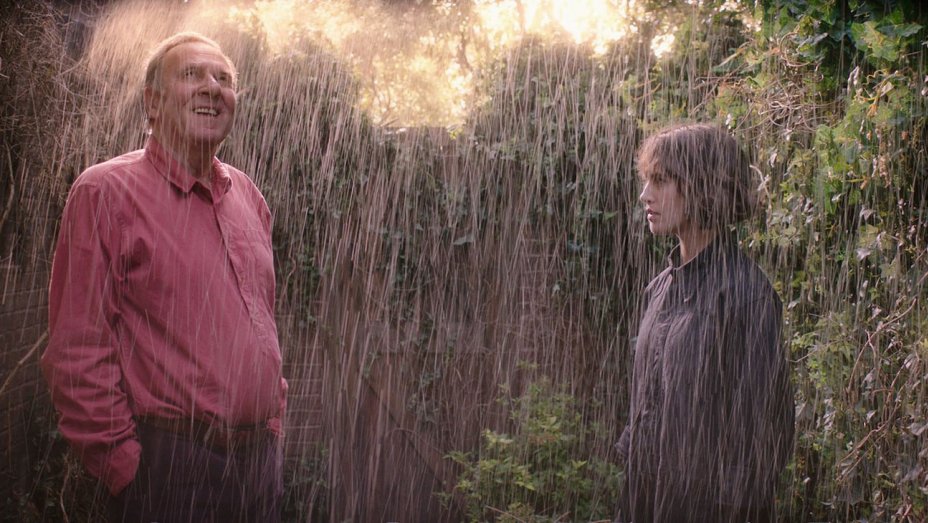
Bella Brown (Findlay) was a foundling child, abandoned in a park and kept alive by ducks. She has grown up to be a young woman with obsessive compulsive disorder, and an ambition to be an author. She works at her local library where her love of books has made her a valiuable, if persistently late, member of staff. Her home is a modest property with an expansive garden, one that she doesn’t maintain due to an extreme aversion to flora. She is shy, modest, inquisitive, and in the words of her neighbour, Alfie Stevenson (Wilkinson), has been “sent here to test us”.

One day at the library, Bella meets Billy (Irvine), a young man interested in the works of Leonardo Da Vinci. He leaves behind a piece of paper that Bella can see has the imprint of a drawing on it. She takes it home and uses a pencil to raise the image, which is of a bird. As she gazes on it, the window to the garden flies open due to a storm outside, and the drawing is whisked away into the branches of a tree. Plucking up courage, Bella goes into the garden and retrieves it. In the process she falls and loses consciousness. When she comes to, Bella finds herself in the home of her neighbour, Alfie, and being tended to by his doctor, Milly (Davies), while in turn, Alfie is being tended to by his housekeeper, Vernon (Scott). Alfie is an old curmudgeon, and berates Bella for the condition of her garden, calling her a “horticultural terrorist”.

Alfie’s displeasure at the state of Bella’s garden leads to Vernon working for her instead, which in turn leads to a battle of wills as Alfie tries to browbeat Bella into letting Vernon go back to him. Soon after, Bella receives a visit from her landlord, Mr O’Brien (Hunter), who tells her that unless her garden is kept to a reasonable standard, then she’ll be evicted. Bella has a month to make good on this condition, and with the help of Vernon and Alfie she begins to tackle the momentous job of clearing and redesigning the garden before O’Brien returns. Meanwhile, she begins a relationship with Billy, who proves to be an inventor. But when she sees him with another woman, she suffers such a sense of betrayal and loss that her commitment to the garden is put in jeopardy, and with O’Brien’s return getting closer and closer, it’s going to take a small miracle to keep Bella in her home.

Although This Beautiful Fantastic is only the second movie written and directed by Simon Aboud – after Comes a Bright Day (2012) (itself well worth checking out) – it’s not a feature that falls foul of “difficult second movie syndrome”. Instead it’s an appealing, sweet-natured, even goofy at times, romantic-comedy-drama that does its best to put a smile on its audience’s faces, and all with a lightness of touch that makes it an undeniable pleasure to watch. Aboud’s “movie in microcosm” is such a delight from start to finish that it’s like having cheesecake ahead of a main course at a restaurant: it’s definitely a movie to savour.

And it’s all so simply constructed and put together, with Aboud’s confidence behind the camera matching the quality of his screenplay, and the performances fitting perfectly into the whimsical nature of the material. This isn’t a movie that springs any surprises on its audience, and it’s definitely not a movie that tries to be different, but it does have a tremendous amount of quiet, understated charm, and a delightfully winning way about it. From its opening scenes, which offer a brief appraisal of Bella’s childhood coupled with Alfie’s sniping comments about her, This Beautiful Fantastic is a movie that sets out its stall from the start, and which doesn’t disappoint as it expands on its contemporary fairy tale theme and keeps its narrative wrapped tightly around its quartet of main characters.

In keeping with its lightness of touch and playful nature, the romance between Bella and Billy is engaging and kept just this side of annoyingly saccharine, with Irvine’s eager puppy of a young man a perfect foil for Findlay’s more restrained, and yet attentive Bella. Their relationship fits the bill in terms of boy-meets-girl, boy-loses-girl-through-unfortunate-mix-up, and then regains-girl-through-apologetic-explanation-of-mix-up, but again it’s all done with the full acknowledgment by all concerned that this is a fairy tale, and in fairy tales there are certain rules that have to be followed, and one of them is that the princess always gets her prince.

With the romantic elements having been taken care of, Aboud is free to create dozens of comedic moments that act as an undercurrent to the central drama of Bella making sure her garden doesn’t remain an eyesore. Alfie’s cantankerous, acidic nature is portrayed by Wilkinson with a deftness of touch that makes a virtue out of waspish pomposity, and the character’s arrogant outward appearance belies a romantic soul whose passion for horticulture is more personal than expected. As Vernon, Scott delivers a mannered, sympathetic portrayal of a widower with two twin girls whose sense of self-worth has taken a bit of battering thanks to Alfie’s bullying ways. But there’s a way back for him, and Scott makes sure that Vernon’s recurring way of dealing with Alfie is one of the movie’s more pleasing highlights. For her part, Findlay is something of a “straight woman”, and though she gives a fine, rounded performance, she’s not required to “dazzle” as much as her male co-stars, and has to leave the comedy to Chancellor, who plays her boss, Mrs Bramble (her insistence on complete silence within the library leads to a great sight gag three quarters in).

The drama is concerned with Bella’s voyage of self-discovery through gardening, as evidenced by her checking obsessively that her front door is closed every time she leaves home, and which falls by the wayside as she begins to experience love for the first time (though whether being in love really constitutes a cure for OCD is a bit of a stretch). Bella gains in confidence, and her ambitions as a writer, stalled until the arrival of Billy, allow her to blossom even further beyond the confines of her garden. Aboud ensures that Bella’s journey is punctuated with the necessary number of setbacks, all of which allow for and encourage her personal (allegorical) growth at the same time that the garden begins to flourish also. Alfie develops too, although his development is less about personal growth and more about acknowledging the past and its lasting effect on him. Again, Aboud handles all these elements with a great deal of skill and compassion for his characters, and the end result is a movie that will make you laugh a lot, cry on occasion, and feel glad that you took a chance on a movie that could have missed its target by a country mile.

Rating: 8/10 – with a couple of last-minute revelations that unfortunately undermine the good work Aboud has put in in assembling his movie, This Beautiful Fantastic is still a movie that provides a very pleasant viewing experience indeed; one of those movies that make you feel great if you’ve found it without help from critics or word of mouth, it’s a lovely piece that knows its limitations and works within them to provide a beautifully designed and established visual delight – just like Bella’s garden.

Share this:

  • Click to share on X (Opens in new window) X
  • Click to share on Facebook (Opens in new window) Facebook
  • More
  • Click to print (Opens in new window) Print
  • Click to email a link to a friend (Opens in new window) Email
Like Loading...

Denial (2016)

05 Sunday Feb 2017

Posted by dullwood68 in Movies

≈ Leave a comment

Tags

Andrew Scott, David Irving, Deborah Lipstadt, Drama, Holocaust, Libel case, Mick Jackson, Rachel Weisz, Review, Timothy Spall, Tom Wilkinson, Trial, True story

denial_movie_poster_p_2016

D: Mick Jackson / 109m

Cast: Rachel Weisz, Tom Wilkinson, Timothy Spall, Andrew Scott, Jack Lowden, Caren Pistorius, Alex Jennings, Harriet Walter, Mark Gatiss, John Sessions, Nikki Amuka-Bird

“The most effective way to destroy people is to deny and obliterate their own understanding of their history.” That quote, made by George Orwell, is a particularly apt phrase when looking at Denial, a movie that explores the libel case brought by Holocaust denier David Irving (Spall) against renowned historian Deborah Lipstadt (Weisz) and her UK publishers, Penguin, back in 2000. In her book, Denying the Holocaust: the Growing Assault on Truth and Memory (1993), Lipstadt had referred to Irving as a “Holocaust denier, falsifier, and bigot”, and also stated “that he manipulated and distorted real documents.” Irving sued Lipstadt in the British courts for one very good reason: in the UK, the burden of proof is on the defendant. In this case it meant that Lipstadt and Penguin had to prove that the Holocaust did actually happen, thereby proving that Irving was a falsifier and the accusations in her book were true.

If you were around in the late Nineties, it’s likely you would have heard of David Irving. He was notorious for his denial of the Holocaust, and the very nature of the trial made it headline news at the time. In bringing this incredible true story to the screen, director Mick Jackson and screenwriter David Hare have managed to somehow make a movie that gets the salient points across but which does so with a minimum of apparent enthusiasm. Perhaps it’s the nature of the subject matter, and the makers have gone for a dour, unspectacular approach in recognition of this. If that’s the case, then they’ve done the movie a massive disservice.

maxresdefault

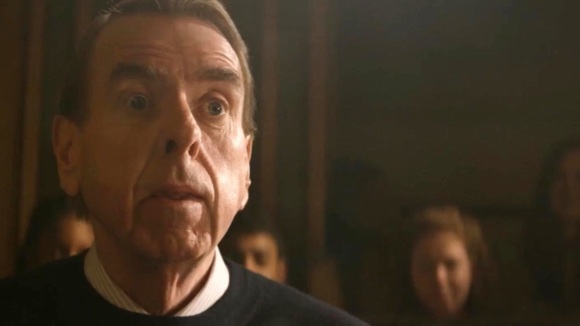
From the moment we see Irving challenge Lipstadt at one of her lectures, the very idea that the Holocaust didn’t happen – and that someone would willingly say such a thing, and then challenge someone to prove it did happen – is so bizarrely unnerving that it should make Irving all the more intriguing, and yet, as played by Spall, he’s more like a kindly uncle who’s gone slightly off his rocker. When he makes his opening speech at the trial – Irving represented himself – his off-kilter rhetoric and less than fashionable beliefs show a man whose disregard for historical truth has brought him to the last place he should ever want to be: in a courtroom, where his beliefs could be challenged under law and where his convictions could be exposed as terrible shams. Irving may have thought he was being clever bringing the case in an English court, but it was hubris that made him do so, and inevitably, he paid the price.

It’s an aspect that the movie fails to grasp, instead highlighting Irving’s sense of self-aggrandisement, and his talent for being a fly in the ointment of accepted historical fact. Spall is good in the role (when was the last time Spall wasn’t good in a role?*), but as written, Irving never appears truly threatening; he never comes across as someone who ever had even the slightest chance of winning, but the movie tries to make it seem as if he did. There are nods to the oxygen of publicity that encourages him in his efforts, but the real question that should be on everyone’s lips is never asked: Why? Why be a naysayer for the Nazis?

denialpic2-600x400

With Irving filling the role of boogeyman to Lipstadt’s crusading historian, the movie settles back, happy with its principal villain, and finds itself struggling to make the defence team just as interesting. As Lipstadt, Weisz brings determination and passion to the role, but it’s directed too often in opposition to her legal team, headed by barrister Richard Rampton QC (Wilkinson), and solicitor Anthony Julius (Scott). She butts heads with them over how she thinks the case should be handled, questions their commitment, and then wonders why her passion isn’t as openly shared as she expects. Wilkinson bounces back and forth between carefree bonhomie and courtroom gravitas, while Scott essays patrician superiority at every turn, all of which leaves little room for the rest of the defence team to make much of an impact.

In the courtroom, any expected fireworks fail to be set off. There’s so little tension, and so few moments where the inherent drama of the case is allowed a bit of breathing room that the viewer can only wonder if Hare somehow forgot that these scenes were meant to be gripping. The same could be said for Jackson’s direction, which relies on the same camera set ups throughout, the cut and thrust of Rampton’s cross-examination of Irving, and a last-minute inference from the judge (Jennings) that the defence’s case might crumble at the final hurdle to instil some heightened drama. But by the time it happens, most viewers will have ceased to care if Irving loses or not, just as long as there’s an end to the story.

denial__2016_5048

All in all, Denial works as a generalised account of an important moment in British legal, and Holocaust, history. But in taking the generalised road – the road most travelled, if you will – the movie loses any sprightliness it might have had, and resorts to plodding along, picking up plot points along the way, and under-utilising its very talented cast. It doesn’t fall down at any point; instead it lumbers along as if it’s about to. The only time it breaks free of its self-imposed shackles, is during a trip to Auschwitz, where Rampton appears to be insensitive to the surroundings. It’s a bleak, mournful sequence that speaks to how gripping the rest of the movie could have been.

All in all, it’s not everyone’s finest hour, but it does do just enough to give people the sense of what it was like back then, with Irving seemingly unassailable and the very real possibility that Lipstadt might lose. But the movie’s dry, methodical approach undermines the material – and the performances – too often for comfort, and though this is a worthy piece, it never gains the necessary traction to make it compelling as well.

Rating: 6/10 – not a straight up fiasco, nor a contentious thriller either, Denial falls somewhere between the two camps in its efforts to be absorbing and persuasive; a movie that could, and should, have been made as a legal thriller, it keeps a respectful distance from the horrors that Irving would have had us dismiss, and only really gets under its own skin when it’s at the real Auschwitz-Birkenau camp.


*The last time Spall wasn’t that great in a role? Sofia aka Assassin’s Bullet (2012). Don’t check it out.

Share this:

  • Click to share on X (Opens in new window) X
  • Click to share on Facebook (Opens in new window) Facebook
  • More
  • Click to print (Opens in new window) Print
  • Click to email a link to a friend (Opens in new window) Email
Like Loading...

Victor Frankenstein (2015)

09 Wednesday Dec 2015

Posted by dullwood68 in Movies

≈ 1 Comment

Tags

Andrew Scott, Body parts, Daniel Radcliffe, Drama, Frankenstein, Horror, Igor, James McAvoy, Jessica Findlay Brown, Life and death, Literary adaptation, Mary Shelley, Monster, Paul McGuigan, Review, Science, Thriller, Victorian London

Victor Frankenstein

D: Paul McGuigan / 110m

Cast: Daniel Radcliffe, James McAvoy, Jessica Findlay Brown, Andrew Scott, Freddie Fox, Callum Turner, Daniel Mays, Charles Dance, Mark Gatiss

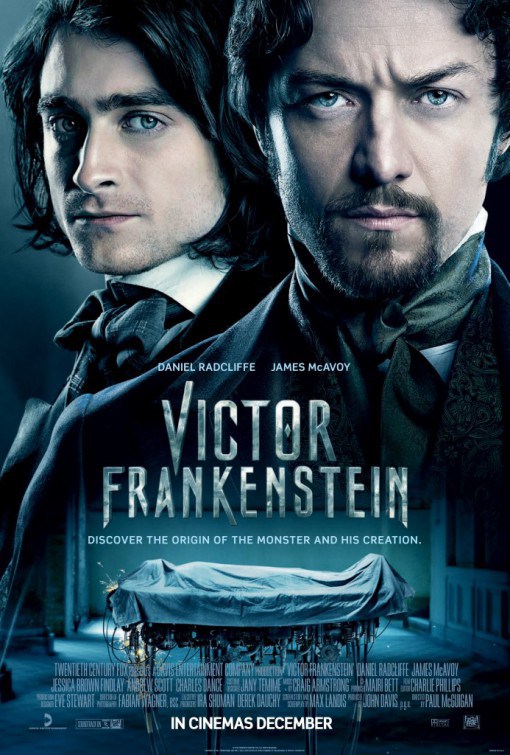
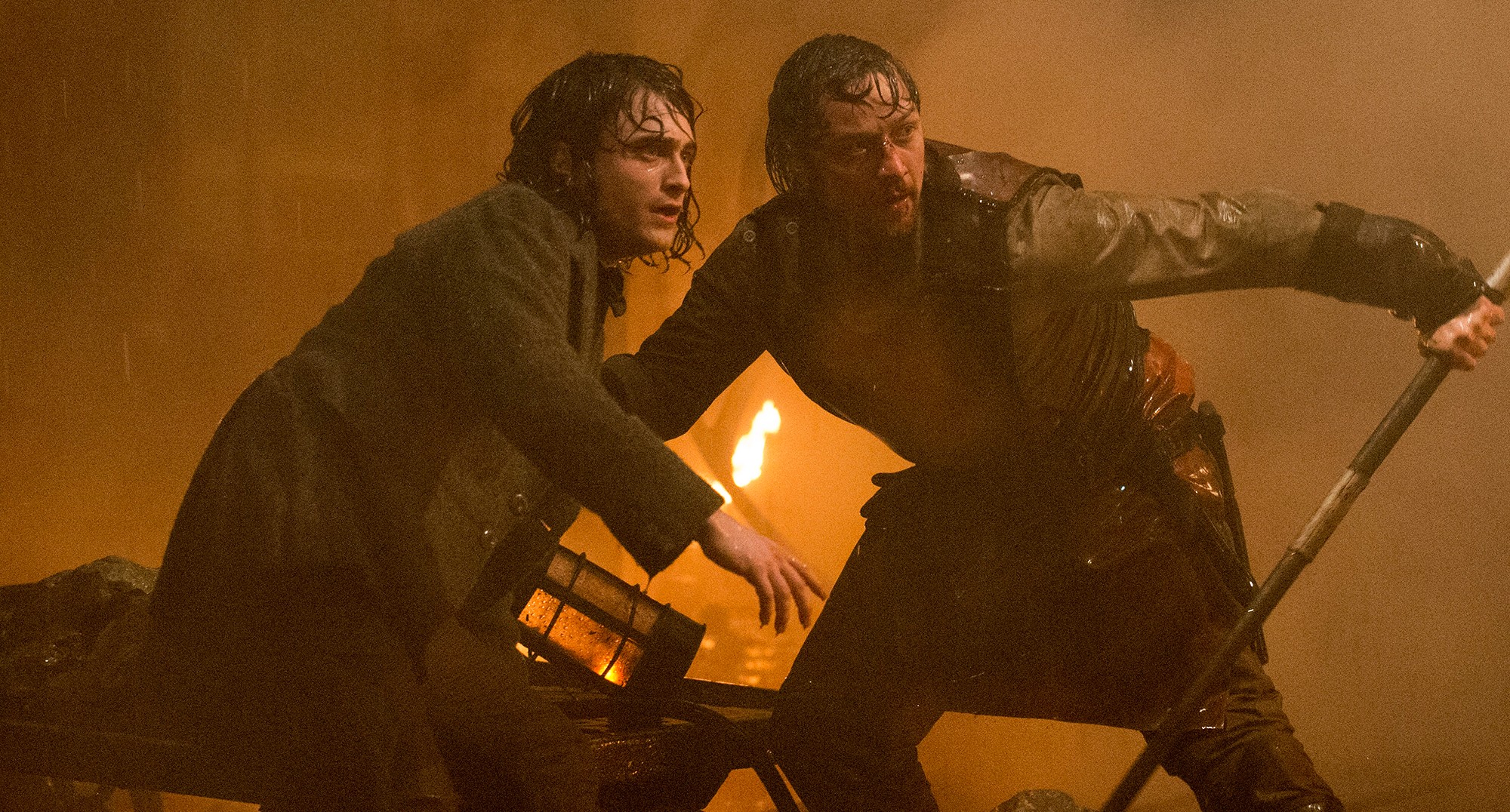
And so we have the latest variation on Mary Shelley’s Frankenstein, or the Modern Prometheus, or as it perhaps should be known, Victor Frankenstein: A Funny Thing Happened on the Way to the Release Date…

When the first trailer was released back in August 2015, prospective viewers could have been forgiven for thinking that Victor Frankenstein was going to be a bit of a romp, a version where comedy was at the forefront, the bromance between Victor and Igor was going to carry the movie, and there was going to be lots of flashy special effects (and a monster). When the second trailer was released, the humour had been dialled back and the movie appeared to be a more serious take on the legend (albeit with a bromance between Victor and Igor and lots of flashy special effects – and a monster). Some prospective viewers may have sighed with relief; after all, if you’re going to make a Frankenstein movie that’s got humour in it, how on earth are you going to top Young Frankenstein (1974)?

VF - scene1

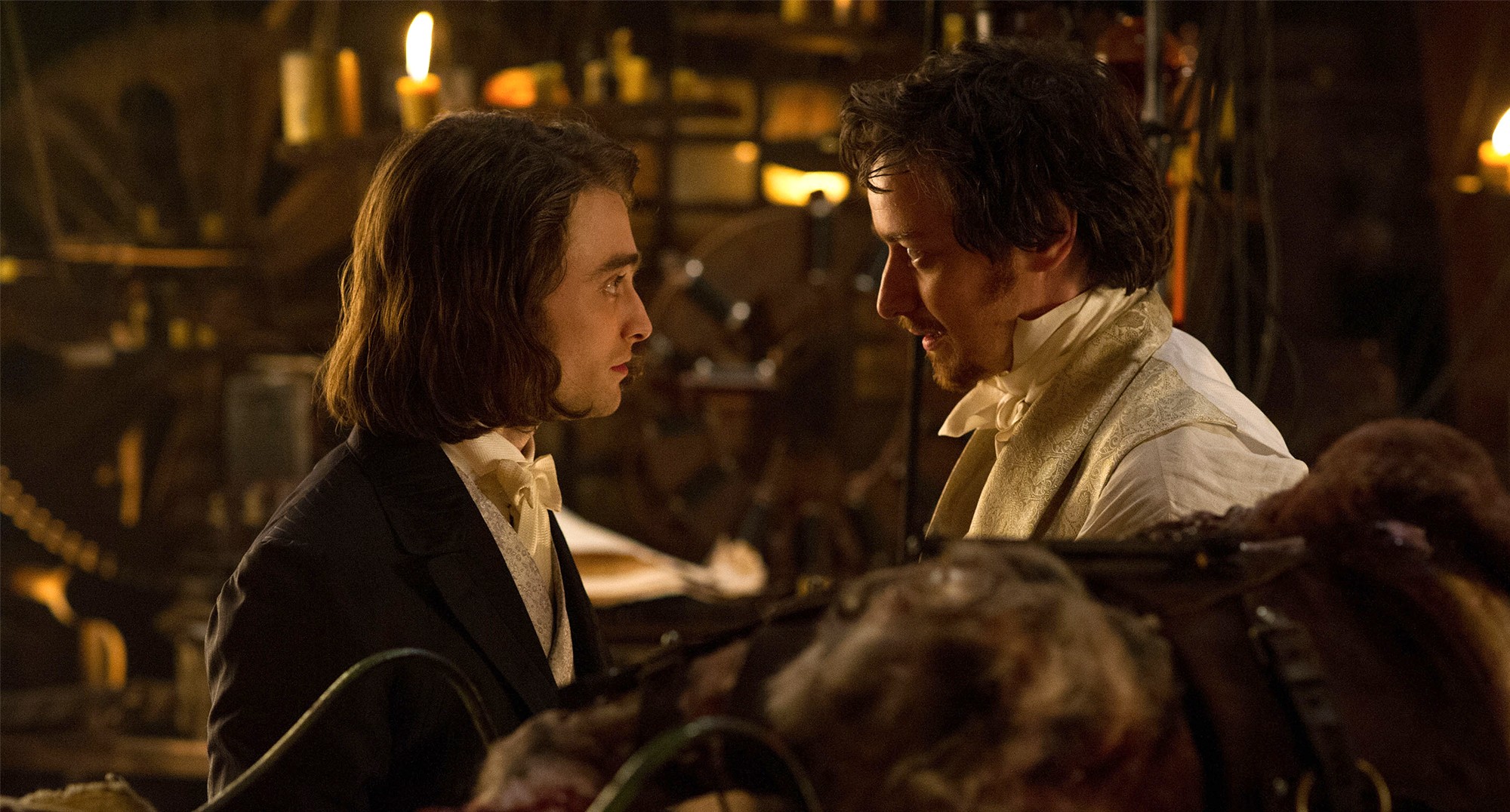
Thankfully, the makers seemed to have realised that the one-liners and the overt bromance weren’t as good an idea as they might have been, and the movie is a more serious proposition, but there are still echoes of both humour and bromance, mostly from McAvoy’s hyperactive performance and screenwriter Max Landis’s uncertainty as to what tone to take with the material. What we’re left with is a movie that tries to make two tortured individuals into an unofficial couple – they meet, they admire each other to bits, they fall out, they reunite and reconfirm their commitment to each other – while using Andrew Scott’s equally tortured, increasingly crazed police inspector as the religious foil for their scientific endeavours, and never quite reconciling the whole “benefit to mankind” approach that goads them on.

Victor is portrayed as a manic obsessive with a “history” that drives him on, and McAvoy, usually a sensitive actor, here can’t resist the urge to go for broke and just let rip. You half suspect that Victor’s taking drugs but it’s not that simple: it’s just his personality, and McAvoy parades around like he’s on display throughout, declaiming wildly and to little purpose. Radcliffe takes the quieter route, but his Igor is a dead weight in a movie that wants to celebrate Victor’s mania rather than his assistant’s good sense. As one half of a team that’s in danger of destroying itself and being forgotten by history, you can understand his willingness to spend more and more time with ex-circus aerialist Lorelei (Brown) (who only appears to like him when he’s not a hunchback or looking like Robert Smith from The Cure).

VF - scene2

On the visual side, Victor Frankenstein owes a lot to Guy Ritchie’s Sherlock Holmes movies, its late Victorian era setting full of background shots of building work going on and the streets teeming with the great and the downtrodden (and is further reinforced by the sudden appearance at the end of Gatiss as Victor’s new assistant). The climax is a suitably overwrought affair with plenty of explosions and destruction, and a monster that bears an unfortunate resemblance to both Dave Prowse’s incarnation in The Horror of Frankenstein (1970) and the Newborn from Alien: Resurrection (1997) (and why is it that mad scientists just can’t master putting a proper nose on their creation’s face?).

McGuigan doesn’t appear to have a firm grip on any of the movie, and there are moments of pure farce that undermine the intensity the makers are going for, such as Dance’s brief appearance as Victor’s father: there just to give Victor a slap and tell him he’s been a naughty boy. Still some humour then, but this time, unfortunate and unintentional, a bit like the movie as a whole.

Rating: 5/10 – another disappointing “adaptation” of Shelley’s tale, Victor Frankenstein is held back by weak plotting and a sense that there’s a different, perhaps better movie in there somewhere; McAvoy seems to be acting on his own recognisance, and the movie skips on providing any real horror from what Victor is bent on achieving, leaving it more anodyne than effective.

Share this:

  • Click to share on X (Opens in new window) X
  • Click to share on Facebook (Opens in new window) Facebook
  • More
  • Click to print (Opens in new window) Print
  • Click to email a link to a friend (Opens in new window) Email
Like Loading...

Spectre (2015)

10 Tuesday Nov 2015

Posted by dullwood68 in Movies

≈ Leave a comment

Tags

007, Action, Adventure, Andrew Scott, Ben Whishaw, Christoph Waltz, Daniel Craig, Dave Bautista, Eon Productions, Franchise, Ian Fleming, James Bond, Jesper Christensen, Léa Seydoux, M, MI5, Miss Moneypenny, Monica Bellucci, Mr Hinx, Mr White, Naomie Harris, Q, Ralph Fiennes, Sam Mendes, Sequel, Thriller

Spectre

D: Sam Mendes / 148m

Cast: Daniel Craig, Christoph Waltz, Léa Seydoux, Ralph Fiennes, Ben Whishaw, Naomie Harris, Monica Bellucci, Dave Bautista, Andrew Scott, Rory Kinnear, Jesper Christensen, Alessandro Cremona

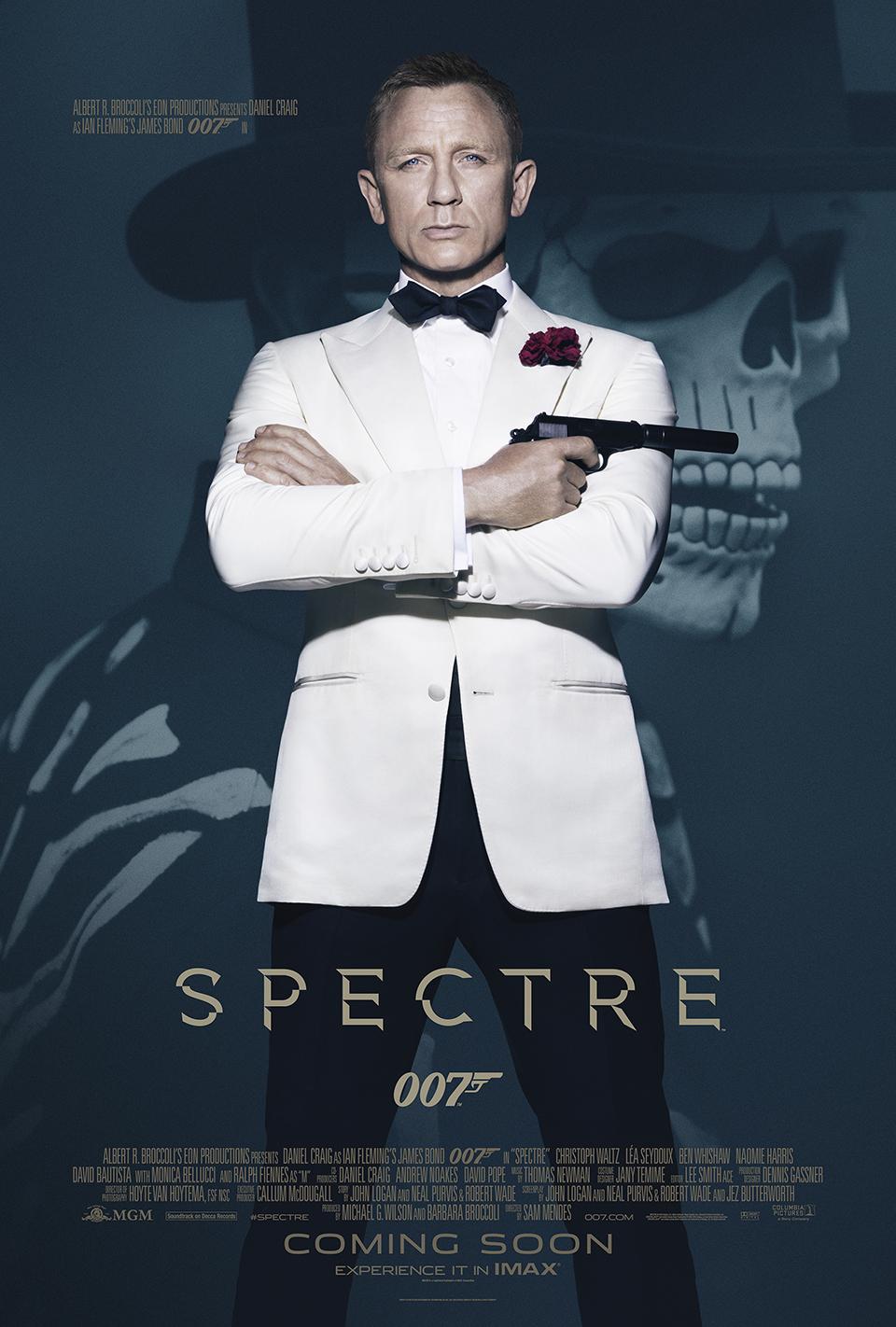
And so, here we are again, back in familiar territory: after a run of three movies with a new actor playing James Bond, and with the material getting worse and worse, we arrive at a fourth movie that neither grips or excites, boasts a decent script or direction, and which labours through its extended running time like an asthmatic running a half-marathon. We could be talking about Die Another Day (2002), but instead we’re talking about Spectre, the latest in the oft-rebooted franchise, and possibly Daniel Craig’s last outing as Bond (he may do one more but nothing’s definite yet).

It’s been a relatively short nine years since Casino Royale exploded onto our screens in a welter of frenzied, punishing action sequences, and one of the best Bond scripts ever. It was everything you could ever hope for from a Bond movie, and then some, and for many fans it went straight to the top of their favourite Bond movie list. There were some psychological aspects to it in terms of Bond’s behaviour, the best Bond villain for an age, and as an “origin story” it worked much better than most. But most of all it was fun with a capital F.

And then there came the inevitable stumble with Quantum of Solace (2008). A straight-out revenge flick but with James Bond as the central character, it was basically a direct follow-up to Casino Royale that suffered from a weak villain and a mid-section that dragged as if the writers had lost focus on the story they were telling. But it did have some great action sequences, just as tough and brutal as before, and a great performance from Craig. (If you watch it back to back with Casino Royale as a four hour movie it plays a lot better than on its own.)

Spectre - scene2

Now at this stage, the producers brought on board Sam Mendes to helm the third outing for Craig, and he delivered the most successful Bond movie to date: Skyfall (2012). But while critics and fans heaped praise on the first Bond movie to make over a billion dollars at the box office, less easily swayed viewers could see the cracks starting to show as the writers tried to include a mystery relating to Bond’s past. And there were problems elsewhere, where the script showed signs of laziness (the train crash – how could Silva have “known” that he and Bond would meet at that particular place and time for the train to come crashing through the ceiling?).

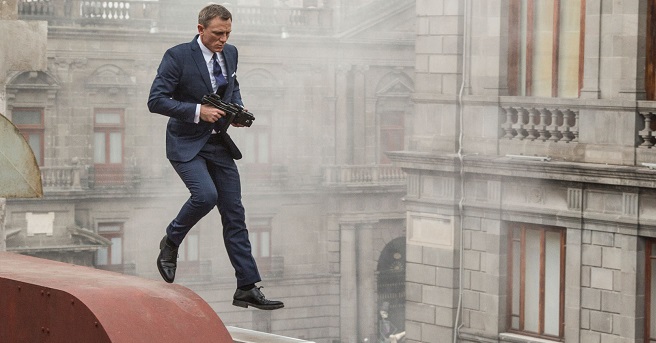
That laziness has been extended to Spectre, with its tired action sequences (only the fight on the train between Bond and Mr Hinx has any energy or verve about it), eggshell thin characterisations (why does it seem as if Vesper Lynd is the only female character in the Bond franchise with any depth?), nonsensical reason for the villain’s actions (whatever happened to blackmailing the world’s leaders into not killing them with hijacked nukes?), and nods to previous entries in the franchise that only serve to remind audiences of the good old days when Bond just got on with the job and didn’t have to deal with questions about his lifestyle or any emotional scarring arising out of his childhood.

There’s also the absurd plot about linking all the world’s security systems under one (though it looks as if Waltz’s character is already doing that anyway), and then there’s Christoph Waltz’s ersatz-Blofeld scampering around like an escaped inmate from Bellevue, and providing none of the menace required to make his character a match for Bond’s determination and drive; in fact, he has more in common with Elliot Carver, Jonathan Pryce’s crazed media tycoon in Tomorrow Never Dies (1997) (but that’s still not a recommendation). Waltz is a good actor, but he’s all too often an actor making his own decisions about playing a role, and without, it seems, much instruction from the director. Here he tries the playful über-villain too often for comfort, and for the head of an organisation that included Le Chiffre and Raoul Silva as mere agents, looks entirely like someone’s younger brother who finally gets to play with his bigger brother’s toys.

Spectre - scene

Once again, the female characters are there for decoration, with Seydoux going to sleep in a hotel room fully clothed and then waking up some time later in her slip, and Bellucci wasted as the wife of a man Bond kills in the opening sequence. Harris though, does get more to do as Miss Moneypenny (we even get a glimpse of her home life), but beyond that it’s business as usual, with no other female roles of note, and the focus firmly on the macho posturing that occurs elsewhere throughout (even Whishaw gets a moment out in the field where he encounters some danger). Fiennes is a grumpy-looking M (though he does get the movie’s best line), Scott is a slimy-looking C, and Bautista is all the more imposing for being dressed in bespoke tailoring throughout. The returning Christensen is a welcome sight but he’s only there to reiterate what he said in Quantum of Solace (though “we have people everywhere” now becomes “he’s everywhere”), and his one scene is over far too quickly.

Returning as well, of course, is Mendes, whose handling of Skyfall meant he was always going to be asked to return, but perhaps it would have been better to go with someone who could inject some much needed energy into proceedings. Mendes is good at the MI6 stuff, prowling the corridors of power and highlighting the power games surrounding the shake up of the security services that serves as the political backdrop for the movie, but “out in the field” he’s less confident, and on this evidence, less engaged. There are too many scenes that go by without making much of an impact, and too many scenes that could have been more judiciously pruned in the editing suite. Instead, Mendes does just enough to make Spectre a facsimile of Skyfall, but without the emotional ending (here Bond rides off into the sunset with Seydoux’s character, but you know she won’t be back for the next movie).

If Craig decides not to play Bond one more time then the producers will need to go back to square one and start afresh – again. If they do, then let’s hope this whole let’s-give-Bond-an-origin-story-he-doesn’t-need angle is dropped in favour of seeing him do what he does best: being a one-man wrecking crew with no time for niceties. In many ways, Ian Fleming’s creation is a “sexist, misogynist dinosaur”, but it’s what we’ve loved about him for over fifty years now, and in their efforts to give us a “new” Bond for contemporary times, the producers have lost sight of what makes him truly Bond: he doesn’t do introspection or guilt, and because of that he’s good at his job. (And if a reboot is in order, then let’s get Martin Campbell back in the director’s chair – he seems to know what he’s doing.)

Rating: 5/10 – not a complete stinker – it’s production values, along with Craig’s still committed performace see to that – but not the best Bond outing you’re likely to see either, and proof that the series, in this stretch at least, is heading downhill fast; when even the action sequences in Spectre feel tired and lacklustre, then it’s time for the producers to take a step back and work out where they really want to take Bond next, because right now, it doesn’t look as if they know.

Share this:

  • Click to share on X (Opens in new window) X
  • Click to share on Facebook (Opens in new window) Facebook
  • More
  • Click to print (Opens in new window) Print
  • Click to email a link to a friend (Opens in new window) Email
Like Loading...

Blog Stats

  • 486,559 hits

Recent Posts

  • 10 Reasons to Remember Bibi Andersson (1935-2019)
  • Fantasia (1940)
  • Dances With Wolves (1990) – The Special Edition
  • Kiss of the Spider Woman (1985)
  • The Three Musketeers (1973)

Top Posts & Pages

  • Lost for Life (2013) - Another Look
    Lost for Life (2013) - Another Look
  • Lost for Life (2013)
    Lost for Life (2013)
  • About
    About
  • Mr. Topaze (1961)
    Mr. Topaze (1961)
  • Winter's Tale (2014)
    Winter's Tale (2014)
  • Shock and Awe (2017)
    Shock and Awe (2017)
  • Billy Lynn's Long Halftime Walk (2016)
    Billy Lynn's Long Halftime Walk (2016)
  • Hunt for the Wilderpeople (2016)
    Hunt for the Wilderpeople (2016)
  • 5 Famous Movie Roles That Nearly Went to Someone Else
    5 Famous Movie Roles That Nearly Went to Someone Else
  • The Layover (2017)
    The Layover (2017)
Follow thedullwoodexperiment on WordPress.com

Blogs I Follow

  • Rubbish Talk
  • Film 4 Fan
  • Fast Film Reviews
  • The Film Blog
  • All Things Movies UK
  • Interpreting the Stars
  • Let's Go To The Movies
  • Movie Reviews 101
  • TMI News
  • Dan the Man's Movie Reviews
  • Film History
  • Jordan and Eddie (The Movie Guys)

Archives

  • April 2019 (13)
  • March 2019 (28)
  • February 2019 (28)
  • January 2019 (32)
  • December 2018 (28)
  • November 2018 (30)
  • October 2018 (29)
  • September 2018 (29)
  • August 2018 (29)
  • July 2018 (30)
  • June 2018 (28)
  • May 2018 (24)
  • April 2018 (21)
  • March 2018 (31)
  • February 2018 (25)
  • January 2018 (30)
  • December 2017 (30)
  • November 2017 (27)
  • October 2017 (27)
  • September 2017 (26)
  • August 2017 (32)
  • July 2017 (32)
  • June 2017 (30)
  • May 2017 (29)
  • April 2017 (29)
  • March 2017 (30)
  • February 2017 (27)
  • January 2017 (32)
  • December 2016 (30)
  • November 2016 (28)
  • October 2016 (30)
  • September 2016 (27)
  • August 2016 (30)
  • July 2016 (30)
  • June 2016 (31)
  • May 2016 (34)
  • April 2016 (30)
  • March 2016 (30)
  • February 2016 (28)
  • January 2016 (35)
  • December 2015 (34)
  • November 2015 (31)
  • October 2015 (31)
  • September 2015 (34)
  • August 2015 (31)
  • July 2015 (33)
  • June 2015 (12)
  • May 2015 (31)
  • April 2015 (32)
  • March 2015 (30)
  • February 2015 (37)
  • January 2015 (39)
  • December 2014 (34)
  • November 2014 (34)
  • October 2014 (36)
  • September 2014 (25)
  • August 2014 (29)
  • July 2014 (29)
  • June 2014 (28)
  • May 2014 (23)
  • April 2014 (21)
  • March 2014 (42)
  • February 2014 (38)
  • January 2014 (29)
  • December 2013 (28)
  • November 2013 (34)
  • October 2013 (4)

Blog at WordPress.com.

Rubbish Talk

Film 4 Fan

A Movie Blog

Fast Film Reviews

The Film Blog

The official blog of everything in film

All Things Movies UK

Movie Reviews and Original Articles

Interpreting the Stars

Dave Examines Movies

Let's Go To The Movies

Film and Theatre Lover!

Movie Reviews 101

Daily Movie Reviews

TMI News

Latest weather, crime and breaking news

Dan the Man's Movie Reviews

All my aimless thoughts, ideas, and ramblings, all packed into one site!

Film History

Telling the story of film

Jordan and Eddie (The Movie Guys)

Movie Reviews & Ramblings from an Australian Based Film Fan

Privacy & Cookies: This site uses cookies. By continuing to use this website, you agree to their use.
To find out more, including how to control cookies, see here: Cookie Policy
  • Subscribe Subscribed
    • thedullwoodexperiment
    • Join 481 other subscribers
    • Already have a WordPress.com account? Log in now.
    • thedullwoodexperiment
    • Subscribe Subscribed
    • Sign up
    • Log in
    • Report this content
    • View site in Reader
    • Manage subscriptions
    • Collapse this bar
 

Loading Comments...
 

    %d