• 10 Reasons to Remember…
  • A Brief Word About…
  • About
  • For One Week Only
  • Happy Birthday
  • Monthly Roundup
  • Old-Time Crime
  • Other Posts
  • Poster of the Week
  • Question of the Week
  • Reviews
  • Trailers

thedullwoodexperiment

~ Viewing movies in a different light

thedullwoodexperiment

Tag Archives: Catherine Keener

Enough Said (2013)

29 Saturday Jul 2017

Posted by dullwood68 in Movies

≈ Leave a comment

Tags

Catch Up movie, Catherine Keener, Comedy, Divorce, Drama, James Gandolfini, Julia Louis-Dreyfus, Nicole Holofcener, Review, Romance, Toni Collette
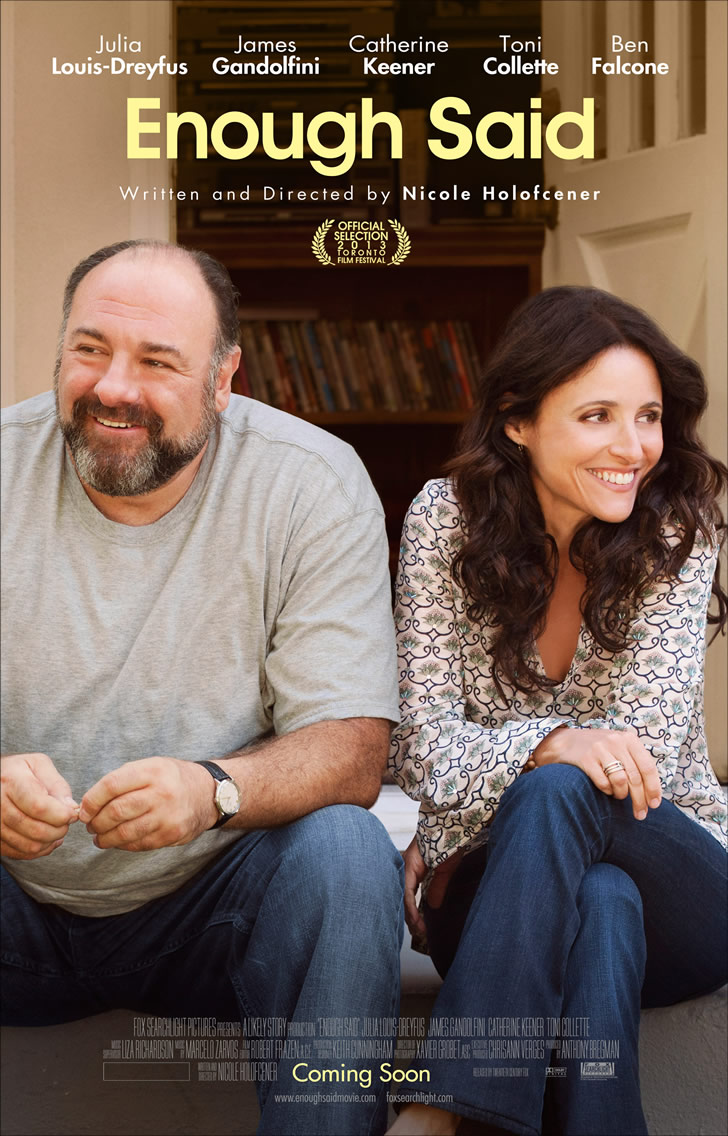
D: Nicole Holofcener / 93m

Cast: Julia Louis-Dreyfus, James Gandolfini, Catherine Keener, Toni Collette, Ben Falcone, Tracey Fairaway, Tavi Gevinson, Eve Hewson, Michaela Watkins, Toby Huss, Kathleen Rose Perkins

The career of writer/director Nicole Holofcener has been an interesting and successful one, with plenty of plaudits for her movies, and healthy box office returns. She makes movies that rely on a sense of realism that you don’t see too often in other, similar-minded indie movies, and thanks to Holofcener having hired Catherine Keener for every feature that she’s made, she’s regarded as someone who makes chick flicks. Chick flicks that are intelligent and character-driven, but still… chick flicks. When the producers of Enough Said approached Holofcener with an offer to produce her next movie, they had one proviso: it had to be more mainstream than her previous movies. Holofcener rose to this somewhat insensitive challenge, and in doing so, made her most accessible, and most enjoyable movie to date.

The movie’s central character is a middle-aged, ten-year divorced masseuse called Eva (Louis-Dreyfus). She has a teenage daughter, Ellen (Fairaway), who’s about to leave home to go to college, and she’s not seeking a new partner or husband or significant other. At a party she attends with her friends, Sarah and Will (Collette, Falcone), she meets Marianne (Keener), a poet, and the two hit it off. Later on, Eva tells Sarah and Will there isn’t a single man there that she’s attracted to. Until she’s introduced to Albert (Gandolfini), that is. Within a day or two, Eva has been contacted by Marianne who wants a massage, and she learns from Sarah that Albert has asked for her number. Eva and Albert arrange to have dinner together, and the evening is a success. She begins a relationship with Albert, while at the same time she learns about Marianne’s failed marriage to a man who always pushed the onions in guacamole off to the side of the bowl before eating it. Marianne remains hyper-critical of her ex-husband, and tells Eva more and more about his “digusting habits”.
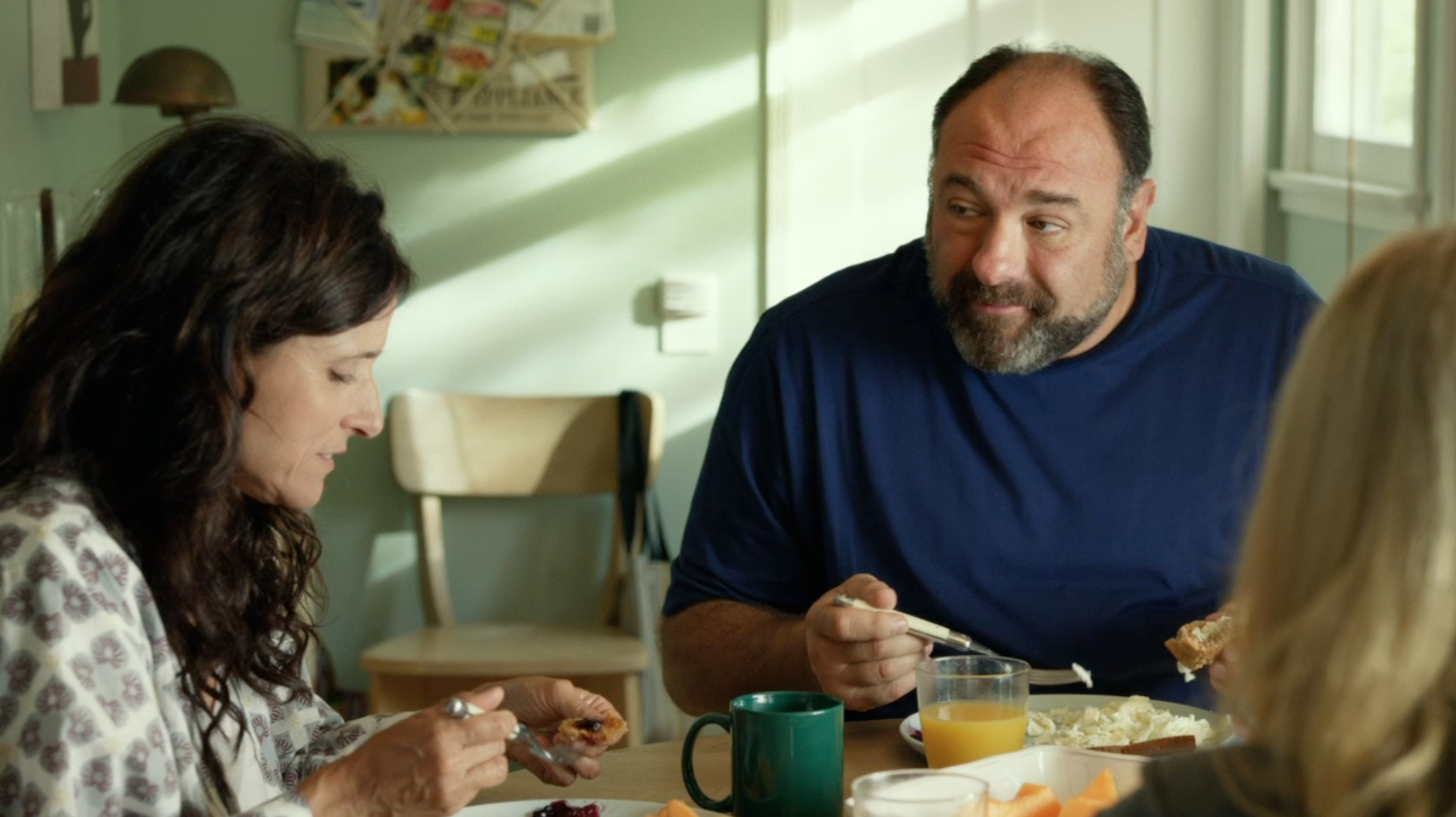
Soon, Eva begins to put two and two together, and realises that Albert is the ex-husband that Marianne disparages so much. But instead of revealing her connection to both of them – she and Marianne have become friends – Eva keeps quiet, but allows Marianne’s complaints about Albert to colour her judgment about him and their relationship. At a dinner party with Sarah and Will, Eva makes embarrassing comments about Albert’s weight, all of which lead to him asking her the question, why did it seem like he’d spent the evening with his ex-wife? Eva has no answer for her behaviour, and their relationship cools a little. It’s only when Eva finds herself at Marianne’s place and her daughter, Tess (Hewson) (who Eva has already met on a lunch date with Albert), reveals the truth about her relationship with Albert, that things come to a head. But will Albert be as forgiving of Eva as she needs him to be?

It isn’t long before Enough Said begins to exert a sincere and yet powerful fascination on the viewer, as the wit and perspicacity of Holofcener’s script begins to take hold and for once – for once – it becomes clear that this will be a movie where the characters are entirely recognisable, and where the dialogue they voice has the freshness and the vitality of everyday speech. This isn’t a movie where characters get to expound on how they feel at length, or say pithy, clever remarks that perfectly encapsulate their emotions or sum up their situation. Instead this is a movie where the central character allows their built-in neuroses and their lack of confidence in a new relationship to undermine the happiness they’re building up, and does so in a way that’s entirely regrettable but also entirely human. Holofcener based her script on some of her own experiences as a divorced, middle-aged mother of two, and with Enough Said she’s crafted a knowing, sympathetic tale that carries with it an emotional heft and a low-key, semi-jaundiced view of starting afresh when all you can focus on is the possibility of past mistakes repeating themselves.

When we first meet Eva she’s stuck in a rut of her own choosing. Ten years after her divorce she’s resigned herself, deliberately, to being a parent and a masseuse and a friend, all roles that involve being of service to others. Albert’s arrival in her life throws all that up in the air, and Holofcener’s script, aided by a shrewd performance from Louis-Dreyfus, highlights just how much his presence rattles her, even while it’s the best thing that’s happened to her in years. Eva’s confidence is further undermined by Marianne’s descriptions of Albert as the less-than-perfect husband, and with a little knowledge comes great doubt as Eva allows herself to be swept up in the possibility that her relationship with Albert will be an echo of his marriage to Marianne. It all leads to Eva sabotaging their affair and endangering the happiness she hasn’t had for so long. And Louis-Dreyfus makes it all so plausible, thanks to some detailed shading in her performance, and a willingness to risk making Eva appear unsympathetic.

The role of Albert was of course Gandolfini’s last screen portrayal, and it’s a pleasure to watch his performance, one that’s relaxed and where he’s clearly enjoying the opportunity to shrug off his bad guy image and play a gentler, more vulnerable kind of character. He and Louis-Dreyfus have an easy-going chemistry together, and though Holofcener’s script is full of naturalistic, convincing dialogue, it’s the moments where they’re improvising that provide some of the movie’s more memorable (and quotable) exchanges. Elsewhere, the bickering between Sarah and Will will be familiar to anyone who’s been in a long-term relationship, though Eva’s unofficial “adoption” of Chloe occasionally stretches Holofcener’s carefully crafted credibility. There are also minor themes relating to alienation between a parent and a child, peer pressure amongst teenagers, and undisguised snobbery, all of which have their moments and all of which add to the rich texture of Holofcener’s story. But it’s the relationship between Eva and Albert that works best of all, because it’s relatable, it’s sensitively handled, and it’s the kind of middle-aged romance that rarely turns up on our screens, and rarely with such vivid, impressive authority.

Rating: 9/10 – a beautifully written tale of love under unnecessary pressure, Enough Said is insightful, vital, immensely satisfying, and features two superb performances from Louis-Dreyfus and Gandolfini; that said, Holofcener is the real star here, and it’s a shame that there haven’t been any other producers banging on her door with the same enthusiasm since, especially as this movie is, so far at least, the very talented writer/director’s finest work to date. (27/31)

Share this:

  • Click to share on X (Opens in new window) X
  • Click to share on Facebook (Opens in new window) Facebook
  • More
  • Click to print (Opens in new window) Print
  • Click to email a link to a friend (Opens in new window) Email
Like Loading...

The Ballad of Jack and Rose (2005)

06 Thursday Jul 2017

Posted by dullwood68 in Movies

≈ Leave a comment

Tags

1986, Camilla Belle, Catherine Keener, Commune, Daniel Day-Lewis, Drama, Father/daughter relationship, Paul Dano, Rebecca Miller, Review, Ryan McDonald

D: Rebecca Miller / 107m

Cast: Daniel Day-Lewis, Camilla Belle, Catherine Keener, Ryan McDonald, Paul Dano, Jason Lee, Beau Bridges, Jena Malone, Susannah Thompson

When Daniel Day-Lewis announced his retirement from acting recently, it’s likely that many of us felt the need to revisit one of his movies and remind ourselves of what a prodigious acting talent he possesses. That being said, it’s unlikely that anyone decided to watch The Ballad of Jack and Rose, a somewhat dour, slow-paced drama that he made between Gangs of New York (2002) and There Will Be Blood (2007). It’s a movie that benefits from Day-Lewis’s usual commitment to his roles, but aside from a grating Scottish-US accent and obvious weight loss late on, his role as Jack is perhaps his most low-key performance to date.

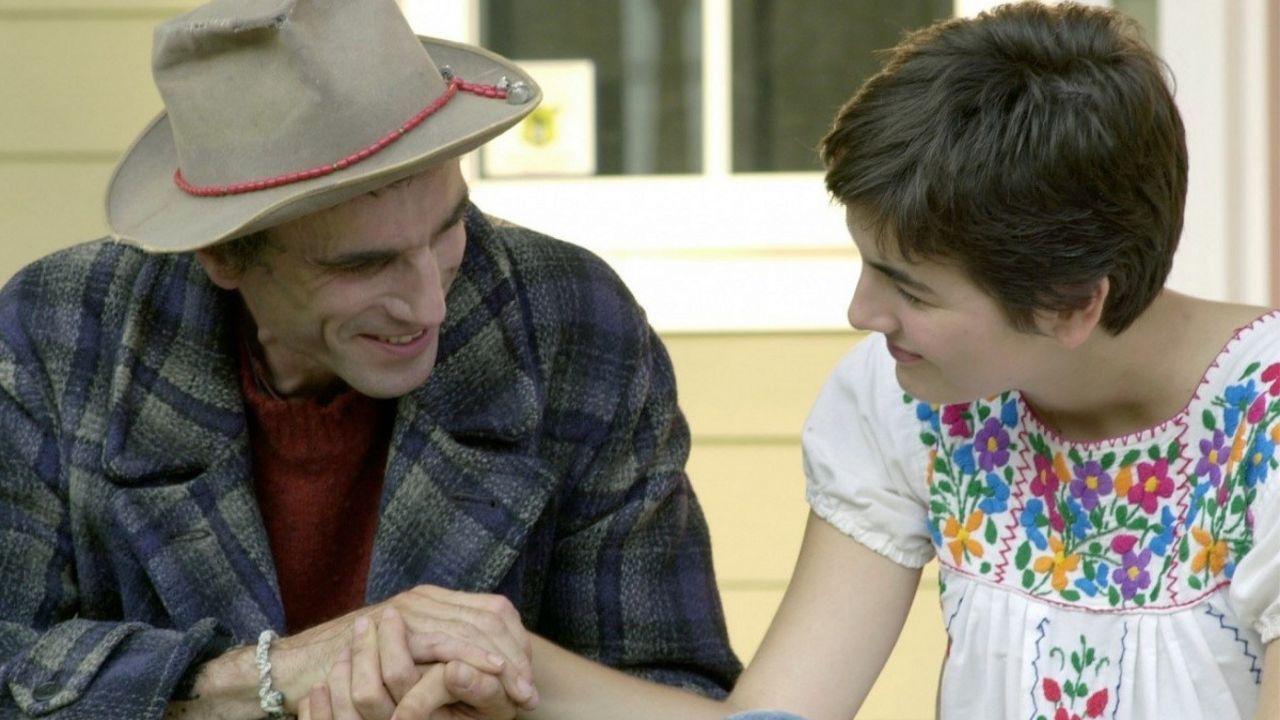
The movie is set in 1986 on an island off the East Coast of America (actually Prince Edward Island). Jack (Day-Lewis) is an environmentalist who first came to the island in 1967 when it was home to a hippie commune. Now, only Jack and his teenage daughter, Rose (Belle) live at the commune, which is largely rundown. Jack has a heart problem, and is trying to prepare Belle so that she can move on from the island and begin living her adult life. But Belle is resistant to the idea, and tells Jack that when he dies she will commit suicide because she doesn’t want to live without him. Looking for another way of getting Belle to interact with the wider world, Jack arranges for the woman he sees on the mainland, Kathleen (Keener), to come live on the island with them, and to bring her two children, Rodney (McDonald) and Thaddius (Dano), with her.

Their arrival upsets Belle immensely, and she withdraws from Jack while finding a friend in Rodney. Jack has a mission of his own to deal with, though, in the form of property developer Marty Rance (Bridges), who is building several houses on an adjoining part of the island. Jack is adamant that one of the houses is being built on government protected wetland, and he does his best to halt the building work. Meanwhile, the adjustments that everyone is having to make are beginning to cause friction. Rose’s feelings become murderous towards Kathleen while she also tries to get Rodney to sleep with her. He rebuffs her, and though Rose doesn’t like him, she turns to Thaddius. When Jack realises what she’s done he becomes angry with her, and tells Thaddius he has to leave the next day. But that night, an incident happens that causes Jack to rethink things in relation to Kathleen’s presence on the island, and following a further incident, his relationship with Belle.

For many, The Ballad of Jack and Rose will be about the performances rather than the story, with particular attention paid to Day-Lewis and Belle’s easy chemistry. After so many roles where Day-Lewis has been required to access his more macho side, seeing him here in a more vulnerable and sympathetic role acts as a reminder of both his range and his skill as an actor. Jack is a man of conviction who lacks self-doubt in the decisions he makes. And if Rose ever questions one of his decisions, his reply is the same: “new chapter”. He refers to the arrival of Kathleen and her sons as an experiment, but this is a sop to Rose’s animosity towards the idea, and he expects everything to go well without really thinking through the potential consequences. Day-Lewis portrays Jack’s oblique, trusting nature with a quiet yet detached authority that’s in keeping with the character’s attitude to those around him. He’s an instigator and a promoter but aside from Rose, he keeps himself aloof from other people. Even with Kathleen there’s a detachment that refuses to take her feelings about being on the island into consideration.

As Rose, Belle excels as Jack’s conflicted, emotionally inexperienced daughter whose need for his attention has grown into something unhealthy. Early on there are hints that Rose has inappropriate feelings for her father, but thanks to Belle’s ability to mask her character’s feelings whenever Rose is challenged about her behaviour, any suspicions remain fleeting. Her attraction for Rodney arises out of sexual jealousy, and her subsequent liaison with Thaddius is borne out of need and Rose’s capricious nature. Rose is very similar to her father in that she has assimilated his lack of foresight, and inability to consider any negative consequences for his actions. As such, she operates with no regard for other people’s feelings, and if she wants to punish him, even her father’s. As Rodney says to Rose at one point, “You’re innocent. Innocent people are just dangerous.” Belle’s portrayal of Rose as an emotionally stunted young woman whose development has stalled thanks to living in virtual isolation with her father is earnest and sagacious; it’s a shame her career hasn’t been more successful.

Other than McDonald’s sympathetic turn as Rodney, the rest of the performances aren’t as well crafted as those of Day-Lewis and Belle, but that’s due to Miller’s script and the ways in which she loses interest in them, picks them up, and then forgets all about them again. Miller’s script loses its focus from time to time, and as a result, it’s not as gripping in places as it might have been, and some of the arguments between Jack and Rose sound like the petulant exchanges you’d expect from teenagers. In the end, Miller resolves everything a little too neatly and in doing so requires Jack to make a complete volte face, something that Day-Lewis manages somehow to make convincing – even though in dramatic terms it isn’t. These and other aspects of the script’s construction stop the movie from being as compelling as it should be, and allied with Miller’s erratic framing, make this a movie experience that only partially succeeds in its somewhat limited ambitions.

Rating: 6/10 – if The Ballad of Jack and Rose had remained a two-hander throughout then it might have been able to offer better rewards for its audience, but as it is, it falls short of being entirely involving; too many distractions rob the movie of any lasting impact, leaving Day-Lewis and Belle’s contributions and Ellen Kuras’ splendid cinematography to save the day. (6/31)

Share this:

  • Click to share on X (Opens in new window) X
  • Click to share on Facebook (Opens in new window) Facebook
  • More
  • Click to print (Opens in new window) Print
  • Click to email a link to a friend (Opens in new window) Email
Like Loading...

Get Out (2017)

17 Friday Mar 2017

Posted by dullwood68 in Movies

≈ 2 Comments

Tags

Allison Williams, Bradley Whitford, Catherine Keener, Daniel Kaluuya, Drama, Horror, Jordan Peele, Mystery, Paranoia, Racism, Review, Thriller

D: Jordan Peele / 104m

Cast: Daniel Kaluuya, Allison Williams, Catherine Keener, Bradley Whitford, Caleb Landry Jones, Marcus Henderson, Betty Gabriel, Lakeith Stanfield, Stephen Root, LilRel Howery

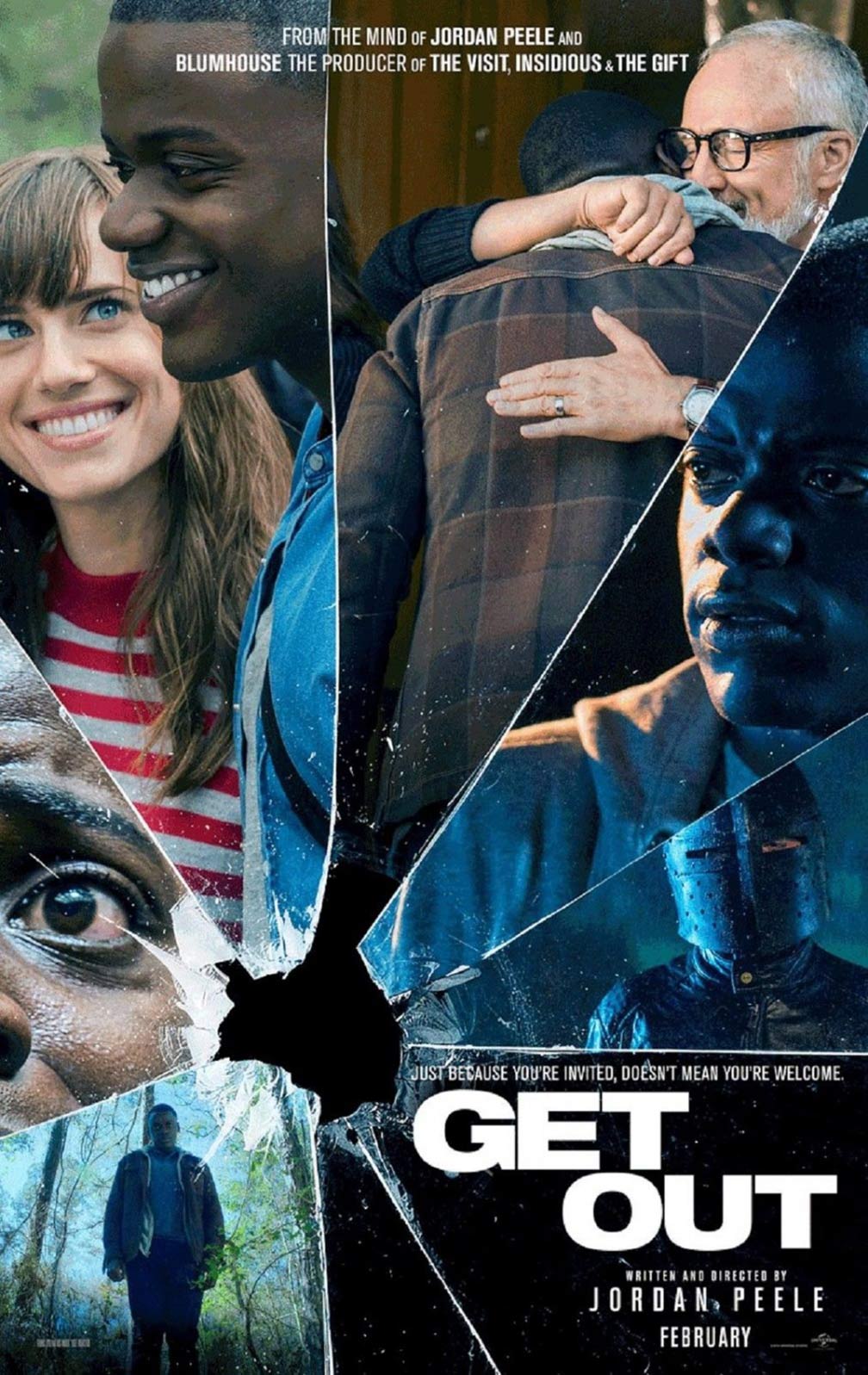
Chris Washington (Kaluuya) is a young, gifted photographer whose work is beginning to be noticed. He’s also black and in a relationship with Rose Armitage (Williams), who is white. Invited by her parents to come stay for the weekend, Chris is anxious about meeting them, fearing they might be uncomfortable with their daughter dating a black man. But Rose reassures him, and tells him that her parents haven’t a racist bone in either of their bodies, and if he could have, her father would have voted a third time for Barack Obama. They set off, but along the way their car collides with a deer, causing some damage but not enough to stop them from reaching Rose’s parents’ home. Once there, her parents – Missy (Keener) and Dean (Whitford) – greet them both warmly, but Chris is perplexed by the odd behaviour exhibited by the Armitages’ housekeeper and gardener, Georgina (Gabriel) and Walter (Henderson), who are both black.

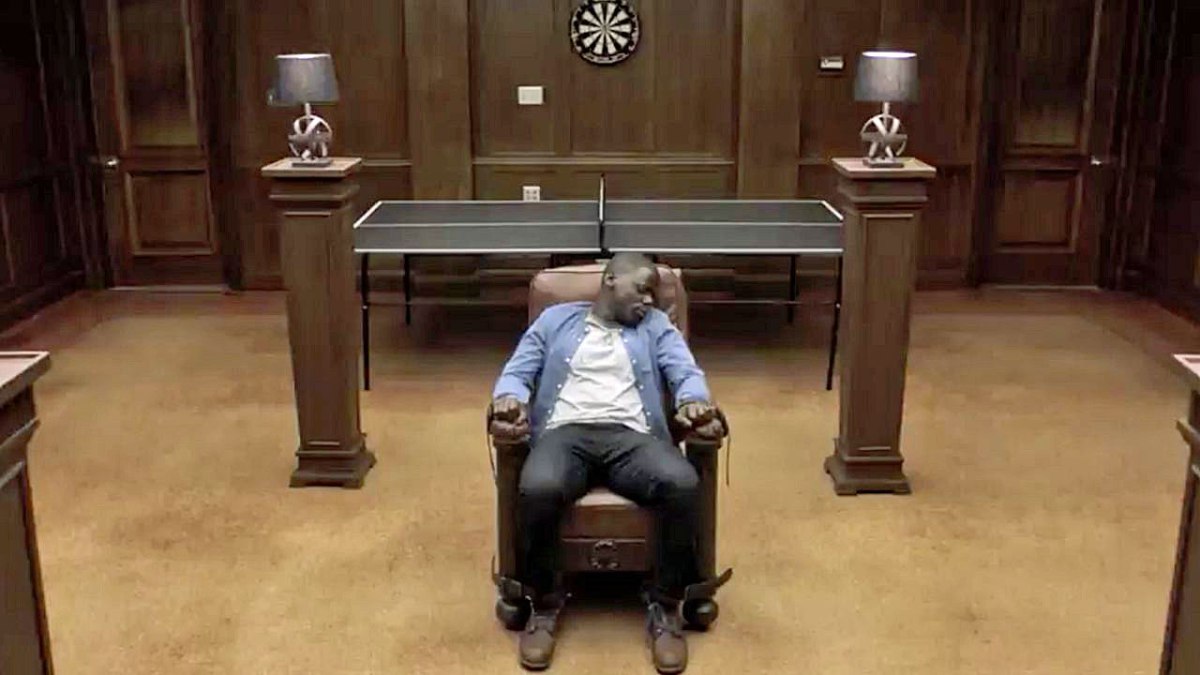
Later that evening Chris meets Rose’s brother, Jeremy (Jones), whose behaviour is provocative and aggressive. He also continues to observe Georgina and Walter behaving strangely. When Missy persuades Chris into sitting with her, he finds that she’s hypnotising him, and he ends up in the Sunken Place, a limbo he can’t return from. At least, that’s what he believes, as he wakes the next morning, confused about what’s happened to him but finding his smoking habit is now cured. He also finds his mobile phone has been somehow disconnected from its charger. At an annual get together that the Armitages hold for their friends, Chris is surprised to see another black man arrive with a much older white woman. But the black man behaves just as oddly as Georgina and Walter, even going so far as to grab Chris and yell at him to “get out”. Chris voices his suspicions that there is something sinister going on, and Rose agrees to leave with him. But when Chris discovers evidence that makes him scared for his life, leaving proves to be far more difficult than he could have ever imagined.

Ever since its debut at the Sundance Festival back in January this year, Get Out has attracted a lot of attention for being a horror movie that takes a satirical look at contemporary racial attitudes in the good ole US of A. The movie certainly paints a satirical portrait of white liberal hubris that’s hard to ignore, but its basic premise – once it’s revealed – plants the movie firmly in paranoid thriller territory. So while there are some standard horror tropes on display, they take a firm backseat to the mystery that is carefully developed by first-time writer/director Jordan Peele, and which proves far more satisfying for its Twilight Zone stylings than for any horror trappings Get Out may be trying to appropriate.

This isn’t to say that the movie is unsure of just what kind of a movie it wants to be, far from it. It’s just that appearances can be deceiving, and Peele instills his tale of racial profiling and assimilation with so many genuinely unsettling moments that mistaking Get Out for a horror movie is only natural – and that’s without its ultra-violent, cathartic final fifteen minutes. But in terms of Peele’s acidulous look at the state of racism in modern day America, the movie is on much firmer ground. Chris’s fear that Rose’s parents won’t approve of him reflects the lingering sense of outrage over miscegenation that still resonates within the US. Despite all the advances made since the Civil Rights movement in the Sixties, Peele is saying these attitudes still prevail, subconsciously perhaps, but then that’s the point: they’ve never really gone away, and they never will. Whisper it if you must, but racism is endemic to the American psyche.

That’s a pretty blatant way of putting it, but Peele is much more subtle than that, and finds various clever ways of getting his message across. This allows the movie to flesh out its subplots – notions surrounding the nuclear family, self-determinism, and social acceptance – unencumbered by the need to be forthright or didactic. Peele is confident enough in his central narrative that he can give these subplots their due, while also playing around – successfully – with the movie’s tone. It starts off as a relationship drama, slightly anecdotal, but set up in such a way that Rose’s parents seem like just another liberal white couple with awkward yet good intentions. The introduction of Walter and Georgina and their odd behaviour allows the thriller elements to begin to take centre stage, and Peele handles the growing uncertainty of what’s really happening with a sureness of touch that’s surprising in someone making this kind of movie for the first time.

Following on, the movie descends into paranoid conspiracy territory, with Chris’s fears amplified by each successive clue he discovers, and with each one serving to reinforce his paranoia. And then we’re in full-on horror mode, as Peele pulls out all the stops to give the viewer a rousing, blood-soaked resolution. Peele displays complete control over the material, keeping each tonal shift feeling organic and unforced. And he keeps the irony spread throughout the movie, allowing it to show itself and act as a counterpoint to the serious nature of the overall material. But Peele’s comedic background won’t be denied either, and there are times when the movie is flat out funny. This is largely due to the inclusion of Chris’s friend Rod (Howery), a Transport Security Administration (TSA) officer who acts as the movie’s comic relief. Again, it’s a measure of Peele’s confidence in his material that he unites these disparate elements and makes them mesh together to such good effect.

But while there is much to recommend Get Out, Peele does drop the ball at times, with some scenes feeling unnecessary or out-of-place – the car-deer collision and its racist cop aftermath, a telephone conversation between Rose and Rod – and his command of the camera (one of this movie’s key strengths) failing him at key moments. But these don’t harm the movie insomuch as they draw attention to themselves when they occur, making for a handful of jarring moments that crop up here and there. At all other times, Peele and his crew, including DoP Toby Oliver, editor Gregory Plotkin, and production designer Rusty Smith, combine to make Get Out one of the boldest and most assured first feature’s for some time.

Peele is aided immeasurably too by his talented cast, with the UK’s Kaluuya giving a measured, yet nervy performance, perfectly displaying the disquiet Chris experiences and the misgivings Chris feels during his visit. As Rose, Williams is all sunny smiles and reassuring glances, though her character also possesses a wicked sense of humour. Keener and Whitford bring an understated menace to proceedings, but Jones is once more on barely restrained psycho duties, leaving Henderson and Gabriel to add real unease to their portrayals. And then there’s Howery, stealing the movie with a succession of one-liners, all of which lead up to a bona fide final line classic: “Man, I told you not to go in that house.”

Rating: 8/10 – a multi-faceted racial drama/horror/mystery hybrid with satirical overtones (and undertones as well), Get Out is one of the more polished and convincing thrillers you’re likely to see in 2017; well thought out, constructed and delivered, its writer/director deserves all the praise that’s been coming his way, and if he wants to give up his comedy day job and make more movies like this one, then that will be absolutely fine.

Share this:

  • Click to share on X (Opens in new window) X
  • Click to share on Facebook (Opens in new window) Facebook
  • More
  • Click to print (Opens in new window) Print
  • Click to email a link to a friend (Opens in new window) Email
Like Loading...

Blog Stats

  • 490,512 hits

Recent Posts

  • 10 Reasons to Remember Bibi Andersson (1935-2019)
  • Fantasia (1940)
  • Dances With Wolves (1990) – The Special Edition
  • Kiss of the Spider Woman (1985)
  • The Three Musketeers (1973)

Top Posts & Pages

  • The Dark Tower (2017)
    The Dark Tower (2017)
  • The White Orchid (2018)
    The White Orchid (2018)
  • Central Intelligence (2016)
    Central Intelligence (2016)
  • Taken (2008)
    Taken (2008)
  • Lost for Life (2013) - Another Look
    Lost for Life (2013) - Another Look
  • Captain Fantastic (2016)
    Captain Fantastic (2016)
  • Miss Baek (2018)
    Miss Baek (2018)
  • Two Shorts by François Ozon: A Summer Dress (1996) and X2000 (1998)
    Two Shorts by François Ozon: A Summer Dress (1996) and X2000 (1998)
  • Cardboard Boxer (2016)
    Cardboard Boxer (2016)
  • A Brief Word About Cineworld Unlimited
    A Brief Word About Cineworld Unlimited
Follow thedullwoodexperiment on WordPress.com

Blogs I Follow

  • Rubbish Talk
  • Film 4 Fan
  • Fast Film Reviews
  • The Film Blog
  • All Things Movies UK
  • Interpreting the Stars
  • Let's Go To The Movies
  • Movie Reviews 101
  • TMI News
  • Dan the Man's Movie Reviews
  • Film History
  • Jordan and Eddie (The Movie Guys)

Archives

  • April 2019 (13)
  • March 2019 (28)
  • February 2019 (28)
  • January 2019 (32)
  • December 2018 (28)
  • November 2018 (30)
  • October 2018 (29)
  • September 2018 (29)
  • August 2018 (29)
  • July 2018 (30)
  • June 2018 (28)
  • May 2018 (24)
  • April 2018 (21)
  • March 2018 (31)
  • February 2018 (25)
  • January 2018 (30)
  • December 2017 (30)
  • November 2017 (27)
  • October 2017 (27)
  • September 2017 (26)
  • August 2017 (32)
  • July 2017 (32)
  • June 2017 (30)
  • May 2017 (29)
  • April 2017 (29)
  • March 2017 (30)
  • February 2017 (27)
  • January 2017 (32)
  • December 2016 (30)
  • November 2016 (28)
  • October 2016 (30)
  • September 2016 (27)
  • August 2016 (30)
  • July 2016 (30)
  • June 2016 (31)
  • May 2016 (34)
  • April 2016 (30)
  • March 2016 (30)
  • February 2016 (28)
  • January 2016 (35)
  • December 2015 (34)
  • November 2015 (31)
  • October 2015 (31)
  • September 2015 (34)
  • August 2015 (31)
  • July 2015 (33)
  • June 2015 (12)
  • May 2015 (31)
  • April 2015 (32)
  • March 2015 (30)
  • February 2015 (37)
  • January 2015 (39)
  • December 2014 (34)
  • November 2014 (34)
  • October 2014 (36)
  • September 2014 (25)
  • August 2014 (29)
  • July 2014 (29)
  • June 2014 (28)
  • May 2014 (23)
  • April 2014 (21)
  • March 2014 (42)
  • February 2014 (38)
  • January 2014 (29)
  • December 2013 (28)
  • November 2013 (34)
  • October 2013 (4)

Create a free website or blog at WordPress.com.

Rubbish Talk

Film 4 Fan

A Movie Blog

Fast Film Reviews

The Film Blog

The official blog of everything in film

All Things Movies UK

Movie Reviews and Original Articles

Interpreting the Stars

Dave Examines Movies

Let's Go To The Movies

Film and Theatre Lover!

Movie Reviews 101

Daily Movie Reviews

TMI News

Latest weather, crime and breaking news

Dan the Man's Movie Reviews

All my aimless thoughts, ideas, and ramblings, all packed into one site!

Film History

Telling the story of film

Jordan and Eddie (The Movie Guys)

Movie Reviews & Ramblings from an Australian Based Film Fan

Privacy & Cookies: This site uses cookies. By continuing to use this website, you agree to their use.
To find out more, including how to control cookies, see here: Cookie Policy
  • Subscribe Subscribed
    • thedullwoodexperiment
    • Join 481 other subscribers
    • Already have a WordPress.com account? Log in now.
    • thedullwoodexperiment
    • Subscribe Subscribed
    • Sign up
    • Log in
    • Report this content
    • View site in Reader
    • Manage subscriptions
    • Collapse this bar
 

Loading Comments...
 

    %d