• 10 Reasons to Remember…
  • A Brief Word About…
  • About
  • For One Week Only
  • Happy Birthday
  • Monthly Roundup
  • Old-Time Crime
  • Other Posts
  • Poster of the Week
  • Question of the Week
  • Reviews
  • Trailers

thedullwoodexperiment

~ Viewing movies in a different light

thedullwoodexperiment

Tag Archives: Cold War

The Shape of Water (2017)

19 Friday Jan 2018

Posted by dullwood68 in Movies

≈ 1 Comment

Tags

Baltimore, Cold War, Creature, Doug Jones, Drama, Guillermo del Toro, Michael Shannon, Michael Stuhlbarg, Music, Octavia Spencer, Review, Richard Jenkins, Romance, Sally Hawkins, Sci-fi, The Sixties

D: Guillermo del Toro / 123m

Cast: Sally Hawkins, Michael Shannon, Richard Jenkins, Octavia Spencer, Michael Stuhlbarg, Doug Jones, David Hewlett, Nick Searcy, Lauren Lee Smith

A romantic fairy tale set during the Cold War era of the Sixties, Guillermo del Toro’s latest feature is set in a secret government laboratory in Baltimore. Elisa Esposito (Hawkins) is a cleaner who works the night shift. She’s also mute from birth. One night the laboratory receives a new “asset”, an amphibious creature (Jones) captured in the Amazon river by military man Richard Strickland (Shannon). The creature proves to be humanoid, and though it’s ostensibly dangerous, Elisa develops a bond with it, and even uses sign language to communicate with it on a basic level. With the creature able to breathe in and out of water, the intricacies of its anatomy lead to the decision to have it vivisected. Elisa is horrified by this, and with the aid of her fellow cleaner, Zelda (Spencer), and her neighbour, elderly artist Giles (Jenkins), she determines to free the creature and return it to the sea. As she puts her plan into action, she finds unexpected assistance from one of the scientists at the laboratory, Dr Hoffstetler (Stuhlbarg), and unwanted attention from Strickland.

Fully and firmly back on track after the disappointment that was Crimson Peak (2015), Guillermo del Toro has made perhaps his best movie yet. The Shape of Water is a veritable treasure trove of delights. By turns funny, dramatic, sad, tender, exciting, joyous, imaginative, bold, romantic, uplifting, and poignant, it’s a movie that crams so much into its two hour running time that it should feel heavy-handed. Instead it feels like the lightest of confections, even with the overtly darker undertones that are threaded throughout the narrative and which help the movie add a credible and palpable sense of menace to the overall tone. del Toro has long wanted to make a movie inspired by Creature from the Black Lagoon (1954), but it’s unlikely even he could have predicted just how good the end result would be. From Paul D. Austerberry’s masterful period production design, to the efforts of the set dressers (so much detail), this is a movie that is constantly inviting the viewer to come nearer and peer closely at all the objects that fill each frame. And then there are the small yet seemingly effortless moments that pepper the movie, moments such as Elisa and Giles’ seated dance routine, or the man at the bus stop with the partially eaten cake. It all adds up to a richness of texture that is nigh-on faultless.

But the movie isn’t just beautiful to look at, it’s also an old-fashioned love story (an inter-species love story, to be fair, but hey, so what? As Joe E. Brown says at the end of Some Like It Hot (1959), “Nobody’s perfect”). It would have been so easy to misjudge the tone and the mood in presenting this romance, but del Toro and co-screenwriter Vanessa Taylor handle it perfectly, combining elements of magical realism and the aforementioned fairy tale aspect to wonderful effect. Hawkins – for whom the role of Elisa was written – gives a mesmerising performance, passionate and vulnerable, determined and caring, and capable of expressing any of Elisa’s emotions through the delicate shading of her features. As the principal villain, Shannon gets to add unexpected psychological layers to the role of Strickland, something that keeps the part from being that of a stereotypical bad guy, while Jenkins provides the majority of the laughs (and a great deal of pathos) as Giles, an elderly gay man still hoping to find love himself. Everything is rounded off by the music, as del Toro harks back to the golden era of Hollywood musicals. And just when you think he can’t squeeze in anything else, he gives us a black and white dance number featuring Elisa and the creature which is a tribute to Follow the Fleet (1936). This all leaves just one option: this much confidence must be applauded.

Rating: 9/10 – made with an intense amount of love and affection for its central characters, and with an elegance that shines throughout, The Shape of Water is a triumph of both style and substance; look closely, though, and you’ll find del Toro being quietly and unobtrusively subversive: ask yourself – which other movie are you likely to see where the heroes are in turn disabled, gay, black, and a Communist?

Share this:

  • Click to share on X (Opens in new window) X
  • Click to share on Facebook (Opens in new window) Facebook
  • More
  • Click to print (Opens in new window) Print
  • Click to email a link to a friend (Opens in new window) Email
Like Loading...

Despite the Falling Snow (2016)

08 Tuesday Nov 2016

Posted by dullwood68 in Movies

≈ Leave a comment

Tags

Antje Traue, Charles Dance, Cold War, Defection, Drama, Espionage, Literary adaptation, Moscow, Rebecca Ferguson, Review, Romance, Russia, Sam Reid, Shamim Sarif, Spying

despite-the-falling-snow-poster

D: Shamim Sarif / 93m

Cast: Rebecca Ferguson, Sam Reid, Charles Dance, Antje Traue, Oliver Jackson-Cohen, Thure Lindhardt, Anthony Head

One of the things that never happened in the Golden Age of Cinema was an author being given the opportunity to make a movie of one of their novels or stories. Some were employed to adapt their novels and stories, but none were ever allowed to step behind the camera as well and actually direct the movie. Nowadays, this isn’t so unusual, but it’s also still not very prevalent. So step forward Shamim Sarif, author and movie maker, who has been making movies from her novels from the very beginning. She is possibly unique in this way, and has gained a very good reputation from working on both sides of the creative arena. Despite the Falling Snow is the third movie she’s made from one of her novels, and while she may be well regarded in some quarters as the perfect person to adapt her work – after all, who knows it better than she? – the finished product here isn’t quite the testament to her talents as a director.

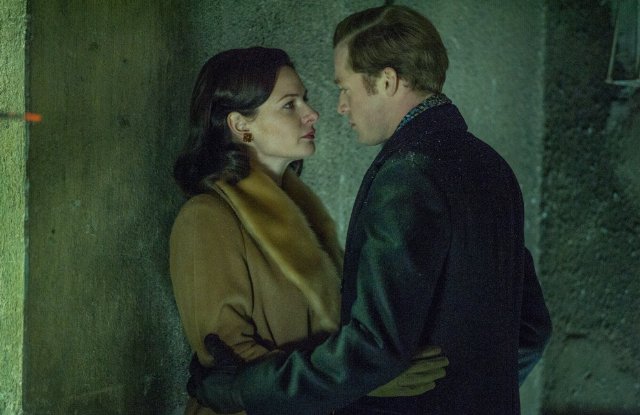
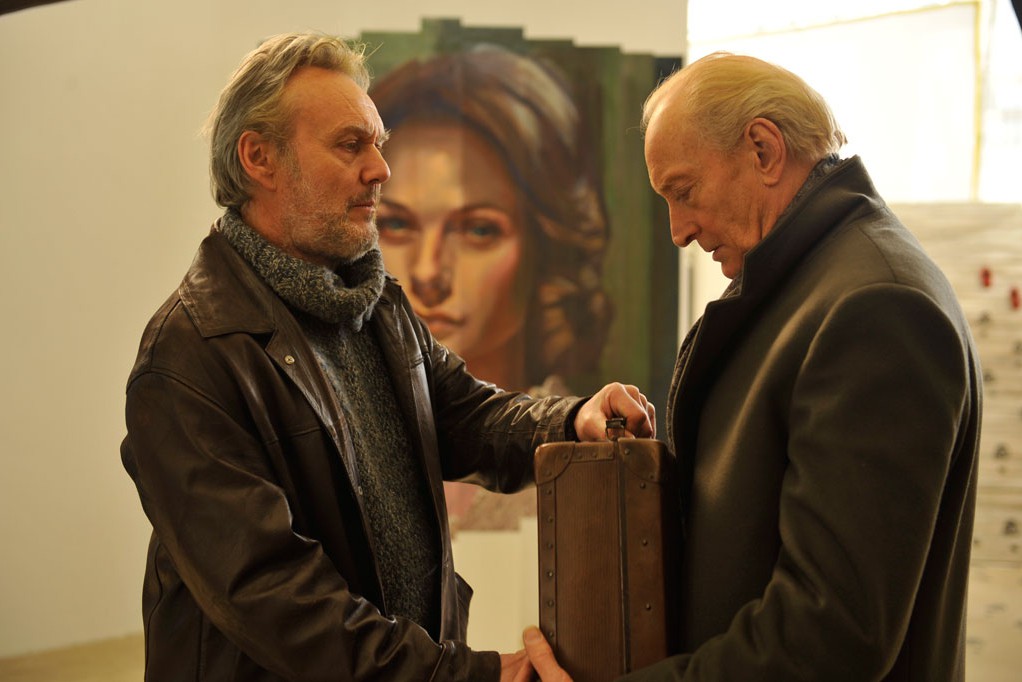
The movie begins in New York in 1961 with the defection of a Russian government official called Sasha (Reid). As he’s helped to escape from his Russian handlers, he asks about his wife, Katya (Ferguson). She’s back in Moscow, but his new, US handlers have no idea where she is or what has happened to her. Fast forward thirty years and Sasha (Dance) is a successful restaurateur who has a niece, Lauren (also Ferguson) who is the spitting image of Katya, and who wants to travel to Moscow to try and find out what happened to her aunt. Sasha refuses to go with her, though, so Lauren, who’s lucky enough to be an artist who’s been asked to mount an exhibition in Moscow, heads off by herself.

day-17-2-881x588

While Lauren’s story plays out in 1991, Katya’s story plays out in tandem from 1959 to 1961. Katya is a teaching assistant who’s also helping her friend and government official Misha (Jackson-Cohen) steal secrets and pass them on to the Americans. At a party she meets Sasha but is unimpressed by him. It’s only when Misha persuades her to get close to Sasha because of his position in the Kremlin that she finds herself falling in love with him. Meanwhile, in 1991, Lauren meets and befriends a journalist called Marina (Traue) who helps her in finding out about Katya. Marina learns that Misha (Head) is still alive, and they make plans to visit him. When they do they find he’s become an embittered, angry old man who wants nothing to do with them.

Back in 1961, Katya and Sasha wed, but she agonises over whether she should tell him she’s a spy. In 1991, Marina’s behaviour becomes suspicious, and the unexpected arrival of Sasha in Moscow prompts a revelation. Katya’s decision to tell Sasha leads to his agreeing to defect, but thirty years on only Misha holds the key to what happened to her.

mv5bmtq1ndu0mjmyov5bml5banbnxkftztgwnzqxotkznje-_v1_sx640_sy720_

A romantic drama set – partly – during a period of intense political and social upheaval, namely the early Sixties, Despite the Falling Snow has such a generic feel to it that it could have been made about any couple in any country at any time, and still have made the same kind of impact. This is thanks to Sarif’s uninspired, pedestrian direction, and a visual style that never rises above formulaic. It’s as if Sarif has forgotten to add the drama needed to make the narrative more than just a succession of events and scenes that show how two people came together and then were separated by fate in the form of expediency. Even when suspicion falls on the officials in the Kremlin, including Sasha and Misha, it’s a moment where real terror at being found out translates instead as a mild concern. Misha is almost fatalistic about the whole thing, a reaction that not even the talented Jackson-Cohen can make convincing; this man should be even more scared than he’s been already.

But if the steady stream of narrative downplaying that infuses the scenes in early Sixties Russia also makes those scenes feel awkward and inconsistent, then spare a thought for those set in 1991. Sarif makes reference to the Berlin Wall having come down two years earlier, but her new Moscow is an uneasy mix of contemporary US stylings and Russian forebearance, as evidenced by Marina’s designer clothing and old Misha’s tower block abode. The juxtaposition jars, and adds to the overall feeling that Sarif wants her characters to look glamorous against the concrete backdrop of post-Stalinist Russia (Katya seems never to be without her red lipstick). The visual conceit is highlighted by Sarif’s decision to have Katya and Sasha, and Lauren and Marina, walk along the same snow-laden stretch of riverside pavement at different times, but instead of creating an echo of past events, it appears to be more of a budgetary deference than a creative decision.

despite_the_falling_snow-15

Elsewhere, narrative developments that appear out of nowhere are treated as if they are absolutely necessary to the overall plot, and that includes a left-field decision to have Lauren and Marina begin a sexual relationship. Old Sasha’s willingness to stay home out of harm’s way is overturned by the contents of a fax, while Old Misha’s decision to spill the beans about what happened to Katya is spurred on by feelings of guilt, and that old chestnut, a terminal illness. And when the viewer does find out what happened to Katya, Sarif handles it in such a hamfisted way that any emotional weight the scene might – or should – have engendered with said viewer, is lost before the scene’s even begun.

A lacklustre movie then, one that doesn’t even aim particularly high, but which does feature another of Charles Dance’s supporting roles (is he semi-retired now, is that what’s going on?) and a level of political naïvete that further dilutes the drama that isn’t really there. On the performance side, Ferguson is unable to make much of either role, as Sarif never allows the viewer to engage with them as anything other than under-developed non-characters. Reid is earnest but treading in a pool so shallow it’s practically evaporated, while Traue is allowed to look moody and resentful in equal measure even when she’s kissing Ferguson. Dance and Head bring a degree of old-time gravitas to the proceedings, but even they can’t avoid the pitfalls that are inherent in the script. On this showing, Sarif needs some more time to clarify her goals in making such a movie, and maybe next time, getting someone else to direct.

Rating: 4/10 – Sixties Moscow never looked cleaner, quieter, or more family friendly than it does in this movie, and that’s despite several efforts to make it look as if it’s not brand new; as a drama it never gets started, despite the best efforts of its cast, and by the end you’ll only want to know what happened to Katya just so that you can move on in (roughly) the same way everyone else does: without too much fuss.

Share this:

  • Click to share on X (Opens in new window) X
  • Click to share on Facebook (Opens in new window) Facebook
  • More
  • Click to print (Opens in new window) Print
  • Click to email a link to a friend (Opens in new window) Email
Like Loading...

Bridge of Spies (2015)

09 Wednesday Dec 2015

Posted by dullwood68 in Movies

≈ 1 Comment

Tags

America, Amy Ryan, Cold War, Drama, East Germany, Espionage, Exchange, Francis Gary Powers, Glienicke Bridge, Historical drama, James B. Donovan, Mark Rylance, Review, Rudolf Abel, Russia, Scott Shepherd, Spies, Steven Spielberg, Thriller, Tom Hanks, U2 spy plane

Bridge of Spies

D: Steven Spielberg / 141m

Cast: Tom Hanks, Mark Rylance, Scott Shepherd, Amy Ryan, Austin Stowell, Sebastian Koch, Alan Alda, Jesse Plemons, Will Rogers, Michael Gaston, Dakin Matthews, Billy Magnussen, Peter McRobbie, Mikhail Gorevoy, Burghart Klaußner, Max Mauff

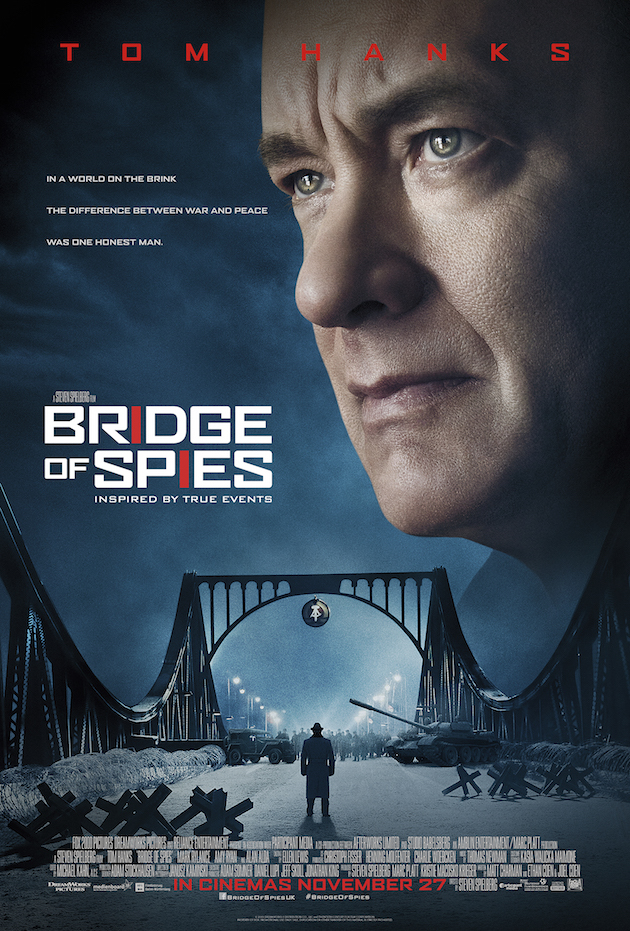
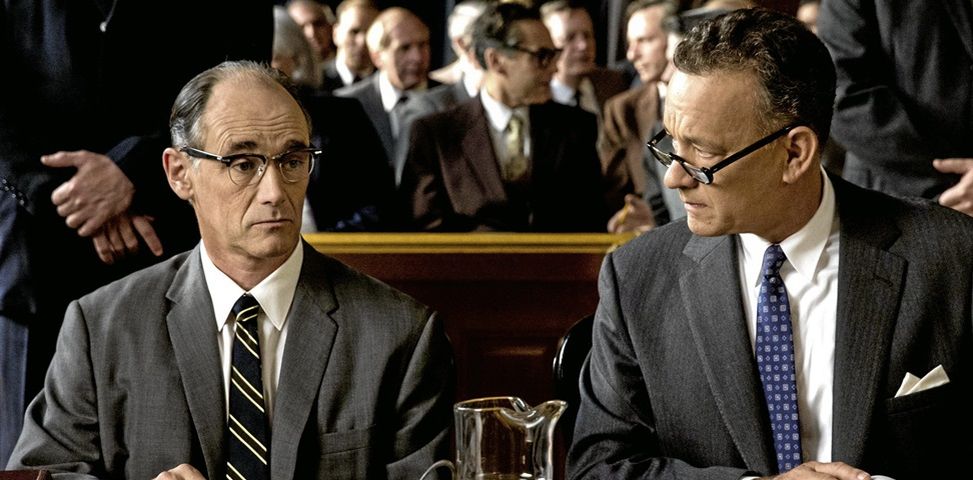
In 1957, Rudolf Abel (Rylance) was arrested by FBI agents and charged with three counts of conspiracy as a Soviet spy. He was defended by an insurance attorney called James B. Donovan (Hanks), but despite Donovan’s best efforts (and to no one’s surprise) Abel was found guilty on all counts and sentenced to a total of forty-five years in prison (which was a surprise). An appeal to the Supreme Court was rejected and Abel remained in jail.

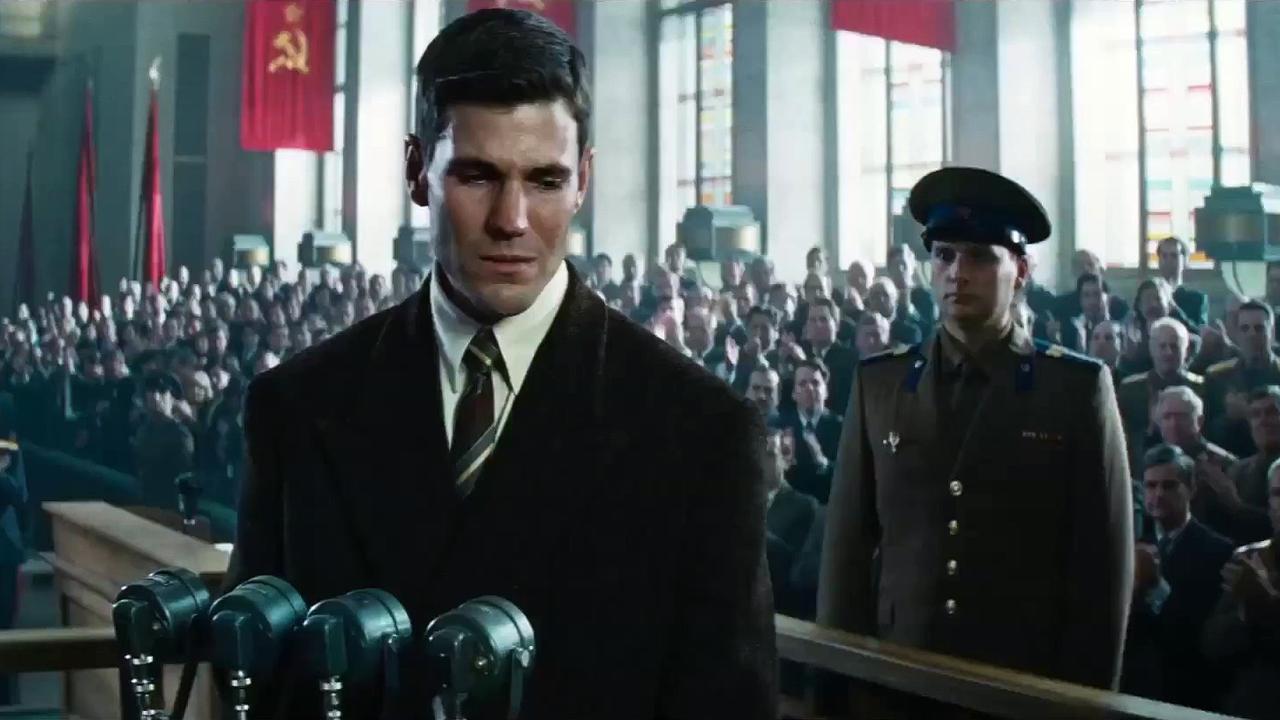
In 1960, US pilot Francis Gary Powers (Stowell) was shot down while on a spy plane mission over Soviet territory. He was charged with espionage against the Soviet Union and sentenced to ten years in prison. In 1961, American economics student Frederic Pryor (Rogers) found himself arrested and held without charge by the East German police. In 1962, Donovan, at the request of CIA chief Allen Dulles (McRobbie), travelled to Berlin to negotiate the exchange of Abel for Powers; when he learned of Pryor’s incarceration he made the young student’s release a part of the deal as well. On 10 February 1962, Pryor was released at Checkpoint Charlie, and Abel and Powers’ exchange took place at the Glienicke Bridge.

Bridge of Spies - scene3

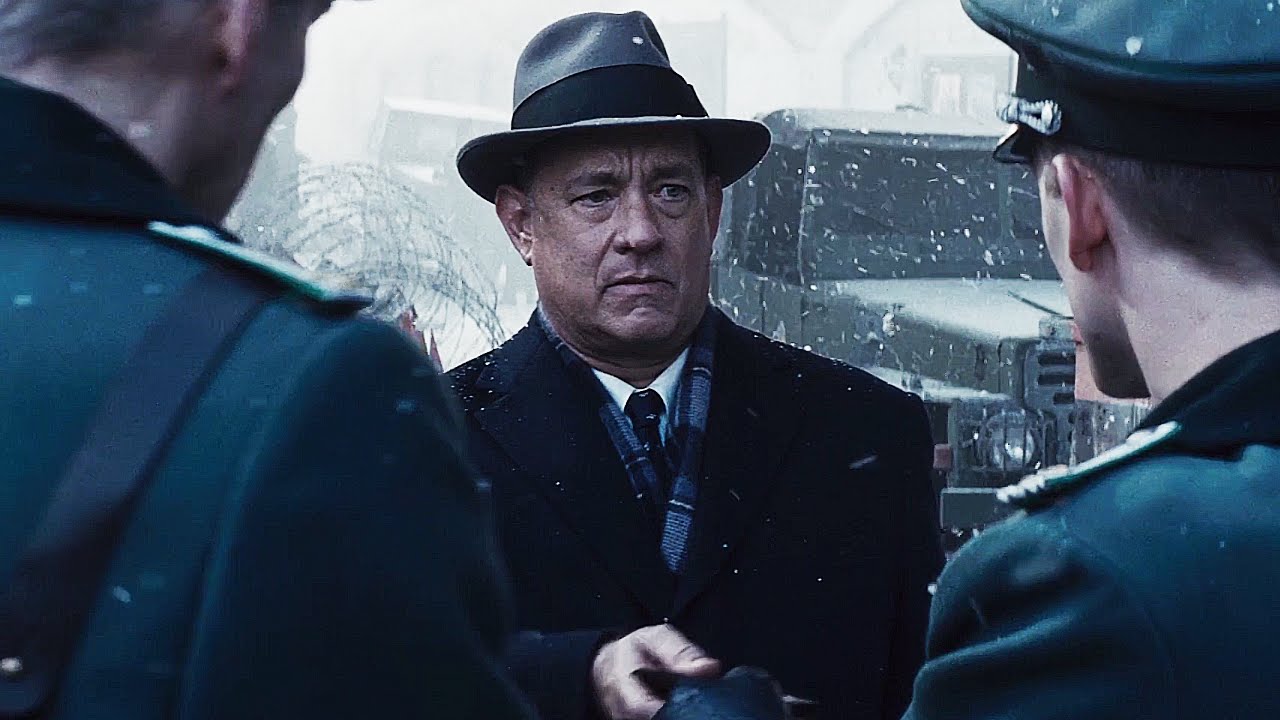
These are the basic facts that Bridge of Spies elects to tell, and while it makes it clear from the beginning that the movie is “inspired” by real events, writers Matt Charman and Joel and Ethan Coen have expanded on those facts in order to fill in the gaps and make the movie more audience friendly. They’ve done a terrific job, with the politics of the time, both American and Soviet, explored and explained with a conciseness and brevity that allows the story to breathe and not be bogged down by endless exposition (there’s even room for a brief exposé of East German politics as well). What this means is that Bridge of Spies becomes a movie where all the twists and turns don’t leave the viewer baffled as to what’s going on, and they have a firm grounding as to why it’s all happening.

With the political and espionage themes so effectively set up and presented, Spielberg is left to get on with doing what he does best: telling a complex, complicated story easily and with surprising verve. The director seems at home when making historical dramas, and he has an enviable track record in the genre, from Empire of the Sun (1987) to Schindler’s List (1993) to Munich (2005) to Lincoln (2012). Spielberg is rightly regarded as a populist movie maker, but it’s his forays into history that often prove more satisfying, and Bridge of Spies is no different. Most of the “action” takes place behind closed doors, and consists generally of conversations between Donovan and one or two others. But it’s during these scenes that Spielberg teases out the subtleties and unspoken nuances of the various negotiations and political manoeuvrings, and makes them resonate in a way that few other directors are able to.

Bridge of Spies - scene2

As Donovan juggles the demands of his own government with the needs of the Soviet Union, and the aims of the newly created East German authorities, Spielberg shows how close everyone is in terms of not wanting to be seen to be directly involved in any of the negotiations – Donovan himself is officially a private citizen representing his client, Abel – and how appearances are more important than the truth. Donovan is seen as an honorable man doing the best he can, and as he sees fit, in difficult circumstances, and his early brushes with his own legal system (which seems happy to ignore due process and the Fourth Amendment when it comes to prosecuting Soviet spies) show just how determined and independent-minded he is; or, as Abel puts it, a “standing man”. Donovan provides the moral compass to help audiences steer their way through the various schemes and ruses that each side comes up with.

In the more than capable hands of Hanks, Donovan is an ordinary man thrust into the extraordinary world of legal and political expediency and asked to put aside his personal and moral beliefs. That he doesn’t, and that he doesn’t in such a way that he also doesn’t appear to be pedantic or judgmental (at least not publicly) is a measure of Hanks’ controlled portrayal and what’s needed to make Donovan both sympathetic and credible. Hanks is matched by an equally impressive performance from Rylance, his stoic features and polite bearing providing a neat counterpoint to the American public’s view of him as reprehensible and an enemy of the American way of life. At different points in the movie, Donovan asks Abel the same question but in different ways: “Aren’t you worried by what might happen to you?” And always he answers: “Would it help?” Rylance plays Abel quietly and with dignity, his awareness of his situation and the political games going on around him expressed with a resigned authority.

Spielberg recreates the period with his trademark exactitude, and aided by longtime collaborator Janusz Kaminski highlights the differences between US and East German life by emphasising Powers’ homeland via warm tones and an ingrained sense of comfort, while recreating Berlin’s post-War identity as the still-blasted, partially rebuilt city it was. The contrast is illuminating, adding to Donovan’s initial feelings of unease as he navigates the treacherous waters of international diplomacy.

Bridge of Spies - scene1

It’s here though that the movie loses some of the traction it’s built up along the way. Abel’s arrest and subsequent trial, along with Donovan’s hampered attempts to defend him properly, are expertly handled by Spielberg, and if the movie had only been concerned with Abel’s case then it would be an unqualified success. But once Donovan arrives in Berlin, and despite the various obstacles that threaten to derail his negotiations with the Soviets and the East Germans, there’s no tension in these scenes. Donovan overcomes each obstacle by either refusing to accept the problem is worth worrying about, or by making demands in the hope that the other side will blink first. By making this stretch of the movie so “easy” for Donovan, by the time we get to the exchange at the Glienicke Bridge, there’s so little reason or chance for things to go wrong at the last minute that any apprehension on the audience’s part has evaporated long before.

It’s a shame as the scenes in Berlin should have provided most if not all of the movie’s dramatic highlights, but alas it’s not to be. There is humour however, with Donovan’s fish-out-of-water situation used to good effect, and it’s drily executed by Hanks and perfectly in keeping with Donovan’s increasingly weary view of the world (at one point he remarks that the full names of the Soviet Union and East Germany are just too long). Away from Donovan’s efforts to negotiate the exchange and Pryor’s release, there’s a powerful sequence that shows Powers’ U2 plane being shot down and just how lucky he was to survive (though the movie makes it clear he shouldn’t have), and we see the initial creation of the Berlin Wall, a sight that remains unnerving even now that it’s gone.

Rating: 8/10 – measured, patient and deceptively simple in its approach, Bridge of Spies lacks resonance in terms of what’s happening in the world today, but as an examination of a particular event in recent world history it’s still fascinating and informative; capped by another of Hanks’ effortless performances, and Spielberg’s mastery of the medium, it’s a movie that holds the attention throughout even if it isn’t particularly thrilling.

Share this:

  • Click to share on X (Opens in new window) X
  • Click to share on Facebook (Opens in new window) Facebook
  • More
  • Click to print (Opens in new window) Print
  • Click to email a link to a friend (Opens in new window) Email
Like Loading...

Mini-Review: The Man from U.N.C.L.E. (2015)

19 Wednesday Aug 2015

Posted by dullwood68 in Movies

≈ 1 Comment

Tags

Action, Alicia Vikander, Armie Hammer, Atom bomb, CIA, Cold War, Drama, Elizabeth Debicki, Guy Ritchie, Henry Cavill, Hugh Grant, Ilya Kuryakin, KGB, Napoleon Solo, Review, Spies, The Sixties, Thriller, U.N.C.L.E.

Man from U.N.C.L.E., The

D: Guy Ritchie / 116m

Cast: Henry Cavill, Armie Hammer, Alicia Vikander, Elizabeth Debicki, Luca Calvani, Sylvester Groth, Hugh Grant, Jared Harris, Christian Berkel, Misha Kuznetsov

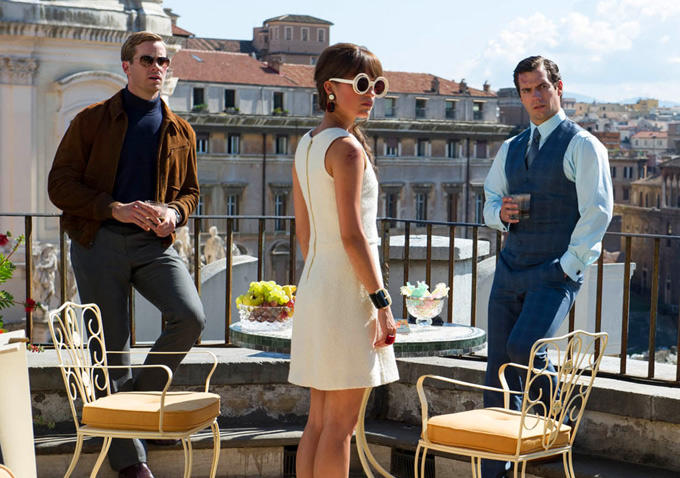
Following his rescue of a scientist’s daughter, Gaby Teller (Vikander) from East Berlin, CIA agent Napoleon Solo (Cavill) is told by his boss (Harris) that he has a new partner: the KGB agent who tried to stop him, Ilya Kuryakin (Hammer). Gaby’s father, Udo (Berkel), is building an atom bomb that’s intended for a hidden Nazi group. Her Uncle Rudi (Groth) is suspected of knowing where he is. Solo and Kuryakin must take Gaby to Rome where evidence points to the involvement of the Alexanders (Calvani, Debicki). While Solo poses as an antiquities dealer, Kuryakin poses as Gaby’s fiancé. Solo and Kuryakin attend a party given by Victoria Alexander where they discover evidence that the atom bomb (and Udo) must be nearby. That night they both break in to the Alexanders’ factory where they find further evidence of Udo’s work.

Solo meets with Victoria but she drugs his drink. When he wakes he finds himself strapped to a chair and about to be tortured by Uncle Rudi who turns out to be an evil Nazi scientist. With Kuryakin’s aid he escapes, while Gaby is taken to an island where her father is putting the finishing touches to the bomb. It’s at this point that Solo and Kuryakin are introduced to Commander Waverly (Grant), a member of British intelligence. He fills them in on some information that’s been held back from them, and reveals a plan to infiltrate the island, seize the atom bomb, and rescue Gaby and her father. But the Alexanders have an ace up their sleeve…

Man from U.N.C.L.E., The - scene

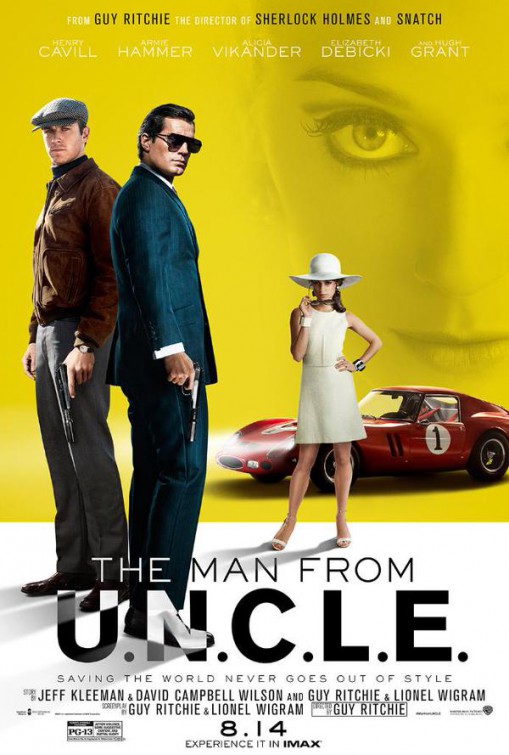
The Man from U.N.C.L.E. (on the big screen at least) has been a long time coming. But up until the recent involvement of Ritchie and his producing partner Lionel Wigram, every attempt to make a movie version of the classic 60’s TV show has stalled, often before it’s even cleared the gate. Coming off two very successful Sherlock Holmes movies, Ritchie has clearly been given as much leeway as he needs in order to bring this movie to audiences, and while he uses many of the stylistic shooting techniques he used on the Holmes movies, what he’s failed to do is come up with a story that is either exciting or engrossing. It’s a shame as the potential is there for another successful franchise, but aside from a splendidly retro feel for the era, the movie lacks the kind of impact that would lift it out of the bin marked “ordinary”.

Things aren’t helped by the casting of Cavill and Hammer, two averagely effective actors who lack the subtlety required to make Solo and Kuryakin anything more than grudging partners. Sure it’s an origin story so the animosity is understandable, but they’re also highly skilled professionals, the best at what they do; so why make Solo a preening plank, or Kuryakin a headstrong liability? It’s a curious decision, to make your two leading men so unrelatable, but Ritchie’s gone with it completely, and the movie suffers appropriately. Thankfully, the same can’t be said of Vikander and Debicki, who save the movie from being too much of a debacle, and the involvement of Grant, who seems to be having the most fun he’s had in years. If there is to be a sequel – and at the moment the movie’s performance at the box office seems to indicate there won’t be – then a serious rethink is in order.

Rating: 5/10 – not as bad as it could have been, but also not as good as it should have been, The Man from U.N.C.L.E. lacks energy and limps uneasily from scene to scene in search of a consistently entertaining tone that it doesn’t find; a pleasant enough diversion if you’re in the mood, but definitely not a movie to expect too much from.

Share this:

  • Click to share on X (Opens in new window) X
  • Click to share on Facebook (Opens in new window) Facebook
  • More
  • Click to print (Opens in new window) Print
  • Click to email a link to a friend (Opens in new window) Email
Like Loading...

Blog Stats

  • 486,660 hits

Recent Posts

  • 10 Reasons to Remember Bibi Andersson (1935-2019)
  • Fantasia (1940)
  • Dances With Wolves (1990) – The Special Edition
  • Kiss of the Spider Woman (1985)
  • The Three Musketeers (1973)

Top Posts & Pages

  • Lost for Life (2013) - Another Look
    Lost for Life (2013) - Another Look
  • Lost for Life (2013)
    Lost for Life (2013)
  • About
    About
  • BFI London Film Festival 2015
    BFI London Film Festival 2015
  • Mr. Topaze (1961)
    Mr. Topaze (1961)
  • Hunt for the Wilderpeople (2016)
    Hunt for the Wilderpeople (2016)
  • Shock and Awe (2017)
    Shock and Awe (2017)
  • Cardboard Boxer (2016)
    Cardboard Boxer (2016)
  • Exposed (2016)
    Exposed (2016)
  • Billy Lynn's Long Halftime Walk (2016)
    Billy Lynn's Long Halftime Walk (2016)
Follow thedullwoodexperiment on WordPress.com

Blogs I Follow

  • Rubbish Talk
  • Film 4 Fan
  • Fast Film Reviews
  • The Film Blog
  • All Things Movies UK
  • Interpreting the Stars
  • Let's Go To The Movies
  • Movie Reviews 101
  • TMI News
  • Dan the Man's Movie Reviews
  • Film History
  • Jordan and Eddie (The Movie Guys)

Archives

  • April 2019 (13)
  • March 2019 (28)
  • February 2019 (28)
  • January 2019 (32)
  • December 2018 (28)
  • November 2018 (30)
  • October 2018 (29)
  • September 2018 (29)
  • August 2018 (29)
  • July 2018 (30)
  • June 2018 (28)
  • May 2018 (24)
  • April 2018 (21)
  • March 2018 (31)
  • February 2018 (25)
  • January 2018 (30)
  • December 2017 (30)
  • November 2017 (27)
  • October 2017 (27)
  • September 2017 (26)
  • August 2017 (32)
  • July 2017 (32)
  • June 2017 (30)
  • May 2017 (29)
  • April 2017 (29)
  • March 2017 (30)
  • February 2017 (27)
  • January 2017 (32)
  • December 2016 (30)
  • November 2016 (28)
  • October 2016 (30)
  • September 2016 (27)
  • August 2016 (30)
  • July 2016 (30)
  • June 2016 (31)
  • May 2016 (34)
  • April 2016 (30)
  • March 2016 (30)
  • February 2016 (28)
  • January 2016 (35)
  • December 2015 (34)
  • November 2015 (31)
  • October 2015 (31)
  • September 2015 (34)
  • August 2015 (31)
  • July 2015 (33)
  • June 2015 (12)
  • May 2015 (31)
  • April 2015 (32)
  • March 2015 (30)
  • February 2015 (37)
  • January 2015 (39)
  • December 2014 (34)
  • November 2014 (34)
  • October 2014 (36)
  • September 2014 (25)
  • August 2014 (29)
  • July 2014 (29)
  • June 2014 (28)
  • May 2014 (23)
  • April 2014 (21)
  • March 2014 (42)
  • February 2014 (38)
  • January 2014 (29)
  • December 2013 (28)
  • November 2013 (34)
  • October 2013 (4)

Create a free website or blog at WordPress.com.

Rubbish Talk

Film 4 Fan

A Movie Blog

Fast Film Reviews

The Film Blog

The official blog of everything in film

All Things Movies UK

Movie Reviews and Original Articles

Interpreting the Stars

Dave Examines Movies

Let's Go To The Movies

Film and Theatre Lover!

Movie Reviews 101

Daily Movie Reviews

TMI News

Latest weather, crime and breaking news

Dan the Man's Movie Reviews

All my aimless thoughts, ideas, and ramblings, all packed into one site!

Film History

Telling the story of film

Jordan and Eddie (The Movie Guys)

Movie Reviews & Ramblings from an Australian Based Film Fan

Privacy & Cookies: This site uses cookies. By continuing to use this website, you agree to their use.
To find out more, including how to control cookies, see here: Cookie Policy
  • Subscribe Subscribed
    • thedullwoodexperiment
    • Join 481 other subscribers
    • Already have a WordPress.com account? Log in now.
    • thedullwoodexperiment
    • Subscribe Subscribed
    • Sign up
    • Log in
    • Report this content
    • View site in Reader
    • Manage subscriptions
    • Collapse this bar
 

Loading Comments...
 

    %d