• 10 Reasons to Remember…
  • A Brief Word About…
  • About
  • For One Week Only
  • Happy Birthday
  • Monthly Roundup
  • Old-Time Crime
  • Other Posts
  • Poster of the Week
  • Question of the Week
  • Reviews
  • Trailers

thedullwoodexperiment

~ Viewing movies in a different light

thedullwoodexperiment

Tag Archives: David Cronenberg

A Dangerous Method (2011)

14 Friday Jul 2017

Posted by dullwood68 in Movies

≈ 1 Comment

Tags

Affair, Carl Jung, Catch Up movie, David Cronenberg, Drama, Historical drama, Keira Knightley, Michael Fassbender, Psychoanalysis, Sabina Spielrein, Sigmund Freud, True story, Viggo Mortensen

D: David Cronenberg / 99m

Cast: Keira Knightley, Viggo Mortensen, Michael Fassbender, Vincent Cassel, Sarah Gadon

A movie examining the intellectual and professional battle between Carl Jung (Fassbender) and Sigmund Freud (Mortensen) may not be the most obvious choice for David Cronenberg to direct, but there’s long been a psycho-sexual element to his movies that fits in quite easily with Jung and Freud’s combative attitudes about notions of sexual repression (though even they may have balked at some of the ideas Cronenberg came up with during his Seventies output). What emerges though is a movie that concentrates as much on the machinations of the mind as it does on the pleasures of the flesh.

The movie opens in 1902, with the arrival of Sabina Spielrein (Knightley) at the Burghölzli, a psychiatric hospital in Zurich. Sabina displays extreme manic behaviour and contorts her body into uncomfortable positions as an expression of her illness. She is placed in the care of a young doctor, Carl Jung. He begins treating her using various techniques including dream interpretation (though mostly he just asks her how certain events in her childhood made her feel). Sabina responds to the treatment and soon she makes a breakthrough in understanding the root cause of her mania. Wishing to be a psychanalyst (the term Jung uses), Sabina begins to help Jung with his research. Soon, he begins corresponding with Freud, and before long they have a mentor/pupil relationship despite some of the differences in their approach to psychoanalysis (the term Freud uses).

When Freud recommends Jung treat one of his patients, Otto Gross (Cassel), the man’s indulgence of his sexual desires and his insistence that sexual repression is at odds with living a normal, healthy life, serves to make Jung confront his desire for Sabina. They embark on an affair, one that Jung’s wife, Emma (Gadon), tolerates, while Jung himself continues his professional and personal relationship with Freud. However, at the same time that their friendship begins to deteriorate over their different opinions about psychoanalysis, Jung is struck by guilt and seeks to end his affair with Sabina. She involves Freud on her behalf but while he sympathises with her (and more so because Jung has lied to him about the affair), he is unable to intervene. Soon, he and Jung end their relationship, and Sabina strikes out on her own as a psychoanalyst.

Adapted partly from the book, A Most Dangerous Method by John Kerr, and partly from screenwriter Christopher Hampton’s play, The Talking Cure, A Dangerous Method is a beautifully shot movie (by DoP Peter Suschitzky) that features a marvellous, deftly arranged score by Howard Shore (based on leitmotifs from Wagner’s Siegfried), and a richly detailed recreation of early 20th century Europe (some parts of which didn’t need to be de-modernised at all). It’s also a movie that outlines and explains in simple terms the differences between Freud and Jung’s different approaches to psychoanalysis, while at the same time doing so in a way that maintains the mystique that surrounded their differing approaches (and for many people, still does). It’s all down to Hampton’s intelligent, precise screenplay and Cronenberg’s effortless way of telling the story. There’s not a wasted scene or moment in the whole movie.

Cronenberg shows a sure hand throughout, and as the inter-relationships between Jung and Freud, and Jung and Sabina, and eventually Sabina and Freud, begin to grow more and more intense, he allows the viewer a glimpse inside the mind and the motivations of each character, whether it’s Jung’s fear of professional repudiation, or Freud’s unyielding pragmatism, or even the enjoyment Sabina derives from being humiliated. These are characters, real life people, that we can understand and, to a degree, sympathise with. They were all involved in the creation of a field of medicine that has since been of benefit to millions upon millions. That they had their own problems shouldn’t be a surprise, anf thanks to Hampton’s erudite and very adroit script, those problems are fleshed out with tremendous skill, and in Cronenberg’s hands, delivered with impeccable attention to professional and emotional detail. Jung may have been more willing to explore other avenues relating to the way in which our subconscious works, but even Freud’s rigid demeanour and intellect are presented credibly and with no small amount of rigour.

The director is aided by a trio of superb performances. Mortensen, playing older, gives Freud a shrewd gravitas, appearing always thoughtful, always seeking to understand the impulses that drive everyone around him (and especially Jung). It’s a role that requires the actor to appear ruminative for long stretches, passively observing and deducing, and Mortensen carries it off with his usual skill and ingenuity. He’s also the source of much of the movie’s dry, offhand humour. Mortensen is such a thoughtful, articulate actor that his presence acts almost as a guarantee of quality, and working with Cronenberg for the third time – after A History of Violence (2005) and Eastern Promises (2007) – he renews that acquaintance to incredibly good effect. As Jung, Fassbender gets the lion’s share of the narrative, and gives a detailed, insightful performance that shows the doubts and concerns that Jung had in terms of his work, and his marriage, and his relationship with Sabina. It’s a well rounded portrayal, not lacking in emotional precision, and gives the actor a chance to impress in a role that requires much of the character’s feelings to be expressed internally, as befits both the period and contemporary public expectations.

How different then for Keira Knightley, who right from the very beginning has to provide an hysteric performance, one that pushes her as an actress and one that pushes the audience’s acceptance of her as a dramatic actress (there’s no doubt that Knightley can act; it’s just that it gets easily forgotten when she’s also a celebrity). She brings a passion and a commitment to the role of Sabina that is powerful and uncomfortable to watch in her early scenes, and even though she gets “better”, the character’s mania remains there, just under the surface and ready to release itself at a moment’s notice. Here, Knightley’s angular features are used to strikingly good effect as Cronenberg keeps her looking as if every moment is a struggle to continue to be “normal”. She and Fassbender work well together, and their scenes are some of the most potent in the whole movie.

As a movie dealing with the birth of psychoanalysis as we know it today, the arguments for and against the theories of Jung and Freud are presented in a way that makes them both intriguing, and elusive, in terms of their true efficacy. Both men were convinced their own approaches were the correct ones, but the movie doesn’t side with either of them, leaving the viewer to make up their own minds as to which man is “right” and which man is “wrong”. Cronenberg orchestrates these discussions with admirable finesse, and if some scenes seem too clinical or distant from the heated passions they’re depicting, it’s in keeping with the notion that Jung and Freud, and even Sabina, were first and foremost observers, and that their own lives were just as worthy of inspection (or introspection) as anyone else’s. And perhaps even more so.

Rating: 8/10 – a vivid and captivating examination of the ways in which early forms of psychoanalysis drew on the experiences and sentiments of its practitioners, A Dangerous Method is absorbing and exhilarating in equal measure; with Cronenberg handling the material so sensitively and without over-simplifying things, it’s a movie that stands out for being about complex ideas as to what makes us tick, and isn’t just a vapid exploration of carnal desires. (14/31)

Share this:

  • Click to share on X (Opens in new window) X
  • Click to share on Facebook (Opens in new window) Facebook
  • More
  • Click to print (Opens in new window) Print
  • Click to email a link to a friend (Opens in new window) Email
Like Loading...

Maps to the Stars (2014)

05 Sunday Oct 2014

Posted by dullwood68 in Movies

≈ Leave a comment

Tags

Actress, Black comedy, Chauffeur, Child actor, David Cronenberg, Drama, Dysfunctional family, Evan Bird, Hollywood, John Cusack, Julianne Moore, Mia Wasikowska, Olivia Williams, P.A., Review, Robert Pattinson, Self-help guru

Maps to the Stars

D: David Cronenberg / 111m

Cast: Julianne Moore, Mia Wasikowska, John Cusack, Evan Bird, Olivia Williams, Robert Pattinson, Sarah Gadon, Kiara Glasco, Dawn Greenhalgh

Arriving in Los Angeles, Agatha (Wasikowska) is met by limo driver/aspiring actor Jerome (Pattinson).  On the way to where she’s staying she asks him to drive to a spot up in the hills near to the Hollywood sign, though when they get there there isn’t a house where Agatha expects it to be.  Meanwhile, child actor Benjie Weiss (Bird) is in the middle of negotiations to star in the sequel to the movie that has made him a star.  However, a recent bout of substance abuse has the studio insisting on his sobriety.  At the same time, well-known actress Havana Segrand (Moore) is doing all she can to land the part her mother played in a remake of a 60’s classic.  Through a lucky piece of networking, Agatha ends up working for Havana as her P.A.

Agatha has burns from a fire that happened when she was younger and it’s revealed that she’s spent the last seven years in a psychiatric hospital as she caused the fire.  Her reason for coming to L.A. is to make amends to her family, parents Stafford (Cusack) and Christina (Williams), and her brother, who it turns out is Benjie.  When they learn she’s back in town they have different reactions but she sees them each in turn with differing results.  As troubled as Agatha is, she’s unaware of the ghosts Benjie sees, ghosts that are pushing him toward a violent outburst.  And Havana is tormented by visions of her mother (Gadon) before she died, visions that feed into her insecurity about playing her mother’s role.  A relationship blossoms with Jerome but is eventually undermined by Havana, while one of Benjie’s hallucinations causes a tragedy he can’t run away from… except with Agatha.  With violence blighting both their lives, they decide on a solution to their problems that will give them both peace from the demons that haunt them.

Maps to the Stars - scene

The first movie that David Cronenberg has made – if only partially – in the US, Maps to the Stars is a biting satire that explores the various tensions within one of the most dysfunctional families in recent movie history.  The Weisses are so screwed up as a family it’s a wonder any of them can function normally on a day to day basis.  Dad Stafford is a self-help guru cum massage therapist whose sense of his own relevance is underlined by the famous people he’s met, like the Dalai Lama.  He’s distant from his wife and son, and is worried that any adverse publicity will expose the secret he and Christina have shared for years.  For her part, Christina acts as a kind of manager for her son’s career, advising him and attending meetings with the studio.  She gets little recognition for her efforts from him, and she too is afraid their secret will be revealed. Both characters are unhappy and edgy in their own skins, and there is a distance between them that has become enforced through necessity, but their dependence on each other is the only way they can express their love for each other.

Benjie is thirteen and the kind of spoilt-minded child actor who thinks it’s okay to disrespect people and be abusive and mean-minded.  There’s a certain amount of insecurity about him, but it’s smothered by his “fuck you” attitude, and his need to be in control of his own life, independent of his parents.  By contrast, Agatha is the child who wants to make amends, who wants to see her family reunited, but doesn’t realise – or expect – that her optimism is misguided.  Her troubled history (controlled by several different medications) is in danger of defining her as an individual, and her job with Havana, and her romance with Jerome, help boost her confidence in dealing with Benjie and her parents.  When they both go wrong, she discards her meds, and it’s only when she does that she’s truly able to deal with things, even if the way in which she does is far from appropriate.  Self-confidence aside, it’s her schizophrenia that keeps her strong.

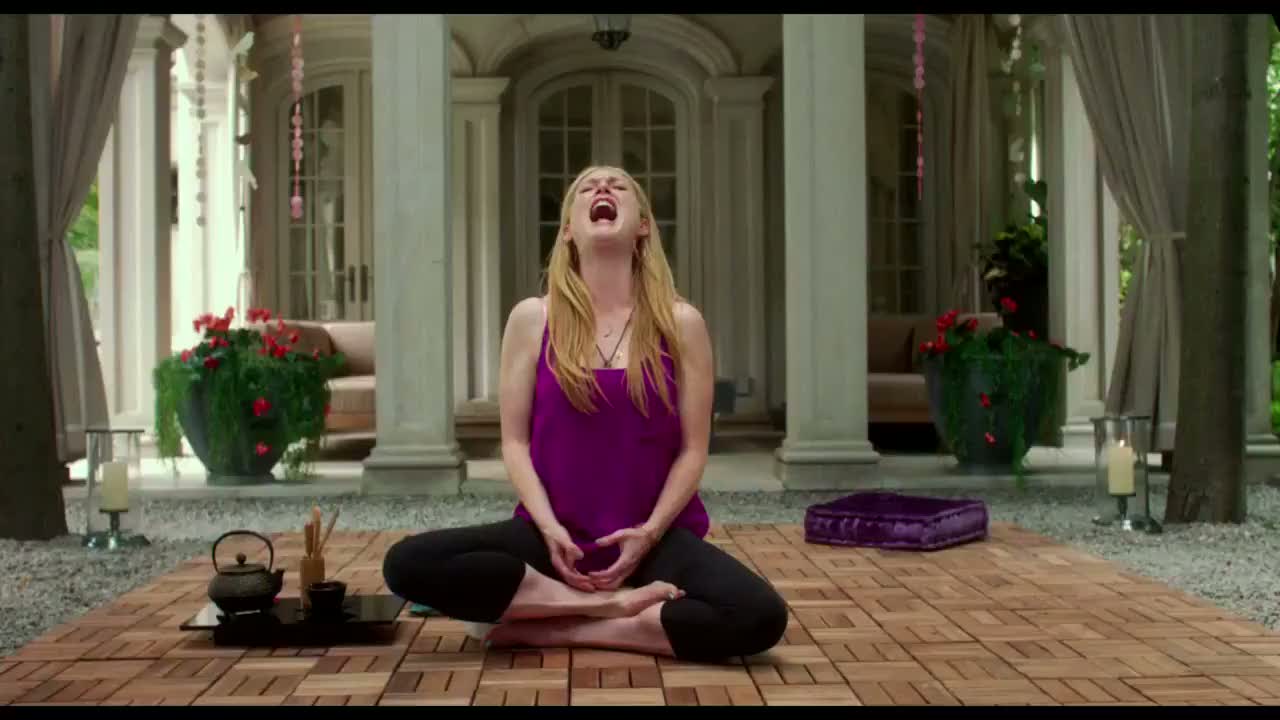
All four actors – Cusack, Williams, Bird and Wasikowska – prove excellent choices for their roles, and each one holds the viewer’s attention with ease in each of their scenes; when some of them are together, it’s like an embarrassment of riches, and it’s good to see Cusack back on form after the likes of Drive Hard and The Prince (both 2014).  But this is Moore’s movie all the way, her portrayal of an actress on the verge of becoming irrelevant both tragic and horrifying in its naked neediness and self-serving hypocrisy.  Moore’s no stranger to tortured female characters (whether self-inflicted or not), and here she adds yet another to the list, making Havana pitiable, self-destructive and venal in equal measure.  It’s a bravura performance, with Moore displaying Havana’s emotional vulnerability and lack of empathy, particularly in the horrifying scene where she celebrates getting her mother’s role through tragic circumstances.  She’s hypnotic to watch, and by far the best part of seeing the movie.

Good as the performances are though (and they are very good), there isn’t any easy way to connect with the characters.  Agatha has most of the viewer’s sympathy, but that slowly changes as the movie progresses.  Benjie is virtually irredeemable, while Stafford and Christina are too wrapped up in themselves to care about anyone else.  This is also a movie made with a degree of distance between the characters and the audience, and this appears to be down to Cronenberg’s approach to both them and Bruce Wagner’s screenplay.  His direction is as inventive as ever, and he deposits the Weisses and Havana in various large, open spaces to highlight their isolation (particularly their own homes).  As a movie that shines a light on how dysfunction and self-destruction can both encourage and propel certain people toward terrible actions, it’s a triumph.  But as a movie that identifies root causes and solid motivations for those actions it’s not so successful, leaving the viewer to scratch their head at how the characters can be so self-destructive, and with no attempts to seek help (even from Stafford).

However, there is a degree of dark humour here that some audiences will recognise, as well as moments of soap opera absurdity that threaten to undermine the overall cleverness of the script.  These are also predictable moments, and while some are necessary for certain storylines to move forward, it’s a shame that they’ve been included, as they actually cause the movie’s flow to stutter when they occur.  Still, there’s more here that’s good than bad, and it’s compelling on several levels.

Rating: 8/10 – another winner from Cronenberg, Maps to the Stars has a few, minor faults, and will certainly divide audiences, but fans will lap it up, while newcomers to Cronenberg’s oeuvre may be non-plussed by the observational approach; with a raft of intriguing, well-constructed performances, the movie offers far more than is obvious at first glance.

Share this:

  • Click to share on X (Opens in new window) X
  • Click to share on Facebook (Opens in new window) Facebook
  • More
  • Click to print (Opens in new window) Print
  • Click to email a link to a friend (Opens in new window) Email
Like Loading...

Blog Stats

  • 486,761 hits

Recent Posts

  • 10 Reasons to Remember Bibi Andersson (1935-2019)
  • Fantasia (1940)
  • Dances With Wolves (1990) – The Special Edition
  • Kiss of the Spider Woman (1985)
  • The Three Musketeers (1973)

Top Posts & Pages

  • Lost for Life (2013) - Another Look
    Lost for Life (2013) - Another Look
  • Lost for Life (2013)
    Lost for Life (2013)
  • About
    About
  • Exposed (2016)
    Exposed (2016)
  • Cardboard Boxer (2016)
    Cardboard Boxer (2016)
  • A Brief Word About La La Land (2016)
    A Brief Word About La La Land (2016)
  • The Monuments Men (2014)
    The Monuments Men (2014)
  • A Brief Word About Netflix Original Comedies
    A Brief Word About Netflix Original Comedies
  • Removal (2010)
    Removal (2010)
  • My Top 10 Guilty Pleasures
    My Top 10 Guilty Pleasures
Follow thedullwoodexperiment on WordPress.com

Blogs I Follow

  • Rubbish Talk
  • Film 4 Fan
  • Fast Film Reviews
  • The Film Blog
  • All Things Movies UK
  • Interpreting the Stars
  • Let's Go To The Movies
  • Movie Reviews 101
  • TMI News
  • Dan the Man's Movie Reviews
  • Film History
  • Jordan and Eddie (The Movie Guys)

Archives

  • April 2019 (13)
  • March 2019 (28)
  • February 2019 (28)
  • January 2019 (32)
  • December 2018 (28)
  • November 2018 (30)
  • October 2018 (29)
  • September 2018 (29)
  • August 2018 (29)
  • July 2018 (30)
  • June 2018 (28)
  • May 2018 (24)
  • April 2018 (21)
  • March 2018 (31)
  • February 2018 (25)
  • January 2018 (30)
  • December 2017 (30)
  • November 2017 (27)
  • October 2017 (27)
  • September 2017 (26)
  • August 2017 (32)
  • July 2017 (32)
  • June 2017 (30)
  • May 2017 (29)
  • April 2017 (29)
  • March 2017 (30)
  • February 2017 (27)
  • January 2017 (32)
  • December 2016 (30)
  • November 2016 (28)
  • October 2016 (30)
  • September 2016 (27)
  • August 2016 (30)
  • July 2016 (30)
  • June 2016 (31)
  • May 2016 (34)
  • April 2016 (30)
  • March 2016 (30)
  • February 2016 (28)
  • January 2016 (35)
  • December 2015 (34)
  • November 2015 (31)
  • October 2015 (31)
  • September 2015 (34)
  • August 2015 (31)
  • July 2015 (33)
  • June 2015 (12)
  • May 2015 (31)
  • April 2015 (32)
  • March 2015 (30)
  • February 2015 (37)
  • January 2015 (39)
  • December 2014 (34)
  • November 2014 (34)
  • October 2014 (36)
  • September 2014 (25)
  • August 2014 (29)
  • July 2014 (29)
  • June 2014 (28)
  • May 2014 (23)
  • April 2014 (21)
  • March 2014 (42)
  • February 2014 (38)
  • January 2014 (29)
  • December 2013 (28)
  • November 2013 (34)
  • October 2013 (4)

Blog at WordPress.com.

Rubbish Talk

Film 4 Fan

A Movie Blog

Fast Film Reviews

The Film Blog

The official blog of everything in film

All Things Movies UK

Movie Reviews and Original Articles

Interpreting the Stars

Dave Examines Movies

Let's Go To The Movies

Film and Theatre Lover!

Movie Reviews 101

Daily Movie Reviews

TMI News

Latest weather, crime and breaking news

Dan the Man's Movie Reviews

All my aimless thoughts, ideas, and ramblings, all packed into one site!

Film History

Telling the story of film

Jordan and Eddie (The Movie Guys)

Movie Reviews & Ramblings from an Australian Based Film Fan

Privacy & Cookies: This site uses cookies. By continuing to use this website, you agree to their use.
To find out more, including how to control cookies, see here: Cookie Policy
  • Subscribe Subscribed
    • thedullwoodexperiment
    • Join 481 other subscribers
    • Already have a WordPress.com account? Log in now.
    • thedullwoodexperiment
    • Subscribe Subscribed
    • Sign up
    • Log in
    • Report this content
    • View site in Reader
    • Manage subscriptions
    • Collapse this bar
 

Loading Comments...
 

    %d