• 10 Reasons to Remember…
  • A Brief Word About…
  • About
  • For One Week Only
  • Happy Birthday
  • Monthly Roundup
  • Old-Time Crime
  • Other Posts
  • Poster of the Week
  • Question of the Week
  • Reviews
  • Trailers

thedullwoodexperiment

~ Viewing movies in a different light

thedullwoodexperiment

Tag Archives: District attorney

The Secret Bride (1934)

02 Friday Oct 2015

Posted by dullwood68 in Movies

≈ Leave a comment

Tags

Barbara Stanwyck, Bribery, Corruption, Crime, District attorney, Drama, Glenda Farrell, Governor, Grant Mitchell, Marriage, Murder, Review, Thriller, Warren William, William Dieterle
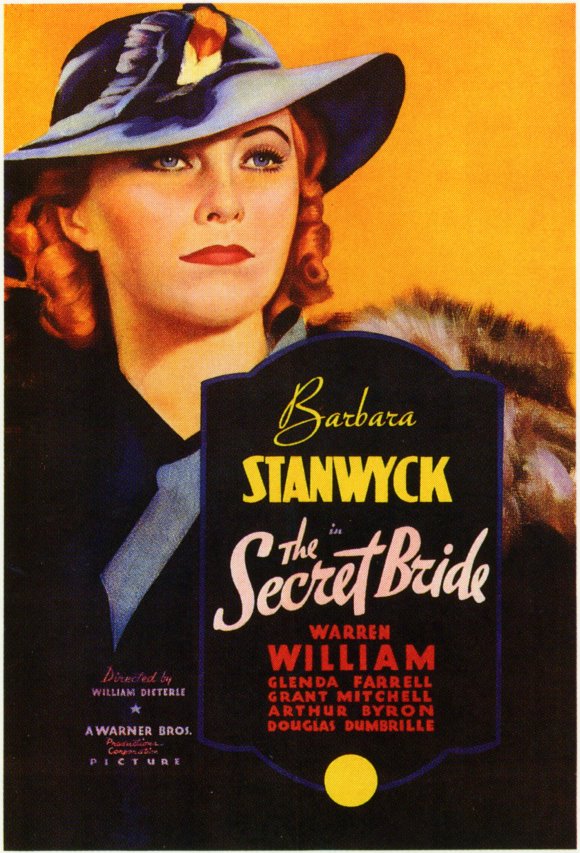
Secret Bride, The

aka Concealment

D: William Dieterle / 64m

Cast: Barbara Stanwyck, Warren William, Glenda Farrell, Grant Mitchell, Arthur Byron, Henry O’Neill, Douglass Dumbrille, Russell Hicks

Ambitious state Attorney General Robert Sheldon (William) and Ruth Vincent (Stanwyck), the daughter of the state governor (Byron), are head over heels in love and decide to get married without telling anyone. But before they can announce it, an investigator working out of Sheldon’s office, Breeden (Dumbrille), discovers evidence that implicates the Governor in a potential bribery scandal. Breeden’s evidence comes courtesy of Willis Martin (Mitchell), the private secretary to J.F. Holdstock (Hicks) who deposited money from his boss into the Governor’s private bank account. With no credible business reason for these deposits to have been made, it looks very much as if the Governor was accepting money from Holdstock, a convicted embezzler, whom he’d pardoned.

Sheldon is obliged to investigate this claim and bring it before a legislative body. He tells Ruth about it and they decide to keep their marriage a secret for fear of Sheldon being accused of having a conflict of interest. Their first course of action is to speak to Holdstock but they learn he’s committed suicide, and later they find an incriminating letter amongst Holdstock’s papers. That night, Breeden visits Martin’s apartment, and it becomes clear that the investigator is working his own angle. Later, at Sheldon’s offices, his secretary, Hazel Normandie (Farrell), leaves to meet Breeden outside the building. As he comes toward her, he is shot and killed. Ruth has seen everything from Sheldon’s inner office, and knows Hazel wasn’t the shooter, but keeps quiet to protect her marriage and Sheldon’s enquiries.

Hazel is arrested and charged with Breeden’s murder. Meanwhile, the legislature is becoming suspicious of the Governor and Sheldon, believing them to be withholding evidence surrounding Holdstock’s death from them. With Hazel’s trial for murder fast approaching, Ruth takes a desperate chance and visits Martin in his apartment. She learns that Holdstock’s death wasn’t suicide, and that her father’s main political supporter, Jim Lansdale (O’Neill), is more involved than even she, or her father, suspects.

Secret Bride, The - scene

Based on the play by Leonard Ide, The Secret Bride is, on face value, the kind of mystery thriller that Warner Bros. seemed to churn out on a weekly basis throughout the early Thirties, but a closer look reveals a movie with more going on than meets the  eye. Its construction will be familiar to anyone who’s seen similar movies from the era, and the playing is as heartfelt and melodramatic as the script demands, but it’s a movie that plays well on a number of different levels, and uses its bribery and corruption storyline to make several cogent and pertinent observations on the politics of the time.

That it does so is a testament to the professionalism of the cast and crew, and in particular, Dieterle and Stanwyck. Dieterle made the movie because he was contractually obliged to; in addition he thought the script – by Tom Buckingham, F. Hugh Herbert and Mary McCall Jr – was weak. Stanwyck was in a similar position, and wanted out of her contract as soon as possible; after this she made just one more movie for Warner Bros. before returning to the studio in 1941 for Frank Capra’s Meet John Doe. With its director and star both less than enamoured of the project, it still remains an object lesson in how to mount a tightly-focused and entertaining little drama, and make it a better feature than expected. That it only played in a small number of theatres when it was released is discouraging, and perhaps reflects Warner Bros. own concerns over its commercial viability.

But it is a great little movie, with several directorial flourishes that make up for some of the more (deliberately) pedestrian scenes (Breeden’s death is a perfect case in point, shot from a high vantage point with rain falling and the horrified presence of Hazel Normandie to give it an emotional impact). Dieterle’s preference for low camera angles is a feature of the movie’s look, as is the way in which the camera is allowed to move in close when characters are panicked or anguished or frightened. A lot of this is also due to the presence of the great Ernest Haller behind the camera, and he even manages to make the movie’s static set-ups visually interesting, while Owen Marks’ assured cutting and editing provides the movie with its fast-paced rhythm.

Along with Stanwyck, William and the rest of the cast, Dieterle also teases out some of the script’s obvious subtexts, and explores them thoroughly. While the absence of trust in politics is pushed to the fore, the notion that such an absence is sometimes necessary is also given expression in the Governor’s resignation to his probable fate, as if his treatment by the press and his colleagues is to be accepted as par for the course. Sheldon and Ruth’s keeping quiet about their marriage is cleverly shown as a way of protecting themselves from associated harm and their selfish actions (while allowed to be put aside later on in the movie) go unpunished, adding to the idea that deception and falsity in politics is okay, whether it’s for the “greater good” or not.

As the embattled and battling couple, Stanwyck and William make a great team, sparking off each other in their scenes together. Stanwyck could always be called upon to be glamorous and alluring, but here she’s a muted heroine, her wardrobe reflecting Ruth’s single-mindedness and inner fortitude. William, often the charming rogue, is equally restrained, drawing the viewer in by showing the doubts Sheldon has as the mystery surrounding Holdstock’s death and his father-in-law’s involvement becomes less and less clear-cut. And they’re provided with efficient and formidable support from the likes of Dumbrille (unprincipled co-worker), Farrell (wise-cracking but vulnerable secretary), O’Neill (smoothly objectionable political fixer), Mitchell (devious and scared private secretary), and Byron (principled but naïve career politician). It’s an enviable cast, and everyone is on fine form, creating solid performances and characterisations, and adding to the pleasure to be had from watching the movie in the first place.
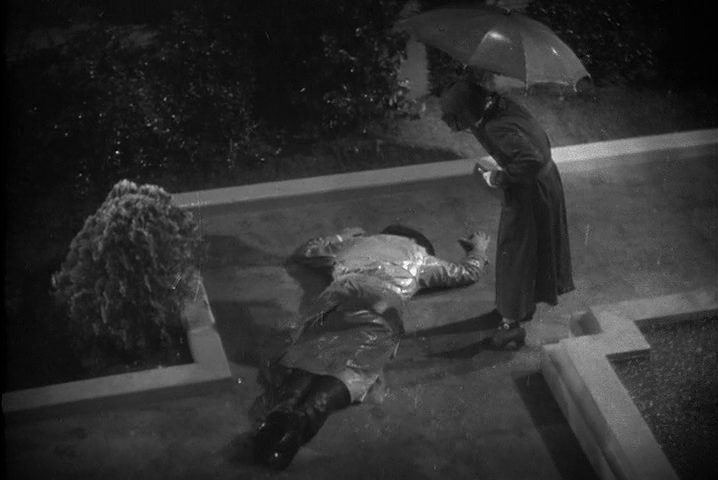
Secret Bride, The - scene2

It’s true that the scenario is unremarkable, and the outcome entirely predictable, but then what movie from the period was ever any different? What makes this movie stand out is the attention paid to the characters, and the way in which Dieterle – against his better judgement perhaps – took what he believed to be an unpromising script, and made it as absorbing and compelling (and more so) than many other movies made in the same vein. And that’s to be rightly applauded.

Rating: 8/10 – an unappreciated gem deserving of critical reappraisal, The Secret Bride overcomes its potboiler preconceptions to provide a hour and four minutes of substantial entertainment; Stanwyck and William are on great form, and the whole mystery of the Governor’s innocence is played out with such a convincing touch of ambivalence that it helps the material immensely, and leaves the viewer wondering for quite some time, if he really is as guilty as it seems.

Share this:

  • Click to share on X (Opens in new window) X
  • Click to share on Facebook (Opens in new window) Facebook
  • More
  • Click to print (Opens in new window) Print
  • Click to email a link to a friend (Opens in new window) Email
Like Loading...

The Sin of Nora Moran (1933)

25 Tuesday Nov 2014

Posted by dullwood68 in Movies

≈ Leave a comment

Tags

Abuse, Alan Dinehart, Circus, District attorney, Drama, Execution, Governor, Literary adaptation, Love affair, Murder, Paul Cavanagh, Phil Goldstone, Review, W. Maxwell Goodhue, Zita Johann

Sin of Nora Moran, The

D: Phil Goldstone / 65m

Cast: Zita Johann, Paul Cavanagh, Alan Dinehart, Claire Du Brey, John Miljan, Henry B. Walthall, Sarah Padden, Cora Sue Collins, Aggie Herring, Otis Harlan

Edith Crawford (Du Brey), the wife of a state governor, goes to visit her brother John Grant (Dinehart), the District Attorney. She shows him several letters that prove her husband, Dick (Cavanagh) has been having an affair. She wants to know the woman’s name, but her brother tries to reassure her there could be other explanations for the letters, but then he lets slip that he knew what was going on. Pushed to reveal the woman’s name he hands his sister a newspaper cutting that reports the imminent execution of a woman named Nora Moran (Johann). At first, Edith doesn’t see the connection, but then her brother begins to explain.

He tells her of an orphaned child called Nora (Collins) who is adopted by an elderly but loving couple, the Morans (Herring, Harlan). When Nora is twenty-one the Morans are both killed in a car crash. Using her inheritance, Nora determines to be a dancer and seek her fame and fortune in the theatre. But she encounters disappointment after disappointment, until, almost broke, she gets a job working in a circus as the assistant for lion wrestler, Paulino (Miljan). Paulino proves to be a sexually abusive boss; with the aid of one of her co-workers, Mrs Watts (Padden), Nora flees the circus and heads to New York where she finds work in a nightclub. There she meets Dick Crawford, and their romance begins.

Grant becomes aware of his brother-in-law’s affair and pays the lovers a visit at Dick’s country hideaway. He confronts the pair; Nora pretends to have “known” several men during her time at the circus. This causes Dick to leave, and after she assures Grant she won’t hang around anymore, he leaves too. Later, Nora telephones Grant and asks him to return to the hideaway, where she shows him the dead body of a man, a man she has murdered. Fearing a scandal, Grant helps Nora dispose of the body, and she leaves town. Later, Nora is arrested for the man’s murder, and at her trial, and with Nora refusing to give any evidence to save herself, she is sentenced to be electrocuted.

Sin of Nora Moran, The - scene

A somewhat surreal, non-linear drama, The Sin of Nora Moran is a strange, visually inventive movie that resists easy categorisation – it has elements of murder, mystery, romance, redemption and sacrifice – and gives Johann her best role by far. It’s also a far cry from the more usual romantic dramas of the period, and doesn’t shy away from showing the terrors of pre-execution incarceration.

Dark and brooding, this adaptation of W. Maxwell Goodhue’s story Burnt Offering, features a narrative that begins in the office of the District Attorney and then flits about from place to place – and from time to time – in its efforts to tell a very plain tale and infuse it with some flair. At one point, Grant makes Dick look at Nora in her coffin; it’s a fantasy sequence but unsettling all the same for not being signposted. Or there’s the shot of Nora’s head being encased in imaginary flames (a none-too blatant example of how badly she’s being treated, as well as being indicative of her expected post-mortem destination). With imagery such as this, the  movie has a vivid, sometimes hallucinatory quality that perfectly complements the more melodramatic twists and turns of the script.

Full credit for this must go to the director, as well as the screenplay by Frances Hyland that, together, forge a significantly darker tragedy than perhaps even audiences of the time might have expected. Faced with the man she loves being exposed as a love cheat in the press, and his reputation tarnished irrevocably, Nora does what every lovestruck young woman would do: she keeps quiet, and by doing so, keeps him safe. The theme of self-sacrifice is given probably its best expression when Grant’s intrusion leads to Nora’ almost immediate, and selfless, decision to withdraw from Dick’s life; she believes with all her heart that his reputation and character mustn’t be sullied. (Of course, these days, Dick would probably be left to fend for himself, and would probably be asked to do whatever fun things someone could come up with.)

With all the symbolism on display, and no end of metaphors for those viewers who aren’t quite up to speed on the visual clues, The Sin of Nora Moran features several broad acting performances from the likes of Dinehart and Miljan, while sadly confirming what contemporary audiences must have known all along: that Cavanagh was an actor with the range of a large piece of wood. As the titular heroine, Johann gives an assured, sympathetic performance as the young woman looking for some fleeting happiness to make her life all the more worthwhile.

Rating: 7/10 – shot in an unfussy yet often severe style by DoP Ira H. Morgan, and with a suitably intense score by an uncredited Heinz Roemheld, The Sin of Nora Moran is a cautionary tale of love gone awry that is often enthralling, and visually arresting; Johann shines in the title role, and the expected sentimentality is given short shrift thanks to the script’s determined sobriety.

Share this:

  • Click to share on X (Opens in new window) X
  • Click to share on Facebook (Opens in new window) Facebook
  • More
  • Click to print (Opens in new window) Print
  • Click to email a link to a friend (Opens in new window) Email
Like Loading...

Reasonable Doubt (2014)

24 Monday Mar 2014

Posted by dullwood68 in Movies

≈ Leave a comment

Tags

Court case, Crime, District attorney, Dominic Cooper, Gloria Reuben, Hit and run, Murder, Parolees, Peter Howitt, Revenge, Review, Samuel L. Jackson, Wife and child

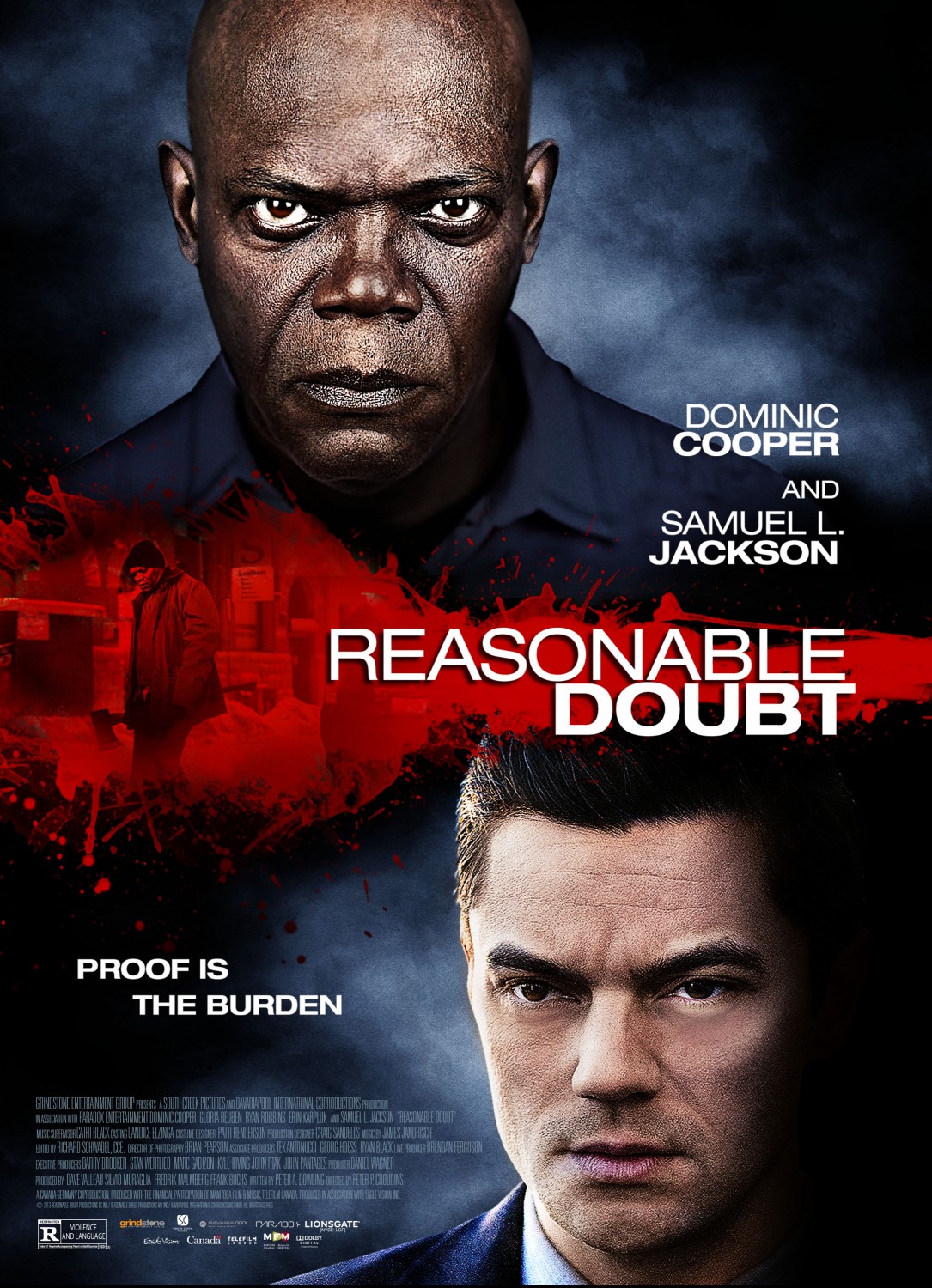
Reasonable Doubt

D: Peter P. Croudins / 91m

Cast: Dominic Cooper, Samuel L. Jackson, Gloria Reuben, Ryan Robbins, Erin Karpluk, Dylan Taylor

Pop quiz: You’re a mega-successful district attorney who’s never lost a case.  After a night out celebrating another win in court, and having had a few drinks, you still drive home because you’re worried your car might be stolen while you take a taxi.  On the way, you hit and injure a man.  Do you: a) call for an ambulance using your mobile phone and stay with the man until it arrives? b) call for an ambulance by using a pay phone and then drive off? or c) carry on driving and don’t look back?  If you answered b, then give yourself a gold star.

This is what hot shot DA Mitch Brockden (Cooper) does, and inevitably it sets in motion a series of events that ends with his wife, Rachel (Karpluk) and newborn child Ella being put in mortal danger.  In between those two events, Mitch gets an uncomfortable case of the guilts.  When Clinton Davis (Jackson) is arrested with the injured man – who is now dead – in his car later that evening, Davis’s assertion that he had found the man and was trying to get him to a hospital rings true with Mitch, even though Davis has tools in his car that match the weapons that caused the man’s other injuries.  When Davis is charged with the man’s murder, it’s Mitch who gets to prosecute him.

For reasons too tiresome and unlikely to reveal here, Mitch’s estranged step-brother Jimmy (Robbins) testifies at the trial that he saw the hit and run.  Davis is freed.  Soon after, another man is found dead with similar injuries.  Mitch now believes Davis did kill the man he knocked down, and when investigating Detective Kanon (Reuben) mentions other incidents that Davis is connected to, Mitch is convinced of Davis’s guilt.  He decides to investigate further, but soon finds that Davis is more dangerous than he expected.

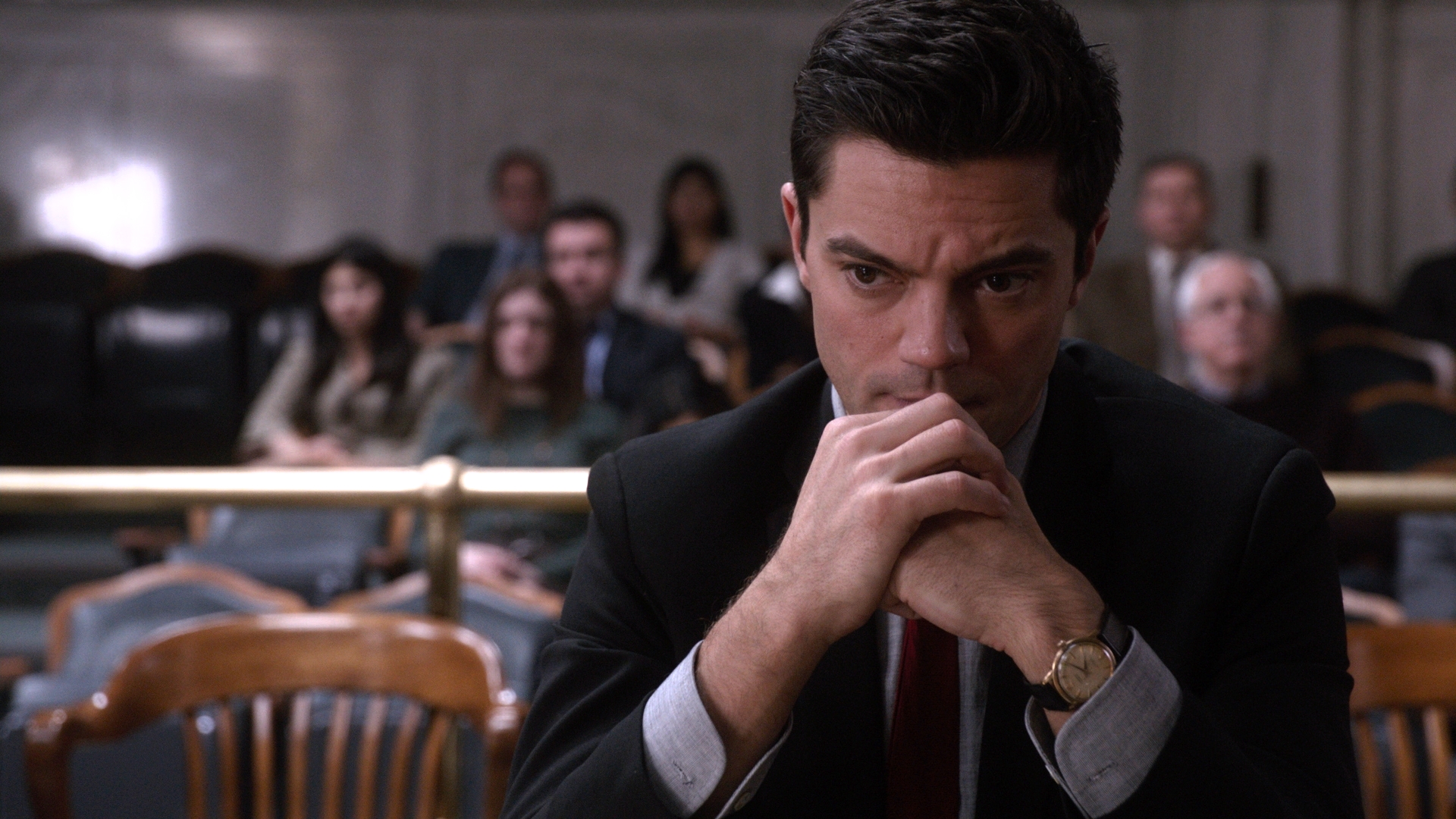
Reasonable Doubt - scene

It’s not that the whole scenario of Reasonable Doubt is far-fetched, or that the motivations of both Mitch and Davis are about as convincing as a politician’s probity, nor even that the level of credibility is undermined continually by Cooper’s lacklustre performance – he demonstrates guilt by looking as if his haemorrhoids are playing up – it’s more that no one stopped to take stock of the movie while it was being made and said, “Hold on, isn’t this just the biggest load of rubbish?”  If someone had, then perhaps we’d all have been spared this poor excuse for a thriller.  As it is, the audience has to endure scene after scene of disjointed dialogue, uncomfortable plot contrivances, woeful acting (Cooper and Reuben are the worst offenders), and such dreadful direction that Peter Howitt’s name is changed in the credits (see above).

It’s always frustrating when movies like this are made.  Reasonable Doubt could have been so much better, but the script by Peter A. Dowling comes across as a hastily assembled first draft.  There is very little internal logic on display, and what there is is so ridiculous that even if you suspended all credulity you’d still be asking yourself if what you were seeing was really happening.  The character of Mitch bears no resemblance to anyone in real life, he makes risky decisions based more on the script’s need for him to do so than any actual self-motivation, and for someone who is so good at his job – so much so that he knows a judge’s decision before he even makes it – he makes one stupid mistake after another, until he ends up arrested for the attempted murder of his step-brother.

And then the movie presents us with it’s most ridiculous and stupid moment: after receiving a call from Davis who tells him he’s going to kill Rachel and Ella, and after he overpowers a police officer, Mitch walks out of the police station without being stopped and while carrying the police officer’s gun!  He doesn’t even try to hide it, just walks out with it in his hand!  It’s when a script offers this as a development, and no one stops to say “Hold on, isn’t this just the biggest load of complete rubbish?” that you know no one really cares.  So why should the audience?

There are – amazingly – worse thrillers out there, but these are mostly low-budget affairs with semi-professional casts and inexperienced directors.  Here, there’s a level of conspicuous ability but it’s all for nought.  Even Jackson phones in his performance, giving us a less intense, less convincing version of his character from Meeting Evil (2012).  You could say that Reasonable Doubt is so bad it’s mesmerising… but that would be a whole other load of rubbish.

Rating: 3/10 – dreadful thriller that insults its own cast as well as the audience; proof if any were needed that some movies should have their productions shut down after day one.

Share this:

  • Click to share on X (Opens in new window) X
  • Click to share on Facebook (Opens in new window) Facebook
  • More
  • Click to print (Opens in new window) Print
  • Click to email a link to a friend (Opens in new window) Email
Like Loading...

Illegal (1955)

06 Monday Jan 2014

Posted by dullwood68 in Movies

≈ Leave a comment

Tags

Albert Dekker, Courtroom drama, DeForest Kelley, District attorney, Drama, Drink problem, Edward G. Robinson, Jayne Mansfield, Lewis Allen, Nina Foch, Review, Thriller

Illegal

D: Lewis Allen / 88m

Cast: Edward G. Robinson, Nina Foch, Hugh Marlowe, Jayne Mansfield, Albert Dekker, Howard St John, Ellen Corby, Edward Platt, Jan Merlin

When ace district attorney Victor Scott (Robinson) gains a conviction in the case of wife murderer Edward Clary (Star Trek’s DeForest Kelley), he couldn’t be more pleased as it maintains his impressive run of convictions.  Clary is sentenced to be executed but as he goes to the chair, a death bed confession by another man proves Clary’s innocence.  Alerted to the confession, Scott tries to halt the execution but is too late.  His professional reputation in tatters, Scott takes to the bottle.  Self-pitying and pushing away anyone who might help him, particularly his assistant Ellen Miles (Foch), Scott eventually pulls himself together but determines to take on only defence cases from then on.  In the process he falls in with local gangster Frank Garland (Dekker).  Scott defends Garland’s men when they end up in court, and on one occasion goes to extreme lengths to gain an acquittal.  Soon he begins to regret the course he’s chosen and tries to extricate himself from Garland’s clutches.  And then Ellen ends up on trial for the murder of her husband Ray (Marlowe), giving Scott a chance to redeem himself for the mistake he made with Clary, and ensure that Garland is brought to justice.

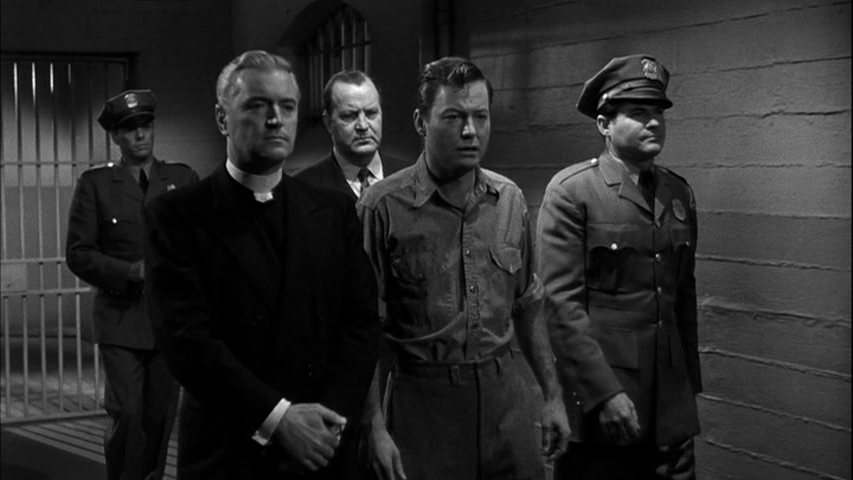
Illegal - scene

A remake of The Mouthpiece (1932), Illegal is a fast-paced courtroom drama with fine performances (though Foch can be a trifle stiff at times), and an early appearance for the buxom Mansfield.  Some of Scott’s motivations are a little bit hazy, especially when he begins working for Garland, but Robinson, consummate professional that he is, doesn’t allow this to interfere with the need for pushing the story forward.  As Garland, Dekker is a great foil for Robinson, and gives a firm reminder of why he was such a reliable supporting actor in the Forties.  There are a number of twists and turns, a mole in the DA’s office who must be uncovered (though the culprit is revealed early on), the usual lack of a romantic involvement for Robinson (he never did that well with the ladies), and some typically hard-boiled dialogue chewed on with relish by the largely male cast.

Directed with flair by Brit-born Allen (also responsible for The Uninvited – see review posted on 31 October 2013), Illegal is a legal potboiler that still retains a great deal of charm and is a pleasant enough way to spend an hour and a half.  On the downside, the sets are quite drab – evidence of a tight budget – and the photography is perfunctory, composed largely of medium shots.  It’s mostly predictable too, but this isn’t a drawback, and while there’s the odd misstep along the way (which might cause a grimace), the movie is an acceptable addition to the genre.  Plus there’s a great score from the ever-reliable Max Steiner.  There’s always an in-built reassurance with this type of movie, and if you’re a fan, you’ll be pleased you caught up with it.

Rating: 6/10 – minor problems with production values aside, Illegal benefits from a committed turn by Robinson and assured direction by Allen; not a classic but enjoyable nonetheless.

Share this:

  • Click to share on X (Opens in new window) X
  • Click to share on Facebook (Opens in new window) Facebook
  • More
  • Click to print (Opens in new window) Print
  • Click to email a link to a friend (Opens in new window) Email
Like Loading...

Blog Stats

  • 486,528 hits

Recent Posts

  • 10 Reasons to Remember Bibi Andersson (1935-2019)
  • Fantasia (1940)
  • Dances With Wolves (1990) – The Special Edition
  • Kiss of the Spider Woman (1985)
  • The Three Musketeers (1973)

Top Posts & Pages

  • Lost for Life (2013) - Another Look
    Lost for Life (2013) - Another Look
  • Lost for Life (2013)
    Lost for Life (2013)
  • About
    About
  • Mr. Topaze (1961)
    Mr. Topaze (1961)
  • Winter's Tale (2014)
    Winter's Tale (2014)
  • Billy Lynn's Long Halftime Walk (2016)
    Billy Lynn's Long Halftime Walk (2016)
  • The Hitman's Bodyguard (2017)
    The Hitman's Bodyguard (2017)
  • Shock and Awe (2017)
    Shock and Awe (2017)
  • 5 Famous Movie Roles That Nearly Went to Someone Else
    5 Famous Movie Roles That Nearly Went to Someone Else
  • The Layover (2017)
    The Layover (2017)
Follow thedullwoodexperiment on WordPress.com

Blogs I Follow

  • Rubbish Talk
  • Film 4 Fan
  • Fast Film Reviews
  • The Film Blog
  • All Things Movies UK
  • Interpreting the Stars
  • Let's Go To The Movies
  • Movie Reviews 101
  • TMI News
  • Dan the Man's Movie Reviews
  • Film History
  • Jordan and Eddie (The Movie Guys)

Archives

  • April 2019 (13)
  • March 2019 (28)
  • February 2019 (28)
  • January 2019 (32)
  • December 2018 (28)
  • November 2018 (30)
  • October 2018 (29)
  • September 2018 (29)
  • August 2018 (29)
  • July 2018 (30)
  • June 2018 (28)
  • May 2018 (24)
  • April 2018 (21)
  • March 2018 (31)
  • February 2018 (25)
  • January 2018 (30)
  • December 2017 (30)
  • November 2017 (27)
  • October 2017 (27)
  • September 2017 (26)
  • August 2017 (32)
  • July 2017 (32)
  • June 2017 (30)
  • May 2017 (29)
  • April 2017 (29)
  • March 2017 (30)
  • February 2017 (27)
  • January 2017 (32)
  • December 2016 (30)
  • November 2016 (28)
  • October 2016 (30)
  • September 2016 (27)
  • August 2016 (30)
  • July 2016 (30)
  • June 2016 (31)
  • May 2016 (34)
  • April 2016 (30)
  • March 2016 (30)
  • February 2016 (28)
  • January 2016 (35)
  • December 2015 (34)
  • November 2015 (31)
  • October 2015 (31)
  • September 2015 (34)
  • August 2015 (31)
  • July 2015 (33)
  • June 2015 (12)
  • May 2015 (31)
  • April 2015 (32)
  • March 2015 (30)
  • February 2015 (37)
  • January 2015 (39)
  • December 2014 (34)
  • November 2014 (34)
  • October 2014 (36)
  • September 2014 (25)
  • August 2014 (29)
  • July 2014 (29)
  • June 2014 (28)
  • May 2014 (23)
  • April 2014 (21)
  • March 2014 (42)
  • February 2014 (38)
  • January 2014 (29)
  • December 2013 (28)
  • November 2013 (34)
  • October 2013 (4)

Blog at WordPress.com.

Rubbish Talk

Film 4 Fan

A Movie Blog

Fast Film Reviews

The Film Blog

The official blog of everything in film

All Things Movies UK

Movie Reviews and Original Articles

Interpreting the Stars

Dave Examines Movies

Let's Go To The Movies

Film and Theatre Lover!

Movie Reviews 101

Daily Movie Reviews

TMI News

Latest weather, crime and breaking news

Dan the Man's Movie Reviews

All my aimless thoughts, ideas, and ramblings, all packed into one site!

Film History

Telling the story of film

Jordan and Eddie (The Movie Guys)

Movie Reviews & Ramblings from an Australian Based Film Fan

Privacy & Cookies: This site uses cookies. By continuing to use this website, you agree to their use.
To find out more, including how to control cookies, see here: Cookie Policy
  • Subscribe Subscribed
    • thedullwoodexperiment
    • Join 481 other subscribers
    • Already have a WordPress.com account? Log in now.
    • thedullwoodexperiment
    • Subscribe Subscribed
    • Sign up
    • Log in
    • Report this content
    • View site in Reader
    • Manage subscriptions
    • Collapse this bar
 

Loading Comments...
 

    %d