• 10 Reasons to Remember…
  • A Brief Word About…
  • About
  • For One Week Only
  • Happy Birthday
  • Monthly Roundup
  • Old-Time Crime
  • Other Posts
  • Poster of the Week
  • Question of the Week
  • Reviews
  • Trailers

thedullwoodexperiment

~ Viewing movies in a different light

thedullwoodexperiment

Tag Archives: Emma Watson

Monthly Roundup – February 2018

28 Wednesday Feb 2018

Posted by dullwood68 in Movies

≈ 1 Comment

Tags

'C'-Man, Action, Adam Devine, Alan James, Alec Baldwin, Allene Ray, Animation, Ari Sandel, Atomic Blonde, Beauty and the Beast (2017), Berlin, Bill Condon, Black Panther, Chadwick Boseman, Charlize Theron, Comedy, Crime, Daisy Ridley, Dan Stevens, David Leitch, Dean Jagger, Emma Watson, Fantasy, Game Night, Guinn Williams, James McAvoy, Jason Bateman, John Francis Daley, Jonathan Goldstein, Joseph Lerner, Kenneth Branagh, Maris Wrixon, Marvel, Michelle Pfeiffer, Murder, Murder on the Orient Express (2017), Mystery, Noel M. Smith, Rachel McAdams, Reviews, Romance, Romantic comedy, Ryan Coogler, Steve Buscemi, Superhero, The Boss Baby, The Case of the Black Parrot, The Phantom (1931), Thriller, Tom McGrath, Wakanda, When We First Met, William Lundigan

‘C’-Man (1949) / D: Joseph Lerner / 77m

Cast: Dean Jagger, John Carradine, Lottie Elwen, Rene Paul, Harry Landers, Walter Vaughn, Adelaide Klein, Edith Atwater
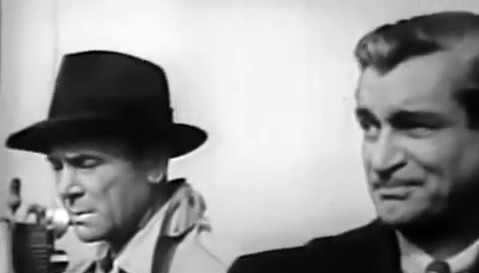
Rating: 5/10 – a US Customs agent (Jagger) finds himself looking for the killer of his best friend (and fellow Customs agent), and the person responsible for the theft of a rare jewel – could they be the same man?; an odd noir crime thriller that betrays its low budget production values, ‘C’-Man is short on character but long on action, and is fitfully entertaining, though the performances vary wildly and the script contains some very po-faced dialogue, making it a movie you can’t really take your eyes from – and not in a good way.

When We First Met (2018) / D: Ari Sandel / 97m

Cast: Adam Devine, Alexandra Daddario, Shelley Hennig, Andrew Bachelor, Robbie Amell
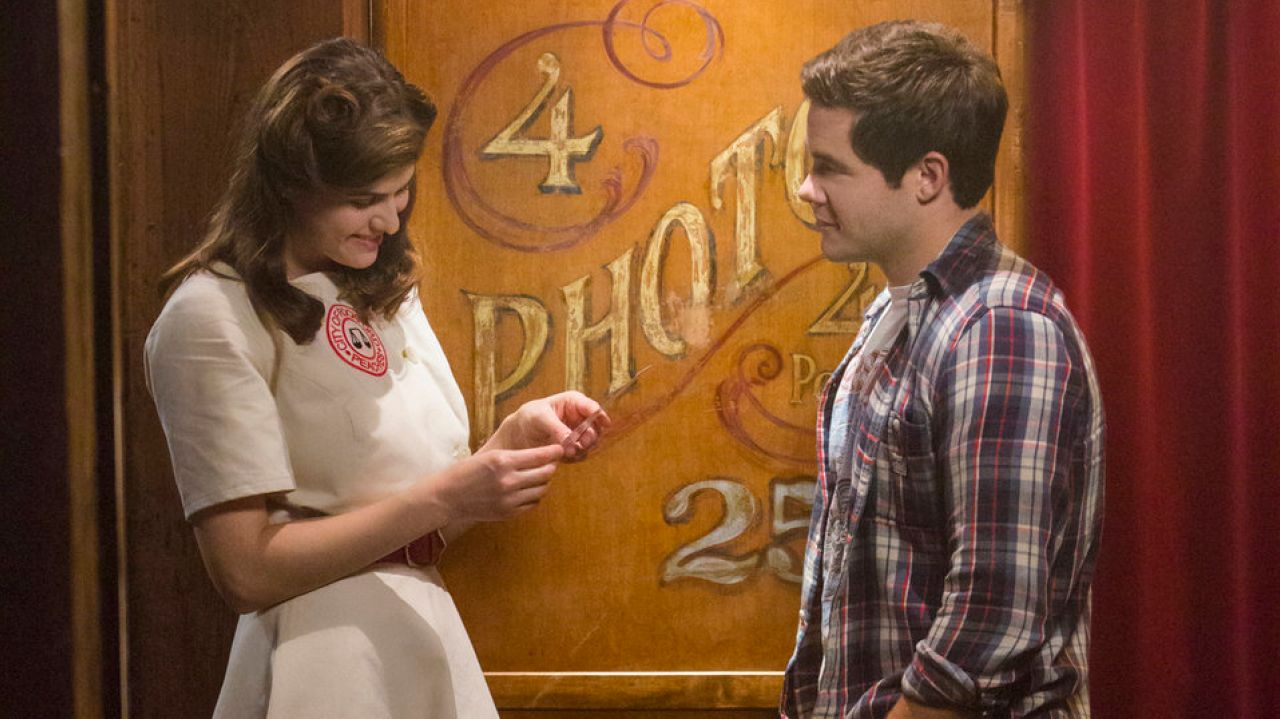
Rating: 3/10 – Noah (Devine) falls for Avery (Daddario) and winds up in the friend zone, but thanks to a magic photo booth, he gets the chance to go back and change their relationship into a romantic one; a dire romantic comedy that struggles to be both romantic and funny, When We First Met can’t even make anything meaningful out of its time travel scenario, and is let down by a banal script and below-par performances.

The Phantom (1931) / D: Alan James / 62m

Cast: Guinn Williams. Allene Ray, Niles Welch, Tom O’Brien, Sheldon Lewis, Wilfred Lucas, Violet Knights, William Gould, Bobby Dunn, William Jackie
Rating: 3/10 – a reporter (Williams) tries to track down the titular criminal mastermind when he targets the father of his girlfriend (Ray), but finds it’s not as simple a prospect as he’d thought; an early talkie that shows a lack of imagination and purpose, The Phantom struggles from the outset to be anything but a disappointment, what with its unconvincing mix of comedy and drama, its old dark house scenario, and a clutch of amateur performances that drain the very life out of it at every turn.

Black Panther (2018) / D: Ryan Coogler / 134m

Cast: Chadwick Boseman, Michael B. Jordan, Lupita Nyong’o, Danai Gurira, Martin Freeman, Daniel Kaluuya, Letitia Wright, Winston Duke, Sterling K. Brown, Angela Bassett, Forest Whitaker, Andy Serkis, Florence Kasumba, John Kani
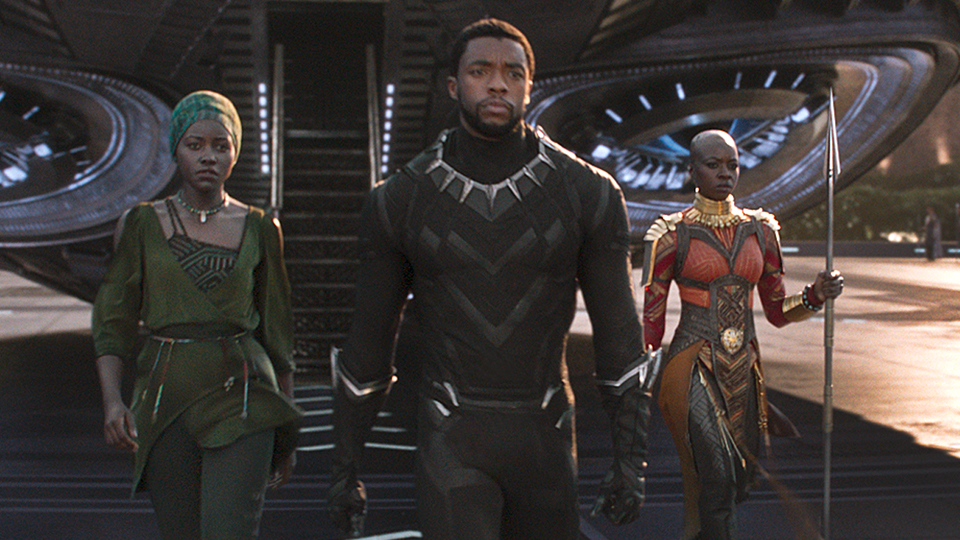
Rating: 7/10 – the king of outwardly poor but inwardly technologically advanced Wakanda, T’Challa (Boseman), faces a coup from an unexpected source (Jordan), while trying to work out whether or not his country’s scientific advances should be shared with the wider world; though Black Panther does feature a predominantly black cast, and speaks to black issues, this is still a Marvel movie at the end of the day and one that adheres to the template Marvel have created for their releases, making this an admittedly funny and exciting thrill ride, but one that’s also another formulaic entry in the Marvel Cinematic Universe.

Atomic Blonde (2017) / D: David Leitch / 115m

Cast: Charlize Theron, James McAvoy, John Goodman, Toby Jones, Eddie Marsan, James Faulkner, Roland Møller, Sofia Boutella, Bill Skarsgård, Sam Hargrave, Jóhannes Haukur Jóhannesson, Til Schweiger
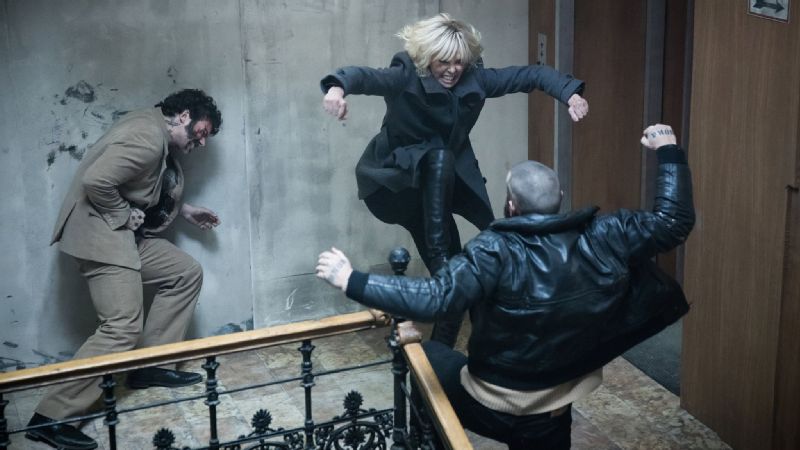
Rating: 6/10 – in the days before the fall of the Berlin Wall, a spy (Theron) must find a list of double agents that are being smuggled into the West, a task complicated by the involvement of the Americans, the Russians and a number of other interested parties; an attempt to provide audiences with a female John Wick, Atomic Blonde does have tremendous fight scenes, and a great central performance by Theron, but it’s let down by a muddled script, an even more muddled sense of the period it’s set in, and by trying to be fun when a straighter approach would have worked better.

Beauty and the Beast (2017) / D: Bill Condon / 129m

Cast: Emma Watson, Dan Stevens, Luke Evans, Josh Gad, Kevin Kline, Ewan McGregor, Ian McKellen, Emma Thompson, Nathan Mack, Audra McDonald, Stanley Tucci, Gugu Mbatha-Raw
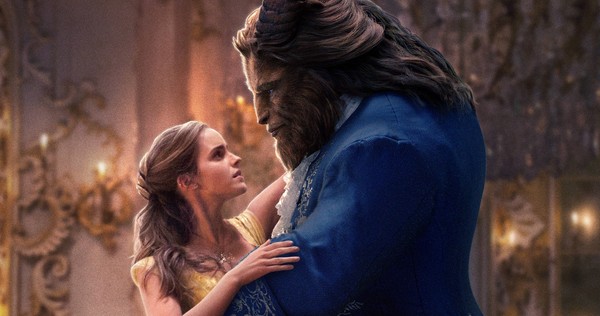
Rating: 5/10 – the classic fairy tale, and previously a classic animated movie, is given the live action treatment by Disney; if the latest installment of a certain space opera hadn’t been released in 2017, Beauty and the Beast would have been the number one movie at the international box office, but though the House of Mouse might point to this as a measure of quality, the reality is that Watson was miscast, the songs lack the emotional heft they had in the animated version, and the whole thing has a perfunctory air that no amount of superficial gloss and shine can overcome.

The Case of the Black Parrot (1941) / D: Noel M. Smith / 61m

Cast: William Lundigan, Maris Wrixon, Eddie Foy Jr, Paul Cavanagh, Luli Deste, Charles Waldron, Joseph Crehan, Emory Parnell, Phyllis Barry, Cyril Thornton
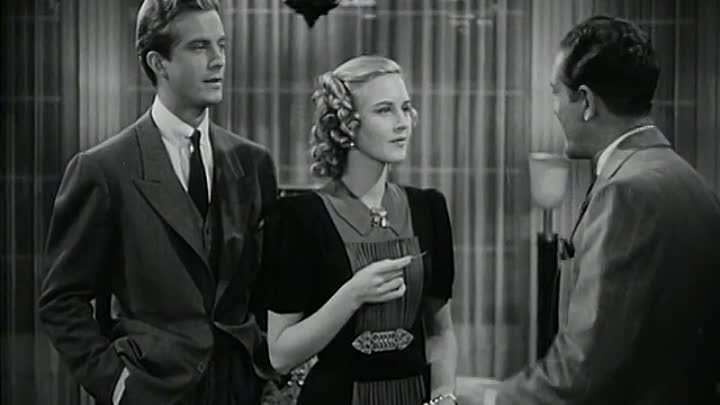
Rating: 6/10 – a newspaper reporter (Lundigan) gets involved in a case involving a master forger (the Black Parrot), an antique cabinet, and a couple of mysterious deaths; an enjoyable piece of hokum, The Case of the Black Parrot gets by on a great deal of understated charm, a whodunnit plot that doesn’t overplay its hand, and by having its cast treat the whole absurd undertaking with a sincerity that is an achievement all by itself.

Murder on the Orient Express (2017) / D: Kenneth Branagh / 114m

Cast: Kenneth Branagh, Tom Bateman, Lucy Boynton, Olivia Colman, Penélope Cruz, Willem Dafoe, Judi Dench, Johnny Depp, Josh Gad, Manuel Garcia-Rulfo, Derek Jacobi, Marwan Kenzari, Leslie Odom Jr, Michelle Pfeiffer, Sergei Polunin, Daisy Ridley

Rating: 5/10 – the famous Belgian detective Hercule Poirot (Branagh) is faced with a complex mystery: which one of a dozen passengers killed an infamous kidnapper, and more importantly, why?; yet another version of the Agatha Christie novel, Murder on the Orient Express strands its capable cast thanks to both an avalanche and a tepid script, leaving its director/star to orchestrate matters less effectively than expected, particularly when unravelling the mystery means having the suspects seated together in a way that clumsily replicates the Last Supper.

The Boss Baby (2017) / D: Tom McGrath / 97m

Cast: Alec Baldwin, Steve Buscemi, Jimmy Kimmel, Lisa Kudrow, Tobey Maguire, Miles Bakshi, James McGrath, Conrad Vernon, ViviAnn Yee, Eric Bell Jr, David Soren
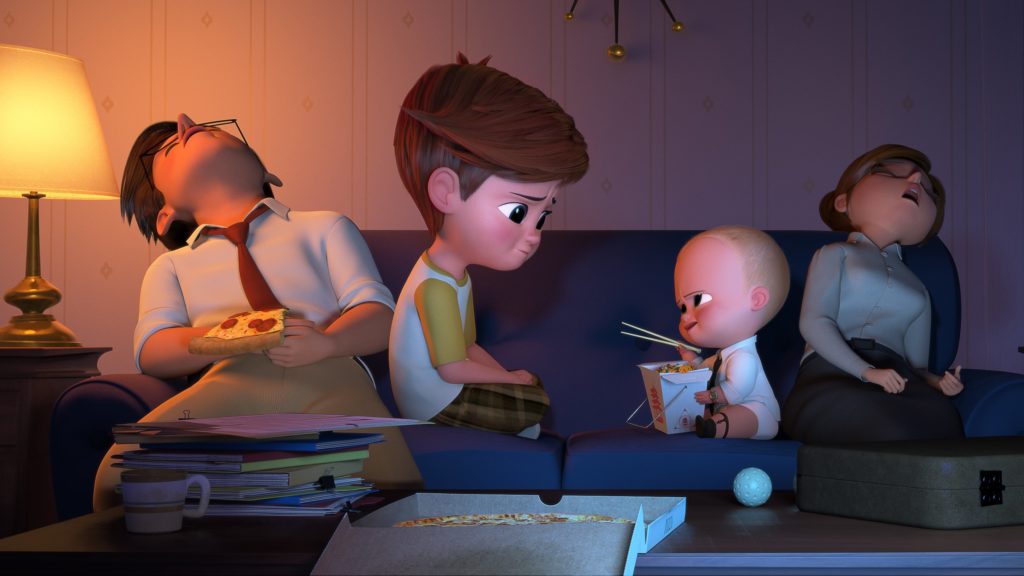
Rating: 6/10 – when seven year old Tim (Bakshi) finds he has a new baby brother, Theodore (Baldwin) – and one dressed in a business suit at that – he also finds that Theodore is there to stop babies from being usurped in people’s affections by puppies; a brightly animated kids’ movie that takes several predictable swipes at corporate America, The Boss Baby wants to be heartwarming and caustic at the same time, but can’t quite manage both (it settles for heartwarming), and though Baldwin may seem like the perfect choice for the title character, he’s the weakest link in a voice cast that otherwise sells the performances with a great deal of enthusiasm.

Game Night (2018) / D: John Francis Daley, Jonathan Goldstein / 100m

Cast: Jason Bateman, Rachel McAdams, Kyle Chandler, Billy Magnussen, Sharon Horgan, Lamorne Morris, Kylie Bunbury, Jesse Plemons, Danny Huston, Michael C. Hall
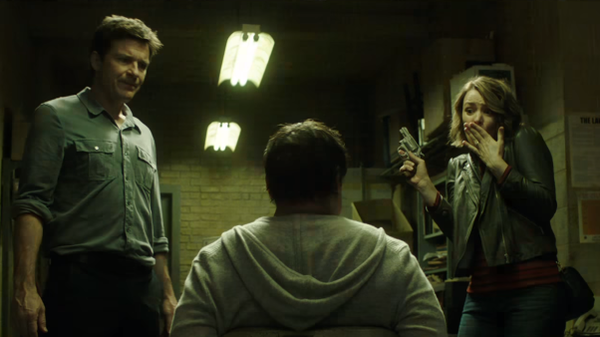
Rating: 5/10 – when a group of friends led by Max (Bateman) and Annie (McAdams) are invited to a game night at the home of Max’s brother, Brooks (Chandler), the evening descends into murder and mayhem, and sees the group trying to get to the bottom of a real-life mystery; like an Eighties high concept comedy released thirty years too late, Game Night has a great cast but little direction and waaaay too much exposition clogging up its run time, all of which makes a couple of very funny, very inspired visual gags the only reward for the viewer who sticks with this to the end.

Share this:

  • Click to share on X (Opens in new window) X
  • Click to share on Facebook (Opens in new window) Facebook
  • More
  • Click to print (Opens in new window) Print
  • Click to email a link to a friend (Opens in new window) Email
Like Loading...

The Circle (2017)

22 Tuesday Aug 2017

Posted by dullwood68 in Movies

≈ 2 Comments

Tags

Dave Eggers, Drama, Emma Watson, James Ponsoldt, John Boyega, Literary adaptation, Review, Sci-fi, SeeChange, Thriller, Tom Hanks

D: James Ponsoldt / 110m

Cast: Emma Watson, Tom Hanks, John Boyega, Karen Gillan, Patton Oswalt, Ellar Coltrane, Glenne Headly, Bill Paxton

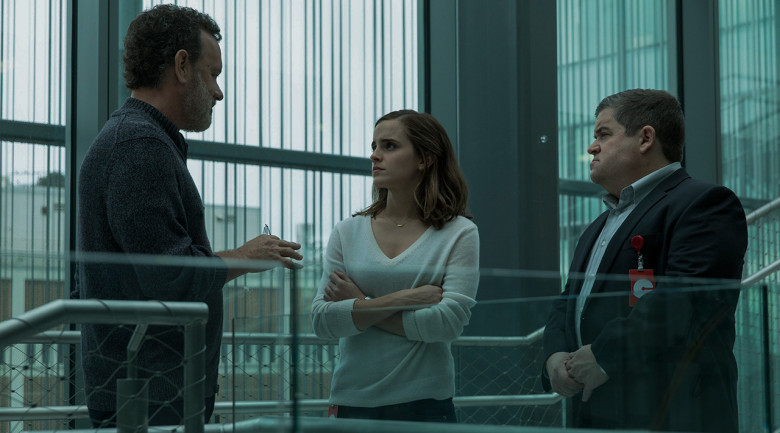
Imagine a device that could accurately record and predict your every emotion before you experienced it. Would you find that a boon or a hindrance to your everyday life? Now hold that thought, because there’s a better question: would you find such a device a boon or a hindrance while watching The Circle? (Actually it would be both: If you feel it would be a boon then you’re advocating knowing you’re going to be bored for an hour and fifty minutes, and you can deal with that appropriately, like watching something else; and if you feel it would be a hindrance then you’re advocating knowing you’re going to be bored, and you can also deal with that appropriately, like watching something else.)

The Circle is a high-tech company that’s looking to integrate every possible form of social interaction, be it personal, professional, legal, financial, medical, morally proscribed or otherwise, into a catch-all application that’s designed to promote and provide transparency in all aspects of daily life. In essence, The Circle is attempting to create a world where there are no secrets or lies, and all to make everyone’s lives easier and better and more fruitful. What could possibly be wrong with that? (Actually, quite a bit, but for the movie itself, that’s another issue.) It’s left to newbie Mae Holland (Watson) to discover the truth behind The Circle’s motives, but not before she becomes the face of The Circle, and accrues the kind of worldwide popularity afforded to rock stars, footballers and self-promoting celebrity wannabes… and all because of a midnight kayak trip that goes wrong.

It’s at this point in The Circle that director James Ponsoldt, along with co-writer and creator of the original novel, Dave Eggers, throw in the towel and quietly resign the audience to a series of even more ineffectual scenes than have gone before. Mae gets her job at The Circle with the usual ease of someone in the movies who can field a barrage of probing questions by umming and ahhing and giving uninspired answers. Once ensconced in Customer Experience she quickly blends in with all the other vanilla members of staff, and makes no impact whatsoever. She meets but doesn’t recognise disillusioned programmer Ty Lafitte (Boyega), whose True You application is now being misused by the company, and believes everything that co-founder Eamon Bailey (Hanks) says at his regular company-wide meetings (which are no more than mini-Expo’s for the company’s latest innovations). All around her, the clues are there as to The Circle’s true motives, and though she’s not exactly drinking the company Kool-Aid, she is allowing herself to be drawn further and further into its “evil machinations”.

But then comes that fateful midnight kayak trip and everything changes. Mae, who is to civil disobedience what Stephen Hawking is to breakdancing, steals a kayak, ventures out into a shipping lane surrounded by fog, and ends up being rescued by the Coast Guard. Without this out of character moment (which is never satisfactorily explained), the movie would have stalled altogether and even more viewers would have lapsed into comas. Mae thinks the publicity – the whole thing was captured on dozens of the company’s SeeChange cameras – will mean the end of her career. But Bailey has other ideas and enlists Mae to promote the company’s latest idea, that of a life led through total transparency. Mae wears a tiny video camera, allows the feed to be shared online, and only gradually begins to understand that The Circle is as dastardly in its aims as everyone else has guessed from the beginning. It’s not until the use of a new app leads to a tragedy that affects Mae directly that she decides to turn the tables on Bailey and… well… let’s just say it’s meant to be ironic and a case of just desserts being served, but it’s so underwhelming you might not believe she’s actually done it.

As dystopian thrillers go, The Circle operates on a level that, much like the Circlers who work for the company, requires the viewer to go along with whatever the movie comes up with, and not to raise any objections. However, Ponsoldt and Eggers have crafted a script that defies the viewer to make any connection with Mae, or Bailey, or her parents (an underused Headly and Paxton), or anyone else for that matter, and which is dramatically inert for much of its running time. It’s a movie in which very little happens, and when it does, it doesn’t have the impact required to lift the movie out of its self-imposed doldrums. It’s a thriller where the director appears to have forgotten to include any thrills, and a message movie where the message is spelt out in big bold letters for anyone watching who might be hard of understanding. It’s a spectacularly misjudged movie, baffling in its intentions, and uncomfortably, unalterably dull.

As well as being unable to elevate the material above the merely mundane, Ponsoldt is also unable to draw out even the hint of a good performance from anyone. Watson gives yet another performance that makes it seem as if she’s still astonished at how she’s been able to sustain a career beyond Harry Potter, while Hanks adopts a friendly uncle persona that is the whole of his portrayal (after this and A Hologram for the King (2016), perhaps he should stay away from any more adaptations of Eggers’ work). Boyega is wasted as the “mysterious” Lafitte (Bailey doesn’t know where he is, even with all his SeeChange cameras; which is a shame as he can be spotted at The Circle’s HQ wandering around quite openly), and several subplots waste the involvement of the likes of Oswalt, Gillan and Coltrane. While the movie clunks along in neutral, with occasional detours into first gear, it also manages to undermine the not inconsiderable talents of its composer, Danny Elfman, its DoP, Matthew Libatique, and its production designer, Gerald Sullivan. And when that’s the best achievement that a movie can make, then it’s definitely time to move on and watch something else.

Rating: 4/10 – boring, dull, uninspired, leaden, bland – take your pick as all of those could (and do) apply to The Circle, the latest in a long line of thrillers that have chosen high tech businesses as their preferred boogeyman; just when you think it’s going to get interesting, it doesn’t, and just when you think Mae will wake up and smell the bullshit, she doesn’t, leaving the movie to promise much, but deliver very, very little in the way of viewing satisfaction.

Share this:

  • Click to share on X (Opens in new window) X
  • Click to share on Facebook (Opens in new window) Facebook
  • More
  • Click to print (Opens in new window) Print
  • Click to email a link to a friend (Opens in new window) Email
Like Loading...

10 Stars Who Weren’t Born in the Country You Think They Were

13 Monday Jun 2016

Posted by dullwood68 in Movies

≈ Leave a comment

Tags

Actors, Actresses, Amy Adams, Birthplaces, Bruce Willis, Emma Watson, Eva Green, Joaquin Phoenix, Keanu Reeves, Kim Cattrall, Michael Fassbender, Oscar Isaac, Rose Byrne, Stars

When we see certain stars in their movies we’re prone to making subconcious conclusions about them: what they’re like off-camera (how nice or how nasty), what they might like to do in their spare time, and sometimes, if they’re single, that we’d be the perfect partner for them (creepy yes, but in a non-stalker kind of way, you know?). Some stars have been around long enough for most people to know that they’re not originally from the country we associate them with. For example, Mel Gibson is generally regarded as Australian but was actually born in the good old US of A. And Audrey Hepburn – American? British? – was born in Belgium. In the spirit of full disclosure, here are ten stars who weren’t born in the country you think they were. See how many of them you knew already.

1 – Emma Watson – the star of the Harry Potter movies, and more recently, Regression (2015), looks and sounds like the quintessential English rose, but guess again. Although both her parents are English, Miss Watson was actually born in Paris, France.

Emma Watson

2 – Eva Green – the mercurial, fearless star of movies such as Casino Royale (2006) and 300: Rise of an Empire (2014) has a classical beauty that could have originated in any of a dozen countries around the globe, but like Emma Watson, Green was born in Paris, France.

3 – Keanu Reeves – with his Hawaiian Christian name and chiselled good looks, you could be forgiven for believing Reeves to be as American as they come, but in fact the star of The Matrix (1999) and The Day the Earth Stood Still (2008) was born in Beirut, Lebanon.

4 – Bruce Willis – the tough-as-nails star of Die Hard (1988) and The Sixth Sense (1999) – like so many others in this list – is generally regarded as American through and through but again, appearances can be (and are) deceiving, as Willis was born in Idar-Oberstein in the former West Germany.

Bruce Willis

5 – Rose Byrne – an actress whose career began back in 1994 as the unfortunately named Rastus Summers in Dallas Doll, Byrne has made a name for herself in recent years in a number of R-rated comedies, and while she seems as American as the next actress, she was actually born in Balmain, Australia.

6 – Oscar Isaac – with his dark, brooding looks, Isaac has a cosmopolitan aura about him that, like Eva Green, could mean he was born just about anywhere, but while he’s played a Russian in Pu239 (2006), and a Mexican in For Greater Glory: The True Story of Cristiada (2012) – amongst others – Isaac actually heralds from Guatemala.

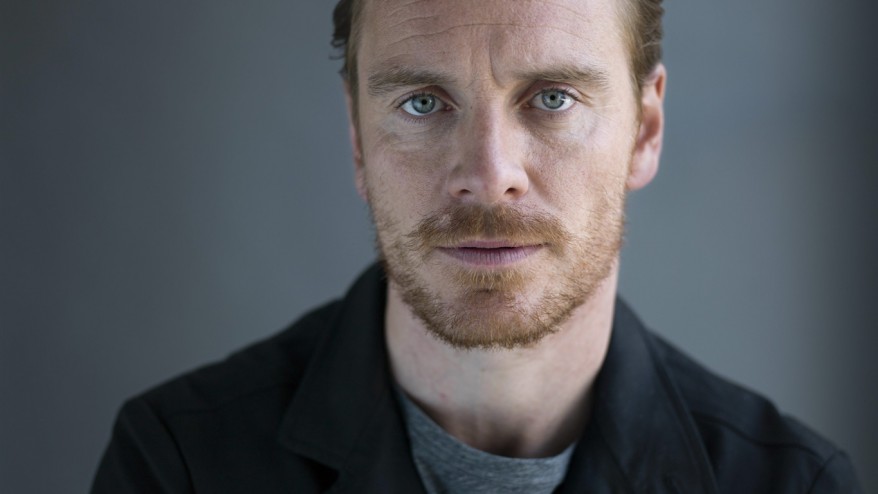
7 – Michael Fassbender – despite having grown up in Northern Ireland and having made a name for himself in a handful of well-received British movies, including Hunger (2008) and Fish Tank (2009), the younger incarnation of Magneto in the X-Men movies actually hails from Heidelberg in the former West Germany.

Michael Fassbender

8 – Joaquin Phoenix – while most of his siblings were born in the US, including his brother River, the star of Walk the Line (2005) and Her (2013) was born in a country where his parents were serving as Children of God missionaries at the time. The country? None other than Puerto Rico.

9 – Amy Adams – as quintessentially American in appearance as Emma Watson is quintessentially British in appearance, the actress who was billed as Gorgeous Woman in Tenacious D in the Pick of Destiny (2006), and who is now Clark Kent/Superman’s go-to gal, was actually born in Vicenza, Italy.

10 – Kim Cattrall – the star of Sex and the City and, going further back, Big Trouble in Little China (1986), looks American, sounds American, and appears steeped in all things American, but again, appearances are deceiving as the truth is she was born in Liverpool, England.

Kim Cattrall

Share this:

  • Click to share on X (Opens in new window) X
  • Click to share on Facebook (Opens in new window) Facebook
  • More
  • Click to print (Opens in new window) Print
  • Click to email a link to a friend (Opens in new window) Email
Like Loading...

Regression (2015)

28 Thursday Apr 2016

Posted by dullwood68 in Movies

≈ Leave a comment

Tags

1990, Alejandro Amenábar, David Dencik, David Thewlis, Drama, Emma Watson, Ethan Hawke, Hallucinations, Horror, Hypnosis, Minnesota, Regression therapy, Review, Ritual Satanic Abuse, Satanism, Thriller

Regression

D: Alejandro Amenábar / 106m

Cast: Ethan Hawke, Emma Watson, David Thewlis, Lothaire Bluteau, Dale Dickey, David Dencik, Devon Bostick, Aaron Ashmore, Peter MacNeill

Minnesota, 1990. Farmer John Gray (Dencik) confesses to molesting his seventeen year old daughter, Angela (Watson) – but there’s a catch: even though Angela has made an accusation, Gray can’t remember doing anything of the sort, and is confessing purely because Angela has never lied to him, so in his mind it must be true. Detective Bruce Kenner (Hawke) is assigned to the case, and while Gray languishes in prison awaiting a trial date, he begins to look into the matter. It’s not long though before Kenner begins to find that the case isn’t as straightforward as his boss, Chief Cleveland (O”Neill), would like.

With the help of Professor Kenneth Raines (Thewlis), Kenner learns through Raines’ use of regression therapy techniques that Gray wasn’t alone when his abuse of Angela was supposed to have happened. When the other person present is revealed to be a fellow police officer, George Nesbitt (Ashmore), that revelation opens up another can of worms altogether: that Nesbitt, along with an unwitting Gray, are members of a satanic cult. With the rest of the police force treating the idea of a satanic cult as a joke, and Gray’s family proving resentful of Kenner’s investigation, it’s not until he gets to meet Angela that Kenner begins to believe that there might actually be something in what her father has remembered.

Regression - scene2

Kenner remains sceptical but insists on keeping an open mind, and begins looking into the possibility that a cult is operating in the local area. A second meeting with Angela has him believing more and more, and even more so when he begins to have strange dreams, some where he appears to be involved in the blood sacrifice of a newborn baby (and which echoes what Angela has told him of her own experiences). Kenner becomes paranoid, and his relationships with those around him begin to deteriorate. When Nesbitt is released for lack of evidence, Kenner believes he has to risk everything in order to keep Angela safe, but if the cult is for real, will he be able to?

The period setting of Regression is deliberate. In the US in 1980, a book was published called Michelle Remembers, and it was written by Michelle Smith and her future husband Lawrence Pazder (who was then her psychiatrist). In it, Smith recounted – through Pazder’s use of hypnotherapy – alleged memories of what became known as Ritual Satanic Abuse (RSA). These memories related to abuse supposed to have been perpetrated by Michelle’s mother in the mid-Fifties when Michelle was five. The book proved to be a starting point for allegations of widespread satanic activity within the US (and further afield), and although skepticism of Smith and Pazder’s book was equally widespread, as the Eighties progressed, the idea of satanic cults prospered, and the book, and Pazder’s “expertise” on the subject, were used as a guide for prosecutors preparing cases against individuals accused of satanic practices.

Set against the backdrop of this developing fear and paranoia, Regression touches on several attendant topics – the (mis)use of regressive therapy, the impact of such allegations on closed communities, individual feelings of guilt and/or responsibility, the ease with which unsubstantiated rumour becomes accepted fact – but it does so in such an awkward, hamfisted way that any dramatic emphasis is reduced by the way in which Amenábar’s script fails to follow through on these topics. The end result is a movie that has a lot going on but little of it that makes consistent sense.

Regression - scene1

Worrying aspects crop up almost from the start, with a very clumsily inserted “clue” that Nesbitt is more involved than is initially apparent, and this is followed by the way in which Detective Kenner commits himself so unreservedly, leaving the viewer to wonder just what it is that drives him (a question the movie avoids answering). Raines’ involvement so soon into the investigation, and the way in which he’s allowed to take the lead on so many interviews is concerning in terms of likelihood (it doesn’t help that Raines is often unnecessarily aggressive as well), and a sequence where Kenner “sees” the events described to him by Angela is another cause for concern, as it comes across as a stylistic exercise rather than a character trait.

Kenner is the viewer’s guide through the events of the movie but he proves an unreliable guide, prone to making schoolboy errors in terms of the investigation, and behaving unprofessionally with Angela. The movie doesn’t give any real reason for the waywardness of his behaviour, and as the mystery deepens his growing paranoia (and belief) that the satanic cult is real causes him to behave so irrationally that the extent of it becomes unconvincing. With Gray already acting strangely, and with most of the local community seemingly in thrall to the cult that no one can identify, Amenábar’s decision to have Kenner become a victim as well becomes exasperating rather than effective in terms of the drama.

Regression - scene3

Viewers should be able to determine the movie’s outcome without too much trouble, but once they do, and once the movie reaches that point, the whole thing collapses in on itself and the last fifteen minutes feel like a compromise instead of a conclusion decided on from the start. Amenábar does his best, but even with the support of Hawke and Watson, he doesn’t appear to be fully in control of his own narrative or where it’s going. Scenes feel divorced from each other, and too often, characters act oddly because the script needs them to.

The performances are committed at least, with Hawke giving his all in yet another not-fully-realised horror thriller, and Watson putting Hermione Granger firmly behind her as the victim(?) whose safety becomes Kenner’s primary concern. Thewlis and his character are abandoned by Amenábar two thirds of the way through, while the rest of the supporting cast (save Dencik) do what they can in respect of filling in the blanks. In the end, Regression is a movie where the characters exist to service the plot, and at no point do any of them feel organic, leaving the cast to try and work out what’s the best approach for each one. It leads to a clash of acting styles in some scenes, and a lack of cohesion in others. Amenábar at least keeps things visually interesting, albeit in a dour, dark-hued way, and the sequences of satanic worship and sacrifice are well shot and edited together, but all in all this needed a tighter script and a better ending to be anywhere near successful.

Rating: 5/10 – though Regression is based around real events that occurred over a period of time, it never really offers a cohesive or credible story to match its general assumptions about what was happening at the time; not as scary or effective as it would like to be, the movie winds up playing it safe instead of giving the viewer any real food for thought.

Share this:

  • Click to share on X (Opens in new window) X
  • Click to share on Facebook (Opens in new window) Facebook
  • More
  • Click to print (Opens in new window) Print
  • Click to email a link to a friend (Opens in new window) Email
Like Loading...

Noah (2014)

06 Sunday Apr 2014

Posted by dullwood68 in Movies

≈ 1 Comment

Tags

Anthony Hopkins, Ark, Darren Aronofsky, Emma Watson, Fallen angels, Flood, Ham, Japheth, Jennifer Connelly, Logan Lerman, Ray Winstone, Review, Russell Crowe, Shem, The Creator

Noah

D: Darren Aronofsky / 138m

Cast: Russell Crowe, Jennifer Connelly, Ray Winstone, Emma Watson, Logan Lerman, Douglas Booth, Leo McHugh-Carroll, Anthony Hopkins, Marton Csokas, Frank Langella, Nick Nolte, Mark Margolis, Kevin Durand

It’s an unlikely idea for a fantasy movie, but Noah, as imagined by Darren Aronofsky and co-writer Ari Handel, is exactly that, a semi-religious essay on perceived personal sin and the demands of unwanted destiny tricked out with elaborate special effects sequences and… rock monsters.  The story of the ark is a tale told in many religions – the Biblical version isn’t even the first  – but here, Aronofsky removes any mention of God and has his characters reference The Creator instead.  With this choice in place, the decision to include Adam and Eve, the apple from the Tree of Forbidden Knowledge, and Cain and Abel becomes a little puzzling, especially when the bulk of the film is a fairly straightforward interpretation of chapters 6-9 of the Book of Genesis.

After an opening sequence that conflates the first five chapters, the inclusion of fallen angels – called the Watchers – who came to earth to support Man in his endeavours but were punished by The Creator by being turned into creatures made of rocks – and who were in turn attacked and cast out by Man – comes as a bit of a surprise (it also brings to mind the rock monster seen in Galaxy Quest (1999), not the best point of reference for a Bible story).  From there we see Noah as a young man with his father, Lamech (Csokas).  Lamech is killed by a chieftain called Tubal-Cain (Finn Wittrock); he wants Lamech’s land for his own people (and appears to have instituted the concept of manifest destiny several thousand years before it was first thought of).  Noah escapes and we next see him as an adult (Crowe).  He is married to Naameh (Connelly) and has three young sons, Shem, Ham and baby Japheth.  Noah is plagued by visions of the world covered by water.  He takes his family with him to visit his grandfather, Methuselah (Hopkins), in the hope that he can explain what the visions mean.  On the way they come across the scene of a slaughter, and rescue the only survivor, a young girl called Ila; Naameh quickly deduces that the wound she has will stop her from having children.

Methuselah believes The Creator has chosen Noah for a special task, and induces a vision that tells Noah he should build an ark.  Fast forward several years and with the help of the Watchers, the ark is nearly completed.  Shem (Booth) and Ila (Watson) have fallen in love, while Ham (Lerman) has a rebellious spark in him that Noah is unhappy about.  One day a large contingent of men led by Tubal-Cain (Winstone) come to the ark in an attempt to take control of it but the threat of the Watchers stops them.  Noah goes to their nearby encampment in the search for wives for his sons bout what he sees there, including uncontrollable lusts and signs of cannibalism, convinces him that the Creator’s plan is for the whole of Mankind to be wiped out, including Noah and his family.

Ham also travels to the encampment and there he meets Na’el (Madison Davenport).  At the same time, Ila meets Methuselah for the first time and he blesses her, curing her barrenness.  When the rain begins to fall, presaging the flood, Noah goes in search of Ham.  When he finds him, Noah is forced to leave Na’el behind – she has her leg caught in a trap – and she is trampled to death in the rush by Tubal-Cain’s people to get to the ark.  The Watchers aid Noah in keeping Tubal-Cain and his people from boarding the ark as the earth is engulfed in a terrible flood of water and massive funnels of water shoot skywards from the ground.  Somehow, Tubal-Cain manages to get aboard though he is injured in the attempt.  His boarding is witnessed by Ham, who, being angry with Noah over the death of Na’el, aids Tubal-Cain in his recovery.

Adrift on the waters, Ila learns she is pregnant and while Naameh and Shem are overjoyed, Noah is horrified.  Certain that The Creator’s intention is for all of mankind to be destroyed, he tells his family that if Ila has a girl – meaning further children could be born – he will have no choice but to kill her.  Ila and Shem attempt to escape the ark but Noah stops them.  Moments later, Ila goes into labour… and Ham draws Noah into an ambush with a recovered Tubal-Cain.

Noah - scene

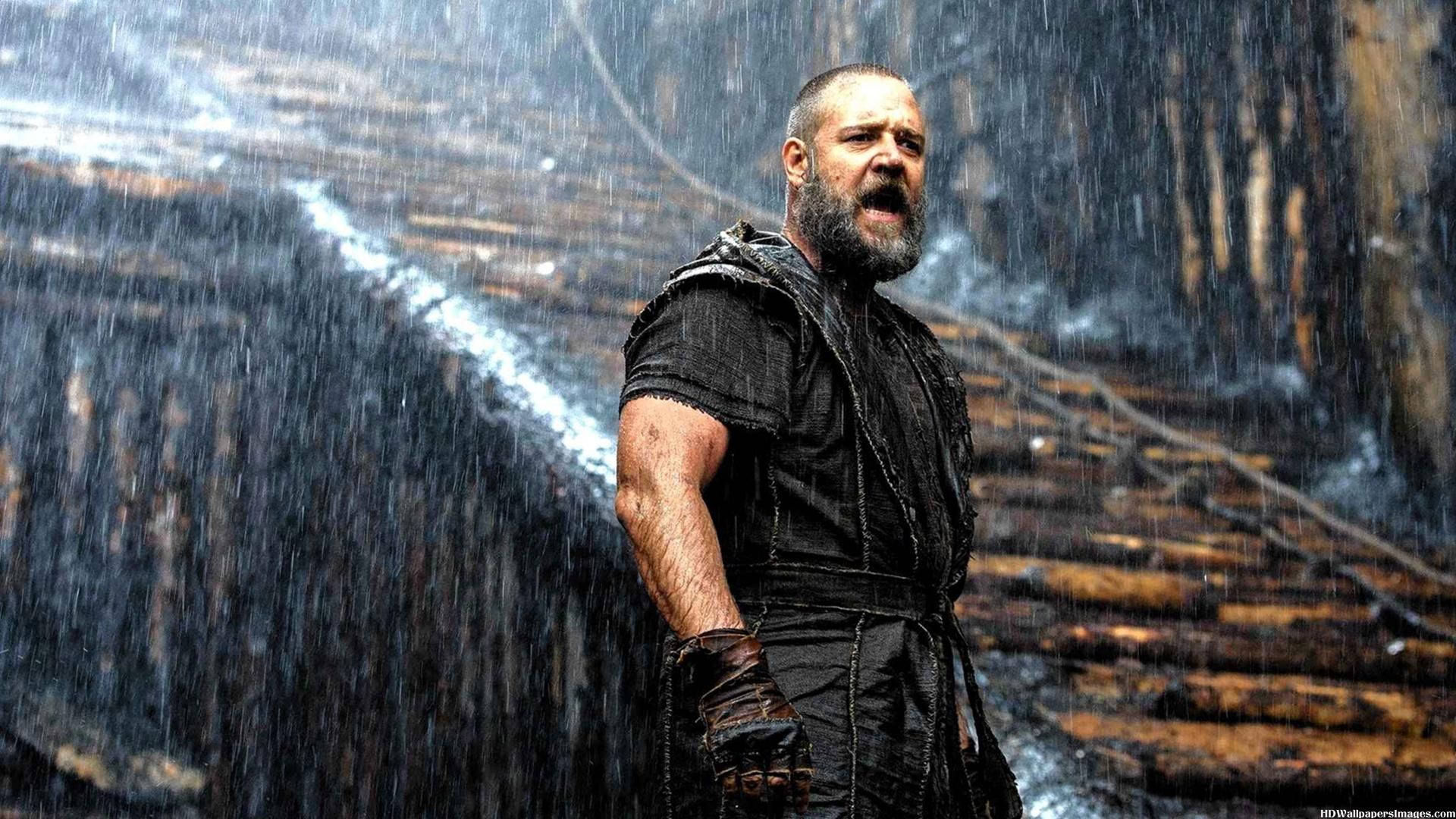
A long-cherished project of Aronofsky’s, Noah reaches us with the weight of expectation weighing heavy about its celluloid shoulders, and while the movie takes quite a few mis-steps in its waterborne journey, there’s a lot here to offset any weaknesses.  Aronofsky is a confident, innovative director and he handles the movie’s themes of sin and redemption, and sacrifice and fortitude, with considerable ease, and is aided by a commanding performance by Crowe.  Between them they have created a Noah who carries the weight of his Creator’s plan with all the strength of purpose and stoicism needed to carry it through.  It’s an impressive turn from Crowe, the kind of meaty role he obviously relishes playing, and here he doesn’t disappoint.  Under Aronofsky’s intelligent direction, Crowe is completely convincing throughout, a patriarch given an unenviable task and determined that even the hardest of personal sacrifices won’t deflect him.  (It’s no surprise how the movie ends, but when the moment comes – and it’s largely thanks to Crowe’s unpredictability as an actor – the audience isn’t certain he’ll relent from killing Ila’s offspring.)

Crowe is ably supported by Connelly and Watson, though some of the aforementioned mis-steps derive from the other male cast members.  Winstone plays a pre-Christian version of (basically) himself, complete with East London accent and mangled phrasing.  Lerman’s boyish face still can’t adequately portray any emotion except surprise (as both Percy Jackson movies will attest), while Booth is wetter than the flood and given too little to do to make a better impression.  And with Crowe on such impressive form it makes the trio’s deficiencies even more obvious.  In particular, this leads to the scenes between Tubal-Cain and Ham appearing leaden and less dramatic than they should be (not to mention too formulaic for their own good).  As for Hopkins, the less said about his truly embarrassing performance the better (though the script should bear some of the blame too.  Berries?  Really?).

Noah is often amazing to look at, with Aronofsky and director of photography Matthew Libatique exploiting Iceland’s volcanic terrain to stunning effect.  There’s a creation sequence two thirds in that looks good but holds up the movie but also seems at odds with the message that the world is the work of The Creator, as if the movie doesn’t want to be explicitly identified as a religious movie (which it isn’t anyway).  It’s this kind of fence-sitting that undermines the movie for most of its running time.  In taking a Biblical story where God seeks to expunge Man from the world only to relent when He sees the good in Noah, Aronofsky seems uncertain if he wants faith to be a central part of things, when clearly it is.  There’s a snake skin – supposedly handed down from the Garden of Eden (yes, from that snake) – that was Noah’s father’s but it’s taken by Tubal-Cain.  It’s referred to visually on several occasions but its purpose or relevance is never made clear, except possibly as a means of passing on inherited knowledge or wisdom (and I’m guessing here, it really isn’t that clear).  Another mis-step is the inclusion of the Watchers, an addition to the flood myth that might be the movie’s most ill-judged decision.  On top of their relation to the monster in Galaxy Quest, once they start laying waste to Tubal-Cain’s followers they most resemble the Ents from The Lord of the Rings: The Two Towers (2002).  The idea of their being fallen angels is a good one but rock monsters?  Was that the only incarnation they could have had?  (Hang on, let me check my scripture.  Oh, I can’t.)

On a minor level, Crowe’s hair is a serious concern throughout, as is his clothing at the end (is he really wearing a suit at one point?), while Connelly stays the same all the way through.  Aronofsky appropriates some character names: in the Book of Genesis, Tubal-Cain is the son of Lamech and his sister’s name is Naamah (close enough, eh?).  This makes Tubal-Cain and Noah brothers, and Naameh his – well, let’s not go there.

Noah has its strong points, and for much of its running time, Aronofsky has a sure hand on the tiller but too often it trips over itself in its efforts to avoid any potential theological disputes.  In trying to please both sides of the is-there/isn’t-there a God argument, Aronofsky relents on the effectiveness of the drama and avoids making Noah anything more than a man-has-vision-and-does-what-it-tells-him story that lacks the necessary resonance for such a huge responsibility.  Aronofsky should thank The Creator that Crowe took on the role, for without him, what credible dramatic focus the movie has would have been lost.

Rating: 7/10 – on reflection a better movie than it seems while watching it, Noah suffers from its director’s indecisions but regains its edge thanks to Crowe’s intuitive performance; beautiful to look at, and with occasional moments of genius, but only just enough to offset the movie’s larger problems.


Share this:

  • Click to share on X (Opens in new window) X
  • Click to share on Facebook (Opens in new window) Facebook
  • More
  • Click to print (Opens in new window) Print
  • Click to email a link to a friend (Opens in new window) Email
Like Loading...

Blog Stats

  • 491,396 hits

Recent Posts

  • 10 Reasons to Remember Bibi Andersson (1935-2019)
  • Fantasia (1940)
  • Dances With Wolves (1990) – The Special Edition
  • Kiss of the Spider Woman (1985)
  • The Three Musketeers (1973)

Top Posts & Pages

  • Cardboard Boxer (2016)
    Cardboard Boxer (2016)
  • I Origins (2014)
    I Origins (2014)
  • Hickey (2016)
    Hickey (2016)
  • Carrie (2013)
    Carrie (2013)
  • Jaws of Justice (1933)
    Jaws of Justice (1933)
  • Lone Survivor (2013)
    Lone Survivor (2013)
  • Iris (2016)
    Iris (2016)
  • Happy Hunting (2017)
    Happy Hunting (2017)
  • The Inner Circle (1946)
    The Inner Circle (1946)
  • Death in High Heels (1947)
    Death in High Heels (1947)
Follow thedullwoodexperiment on WordPress.com

Blogs I Follow

  • Rubbish Talk
  • Film 4 Fan
  • Fast Film Reviews
  • The Film Blog
  • All Things Movies UK
  • Interpreting the Stars
  • Let's Go To The Movies
  • Movie Reviews 101
  • TMI News
  • Dan the Man's Movie Reviews
  • Film History
  • Jordan and Eddie (The Movie Guys)

Archives

  • April 2019 (13)
  • March 2019 (28)
  • February 2019 (28)
  • January 2019 (32)
  • December 2018 (28)
  • November 2018 (30)
  • October 2018 (29)
  • September 2018 (29)
  • August 2018 (29)
  • July 2018 (30)
  • June 2018 (28)
  • May 2018 (24)
  • April 2018 (21)
  • March 2018 (31)
  • February 2018 (25)
  • January 2018 (30)
  • December 2017 (30)
  • November 2017 (27)
  • October 2017 (27)
  • September 2017 (26)
  • August 2017 (32)
  • July 2017 (32)
  • June 2017 (30)
  • May 2017 (29)
  • April 2017 (29)
  • March 2017 (30)
  • February 2017 (27)
  • January 2017 (32)
  • December 2016 (30)
  • November 2016 (28)
  • October 2016 (30)
  • September 2016 (27)
  • August 2016 (30)
  • July 2016 (30)
  • June 2016 (31)
  • May 2016 (34)
  • April 2016 (30)
  • March 2016 (30)
  • February 2016 (28)
  • January 2016 (35)
  • December 2015 (34)
  • November 2015 (31)
  • October 2015 (31)
  • September 2015 (34)
  • August 2015 (31)
  • July 2015 (33)
  • June 2015 (12)
  • May 2015 (31)
  • April 2015 (32)
  • March 2015 (30)
  • February 2015 (37)
  • January 2015 (39)
  • December 2014 (34)
  • November 2014 (34)
  • October 2014 (36)
  • September 2014 (25)
  • August 2014 (29)
  • July 2014 (29)
  • June 2014 (28)
  • May 2014 (23)
  • April 2014 (21)
  • March 2014 (42)
  • February 2014 (38)
  • January 2014 (29)
  • December 2013 (28)
  • November 2013 (34)
  • October 2013 (4)

Create a free website or blog at WordPress.com.

Rubbish Talk

Film 4 Fan

A Movie Blog

Fast Film Reviews

The Film Blog

The official blog of everything in film

All Things Movies UK

Movie Reviews and Original Articles

Interpreting the Stars

Dave Examines Movies

Let's Go To The Movies

Film and Theatre Lover!

Movie Reviews 101

Daily Movie Reviews

TMI News

Latest weather, crime and breaking news

Dan the Man's Movie Reviews

All my aimless thoughts, ideas, and ramblings, all packed into one site!

Film History

Telling the story of film

Jordan and Eddie (The Movie Guys)

Movie Reviews & Ramblings from an Australian Based Film Fan

Privacy & Cookies: This site uses cookies. By continuing to use this website, you agree to their use.
To find out more, including how to control cookies, see here: Cookie Policy
  • Subscribe Subscribed
    • thedullwoodexperiment
    • Join 481 other subscribers
    • Already have a WordPress.com account? Log in now.
    • thedullwoodexperiment
    • Subscribe Subscribed
    • Sign up
    • Log in
    • Report this content
    • View site in Reader
    • Manage subscriptions
    • Collapse this bar
 

Loading Comments...
 

    %d