• 10 Reasons to Remember…
  • A Brief Word About…
  • About
  • For One Week Only
  • Happy Birthday
  • Monthly Roundup
  • Old-Time Crime
  • Other Posts
  • Poster of the Week
  • Question of the Week
  • Reviews
  • Trailers

thedullwoodexperiment

~ Viewing movies in a different light

thedullwoodexperiment

Tag Archives: Fantasy

Night at the Museum: Secret of the Tomb (2014)

14 Wednesday Jan 2015

Posted by dullwood68 in Movies

≈ Leave a comment

Tags

Akhmenrah, Ben Stiller, British Museum, Drama, Fantasy, Father/son relationship, Golden tablet, History, Lancelot, Owen Wilson, Review, Robin Williams, Sequel, Shawn Levy, Steve Coogan
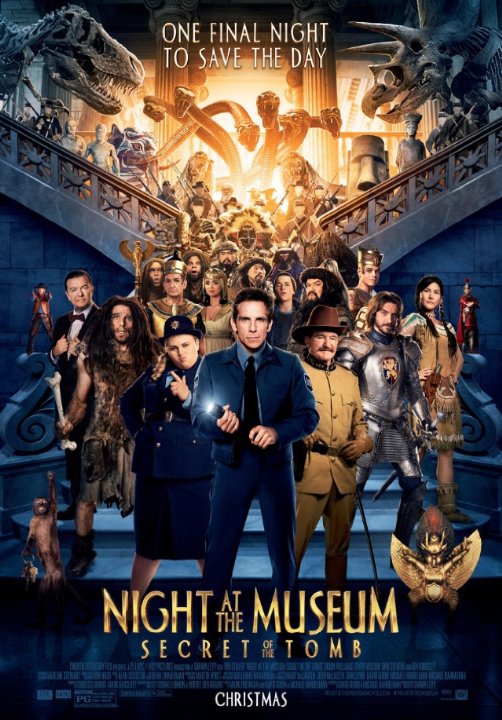
Night at the Museum Secret of the Tomb

D: Shawn Levy / 98m

Cast: Ben Stiller, Robin Williams, Owen Wilson, Steve Coogan, Ricky Gervais, Dan Stevens, Rebel Wilson, Skyler Gisondo, Rami Malek, Patrick Gallagher, Mizuo Peck, Ben Kingsley, Dick Van Dyke, Mickey Rooney, Bill Cobbs

Egypt, 1938. A team of archaeologists discover the tomb of Akhmenrah (Malek). They also find a golden tablet, but are warned that “the end will come” if the tablet is removed.

New York, present day. The Museum of Natural History is having an evening gala. Night security guard Larry Daley (Stiller) has arranged for some of the exhibits, including Teddy Roosevelt (Williams), Attila the Hun (Gallagher), and Sacagawea (Peck), to take part. Aware that the golden tablet that brings them all to life is showing signs of corrosion, Larry is unprepared for how it affects the exhibits during the gala; they run amok and the event is a disaster. Larry learns that the prophecy, that “the end will come”, means an end to the magic that brings the exhibits to life, and that the only way to stop it is to take the tablet to the British Museum in London. The museum holds the bodies of Akhmenrah’s parents, and it’s his father, Merenkahre (Kingsley), who can stop the tablet from losing its magic.

Larry arranges for the tablet and Akhmenrah to be shipped to the British Museum and takes his son, Nick (Gisondo), along with him. When they reach the museum they find that Teddy, Attila and Sacagawea have stowed away on the journey, along with Dexter the monkey, Jedediah (Wilson), Octavius (Coogan), and Laa (Stiller), a neanderthal who looks like Larry. As the museum’s exhibits start to come to life, they head for the Egyptian exhibition, but find themselves attacked by the skeleton of a triceratops. Luckily, they’re saved by Sir Lancelot (Stevens) who agrees to help them. An encounter with a nine-headed Xiangliu statue provides some unwanted danger, but eventually they reach Akhmenrah’s parents, where Merenkahre reveals that the tablet needs to be exposed to moonlight to restore its powers. However, believing it to be the Holy Grail, Lancelot steals the tablet and flees the museum in search of Camelot. Larry et al chase after him, but the tablet is close to losing its power altogether.
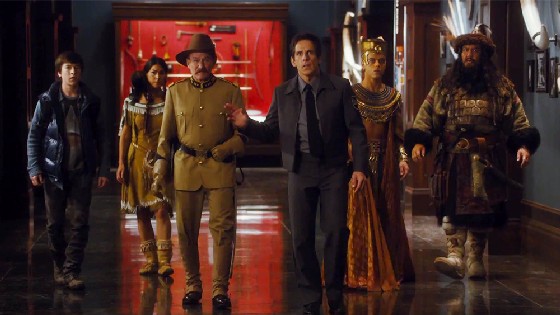
Night at the Museum Secret of the Tomb - scene

And so, the law of diminishing returns rears its predictable head and helps bury yet another fantasy franchise. While no one would say that the Night at the Museum movies are anything other than pleasantly diverting, what this second sequel lacks is the manic energy of the first two, and a script that makes the barest attempt at providing a credible storyline. Hardly any of it makes sense, from the idea that “the end will come” if the tablet is removed from the Akhmenrah family tomb in the first place, to the idea that Larry would take his son along with him to London (they’re having “issues”), to the conceit that the British Museum has only the one guard (who is stationed in a gatehouse and not inside the actual building), to the notion that Lancelot would mistake the tablet for the Holy Grail, to the judgment that everyone can get back to New York before the sun rises – from London… in the middle of the night… It’s like someone chucked a whole sticky mess of ideas at a wall and these were the ones that didn’t slip to the floor.

With the script having gone AWOL from the beginning, it’s left to director Shawn Levy to make the most of a bad set up, but for the most part he’s AWOL as well. The opening sequence in Egypt has a sub-Raiders of the Lost Ark feel that makes it the most interesting part of the movie, but it’s probably because it doesn’t take place inside a museum. Still, it has an intensity that’s missing from the rest of the movie, and Levy at least ensures a minimal sense of wonder at the tomb’s discovery. From then on it’s business as usual, with Gervais’ museum head acting all prissy, Coogan highlighting Octavius’s homosexual leanings, Dexter getting to urinate on someone (this time Jedediah and Octavius), Williams dispensing kind words and wisdom as if Roosevelt was the sagest exhibit of them all, the Easter Island head saying “dum-dum” as if that was still funny by itself, and a set of dinosaur bones that just want to play if given the right encouragement. It’s lazy with a capital L-A-Z-Y.

The same is true of the performances. It would be foolish to expect the cast of a second sequel to bring their ‘A’ game to things, but watching some of them going through the motions is not only dispiriting, but embarrassing as well. Stiller all but sleepwalks through his role as Larry, bringing not one new quirk or character trait to the table, and mugging for all he’s worth as Laa, the comedy neanderthal. In support it’s business as usual for all concerned, with Williams smiling from beneath his moustache at every opportunity, Gallagher playing Attila as a great big softie, Peck kept on the sidelines as Sacagawea, Wilson and Coogan reprising their “good buddy” relationship (and which sorely needs some antagonism added back into it), and Malek remaining as bland as ever. Even Crystal the Monkey is subdued this time around, as if even she can’t be bothered. Only Stevens rises above the paucity of the material, his preening, carefree Lancelot proving an unexpected treat. (As for Rebel Wilson’s in-all-ways frustrated security guard, well, the less said the better.)

A bittersweet farewell to Teddy Roosevelt aside – and would that even be true if it weren’t for the sad death of Robin Williams last year? – Night at the Museum: Secret of the Tomb scampers along like a young child wanting to be noticed but not really knowing how to go about it. Lacking in anything resembling a “wow” factor, even the special effects don’t have the same impact as before. But thanks to some splendid cinematography by Guillermo Navarro, the movie does look good, which is something at least.

Rating: 3/10 – poorly executed, and as devoid of life as the exhibits it animates, Night at the Museum: Secret of the Tomb is yet another unnecessary sequel that tries too hard to make up for its deficiencies; when the level of humour is to have an Egyptian pharaoh ask someone to “kiss my staff” then it’s time to let the golden tablet corrode for good.
Share this:

  • Click to share on X (Opens in new window) X
  • Click to share on Facebook (Opens in new window) Facebook
  • More
  • Click to print (Opens in new window) Print
  • Click to email a link to a friend (Opens in new window) Email
Like Loading...

Horns (2013)

07 Tuesday Oct 2014

Posted by dullwood68 in Movies

≈ Leave a comment

Tags

Alexandre Aja, Black comedy, Daniel Radcliffe, Drama, Fantasy, Horror, Ig Parrish, Joe Anderson, Joe Hill, Juno Temple, Literary adaptation, Max Minghella, Murder, Review, Snakes, Thriller, Whodunnit

Horns

D: Alexandre Aja / 120m

Cast: Daniel Radcliffe, Max Minghella, Joe Anderson, Juno Temple, Kelli Garner, James Remar, Kathleen Quinlan, David Morse, Heather Graham

Ig Perrish (Radcliffe) has earned the enmity of the small town he lives in.  His longtime girlfriend, Merrin Williams (Temple) has been brutally killed in nearby woods, and everyone thinks Ig killed her.  With the townsfolk threatening him at every turn, and news crews following him wherever he goes, Ig protests his innocence but is continually ignored.  Even his friends and family suspect or believe he did it; only his best friend, Lee (Minghella), a lawyer, believes he’s innocent.

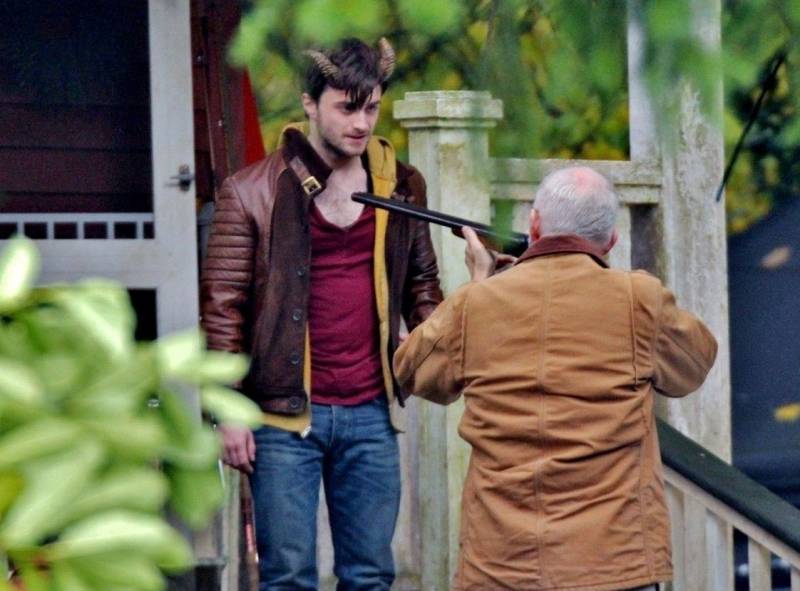
When a candlelit vigil is held at the place where Merrin was murdered, a drunken Ig rages against a God who could allow her to die.  The next morning he awakes to find two tiny horns growing out of his forehead.  Horrified, he goes to his doctor where he becomes aware of a startling side effect that the horns have brought with them: the people he encounters are compelled to tell him their darkest thoughts and desires once they’ve seen the horns.  He also learns that he can persuade them to act on these desires.  Using this ability he begins to visit people who knew Merrin in the hope of finding clues as to her killer’s identity – or even find them in person.  Everyone reveals something about themselves that is otherwise hidden except for Lee who doesn’t see any horns at all.

Ig suffers a setback when he learns a witness has come forward to say that they saw him leave a diner with Merrin on the night she was killed.  Ig knows this isn’t true, but at first he can’t think how to make the witness withdraw their statement.  The arrival of a bed of snakes that he can control solves the issue but brings him no nearer to finding Merrin’s killer.  It’s only when he confronts his brother, Terry (Anderson), that he begins to discover what exactly happened that night, including a fateful meeting at the diner that he had with Merrin, and which he’d forgotten.

As the clues mount up and Ig gets nearer the truth, an unexpected revelation leads to an attempt on his life.  Surviving the attempt, Ig sets a trap for the killer, and in the process, learns the tragic truth about his beloved Merrin.

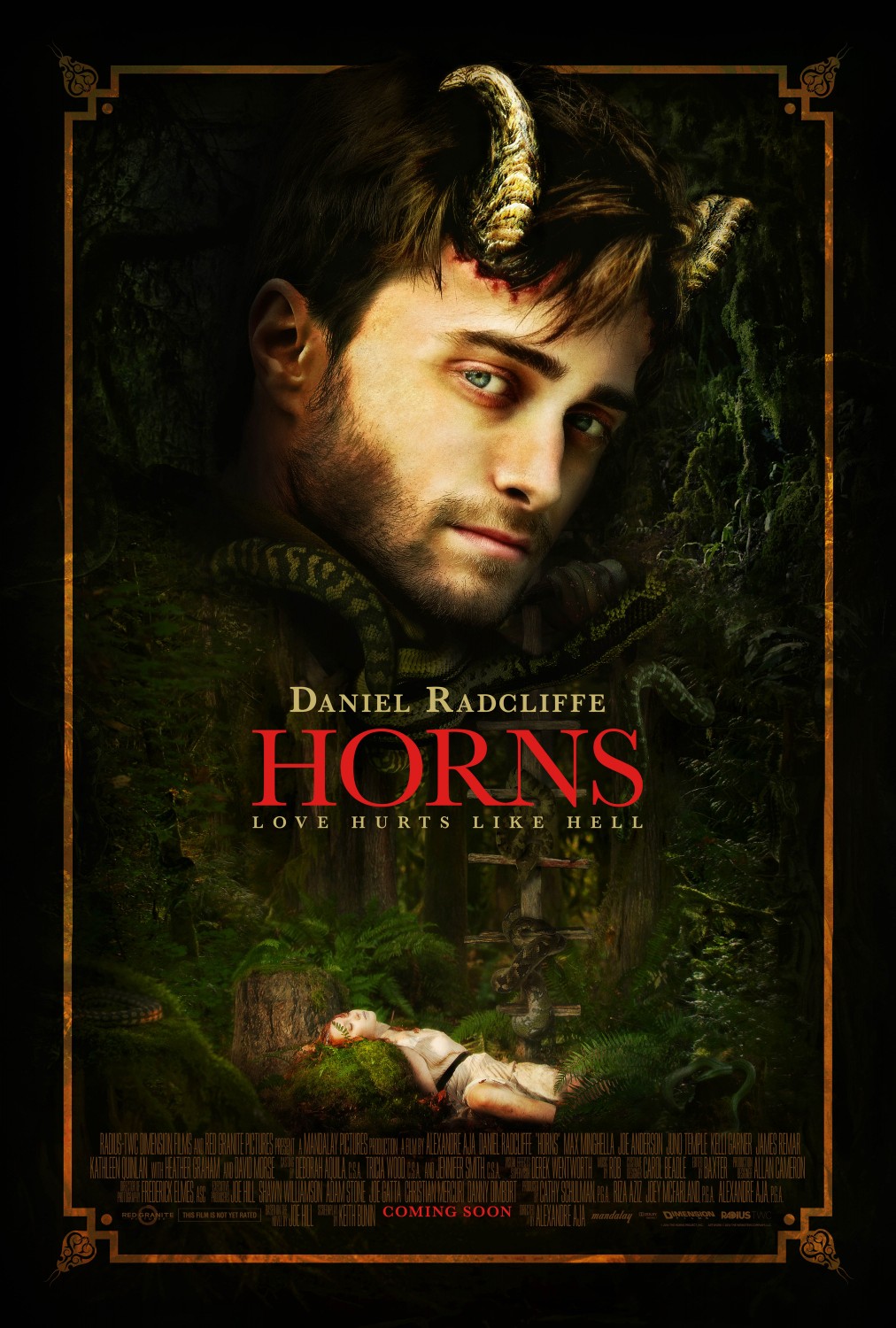
Horns -scene

There’s a moment in Horns when Ig suggests that a couple of TV news reporters should “beat the shit out of each other” with an exclusive interview as the prize for the winner.  What follows is a free-for-all brawl between news teams that is both funny and ferocious at the same time.  It’s a perfect example of the tone of the movie, a delightfully perverse adaptation of Joe Hill’s novel that offers a mix of very dark humour and fantasy alongside a very traditional whodunnit.  It’s a bold, audacious movie, encompassing romantic drama, horror, broad comedy, and childhood flashbacks to often dizzying effect.  It’s also a great deal of fun.

Under the auspices of Aja, Horns is never less than riveting, its structure so cleverly constructed by screenwriter Keith Bunin that a few minor plot stumbles aside – the presence of the snakes (never properly explained), the killer’s apparent amnesia when confronted a second time by Ig – the movie grabs the attention from the outset, thrusting the viewer into Ig’s predicament with economy and style.  Its greatest trick is not to make Ig instantly likeable, and while it’s no stretch to believe he’s entirely innocent, his behaviour is self-destructive and aggressive, leaving just that sliver of doubt that maybe, just maybe, he might have killed Merrin.  And with a major motive introduced two thirds in, the movie still manages to throws doubts at the viewer with deliberate glee.

Radcliffe – building a quietly diverse and impressive career for himself post-Hogwarts – is the movie’s trump card, giving a well-rounded, nuanced performance that requires a lot from him as an actor.  He’s more than up to the task though, and is simply mesmerising throughout, justifying entirely the decision to cast him.  It’s a rich, deceptively detailed portrayal, much more resonant than we’re used to in what is ultimately a horror fantasy.  There’s a scene towards the end where Ig reads a letter written to him by Merrin.  The pain and anguish Radcliffe evinces, along with Temple’s perfect reading of the letter, makes the scene achingly sad to watch (and also the movie’s standout moment).

The supporting cast offer sterling support, from Garner’s turn as Ig’s would-be girlfriend Glenna, to Morse as Merrin’s heartbroken father.  If there’s a weak link it’s Minghella, an actor whose features lend themselves well to looking perturbed or querulous, but who regularly struggles to persuade audiences when more convincing emotions are required.  Temple continues to impress, her role in flashback as Merrin giving her another chance to shine (along with Radcliffe, she’s carving out a very interesting career for herself), and there’s a pivotal role for the underused Graham that reminds the viewer – however briefly – just how good she is.

The fantasy elements are effective, with a final transformation for Ig that is impressively handled, and the striking British Columbia locations are lensed to subtly remarkable effect by DoP (and David Lynch alumni) Frederick Elmes.  Aja keeps the focus on Ig and Merrin, the true heart of the movie, and holds back on the bloodshed to a level that, while it may annoy some horror fans, is in keeping with the overall tone of the movie (that said, he can’t resist including one splatter moment).  With a denouement that ups the pace and provides a satisfying conclusion to events, Horns succeeds on so many levels that it’s a very jaded viewer who will be disappointed by what the movie has to offer.

Rating: 8/10 – an above average fantasy thriller with dark comedic overtones, Horns is another daring outing from the very talented Aja; with a deep well of emotion for it to draw on, the movie succeeds in marrying a variety of disparate elements into a rewarding and gratifying whole.

Share this:

  • Click to share on X (Opens in new window) X
  • Click to share on Facebook (Opens in new window) Facebook
  • More
  • Click to print (Opens in new window) Print
  • Click to email a link to a friend (Opens in new window) Email
Like Loading...

The Young and Prodigious T.S. Spivet (2013)

21 Saturday Jun 2014

Posted by dullwood68 in Movies

≈ Leave a comment

Tags

Baird Award, Drama, Fantasy, Helena Bonham Carter, Jean-Pierre Jeunet, Judy Davis, Kyle Catlett, Perpetual motion machine, Reif Larsen, Smithsonian Institute

Young and Prodigious T.S. Spivet, The

D: Jean-Pierre Jeunet / 105m

Cast: Kyle Catwell, Helena Bonham Carter, Judy Davis, Callum Keith Rennie, Niamh Wilson, Jakob Davies, Dominique Pinon, Julian Richings

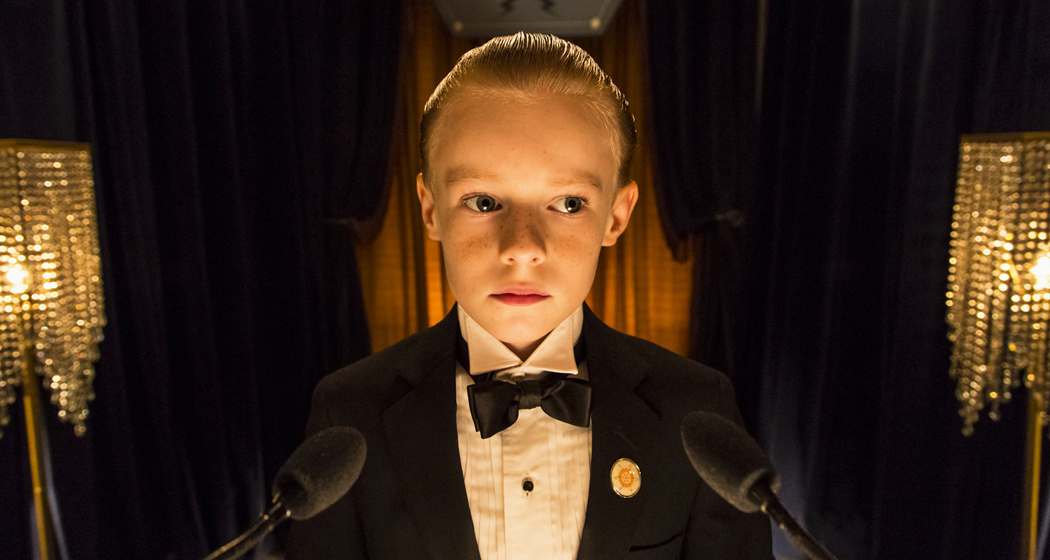
On a ranch in Montana, ten year old T.S. Spivet (Catwell) lives with his mother (Carter), father (Rennie) and sister Gracie (Wilson).  He used to have a twin brother, Layton (Davies), but his death from an accident involving a rifle has left the family fractured and each member spends most of their time absorbed in their own interests: his mother studies the morphology of beetles, his father dedicates himself to running the ranch, while his sister tries to promote the virtues of the Miss America pageant (as well as her desire to take part).  As for T.S., he has an aptitude for science that is way beyond his years, and he spends his time drawing maps and conducting experiments.  When he learns that no one has been able to come up with a perpetual motion machine, he takes it on as a personal challenge.  He sends his plans to the Smithsonian Institute in Washington D.C. and is surprised to learn that he has won the coveted Baird Award and is expected to travel there to collect his prize and give a speech.

T.S. decides to attend the award ceremony, and leaves home early one morning to travel alone by freight train.  His journey across the US is hampered by train guards and the police, but he is also helped along the way by kind-hearted strangers such as trucker Ricky (Richings).  When he arrives at the Smithsonian, he is taken under the wing of undersecretary G.H. Jibsen (Davis).  At the award ceremony, T.S. makes an emotive speech about the death of his brother, and reveals that he died during an experiment T.S. was trying to carry out.  The story, along with the perpetual motion machine makes T.S. an instant celebrity, and Jibsen arranges for him to take part in press interviews, and finally, a talk show.  With the addition of a surprise guest to the show, T.S.’s family begin to reconnect with each other.

Young and Prodigious T.S. Spivet, The - scene

Adapted from the novel by Reif Larsen, The Young and Prodigious T.S. Spivet is an appealing piece of movie-making from a director whose sensibilities and visual style are a perfect match for the material.  Jeunet, making only his second English language movie – let’s try to forget the giant misstep that was Alien: Resurrection (1997) – displays his fondness for odd camera angles, bold camerawork, and meticulous set design.  The movie is a visual triumph, ravishing in its depiction of Montana’s rugged landscapes, ingenious in its rendering of T.S.’s work and drawings (especially if viewed in 3D), and endlessly inventive on a technical level.  Even in relatively static scenes there’s always something to draw the attention.  Working with cinematographer Thomas Hardmeier, Jeunet has created a movie that is so wonderfully detailed in its look that the eye is seduced over and over again by what’s on screen.

Larsen’s novel – adapted by Jeunet and Guillaume Laurant – with its own visual style, is regarded by many as a modern classic, but the same problem the novel has, sadly, remains in the movie, and Jeunet’s faithfulness to his source ultimately undoes a lot of the good work that’s gone before.  The last third, following T.S.’s arrival in Washington D.C., feels flat and lifeless in comparison to the rest of the movie, and isn’t helped by Davis’s pantomime villain performance as Jibsen (she takes annoying to new levels).  With the addition of a talk show host who is more caricature than character, T.S.’s time in Washington is let down by the inclusion of their inanity and the movie suffers greatly (a pat resolution to all the family issues seems forced as well).  Only T.S.’s candid, and quietly emotional, description of the events surrounding Layton’s death has any impact during this section, and that’s due to Catlett’s artless delivery.

Of the cast, Catlett more than holds his own against his more experienced co-stars, and invests T.S. with a genuine sense of bafflement at most of the ways in which adults behave, or how the world works.  Carter adds another quirky performance to her résumé, and Davis mistakes exaggeration for character development, while Wilson looks so much like Chloë Grace Moretz that it becomes distracting.  Rennie has little to do other than look manly (he’s like a modern day Marlboro man), and Jeunet stalwart Pinon almost steals the movie as one of the strangers who help T.S. on his journey.

With the storyline grinding to a halt two thirds in, The Young and Prodigious T.S. Spivet falls short of achieving its full potential, and while some viewers may also have an issue with the whimsical nature of much of the movie, it’s more of a strength than a disadvantage.  If you buy into Jeunet’s vision then there’s much to enjoy, and there’s more subtlety lurking beneath the movie’s artistic sheen than you might expect.

Rating: 7/10 – entertaining and beautiful to look at, The Young and Prodigious T.S. Spivet may not be as fully realised as audiences would expect, but there’s still more than enough going on to still make this a (mostly) rewarding experience; an effectively grounded viewing pleasure despite its frequent flights of fancy.

Share this:

  • Click to share on X (Opens in new window) X
  • Click to share on Facebook (Opens in new window) Facebook
  • More
  • Click to print (Opens in new window) Print
  • Click to email a link to a friend (Opens in new window) Email
Like Loading...

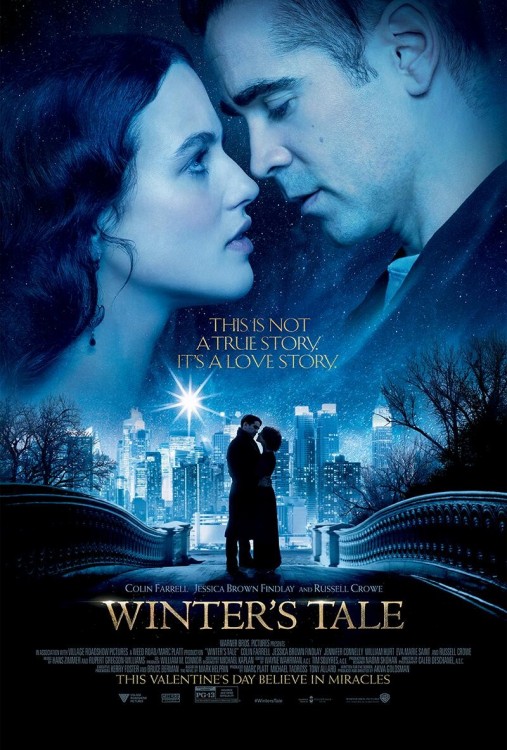
Winter’s Tale (2014)

08 Sunday Jun 2014

Posted by dullwood68 in Movies

≈ 3 Comments

Tags

Akiva Goldsman, Colin Farrell, Drama, Fantasy, Good and evil, Jessica Brown Findlay, Mark Helprin, Miracles, Review, Romance, Russell Crowe, Stars, Terminal illness, White Horse, William Hurt

Winter's Tale

aka A New York Winter’s Tale

D: Akiva Goldsman / 118m

Cast: Colin Farrell, Russell Crowe, Jessica Brown Findlay, Jennifer Connelly, William Hurt, Graham Greene, Mckayla Twiggs, Eva Marie Saint, Ripley Sobo, Kevin Corrigan, Kevin Durand, Will Smith

1895.  A couple entering the US at Ellis Island are turned back because the man is terminally ill.  From the ship that is taking them back to their homeland, they set their infant child adrift in a model schooner in the hope that he will be found and given a better life.

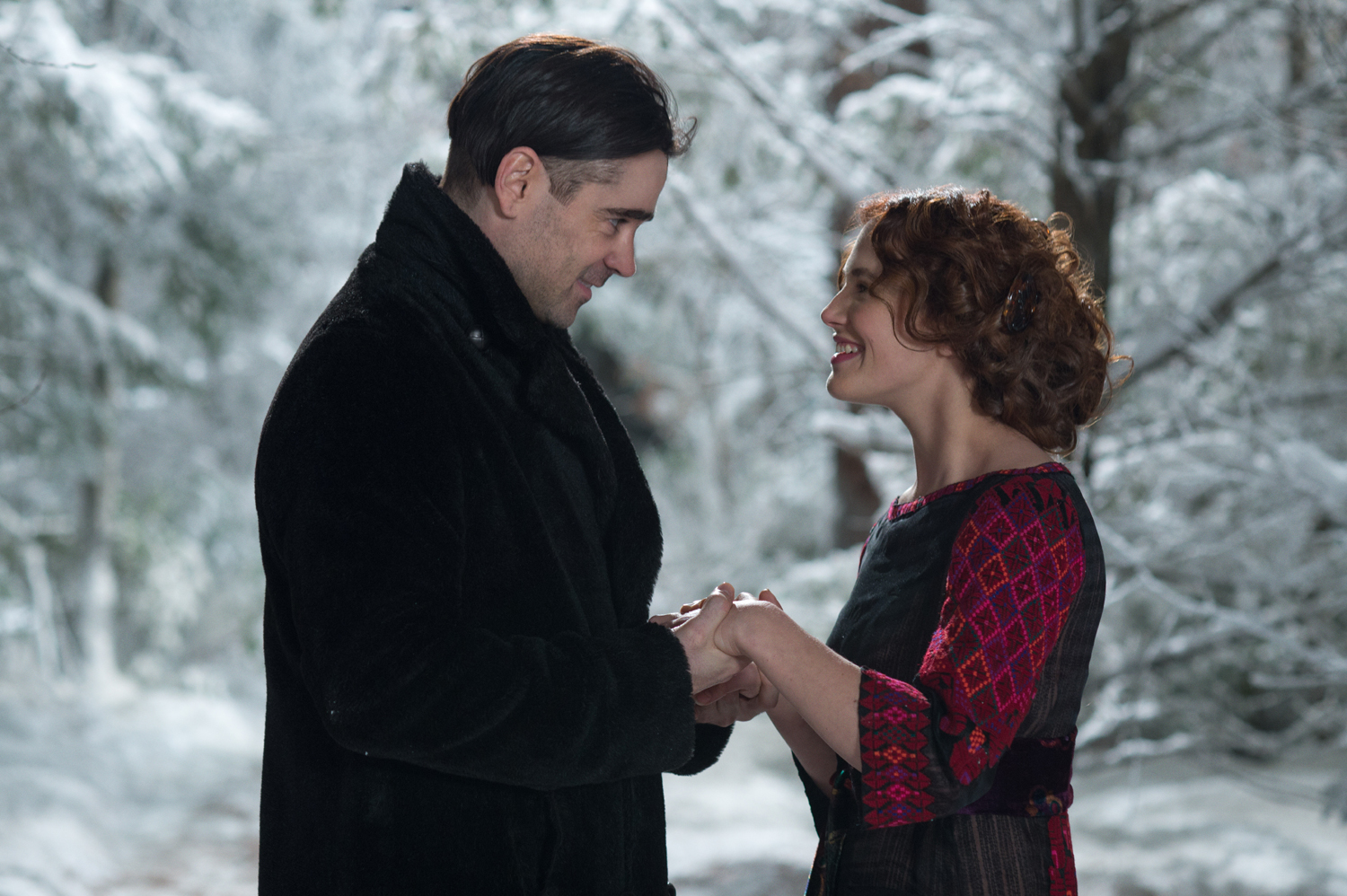
1916.  The child is now a young man and a thief, Peter Lake (Farrell).  On the run from local gang boss Pearly Soames (Crowe), Peter is saved by a white horse that appears out of nowhere.  Using the horse both as transport and as an accomplice in his stealing, Peter finds himself outside the house of the Penn family.  Isaac Penn (Hurt) is the editor-in-chief of the New York Sun newspaper; he lives there with his two daughters, Beverly (Findlay) and Willa (Twiggs).  Thinking everyone has left on a trip, Peter breaks in but finds that Beverly has stayed behind.  She is unperturbed by finding a burglar in her home, and invites him to have tea with her.  While they talk, Peter learns she is terminally ill with consumption.

While Peter prepares to leave the city Soames is increasingly determined to track him down.  There proves to be a supernatural reason for Soames’ pursuit of Peter, a reason that involves the balance between good and evil.  Peter has a miracle to give to someone with red hair, and when Soames becomes aware of this, and Peter’s recent association with Beverly, he attempts to take her away from him.  Peter intervenes and they head for the Penns’ country home upstate.  There, their relationship deepens into love, but at a New Year’s Eve ball, Beverly’s drink is poisoned by one of Soames’ men, and she later dies.  Peter allows himself to be found by Soames and is pushed off a bridge into the river.

2014.  Peter is walking through a park one day when he meets a young girl, Abby (Sobo) and her mother, Virginia (Connelly).  He has no memory of who he is and later, attempting to follow up on a clue he’s found, he meets Virginia again at the offices of the New York Sun (where she works).  She helps him and they discover his association with the Penns; he also meets the adult Willa (Saint).  Soames, who is also still alive, becomes aware of Peter’s return and tracks him to Virginia and Abby’s apartment.  Abby wears a red bandanna that looks like she has red hair; she is also ill with cancer.  Realising that Peter’s miracle is for Abby and not Beverly, he tries to escape Soames and his men, and save Abby.

DSC_8310.dng

A pet project is not always the best idea for a first-time director, and it seems especially true if the director is also the screenwriter.  Sadly, with this adaptation of Mark Helprin’s novel, respected wordsmith Goldsman must be added to the list.  Helprin’s tale of magical realism is given a decidedly lacklustre retelling, and while some elements work better than others (as would be expected), those that do work are unable to compensate for those that don’t.  For example, the true nature of Soames – and later, that of the Judge (Smith) – is revealed in a shocking moment that is so unexpected it has the effect of destroying the mood the movie has spent quite some time establishing.  With that particular cat let out of the bag, the movie becomes quite different, and the tone darkens, but without lending the ensuing tragedy of Beverly’s death any real weight.  Coming as it does with around a third of the movie still to run, the audience is left wondering what on earth is going on, and their empathy for Peter and Beverly is wiped away as if it never happened.  And then Peter is killed…

Watching Winter’s Tale is like trying to watch two different movies at the same time.  There’s the syrupy, overly-sentimental movie that will attract fans of romantic dramas, and then there’s the dark supernatural movie that might attract fans of fantasy horror (if they’re aware the movie includes these aspects).  The combination of the two means they cancel each other out, so that neither is as effective or powerful as the other, and neither maintains its grip on the audience’s emotions.  The romance between Peter and Beverly is so cute as to be almost sickly, and their initial conversation – which includes deathless lines of dialogue such as, “What’s the best thing you’ve ever stolen?” “I’m beginning to think I haven’t stolen it yet.” – is so saccharine it’s almost stripping the enamel from the viewer’s teeth as the scene progresses (and there’s worse to come).

As for the fantasy elements, they serve only to confuse matters with their emphasis on souls as stars and the white horse as an agent for good, and Soames as a denizen of the underworld (or just this one – it’s hard to tell for sure).  As the movie reveals more and more of its miraculous background, Soames’ almost psychotic need to stop Peter from delivering his miracle becomes less and less credible by the minute, and Beverly’s innate understanding of the way in which the afterlife works is equally unexplained.  And there’s more dialogue to make a grown man cringe: “Look closely, for even time and distance are not what they appear to be.”

The dialogue, and its woeful attempts to be deep and meaningful throughout, is all the more perplexing given Goldsman’s acuity as a writer, but here he seems in thrall to the archness of the material.  It’s a testament to the acting prowess of Farrell et al. that a lot of it is made to sound more profound than it actually is.  Findlay is given the lion’s share of mystical pronouncements, and amazingly, makes incredibly light work of them, but is still unable to rescue them entirely from being torpid.  Of the acting, Farrell does floppy-fringed lovesick melancholia better than anyone for a long, long while, while Crowe chews the scenery as if it’s his last meal.  Findlay is simply mesmerising, and is sorely missed once Beverly is killed off, while Connelly is impeded from giving any kind of performance by having to accept Peter’s longevity in about two seconds flat.  Hurt essays his patrician role with dismissive ease, and Greene cameos as a friend of Peter who doubles as an agony aunt for him.

Goldsman directs with the finesse of a shovel to the back of the head, and fails to grasp that what may work on the page doesn’t always translate well to the screen.  With the movie being so uneven, and its characters serving as prosaic archetypes rather than fully-fledged people, Winter’s Tale stumbles and stutters its way to a conclusion that seems as rushed as it is unlikely (it also requires a character to make such a mind-bogglingly stupid decision it takes the breath away).  In fairness, though, it’s beautifully mounted with often luminous photography courtesy of Caleb Deschanel, and the movie’s production design is of such a high standard that it wouldn’t be too much of a stretch for it to be nominated come next year’s Oscars.

Rating: 4/10 – a poorly developed adaptation that takes magical realism and softens the edges of both, leaving a mawkish, haphazardly constructed movie to fend for itself; disappointing for fans of the novel, Winter’s Tale has none of the energy needed to make it compelling for newcomers.

Share this:

  • Click to share on X (Opens in new window) X
  • Click to share on Facebook (Opens in new window) Facebook
  • More
  • Click to print (Opens in new window) Print
  • Click to email a link to a friend (Opens in new window) Email
Like Loading...

Maleficent (2014)

03 Tuesday Jun 2014

Posted by dullwood68 in Movies

≈ 2 Comments

Tags

Angelina Jolie, Aurora, Disney, Elle Fanning, Fantasy, Pixies, Review, Robert Stromberg, Sharlto Copley, Sleeping Beauty, Spinning wheel, The Moors, True love's kiss, Wings

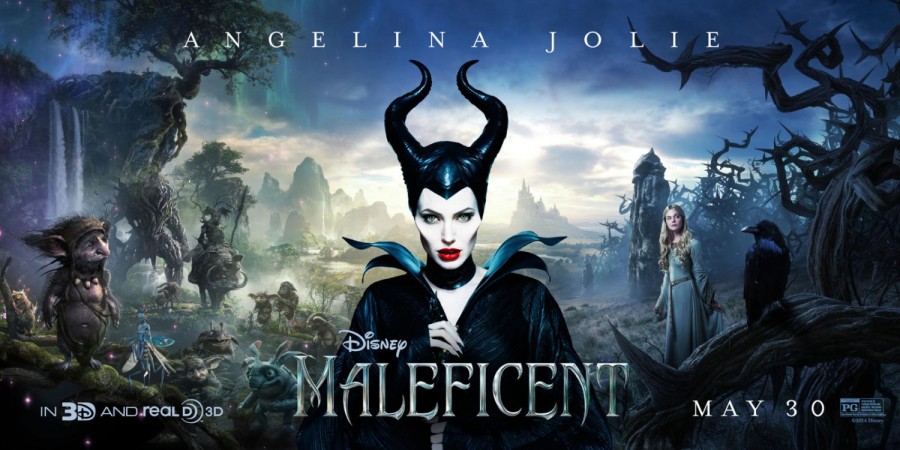
Maleficent

D: Robert Stromberg / 97m

Cast: Angelina Jolie, Elle Fanning, Sharlto Copley, Lesley Manville, Imelda Staunton, Juno Temple, Sam Riley, Brenton Thwaites, Kenneth Cranham, Hannah New

A revisionist version of the Sleeping Beauty story, Maleficent begins long before the traditional tale begins, and tells of two neighbouring lands, one human, one fairy, that exist with animosity simmering between them.  As a young child, Maleficent (Isobelle Molloy) is curious about humans but doesn’t venture any further than the boundary of the fairy lands (known as the Moors).  One day a young boy, Stefan (Michael Higgins) is found stealing in the Moors.  Maleficent saves him from the forest guards and a friendship is born.  Stefan returns to the Moors from time to time and friendship blossoms into romance.  When Maleficent is sixteen, Stefan gives her a “true love’s” kiss, but he never returns after that day.

Years pass.  Now an adult, Maleficent (Jolie) is the de facto queen of the Moors.  When King Henry (Cranham) tries to invade the fairy lands she repels his army and the King is injured.  With no natural heir to succeed him, he offers the throne to whomever kills Maleficent.  Stefan (Copley) is a courtier but uses his relationship with Maleficent to get close to her.  Unable to kill her outright, instead he cuts off her wings; he brings them back to Henry and becomes King when Henry dies; he also marries Henry’s daughter, Leila (New).  Maleficent, meanwhile, saves a raven from being captured by a human and transforms him into a man who tells her his name is Diaval (Riley).  Diaval agrees to be Maleficent’s spy in the human lands, and brings news when Stefan and Leila have a daughter, Aurora.

Maleficent attends the christening and bestows a gift on the child, a curse that on her sixteenth birthday Aurora will prick her finger on the spindle of a spinning wheel and fall asleep for the rest of eternity; the only thing that can lift the curse is a “true love’s” kiss.  Stefan orders all the spinning wheels in the kingdom broken up and burned and sends Aurora away under the charge of three pixies, Knotgrass (Staunton), Flittle (Manville) and Thistlewit (Temple), to live in a cottage deep in the nearby woods; she is to live there until the day after her sixteenth birthday.

As she approaches that fateful date, Aurora (Fanning) becomes increasingly fascinated with the Moors.  Maleficent puts her under a spell and brings her into the Moors.  Aurora is enchanted by what she sees and she becomes determined to stay there (she has no idea of her background or history).  At the same time her relationship with Maleficent develops into a strong bond, and Maleficent softens in her attitude toward her.  On her way to tell the pixies of her decision, she meets Prince Philip (Thwaites) with whom there is an instant mutual attraction.  When she reaches the cottage, Knotgrass inadvertently mentions her father, whom Aurora has been told died long ago.  The pixies reveal the truth about her heritage and Aurora confronts Maleficent.  Distraught, Aurora returns to the castle on her sixteenth birthday, where Stefan is preparing for what he believes will be  Maleficent’s imminent arrival.  That night, Aurora escapes from her room but ends up in the basement where all the broken up and charred spinning wheels are.  As the curse decrees, Aurora pricks her finger on a spindle and falls into eternal sleep…

Maleficent - scene

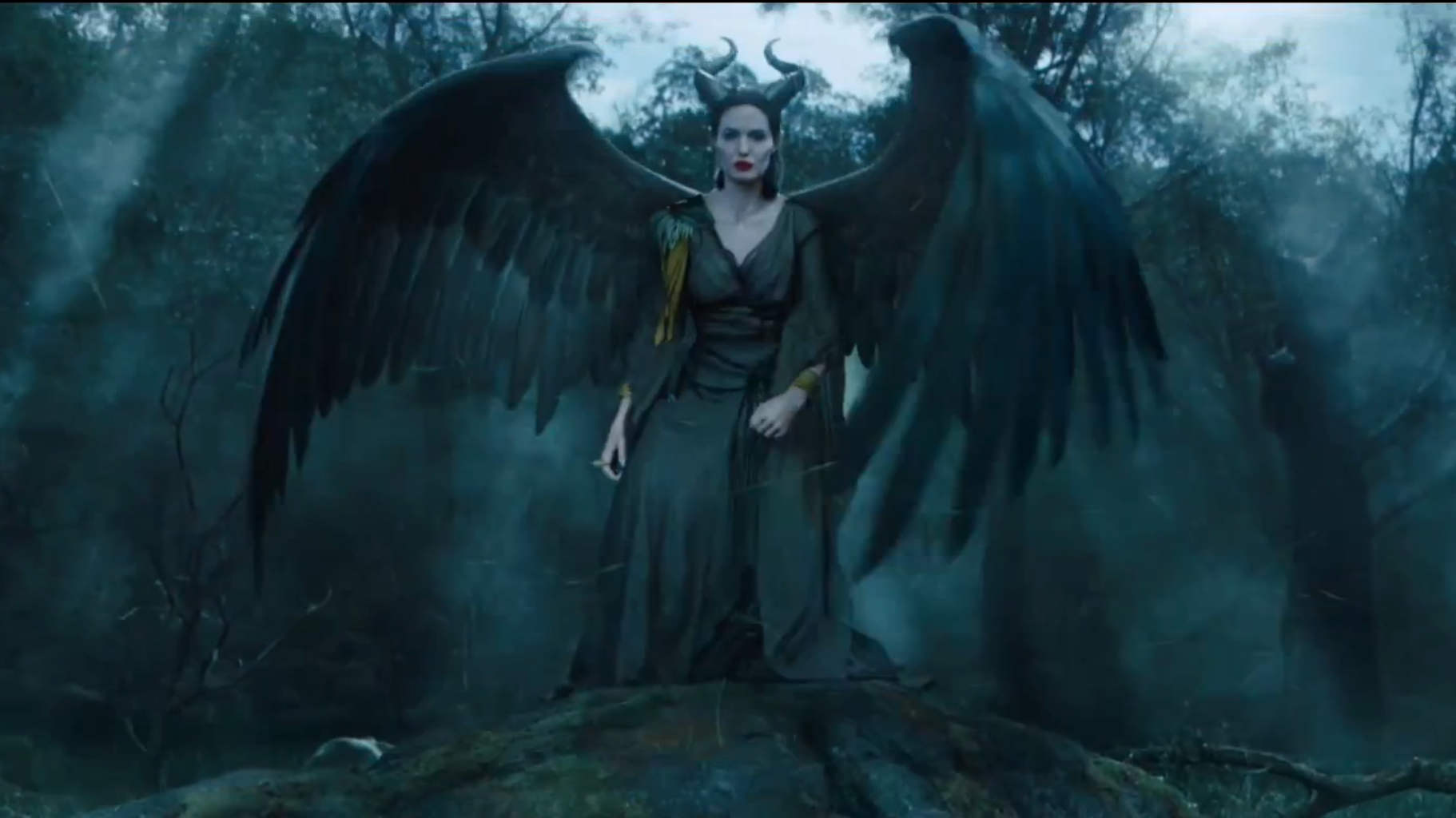
With the look and feel of both Tim Burton’s Alice in Wonderland (2010) and Sam Raimi’s Oz the Great and Powerful (2013) – and it’s no surprise, as director Stromberg was the production designer on both movies – Maleficent is a feast for the eyes and looks beautiful throughout.  The Moors has an air of whimsy about it and the various pastel shades employed to bring it to life are cleverly overlapped to create a ravishing whole.  Once Maleficent is betrayed, the colours are muted and the Moors is not quite as vividly rendered, but it’s still a wonderful place for a young girl to grow up in.

It’s a shame then that as much effort wasn’t put into the human kingdom, its stone walls and bland woodwork acting as a dreary counterpoint to the Moors.  It’s also a good reference point when discussing the characters.  Maleficent herself is a wonderful creation, given depth and pathos by Jolie, and graced with the sharpest cheekbones you’re ever likely to see on screen.  It’s a magnificent performance, and a reminder that Jolie, last seen in the less than wonderful The Tourist (2010), is an accomplished actress, but here she’s the sole focus in a movie that short changes its other characters, leaving the rest of the cast to fend for themselves while Jolie gets the lion’s share of the screen time and any character development.  Ultimately, this single-mindedness hurts the movie tremendously, and wastes the talents of Fanning, Copley, Staunton et al.  Copley, despite a minimal attempt to endow Stefan with a degree of guilt for his actions, is hamstrung by the lack of range his character is imbued with, and by the movie’s end he’s so close to providing a one-note performance as to make no difference (it doesn’t help that his accent wavers all over the place in his early scenes).

With Linda Woolverton’s script providing less meat than required, Maleficent suffers in other areas as well.  For such a handsomely mounted, cleverly revisionist tale, it’s also curiously flat throughout.  The early scenes – pre-adult Maleficent – seem in a hurry to get to the main bulk of the movie, and the remainder doesn’t excite or captivate in the way that it should.  Scene follows scene but not in any organic way; instead it’s as if the movie is more concerned with hitting each plot development in turn but not with how it gets there.  This leaves some scenes feeling redundant, often before the scene has ended.  And too much happens purely because the script needs it to: Stefan’s preparations for Maleficent’s return to the castle, for example, planned so far in advance of her actually needing to go there that it doesn’t make sense; and Maleficent’s wings, unmoving and apparently lifeless when Stefan removes them, but animated and responsive after more than sixteen years (and just when Maleficent needs them).

Story and plot problems notwithstanding, Maleficent lacks the zest and energy needed to fully bring it’s reworking of Sleeping Beauty (1959) to life.  There’s also the issue of whether or not Maleficent is really the villainous character she is in Disney’s animated version of the story.  Here, she’s clearly a character who’s been tragically wronged, and despite attempts to make her “evil”, they’re never convincing, and Jolie’s approach to the character highlights the theme of female empowerment that permeates the movie throughout.  This leaves Stefan as the movie’s one true villain, and far more “evil” than Maleficent could ever be, even with the maniacal chuckling that Jolie strives for during the christening.  (It’s a shame as it would definitely have made the movie more interesting, but with the emphasis on rehabilitating the character for a modern audience – as if we really needed it – a completely evil Maleficent was never on the cards.)

Stromberg is not a strong director, either, and his lack of experience contributes to the overall shortcomings of the movie.  The action sequences lack the excitement expected from them, and the editing by Chris Lebenzon and Richard Pearson often contributes to the sense that there’s a more structured, deliberate movie back in the cutting room (a longer version might be interesting to watch).  In the end, this is Jolie’s triumph, not anyone else’s, but by herself she’s not able to rescue the movie from the doldrums it repeatedly finds itself in.

Rating: 5/10 – not entirely the success its makers would have hoped for, but not entirely a dud either, just a maddeningly disappointing movie that never takes off (as Maleficent herself does); plagued by too many bad decisions affecting its presentation, Maleficent keeps the viewer at arm’s length for long periods, and only occasionally tries to bring them any closer.

Share this:

  • Click to share on X (Opens in new window) X
  • Click to share on Facebook (Opens in new window) Facebook
  • More
  • Click to print (Opens in new window) Print
  • Click to email a link to a friend (Opens in new window) Email
Like Loading...

Knights of Badassdom (2013)

28 Wednesday May 2014

Posted by dullwood68 in Movies

≈ 1 Comment

Tags

Comedy, Demons, Fantasy, Gore effects, Horror, Joe Lynch, LARPing, Live action role playing, Peter Dinklage, Review, Ryan Kwanten, Steve Zahn, Summer Glau

Knights of Badassdom

D: Joe Lynch / 86m

Cast: Steve Zahn, Ryan Kwanten, Summer Glau, Peter Dinklage, Margarita Levieva, Jimmie Simpson, Brett Gipson, Danny Pudi

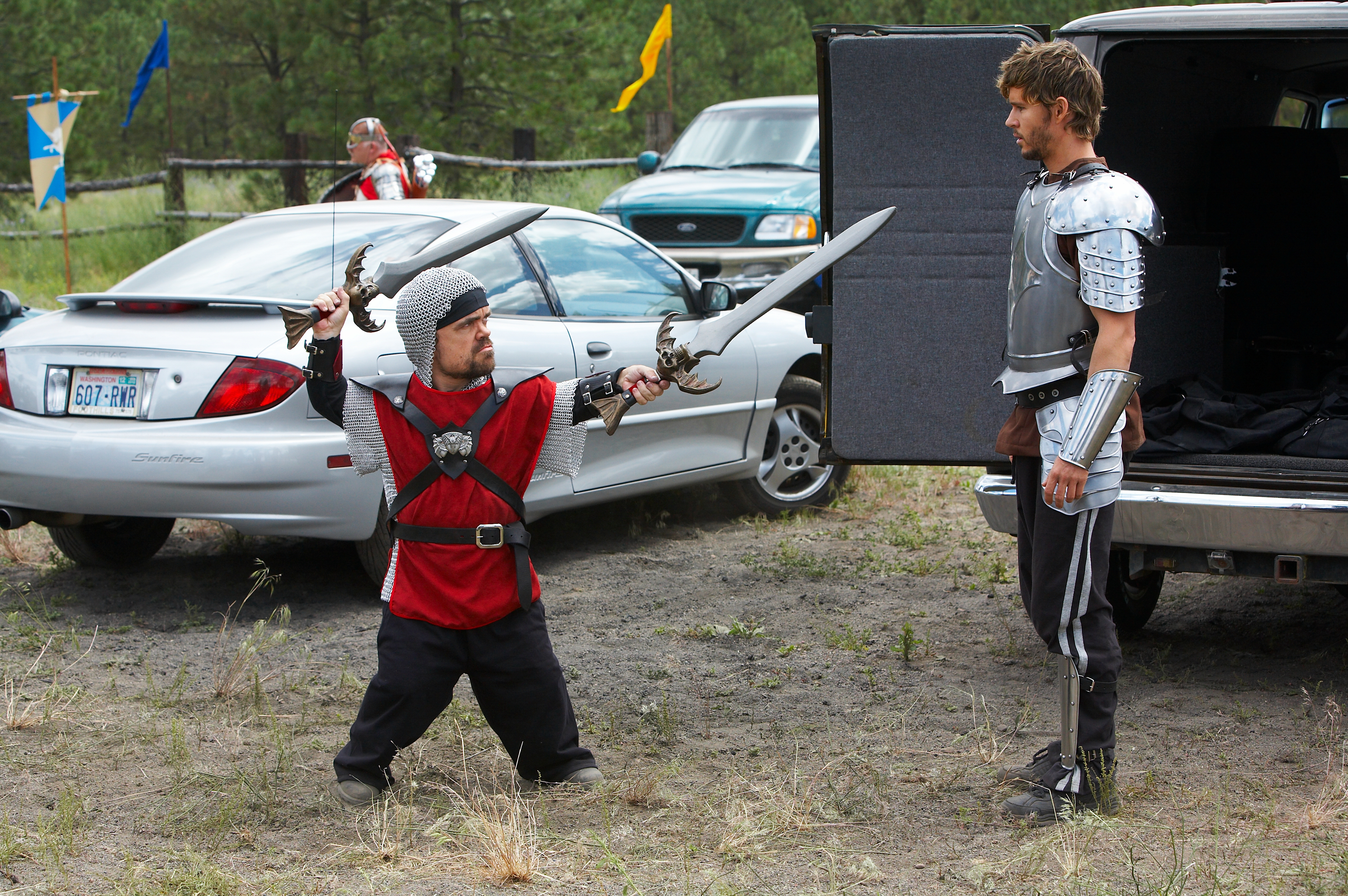
When heavy metal loving Joe (Kwanten) is dumped by his girlfriend, Beth (Levieva), his best friends Eric (Zahn) and Hung (Dinklage) try to cheer him up by taking him on a larping weekend.  Larping is short for Live Action Role Playing, the province of fantasy game players who want to act out their roles for “real” as well as doing so online.  Eric is an enchanter, and has obtained a copy of a rare book said to have been written by Dr John Dee as an attempt to conjure angels but which was subsequently hidden when Dee found he was conjuring demons instead (though Eric thinks it’s just a prop he got off the Internet).  Challenged by games organiser Ronny (Simpson) to come up with a casting spell that will allow Eric, Joe and Hung – accompanied by Lando (Pudi), Gwen (Glau) and Gunther (Gipson) – to progress to the games’ next level, they use an incantation from Dee’s book.

Unaware at first that in doing so they’ve raised a succubus – and that it’s taken on the form of Joe’s ex-girlfriend – the three friends and their new companions continue with the games.  As the succubus begins killing stray larpers, it’s only when Hung, Ronny and Lando encounter her later that night that anyone becomes aware of what’s happening.  She kills Hung and Lando but Ronny runs away; while he tries to find his way back to where the gamers are camped overnight, Joe and Gwen find Hung’s body and are joined by Eric and Gunther.  They too try to get back to the campground but they run into the succubus; Eric recites another incantation to try and send it back to hell and the succubus runs off, apparently hurt.  When Ronny sees the book he recognises it straight away and is horrified to learn what’s happened, and lambasts Eric for his stupidity, telling him that if he spoke Enochian (the book’s language) he would have known that the incantation wasn’t for sending the succubus back to hell, but for transforming it.  Now the succubus is a demon, Abominog, and it’s down to the remaining group to stop it from feeding on the souls of anyone it encounters, and to destroy it.

KNIGHTS OF BADASSDOM

Originally filmed in 2010, Knights of Badassdom has had a chequered history.  A cut of the movie was shown at 2011’s Comic-Con but was held back from distribution by producers IndieVest Pictures (IVP).  Rumours that IVP were cutting the movie without Lynch’s involvement were rife, and it seemed that the movie might end up being released in a bowdlerised version, one that didn’t match Lynch’s vision.  Eventually a cut of the movie was screened in March 2013 and it was picked up by distributors Entertainment One.  How the movie would have turned out without all that having happened we’ll probably never know, but even if Lynch did have a different approach to the one we’re presented with, it’s unlikely it would have saved the movie from being so bad.

The problem, mainly, is the movie’s tone.  It wants to be a hip, clever horror comedy in the vein of Evil Dead II (1987), but where that movie was successful in its combination of extravagant, gory horror with laugh-out-loud sardonic humour, Knights of Badassdom is a crude misfire in comparison, providing lame jokes, gags that are shouted for emphasis by its cast, and which relies on Zahn’s intimidated baby face reactions to criticism as a humorous device.  There’s also an over-reliance on having the cast speak in mock-Shakespearean English before relapsing back into modern-day slang or swearing; what the movie’s makers have failed to realise is that it’s not even funny once, let alone the numerous times it’s trotted out over eighty-six laborious minutes.

There’s a woeful lack of characterisation as well, with Joe turning out to be one of the blandest heroes to reach our screens, and the rest of the characters are given little to do but run around and shout a lot.  Zahn does a watered-down version of his usual comedy schtick, Glau looks pretty but loses out to Levieva as the woman to watch (she gets far more to do as the bloodthirsty succubus), and Kwanten defaults to looking perplexed throughout (as well he might be).  Only Dinklage makes an impression, embracing the intrinsic absurdity of getting dressed up and running around in the woods playing fantasy games, and having as much fun as possible; when his character is killed off, his presence is sorely missed.

With an emphasis on the gore that overwhelms the comedy (such as it is), Knights of Badassdom further demonstrates its inability to strike a balance between the two, leaving the viewer to wonder if Kevin Dreyfuss and Matt Wall’s screenplay really was this artless to begin with, or if the rumoured tampering is to blame.  Either way, the movie fails on so many levels that by the time Abominog is despatched in a blaze of ill-conceived coloured lighting, the viewer can only heave a sigh of relief that it’s finally over (and for once there’s no hint of a possible sequel).

Rating: 3/10 – pleasingly old school gore effects aside, Knights of Badassdom has so little to recommend it that the viewer could well end up rooting for Abominog in its efforts to feast on the characters; dreadful and dire in equal measure and a warning to anyone trying to make a modern-day horror comedy.


Share this:

  • Click to share on X (Opens in new window) X
  • Click to share on Facebook (Opens in new window) Facebook
  • More
  • Click to print (Opens in new window) Print
  • Click to email a link to a friend (Opens in new window) Email
Like Loading...

George and the Dragon (2004)

21 Friday Feb 2014

Posted by dullwood68 in Movies

≈ 1 Comment

Tags

Action, Dragons, Fantasy, James Purefoy, Medieval times, Michael Clarke Duncan, Patrick Swayze, Piper Perabo, Review, Tom Reeve

George and the Dragon

aka Dragon Sword

D: Tom Reeve / 93m

Cast: James Purefoy, Piper Perabo, Patrick Swayze, Michael Clarke Duncan, Bill Treacher, Jean-Pierre Castaldi, Rollo Weeks, Paul Freeman, Caroline Carver, Simon Callow, Joan Plowright

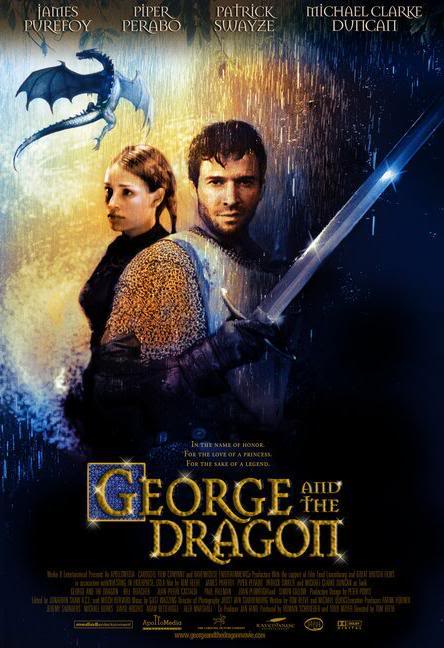
After fighting in the Holy Wars, knight George (Purefoy) returns home to seek a quiet life and settle down on a small parcel of land. To this end he seeks out King Edgar (Callow). But the King’s daughter, Princess Luna (Perabo) has been abducted, and in return for the land he wishes, George agrees to help search for the Princess alongside her betrothed, Garth (Swayze). While the rescue party, accompanied by faithful retainer Elmendorf (Treacher) and adventure-seeking youngster Wryn (Weeks), look for the Picts they suspect have taken Luna, the truth is far stranger. Luna is actually holed up in a cave looking after a dragon’s egg, having been abducted by the mother (who she calls Adelaide for some reason). Luna is determined that the egg will hatch and when she is rescued by George, she thwarts his repeated attempts to destroy it. An uneasy alliance is formed between them as George agrees to help Luna get the egg out of harm’s way long enough for the baby dragon (who she calls Smite for some reason) to hatch. As they travel they must contend with the machinations of Garth, several bands of Picts, and an approaching band of mercenaries led by the dastardly El Cabillo (an uncredited Val Kilmer) who have heard there is a reward for the Princess’s safe return. Cue sword fights, chases, a comic priest (Castaldi), an easily swayed Mother Superior (Plowright), and a brief appearance by Bill Oddie as an innkeeper, not to mention an adequately rendered dragon and its offspring.

George and the Dragon - scene

Despite being a Euro-pudding of a movie – Germany, the UK and Luxembourg were all involved in the movie’s production – George and the Dragon is a light-hearted romp that doesn’t take itself too seriously, has a surfeit of knowing performances (Purefoy has the movie’s measure completely), a winning line in obvious, hokey pantomime humour (watch out for the woman fixing her thatched roof when George arrives at the village where his father (Freeman) lives), and a convincing medieval feel courtesy of the (largely) Scottish locations. Enjoying themselves as much as Purefoy, the rest of the cast give their all, and the script by director Reeve and Michael Burks is geared to provide each character with enough screen time to shine in their own right, as well as entertain the audience.

There’s nothing new here, obviously, but it doesn’t matter. It’s a simple tale simply told but with enough verve and skill to offset its modest budget. Reeve, better known as a producer, keeps the various plot strands and storylines clearly outlined, and frees his cast to inject the kind of earnest frivolity this kind of movie thrives on. The photography by Joost van Starrenburg shows off Scotland and Luxembourg’s scenery to great effect, and the physical and special effects are integrated seamlessly (well, except for the shot of the dragons splashing about in a lake).

On the minus side, Perabo’s allowed too many modern day inflections and references in her performance, and Swayze looks ill throughout; his wig doesn’t help either. And that’s about it. Nitpickers may find other things to complain about but that would be doing the movie a major disservice. It’s not the best movie ever made but George and the Dragon is fun, entertaining, and a more than pleasant way to spend ninety minutes.

Rating: 7/10 – an entirely enjoyable surprise of a movie that’s much better than it looks; for once, a “guilty pleasure” you can tell all your friends about.

Originally posted on thedullwoodexperiment website.

Share this:

  • Click to share on X (Opens in new window) X
  • Click to share on Facebook (Opens in new window) Facebook
  • More
  • Click to print (Opens in new window) Print
  • Click to email a link to a friend (Opens in new window) Email
Like Loading...

Triassic Attack (2010)

18 Tuesday Feb 2014

Posted by dullwood68 in Movies

≈ 2 Comments

Tags

Colin Ferguson, Dinosaurs, Emilia Clarke, Fantasy, Kirsty Mitchell, Native American, Review, Sci-fi, Steven Brand, SyFy

Triassic Attack

D: Colin Ferguson / 87m

Cast: Steven Brand, Kirsty Mitchell, Raoul Trujillo, Gabriel Womack, Emilia Clarke, Jazz Lintott, Christopher Villiers, Nathalie Buscombe, Vladimir Mihailov

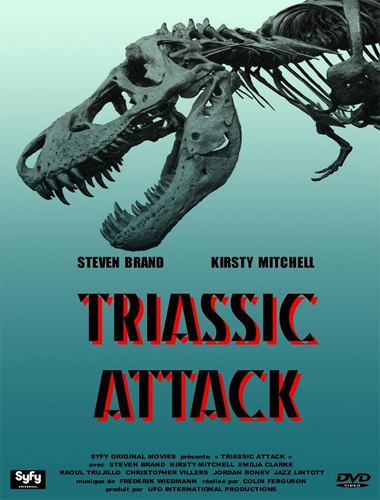
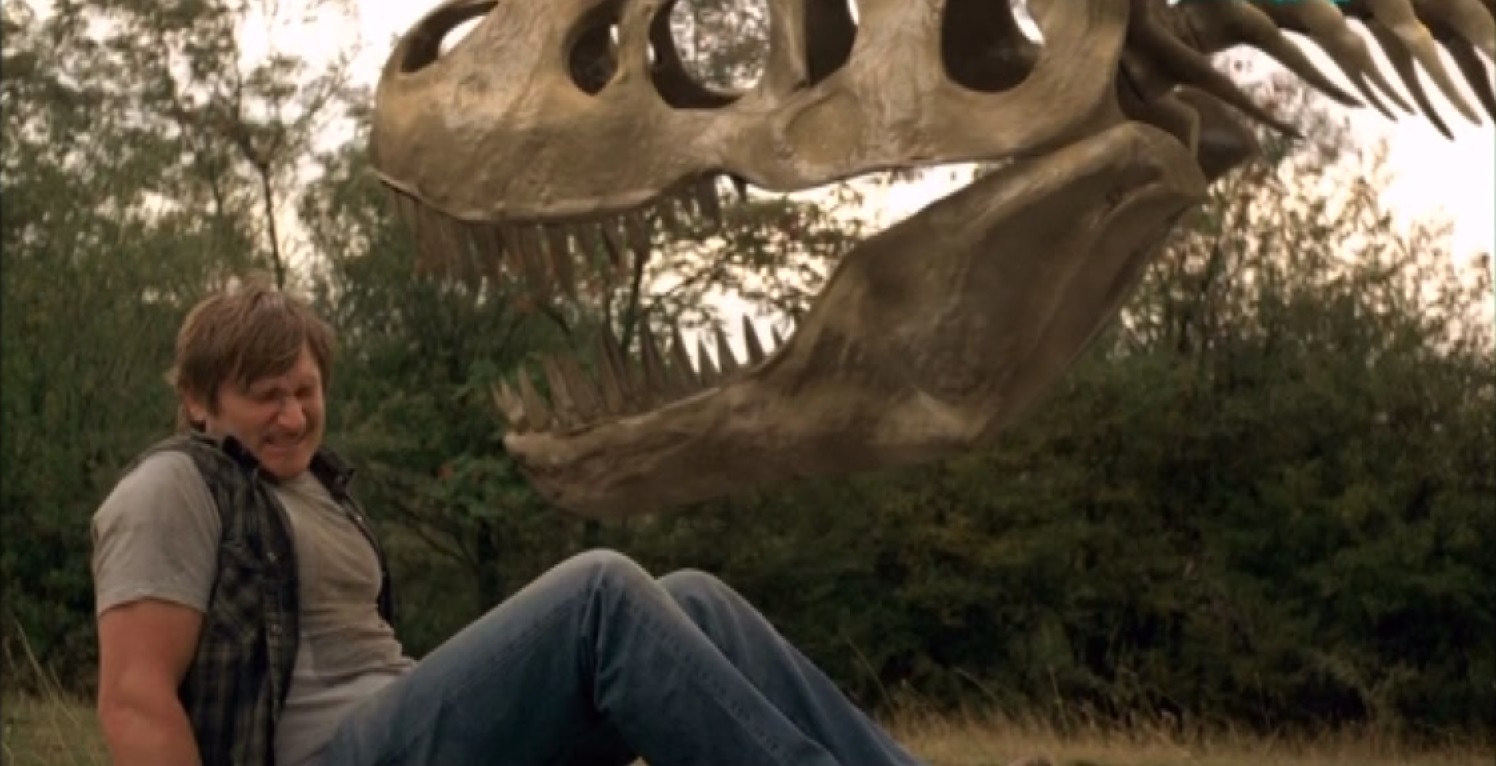
Another in the long lame of SyFy movies, Triassic Attack is, on paper at least, one of the most wretched ideas they’ve come up with.  Angry at the sale of ancestral lands to the local university, Native American Dakota (Trujillo) decides to put things right by summoning the spirit of the Great Protector.  But the ritual goes awry and the skeletons of three dinosaurs housed in the local museum come alive and wreak havoc in the surrounding area, endangering all and sundry.  And that is basically that.  The skeletons appear all over the place, the local sheriff (Brand) looks dour and unhappy throughout (as well he should – turns out Dakota is his father), his estranged wife Emma (Mitchell) allows their daughter Savannah (Clarke from TV’s Game of Thrones) to be put in harm’s way time and time again, and any viewer watching this farrago should be warned of the danger to their health: they’re likely to break several ribs and hurt their jaw when it hits the floor repeatedly.

Now, before we move on, let’s get these very valid points out of the way: 1) the skeletons depicted aren’t of creatures that lived in the Triassic period; 2) they roar and bellow despite having no vocal cords or lungs; 3) they move around easily despite not having any eyes; 4) when two are “destroyed” at the same time, the pieces reassemble together to create a flying dinosaur that never existed in any historical period; and 5) the ROTC cadets seen in the movie appear to be equipped with both Bulgarian uniforms and a Russian anti-tank weapon.

Triassic Attack - scene

Of course, Triassic Attack is rubbish.  You might even say it’s ordure of an extremely high order.  It’s been cheaply made, with a cast that struggles to engage with a script that really does seem to have been cobbled together from that cynical experiment involving monkeys and typewriters, and the direction is leaden, uninspired, and often absent.  There are worse SyFy movies out there – check out Camel Spiders (2011) if you don’t believe me – and the premise is so ripe for mickey-taking it’s actually unfair. And yet…

Despite everything, it’s a fun movie to watch.  The attack sequences are laughable yet enjoyable at the same time.  Even though they’re incredibly silly, there’s still an underlying primal threat there that comes from seeing anyone attacked by such creatures (skeletal or otherwise).  The characters are a fraction above one-dimensional, and the acting (Womack’s spirited comedy turn aside) another fraction below competent.  The locations are attractive – though the town itself is marvellously short of proper buildings or residents – and the scenery compensates for a lot of the other detractions.  There’s a hissable university bureaucrat (Villiers), music that swells and falls in complete ignorance of what’s happening on screen, the climax is better than expected, and the movie shuffles along at an agreeable pace that doesn’t allow it to outstay its (negligible) welcome.  It all adds up to a silly movie that shouldn’t be taken seriously by anyone, and actually doesn’t set out to be.

Rating: 4/10, silly, stupid, brainless movie that should put a smile on your face even though it’s really, really, really bad; the title alone tells you all you need to know.

Originally posted on thedullwoodexperiment website.

Share this:

  • Click to share on X (Opens in new window) X
  • Click to share on Facebook (Opens in new window) Facebook
  • More
  • Click to print (Opens in new window) Print
  • Click to email a link to a friend (Opens in new window) Email
Like Loading...

The Secret Life of Walter Mitty (2013)

15 Wednesday Jan 2014

Posted by dullwood68 in Movies

≈ Leave a comment

Tags

Ben Stiller, Cover photo, Drama, Fantasy, Iceland, Kristen Wiig, Life magazine, Review, Romantic drama, Sean Penn, Shirley MacLaine, Walter Mitty

Secret Life of Walter Mitty, The

D: Ben Stiller / 114m

Cast: Ben Stiller, Kristen Wiig, Adam Scott, Shirley MacLaine, Kathryn Hahn, Adrian Martinez, Ólafur Darri Ólafsson, Patton Oswalt, Sean Penn

Working as a negative accounts manager (responsible for photo negatives sent in by contributing photographers) at Life magazine, Walter Mitty (Stiller) has led a largely unremarkable life.  Unmarried, with few friends, Walter is devoted to his job, but with the recent arrival of Cheryl Melhoff (Wiig) at the magazine, he finds himself smitten.  Upheaval also arrives with the news that the magazine is being cancelled in favour of an online edition.  Brought in to oversee the closure of the magazine and staff lay-offs, Ted Hendricks (Scott) picks on Walter, having caught him day-dreaming in the office.  When noted photographer Sean O’Connell (Penn) sends in a series of negatives, with one being his preferred choice for the final cover, Walter is horrified to discover he can’t find it.  With the final issue a matter of two weeks away, Walter decides to track down O’Connell and retrieve the missing negative.

Walter enlists Cheryl’s help in finding the elusive O’Connell.  A clue leads Walter to Iceland, where a drunken helicopter pilot (Ólafsson) tells him O’Connell is heading via trawler to Greenland.  He catches up with the trawler at sea but O’Connell has already left the ship.  Arriving in Greenland, Walter learns that his quarry is headed for a local airstrip.  As he gets there, O’Connell’s plane takes off… and a nearby volcano erupts.  With no further leads to help him follow O’Connell, Walter is forced to return to New York.  Back at work, he’s fired by Hendricks.  Depressed, Walter visits his mother (MacLaine) who tells him O’Connell came to see her a few weeks before.  She also provides him with enough information to help Walter decipher another clue he’s picked up during his travels.  Travelling to the foothills of the Himalayas, Walter finally catches  up with O’Connell and the mystery of the missing negative is solved.

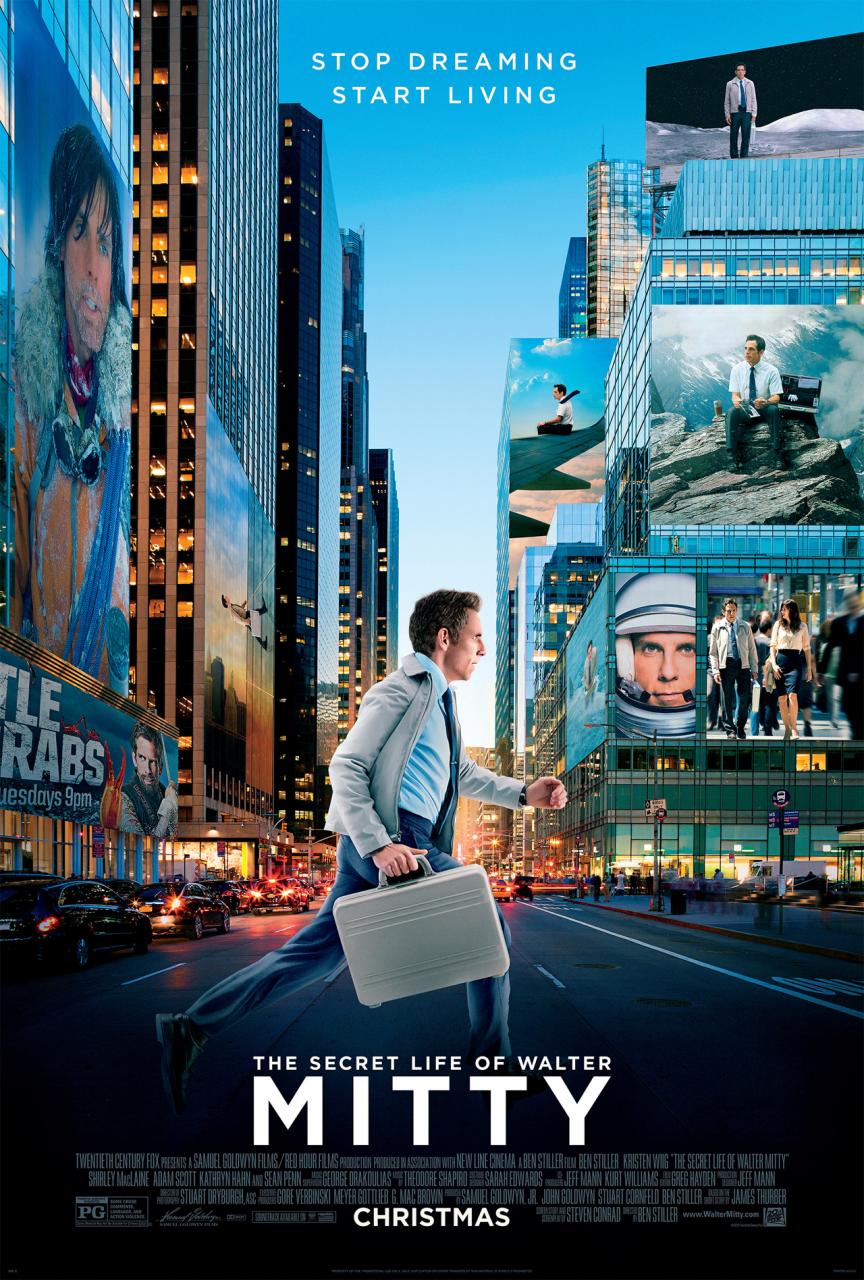
THE SECRET LIFE OF WALTER MITTY

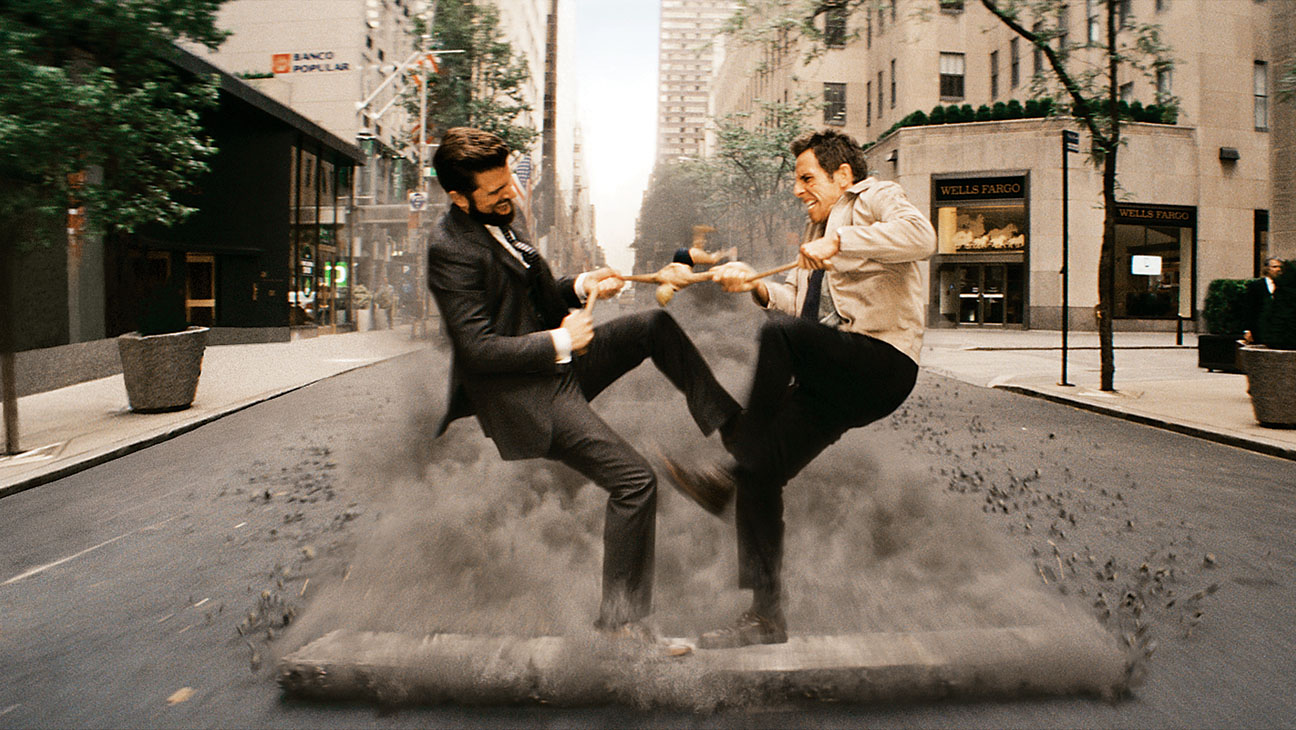
From its trailer, The Secret Life of Walter Mitty could be mistaken for another comic fantasy à la Stiller’s Night at the Museum movies, but thanks to a sharply observed script by Steve Conrad, and a sure hand at the helm from Stiller himself, nothing could be further from the truth.  This is not just an excuse for humorous fantasy sequences designed to prop up a patchy script, but a carefully thought out, intelligent, affectionate account of one man’s emergence from his own shell.  Walter is a terrific creation, a recognisable person with recognisable hopes and dreams, and a genuinely nice man who’s self-confidence is only evident when he’s at work.  His attraction to Cheryl is handled beautifully, his longing for a relationship played with adroitness and charm.  And as Walter’s adventures bring him further into the real world, and away from the fantasy world he slips into so easily, the acceptance he finds from the people he meets brings him a series of personal rewards.  By the time he confronts O’Connell, Walter is a changed man, able to deal with anything Life can throw at him (and which comes in handy when he later confronts Hendricks).

It’s a wonderful, nuanced turn from Stiller, subtle, skilful and affecting in equal measure, and a joy to watch.  It’s a life-affirming performance, ably supported by a well-chosen supporting cast headed by Wiig, and Stiller proves a confident director, marshalling the disparate elements of the script with verve and evident ease.  Penn is a great choice for the errant photographer, and Wiig adds several shades to a character she has played similar versions of before.  The only false note amongst the performances is Scott’s but that’s because his character is written as an obnoxious prat from the beginning; it’s the script’s only misstep.

The movie is often gorgeous to look at as well, especially when Walter is trekking through the foothills of the Himalayas; as he walks along the top of one particular ridge the panorama behind him is simply breathtaking.  But even amongst the offices of Life magazine, Stiller’s compositions are pleasing to the eye and far from perfunctory, a testament to the effort he’s made in presenting a movie that has a unique visual style throughout.  He’s ably supported by cinematographer Stuart Dryburgh and editor Greg Hayden, and there’s a wonderful score replete with songs courtesy of José González.

The Secret Life of Walter Mitty is that modern rarity amongst Hollywood movies, an uplifting, feel good, life-affirming romantic drama that isn’t queasily sentimental or emotionally over-the-top, and which doesn’t outstay its welcome.  It’s worth watching a second time for the subtle bits of business Stiller peppers the movie with, and for the pleasure of spending the best part of two hours with someone you’d be happy to call your friend.

Rating: 9/10 – a triumph for Stiller and his very talented cast and crew, The Secret Life of Walter Mitty deserves to be seen over and over again; a winning, multi-faceted experience that will keep a smile on your face for hours after seeing it.

Share this:

  • Click to share on X (Opens in new window) X
  • Click to share on Facebook (Opens in new window) Facebook
  • More
  • Click to print (Opens in new window) Print
  • Click to email a link to a friend (Opens in new window) Email
Like Loading...

Slave Girls (1967)

24 Sunday Nov 2013

Posted by dullwood68 in Movies

≈ Leave a comment

Tags

Africa, Cave girls, Drama, Edina Ronay, Fantasy, Hammer Films, Kanuka tribe, Martine Beswick, Michael Carreras, Michael Latimer, Queen Kari, Review, White rhinoceros

Slave Girls

aka Prehistoric Women

D: Michael Carreras / 90m

Cast: Martine Beswick, Edina Ronay, Michael Latimer, Stephanie Randall, Carol White, Alexandra Stevenson, Sydney Bromley, Robert Raglan

The second of Hammer’s “cave girls” movies, Slave Girls begins with stock footage shot in Africa, then moves to a set bound hunting expedition led by David Marchand (Latimer). Tracking a wounded leopard, he ventures into the lands of the Kanuka tribe, where he is captured. Taken before their leader, he is told of their god, the white rhinoceros, and the legend surrounding it, that all trespassers on their lands will be executed until either the white rhinoceros (now extinct) returns, or the large white rhinoceros statue they worship is destroyed. At the point of his being executed, David reaches out to touch the statue. There is a flash of lightning, the tribesmen are frozen in time, and the rock wall behind the statue opens to reveal another part of the jungle.

David explores this new area and encounters a girl, Saria (Ronay).  She attacks him but he knocks her unconscious. Immediately, he is surrounded by other women brandishing spears and taken prisoner. The women are part of a tribe led by the malicious Queen Kari (Beswick). It soon becomes clear there is a hierarchy here where brunette women have the power and blonde women are used as slaves. The men are all imprisoned in a cave. Asked by Kari to reign by her side, David refuses, and is imprisoned as well. Meanwhile, the blonde women plot to rebel against Kari and regain their freedom.

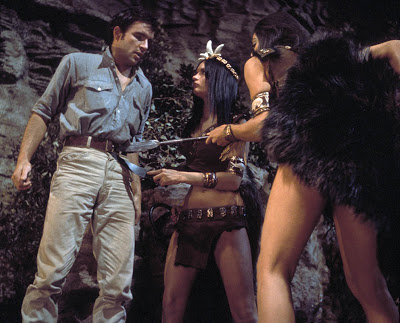
Slave Girls - scene

Watching Slave Girls over forty-five years on from its release, the first thing that strikes you isn’t the overtly sexist approach taken by writer/director Michael Carreras, or even the dreadful, convoluted storyline. Instead it’s the sense of déjà vu: isn’t this all terribly familiar? Well, yes it is, because the viewer is looking at the same sets and costumes that were used for Hammer’s first foray into the cave girl mini-genre One Million Years B.C. (1966). Full marks for economising then, but it’s subtly distracting. Once you get past that though, the full awfulness of the movie hits you full in the face, from the pallid direction to the atrocious dialogue to the contra-feminist approach to the material to the dreadful acting (some of the blondes don’t do themselves any favours in this regard), to the tribal dance routines designed to pad out the movie’s running time to the men all seemingly borrowed from a ratty beard and hair club.

And yet, as so often with Hammer’s movies from the mid- to late Sixties, Slave Girls retains a kind of quirky likeability. Despite its glaring faults (some as large as the white rhinoceros statue itself), the movie holds the attention throughout, is well-paced thanks to editor Roy Hyde, and offsets the limitations of the budget by providing some decent special effects in amongst the painted backdrops and cardboard-looking sets. The campy feel that would detract from several later Hammer movies is kept to a minimum, and Beswick is suitably cruel and manipulative as Queen Kari, while Latimer, all brooding stares and rampant masculinity, overcomes some awkwardness in his early scenes to gain increasing confidence in his role. As David’s love interest, Saria, Ronay proves surprisingly good, providing a strong counterpoint to Beswick. (Look out too for a brief appearance at the end by Steven Berkoff in his first, credited, screen performance.)

Made quickly as a response to the success of One Million Years B.C., Slave Girls fails to match that movie’s quality but does manage to be entertaining enough for all that. Hammer would go on to make two more cave girl movies, 1970’s When Dinosaurs Ruled the Earth, and 1971’s Creatures the World Forgot (also scripted by Carreras). Both films traded heavily on even more scantily clad women as part of their attraction, but neither were as barmy in terms of its script as Slave Girls.

Rating: 5/10 – saved by strong performances and Robert Jones’ art direction, Slave Girls holds a fascination that makes up for its many mistakes; a bit of a cult movie now and well worth watching on that basis.

Share this:

  • Click to share on X (Opens in new window) X
  • Click to share on Facebook (Opens in new window) Facebook
  • More
  • Click to print (Opens in new window) Print
  • Click to email a link to a friend (Opens in new window) Email
Like Loading...

Thor: The Dark World (2013)

05 Tuesday Nov 2013

Posted by dullwood68 in Movies

≈ 3 Comments

Tags

Action, Aether, Alan Taylor, Anthony Hopkins, Asgard, Chris Hemsworth, Dark Elves, Fantasy, Greenwich, Loki, Malekith, Marvel, Marvel Cinematic Universe, Natalie Portman, Review, Tom Hiddleston

Thor The Dark World

D: Alan Taylor / 120m

Cast: Chris Hemsworth, Natalie Portman, Tom Hiddleston, Anthony Hopkins, Christopher Eccleston, Stellan Skarsgård, Kat Dennings, Idris Elba, Jaimie Alexander, Zachary Levi, Ray Stevenson, Tadanobu Asano, Adewale Akinnuoye-Agbaje, Rene Russo

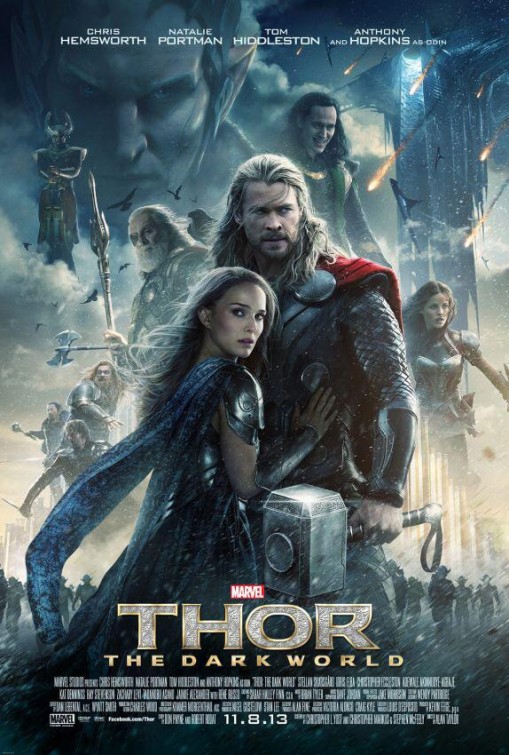
Another sequel to Avengers Assemble, rather than to the first Thor movie, this opens with a prologue that introduces us to the Dark Elves, evil creatures who want to see an end to the Nine Realms (if you’re not a Marvel fan, just go with me on this).  Their leader Malekith (Eccleston) plans to use the Aether, a swirling mass of energy that will allow him to do this when the realms are in alignment.  Thwarted by Odin’s (Hopkins) father, Malekith is forced into hiding, and the Aether is hidden “where no one will find it”.

Fast forward five thousand years (how often the realms are in alignment) and Malekith returns to do his worst.  Meanwhile, Loki (Hiddleston) is imprisoned in Asgard, Jane Foster (Portman) is unhappy that two years have past since she last saw Thor (Hemsworth), and Thor is busy bringing peace to the Nine Realms by fighting anyone who stands in his way.  Alerted to strange phenomena in a deserted warehouse somewhere in London, Jane stumbles across the Aether and becomes its host.  With Jane’s life on the line, it’s up to Thor to save both her and thwart Malekith’s evil plans.  But in order to do so he’ll need help…

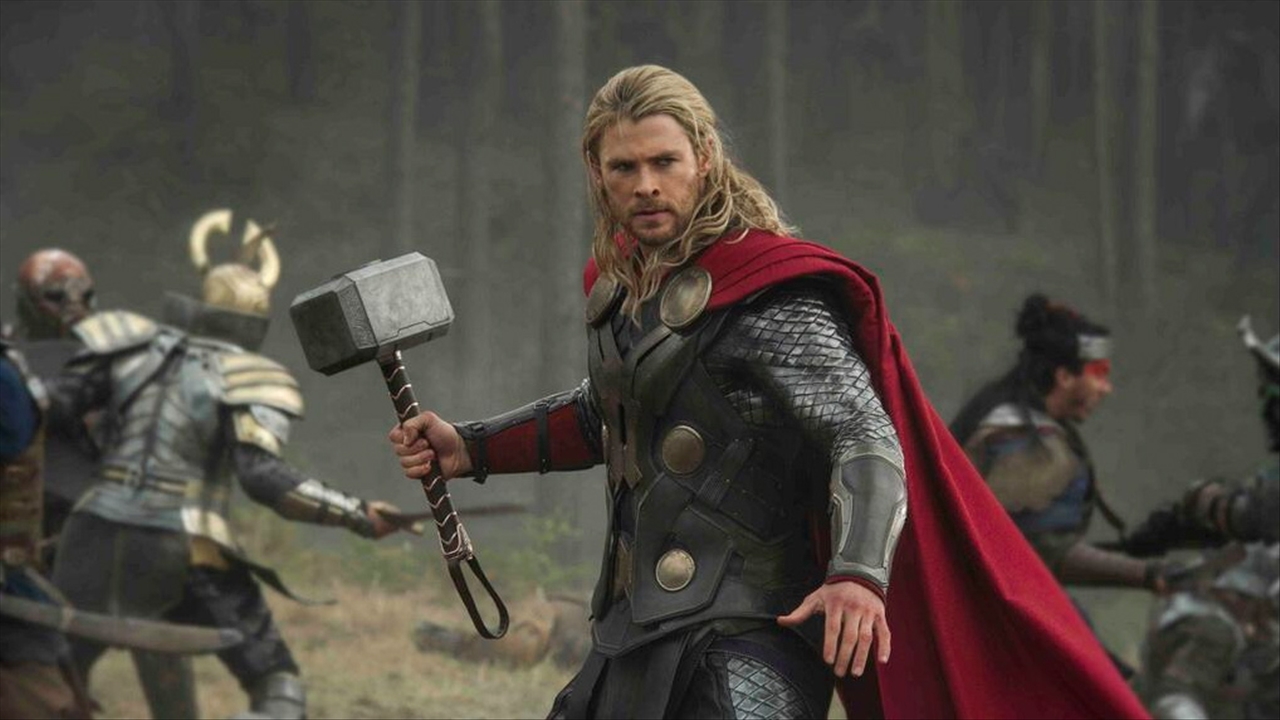
Thor The Dark World - scene

This third outing for Thor is huge fun from start to finish, with spectacular set-pieces, humour that ranges from subtle to broader than Volstagg’s (Stevenson) pectorals, gravitas courtesy of Hopkins (as Odin) and Russo (as Frigga), further explorations of the fraternal bond that chafes between Thor and Loki, and the best cameo from another Avenger… ever.  The romance between Thor and Jane is given more space – which is a good thing otherwise Portman would have remained sorely under-used – while the accepted jealousy that Sif (Alexander) feels towards Jane is handled effectively.  It’s the quiet moments such as these that offset the action sequences so well, and while those sequences are directed with accomplished flair by Taylor, it’s the ongoing character developments that Marvel are getting right each time.  At the heart of the film , though, is the relationship between Thor and Loki, here given added depth by their having to work together to defeat Malekith; the interaction between Hemsworth and Hiddleston is a joy to watch.  Hiddleston has a ball (again) as Loki and grabs all the best lines, while Hemsworth continues to mature in the role he’s made his own.  Of the supporting cast, Elba, Russo and Dennings shine, while Eccleston makes more of a villain whose sole motivation seems to be ‘destroy everything’.

Taylor handles the various twists and turns of the storyline with experienced aplomb – can we stop mentioning he worked on Game of Thrones now? – and while the script by Christopher Yost, Christopher Markus and Stephen McFeely has its fair share of plot contrivances, they don’t detract from the enjoyment provided by this latest instalment in Marvel’s plans to dominate the cinema box office.  There’s also some great location work at Greenwich (three stops from Charing Cross on the underground – really?), and fantastic production design courtesy of Charles Wood.

Rating: 8/10 – top-notch episode from Phase 2 of the Marvel Universe that also helps set up the forthcoming Guardians of the Galaxy; bold and more confident in every way.  And by the way, note to Marvel: find some way to give Loki his own movie – okay?

Share this:

  • Click to share on X (Opens in new window) X
  • Click to share on Facebook (Opens in new window) Facebook
  • More
  • Click to print (Opens in new window) Print
  • Click to email a link to a friend (Opens in new window) Email
Like Loading...
Newer posts →

Blog Stats

  • 491,459 hits

Recent Posts

  • 10 Reasons to Remember Bibi Andersson (1935-2019)
  • Fantasia (1940)
  • Dances With Wolves (1990) – The Special Edition
  • Kiss of the Spider Woman (1985)
  • The Three Musketeers (1973)

Top Posts & Pages

  • Cardboard Boxer (2016)
    Cardboard Boxer (2016)
  • I Origins (2014)
    I Origins (2014)
  • Carrie (2013)
    Carrie (2013)
  • Hickey (2016)
    Hickey (2016)
  • Logan (2017)
    Logan (2017)
  • The Inner Circle (1946)
    The Inner Circle (1946)
  • Death in High Heels (1947)
    Death in High Heels (1947)
  • Speak (2004)
    Speak (2004)
  • Poster of the Week - For a Few Dollars More (1965)
    Poster of the Week - For a Few Dollars More (1965)
  • Jaws of Justice (1933)
    Jaws of Justice (1933)
Follow thedullwoodexperiment on WordPress.com

Blogs I Follow

  • Rubbish Talk
  • Film 4 Fan
  • Fast Film Reviews
  • The Film Blog
  • All Things Movies UK
  • Interpreting the Stars
  • Let's Go To The Movies
  • Movie Reviews 101
  • TMI News
  • Dan the Man's Movie Reviews
  • Film History
  • Jordan and Eddie (The Movie Guys)

Archives

  • April 2019 (13)
  • March 2019 (28)
  • February 2019 (28)
  • January 2019 (32)
  • December 2018 (28)
  • November 2018 (30)
  • October 2018 (29)
  • September 2018 (29)
  • August 2018 (29)
  • July 2018 (30)
  • June 2018 (28)
  • May 2018 (24)
  • April 2018 (21)
  • March 2018 (31)
  • February 2018 (25)
  • January 2018 (30)
  • December 2017 (30)
  • November 2017 (27)
  • October 2017 (27)
  • September 2017 (26)
  • August 2017 (32)
  • July 2017 (32)
  • June 2017 (30)
  • May 2017 (29)
  • April 2017 (29)
  • March 2017 (30)
  • February 2017 (27)
  • January 2017 (32)
  • December 2016 (30)
  • November 2016 (28)
  • October 2016 (30)
  • September 2016 (27)
  • August 2016 (30)
  • July 2016 (30)
  • June 2016 (31)
  • May 2016 (34)
  • April 2016 (30)
  • March 2016 (30)
  • February 2016 (28)
  • January 2016 (35)
  • December 2015 (34)
  • November 2015 (31)
  • October 2015 (31)
  • September 2015 (34)
  • August 2015 (31)
  • July 2015 (33)
  • June 2015 (12)
  • May 2015 (31)
  • April 2015 (32)
  • March 2015 (30)
  • February 2015 (37)
  • January 2015 (39)
  • December 2014 (34)
  • November 2014 (34)
  • October 2014 (36)
  • September 2014 (25)
  • August 2014 (29)
  • July 2014 (29)
  • June 2014 (28)
  • May 2014 (23)
  • April 2014 (21)
  • March 2014 (42)
  • February 2014 (38)
  • January 2014 (29)
  • December 2013 (28)
  • November 2013 (34)
  • October 2013 (4)

Create a free website or blog at WordPress.com.

Rubbish Talk

Film 4 Fan

A Movie Blog

Fast Film Reviews

The Film Blog

The official blog of everything in film

All Things Movies UK

Movie Reviews and Original Articles

Interpreting the Stars

Dave Examines Movies

Let's Go To The Movies

Film and Theatre Lover!

Movie Reviews 101

Daily Movie Reviews

TMI News

Latest weather, crime and breaking news

Dan the Man's Movie Reviews

All my aimless thoughts, ideas, and ramblings, all packed into one site!

Film History

Telling the story of film

Jordan and Eddie (The Movie Guys)

Movie Reviews & Ramblings from an Australian Based Film Fan

Privacy & Cookies: This site uses cookies. By continuing to use this website, you agree to their use.
To find out more, including how to control cookies, see here: Cookie Policy
  • Subscribe Subscribed
    • thedullwoodexperiment
    • Join 481 other subscribers
    • Already have a WordPress.com account? Log in now.
    • thedullwoodexperiment
    • Subscribe Subscribed
    • Sign up
    • Log in
    • Report this content
    • View site in Reader
    • Manage subscriptions
    • Collapse this bar
 

Loading Comments...
 

    %d