Cast: Ben Affleck, Elle Fanning, Remo Girone, Brendan Gleeson, Chris Messina, Matthew Maher, Sienna Miller, Zoe Saldana, Robert Glenister, Chris Cooper, Miguel J. Pimentel, Titus Welliver, Max Casella
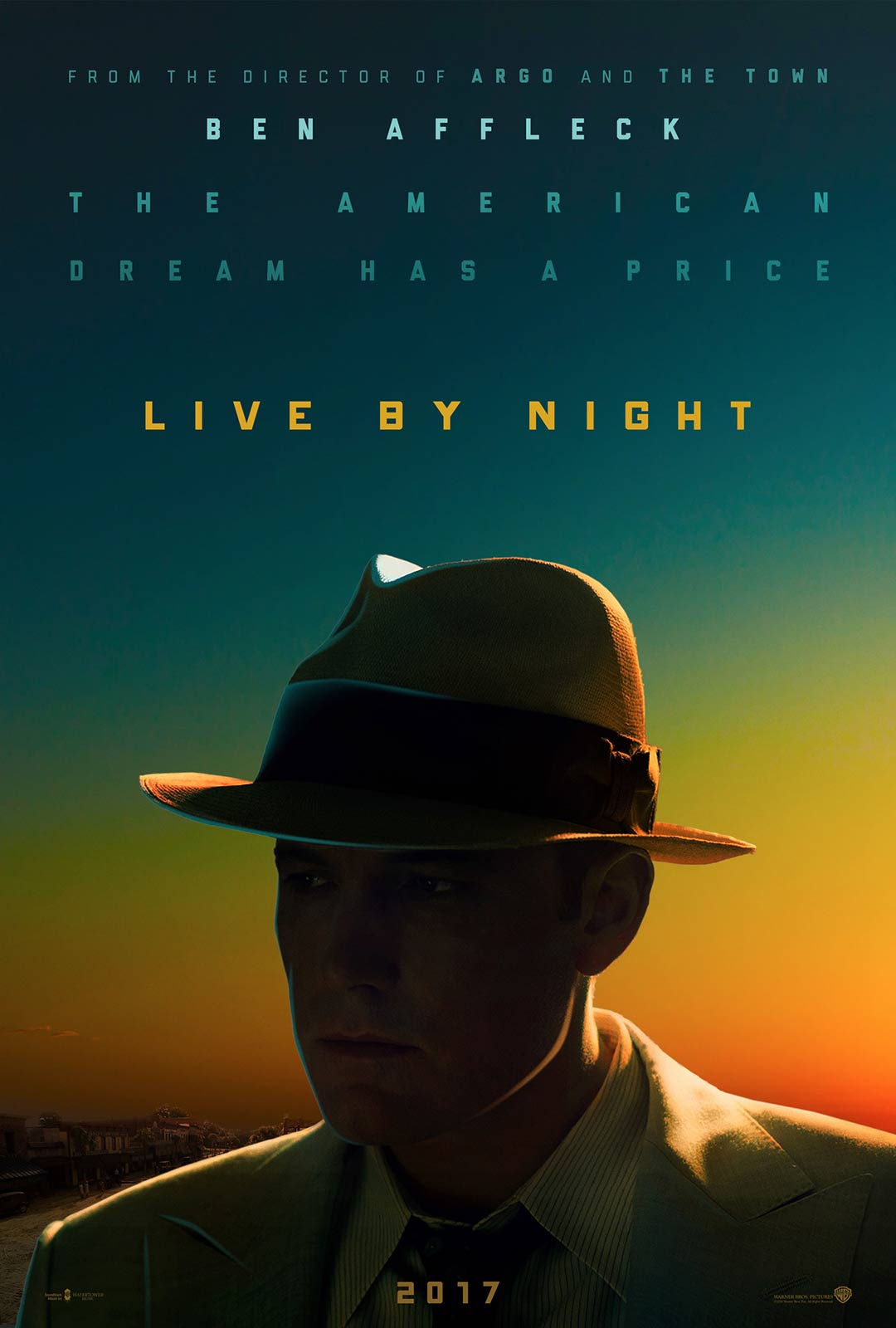
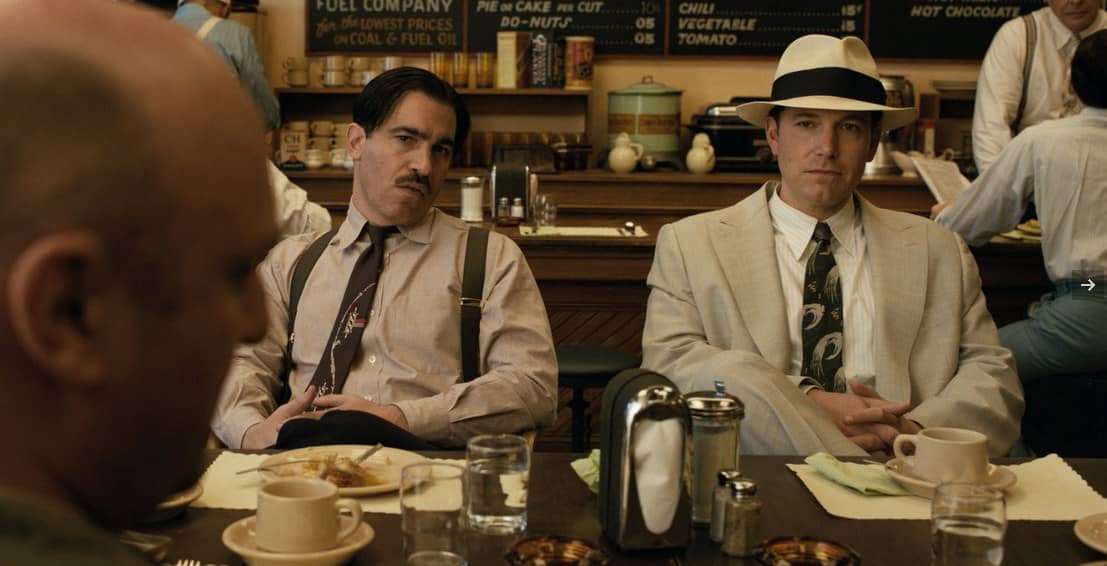
Undermined by a leaden script, Live by Night is writer/director/actor Ben Affleck’s third movie as a multi-hyphenate, but after the successes of Argo (2012) and The Town (2010), his latest project is a plodding affair that looks good thanks to Robert Richardson’s usual exemplary cinematography, but otherwise remains remote and uninvolving. The tale of a small-time Boston crook, Joe Coughlin (Affleck), who finds himself at odds with Irish gangster Albert White (Glenister) through his relationship with White’s girlfriend, Emma Gould (Miller), this adaptation of the novel by Dennis Lehane starts off well but soon gets bogged down by messy plotting and too many characters who randomly come and go.
Coughlin’s romance with Emma ends badly, leading him to offer his “services” to White’s rival, Maso Pescatore (Girone). Pescatore sends Coughlin down to Florida, to Ybor City, with instructions to take control of his rum-running operation and ensure that White’s activities in the area are curtailed. Once there, Coughlin, aided by trusted friend Dion (Messina), soon streamlines Pescatore’s operation and squeezes out all the competition. In the process he establishes a business relationship with a Cuban family, and begins an affair with the sister, Graciela (Saldana). Things run smoothly until Coughlin’s working with the Cubans as well as a group of local Negroes, attracts the ire of the Ku Klux Klan. Coughlin tries to come to an amicable arrangement with them, but the Klan’s leader, RD Pruitt (Maher) refuses to play ball, leading Coughlin to make an arrangement with Pruitt’s brother-in-law, Chief Figgis (Cooper) that has unforeseen consequences.
The Chief’s daughter, Loretta (Fanning), begins making evangelical protests against a casino that Coughlin is building in anticipation of Prohibition being repealed. Her protests lead to the project stalling, which makes Pescatore angry enough to forget all the money Coughlin has made for him, and travel down to Florida to oversee matters for himself, a development that leaves Coughlin vulnerable, and his future in doubt.
For all the convincing period detail and the impressive production design, Live by Night is let down by Affleck’s inability to craft a cohesive screenplay from Lehane’s novel. While Coughlin’s story is told against a backdrop of violence and betrayal, the movie remains a staid, pedestrian affair that moves at a steady pace despite Affleck’s best efforts to inject some energy and verve into proceedings. Part of the problem is the number of characters that appear for a short time then disappear or pop up again for another short period. Despite the cast’s best efforts, they’re let down by Affleck’s script, which uses each character to advance the narrative, but without investing in them to any great degree. This leaves actors of the calibre of Gleeson, Saldana and Glenister stranded for the most part, with only Miller and Fanning making much of an impression. It doesn’t help that Affleck’s portrayal of Coughlin also lacks range or depth, leaving the viewer hoping that things will improve over time, and that a way in to the material with eventually arise, something that, unfortunately, never happens.
Rating: 6/10 – curiously turgid and flat, Live by Night has clear aspirations to be a crime drama with operatic overtones, but instead, remains resolutely commonplace; with too many strands that make for a stop-start narrative, and characters that aren’t allowed to make much of an impact, the movie keeps its audience at a distance, and never looks as if it will close the gap at any point throughout.
Cast: Oscar Isaac, Jessica Chastain, David Oyelowo, Albert Brooks, Elyes Gabel, Christopher Abbott, Matthew Maher, Alessandro Nivola, Peter Gerety, Catalina Sandino Moreno
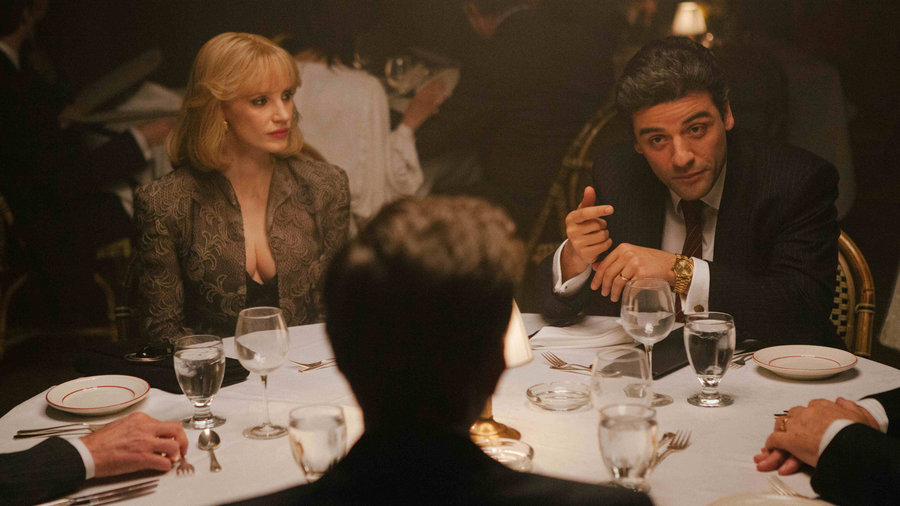
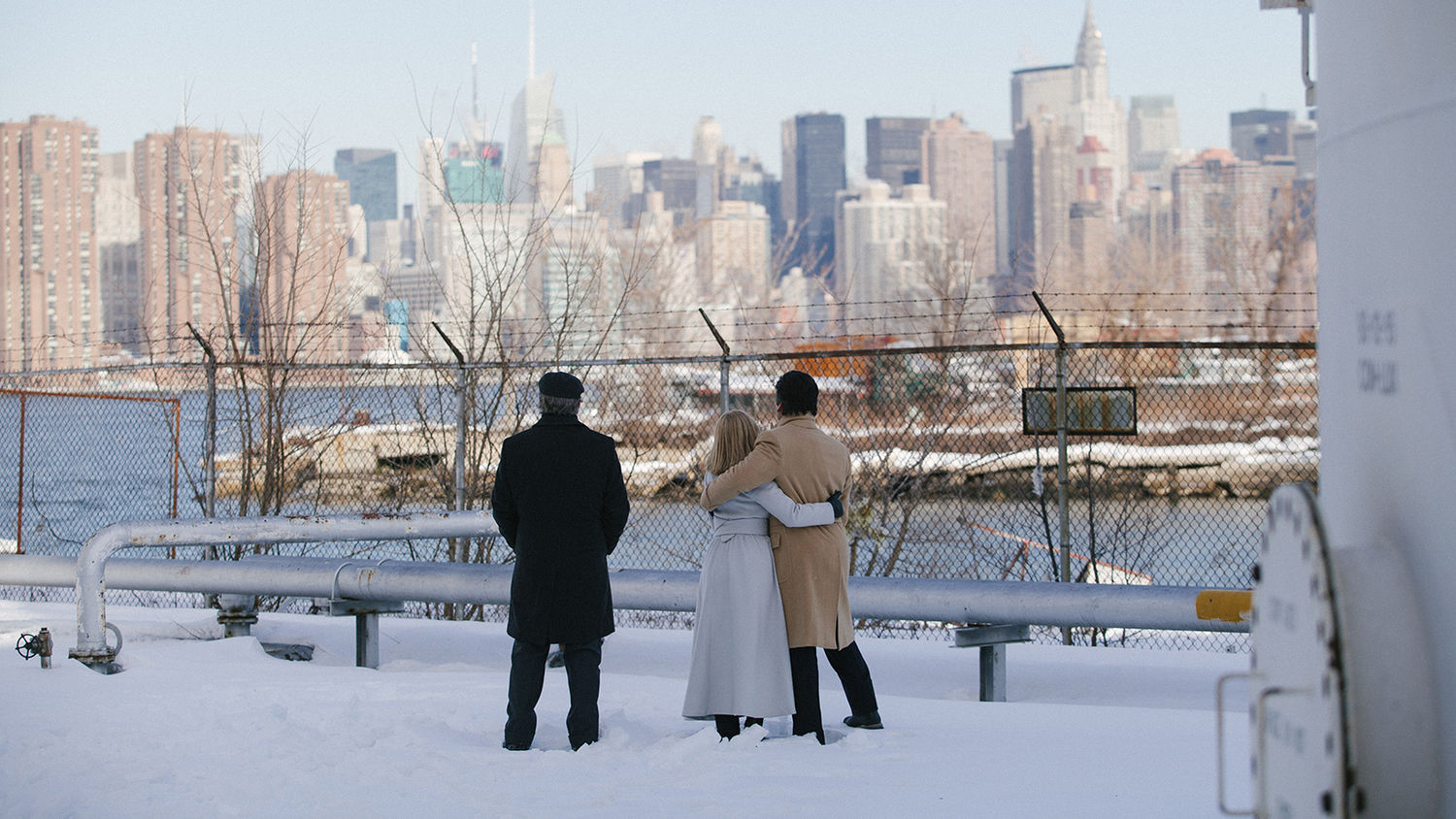
New York, 1981. In the midst of one of the most violent years in the city’s history, local businessman Abel Morales (Isaac) is looking to expand his fuel distribution company with the acquisition of a bay-front storage facility, and to do it all legally and above board. He’s supported by his wife, Anna (Chastain), but the deal he’s making for the facility is dependent on his being able to make the final payment. With his trucks being hijacked on a regular basis, and with his drivers afraid to make deliveries, Abel struggles to make sense of who’s behind it all.
Matters aren’t made any better by his having to contend with an investigation into his company by District Attorney Lawrence (Oyelowo). Lawrence is convinced that Abel’s business must be crooked in some way, despite his protestations. And as if that wasn’t bad enough, one of his drivers, Julian (Gabel), is involved in a shootout with robbers during an attempted hijacking. Julian goes on the run, and Abel has to track him down and convince him to give himself up. But Julian refuses and remains at large.
Meanwhile, the due date for the final payment is fast approaching and Abel has to negotiate loans from as many people and places as he can, but he’s still short. When he learns that one of his trucks is in the process of being hijacked he pursues the robbers, eventually catching one of them. To his surprise he finds that the hijackings aren’t all that they seemed, though it does lead to a discovery about one of his competitors that he uses to his financial advantage. But with time running out he’s forced to approach Mafia-affiliated Peter Forente (Nivola); Forente agrees to loan Abel the money he needs but the terms are not very favourable. But when Abel tells Anna about the deal he’s made, she reveals something she’s done which has an impact on everything.
It’s been said on many previous occasions by many other people that the title A Most Violent Year is misleading. The movie contains little actual violence, despite including a bridge shootout and Abel chasing down one of the robbers, and there’s none of the tense showdowns we’ve come to associate with gangster movies. Instead, writer/director Chandor has chosen to focus on how difficult it is to operate in a criminal environment and remain honest. To look at Abel, and to see how close he’s getting to securing his company’s future, you do expect temptation to be placed in his way, and you expect him to struggle with each temptation, but what Chandor does instead is replace temptations with a series of setbacks. Abel’s a good man, solid and trustworthy through and through, and it’s how he maintains his innate honesty when faced with these setbacks – when he could be excused for taking a short cut or looking the other way for a moment – that defines him.
As played by Isaac, Abel is a strong, determined individual who always seems a little out of his depth, despite his commitment. It’s his wife, Anna, played with spirited guile by Chastain, who is really the driving force and overseer of the business’s fortunes, and so we have a Lady Macbeth for the Eighties, as she cajoles and prompts and on occasion, bullies her husband into doing what’s needed. It’s a subtly constructed conceit – behind every successful man is an even more ambitious woman – but in the hands of Chandor and Chastain, the movie is all the more intelligent and engrossing when Anna is forced to take centre stage.
The period setting is entirely apt, with the cold, wintry conditions of the time reflecting purposefully on the narrative, as Abel’s fuel distribution business, mostly gas, is seen as a saviour not only for him, but for the city and its battle with the elements (Isaac is seen throughout in a big mustard-coloured coat that looks as warming as it does heavy). The movie wants Abel to succeed and so do we, and as he navigates the treacherous waters of “low” finance, each time he doesn’t quite achieve what he sets out to get, it has the effect of impressing on the viewer that he too will be fighting the elements if he fails completely. Bradford Young’s cinematography is a highlight, the wet, shiny, chilly streets of New York given a light sheen of glamour that makes for some impressive shots throughout the movie.
By focusing on the trials and tribulations of someone seeking to firmly establish themselves in their chosen area of commerce, and by keeping the stakes firmly in the foreground, Chandor achieves a directness of style and narrative that keeps the viewer intrigued as to the outcome, and committed to following Abel’s story to its conclusion. It may not be a movie that features a swift pace and dazzlingly executed photography, but its measured approach to the material allows the viewer to become embroiled in the machinations and leverages that Abel becomes involved in. And if there aren’t any standout action beats or revenge style melodramatics then it’s entirely to the benefit of the movie, and stands as a testament to the quality of Chandor’s writing and directing.
Rating: 8/10 – a modest yet effective crime drama, A Most Violent Year is yet another example of just how good writer/director J.C. Chandor is, and why he’s one of the best movie makers working today; perceptive, extremely well acted, and lacking only in its inclusion of the DA subplot (which doesn’t add anything), this is the kind of movie that shouldput audiences in mind of the kind of thrillers that were being made in the early Seventies: assured, classy, and with a lot to say.
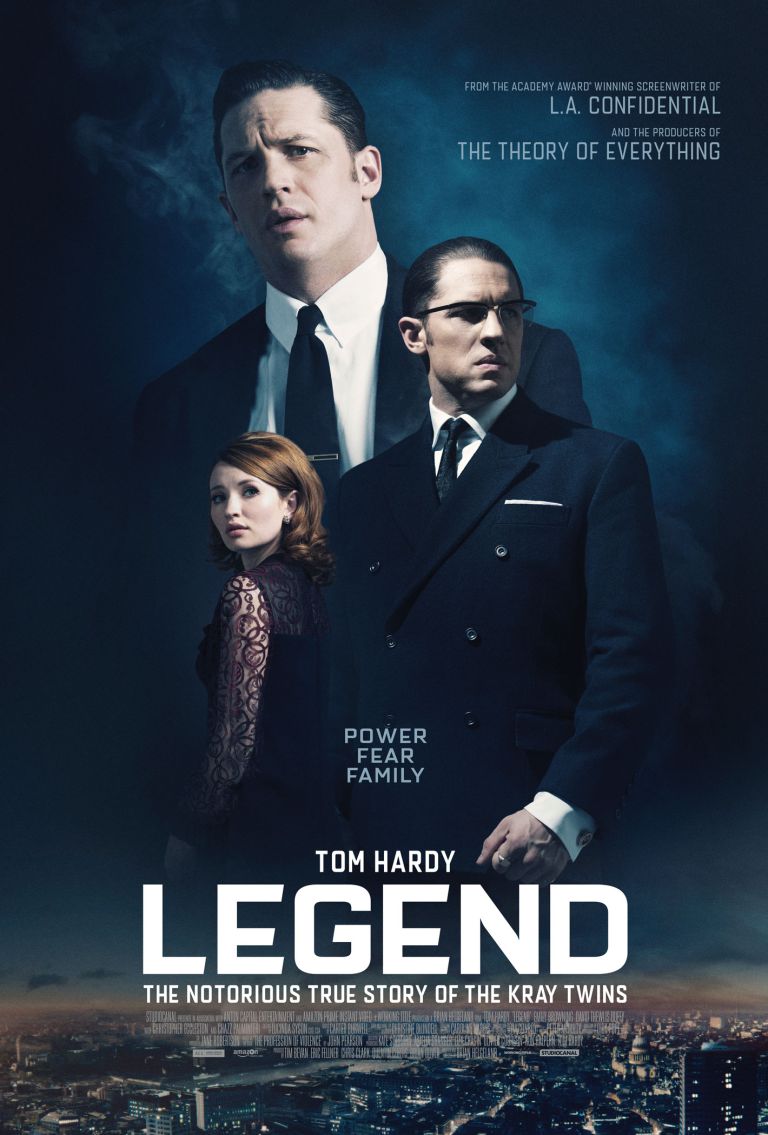
Cast: Tom Hardy, Emily Browning, David Thewlis, Christopher Eccleston, Paul Anderson, Taron Egerton, Colin Morgan, Tara Fitzgerald, Sam Spruell, John Sessions, Chazz Palminteri, Paul Bettany, Kevin McNally, Shane Attwooll, Jane Wood
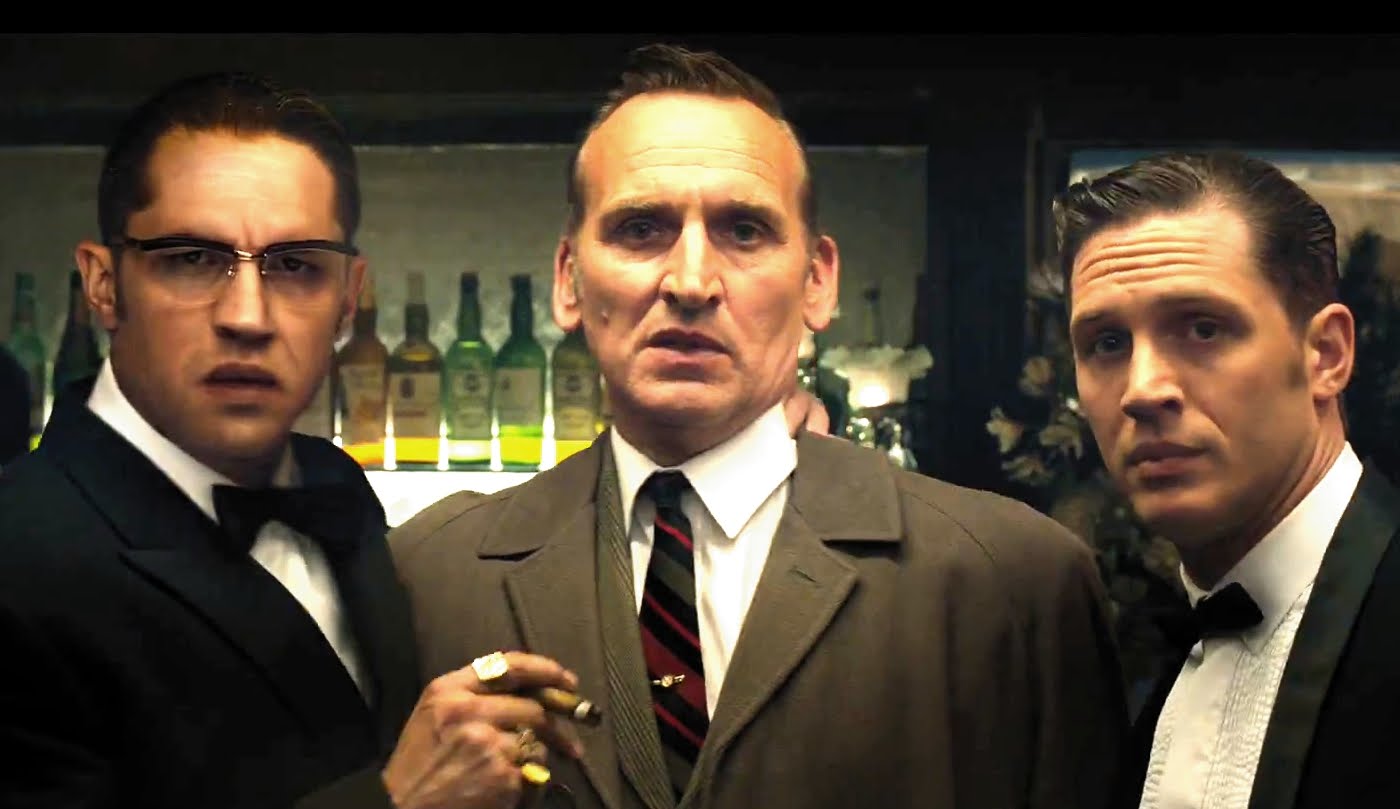
London, the 1960’s. The East End is home to two brothers, the confident, ambitious Reggie Kray (Hardy), and his psychotic twin Ronnie (Hardy). Together they run a criminal network based around providing protection to local businesses, while Reggie owns a club that attracts celebrities and politicians who like to mingle with London’s criminal element. The pair are well-liked in their local neighbourhood, and are both feared and respected. Reggie is continually followed by Detective Superintendent “Nipper” Read (Eccleston) who has been given the task of bringing the twins to justice. But they’re always one step ahead of him.
One morning, Reggie’s regular driver, Frankie Shea (Morgan) hasn’t shown up. Reggie goes to his house; the door is opened by Frankie’s sister, Frances (Browning). He’s immediately attracted to her and he asks her out. She agrees to go out with him, despite her mother’s misgivings, and despite Reggie’s reputation. Meanwhile, one of the Krays’ gang has been caught “working” on the south side of the river, an area run by the Richardson family. This infraction leads to a meeting between the Krays and the Richardsons on neutral ground, but the Richardsons send some of their men instead to get rid of Reggie and Ronnie once and for all. But the twins prove too much for the men, and are all viciously beaten up.
With no other serious rivals, the Krays’ criminal empire spreads further afield. With the aid and advice of their accountant, Leslie Payne (Thewlis) – whom Ronnie dislikes and is suspicious of – they take over a casino in an attempt to earn some legitimate money (while still maintaining their regular criminal activities). An old warrant sees Reggie spend six months in prison, during which time he and Frances grow closer, though she seeks reassurances that he’ll be more honest when he gets out. But it doesn’t happen, and even with her hopes dashed, Reggie and Frances get married. Ronnie is welcoming at first, but their marriage leads him to think that Reggie is trying to move on without him. At the same time, Read’s investigation is sidelined when he allows himself to be photographed with the Krays in their casino.
Frances finds herself isolated, and begins to rely more and more on medication to ease her growing sense of anguish. Reggie is oblivious, and has more urgent matters to attend to when Ronnie kills one of the Richardsons’ men, George Cornell (Attwooll) in a pub in front of witnesses. In order to protect his brother, Reggie must intimidate the witnesses, which he does, but when Ronnie hatches another plan to eliminate a perceived enemy, and hires Jack “The Hat” McVitie (Spruell) to do the job, it leads to the end of their criminal careers and the empire they’ve built up.
Adapted from the book The Profession of Violence: The Rise and Fall of the Kray Twins by John Pearson (who was once an assistant to Ian Fleming), Legend is a curious movie in that it takes the two most notorious criminals known in Britain in the last sixty years, and tells their story in such a way that, on the whole, they don’t seem that bad. Sure they use intimidation and violence as a way of getting what they want from people, but we don’t see any of this, so the viewer has to take it for granted that they were as nasty as their “legend” would have it. Instead, writer/director Helgeland shows us the Kray twins as entrepreneurs, buying into legitimate businesses and making inroads into so-called polite society, including the patronage of Lord Boothby (Sessions), a predatory homosexual whose relationship with Ronnie leads to the Krays being acquitted at trial for fear of a government scandal. What’s given scant attention is their youth and how they got to where they were in the mid-Sixties, and how they actually attained the powerful position they enjoyed.
Then there’s the relationship between Reggie and Frances, which at first follows an almost predictable girl-meets-bad-boy scenario before settling down into something much darker and terrible. It’s hard to pick out just why Frances stays with Reggie for so long, because Helgeland doesn’t provide very many clues to help explain it all, and it’s equally unclear why Reggie wants Frances. It’s all very superficial, and though it’s based on real events etc., it doesn’t quite gel on screen, leaving the viewer with the feeling that whatever the truth about their marriage – and the movie makes some strong claims – there’s more to it than meets the eye (or is included in Helgeland’s script).
The same is true of the movie as a whole, with the sense that Helgeland’s adaptation isn’t concerned with providing any depth or subtext, leaving the poor viewer (again) suspecting that they just have to go along with everything and accept it all for what it is. It makes for a frustrating viewing experience as the characters – and there are a lot of them – all appear to lack an inner life (with the possible exception of Ronnie, whose inner life seems entirely weird and deranged). The movie also lacks a sense of time, its events and occurrences sometimes feeling like they’re happening in the absence of any recognisable timescale, or have been cherry-picked from Pearson’s book at random (one example: Frances meets Reggie when she’s sixteen but doesn’t marry him until she’s twenty-two). And that’s without mentioning that as a retelling of the Krays’ activities and lives, it’s not very faithful or accurate.
The period of the Krays’ infamy is, however, extremely well-realised, with the East End of London looking as foreboding and shadowy as it did back in the Sixties, and with the period detail proving impressive. In terms of the time and the place, Tom Conroy’s incredibly detailed production design is enhanced by Dick Pope’s sharply focused cinematography, and further augmented by Carter Burwell’s appropriately Sixties-style score. The costumes are also a plus, with the fashions of the time recreated in fine style by Caroline Harris, an underrated costume designer who has provided equally fine work on movies as varied as An Ideal Husband (1999), A Knight’s Tale (2001), and And When Did You Last See Your Father? (2007).
As to the performances, it’s either a one-man or a two-man show, depending on how you look at it. Hardy is magnificent in roles that it would be difficult now to imagine any other actor attempting. As the charming, urbane-sounding Reggie, Hardy does more with a glance than some actors can manage with a long speech and an unwavering close up. He’s magnetic in most of his scenes, grabbing the attention as firmly as if he had the viewer in a headlock, and making it difficult to look away from him. And as Ronnie it’s like watching a human shark, his dark eyes staring out from behind the character’s glasses with vicious intent, just waiting for the chance to explode, and speaking with the delusional belief that his ideas are as sane as he thinks they sound (at one point he comes out with a plan to protect the homeless children of Nigeria). In both cases, Hardy is superb, even if he’s let down by the material, but he’s such a good actor that he overcomes Helgeland’s negligence and commands the audience’s attention throughout.
In support, Browning is captivating and sincere as Frances, and finds layers in the role that aren’t so evident from the script, while Thewlis gives one of his best recent performances as Payne, the accountant who earns Ronnie’s enmity. Anderson is quietly effective as Reggie’s right-hand man Alby, Fitzgerald is a scornful Mrs Shea (she wears black to her daughter’s wedding), Sessions is suitably slimy as Lord Boothby, and Palminteri, as the Mafia representative who wants the Krays to run London as part of a criminal franchise overseen by Meyer Lansky, exudes a rough Italian charm that hides a more dangerous persona. Alas, Eccleston is given little to do beyond looking exasperated, and Spruell’s McVitie is required to “grow a pair” just when the script needs him to; up ’til then he’s the very definition of compliant.
Ultimately, Helgeland the writer undermines Helgeland the director, focusing on Reggie to the detriment of Ronnie, and trying to make this about Reggie’s loyalty to his brother, rather than the exploits that made them infamous (which are almost incidental here). Some scenes lack the intensity they deserve, as if Helgeland didn’t have the nerve to show some things as they actually occurred (McVitie’s murder was much more vicious than what is shown in the movie), and though the emphasis is quite rightly on the Krays, more time with some of the other characters would have added some richness to the material and kept it from feeling (on occasion) somewhat uninspired. Perhaps there’s a longer cut waiting to be released on DVD/Blu ray, and it fills in a lot of the gaps, but at this length, Helgeland’s scattershot approach to the Krays’ lives is too much of a hindrance to make it anything more than just okay.
Rating: 6/10 – missing the vital spark that would have elevated it into the realm of the truly great gangster movies, Legend instead squanders its chance and remains a mostly pedestrian account of the lives of two men who meant to rule London’s criminal underworld with four iron fists; not as violent as you might expect, but with two standout performances from Hardy to help compensate, this is one “real life” movie that feels like it could have, and should have, been a whole lot better.




 thedullwoodexperiment