• 10 Reasons to Remember…
  • A Brief Word About…
  • About
  • For One Week Only
  • Happy Birthday
  • Monthly Roundup
  • Old-Time Crime
  • Other Posts
  • Poster of the Week
  • Question of the Week
  • Reviews
  • Trailers

thedullwoodexperiment

~ Viewing movies in a different light

thedullwoodexperiment

Tag Archives: Greg McLean

Jungle (2017)

01 Wednesday Nov 2017

Posted by dullwood68 in Movies

≈ 1 Comment

Tags

Alex Russell, Amazon Rain Forest, Bolivia, Daniel Radcliffe, Drama, Greg McLean, Joel Jackson, Literary adaptation, Review, Survival, Thomas Kretschmann, Thriller, True story, Yossi Ghinsberg

D: Greg McLean / 116m

Cast: Daniel Radcliffe, Thomas Kretschmann, Alex Russell, Joel Jackson, Yasmin Kassim, Luis Jose Lopez, Lily Sullivan, Jacek Koman, Angie Milliken, John Bluthal

After serving three years in the Israeli military, and forgoing his father’s wish that he study to become a lawyer, Yossi Ghinsberg (Radcliffe) travelled to South America where he spent time travelling around the region until he wound up in Bolivia in 1981. There he made two new friends, Swiss school teacher Marcus Stamm (Jackson), and Marcus’s friend, Kevin Gale (Russell), an American and an avid adventurer-cum-photographer. Yossi also met an Austrian named Karl Ruchprecter (Kretschmann). Karl persuaded Yossi and his two new friends to go on an expedition into the jungle to find a lost Indian tribe that Karl was certain could be found. They set off on foot, and were soon miles from any kind of human habitation. But the dynamic of the group began to sour, especially when Marcus’s feet became badly blistered and he became unable to keep up the pace. With the expedition only partly completed, Karl announced that he was going back on foot, but that the others could use a raft to traverse the river that would take them to their destination. Marcus went with Karl, and Yossi and Kevin put together a raft and set off. But when the current proved too strong, and an accident caused the two to be separated, it left Yossi alone in the jungle, and with no tools to help him survive or find his way to safety…

As Jungle is based on the book of the same name by Ghinsberg himself, there’s no surprise in how the movie ends, but what is surprising is how compelling it all is once Ghinsberg is separated from Kevin, and the perils of being lost in the jungle become all too apparent. However, before all that, the viewer has to wade through some fairly tortuous scenes in the first hour, where the four main characters are introduced but without providing them with any appreciable depth, or Yossi aside, any clear motivations as to why they’re all there in the first place. Karl remains a mystery right until the end, when we learn something very important about him, while Kevin and Marcus come across as the unfortunate tag-alongs who share part of Yossi’s trials and tribulations, but whose own dilemmas don’t rate as much interest in Justin Monjo’s straightforward screenplay.
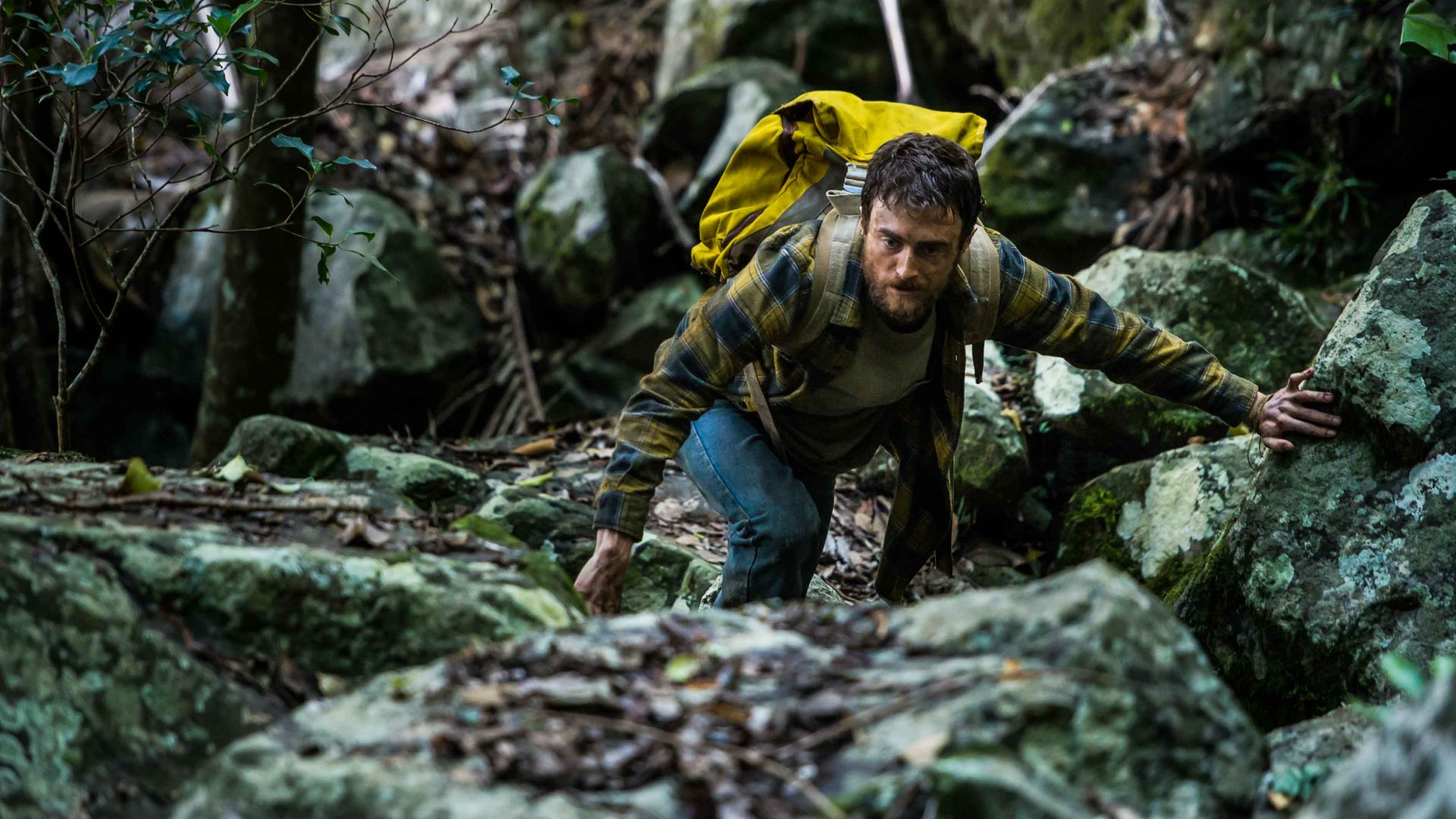
Once tensions arise within the group, it’s Yossi’s unintended lack of sympathy for Marcus’s plight that provokes the turning point where the quartet split up, but once that happens, the movie seems to breathe a huge sigh of relief, as if now it can concentrate on the story it really wants to tell. And aided by yet another impressive performance from Daniel Radcliffe, the movie quickly comes into its own and puts both Yossi and the viewer through the wringer as days pass and Yossi’s situation worsens with every step. He has to combat starvation, fatigue, disorientation, hallucinations, jungle predators, and the likelihood that he will wander round and round in circles without ever coming close to being found. It’s a horrifying situation to be in, and the script (perhaps unfairly) revels in giving Yossi moments of hope only to have them dashed a moment later. But these occasions also help to sharpen the narrative and accentuate the idea that the jungle has no time for sympathy if you’re unprepared for what it can do.

As the beleaguered Yossi, Radcliffe provides further evidence that he’s a more than capable actor, and though the role of Ghinsberg could be considered as just another in the long line of physical endurance roles that actors take on from time to time, thanks to Radcliffe’s commitment and understanding of the effects these rigours can have, Yossi’s deteriorating physical appearance and fast-eroding mental stability is made all the more credible and shocking when at last he reveals the extent of his (admittedly CGI enhanced) malnourishment. Ghinsberg somehow managed to survive for nineteen days before he was found, and though McLean fumbles the moment of discovery through some poor editing choices, there’s still an emotional kick to be found that is undeniable.
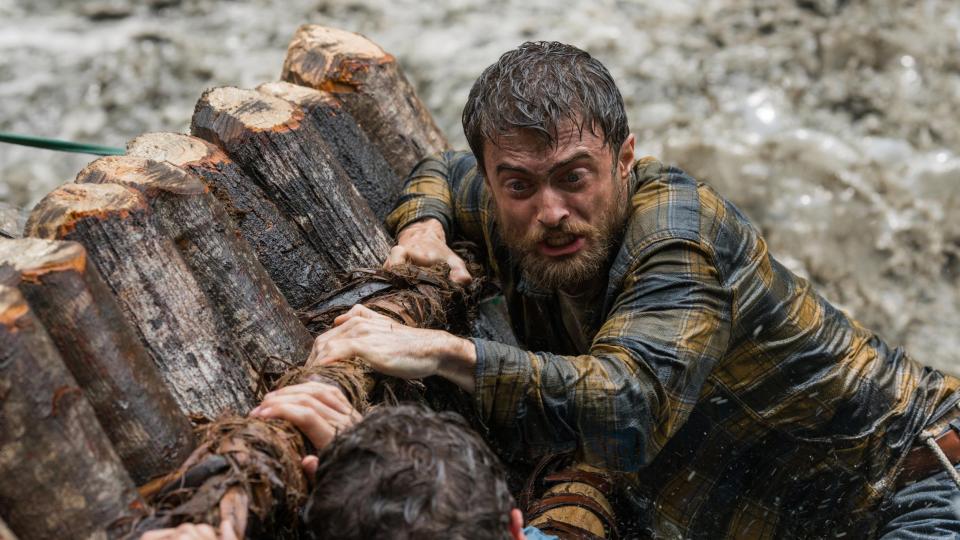
In telling such a dramatic true story, McLean and Monjo have crafted an old-fashioned survival story that focuses (eventually) on its central character’s will to cheat death and find their way back to civilisation, no matter how remote. McLean knows how to maintain dramatic tension – even if he hasn’t applied that ability to some of his more recent movies; The Darkness (2016) anyone? – and he uses close ups and an always unsettling, always encroaching soundscape to highlight both the pressure and the impending sense of doom that Yossi is experiencing. It’s a shame then that all this tension and pressure doesn’t come into play until around the halfway mark, and that McLean hasn’t been able to make Munjo’s script as compelling from the first page as it is to the last. Still, it’s a movie that goes someway to redeeming McLean’s “street cred” as a director, and there are plenty of moments where his skill as a director can be recognised in the claustrophobic nature of the jungle itself, and the ease with which he integrates Yossi’s hallucinations into the narrative so that they look and feel like an organic part of the whole.

True stories ultimately stand or fall based on the risks a movie maker is willing to take with the material, and though McLean has been stuck in something of a creative rut in recent years, here those risks relate to the various hallucinations/dream sequences that Yossi has, some of which provide some much needed humour into the mix. By taking Yossi, and the viewer, away from the threatening environment of the jungle, McLean gives both a chance to grab a breather and prepare themselves for the next part of Yossi’s heroic journey. The jungle itself is a fearsome opponent, and helped by cinematographer Stefan Duscio, McLean disorients and distracts both Yossi and the viewer so that each new setback to his finding safety increases the sense of fearfulness and increasing despair that the real Yossi must have felt all those years ago. That his predicament has proven so effective in terms of his will to survive, is as much a testament to the man himself, as it is – for the most part – to the movie itself.

Rating: 7/10 – an unfortunate first hour aside, Jungle is a harsh, unblinking look at a stranger in a strange land and the unwise decisions that cause him to be lost and alone in an inhospitable and deadly setting; Radcliffe is the main draw here, and then it’s McLean, and though McLean could have been tougher with some of the narrative decisions that were made, all in all this is a tough, unsentimental true story that impresses more than it disappoints.

Share this:

  • Click to share on X (Opens in new window) X
  • Click to share on Facebook (Opens in new window) Facebook
  • More
  • Click to print (Opens in new window) Print
  • Click to email a link to a friend (Opens in new window) Email
Like Loading...

The Belko Experiment (2016)

25 Tuesday Apr 2017

Posted by dullwood68 in Movies

≈ 1 Comment

Tags

Adria Arjona, Belko Industries, Bogota, Drama, Greg McLean, Horror, John C. McGinley, John Gallagher Jr, Murder, Review, Thriller, Tony Goldwyn, Tracers

D: Greg McLean / 89m

Cast: John Gallagher Jr, Tony Goldwyn, Adria Arjona, John C. McGinley, Melonie Diaz, Owain Yeaman, Sean Gunn, Brent Sexton, Josh Brener, David Dastmalchian, David Del Rio, Rusty Schwimmer, Gail Bean, James Earl, Abraham Benrubi, Gregg Henry, Michael Rooker

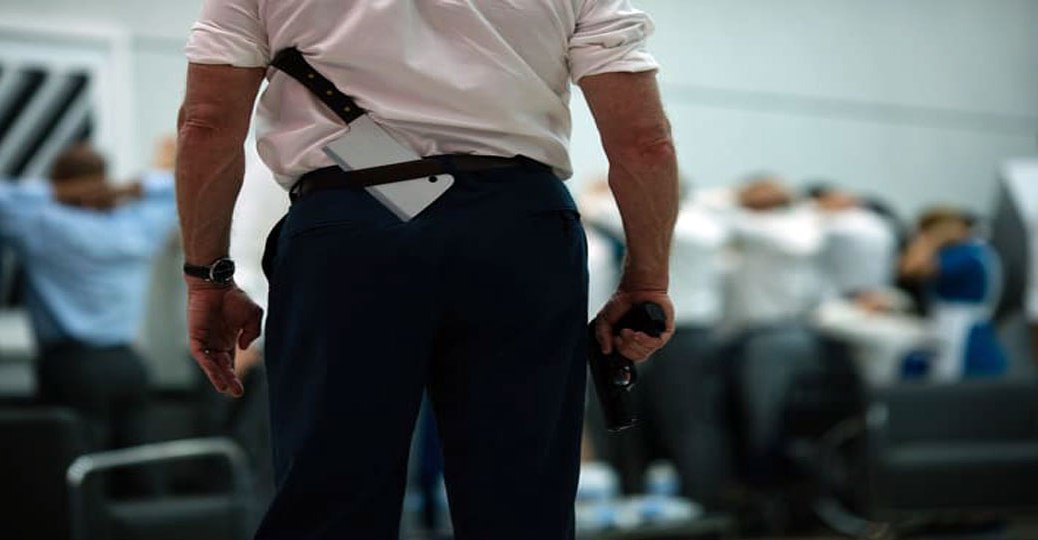
On the outskirts of Bogotá, Colombia, Belko Industries has an office building where its mostly American, relocated staff, help other American companies set up in South America. The office building has been open for a year, and the eighty American staff that work there have what are called “trackers” implanted in the back of their heads in case of kidnappings. If any member of staff is kidnapped, these “trackers” will make them easy to find and rescue. One day, Mike Milch (Gallagher Jr), a Belko employee, arrives to find the local Colombians who work there are being sent home, and this is being overseen by a group of security guards Milch has never seen before. Inside the building, Evan (Earl), the building security guard, admits he doesn’t know what’s going on, and neither does anyone else, not even the COO, Barry Norris (Goldwyn).

While the staff talk over this strange development, new starter Dany Wilkins (Diaz) begins her first day, while Norris’s assistant, Leandra Jerez (Arjona), bemoans the unwanted attention of colleague Wendell Dukes (McGinley). Unwanted because he won’t take no for an answer, and also because she’s in a relationship with Milch. As the rest of the morning gets under way, a tannoy announcement heard throughout the building informs everyone that unless two people are killed in the next thirty minutes then more people will die as a consequence. No one takes the announcement too seriously, even when shutters come down that seal everyone inside the building (though the roof remains accessible). When no one is killed, four people die when the “trackers” in their heads explode.

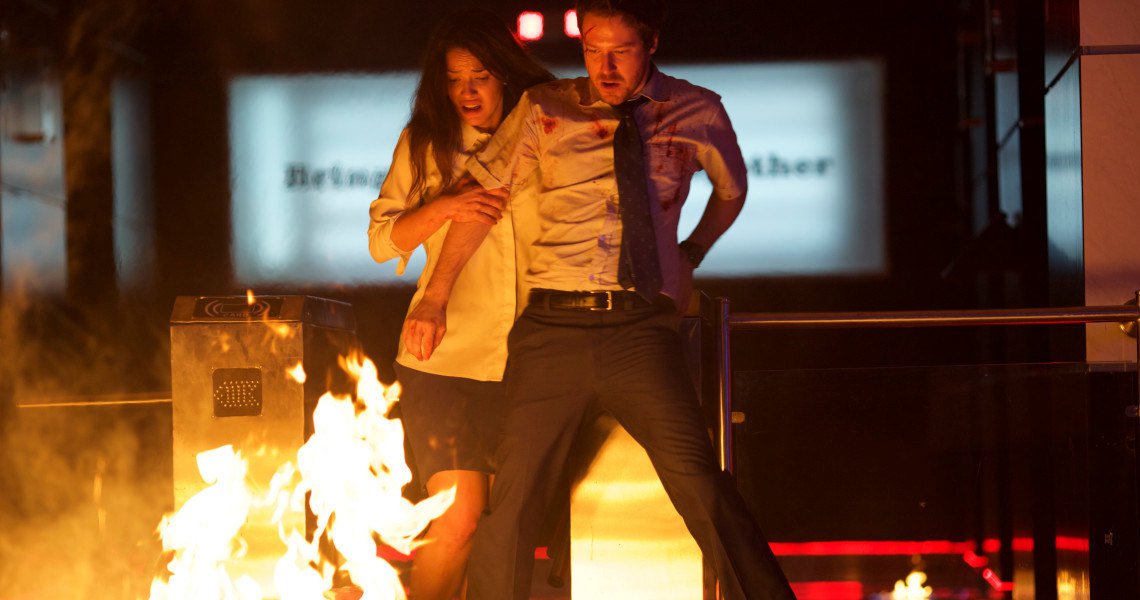
Realising the danger from the “trackers”, Milch tries to remove his but the voice from the tannoy announcement starts a countdown to its being detonated. Milch stops, and the next time the voice gives instructions they’re even more chilling than the last: unless thirty people are killed in the next two hours, sixty people will be killed just as randomly as the previous four. From this, two distinct factions form amongst the employees: those who, like Milch, think no one should be killed (and an alternative solution found to their predicament), and those who, like Norris, think that thirty deaths is better than sixty. What follows pits employee against employee, and engenders a complete breakdown of morality and compassion.

Working from an old script by James Gunn, The Belko Experiment – to paraphrase the title of a Werner Herzog movie – could almost be called James Gunn, James Gunn, What Have Ye Done. While the basic premise is sound, here the “execution” is less than satisfactory, as the finished product lacks clarity, subtlety, and is only consistent in its lack of clarity and subtlety. If Gunn was attempting to write a straightforward schlock horror movie combining equally straightforward ideas regarding the erosion of social and moral restraints in a highly charged atmosphere, then in one sense that’s what he’s done. But if that is the case, and though much of that approach to the material is still in place, director Greg McLean’s interpretation still leaves a lot to be desired.

Following on from the dreadful outing that was The Darkness (2016), McLean makes only partial amends with this, focusing his efforts too quickly on getting to the kind of indiscriminate carnage that is the movie’s raison d’etre. Forget social commentary, forget a knowing critique of office politics, this is all about seeing how fast a group of (apparently) average people can descend into homicidal rage and leave rational thinking behind. On that basis alone the movie is more successful (the answer is quicker than you can say “exploding head”). But once all the niceties are done and dusted, and we get to know who’s going to be a hawk and who’s going to be a dove, then it’s on with the murky motivations and desperate attempts at credibility.

It’s always problematical when you have characters such as Milch proclaiming that no one should be killed, and then, by the movie’s end he’s on a par with psycho colleagues Norris and Dukes in terms of how many people he’s despatched. It’s not addressed because it doesn’t suit the needs of the movie, and yet if it had, it would have gone some way towards giving the movie some much needed depth. As it is, Milch takes to murdering his colleagues with as much gusto as he can manage, and any blurring of the lines that was intended on the part of the script is forsaken in favour of more killing. But with the body count rising, the movie feels rushed and even more implausible, and the problem of killing off the remaining seventy-six employees becomes more important than any moral considerations.

It could be argued that to expect any depth in a movie that’s only concerned with coming up with as many inventive deaths as it can in ninety minutes (death by tape dispenser anyone?), is something of a fool’s errand, but The Belko Experiment also lacks style and wastes its talented cast. Saddled with woefully underwritten characters who practically scream “stock!” every time they speak, the likes of Gallagher Jr, Goldwyn and Arjona get to mouth platitudes and banalities at every turn. Spare a thought for McGinley though; his character is so relentlessly one dimensional it’s amazing he doesn’t disappear when he turns to the side. There’s no one to care about – surprise, surprise – and as the movie progresses, the average viewer might feel justified in wanting to get inside the building and culling the employees themselves.

With its stock characters, muddled narrative, and laboured editing courtesy of Julia Wong, The Belko Experiment is unlikely to impress anyone but the most ardent gore fan. They’ll enjoy the numerous exploding heads, and one particularly impressive skull injury, but there’s really little else to recommend a movie that poses lots of questions at the beginning of the experiment, and then forgoes providing any answers. With a coda that attempts an explanation for what’s happened that’s as baffling as it is shallow, as well as shamelessly trying to set up a further movie, the movie should best be viewed as an old-style exploitation flick given a modern polish. However, that would be doing a disservice to old-style exploitation flicks.

Rating: 4/10 – insipid and unconvincing, The Belko Experiment is yet another nail in the coffin of Greg McLean’s directing career; it also acts as further proof that when successful writer/directors have old scripts to hand, they shouldn’t always be made into movies.

Share this:

  • Click to share on X (Opens in new window) X
  • Click to share on Facebook (Opens in new window) Facebook
  • More
  • Click to print (Opens in new window) Print
  • Click to email a link to a friend (Opens in new window) Email
Like Loading...

Oh! the Horror! – The Darkness (2016) and Lights Out (2016)

04 Tuesday Oct 2016

Posted by dullwood68 in Movies

≈ 2 Comments

Tags

Anasazi, David F. Sandberg, Diana, Drama, Grand Canyon, Greg McLean, Horror, Kevin Bacon, Maria Bello, Radha Mitchell, Review, Teresa Palmer, Thriller

the-darkness

The Darkness (2016) / D: Greg McLean / 92m

Cast: Kevin Bacon, Radha Mitchell, David Mazouz, Lucy Fry, Matt Walsh, Jennifer Morrison, Parker Mack, Paul Reiser, Ming-Na Wen

In The Darkness, a family returns home from a trip to the Grand Canyon, unaware that their autistic son has released an ancient supernatural force that had been imprisoned in a secret Anasazi location. Once the feuding Taylors – dad Peter (Bacon), mum Bronny (Mitchell), teenage daughter Stephanie (Fry), and son Michael (Mazouz) – get settled back into the routine of sniping at each other and generally ignoring the fact that their combined behaviours are slowly tearing the family apart, the inevitable strange things start to happen. First, the taps in the kitchen turn on by themselves…

… and with that, any aspirations to be or do anything different for the remainder of the movie goes so far out of the window you’re not even sure if it’s landed anywhere. The Darkness is a shockingly bad amalgam of horror tropes and the supposed best bits from other horror movies. But in the main it’s Poltergeist (1982) that gets ripped off the most here, from the American Indian connection to the spiritual healer recommended to Peter by his boss (Reiser), and all the way to the portal that opens up in Michael’s bedroom.

the-darkness-scene

With the script having been cobbled together by director Greg McLean, Shayne Armstrong and Shane Krause, the movie ambles along on creative life support before it reaches the end and gives up the ghost entirely. Along the way it attempts to add depth by giving the Taylors their own personal demons to face as well as the ones formerly held at bay by Anasazi rituals. Peter once had an affair (though of course it didn’t mean anything), Bronny has a history of alcohol abuse, and Stephanie is bulimic (though one trip to the doctor’s seems to sort that one out). Personal demons, supernatural demons – what has this poor misguided family done to deserve all this? (What’s that? The supernatural demons are metaphors? Oh, right…)

There’s no shortage of cringeworthy moments in The Darkness (though the demons going by the collective name of Jenny is probably the best/worst), and the cast appear to have given up quite early on – Bacon in particular looks like he’s wondering if he could drop a few scenes and thereby lessen his involvement – but it’s McLean’s lack of focus on both the performances and the material that hurts the movie the most. With the script on only nudging terms with credibility – and yes, this is a horror movie, and yes, credibility is often the first thing to go when one is being made – it still needed a firmer hand at the controls, but McLean, now a long, long way from the glory days of Wolf Creek (2005) just lets the movie drift to a unsatisfactory finish that is at least in keeping with how unsatisfactory the rest of the movie has been.

Rating: 3/10 – meh horror that lacks commitment from all concerned, and offers nothing new… at all; daft, confusing, muddled, and dramatically inert for long stretches, The Darkness will make you feel uneasy – but, sadly, not for the right reasons.


lights-out

Lights Out (2016) / D: David F. Sandberg / 81m

Cast: Teresa Palmer, Gabriel Bateman, Alexander DiPersia, Maria Bello, Billy Burke, Alicia Vela-Bailey, Andi Osho

Martin (Bateman) is a young boy whose stepfather is killed in a very violent fashion. His mother, Sophie (Bello), already on medication for depression, is acting strangely. She talks to someone called Diana (Vela-Bailey) who doesn’t appear to be real. But one night Martin sees the hand of an unnatural figure in his mother’s room. Scared, he finds it difficult to sleep properly, and instead, falls asleep at school. When this happens for a third time, and the school can’t get hold of Sophie, they contact his older sister, Rebecca (Palmer). Rebecca left home years before, shortly after her father (Sophie’s first husband) decided to leave for good himself. Rebecca looks after Martin, but thanks to the intervention of Child Services, isn’t allowed to do so full-time.

With the aid of her would-be boyfriend Bret (DiPersia), Rebecca finds herself quickly coming to terms with the fact that Diana is real – desite having died many years before – and needing to do something about the wraith’s deadly attacks on Martin and herself.  Armed with the knowledge that Diana’s attacks only take place in the dark thanks to the extreme heliophobia she suffered from when she was alive, Rebecca and Martin take steps to protect themselves, and to get Sophie to admit that her childhood friendship with Diana is allowing the spectre to exist. But Diana has other plans…

lights-out-scene

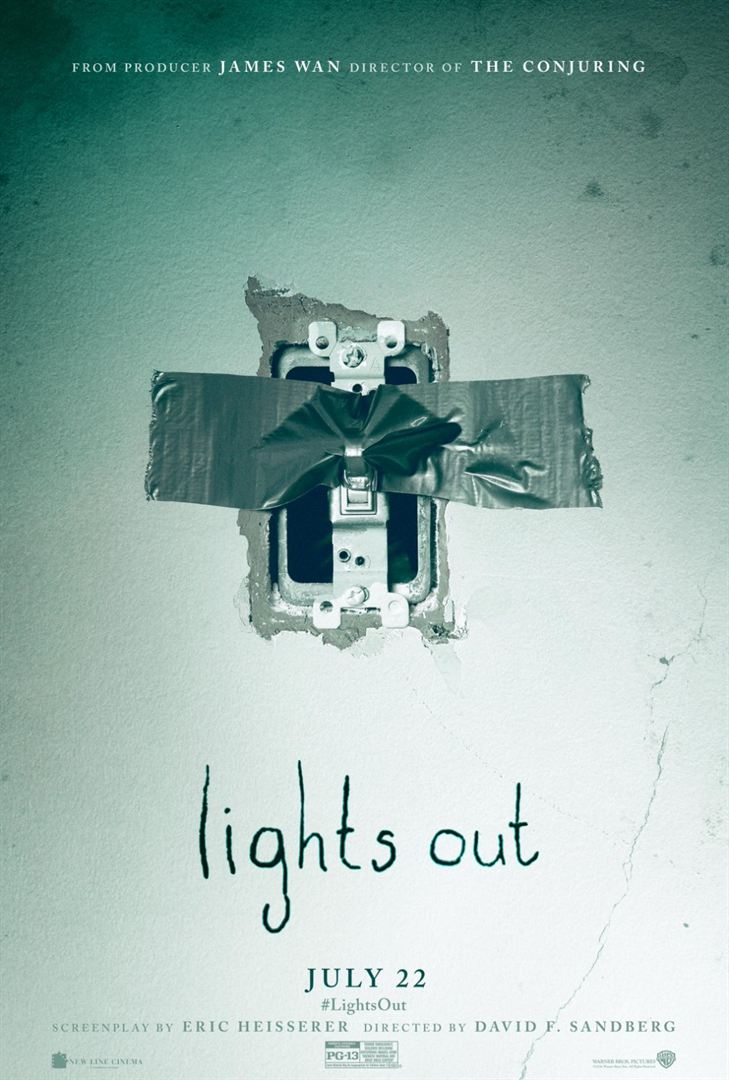
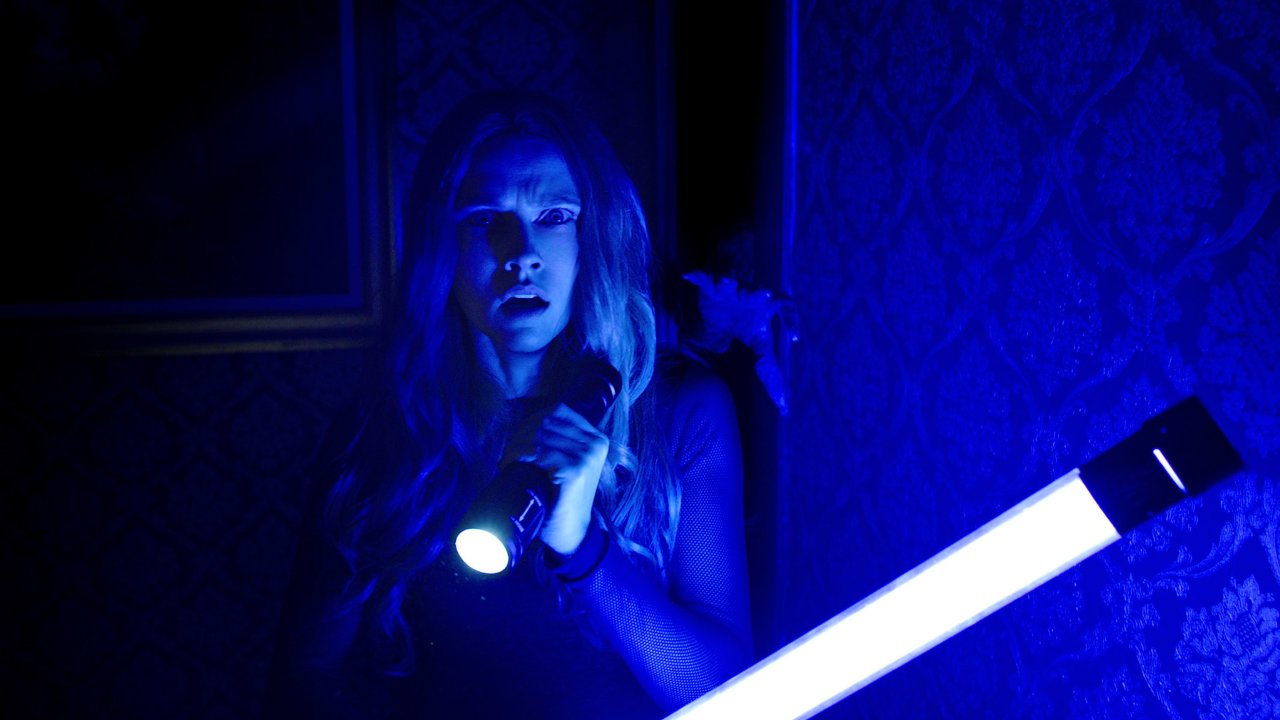
Expanded on from his 2013 short movie of the same name, David F. Sandberg’s Lights Out is an efficient, no-nonsense horror thriller that takes its basic premise – lights on: no ghost, lights off: there it is – and finds various clever ways of keeping the central conceit from getting too stale too quickly, even at eighty-one minutes. While Diana’s back story only partially explains her reason for haunting Sophie and her family, and Diana herself isn’t quite as frightening as she’s meant to be, nevertheless, Sandberg succeeds in making her as credible a character (in the circumstances) as can be, and manages to achieve the same success with Sophie, Martin and Rebecca. Sandberg is helped by strong performances all round – Palmer is particularly good as Rebecca – and  a script by Eric Heisserer that does its best in avoiding the pitfalls of dishing up too many horror movie clichés (though it does serve up two unsuspecting police officers as victims of Diana’s wrath, just to keep the momentum going).

The movie is strong on atmosphere, with certain scenes having a clammy, claustrophobic feel to them that isn’t entirely to do with the characters being in confined spaces, and Marc Spicer’s cinematography makes the darkness that surrounds the characters for most of the movie as threatening as possible thanks to some very good lighting choices and some expert framing. The look of the movie is of primary importance in how scary it is, and Sandberg provides viewers with a mix of generic visuals and heightened situations that is surprisingly uncomfortable to watch at times. It’s not entirely successful – Bret is a seriously one-note character, the basement of Sophie’s house conveniently reveals a secret that otherwise would never have been known, a confrontation with Sophie about Diana (and her death) features some very stilted and ill-chosen dialogue – but on the whole it’s a far better movie than expected.

Rating: 7/10 – a horror movie that dares to be different, and succeeds for the most part, Lights Out has a creepy central premise that’s handled well and makes for some effective jump scares (for a change); inevitably, a sequel has already been greenlit, but this is an effective, self-contained movie that stands on its own and proves that intelligence and horror can go hand in hand, and not just wave to each other in passing.

Share this:

  • Click to share on X (Opens in new window) X
  • Click to share on Facebook (Opens in new window) Facebook
  • More
  • Click to print (Opens in new window) Print
  • Click to email a link to a friend (Opens in new window) Email
Like Loading...

Blog Stats

  • 486,732 hits

Recent Posts

  • 10 Reasons to Remember Bibi Andersson (1935-2019)
  • Fantasia (1940)
  • Dances With Wolves (1990) – The Special Edition
  • Kiss of the Spider Woman (1985)
  • The Three Musketeers (1973)

Top Posts & Pages

  • Lost for Life (2013) - Another Look
    Lost for Life (2013) - Another Look
  • Lost for Life (2013)
    Lost for Life (2013)
  • About
    About
  • Exposed (2016)
    Exposed (2016)
  • Cardboard Boxer (2016)
    Cardboard Boxer (2016)
  • A Brief Word About La La Land (2016)
    A Brief Word About La La Land (2016)
  • The Monuments Men (2014)
    The Monuments Men (2014)
  • BFI London Film Festival 2015
    BFI London Film Festival 2015
  • A Brief Word About Netflix Original Comedies
    A Brief Word About Netflix Original Comedies
  • Removal (2010)
    Removal (2010)
Follow thedullwoodexperiment on WordPress.com

Blogs I Follow

  • Rubbish Talk
  • Film 4 Fan
  • Fast Film Reviews
  • The Film Blog
  • All Things Movies UK
  • Interpreting the Stars
  • Let's Go To The Movies
  • Movie Reviews 101
  • TMI News
  • Dan the Man's Movie Reviews
  • Film History
  • Jordan and Eddie (The Movie Guys)

Archives

  • April 2019 (13)
  • March 2019 (28)
  • February 2019 (28)
  • January 2019 (32)
  • December 2018 (28)
  • November 2018 (30)
  • October 2018 (29)
  • September 2018 (29)
  • August 2018 (29)
  • July 2018 (30)
  • June 2018 (28)
  • May 2018 (24)
  • April 2018 (21)
  • March 2018 (31)
  • February 2018 (25)
  • January 2018 (30)
  • December 2017 (30)
  • November 2017 (27)
  • October 2017 (27)
  • September 2017 (26)
  • August 2017 (32)
  • July 2017 (32)
  • June 2017 (30)
  • May 2017 (29)
  • April 2017 (29)
  • March 2017 (30)
  • February 2017 (27)
  • January 2017 (32)
  • December 2016 (30)
  • November 2016 (28)
  • October 2016 (30)
  • September 2016 (27)
  • August 2016 (30)
  • July 2016 (30)
  • June 2016 (31)
  • May 2016 (34)
  • April 2016 (30)
  • March 2016 (30)
  • February 2016 (28)
  • January 2016 (35)
  • December 2015 (34)
  • November 2015 (31)
  • October 2015 (31)
  • September 2015 (34)
  • August 2015 (31)
  • July 2015 (33)
  • June 2015 (12)
  • May 2015 (31)
  • April 2015 (32)
  • March 2015 (30)
  • February 2015 (37)
  • January 2015 (39)
  • December 2014 (34)
  • November 2014 (34)
  • October 2014 (36)
  • September 2014 (25)
  • August 2014 (29)
  • July 2014 (29)
  • June 2014 (28)
  • May 2014 (23)
  • April 2014 (21)
  • March 2014 (42)
  • February 2014 (38)
  • January 2014 (29)
  • December 2013 (28)
  • November 2013 (34)
  • October 2013 (4)

Create a free website or blog at WordPress.com.

Rubbish Talk

Film 4 Fan

A Movie Blog

Fast Film Reviews

The Film Blog

The official blog of everything in film

All Things Movies UK

Movie Reviews and Original Articles

Interpreting the Stars

Dave Examines Movies

Let's Go To The Movies

Film and Theatre Lover!

Movie Reviews 101

Daily Movie Reviews

TMI News

Latest weather, crime and breaking news

Dan the Man's Movie Reviews

All my aimless thoughts, ideas, and ramblings, all packed into one site!

Film History

Telling the story of film

Jordan and Eddie (The Movie Guys)

Movie Reviews & Ramblings from an Australian Based Film Fan

Privacy & Cookies: This site uses cookies. By continuing to use this website, you agree to their use.
To find out more, including how to control cookies, see here: Cookie Policy
  • Subscribe Subscribed
    • thedullwoodexperiment
    • Join 481 other subscribers
    • Already have a WordPress.com account? Log in now.
    • thedullwoodexperiment
    • Subscribe Subscribed
    • Sign up
    • Log in
    • Report this content
    • View site in Reader
    • Manage subscriptions
    • Collapse this bar
 

Loading Comments...
 

    %d