• 10 Reasons to Remember…
  • A Brief Word About…
  • About
  • For One Week Only
  • Happy Birthday
  • Monthly Roundup
  • Old-Time Crime
  • Other Posts
  • Poster of the Week
  • Question of the Week
  • Reviews
  • Trailers

thedullwoodexperiment

~ Viewing movies in a different light

thedullwoodexperiment

Tag Archives: Greta Gerwig

Lady Bird (2017)

31 Sunday Dec 2017

Posted by dullwood68 in Movies

≈ 2 Comments

Tags

Comedy, Drama, Greta Gerwig, High School, Laurie Metcalf, Lucas Hedges, Mother/daughter relationship, Review, Sacramento, Saoirse Ronan, Timothée Chalamet, Tracy Letts

D: Greta Gerwig / 93m

Cast: Saoirse Ronan, Laurie Metcalf, Tracy Letts, Lucas Hedges, Timothée Chalamet, Beanie Feldstein, Lois Smith, Stephen McKinley Henderson, Odeya Rush, Jordan Rodrigues, Marielle Scott

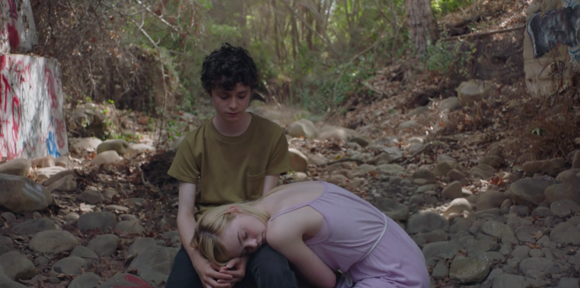
Warm and inviting, actress Greta Gerwig’s debut as a writer/director is a coming of age tale that involves Christine McPherson (Ronan), a seventeen year old high schooler who lives in Sacramento with her parents, Marion (Metcalf) and Larry (Letts), her adopted older brother Miguel (Rodrigues) and his girlfriend, Shelly (Scott), and who prefers to be known by her given name (as in given to her by herself) of Lady Bird. Lady Bird is a senior student who is looking to swap what she views as the culturally barren West Coast for the more eclectic and intellectual East Coast when she graduates and heads off to college. Currently attending a Catholic high school, she feels and acts like an outsider, and aside from having one friend, Julie (Feldstein), doesn’t do much to combat this. When she and Julie decide to audition for the upcoming school musical though, she meets Danny (Hedges), and they begin dating.

But while she navigates the uncharted waters of her first romantic relationship, Lady Bird has other problems to deal with. Her father is in danger of losing his job, and increasing financial difficulties have left the family living – literally – on the wrong side of the tracks. Also, Lady Bird’s relationship with her mother is an adversarial one, with the two of them constantly arguing and battling against each other. Marion is painfully honest about her belief in Lady Bird’s ability to get into a good college, and rarely ever compliments her. Her father is more supportive, and between them, he and Lady Bird endeavour to get her on to a college Wait List. While she waits for a response, Lady Bird’s relationship with Danny stalls due to an unexpected development, and she drops Julie in favour of Jenna (Rush), a more popular girl in school. At the same time she meets Kyle (Chalamet), who’s a musician in a band. But Lady Bird soon finds that dropping one small set of friends for another doesn’t solve any of her self-perceived problems, and her fractious home life doesn’t improve either. In fact, events lead to it being quite the opposite…

The idea of actors or actresses deciding to step behind the camera is far from unusual, but writing and directing as a first choice, and on the first occasion, is a little rarer. It’s a tribute to Greta Gerwig’s efforts that Lady Bird is not only an accomplished first feature, but a movie that will bear up under repeated viewings. Coming of age movies are ten a penny these days, and the highs and lows of being a teenager have been the subject of so many movies that you could be forgiven for wondering if there is anything new to be said. And while this does remain the case, what Gerwig does that makes her movie so effective, and so good, is write convincing dialogue. There’s not one line that feels false or contrived or sounds clichéd, and with this so ably taken care of, the cast have no problem in sounding like real people, and the various interactions their characters have all have an air of authenticity, as if Gerwig has eavesdropped on actual conversations and recorded them verbatim. This also gives the movie a rhythm and a flow that allows the viewer to be drawn along in the characters’ wake, something that adds immeasurably to the enjoyment the movie provides. And with that enjoyment comes a hopefulness that everything will eventually work out well for everyone concerned.

Lady Bird herself is a terrific character, challenging and challenged at almost every turn, and behaving in contradictory fashion throughout, just as a regular teenager would be who was trying to work out their place in the world. She wants to be her own individual, independent and assured despite having only limited experience of relationships and the wider world – everything happening with her father comes as a surprise to her – and trying to do her best as long as she benefits most. Gerwig focuses on Lady Bird’s selfish behaviour with a precision that if it isn’t autobiographical then it means that she’s very, very observant. There are moments where sympathy for the character is deliberately withdrawn by Gerwig, but there are also moments that follow on where Lady Bird shows more self-awareness than before, and sympathy is restored accordingly. It’s all played out with great skill and directorial acumen, and Gerwig accurately captures the confusion and longing that goes with being seventeen and wanting to be loved by family, friends, and/or the opposite sex.
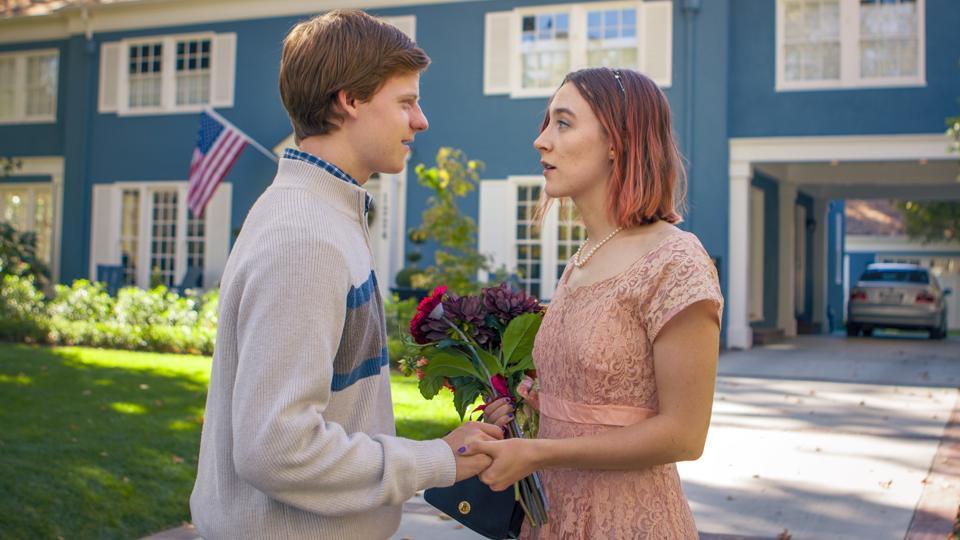
She’s aided by a tremendously assured performance from Ronan, an actress who seems to be getting better and better with every role. Ronan brings a versatility and an understanding of the character that is impressive for the consistency that she achieves in maintaining Lady Bird’s obdurate character. It’s an appealing, generous performance and has a sincerity about it that allows the viewer to overlook much of Lady Bird’s poor behaviour. As Lady Bird’s mother, Metcalf is also on tremendous form, channelling the pain and frustration Marion feels at where Life has brought her, and the additional pain that comes of finding herself unable to do anything about the emotional discord between herself and her daughter (though the reason why is perfectly encapsulated in a single line of dialogue). In support, Letts is tender and more approachable, Hedges is a flawed Prince Charming, Chalamet is the pretentious rebound boyfriend, and Feldstein shines as the best friend who’s kicked to the kerb out of social expediency.

For the most part, Lady Bird is a keenly observed drama, but Gerwig is able to infuse her tale with an abundance of humour that acts as a necessary counterpoint to the emotional trials and tribulations that her heroine faces. The humour is varied from scene to scene, but like the majority of Gerwig’s script is only included when it suits or supports the material; there are no easy laughs here. Gerwig also shows that she has a keen sense of the spaces that her characters inhabit. Lady Bird and Marion are often shot in close proximity to each other so as to highlight the closeness of their relationship, while her other relationships – the ones that aren’t so emotionally acute – are allowed greater room in which to play out. DoP Sam Levy does a terrific job in allowing Sacramento (with which Lady Bird has a love-hate relationship) to become a secondary character all its own, while Nick Huoy’s editing is perfectly in sync with the tempo of Gerwig’s screenplay and directing style. As first features go, Gerwig has made a formidable debut. If she has any other ideas for a movie, then let’s hope we get to see them real soon, because on this evidence, her career as an actress doesn’t have to be her only one.

Rating: 9/10 – modest in scope and presentation, but perfectly realised for all that, Lady Bird is a movie with a big heart, grander ambitions than expected, and the courage to attain them all; in making this movie so completely irresistible, Gerwig has put her indie colleagues on notice: there’s a new movie maker in town and worst of all, she knows exactly what she’s doing.

Share this:

  • Click to share on X (Opens in new window) X
  • Click to share on Facebook (Opens in new window) Facebook
  • More
  • Click to print (Opens in new window) Print
  • Click to email a link to a friend (Opens in new window) Email
Like Loading...

20th Century Women (2016)

06 Thursday Apr 2017

Posted by dullwood68 in Movies

≈ Leave a comment

Tags

Annette Bening, Billy Crudup, Comedy, Drama, Elle Fanning, Feminism, Greta Gerwig, Lucas Jade Zumann, Mike Mills, Mother/son relationship, Relationships, Review, The Seventies

D: Mike Mills / 119m

Cast: Annette Bening, Elle Fanning, Greta Gerwig, Lucas Jade Zumann, Billy Crudup

Mike Mills’ last movie was the appealing and very enjoyable Beginners (2010), in which Christopher Plummer gave an Oscar-winning performance. Six years on and Mills has upped his game considerably with 20th Century Women, a semi-autobiographical tale set in Santa Barbara, California in 1979. By writing a script that’s much closer to home than his previous outings, Mills has made a quirky, sensitive, and much more mature feature, and one that impresses on a variety of levels.

It begins with declarations of life, as divorced, single mother Dorothea (Bening) recounts giving birth to her son, Jamie (Zumann). Despite being a single mother, and receiving no support from her ex-husband, Dorothea views those early years when it was just her and Jamie with warm-hearted nostalgia. But finances being what they were, Dorothea was forced to take in lodgers. In 1979, with Jamie aged fifteen, he and his mother live with Abbie (Gerwig), a budding photographer, and William (Crudup), a carpenter whose work on the house is often paid for in lieu of rent. Abbie is like a big sister to Jamie, but he and William are virtually strangers to each other. Add in the presence of Julie (Fanning), Jamie’s best friend (and object of his romantic affections), and Dorothea begins to believe that her son, because he doesn’t have a father (or father figure) to guide him, and because she feels as if her connection with him is slipping away, decides he needs help “understanding women” and being a “good man”.

To this end, Dorothea recruits Abbie and Julie and persuades them to help Jamie learn more about life and relationships and women. When she tells him this, he reacts angrily and goes off with some of his friends to L.A. to see a concert. When he gets back he finds out that Julie has slept with someone and thinks she might be pregnant. Leading on from that, Dorothea advises Jamie that Abbie, who is in remission from cervical cancer, will be attending a doctor’s appointment and may receive bad news; she asks that he be at home in case she needs some support (Dorothea can’t be there). Instead, he goes with her. The news is both good and bad, but Abbie is glad of Jamie’s presence, and she starts to “teach” him about women by giving him books on feminism.

Jamie’s “education” causes a growing rift between him and his mother, and it provokes a straining of the relationships between Abbie and Dorothea, Jamie and Julie, and William and Dorothea. The friendship between Jamie and Julie is tested the most: an admission made by Julie causes him to question his feelings for her, but she manages to persuade him to take a trip along the coast with her. In San Luis Obispo, things come to a sticking point and Jamie leaves Julie at the motel where they’re staying. Julie alerts Dorothea, and she heads there along with William and Abbie. It proves to be a turning point for everyone, and the status quo is irrevocably affected.

There is so much more to 20th Century Women that any proper synopsis would run to thousands of words instead of mere hundreds. What is mentioned above is only a fraction of the material that Mills has collated for his screenplay, but almost none of it feels extraneous or superficial. Each scene acts in service to the character(s) appearing in it, and each scene helps to further the narrative and the myriad of subplots that float along waiting for the next occasion when they can be exploited. Mills has written such a carefully constructed screenplay that there are dozens of moments that echo or resonate in relation to both earlier and future moments (yes, it’s that good a script), and there are a similar amount of subtle references and non-linear connections that add to the quality and the depth of his writing.

Mills has also taken the time to make the various characters memorable and credible and unique in their own way, with special attention given to the relationships between them all. Dorothea is an odd mix of honest maternal concern and inappropriate parenting, wanting her son to be a “good man” but still wishing he could remain her little boy. The emotional tug-of-war that occurs through these warring factions leave Dorothea looking and sounding a little distracted at times, as if the notion of being a mother requires abstract thought for it to make sense (to her, at least). Bening perfectly captures the hopeful, yet curiously distant nature of Jamie’s mother with her customary skill and attention to character detail, making her by turns alarmingly obtuse and/or resolutely indifferent, and fixated by love at the same time. It’s a fine balancing act, and one that would have challenged most actresses, but Bening carries it off with seeming ease, displaying an emotional and intellectual dexterity in the role that serves as a reminder of just how fine an actress she is.

There are equally impressive turns from Fanning and Gerwig. As the seemingly carefree (and care-less) Julie, Fanning shows the character’s innate vulnerability even when she’s trying to be offhand or dismissive of her feelings, and there are times when Julie seems determined to suffer the fate she believes others expect her to. This kind of disturbing fatalism can be difficult to pull off (if it’s given too much emphasis it can come across as irreparably narcissistic), but Fanning acquits herself well, grounding the character through the discomfort and confusion she feels at being regarded solely as an object of desire. Gerwig is just as impressive as Abbie, taking the character’s history and using it to portray a young woman who speaks for the rights of others, but who seems unable to heed her own advice when it comes to the opposite sex. Like Jamie, she lacks a father figure in her life, and this informs her behaviour far more than she would like to admit, and when she’s challenged over this, she can only retaliate, and in doing so, deflect the pain she’s all too aware she’s causing herself. It’s a very subtle role indeed, but Gerwig carries it off with style and confidence.

On the male side, Crudup is the kind of sensitive, caring man who always appears attractive to women, even though they won’t ever commit to a sustained relationship with him, and the actor portrays him with an easy-going attitude that plays off well against the stresses and strained emotions of the female characters. And then there’s Zumann, a young actor showing a lot of promise, and more than capable of keeping up with his more experienced co-stars. Like a lot of child actors, Zumann has the ability to be casually audacious, and show the kind of emotional range that some adult actors never achieve. He’s intuitive, adventurous, quick off the mark, and he has the gift of making it seem that he’s much more wiser than his years. His scenes with Bening are touching, and Mills is to be congratulated for finding a young actor who can share a scene with her and not be intimidated or do anything that doesn’t match the effort she herself is putting in.

By setting the movie in 1979, Mills makes use of that period’s history to provide a backdrop of social and political upheaval that compliments the upheavals going on in the Fields’ household. He also plays deliberate havoc with the characters’ pasts and futures, illuminating them in a way that adds even more resonance to the main storylines. And while it can be an emotionally messy movie at times, Mills has become such a strong, confident movie maker that he can be forgiven the occasional misstep. He’s said in the past that, “Making a movie is so hard, you’d better make movies about something you really know about.” By making this semi-autobiographical tale so moving and funny and poignant and life-affirming, he’s certainly done that, and to an incredibly rewarding degree.

Rating: 9/10 – a movie that constantly surprises and impresses, 20th Century Women is that rare thing: a picture about women told from a male perspective and infused with a great deal of understanding and respect; with a clutch of great performances, and an equally great soundtrack to accompany it, Mills and his cast and crew have created a movie that is so good, repeat viewings will only make it look and sound better.

Share this:

  • Click to share on X (Opens in new window) X
  • Click to share on Facebook (Opens in new window) Facebook
  • More
  • Click to print (Opens in new window) Print
  • Click to email a link to a friend (Opens in new window) Email
Like Loading...

Jackie (2016)

30 Monday Jan 2017

Posted by dullwood68 in Movies

≈ 2 Comments

Tags

Billy Crudup, Biography, Drama, Funeral, Greta Gerwig, Historical drama, Interview, Jacqueline Bouvier Kennedy, Natalie Portman, Pablo Larraín, Peter Sarsgaard, President John F. Kennedy, Review, The White House, True story

14757631562jackie-movie-poster-natalie-portman

D: Pablo Larraín / 100m

Cast: Natalie Portman, Peter Sarsgaard, Billy Crudup, Greta Gerwig, John Hurt, Richard E. Grant, Caspar Phillipson, Beth Grant, John Carroll Lynch, Max Casella

A week after the assassination of President John F. Kennedy (Phillipson) in November 1963, his widow, Jacqueline Bouvier Kennedy (Portman) – otherwise known as Jackie – summoned the journalist Theodore H. White (Crudup) to her home at Hyannis Port. White had won the Pulitzer Prize for general non-fiction with his book The Making of the President, 1960, an account of the election that saw Kennedy win the Presidency. Jackie’s idea was for White to write an article that would be published in Life magazine, and which would show a correlation between her late husband’s administration and King Arthur’s court at Camelot. White agreed, and guided by Jackie’s suggestions, he wrote a thousand word essay that stressed the Camelot comparison.

This is the basis for Jackie, the latest movie to pick over the bones of Kennedy’s assassination and its wake. By using White’s “interview” with Jackie, the movie shows how Jackie dealt with the demands of suddenly becoming a former First Lady, balancing her public persona with her private feelings, arranging her husband’s funeral, and most important of all, protecting and promoting his legacy. It’s this that forms most of the narrative, as Jackie seeks to cement Kennedy’s place in history. Even riding in a hearse with brother-in-law Bobby Kennedy (Sarsgaard) (and this shortly after Kennedy’s body has been released from Parkland Hospital), Jackie is keen to make the point that nobody remembers James A. Garfield or William McKinley, both assassinated while in office, but they do remember Abraham Lincoln – and all because of his legacy as a President.

landscape-1480358441-image-04afa3ee-f8cc-4059-8c62-8208612a44bc

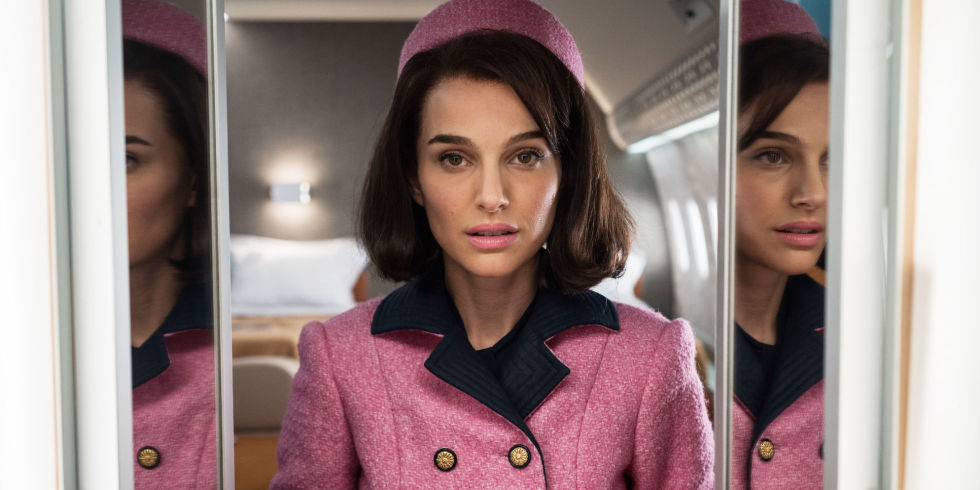
But her husband’s legacy isn’t the only thing she appears focused on. There’s also the matter of what she regards as “the truth”. She wants the American public to see the full horror of what she experienced on 22 November 1963; to this end she doesn’t change out of that famous pink Chanel suit she wore on the day when she’s given the opportunity, and even though it’s spattered with her husband’s blood. She keeps it on for the rest of the day – at Parkland Hospital, during Lyndon B. Johnson’s impromptu inauguration, at the airport in Washington (where she refuses to leave by the back of the plane so as to avoid the reporters), and finally in the White House, where she wanders the various rooms as if only now beginning to come to terms with the enormity of what happened earlier that day in Dallas, Texas.

In the days that follow, we see Jackie behave erratically but with some deep-rooted purpose that only she understands, tackling the issue of whether or not to walk behind the coffin, and what she’ll do once she leaves the White House. She confides in one of her retinue, Nancy Tuckerman (Gerwig), one of the few people who can raise her spirits and bring a smile to Jackie’s face, and a priest, Father Richard McSorley (Hurt), who offers her spiritual comfort. But she remains almost defiantly isolated, determined to continue in her own way, and against the wishes of the new administration when it matters.

maxresdefault

In focusing on Jackie in the hours and days following Kennedy’s assassination, the movie gives the viewer the opportunity to eavesdrop on the very private grief of a very public person, someone who put on a brave face for the cameras, but who also kept herself at a distance, despite wanting people to see “the truth”. It’s this dichotomy that makes Jackie the person endlessly fascinating to observe, and Jackie the movie somewhat disappointing in terms of the narrative. We see Jackie at various points, both in time and in place, throughout the movie. There are scenes in Dallas, in Washington, inside the White House, at Hyannis Port, but many of them feel like snippets of memory, connected discretely to each other by the random nature of Jackie’s thoughts and emotions. When she and White (known only as the Journalist, for some reason, in the credits) sit down to discuss the article, their conversation often goes off at a tangent, and Noah Oppenheim’s screenplay encourages this, as if it will give us a better understanding of Jackie in those four days between JFK’s death and his funeral. But it’s obvious: she’s trying to weather those four days as best she can until she can grieve properly, away from prying eyes.

With the script trying to add layers where they’re not needed, it’s left to Natalie Portman to save the movie from its all-too-clever design, and deliver a nigh-on faultless performance, burrowing under Jackie’s skin and finding the nerve centre of someone who was never entirely comfortable being in the public spotlight, but who instinctively knew the public’s perception of JFK as a great President – hence the parallel with Camelot – needed to be kindled as quickly as possible after his death, and that she was the only one who could do it. Portman portrays this single-mindedness with a quiet intensity, perfectly capturing Jackie’s “feisty” nature in private, and her more vulnerable, debutante persona in front of the cameras and/or reporters’ notebooks. There are moments in the movie when you could be forgiven for thinking that Jackie is “absent” from the room, or a conversation. But Portman’s portrayal is more subtle than that, and she gauges these “absences” with an acute awareness that a character’s stillness or silence often means more than is seen on the surface.

movie_jackie-2016

If there’s one problem with Portman’s magnificent performance, it’s that it overshadows everything else the movie attempts or gets right. Jackie, ultimately, stands or falls thanks to Portman’s efforts, because without her command of the character (and Jackie’s odd accent), the movie lacks little else to keep the audience’s attention from wandering. Making his first English language movie, Chilean director Larraín displays an aptitude for scenes of sombre regret, and along with Portman fleshes out Jackie’s character to impressive effect, but there still remains the feeling that Jackie (the person) has been assembled from random aspects of her personality that seem a good fit for the narrative rather than a true representation of what she was really like at the time. At best, this is an interpretation of Jacqueline Bouvier Kennedy; at worst it’s an impression.

On the technical side, Jackie flits between looking stunning, and looking bland depending on the requirements of the script, and the budget. The interiors of the White House, faithfully recreated in a studio outside Paris, France, are dazzling examples of what can be achieved when you have the talents of production designer Jean Rabasse, art director Halina Gebarowicz, and set decorator Véronique Melery on board. And yet, if you contrast these wonderful sets with the motorcade sequences, it’s like the difference between day and night, with the scenes in Dallas looking like they’ve been shot on a closed stretch of road and with only two cars available for filming. And despite the best efforts of cinematographer Stéphane Fontaine, the movie never overcomes these disparities. In contrast, Mica Levi’s tonal, somewhat sepulchral score is a good match for the material, and acts as an emotional undercurrent to Jackie’s grief and displacement.

Rating: 8/10 – fans of low budget independent dramas will enjoy Jackie for its slow, measured pace, refusal to explain everything that’s going on (with Jackie herself), and Portman’s exquisitely detailed performance; an attempt at an intimate portrayal of a very private person, the movie glides majestically along for most of its running time, and gives the impression of being more meanngful than it actually is, but it still has a lot to offer both the casual and the more interested viewer.

Share this:

  • Click to share on X (Opens in new window) X
  • Click to share on Facebook (Opens in new window) Facebook
  • More
  • Click to print (Opens in new window) Print
  • Click to email a link to a friend (Opens in new window) Email
Like Loading...

Wiener-Dog (2016)

05 Wednesday Oct 2016

Posted by dullwood68 in Movies

≈ Leave a comment

Tags

Black comedy, Cancer, Danny DeVito, Doody, Drama, Ellen Burstyn, Greta Gerwig, Indie movie, Julie Delpy, Review, Todd Solondz

wiener-dog

D: Todd Solondz / 88m

Cast: Julie Delpy, Keaton Nigel Cooke, Tracy Letts, Greta Gerwig, Kieran Culkin, Connor Long, Bridget Brown, Danny DeVito, Sharon Washington, Ellen Burstyn, Zosia Mamet, Michael James Shaw

A portmanteau of stories connected by the titular animal, Wiener-Dog is the kind of quirky, off-kilter indie movie that attracts audiences attuned to quirky, off-kilter indie movies. That’s to say there’s a certain audience out there for it, and it’s a movie that does its best to be quirky and off-kilter, but as with most portmanteau movies – indie-based or otherwise – some stories work and others don’t. And this won’t help it reach a wider audience. Making a quirky, off-kilter indie movie isn’t a bad idea, but in order for it to avoid being stuck in a niche market, it really needs to be thought through in better fashion than writer/director Todd Solondz has done here.

We first meet wiener-dog as he’s taken to a shelter. Why he’s taken there we never find out – it probably doesn’t matter, but if it does, Solondz isn’t looking to give the viewer any clues – but it’s not long before he’s given a home by Danny (Letts) as a surprise gift for his young son, Remi (Cooke). Remi’s mother, Dina (Delpy), isn’t too happy though about having a dog in the house, and she’s keen to make it clear that the dog is Remi’s responsibility alone. Remi has recently survived a brush with cancer, and is only too happy to have a dog to look after. But an unfortunate occurrence involving the dog and a granola bar leads to wiener-dog being taken back to the shelter.

wiener-dog-scene2

Ear-marked to be put down, wiener-dog is saved at the last minute by veterinary nurse, Dawn (Gerwig). She takes the dog home with her and christens her Doody. At a local store she runs into Brandon (Culkin), who she knew in high school. He’s going on a trip to visit his brother, Tommy (Long) and his wife, April (Brown), and he invites Dawn along. With nothing better to do, she accepts. When they get to Tommy’s house, Dawn learns that he and April both have Downs Syndrome. When it’s time to leave, Dawn makes a gift of Doody to the couple.

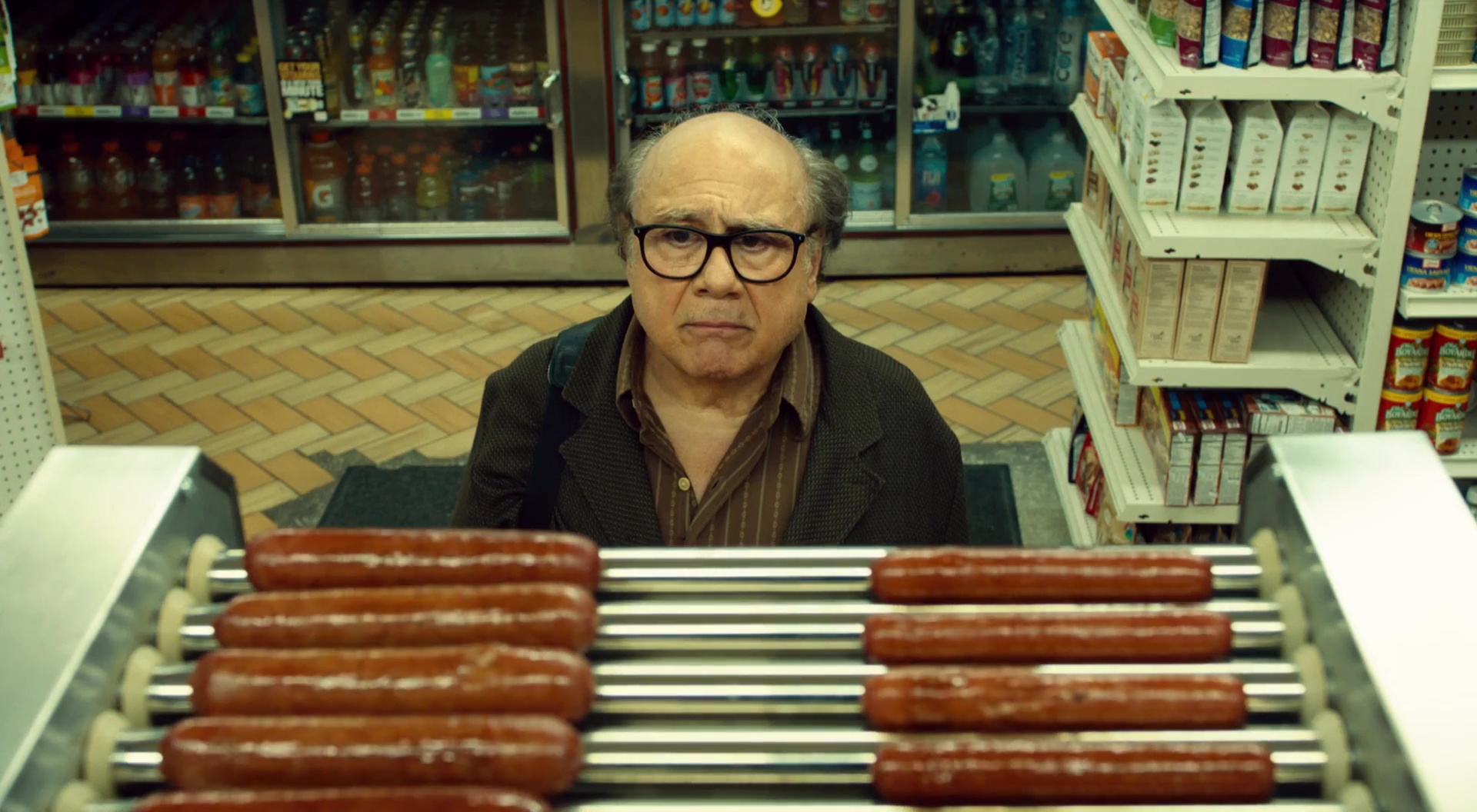
We next see Doody with screenwriting professor Dave Schmerz (DeVito). Dave is trying to get his own screenplay produced, but his agent hasn’t even read it, and Dave is getting more and more depressed about it as a result. He’s lost his enthusiasm for teaching, and in turn has lost the respect of his students. Even when he’s assigned a new agent who tells him she may have a deal with Dreamworks set up for him, Dave’s newfound happiness is undermined by news that his students have complained about him. Angry and upset by this, Dave assembles a bomb, attaches it to Doody, and sends her into the college where he works.

wiener-dog-scene3

Our final encounter with the dog is when she’s owned by Nana (Burstyn) and is called Cancer. Nana lives with her caregiver and appears miserable and grumpy. She receives a visit from her granddaughter, Zoe (Mamet), and her current boyfriend, Fantasy (Shaw), a performance artist she thinks is cheating on her. The visit is cut short before Nana can give any practical advice, and afterwards she has goes outside and has a dream where younger versions of herself endlessly repeat how better her life would have been if she’d been nicer to people, less critical of them etc.

There’s one last scene involving wiener-dog in animatronic form, but that’s basically it, a collection of four stories where the dog is largely coincidental to the tales being told, and the characters – as per Solondz’ usual penchant – are disillusioned, emotionally stunted, socially awkward lost souls who are unable to connect to others on any meaningful level. Now, there’s aways room for this kind of movie making, and in the past Solondz has been an accomplished purveyor of tales about such people. He’s pretty much built his career on the back of them, and Happiness (1998) is a superb example of what he can do when the muse takes him. But Wiener-Dog is neither as sharp as that movie, or as engaging. There’s Solondz’ trademark waspish humour, but unfortunately, it’s also not as acute as it needs to be.

The first tale is possibly the most satisfactory, with Remi’s persistent questioning of his mother leading to some of the most inappropriate parenting seen on screen for a while. Dina doesn’t do much to reassure Remi; instead she offers worst-case scenarios and semi-pious examples of times went horribly wrong for want of the right thing being done. It’s reassurance by scare tactics, and while Solondz is aiming for very black humour in these moments, the awfulness of Dina’s approach is just that: awful. Delpy is a superb actress, and she handles the dialogue well, but even she can’t find the fine line that stops emotional support from becoming emotional abuse.

wiener-dog-scene1

The story involving Dawn and Brandon – characters reunited from Welcome to the Dollhouse (1995) – runs out of ideas very quickly, and Solondz doesn’t have anything to offer in terms of the characters or their lives, other than that Dawn and Brandon both exist in the kind of emotional bubbles that are difficult for others to break through, and partly because the two of them aren’t especially aware that that’s the kind of lives they lead. Dave’s tale is flat and uninvolving, a tired story about a tired man that you don’t spend enough time with to really care about. DeVito is often a better dramatic actor than he’s given credit for, but here he just doesn’t have the material to work with. But spare a thought for Burstyn, who has even less to work with, and who is left to yield the floor to Mamet and her character’s own worries. The focus isn’t on Nana enough for the dream visitations of her younger self to have any relevance, and once they occur her tale is effectively over, leaving the viewer to wonder why the story was included in the first place.

The cast do their best, but Solondz maintains a dreary, desultory tone throughout, aiming perhaps for slice of life tales that are meant to be affecting and saying something about modern day ennui, but instead, giving the viewer brief character sketches that say little beyond the obvious, and which lack the necessary depth to make these characters sympathetic or intriguing. It’s hard to care about any of them, and in the end, Solondz reveals just how little he cares about them, or the dog, as he pulls the rug out from under the audience with a scene that’s so gratuitous and unnecessary that you feel like slapping him in the face for being so arbitrary and cruel.

Rating: 4/10 – with past glories fading away with every passing minute, Wiener-Dog is not the movie to sound hurrahs for Solondz’ return to movie making after five years away; as it squanders every opportunity to be interesting or appealing, the movie gets bogged down by its attempts to say something about the lives of the disconnected, and in doing so – and with an irony that only highlights Solondz’ clumsy approach to his own material – keeps its characters at a safe distance from the audience as well.

Share this:

  • Click to share on X (Opens in new window) X
  • Click to share on Facebook (Opens in new window) Facebook
  • More
  • Click to print (Opens in new window) Print
  • Click to email a link to a friend (Opens in new window) Email
Like Loading...

Mistress America (2015)

21 Monday Mar 2016

Posted by dullwood68 in Movies

≈ Leave a comment

Tags

Comedy, Drama, Greta Gerwig, Indie, Investors, Lit Group, Lola Kirke, Matthew Shear, Mom's, Noah Baumbach, Review, Step-sisters

Mistress America

D: Noah Baumbach / 84m

Cast: Greta Gerwig, Lola Kirke, Matthew Shear, Heather Lind, Michael Chernus, Jasmine Cephas Jones, Kathryn Erbe, Cindy Cheung, Dean Wareham

Though not as prolific as Woody Allen, writer/director Noah Baumbach has made a name for himself by operating in the same milieu as Allen (though without the need for including May-December relationships), and for making witty, intelligent comedies that examine the human condition in a warm, deeply rewarding manner. Since his debut with Kicking and Screaming (1995), Baumbach has consistently entertained audiences with his mix of angst-ridden characters facing uncertain futures and sparkling dialogues. He’s a clever, erudite writer and a carefree, spontaneous director, and with movies such as The Squid and the Whale (2005) and Margot at the Wedding (2007) propping up his resumé, he’s a movie maker whose indie sensibilities often make for an enjoyable viewing experience. (By now you’re probably thinking, “there’s a but coming”, and you’d be right, though it’s not coming right now.)

In his latest, Baumbach, along with star and co-writer Gerwig, has fashioned a tale of self-imposed isolation and longing that finds itself butting heads with an examination of self-deception and longing. Tracy (Kirke) is a college student with a superiority complex and a consuming need to be accepted by the Lit Group, the one group she feels are of the same intellectual merit as herself (so it’d be okay to be a member). She submits a short story but is rejected. Faced with spending the approaching Thanksgiving by herself – unsurprisingly, Tracy has no real friends – a reminder from her mother (Erbe) that her soon-to-be step-sister Brooke lives in New York as well leads her to getting in touch and the two of them meeting up.

MA - scene3

In comparison to Tracy’s mostly solitary, mostly unfulfilling existence, Brooke is gregarious, constantly upbeat, well-liked, and in a relationship with a man who is helping her to open a restaurant. Tracy is dazzled by the range of Brooke’s social, personal and business involvements, and the evening (and next morning) they spend together inspires her to write another story for the Lit Group. Before she submits it she shows it to a fellow student who’s also keen to join the Lit Group, Tony (Shear). Tracy once had a crush on Tony but since they met he’s started dating Nicolette (Jones), a development Tracy doesn’t quite understand or agree with.

Tracy begins spending more and more time with Brooke and their sisterly relationship grows stronger and deeper. But Brooke’s plans to open her restaurant are thrown into disarray when her boyfriend dumps her and pulls out of the deal. Advised by a psychic that she needs to reconnect with someone from her past, someone who owes her money, Brooke is convinced she should visit an old friend, Mamie-Claire (Lind). Mamie-Claire not only stole Brooke’s boyfriend, Dylan (Chernus) and married him, she also stole Brooke’s T-shirt design (“hard flowers”) and made a mint out of it. Tracy enlists the aid of Tony (who has a car) to get there, and Nicolette goes too, her jealousy unable to let her stay behind if Tony is going to be alone with two other women.

mistressamerica

At Mamie-Claire’s, Brooke’s old friend proves to be less than agreeable to the idea of investing in the restaurant. Brooke persists, wanting to speak to Dylan who isn’t there. When he finally arrives home he’s more enthusiastic than Mamie-Claire and agrees to lend Brooke the money she needs but not for the same reason as she needs it. Meanwhile, Nicolette confronts Tony over her belief that he and Tracy are sleeping together, and when the opportunity to read Tracy’s story (which is about Brooke and isn’t exactly flattering) presents itself, Nicolette uses it to confront Tracy. In the end, everyone there reads it, but it’s Brooke’s reaction that has the biggest effect on Tracy, an effect that has unexpected implications.

(Now for that but.)

Maybe it’s the involvement of Gerwig in the writing process, or maybe Baumbach was just having an off-script, but Mistress America – the title refers to a female superhero Brooke can see herself being – has one crucial flaw that it never overcomes, or even appears likely to overcome: that in Tracy and Brooke it has two central characters that it’s almost impossible to care about. Tracy is an emotional and social leech, a hanger-on to Brooke’s coat-tails who has little or no discernible personality away from the people she manages to be around. She mirrors everyone and reflects nothing of herself – because there’s nothing to reflect. She should be a sympathetic character because of this, but in the hands of Baumbach and Gerwig she’s just another sad, lonely character who’s chosen to be that way; she doesn’t even try to be different, or change, and at the movie’s end we see exactly the same person we met at the beginning.

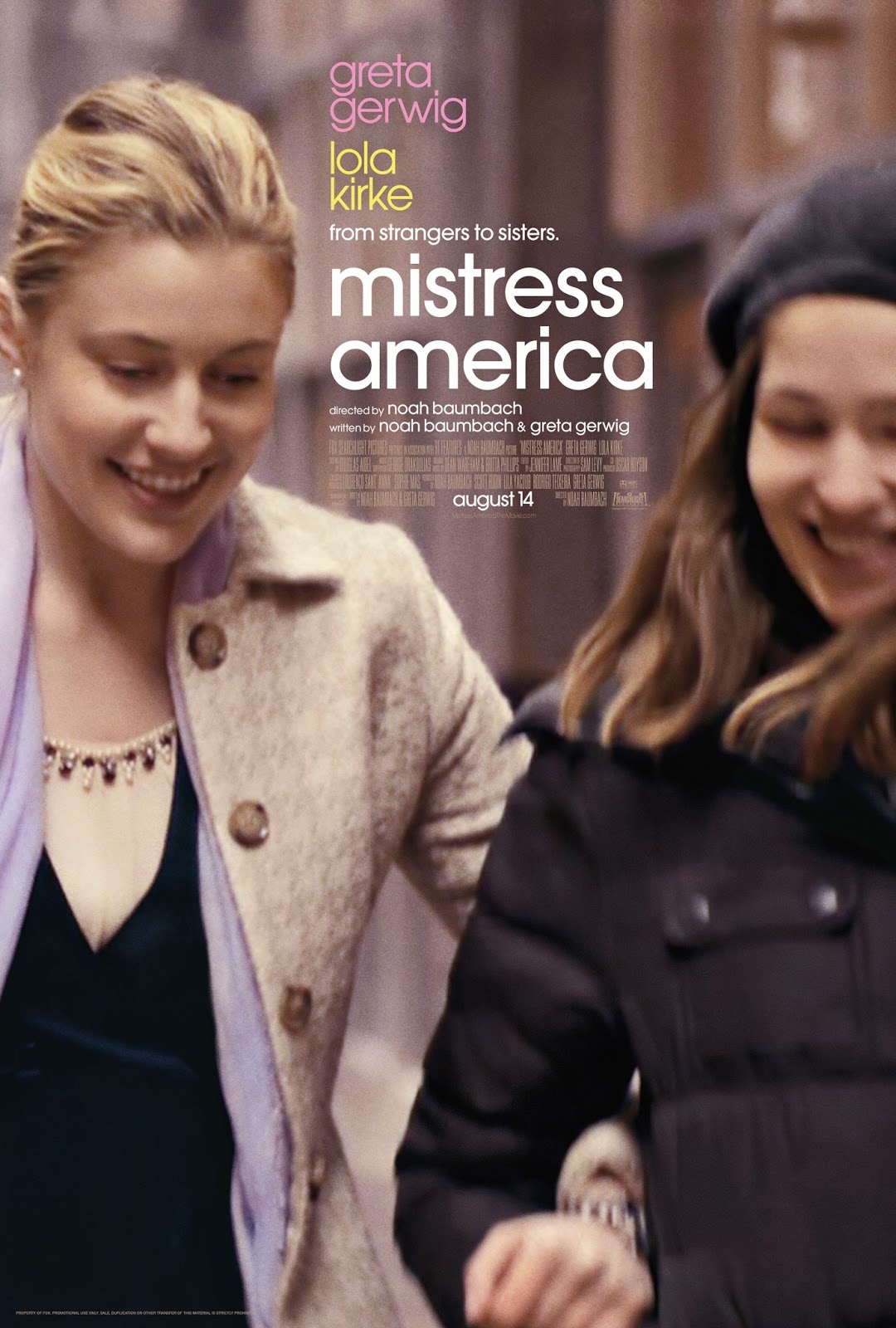
Brooke (Greta Gerwig) takes Tracy (Lola Kirke) under her wing in Mistress America.

In contrast, Brooke is so self-absorbed, so lacking in emotional acuity and self-awareness that when she talks about the problems she faces it’s like listening to someone who has no idea that all the things she’s feeling are no different to what anyone else feels. Take this for example: “Of course it’s possible to hurt me. I’m the most sensitive person.” It’s said at a moment when the movie attempts to be dramatic and ironic at the same time, but the irony is miscued and the drama is heavy handed, leaving the viewer to either laugh because it’s probably expected, or shake their heads in disappointment. (It’s also the one time in the movie where the “action” really feels like action and not passive observation, a trait the movie relies on far too often.)

In their roles, Gerwig is garrulous and whiny, while Kirke is listless and needy, four qualities that would cause most people to look the other way, and with Mistress America it’s no different. And faced with such an uphill struggle, the viewer has no choice but to hope that character arcs will be achieved, lessons will be learnt, and personalities will be rebuilt for the better. Alas, Baumbach and Gerwig have other ideas and none of these things happen. In the end it’s better to spend time with Tony and Nicolette, whose romantic war of attrition is one of the movie’s better attractions (Jones in particular is a deadly delight as the disbelieving Nicolette, all spite and anger and acid one-liners). In fact, it’s a better idea to spend time with any of the supporting characters, as they generate far more interest than the movie’s two spinsters in the making.

It also doesn’t help that he movie feels self-congratulatory throughout, as if it’s pulled off a clever piece of artistry. But while there are flashes of the confidence and the brio that Baumbach brought to some of his earlier work, there aren’t enough to make Mistress America more interesting or intriguing. If Brooke had been a little less erratic in her thinking, and Tracy a little less uptight about her social position then the viewer might have had a better understanding and/or liking of them, but without these tweaks it leaves said viewer wondering why they, like Brooke’s business partners, shouldn’t just get up and walk away.

Rating: 5/10 – a misfire that only occasionally engages its audience, Mistress America proves difficult to like thanks to the limited scope of its central characters and their misplaced sense of entitlement; when a line such as “Why don’t you just put pasta up her pussy?” (yes, it’s Nicolette) carries more weight and emotional honesty than the patronising “Being a beacon of hope for lesser people is a lonely business”, then you know something isn’t right in indie land.

Share this:

  • Click to share on X (Opens in new window) X
  • Click to share on Facebook (Opens in new window) Facebook
  • More
  • Click to print (Opens in new window) Print
  • Click to email a link to a friend (Opens in new window) Email
Like Loading...

Blog Stats

  • 486,565 hits

Recent Posts

  • 10 Reasons to Remember Bibi Andersson (1935-2019)
  • Fantasia (1940)
  • Dances With Wolves (1990) – The Special Edition
  • Kiss of the Spider Woman (1985)
  • The Three Musketeers (1973)

Top Posts & Pages

  • Lost for Life (2013) - Another Look
    Lost for Life (2013) - Another Look
  • Lost for Life (2013)
    Lost for Life (2013)
  • About
    About
  • Mr. Topaze (1961)
    Mr. Topaze (1961)
  • Shock and Awe (2017)
    Shock and Awe (2017)
  • Hunt for the Wilderpeople (2016)
    Hunt for the Wilderpeople (2016)
  • Billy Lynn's Long Halftime Walk (2016)
    Billy Lynn's Long Halftime Walk (2016)
  • Winter's Tale (2014)
    Winter's Tale (2014)
  • The Hitman's Bodyguard (2017)
    The Hitman's Bodyguard (2017)
  • Exposed (2016)
    Exposed (2016)
Follow thedullwoodexperiment on WordPress.com

Blogs I Follow

  • Rubbish Talk
  • Film 4 Fan
  • Fast Film Reviews
  • The Film Blog
  • All Things Movies UK
  • Interpreting the Stars
  • Let's Go To The Movies
  • Movie Reviews 101
  • TMI News
  • Dan the Man's Movie Reviews
  • Film History
  • Jordan and Eddie (The Movie Guys)

Archives

  • April 2019 (13)
  • March 2019 (28)
  • February 2019 (28)
  • January 2019 (32)
  • December 2018 (28)
  • November 2018 (30)
  • October 2018 (29)
  • September 2018 (29)
  • August 2018 (29)
  • July 2018 (30)
  • June 2018 (28)
  • May 2018 (24)
  • April 2018 (21)
  • March 2018 (31)
  • February 2018 (25)
  • January 2018 (30)
  • December 2017 (30)
  • November 2017 (27)
  • October 2017 (27)
  • September 2017 (26)
  • August 2017 (32)
  • July 2017 (32)
  • June 2017 (30)
  • May 2017 (29)
  • April 2017 (29)
  • March 2017 (30)
  • February 2017 (27)
  • January 2017 (32)
  • December 2016 (30)
  • November 2016 (28)
  • October 2016 (30)
  • September 2016 (27)
  • August 2016 (30)
  • July 2016 (30)
  • June 2016 (31)
  • May 2016 (34)
  • April 2016 (30)
  • March 2016 (30)
  • February 2016 (28)
  • January 2016 (35)
  • December 2015 (34)
  • November 2015 (31)
  • October 2015 (31)
  • September 2015 (34)
  • August 2015 (31)
  • July 2015 (33)
  • June 2015 (12)
  • May 2015 (31)
  • April 2015 (32)
  • March 2015 (30)
  • February 2015 (37)
  • January 2015 (39)
  • December 2014 (34)
  • November 2014 (34)
  • October 2014 (36)
  • September 2014 (25)
  • August 2014 (29)
  • July 2014 (29)
  • June 2014 (28)
  • May 2014 (23)
  • April 2014 (21)
  • March 2014 (42)
  • February 2014 (38)
  • January 2014 (29)
  • December 2013 (28)
  • November 2013 (34)
  • October 2013 (4)

Create a free website or blog at WordPress.com.

Rubbish Talk

Film 4 Fan

A Movie Blog

Fast Film Reviews

The Film Blog

The official blog of everything in film

All Things Movies UK

Movie Reviews and Original Articles

Interpreting the Stars

Dave Examines Movies

Let's Go To The Movies

Film and Theatre Lover!

Movie Reviews 101

Daily Movie Reviews

TMI News

Latest weather, crime and breaking news

Dan the Man's Movie Reviews

All my aimless thoughts, ideas, and ramblings, all packed into one site!

Film History

Telling the story of film

Jordan and Eddie (The Movie Guys)

Movie Reviews & Ramblings from an Australian Based Film Fan

Privacy & Cookies: This site uses cookies. By continuing to use this website, you agree to their use.
To find out more, including how to control cookies, see here: Cookie Policy
  • Subscribe Subscribed
    • thedullwoodexperiment
    • Join 481 other subscribers
    • Already have a WordPress.com account? Log in now.
    • thedullwoodexperiment
    • Subscribe Subscribed
    • Sign up
    • Log in
    • Report this content
    • View site in Reader
    • Manage subscriptions
    • Collapse this bar
 

Loading Comments...
 

    %d