• 10 Reasons to Remember…
  • A Brief Word About…
  • About
  • For One Week Only
  • Happy Birthday
  • Monthly Roundup
  • Old-Time Crime
  • Other Posts
  • Poster of the Week
  • Question of the Week
  • Reviews
  • Trailers

thedullwoodexperiment

~ Viewing movies in a different light

thedullwoodexperiment

Tag Archives: Mark Strong

The Catcher Was a Spy (2018)

21 Saturday Jul 2018

Posted by dullwood68 in Movies

≈ Leave a comment

Tags

Baseball, Ben Lewin, Drama, Literary adaptation, Mark Strong, Morris "Moe" Berg, Nuclear bomb, Paul Rudd, Review, Sienna Miller, Thriller, True story, World War II

D: Ben Lewin / 95m

Cast: Paul Rudd, Mark Strong, Sienna Miller, Jeff Daniels, Tom Wilkinson, Guy Pearce, Paul Giamatti, Giancarlo Giannini, Hiroyuki Sanada, Connie Nielsen, Shea Whigham

In the years before the US enters World War II, Morris “Moe” Berg (Rudd) is a catcher for the Boston Red Sox. Regarded as the “strangest man ever to play baseball”, Berg is an average player, but of above average intelligence, being able to speak seven languages fluently, regularly contribute to the radio quiz programme Information, Please, and read and digest up to ten newspapers daily. A man of singular interests but also leading a very private life, Berg pursues a relationship with a woman, Estella (Miller), that he won’t acknowledge publicly, while on a trip to Japan, he takes it on himself to shoot footage of the Tokyo harbour. After Pearl Harbor, Berg uses the same footage to wangle himself a desk job with the Office of Strategic Services (OSS). Soon though, his expertise in languages lands him a job in the field: to track down the noted physicist Werner Heisenberg (Strong) and determine if his work for the Nazis will give them a nuclear weapon – and if it will, then Berg is to kill him…

Another tale of unsung heroics set during World War II, The Catcher Was a Spy (a title that’s both derivative and clever) is a movie that takes a real life person and spins a mostly true story out of events they took part in, but does so in a way that alerts the viewer very early on that, despite the mission, Berg won’t be put in any danger, so any tension will evaporate before it’s even got up a head of steam. So instead of a movie that should be increasingly tense and dramatic, we have a movie that plays matter-of-factly with the material, and is presented in a pedestrian, if sure-footed manner. Working from an adaptation of the book of the same name by Nicholas Dawidoff, director Ben Lewin and writer Robert Rodat have fashioned a moderately engaging espionage tale that moves elegantly yet far from robustly from scene to scene without providing much in the way of emotional impact. Partly this is due to Berg’s own nature, his muted feelings and intellectual prowess being ostensibly the whole man, and while the movie and Rudd’s performance adhere to Berg’s character, it leaves the viewer in the awkward position of being an observer and not a participant.

With Berg introduced “as is”, and with only the most minimal of character arcs to send him on, the movie soon becomes a wearying succession of exposition scenes, or opportunities to show off Berg’s gift for languages (which Rudd copies with aplomb). The early scenes with Estella show Berg trying to be “normal” but not quite knowing how to, give way to the mission to find Heisenberg, but the movie’s switch from domestic tribulations to wartime emergency – Berg literally has Heisenberg’s life, and possibly the fate of the world in his hands – dovetail at the same pace and with the same lack of urgency. Even a sequence where Berg, accompanied by military man Robert Furman (Pearce) and friendly physicist Samuel Goudsmit (Giamatti), try to thread their way through a town overrun by Germans lacks the necessary sense of imminent peril needed to make it work. Another issue is Andrij Parekh’s humdrum cinematography, which deadens the effect of Luciana Arrighi’s murky yet effective production design. Against all this, Rudd is a good choice for the enigmatic Berg, and the moments where he expresses Berg’s self-doubts, offer a rare glimpse of the man behind the façade. But, sadly, these moments aren’t plentiful enough to offset the flaws that dog the rest of the movie, and which keep it from being far more impressive than it is.

Rating: 5/10 – proficient enough without providing much more than the basics of Berg’s life as a catcher or an OSS man, The Catcher Was a Spy isn’t dull per se, just not as compelling as it could (or should) have been; Rudd aside, a quality cast is left with little to do except recite their lines in a competent manner, and any notions of political or intellectual morality are left undeveloped or overlooked.
Share this:

  • Click to share on X (Opens in new window) X
  • Click to share on Facebook (Opens in new window) Facebook
  • More
  • Click to print (Opens in new window) Print
  • Click to email a link to a friend (Opens in new window) Email
Like Loading...

6 Days (2017)

21 Saturday Oct 2017

Posted by dullwood68 in Movies

≈ Leave a comment

Tags

Abbie Cornish, DFRLA, Drama, Hostages, Iranian Embassy, Jamie Bell, Kate Adie, Literary adaptation, London, Mark Strong, Review, Rusty Firmin, SAS, Thriller, Toa Fraser, True story

D: Toa Fraser / 94m

Cast: Jamie Bell, Mark Strong, Abbie Cornish, Martin Shaw, Ben Turner, Emun Elliott, Aymen Hamdouchi, Andrew Grainger, Colin Garlick, Te Kohe Tuhaka, Tim Pigott-Smith

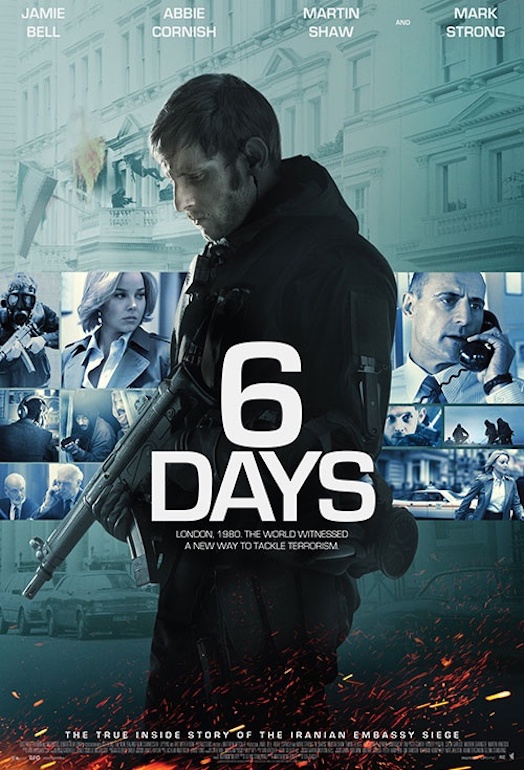
Between 30 April and 5 May 1980, the Iranian Embassy in London came under siege from six armed men whose aim was to secure the release of ninety-one Arab prisoners being held in Iran. Taking twenty-six hostages, they also demanded safe passage out of the United Kingdom once their goal was achieved. Of course, the outcome was very much different from what they were hoping for. Following the killing of one of the hostages, the order was given to send in the SAS. On the evening of the sixth day of the siege, they stormed the building and in the ensuing seventeen minutes killed five of the six armed men, rescued all but one of the remaining hostages (five had been released over the previous days), and gave notice to the world that the UK would not tolerate terrorism on any level.

What 6 Days does is to cover that dramatic period from a variety of angles in an effort to provide the viewer with a comprehensive overview of what was going on at the time both inside the embassy and outside it. So we see the six members of the Democratic Revolutionary Front for the Liberation of Arabistan (DRFLA), led by Salim (Turner), as they try to control the situation from an ever decreasing state of authority, as well as the Metropolitan Police’s chief negotiator, Max Vernon (Strong), as he does his best to keep things from escalating out of control. We also see the SAS teams that would eventually end the siege gathering intelligence on how best to enter the building, BBC reporter Kate Adie (Cornish) establish her reputation as a serious news journalist, and the political manoeuvring that went on behind the scenes involving the Home Secretary, William Whitelaw (Pigott-Smith), and the various decision makers who would debate and interpret the government’s policy of non-compliance in terrorist matters.

With such an intense, dramatic situation, and one whose violent conclusion was played out – deliberately – in front of a number of assembled news cameras, you might expect 6 Days to be as equally intense and dramatic, but sadly, whatever tension is achieved is arrived at accidentally. Glenn Standring’s screenplay, adapted from the awkwardly titled Go! Go! Go!: The SAS. The Iranian Embassy Siege. The True Story (2011) by Rusty Firmin and Will Pearson, alternates between each angle with an initial promise that soon falls away to offer routine exchanges between all concerned, a worrying number of occasions where we see the SAS fail in their preparations, Cornish’s role as Kate Adie built up so that her billing is made more credible, and negotiations between Vernon and Salim that consist of Vernon reassuring Salim that he wants to help, while Salim insists that he’ll kill a hostage if his demands aren’t met – over and over. (If there was ever any intention of exploring the psychological aspects of hostage negotiation, they certainly didn’t make it into the final script.)

There are other problems, some that relate to the movie’s pacing, and others that relate to director Toa Fraser’s handling of the material. Fraser made the enjoyably quirky Dean Spanley (2008), but here the confidence he showed with that movie appears to have deserted him. With an array of characters and situations to be exploited, Fraser leaves many scenes high and dry in terms of their potential effectiveness, opting for a flatness of tone that proves wearying the more it happens. As a result, he often leaves his talented cast looking as if they’ve been cast adrift from the narrative and are wondering where the lifeboats are. Bell, as the same Rusty Firmin whose book this is based on, can’t quite convince as a lance corporal in the SAS, and he’s too bland a character to make much of an impact. Cornish is kept on standby until the siege is broken, which is the point at which Adie came into her own and sealed her journalistic reputation by reporting events as they happened (though the movie has her standing heroically out in the open, whereas in reality Adie wisely hid behind a car door). Cornish also attempts a vocal interpretation of Adie that is off-putting to say the least.

But if you have to spare a thought for anyone in the movie it’s Mark Strong, a fine actor with an impressive range, but here reduced to staring continually in anguished sincerity while his character tries to keep things from going very wrong very quickly. In comparison with much of the rest of the movie, he’s one of the best things in it, but he’s hamstrung by the demands of the script and his director’s inability to make each scene anything more than flat and undemanding. This inattention leads to the movie having an equally flat and undemanding tone that negates any sense of urgency about the siege and the political machinations surrounding it. It’s not until the SAS storm the building that the movie wakes up and remembers it’s as much a thriller as a political drama, but even then there’s a great deal of confusion as to what’s happening where and, in the case of the SAS themselves, to whom.

Again, there are pacing issues as well, and too much repetition to make 6 Days anything other than a pedestrian representation of an event that made international headlines and kept a nation glued to their televisions and radios throughout its duration. There are flashes of humour that are largely muted (though a comment from an embassy staff member to Firmin is priceless by itself), the odd attempt at post-ironic commentary, contemporary footage that sits side by side with the movie’s recreations of the same images, and an eerily effective opening shot that sees the six terrorists passing by the Royal Albert Hall, but they’re not enough on their own to make the movie more engaging or gripping. There’s a great deal of earnestness and melodramatic sincerity on display, but it’s all in service to a script that feels as if it’s trying to tell its story at a remove from the actual events, and which compresses those fateful six days into an hour and a half and still finds the need to pad out the narrative with unnecessary detours and longueurs.

Rating: 4/10 – muddled and far from absorbing, 6 Days is an undemanding viewing experience that doesn’t try too hard to make its true story anything other than perfunctory and banal; by the time the SAS storm the embassy you’ll be thinking “at last” – not because the movie is finally going to be halfway exciting, but because it means the movie is close to being over.

Share this:

  • Click to share on X (Opens in new window) X
  • Click to share on Facebook (Opens in new window) Facebook
  • More
  • Click to print (Opens in new window) Print
  • Click to email a link to a friend (Opens in new window) Email
Like Loading...

Kingsman: The Golden Circle (2017)

20 Wednesday Sep 2017

Posted by dullwood68 in Movies

≈ 1 Comment

Tags

Action, Comedy, Drama, Drugs, Galahad, Halle Berry, Julianne Moore, Kingsman, Mark Strong, Matthew Vaughn, Merlin, Pedro Pascal, Poppyland, Review, Sequel, Statesman, Taron Egerton

D: Matthew Vaughn / 141m

Cast: Colin Firth, Julianne Moore, Taron Egerton, Mark Strong, Halle Berry, Pedro Pascal, Edward Holcroft, Hanna Alström, Bruce Greenwood, Emily Watson, Elton John, Channing Tatum, Jeff Bridges, Poppy Delevingne, Sophie Cookson, Michael Gambon

When Kingsman: The Secret Service hit our screens back in 2014, its anarchic sense of fun and willingness to push the boundaries of good taste (exploding heads, anyone?) made it stand out from the crowd, and introduced us to Colin Firth the action hero. It was smart, it was savvy, it was funny, and its action sequences, especially that astounding sequence set in a Kentucky church, showed that well choreographed fight scenes could still impress and leave jaws dropped everywhere. A sequel may have been in some initial doubt – writer/director Vaughn wasn’t sure the first movie would be successful enough to warrant a second outing – but now it’s here, and it’s a very mixed bag indeed.

As a sequel, Kingsman: The Golden Circle adheres to the formula for a follow-up to an unexpectedly successful movie in that it goes bigger, brings back its original stars and gives them less to do, references its predecessor in some ways that are good and some ways that aren’t, introduces a group of new characters that the audience aren’t allowed to connect with, and extends the running time unnecessarily. It’s as if Vaughn and returning co-screenwriter Jane Goldman have heard the phrase, “Give ’em what they want, and then give ’em more” and taken it to heart. But there are too many elements that clash with each other, and the movie never maintains a consistent tone. Also, that anarchic sense of fun that the first movie carried off so well, here feels awkward and somewhat laboured, and we have yet another villain with a goofy personality who’s just plain misunderstood (Moore’s over-achieving cartel boss wants to be recognised for her “business acumen”).

Of course, any sequel that seeks to revive a character who appeared to be killed in the first movie, has to tread carefully in how it brings them back; this may be a world far removed from our own reality, but even in fantasy land, death means dead and gone. Vaughn and Goldman have come up with an ingenious idea that makes sense within the confines of the world that Kingsman operates within, but the fact that in terms of the plot a year has passed and Harry (Firth) is still suffering from amnesia and the Kingsmen haven’t been told he’s alive, is just one of the larger plot holes that pepper the script and make you think that while Vaughn has been reported as saying that “writing this was the hardest thing I’ve ever done”, it soon becomes obvious that he needed to try a bit harder. Perhaps the biggest question that goes unanswered, is why villain of the piece Poppy Adams (Moore) takes out the Kingsmen in the first place. Without even a throwaway line to clear up the matter, viewers could be forgiven for thinking that it was important to the plot, and it is, but only as a way of introducing their American cousins, the Statesmen.

Cue a lot of cool new gadgets, the presence of franchise newbies Tatum, Berry, Pascal, and Bridges (seemingly the only people who work for Statesman – until the end, that is), a side trip to the Glastonbury Music Festival that actually includes a scene where Eggsy (Egerton) asks his girlfriend, Tilde (Alström), if she’s okay with him having sex with another woman (Delevingne), the sorry spectacle of Elton John having been persuaded to send up his image from the Seventies and encased in ever more ridiculous stage outfits (he’s been kidnapped by Poppy – of course), a physics defying stunt involving a cable car that at least has the benefit of a terrific one-liner as its pay-off, Harry being cured of his retrograde amnesia but still seeing butterflies (don’t ask), Poppy’s robot attack dogs Bennie and Jet (geddit?), and several plot threads that are left dangling like so much silly string.

There’s more, a lot more, but if there’s one area where the movie lets itself, and the audience, down, it’s with a disastrous sub-plot involving the US President (Greenwood) and his so-called “war on drugs”. Poppy’s plan is to infect the millions of addicts who use her drugs with a deadly chemical that will kill them. Unless the President agrees to her demand to make all drugs legal, then she’ll withhold the antidote. Publicly, the President appears to agree to her terms, but privately he has no intention of saving anyone, reasoning that if all the drug addicts in the world are dead, then illegal drugs will become a thing of the past because there’ll be no one around to take them. There is a twisted sense of logic there – barely – and it could have been made to sound semi-plausible, but the President’s flippant, couldn’t-care-less attitude seems more of a rebuke to the current real-life incumbent than any properly considered character design. And leading on from the President’s decision, the movie opts to provide audiences with the unsettling and seriously off-kilter sight of thousands of victims of Poppy’s plan being herded into cages and stacked on top of each other within the confines of a US football stadium (is there a message here?).

This time around the comedy is muted in favour of a more serious approach, but it’s as haphazardly sewn into the fabric of the movie as everything else. The action sequences, particularly an opening display of vehicular mayhem on the streets of London, and the final showdown at Poppyland, have been shot and edited with a view to making the fight choreography flow as quickly as possible within the frame, but as a result, details are lost and much of what can be seen seems to involve as much posing as it does fighting. Against all this, the performances are adequate, though Strong and Berry are on better form than the rest, while there are odd instances – a bar fight that echoes the original’s pub brawl, but with Harry coming off worst; Merlin singing Take Me Home, Country Roads by John Denver at a crucial moment – where the viewer can see glimpses of what might have been, but overall there aren’t enough to warrant a better appreciation of a movie that’s slackly directed, confuses sentiment for depth in its treatment of the relationship between Harry and Eggsy, and which doesn’t try hard enough to match the style and energy of its predecessor.

Rating: 5/10 – with the prospect of a third movie just over the horizon, Kingsman: The Golden Circle is the point where the service should hang up its tailoring shingle and head off into early retirement; a disappointing sequel that shows a flare for inconsistency throughout, it offers shallow pleasures for those who want that sort of thing, but will prove a more difficult experience for those expecting a repeat of the giddy heights of the first movie.

Share this:

  • Click to share on X (Opens in new window) X
  • Click to share on Facebook (Opens in new window) Facebook
  • More
  • Click to print (Opens in new window) Print
  • Click to email a link to a friend (Opens in new window) Email
Like Loading...

Miss Sloane (2016)

14 Tuesday Mar 2017

Posted by dullwood68 in Movies

≈ Leave a comment

Tags

Alison Pill, Corruption, Drama, Gugu Mbatha-Raw, Gun control, Jessica Chastain, John Lithgow, John Madden, Lobbying, Mark Strong, Politics, Review, Senate hearing, Thriller

D: John Madden / 132m

Cast: Jessica Chastain, Mark Strong, Gugu Mbatha-Raw, Alison Pill, Michael Stuhlbarg, Jake Lacy, John Lithgow, Sam Waterston, David Wilson Barnes, Al Mukadam, Douglas Smith, Chuck Shamata, Dylan Baker

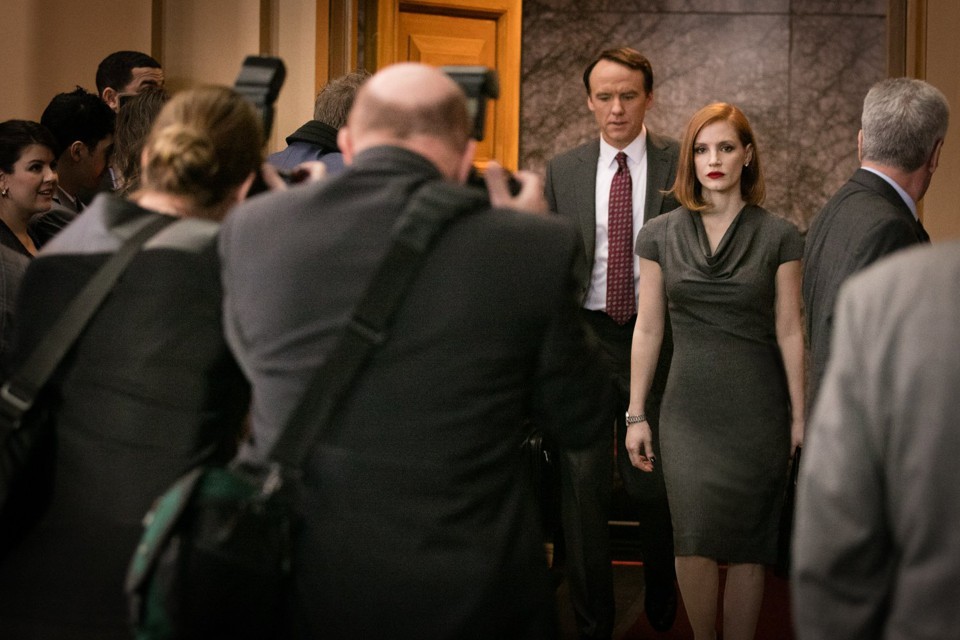
At the beginning of Miss Sloane, the title character (Chastain) looks directly into camera and says the following: “Lobbying is about foresight. About anticipating your opponent’s moves and devising counter measures. The winner plots one step ahead of the opposition. And plays her trump card just after they play theirs. It’s about making sure you surprise them. And they don’t surprise you.” Chastain delivers this short speech with complete conviction and due gravitas. And in doing so, the movie puts the audience on notice: what follows may not be as true or as real as you believe.

The movie follows lobbyist Elizabeth Sloane into a senate hearing where she’s accused of authorising expenses for the Indonesian government, something which is illegal for a lobbyist to do. At first she refuses to answer the questions she’s asked, hiding behind her lawyer’s brief to “plead the Fifth”. But a more personal line of questioning leads to her abandoning this line of defence and taking the fight to the hearing. Afterwards, her lawyer (Barnes) keeps repeating “five years”, the term of imprisonment she’ll receive if she’s found guilty of perjury. But Elizabeth appears unperturbed.

The movie then travels back to roughly seven months before. Elizabeth is working for a law firm owned by George Dupont (Waterston). A representative of the National Rifle Association, Bob Sanford (Shamata), asks for her help in connecting with a broader female demographic ahead of an upcoming vote on a bill that would mean mandatory background checks on anyone looking to purchase a gun. The NRA sees it as an infringement on civil liberties, and wants to make sure that the bill, the Heaton-Harris Amendment, isn’t passed. Elizabeth laughs in Sanford’s face, and refuses to have anything to do with it. Later, Dupont makes it clear that if she doesn’t work on the NRA’s initiative then her position won’t be as assured as she thinks. That night she meets Rodolfo Schmidt (Strong), head of the law firm Peterson Wyatt, and the man in charge of the fight to get the Heaton-Harris Amendment passed. The next day, Elizabeth resigns, and takes several of her team with her to Peterson Wyatt, though one of her best colleagues, Jane Molloy (Pill), chooses to stay.

In order for the Amendment to have a chance of being successful, Elizabeth, her team, and the staff at Peterson Wyatt, including Esme Manucharian (Mbatha-Raw), have to persuade sixteen out of twenty-one uncommitted senators to vote their way. As they set about this seemingly huge task – Dupont and the NRA only need to persuade six – Elizabeth plays out various strategies in her efforts to secure the necessary votes. But it soon becomes obvious that she’ll cross almost any line in order to win, even if it means sacrificing colleagues or lying to them deliberately. With the tide turning in her favour, and Dupont becoming ever more determined to derail her progress, her old firm launches a smear campaign, one that leads to Elizabeth’s sitting before a senate hearing committee and having to answer for her actions.

From the off, Miss Sloane is a thriller that throws the viewer deep into the mire of political lobbying, and which expects them to keep up with everything that’s going on. It’s an intellectual minefield, with so many issues dependent on the appropriate (or inappropriate) use of legal and ethical considerations, that looking away for even a moment could mean the difference between knowing exactly what’s going on – difficult enough thanks to Jonathan Perera’s dauntingly detailed script – and what might be going on. If you’re ever unsure as to what is happening, and/or why, then it’s best to bear in mind that opening speech, and the lobbyist always being “one step ahead”. Do that, and most of the movie will make sense… eventually.

By preferring (or needing) to stay one step ahead at all times, Elizabeth inevitably becomes a character that the viewer can’t trust. But we can have faith in her, in her need to win, and her commitment to never being out-thought, outfoxed, or outmanoeuvred. For all her manipulations and outright deceptions, Elizabeth is consistent in her efforts to be the winner, and she makes no bones about her methods: if they get the win then that’s all that matters. Along the way this means there are some casualties, notably Mbatha-Raw’s Esme, who has a personal secret exposed in front of millions of TV viewers. Elizabeth would argue that the end justifies the means, but as she is drawn deeper and deeper into the fight to get the Amendment passed, she begins to learn that some lines, once crossed, can’t be re-crossed. And as the stakes are increased, and the senate hearing hoves into view, Elizabeth has no option but to reassess her approach to lobbying and the people she works with.

Bringing the character of Elizabeth Sloane to mesmerising life, Chastain gives, arguably, her best performance since Zero Dark Thirty (2012). Cool, controlling, yet undeniably complex in both her motivations and her need to win at all costs, Chastain portrays Elizabeth as a restless, rest-avoiding predator, always looking for the weak link in an opponent’s armour, and always ready to exploit that weak link. She’ll even use her own people if she feels it’s necessary, but she’s up front about it, and it’s this straight-shooting, unapologetic persona that Chastain exploits so well, making her unlikeable and yet still strangely admirable at the same time. Chastain is the star of the movie, unforgettable whether she’s trampling on other people’s feelings or struggling to contain her own. She’s not alone, though. As her “boss” (a term you soon feel is inadequate in describing anyone who employs her), Strong goes from marvelling at her successes to feeling increasingly worried that she’s going too far with her own, hidden agenda. As the cruelly exposed Esme, Mbatha-Raw is a perfect foil for Chastain’s ebullient performance, her wide-eyed naïvete and quiet strength making her the movie’s most sympathetic character. And there’s further impressive support from Stuhlbarg as Elizabeth’s main adversary at Dupont, Lithgow as the head of the senate committee, and Barnes as her exasperated lawyer.

Orchestrating all this is Madden, now free from depicting events at the Best Exotic Marigold Hotel, and displaying all the skills and directorial touches needed to shepherd Perera’s screenplay (a top five Black List script from 2015) through its varied twists and turns. Make no mistake, this is an intelligent, penetrating look at a world few of us have any conception of, and which is paced like a thriller, all of which makes Miss Sloane a much more compelling movie than expected. It’s also put together very skilfully by editor Alexander Berner, and he and Madden ensure that the many scenes that are taken up by immense amounts of exposition are as equally vital as those scenes where Elizabeth’s plans are achieving momentum, or are already in full swing. In the end, it’s a tale about personal redemption set against a dark backdrop of corruption and ethical malaise, and thanks to Chastain, is nothing less than exhilarating.

Rating: 8/10 – marred only by its predictable denouement, some by-the-numbers villainy from Dupont, and Elizabeth’s not-quite-credible overall gamble, Miss Sloane is still a political thriller with teeth, and replete with flashes of dark humour that leaven the serious tone; irresistible once it’s in full flow, this has unfortunately been overlooked by audiences – which is a shame given the pedigree of the cast, the skill of its director, and the sharpness of its script.

Share this:

  • Click to share on X (Opens in new window) X
  • Click to share on Facebook (Opens in new window) Facebook
  • More
  • Click to print (Opens in new window) Print
  • Click to email a link to a friend (Opens in new window) Email
Like Loading...

Grimsby (2016)

28 Saturday May 2016

Posted by dullwood68 in Movies

≈ 1 Comment

Tags

Action, Airborne virus, Assassination, Brothers, Chile, Comedy, Drama, Ian McShane, Isla Fisher, Louis Leterrier, Mark Strong, Penélope Cruz, Rebel Wilson, Review, Sacha Baron Cohen, Spy, World Cup Finals

Grimsby

aka The Brothers Grimsby

D: Louis Leterrier / 83m

Cast: Sacha Baron Cohen, Mark Strong, Penélope Cruz, Isla Fisher, Ian McShane, Rebel Wilson, Barkhad Abdi, Gabourey Sidibe, Scott Adkins, Annabelle Wallis, Johnny Vegas, Ricky Tomlinson

Grimsby - scene1

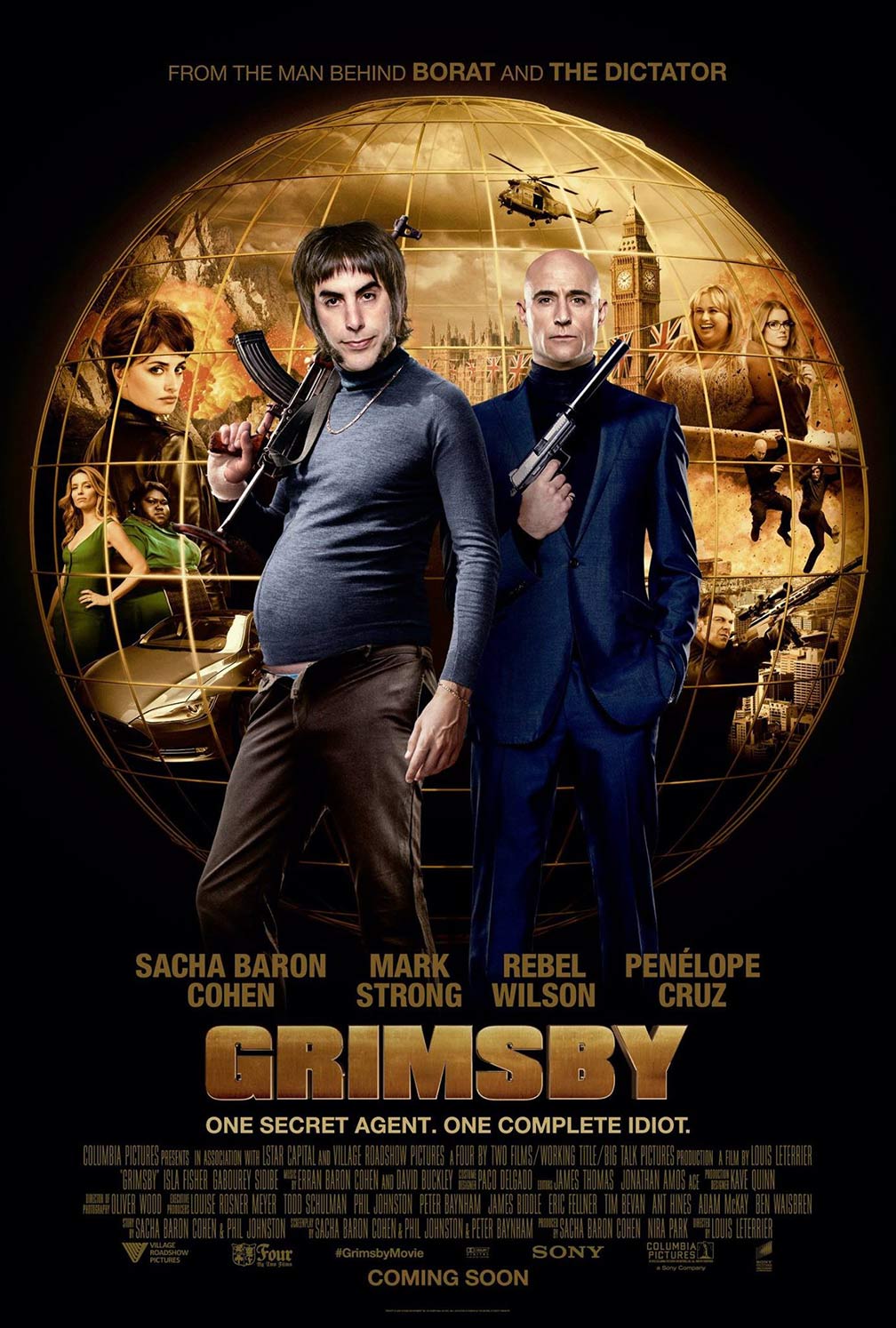
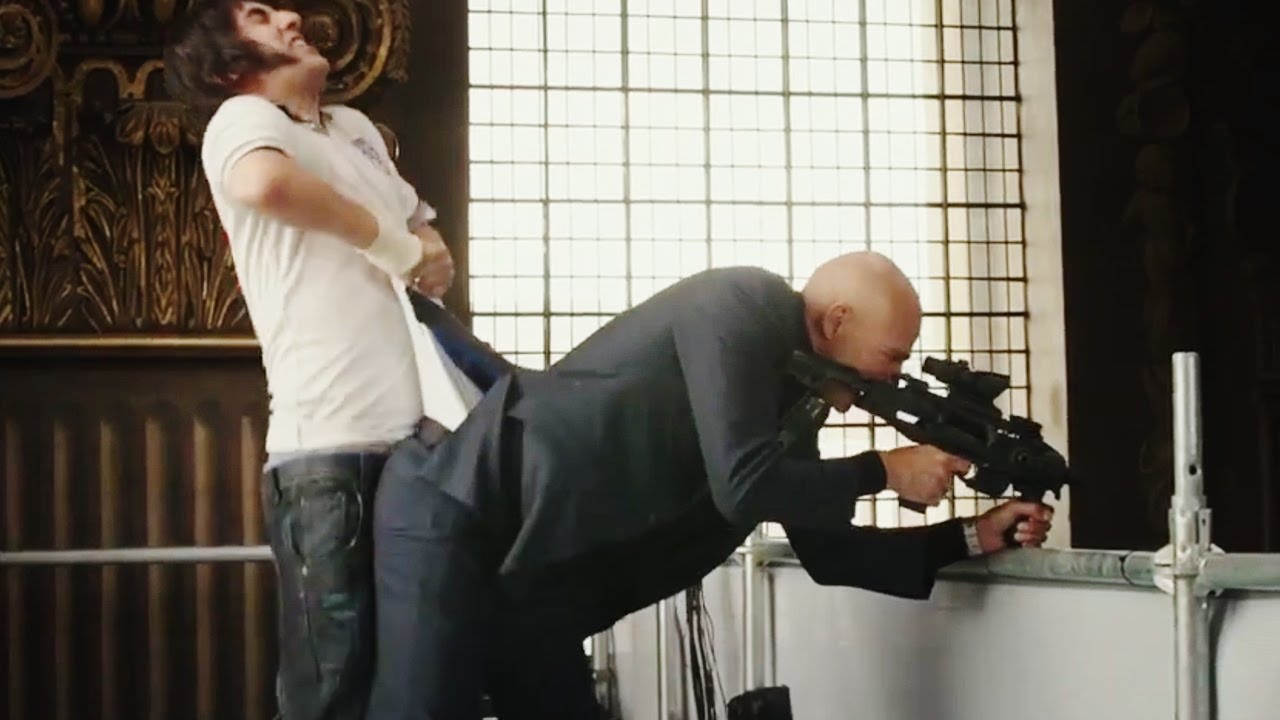
Just avoid. This is a movie whose “comic” highlight is its lead characters hiding in an elephant’s vagina while it’s being penetrated by another elephant – and then the other elephant ejaculates. Fans of Baron Cohen will probably enjoy this but anyone else will be wondering how on earth this was ever made, and if they manage to get through to the end, they’ll also be wondering how they can get eighty-three minutes of their lives back.

Rating: 3/10 – yet another example of gross-out humour being more important than properly constructed comedy, Baron Cohen’s latest offering is so bad you hope he’s never allowed to make another movie of his own ever again; wasting the talents of a good cast (spare a thought for Penélope Cruz, appearing in this and Zoolander 2 in the same year), and giving new meaning to the word ‘puerile’, Grimsby is competently made but embarrassing at almost every turn.

Share this:

  • Click to share on X (Opens in new window) X
  • Click to share on Facebook (Opens in new window) Facebook
  • More
  • Click to print (Opens in new window) Print
  • Click to email a link to a friend (Opens in new window) Email
Like Loading...

Kingsman: The Secret Service (2014)

08 Sunday Feb 2015

Posted by dullwood68 in Movies

≈ 1 Comment

Tags

Action, Colin Firth, Drama, Eggsy, Mark Strong, Matthew Vaughn, Michael Caine, Review, Samuel L. Jackson, SIM cards, Spies, Taron Egerton, Thriller, Valentine

Kingsman The Secret Service

D: Matthew Vaughn / 129m

Cast: Colin Firth, Samuel L. Jackson, Taron Egerton, Mark Strong, Michael Caine, Sofia Boutella, Sophie Cookson, Edward Holcroft, Mark Hamill, Samantha Womack, Geoff Bell, Jack Davenport

1997. While on a mission in the Middle East, Kingsman secret agent Harry Hart (code named Galahad) (Firth) makes a mistake that costs the life of his protege. He visits the man’s wife, Michelle (Womack), and their young son, who is known as ‘Eggsy’. He gives Eggsy a medal and tells him if ever he needs a favour, to ring the number on the back of the medal and say the phrase, “Oxfords not brogues”.

Eight years later, one of Harry’s fellow agents, Lancelot (Davenport) is killed while trying to rescue a kidnapped professor (Hamill). As the membership of Kingsman demands a continuous number of agents, Hart and his remaining colleagues are tasked by the service’s head, Arthur (Caine), with finding a replacement for him. Meanwhile, Eggsy’s home life hasn’t improved. His mother is in an abusive relationship with Dean (Bell), and he and his friends are bullied by Dean’s gang. When Eggsy steals  one of the gang’s car he ends up being arrested. Remembering the medal, Eggsy calls the number and repeats the phrase. Soon after he is released and finds himself in the company of Harry.

While all this is going on, the kidnapper of the professor, tech-billionaire and radical environmentalist Richmond Valentine (Jackson) is blackmailing or kidnapping important world figures in order to support his scheme to reduce the world population through the free dispersal of SIM cards adapted for use in any mobile phone. With Kingsman becoming aware of his activities, Eggsy agrees to undergo the training required to become a Kingsman agent. While he competes against the other candidates, including Roxy (Cookson) and Charlie (Holcroft), Harry pays Valentine a visit to find out more about his plans and eventually discovers that the billionaire is planning a test of his SIM cards at a church in the Deep South.

Eggsy does well enough in his training to reach the final stage where it’s between him and Roxy for the position of the new Lancelot. But his confidence and commitment is rocked by the task required of him, and in the Deep South, Harry’s infiltration of the congregation leads to an unexpected and shocking development…

Kingsman The Secret Service - scene

If Matthew Vaughn only ever made comic book adaptations from now until the end of time, it would be a wonderful outcome for movie lovers everywhere. Following on from Kick-Ass (2010) and X-Men: First Class (2011), Kingsman: The Secret Service is a razor-sharp, highly entertaining spy spoof that retains enough drama to give it the edge it almost doesn’t need. It’s a movie that is both self-referential and iconic, and shows just how this sort of material should be handled: with obvious love and affection.

Adapting Mark Millar and Dave Gibbons’ comic book The Secret Service, Vaughn and screenwriter Jane Goldman have created a world where the notion of a “gentleman spy” is still very highly regarded – by the spies themselves, and by the villain of the piece – and where a certain level of style is a necessity. It’s an Old Boys network, run as an elitist organisation that works so far behind the scenes no one’s ever heard of them. With its agents named after characters from Arthurian legend, and its adoption of high-tech weapons to back up each agent’s physical prowess, the Secret Service is a potent mix of the old and the new. From its bulletproof umbrellas to its poisoned knife tipped shoes to its underground hangar full of jets and helicopters and APC’s, this is an organisation that is serious about what it does, but also knows how to have fun while doing it.

The plot is straight out of the Sixties, with a megalomaniac threatening to destroy the world unless his demands are met, his ultra-dangerous sidekick – here Boutella’s artificial limbed killing machine, Gazelle – a variety of ingenious gadgets and some of the sharpest outfits this side of a Milan catwalk. As befits a Bondian villain, Valentine has a mountain lair with enough rough-hewn corridors for Eggsy to kill dozens of his henchmen, and he has a turncoat (or two) within the Kingsman organisation. It’s all presented with a splendid amount of panache (and above all, style), and Vaughn never loses sight of how important these aspects are in the grand scheme of things.

The director is more than ably supported by a first-rate cast that sees Firth cast entirely against type (but boy is he a great choice for the role), Jackson use a lisp to underline the absurdity of his character’s ambitions, Egerton grab the opportunity of a lifetime with both hands, Strong reinforce his status as one of the finest actors around (even if his Scottish accent wavers a bit), Caine provide gravitas and just a pinch of arrogance, and in a minor role as a kidnapped Scandinavian princess, Hanna Alström almost steals the movie with an offer Eggsy can’t refuse.

But what Kingsman: The Secret Service is most likely to be remembered for is the scene at the church, a technically impressive, devastatingly violent, gratuitously vicious, and brutally in-your-face sequence where the full effects of Valentine’s plan are felt. The camera swoops in and out and around the action, keeping its focus on Harry and never once letting up on the audience, as every blow and gunshot and stabbing movement is choreographed to furious perfection. It makes the night club sequence in John Wick (2014) look anaemic by comparison, and is all the more startling and effective by being almost balletic in its blood-soaked aesthetic.

Kingsman The Secret Service - scene2

Of course, while the violence is as bone-crunching and quasi-sadistic as you might expect from Vaughn, there’s also a great deal of humour, along with the underlying theme of finding your place in the world. It’s a rich mixture of pointed comedy and heightened violence, and as with Kick-Ass, Vaughn succeeds in ensuring neither element overwhelms the other, leaving the movie to find its own level throughout and proving an exhilarating mix of both. He’s further supported by dazzling cinematography by George Richmond, and there’s a terrific score by Henry Jackman and Matthew Margetson that uses various motifs from other spy movies and still sounds fresh. And of course, special mention must be made of the costumes by Arianne Phillips, her bespoke suits and accessories all now available for the gentleman spy in your life.

Rating: 8/10 – a little too long, with the final showdown in Valentine’s lair proving an unnecessarily two-part affair, Kingsman: The Secret Service is still a stylish, uncompromising action thriller that delights at every turn; Firth is simply superb, and Egerton is a rising star with bags of ability – and then some.

Share this:

  • Click to share on X (Opens in new window) X
  • Click to share on Facebook (Opens in new window) Facebook
  • More
  • Click to print (Opens in new window) Print
  • Click to email a link to a friend (Opens in new window) Email
Like Loading...

Before I Go to Sleep (2014)

05 Friday Sep 2014

Posted by dullwood68 in Movies

≈ Leave a comment

Tags

Amnesia, Assault, Colin Firth, Drama, Literary adaptation, Mark Strong, Nicole Kidman, Review, Rowan Joffe, S.J. Watson novel, Thriller

J2730_BeforeIGoToSleep_OneSheet_31F.indd

D: Rowan Joffe / 92m

Cast: Nicole Kidman, Colin Firth, Mark Strong, Anne-Marie Duff, Adam Levy, Dean-Charles Chapman

Christine Lucas (Kidman) wakes up each morning with no knowledge of who she is, and no memory of her life since her early Twenties.  Her husband, Ben (Firth), tells her she was in an accident ten years before and she is suffering from a form of retrograde amnesia: when she goes to sleep each night, her memory of that day is wiped clean and she remembers nothing about her situation.  To help her, Ben has put up pictures of their life together, and has left lists of items and instructions to help her get through the day while he’s at work.

After Ben heads off, the phone rings.  A man at the other end identifies himself as Dr Nasch (Strong).  He tells Christine he’s been treating her for a while and that she should go and look for a camera hidden in a wardrobe in the bedroom.  Nasch has persuaded Christine to use the camera as a kind of video diary, an aide-memoire that she can use each day to help her remember things.  The last entry shows Christine looking visibly upset and cutting the recording short when Ben returns home.

Two weeks before: Dr Nasch begins treating Christine and gives her the camera, advising her not to tell Ben about it.  She begins to make daily recordings, and in the process she learns things that don’t make sense: her accident proves to be a near-fatal assault by an unknown attacker; she and Ben have a dead son; and a friend of hers called Claire (Duff) has been trying to get in contact with her (though Ben tells her he doesn’t recall anyone by that name).  As Christine begins to piece together the mystery of the assault and the past ten years, she begins to suspect that someone, either Ben or Dr Nasch, is hiding the truth from her, and that she may be in danger.

Before I Go to Sleep - scene

Adapted from the novel by S.J. Watson, Before I Go to Sleep is a hard movie to really like.  It’s competently directed by Joffe, ably performed by its cast, and wrong foots the audience on at least two occasions with considerable shrewdness.  But it lacks any real tension, and despite the best efforts of all concerned, has a too-familiar feel to it that robs the movie of any lasting effect.  Christine’s predicament and the limitations of her memory, while intriguing, are too easily overcome; it’s hard to believe that no one’s come up with the idea of a video camera before now.  And for the purposes of the plot, Dr Nasch’s insistence on keeping Ben in the dark, while highly suspicious by itself, seems more of a contrivance than something reasonably developed to aid in Christine’s treatment.

Once Christine begins to unravel the mystery of the assault, the clues come thick and fast, and while the movie as adapted by Joffe may think it’s being very clever, it only succeeds in making it easy for its heroine to learn the truth.  It also loses a large amount of credibility when Christine agrees to meet Claire at Greenwich, but is later revealed to not even know the address of where she lives.  It’s in the mid-section that Joffe trots out a series of twists and turns that threaten to sink the movie’s credibility, but he manages to hold it all together until the arrival of the more generic confrontation that, alas, soon descends from tense showdown to tiresome violent retread.

Later, as the plot begins to unravel further, and the truth about the assault becomes clearer, what has been a fitfully absorbing psychological thriller becomes yet another damsel in distress movie with Christine forced to face off against the man who assaulted her all those years ago.  With such a predictable denouement, the movie adds an extended coda that seeks to give full closure to everything Christine has discovered (it also provides an emotional resonance that’s lacking elsewhere), but while it’s an effective scene in and of itself, it comes too late to save matters overall.

There’s also the issue of the movie’s look.  Joffe, along with director of photography Ben Davis, has chosen to film in muted colours, and with the dimmest lighting design seen for some time.  As a consequence, the movie is drab and depressing to look at, its dour interiors sucking the life out of proceedings and proving an obstacle to the performances, the cast struggling to stand out against the morose and dreary surroundings.  Even when Christine meets Claire at Greenwich, the colour mix is toned down so that the natural greens and browns seem as subdued as the rest of the palette.  As a reflection of Christine’s mental state, it comes across as pretty heavy handed, while also keeping the audience at a distance from the action.

Kidman plays Christine as a fragile, easily disturbed, yet strangely trusting woman who shows only few signs of being the strong, confident person she was before the assault (it’s only her memory that’s affected, not her personality), and while she’s as capable as ever – only Julianne Moore can show dawning, horrified realisation as well as Kidman can – she’s hemmed in by the character’s limitations (even an actress of Kidman’s calibre can do shock and surprise only so many times in a movie without it becoming repetitive).  In support, Firth gets to play angry and resentful in between being supportive and creepy, while Strong does what he can with a character who, ultimately, is there for exposition purposes more than anything else.

There are obvious connections that viewers will associate with Memento (2000), but Before I Go to Sleep lacks that movie’s inventiveness and if they were programmed as a double bill, Joffe’s would definitely be the second feature.  With obvious nods to movies such as Groundhog Day (1993) and Shattered (1991), this tries hard to be a riveting thriller but ends up looking and sounding too mundane to make any lasting impression.

Rating: 5/10 – disappointing and routine for most of its running time, Before I Go to Sleep could have done with more pace and more intensity; with few surprises, and even fewer moments to make an audience gasp, this is one thriller that doesn’t fully live up to expectations.

Share this:

  • Click to share on X (Opens in new window) X
  • Click to share on Facebook (Opens in new window) Facebook
  • More
  • Click to print (Opens in new window) Print
  • Click to email a link to a friend (Opens in new window) Email
Like Loading...

Blog Stats

  • 486,676 hits

Recent Posts

  • 10 Reasons to Remember Bibi Andersson (1935-2019)
  • Fantasia (1940)
  • Dances With Wolves (1990) – The Special Edition
  • Kiss of the Spider Woman (1985)
  • The Three Musketeers (1973)

Top Posts & Pages

  • Lost for Life (2013) - Another Look
    Lost for Life (2013) - Another Look
  • Lost for Life (2013)
    Lost for Life (2013)
  • About
    About
  • Cardboard Boxer (2016)
    Cardboard Boxer (2016)
  • A Brief Word About La La Land (2016)
    A Brief Word About La La Land (2016)
  • Exposed (2016)
    Exposed (2016)
  • A Brief Word About Netflix Original Comedies
    A Brief Word About Netflix Original Comedies
  • Removal (2010)
    Removal (2010)
  • My Top 10 Guilty Pleasures
    My Top 10 Guilty Pleasures
  • BFI London Film Festival 2015
    BFI London Film Festival 2015
Follow thedullwoodexperiment on WordPress.com

Blogs I Follow

  • Rubbish Talk
  • Film 4 Fan
  • Fast Film Reviews
  • The Film Blog
  • All Things Movies UK
  • Interpreting the Stars
  • Let's Go To The Movies
  • Movie Reviews 101
  • TMI News
  • Dan the Man's Movie Reviews
  • Film History
  • Jordan and Eddie (The Movie Guys)

Archives

  • April 2019 (13)
  • March 2019 (28)
  • February 2019 (28)
  • January 2019 (32)
  • December 2018 (28)
  • November 2018 (30)
  • October 2018 (29)
  • September 2018 (29)
  • August 2018 (29)
  • July 2018 (30)
  • June 2018 (28)
  • May 2018 (24)
  • April 2018 (21)
  • March 2018 (31)
  • February 2018 (25)
  • January 2018 (30)
  • December 2017 (30)
  • November 2017 (27)
  • October 2017 (27)
  • September 2017 (26)
  • August 2017 (32)
  • July 2017 (32)
  • June 2017 (30)
  • May 2017 (29)
  • April 2017 (29)
  • March 2017 (30)
  • February 2017 (27)
  • January 2017 (32)
  • December 2016 (30)
  • November 2016 (28)
  • October 2016 (30)
  • September 2016 (27)
  • August 2016 (30)
  • July 2016 (30)
  • June 2016 (31)
  • May 2016 (34)
  • April 2016 (30)
  • March 2016 (30)
  • February 2016 (28)
  • January 2016 (35)
  • December 2015 (34)
  • November 2015 (31)
  • October 2015 (31)
  • September 2015 (34)
  • August 2015 (31)
  • July 2015 (33)
  • June 2015 (12)
  • May 2015 (31)
  • April 2015 (32)
  • March 2015 (30)
  • February 2015 (37)
  • January 2015 (39)
  • December 2014 (34)
  • November 2014 (34)
  • October 2014 (36)
  • September 2014 (25)
  • August 2014 (29)
  • July 2014 (29)
  • June 2014 (28)
  • May 2014 (23)
  • April 2014 (21)
  • March 2014 (42)
  • February 2014 (38)
  • January 2014 (29)
  • December 2013 (28)
  • November 2013 (34)
  • October 2013 (4)

Blog at WordPress.com.

Rubbish Talk

Film 4 Fan

A Movie Blog

Fast Film Reviews

The Film Blog

The official blog of everything in film

All Things Movies UK

Movie Reviews and Original Articles

Interpreting the Stars

Dave Examines Movies

Let's Go To The Movies

Film and Theatre Lover!

Movie Reviews 101

Daily Movie Reviews

TMI News

Latest weather, crime and breaking news

Dan the Man's Movie Reviews

All my aimless thoughts, ideas, and ramblings, all packed into one site!

Film History

Telling the story of film

Jordan and Eddie (The Movie Guys)

Movie Reviews & Ramblings from an Australian Based Film Fan

Privacy & Cookies: This site uses cookies. By continuing to use this website, you agree to their use.
To find out more, including how to control cookies, see here: Cookie Policy
  • Subscribe Subscribed
    • thedullwoodexperiment
    • Join 481 other subscribers
    • Already have a WordPress.com account? Log in now.
    • thedullwoodexperiment
    • Subscribe Subscribed
    • Sign up
    • Log in
    • Report this content
    • View site in Reader
    • Manage subscriptions
    • Collapse this bar
 

Loading Comments...
 

    %d