• 10 Reasons to Remember…
  • A Brief Word About…
  • About
  • For One Week Only
  • Happy Birthday
  • Monthly Roundup
  • Old-Time Crime
  • Other Posts
  • Poster of the Week
  • Question of the Week
  • Reviews
  • Trailers

thedullwoodexperiment

~ Viewing movies in a different light

thedullwoodexperiment

Tag Archives: Matthias Schoenaerts

Disorder (2015)

26 Tuesday Jul 2016

Posted by dullwood68 in Movies

≈ 2 Comments

Tags

Alice Winocour, Bodyguard, Diane Kruger, Drama, French Riviera, Home invasion, Maryland, Matthias Schoenaerts, PTSD, Review, Thriller

Disorder

Original title: Maryland

D: Alice Winocour / 98m

Cast: Matthias Schoenaerts, Diane Kruger, Paul Hamy, Zaïd Errougui-Demonsant, Percy Kemp

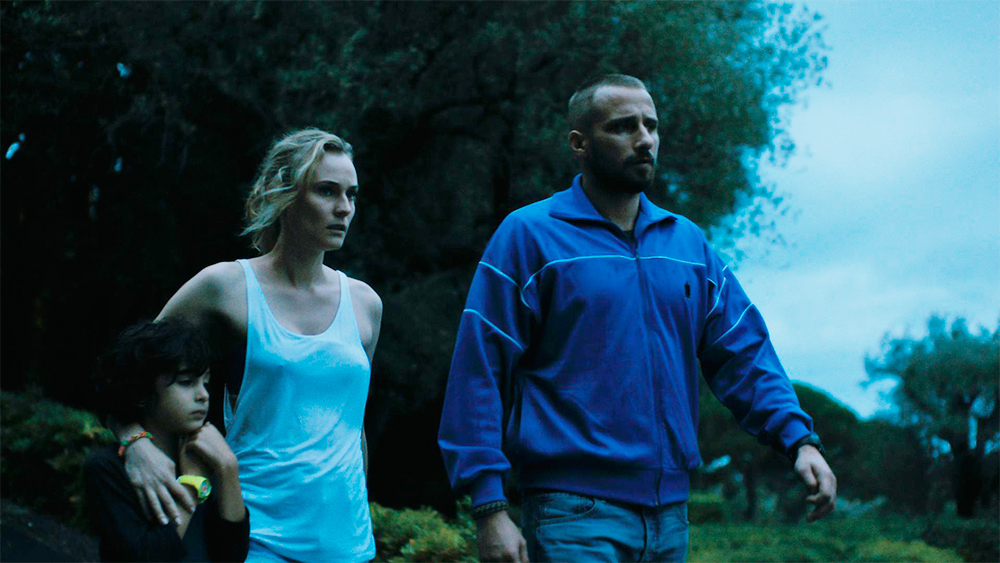
Vincent (Schoenaerts) is a soldier suffering from post traumatic stress disorder following a tour in Afghanistan. A medical reveals a variety of associated problems, all of which mean he’s unable to remain in the army. Given a medical discharge, he goes back home but struggles to make sense out of being there. Soon, though, he accepts a job from his friend and ex-comrade, Denis (Hamy). Working as part of a security detail at a party held at a villa called Maryland on the French Riviera, Vincent’s suspicions about the host, Imad Whalid (Kemp), and at least one of his guests – allied with an interest in the host’s wife, Jessie (Kruger) – lead nowhere (albeit initially). It’s a surprise then that the next day, Denis advises Vincent that he’s been chosen to play bodyguard to Whalid’s wife and child, Ali (Errougui-Demonsant), while Whalid is away on business for a couple of days.

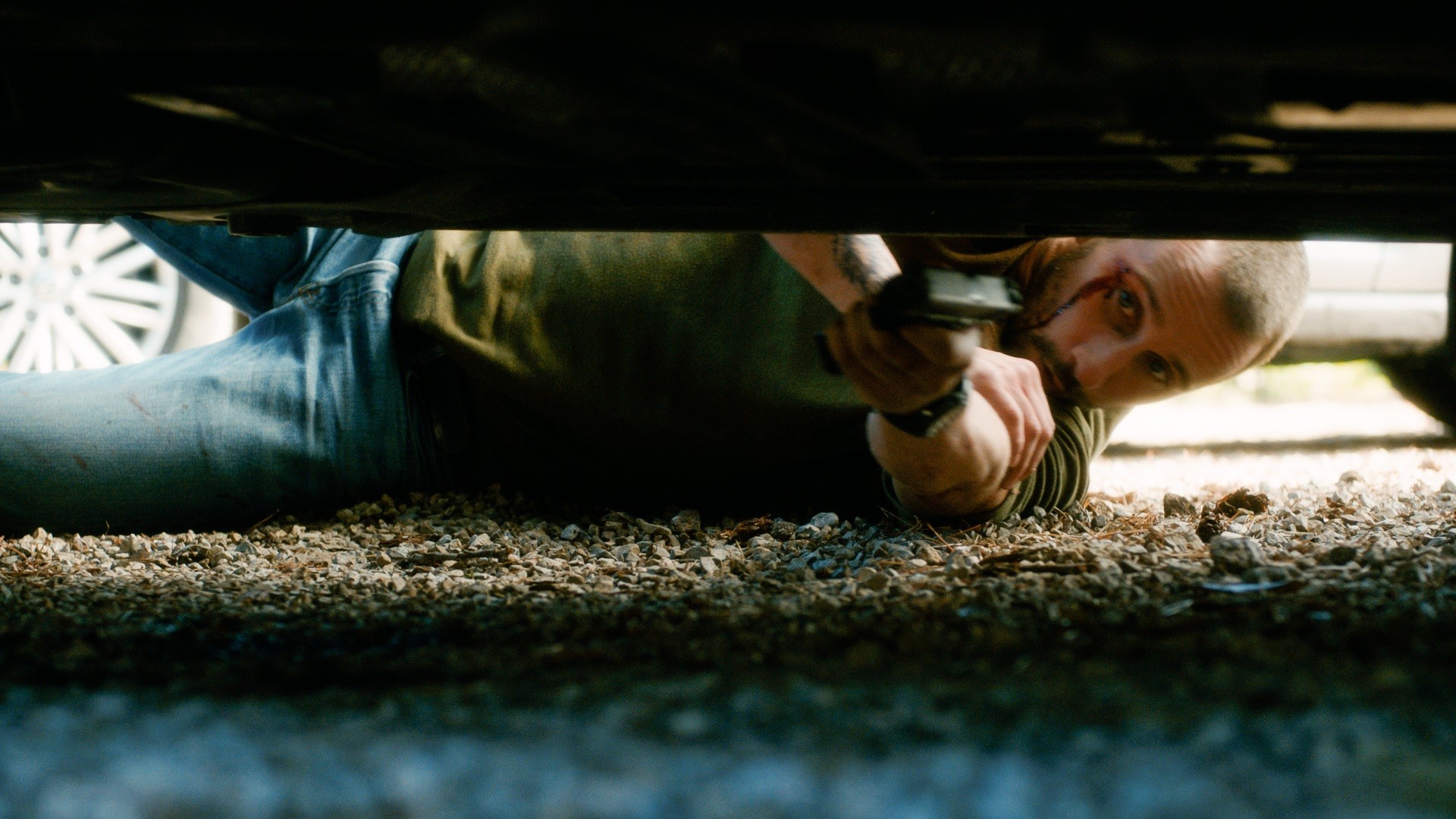
Vincent takes his new assignment seriously but finds Jessie barely acknowledges that he’s there. Ali seems more intrigued by Vincent’s presence but is a shy child who doesn’t say much. A trip to the beach passes without incident until the trio begin to make their way back to Maryland. Their car is rammed and masked men attempt to abduct Jessie. Vincent fights them off, killing one and wounding another before they take flight. Afterwards, at a police station, he and Jessie are both interviewed about the attack but Vincent is convinced by their line of questioning that the police are more interested in Whalid than they are in the attempted abduction. Back at the villa, he and Jessie find it’s been ransacked and the staff are no longer there.

Disorder - scene2

Matters are made more complicated by the news that Whalid has been arrested. His lawyer advises Jessie to stay at the villa, but Vincent believes they should go somewhere else. Jessie overrules him, and even though the police have arranged for officers to keep watch outside the front gates, Vincent decides to call Denis and get him to come over. Feeling more confident with his old army buddy there, Vincent is still sure that the house will come under attack before long. And then the police detail is removed, and Vincent’s worst fears begin to come true…

Alice Winocour’s first (and previous) movie was the erotically charged Augustine (2012), based on the relationship between a pioneering 19th Century French neurologist and his star patient, a partially paralyzed kitchen maid. If bets had been taken as to the content of her follow-up feature, it’s unlikely anyone would have chosen this dour contemplation on the effects of PTSD on an already withdrawn ex-soldier. But thanks to a committed and largely internalised performance from Schoenaerts, the character of Vincent is dependable instead of unreliable, and focused on keeping his charges safe. Winocour and co-screenwriter Jean-Stéphane Bron have taken what seems to be an odd tack at first, using Vincent’s PTSD to define the character and set up audience expectations.
Disorder - scene1

But Winocour doesn’t allow Vincent to tread an obvious path in terms of how the narrative develops. As it becomes clear that he and Jessie, Ali and Denis are going to come under siege, Vincent’s paranoid suspicions prove all too real, enabling him to deal with the situation effectively and, at one point, quite brutally. That one moment of brutality aside, Vincent acts swiftly and purposefully, leading the viewer to realise that his PTSD is what is going to keep them all alive, and that without it he may not be as resolute as he needs to be. It’s an interesting approach to what is essentially a mental illness, and though both Winocour and Schoenaerts downplay this aspect of the material – and certainly it’s jettisoned once the police detail is called off – there are enough echoes and quietly realised moments to remind the viewer that Vincent is always going to be just that little bit “damaged”.

Ultimately, Disorder is a mix of European arthouse character study and recognisably French thriller tropes. As you might expect, Winocour employs lots of close ups to help establish Vincent’s thoughts and feelings, and Schoenaerts’ often blank expression is betrayed by what’s going on with his eyes. He’s the movie’s focus, and we learn everything we need to know from an assortment of frowns and glances. The camera records them all, and soon we have a visual lexicon to refer to, as Vincent reveals more and more of himself (and possibly without his being aware he’s doing so). It’s in these moments that Schoenaerts excels, combining his imposing physical presence with a complex, sympathetic portrait of a man struggling, and finding, a reason not to be defined by his illness.
Disorder - scene3

Opposite Schoenaerts, Kruger has much less to do, but this is due mainly to the script’s decision to focus on Vincent at the expense of the other characters. Jessie is a woman who turns a blind eye to her husband’s business activities, content to look after their child and reap the obvious benefits. When Vincent confronts her with the reality of Whalid’s occupation, her reaction is hardly any reaction at all, and Vincent’s distaste washes over her with little effect. Kruger handles this convenient apathy with ease, but still manages to retain the audience’s sympathy for the situation she finds herself in. The actress has made some great choices in recent years – her performance in The Better Angels (2014) is a good example – and this is another quietly impressive portrayal from someone who could so easily have remained typecast because of her looks.

It’s also good to report that the thriller elements of Disorder are also well executed, particularly the attack on the car, which is filmed for the most part from within the car and which has an immediacy and an urgency that a lot of so-called out-and-out thrillers fail to achieve. While Vincent, Jessie, Ali and Denis wait in the villa for something to happen, the script allows them a brief interlude for laughter, but even then there’s a sense of foreboding, a certainty that the home invasion we all know is coming could happen right then and there. Again, Winocour shows a confidence in the material that for once doesn’t rely heavily on the same old tired thriller elements (even though she can’t resist having one of the intruders pass by in the background at one point), and there’s an understated tension to the final half an hour that’s maintained with a great deal of patience and aplomb.

Rating: 8/10 – part character study, part taut thriller, Disorder manages to unite both elements to impressive effect, and features a superb, well-modulated performance from Schoenaerts; a little slow to start with, but full of clever touches that enhance the material, the movie is both conventional and surprisingly unconventional at the same time, a rare feat these days and a very welcome one at that.

Share this:

  • Click to share on X (Opens in new window) X
  • Click to share on Facebook (Opens in new window) Facebook
  • More
  • Click to print (Opens in new window) Print
  • Click to email a link to a friend (Opens in new window) Email
Like Loading...

The Danish Girl (2015)

17 Sunday Jan 2016

Posted by dullwood68 in Movies

≈ Leave a comment

Tags

1926, Alicia Vikander, Amber Heard, Artists, Ben Whishaw, Copenhagen, Denmark, Drama, Eddie Redmayne, Einar Wegener, Gerda Wegener, Lili Elbe, Literary adaptation, Matthias Schoenaerts, Painting, Sex change, Tom Hooper, Transgender, True story

The Danish Girl

D: Tom Hooper / 119m

Cast: Eddie Redmayne, Alicia Vikander, Matthias Schoenaerts, Ben Whishaw, Sebastian Koch, Amber Heard, Adrian Schiller, Pip Torrens

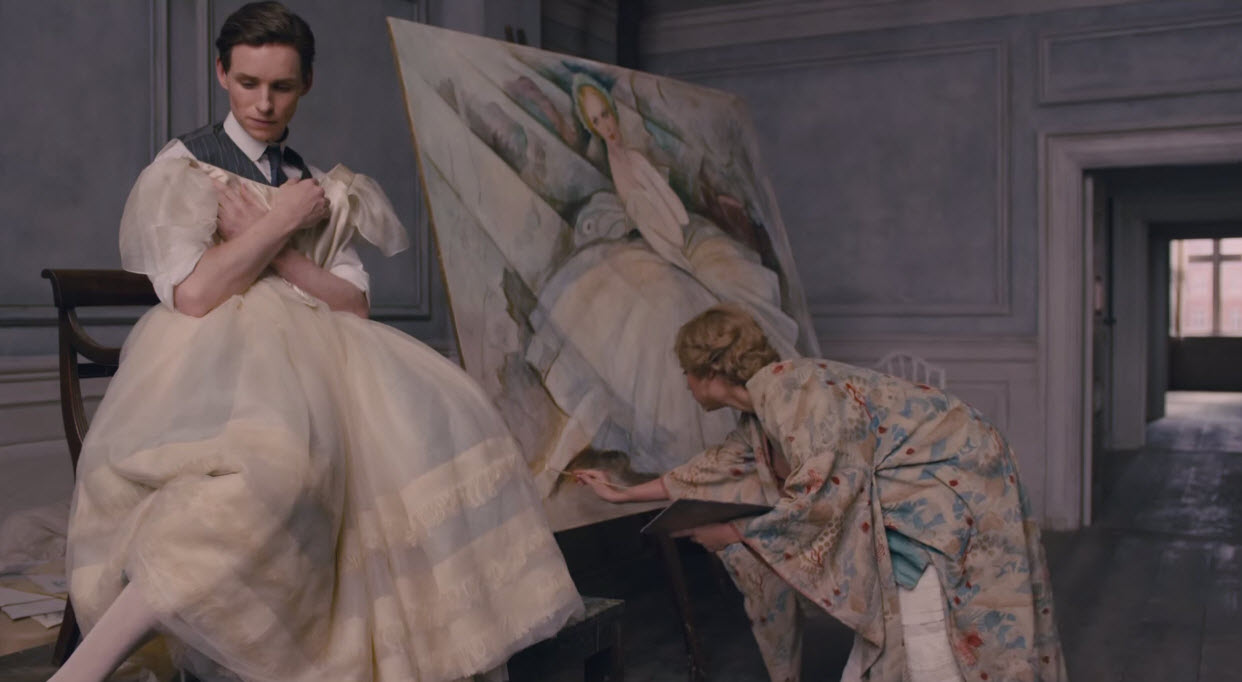
Copenhagen, 1926. Einar Wegener (Redmayne) is a celebrated painter and husband to fellow painter Gerda (Vikander). They live in a big house by a canal and appear to be blissfully happy together, despite Gerda’s work being passed over by the local art dealer (Schiller), and despite not having had a child together in the six years they’ve been married. They are well regarded amongst their friends and contemporaries, including Ulla (Heard), a dancer who Gerda has agreed to paint a portrait of. One day Ulla is late for her sitting and Gerda asks Einar to take her place. He puts on stockings and shoes and covers himself with a dress; the effect of having the dress next to him reawakens old feelings from his childhood. When Ulla does arrive she’s delighted to see her “substitute” and tells Einar he should be known as Lili.

Later, Gerda discovers Einar is wearing one of her nightgowns under his clothes. She accepts this and the next morning while he sleeps she sketches him, giving him an androgynous look. When Einar refuses to attend an artist’s ball, Gerda prompts him to attend in disguise, as his “cousin” Lili. She intends it to be a game while Einar is secretly pleased to be able to dress as a woman. At the ball, Lili attracts the attention of Henrik (Whishaw) who engineers a situation where he kisses her. This initially confuses Einar but the urge to continue as Lili is stronger and he continues to see Henrik secretly.

TDG - scene1

When their relationship ends, Einar makes the decision to be Lili most of the time. Out of this, Gerda finds her muse, and her paintings of Lili begin to gain attention. When her work is noticed by art dealers in Paris, she takes the opportunity to go there, and succeeds in persuading Einar to come with her. It’s good timing, as Einar has been seeking treatment for what he believes is a condition that can be resolved, but most doctors believe he is either insane or perverted and want to see him committed. In Paris, Gerda contacts Einar’s childhood friend and art dealer Hans Axgil (Schoenaerts), but when she brings Hans back to their apartment, they find Lili there instead of Einar.

At this time Einar and Gerda hear about a German doctor who is interested in people like Einar who feel like they are a woman trapped inside a man’s body. The doctor, called Warnekros (Koch), is trying to pioneer the kind of surgery that will allow a man to become a woman, complete with female genitals. Einar agrees to undergo the procedures necessary as he feels this is his best chance of becoming the person he really is – Lili. Meanwhile, Gerda’s conflicting emotions about her husband lead her to skirt perilously close to having an affair with Hans.

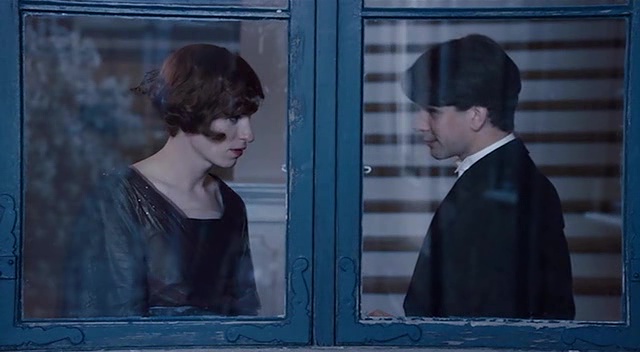
At one point in The Danish Girl, Einar Wegener visits a Paris brothel and watches through a window as a young woman sensuously caresses herself. He mimics her movements, and in doing so, has an orgasm. It’s a telling moment, as Einar’s need to be a woman finds expression in a moment of heightened sexuality. It’s also the point at which the movie makes it clear to the audience that Einar’s condition isn’t the result of some mental incapacity, or a chemical imbalance. This is where Einar truly becomes Lili, even if he still has to dress as a man on certain occasions.

TDG - scene3

Lili’s story has been told in her own words in the book, Man into Woman: The First Sex Change, published in 1933, and drawn largely from the diary entries she wrote while undergoing her sex change procedure. The Danish Girl takes the book as a starting point and tells Lili’s story with a stately precision that both heightens the drama and allows room for Hooper to delve deeply into the relationship between Einar and Gerda and Lili herself. For this to work, the movie needed two actors capable of navigating the intricacies of gender confusion and emotional displacement, as Einar embarks on his all-consuming journey to become Lili, and Gerda tries to come to terms with losing the only man she’s ever loved. Fortunately, the movie has Redmayne and Vikander in it, and these two amazingly versatile actors keep the movie from being as dreary and confined as the movie’s backdrop (the movie is a triumph of muted colours and dull settings).

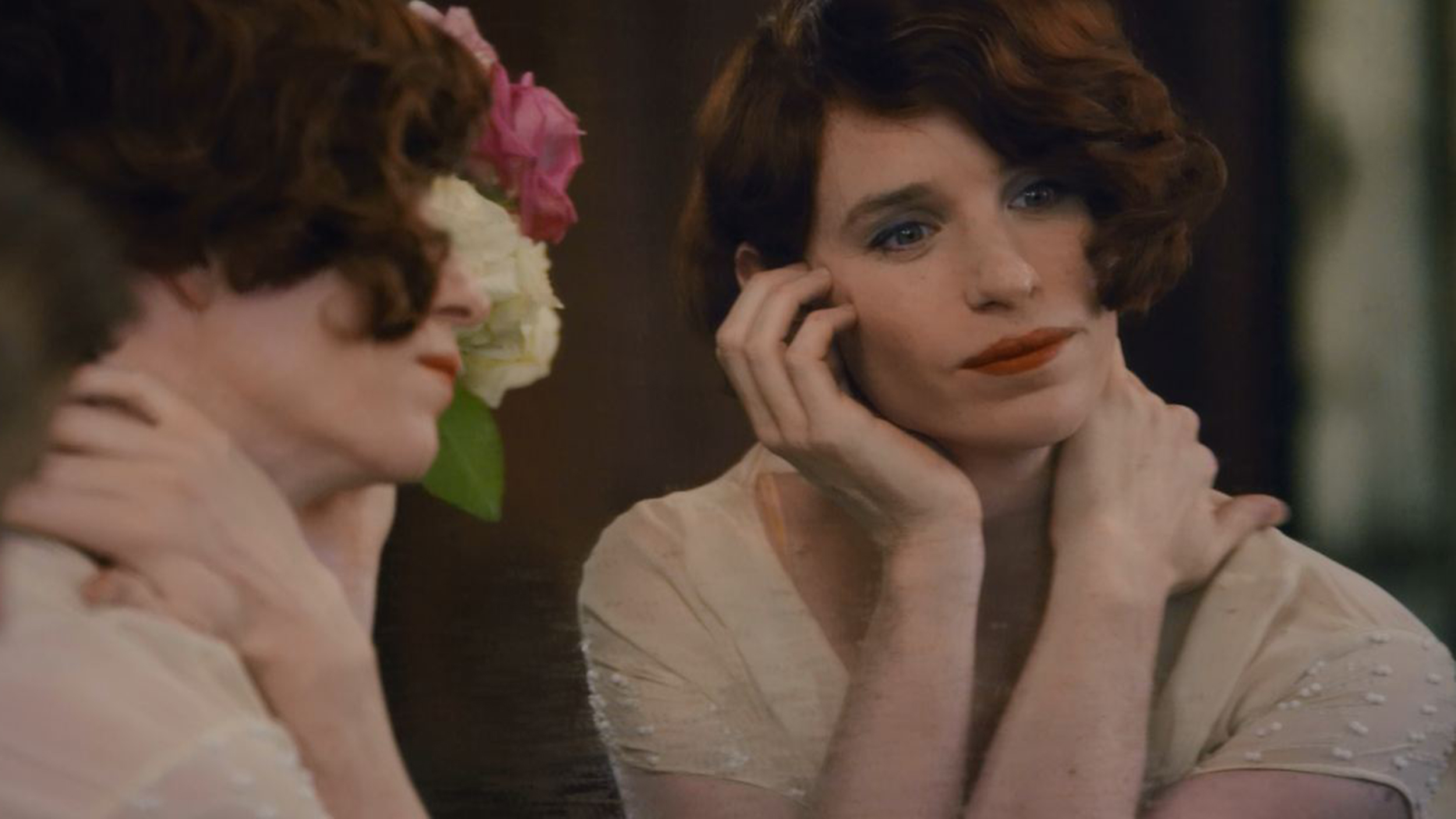
Redmayne is on superb form here, portraying Einar’s transformation from tormented man to blissfully happy woman with so much tenderness and understanding of the mixed emotions both Einar and Lili must have felt that it’s impossible to detect a false note anywhere in his performance. It’s hard to think of another actor who could have portrayed the two roles so effectively. And he’s matched by Vikander, an actress who goes from strength to strength in every movie she makes (even if it’s The Man from U.N.C.L.E.). She takes what could have been a secondary character and imbues her with a clear-sighted intelligence and emotional resilience that complements Redmayne’s performance and ensures that Gerda’s part in all this isn’t forgotten or given less importance. Their scenes together have such a charge that some of them leave the viewer on the edge of their seat, poised to see how their relationship will develop and how much their love for each other will see them through.

TDG - scene2

As mentioned above, Hooper directs in a stately manner he seems to have picked up from watching too many heritage movies, and while this doesn’t disadvantage the movie completely, it does lead to moments where the passage of time – on screen at least – seems slower than it actually is (the events here take place over four years, but you wouldn’t know it otherwise). Some viewers may find their patience tested on these occasions but this is a movie that draws you in with its performances and proves compelling because of them. Few movies take the time to examine in detail how their characters feel, and why, but The Danish Girl – thanks to Lucinda Coxon’s screenplay – does it throughout and with an honesty that uplifts what could have been an entirely depressing story. But then again, this is a movie about courage and determination against the odds, and at a time when transgender issues were only just beginning to be addressed by the medical community. And the movie tackles these issues with a tremendous amount of sympathy and compassion.

The movie has another distinguished, evocative score courtesy of Alexandre Desplat, and is beautifully framed and shot by Danny Cohen (though again, Hooper’s choice of muted colours remains an issue). And Melanie Oliver’s editing is another strength, her ability to utilise a combination of static shots and measured cutting helping to improve the visual style. Away from the main story, the movie drops the ball on only two occasions: with the subplot involving Gerda’s attraction to Hans, which is unnecessary and would seem more relevant if this were a soap opera; and Lili’s relationship with Henrik, which isn’t explored fully, and which adds confusion to the already confused state she’s in at the time (just what is their relationship about?). But these issues aside, the movie is the kind of intelligent, clearly defined movie making that doesn’t come along very often, and which does enormous justice to its central characters.

Rating: 8/10 – with a virtuoso performance from Redmayne, and an equally impressive turn from Vikander, The Danish Girl is a riveting true story about the recipient of the world’s first sex change operation; impressively mounted, and with an honesty that permeates every scene, this is a movie well worth investing the time with, and which rewards on almost every level.

Share this:

  • Click to share on X (Opens in new window) X
  • Click to share on Facebook (Opens in new window) Facebook
  • More
  • Click to print (Opens in new window) Print
  • Click to email a link to a friend (Opens in new window) Email
Like Loading...

Far from the Madding Crowd (2015)

30 Sunday Aug 2015

Posted by dullwood68 in Movies

≈ Leave a comment

Tags

1870, Carey Mulligan, Dorset, Drama, Historical drama, Literary adaptation, Matthias Schoenaerts, Michael Sheen, Review, Romance, Thomas Hardy, Thomas Vinterberg, Tom Sturridge, Weatherbury

Far from the Madding Crowd

D: Thomas Vinterberg / 119m

Cast: Carey Mulligan, Matthias Schoenaerts, Michael Sheen, Tom Sturridge, Juno Temple, Jessica Barden, Hilton McRae, Bradley Hall

1870. Bathsheba Everdene (Mulligan) shelling out on her aunt’s farm in Dorset. Her aunt’s neighbour, Gabriel Oak (Schoenaerts), is a shepherd with a hundred acres and two hundred sheep. One day he proposes marriage to Bathsheba but she rejects his offer, telling him that she is too independent for him and he would never be able to tame her. Soon after, Gabriel’s sheep are all killed when his sheepdog herds them over a cliff; unable to keep his farm going he is forced to sell up and move on. Bathsheba is sorry to see him go, but her sadness is by the news that she has inherited her uncle’s estate in Weatherbury.

Determined to run the estate herself, Bathsheba brooks no nonsense from her staff. Now a wandering worker for hire, Gabriel learns of a position as shepherd on the estate. When he arrives there he and Bathsheba are both pleased to see each other again, but she insists on the proper formalities now that she is his employer. When her efforts attract the attention of her neighbour, William Boldwood (Sheen), he too proposes marriage as Gabriel did. Bathsheba turns him down as well, and when she and Gabriel discuss the matter, his dislike for the way she treated Boldwood leads to her telling him to leave. But a problem with the sheep gives her no choice but to rehire him.

Some time later, Bathsheba is walking the grounds of her estate one night when she unexpectedly meets ex-soldier Francis Troy (Sturridge). He tells her she’s beautiful, but although she’s pleasantly surprised she tells him to leave. When she finds Troy helping with the harvest the next morning, she again tells him to leave, but before he does he manages to persuade her to meet him the next day. When she does, he proposes to her, and this time she accepts. They marry – against Gabriel’s advice – and Troy’s rapacious nature reveals itself. He milks the estate for money and treats Bathsheba like she’s his property. But his past comes back to haunt him in the form of Fanny Robbin (Temple), a young woman he was betrothed to but who went to the wrong church on their wedding day. She tells him she’s carrying his child; he agrees to meet her the next day but she doesn’t show up. Later, her discovered corpse is taken to Weatherbury (because she was a servant there). When Troy sees the body he tells Bathsheba she is nothing to him, and he leaves. He swims out to sea and Bathsheba is informed of his drowning. With the estate’s fortunes in jeopardy because of Troy’s gambling, Bathsheba is once more offered support from William Boldwood…

Carey Mulligan as "Bathsheba" and Matthias Schoenaerts as "Gabriel" in FAR FROM THE MADDING CROWD. Photos by Alex Bailey.  © 2014 Twentieth Century Fox Film Corporation All Rights Reserved

Leaving aside any comparison with John Schlesinger’s 1967 version, Far from the Madding Crowd is a hard movie to enjoy, determined as it is to play down the passion inherent in Thomas Hardy’s novel, and the social proprieties of the period. Thanks to the adaptation and screenplay by David Nicholls, and Thomas Vinterberg’s pedestrian direction, the movie fails to ignite at any point, preferring instead to tread safely along, ticking off the novel’s high points like a classroom exercise. This leaves the unlucky viewer wondering if and when the pace will pick up, or the buttoned-down emotions will ever be released in a way that can be recognised or acknowledged.

For this is a movie that trades on lingering looks and silent expressions. Bathsheba and Gabriel do little else but show their attraction for each other by looking pointedly and often at each other (God forbid anyone should display their feelings – William Boldwood excepted). So much is left unspoken there are moments that wouldn’t feel out of place in a silent movie. No doubt this is to allow Mulligan and Schoenaerts to “act” but instead it drags the movie along, and leaves both of them somewhat stranded, as the audience waits patiently for their expected romance to finally come to fruition (once Troy and Boldwood are dispensed with).

There’s also the sense that somewhere along the way – the editing stage, probably – the decision was taken to fit the movie to a two-hour running time, because this is a movie that feels hurried and disjointed at the same time. Some scenes feel truncated, while others feel as if they’re missing the one that should have come before. It’s an odd feeling, and never really goes away, even though the movie becomes more interesting once Bathsheba is married and it holds the attention a little better. Presented in this fashion, though, leads to the movie feeling like the edited version of a mini-series. (If there’s a Director’s Cut on the horizon, then a three-hour version wouldn’t come as a surprise.)

Against this, the performances are solid if unspectacular, though Sheen is a standout as the troubled yet hopeful Boldwood, the scene where he reveals his feelings about Bathsheba to Gabriel a small masterclass in making more from stilted dialogue than would seem possible. Mulligan convinces as a free spirit (though not as a woman instantly lovestruck by the romantic attentions of a soldier), while Schoenaerts gives such a laid-back performance it’s tempting to have his pulse checked from time to time. As the dashing Troy, Sturridge acts with his top lip to the fore, and delivers his lines as if he was reading from The Young Rogue’s Guide to Eligible Damsels. And Temple is wasted as Fanny, reduced to a few scenes and given little more to do than pop in and out of the narrative as required.

What saves the movie is Charlotte Bruus Christensen’s luminous landscape photography, allied to some richly detailed interiors, and a recreation of the period that feels exactly as it would have been. Beyond that, Craig Armstrong’s score is used sparingly and with surprising acuity, the few emotional scenes left free of music so as to focus the viewer’s attention on the scene itself, and not manipulate them into feeling the “correct” emotion. It’s a rare feat, but it works well here (unlike the scenes themselves).

Rating: 5/10 – sluggish and only fleetingly engaging, Far from the Madding Crowd looks and feels like a movie that deserves a better, more considered approach; while hitting its mark sporadically may account for some of the kinder reviews out there, this is still a major disappointment from Vinterberg, and if you’re a fan of Hardy, a letdown as well.

Share this:

  • Click to share on X (Opens in new window) X
  • Click to share on Facebook (Opens in new window) Facebook
  • More
  • Click to print (Opens in new window) Print
  • Click to email a link to a friend (Opens in new window) Email
Like Loading...

Mini-Review: A Little Chaos (2014)

27 Monday Jul 2015

Posted by dullwood68 in Movies

≈ Leave a comment

Tags

Alan Rickman, Drama, France, Helen McCrory, History, Horticulture, Kate Winslet, Landscape gardening, Louis XIV, Matthias Schoenaerts, Period movie, Review, Romance, Stanley Tucci, Versailles

Little Chaos, A

D: Alan Rickman / 116m

Cast: Kate Winslet, Matthias Schoenaerts, Alan Rickman, Helen McCrory, Stanley Tucci,  Steven Waddington, Jennifer Ehle, Paula Paul, Danny Webb

France, 1682. At the behest of King Louis XIV (Rickman), landscape garden designers are invited to submit their designs for the planned new gardens at the Palace of Versailles. Sabine De Barra (Winslet), a widow who has a keen eye for the disruptive yet beguiling influence that disorder can have on a garden, meets with the King’s renowned landscape architect, André Le Notre (Schoenaerts). He is concerned by her attitude and lack of formal training, but he nevertheless hires her to build one of the main gardens at Versailles, the Rockwork Grove.

Sabine begins her work in earnest but is initially hampered in her efforts by the other, male, designers. Le Notre intervenes for her, and as her design begins to take shape, he finds himself increasingly attracted to Sabine, despite his being married. He takes to spending more time with her, something which his wife (McCrory) notices. While Le Notre wrestles with his sense of honour and marital duty, Sabine unwittingly earns the respect of the King, and also his brother, Philippe (Tucci). As the project nears completion, Sabine is invited to attend the King’s court, where her honesty and subtle persuasiveness earns her many friends among the ladies in waiting – all except one, who decides to sabotage Sabine’s design…

Little Chaos, A - scene

An old-fashioned heritage picture, A Little Chaos – Rickman’s second directorial feature after The Winter Guest (1997) – is a movie that will sit well with anyone who’s seen similar movies from the Thirties, replete as it is with a woman battling against the preconceptions of her gender and the sexism of the times, a romance where convention says the couple should remain apart, and a minimal amount of political intrigue at the King’s court. It’s a pleasant movie to watch, not least because of Winslet’s emotive yet (mostly) carefully detailed performance, and shows Rickman is adept at staging scenes for their maximum emotional effect as well as their visual splendour.

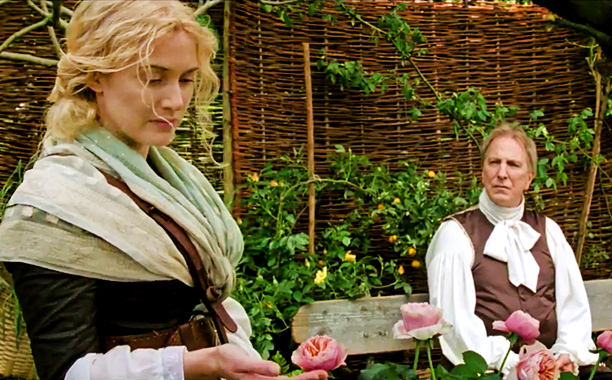
And yet, while the movie has plenty of positives about it, it’s let down by the romantic storyline, with Le Notre and Sabine’s ardour for each other feeling watered down and sounding less than enthusiastically entered into. Schoenaerts never looks entirely comfortable in these scenes, and Winslet too seems unsure of how to play the drama of their situation. In contrast, the scene where Sabine and the King exchange views on gardening and various flowers, is laden with subtext and deliberate innuendo, leaving the viewer with no doubt that, in a different life, the romance would be between them and not Sabine and Le Notre.

Rickman is a generous director when it comes to his cast, and he finds a willing aide in Ellen Kuras’ often stunning cinematography, for the movie is beautiful to look at. And as historical romantic dramas go there’s a degree of humour that helps leaven the seriousness of the story, while Tucci’s flamboyant Philippe gives the movie a much needed boost just as it was starting to sag. And there’s a wonderful, non-intrusive score courtesy of Peter Gregson.

Rating: 7/10 – enjoyable if lacking in any appreciable depth, A Little Chaos is gentle, harmless, and a pleasant diversion from this year’s slew of mega-blockbusters; with Winslet, Rickman and McCrory winning the acting plaudits, this trip back to 17th Century France is an undemanding one but worth seeing nevertheless.

Share this:

  • Click to share on X (Opens in new window) X
  • Click to share on Facebook (Opens in new window) Facebook
  • More
  • Click to print (Opens in new window) Print
  • Click to email a link to a friend (Opens in new window) Email
Like Loading...

Monthly Roundup – May 2015

31 Sunday May 2015

Posted by dullwood68 in Movies

≈ Leave a comment

Tags

Antonio Banderas, Art heist, Artificial intelligence, Ballard Berkeley, Bat Masterson, Berlin, Boston, Bullying, Burger Beard, Chappie, Christopher Plummer, Clancy Brown, Comet, Conrad Phillips, Crime, Dave Franco, Dead body, Drama, Emmy Rossum, Eric Stonestreet, Father/son relationship, Frank R. Strayer, Gay bar, George Pastell, Glory holes, Hugh Jackman, Impact, Irene Ware, James Marsden, Joel McCrea, John Miljan, John Travolta, Joseph M. Newman, Julie Adams, Justin Long, Karl Urban, Ken Scott, Krabby Patty formula, Matthias Schoenaerts, Monthly roundup, Murder at Glen Athol, Murder mystery, Neill Blomkamp, Peter Maxwell, Philip Martin, Plankton, Review, Romance, Sam Esmail, Sharlto Copley, Sienna Miller, SpongeBob Squarepants, Swarf, The Duke, The Forger, The Gunfight at Dodge City, The Loft, The Spongebob Movie: Sponge Out of Water, Thriller, Tom Denny, Tom Wilkinson, Tye Sheridan, Unfinished Business, Vince Vaughn, Wentworth Miller, Western

There’s a phrase that everyone will be familiar with: “Too many [insert item here], too little time”. When it comes to the number of movies that I watch in any given month, that phrase is apt in relation to the ones that get reviewed here on thedullwoodexperiment. I would love to have the time to post reviews of all the movies I see, but it’s just not practical; and besides which, some movies just don’t merit the attention (Annabelle (2014), for instance). Sometimes it’s a case of choosing one movie over another, sometimes Life gets in the way of blogging and a movie falls by the wayside. To combat this, and to give these “other” movies their due, I’ve decided to present, at the end of each month, a brief “review” of all the other movies I’ve seen. There won’t be any synopsis, or proper full-length analysis, just the title, director, running time, cast, and then the traditional two sentence ratings summation. So, let’s see which movies didn’t quite make the cut in May 2015.

The Forger (2014) / D: Philip Martin / 96m

Cast: John Travolta, Christopher Plummer, Tye Sheridan, Abigail Spencer, Anson Mount, Marcus Thomas, Jennifer Ehle, Travis Aaron Wade

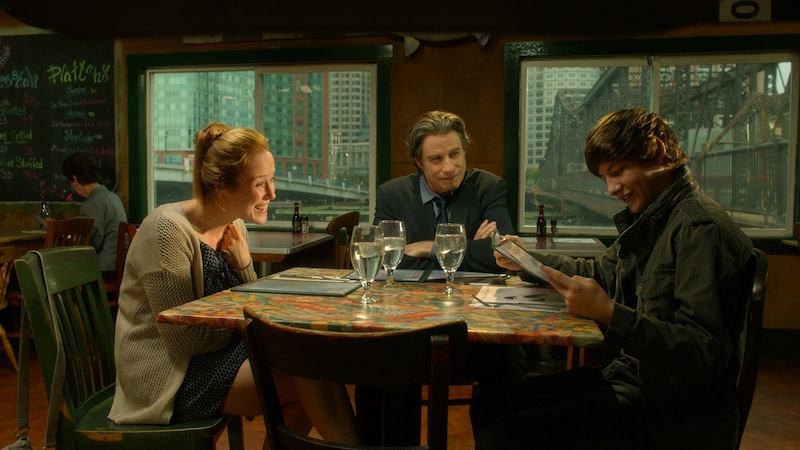
Rating: 5/10 – Travolta’s art forger comes out of prison to spend time with his dying son (Sheridan) and pull off an audacious robbery; a derivative, occasionally unappealing crime drama that tries to do something different with its dying child angle, The Forger is nevertheless a movie whose “one last heist” scenario has been done to death elsewhere, and with far better results.

Forger, The - scene

The Gunfight at Dodge City (1959) / D: Joseph M. Newman / 81m

Cast: Joel McCrea, Julie Adams, John McIntire, Nancy Gates, Richard Anderson, James Westerfield, Walter Coy, Don Haggerty, Wright King, Harry Lauter

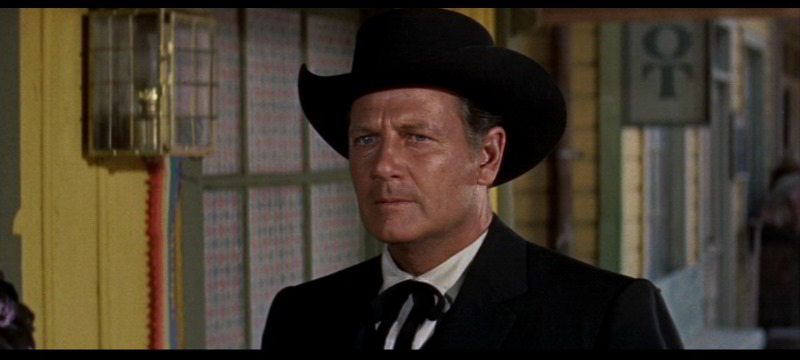
Rating: 6/10 – Western legend Bat Masterson (McCrea) tackles corruption supported by Haggerty’s devious sheriff in Dodge City and faces romantic problems as well from minister’s daughter Adams and saloon owner Gates; a middling, mildly diverting Western, The Gunfight at Dodge City benefits from McCrea’s solid, no-nonsense performance and Newman’s underrated abilities behind the camera.

Gunfight at Dodge City, The - scene

Comet (2014) / D: Sam Esmail / 91m

Cast: Justin Long, Emmy Rossum

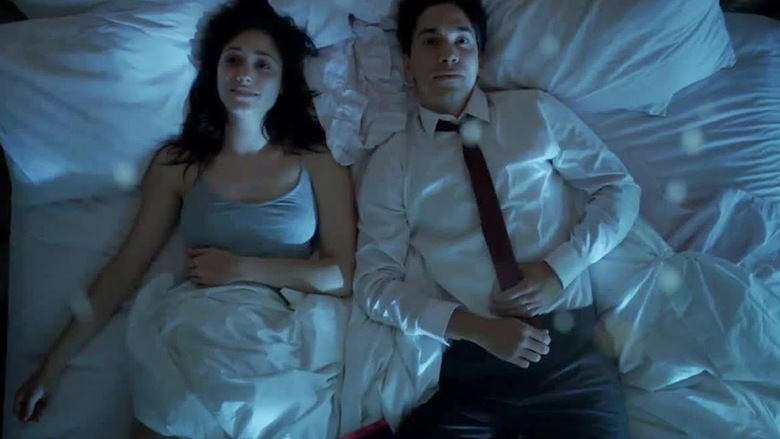
Rating: 7/10 – Long and Rossum are the soulmates whose on-again-off-again relationship is examined over the course of six years; with the narrative continually fractured and reassembled, Comet is replete with the kind of “serious” romantic musings that sound alternately pretentious and profound, but the two leads have a definite chemistry and this helps immensely in making the movie as enjoyable as it (largely) is.

Comet - scene

Murder at Glen Athol (1936) / D: Frank R. Strayer / 67m

Cast: John Miljan, Irene Ware, Iris Adrian, Noel Madison, Oscar Apfel, Barry Norton, Harry Holman, Betty Blythe, James P. Burtis

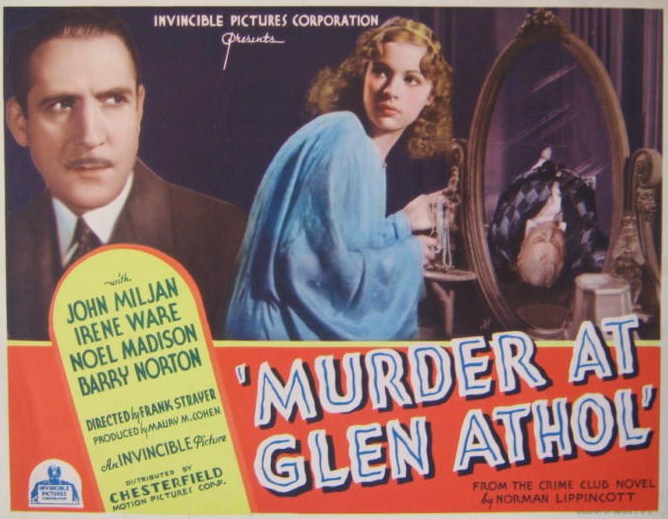
Rating: 5/10 – two murders and a dying confession confuse matters for a detective (Miljan) who’s just trying to take a vacation – next door to where the murders have taken place; packed full of seemingly endless exposition and no shortage of suspects, Murder at Glen Athol is a sprightly murder mystery that packs a lot in but not always to its best advantage.

Murder at Glen Athol

The SpongeBob Movie: Sponge Out of Water (2015) / D: Paul Tibbitt / 92m

Cast: Antonio Banderas, Tom Kenny, Clancy Brown, Bill Fagerbakke, Rodger Bumpass, Mr. Lawrence, Carolyn Lawrence

Rating: 7/10 – when the formula for Krabby Patty is stolen by the notorious Burger Beard (Banderas), SpongeBob (Kenny) is forced to team up with Plankton (Mr. Lawrence) to get it back… and venture above the surface; freewheeling fun with the denizens of Bikini Bottom that features lots of gags and the usual bright visuals, but takes an awfully long time in getting to the “sponge out of water” part.

SpongeBob Movie, The

Chappie (2015) / D: Neill Blomkamp / 120m

Cast: Sharlto Copley, Dev Patel, Hugh Jackman, Ninja, Yo-Landi Visser, Jose Pablo Cantillo, Sigourney Weaver, Brandon Auret, Johnny Selema

Rating: 6/10 – with a robot police force firmly established in Johannesburg, the introduction of artificial intelligence leads to one robot, named Chappie, learning what it’s like to be human; disappointing outing from Blomkamp that never quite gels or seems sure of what it’s trying to do or say, but does feature an excellent performance from Copley.

Chappie

Impact (1963) / D: Peter Maxwell / 61m

Cast: Conrad Phillips, George Pastell, Ballard Berkeley, Linda Marlowe, Richard Klee, Anita West, John Rees

Rating: 5/10 – when newspaper reporter Jack Moir (Phillips) is framed for robbery by arch-nemesis “The Duke” (Pastell), he swears to get even when he gets out of jail; a low-key crime drama that seems busier than it is and which gets bogged down in the mechanics of Moir’s revenge plot, Impact does allow for a welcome appearance by Berkeley aka Fawlty Towers‘ Major, and an above average performance by Pastell.

Impact

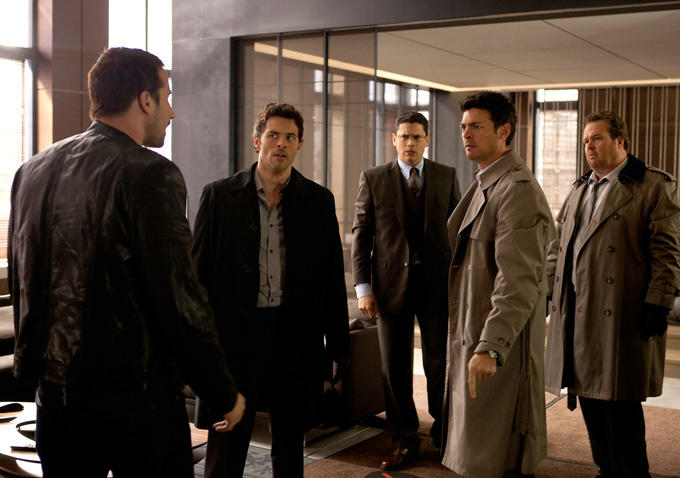
The Loft (2014) / D: Erik Van Looy / 103m

Cast: Karl Urban, James Marsden, Wentworth Miller, Eric Stonestreet, Matthias Schoenaerts, Isabel Lucas, Rachael Taylor, Rhona Mitra, Valerie Cruz, Kali Rocha, Elaine Cassidy, Margarita Levieva, Kristin Lehman, Robert Wisdom

Rating: 6/10 – the discovery of a woman’s dead body in the loft apartment shared by five married men for their secret liaisons prompts them to suspect each other of the crime; alternately gripping and implausible, The Loft is a modern day cautionary tale that loses credibility with its solution then recovers with a great twist, but still has the air of a thriller that its writer never quite got to grips with.

Loft, The

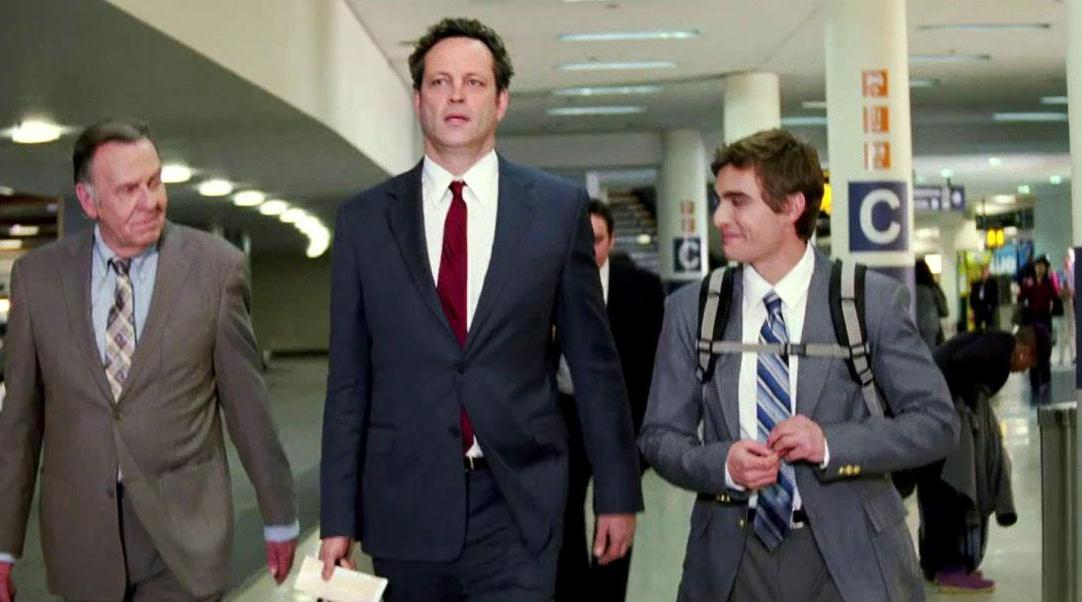
Unfinished Business (2015) / D: Ken Scott / 91m

Cast: Vince Vaughn, Tom Wilkinson, Dave Franco, Sienna Miller, Nick Frost, James Marsden, June Diane Raphael, Britton Sear, Ella Anderson, Uwe Ochsenknecht

Rating: 5/10 – Swarf salesman Dan Trunkman (Vaughn) has to overcome all sorts of obstacles to land the contract that will save his fledgling company from going under, including a visit to a Berlin gay bar; a bit of a strange fish, Unfinished Business suffers from being two separate movies joined at the hip: one a raucous comedy, the other a thoughtful study of bullying, but together they don’t make for a cohesive whole, and it’s yet another movie where Vaughn coasts along on former glories.

Unfinished Business

Share this:

  • Click to share on X (Opens in new window) X
  • Click to share on Facebook (Opens in new window) Facebook
  • More
  • Click to print (Opens in new window) Print
  • Click to email a link to a friend (Opens in new window) Email
Like Loading...

The Drop (2014)

29 Monday Dec 2014

Posted by dullwood68 in Movies

≈ Leave a comment

Tags

Chechen mob, Dennis Lehane, Drama, James Gandolfini, Literary adaptation, Matthias Schoenaerts, Michaël R. Roskam, Murder, Noomi Rapace, Review, Robbery, Thriller, Tom Hardy

Drop, The

D: Michaël R. Roskam / 106m

Cast: Tom Hardy, Noomi Rapace, James Gandolfini, Matthias Schoenaerts, John Ortiz, Elizabeth Rodriguez, Michael Aronov, Ann Dowd, James Frecheville, Tobias Segal

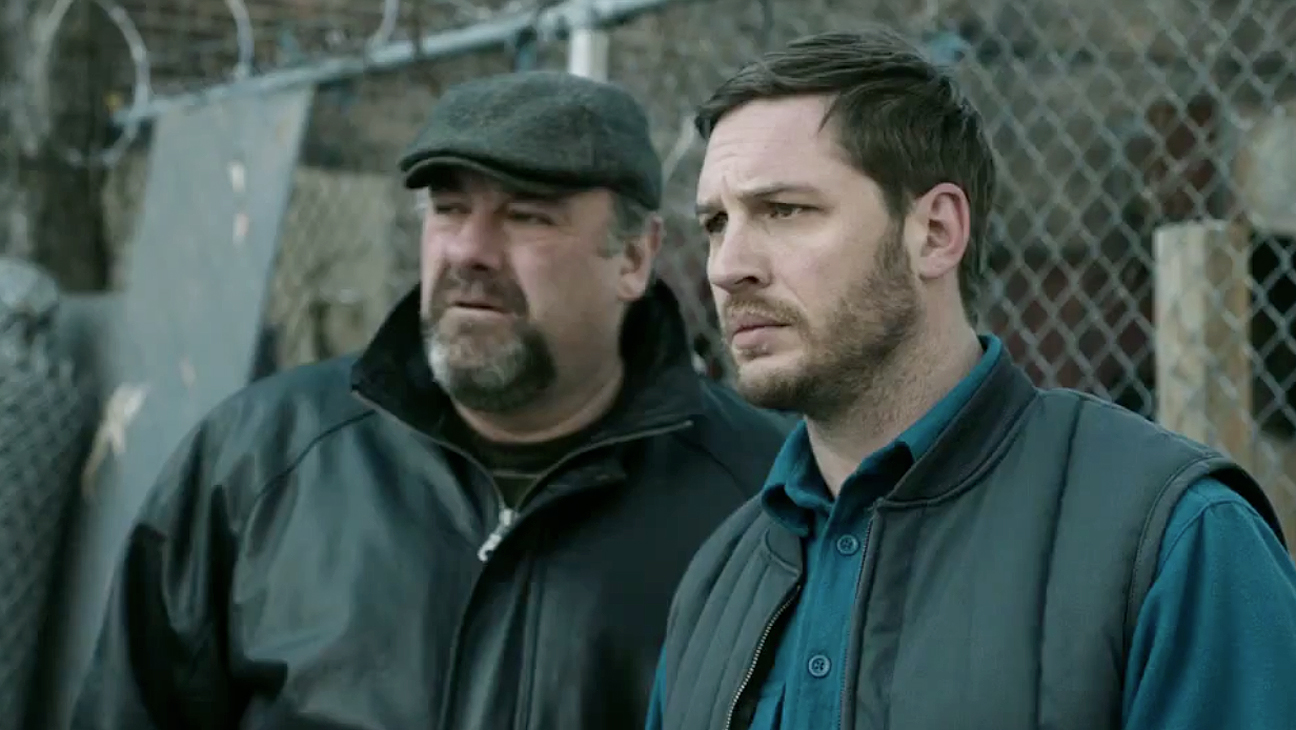
Cousin Marv’s is a bar managed by Marv (Gandolfini). It serves as a “drop bar” for money owed to the Chechen mob (who own the bar). Helping Marv is long-time friend Bob Saginowski (Hardy), a quiet, brooding man who appears somewhat slow-witted. While on his way home one day, Bob discovers an injured dog that’s been dumped in a trash can. As he rescues it, Nadia (Rapace), whose trash can it is, sees him and though wary of Bob at first, helps him with the dog.

The bar is robbed one night by two masked gunmen. They get away with just the money from the till, but it’s the Chechen mob’s money, and Marv will need to get it back. Meanwhile, a local hoodlum, Eric Deeds (Schoenaerts) begins following Bob around. Eventually he visits Bob at his home and tells him he’s the dog’s owner and can prove it, but he makes only veiled threats about going to the police if Bob causes any trouble over it. Deeds is suspected of killing a man named Richie Whelan ten years before, and has a reputation for being unpredictable and violent. It also turns out that he and Nadia (whom Bob is slowly getting closer to) were in a relationship once.

Later on, Bob and Marv find a trash bag that contains the severed arm of one of the gunmen and the money they stole. Bob disposes of the arm, cleans the money of the blood on it, and gives it to the Chechen mob’s enforcer Chovka (Aronov). In return, Chovka tells Bob and Marv that the bar will be the “drop bar” on the upcoming Super Bowl night.

Deeds tells Bob that he wants $10,000 or he’ll go to the police about the dog. He arranges to meet Bob at his home to collect the money but he doesn’t show. Instead he goes to Nadia’s house and tells her they’ll be going away together that night; Nadia is too intimidated to do otherwise. That night, the night of the Super Bowl, they go to the bar where it becomes clear to Bob that Eric is looking to steal the money being dropped off for the mob.

Drop, The - scene

Adapted by Dennis Lehane from his short story, Animal Rescue, The Drop is a quietly impressive, deliberately paced crime drama that features strong performances from its four leads, intelligent direction, and a slow build up in tension that benefits the movie greatly. There’s not a lot that’s new here, but The Drop is a movie where there’s just enough misdirection and plot-tweaking to keep the audience guessing at what’s going to happen next.

A big part of this is due to the character of Bob, as mentioned above, a quiet, brooding man who leads a simple life but lacks certain social skills (his budding romance with Nadia is awkward yet sweet, and proceeds at a hesitant pace that suits them both). As the movie progresses it’s revealed that he and Marv were part of a crew before the Chechens came along, and thanks to Lehane’s well-constructed screenplay and Hardy’s compelling performance, the viewer begins to get a sense that there’s more to Bob than meets the eye. In his dealings with Deeds, Bob is taciturn and compliant but there’s a definite hint of repressed menace there; part of the energy of these scenes is derived from waiting to see if Bob will respond with violence or not.

The threat of violence is palpable throughout, and when it does happen it has an almost cathartic effect, releasing the tension so effectively constructed by Lehane and director Roskam. This is a movie where so much is on the line, and so much is dependent on people doing what’s expected of them that it becomes unnerving when things come to a head. But through it all, Bob treats each new development in such a matter-of-fact way it’s like he’s just an observer. He’s the rock around which the movie is built, and in a role that would defeat a lot of actors, Hardy brings a subtlety and a quiet grace to the role.

In support, Gandolfini reminds us of just how gifted an actor he was, imbuing Marv with a melancholic bitterness that reflects his dismay at being ousted by the Chechens. He’s a man who hasn’t been able to move on, forced to live with his sister (Dowd), and always harking back to the days when he had respect in the neighbourhood. It’s an intense performance, full of the brio we’ve come to expect from Gandolfini, and as his last released movie, a fitting end to his career. As Nadia, Rapace is, somewhat predictably, reduced to playing the girlfriend who becomes a pawn in the game that Deeds plays with Bob. It’s a role that needs a bit more depth given to it in the screenplay, but Rapace uses her curious looks to good effect, and her scenes with Hardy are refreshingly appealing. It falls to Schoenaerts to provide the main thread of menace, and he does so by making Deeds unpleasant to watch at all times, his eyes showing a lack of amenity and concern for others that is often disturbing. It could have been a much showier performance, but Schoenaerts gets it just right, keeping the viewer on edge throughout.

All this is orchestrated with aplomb by director Roskam making his English language debut after the success of Bullhead (2011). He’s a director with a clear, precise style of movie making, and he frames his scenes with a refreshing lack of artifice, keeping things simple and without recourse to odd camera angles or visual trickery. He’s aided in this by DoP Nicholas Karakatsanis and editor Christopher Tellefsen; together the trio’s efforts make for a surprisingly low-key but effective viewing experience. Roskam also keeps the various sub-plots, particularly the one involving the murder of Richie Whelan, as relevant as they need to be, and as potent.

Rating: 8/10 – a riveting crime drama that sports four terrific performances, The Drop is a confident, compelling movie that offsets familiarity with attention to detail; a slow burn movie that yields a plethora of riches and features a killer pay-off line.

Share this:

  • Click to share on X (Opens in new window) X
  • Click to share on Facebook (Opens in new window) Facebook
  • More
  • Click to print (Opens in new window) Print
  • Click to email a link to a friend (Opens in new window) Email
Like Loading...

Blog Stats

  • 491,609 hits

Recent Posts

  • 10 Reasons to Remember Bibi Andersson (1935-2019)
  • Fantasia (1940)
  • Dances With Wolves (1990) – The Special Edition
  • Kiss of the Spider Woman (1985)
  • The Three Musketeers (1973)

Top Posts & Pages

  • Cardboard Boxer (2016)
    Cardboard Boxer (2016)
  • I Origins (2014)
    I Origins (2014)
  • Logan (2017)
    Logan (2017)
  • The Corpse of Anna Fritz (2015)
    The Corpse of Anna Fritz (2015)
  • The Black Panther (1977)
    The Black Panther (1977)
  • Breaking and Exiting (2018)
    Breaking and Exiting (2018)
  • The White Orchid (2018)
    The White Orchid (2018)
  • Bang Gang (A Modern Love Story) (2015)
    Bang Gang (A Modern Love Story) (2015)
  • Honeytrap (2014)
    Honeytrap (2014)
  • Poster of the Week - Werewolf of London (1935)
    Poster of the Week - Werewolf of London (1935)
Follow thedullwoodexperiment on WordPress.com

Blogs I Follow

  • Rubbish Talk
  • Film 4 Fan
  • Fast Film Reviews
  • The Film Blog
  • All Things Movies UK
  • Interpreting the Stars
  • Let's Go To The Movies
  • Movie Reviews 101
  • TMI News
  • Dan the Man's Movie Reviews
  • Film History
  • Jordan and Eddie (The Movie Guys)

Archives

  • April 2019 (13)
  • March 2019 (28)
  • February 2019 (28)
  • January 2019 (32)
  • December 2018 (28)
  • November 2018 (30)
  • October 2018 (29)
  • September 2018 (29)
  • August 2018 (29)
  • July 2018 (30)
  • June 2018 (28)
  • May 2018 (24)
  • April 2018 (21)
  • March 2018 (31)
  • February 2018 (25)
  • January 2018 (30)
  • December 2017 (30)
  • November 2017 (27)
  • October 2017 (27)
  • September 2017 (26)
  • August 2017 (32)
  • July 2017 (32)
  • June 2017 (30)
  • May 2017 (29)
  • April 2017 (29)
  • March 2017 (30)
  • February 2017 (27)
  • January 2017 (32)
  • December 2016 (30)
  • November 2016 (28)
  • October 2016 (30)
  • September 2016 (27)
  • August 2016 (30)
  • July 2016 (30)
  • June 2016 (31)
  • May 2016 (34)
  • April 2016 (30)
  • March 2016 (30)
  • February 2016 (28)
  • January 2016 (35)
  • December 2015 (34)
  • November 2015 (31)
  • October 2015 (31)
  • September 2015 (34)
  • August 2015 (31)
  • July 2015 (33)
  • June 2015 (12)
  • May 2015 (31)
  • April 2015 (32)
  • March 2015 (30)
  • February 2015 (37)
  • January 2015 (39)
  • December 2014 (34)
  • November 2014 (34)
  • October 2014 (36)
  • September 2014 (25)
  • August 2014 (29)
  • July 2014 (29)
  • June 2014 (28)
  • May 2014 (23)
  • April 2014 (21)
  • March 2014 (42)
  • February 2014 (38)
  • January 2014 (29)
  • December 2013 (28)
  • November 2013 (34)
  • October 2013 (4)

Blog at WordPress.com.

Rubbish Talk

Film 4 Fan

A Movie Blog

Fast Film Reviews

The Film Blog

The official blog of everything in film

All Things Movies UK

Movie Reviews and Original Articles

Interpreting the Stars

Dave Examines Movies

Let's Go To The Movies

Film and Theatre Lover!

Movie Reviews 101

Daily Movie Reviews

TMI News

Latest weather, crime and breaking news

Dan the Man's Movie Reviews

All my aimless thoughts, ideas, and ramblings, all packed into one site!

Film History

Telling the story of film

Jordan and Eddie (The Movie Guys)

Movie Reviews & Ramblings from an Australian Based Film Fan

Privacy & Cookies: This site uses cookies. By continuing to use this website, you agree to their use.
To find out more, including how to control cookies, see here: Cookie Policy
  • Subscribe Subscribed
    • thedullwoodexperiment
    • Join 481 other subscribers
    • Already have a WordPress.com account? Log in now.
    • thedullwoodexperiment
    • Subscribe Subscribed
    • Sign up
    • Log in
    • Report this content
    • View site in Reader
    • Manage subscriptions
    • Collapse this bar
 

Loading Comments...
 

    %d