• 10 Reasons to Remember…
  • A Brief Word About…
  • About
  • For One Week Only
  • Happy Birthday
  • Monthly Roundup
  • Old-Time Crime
  • Other Posts
  • Poster of the Week
  • Question of the Week
  • Reviews
  • Trailers

thedullwoodexperiment

~ Viewing movies in a different light

thedullwoodexperiment

Tag Archives: Michael Stuhlbarg

The Shape of Water (2017)

19 Friday Jan 2018

Posted by dullwood68 in Movies

≈ 1 Comment

Tags

Baltimore, Cold War, Creature, Doug Jones, Drama, Guillermo del Toro, Michael Shannon, Michael Stuhlbarg, Music, Octavia Spencer, Review, Richard Jenkins, Romance, Sally Hawkins, Sci-fi, The Sixties
D: Guillermo del Toro / 123m

Cast: Sally Hawkins, Michael Shannon, Richard Jenkins, Octavia Spencer, Michael Stuhlbarg, Doug Jones, David Hewlett, Nick Searcy, Lauren Lee Smith

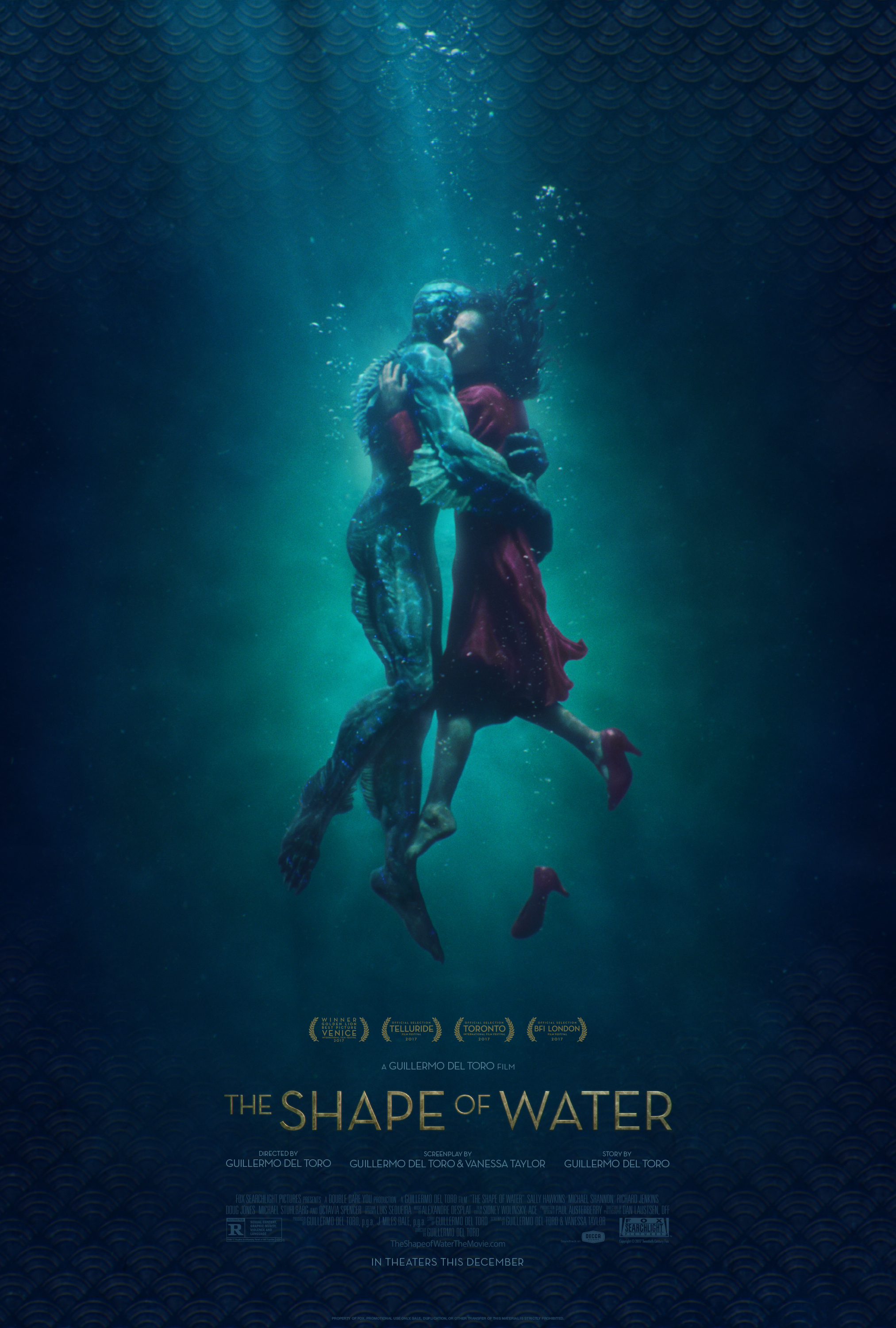
A romantic fairy tale set during the Cold War era of the Sixties, Guillermo del Toro’s latest feature is set in a secret government laboratory in Baltimore. Elisa Esposito (Hawkins) is a cleaner who works the night shift. She’s also mute from birth. One night the laboratory receives a new “asset”, an amphibious creature (Jones) captured in the Amazon river by military man Richard Strickland (Shannon). The creature proves to be humanoid, and though it’s ostensibly dangerous, Elisa develops a bond with it, and even uses sign language to communicate with it on a basic level. With the creature able to breathe in and out of water, the intricacies of its anatomy lead to the decision to have it vivisected. Elisa is horrified by this, and with the aid of her fellow cleaner, Zelda (Spencer), and her neighbour, elderly artist Giles (Jenkins), she determines to free the creature and return it to the sea. As she puts her plan into action, she finds unexpected assistance from one of the scientists at the laboratory, Dr Hoffstetler (Stuhlbarg), and unwanted attention from Strickland.

Fully and firmly back on track after the disappointment that was Crimson Peak (2015), Guillermo del Toro has made perhaps his best movie yet. The Shape of Water is a veritable treasure trove of delights. By turns funny, dramatic, sad, tender, exciting, joyous, imaginative, bold, romantic, uplifting, and poignant, it’s a movie that crams so much into its two hour running time that it should feel heavy-handed. Instead it feels like the lightest of confections, even with the overtly darker undertones that are threaded throughout the narrative and which help the movie add a credible and palpable sense of menace to the overall tone. del Toro has long wanted to make a movie inspired by Creature from the Black Lagoon (1954), but it’s unlikely even he could have predicted just how good the end result would be. From Paul D. Austerberry’s masterful period production design, to the efforts of the set dressers (so much detail), this is a movie that is constantly inviting the viewer to come nearer and peer closely at all the objects that fill each frame. And then there are the small yet seemingly effortless moments that pepper the movie, moments such as Elisa and Giles’ seated dance routine, or the man at the bus stop with the partially eaten cake. It all adds up to a richness of texture that is nigh-on faultless.

But the movie isn’t just beautiful to look at, it’s also an old-fashioned love story (an inter-species love story, to be fair, but hey, so what? As Joe E. Brown says at the end of Some Like It Hot (1959), “Nobody’s perfect”). It would have been so easy to misjudge the tone and the mood in presenting this romance, but del Toro and co-screenwriter Vanessa Taylor handle it perfectly, combining elements of magical realism and the aforementioned fairy tale aspect to wonderful effect. Hawkins – for whom the role of Elisa was written – gives a mesmerising performance, passionate and vulnerable, determined and caring, and capable of expressing any of Elisa’s emotions through the delicate shading of her features. As the principal villain, Shannon gets to add unexpected psychological layers to the role of Strickland, something that keeps the part from being that of a stereotypical bad guy, while Jenkins provides the majority of the laughs (and a great deal of pathos) as Giles, an elderly gay man still hoping to find love himself. Everything is rounded off by the music, as del Toro harks back to the golden era of Hollywood musicals. And just when you think he can’t squeeze in anything else, he gives us a black and white dance number featuring Elisa and the creature which is a tribute to Follow the Fleet (1936). This all leaves just one option: this much confidence must be applauded.

Rating: 9/10 – made with an intense amount of love and affection for its central characters, and with an elegance that shines throughout, The Shape of Water is a triumph of both style and substance; look closely, though, and you’ll find del Toro being quietly and unobtrusively subversive: ask yourself – which other movie are you likely to see where the heroes are in turn disabled, gay, black, and a Communist?
Share this:

  • Click to share on X (Opens in new window) X
  • Click to share on Facebook (Opens in new window) Facebook
  • More
  • Click to print (Opens in new window) Print
  • Click to email a link to a friend (Opens in new window) Email
Like Loading...

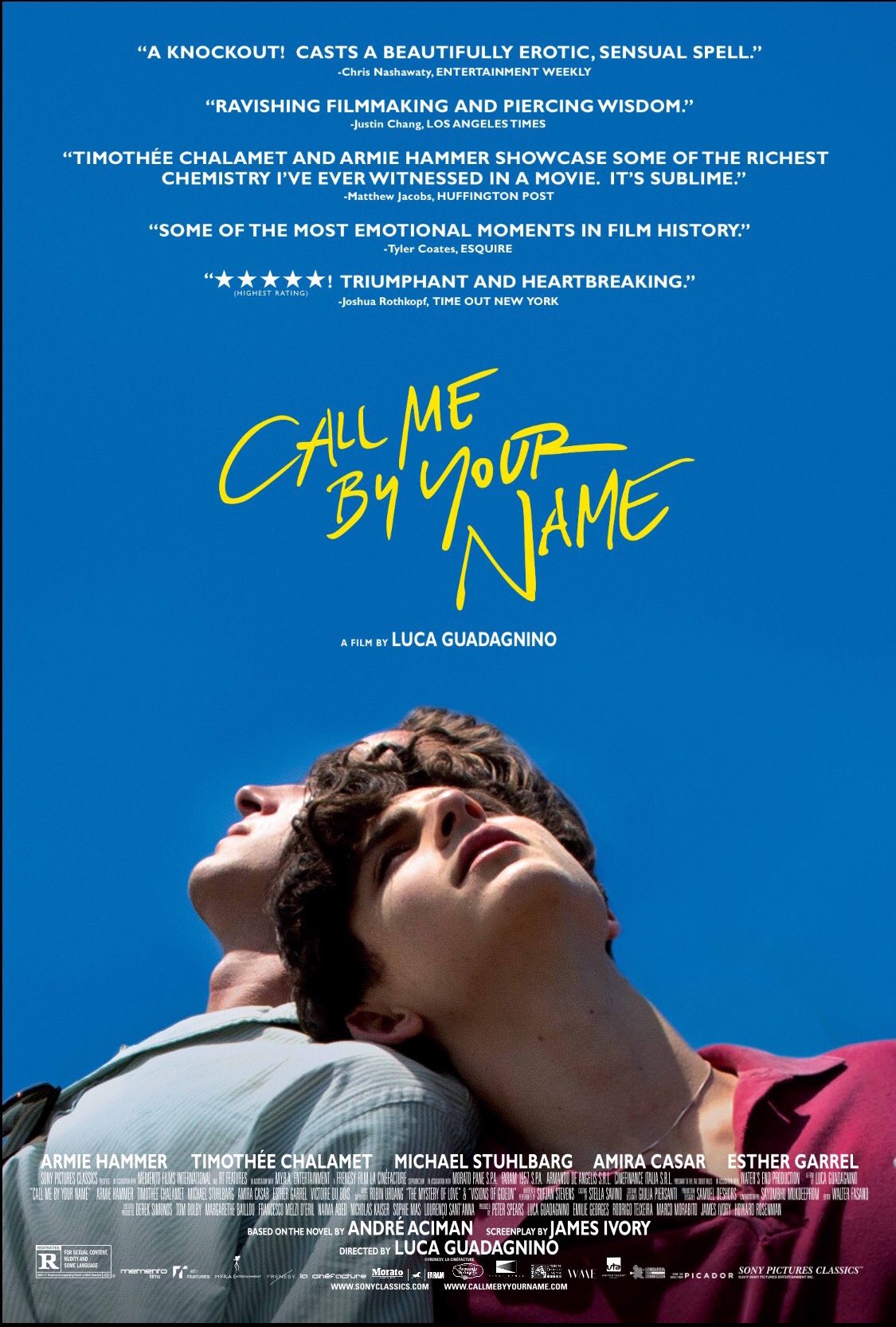
Call Me by Your Name (2017)

30 Saturday Dec 2017

Posted by dullwood68 in Movies

≈ 2 Comments

Tags

Armie Hammer, Drama, First love, Italy, Literary adaptation, Lombardy, Luca Guadagnino, Michael Stuhlbarg, Review, Romance, Timothée Chalamet

D: Luca Guadagnino / 132m

Cast: Armie Hammer, Timothée Chalamet, Michael Stuhlbarg, Amira Casar, Esther Garrel, Victoire Du Bois, Vanda Capriolo, Antonio Rimoldi

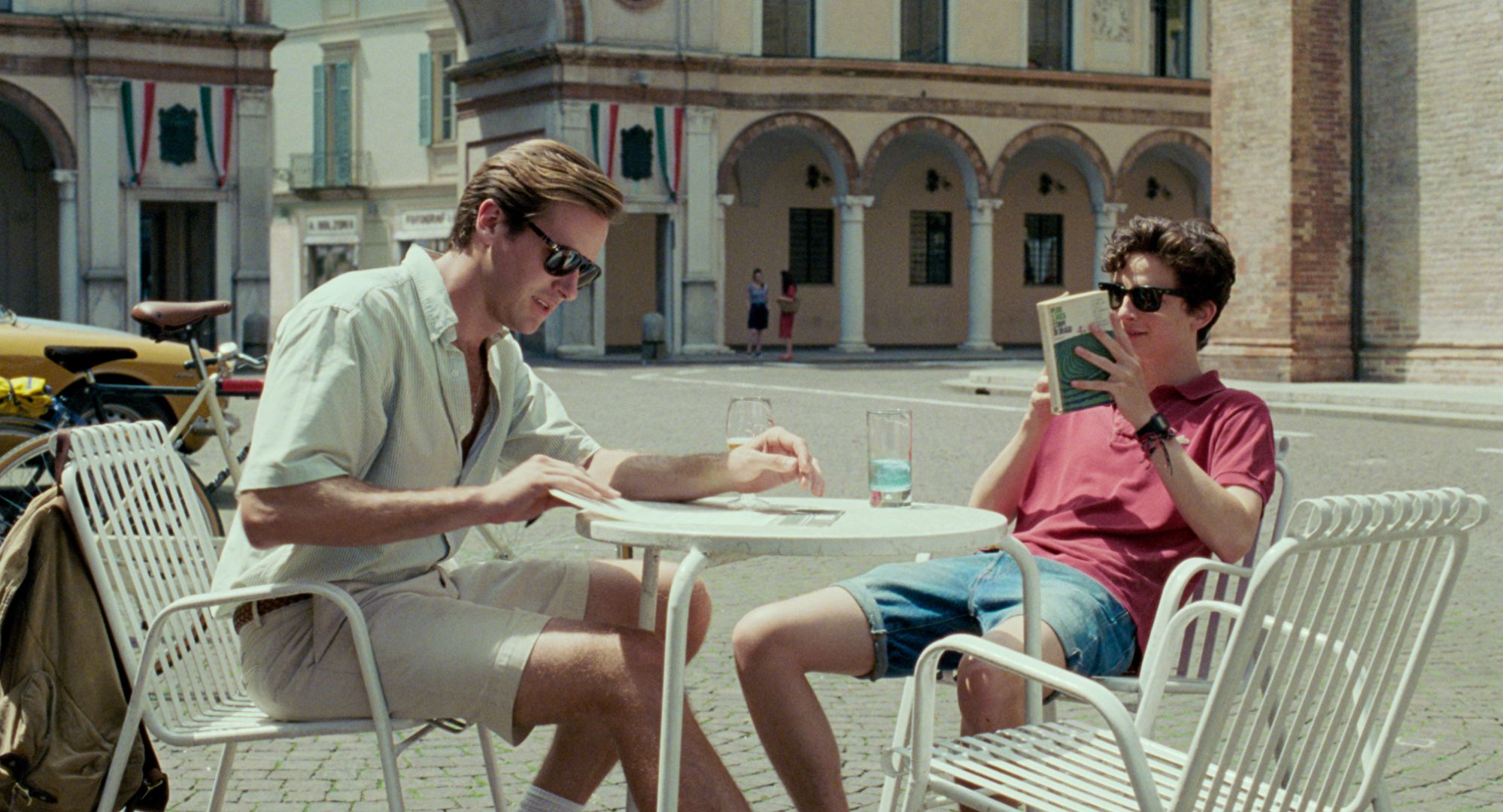
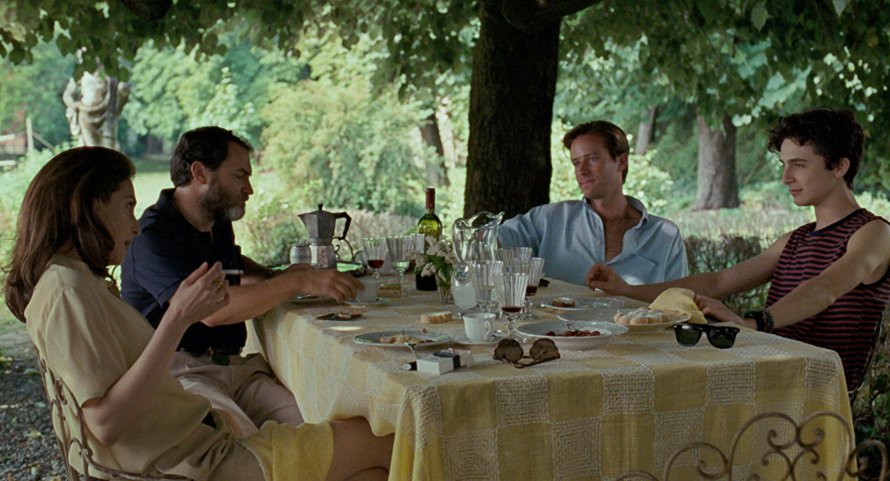
In this beautifully shot, written, directed, and acted adaptation of the novel by André Aciman, the setting is Northern Italy in the summer of 1983. Oliver (Hammer), a graduate student of archaeology and Greco-Roman culture arrives at the home of Professor Perlman (Stuhlbarg) and his family – wife Annella (Casar) and son Elio (Chalamet) – to assist the professor for six weeks with his academic paperwork. Oliver is outgoing, confident and charming, and soon wins over everyone except for Elio. Elio is Oliver’s polar opposite: reserved, insular, unsure of himself, and envious of Oliver’s ebullient nature. But Elio finds himself unexpectedly attracted to Oliver, something that both frightens and excites him. Lacking in any kind of sexual experience at seventeen, and torn between his burgeoning feelings for Oliver as well as the attentions of Marzie (Garrel), a close friend, Elio tries to navigate the treacherous waters of first love, and the realities inherent in accepting feelings and emotions that are completely overwhelming.

A project that has been in development since the movie’s main producers, Peter Spears and Howard Rosenman, saw an early galley of Aciman’s novel (his first) back in 2007, Call Me by Your Name is perhaps one of the most visually and emotionally ravishing movies of the year – or indeed any year. Shot in a variety of locations around Crema in Lombardy, this is a beautiful movie to watch, perfectly capturing the hazy, laidback existence of the Perlman family and their idyllic, rural home, and constantly providing the viewer with some absolutely magnificent imagery. Director Luca Guadagnino, in collaboration with DoP Sayombhu Mukdeeprom, has made a movie that is almost painterly in its design and execution. Shots are so perfectly framed that the amount of information in any given scene is breathtaking. With such a wealth of detail on offer, it’s a triumph of cinematography yes, but also of production design, and art and set decoration.

But this movie isn’t just about the world that it so richly creates. It’s an examination of the joys and cruelties associated with first love, that horrible wonderful period in a person’s life when the world seems turned upside down and all the surety and confidence they’ve accrued counts for nothing in the face of having to let down their defences and hope their hopes and feelings aren’t rejected wholesale. The movie addresses this directly in a scene where Annella reads from a German translation of Marguerite of Navarre’s Heptaméron, where the question is asked, “Is it better to speak or to die?” This is the dilemma Elio faces: does he reveal his feelings to Oliver, or does he remain silent and in doing so forgo the relationship he seeks. It’s a familiar plight, and one that the movie treats with an appropriate sympathy and sense of consideration. Elio’s uncertainty facilitates a kind of dance between the pair as they circle around each other, both providing hints for the other and neither of them trusting their instincts far enough to take that first, all-important step.

Guadagnino ensures that the nature of this dance and the intricacy of its turns and swirls is played out in contrast to Elio’s relationship with Marzie, which is just as hesitant and just as confusing for Elio as his feelings for Oliver. Faced with opposing emotions and unable to reconcile them, Elio is equally unable to take responsibility for them. The script – a remarkable achievement courtesy of James Ivory – has him do what any confused and horny teenager would do, and indulge his desires wherever and however they might appear. It doesn’t lessen his sense of ambiguity about his sexuality, or his need for Oliver, but it does lead him to make some questionable decisions, and while there are moments where he appears unable to overcome his own culpability, the fact that his behaviour is so easily recognisable and understandable, allows the viewer to remain hopeful that things will work out for him.

It helps that Ivory’s script and Guadagnino’s direction don’t pass judgment on any of the characters, and instead provides them with a cinematic safe haven for their troubles to play out. It’s also refreshing that the movie focuses on a gay relationship that runs its course – as inevitably it must do, Oliver is only there for six weeks – and there’s no threat or peril attached, either from Elio’s parents or any of the locals (though a handful of scenes set in Bergamo where Elio and Oliver spend some time together give the impression that something bad will happen at some point). It’s worth noting that this is a movie where prejudice isn’t allowed to raise its unwelcome head at any time, and though you could argue that this doesn’t sound entirely realistic given the period, it’s still encouraging to have that particular hoary old plot device ignored completely. The dynamic between Elio and Oliver is what’s important, and once Elio has made his choice to either speak or die, the movie rightly focuses on them and the fledgling steps they take in their relationship.

All of this, though, would be for nothing if it weren’t for the two mesmerising performances given by Hammer and Chalamet. For Hammer this is a major step up in his career, his portrayal of the apparently worldly-wise Oliver strengthened by his ability to show the character’s own insecurities and vulnerable side. There’s a scene where Oliver begins to have doubts about the longevity of his relationship with Elio, and the way in which Hammer expresses this uncertainty pulls at the heartstrings in a way that’s completely unexpected. Chalamet is equally as impressive as Elio, the camera lingering on him for long stretches, catching each fleeting emotion and sharply expressed moment of self-awareness. For Chalamet, the key scene is one that involves a peach, and it’s thanks to his skill as an actor that the scene works as incredibly well as it does; in the hands of some movie makers and actors, it would have killed the movie stone dead. Together, both actors support and encourage each other in their scenes, and the freedom they exhibit is hugely impressive. Again, without them, all the good work achieved in other areas would be for naught, and this would be a movie about which we would all be saying, “Ah well, good try.” That we’re not is a triumph for all concerned.

Rating: 9/10 – a superb adaptation of Aciman’s novel that is languid in pace yet deeply emotional in tone, Call Me by Your Name is also an amazingly affecting movie that grips like a thriller and which presents its characters as average human beings struggling with common human problems, but particularly, how to commit to someone else wholeheartedly; beautifully made on all levels, this is Guadagnino’s best movie yet, and one that resonates with, and rewards and reassures viewers by providing recognisable characters that we can all identify and sympathise with – because we’ve all been there ourselves.

Share this:

  • Click to share on X (Opens in new window) X
  • Click to share on Facebook (Opens in new window) Facebook
  • More
  • Click to print (Opens in new window) Print
  • Click to email a link to a friend (Opens in new window) Email
Like Loading...

Arrival (2016)

10 Thursday Nov 2016

Posted by dullwood68 in Movies

≈ 4 Comments

Tags

Aliens, Amy Adams, China, Denis Villeneuve, Drama, Forest Whitaker, Jeremy Renner, Literary adaptation, Michael Stuhlbarg, Montana, Mystery, Review, Sci-fi, Shells, Thriller, Translation

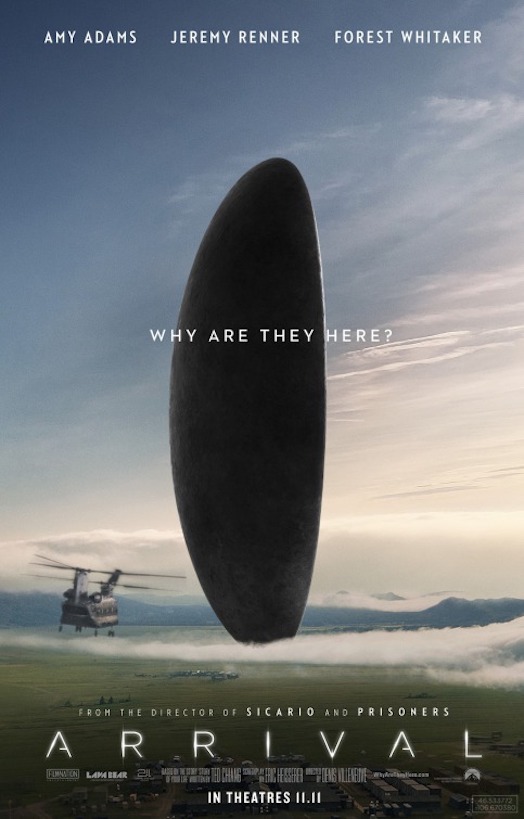
arrival_ver4

D: Denis Villeneuve / 116m

Cast: Amy Adams, Jeremy Renner, Forest Whitaker, Michael Stuhlbarg, Mark O’Brien, Tzi Ma

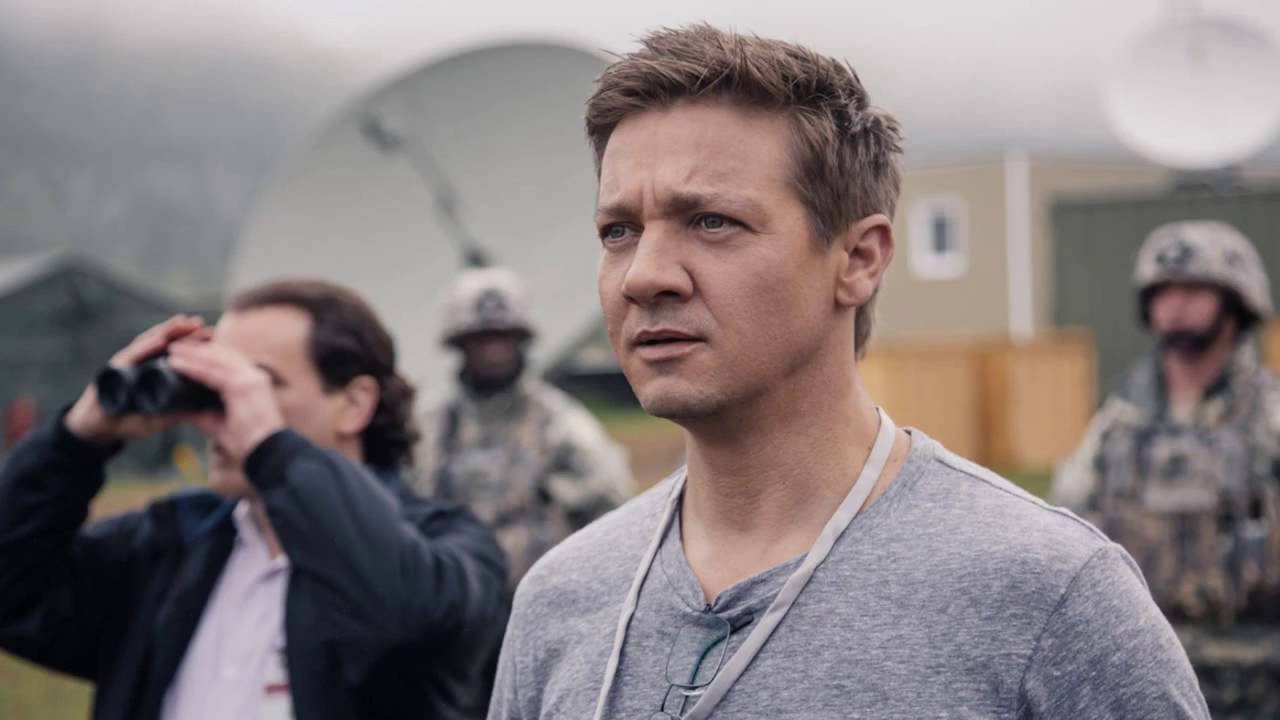
Louise Banks (Adams) is a linguistics professor whose private life has recently been shattered by the break up of her marriage and the death of her daughter from cancer. Getting by but still grieving, Louise is as unprepared as the rest of the world when twelve huge spaceships suddenly appear one day in different locations around the globe. Soon, though, she is approached by the US military – in the form of Colonel G.T. Weber (Whitaker) – to aid in communicating with the aliens on board the ship that hovers over American soil in Montana. The best in her field in terms of linguistics and translations, Louise joins Weber’s team along with mathematician and scientist Ian Donnelly (Renner).

In Montana, Louise and Ian are advised that the most important question is, What do they want? Later, they ascend into the ship – called a “shell” by the military – and have their first encounter with the aliens. A symbol is written on the screen that separates the aliens in their atmosphere from Louise and Ian et al in theirs. Using it as the basis of the aliens’ language, Louise soon deduces that the symbol doesn’t just translate into one word, but into many. From then on she is able to determine much more of how the aliens communicate. Meanwhile, at the other arrival sites, particularly in China, suspicion and distrust of the aliens’ intensions are leading to veiled threats of attack on the shells, while violent unrest occurs around the globe.

arrival-teaser-trailer

Louise begins to have visions of a little girl, who in various ways helps her to understand more of what the aliens are communicating. When she translates a symbol and the meaning is “Offer weapon”, it causes the CIA agent in charge of the whole operation in Montana, Halpern (Stuhlbarg), to order an evacuation. But Louise insists they should stay, to keep faith with the aliens, and to complete the mission to find out why they are here. She returns to the shell by herself, and by coming into direct contact with the aliens, Louise learns why they have arrived, and why she’s having visions of the little girl, a revelation that has a profound effect not just on her, but on her understanding of her marriage and also, her daughter’s death.

There’s a dearth of good, old-fashioned, serious sci-fi in the movies right now – in fact, it’s been that way for some time – but Arrival is here to redress the balance. Playing with notions of time and memory and the nature of happiness, the movie is a thought-provoking treatise on what it is to mourn a life while discovering at the same time that that life has much more to offer even though the person has passed away. It’s a bit of a mindbender at times, but Villeneuve confidently handles the narrative twists and turns of Eric Heisserer’s script – itself an adaptation of the short story Story of Your Life by Ted Chiang and heavily reworked by Villeneuve himself – so that the viewer can still grasp the subtleties of what’s happening and why.

arrival-movie-4-e1471529984165

Along the way, said viewer is treated to an intelligent story and plot that packs an unexpectedly emotional wallop towards the end, as the various strands of Louise’s life are brought into sharp relief, and the aliens’ reason for visiting Earth is revealed. Louise herself is brought to life by Adams in a performance that acts as a reminder that, away from the DC Extended Universe, she is still one of today’s finest actresses. As the emotionally distant Louise, Adams shows just how removed she is from everything going on around her – at first. But as Louise slowly begins to unravel the complex patterns of the aliens’ language, she begins to reconnect with herself and everyone around her; and particularly Ian. Adams is the movie’s chief ingredient for success, her succinct, subtle portrayal of Louise proving layered and intuitive, and deeply moving come the movie’s end.

But while Adams’ performance is the bedrock upon which the movie supports itself, there’s so much more to recommend it. Though she plays the central character, and the rest of the cast have essentially supporting roles, the likes of Renner and Whitaker still manage to contribute well-rounded and credible characters that are necessary to the plot, while even Stuhlbarg’s paranoid (and potentially one-note) CIA agent fits in to the overall set up without feeling extraneous or unnecessarily villainous. Villeneuve also allows each character to display their own fears and concerns, and a corresponding sense of wonder, at being in such close proximity to the aliens and their craft.

Visually, the movie is a gloomy-looking, though consistently well-thought out viewing experience, with Villeneuve choosing to dial down on any bright colours and in doing so, adding texture to the narrative. The aliens operate in a cloudy grey environment and “write” using appendages that produce a black inky substance that is surprisingly vibrant, while at the military base, the various comms rooms and private quarters also lack for vivid colours, with only computer screens providing any brightness to offset the gloom. Villeneuve is making a conscious choice here: the bleak, low-lit hive of activity reflecting the interior of the aliens’ ship, as if to insinuate that there is a greater level of connection between “us” and “them” than is immediately apparent.

maxresdefault

The visuals are more than ably supported by a distinctive sound design that unnerves far more than it reassures, and which also includes a suitably eerie and mournful score by Jóhann Jóhannsson, Villeneuve’s go-to composer. Keeping the viewer on edge as Louise deconstructs the alien message, the visuals and the sound design combine to create a haunting, other-worldly feel that is not only entirely appropriate given the nature of the story, but also serves to highlight the idea that if we aren’t alone in the universe, then ideas of melody and tone may still hold but are likely to be interpreted in completely different ways.

Ultimately though, it’s Villeneuve’s confident handling of the material that impresses the most. He’s not afraid to take his time in telling the story, and doesn’t drip-feed all the relevant information at regular points in the narrative. Instead he lets the story unfold at its own pace, revealing key plot points quietly and without the usual fanfare required in other sci-fi movies, and the result is a measured, affecting tale that contains a major twist, one that perhaps for the first time, is allowed to play out over much of the movie’s running time, rather than just suddenly and without warning, and which in its simplicity and emotional effectiveness, elevates Arrival over and above any other sci-fi movie you’re likely to see this year (and probably for some time to come).

Rating: 9/10 – a beautifully constructed movie with a clever, intelligent script, superb cinematography from Bradford Young, an intense soundtrack, heartfelt performances and all held together by a director at the top of his game, Arrival is a must-see movie that is less about why the aliens are here, and more about why we are here; quite simply, one of this year’s best movies.

Share this:

  • Click to share on X (Opens in new window) X
  • Click to share on Facebook (Opens in new window) Facebook
  • More
  • Click to print (Opens in new window) Print
  • Click to email a link to a friend (Opens in new window) Email
Like Loading...

Cut Bank (2014)

12 Tuesday May 2015

Posted by dullwood68 in Movies

≈ Leave a comment

Tags

Billy Bob Thornton, Bruce Dern, Crime, Drama, John Malkovich, Liam Hemsworth, Matt Shakman, Michael Stuhlbarg, Miss Cut Bank pageant, Montana, Movie reviews, Murder, Postman, Review, Reward money, Teresa Palmer, Thriller

Cut Bank

D: Matt Shakman / 93m

Cast: Liam Hemsworth, Teresa Palmer, John Malkovich, Billy Bob Thornton, Bruce Dern, Michael Stuhlbarg, Oliver Platt, Sonya Salomaa, David Burke, Denis O’Hare

In the small town of Cut Bank, Montana, car mechanic Dwayne McLaren (Hemsworth) dreams of leaving town with his girlfriend Cassandra (Palmer), but he hasn’t got any money and he has to look after his disabled father (O’Hare). While spending time together on the outskirts of town, Dwayne inadvertently films the murder of local postman Georgie Witts (Dern). He takes the footage to Cassandra’s father, car dealer Big Stan Steeley (Thornton), who calls in the sheriff, Roland Vogel (Malkovich). The sheriff watches the footage and declares it’s the town’s first murder.

With the community in shock over Georgie’s death and the disappearance of the mail van he was driving, Vogel begins his investigation. At the same time, a loner with a strong interest in taxidermy named Derby Milton (Stuhlbarg) comes looking for a parcel he was expecting (and which was in the mail van). Where Vogel looks for a vehicle with a particular set of tyres, Milton looks for a boot with a particular sole. He finds out that a Native American named Match (Burke) bought a pair a few months before.

Meanwhile, Dwayne applies for a reward due for evidence relating to the death of a member of the postal service. The reward – $100,000 – will allow Dwayne to find alternative care for his father, and give him and Cassandra the chance to start a new life together in California. But when the Postal Inspector (Platt) arrives to confirm the reward, there’s only one snag: he needs to see the body, which so far hasn’t been found as it was taken with the mail van.

Matters escalate when Big Stan makes a discovery at his spare parts yard, a discovery that sees him brutally attacked. However, Milton – still looking for his parcel and unwilling to forget about it – makes the same discovery, but with a different outcome, one that implicates Dwayne. With the reward money not being paid out for a few months, it’s down to Cassandra to win the upcoming Miss Cut Bank pageant and its first prize of $5,000, and thereby give them enough money to leave town for good. But Milton has other ideas, and the sheriff is beginning to put all the pieces together surrounding Georgie’s death…

Cut Bank - scene

Watching Cut Bank, the obvious comparison is with Fargo (1996), but while that movie is still highly regarded as a classic nearly twenty years on, it’s hard to believe that Cut Bank will be looked on in the same way, or remembered at all. While it does its best to look and feel as moody as many other small-town crime dramas, it’s the quality of the story that lets it down. There are too many occasions where the story is driven forward by the messiest of contrivances, or characters behave in ways that contradict their previous attitudes. For the viewer it means a suspension of disbelief that is needed on several occasions, and for which the movie makes no apologies, as it just carries on digging a bigger and bigger hole for itself.

Indeed, it’s the script by Roberto Patino, and as directed by Shakman, that proves the movie’s downfall, causing as it does a loss of faith almost from the beginning. It plods through its twists and turns with all the authority of a movie that doesn’t know where it’s going or why – and which winds things up with one of the worst, most nonsensical outcomes that anyone could possibly imagine (except Patino). To say that it defies belief would be to suggest that the viewer might actually have some by this point. And as for some of the dialogue, the script aims for clever and insightful, but succeeds in being arch and unimportant. Only the running gag, “I thought you were dead” works as well as it should, and at one point it receives a great pay-off, but it’s the only aspect of the script that really hits home.

With the script being so derivative and uneven, the movie suffers and so too does its more than talented cast. Hemsworth proves once more that he’s the blandest of the Hemsworth brothers, and still has trouble being convincing as any character in any movie, while Palmer has an embarrassing pageant song to sing and dance to but very little else. Thornton portrays Big Stan as the same kind of no-nonsense bully he’s played so often before, and Malkovich gives possibly the best performance as the sheriff who looks to be so out of his depth that he can’t see the bottom. Of the rest of the cast, Dern is great but not well-used, and Stuhlbarg is given a monologue that attempts to explain his behaviour but which actually proves too confusing to be much of an explanation. And Platt breezes through his scenes with all the bluster that he’s employed elsewhere, but here, it’s all to no effect, and his character adds nothing to the mix.

Shakman orchestrates the various plot strands and characters with the confidence of a director who doesn’t quite know what to do with the material – which is strange as he directed two episodes of the TV version of Fargo (2014) – but again it’s the quality of the material that hampers him. He does display an appreciation for widescreen composition, but he never seems comfortable presenting any close ups, and appears content to work with medium or long-range shots instead. This creates a distancing effect between the audience and the characters, and before long, the viewer has lost all interest in what’s happening, or how important it might all be. This applies particularly to Milton’s basement “secret”, which, when it’s revealed, is never adequately explained (though an attempt is made with Milton’s monologue). It’s the movie’s one true moment where it pulls something out of the bag that’s different and entirely unexpected.

In failing to live up to its potential, and by wasting the talents of its cast, Cut Bank stalls and stutters so often, and finds it so difficult to maintain a convincing approach that in the end it becomes too frustrating to watch, and is so undermined by its cavalier attitude to law enforcement and guilt, that it never recovers. The plot lacks originality, and the characters lack any appreciable depth, often doing things without any clear motivation. That said, there’s supportive and beautiful cinematography by Ben Richardson, and while some scenes appear to run on too long, the editing by Carol Littleton is sharp and keeps things moving (when they should be stalling).

Rating: 4/10 – with a script that tries to be clever and ingenious, but falls short on both counts, Cut Bank is left to founder in almost every area; one to avoid unless the idea of a murder mystery that leaves out the mystery is an attractive one that you can’t pass up.

NOTE: The trailer contains a few spoilers that aren’t included in the above synopsis, so if you watch it, please bear this in mind.

Share this:

  • Click to share on X (Opens in new window) X
  • Click to share on Facebook (Opens in new window) Facebook
  • More
  • Click to print (Opens in new window) Print
  • Click to email a link to a friend (Opens in new window) Email
Like Loading...

Blog Stats

  • 486,627 hits

Recent Posts

  • 10 Reasons to Remember Bibi Andersson (1935-2019)
  • Fantasia (1940)
  • Dances With Wolves (1990) – The Special Edition
  • Kiss of the Spider Woman (1985)
  • The Three Musketeers (1973)

Top Posts & Pages

  • Lost for Life (2013) - Another Look
    Lost for Life (2013) - Another Look
  • Lost for Life (2013)
    Lost for Life (2013)
  • About
    About
  • BFI London Film Festival 2015
    BFI London Film Festival 2015
  • Mr. Topaze (1961)
    Mr. Topaze (1961)
  • Shock and Awe (2017)
    Shock and Awe (2017)
  • Hunt for the Wilderpeople (2016)
    Hunt for the Wilderpeople (2016)
  • Cardboard Boxer (2016)
    Cardboard Boxer (2016)
  • Billy Lynn's Long Halftime Walk (2016)
    Billy Lynn's Long Halftime Walk (2016)
  • Winter's Tale (2014)
    Winter's Tale (2014)
Follow thedullwoodexperiment on WordPress.com

Blogs I Follow

  • Rubbish Talk
  • Film 4 Fan
  • Fast Film Reviews
  • The Film Blog
  • All Things Movies UK
  • Interpreting the Stars
  • Let's Go To The Movies
  • Movie Reviews 101
  • TMI News
  • Dan the Man's Movie Reviews
  • Film History
  • Jordan and Eddie (The Movie Guys)

Archives

  • April 2019 (13)
  • March 2019 (28)
  • February 2019 (28)
  • January 2019 (32)
  • December 2018 (28)
  • November 2018 (30)
  • October 2018 (29)
  • September 2018 (29)
  • August 2018 (29)
  • July 2018 (30)
  • June 2018 (28)
  • May 2018 (24)
  • April 2018 (21)
  • March 2018 (31)
  • February 2018 (25)
  • January 2018 (30)
  • December 2017 (30)
  • November 2017 (27)
  • October 2017 (27)
  • September 2017 (26)
  • August 2017 (32)
  • July 2017 (32)
  • June 2017 (30)
  • May 2017 (29)
  • April 2017 (29)
  • March 2017 (30)
  • February 2017 (27)
  • January 2017 (32)
  • December 2016 (30)
  • November 2016 (28)
  • October 2016 (30)
  • September 2016 (27)
  • August 2016 (30)
  • July 2016 (30)
  • June 2016 (31)
  • May 2016 (34)
  • April 2016 (30)
  • March 2016 (30)
  • February 2016 (28)
  • January 2016 (35)
  • December 2015 (34)
  • November 2015 (31)
  • October 2015 (31)
  • September 2015 (34)
  • August 2015 (31)
  • July 2015 (33)
  • June 2015 (12)
  • May 2015 (31)
  • April 2015 (32)
  • March 2015 (30)
  • February 2015 (37)
  • January 2015 (39)
  • December 2014 (34)
  • November 2014 (34)
  • October 2014 (36)
  • September 2014 (25)
  • August 2014 (29)
  • July 2014 (29)
  • June 2014 (28)
  • May 2014 (23)
  • April 2014 (21)
  • March 2014 (42)
  • February 2014 (38)
  • January 2014 (29)
  • December 2013 (28)
  • November 2013 (34)
  • October 2013 (4)

Create a free website or blog at WordPress.com.

Rubbish Talk

Film 4 Fan

A Movie Blog

Fast Film Reviews

The Film Blog

The official blog of everything in film

All Things Movies UK

Movie Reviews and Original Articles

Interpreting the Stars

Dave Examines Movies

Let's Go To The Movies

Film and Theatre Lover!

Movie Reviews 101

Daily Movie Reviews

TMI News

Latest weather, crime and breaking news

Dan the Man's Movie Reviews

All my aimless thoughts, ideas, and ramblings, all packed into one site!

Film History

Telling the story of film

Jordan and Eddie (The Movie Guys)

Movie Reviews & Ramblings from an Australian Based Film Fan

Privacy & Cookies: This site uses cookies. By continuing to use this website, you agree to their use.
To find out more, including how to control cookies, see here: Cookie Policy
  • Subscribe Subscribed
    • thedullwoodexperiment
    • Join 481 other subscribers
    • Already have a WordPress.com account? Log in now.
    • thedullwoodexperiment
    • Subscribe Subscribed
    • Sign up
    • Log in
    • Report this content
    • View site in Reader
    • Manage subscriptions
    • Collapse this bar
 

Loading Comments...
 

    %d