• 10 Reasons to Remember…
  • A Brief Word About…
  • About
  • For One Week Only
  • Happy Birthday
  • Monthly Roundup
  • Old-Time Crime
  • Other Posts
  • Poster of the Week
  • Question of the Week
  • Reviews
  • Trailers

thedullwoodexperiment

~ Viewing movies in a different light

thedullwoodexperiment

Tag Archives: Patrick Wilson

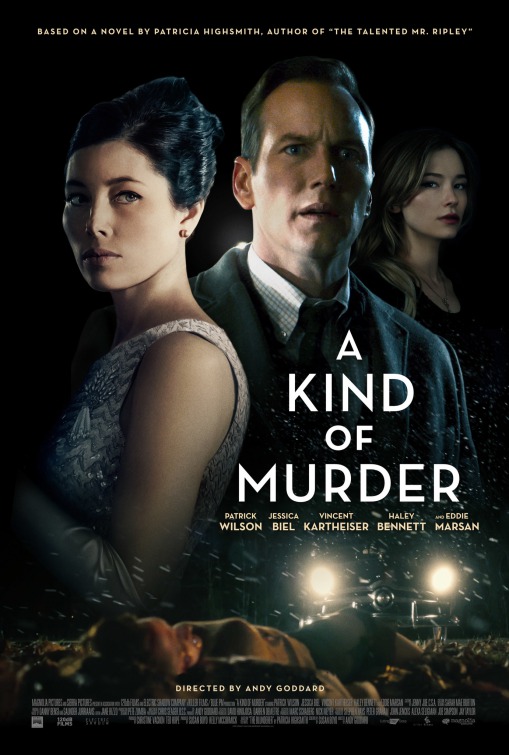
A Kind of Murder (2016)

05 Sunday Mar 2017

Posted by dullwood68 in Movies

≈ Leave a comment

Tags

Andy Goddard, Crime, Drama, Eddie Marsan, Jessica Biel, Literary adaptation, Murder, Patricia Highsmith, Patrick Wilson, Review, The Blunderer, Thriller, Vincent Kartheiser
kind_of_murder

D: Andy Goddard / 95m

Cast: Patrick Wilson, Jessica Biel, Vincent Kartheiser, Haley Bennett, Eddie Marsan, Radek Lord, Jon Osbeck, Christine Dye

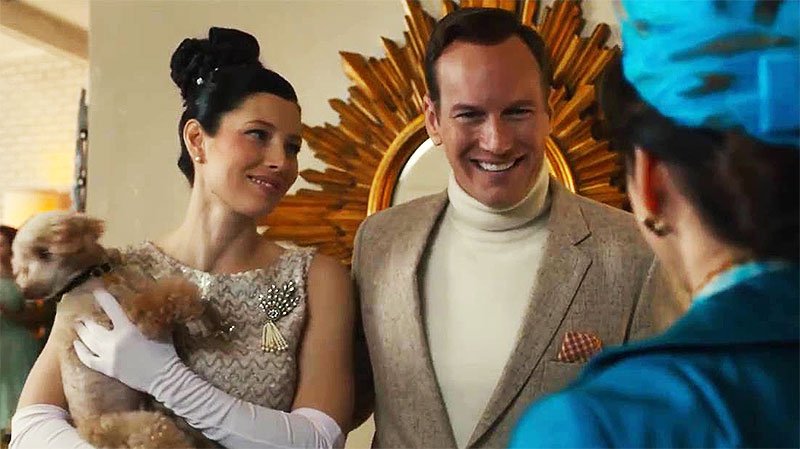
New York City, the Sixties. Walter Stackhouse (Wilson) is a successful architect with a beautiful home and a beautiful wife, Clara (Biel). In his free time he writes short stories about crime and murder. On the outside he’s living the perfect life, but his marriage is strained. Clara has a history of mental instability, and is remote from him. At the same time, though, she’s jealous and possessive, accusing him of having an affair with a young woman, Ellie (Bennett), who attended a party they gave. When Clara is like this, Walter usually ends up in a local bar. It’s on one such occasion that he reads an article in a newspaper about the unsolved murder of a woman outside of New York at a rest stop called Harry’s Rainbow Grill.

Suspicion seems to rest on the woman’s husband, a bookstore owner called Kimmel, but he has an alibi. This isn’t enough for the detective investigating the case, Corby (Kartheiser), who is convinced Kimmel is the killer. While he tries to intimidate Kimmel into confessing, Walter becomes more and more fascinated with the murder, and like Corby, becomes convinced that Kimmel is guilty. He even goes so far to visit Kimmel at his bookstore. But at home, his marriage goes from bad to worse. Clara takes an overdose and ends up in hospital. When she comes home, her jealousy remains firmly in place, and she remains convinced that Walter is having an affair with Ellie. When she’s proved right, Walter tells her he’s going to divorce her; Clara retaliates by saying she’ll definitely kill herself if he does.
a-kind-of-murder-2016-1

Undeterred, Walter continues with his relationship with Ellie, but when Clara leaves suddenly to visit her sick mother upstate, he follows the bus she takes until it reaches Harry’s Rainbow Grill. But though she gets off the bus, Walter doesn’t see her, and he heads back to New York City. Later, Walter receives terrible news, news that causes Corby to link him to the murder of Kimmel’s wife, his relationship with Ellie to falter, and his business partnership to founder. With his honesty and integrity on the line, as well as his freedom, Walter must find a way of extricating himself from a situation that grows worse every day, and that could ultimately cost him his life.

An adaptation of Patricia Highsmith’s novel The Blunderer, A Kind of Murder is a good-looking movie in search of a leading character for the audience to identify and sympathise with. Walter’s plight should be one that has the viewer on the edge of their seat, but thanks to both the script and Wilson’s performance, he’s vanilla bland from start to finish, and the movie never really knows how to make his predicament more intriguing or exciting. Walter becomes interested in the murder of Kimmel’s wife because he’s beginning to have thoughts about killing Clara. As he believes Kimmel killed his wife, Walter is supposed to feel some kind of kinship with the bookstore owner, but it’s all psychologically unconvincing. Walter channels his feelings about Clara into his writing, something we see on more than one occasion, and so any idea that he and Kimmel are similar can be disregarded from the start.

BRR 11-29-14-5392.dng

What this leaves us with is a contrived relationship that never develops beyond an uneasy semi-alliance against Corby’s invasive and confrontational detective work. And there’s never any doubt as to whether or not Kimmel killed his wife, or if Walter’s situation will lead to his livelihood being compromised. As the movie progresses from potential whodunnit to unabashed thriller, Susan Boyd’s first-time script forgets to instil proceedings with any tension, as Walter’s predicament never sees him fully in jeopardy, or at risk of having his comfortable world taken away from him. And in conjunction with Boyd’s script, Wilson delivers what may well be one of his least successful performances ever. For an actor who can genre-hop with ease, and who at least doesn’t look out of place in a period drama, Wilson never connects with Walter and gives a wayward portrayal of a man whose calm, outward manner belies a compulsive, selfish individual hidden away on the inside.

It’s this duality that the movie tries hard to promote, with Walter and Kimmel meant to be two sides of the same coin, and Clara and Ellie both representing the best and worst of Walter’s relationships with women. But again, there’s nothing for the audience to connect with. Even when Clara spells out her intention to kill herself if Walter goes ahead with the divorce, and tells him everyone will blame him for not doing enough to help her, there’s nothing there to back up that claim. It carries the weight of an empty paper bag, and as such, loses any validity, so that when Walter receives his terrible news, it doesn’t have the impact that it should have. And this is the moment when the viewer should find themselves completely on Walter’s side… but probably won’t.

akindofmurder_clipdeath

As a thriller, A Kind of Murder stumbles along trying to match Highsmith’s elegant turn of phrase to its early Sixties setting, and only doing so on very rare occasions. It also dispenses with any attempt at providing back stories for any of the characters, leaving us in a void when it comes to understanding their current motivations. Clara is clearly mentally ill, and she’s clearly difficult to live with, so why Walter stays with her is a bit of a mystery (and a better one than if Kimmel killed his wife or not). And why Corby becomes so obsessed with Kimmel and bringing him to justice isn’t explained either. In the end, these are characters operating in a vacuum, occasionally bumping into each other but failing to make a proper connection.

And so it goes for the length of the movie. Wilson’s disappointing turn is matched by Biel’s monotone performance, Kartheiser’s unncessarily angry cop, and Bennett’s subdued turn as Walter’s girlfriend. Only Eddie Marsan deserves any praise, giving the kind of unexpected, yet nuanced performance that this kind of movie needs to be anywhere near successful. His brooding, snake-like approach to Kimmel is a master-class in big screen malevolence. Tying all this together is Goddard, known mostly for his TV work, but not stretching his abilities too far in bringing this tale to the big screen. However, he’s on firmer ground with the movie’s recreation of Sixties New York, with its colourful vibrancy and Mad Men-style glamour of the period, and all despite (or in spite of) the wintry backdrop. But for anyone expecting more substance with their style, this isn’t the place to be looking for it.

Rating: 5/10 – lacklustre in too many ways to even count, A Kind of Murder flatlines for most of its running time, and forgets to make itself interesting for the viewer; with so-so performances and a dull script, this is one thriller that can be given a wide berth unless you’re a fan of Marsan’s, or in an undemanding mood when it comes to choosing something to watch.

Share this:

  • Click to share on X (Opens in new window) X
  • Click to share on Facebook (Opens in new window) Facebook
  • More
  • Click to print (Opens in new window) Print
  • Click to email a link to a friend (Opens in new window) Email
Like Loading...

The Hollow Point (2016)

22 Thursday Dec 2016

Posted by dullwood68 in Movies

≈ Leave a comment

Tags

Bullets, Cartel, Drama, Gonzalo López-Gallego, Ian McShane, Jim Belushi, John Leguizamo, Mexico, Patrick Wilson, Review, Thriller

the_hollow_point_-_official_poster_1200_1778_81_s

D: Gonzalo López-Gallego / 97m

Cast: Patrick Wilson, Ian McShane, John Leguizamo, Lynn Collins, Jim Belushi, David H. Stevens, Karli Hall, Derek Boone, Nathan Stevens

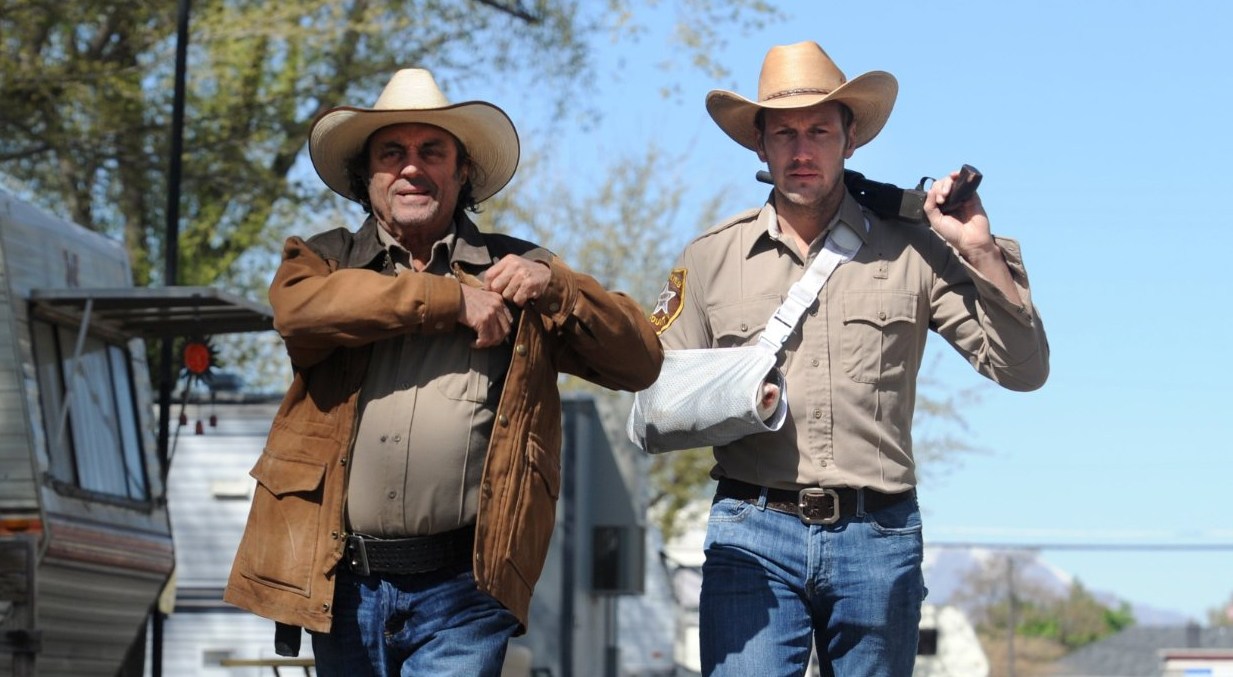
In a small, dusty town near the US-Mexico border there’s a new sheriff about to settle in. He’s a replacement for the current sheriff, Leland Kilbaught (McShane) who’s been suspended pending an investigation into his shooting and killing a young man, Clive Mercy (Nathan Stevens), attempting to smuggle bullets across the US-Mexico border. The new sheriff, Wallace (Wilson), brings with him some emotional baggage, thanks to an old relationship with Marla (Collins) that still prompts some animosity on her part. While Wallace attempts to fit back into his hometown, Clive’s brother Ken (David H. Stevens) waits in Mexico for him to arrive. When his contact from the Mexican cartel threatens him with death if his brother doesn’t turn up, Ken figures he’s got nothing to lose. He kills the contact and steals a load of money in the process.

Ken’s actions have a knock-on effect he couldn’t have predicted. Wallace begins to look into his brother’s case and starts to put two and two together. Figuring out Ken’s involvement, Wallace begins to look for him, unaware that the cartel have tasked a killer called Atticus (Leguizamo) with getting to him first. Wallace and Atticus find Ken at the same time; in the ensuing fight, Atticus cuts off Wallace’s right hand. Wallace escapes and manages to reach Kilbaught’s home. While his successor recovers, Kilbaught discovers that a local businessman, a car dealer called Shep Diaz (Belushi), is behind the runs the Mercy brothers have been making. With his dealership on the rocks, Diaz has been using the smuggling operation to prop it up. But the cartel aren’t satisfied that he wasn’t involved in Ken’s actions, especially when the money he stole isn’t found straight away. With Wallace determined to bring Diaz to justice, and protect Marla who becomes unfortunately involved in it all, Atticus is sent once more to clean up all the loose ends…

la-et-mn-mini-hollow-point-review-20161213

Fans of slow-burn, violent crime thrillers set in the American Southwest will find much to enjoy in López-Gallego’s latest feature. Assembling a great cast and setting them to work on a script that doesn’t provide anything new in the way the story pans out, but which nevertheless is admirable for its simplicity, López-Gallego has made a movie that resonates far beyond anything you might expect. One of the main reasons for this, is that well assembled cast. Wilson – a last-minute replacement for Timothy Olyphant – excels as the new sheriff who’s tested by the loss of his hand, but who won’t give up protecting the love of his life – even if she doesn’t want anything to do with him. Wilson has a knack for playing the everyday hero, and he uses that knack to provide an unexpectedly riveting performance, and one that makes the viewer wish he’d make more of these kinds of movies instead of any more Conjuring or Insidious sequels.

He’s more than ably supported by the likes of McShane – all grizzled disregard for the law and its finer distinctions – and Leguizamo as the hired killer who just won’t stop. Both are fine actors, and they inhabit their roles like second skins, with Leguizamo in particular, reminding us what a dangerous presence he can be. But both men are upstaged by a resurgent Jim Belushi, his performance as the duplicitous car dealer, Diaz, a shot in the arm for a career that has seen him take on too many undemanding minor roles in recent years. Diaz is as amoral as they come, and Belushi plays him to perfection, highlighting the sweaty, greedy machinations that will ultimately betray him.

maxresdefault

The script – by newcomer Nils Lyew – plays with relative notions of revenge and karma, property and theft, and sneaks in a thin line of religiosity via Atticus’s relationship with Lilly. He further grounds the various relationships – criminal and otherwise – through keen observation and how each character deals with a variety of physical pain and emotional distress. The self-contained nature of events, and the way in which Lyew isolates the characters against the bleached desert backdrop, adds further to the sense of tragedy that percolates through the narrative once Kilbaught fires his gun. And that last scene? Justice or revenge? Actually, it’s both, and completely understandable as both, thanks to the previous interaction of the characters involved.

It’s a very violent movie in places, and López-Gallego doesn’t shy away from showing both the violence and the often bloody aftermath (though one character does appear to cheat death very conveniently at one point). Consequences are the order of the day, for everyone, and no matter how hard they try to avoid them, those consequences have a way of catching up with them and adding an extra layer on top. Even Wallace, who becomes the anti-hero of the story, insists on taking a path that will lead to more and more pain, but he’s a fatalistic anti-hero, and in his own way, just as stubbornly recidivist as Kilbaught.

the-hollow-point-movie

Set against a pitiless desert backdrop, The Hollow Point has enough tension and undiluted malice for two movies, but López-Gallego is more than up to the task of maintaining that tension and then stretching it further, making some scenes feel hyper-realistic in the process. This isn’t a bad thing, as it all adds to the grim sense of inevitability that powers each confrontation and showdown, and each twist and turn in the narrative. As a result, the viewer is never too sure just how things will turn out, or even if the (relatively) good guys will triumph in the end. López-Gallego is also the movie’s editor, and he adopts an initially measured approach that develops over the course of the movie into a more rapid, insistent rhythm. It also helps that he has the assistance of regular DoP José David Montero, whose lensing brings out the rugged beauty of the desert surroundings, and the rundown, seen-better-days façades of the town and its buildings.

Rating: 8/10 – an underrated gem that could all too easily fail to atrract the attention it deserves, The Hollow Point benefits from a clutch of great performances, a tough, uncompromising script, and the careful ministrations of its director; it’s rare to see such a moderately budgeted project achieve so much and with such apparent ease, but this really is a movie that deserves a wider audience.

Share this:

  • Click to share on X (Opens in new window) X
  • Click to share on Facebook (Opens in new window) Facebook
  • More
  • Click to print (Opens in new window) Print
  • Click to email a link to a friend (Opens in new window) Email
Like Loading...

The Conjuring 2 (2016)

17 Friday Jun 2016

Posted by dullwood68 in Movies

≈ 1 Comment

Tags

Amityville, Demon nun, Drama, Ed Warren, Enfield, Frances O'Connor, Horror, james Wan, Lorraine Warren, Madison Wolfe, Paranormal activity, Patrick Wilson, Review, Sequel, The Hodgson Family, Thriller, True story, Valak, Vera Farmiga

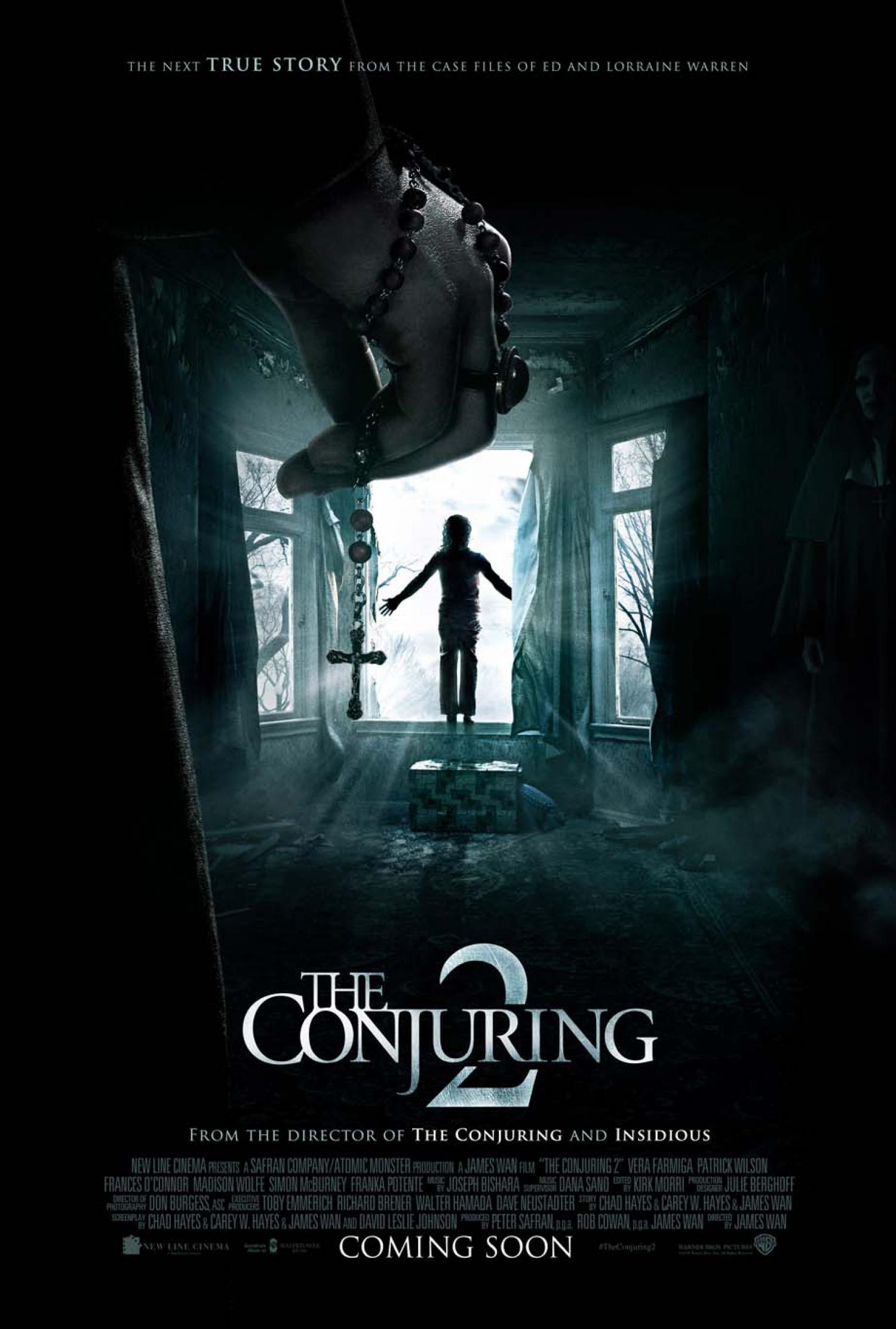
The Conjuring 2

aka The Conjuring 2: The Enfield Case

D: James Wan / 134m

Cast: Patrick Wilson, Vera Farmiga, Frances O’Connor, Madison Wolfe, Lauren Esposito, Benjamin Haigh, Patrick McAuley, Simon McBurney, Maria Doyle Kennedy, Simon Delaney, Franka Potente, Bob Adrian

In the world of paranormal investigations, the plight of the Hodgson family, who resided in Enfield during the Seventies, is one of the most well-documented cases on record. Between 1977 and 1979, the family – single mother Peggy and her four children, Margaret (13), Janet (11), Johnny (10), and Billy (7) – were reported to have been plagued by poltergeist activity. Among the various investigators who looked into the case were Ed and Lorraine Warren. Their findings were that the activity was the result of “inhuman spirit phenomena”, and this despite a general consensus that the alleged poltergeist activity was a hoax perpetrated – largely – by Janet.

The Warrens were just two of many investigators who visited the Hodgson’s home during the late Seventies, but for the purposes of The Conjuring 2, their involvement has been beefed up to the point where lead investigator Maurice Grosse becomes a secondary character, left behind in the wake of the Warrens’ more experienced involvement with the paranormal. And in beefing up the Warrens’ involvement, the movie also connects the events that occurred in Enfield with events related to the Warrens’ investigation into the Amityville haunting.

TC2 - scene3

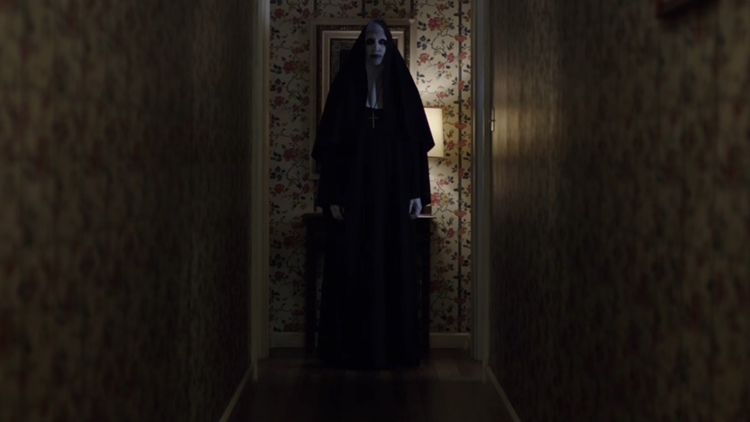
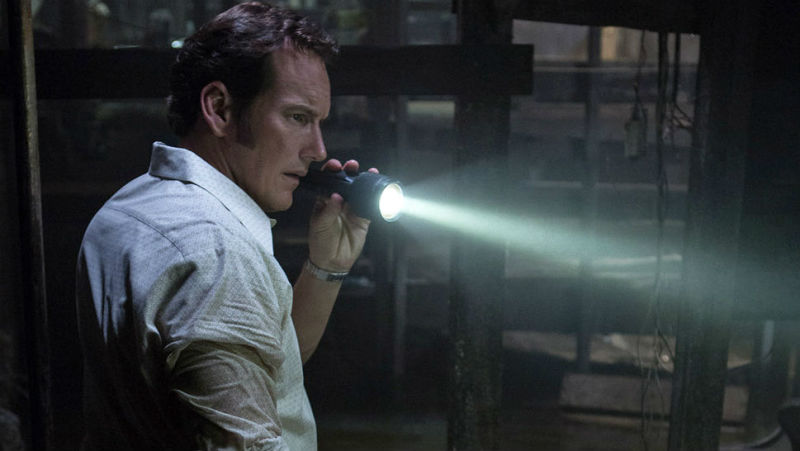
And this is where the movie starts, in Amityville, and where it introduces us to the movie’s principal villain, a demon nun intent on claiming Ed Warren’s life (Lorraine witnesses his death while in a trance). This early sequence serves as the set up for the ensuing events based in Enfield, and widens the scope of the Warrens’ investigation once they’ve been persuaded to look into the case. In the hands of director James Wan and his co-screenwriters, Carey and Chad Hayes, and David Leslie Johnson, this gives viewers a mix of “true” occurrences and fictional explanations that works well for the most part, but which relies heavily on the style of horror movie making established in recent years through the likes of the Insidious series, the first Conjuring movie, and its spin-off Annabelle (2014).

It’s a style of horror movie making that is fast becoming too predictable for its own good, but as one of its creators, Wan is better placed than most to squeeze more life out of it. The Conjuring 2, with its demon nun and shaky dramatics, is a better sequel than might have been expected, but it still contains too many moments that shatter the ilusion of heightened reality that the script carefully tries to maintain throughout. With its flooded basement, final act heroics, and expository trance sequences, the movie identifies more with its own place in the modern horror landscape than it does with the requirements of telling a good story. And one or two standout sequences aside, the movie is too heavily reliant on the template established through previous movies to be entirely effective.

TC2 - scene2

But that’s not to say that Wan doesn’t give it a good try. The opening sequence set in the house at Amityville is beautifully set up, with a reverse dolly shot that brings the viewer into the house via one of the two windows that are so iconic to the look of the property from the outside. A seance sees Lorraine (Farmiga) wandering the house and imitating/reliving the murders committed by a former occupant. It’s an effective collection of scenes but as they go on there’s a feeling that this is a sideshow, a gory hors d’oeuvre before the main course set in Enfield. The Warrens’ investigation into the events at Amityville made their names (and could have made for a movie all by itself), but we’re quickly moved on, and are introduced to the Hodgsons. Peggy (O’Connor) is an harrassed single mother struggling to keep her family afloat amid issues involving an absent husband, mounting money problems, and a house that looks in places like it’s suffered from fire damage (the set design is curious to say the least).

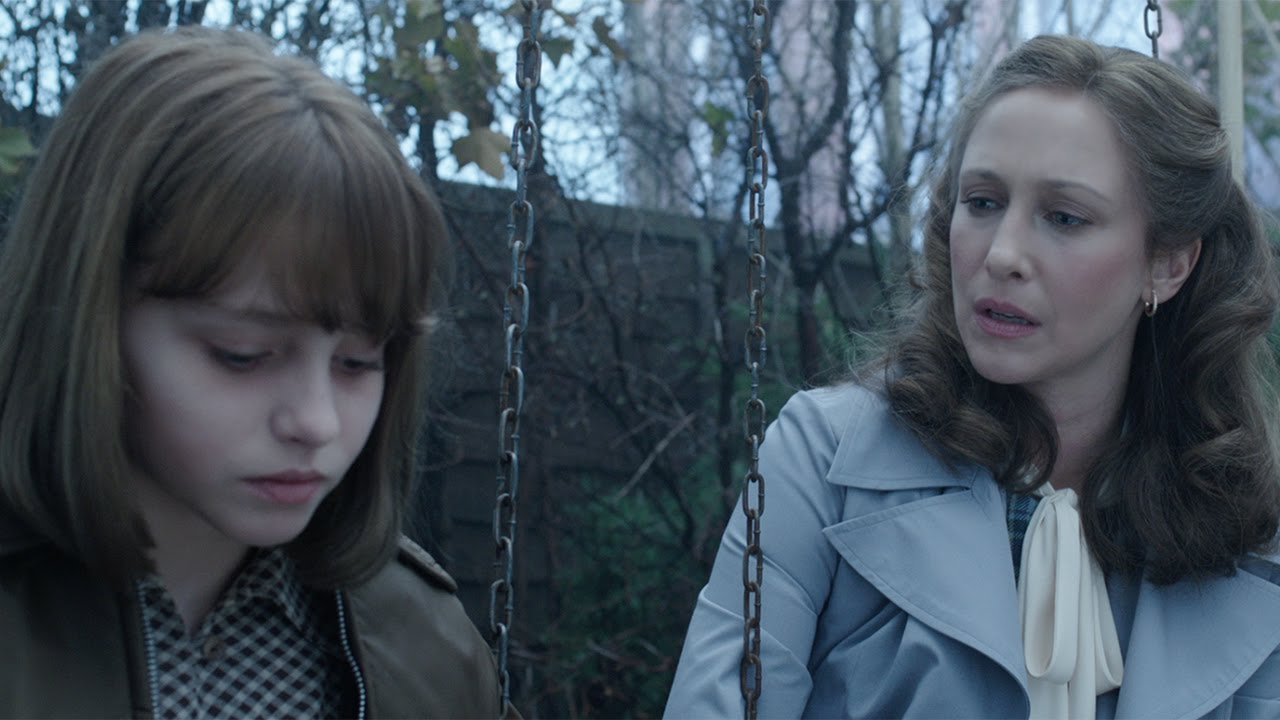
When Janet (Wolfe) begins to experience strange phenomena, Peggy is initially dismissive until she herself witnesses the same sort of thing. The police are called but can offer little help except as witnesses to the self-same phenomena, though this does lead to the Press taking up the story. Paranormal researcher Maurice Grosse (McBurney) begins his investigation while back in the States, Lorraine convinces Ed (Wilson) they should take a break from their own investigations (though in the end it doesn’t take much to convince Lorraine to change her mind). Once they arrive, Ed and Lorraine waste no time in contacting the spirit of the house’s previous owner, a man named Bill Wilkins (Adrian). Bill died in the house and it’s he who is responsible for all the paranormal goings-on. Unable to convince him to move on, Bill’s malicious behaviour begins to put everyone at risk. But when a video recording shows Janet causing damage that everyone had attributed to Bill Wilkins, Ed and Lorraine have no option but to leave as it throws too much doubt on the veracity of what’s happening. Until Ed has a breakthrough in relation to two recordings made of Bill talking through Janet…

TC2 - scene1

While The Conjuring 2 is handsomely mounted with a touch of Grand Guignol here and there to add to the visual gloominess, and Wan orchestrates proceedings with a confidence and deftness of touch that benefits and enhances the mood of the movie to good effect, it’s still let down by the vagaries inherent in the script and its decision to include as many of the recorded events as possible (though the script seems to be saying that these events aren’t dramatic enough on their own and they’re bolstered by the inclusion of extra phenomena such as the Crooked Man and dozens of crosses that turn upside down). Narrative leaps make the movie feel disjointed at times, particularly in the stretch before Ed and Lorraine arrive in Enfield, and there’s little investment in the characters or their development, with only Grosse given a poignant (and true) reason to believe in the paranormal.

The cast perform efficiently enough, with Wilson and Farmiga settled into their roles, and there’s excellent support from Wolfe and O’Connor (though her accent, like Esposito’s, does wander from scene to scene). Don Burgess’s cinematography is a bonus, providing the movie with a sense of compressed space that feels appropriately claustrophobic when characters are shot in close-up, and there’s a subtle, “insidious” score by Joseph Bishara that adds to the effectiveness of the supernatural events. But if there’s one grumble to be made above all others, it’s why Valak, the demon nun in question, had to look like Marilyn Manson.

Rating: 7/10 – a solid if predictable horror sequel, The Conjuring 2 lacks cohesion in its narrative, but makes up for it with some impressive visuals and its recreation of the era; unnerving for the most part and featuring a couple of effective jump scares, viewers should take its assertion of being from “the true case files of Ed and Lorraine Warren” with a huge pinch of salt, and view accordingly.

Share this:

  • Click to share on X (Opens in new window) X
  • Click to share on Facebook (Opens in new window) Facebook
  • More
  • Click to print (Opens in new window) Print
  • Click to email a link to a friend (Opens in new window) Email
Like Loading...

Bone Tomahawk (2015)

12 Monday Oct 2015

Posted by dullwood68 in Movies

≈ 9 Comments

Tags

Broken leg, Cannibals, Drama, Horror, Humour, Kurt Russell, Matthew Fox, Opium, Patrick Wilson, Review, Richard Jenkins, S. Craig Zahler, Thriller, Troglodytes, Western

Bone Tomahawk

D: S. Craig Zahler / 132m

Cast: Kurt Russell, Patrick Wilson, Matthew Fox, Richard Jenkins, Lili Simmons, David Arquette, Kathryn Morris, Fred Melamed, Sean Young, Sid Haig, Evan Jonigkeit

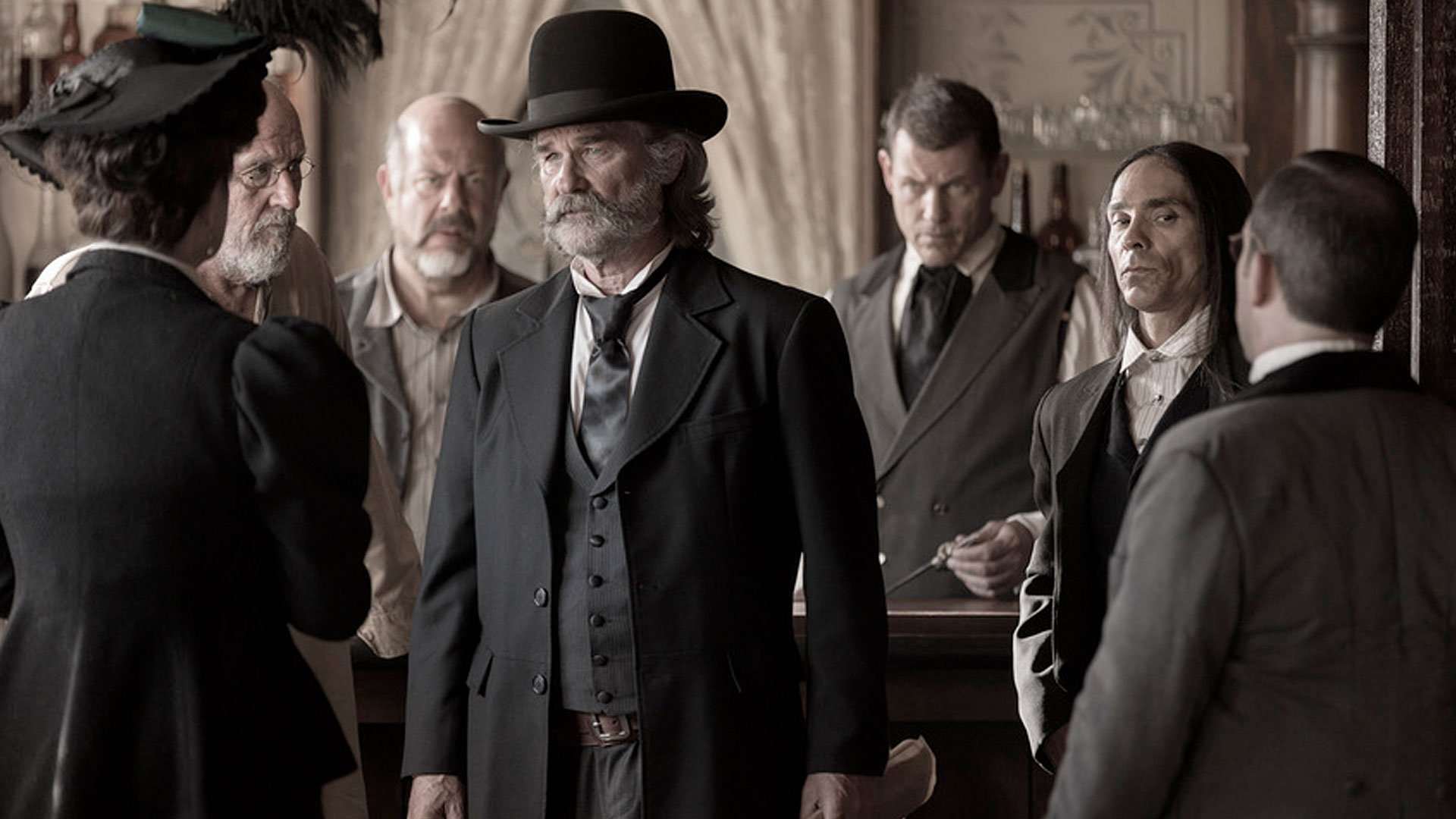
The quiet town of Bright Hope finds itself host to thief and murderer Purvis (Arquette). With his behaviour proving suspicious to town deputy, Chicory (Jenkins), Purvis’s attempt to resist arrest by the sheriff, Franklin Hunt (Russell) leads to his being shot in the leg and put in jail. Later the same night, while being tended by the town’s medic, Samantha O”Dwyer (Simmons), and guarded by young deputy Nick (Jonigkeit), the jail is attacked and the trio are abducted.

When this is discovered the next morning, Hunt seeks advice from a local Indian scout as to who could have done such a thing, as a peculiarly shaped arrow was found at the scene. The scout is quick to tell Hunt that it’s the work of troglodytes, a flesh-eating “clan” that live in the nearby hills; he also tells Hunt he won’t go with him as any attempt to rescue the missing will be guaranteed to fail, and anyone who goes will die. Hunt has no choice but to go, as does Samantha’s husband, Arthur (Wilson), even though he recently broke his right leg and it’s still in a splint. John Brooder (Fox), the man who introduced the O’Dwyer’s to each other, feels obliged to go, and despite Hunt’s objections, Chicory insists on going as well.

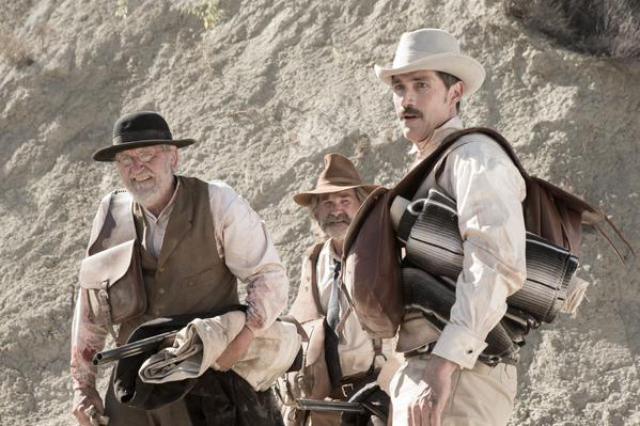
The four set out alone into the nearby hills. They encounter a couple of Mexicans who prove to be scouts for a larger group of bandits. When the bandits attack one night, Brooder is injured, and O’Dwyer’s broken leg is further damaged. With no choice but to reset his leg, and leave him to recover – and if able to, follow them later – Hunt, Brooder and Chicory continue on. As they get nearer to the hills where the troglodytes are supposed to live, the trio begin to hear strange unearthly noises. Hunt is convinced these are warnings; the discovery of human and animal skulls near to a gulley serves as a further caution. When they’re ambushed by a group of troglodytes, Brooder suffers a more serious injury, while Hunt’s left arm is hit by an arrow, and Chicory recieves a nasty head wound. With Brooder too injured to continue, Hunt and Chicory make their way nearer to the cave that appears to be the troglodytes home. But they’re ambushed again and this time they’re captured and taken to the troglodytes’ cave. Meanwhile, O’Dwyer regains consciousness, and sets out to follow the others and  rescue his wife…

Bone Tomahawk - scene

A strange, mercurial hybrid of Western and Horror, Bone Tomahawk is a movie that consistently outdoes its low budget in terms of originality, unexpected twists and turns in the narrative, and a recurring sense of humour that often threatens to undermine the seriousness of the drama, but which actually works as an escape valve for the tension that first-time director Zahler seems able to pull together at will. At times, this isn’t a movie for the faint-hearted or the squeamish – Nick’s fate is particularly gruesome – but in amongst the sometimes extreme violence and the matter-of-fact tone that accompanies it, Zahler manages to explore themes of masculinity, comradeship, loss, self-sacrifice, and most surprisingly of all, manifest destiny.

From the outset, this is a Western that isn’t interested in telling a typical Western story, and although it bears a (very) basic resemblance to John Ford’s The Searchers (1956), it soon abandons any pretense at wanting to emulate that classic movie by taking a no-nonsense approach to the times, and the events that unfold. It also steers away from traditional Western motifs by having its quartet of lawful avengers put at a disadvantage right from the start, with O’Dwyer’s broken leg proving exactly the type of hindrance that’s likely to get them all killed. When they’re forced to leave him behind, not only does the size of their task increase, but also the likelihood of their ending up as buffet for the troglodytes increases too; they soldier on because they want to for each other, not because they have to for the abductees, which was how they set out.

By changing this kind of stance along the way, and by making their opponents so animalistic as to be unreasonable, Zahler avoids any sentimentality that might occur in a regular Western, and isn’t afraid to put his characters through the wringer, so much so that there are times when the viewer isn’t sure if any of the quartet will survive, or if they do, how intact they’ll be. With a rugged, inhospitable looking backdrop to the action (expertly rendered by DoP Benji Bakshi), the main characters’ confidence is slowly eroded by their surroundings and the troglodytes’ uncompromising ferocity, and this is where Zahler’s ability to ratchet up the tension is most prevalent – how are they going to get out of this alive? It’s an interesting question, as by the movie’s end it’s not about the survival of the fittest, but survival at any cost.

With so many weighty themes to incorporate, and with the violence and escalating tension proving so effective, it’s left to Jenkins’ daft, lovably clueless deputy to provide some much needed humour. There’s a lovely moment when he insists a travelling flea circus was operated by real live fleas, and he continually misunderstands things that have been said or done. Jenkins strikes just the right note of encroaching senility mixed with amiable foolishness and is a joy to watch as a result. Elsewhere, Russell’s flinty portrayal of Hunt will remind viewers of his turn as Wyatt Earp in Tombstone (1993), and his whiskers should by rights be given a movie of their own. It’s good to see him play a character who makes so many mistakes, and if he maintains a degree of unshakeable tenacity throughout, then the movie is all the better for it (even if it’s cruelly undermined by the troglodyte leader’s treatment of him).

Bone Tomahawk - scene2

As the equally tenacious O’Dwyer, Wilson is headstrong, determined and completely focused on the task ahead, even though O’Dwyer will suffer for it. As his captive wife, Simmons is appealing and vulnerable, and more resigned to her fate than anyone would surmise. Both give credible performances and are matched by Fox’s belligerent martinet Brooder, a man as out of place in the quartet as he is oddly appealing. With Arquette and Morris (as Hunt’s wife) offering strong support, the movie benefits from having assembled a fine cast who are all committed to telling the tale at hand, and their are fine turns from the likes of Haig and Melamed in minor roles that add to the richness of the characters.

With a low budget fixed in place, Zahler is forced to resort to some necessary sleight of hand in telling his story. The troglodytes’ cave is reduced to one static location that features little in the way of set dressing, and there’s a sense that the exterior scenes were all shot in the same place but from different angles to hide the repetition. There’s also a problem with the pace, as some scenes – notably those where Hunt et al travel to the hills – are flat and in need of tightening up. Otherwise, Zahler’s debut is a taut, gripping endeavour that breathes new life into a (mostly) moribund genre, and is a great way of announcing there’s a new director in town who’s definitely worth watching out for.

Rating: 8/10 – a surprise on so many levels, Bone Tomahawk is an uncompromising,  unapologetic movie that revels in its ability to subvert the Western genre, and gives us a tribe of inbred cannibals that easily surpasses the cartoon equivalents in the Wrong Turn series; with a great cast clearly relishing their roles, and assured writing and direction from Zahler, this is meaty stuff indeed, and a rare treat.

Share this:

  • Click to share on X (Opens in new window) X
  • Click to share on Facebook (Opens in new window) Facebook
  • More
  • Click to print (Opens in new window) Print
  • Click to email a link to a friend (Opens in new window) Email
Like Loading...

Stretch (2014)

11 Monday May 2015

Posted by dullwood68 in Movies

≈ Leave a comment

Tags

Chris Pine, Comedy, Crime, Drama, Ed Helms, FBI, Gambling debt, James Badge Dale, Jessica Alba, Joe Carnahan, Limo driver, Patrick Wilson, Review

Stretch

D: Joe Carnahan / 94m

Cast: Patrick Wilson, Chris Pine, Ed Helms, James Badge Dale, Brooklyn Decker, Jessica Alba, Shaun Toub, Randy Couture, Matthew Willig, Ben Bray, David Hasselhoff, Ray Liotta, Norman Reedus

Following the unexpected break up of his relationship with the love of his life, Candace (Decker), would-be actor and ex-cocaine and gambling addict Stretch (Wilson) turns to limo driving to make ends meet. With his life coasting along in neutral, it comes as a shock when one day a gambling debt he thought had lapsed, is taken over by Ignacio (Bray), who wants payment by midnight of the same day. With little chance of coming up with the $6,000 he owes, Stretch convinces one of his co-workers, Charlie (Alba), to steer any high-paying customers his way during the evening, in the hope that he’ll earn enough in tips to pay off Ignacio.

With his boss Naseem (Toub) worried about a rival limo company run by the mysterious Jovi (Couture), Stretch sees his first pick-up, David Hasselhoff, persuaded to go with the Jovi. In an attempt at getting his own back, Stretch gets to the Jovi’s next client, Ray Liotta, first. Picking him up from a movie set, Liotta leaves with a prop gun and fake police I.D., but insists that Stretch return them to the studio. Before he can do so, Charlie sets him up with another client, an eccentric businessman called Roger Karos (Pine). Knowing that he’s a renowned big tipper, Stretch tells Karos about his gambling debt; Karos agrees to tip Stretch that amount if he takes him wherever he wants to go.

“Wherever” turns out to be a secret sex club. When they get there, Karos gives Stretch a task: to visit another club, see a Frenchman called Laurent (Dale) and obtain a specific briefcase, plus locate a supply of cocaine, and all within one hundred minutes – without fail. But Laurent is expecting Karos to hand over some ledgers in exchange for the briefcase (which contains a lot of money). Using Ray Liotta’s fake police I.D., Stretch bluffs his way out of the club with the briefcase, and by chance runs into Candace. Without batting an eyelid he tells her he’s doing really well and when she shows a renewed interest in him, Stretch turns her down flat.

He gets hold of some cocaine but the limo gets stolen. With the briefcase hidden inside it, he tracks it down, only for it to be towed by the Jovi’s brother, Boris (Willig). Stretch manages to get the limo back and returns to pick up Karos. But Karos reneges on his deal to pay Stretch the $6,000, saying he was a minute late in returning to collect him. So when Ignacio calls demanding the money, Stretch tells him to meet him where Karos wants to go next. But when they all meet up, Stretch’s plans go awry when the Jovi appears and Karos hands Stretch over to him.

Stretch - scene

You know, a funny thing happened on the way to the box office…

Stretch was originally scheduled for release in March 2014, but with two months to go, Universal scrapped the release and allowed producer Jason Blum to offer the movie to other distributors. But no one picked it up, and it came back to Universal. Eventually the movie was released on iTunes and Amazon.com, and VOD, in October 2014. Which begs the question, if Universal were so eager to disown it, then just how bad a movie is it?

The answer is: not that bad. It is rough and ready though, and often threatens to disappear up its own backside by trying to be edgy and complicated, but on the whole Joe Carnahan’s blackly comic limo ride is a bit of a guilty pleasure. He’s helped immensely by the casting of Wilson in the title role, his resigned, long-suffering features put to excellent use throughout as Stretch manoeuvres his way through the kind of night that only happens to characters in the movies. It’s Scorsese’s After Hours (1985) given a more modern sensibility and with a higher absurdity quotient.

It does, however, take an age to get going. It’s not until Ray Liotta’s dropped off at his hotel that the movie begins to move up a gear, and Stretch’s evening really starts to fall apart. Up until then we’re treated to too many scenes that show just how much his life sucks, and how everything he tries never quite works out how he needs it to. By the third or fourth example we get the idea, but Carnahan isn’t finished, and Stretch’s humiliation continues, right up until the moment he cons the briefcase from Laurent. From then on he begins to fight back – against Naseem, the Jovi and Boris, Ignacio, and Karos. It’s great to see this particular worm turning, and Wilson’s unprotesting features change to reflect the smug satisfaction Stretch begins to experience as he turns the tables on everyone. It’s a winning performance, and one that makes the viewer root for Stretch at every turn.

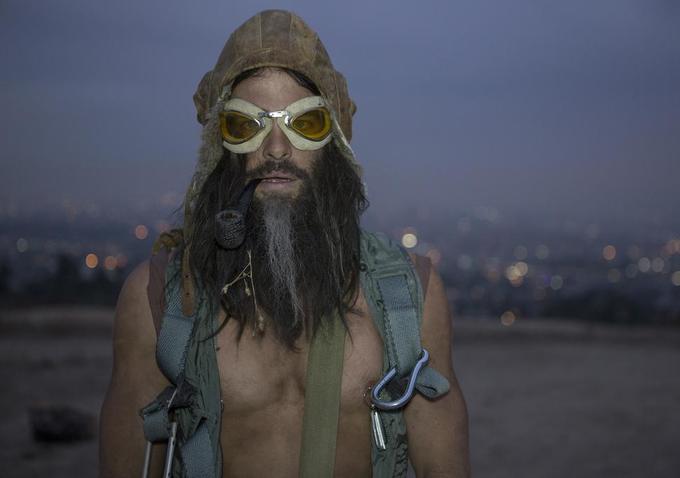
Wilson is the calm centre at the midst of what is an otherwise wild and wacky tale of male empowerment gone AWOL, but more than holds his own when up against the feverish performance given by an uncredited Pine. Sporting a bushy hairstyle and beard, and making his appearance semi-naked in a parachute, Pine gives such a larger than life performance it’s almost as if he’s been given carte blanche by Carnahan to do and say whatever he wants (such as setting fire to the inside of the limo, or punching himself in the face for “clarity”). Luckily, he’s not so over-the-top that he proves too much of a distraction, but when he isn’t on screen, his absence is palpable; full marks to Carnahan then for not over-relying on him, or letting the character take over.

But while Wilson and Pine have fun with their roles, fun that translates as unwavering commitment in front of the camera, spare a thought for poor Ed Helms, saddled with playing Karl, the ghost of an ex-limo driver. The script requires him to pop up at odd moments and either point out Stretch’s failings, or pass comment on the action. He’s meant to be a source of humour, and Helms plays him that way, but alas nobody thought to tell Carnahan, who provides him with some of the most awkward dialogue this side of a later entry in the Saw series. To compensate, though, the cameos – from Hasselhoff, Liotta, Shaun White, and Norman Reedus – are all hilarious (especially Reedus’s).

Stretch - scene2

With the movie pushing credibility further and further under the wheels of absurdity, Stretch often comes perilously close to derailing, but at each crazy turn Carnahan reins it in and finds some plausibility – however weak – from somewhere, and the movie carries on regardless. It’s a movie that comes self-contained and relies on its own twisted logic to work, and  for the most part, that’s exactly what happens: it works. There’s a romantic sub-plot involving Stretch and a woman he’s met online, plus the whole running-scared-of-the-Jovi-and-his-brother routine, and they add nicely to the mix, adding some small amount of depth to the story and providing some secondary amusement.

If its’ all a little too far-fetched then it’s to be expected. And though being a little far-fetched doesn’t necessarily hurt the movie, it does raise that question again: just what bee had gotten into Universal’s bonnet? Because from here, Carnahan’s crazy thrill ride has a lot to offer once that shaky start has passed.

Rating: 7/10 – with a very slow start leading eventually to all sorts of comic encounters and dialogue – “I’m sorry, I didn’t see the light.” “Well, don’t go towards it now.” – Stretch is an imperfect but still hugely enjoyable comedy-thriller; best viewed with any expectations dialled down so that it can (again eventually) surprise you and make you glad you watched it.

Share this:

  • Click to share on X (Opens in new window) X
  • Click to share on Facebook (Opens in new window) Facebook
  • More
  • Click to print (Opens in new window) Print
  • Click to email a link to a friend (Opens in new window) Email
Like Loading...

Let’s Kill Ward’s Wife (2014)

29 Sunday Mar 2015

Posted by dullwood68 in Movies

≈ Leave a comment

Tags

Black comedy, Body disposal, Bullying, Comedy, Donald Faison, Friendships, Golf, Greg Grunberg, James Carpinello, Marriage, Murder, Patrick Wilson, Review, Scott Foley

Let's Kill Ward's Wife

D: Scott Foley / 82m

Cast: Patrick Wilson, Scott Foley, Donald Faison, James Carpinello, Greg Grunberg, Dagmara Domińczyk, Amy Acker, Marika Domińczyk, Nicolette Sheridan

Ward (Faison) has three close friends: David (Wilson), Tom (Foley), and Ronnie (Carpinello), but since his marriage to Stacey (Dagmara Domińczyk) and the birth of their son, his chances of spending quality time with them has almost reached zero. The reason? Stacey has him browbeaten and henpecked and bullied and reduced to asking permission to see his friends (which he doesn’t get). When a planned Father’s Day trip to the golf course sees four end up as three, his friends start to muse on the idea of killing Stacey and ridding their lives of her forever. But while Tom and Ronnie dismiss the idea other than in principle, screenwriter David begins researching how to kill someone and get away with it.

At a party held at Ward’s house, the friends, along with Tom’s wife, Geena (Acker), and David’s ex-wife, Amanda (Marika Domińczyk), are all together when Tom receives a phone call from actress Robin Peters (Sheridan), whom he has recently interviewed for the magazine he and Ward work for. She flirts with him and he arranges to meet her. But Stacey overhears the conversation and threatens to tell Geena about it. In a fit of pent-up anger, Tom mashes her face into a cake. She comes up for air but slips on a piece of the cake and crashes to the floor, unconscious. She stirs, and Tom panics and strangles her.

He manages to keep the body away from prying eyes until everyone but his friends and Geena and Amanda have gone. He tells them what’s happened, and after the initial shock, they all decide to cover up Stacey’s murder, and then to dispose of the body. Ward is stunned but not unhappy, and goes along with the plan. When it comes to deciding what to do with the body, David reveals several ways in which they could get rid of it, and they decide to dismember it and bury the portions in various different locations. But there is a potential fly in the ointment: Ward’s nosy cop neighbour, Bruce (Grunberg), who senses something is up with Ward, and who keeps an eye on his and his friends’ comings and goings in the run up to the disposing of Stacey’s body.

But when it comes to actually dumping her body, Ronnie has a crisis of conscience that threatens the plan, and Ward is followed by an increasingly suspicious Bruce…

Let's Kill Ward's Wife - scene

There’s a moment in Let’s Kill Ward’s Wife that may well be too much for some viewers, and may prompt them to give the rest of the movie a miss, believing that there are some things – even in a black comedy – that shouldn’t be filmed. The moment in question involves Ward’s full bladder and his dead wife, and it’s the moment in the movie where any connection the audience might have had with Ward and his friends flies out of the window and heads south for the rest of eternity. Up til now, the easy complicity and the joking around have been awkwardly amusing, but here the script – by Foley – aims for the blackest of black comedy and misses by several country miles (there’s another moment later on, with a line of dialogue, that tries the same thing, but it also falls flat). These two moments are indicative of the script’s shortcomings – of which there are many – and why some movies shot on a low budget and in a short period of time… should remain unmade.

It’s true that there’s ambition here, but it’s almost choke-slammed into submission before the movie even begins. At their son’s Christening, Stacey berates Ward for his behaviour in front of all their guests, but he’s done nothing wrong; and while it’s a scene that’s played for maximum awfulness – and to show just how much of a shrew Stacey can be – it’s also a scene that feels too overwrought to be credible. And Stacey remains a shrew right up until she dies, with no attempt to show a different side to her personality, and with an almost blink-and-you’ll-miss-it explanation as to her bullying behaviour. It’s a one-note characterisation and harms the movie in ways that Foley hasn’t considered because he’s more interested in showing the four friends and their camaraderie. But they’re just a bunch of guys who can’t relate to women, and for whom casual misogyny is pretty much a way of life. Ronnie is a would-be Lothario, while Tom is planning to cheat on his wife because it’s easier than telling her she doesn’t turn him on anymore and trying to fix things. And apparent commitment-phone David can devise a plan to dismember and dispose of a dead body but he can’t devise a way in which he can win back his ex-wife. (And if you think these “issues” won’t be resolved by the movie’s end, then you need to think again.)

As the movie stumbles from one unconvincing set up to another – David proves to be a bit of a criminal mastermind, the friends all strip down to their underwear in order to get rid of their clothes… but before they leave Ward’s house, Ronnie fails to take a shovel with him to his burial site and has to use a golf club to dig the hole, Bruce proves to be the worst cop in the world – it soon becomes clear that writer/director Foley hasn’t got a grip on either the material or his cast’s performances. Wilson comes off best by making David gleefully amoral when it matters, and he wears a Cheshire Cat grin throughout. Faison plays Ward as either dazed or confused or panicky, and Carpinello adopts a breezy Brooklynite persona for Ronnie that is too close to parody for comfort. Of the rest of the cast, only Acker makes any kind of impression, but then only briefly before she’s required to turn into an unlikely sexpot. As for Foley, well, let’s just say this isn’t his finest hour.

With too much in the way of fixed camerawork going on, Let’s Kill Ward’s Wife isn’t the most visually arresting of movies, but Foley and DoP Eduardo Barraza do at least keep things moving within the frame, and their reliance on low angle shots occasionally pays off. There’s a score by John Spiker that rarely deviates from being twee and stiffly supportive of the action, and the movie’s brief running time proves to be an unexpected blessing.

Rating: 3/10 – considering the potential of its subject matter, Let’s Kill Ward’s Wife is a ridiculous, self-consciously careless attempt at making a whip-smart blacker-than-black comedy; with no one to root for, or care about, it’s a movie that tries too hard and as a result, fails to deliver.

Share this:

  • Click to share on X (Opens in new window) X
  • Click to share on Facebook (Opens in new window) Facebook
  • More
  • Click to print (Opens in new window) Print
  • Click to email a link to a friend (Opens in new window) Email
Like Loading...

Blog Stats

  • 486,841 hits

Recent Posts

  • 10 Reasons to Remember Bibi Andersson (1935-2019)
  • Fantasia (1940)
  • Dances With Wolves (1990) – The Special Edition
  • Kiss of the Spider Woman (1985)
  • The Three Musketeers (1973)

Top Posts & Pages

  • Lost for Life (2013) - Another Look
    Lost for Life (2013) - Another Look
  • Lost for Life (2013)
    Lost for Life (2013)
  • About
    About
  • Exposed (2016)
    Exposed (2016)
  • A Brief Word About La La Land (2016)
    A Brief Word About La La Land (2016)
  • Cardboard Boxer (2016)
    Cardboard Boxer (2016)
  • Irrational Man (2015)
    Irrational Man (2015)
  • The Monuments Men (2014)
    The Monuments Men (2014)
  • BFI London Film Festival 2015
    BFI London Film Festival 2015
  • A Brief Word About Netflix Original Comedies
    A Brief Word About Netflix Original Comedies
Follow thedullwoodexperiment on WordPress.com

Blogs I Follow

  • Rubbish Talk
  • Film 4 Fan
  • Fast Film Reviews
  • The Film Blog
  • All Things Movies UK
  • Interpreting the Stars
  • Let's Go To The Movies
  • Movie Reviews 101
  • TMI News
  • Dan the Man's Movie Reviews
  • Film History
  • Jordan and Eddie (The Movie Guys)

Archives

  • April 2019 (13)
  • March 2019 (28)
  • February 2019 (28)
  • January 2019 (32)
  • December 2018 (28)
  • November 2018 (30)
  • October 2018 (29)
  • September 2018 (29)
  • August 2018 (29)
  • July 2018 (30)
  • June 2018 (28)
  • May 2018 (24)
  • April 2018 (21)
  • March 2018 (31)
  • February 2018 (25)
  • January 2018 (30)
  • December 2017 (30)
  • November 2017 (27)
  • October 2017 (27)
  • September 2017 (26)
  • August 2017 (32)
  • July 2017 (32)
  • June 2017 (30)
  • May 2017 (29)
  • April 2017 (29)
  • March 2017 (30)
  • February 2017 (27)
  • January 2017 (32)
  • December 2016 (30)
  • November 2016 (28)
  • October 2016 (30)
  • September 2016 (27)
  • August 2016 (30)
  • July 2016 (30)
  • June 2016 (31)
  • May 2016 (34)
  • April 2016 (30)
  • March 2016 (30)
  • February 2016 (28)
  • January 2016 (35)
  • December 2015 (34)
  • November 2015 (31)
  • October 2015 (31)
  • September 2015 (34)
  • August 2015 (31)
  • July 2015 (33)
  • June 2015 (12)
  • May 2015 (31)
  • April 2015 (32)
  • March 2015 (30)
  • February 2015 (37)
  • January 2015 (39)
  • December 2014 (34)
  • November 2014 (34)
  • October 2014 (36)
  • September 2014 (25)
  • August 2014 (29)
  • July 2014 (29)
  • June 2014 (28)
  • May 2014 (23)
  • April 2014 (21)
  • March 2014 (42)
  • February 2014 (38)
  • January 2014 (29)
  • December 2013 (28)
  • November 2013 (34)
  • October 2013 (4)

Create a free website or blog at WordPress.com.

Rubbish Talk

Film 4 Fan

A Movie Blog

Fast Film Reviews

The Film Blog

The official blog of everything in film

All Things Movies UK

Movie Reviews and Original Articles

Interpreting the Stars

Dave Examines Movies

Let's Go To The Movies

Film and Theatre Lover!

Movie Reviews 101

Daily Movie Reviews

TMI News

Latest weather, crime and breaking news

Dan the Man's Movie Reviews

All my aimless thoughts, ideas, and ramblings, all packed into one site!

Film History

Telling the story of film

Jordan and Eddie (The Movie Guys)

Movie Reviews & Ramblings from an Australian Based Film Fan

Privacy & Cookies: This site uses cookies. By continuing to use this website, you agree to their use.
To find out more, including how to control cookies, see here: Cookie Policy
  • Subscribe Subscribed
    • thedullwoodexperiment
    • Join 481 other subscribers
    • Already have a WordPress.com account? Log in now.
    • thedullwoodexperiment
    • Subscribe Subscribed
    • Sign up
    • Log in
    • Report this content
    • View site in Reader
    • Manage subscriptions
    • Collapse this bar
 

Loading Comments...
 

    %d