• 10 Reasons to Remember…
  • A Brief Word About…
  • About
  • For One Week Only
  • Happy Birthday
  • Monthly Roundup
  • Old-Time Crime
  • Other Posts
  • Poster of the Week
  • Question of the Week
  • Reviews
  • Trailers

thedullwoodexperiment

~ Viewing movies in a different light

thedullwoodexperiment

Tag Archives: Police

Mini-Review: The Legend of Barney Thomson (2015)

29 Friday Jul 2016

Posted by dullwood68 in Movies

≈ Leave a comment

Tags

Barber, Black comedy, David Lindsay, Drama, Emma Thompson, Literary adaptation, Police, Ray Winstone, Review, Robert Carlyle, Scotland, Serial killer, The Long Midnight of Barney Thomson, Tom Courtenay

The Legend of Barney Thomson

aka Barney Thomson

D: Robert Carlyle / 92m

Cast: Robert Carlyle, Emma Thompson, Ray Winstone, Ashley Jensen, Martin Compston, Tom Courtenay, James Cosmo, Brian Pettifer, Kevin Guthrie, Stephen McCole

Barney Thomson (Carlyle) lives a sad, awkward life as a Glaswegian barber who doesn’t talk to his customers (or even likes them), has few friends, and lives on his own in a drab flat; in short, he leads a life of quiet desperation. With his attitude at work causing too many problems, his boss, Wullie (McCole), gives him a month’s notice. Barney isn’t too good at accepting this, and pleads with Wullie to keep him on. But Wullie won’t change his mind. Barney’s bad luck gets worse: while trying to convince him, Barney causes Wullie’s death. Panicked, Barney endeavours to get rid of the body, but ends up confessing his “crime” to his mother, Cemolina (Thompson). To Barney’s surprise, his mother helps him by cutting up the body and, at first, putting the pieces in her freezer.

At the same time, the Glasgow police are trying to track down a serial killer who posts body parts to his victims’ families. In charge of the investigation is relocated London policeman, Detective Holdall (Winstone). He’s also tasked with looking into Wullie’s “disappearance”, which brings him into contact with Barney. To offset Barney’s paranoid suspicion that Holdall thinks he’s responsible for Wullie’s “disappearance”, Barney attempts to pin the blame on his colleague, Chris (Compston). But Barney’s plan takes an unexpected turn, and soon matters become even more complicated, leading him to have to count on his mother once more – but in a way that he couldn’t possibly have foreseen.

TLOBT - scene

Robert Carlyle’s first venture into big screen directing – he previously directed an episode of SGU Stargate Universe in 2010 – The Legend of Barney Thomson is an enjoyable if sometimes over-reaching movie that works best as farce, but less so as a straightforward black comedy. Adapted from the novel The Long Midnight of Barney Thomson by David Lindsay, the movie paints a vivid world of meandering lives, muddled relationships and the aforementioned quiet desperation. Barney is the eternal loser, always taking second place in his own life, and too reliant on others to make any serious decisions that would change his life for the better. Carlyle is terrific as Barney: put upon, afraid, going through the motions, and then on edge, anxious and terrified. He’s matched by Thompson, who makes Cemolina a cruel figure in Barney’s life, and whose brassy, couldn’t-care-less behaviour is the antithesis of Barney and his constant worrying. (Winstone and Jensen are less successful, their continual haranguing of each other feeling like it’s been drafted in from another, weaker movie.)

There’s humour aplenty, but too much of it is signposted in advance, and as a result it lacks the kind of impact to have audiences laughing out loud very often. Despite this, the movie moves at a good pace, and Carlyle directs with confidence, even though the material could have been straightened out here and there, and the ending a little less contrived. The Bridgend, Glasgow locations add flavour to the storyline, and there’s solid, suitably dour cinematography courtesy of Fabian Wagner that adds to the often astringent feel of the movie as a whole.

Rating: 6/10 – though not entirely successful, The Legend of Barney Thomson has much to recommend it, from Thompson’s harridan of a mother, to Winstone’s transplanted copper moaning about living and working in Scotland; it’s not a movie that will linger long in the memory after you’ve seen it, but it’s definitely worth watching, and does have an instant classic in the line (directed at Barney), “You look like a haunted tree.”


Share this:

  • Click to share on X (Opens in new window) X
  • Click to share on Facebook (Opens in new window) Facebook
  • More
  • Click to print (Opens in new window) Print
  • Click to email a link to a friend (Opens in new window) Email
Like Loading...

Mini-Review: Freeheld (2015)

22 Monday Feb 2016

Posted by dullwood68 in Movies

≈ 1 Comment

Tags

Cancer, Civil partnerships, Drama, Ellen Page, Equality, Freeholders, Julianne Moore, Laurel Hester, Michael Shannon, New Jersey, Ocean County, Pension rights, Peter Sollett, Police, Review, True story

Freeheld

D: Peter Sollett / 103m

Cast: Julianne Moore, Ellen Page, Michael Shannon, Josh Charles, Steve Carell, Dennis Boutsikaris, William Sadler, Tom McGowan, Kevin O’Rourke, Luke Grimes, Gabriel Luna, Anthony DeSando, Skipp Sudduth, Mary Birdsong, Kelly Deadmon

When Forrest Gump memorably announced that “life [is] like a box of chocolates. You never know what you’re gonna get”, he probably wasn’t referring to Freeheld, a cliché-ridden recounting of the struggle endured by New Jersey police detective Laurel Hester (Moore) as she tried to get her pension benefits assigned to her same-sex partner, Stacie Andree (Page). Hester had an aggressive form of lung cancer that spread to her brain, and she wanted her pension paid to Stacie so that she would be able to remain in their home.

Freeheld - scene1

But a combination of political and gender prejudices decreed that Stacie would not be entitled to those benefits, even though the Ocean County board of freeholders assigned to make that decision had been recently empowered to do so by the state legislature. Instead they rejected Laurel’s claim and, if you believe this version of events, remained stubborn in their rejection of her claim for some time afterward, and in the face of mounting protests and media criticism.

Now, if you’ve read this far – or have already seen the movie – it won’t be much of a stretch to realise that Laurel got her wish and Stacie got her benefits. But it’s the way in which this story is told that is likely to anger viewers, more than the intransigence of the board. With its bland, TV-movie-of-the-week visual style, and numbingly rote storytelling, Freeheld has all the appeal of televised jury service (and where the case is a minor one). It ticks all the boxes as it wends its weary way to its foregone conclusion: Hester’s concealment of her lesbianism from her colleagues and police partner Dane Wells (Shannon); the way in which this concealment affects her relationship with Stacie; Wells’ disappointment when he finds out (that Laurel didn’t tell him ages ago); the discovery of a lump that “isn’t that serious”; the male police detective (played by Grimes) who’s also gay and can’t/won’t show his support; Stacie’s determination to believe that Laurel will beat her cancer; one of the board (Charles) acting as its moral conscience; and the discovery of information about the board that will help in getting them to overturn their decision.

Freeheld - scene3

Freeheld is a movie that lacks joy and passion, and thanks to uninspired direction from Sollett, it’s even hard to be outraged by the board’s spurious reasons for their decision. Even Moore isn’t as engaged in her character as you’d expect her to be (perhaps she realised early on there wasn’t a lot of depth there), and Page plays Stacie as either grouchy or permanently upset with no room in between. Shannon looks uncomfortable throughout, Charles looks like he’s trying to solve a difficult maths problem, Grimes wears a guilty-through-shame expression that should be a giveaway to his colleagues but isn’t, and there’s an irritating, over-the-top performance by Carell as a gay rights activist that both enlivens the movie and highlights how drab it is elsewhere.

Rating: 4/10 – despite the movie’s attempts to retell an important milestone in the struggle for equal rights, Freeheld is a lazy attempt to do so, and fails to convince in almost every department; for a better overview of Laurel Hester’s story, track down Freeheld (2007), an Oscar-winning documentary short that doesn’t deal in awkward sentimentality or by-the-numbers moralising.

Share this:

  • Click to share on X (Opens in new window) X
  • Click to share on Facebook (Opens in new window) Facebook
  • More
  • Click to print (Opens in new window) Print
  • Click to email a link to a friend (Opens in new window) Email
Like Loading...

Unit 7 (2012)

17 Friday Apr 2015

Posted by dullwood68 in Movies

≈ Leave a comment

Tags

1992 World Expo, Alberto Rodríguez, Antonio de la Torre, Corruption, Crime, Drama, Drugs, Joaquín Núñez, José Manuel Poga, Mario Casas, Police, Review, Seville, Spain, Thriller, Violence

Grupo 7

Original title: Grupo 7

D: Alberto Rodríguez / 95m

Cast: Antonio de la Torre, Mario Casas, Joaquín Núñez, José Manuel Poga, Inma Cuesta, Lucía Guerrero, Estefanía de los Santos, Alfonso Sánchez, Julián Villagrán, Carlos Olalla

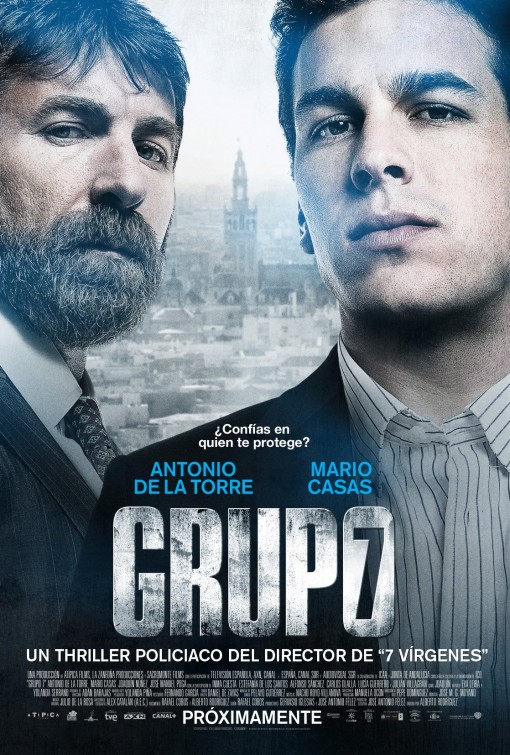
Seville, 1987. With five years to go before the city plays host to the 1992 World Expo, the authorities are determined to root out any and all crime in the city, and particularly the drugs trade. Spearheading this attempt is Unit 7, made up of four officers: tough, uncompromising Rafael (de la Torre), young, ambitious Ángel (Casas), jovial, emotional Mateo (Núñez), and vain, homophobic Miguel (Poga). Using informants such as Joaquín (Villagrán) the team begins dismantling the various dealers and suppliers that threaten the Expo’s success. But their initial busts don’t amount to very much. It’s only when they find a substantial amount of heroin at the apartment of a prostitute known as Mahogany (de los Santos), Ángel takes some of it, and the team agrees to use it to create more informants, and thereby catch more dealers and suppliers.

Over the next four years their plan comes to fruition, and to such an extent that the team are responsible for fifty per cent of all arrests made by the Seville police. But tensions arise within the group as Rafael, nominally the group’s leader, is challenged more and more by an increasingly erratic and unpredictable Ángel. Ángel becomes more and more intolerant of the drug dealers and the junkies, and often violently assaults them in the way that Rafael used to. But where Ángel becomes more inured to the violence, and emotionally closed off – and which affects his marriage to Elena (Cuesta) – Rafael becomes more relaxed and indifferent, due to his relationship with a young junkie, Lucía (Guerrero).

The team’s high arrest rate also begins to attract the attention of Internal Affairs, and the team find themselves being followed. With an increasing media spotlight on them as well, a misguided raid on a home in the suburbs causes them to lose some of their credibility (and sense of invincibility). And when Ángel becomes the target of someone who knows why the team are so successful, and is prepared to use terror tactics to undermine them, their efficiency continues to falter. When they’re ambushed and humiliated in a similar fashion that they used to intimidate some junkies once before, and the identity of their tormentor is revealed, it leads to Ángel and Rafael going back to deal with their tormentor once and for all.

Grupo 7 - scene

Incorporating contemporary footage of the World Expo site being developed and built over the years between 1987 and 1992, Unit 7 provides a social, political and historical perspective to its story that adds some degree of depth to the material, and while this is to be applauded, the episodic nature of the story ultimately works against it, leaving the viewer wanting to know more about the characters and their motivations, and with the feeling that there’s a lot more going on behind the scenes than we ever get to see or know about.

The trickiest (and not entirely convincing) aspect of all is the character of Ángel, set up as the rookie of the group and suitably naïve when the movie begins. An unfortunate encounter with a drug dealer leaves his lack of experience exposed, and his attempts to gain promotion are hampered by his diabetes – a plot device which is used in such a haphazard manner it might as well not be mentioned. But from the moment he picks up the pack of heroin and hides it he becomes a different man: arrogant for the most part and acting more like a vigilante than a cop. It’s a swift, unexpected change in direction, and while it helps set up the rest of the movie, appears too much out of the blue for comfort.

In contrast, Rafael’s turn to the “softer” side is given more room to develop, and while his relationship with Lucía provides more of an emotional component for the movie than it has anywhere else, the whole thing ultimately doesn’t go anywhere and leaves Rafael just as embittered and alone as he was at the beginning. With Mateo equalling comedy relief and Miguel placed firmly in the background, screenwriter Rafael Cobos’ more random approach to characterisation has the effect of distancing the viewer from the team, even though strong efforts are made to show their camaraderie and their combined sense of purpose. Certainly the cast, all well chosen for their roles, put in strong, confident portrayals – with de la Torre and de los Santos proving especially convincing – and make more of their roles than the script allows for.

Thankfully, Cobos’ script does work extremely well in its attempts to portray the effort made to break up various drugs rings and the kind of intimidation and violence that goes with it. The team regularly use excessive force, and while it’s probably not a misrepresentation of the times or the police attitude towards criminals, the savagery of their actions is remarkably one-sided – even when their tormentor reveals himself he doesn’t treat them as harshly as he was by them. This difference again has the effect of distancing the viewer from the group, and their subsequent actions, plus their ultimate fate come 1992, lacks the resonance it should have had.

That said, the action scenes are well-mounted, and Rodríguez shows a flair for unusual camera angles that makes – in particular – the opening rooftop chase such a visceral and propulsive experience to watch. With so many movies like this being made across the world (and too many in the US), Rodríguez’ visual acuity helps lift the movie above many of its competitors, and while this is his first attempt at making a película policial, bodes well enough if he should decide to make another. Aided by regular collaborators DoP Alex Catalán and composer Julio de la Rosa, Rodríguez has fashioned a hard-hitting, if emotionally distant crime drama that, fortunately, scores more often than it misses.

Rating: 7/10 – though struggling to offer a connection for the viewer on an emotional level, Unit 7 does provide a solid, impactful ride for most of its running time; with a firm sense of place and time, and an often impressive look and feel to it, this movie is still worth tracking down.

Share this:

  • Click to share on X (Opens in new window) X
  • Click to share on Facebook (Opens in new window) Facebook
  • More
  • Click to print (Opens in new window) Print
  • Click to email a link to a friend (Opens in new window) Email
Like Loading...

The Keeper of Lost Causes (2013)

06 Monday Apr 2015

Posted by dullwood68 in Movies

≈ 3 Comments

Tags

Assad, Carl Mørck, Cold cases, Crime, Denmark, Department Q, Drama, Fares Fares, Jussi Adler-Olsen, Literary adaptation, Mikkel Nørgaard, Nicolaj Lie Kaas, Police, Review, Sonja Richter, Thriller

Keeper of Lost Causes, The

Original title: Kvinden i buret

aka The Woman in the Cage

D: Mikkel Nørgaard / 97m

Cast: Nikolaj Lie Kaas, Fares Fares, Sonja Richter, Peter Plaugborg, Søren Pilmark, Mikkel Boe Følsgaard, Troels Lyby

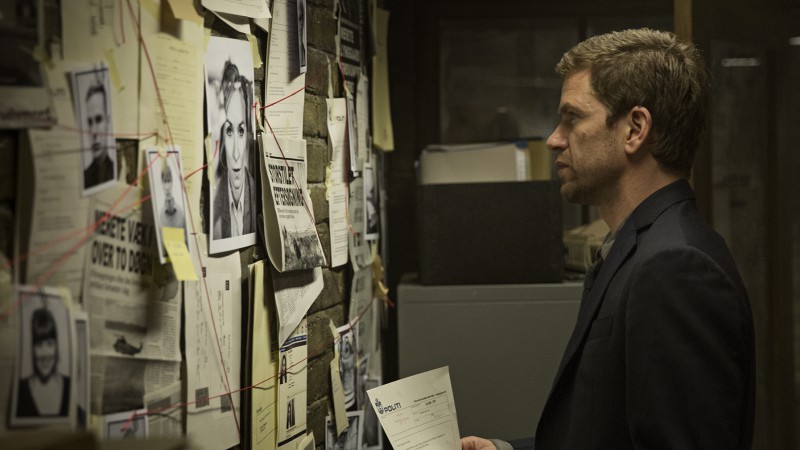
Following a police raid that leaves his partner, Hardy (Lyby) paralysed and another officer dead, detective Carl Mørck (Kaas) is transferred out of homicide and into Department Q, which deals exclusively with cold cases. His brief, along with his assistant, Assad (Fares), is to review the cases, submit a brief report and then close them. The first case he looks at concerns the apparent suicide of politician Merete Lynggaard (Richter) five years ago. Something about the case doesn’t make sense to Mørck and he reopens the investigation. He looks through the witness statements and finds that one statement wasn’t included in the final report: that Merete’s brother, Uffe (Følsgaard), who was with her on the ferry she is supposed to have jumped overboard from, was seen with a man in a raincoat.

Since Merete’s suicide, Uffe has resided in a home. Mørck and Assad visit him but his condition – brain damage from a car accident when he and Merete were children – prevents him from being of any help. A conversation with one of Merete’s colleagues reveals her liaison with a man at a conference shortly before she killed herself. Mørck gets hold of the list of attendees and photos that were taken at the conference. Suspecting that Uffe might recognise one of the men at the conference, they show him the various photos that show Merete and one of the male delegates. Uffe does recognise one of them, a man named Daniel Hale. With a solid lead to work with, Mørck’s investigation is brought up short by his boss, Marcus (Pilmark) following a complaint by the manager of the home and the original investigating officer. Unable to let things go, Mørck continues his investigation and travels to Sweden to speak to Hale.

When he and Assad get there, they discover that Hale died a few months after Merete’s suicide. They also discover that the man who attended the conference and was recognised by Uffe isn’t Daniel Hale. Learning that the man is likely to be a friend of Hale’s known as Lasse, the pair return to Denmark only to be suspended from duty. But again, Mørck can’t let things drop, and their investigation leads to an isolated farmhouse and a revelation involving the car accident that left Uffe in his current condition.

Keeper of Lost Causes, The - scene

The first of four movies adapted from Danish author Jussi Adler-Olsen’s Department Q novels – The Absent One (2014), A Conspiracy of Faith (2015), and The Purity of Vengeance (TBC) complete the quartet – The Keeper of Lost Causes is an efficient, gripping thriller that introduces possibly one of the dourest police detectives in recent cinema history. At one point, Assad remarks that he’s never seen Mørck smile. Mørck’s response? “My wife left me. My colleague’s dead, and my best friend’s a cripple … I don’t have a lot to smile about.” It’s a pithy, succinct summation of Mørck’s character, and while it seems in keeping with the recent trend in Scandinavian crime fiction and movies, the combination of Mørck’s gloomy outlook on life and Kaas’s glum demeanour raise this particular movie into the above average category.

With the central character so firmly established in the opening fifteen minutes, the movie is then free to concentrate on the mystery surrounding Merete’s apparent suicide. But as Mørck begins to piece together the clues that point to something more sinister, the script by Nikolaj Arcel takes a parallel line and shows the viewer what happened that day on the ferry. It’s a bold move, as the mystery elements inherent in the story are jettisoned in favour of a more cross-linear approach where the events of five years before run concurrently with the progress of Mørck’s investigation. This leaves the viewer with an entirely different type of crime drama than seems in play from the beginning, and while the villain of the piece enters the story quite late in the day, their appearance and the reason for their behaviour is cleverly revealed (even if what they actually do isn’t properly explained or feels credible).

The plot and various storylines play out with a surprising attention to detail, and Arcel’s adaptation does a good job of downplaying any implausibilities such as Mørck’s boss Marcus ignoring the progress he’s made in disputing the suicide theory. This aside, the movie is a solid, methodically paced crime drama that works best by keeping it simple, and Nørgaard’s unfussy, yet expressive direction is best exemplified by two moments of unexpected lyricism relating to Merete’s childhood. He’s good with the cast as well, eliciting strong, confident performances from all concerned. Kaas’s downbeat yet focused portrayal of Mørck is one of the things that makes the movie work so well; he’s completely credible as the impatient, disrespectful and arrogant ex-homicide detective who finds a new home in Department Q. And he’s matched for dedication and immersion in the role by Fares as Assad. Fares, who is Lebanese, spent two months learning Danish for the movie, but you wouldn’t know it. Assad is the sidekick role, but Fares brings a determination and an intelligence to the role that a lot of seasoned actors would have skirted past on their way to a more stereotypical portrayal.

Shot by DoP Eric Kress with an emphasis on dark, shadowy interiors and overcast, cloudy exteriors, the movie is recognisably part of the recent Nordic Noir genre that has spawned a myriad of similar tales both on the big screen and television. But thanks to a clever script, a director on top of his game, and a cast that brings credibility to (almost) every scene, The Keeper of Lost Causes is a terrific first movie in the series. If this outing is anything to go by, then the remaining three movies will definitely be ones to watch.

Rating: 8/10 – a well-paced, intelligent, and above all, absorbing crime thriller, The Keeper of Lost Causes is a testament to good story telling; quietly ambitious, the movie is a terrific example of how to maintain suspense without undermining either the plot or the characters.

Share this:

  • Click to share on X (Opens in new window) X
  • Click to share on Facebook (Opens in new window) Facebook
  • More
  • Click to print (Opens in new window) Print
  • Click to email a link to a friend (Opens in new window) Email
Like Loading...

Lethal Weapon 4 (1998)

20 Thursday Nov 2014

Posted by dullwood68 in Movies

≈ Leave a comment

Tags

Action, Chris Rock, Counterfeit money, Danny Glover, Human trafficking, Jet Li, Joe Pesci, Martin Riggs, Mel Gibson, Police, Rene Russo, Review, Richard Donner, Roger Murtaugh, Sequel, Thriller, Triads

Lethal Weapon 4

D: Richard Donner / 127m

Cast: Mel Gibson, Danny Glover, Joe Pesci, Rene Russo, Chris Rock, Jet Li, Steve Kahan, Kim Chan, Darlene Love, Traci Wolfe, Eddy Ko

An incident involving an iron-suited, flamethrower-wielding criminal leads to two revelations: that Roger Murtaugh (Glover) is going to be a grandfather, and that Martin Riggs (Gibson) is going to be a father. Nine months later the two men are looking forward to the imminent births. Out one night on Roger’s boat, and accompanied by Leo Getz (Pesci), they find themselves nearly struck by a cargo freighter. When the freighter’s crew opens fire on them, Riggs takes the fight to them and boards the vessel. The ship eventually runs aground and the cargo hold reveals a group of Chinese illegal immigrants.

Later, Murtaugh discovers a family hiding in one of the lifeboats. Instead of letting INS know, he allows them to come home with him (but he doesn’t tell Riggs; he also doesn’t tell the investigating officer, Butters (Rock), who is secretly the father of Roger’s grandchild). In Chinatown, triad boss Uncle Benny (Chan) has a visitor in the form of Triad negotiator Wah Sing Ku (Li). Wah has been expecting the family Roger has discovered, as they are an important part of his plan to free four Triad overlords (including one who is his brother) from the clutches of a corrupt Chinese general. The head of the family, Hong (Ko), has an uncle who is a master engraver; Wah aims to buy the overlords’ freedom with counterfeit money.

Riggs and Murtaugh are given promotions to captain, and they start to help Butters with his investigation. A visit to Uncle Benny sees them meet Wah but they don’t find out who he is. Leaving Leo to trail Uncle Benny, Riggs and Murtaugh are unaware of just how close they’re getting, but it’s close enough for Wah to find out where the family are hiding and to abduct them – and then to put Riggs, his partner Lorna (Russo), Murtaugh and his wife (Love) and pregnant daughter (Wolfe) in danger of being burned alive. They all manage to escape unharmed, and with Butters in tow, Riggs and Murtaugh track down Uncle Benny at his dentist’s. With the use of some nitrous oxide, they get Uncle Benny to reveal the plot involving the Four Fathers (the triad overlords). When they liaise with other detectives who work the Chinatown beat, the three men learn about the corrupt Chinese general and where the exchange is likely to take place. Interrupting the meet, they spill the beans about the money, and a vicious firefight breaks, along with a three-way showdown between Riggs, Murtaugh and Wah.

Lethal Weapon 4 - scene

The last in the series, Lethal Weapon 4 could, and perhaps should, have been a whole lot worse, but it’s a measure of the likeability of the characters, and the directorial flair of Richard Donner that, while it may still be the least in the series, it’s also an entertaining ride that will put a smile on fans’ faces. The familiarity of the material and the verbal sparring between Riggs and Murtaugh (however predictable), along with the extended action sequences and the often slapstick comedy, makes this the celluloid equivalent of being wrapped up in a nice, warm blanket on a cold winter’s evening. It’s a huge comfort to know that everything you could want from a Lethal Weapon movie is all present and correct.

With all the series’ highlights in place, the movie does meander in places, mostly when it’s trying to acknowledge the fact that its characters are getting on a bit and are “getting too old for this shit”. Given that this is the fourth in the series, and also given that there’s been a clear decision to end the franchise before it gets too derivative and stale, this acknowledgment is a welcome development. It makes for a satisfactory conclusion to the series, but all the angst and drama of the first two movies – already lessened in Lethal Weapon 3 (1992) – has now been left behind completely. Riggs’ journey from near-suicidal nut job to devoted family man is complete, while Murtaugh is a proud grandfather whose anxiety about the loss of material things (usually his car, this time round his boat) and whatever can go wrong actually doing so, is more accepting of what Fate throws at him. These are now very settled men, and while it’s heartening to see them take on the bad guys one last time, this is a movie that – fortunately – realises it’s time to call it a day.

As lighthearted – and lightweight – as it is, Lethal Weapon 4 still does its best to deliver where it matters most: in the action sequences. The opener, with its exploding tanker and fiery devastation, is as preposterous as it sounds, but is still an impressive start to the movie and at least reassures the viewer that it’s going to be business as usual. There’s the obligatory car chase with its detour aboard a trailer, a foot chase that ends with Riggs dangling from a roof, a well choreographed fight at the Murtaugh home that showcases Li’s martial arts skills, and a climactic shootout that evolves into the three-way showdown mentioned above. All are expertly shot and cut together, and all are exciting to watch, but the familiarity they bring with them makes them less than memorable. It’s a shame, but draws attention to the fact that familiarity doesn’t always breed originality.

It’s difficult as well to bring anything new to the table with such well established characters, and while Gibson and Glover are still as enjoyable to watch as always, there’s more than a hint of tiredness in their banter, as they rework old lines and try to maintain the jokiness of previous outings. This leads to some awkward dialogue being exchanged – mostly around Murtaugh’s belief that Butters is attracted to him – and a sense that all the in-jokes and series’ references were included at the expense of more original material. It’s a trade-off, no doubt willingly made by Donner and the producers, but leaves the movie feeling a little jaded and occasionally lacklustre.

On the performance side, everyone acquits themselves well, particularly Pesci who’s given a completely out of character monologue towards the movie’s end that is surprisingly effective, and Li who provides Riggs and Murtaugh with the series’ first truly formidable adversary. Two scenes aside, Russo is reduced to hovering in the background, while Rock plays Butters as an earnest, slightly duller version of the man Murtaugh may have been when he was younger. Behind the camera, Donner plays ringmaster with his usual skill and expertise, while Andrzej Bartkowiak does a great job in making even the static shots interesting to watch. And no Lethal Weapon movie would be complete without the musical collaboration of Eric Clapton and Michael Kamen, here adding another familiar element with their jazz-infused score.

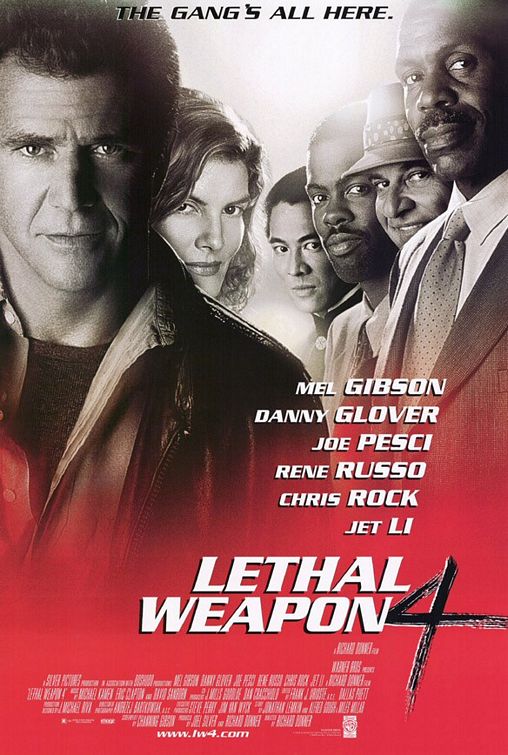
Rating: 7/10 – the tag line reads “The gang’s all here” and they are, along with all the other “best bits” of the series, in a movie that could have been called Lethal Weapon’s Greatest Hits; fun, if a tad too long thanks to its need to wrap things up, Lethal Weapon 4 is still an enjoyable diversion and provides an admirable send off for its two aging heroes.

Share this:

  • Click to share on X (Opens in new window) X
  • Click to share on Facebook (Opens in new window) Facebook
  • More
  • Click to print (Opens in new window) Print
  • Click to email a link to a friend (Opens in new window) Email
Like Loading...

Everywhen (2013)

06 Tuesday May 2014

Posted by dullwood68 in Movies

≈ Leave a comment

Tags

Alternate reality, Elin Synnøve Braathen, Harald Evjan Furuholmen, Hugo Herrman, Jarand Breian Herdal, Jens Peder Hertzberg, Microchips, Norway, Police, Review, Sci-fi, Special effects, Student project

Everywhen

D: Jarand Breian Herdal / 70m

Cast: Harald Evjan Furuholmen, Hugo Herrman, Elin Synnøve Braathen, Graeme Whittington, Hauk Phillip Bugge, Rune Dennis Tønnesen, Ruben Løfgren, Gjermund Gjesme, Joseph Whittington

Set some time in the future, Everywhen shows us a world where teleportation is in common everyday usage, and education exists in the form of microchips that can be inserted into a device in a person’s wrist.  Otherwise it’s a fairly normal world, not too far removed from the world of today.  We meet Ian (Furuholmen), a teenager who is looking after his much younger, adopted brother, Dylan (Bugge) while their parents are away.  For reasons that are left unexplained, Dylan decides to take his own life one day while Ian heads off to work; he leaves a note in Ian’s pocket that he finds later on.  Ian teleports back home but finds Dylan is missing.

What Ian does find is that the world has changed.  The home he and Dylan share is different, less well cared for.  Outside the streets are strangely empty.  The police, led by Jane Scott (Braathen), are doing their best to find out what has happened to what started out as a few thousand people, but has now reached three billion.  One of the police’s tech assistants discovers a correlation between the disappearances and eight a.m. when the majority of people are teleporting to get to work, but it still doesn’t solve the problem of where they’re disappearing to (or if they’ll ever come back).

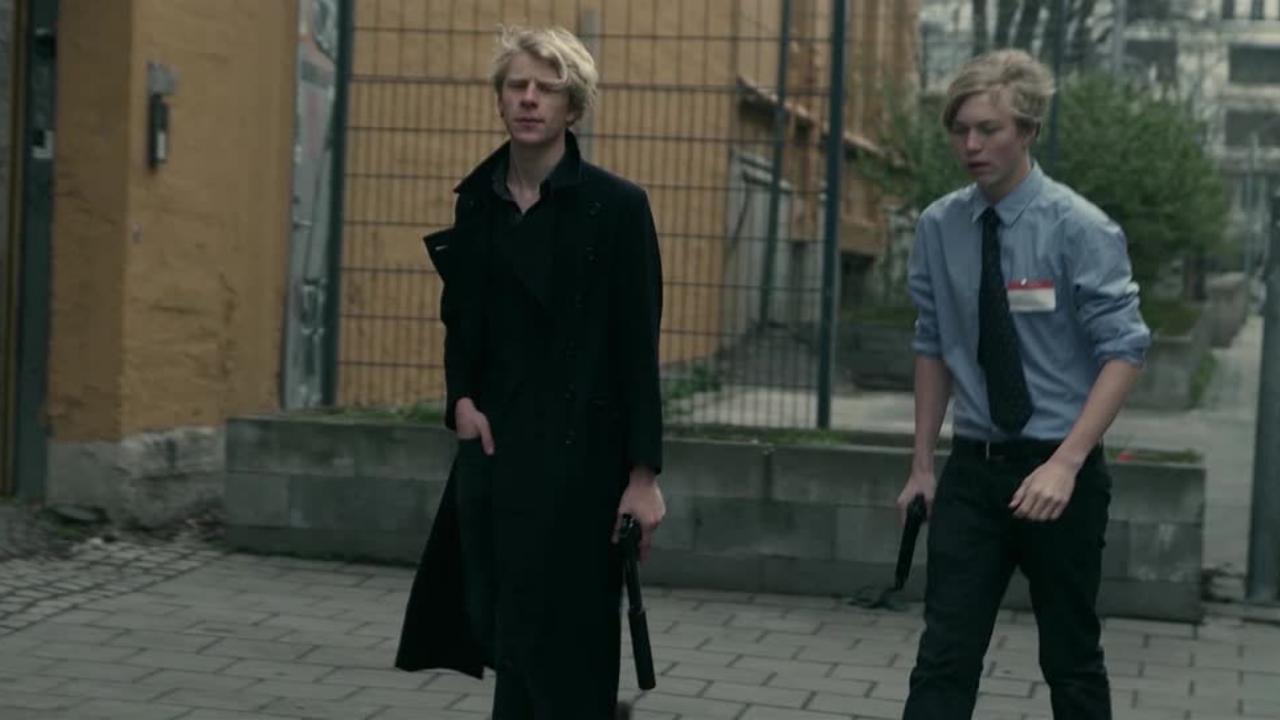
Meanwhile, Ian is surprised by a teenager with a gun (Herrman).  The teenager – never named but called The Helper in the credits – wants to know what Ian is doing in his home.  After a fight in which neither can best the other, and as the nature of Ian’s predicament deepens (here Dylan is the Helper’s younger blood relative, and he’s also disappeared), they agree to work together to find a solution to the wider problem going on around them.  This involves tracking down the creator of the teleportation system, Thomas Wilfred (Graeme Whittington).  Wilfred tells them his teleportation system is the cause of the disappearances, as he has been a victim of it himself, and is now aware that the system is a way of connecting not only with the world, or reality, that it was created in, but a vast number of other worlds/realities as well.  The drawback is that no one can travel back to their own world unless they use a particular chip…and the last two are kept in Wilfred’s office.  Ian and the Helper must find and use the chips – and avoiding the police, who are on the same track – if they are to have any chance of getting back and saving Dylan.

Everywhen - scene

Originally a school project, Everywhen is the brainchild of director Herdal (who also co-wrote the script with Elrik Moe) and editor/visual effects designer/sound mixer Jens Peder Hertzberg, and while certain allowances have to be made on account of their age and their experience when making the movie – they were both seventeen year old students – these don’t impair the movie too much, and it’s a refreshing take on a well-established sci-fi trope.  With often impressive visuals, and a good feel for widescreen compositions, Herdal and Hetzberg have created a future world that is instantly recognisable but which also introduces significant differences to make the audience aware of just when everything is happening (a holographic touch-screen device outside a school giving opening times etc. is a clever idea).  The added discrepancies between the “real” world and the world Ian finds himself in are also well thought out and often subtle enough to avoid detection on first viewing, and it’s a testament to the amount of time and consideration they’ve put into the project that these things are executed so effectively.

That said, one decision almost threatens to undermine the movie completely.  Having taken the decision to use an amateur cast throughout – and it’s obvious this is the case – the further decision to shoot entirely in English for an international release hampers things tremendously.  It’s difficult to work out exactly, but Graeme Whittington aside, there are times when it seems as if some of the dialogue is being delivered phonetically, and this can become frustrating at times, especially if the scene is largely expositional.  But while some of the performances suffer as a result, the overall effect is one that adds, strangely, to the mix.  Furuholmen and Herrman both make impressive debuts (even if Herrman does overplay the disaffected teenager once too often for comfort), and there’s strong support from Braathen and Tønnesen (as a policeman), though some of the smaller roles seem to have been filled by friends or co-students of the movie’s creators (nearly all of the police tech assistants look way too young to be working there).

With its themes surrounding what constitutes reality, and the use of highly dangerous technology as a social improvement, Everywhen isn’t the brainless, action-heavy sci-fi thriller you might expect from a couple of students who’ve obviously lifted elements from other sci-fi movies – The Matrix (1999) and Twelve Monkeys (1995) to name just a couple – but a mature, well-constructed movie that offers some thought-provoking ideas, as well as a strong emotional basis, for its storyline.  The special effects are of a consistent and polished nature that put pretty much every SyFy release to shame, and the score by William Edward offers an often striking counterpoint to events occurring on screen, as well as adding to the tension of the action scenes.

Rating: 7/10 – a good first offering from Herdal and Hertzberg, Everywhen gives more than a hint of what these two guys could do with a decent budget and a professional cast; an intriguing idea presented in a surprisingly effective way and well worth seeking out.


Share this:

  • Click to share on X (Opens in new window) X
  • Click to share on Facebook (Opens in new window) Facebook
  • More
  • Click to print (Opens in new window) Print
  • Click to email a link to a friend (Opens in new window) Email
Like Loading...

Blog Stats

  • 486,575 hits

Recent Posts

  • 10 Reasons to Remember Bibi Andersson (1935-2019)
  • Fantasia (1940)
  • Dances With Wolves (1990) – The Special Edition
  • Kiss of the Spider Woman (1985)
  • The Three Musketeers (1973)

Top Posts & Pages

  • Lost for Life (2013) - Another Look
    Lost for Life (2013) - Another Look
  • Lost for Life (2013)
    Lost for Life (2013)
  • About
    About
  • Mr. Topaze (1961)
    Mr. Topaze (1961)
  • Hunt for the Wilderpeople (2016)
    Hunt for the Wilderpeople (2016)
  • Shock and Awe (2017)
    Shock and Awe (2017)
  • Billy Lynn's Long Halftime Walk (2016)
    Billy Lynn's Long Halftime Walk (2016)
  • Winter's Tale (2014)
    Winter's Tale (2014)
  • BFI London Film Festival 2015
    BFI London Film Festival 2015
  • 10 Reasons to Remember Arthur Hiller (1923-2016)
    10 Reasons to Remember Arthur Hiller (1923-2016)
Follow thedullwoodexperiment on WordPress.com

Blogs I Follow

  • Rubbish Talk
  • Film 4 Fan
  • Fast Film Reviews
  • The Film Blog
  • All Things Movies UK
  • Interpreting the Stars
  • Let's Go To The Movies
  • Movie Reviews 101
  • TMI News
  • Dan the Man's Movie Reviews
  • Film History
  • Jordan and Eddie (The Movie Guys)

Archives

  • April 2019 (13)
  • March 2019 (28)
  • February 2019 (28)
  • January 2019 (32)
  • December 2018 (28)
  • November 2018 (30)
  • October 2018 (29)
  • September 2018 (29)
  • August 2018 (29)
  • July 2018 (30)
  • June 2018 (28)
  • May 2018 (24)
  • April 2018 (21)
  • March 2018 (31)
  • February 2018 (25)
  • January 2018 (30)
  • December 2017 (30)
  • November 2017 (27)
  • October 2017 (27)
  • September 2017 (26)
  • August 2017 (32)
  • July 2017 (32)
  • June 2017 (30)
  • May 2017 (29)
  • April 2017 (29)
  • March 2017 (30)
  • February 2017 (27)
  • January 2017 (32)
  • December 2016 (30)
  • November 2016 (28)
  • October 2016 (30)
  • September 2016 (27)
  • August 2016 (30)
  • July 2016 (30)
  • June 2016 (31)
  • May 2016 (34)
  • April 2016 (30)
  • March 2016 (30)
  • February 2016 (28)
  • January 2016 (35)
  • December 2015 (34)
  • November 2015 (31)
  • October 2015 (31)
  • September 2015 (34)
  • August 2015 (31)
  • July 2015 (33)
  • June 2015 (12)
  • May 2015 (31)
  • April 2015 (32)
  • March 2015 (30)
  • February 2015 (37)
  • January 2015 (39)
  • December 2014 (34)
  • November 2014 (34)
  • October 2014 (36)
  • September 2014 (25)
  • August 2014 (29)
  • July 2014 (29)
  • June 2014 (28)
  • May 2014 (23)
  • April 2014 (21)
  • March 2014 (42)
  • February 2014 (38)
  • January 2014 (29)
  • December 2013 (28)
  • November 2013 (34)
  • October 2013 (4)

Blog at WordPress.com.

Rubbish Talk

Film 4 Fan

A Movie Blog

Fast Film Reviews

The Film Blog

The official blog of everything in film

All Things Movies UK

Movie Reviews and Original Articles

Interpreting the Stars

Dave Examines Movies

Let's Go To The Movies

Film and Theatre Lover!

Movie Reviews 101

Daily Movie Reviews

TMI News

Latest weather, crime and breaking news

Dan the Man's Movie Reviews

All my aimless thoughts, ideas, and ramblings, all packed into one site!

Film History

Telling the story of film

Jordan and Eddie (The Movie Guys)

Movie Reviews & Ramblings from an Australian Based Film Fan

Privacy & Cookies: This site uses cookies. By continuing to use this website, you agree to their use.
To find out more, including how to control cookies, see here: Cookie Policy
  • Subscribe Subscribed
    • thedullwoodexperiment
    • Join 481 other subscribers
    • Already have a WordPress.com account? Log in now.
    • thedullwoodexperiment
    • Subscribe Subscribed
    • Sign up
    • Log in
    • Report this content
    • View site in Reader
    • Manage subscriptions
    • Collapse this bar
 

Loading Comments...
 

    %d