• 10 Reasons to Remember…
  • A Brief Word About…
  • About
  • For One Week Only
  • Happy Birthday
  • Monthly Roundup
  • Old-Time Crime
  • Other Posts
  • Poster of the Week
  • Question of the Week
  • Reviews
  • Trailers

thedullwoodexperiment

~ Viewing movies in a different light

thedullwoodexperiment

Tag Archives: Rachel Weisz

The Favourite (2018)

04 Friday Jan 2019

Posted by dullwood68 in Movies

≈ Leave a comment

Tags

Comedy, Drama, Emma Stone, Hatfield House, History, Olivia Colman, Queen Anne, Rachel Weisz, Review, Yorgos Lanthimos

D: Yorgos Lanthimos / 119m

Cast: Olivia Colman, Emma Stone, Rachel Weisz, Nicholas Hoult, Joe Alwyn, Mark Gatiss, James Smith, Jenny Rainsford

England, 1708. Queen Anne (Colman) is on the throne, but the real power lies with Sarah, Duchess of Marlborough (Weisz), the Queen’s best friend, confidante, and lover. Sarah counsels the Queen on almost every matter that comes before her, and uses Anne’s malleability to promote her own political agenda. The arrival of a destitute cousin of Sarah’s, Abigail Hill (Stone), prompts the beginning of a power struggle between the two women, as they vie for the Queen’s attention, both in and out of the bed chamber. Sarah’s experience proves no match for Abigail’s determination to see her social status restored to her, and the on-going war with France that Sarah is supporting is undermined by Abigail’s mutually beneficial allegiance with politician Robert Harley (Hoult). With Anne’s health worsening due to gout, Abigail aims to supplant Sarah once and for all, and arranges for her to be missing from court. As Anne becomes more and more dependant on Abigail’s presence, and gives her blessing to an advantageous marriage to a courtier, Samuel Masham (Alwyn), Sarah returns to make one last effort to overturn Abigail’s influence, and restore her own position with the Queen…
For most people, The Favourite will be seen in 2019. There will be other historical movies that will carry over from 2018 and reach their intended audience, but it’s a sure bet that Yorgos Lanthimos’ ebullient follow up to The Killing of a Sacred Deer (2017) will be unlike any other. A riotous mix of scabrous comedy, intelligently handled drama, bawdy romance, political intrigue, and ferocious oneupmanship (oneupwomanship?), this plays fast and loose with historical accuracy (though the three-way affair depicted actually happened), and instead opts for being a rambunctious send up of both the times and the people who lived through them. Working from a glorious screenplay by Deborah Davis and Tony McNamara, Lanthimos has fashioned his most accessible movie to date, and one that offers a plethora of riches. First and foremost are the fierce, redoubtable performances of its trio of female leads, all of whom attack the material with undisguised relish, and all of whom give superb portrayals of women for whom men are either to be used, or ignored, or both. Harley is the principal male protagonist, and in any other movie he would emerge triumphant with all of his ambitions achieved, and stronger than ever. Here he achieves his ambitions, but the audience knows that it’s just a matter of time before his position will collapse into political and personal ruin.

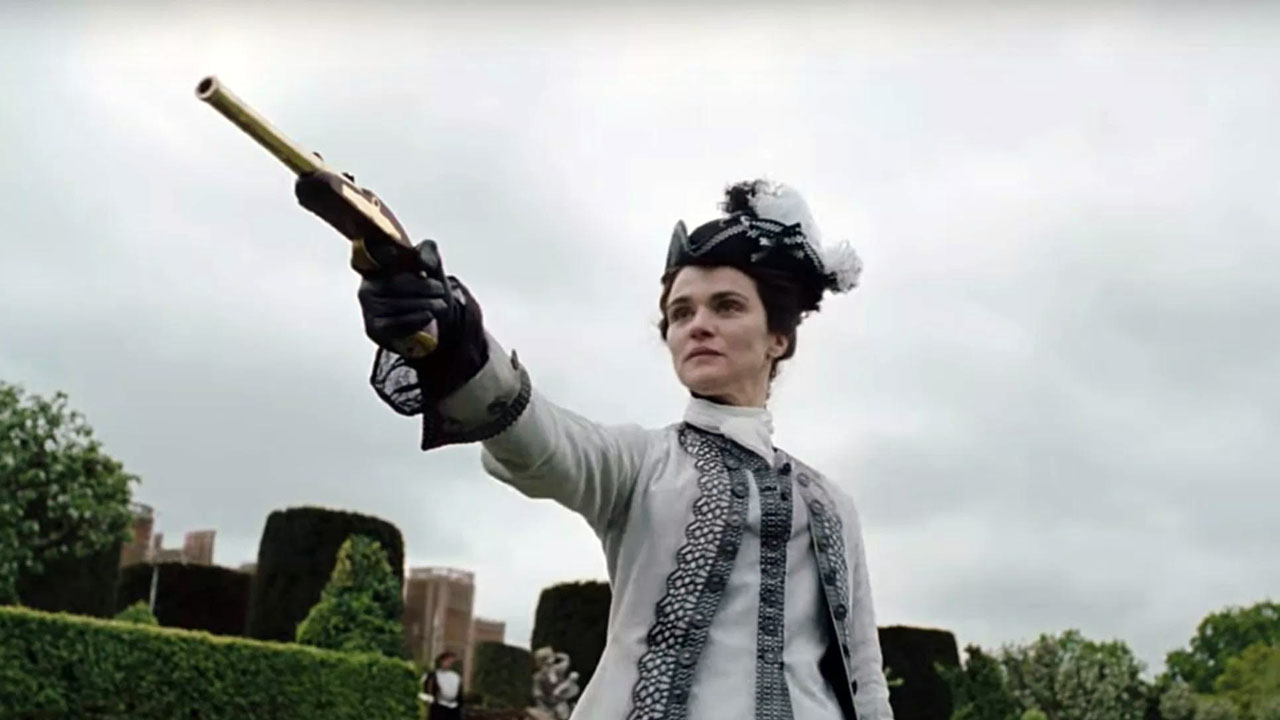
With gender reversals of this type firmly on display (and encouraged), Lanthimos gives his cast full rein to inhabit their roles with gusto. Weisz is condescending and vampish as Sarah, a career manipulator who finds herself surprisingly ill-equipped to deal with Abigail’s more straightforward manoeuvrings. Stone is a revelation, portraying an historical character so far removed from her previous acting roles that her confidence is often astonishing; she embues Abigail with such a sweet-natured viciousness that you have no idea just what she’ll do next. And then there’s Colman, towering over both of them, her performance a thing of magnificent yet focused excess, railing against imagined injustices one moment, dew-eyed and poignant the next as Anne remembers her seventeen dead children. It all takes place against the sumptuous backdrop of Hatfield House, its rooms and corridors given tremendous presence in the movie thanks to the use of fisheye lenses and wide shots, making it another character altogether, one whose size helps to put the machinations of its human counterparts into stark relief for their transitory nature. But even with all this – and a terrific soundtrack as well – it’s the interlocking relationships between Anne, Sarah and Abigail, all counter turns and devious switches, that hold the attention and prove the most rewarding part of a movie that has so much to offer that it’s almost embarrassing.

Rating: 9/10 – Lanthimos’ auteur leanings are still on display, but here he’s at his most relaxed and amenable, and the result is that The Favourite is easily his best movie so far; a movie to wallow in over and over again, it is richly detailed, formidably acted, wickedly perverse, beautifully shot (by Robbie Ryan), and a pure delight from beginning to end.

Share this:

  • Click to share on X (Opens in new window) X
  • Click to share on Facebook (Opens in new window) Facebook
  • More
  • Click to print (Opens in new window) Print
  • Click to email a link to a friend (Opens in new window) Email
Like Loading...

The Mercy (2018)

08 Friday Jun 2018

Posted by dullwood68 in Movies

≈ Leave a comment

Tags

Colin Firth, David Thewlis, Donald Crowhurst, Drama, Golden Globe Race, James Marsh, Rachel Weisz, Review, Round the world, Teignmouth, True story

D: James Marsh / 101m

Cast: Colin Firth, Rachel Weisz, David Thewlis, Ken Stott, Finn Elliot, Eleanor Stagg, Kit Connor, Mark Gatiss, Simon McBurney, Oliver Maltman

In the summer of 1968, and with his electronics business failing, amateur sailor Donald Crowhurst (Firth) hears about the Sunday Times Golden Globe Race, a single-handed, round the world yacht race with a prize of £5,000 to the yachtsman who completes the race in the fastest time. Determined to win the prize, Crowhurst gains financial backing from businessman Stanley Best (Stott), and sets about building a purpose-desogned trimaran for the voyage. He also hires a crime reporter for the Daily Express, Rodney Hallworth (Thewlis), to act as his publicist. Problems with the design of the trimaran and getting the right materials delay Crowhurst’s start in the race, and in order to maintain Best’s sponsorship, Crowhurst signs over his business and his home; now he has to succeed. Eventually, Crowhurst, in his boat Teignmouth Electron, sets sail on 31 October, the last day allowed. Leaving his wife, Clare (Weisz), and three children with promises of being back in nine months’ time, Crowhurst soon encounters problems early on in his voyage, problems that contribute to his making a number of rash decisions…

If you’ve never heard of Donald Crowhurst – and fifty years on, it’s unlikely given the circumstances – watching The Mercy may prove a singularly frustrating experience. It’s the true story (modified as ever for the movies) of a man pursuing a dream but lacking in the abilities and skills required to achieve that dream – and knowing it, deep down. On the eve of sailing, Crowhurst tells Hallworth and Best that he thinks it’s a good idea for him not to go, to abandon the idea. It’s a moment of desperate clarity for Crowhurst, and he wants the two men to agree with him and support him in his decision. But the opposite happens: Hallworth acknowledges Crowhurst’s fears as being a normal reaction to the enormity of what he’s about to do. And in that moment, Crowhurst’s last hope is crushed through good intentions. Firth’s performance says it all: Crowhurst is doomed; whatever happens, he won’t win the prize. It’s a terrible, disconsolate moment for the amateur sailor, and for the audience. Now we’re set up for a tale of tragedy. The only thing to do is to wait it out and see just how things go wrong, and why.

But Crowhurst’s story – and this is where the frustration comes in – requires a great deal of guesswork and supposition. What actually happened isn’t in doubt, but the why remains tantalisingly out of reach, which means that the movie has to fill in the gaps as best it can. As a result, Scott Z. Burns’ script becomes less and less gripping as Crowhurst’s voyage continues, and becomes a series of loosely connected scenes that leave the viewer as stranded as the movie’s central character. Marsh is a terrific director – Man on Wire (2008), The Theory of Everything (2014) – but somehow the tragedy of Crowhurst’s story isn’t conveyed as forcefully as it could have been. Firth is good in the role, showing Crowhurst slowly coming to terms with the futility of chasing a dream he can’t ever catch, but Weisz is stuck with a typical wife-at-home role where she’s required to look worried a lot and little else (proving there’s still plenty of “thankless female” roles around in this day and age of the #MeToo Movement). Thewlis is also good as Hallworth (another man whose ambitions weren’t realised), even if he’s more spiv than publicist, and the movie has a beautiful sheen to it thanks to Eric Gautier’s sparkling cinematography. But there’s still a sense, once the outcome is known, that the voyage getting there isn’t as affecting as it should be.

Rating: 6/10 – laced with a sympathetic streak that, given some of Crowhurst’s pre-sailing decisions, is debatable for its presence, The Mercy remains a hollow effort that keeps Crowhurst at a distance from the audience; still, there’s enough in terms of the non-seafaring narrative to semi-compensate for this, and there’s another fine score from Jóhann Jóhannsson to further ameliorate matters.

Share this:

  • Click to share on X (Opens in new window) X
  • Click to share on Facebook (Opens in new window) Facebook
  • More
  • Click to print (Opens in new window) Print
  • Click to email a link to a friend (Opens in new window) Email
Like Loading...

My Cousin Rachel (2017)

12 Monday Jun 2017

Posted by dullwood68 in Movies

≈ 1 Comment

Tags

Cornwall, Daphne du Maurier, Drama, Holliday Grainger, Iain Glen, Literary adaptation, Poison, Rachel Weisz, Remake, Review, Roger Michell, Romance, Sam Claflin, Thriller

D: Roger Michell / 106m

Cast: Rachel Weisz, Sam Claflin, Holliday Grainger, Iain Glen, Pierfrancesco Favino, Simon Russell Beale, Tim Barlow

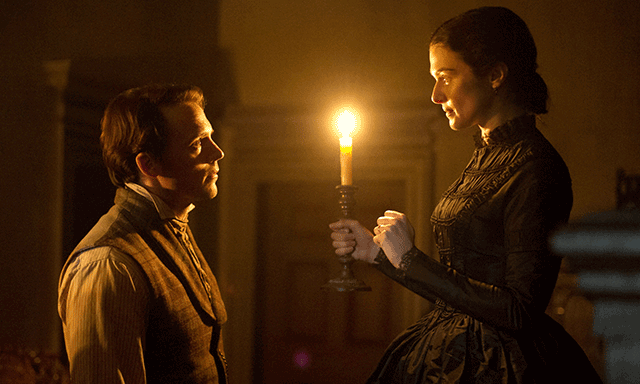
Philip Ashley (Claflin) is a young man whose guardian, Ambrose Ashley, owns a large Cornish estate. When Ambrose travels to Italy, his letters home tell of a woman he’s met, their mutual cousin, Rachel (Weisz). They are married, but it’s not long before Ambrose falls ill. His letters become increasingly paranoid, with claims that Rachel is watching him closely and that he can trust no one, and so Philip travels to Italy and the villa where Ambrose is living. There he meets Rainaldi (Favino), a friend of Rachel’s who tells Philip that Ambrose has died of a brain tumour. Philip returns home without meeting Rachel, and once there, he inherits the estate. Blaming Rachel for Ambrose’s death (he doesn’t believe there was a brain tumour), he makes it clear that if they ever meet he will exact a punishment on her. Not long after, though, Rachel arrives at the estate, and despite his vengeful intentions, Philip finds himself fascinated by her.

A relationship begins to develop between them, a friendship at first, and one that is welcomed by his godfather, Nick Kendall (Glen). Philip soon becomes infatuated with Rachel, and reacts poorly to tales of her misbehaviour in Italy with Rainaldi. Goaded by such gossip, Philip ensures she has an allowance (which she spends too rapidly), and at an estate party, wears a pearl necklace that was his mother’s. Kendall is none too happy with this, but Rachel returns them without any fuss. With his twenty-fifth birthday approaching – when he can do whatever he likes with his inheritance – Philip has a transfer written whereby Rachel becomes the estate’s owner. In return he expects Rachel to marry him, but she denies him, and despite their friendship having become intimate. And then Philip falls ill, and the similarities between his illness and Ambrose’s leads him to suspect that Rachel is now poisoning him…

A late arrival in the remake stakes, My Cousin Rachel appears sixty-five years on from its predecessor, and offers several good reasons for the gap being longer. Based on the novel by Daphne du Maurier, Roger Michell’s adaptation is a heady exercise in turgid melodrama that does little with its “Did she? Didn’t she? Is she? Isn’t she?” storyline, and instead of concentrating on the thriller elements, turns to a one-sided romance for its focus. This means there are plenty of scenes where Claflin’s love-sick booby hovers over and around Weisz’s prideful widow, and with the worst kind of eager beaver-itis. That Philip goes from determined avenger to smitten teenager (even though he’s twenty-four) in the blink of an eye, should alert viewers that this isn’t going to be an engrossing Gothic-tinged chiller, but a romantic drama with all the fizzle of a sparkler reaching the end of its lifespan. Philip’s actions in pursuit of Rachel’s affections become more and more absurd the longer they go on, until they culminate in his climbing up to her bedroom window in order to bestow on her the family jewellery (and in the process  his own jewels). (Oh, and he climbs down again the next morning.)

In between all this uninspiring swooning, the movie remembers to include scenes that paint Rachel as some kind of predatory black widow (as well as Ambrose’s sad demise, her first husband was killed in a duel). This secondary plot (which should be the movie’s primary one), relies heavily on Ambrose having left hidden notes and letters in his clothing and books, and their being conveniently found just when Rachel’s potential perfidy needs a nudge in the right direction. Out of this, any ambiguity is brushed aside as Michell’s script lacks the panache to sow doubt in the mind of the viewer. And if you’re familiar with the novel or Henry Koster’s 1952 version, then you’ll already know the outcome, something that Michell fumbles badly thanks to a very, very clumsy piece of foreshadowing, and an equally clumsy denouement.

Against this, Weisz delivers an arresting performance that in many ways highlights the paucity of ideas and the lack of energy that the movie exhibits elsewhere. Weisz’s career can safely be described as eclectic, and in recent years she’s done some of her best work. As Rachel, Weisz is an hypnotic presence, her round, moon-faced features expressing vulnerability, pride, determination, gratitude and forbearance in equal measure. As the naïve Philip, Claflin has the harder task, and he doesn’t always succeed, but this is due more to the script than his portrayal, as the character is more callow than necessary, and he operates on a dramatic level that never allows the viewer to feel sorry for him. Grainger (as Kendall’s daughter) and Glen offer solid support, while there’s a terrific turn from Barlow as the estate’s chief overseer, Secombe. It’s all wrapped up in a bucolic haze that’s further enhanced by Mike Eley’s evocative cinematography and Alice Normington’s impressive production design.

Rating: 5/10 – a movie that could have been a whole lot better had its writer/director tried harder to make it more compelling, and more of a psychological thriller, My Cousin Rachel is undermined by its inability to seem more than a stifled piece of moviemaking; Weisz’s performance almost makes up for its obvious shortcomings, but if you have to see this then adjust your expectations accordingly.

Share this:

  • Click to share on X (Opens in new window) X
  • Click to share on Facebook (Opens in new window) Facebook
  • More
  • Click to print (Opens in new window) Print
  • Click to email a link to a friend (Opens in new window) Email
Like Loading...

Denial (2016)

05 Sunday Feb 2017

Posted by dullwood68 in Movies

≈ Leave a comment

Tags

Andrew Scott, David Irving, Deborah Lipstadt, Drama, Holocaust, Libel case, Mick Jackson, Rachel Weisz, Review, Timothy Spall, Tom Wilkinson, Trial, True story

denial_movie_poster_p_2016

D: Mick Jackson / 109m

Cast: Rachel Weisz, Tom Wilkinson, Timothy Spall, Andrew Scott, Jack Lowden, Caren Pistorius, Alex Jennings, Harriet Walter, Mark Gatiss, John Sessions, Nikki Amuka-Bird

“The most effective way to destroy people is to deny and obliterate their own understanding of their history.” That quote, made by George Orwell, is a particularly apt phrase when looking at Denial, a movie that explores the libel case brought by Holocaust denier David Irving (Spall) against renowned historian Deborah Lipstadt (Weisz) and her UK publishers, Penguin, back in 2000. In her book, Denying the Holocaust: the Growing Assault on Truth and Memory (1993), Lipstadt had referred to Irving as a “Holocaust denier, falsifier, and bigot”, and also stated “that he manipulated and distorted real documents.” Irving sued Lipstadt in the British courts for one very good reason: in the UK, the burden of proof is on the defendant. In this case it meant that Lipstadt and Penguin had to prove that the Holocaust did actually happen, thereby proving that Irving was a falsifier and the accusations in her book were true.

If you were around in the late Nineties, it’s likely you would have heard of David Irving. He was notorious for his denial of the Holocaust, and the very nature of the trial made it headline news at the time. In bringing this incredible true story to the screen, director Mick Jackson and screenwriter David Hare have managed to somehow make a movie that gets the salient points across but which does so with a minimum of apparent enthusiasm. Perhaps it’s the nature of the subject matter, and the makers have gone for a dour, unspectacular approach in recognition of this. If that’s the case, then they’ve done the movie a massive disservice.

maxresdefault

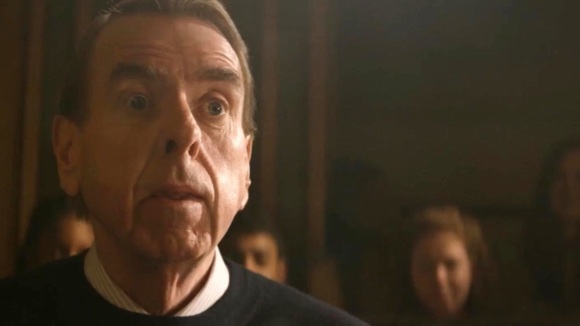
From the moment we see Irving challenge Lipstadt at one of her lectures, the very idea that the Holocaust didn’t happen – and that someone would willingly say such a thing, and then challenge someone to prove it did happen – is so bizarrely unnerving that it should make Irving all the more intriguing, and yet, as played by Spall, he’s more like a kindly uncle who’s gone slightly off his rocker. When he makes his opening speech at the trial – Irving represented himself – his off-kilter rhetoric and less than fashionable beliefs show a man whose disregard for historical truth has brought him to the last place he should ever want to be: in a courtroom, where his beliefs could be challenged under law and where his convictions could be exposed as terrible shams. Irving may have thought he was being clever bringing the case in an English court, but it was hubris that made him do so, and inevitably, he paid the price.

It’s an aspect that the movie fails to grasp, instead highlighting Irving’s sense of self-aggrandisement, and his talent for being a fly in the ointment of accepted historical fact. Spall is good in the role (when was the last time Spall wasn’t good in a role?*), but as written, Irving never appears truly threatening; he never comes across as someone who ever had even the slightest chance of winning, but the movie tries to make it seem as if he did. There are nods to the oxygen of publicity that encourages him in his efforts, but the real question that should be on everyone’s lips is never asked: Why? Why be a naysayer for the Nazis?

denialpic2-600x400

With Irving filling the role of boogeyman to Lipstadt’s crusading historian, the movie settles back, happy with its principal villain, and finds itself struggling to make the defence team just as interesting. As Lipstadt, Weisz brings determination and passion to the role, but it’s directed too often in opposition to her legal team, headed by barrister Richard Rampton QC (Wilkinson), and solicitor Anthony Julius (Scott). She butts heads with them over how she thinks the case should be handled, questions their commitment, and then wonders why her passion isn’t as openly shared as she expects. Wilkinson bounces back and forth between carefree bonhomie and courtroom gravitas, while Scott essays patrician superiority at every turn, all of which leaves little room for the rest of the defence team to make much of an impact.

In the courtroom, any expected fireworks fail to be set off. There’s so little tension, and so few moments where the inherent drama of the case is allowed a bit of breathing room that the viewer can only wonder if Hare somehow forgot that these scenes were meant to be gripping. The same could be said for Jackson’s direction, which relies on the same camera set ups throughout, the cut and thrust of Rampton’s cross-examination of Irving, and a last-minute inference from the judge (Jennings) that the defence’s case might crumble at the final hurdle to instil some heightened drama. But by the time it happens, most viewers will have ceased to care if Irving loses or not, just as long as there’s an end to the story.

denial__2016_5048

All in all, Denial works as a generalised account of an important moment in British legal, and Holocaust, history. But in taking the generalised road – the road most travelled, if you will – the movie loses any sprightliness it might have had, and resorts to plodding along, picking up plot points along the way, and under-utilising its very talented cast. It doesn’t fall down at any point; instead it lumbers along as if it’s about to. The only time it breaks free of its self-imposed shackles, is during a trip to Auschwitz, where Rampton appears to be insensitive to the surroundings. It’s a bleak, mournful sequence that speaks to how gripping the rest of the movie could have been.

All in all, it’s not everyone’s finest hour, but it does do just enough to give people the sense of what it was like back then, with Irving seemingly unassailable and the very real possibility that Lipstadt might lose. But the movie’s dry, methodical approach undermines the material – and the performances – too often for comfort, and though this is a worthy piece, it never gains the necessary traction to make it compelling as well.

Rating: 6/10 – not a straight up fiasco, nor a contentious thriller either, Denial falls somewhere between the two camps in its efforts to be absorbing and persuasive; a movie that could, and should, have been made as a legal thriller, it keeps a respectful distance from the horrors that Irving would have had us dismiss, and only really gets under its own skin when it’s at the real Auschwitz-Birkenau camp.


*The last time Spall wasn’t that great in a role? Sofia aka Assassin’s Bullet (2012). Don’t check it out.

Share this:

  • Click to share on X (Opens in new window) X
  • Click to share on Facebook (Opens in new window) Facebook
  • More
  • Click to print (Opens in new window) Print
  • Click to email a link to a friend (Opens in new window) Email
Like Loading...

Complete Unknown (2016)

20 Thursday Oct 2016

Posted by dullwood68 in Movies

≈ Leave a comment

Tags

Azita Ghanizada, Drama, Identity, Joshua Marston, Michael Chernus, Michael Shannon, Mystery, Rachel Weisz, Review

complete_unknown-243183734-large

D: Joshua Marston / 91m

Cast: Rachel Weisz, Michael Shannon, Michael Chernus, Azita Ghanizada, Omar Metwally, Frank De Julio, Condola Rashad, Kathy Bates, Danny Glover

What if you could just up and walk away from the life you were living, and go and be somebody else, assume a different identity and create a history for yourself to go with that identity? And what if you could do that over and over, changing your name and your looks every so often, and living a new life each time? What would be the rewards of doing such a thing? What would be the downside? And even if you could, why would you do it in the first place?

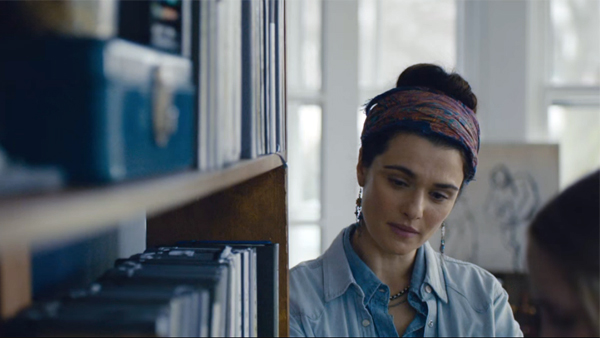
This is what Rachel Weisz’s character, Jenny, does. The movie opens by introducing us to some of the identities she’s adopted in the fifteen years since she left her home and family and friends behind and became someone else. She’s lived in Australia, been a magician’s assistant in China, and an ER nurse somewhere in the US. Currently she’s a biologist who’s part of a team that have discovered a previously unknown species of frog in Tasmania. Her name is Alice Manning, and her work has brought her back to New York, where she comes from originally. Looking to reconnect with her past she tracks down Tom (Shannon), a land reform advocate on a mission to have environmental protection clauses inserted into the legislature. As we learn later on, Tom is Jenny’s only link to her past since the death of her father, and despite the time and distance she’s put between her first life and her current one, she still has a need to affirm its existence.

complete-unknown-3

Adopting a softly, slowly approach, Alice gets to know Tom’s work partner, Clyde (Chernus). She dazzles him, and when it comes time for Tom’s birthday, Clyde invites her along to the birthday party as his plus one. Once there, Tom becomes suspicious that Alice isn’t Alice, but the Jenny he remembers. As the party continues, Alice admits to changing her identity when she wants to. Some of the guests are impressed, others think it’s a horrible idea because of the lies involved. Tom remains bemused, certain and yet uncertain that Alice is Jenny. He tries to tackle her about it, but her answers offer confirmation and non-confirmation at the same time. It’s only when they all go to a club to spend the rest of the evening dancing that Tom becomes convinced that it’s Jenny and not Alice. When she leaves, in a hurry to get away suddenly, he follows her and gets her to admit to her deception.

What follows can best be described as a cinematic chamber piece, as Alice and Tom walk the streets debating the rights and wrongs of Jenny’s “lifestyle”, encounter Kathy Bates’ Nina who is out walking her dog, and who subsequently has a fall, and her husband Roger (Glover) when they help her back to her apartment. Further discussion around why Jenny left follows, and eventually, Tom tells her he wants to see how she moves on to the next identity. Having experienced some form of emotional epiphany, Tom returns home to his wife, Remina (Ghanizada)… and on the cusp of a revelation, the movie ends.

complete-unknown-1

Fans of very slow-paced dramas will enjoy the last half an hour of Complete Unknown, as the script – by director Marston and Julian Sheppard – winds down in terms of pace, interest, and credibility. It’s here that Marston sheds any notion that he knows where the movie is going, and the viewer is left wondering if there has been any point to the movie at all. Tom and Alice/Jenny’s relationship is the key focus by this time, but it’s not as dramatic as it should be, and Marston is unable to create any drama or sense of heightened feelings as the emotionally distant duo fret over each other’s pain, but only for a short period before they move on. For both there are meant to be “lessons learned”, but it’s hard to tell if any “lessons” have been doled out. Jenny can’t explain with any precision why she does what she does, and Tom is so tightly wound-up at times that it’s hard to work out if he’s mad at Jenny for disappearing all those years ago, or because his marriage is about to go through a potentially very rough patch.

Throughout the movie, Marston fails to explain things in a way that isn’t confusing to the viewer, or problematical for the characters. Jenny/Alice’s motivation for leaving behind her original life remains spurious at worst, and unsatisfactory at best. And more importantly, the script never sells the viewer on the reasons for Jenny/Alice wanting to return to her roots, undermining her previous determination to avoid any confrontation from her past. Similarly, Tom’s steely-eyed persistence in wanting to know why Jenny left so abruptly, is shown as being immediate and close to the surface, the dynamic of which seems absurd given the passage of time. Are we really meant to believe that he hasn’t moved on after fifteen years? And if we are, then why doesn’t the script explain why?

complete-unknown-sundance-2016

It’s these dramatic exclusions that hurt the movie most, draining it of the few mystery elements it’s set up at the beginning. The result is a dry, mannered, unconvincing movie that fails to provide depth for its characters to build on, and lacks the necessary desire to fill in the multitude of gaps in the narrative. Marston doesn’t really know where his movie is going to, and he’s curiously unable to make sense of Jenny’s need for reinvention, or the mechanics of it (toward the end, Tom challenges Jenny over her ability to change her identity, and tells her he wants to see how she does it; she takes him to her apartment and packs a bag – and that’s it).

Against this, Weisz provides a thankfully intuitive performance that goes a long way toward helping the viewer engage with the material, but even she can only do so much. Shannon is largely passive throughout, his face a blank canvas that gives little away, and his default manner one of bewilderment. In their scenes together there’s precious little spark to help explain the feelings they had for each other, and why it’s so important for Jenny to see Tom again, and the distance between them is another aspect of the production that Marston is unable to do anything about.

Rating: 4/10 – questions of identity are left hanging in Complete Unknown, and what could have been an absorbing, insightful examination of one woman’s need to be different versions of herself, is abandoned in favour of a trite, vaguely rewarding trawl through poorly constructed dialogues that leave everything open for interpretation; a slowburn movie that treats its central character like a cypher (because it can’t do anything else with her), Marston’s micro-drama is unlikely to generate the interest it needs in order to find an audience willing to forgive its indolence.

Share this:

  • Click to share on X (Opens in new window) X
  • Click to share on Facebook (Opens in new window) Facebook
  • More
  • Click to print (Opens in new window) Print
  • Click to email a link to a friend (Opens in new window) Email
Like Loading...

Trailers – Denial (2016), Moana (2016) and Before I Wake (2016)

20 Monday Jun 2016

Posted by dullwood68 in Movies

≈ Leave a comment

Tags

Animation, Before I Wake, David Irving, Deborah Lipstadt, Denial, Drama, Holocaust, Horror, John Lasseter, Mike Flanagan, Moana, Movies, Previews, Rachel Weisz, Timothy Spall, Trailers

In 1996, the Holocaust denier David Irving sued the historian Deborah Lipstadt for libel in the English courts over remarks she had made about him in her book, Denying the Holocaust: the Growing Assault on Truth and Memory. With the burden of proof planted firmly in Lipstadt’s corner, she had to prove to a libel court that Irving’s claim that the Holocaust didn’t happen, was false. Now this trial is being brought to the screen with a script by David Hare, and a cast that has more than a little experience in bringing heavyweight drama to the fore. Weisz is a great choice to play Lipstadt (though she has replaced Hilary Swank in the role), and Spall looks both banal and creepy as Irving. With its terrible historical background, Denial looks like it has the potential to be a thought-provoking, morally complex thriller that examines one of the more darker, and disturbing assertions made about the Holocaust in the last thirty years.


If you’re John Lasseter, you’ve got to be feeling pretty satisfied with yourself and the state of play at Disney at the moment. Two out of the three last Disney animated releases have taken over a billion dollars at the international box office, and just in the last few days, the latest movie from Pixar, Finding Dory (2016), has broken all kinds of box office records including the largest opening weekend for an animated feature. Pretty sweet indeed. This must make the next Disney animated release another cause for (probable) celebration. However, this first teaser trailer for Moana doesn’t give anything away, and aside from some beautifully realised sea-faring animation, and a rather scrawny looking chicken as comic relief, there’s nothing to get excited about. Let’s hope Moana‘s first full trailer gives us something more to look forward to.


Mike Flanagan is a name that most mainstream movie goers will be unfamiliar with, but if you’re a fan of horror movies and have been paying attention in recent years then you’ll know that he’s made a handful of features that have tried (and sometimes succeeded) in doing something a little bit different with the genre. Absentia (2011) was a quietly unnerving experience, while Oculus (2013), even though it didn’t work completely, was a stylish and clever exercise in combining two linear narratives to heighten suspense. With Before I Wake, the signs are that Flanagan has found a story that will play to his visual strengths as well as his ability to craft unsettling experiences out of everyday occurrences. And for anyone who thinks the child actor has a familiar face, it’s Jacob Tremblay, from Room (2015).

Share this:

  • Click to share on X (Opens in new window) X
  • Click to share on Facebook (Opens in new window) Facebook
  • More
  • Click to print (Opens in new window) Print
  • Click to email a link to a friend (Opens in new window) Email
Like Loading...

Trailers – The Accountant (2016), Billy Lynn’s Long Halftime Walk (2016) and The Light Between Oceans (2016)

13 Friday May 2016

Posted by dullwood68 in Movies

≈ Leave a comment

Tags

120fps, Alicia Vikander, Ang Lee, Assassin, Ben Affleck, Derek Cianfrance, Drama, Forensic accountant, Gavin O'Connor, Joe Alwyn, Literary adaptation, Michael Fassbender, Movies, Parenthood, Previews, Rachel Weisz, Thriller, Trailers, Vin Diesel, Warfare, Western Australia

NOTE: The current For One Week Only is taking a well-deserved break after its Disney sequel marathon yesterday; it’ll be back tomorrow.

Once he’s reprised his role as Batman in Suicide Squad, Ben Affleck will next be seen in this odd thriller about a maths savant who works as a forensic accountant by day and is a hired assassin by night (of course). Working for the bad guys works out okay, but when Affleck’s character, Christian Wolff, takes on a legitimate client, things take a more deadly turn. It doesn’t help that Christian is also being pursued by the Treasury Department (led by J.K. Simmons). Whether or not this will be any good is open to conjecture, but Warner Bros. have put back its original release date from 29 January to 14 October, suggesting that there’s not the complete confidence in it that you might expect. It does have a great cast, with Anna Kendrick, Jon Bernthal and John Lithgow in support, and director Gavin O’Connor did a good job in taking over on Jane Got a Gun (2015), so this does have bags of promise at least. Perhaps a bit of finger-crossing is in order, then.


An adaptation of the novel by Ben Fountain, Billy Lynn’s Long Halftime Walk has a lot to recommend it. It’s the first feature from Ang Lee since Life of Pi (2012), it has a supporting turn from Vin Diesel which should remind people that away from muscle cars and a certain genetically-enhanced murderer he’s a much better actor than he’s given credit for, and has been filmed in 4K, 3D and 120fps. Early footage shown at the National Association of Broadcasters show in Las Vegas last month was greeted with the kind of superlatives that make this a shoo-in at next year’s round of awards ceremonies. Away from the technical side though, this looks to be an emotional and compelling look at the differences between the realities of war and perceptions reached at home, and features a break-out performance from newcomer Joe Alwyn as Billy Lynn.


Another literary adaptation, this time from the novel by M.L. Stedman, The Light Between Oceans is the latest from director Derek Cianfrance, who gave us Blue Valentine (2010) and The Place Beyond the Pines (2012). It’s a heartfelt tale of impassioned romance, parental loss, uncontrollable grief, and a gift from the sea that brings with it a painful moral dilemma. Michael Fassbender and Alicia Vikander are the couple making a difficult choice in the midst of overwhelming grief, while Rachel Weisz is the widow whose recent loss threatens their regained happiness. The movie looks beautiful thanks to Justin Kurzel’s go-to cinematographer Adam Arkapaw (he also shot the first series of True Detective), and the period settings – post-World War I Western Australia – appear to have been lovingly recreated. If everything turns out as hoped, then this too will be sparring for awards come the beginning of 2017.

Share this:

  • Click to share on X (Opens in new window) X
  • Click to share on Facebook (Opens in new window) Facebook
  • More
  • Click to print (Opens in new window) Print
  • Click to email a link to a friend (Opens in new window) Email
Like Loading...

Blog Stats

  • 486,528 hits

Recent Posts

  • 10 Reasons to Remember Bibi Andersson (1935-2019)
  • Fantasia (1940)
  • Dances With Wolves (1990) – The Special Edition
  • Kiss of the Spider Woman (1985)
  • The Three Musketeers (1973)

Top Posts & Pages

  • Lost for Life (2013) - Another Look
    Lost for Life (2013) - Another Look
  • Lost for Life (2013)
    Lost for Life (2013)
  • About
    About
  • Mr. Topaze (1961)
    Mr. Topaze (1961)
  • Billy Lynn's Long Halftime Walk (2016)
    Billy Lynn's Long Halftime Walk (2016)
  • Winter's Tale (2014)
    Winter's Tale (2014)
  • The Hitman's Bodyguard (2017)
    The Hitman's Bodyguard (2017)
  • 5 Famous Movie Roles That Nearly Went to Someone Else
    5 Famous Movie Roles That Nearly Went to Someone Else
  • The Layover (2017)
    The Layover (2017)
  • Transcendence (2014)
    Transcendence (2014)
Follow thedullwoodexperiment on WordPress.com

Blogs I Follow

  • Rubbish Talk
  • Film 4 Fan
  • Fast Film Reviews
  • The Film Blog
  • All Things Movies UK
  • Interpreting the Stars
  • Let's Go To The Movies
  • Movie Reviews 101
  • TMI News
  • Dan the Man's Movie Reviews
  • Film History
  • Jordan and Eddie (The Movie Guys)

Archives

  • April 2019 (13)
  • March 2019 (28)
  • February 2019 (28)
  • January 2019 (32)
  • December 2018 (28)
  • November 2018 (30)
  • October 2018 (29)
  • September 2018 (29)
  • August 2018 (29)
  • July 2018 (30)
  • June 2018 (28)
  • May 2018 (24)
  • April 2018 (21)
  • March 2018 (31)
  • February 2018 (25)
  • January 2018 (30)
  • December 2017 (30)
  • November 2017 (27)
  • October 2017 (27)
  • September 2017 (26)
  • August 2017 (32)
  • July 2017 (32)
  • June 2017 (30)
  • May 2017 (29)
  • April 2017 (29)
  • March 2017 (30)
  • February 2017 (27)
  • January 2017 (32)
  • December 2016 (30)
  • November 2016 (28)
  • October 2016 (30)
  • September 2016 (27)
  • August 2016 (30)
  • July 2016 (30)
  • June 2016 (31)
  • May 2016 (34)
  • April 2016 (30)
  • March 2016 (30)
  • February 2016 (28)
  • January 2016 (35)
  • December 2015 (34)
  • November 2015 (31)
  • October 2015 (31)
  • September 2015 (34)
  • August 2015 (31)
  • July 2015 (33)
  • June 2015 (12)
  • May 2015 (31)
  • April 2015 (32)
  • March 2015 (30)
  • February 2015 (37)
  • January 2015 (39)
  • December 2014 (34)
  • November 2014 (34)
  • October 2014 (36)
  • September 2014 (25)
  • August 2014 (29)
  • July 2014 (29)
  • June 2014 (28)
  • May 2014 (23)
  • April 2014 (21)
  • March 2014 (42)
  • February 2014 (38)
  • January 2014 (29)
  • December 2013 (28)
  • November 2013 (34)
  • October 2013 (4)

Blog at WordPress.com.

Rubbish Talk

Film 4 Fan

A Movie Blog

Fast Film Reviews

The Film Blog

The official blog of everything in film

All Things Movies UK

Movie Reviews and Original Articles

Interpreting the Stars

Dave Examines Movies

Let's Go To The Movies

Film and Theatre Lover!

Movie Reviews 101

Daily Movie Reviews

TMI News

Latest weather, crime and breaking news

Dan the Man's Movie Reviews

All my aimless thoughts, ideas, and ramblings, all packed into one site!

Film History

Telling the story of film

Jordan and Eddie (The Movie Guys)

Movie Reviews & Ramblings from an Australian Based Film Fan

Privacy & Cookies: This site uses cookies. By continuing to use this website, you agree to their use.
To find out more, including how to control cookies, see here: Cookie Policy
  • Subscribe Subscribed
    • thedullwoodexperiment
    • Join 481 other subscribers
    • Already have a WordPress.com account? Log in now.
    • thedullwoodexperiment
    • Subscribe Subscribed
    • Sign up
    • Log in
    • Report this content
    • View site in Reader
    • Manage subscriptions
    • Collapse this bar
 

Loading Comments...
 

    %d