• 10 Reasons to Remember…
  • A Brief Word About…
  • About
  • For One Week Only
  • Happy Birthday
  • Monthly Roundup
  • Old-Time Crime
  • Other Posts
  • Poster of the Week
  • Question of the Week
  • Reviews
  • Trailers

thedullwoodexperiment

~ Viewing movies in a different light

thedullwoodexperiment

Tag Archives: Ransom

Viper Club (2018)

17 Sunday Feb 2019

Posted by dullwood68 in Movies

≈ Leave a comment

Tags

Drama, Edie Falco, ER nurse, Journalist, Kidnapping, Lola Kirke, Maryam Keshavarz, Matt Bomer, Ransom, Review, Susan Sarandon, Thriller

D: Maryam Keshavarz / 109m

Cast: Susan Sarandon, Edie Falco, Matt Bomer, Lola Kirke, Julian Morris, Sheila Vand, Adepero Oduye, Patrick Breen, Amir Malaklou, Damian Young

Helen Sterling (Sarandon) is an ER nurse whose son, Andrew (Morris), is a journalist who covers war zones. When he’s kidnapped by terrorists, Helen approaches the FBI for help, but their lack of urgency in dealing with Andrew’s abduction causes Helen to become frustrated and angry at how long it’s taking to get him back. A fleeting visit from a friend of Andrew’s, Sheila (Vand), prompts Helen into exploring different options than the ones “official channels” want her to pursue. She is given the number of Charlotte (Falco), someone else whose son was abducted, and who got him back with the help of the Viper Club. Helen learns that the Viper Club lobbies individuals to help with ransom payments, and has a network of contacts that can allow those payments to reach the right destinations (Helen has been repeatedly advised that paying terrorists, under any circumstances, is a criminal offence). When she receives a message from the terrorists asking for $20 million for Andrew’s safe return, and both the FBI and the State Department show no further sense of urgency, Helen decides to ask the Viper Club for their help…

A straightforward “issue” movie that tries to deal sincerely with the efforts of one lone mother to have her kidnapped son returned to her safely and well, Viper Club wears its sincerity and seriousness like a badge of honour, and though it tries hard – sometimes too hard – it often finds itself mired under a welter of good intentions. At its heart is another tremendous performance from Sarandon (who seems drawn to these kinds of roles and stories), but although her portrayal of Helen is nuanced and intelligently handled, and passionate too, it’s in service to a screenplay by director Keshavarz and Jonathan Mastro that doesn’t live up to its star’s efforts. Instead of this being a movie about the determination of a mother to rescue her son no matter what, there are too many stretches in the movie where that story is held up while the narrative explores Helen’s work life, and in particular, the case of a young car accident victim who’s in a coma, and the victim’s mother (Kirke). This leads the overall story nowhere (except occasionally into soap opera land), and though it highlights Helen’s compassionate nature and willingness to bend the rules, we already know this through the main thrust of the material.
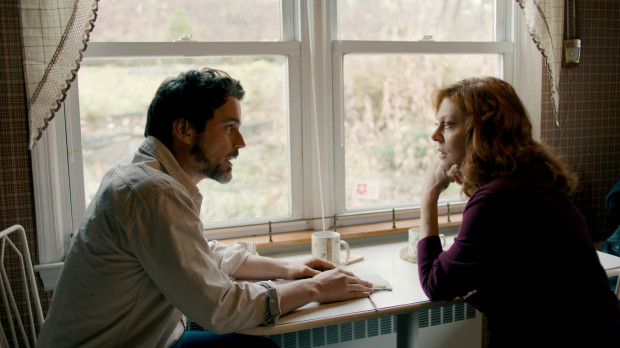
Away from the ER, the movie is on firmer ground, but there are still problems to be overcome. It’s no surprise to find the FBI and the State Department represented as bureaucratic suits who believe there should be only one way of dealing with kidnappings by terrorists: their way. And Helen is kept in the dark about a lot of things that the Viper Club are doing on her behalf, more so for dramatic purposes than for any logical reasons (she’s treated quite patronisingly when there’s no need for it). Secondary characters such as Falco’s facilitator, and Bomer’s journalist-cum-Viper Club liaison officer, Sam, have a place in the narrative but it’s largely expositional, while flashbacks to when Andrew was last home and when he was a child are meant to be poignant, but only achieve this on a superficial level. Making only her second feature, Keshavarz has aimed high with her story and been blessed by obtaining Sarandon’s services, but there’s a pervading sense that she hasn’t worked out fully what she’s trying to say – or if she has, then she hasn’t worked out the best way of getting that message across. Some individual scenes work well in themselves and there’s a spirited energy to others that also helps, but this is a patchwork movie that doesn’t do itself – or its main character – the justice it needs.

Rating: 5/10 – anchored and improved by a powerful performance by Sarandon, Viper Club is another movie where the sum of its parts adds up to less than what was needed; well intentioned, and with a pertinent story to tell in today’s troubled times, it’s a shame that the focus shifts so often, and in ways that makes it very diffcult for the movie to make up all the ground that it loses by doing so.

Share this:

  • Click to share on X (Opens in new window) X
  • Click to share on Facebook (Opens in new window) Facebook
  • More
  • Click to print (Opens in new window) Print
  • Click to email a link to a friend (Opens in new window) Email
Like Loading...

Gun Shy (2017)

10 Sunday Sep 2017

Posted by dullwood68 in Movies

≈ Leave a comment

Tags

Antonio Banderas, Chile, Comedy, Drama, Kidnapping, Literary adaptation, Mark Valley, Martin Dingle Wall, Metal Assassin, Olga Kurylenko, Ransom, Review, Rock star, Simon West

Original title: Salty

D: Simon West / 91m

Cast: Antonio Banderas, Olga Kurylenko, Mark Valley, Martin Dingle Wall, Aisling Loftus, Fernando Godoy, David Mitchell, Jesse Johnson, Ben Cura, Jeremy Swift, Anna Francolini, Emiliano Jofre

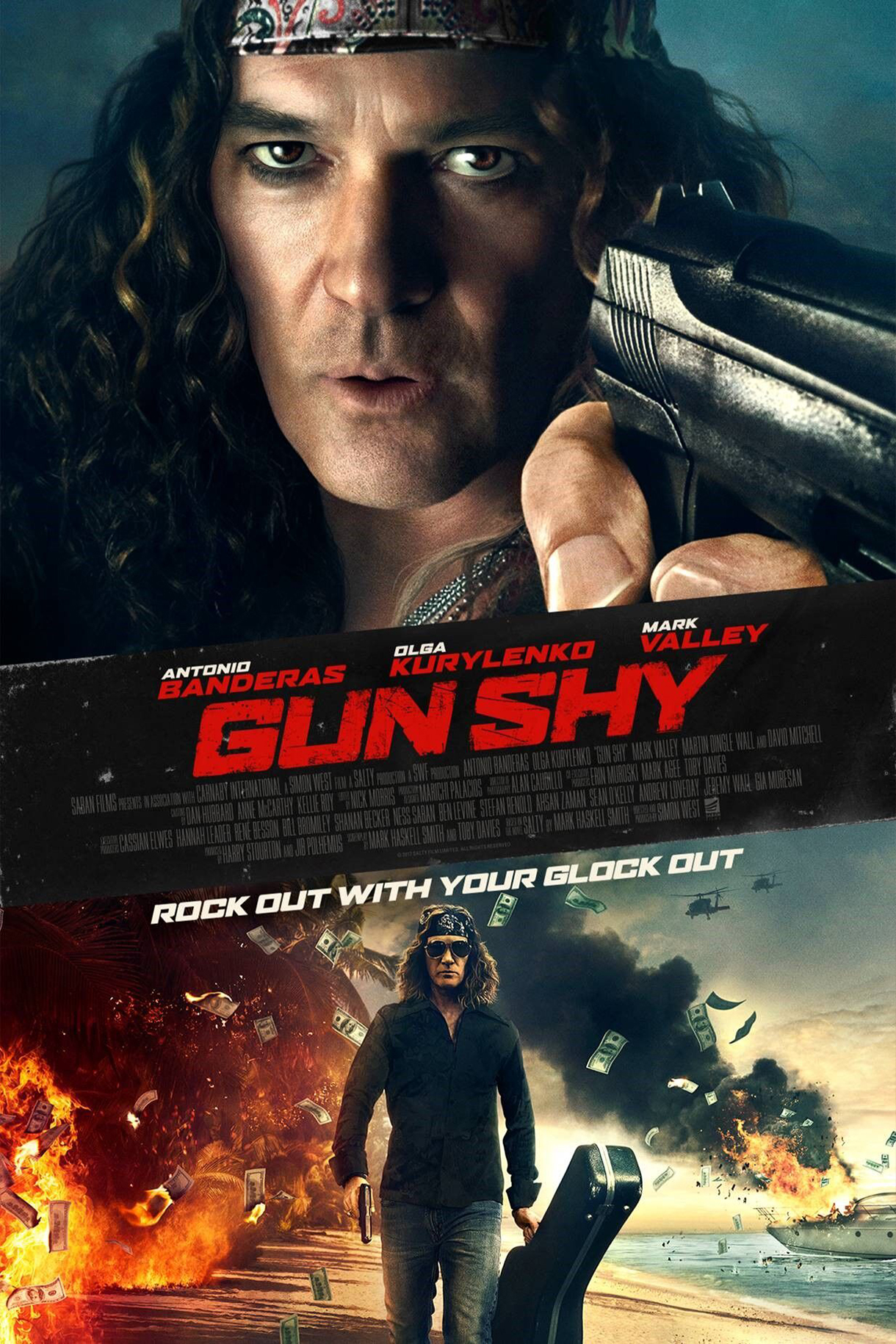
Based on the novel Salty by co-screenwriter Mark Haskell Smith, the retitled Gun Shy is officially the world’s first equity crowd funded Hollywood movie… which in effect means, you may have a script and you may have talent attached to the project, but it still doesn’t mean the movie should get made. This is definitely the case with Gun Shy, a movie that juggles drama, comedy, romance and action with all the skill of a blind man whose fingers have been glued together. It’s also another movie that makes the viewer question why it was made at all, other than to give the cast and crew the chance of visiting Chile, where most of the action takes place. Perhaps the clue is in the phrase “world’s first equity crowd funded Hollywood movie”. After all, if you can’t even get “real” Hollywood to finance your movie project, then just how good is it?

In this particular case, not very good at all. It’s meant to be a wacky comedy, with Antonio Banderas’ washed-up musician, Turk Henry, sulking in his Malibu home following his having been let go from the band he helped form, Metal Assassin, and which has since gone on to mega-stardom. Turk won’t leave the house, behaves like a spoilt, whiny child, and is married to his long-suffering wife, ex-supermodel Sheila (Kurylenko), whom he met when they were both in rehab. Determined to get Turk out of the house, Sheila blackmails him into making a trip to his home country of Chile (though Turk always tells people he’s English and from London, even though he has a strong Spanish accent). Once there, and at the hotel, Turk just wants to stay by the pool drinking beer, while Sheila is more interested in getting out and experiencing Chilean culture. When Turk discovers that Sheila has been kidnapped along with a couple of British tourists, and is being held for ransom by a group of would-be pirates, his attempt to secure her release by paying a million dollars is hampered by US embassy official Ben Harding (Valley).

Harding wants to use the kidnappings to win promotion by apprehending the so-called “terrorists” (his phrase). He forbids Turk from paying the ransom, and confiscates the money when Turk tries to go ahead with paying the kidnappers. Meanwhile, Sheila is using the time with her abductors, led by Juan Carlos (Cura), to examine more closely the relationship she has with Turk, and how satisfactory it is; naturally she’s not impressed with its current state. Turk though, hasn’t given up trying to get her back. He enlists the aid of one of his agent’s employees, Marybeth (Loftus), and through her, a specialist security agent called Clive Muggleton (Wall). With Harding still trying to win the day by himself and doing all he can to foil their efforts, Turk, Marybeth and Clive concoct a plan to pay the ransom. But will it work?

The more appropriate question might be, will anyone care? Turk and Sheila do deserve each other, but not in a grand romantic fashion, but rather in a no-one-else-would-put-up-with-their-selfish-attitudes kind of way. Turk wants Sheila back because he can’t live without her, but that’s because she organises his life and he can’t function without her. And yet, when she’s kidnapped he does exactly that, and does pretty well for himself in the bargain. He still behaves in a silly, empty-headed manner, but that’s due largely to the way that the script portrays him, and is less to do with Banderas’ performance, which is grating for the most part and dispiriting for the rest. Faced with a main character who is less than sympathetic, and with a situation where you could be forgiven for thinking that being kidnapped is an opportunity to live a better life (with the kidnappers, who at least know what they want: ships), the couple’s marriage would be better served dramatically if this was the beginning of the end. Unfortunately, this isn’t the approach the movie wants to take, so it makes Sheila’s navel-gazing over ther marriage purely something for Kurylenko to do while she waits for her character to be rescued.

With Turk and Sheila’s relationship lacking credibility, the movie struggles elsewhere as well, with the aims and goals of the kidnappers – literally, to have ships so that they can call themselves pirates – being portrayed in such a ridiculous way that the idea remains laughable whenever it’s brought up. They’re basically nice guys playing at being bad, and they aren’t very successful at it. This leaves Harding as the movie’s big bad, and he’s played by Valley in such a way that you can’t take him seriously no matter how hard Valley tries. There’s also a sub-plot involving Turk’s agent, John Hardigger (Mitchell), which doesn’t come into its own until the last ten minutes, and which feels like an after thought to the main narrative (although it does make better use of Mitchell during that time than it does Banderas for the whole movie).

Crowd-funded or not, Gun Shy is a movie that mistakes silliness for humour, and doesn’t attempt to take itself seriously. It wastes the time and efforts of its cast, plays fast and loose with its kidnapping plot, labours the point in respect to Harding’s ambitious personality, and seems to have been directed on auto pilot by West, who can’t even make the occasional action sequence anything more than laboured (a chase/taser attack by Harding on Muggleton is poorly staged and less than thrilling). The early scenes drag on unnecessarily, and the middle section is hampered by the need to stretch things out in terms of the drama (what there is of it). Amazingly though, the final half hour does see the movie pick up, and the pacing and material appear energised in comparison to the rest of the movie. Some of it is even funny at this stage, which makes you wonder why the movie as a whole wasn’t treated in the same way. With this and Security (2017), Banderas isn’t having the best of years, and the rest of the cast do what they can, but Smith’s script (co-written with Toby Davies) isn’t as well structured or funny as was perhaps originally intended. Even the Chilean locations don’t look their best, and if you can’t get that right, then something is very seriously wrong indeed.

Rating: 4/10 – though it should have been a slick comedy adventure movie, Gun Shy is undermined by lacklustre pacing, no one to root for, laughs that land with a thud, and leaden direction from West; only Wall and Loftus emerge with any credit from the cast, and only by dint of the effort they put in, but otherwise this is yet another movie that plays out in an exotic foreign location to very little effect except for providing everyone with a working holiday.

Share this:

  • Click to share on X (Opens in new window) X
  • Click to share on Facebook (Opens in new window) Facebook
  • More
  • Click to print (Opens in new window) Print
  • Click to email a link to a friend (Opens in new window) Email
Like Loading...

Iris (2016)

18 Thursday May 2017

Posted by dullwood68 in Movies

≈ Leave a comment

Tags

Charlotte Le Bon, Crime, Drama, Jalil Lespert, Kidnapping, Mechanic, Ransom, Review, Romain Duris, Thriller

aka In the Shadow of Iris

D: Jalil Lespert / 99m

Cast: Romain Duris, Charlotte Le Bon, JaliL Lespert, Camille Cottin, Adel Bencherif, Sophie Verbeeck, Hélène Barbry, Jalis Laleg

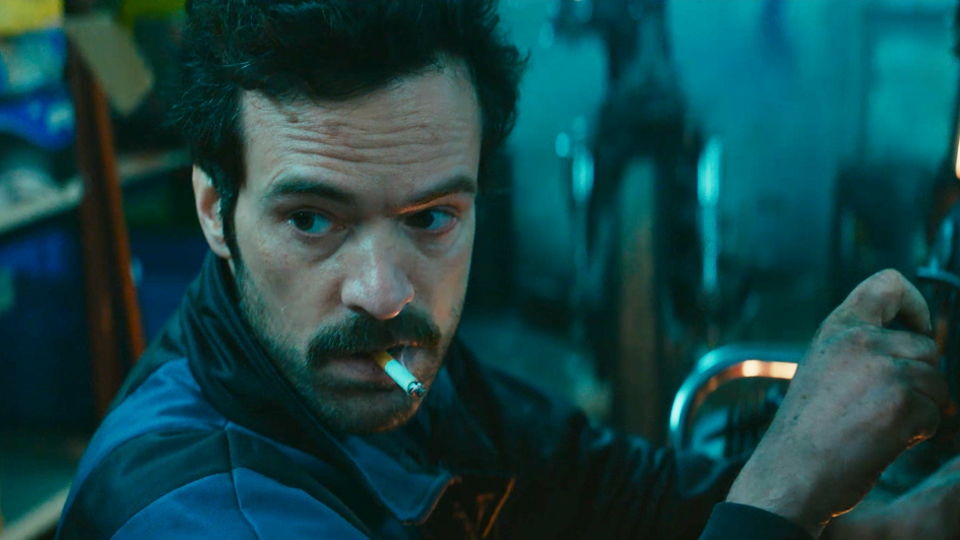
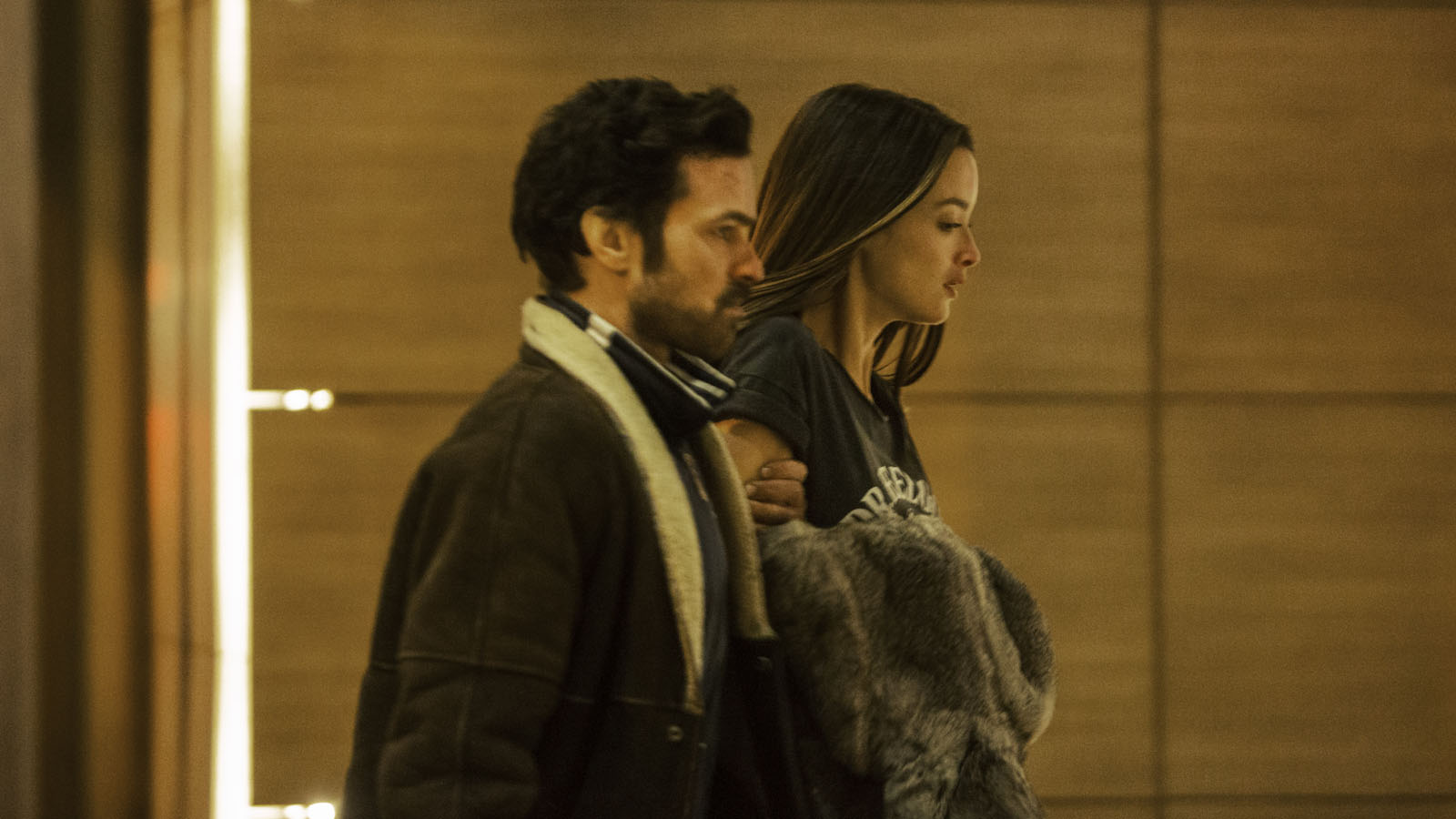
Maxim Lopez (Duris) is a car mechanic with an ex-wife, Nina (Verbeeck) and young son, Eli (Laleg). He is way behind on his mortgage payments and his work as a mechanic doesn’t bring in enough money to allow him to clear the debt anytime soon. He keeps promising Nina he’ll deal with it, but it’s unlikely he’ll ever be able to. Antoine Doriot (Lespert) is the owner of the bank that holds Maxim’s mortgage. He has an attractive wife, Iris (Barbry), and appears to have it all. But one day, after he and his wife have had lunch together, she disappears. Later on that day, Doriot receives a telephone call. The caller is a man, and he informs Doriot that Iris has been kidnapped. Unless Doriot pays €500,000 for her release, then she’ll be killed.

Despite being warned not to, Doriot contacts the police. Capitaines Nathalie Vasseur (Cottin) and Malek Ziani (Bencherif) are assigned to the case, and immediately suspect someone who holds a grudge against the bank. A list of people who have made complaints contains Maxim’s name. Before they can get around to speaking with him, a ransom drop is arranged at a railway station. Doriot is required to board a particular train but at the last moment he remains on the platform. Vasseur and Ziani continue to work their way through the list until they reach Maxim. They ask him what he was doing the afternoon Iris disappeared but he has an alibi that’s supported by his ex-wife.

The police decide that the kidnapping should be made public. What they don’t know is that by doing so, what seems to have been a straightforward kidnapping will turn into something far more dramatic and deadly. Unknown to them, Iris has faked her own abduction with the aid of Maxim, but when news of the kidnapping is released to the media, Maxim makes a discovery that turns everything he knows upside down, and puts both his life and his continued liberty at risk, and from an entirely unexpected source. Forced to put a plan of his own into action, Maxim must stay one step ahead of his adversary, and hope that everything will work out as Iris originally planned.

Originally planned as a US production, but eventually ending up in France – naturellement – Iris arrives with little fanfare and no shortage of problems in the script department, which is a surprise as the screenplay is by Andrew Bovell, whose credits include Strictly Ballroom (1992), Lantana (2001), and Edge of Darkness (2010). But it’s likely that Bovell’s script lost and gained things in translation, as this is very definitely a Gallic interpretation of what is otherwise a typical neo-noir. Once the police are introduced, the movie’s well constructed and intriguing beginning soon gives way under a welter of dramatic inconsistencies and dubious narrative decisions. There’s a good movie here somewhere, but under Lespert’s guidance, it only gets to shine on occasion, and remains an inconsistent, frustrating piece throughout.

Inevitably with a movie that stands or falls on the quality of its main “twist”, Iris relies on a piece of sleight-of-hand involving Iris herself that should immediately set viewers’ alarm bells ringing (it’s also the point where more experienced viewers will be nodding to themselves wisely and saying “Ah-ha!”). But the movie continues as if no one will have noticed what’s going on and then falls promptly on its sword by introducing Vasseur and Ziani. Ultimately it’s their involvement that ruins the whole tone of the movie, as their attempt at investigating Iris’s kidnapping proves to be both foolish and inane. The French may well be an idiosyncratic race, but it’s unlikely that their police detectives reveal intimate details of their sex lives when interviewing suspects (as they do with Doriot). And you’d certainly hope that if a kidnapper got in touch by mobile phone that they’d try to track him down by tracing his number – not here, though.

There are other instances of police stupidity on display including a dawn raid on Maxim’s workshop-cum-home where they haven’t bothered to check if he’s even there in the first place, and these instances take up too much of the movie’s running time. But even away from all that, things speed up and unravel at such a pace that there’s no time to wonder how all of it is happening, and without the principal characters – let’s leave the police out of all this – knowing about it. It all narrows down to Maxim and Doriot, and what each will do to get what they want. This leaves Iris as a pawn in both their games, but a pawn who has the capacity to ruin either one of them.

On the whole, Iris has the appearance of a thriller that’s been well thought out, but only to a point. Despite some appropriately moody camera work courtesy of Pierre-Yves Bastard, and a plaintive, melancholy score by ambient duo A Winged Victory for the Sullen, Lespert’s approach to the material remains scattershot and lacking in focus. Too many scenes seem to have been included at random, or for no appreciable reason, and too many dialogue scenes serve only to reinforce what’s already happened rather than to drive the story forward. The cast are often left stranded by the demands of the script, with Duris called upon to grimace his way through Maxim’s domestic crises (which have no bearing on anything else that happens), and Lespert himself prone to playing scenes where he stares off into space as if these moments will add depth to both the character (it doesn’t) and the scene (ditto).

The movie adds another couple of twists into the mix late on, but by then it’s too late, and most viewers will have worked out where it’s all going anyway. There’s also time for a fairly gratuitous and unnecessary sex scene, and the kind of denouement that aims for a combination of psychological integrity and emotional intensity, but instead falls well short of achieving both. The movie weaves various flashbacks into the narrative in an effort to explain certain things that have happened, but even with that clarity it doesn’t help the movie feel any less muddled or ill defined. As thrillers go it’s quite mundane, and plays out with a noticeable lack of energy – which could be forgiven if Lespert had opted for a more considered approach to the material.

Rating: 5/10 – despite a number of narrative and directorial flaws that hamper the flow of the movie, Iris takes its place amongst the movies that have aimed high, and without any clear sense of how those aims should play out; determinedly Gallic in tone but unable to offer anything new, it’s a movie that plays out favourably enough, but without being too memorable.

Share this:

  • Click to share on X (Opens in new window) X
  • Click to share on Facebook (Opens in new window) Facebook
  • More
  • Click to print (Opens in new window) Print
  • Click to email a link to a friend (Opens in new window) Email
Like Loading...

Kidnapping Mr. Heineken (2015)

10 Sunday Jan 2016

Posted by dullwood68 in Movies

≈ 1 Comment

Tags

1982/3, Alfred Heineken, Amsterdam, Anthony Hopkins, Daniel Alfredson, Drama, Jim Sturgess, Kidnapping, Ransom, Review, Ryan Kwanten, Sam Worthington, Thriller, True story

Kidnapping Mr. Heineken

aka Kidnapping Freddy Heineken

D: Daniel Alfredson / 95m

Cast: Jim Sturgess, Sam Worthington, Ryan Kwanten, Anthony Hopkins, Mark van Eeuwen, Thomas Cocquerel, Jemima West, David Dencik

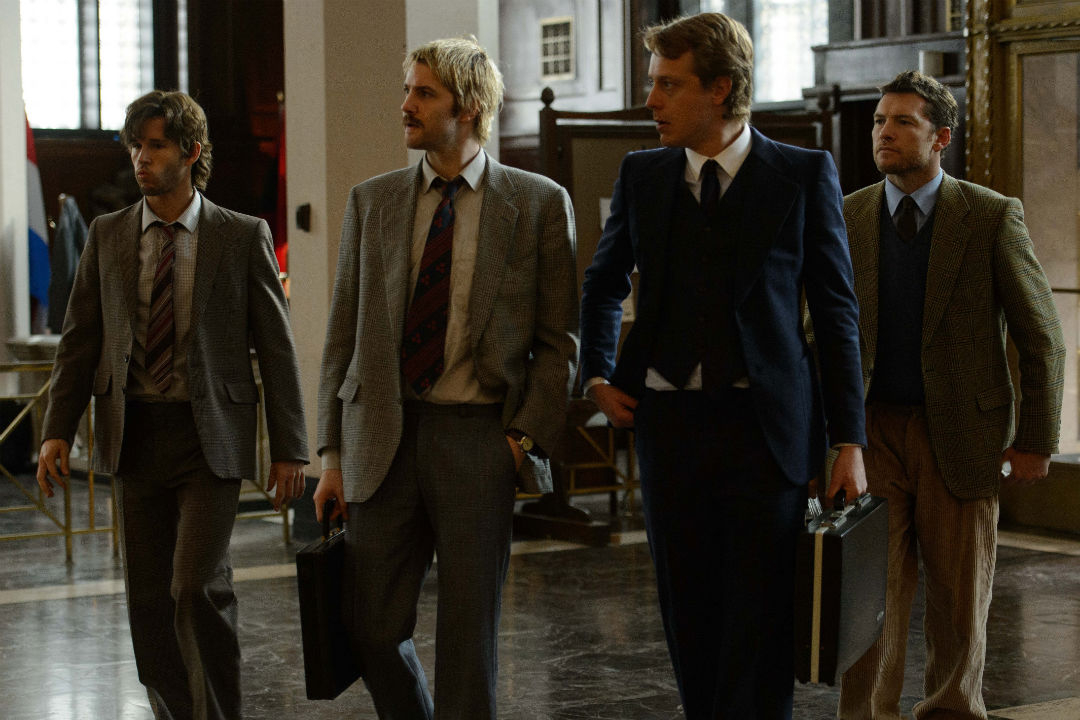
In 1982, five friends working and living in Amsterdam  – Cor Van Hout (Sturgess), Willem Holleeder (Worthington), Jan ‘Cat’ Boellard (Kwanten), Frans ‘Spikes’ Meijer (van Eeuwen), and Martin ‘Brakes’ Erkamps (Cocquerel) – are struggling to keep their construction business from going under. They don’t have any appreciable capital so the banks won’t lend them any money. But Cor has an idea (a New Year’s resolution in fact): to do something big, something that will see them all become immensely rich. That idea leads to a plan, and the plan is to kidnap the owner and founder of the Heineken brewery empire, Alfred ‘Freddy’ Heineken (Hopkins).

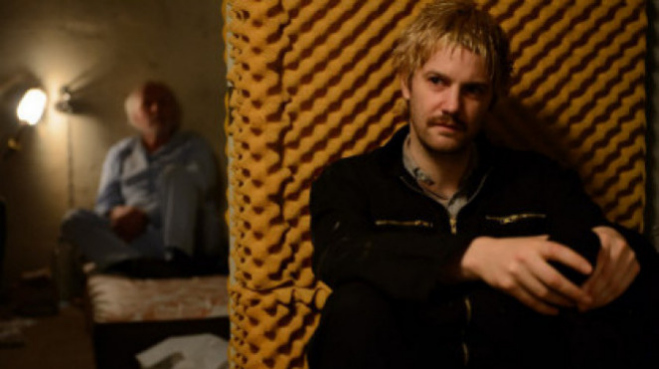
Needing to pull off this coup quite quickly, the five men begin to plan their abduction and how they will keep the ransom – $35m – and avoid being caught. They begin to watch Heineken to learn his routine, and to figure out the best time to grab him. They also realise that in order to look like professional kidnappers they’ll need to have some money behind them. So they rob a bank, and get away with enough cash to bankroll the abduction. At a shed owned by Jan, they construct soundproof cells where they can keep Heineken (and Ab Doderer (Dencik), his driver), and which are hidden behind false panelling.

KMH - scene2

The kidnapping is successful and the five men wait for the ransom note to be found by the police. They hole up at Jan’s shed, taking it in turns to check on Heineken and Doderer, and to wait for the ransom to be paid. But time passes, and after three weeks they’ve heard nothing. Willem is all for sending the police evidence that they will harm Heineken if the ransom isn’t paid, but when it comes to it he can’t do it. Another demand leads to the police and Heineken’s company agreeing to pay the ransom money, and the group successfully attain it. They stash most of it in buried tubes out in the forest, but in the days ahead they become more fearful and paranoid that the police will soon be snapping at their heels, and their long-term friendships begin to fray at the seams.

True stories – in the movies at least – usually come with the disclaimer that certain scenes, characters and/or dialogue have been fictionalised or conflated or created for dramatic purposes. This we know, and it’s always the problem with telling a true story: just how much of what you’re seeing is really true. The answer, of course, is absolutely none of it. It doesn’t matter if its’s based on a true story, or has the backing and involvement of the people it concerns or portrays, every single movie that’s based on a true story, or real events – what you’re watching is never going to be exactly what happened. And while we all know this deep down, still we take for granted that what we’re seeing actually happened, as if the writer(s), director(s) and cast have a special way of recreating past events exactly as they happened.

KMH - scene1

Sadly for Kidnapping Mr. Heineken, if that were the case, then it might help obscure or erase the movie’s most fundamental problem: it’s not in the least bit convincing or dramatic enough to work. A belated English language remake of The Heineken Kidnapping (2011), the movie is a tired, tangled piece that features five men who don’t seem to have anything in common except they take to kidnapping with apparent ease, especially when it comes to abandoning their consciences (not one of them offers any objections to the idea). And there’s an incredible naïvete about their decision that’s never properly addressed; none of them have a criminal background but they take to being criminals as if it were the most natural, and easiest, thing in the world.

With the movie establishing an awkward tone from the start, the middle section does little to rescue things, as Heineken gets the chance to be belligerent and caustic to his kidnappers on a regular basis, and they all sit around wondering why the ransom hasn’t been paid. Five more glum-looking faces you’re unlikely to see for quite some time, as the movie – scripted by William Brookfield from the book by Peter R. de Vries – fails to add any tension to proceedings, even when Willem wants to get violent. It gives rise to an odd feeling, that neither Brookfield nor Alfredson have made any connection to the story, and are telling it out of some sense of obligation.

The same can be said of the cast. Sturgess, usually a sharp-minded presence on screen, here seems held back by the vagaries of the script, in particular with regard to Cor’s relationship with his girlfriend Sonia (West), which appears to be of minor importance during the abduction but assumes a disproportionate relevance in the movie’s final third. Worthington continues to make audiences wonder why he gets so much work, giving a performance that’s so stiff you expect him to seize up at any moment. And Kwanten, thanks to one of the scruffiest wigs seen in ages, will have viewers trying to work out who he is (in real life) rather than how good his performance is. But spare a thought for Hopkins, playing yet another supporting performance and having to go from assured patriarch to rambling mental patient in the space of a competently edited chase sequence.

KMH - scene3

The story of Alfred Heineken’s kidnapping was a major news story at the time – in Holland at least – and is notable still today for the ransom being the largest ever paid for an individual, and for the fact that some of the money has never been recovered. The movie cites this at the end, along with the fates of the main characters (two of which may come as a very big surprise). But by then you’ll be less than interested, and just as relieved as Heineken probably was at being rescued from it all.

Rating: 4/10 – plodding, uninspired and plain dull for long stretches, Kidnapping Mr. Heineken is a movie that lacks commitment from its cast and crew, and ambles along with all the urgency of a downhill racer missing his skis; broadly factual (ironically, de Vries, who was an advisor on the movie, subsequently refused to watch the movie, citing numerous discrepancies between the movie and what really happened), this is a movie that gives new meaning to the words defiantly turgid.

Share this:

  • Click to share on X (Opens in new window) X
  • Click to share on Facebook (Opens in new window) Facebook
  • More
  • Click to print (Opens in new window) Print
  • Click to email a link to a friend (Opens in new window) Email
Like Loading...

A Walk Among the Tombstones (2014)

06 Monday Oct 2014

Posted by dullwood68 in Movies

≈ Leave a comment

Tags

Crime, Dan Stevens, David Harbour, DEA, Drama, Kidnapping, Lawrence Block, Liam Neeson, Literary adaptation, Matt Scudder, Murder, Ransom, Review, Scott Frank, Thriller

Walk Among the Tombstones, A

D: Scott Frank / 114m

Cast: Liam Neeson, Dan Stevens, David Harbour, Boyd Holbrook, Brian ‘Astro’ Bradley, Ólafur Darri Ólafsson, Adam David Thompson, Mark Consuelos, Sebastian Roché

New York, 1991.  Matt Scudder (Neeson) is a cop with a drink problem.  When armed robbers hold up the bar he’s in, he chases them outside and shoots all three of them, fatally.

Eight years later, Scudder is an unlicensed private detective, still working in New York, and a recovering alcoholic.  When a fellow AA member, Peter (Holbrook) tells him his brother, Kenny (Stevens) wants to offer him a job, Scudder isn’t really interested at first, but he decides to see what the job is about.  Kenny offers him $20,000 to find the men who kidnapped and killed his wife.  Kenny’s reluctance to involve the police tips off Scudder that he’s a drug dealer, and he declines the offer.  When Scudder returns to his apartment later, he finds Kenny waiting for him.  Kenny tells him about the kidnapping, and how he was left to find his wife dismembered in the trunk of a car.  He also leaves a tape recording the kidnappers made of them torturing his wife.  Scudder decides to take the case.

Sensing that Kenny’s wife may not have been the kidnappers first victim, Scudder visits the library to go through the newspaper records.  He strikes up a conversation with a young boy, TJ (Bradley), and together they discover two other murder victims where abduction and subsequent dismemberment have occurred.  Scudder visits the cemetery where the second victim’s body was discovered, and talks to one of the groundskeepers, Jonas (Ólafsson).  Jonas behaves suspiciously, and when he leaves work, Scudder follows him to his apartment.  While there he discovers that the partner of the second victim lives in the building opposite.  Beginning to see a connection, Scudder goes up onto the roof of Jonas’s building and finds a shed that contains evidence of Jonas’ involvement in her kidnapping and murder.  When Jonas returns, he gives Scudder a name – Ray – then jumps off the roof to his death.

Later, Scudder learns that the first victim was a DEA agent, and that the kidnappers may be rogue or ex-DEA agents themselves, as the second victim and Kenny’s wife were both linked to drug dealers.  When they kidnap a fourth victim, the daughter of a Russian drug dealer, Yuri (Roché), he calls on Kenny and Scudder’s help.  Scudder negotiates a ransom drop in the same cemetery where he met Jonas, but the drop goes badly, and the kidnappers get away… with TJ hiding in their van.

Walk Among the Tombstones, A - scene

Adapted from the tenth book in the series of Matt Scudder novels written by Lawrence Block, A Walk Among the Tombstones is a grim, atmospheric crime thriller that features a brooding, melancholy performance from Neeson, and suitably gloomy New York locations.  It’s a look at the darker, seedier side of Life that is impressively realised by writer/director Frank, and draws the viewer in from its opening shootout (which has tragic consequences), to its blood-soaked denouement in the basement of the kidnappers’ house.  Brief moments of levity do occur but they’re few and far between in a movie that anchors itself so effectively in the underbelly of criminal life that some viewers may be put off by its downbeat, distressing approach to the source material.

Carrying the movie like a well-worn overcoat is Neeson, his battered visage telling the audience all they need to know about Scudder and the kind of life he’s lived.  The scenes where he’s attending various AA meetings, while appearing as no more than standard character development, are instead chances for Neeson to show a more reflective, considered approach to the character.  These add subtly to the overall performance, grounding Scudder while the other characters aren’t quite so well fleshed out.  Neeson is a strong, credible actor, and when he’s the focus of a movie (as he is here), then the audience will follow him anywhere, even in something as nonsensical as Non-Stop (2014).

And it helps, because while A Walk Among the Tombstones is determinedly dour, this is a movie that does itself no favours when addressing its bad guys and what they do.  It’s dark, edgy stuff, and made all the more potent by the performances of Harbour and Thompson, who make Ray and his accomplice Albert two of the nastiest villains seen for a while, with the more garrulous Harbour making some truly horrifying dialogue sound even worse by virtue of Ray’s emotional and moral detachment.  These guys are evil, pure and simple, and as the black heart of the movie, are incredibly effective and completely justify Jonas’s decision to jump off the roof.

With a strong, capable hero and two loathsome villains in place, it’s disappointing that the remaining characters don’t quite resonate as much.  As Kenny, Stevens is oddly distant, his anger at his wife’s murder coming across as what’s expected of him rather than a real emotion (even after he’s gone through what happened).  TJ is the annoying would-be sidekick with a poignant back story that threatens to derail the movie – isn’t it enough that Scudder is looking to personally redeem himself, without the added responsibility of a homeless child as well (and one who, when hospitalised, isn’t handed over to social services)?  That said, Bradley does have a screen presence, and he makes the most of a potentially irritating character.

Morally complex it may be, and with drug dealers painted more sympathetically than usual, nevertheless the movie is a crime thriller, and as it ramps up the violence towards the end, the slow deliberate pace of the first half is ramped up as well, and gives the audience another chance to see Neeson in action hero mode (watch though for the table that breaks before it’s landed on).  There’s a satisfying conclusion, and if another Matt Scudder movie doesn’t get made, Frank’s polished, considered outing will stand on its own as an above average entry in the private eye genre.

Rating: 8/10 – stronger and more powerful than the average crime flick, this benefits from a committed turn by Neeson and has a funereal approach that works far better than perhaps it should; confident, absorbing and persuasive, A Walk Among the Tombstones is stirring stuff and shouldn’t be missed.


Share this:

  • Click to share on X (Opens in new window) X
  • Click to share on Facebook (Opens in new window) Facebook
  • More
  • Click to print (Opens in new window) Print
  • Click to email a link to a friend (Opens in new window) Email
Like Loading...

Speed (1994)

23 Wednesday Jul 2014

Posted by dullwood68 in Movies

≈ 1 Comment

Tags

Arizona Wildcat, Bomber, Bus, Dennis Hopper, Elevator, Hostages, Howard Payne, I-105 freeway, Jan de Bont, Keanu Reeves, Ransom, Sandra Bullock, Subway train

MSDSPEE FE005

D: Jan de Bont / 116m

Cast: Keanu Reeves, Sandra Bullock, Dennis Hopper, Jeff Daniels, Joe Morton, Alan Ruck, Glenn Plummer, Richard Lineback, Beth Grant, Hawthorne James, Carlos Carrasco

When some of the workers in one of L.A.’s high-rise office buildings get into an elevator, they don’t realise they’ve just become hostages in a deadly game of cat-and-mouse between ex-cop turned bomb-loving nut job Howard Payne (Hopper) and the police.  With the elevator wired up with explosives, it’s down to maverick cop Jack Traven (Reeves) and his partner, Harry Temple (Daniels), to rescue the hostages, and capture Payne.  However, while the hostages are rescued, Payne manages to escape.

Some time later, Traven is getting his morning coffee and doughnuts when a nearby bus explodes, destroying it, and the driver, completely.  A pay phone rings; it’s Payne, with a challenge for Traven.  There’s a bus rigged with explosives that will be armed if the bus travels at over fifty miles an hour.  The catch?  If it slows below fifty miles an hour, then the bomb will go off, killing everyone on board.  Jack’s mission is simple: to find the bus, get on it and stay with it until Payne’s ransom demands are met.  Once on the bus, Traven’s presence leads to the driver (James) being shot and wounded.  Luckily, passenger Annie Porter (Bullock) takes over from him, and Traven explains why he’s on the bus.  He also manages to alert Temple and their boss Lieutenant McMahon (Morton).  With various obstacles and problems to overcome – a very sharp right turn at an intersection, a gap in the freeway – Traven and Porter keep the bus moving above fifty, while Harry tries to track down Payne.

Eventually, Traven realises that Payne has been watching the bus via a hidden camera all along.  McMahon, with the aid of a local news crew, hijack the signal and overlay a recording of Traven and the passengers sitting quietly on the bus.  With this in place, Traven attempts to defuse the bomb but without success, but he does get the passengers off (and himself) before the bus – now roaming an airport – collides with a plane and explodes.  At first unaware of what’s happened, when Payne finds out he goes to where the ransom is to be left and abducts Annie, heading down into the subway.  Traven goes after him, and while Payne is taken care of, he and Annie have a bigger problem: the train’s brakes aren’t working, and Annie is handcuffed around a pole…

Speed - scene

The surprising thing about Speed is that after twenty years it’s still as exciting as it was on first release, it’s high-concept storyline and mixture of vehicular mayhem with a vivid sense of humour, still hitting the mark, and still an object lesson in how to mount and execute an action movie.  It’s also a small miracle that it was made at all.  Graham Yost’s original script – originally intended for Jeff Bridges and Ellen DeGeneres as Traven and Annie – ended when the bus blew up; the addition of the subway scenes helped get the movie the go-ahead.  John McTiernan was the producers’ first choice for director but he turned them down.  The dialogue was given an almost complete re-write by Joss Whedon.  The scenes shot on the then unopened I-105 highway were filmed around the remaining construction work, leading to numerous continuity errors that appear in the movie.  The producers weren’t convinced about Reeves (especially when they saw his haircut), and wanted a big name actress to appear alongside him; de Bont insisted on casting Bullock.  And the production ran out of money before filming was completed; at very early previews the subway scenes were shown as animated story boards, but thanks to positive audience feedback for these scenes, extra money was found to finish the movie.

And yet, despite all that adversity, Speed is a triumph, a well-oiled adrenaline rush of a movie that rarely lets up, its central section so tightly orchestrated and edited (by John Wright) that there’s barely an ounce of cinematic fat to be found.  The movie is often breathtaking, its propulsive qualities keeping the viewer on the edge of their seat, maintaining an immersive power that makes watching it as exhilarating as if you were on the bus yourself.  Its tripartite structure, utilising various modes of transport – elevator, bus, subway train – is cleverly done, increasing the stakes as the movie progresses (as well as the speed these modes of transport can travel at), and providing each section with a satisfying pay-off (the bus/plane explosion is still one of cinema’s finest incendiary moments).  The famous bus jump – filmed for real even though it doesn’t look like it – is the movie’s big heart-stopper and even now, can get audiences willing the bus to clear the gap.

With all that action going on it would be easy to forget that the movie has a big heart, and can pack an emotional wallop when required – Helen (Grant) trying to get off the bus and ending up under the wheels, the bus hitting the pram (what a shocker that must have been when the movie was first shown) – and there’s also the movie’s often wry sense of humour and quotable one liners: “Jesus. Bob, what button did you push?”; “I already seen the airport”; and “Yeah, but I’m taller”.  It’s an inherently silly movie when all’s said and done, as preposterous an idea as you could possibly imagine, but it works, thanks largely to the cast treating it seriously and playing it straight (verbal quips aside).  Reeves though is horribly wooden, a big thick plank of wood in a tight t-shirt, but he’s still a good fit for the character.  Bullock takes a fairly nondescript role and turns it into a star-making turn, while Hopper, as expected, piles on the ham as Payne, chewing the scenery with barely restrained relish.  Annie’s fellow passengers, from Ruck’s slow-witted tourist to Carrasco’s abrasive construction worker, come in and out of prominence as the script demands, but each actor has his or her moment to shine.  And both Daniels and Morton are as dependable as ever as Traven’s colleagues in the L.A.P.D.

Viewers paying close attention will spot errors in continuity that should rankle, but end up being a part of the movie’s charm, and there are goofs galore including dialogue spoken when a character’s mouth is clearly shut, and Harry’s limp switching from left leg to right leg to left leg, and so on (and then being abandoned altogether when he and his team raid Payne’s home).  But none of this really has any detrimental impact on the movie, and under de Bont’s more than capable direction, Speed sets a high standard that few action movies made since then have come close to bettering.

Rating: 8/10 – for all its inconsistencies and dumb-ass leading character, Speed is a thrill ride – mostly set on a bus – that compels the audience’s attention and rewards it with escalating tension and drama; quite simply, one of the best action movies of the Nineties, and a movie that shrugs off its Die–Hard-on-a-bus premise to provide an experience that is still as exciting as it was twenty years ago.

Share this:

  • Click to share on X (Opens in new window) X
  • Click to share on Facebook (Opens in new window) Facebook
  • More
  • Click to print (Opens in new window) Print
  • Click to email a link to a friend (Opens in new window) Email
Like Loading...

Blog Stats

  • 490,512 hits

Recent Posts

  • 10 Reasons to Remember Bibi Andersson (1935-2019)
  • Fantasia (1940)
  • Dances With Wolves (1990) – The Special Edition
  • Kiss of the Spider Woman (1985)
  • The Three Musketeers (1973)

Top Posts & Pages

  • The Dark Tower (2017)
    The Dark Tower (2017)
  • The White Orchid (2018)
    The White Orchid (2018)
  • Central Intelligence (2016)
    Central Intelligence (2016)
  • Taken (2008)
    Taken (2008)
  • Lost for Life (2013) - Another Look
    Lost for Life (2013) - Another Look
  • Captain Fantastic (2016)
    Captain Fantastic (2016)
  • Miss Baek (2018)
    Miss Baek (2018)
  • Two Shorts by François Ozon: A Summer Dress (1996) and X2000 (1998)
    Two Shorts by François Ozon: A Summer Dress (1996) and X2000 (1998)
  • Cardboard Boxer (2016)
    Cardboard Boxer (2016)
  • A Brief Word About Cineworld Unlimited
    A Brief Word About Cineworld Unlimited
Follow thedullwoodexperiment on WordPress.com

Blogs I Follow

  • Rubbish Talk
  • Film 4 Fan
  • Fast Film Reviews
  • The Film Blog
  • All Things Movies UK
  • Interpreting the Stars
  • Let's Go To The Movies
  • Movie Reviews 101
  • TMI News
  • Dan the Man's Movie Reviews
  • Film History
  • Jordan and Eddie (The Movie Guys)

Archives

  • April 2019 (13)
  • March 2019 (28)
  • February 2019 (28)
  • January 2019 (32)
  • December 2018 (28)
  • November 2018 (30)
  • October 2018 (29)
  • September 2018 (29)
  • August 2018 (29)
  • July 2018 (30)
  • June 2018 (28)
  • May 2018 (24)
  • April 2018 (21)
  • March 2018 (31)
  • February 2018 (25)
  • January 2018 (30)
  • December 2017 (30)
  • November 2017 (27)
  • October 2017 (27)
  • September 2017 (26)
  • August 2017 (32)
  • July 2017 (32)
  • June 2017 (30)
  • May 2017 (29)
  • April 2017 (29)
  • March 2017 (30)
  • February 2017 (27)
  • January 2017 (32)
  • December 2016 (30)
  • November 2016 (28)
  • October 2016 (30)
  • September 2016 (27)
  • August 2016 (30)
  • July 2016 (30)
  • June 2016 (31)
  • May 2016 (34)
  • April 2016 (30)
  • March 2016 (30)
  • February 2016 (28)
  • January 2016 (35)
  • December 2015 (34)
  • November 2015 (31)
  • October 2015 (31)
  • September 2015 (34)
  • August 2015 (31)
  • July 2015 (33)
  • June 2015 (12)
  • May 2015 (31)
  • April 2015 (32)
  • March 2015 (30)
  • February 2015 (37)
  • January 2015 (39)
  • December 2014 (34)
  • November 2014 (34)
  • October 2014 (36)
  • September 2014 (25)
  • August 2014 (29)
  • July 2014 (29)
  • June 2014 (28)
  • May 2014 (23)
  • April 2014 (21)
  • March 2014 (42)
  • February 2014 (38)
  • January 2014 (29)
  • December 2013 (28)
  • November 2013 (34)
  • October 2013 (4)

Create a free website or blog at WordPress.com.

Rubbish Talk

Film 4 Fan

A Movie Blog

Fast Film Reviews

The Film Blog

The official blog of everything in film

All Things Movies UK

Movie Reviews and Original Articles

Interpreting the Stars

Dave Examines Movies

Let's Go To The Movies

Film and Theatre Lover!

Movie Reviews 101

Daily Movie Reviews

TMI News

Latest weather, crime and breaking news

Dan the Man's Movie Reviews

All my aimless thoughts, ideas, and ramblings, all packed into one site!

Film History

Telling the story of film

Jordan and Eddie (The Movie Guys)

Movie Reviews & Ramblings from an Australian Based Film Fan

Privacy & Cookies: This site uses cookies. By continuing to use this website, you agree to their use.
To find out more, including how to control cookies, see here: Cookie Policy
  • Subscribe Subscribed
    • thedullwoodexperiment
    • Join 481 other subscribers
    • Already have a WordPress.com account? Log in now.
    • thedullwoodexperiment
    • Subscribe Subscribed
    • Sign up
    • Log in
    • Report this content
    • View site in Reader
    • Manage subscriptions
    • Collapse this bar
 

Loading Comments...
 

    %d