• 10 Reasons to Remember…
  • A Brief Word About…
  • About
  • For One Week Only
  • Happy Birthday
  • Monthly Roundup
  • Old-Time Crime
  • Other Posts
  • Poster of the Week
  • Question of the Week
  • Reviews
  • Trailers

thedullwoodexperiment

~ Viewing movies in a different light

thedullwoodexperiment

Tag Archives: Robert Redford

The Old Man & the Gun (2018)

12 Wednesday Dec 2018

Posted by dullwood68 in Movies

≈ 1 Comment

Tags

Bank robberies, Casey Affleck, Crime, David Lowery, Drama, Forrest Tucker, Manhunt, Review, Robert Redford, Sissy Spacek, True story
D: David Lowery / 93m

Cast: Robert Redford, Sissy Spacek, Casey Affleck, Danny Glover, Tom Waits, Tika Sumpter, David Carradine, Isiah Whitlock Jr, John David Washington, Elisabeth Moss, Robert Longstreet

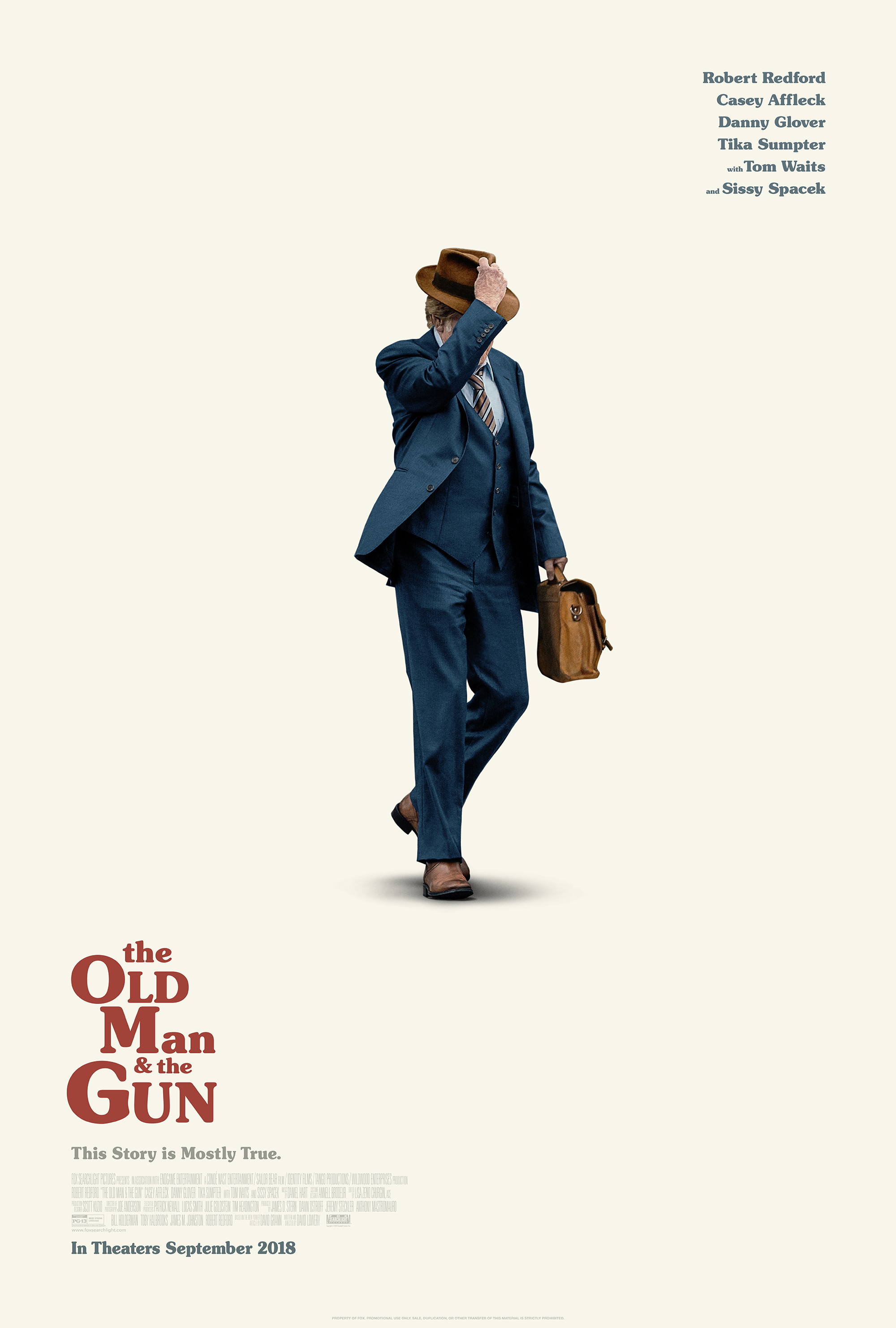
In 1981, and in his Seventies, career criminal Forrest Tucker (Redford) is still doing what he’s best at: robbing banks. As the founder of The Over the Hill Gang, Tucker, along with his associates, Teddy (Glover) and Waller (Waits), takes a low key, gentlemanly approach to robbing a bank. He smiles a lot, he pretends to have a gun, and no one ever gets hurt. Of course, the police don’t see it in quite the same light, and a detective, John Hunt (Affleck), becomes determined to catch Tucker and put him away. But this is easier planned than done, as Tucker stays one step ahead of everyone while he also romances a widow called Jewel (Spacek). As Hunt learns more and more about Tucker, and vice versa, a mutual respect develops between the pair. But even knowing Hunt is on his trail, and the promise of an easy retirement with Jewel is within his grasp, Tucker can’t help but keep on robbing banks. It’s not until the police finally track him down, and he’s forced to go it alone, that Tucker has to decide on what kind of future he really wants…
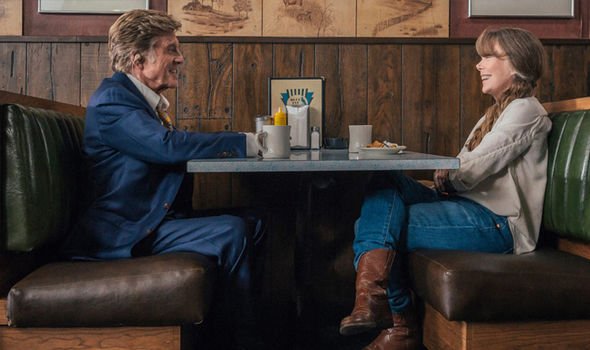
If Forrest Tucker hadn’t been a real life character (he passed away in 2004), and if he hadn’t really escaped from prison around sixteen times (including once, in 1979, from San Quentin), and made an estimated four million dollars from his robberies over the years, then the movies would have had to have made him up. And if a casting director had been charged with finding the perfect actor for the role, then they would have had only one choice: Robert Redford. Widely acknowledged as Redford’s swansong performance, Tucker is a fitting role for an actor who has encompassed all the qualities that David Lowery’s screenplay – itself based on a 2003 article by David Grann – imbues the character with. He’s charming, he has a relaxed manner, he appears unhurried and thoughtful, and he has that smile, that signifier that if you stick with him, everything will be okay, and most of all, a lot of fun. Redford could almost be playing himself, or an older, wiser version of the Sundance Kid, such is the modern day Western vibe that infuses the movie. And he doesn’t even have to do too much to be effective; it’s possibly the most relaxed he’s ever been, and it shows. It’s a performance that feels effortless.
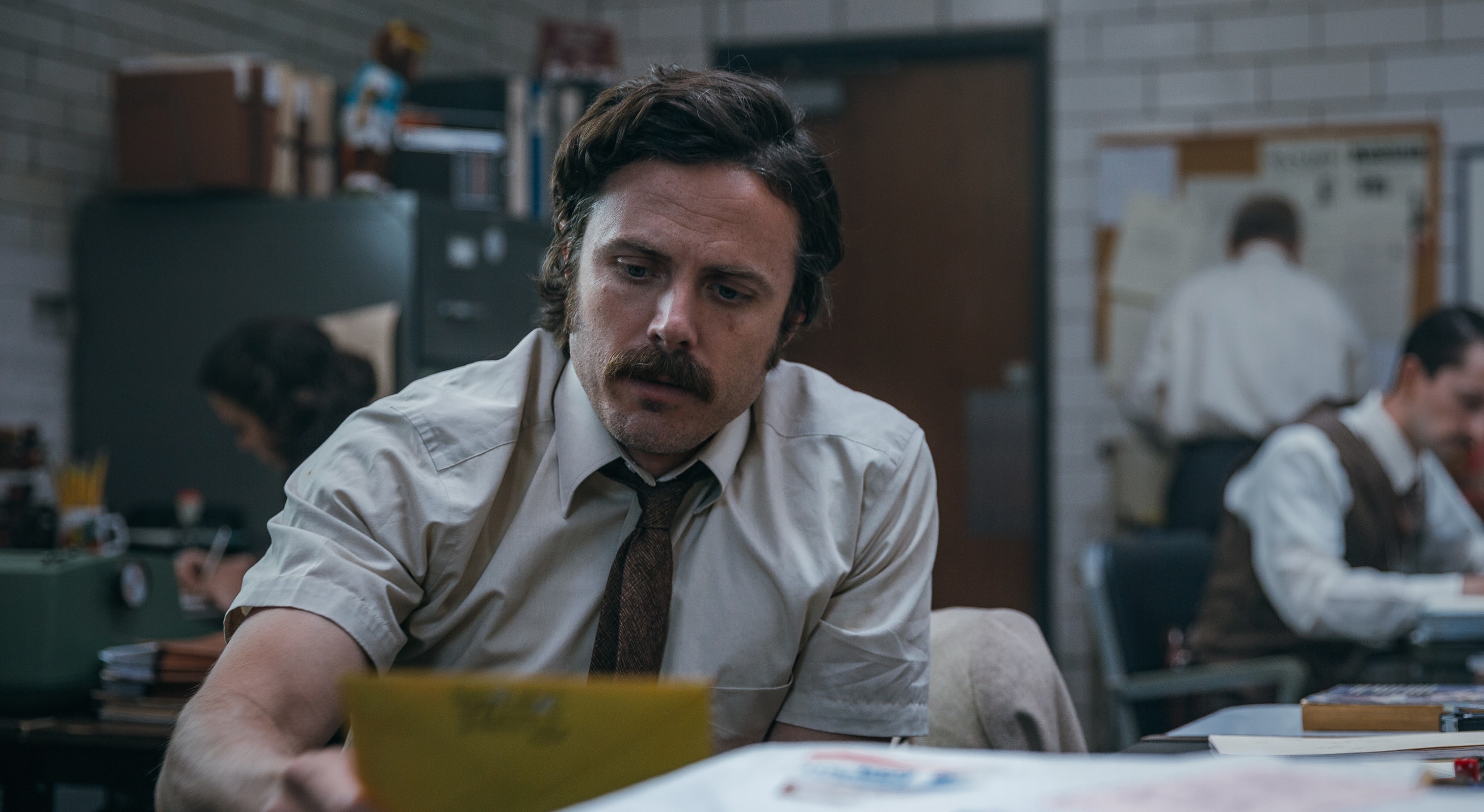
But this being a David Lowery movie, it’s not just about Tucker and his almost carefree attitude to life and other people’s money. It’s also about time – what we do with it, how it affects us, whether the past informs our present, and whether the future should be something to be concerned about – and how our memories can influence how we look at time. Tucker has nothing but fond memories of his life, even though he’s spent most of it locked up, while Jewel feels regret for not having been more selfish with her time when she was married. It’s not difficult to work out which one of them feels that they’ve really been in prison, and just as easy to work out which one is the more fulfilled. But while it would be easy to look at this as another, off-kilter version of the Follow Your Dream experience, the movie is a lot subtler than that, and has a much more solid and dramatic foundation. That Lowery has chosen to layer his movie with a poignant meditation on getting old doesn’t detract from the enjoyment to be had from it, and the discerning viewer will find much that resonates along the way.

Rating: 9/10 – a movie that remains wistful and pleasantly languid for much of its running time, The Old Man & the Gun is still chock full of dramatic moments that highlight the underlying seriousness of Tucker’s “work”; with terrific performances from all concerned, and enchanting cinematography from Joe Anderson, this may end up being regarded solely as a fitting tribute to Redford and his career, but it has so much more to offer, and is so much more rewarding.
Share this:

  • Click to share on X (Opens in new window) X
  • Click to share on Facebook (Opens in new window) Facebook
  • More
  • Click to print (Opens in new window) Print
  • Click to email a link to a friend (Opens in new window) Email
Like Loading...

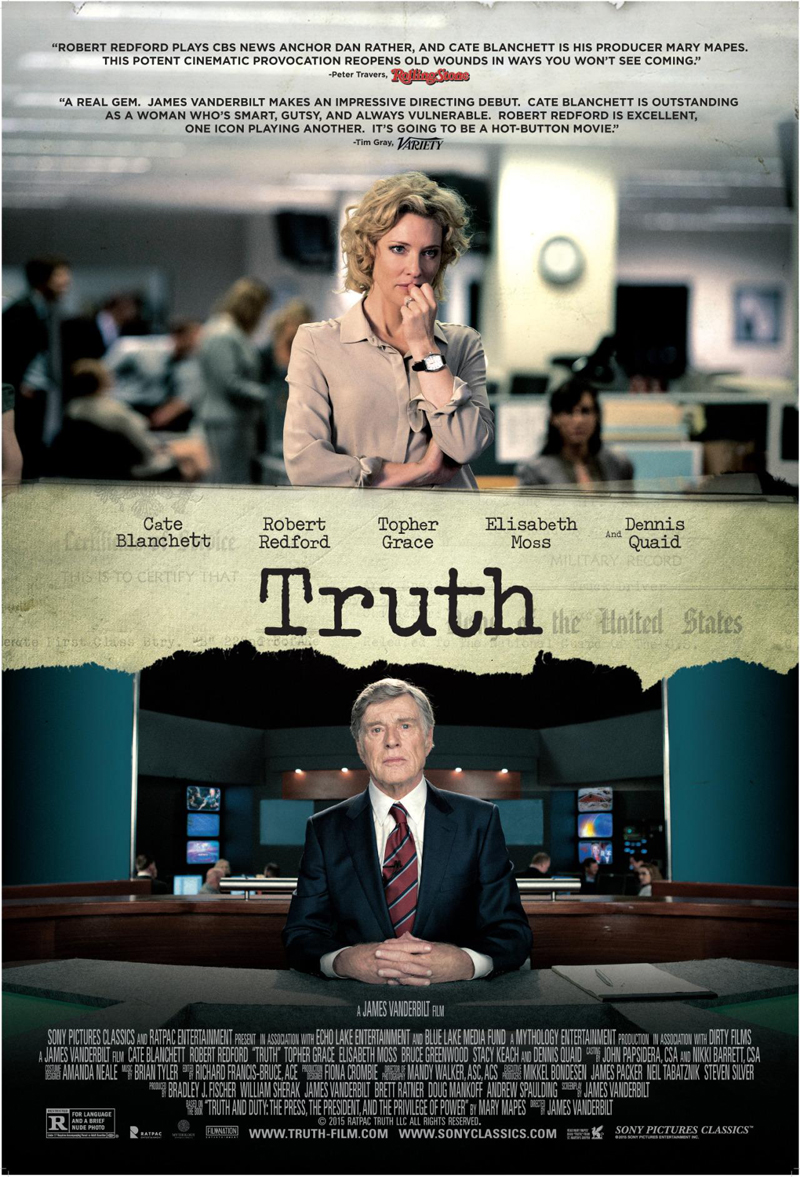
Truth (2015)

02 Tuesday Feb 2016

Posted by dullwood68 in Movies

≈ Leave a comment

Tags

60 Minutes, Cate Blanchett, CBS, Dan Rather, Dennis Quaid, Drama, George W. Bush, James Vanderbilt, Literary adaptation, Mary Mapes, Preview, Review, Robert Redford, Texas Air National Guard, Topher Grace, True story

Truth

D: James Vanderbilt / 125m

Cast: Cate Blanchett, Robert Redford, Topher Grace, Dennis Quaid, Elisabeth Moss, Bruce Greenwood, Stacy Keach, Noni Hazlehurst, John Benjamin Hickey, David Lyons, Rachael Blake, Dermot Mulroney, Andrew McFarlane, Connor Burke

In 2004, Mary Mapes (Blanchett) was a producer at CBS’ flagship news programme, 60 Minutes. She worked with the legendary news anchor Dan Rather (Redford), and earlier that year she and her team had produced a news report on the abuse happening at Abu Ghraib (which later won a Peabody Award). Mapes was a highly regarded producer who had been at CBS for fifteen years; when she told her bosses that she wanted to investigate irregularities connected with then President George W. Bush’s service in the Texas Air National Guard during the early Seventies, she was given the go ahead to look into the matter and prepare a segment for broadcast.

Soon after, Mapes came into possession of documents – memos – that claimed to show Bush had failed to follow orders while in the ANG, and that efforts were made by his superiors to influence and improve his record. These documents were purportedly written by Bush’s commander, the late Jerry B. Killian. Mapes and her team set about trying to find witnesses who could corroborate the content of these memos, but were consistently rebuffed. At the same time they sought to have the documents examined for authenticity. But there were problems: the documents weren’t the originals, and their source wasn’t confirmed before the segment was aired on 8 September 2004. Mapes, even though the documents were copies of the originals, was convinced of their probity at least, and so was Rather. The segment was broadcast, and during it, Rather stated that “the material” had been authenticated.

Truth - scene1

But this wasn’t true, and soon criticism of the show’s claims were spreading far and wide, and focused primarily on the typography used in the memos and other anachronisms that seemed damning. CBS found themselves backtracking, and Mapes was disturbed to learn that the person who’d given her the documents, retired Lt. Col. Bill Burkett (Keach), had lied about where he got them from. With their provenance appearing unsavoury at the least, Mapes came under pressure from the head of CBS, Andrew Heyward (Greenwood), to limit the damage of these revelations, and to find conclusive proof that the memos were even written by Killian. Unable to, and with other accusations of poor journalism coming in thick and fast, Mapes and her team were suspended pending an internal investigation. With his own integrity tarnished by the criticisms, Rather made a public apology regarding the segment, and later, announced his retirement.

Adapted from Mapes’ book Truth and Duty: The Press, the President, and the Privilege of Power, writer/director James Vanderbilt’s debut feature is an awkward beast, telling its story with a great deal of enthusiasm for showing just how tarnished Bush’s ANG record was, but then failing to properly acknowledge just how badly Mapes and her team scored a classic own goal. You don’t have to be an expert in TV news journalism to realise that the whole issue of the memos – their authenticity, their provenance, what they appeared to say – was handled with an irresponsible disregard for true journalistic integrity. Anyone watching Truth, and that really does mean anyone, will be watching events unfold and wincing at just how readily Mapes and her team were willing to put their heads in a collective noose. They failed to do the one thing that any journalist or writer needs to do to make an accusation: have conclusive, incontrovertible proof that what they’re saying is true. And Mapes didn’t have that.

Truth - scene2

But again, the movie tries its best to avoid acknowledging what should be obvious to anyone watching. It still supports Mapes in her efforts to “get out from under” the storm of approbation and scathing criticism that rains down on her once the segment airs. And it tries to make her into a scapegoat for a much larger conspiracy, one that’s expressed with anguished contempt by her colleague, Mike Smith (Grace), but the whole idea lacks weight, despite the movie clinging to it unashamedly for the last thirty minutes. This may be how Mapes and her team felt at the time, but a judicious helmer would have excised it for being too incongruous and absurd a proposition (it’s also one of those embarrassing tantrums that people have when they haven’t got anyone else to blame but themselves).

All this leads to an inescapable, but strangely welcome conclusion: the movie you’re watching is about failure, a rare topic in American movies, but one that Vanderbilt at least tries to embrace, even if he doesn’t quite know what to do with it, hence the ambivalence towards Mapes and the schoolboy errors she makes. Rather makes his apology but is seen doing so on a variety of TV screens and monitors, rather than up close, thereby limiting the effect of his regret and the connection we can make to it; it’s almost inconsequential to what’s happening to Mapes at the time, as if the movie has to acknowledge it occurred but doesn’t want to lend it too much importance. It’s like when someone says to you, “Oh, by the way…” But Mapes is resolute in her convictions right up until the credits. In any other movie the audience would be applauding her for standing up for her beliefs, but instead you can’t help but wonder if she ever learnt anything of personal value from it all.

Truth - scene3

In the end we’re asked to have a tremendous amount of sympathy for Mapes and the way she’s treated, but it becomes increasingly difficult. Even Blanchett can’t make her entirely sympathetic, and while she gives a good performance, she’s hampered by the fact that she’s trying to elevate the position of someone who was the author of her own downfall. As Rather, Redford is a bit of a distraction, not because of how we see him after all these years, but because we have no idea if he’s portraying Rather with any degree of accuracy; there’s just not enough there for us to be sure. Further down the cast list, Grace essays yet another earnest young man role, while Quaid adds gravitas as the ex-military man on Mapes’ team. Moss rounds out Mapes’ (in)famous five, Greenwood is her angry, unsupportive boss, and Keach is the whistle blower who isn’t telling the whole truth. All give adequate performances but bow to Blanchett’s greater involvement and do their best not to get in the way when she’s in full flow (which is often).

With half an eye trained on being a prestige, awards-gathering picture, Truth aims for solid and dependable, and for the most part achieves those aims, but lacks the passion that would have made all the difference to the material. Vanderbilt has the talent to make better, more focused movies, and he’s to be congratulated for attracting what is a top-notch cast for his first project, but too often they’re operating at the edge of the frame to be effective, and are given few chances to shine (except for Blanchett, that is). And Vanderbilt needs to interpret his material more, to let it breathe and grow beyond the obvious, as several scenes in Truth have the feel of filler instead of moments that advance the storyline. But these are forgivable errors for a first-time director to make, and though the movie isn’t entirely successful on its own merit, there’s just enough here to make the experience pleasant enough to hang around til the end.

Rating: 6/10 – flawed, and with a central character who loses the audience’s sympathy with each passing minute, Truth should be an engrossing exposé of journalistic persecution, but instead proves to be far stranger, less convincing affair; Blanchett does her best to hold it all together, but she’s defeated by the material and Mapes’ recurring ability to undermine herself without anyone else’s help.

Share this:

  • Click to share on X (Opens in new window) X
  • Click to share on Facebook (Opens in new window) Facebook
  • More
  • Click to print (Opens in new window) Print
  • Click to email a link to a friend (Opens in new window) Email
Like Loading...

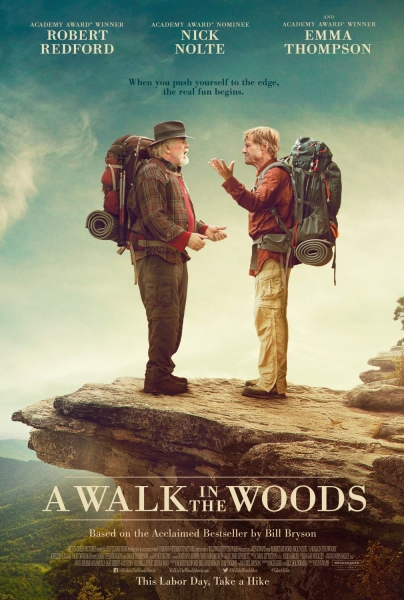
A Walk in the Woods (2015)

18 Friday Dec 2015

Posted by dullwood68 in Movies

≈ Leave a comment

Tags

Appalachian Trail, Bill Bryson, Comedy, Drama, Emma Thompson, Hiking, Ken Kwapis, Literary adaptation, Mary Steenburgen, Nick Nolte, Review, Robert Redford, True story

A Walk in the Woods

D: Ken Kwapis / 104m

Cast: Robert Redford, Nick Nolte, Emma Thompson, Mary Steenburgen, Kristen Schaal, Nick Offerman, R. Keith Harris, Susan McPhail

It all starts with a verbal chastisement-cum-ambush on TV: celebrated author Bill Bryson (Redford) is being interviewed and distinctly not feeling the love. When asked if he has retired, Bryson responds by saying, “Writers don’t retire. We either drink ourselves to death or blow our brains out.” The interviewer is unimpressed: “What will it be for you?” Bryson is resigned: “After this interview, probably both.” But the interviewer has found the nub of Bryson’s dilemma as an author, namely what to write about next.

He’s no nearer finding an answer while attending a funeral. While taking a break from the rest of the mourners, he finds himself on part of the Appalachian Trail, a hiking trail that runs 2,200 miles from Springer Mountain in Georgia all the way to Mount Katahdin in Maine. Suddenly inspired, Bryson tells his wife, Catherine (Thompson), that he’s going to hike the entire trail, despite being unfit and too old. Catherine is horrified by the idea, and takes to leaving newspaper and internet clippings around for him to see, with headlines such as “Decomposed body found on trail” in an effort to dissuade him. Eventually she gets him to agree to hike with a companion. Bryson reaches out to several of his male friends but they all turn him down. It’s only when an old friend he hasn’t seen in years, Stephen Katz (Nolte) gets in touch and volunteers to go with him that the trip becomes a go.

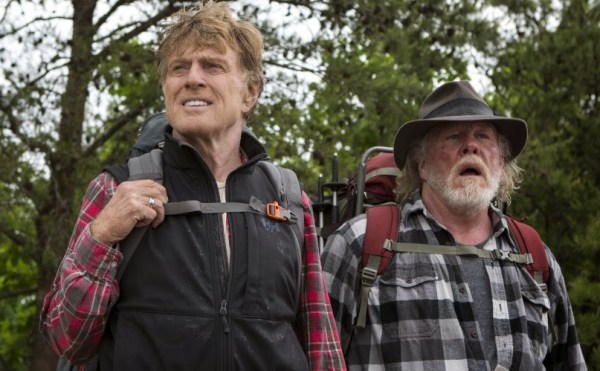
A Walk in the Woods - scene3

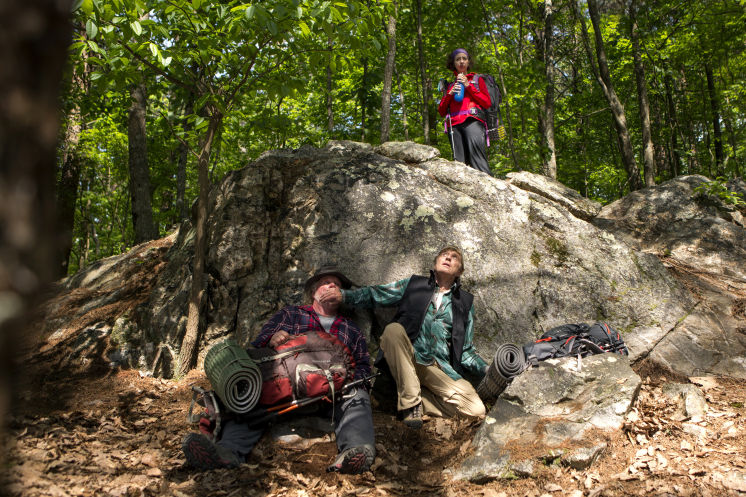
There are reservations though (how could there not be?). Bryson and Katz always used to rub each other up the wrong way, and back when they were friends, Katz was an habitual womaniser and alcoholic. But he tells Bryson he’s in good shape and ready to go on the hike. When Bryson and Catherine meet him at the airport, Katz’s physical condition raises cause for concern but he assures them he’ll be fine. They set out on the trail from Springer Mountain and soon find it hard going, much more so than they expected. Along the way they meet a variety of people, including the ever-talkative, ever-opinionated Mary Ellen (Schaal), a woman named Beulah (McPhail) who Katz hits up for a date (unaware that she’s married), and motel owner Jeannie (Steenburgn), who develops a crush on Bryson. They have an encounter with bears, hike through heavy snow drifts, and manage to fall down onto a ledge that they can’t get back up from (until two other hikers come along and rescue them).

And… that’s about it. For most of its running time, A Walk in the Woods proves to be a light-hearted, lightweight walk on the wild side, as Bryson and Katz tramp their way along the trail like two men at the head of the hip transplant list. They reminisce, they argue, they bicker, they explore notions of personal regret, and they remain “nice” throughout. Even when they have the expected and entirely predictable falling out, the movie has made it to that point with so little drama attached to it that you could be forgiven for thinking it had all been written out of the story. And it serves to highlight the story’s one major problem: once they’re on the trail, all the excitement is given little or no attention, and any potential for drama is wasted.

A Walk in the Woods - scene2

Once on the trail, Bryson and Katz are amiable enough companions, amiable to suit their own needs, and amiable enough for the time to pass without undue hardship or hazards to slow them down (even when they do fall down onto that ledge). It’s a hike that has its fair share of incidents but none of them are dramatic enough to warrant more than a passing interest. There’s also a distinct lack of personal growth for both Bryson and Katz, even though the script by Michael Arndt and Bill Holderman tries hard to include this idea. What we’re left with is a series of mildly amusing anecdotes peppered with isolated, random musings on the fate of the surrounding wilderness (one of the few thematic aspects of the novel retained by the movie). It wouldn’t be so bad if it weren’t so anodyne and disturbingly bland in its execution.

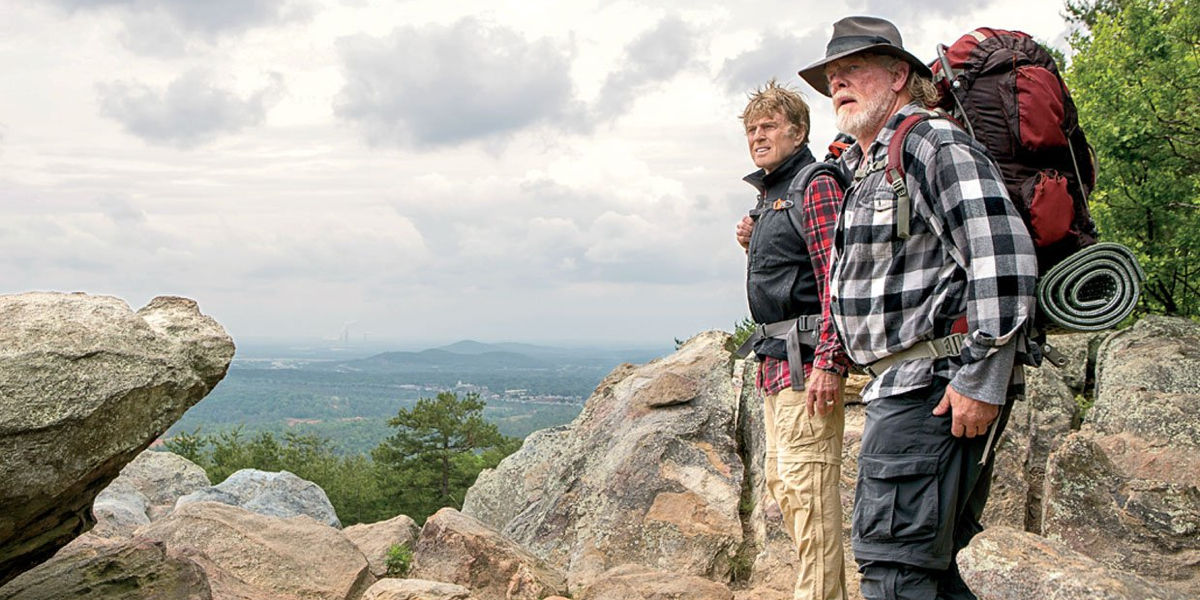
If the movie has anything going for it, it’s the scenery, beautifully lensed by DoP John Bailey. Parts of the trail are absolutely stunning, and the cinematography picks them out and, occasionally, makes them seem hyperreal, as with the McAfee Knob overlook, a jutting piece of rock that allows for a panoramic view of Virginia’s Catawba Valley. Against this splendid backdrop, Bryson and Katz’s mythologising of their younger days pales into insignificance, and the longer the hike goes on, the less involving it becomes, until the viewer is left with the same level of interest as someone having to sit through an extended slideshow of the same journey.

A Walk in the Woods - scene1

As the OAP’s who can survive a serious fall without so much as a scratch between them, Redford and Nolte make for a comfortable double act, but there’s little that allows them to spark against each other. Thompson makes more of an impression in her limited supporting role than either actor does across the whole movie, while Steenburgen, Schaal and Offerman all make temporary forays into the limelight before being quickly forgotten. Overseeing all this is Kwapis, a director best known for his work on US TV shows such as The Office and Malcolm in the Middle. In actuality he doesn’t so much direct the movie as guide it by the arm from scene to scene so that no harm comes to it.

Rating: 5/10 – with Bryson’s trademark acerbic wit toned down, and his love of knowledge for knowledge’s sake given few occasions to shine, A Walk in the Woods is a passion-free project that ambles along like its two aging stars, and like them, doesn’t take too many risks; with as little ambition employed as possible, it’s still a pleasant enough movie to watch, but it’s not one that will encourage anyone to take up the same challenge that Bryson did.

Share this:

  • Click to share on X (Opens in new window) X
  • Click to share on Facebook (Opens in new window) Facebook
  • More
  • Click to print (Opens in new window) Print
  • Click to email a link to a friend (Opens in new window) Email
Like Loading...

Captain America: The Winter Soldier (2014)

02 Wednesday Apr 2014

Posted by dullwood68 in Movies

≈ 1 Comment

Tags

Agent Hill, Anthony Mackie, Anthony Russo, Black Widow, Bucky Barnes, Captain America, Chris Evans, Hayley Atwell, Hydra, Joe Russo, Marvel, Natasha Romanoff, Nick Fury, Peggy Carter, Project Insight, Review, Robert Redford, S.H.I.E.L.D., Samuel L. Jackson, Scarlett Johansson, Steve Rogers, The Falcon, The Winter Soldier

Captain America The Winter Soldier

D: Anthony Russo, Joe Russo / 136m

Cast: Chris Evans, Scarlett Johansson, Samuel L. Jackson, Robert Redford, Anthony Mackie, Sebastian Stan, Frank Grillo, Cobie Smulders, Maximiliano Hernández, Emily VanCamp, Hayley Atwell, Toby Jones

Episode 3 of Phase 2 of Marvel’s Cinematic Universe sees ninety-five year old Steve Rogers (Evans) still trying to fit in to the modern day era.  After the events of Avengers Assemble (2012), his life has settled down a bit, though he still has doubts about his role in S.H.I.E.L.D.  When Nick Fury (Jackson) sends him on a mission with Natasha Romanoff aka Black Widow (Johansson) that proves to be cover for another, secret, mission altogether, Rogers confronts Fury over being used.  Fury takes Rogers’ point and as a show of faith, shows him the fruits of Project Insight, a plan to pre-empt future terrorist activity involving three gi-normous heli-carriers that, once launched, will sync up with satellites in order to locate and eradicate their targets.  Rogers is unimpressed and refuses to be a part of it all.  Meanwhile, Fury, having acquired a USB stick that contains details of Project Insight, finds himself unable to access it, despite its having apparently been encrypted by him.  He takes his concerns to senior S.H.I.E.L.D. officer Alexander Pierce (Redford), and asks for a delay in Project Insight’s launch.

Later, Fury is injured in an ambush carried out by agents we later learn are working for Hydra, and by a masked man with a metal arm; this proves to be the Winter Soldier of the title.  Fury manages to get to Rogers’ apartment and gives him the USB stick.  Before he can say any more, Fury is shot by the Winter Soldier.  Both Natasha and Pierce attempt to find out why Fury was in Rogers’ apartment but he rebuffs both of them.  When Natasha finds the USB stick he’s forced to accept her help, even though Fury told him to “trust no one”.  They trace the stick’s origins to a secret bunker at the army base where Rogers received his training.  There they encounter the consciousness of Hydra scientist Dr Zola (Jones) who has been infiltrating S.H.I.E.L.D.’s systems since his co-option after World War II.  A missile strike on the base that nearly kills them points to Pierce as the architect behind Hydra’s involvement in Project Insight and the attack on Fury.

With the aid of Sam Wilson (Mackie), a veteran with a surprise of his own to share, and Agent Hill (Smulders), Rogers and Natasha decide to stop the launch of Project Insight, but not before they’re targeted by the Winter Soldier.  During this encounter, his identity is revealed as Bucky Barnes, Rogers’ best friend from his army days and someone everybody believed had died during a mission.  From there it becomes a race against time to stop Pierce, the Winter Soldier, and the launch of the heli-carriers.

Captain America The Winter Soldier - scene

From the outset, Captain America: The Winter Soldier is a more confident, more impressive outing than Rogers’ first appearance.  Partly this is due to the first movie’s need to be an origin story, and partly because Rogers has always been Marvel’s answer to the “truth, justice and the American way” approach of DC’s Superman.  He’s the ultimate boy scout, not for him the convenient grey areas and moral sidestepping of today’s society.  Instead he sees things in black and white, and when challenged keeps his moral compass constant; it’s this unshakeable point of view that makes his character more interesting than many of his co-Avengers.  Evans has grown into the role over the course of three movies, and he’s never less than absolutely convincing.

Of course, S.H.I.E.L.D.’s ever-so-slightly imperialistic view of the world is glossed over in favour of some extended action sequences and a final thirty minutes that tests the various effects departments to destroy as much as possible in as many ways as possible (if there’s one thing the Avengers are good for, it’s putting insurance premiums up on a regular basis).  Rogers’ solution to the problem of Hydra and S.H.I.E.L.D. being joined at the hip (as it were) is extreme – and certainly poses a problem for the writers of the Agents of S.H.I.E.L.D. TV series – but it has a certain inevitability given the circumstances and the extent of Hydra’s infiltration.  Pierce’s motivation is less clear-cut and has something to do with creating a new world out of the current one, where there will be no subversive activity because anyone fitting his description of subversive will be targeted and killed.  (When the hell-carriers are launched and start picking out targets what we see on screen is laughable: in New York alone there appears to be a subversive living on nearly every block.)  How this idea benefits Hydra is never explained, and for all the issues surrounding the rights and wrongs of homeland security, the greater plot is poorly explored and exploited.

Also worrying are moments where the plot falters in other areas.  Rogers pays a visit to Peggy Carter (Atwell), now ill and in what looks like a nursing home.  It’s a short scene, and while both Evans and Atwell give it the resonance such a scene demands, it sits uncomfortably within the movie and isn’t referred to either before or after.  Part of Rogers’ solution to the problem of Hydra is to upload all of S.H.I.E.L.D.’s files and history onto the Internet, but why this is necessary is never explained, and only serves to give Natasha a chance to verbally stick two fingers up at a congressional committee.  And Dr Zola is only too quick to explain what’s going on and spill the beans about Hydra’s activities within S.H.I.E.L.D.

But there’s plenty to enjoy as well.  Those extended action sequences are superbly executed, although most of the hand-to-hand combat between Captain America and the Winter Soldier is edited to within an inch of both their lives, sacrificing clarity of movement for speed.  When Fury is ambushed it leads to a car chase that is as thrilling, if not more so, than those in Need for Speed, and the fight in the elevator – Rogers against (I counted ten) assailants is a stand-out.  Evans and the rest of the cast are on top form, and newbies Mackie and Redford fit in well as hero and villain respectively.  The Russo brothers handle the visuals with style, creating a lot of space for the characters to move around in, both to emphasise the scale of the movie and the threat within it.  And while some aspects of the script don’t always add up, for once the dialogue isn’t as hokey or contrived as it might have been (and the best line is delivered by the computer in Fury’s car).  The relationship between Rogers and Natasha is deepened, there’s a quick-and-you’ll-miss-it reference to someone who’s still waiting for their own movie, some knowing humour in amongst the gunplay and explosions, and a short pre-credits scene that introduces us to… well, that would be telling.

Rating: 8/10 – narrative troubles aside, Captain America: The Winter Soldier is a confident mix of character development – even Fury’s – and spectacular action; another hit from Marvel Studios and one that seems certain to be the real precursor to Avengers: Age of Ultron (2015), rather than Iron Man 3 (2013) or Thor: The Dark World (2013).

Share this:

  • Click to share on X (Opens in new window) X
  • Click to share on Facebook (Opens in new window) Facebook
  • More
  • Click to print (Opens in new window) Print
  • Click to email a link to a friend (Opens in new window) Email
Like Loading...

Mini-Review: All Is Lost (2013)

26 Wednesday Feb 2014

Posted by dullwood68 in Movies

≈ 3 Comments

Tags

J.C. Chandor, Lost at sea, Review, Robert Redford, Sailing, Storm

All Is Lost

D: J.C. Chandor / 106m

Cast: Robert Redford

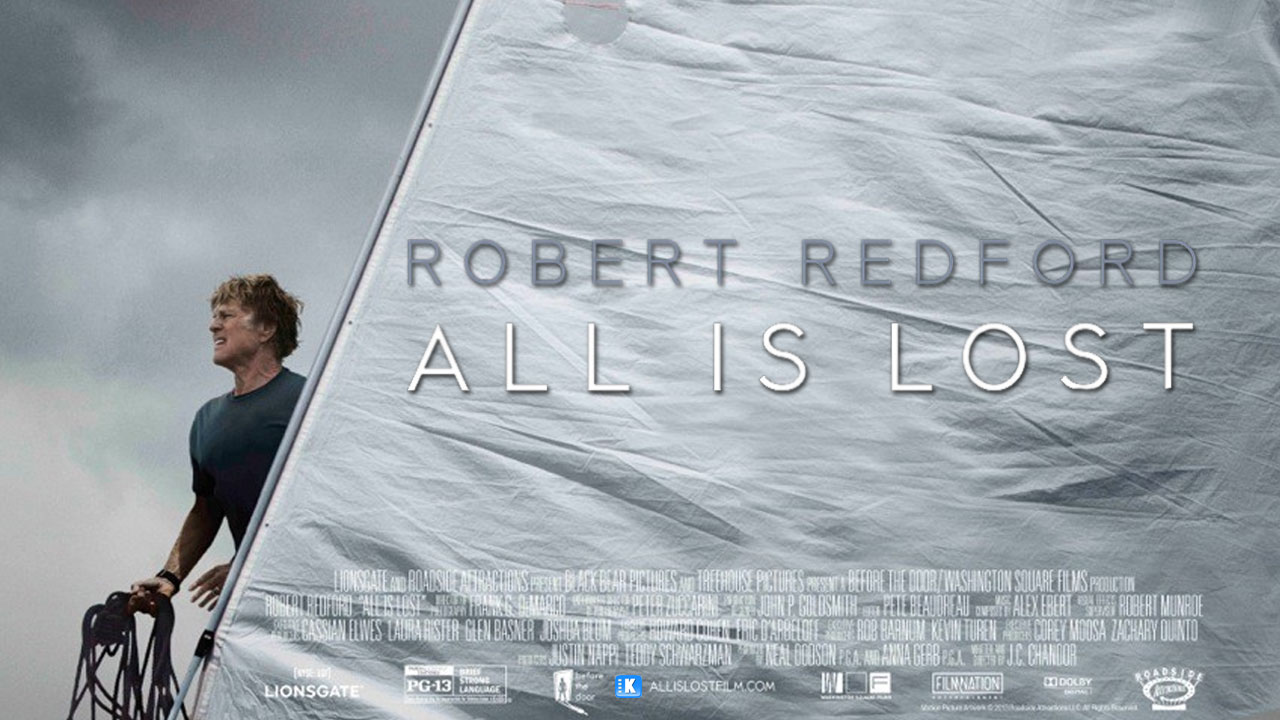
All Is Lost is that cinematic rarity: a one-man show that really is a one-man show. Redford is in nearly every shot in this compelling movie about the courage to survive when a sailing trip goes from bad to worse to terrifying. Waking to find that his sailing boat has collided with a shipping container, and it has punched a hole in the side, Redford – whose character is simply known in the credits as ‘Our Man’ – patches the hole but finds himself unable to call for help, his radio having suffered water damage in the collision. Alone, but determined to get help or get home, Our Man finds himself next dealing with a terrifying storm… and the dreadful aftermath. Over the course of eight days, and as his situation becomes increasingly desperate, Our Man’s resourcefulness is put to the test, until even he begins to despair of being rescued.

All Is Lost - scene

This is an acting tour-de-force by Redford, who shows that despite recent efforts such as The Company You Keep and Lions for Lambs, he is still one of the best actors around, with a screen presence and a command of material that most younger actors can only hope to achieve. Every emotion, every surge of hope and slough of despair is projected perfectly for the audience to bear witness. The character’s pride and resolve is clearly referenced, and the sheer physicality of the character is heightened by his battle with the sea and the elements (it’s worth bearing in mind that Redford is now 77 – this must have been a very demanding shoot for him). With confident, focused direction by Chandor (from his script), All Is Lost holds the attention throughout and makes for riveting viewing. Filmed partly in the same tank at Baja, Mexico that was built for Titanic, All Is Lost is a fantastic piece of filmmaking, beautifully shot, and perfectly edited; there’s not a wasted moment in the whole movie.

Rating: 9/10 – a gripping, enthralling piece of filmmaking that gives Redford his best role in years; an incredible achievement all round.

Share this:

  • Click to share on X (Opens in new window) X
  • Click to share on Facebook (Opens in new window) Facebook
  • More
  • Click to print (Opens in new window) Print
  • Click to email a link to a friend (Opens in new window) Email
Like Loading...

Blog Stats

  • 486,598 hits

Recent Posts

  • 10 Reasons to Remember Bibi Andersson (1935-2019)
  • Fantasia (1940)
  • Dances With Wolves (1990) – The Special Edition
  • Kiss of the Spider Woman (1985)
  • The Three Musketeers (1973)

Top Posts & Pages

  • Lost for Life (2013) - Another Look
    Lost for Life (2013) - Another Look
  • Lost for Life (2013)
    Lost for Life (2013)
  • About
    About
  • Mr. Topaze (1961)
    Mr. Topaze (1961)
  • Hunt for the Wilderpeople (2016)
    Hunt for the Wilderpeople (2016)
  • Shock and Awe (2017)
    Shock and Awe (2017)
  • Cardboard Boxer (2016)
    Cardboard Boxer (2016)
  • Billy Lynn's Long Halftime Walk (2016)
    Billy Lynn's Long Halftime Walk (2016)
  • Winter's Tale (2014)
    Winter's Tale (2014)
  • Irrational Man (2015)
    Irrational Man (2015)
Follow thedullwoodexperiment on WordPress.com

Blogs I Follow

  • Rubbish Talk
  • Film 4 Fan
  • Fast Film Reviews
  • The Film Blog
  • All Things Movies UK
  • Interpreting the Stars
  • Let's Go To The Movies
  • Movie Reviews 101
  • TMI News
  • Dan the Man's Movie Reviews
  • Film History
  • Jordan and Eddie (The Movie Guys)

Archives

  • April 2019 (13)
  • March 2019 (28)
  • February 2019 (28)
  • January 2019 (32)
  • December 2018 (28)
  • November 2018 (30)
  • October 2018 (29)
  • September 2018 (29)
  • August 2018 (29)
  • July 2018 (30)
  • June 2018 (28)
  • May 2018 (24)
  • April 2018 (21)
  • March 2018 (31)
  • February 2018 (25)
  • January 2018 (30)
  • December 2017 (30)
  • November 2017 (27)
  • October 2017 (27)
  • September 2017 (26)
  • August 2017 (32)
  • July 2017 (32)
  • June 2017 (30)
  • May 2017 (29)
  • April 2017 (29)
  • March 2017 (30)
  • February 2017 (27)
  • January 2017 (32)
  • December 2016 (30)
  • November 2016 (28)
  • October 2016 (30)
  • September 2016 (27)
  • August 2016 (30)
  • July 2016 (30)
  • June 2016 (31)
  • May 2016 (34)
  • April 2016 (30)
  • March 2016 (30)
  • February 2016 (28)
  • January 2016 (35)
  • December 2015 (34)
  • November 2015 (31)
  • October 2015 (31)
  • September 2015 (34)
  • August 2015 (31)
  • July 2015 (33)
  • June 2015 (12)
  • May 2015 (31)
  • April 2015 (32)
  • March 2015 (30)
  • February 2015 (37)
  • January 2015 (39)
  • December 2014 (34)
  • November 2014 (34)
  • October 2014 (36)
  • September 2014 (25)
  • August 2014 (29)
  • July 2014 (29)
  • June 2014 (28)
  • May 2014 (23)
  • April 2014 (21)
  • March 2014 (42)
  • February 2014 (38)
  • January 2014 (29)
  • December 2013 (28)
  • November 2013 (34)
  • October 2013 (4)

Blog at WordPress.com.

Rubbish Talk

Film 4 Fan

A Movie Blog

Fast Film Reviews

The Film Blog

The official blog of everything in film

All Things Movies UK

Movie Reviews and Original Articles

Interpreting the Stars

Dave Examines Movies

Let's Go To The Movies

Film and Theatre Lover!

Movie Reviews 101

Daily Movie Reviews

TMI News

Latest weather, crime and breaking news

Dan the Man's Movie Reviews

All my aimless thoughts, ideas, and ramblings, all packed into one site!

Film History

Telling the story of film

Jordan and Eddie (The Movie Guys)

Movie Reviews & Ramblings from an Australian Based Film Fan

Privacy & Cookies: This site uses cookies. By continuing to use this website, you agree to their use.
To find out more, including how to control cookies, see here: Cookie Policy
  • Subscribe Subscribed
    • thedullwoodexperiment
    • Join 481 other subscribers
    • Already have a WordPress.com account? Log in now.
    • thedullwoodexperiment
    • Subscribe Subscribed
    • Sign up
    • Log in
    • Report this content
    • View site in Reader
    • Manage subscriptions
    • Collapse this bar
 

Loading Comments...
 

    %d