• 10 Reasons to Remember…
  • A Brief Word About…
  • About
  • For One Week Only
  • Happy Birthday
  • Monthly Roundup
  • Old-Time Crime
  • Other Posts
  • Poster of the Week
  • Question of the Week
  • Reviews
  • Trailers

thedullwoodexperiment

~ Viewing movies in a different light

thedullwoodexperiment

Tag Archives: Romance

Hartenstraat (2014)

25 Monday May 2015

Posted by dullwood68 in Movies

≈ Leave a comment

Tags

Amsterdam, Bracha van Doesburgh, Comedy, Drama, Father/daughter relationship, Holland, Internet dating, Marwan Kenzari, Relationship Planet, Review, Romance, Sanne Vogel, Swans

Hartenstraat

aka Heart Street

D: Sanne Vogel / 86m

Cast: Marwan Kenzari, Bracha van Doesburgh, Nadia Koetje, Benja Bruijning, Tygo Gernandt, Egbert-Jan Weeber, Sieger Sloot, Susan Visser, Kitty Courbois, Frits Lambrechts, Georgina Verbaan, Gigi Ravelli, Terence Schreurs, Jan Koolijman, Stacey Rookhuizen

Daan (Kenzari) owns a delicatessen in Amsterdam’s Hartenstraat, where he lives with his eight year old daughter, Saar (Koetje). He and Saar’s mother, Inge (Rookhuizen), are divorced, and Saar wishes that Daan could find someone else to marry and be happy again. But Daan is too busy looking after Saar and his business to have time for dating – or so he tells himself. Meanwhile, two doors along, a new fashion shop is opened by Katje (van Doesburgh), a no-nonsense designer who doesn’t suffer fools gladly. When she and Daan first meet it’s not a happy encounter for either of them, and a mutual dislike is born.

To get Daan back into the dating arena, his friend Bas (Gernandt) sets him up on an Internet dating website called Relationship Planet. Soon, Daan is corresponding with several interested women and setting up dates so he can meet them. His luck, however, appears to desert him with every date, as each woman he meets proves undesirable for one reason or another, until he meets Mara (Verbaan). But Mara has her own issues: a lack of anger management, and an overly aggressive approach to sex. When Daan doesn’t want to see her again she makes a scene in the street that is witnessed by Katje.

On the evening of the opening of Katje’s shop she’s surprised to see Daan providing the catering. They spar for the entire evening, but when she learns that he’s using Relationship Planet it sparks her interest. She pretends to be someone else and starts an online relationship with him. At first it’s meant as a joke, a way of amusing herself at Daan’s (unknowing) expense. But as they get to know each other, both begin to fall for the other. And while they continue to have an uneasy relationship offline, Saar has a part in easing the animosity they share when Katje designs a swan dress for her to wear at a national schools talk competition.

Eventually, Katje’s online alter ego plucks up the courage to agree to meet Daan, but when he learns she is the woman he has fallen in love with, he is angry at her duplicity and wants nothing further to do with her. Even when she later apologises to him, he refuses to forgive her. And then Saar goes missing on the morning of the competition…

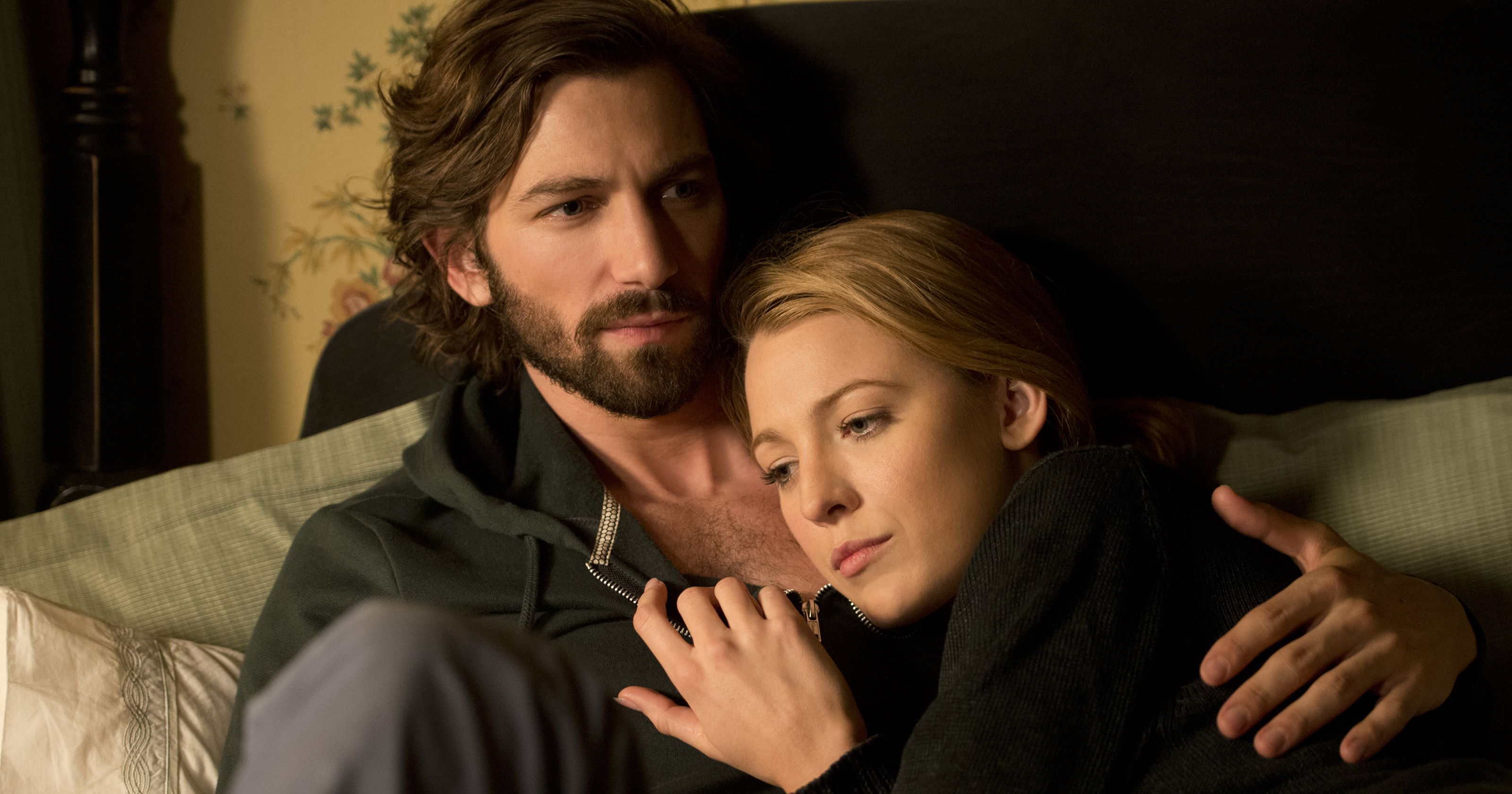
Hartenstraat - scene

Hartenstraat is a movie that’s all about relationships: broken ones – Daan and Inge; prospective ones – Daan and Mara; unfulfilling ones – Katje and self-absorbed boyfriend Thomas (Bruijning); established ones – gay coffee shop owners Jacob (Sloot) and Rein (Weeber); burgeoning ones – Katje’s mother, Bep (Courbois) and Daan’s elderly friend Aart (Lambrechts); ambivalent ones – Daan and Katje; and anonymous ones – Daan and Katje’s online alter ego. Even Saar has her problems, telling her father she can’t choose between two boys at school. With all these varied relationships taking up so much of the movie’s running time, you could be forgiven that Hartenstraat would be a somewhat overly dramatic feature with maybe some acerbic things to say about the nature of love. But you’d be wrong.

Instead, the movie is an enjoyable, light-hearted look at the trials and tribulations, expectations and disappointments, hopes and fears, associated with contemporary relationships. It makes its points with a great deal of charm and steers away from the kind of plot contrivances that mar many other romantic comedies (even if the outcome is completely predictable from the start). It doesn’t have an axe to grind, it doesn’t outstay its welcome, and it features a clutch of winning performances that are ably directed by Vogel from Judith Goudsmit’s quirky screenplay.

But with all the attendant relationships given sufficient emphasis and focus, it’s still the connection between Daan and Katje that provides the most satisfaction. As played by Kenzari and van Doesburgh, the ways in which the pair spark off each other are delivered with such a sense of mutual fun that it’s hard not to be won over by them both (it helps that there’s a definite chemistry between them). Kenzari is the kind of actor whose soulful expression can speak volumes, while van Doesburgh has a subtle screen presence that the camera picks up on in every scene she’s in. As Daan and Katje circle round their feelings for each other, both actors take the opportunity to make the relationship entirely believable.

They’re supported by a talented cast of character actors led by Gernandt as the borderline obnoxious ladies’ man Bas (aka the Choker), and Verbaan as the hilariously psychotic Mara (who tells Daan at one point he needs “destroying”). Koetje is appropriately winsome as Saar; Weeber and Sloot flesh out Jacob and Rein to the extent that they’re not the stereotypical gay couple they first seem to be; and as Katje’s less than intellectual assistants, Schreurs and Ravelli make for an appealingly funny double act.

Indeed, the movie’s sense of humour is one of its plusses, a lot of it arising from the characters themselves and their personalities, while the dialogue is dotted with moments of genuine wit and some glorious put-downs. Vogel – who also appears as Daan’s first date, Annabel – keeps things from getting too dramatic (which is to the movie’s advantage) and uses this to seduce the viewer into becoming invested in the various relationships and their outcomes. She’s aided by Ezra Reverda’s sterling camerawork, and a clever opening title sequence by Derk Elshof, Benno Nieuwstraten and Sietse van den Broek that features cast and crew names as part of the street’s window displays.

Rating: 8/10 – although there are times when Hartenstraat seems impossibly lightweight and seems to invite ridicule for its approach to its own storyline, nevertheless it’s a carefree, hugely enjoyable piece of “fluff”; full to the brim with moments that bring a smile to the viewer’s face, it’s the very epitome of a pleasant distraction.

Share this:

  • Click to share on X (Opens in new window) X
  • Click to share on Facebook (Opens in new window) Facebook
  • More
  • Click to print (Opens in new window) Print
  • Click to email a link to a friend (Opens in new window) Email
Like Loading...

The Age of Adaline (2015)

24 Sunday May 2015

Posted by dullwood68 in Movies

≈ Leave a comment

Tags

29 years old, Adaline Bowman, Aging, Blake Lively, Drama, Fantasy, Harrison Ford, History, Lee Toland Krieger, Lightning, Michiel Huisman, Review, Romance, Romantic drama, Snowstorm

Age of Adaline, The

D: Lee Toland Krieger / 107m

Cast: Blake Lively, Michiel Huisman, Harrison Ford, Ellen Burstyn, Kathy Baker, Amanda Crew, Linda Boyd, Hugh Ross, Anthony Ingruber

On New Year’s Eve 2014, Jennifer Larson (Lively) purchases a set of fake I.D.’s before heading off to work at a library’s archive office. There she’s given a collection of old newsreels that need to be digitised. She begins viewing them, and as the footage unfolds, Jennifer remembers her life, one that began on New Year’s Day 1908 when she was born Adaline Bowman. She remembers getting married and having a child, and then her husband dying. And she remembers the fateful trip that saw her spin off the road during a freak snowstorm and plunge into a freezing river – where she died – and the lightning strike that struck her and revived her, causing her to remain twenty-nine from that day onward.

That night she attends a New Year’s Eve party, where she attracts the attention of a handsome man called Ellis (Huisman), who shares an elevator ride with her; she rebuffs his advances. But she is surprised to find him turn off at her office the next day in the guise of a generous benefactor. He asks her out on a date, which she refuses. In retaliation Ellis tells her he’ll withdraw his donation if she doesn’t. This time she agrees and he manages to convince her to see him again; when she does she stays over at his apartment. Afterwards, and despite Ellis’s best intentions, she avoids his calls and is cold to him when they meet in the street.

Eventually, Jennifer relents and agrees to see him again. When they do he asks her to come with him for the weekend to help celebrate his parents’ fortieth wedding anniversary. When they arrive, Ellis’s father, William (Ford) is shocked by her resemblance to a woman he met in England in the Sixties, a woman he knew as Adaline Bowman. Jennifer pretends that Adaline was her mother. William is unable to get over how much she looks like the woman he knew, but everyone else accepts the coincidence. The next day, Jennifer and William are talking when he notices a scar on her left hand that matches one Adaline had, and which was caused while they were hiking together. He confronts her, but even though he does his best to reassure her, she leaves as quickly as she can. A lifetime of hiding her real identity has left Adaline constantly fearful of exposure, and so she aims to disappear yet again, using the fake I.D.’s she’s recently purchased. But as she heads back to her home, and with Ellis chasing after her, another freak bout of snow starts to fall…

Age of Adaline, The - scene

At the New Year’s Eve party, a young man tries out an old pick-up line on Adaline. When he realises she’s heard it before, she confirms it by saying “Just once, from a Bing Crosby … type.” It’s one of those offhand, slightly clever moments you’d expect from a movie that features a character who’s been around for over a century, but thankfully it’s the only example the movie trots out, settling instead for Adaline being incredibly knowledgeable about world events (and picking up the odd extra language). It’s a restrained approach to material that could have focused more on past events than the modern day romance that rightly takes centre stage.

With Adaline’s past consigned to occasional, yet relevant, flashbacks, and with a narrator (Ross) to act as our guide at equally relevant moments, The Age of Adaline is a romantic drama that grounds its fantasy elements in the everyday and the banal: Adaline keeps a succession of King Charles Spaniels; she works in a library; she worries about her daughter, Flemming (Burstyn), now an old woman considering moving into a retirement community. It’s the attempts Adaline makes to live a normal, ordinary life that makes the movie so easy to believe in, and with Lively’s wonderful performance to back it all up, her predicament so credible.

Which makes the central romance all the more disappointing, as Huisman’s so-good-he-can’t-be-real Ellis is such a perfect partner that aside from Adaline’s initial reservations about seeing him, there’s no drama involved at all. It takes Adaline’s past coming back to haunt her to provide any real drama and that doesn’t arrive until over an hour has passed. Until then it’s all build up, and a fairly pedestrian, nearly superficial build up at that. Thank goodness for Lively, who elevates the material by emphasising the tragedy of Adaline’s life, often just by looking pensive and lonely. There’s a depth of feeling in Lively’s eyes during these moments that helps immensely, and leaves Huisman’s easy smile and carefree physicality looking as if the actor is barely trying. It’s Lively’s movie from start to finish, and the actress takes every opportunity to stamp her authority on the role.

She’s matched by Ford who turns in his best performance in years, the moments when William is remembering Adaline and the time they spent together, showing the character’s vulnerability and emotional honesty in a way that is entirely realistic. The scene where William confronts Adaline is a small master class in screen acting. In support, Burstyn does well as Adaline’s daughter but is required to be too wise on too many occasions for comfort, and Baker is left with the unenviable task of making William’s wife (also Kathy) more than an add-on.

But while the supporting characters pale against the attention given to Adaline, the script by J. Mills Goodloe and Salvador Paskowitz, is never less than absorbing, and keeps the viewer interested, even during those repetitive early scenes where Adaline keeps rejecting Ellis over and over. It scores highly when examining themes of love and loss and sacrifice, and maintains an impassioned tone throughout. Krieger directs with a confidence and a firm control of the material that benefits the more fantastical elements, and evokes a strong sense of time and place in the flashback scenes. He’s aided by often evocative cinematography by David Lanzenberg, laudable costume designs for Adaline through the decades by Angus Strathie, and fluid, assured editing by Melissa Kent. All go together to make the movie a rich, rewarding experience, and one of the finest romantic dramas of recent years.

Rating: 8/10 – an intriguing premise given a stronger outing than expected, The Age of Adaline is a worthy throwback to the “women’s pictures” of the Thirties and Forties but with an appropriately modern sheen; with a superb performance from Lively, this is a movie that, thankfully, has more to it than meets the eye.

Share this:

  • Click to share on X (Opens in new window) X
  • Click to share on Facebook (Opens in new window) Facebook
  • More
  • Click to print (Opens in new window) Print
  • Click to email a link to a friend (Opens in new window) Email
Like Loading...

A Song of Lisbon (1933)

28 Tuesday Apr 2015

Posted by dullwood68 in Movies

≈ Leave a comment

Tags

Beatriz Costa, Comedy, Fado, José Cottinelli Telmo, Lisbon, Manoel de Oliveira, Medical student, Miss Seamstress, Musical, Portugal, Review, Romance, Vasco Santana

A Song for Lisbon

Original title: A Canção de Lisboa

D: José Cottinelli Telmo / 91m

Cast: Vasco Santana, Beatriz Costa, António Silva, Teresa Gomes, Sofía Santos, Alfredo Silva, Ana María, Manoel de Oliveira, Eduardo Fernandes

Vasco Leitão (Santana) is a medical student with two adoring aunts (Gomes, Santos) who have funded his studies, but who are unaware that their nephew has squandered their money on wine, women and song. To make matters worse, he’s told them he’s passed his exams, has an impressive office, and is doing really well. So when they write to him and tell him they plan to visit him, and see how successful he’s become, Vasco doesn’t know what to do.

He confides in his girlfriend, Alice (Costa), with whom he has a relationship fraught with animosity (she can’t stand his flirting with other women, he can’t stand her jealousy). When he tells her of the generous inheritance he stands to gain from his aunts, she in turn tells her father, Caetano (Silva) as a means to persuading him to accept Vasco as a future son-in-law. Caetano sees the light and welcomes Vasco into his home, but Vasco’s landlord (Alfredo Silva) muscles in on Caetano’s plans to appropriate the aunts’ money.

This leads to Vasco being made homeless on the same day as his aunts’ arrival. With the aid of his friends from medical school he manages to distract them both, while Caetano promises to impress them with tales of how Vasco has saved his life. In the process he and Alice have a falling out that ends their relationship. Inevitably his aunts discover the truth and disinherit him (even as they become enamoured of Caetano and Vasco’s now ex-landlord). With no money, no home, no job and no girlfriend, Vasco is at a loss as to what to do next.

A chance encounter with his friend Carlos (de Oliveira) leads to Vasco being asked to sing Fado at a restaurant with a stage area. Unfortunately, by the time he takes to the stage he’s had a little too much to drink and his “performance” sees the audience throw food at him and call for him to leave the stage. Chased off, Vasco ponders on the way in which things have turned out, and as a result he begins to turn his life around, beginning with singing Fado more professionally.

A Song for Lisbon - scene

Of interest for being the first Portuguese sound movie to have been produced entirely in Portugal, A Song for Lisbon is also only the second sound movie made in the Portuguese language, after A Severa (1931). Made during a period now regarded by many as Portugal’s Golden Era, the movie is a gleeful mix of comedy, romance and music, a sparkling piece of cinematic confectionery that plays to its strengths: a cast at the top of their game, a storyline that keeps it simple and straightforward, and direction that combines the two effortlessly.

The main draw here, of course, is Santana, already an accomplished stage performer and reminiscent of Roscoe ‘Fatty’ Arbuckle in his prime. This was his first starring role in a full-length movie, and there’s not a trace of nerves or hesitancy in his performance whatsoever. With his cheerful grin and impish sense of humour, allied to various bits of stage work that he manages to include in amongst the comedic goings-on, Santana is never less than fun to watch. His drunken Fado audition is a great example, as he uses a guitar like a tennis racket to fend off the fruit that’s hurtling in his direction – it’s a vaudeville moment, pure and simple, and all the more effective for being so. He’s a star turn, so confident that you wouldn’t be surprised if he turned and winked at the camera every now and then.

Under Telmo’s assured direction, Santana and the rest of the cast revel in the carefree mise-en-scene, with Costa’s angry yet besotted girlfriend proving a great foil for Santana’s mischievousness (their food fight is a highlight). As the devious Caetano, Silva manages to avoid twirling his moustache in the manner of a silent movie villain, but otherwise it’s a similar performance, perfectly executed and with just the right amount of self-awareness amidst all the pomposity. The sequence where he oversees the crowning of Miss Seamstress (unsurprisingly it’s Alice), is a masterclass in suppressed humility and blatant favouritism. Further down the list of course is de Oliveira, making his first credited appearance as an actor (he wouldn’t do so again until 1963). He doesn’t have a big part, nor does he stand out particularly, but in some strange way it’s fun to see him in the prime of life, and not as the centenarian director he became famous for.

The movie also works in various Lisbon locations, but its opening credits sequence aside, manages to avoid becoming a kind of travelogue for the city, and instead uses it as a beautiful backdrop, and thereby enhancing the story. The musical numbers include a melancholy song of love sung by Costa that is as touching now as it was then, and a sweetly ridiculous number called The Thimble and the Needle (also sung by Costa). It all adds up to a glorious piece of entertainment that gallops along while barely pausing for breath, and which sets out to entertain its audience thoroughly, and thoroughly succeeds.

Rating: 9/10 – a perfect example of how to transfer an energetic, entertaining script to the screen and make it sing, A Song of Lisbon is both delightful and delicious; a triumph for all concerned and in comparison with some of the musicals being produced by Hollywood at the time, absolutely streets ahead.

NOTE: There’s no trailer available for A Song of Lisbon, but the following clip gives a good example of the humour involved:

Share this:

  • Click to share on X (Opens in new window) X
  • Click to share on Facebook (Opens in new window) Facebook
  • More
  • Click to print (Opens in new window) Print
  • Click to email a link to a friend (Opens in new window) Email
Like Loading...

A Small September Affair (2014)

27 Monday Apr 2015

Posted by dullwood68 in Movies

≈ 1 Comment

Tags

Amnesia, Bozcaada, Car crash, Ceren Moray, Drama, Engin Akyürek, Farah Zeynep Abdullah, Kerem Deren, Love affair, Review, Romance, Turkey

Small September Affair, A

Original title: Bi Küçük Eylül Meselesi

D: Kerem Deren / 102m

Cast: Farah Zeynep Abdullah, Engin Akyürek, Ceren Moray, Onur Tuna, Serra Keskin

TV production associate Eylül (Abdullah) has a dream career, a handsome actor boyfriend, Atil (Tuna), and is living life to the full. But when a car crash causes her to lose her memory of the month immediately before the accident, it also causes her to wonder just why she can’t remember that time, and why she is getting sudden flashes of being on an island. Pressuring her best friend Berrak (Moray) into telling her where she was, Eylül learns that she and Berrak and Atil took a break to the island of Bozcaada a month before the accident.

Eylül insists on returning there, and reluctantly, Berrak goes with her. With her friend clearly hiding something, Eylül separates from her and encounters a young man, Tekin (Akyürek), who recognises her. But she doesn’t recognise him, however, he manages to persuade her to meet him at a nearby restaurant. There, he begins to tell her of the way in which they met, and their first “date”. But when Berrak calls her and warns her to get away, Eylül becomes frightened and runs away. Tekin follows her; when he catches up to her he shares another memory of their time together. When Berrak finds her, Eylül is even more confused by what her emerging memories are telling her, and Berrak’s insistence that they should leave and that everything is all right.

She continues to see Tekin, and he tells her how she decided to stay on the island instead of returning home with Berrak and Atil. He tells her how they visited various places on the island, and how she taught him to swim. Coming to understand that she and Tekin were falling in love, Eylül is still confused as to why Berrak is so worried by her being on the island, even after Tekin tells her about her visit to his home and she came to learn that he is the man she’s always sworn she’ll marry, an artist who provides caricatures for the newspapers. But Eylül remembers more: she remembers the morning after she and Tekin had first made love, and seeing herself in the mirror and not being able to recognise herself from the ambitious, fun-filled young woman she’d always aspired to be.

Atil arrives on the island and he and Berrak make her confront this memory, and the consequence of it, a consequence which she remembers, and which she discovers, brings her back full circle to the car crash and her loss of memory.

Small September Affair, A - scene

The first feature from the co-writer of the highly regarded Turkish TV drama Ezel (2009-2011), A Small September Affair is a small-scale winner that creates enough mystery out of Eylül’s missing month to keep the viewer intrigued and second guessing things throughout. It plays with notions of memory and imagination and longing with a lightness of touch that is both engaging and confident, and it deliberately avoids straying too far into more dramatic territory, despite an undercurrent that threatens to pull it that way on occasion.

The tone of the movie is all-important, as Deren constantly strives to undermine the audience’s expectations of what will happen next. By making Eylül’s memories potentially unreliable (each time she remembers something, Berrak comes along to question it), the movie makes each new revelation about her relationship with Tekin that much more important to her. This allows Eylül’s journey to balance precariously on the knife edge of fantasy, as each new “truth” shows her behaving in ways that don’t match up with someone who views themselves as “too joyful to fall in love”. As a result, the final revelation carries an emotional weight that acts like a hammer blow, and turns the whole need for Eylül to travel to Bozcaada completely on its head (as well as explaining Berrak’s behaviour).

The central romance between Eylül and Tekin is handled with a great deal of whimsy but it’s also well sustained by Deren and his two leads. Abdullah, with her blonde hair and depthless eyes, shines, both as the fun-seeking Eylül and her disconcerted, amnesiac future self. She’s an attractive screen presence, sprightly and high-spirited, allowing the audience to empathise with Eylül’s predicament and urge her onwards in her search for the “truth”. As her paramour Tekin, Akyürek employs a winning, puppy dog look that screams younger Ashton Kutcher lookalike, but it proves a strangely apt fit for a character who admits to being scared of everything, and who is joyful in ways that Eylül can only dream of. Together they play out a romantic game of charades that allows both actors to give completely endearing performances.

As might be expected, though, there are a couple of flaws in Deren’s script. Berrak’s behaviour, while explained at the end, is still too aggressive to be entirely acceptable in someone who is supposed to be Eylül’s best friend; and it’s hard to work out why Eylül herself is so suddenly convinced of her need to leave Tekin and Bozcaada behind, given that she’s acclimated to the island lifestyle so quickly and with such fervour (it’s that predictable moment in a romantic drama where an obstacle to everlasting love rears its ugly head and spoils things).

The movie benefits tremendously from its sun-drenched Bozcaada locations, lovingly lensed by DoP Gökhan Tiryaki, and makes a virtue of the relaxed, easy-going lifestyle its inhabitants enjoy. There’s also a fitting score by Toygar Isikli that matches the casual rhythms of island life and the touching romance between Eylül and Tekin, as well as the apt inclusion of Cyndi Lauper’s Girls Just Want to Have Fun in a party scene.

Rating: 8/10 – an emotionally sincere romantic drama that has its own fair share of deft, comedic moments, A Small September Affair lifts the spirits with efficiency and ease; with its central mystery adding depth to an otherwise standard love affair, the movie works on more than one level – and successfully throughout.

NOTE: The following trailer doesn’t have any English subtitles, but it’s still worth a look.

Share this:

  • Click to share on X (Opens in new window) X
  • Click to share on Facebook (Opens in new window) Facebook
  • More
  • Click to print (Opens in new window) Print
  • Click to email a link to a friend (Opens in new window) Email
Like Loading...

A Girl Walks Home Alone at Night (2014)

23 Thursday Apr 2015

Posted by dullwood68 in Movies

≈ 2 Comments

Tags

Ana Lily Amirpour, Arash Marandi, Bad City, Drama, Drug addict, Drug dealer, Father/son relationship, Horror, Iran, Marshall Manesh, Review, Romance, Sheila Vand, Vampire

A Girl Walks Home Alone at Night

D: Ana Lily Amirpour / 101m

Cast: Sheila Vand, Arash Marandi, Marshall Manesh, Mozhan Marnò, Dominic Rains, Rome Shadanloo, Milad Eghbali

In the fictional Iranian town of Bad City, Arash (Marandi) lives with his cat and junkie father Hossein (Manesh). His most treasured possession is his car, but when his father’s dealer, Saeed (Rains) claims payment for some of the money owed him, Arash is forced to hand over the keys to his car. Saeed shows off the car to a local prostitute, Atti (Marnò), but is spooked by a cloaked figure he sees in the rear view mirror. Later that evening he meets a girl (Vand) on the street and takes her back to his apartment. When he makes his move, what happens next comes as quite a shock: she sprouts fangs and attacks him, biting him in the neck and killing him.

Outside, Arash has come to get his car back. The girl passes him as she leaves, and for a moment, there’s a connection. Arash goes up to Saeed’s apartment and finds his body. He takes Saeed’s stash of drugs and his money, and leaves. The next night, the girl menaces Hossein and a small boy (Eghbali) on the street but spares them both. Later that same night, Arash dresses up as Dracula to attend a party. There he runs into Shaydah, a young woman whose family he works for as a gardener. Wanting to make an impression he lets her have some drugs for free; in return she persuades to take a pill himself.

When it comes to making it back home, Arash finds it more difficult than he expected. While standing staring at a lamp-post, he’s spotted by the girl. They begin a conversation. When Arash takes her hand and realises how cold it is, he gives her a hug in a clumsy attempt at warming her up. Surprised by this unexpected show of kindness and sympathy, the girl takes Arash back to her apartment. They discover a shared love of music, and bond further. When Hossein questions Arash about his being out all night, he’s less than impressed when Arash can’t even tell his father the girl’s name.

The girl spends some time with Atti, then at Arash’s request, meets him at the nearby power plant. She tries to warn him off, telling him she’s done some very bad things, but Arash is dismissive of her claims. She walks off, leaving Arash confused and frustrated. When Hossein’s withdrawal symptoms cause an argument the next day, Arash snaps and throws him – and the cat – out and gives him some of Saeed’s drugs and money to get by with. Hossein visits Atti and makes her take heroin. The girl arrives and in a fit of rage, attacks Hossein, the consequences of which will lead Arash to make the toughest decision of his life.

A Girl Walks Home Alone at Night - scene

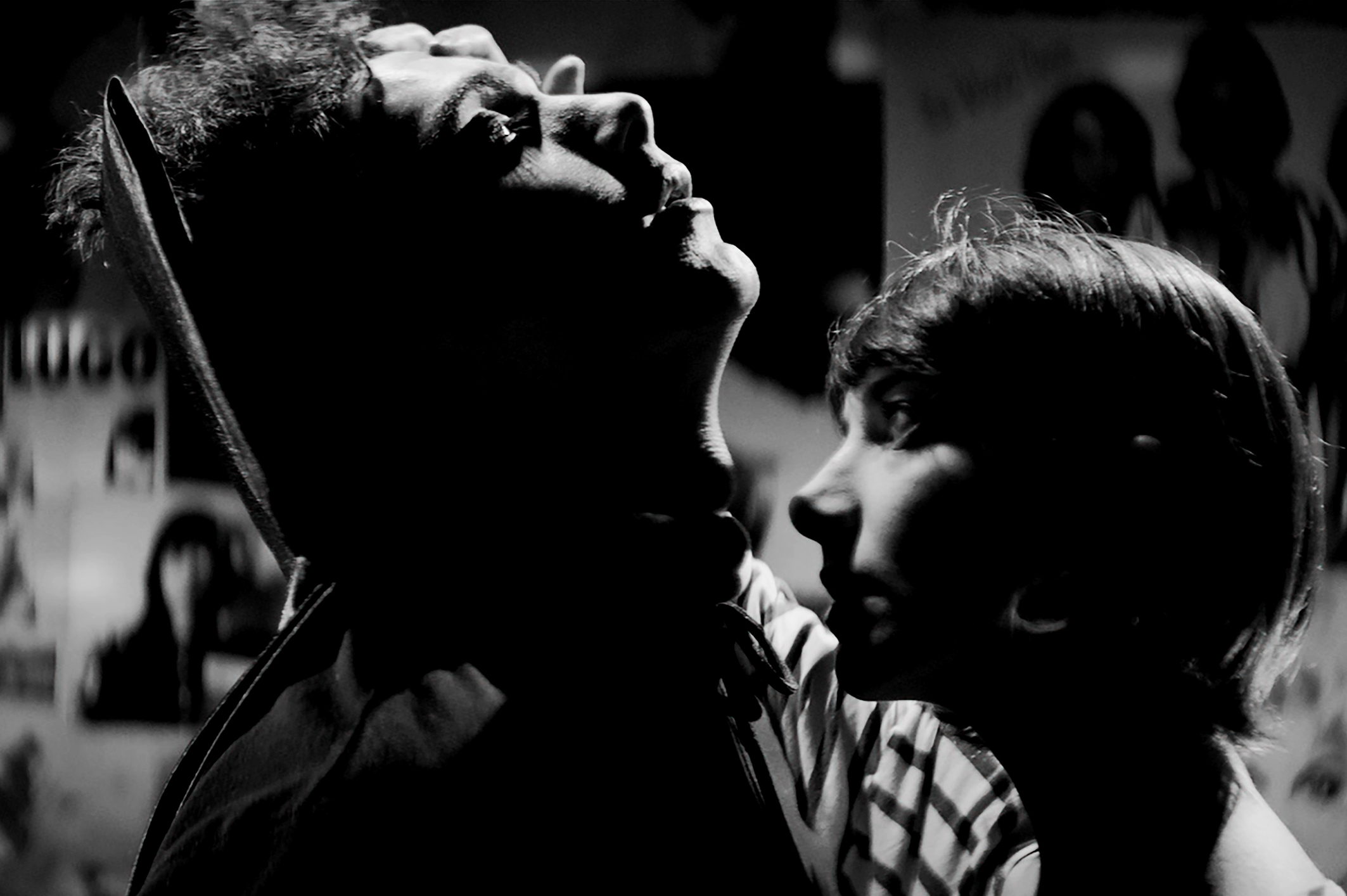
Shot in glorious black and white by Lyle Vincent, and with the town of Taft, California standing in (very effectively) for Iran, A Girl Walks Home Alone at Night is a small, almost perfectly formed horror movie that avoids genre clichés and provides its story with a rich visual backdrop. In making what could be described as the first Iranian vampire western (with Mexicali tinges), writer/director Amirpour has come up with a spellbinding tale of reluctant desire that resonates far strongly than it perhaps has a right to.

Bad City is the archetypal place where bad things happen to good people, but even worse things happen to bad people. The worst thing in Bad City is the girl, a pale music-loving, wide-eyed monster who preys on the people of Bad City with seeming impunity – with all the bodies that have been dumped in a ravine on the outskirts of town it seems she’s been pretty busy, and for a long while. Used to being alone, and reliant on music for access to long-buried emotions and feelings, the girl feeds when necessary, but has no compunction about doing it. When Arash’s attentions take her by surprise, the girl regains something she hasn’t had for such a long time: hope. Distrusting it at first she tries to sabotage her relationship with Arash before it’s properly begun. But his persistence renews and encourages that hope, and before long she too has to make a decision that will be the toughest she’s ever had to make.

Vand – despite having precious little dialogue to work with – gives a tremendous performance, her sallow features and piercing stare perfectly expressing her curiosity about, and yearning for, a normal life. She makes the girl’s need for Arash so completely understandable – even if there are some obvious obstacles that will prove difficult, if not impossible, to overcome. But while the girl’s wistful longing is touching to witness, Amirpour and Vand ensure that the character’s darker habits aren’t glossed over: the scene where she threatens the little boy with taking his eyes out of his skull is chilling for its raw viciousness.

Marandi plays Arash as a brooding though needy soul, his good looks and cool car no solution for the emptiness he feels eating away inside him. With his good looks and easy-going charm, Arash should have no problem dating women, but there’s something off about him, and they realise this. Marandi expresses Arash’s confusion and inner turmoil over this with quiet persuasion, and makes Arash as desperate for some form of human connection as the girl is. The scene they share at the power plant is one of the most affecting, most awkwardly romantic scenes of recent memory.

Amirpour – making her feature debut – lifts motifs and inspiration from a variety of disparate sources but melds them into one confidently assembled whole. The tone of the movie stumbles on occasion – a scene that sees Atti dancing with a balloon feels like it belongs in another movie entirely – but for each misstep, Amirpour redeems herself with a moment of striking imagery, such as the sight of the girl, her chador billowing out behind her like bat wings, riding a skateboard toward the camera. She also shows a confident use of form and content, framing her characters against often overwhelming and impersonal backgrounds, emphasising their emotional discomfort and the difficulty of breaking free of the chains that bind them. With an equally adept use of light against shadow, and a creative sense of when to glamourise the black and white images, Amirpour displays a skill that easily bodes well for any future endeavours.

Rating: 8/10 – with lush visuals and one of the best scores and soundtrack of recent years, A Girl Walks Home Alone at Night is a refreshingly original take on the vampire story; with a captivating performance from Vand and self-assured direction from Amirpour, it’s a movie that lingers in the memory long after its final image has faded from the screen.

Share this:

  • Click to share on X (Opens in new window) X
  • Click to share on Facebook (Opens in new window) Facebook
  • More
  • Click to print (Opens in new window) Print
  • Click to email a link to a friend (Opens in new window) Email
Like Loading...

Riders of Pylos (2011)

19 Sunday Apr 2015

Posted by dullwood68 in Movies

≈ Leave a comment

Tags

Actor, Comedy, Democracy, Drama, Greece, Horse sanctuary, Ioulia Kalogridi, Messinia, Nikos Kalogeropoulos, Polypylon, Review, Romance, Telemachus

Riders of Pylos

D: Nikos Kalogeropoulos / 92m

Cast: Nikos Kalogeropoulos, Ioulia Kalogridi, Ilias Logothetis, Giorgos Kimoulis, Antonis Kafetzopoulos, Antonis Theodorakopoulos, Takis Spiridakis, Vanna Barba, Dimitris Kaberidis, Vasilis Tsimbidis, Maria Kalagbor

Aging and once distinguished actor Telemachus (Kalogeropoulos) owes so much money to his creditors that he has to flee the theatre he’s playing at early one morning, taking as many of his props and costumes as he can in the back of a truck. He’s also had a recent health scare, brought on by too much smoking and drinking. He arrives in historic Messinia and the rundown castle of Polypylon, site of a horse sanctuary, where he’s greeted by Euhemerus (Kaberidis) and his brother Myron (Logothetis).

Telemachus spends an uneasy first night at the castle, and the next morning is reacquainted with an old actor friend, Voikalis (Kimoulis). But Voikalis is suffering from Alzheimer’s and doesn’t recognise him; he’s there to perform for the two horses he has at the sanctuary. Telemachus later decides to go for a ride in the surrounding countryside. He meets a woman named Haido (Barba) who invites him to have lunch with her, but he carries on with his journey, telling her he’ll come back later. He also meets an old man (also Kalogeropoulos) carrying a large wooden cross and pretending to be Jesus. They talk for a while before the old man moves on. Later, Telemachus’ horse runs away from him, leaving him stranded. He goes in search of it, but while the horse finds its way to Ephemeris’ estranged daughter, Democracy (Kalogridi), Telemachus finds himself getting even more lost than he was to begin with.

Haido waits for him to return but Telemachus eventually finds his way to where Democracy and his horse are waiting with a team of ecologists called the Riders of Pylos. Riding the horse again, he returns to Haido where she provides food and wine for him, and eventually, despite his attempts to resist her, they have sex. The next morning he returns to Polypylon, where he gives Myron and Euhemerus invitations to a celebration being organised by the Riders of Pylos, and where Telemachus and Democracy meet again and discover a mutual attraction.
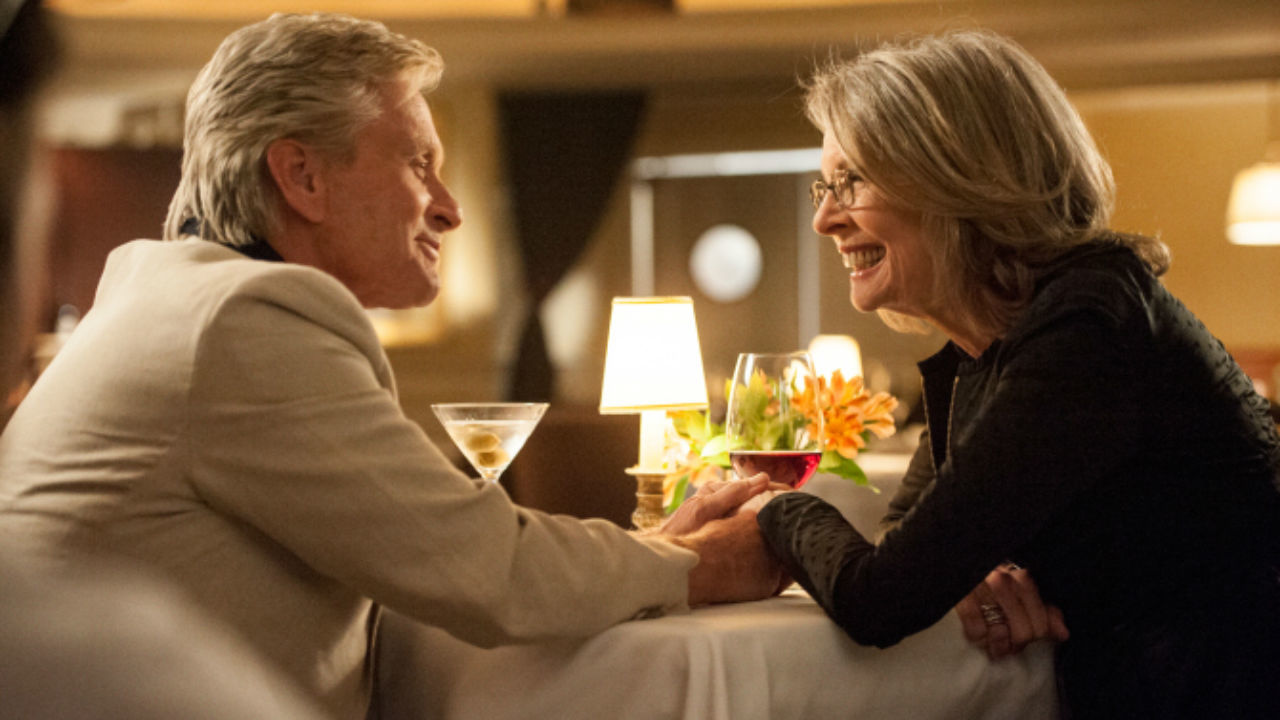
Riders of Pylos - scene

A light and frothy concoction by the multi-talented Kalogeropolous, Riders of Pylos is sufficiently entertaining to avoid any notions of whimsicality or waspishness, and comes with such a sense of freedom that it makes the viewer wish for the kind of (seemingly) rootless existence that Telemachus experiences once he’s fled from his creditors. His is a blundering presence, presumptuous at times, dramatic at others, but always with a flair that, financial pressures aside, never seems to desert him. He’s like a mini-cyclone, unaware of the damage or chaos he’s creating, a force of nature surrounded by a greater force of nature that he seems oblivious to.

That he beguiles and bewitches two of the women he encounters could be said to be very fortunate indeed, but Telemachus is, despite his odd features and wrinkled appearance, an attractive, sensitive man, a man who views romance as an essential part of living. His brief connection with Haido shows his sense of pride slowly being eroded by her determination to bed him, until he reaches a point where, for him, it all becomes irrelevant and he might as well go through with it. He’s a man after all, with a man’s sense of personal, unavoidable destiny, and Haido is left overwhelmed by the experience; once committed, Telemachus is unable to give a terrible “performance”.

As the wandering actor, Kalogeropoulos is a delight to watch, his clumsy physicality and brash demeanour in the role developed over the course of the movie with an almost effortless disregard for the character’s pretensions and woes. It’s a performance where the actor goes out of his way to make his character a little too self-absorbed and out of his depth to be anything other than entirely sympathetic. Telemachus is a terrific creation, and Kalogeropoulos broadens his portrayal with occasional moments where Telemachus has moments of self-reflection that prove liberating for him. With his distinguished career on hold for the foreseeable future, Telemachus’ growing enthusiasm for this “new world” around him is delightful and charming.

It’s a good thing too, as the storyline is overall, a slight one, and with very little depth to it other than what’s created through the use of philosophical and historical quotes, some of which are daubed onto the walls of Polypylon itself. These are enough to make the characters seem more learned and intelligent than they actually are, but they lack the cleverness needed to elevate the characters’ posturing. Also, there are too many scenes, particularly involving Myron, that fail to advance what little story there is, and hold the movie back from fulfilling its potential. Telemachus’ journey of self-discovery is the main focus but getting lost and being forcefully cajoled into having sex aren’t exactly life changing experiences, and Kalogeropoulos’ script never quite knows what to do next with the character.

What the movie does know what to do with is its location at Polypylon, a wonderfully rundown castle in the hills that is a character all by itself, and which provides a splendid backdrop for several scenes in the movie. Either shown at a distance to show its full size, or lit up at night, Polypylon is a fantastic setting for Kalogeropoulos’s tale, a theatrical “venue” used to good effect throughout, and brimming with colour. So too is the surrounding countryside with its hills and waterfalls and boulders and pools, shot with precision and fidelity by DoP Yannis Drakoularakos. There are moments of breathtaking beauty to be had in Riders of Pylos, and each one is to be savoured.

Writer/director/star/composer Kalogeropoulos has fashioned an appealing, seductive tale that should bewitch audiences everywhere. Earthy, occasionally profane, and entrancing, the movie is a testament to its creator’s abilities and his knowledge of Greek values through the ages. A small, but hugely enjoyable blend of rural drama and contemporary romantic mores, this is well worth seeking out and capable of delivering the kind of warm feeling few movies even aspire to. Rating: 8/10 – refreshing for being entirely carefree with its portrayal of romantic ideals, Riders of Pylos is light and jovial, and all the better for it; with a sterling central performance, it’s a movie that wants its audience to have as good a time as possible, and on that level, it succeeds admirably.

NOTE: The following trailer doesn’t have any English subtitles but is still worth a look:

Share this:

  • Click to share on X (Opens in new window) X
  • Click to share on Facebook (Opens in new window) Facebook
  • More
  • Click to print (Opens in new window) Print
  • Click to email a link to a friend (Opens in new window) Email
Like Loading...

Virginity (1937)

13 Monday Apr 2015

Posted by dullwood68 in Movies

≈ 1 Comment

Tags

Buffet, Composer, Czechoslovakia, Dowry, Drama, Illness, Ladislav Bohác, Lída Baarová, Literary adaptation, Marie Majerová, Otakar Vávra, Review, Romance, The Counsel, Zdenek Stepánek

Virginity

Original title: Panenství

D: Otakar Vávra / 82m

Cast: Lída Baarová, Ladislav Bohác, Zdenek Stepánek, Jaroslav Prucha, Adina Mandlová, Bozena Sustrová, Bedřich Veverka, Jaroslava Skorkovská, Frantisek Kreuzmann

Hana (Baarová) lives with her parents (Skorkovská, Kreuzmann) and helps out in their grocery store. Her mother is hard-working while her father is a drunkard. One day, he tries to kiss Hana; her mother walks in on them and sees what’s happening, but instead of berating her husband, she tells Hana to get out. Luckily, Hana finds work at a café run by Josef Nevostrý (Stepánek). He’s attracted to her and finds ways to promote her; this causes some animosity amongst the other female staff but otherwise she gets on well with everybody. One day she meets a regular customer called Paul (Bohác), a composer; there’s an instant attraction between the two of them.

Soon, Hana comes to the attention of another regular customer, the Counsel (Prucha). An old man, he entices her with gifts, first a ring, which Hana accepts, and then a bracelet. But her relationship with Paul has grown stronger, and Hana refuses the Counsel’s offer of the bracelet. Undeterred, he tells Hana she can collect it from his apartment at any time. Meanwhile, Paul, who is sick, is determined to finish his latest classical work, but the effort takes too much of a toll. He becomes too ill, and is advised that he should spend time recuperating in the mountains. However, the cost of such a trip is expensive, and not even his doctor (Veverka) can afford to lend him the money to go.

Fearing that Paul will get worse, or even die, Hana goes to the Counsel’s apartment, but she can’t go through with her plan to allow the old man to seduce her and then get the money she needs for Paul. There is a scuffle and the old man suffers a stroke. Hana flees the building. Later, Paul comes to the café and tells Hana that his doctor has lent him the money to go to the mountains. Knowing this to be untrue, Hana makes a fateful decision: to marry Nevostrý and use the dowry to pay for Paul’s trip…

Virginity - scene

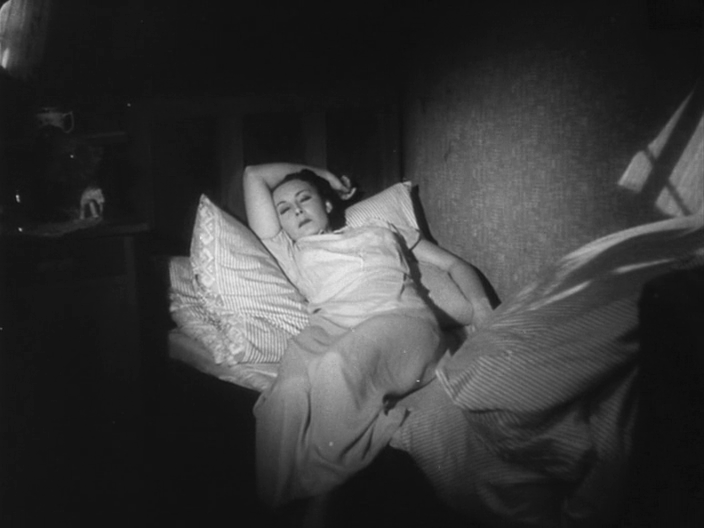
Adapted from the novel by Czech writer Marie Majerová (and with a screenplay co-written by her, Frantisek Cáp, A.J. Urban and the director), Virginity is a sombre yet engrossing tale of one woman’s refusal to be used, or taken advantage of, by the predatory men that surround her. Thanks to a great performance by Baarová, and sympathetic direction by Vávra, the movie avoids any sense that it’s an early soap opera by making each of the characters more fully rounded than usual, and by doing its best not to appear predictable – which it is for the most part (though not when it matters).

By making Hana a young woman whose awareness of the world, and what goes on in it, makes her less naïve than usual also makes for an interesting central character who seems to side-step problems with ease, but who doesn’t quite have the complete confidence that should come with that ability. Some things, like her successive promotions at the café, orchestrated by her quietly lovesick boss, she takes quick and decisive advantage of while remaining oblivious to his attentions. Even though her female colleagues are less than enamoured of her rise through the ranks, Hana’s mix of sincerity and good intentions stops her from being disliked, and there’s a strong sense of the female solidarity that keeps all the women from being exploited, either at work or in their love lives. With the female characters refusing to be objectified, or to let the men around them feel they can be bought with trinkets, the movie has a proto-feminist feel that few movies of the Thirties – wherever they were made – can boast.

Issues of feminism aside, it’s the seedy backdrop that draws the attention. The Counsel is an old-style lecher, leering and manipulative, his intentions as clear as if he’d written them on the café window. Prucha plays him as a sly old fox, certain of his “charm” and even more certain that his gifts will bring him what he wants. Despite his soft-spoken manner and patrician bearing, he’s the worst type of predator: the one who knows his ploy will work… in time. In contrast, Nevostrý is motivated by passion and love, but his own attentions toward Hana are equally as disturbing as the Counsel’s. His approach is to reward her and make her grateful to him, to make her feel obliged when he finally reveals his feelings for her (though his scheme is undermined by Hana’s need for the dowry). It’s a clever conceit, that the man who professes love for Hana is the most conniving in pursuing her.

As her true love, however, Bohác’s agonised composer is a less than desirable mate, his wild stares and manic grinning proving too distracting from the moment he appears. (In truth his portrayal is reminiscent of any Twenties performance by Conrad Veldt, and distractingly so.) It’s to Baarovás credit that she makes Hana’s love for Paul so convincing, her early infatuation played with such sweet earnestness that the viewer is swept along by the budding romance in the same way the character is. As Paul’s condition worsens, Baarová shows Hana’s fear and apprehension with such a degree of sympathy that when she makes the journey to the Counsel’s apartment and begins to have second thoughts as she climbs the stairs, it’s the most dramatic moment in the movie. And when she is preparing to be married to Nevostrý, with her workmates fussing around her, the look on her face tells you all you need to know about how Hana is feeling at that moment. It’s an impressive performance, and all the more so for the risqué – for 1937 – scene where Hana expresses her frustration at being parted from Paul: she stands in front of a mirror in her room and runs her hands down over her breasts, her arousal so plainly written in her features that it’s almost embarrassing to watch. (Interesting Historical Footnote: when she made this movie Baarová was living in Berlin, and was the mistress of Josef Goebbels. Yes, that Josef Goebbels.)

Director Vávra does a fine job of keeping things from becoming too sensational, or mawkish, and handles the social and sexual politics of the time and the story with understated finesse. He draws out fine performances from his cast – Bohác aside – and gets to the heart of a scene with a minimum of fuss or any attempt to draw attention to himself as the director. As a result, the movie has a fresh, unhurried feel to it that makes it entirely believable from start to finish.

Rating: 8/10 – a minor classic from Czechoslovakia that boasts a handful of terrific performances and clever direction, Virginity never lets it characters – or the audience – down; Baarová is a pleasure to watch, so good in the role of Hana that this is one of those occasions where it’s hard to imagine anyone else in the role.

NOTE: No trailer available.

Share this:

  • Click to share on X (Opens in new window) X
  • Click to share on Facebook (Opens in new window) Facebook
  • More
  • Click to print (Opens in new window) Print
  • Click to email a link to a friend (Opens in new window) Email
Like Loading...

Amira & Sam (2014)

20 Friday Mar 2015

Posted by dullwood68 in Movies

≈ Leave a comment

Tags

Comedy, Deportation, Dina Shihabi, Drama, Martin Starr, Paul Wesley, Racism, Relationships, Review, Romance, Sean Mullin, War veteran

Amira & Sam

D: Sean Mullin / 90m

Cast: Martin Starr, Dina Shihabi, Paul Wesley, Laith Nakli, David Rasche, Ross Marquand, Taylor Wilcox

Former Green Beret Sam (Starr), fresh out of the army, visits an old friend, Bassam (Nakli), who was an interpreter during Sam’s time in Iraq. He is there to repay a debt, and in the process he meets Bassam’s niece, Amira (Shihabi). However, she is rude and unwelcoming to him as her brother was also an interpreter, and he was killed by friendly fire.

Having lost his job, Sam visits his cousin Charlie (Wesley) for help. Charlie is a hedge fund manager, and Sam’s visit prompts him to ask Sam to help him land a potential investor he’s had trouble convincing to come on board. In exchange for Sam’s help, Charlie agrees to pay him $50,000; he also gives him the keys to his father’s boat, which Charlie has inherited but doesn’t use. Glad of the support, Sam agrees to help out. Meanwhile, Amira is stopped by a police officer while selling fake DVDs on the street; a check on her I.D. reveals she is in the country illegally. She runs away from the police officer and heads back to her uncle’s. Stuck with a job that requires him to be away for a few days, he contacts Sam and asks him to look after Amira until he gets back.

Sam agrees but Amira is less than happy about everything. She reluctantly allows Sam to take her to his apartment. He meets Charlie’s prospective investor, a Vietnam veteran called Jack (Rasche), and impresses him so much that Jack increases his investment beyond what Charlie was expecting. Feeling good about things, Sam takes Amira out on the boat and their relationship thaws as a result. Soon after, Charlie invites Sam to his engagement party, but asks him if he can wear his Army dress uniform; Sam agrees though he’s a little reluctant. He takes Amira with him but some of Charlie’s colleagues prove too aggressively racist toward her and an altercation ensues, during which Amira accidentally hits Charlie’s fiancé, Claire (Wilcox). She presses charges and Amira is arrested. As a result, she has only twenty-four hours before she’ll be deported back to Iraq – and there’s nothing Sam or Bassam can do…

Amira & Sam - scene

An unusual mix of interracial romance and army veteran adjusting to “normal” life dramatics, Amira & Sam is an absorbing combination of sub-genres that overcomes a somewhat staid, foreseeable approach to Sam’s troubles with his cousin, and scores heavily when portraying Amira and Sam’s growing relationship. It doesn’t try to be clever, but it does get its points across with a winning charm, and thanks to the well thought out script by writer/director Mullin, and the performances of the two leads, is a pleasure to watch.

There’s plenty to enjoy, from Sam’s horrible attempt at doing a stand up gig, to his letting Amira steer the boat (and then jumping overboard), to the awkward conversation he has with Jack about the realities of post-Army life. The movie is peppered with scenes that work because of the care and attention given to the characters, with even Charlie’s duplicitous nature proving less stereotypical than expected. And Mullin shows a complete command of the material, keeping it grounded and realistic, letting the narrative unfold at a steady, convincing pace, and placing the emotional lives of Amira and Sam at the forefront.

As the “unlikely” couple, Starr and Shihabi display a definite chemistry, their scenes together evincing a surety and a confidence that not only makes their relationship all the more credible, but all the more engaging as well. As these two very different people discover a common ground and develop their feelings for each other they become a couple for whom the word “cute” seems entirely appropriate. Mullin captures the first flush of romance with ease, and in the hands of his leads, that burgeoning romance is handled with aplomb. Starr has had a varied career in front of the camera, mostly as a supporting actor, but here he takes on his first lead role and shows a range and a capability that should have been exploited a long time ago. His deadpan looks and unhurried style suits Sam perfectly, making him feel like someone we might know in our own lives. Shihabi is equally as good, investing Amira with a tenacious yet sensitive quality that proves a match for Starr’s interpretation of Sam, and which makes their romance all the more credible. The bond they develop, and their need for each other, is never in doubt.

Less effective are the scenes designed to add some secondary drama to the proceedings, such as Charlie’s investigation by the SEC which feels entirely predictable, and the racial outbursts at the engagement party, which have been a longtime coming and which feel like the movie is ticking a box. And yet the idea of Sam being exploited by Charlie, of his Army veteran status being used to win over investors, is dealt with succinctly and the point is made with a minimum of fuss or attention. Likewise, the notion that Sam can be a funny guy in front of an audience when he’s clearly more of a storyteller, a feature of his personality that is explored casually but with a great deal of efficiency, is also a plus. Mullin proves how capable and subtle he can be in these scenes, and again, is helped immeasurably by his cast.

With a pleasing visual approach courtesy of DoP Daniel Vecchione, linked to Julian Robinson’s astute editing, the movie looks good and has a bright shine to it that reflects and enhances the romantic aspects while never downplaying the reality of Amira’s predicament or Sam’s need to “assimilate” back into society. It’s an enjoyable movie from start to finish, confidently assembled and memorable enough to warrant a second or third viewing.

Rating: 8/10 – surprising in places and yet overly familiar in others, Amira & Sam is a confident mix of comedy, drama and romance that features two first class lead performances; any flaws the movie may have are more than compensated for by the sheer goodwill the movie generates throughout.

Share this:

  • Click to share on X (Opens in new window) X
  • Click to share on Facebook (Opens in new window) Facebook
  • More
  • Click to print (Opens in new window) Print
  • Click to email a link to a friend (Opens in new window) Email
Like Loading...

The Rewrite (2014)

28 Saturday Feb 2015

Posted by dullwood68 in Movies

≈ 2 Comments

Tags

Allison Janney, Bella Heathcote, Binghamton, Comedy, Hollywood, Hugh Grant, J.K. Simmons, Marc Lawrence, Marisa Tomei, Paradise Misplaced, Review, Romance, Romantic comedy, Screenwriter, Writing class

Rewrite, The

D: Marc Lawrence / 107m

Cast: Hugh Grant, Marisa Tomei, Bella Heathcote, J.K. Simmons, Chris Elliott, Allison Janney, Caroline Aaron, Steven Kaplan, Emily Morden, Annie Q, Andrew Keenan-Bolger, Aja Naomi King, Damaris Lewis

Keith Michaels (Grant) is a Hollywood screenwriter who had a big hit with his first script, Paradise Misplaced. But since then his caché has faded to the point where he can’t even get a job doing rewrites on other scripts. When his agent, Ellen (Aaron), tells him about a job teaching screenwriting at Binghamton University, he refuses to take it, but his lack of money persuades him to take it. He arrives in Binghamton and while at a fast-food restaurant, meets some of the university’s students, including Karen (Heathcote) who has signed up for his class.

The next day he wakes up in his new residence with Karen asleep beside him. He heads off to work and meets the university’s head, Dr Lerner (Simmons). He shows Michaels his office and leaves him with seventy script submissions made by students who want to attend his class; all he has to do is read through them and pick ten students whose work he feels is good enough. Instead, Michaels selects his students – eight of them at least – by checking their files and picking the ones he finds the most attractive (including Karen). On his way to a faculty meeting later that day he runs into mature student Holly Carpenter (Tomei) who gives him her own script and asks that he consider her for the class. Then, at the meeting, he falls foul of tenured professor Mary Weldon (Janney) when he rubbishes the idea of female empowerment and the novels of Jane Austen, Weldon’s specialist subject.

When he ends his first, very short, lesson with the proviso that his students meet back in a month after they’ve completed their scripts, Michaels finds that Weldon is also head of the ethics board and is looking to get rid of him, and if she finds out about his relationship with Karen, it’ll be all the ammunition she needs. He resumes lessons, and begins to take a closer interest in everyone’s scripts; at the same time he tries to end things with Karen. His relationship with Holly develops as she takes an equal interest in him, particularly in his son Alex, whom he hasn’t spoken to in a year. But when Weldon learns of his fling with Karen, he finds he has only two choices: either leave quietly, or face an enquiry which will eventually be made public. With one of his students, Clem (Kaplan) producing a script that Michaels can use as a way of boosting his career, he has to make a decision that proves to be harder than he expected.

Rewrite, The - scene

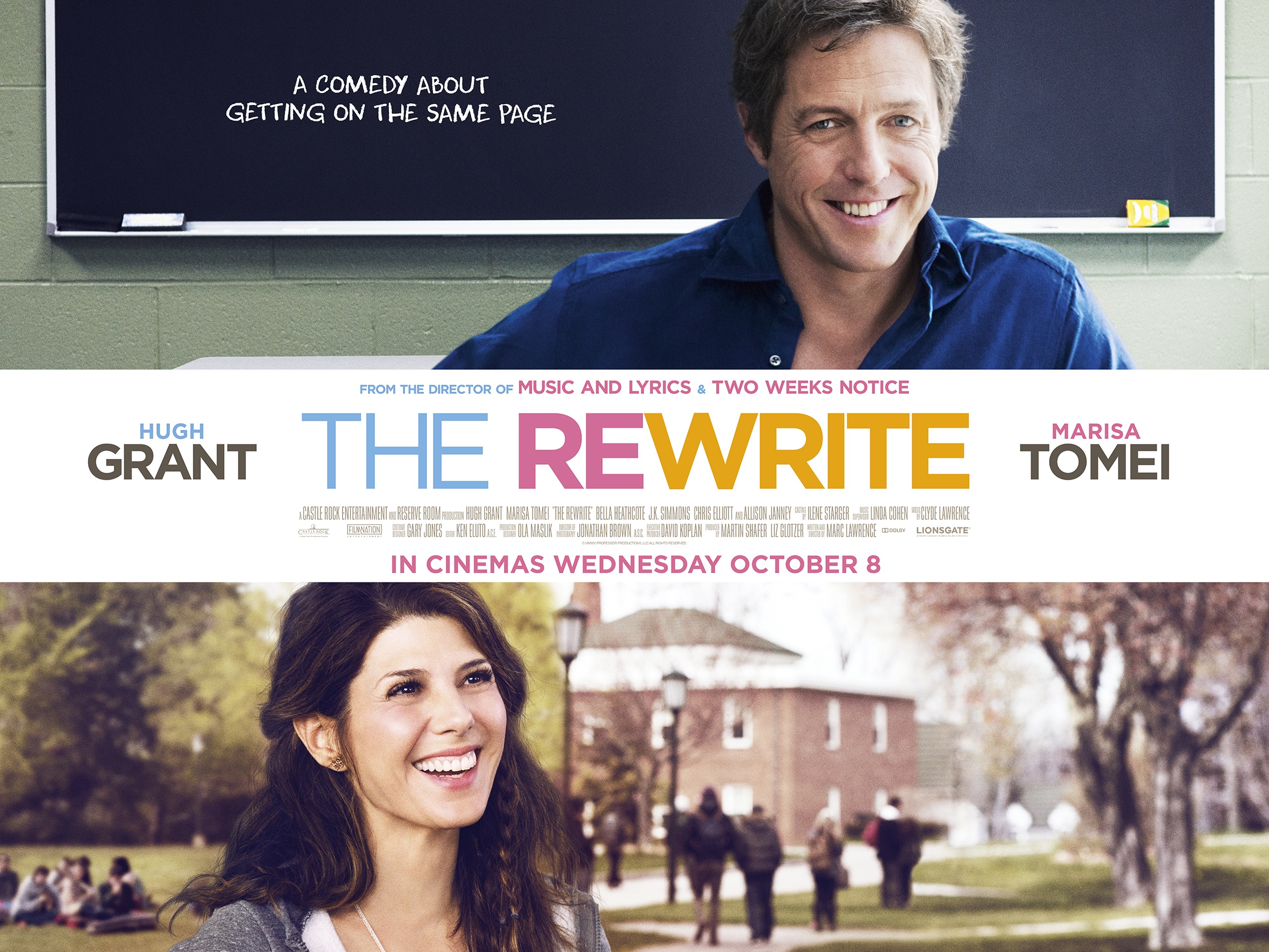
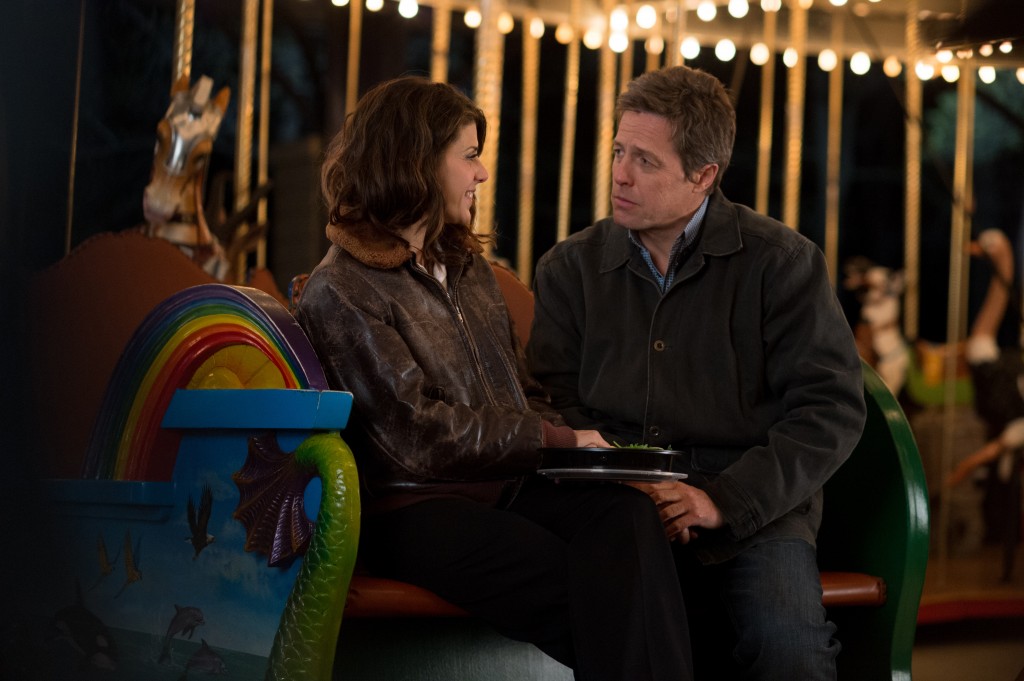
The fourth collaboration between Grant and director Lawrence – following Two Weeks Notice (2002), Music and Lyrics (2007), and Did You Hear About the Morgans? (2009) – The Rewrite is an amiable comedy sprinkled with astute literary and cinematic references, and features a romantic subplot that is practically traditional in this type of movie. It’s a fun, good-natured movie that coasts along for most of its runtime, but often redeems itself with a witty one-liner or a heartfelt scene that gives its talented cast a chance to make the material shine that much brighter than expected.

Much of the fun to be had comes from Grant, who downplays his usual tics and grimaces (though they’re still there) and provides a performance that’s a breezy mix of egocentric and rueful, charming and nonchalant. His more mature look is a pleasing addition to the mix and suits his character’s down-on-his-luck situation; Grant’s face makes Michaels’ moments of regret that much more effective. In the scene with Tomei where he talks about his son Alex, Grant reveals a vulnerability and a sadness we don’t see very often in his performances, and it serves as a reminder that, when required, Grant as an actor is capable of far more than just being a bumbling fish out of water.

Grant is ably supported by the likes of Tomei, Simmons and Janney, seasoned pro’s who can do this sort of thing in their sleep, and if their characters seem painfully underwritten at times it shouldn’t be surprising as this is Grant’s movie pure and simple, a star vehicle created for him and which he navigates with ease. It’s a good job too, as Lawrence’s script spends a lot of time ensuring that Michaels doesn’t encounter any real problems on his way to personal redemption. With the movie robbed of any real drama as a result, it’s left to Grant et al to inject a degree of seriousness at appropriate moments, and offset the more woolly aspects of the material.

However, Lawrence’s central conceit, that teaching can be as rewarding as doing, is ably demonstrated and the scenes where Michaels critiques his students’ work are among the most rewarding in the movie, and The Rewrite improves whenever these scenes occur. Again, it’s a good job, as without them (or the cast’s enthusiasm) the movie would be too familiar and unsurprising to be persuasive, and the goodwill Grant’s presence provides would be wasted. It is funny, though, but like so many comedies that don’t take the “edgy” approach of movies such as Sex Tape (2014), and instead rely on tried and trusted set ups and tropes, it struggles to provide its audience with anything new or original.

Still, it’s innocuous and pleasant enough to make it a not entirely disappointing prospect, and Lawrence’s direction – while a little wayward – does enough to ensure the viewer’s attention is held from start to finish. With efficient if unspectacular cinematography from Jonathan Brown that unfortunately adds a layer of blandness to some of the visuals, and a occasionally distracting soundtrack that mixes original songs with a score from irregular composer Clyde Lawrence, the movie’s aim doesn’t appear to be particularly high. But, perversely, it succeeds against a veritable truckload of odds by being oddly endearing and defiantly sweet.

Rating: 6/10 – sporadically effective and bolstered by Grant’s easy-going performance, The Rewrite is a middling comedy that comes alive in fits and starts; a tighter script – ironically – would have improved things, but even so, it hits the spot when required.

Share this:

  • Click to share on X (Opens in new window) X
  • Click to share on Facebook (Opens in new window) Facebook
  • More
  • Click to print (Opens in new window) Print
  • Click to email a link to a friend (Opens in new window) Email
Like Loading...

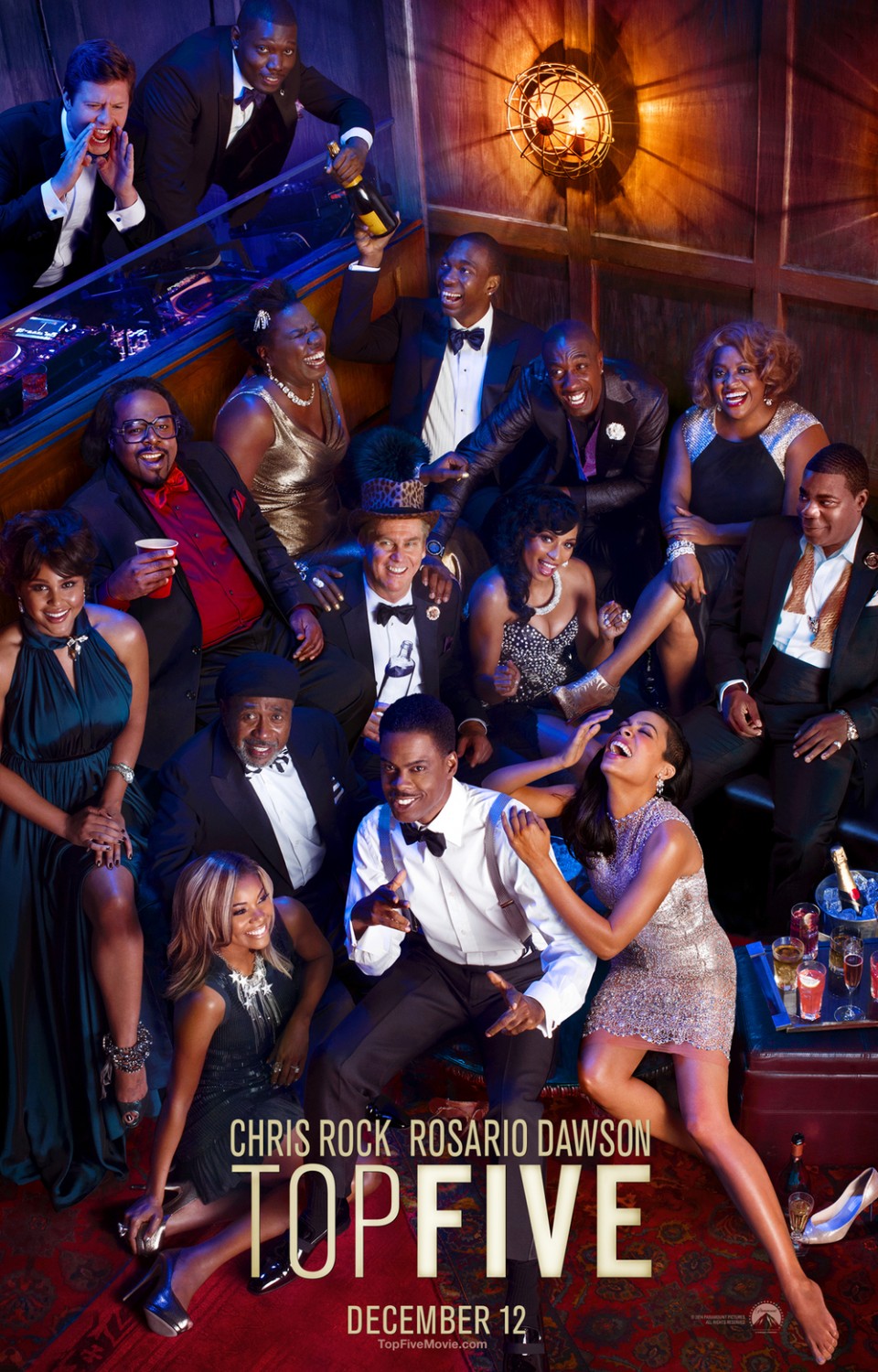
Top Five (2014)

21 Saturday Feb 2015

Posted by dullwood68 in Movies

≈ Leave a comment

Tags

Chris Rock, Comedy, Drama, Film critic, Gabrielle Union, Hammy the Bear, JB Smoove, Reality TV, Review, Romance, Rosario Dawson, Uprize, Wedding

Top Five

D: Chris Rock / 102m

Cast: Chris Rock, Rosario Dawson, JB Smoove, Gabrielle Union, Romany Malco, Cedric the Entertainer, Anders Holm, Tracy Morgan, Leslie Jones, Sherri Shepherd, Jay Pharaoh, Ben Vereen, Kevin Hart, Luis Guzmán, Adam Sandler, Jerry Seinfeld, Whoopi Goldberg, DMX, Taraji P. Henson, Gabourey Sidibe

Andre Allen (Rock) is a stand-up comedian whose move into movies has brought him international fame thanks to the Hammy trilogy where he plays a cop in a bear costume. Wanting to put the Hammy movies behind him and focus on more serious projects – his latest movie, Uprize, is about the slave revolt that began in Haiti in 1791 – Andre is also a recovering alcoholic and about to get married to reality TV star Erica Long (Union).With only a couple of days to go before the wedding, Andre agrees to an interview with the New York Times’ Chelsea Brown (Dawson).

The interview gets off to a poor start when Chelsea asks him a banal question that prompts him to challenge her to ask the questions she really wants to ask. She wants to know when he stopped being funny and why, and about his alcoholism. He tells her about the time he hit bottom, in 2003 on a trip to Houston, where a night of sex and drugs with a couple of prostitutes (and the unexpected involvement of his tour promoter) led to accusations of rape and his being arrested. He also credits Erica with helping him achieve sobriety and stay that way.

As the interview continues, Andre introduces Chelsea to some of his friends. He’s relaxed with them, and they all joke that he’s never been funny and still isn’t. At a press conference for Uprize, Andre is chagrined to hear calls for another Hammy the Bear movie. He and Chelsea stop off at a hotel so she can meet up with her boyfriend, Brad (Holm), whose birthday it is. Unfortunately, she discovers that Brad has been hiding the fact that he’s gay (despite some very obvious clues in their sex life). Upset and angry at being so easily duped, she’s less than happy when Andre expresses his disbelief at how naïve she’s been. They argue, but the argument leads to their kissing and ending up in a club bathroom about to have sex. They manage to stop themselves; Andre asks to borrow Chelsea’s phone to make a call. While he does he discovers that she is actually James Nielson. He confronts her. Chelsea admits to the deception but tries to explain that she does like him and that she regrets not having told him sooner. Andre refuses to accept her explanation and leaves her behind in the club. From there he goes to a convenience store where he gives in to temptation and starts drinking again…

Top Five - scene

A romantic comedy that weaves in some interesting dramatic elements, Top Five is an astute, cleverly constructed movie that shows Rock firing on all cylinders and mixing gross-out comedy with intelligent observations on fame and media exposure, as well as trenchant examinations of modern day relationships and their ups and downs. It’s a confident movie, unafraid to take a few risks, and Rock proves he has a gift for exposing some of the more absurd aspects of his profession, in particular the fame that can be gained from a movie trilogy based around the exploits of a cop in a bear costume (“It’s Hammy time!”).

He’s also more than adroit at creating a romance between Andre and Chelsea that anchors the movie and proves far more affecting than expected. Partly this is due to his script, which for the most part tries hard to avoid becoming standard romantic fare (though it follows an established formula), and the obvious chemistry he has with Dawson. As they travel the streets of New York, challenging each other, debating, laughing, supporting each other, the warmth and growing affection they feel for each other is so charmingly done that you find yourself rooting for them. As it becomes clear that their existing relationships are less than satisfactory, their slow pull towards each other becomes as rewarding for the viewer as it is for them. Dawson is always an appealing presence on screen, and here she proves a great foil for Rock’s often acerbic approach to his own material.

Of course, this being a Chris Rock movie, the focus is as much on the comedy as the romance, and here he succeeds in providing a slew of laugh-out-loud moments, from Cedric the Entertainer’s unexpected “party trick” to Andre and Chelsea’s discussion on the requirements for becoming the next President, to Chelsea’s punishment of Brad’s anal fixation, to Andre’s bodyguard Silk (Smoove) and his penchant for the larger lady (his encounter with Sidibe is brief but wonderful), to Andre’s adding “stank” to a radio promo – Rock maintains a high hit rate throughout. He also infuses several dramatic moments with a level of humour that adds poignancy and pathos to the material, and gives the likes of Union and Shepherd a chance to shine in scenes that hold a lot more weight than is immediately apparent.

While Rock scores highly with his script, and employs a cast who all make the most of their roles (and are clearly having a great deal of fun in the process), he’s not quite as successful in creating a visual palette that elevates or enlivens the material, and certain scenes have a perfunctory feel about them as a result (DoP Manuel Alberto Clara worked on Lars von Trier’s Nymph()maniac Vol. I & Vol. II and there are many similarities in style between those movies and this one). That said, there are some occasional moments – Andre’s impromptu appearance at a comedy club, the scene where Andre trashes the convenience store – where the visual approach works in the movie’s favour.

All in all though, Top Five is a movie that provides much to enjoy and admire, and serves as a reminder that when he puts his mind to it, Rock is one of the more gifted comedians working in movies today (it’s also amazing to think that he’s only recently turned 50; he definitely doesn’t look it). Let’s hope this is just the first of many more similar projects to come.

Rating: 8/10 – a disarmingly enjoyable romantic comedy, Top Five benefits greatly from its charming central romance and Rock’s willingness to offset the comedy with telling moments of drama; a winning return to form after the less than successful I Think I Love My Wife (2007), this has something for everyone and rarely disappoints.

Share this:

  • Click to share on X (Opens in new window) X
  • Click to share on Facebook (Opens in new window) Facebook
  • More
  • Click to print (Opens in new window) Print
  • Click to email a link to a friend (Opens in new window) Email
Like Loading...

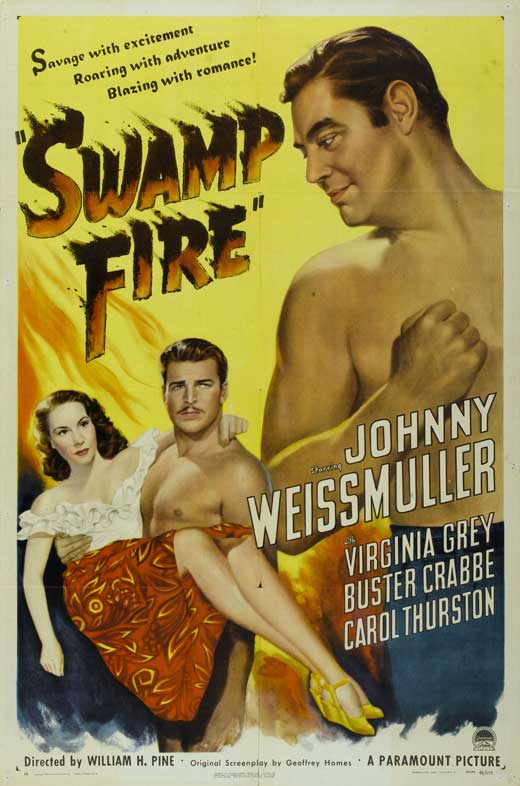
Swamp Fire (1946)

19 Thursday Feb 2015

Posted by dullwood68 in Movies

≈ Leave a comment

Tags

Action, Bar pilots, Buster Crabbe, Carol Thurston, Cypress Point, Drama, Johnny Weissmuller, Louisiana, Mississippi River, Review, Romance, Virginia Grey, William H. Pine

Swamp Fire

D: William H. Pine / 69m

Cast: Johnny Weissmuller, Virginia Grey, Buster Crabbe, Carol Thurston, Pedro de Cordoba, Marcelle Corday, William Edmunds, Edwin Maxwell, Pierre Watkin

Coming home from the war, bar pilot Johnny Duval (Weissmuller) is a veteran whose return is tinged with a bittersweet quality. He lost both his ship and his men during the war and he’s haunted by the event, so much so that he’s lost his confidence as a bar pilot completely. But he does have the love of Toni Rousseau (Thurston) to look forward to, and the welcome of his friends. Travelling through the swamp to his home at Cypress Point, his row boat is side-swiped by a motor boat being driven by Janet Hilton, a wealthy socialite who lives at nearby Delta Island. With her motor boat run aground, Johnny offers to take her to Cypress Point where she can rent another boat. Once there, she wastes no time in alienating Johnny’s friends, including Toni, before leaving.

Johnny goes back to work for the Coast Guard but he takes a junior role, until one night the bar pilot on his ship feigns an illness that leads to Johnny taking over and seeing another boat through the river’s perilous sand bars. The boat belongs to Janet’s father; she’s also on the boat and makes advances towards him, but even with that and other distractions such as an hallucination from the war, he guides the boat safely through the waters, and regains his confidence. Quickly promoted to a lieutenant in the Coast Guard, Johnny resumes his usual work as a bar pilot. In the meantime, Janet continues to pursue him, much to the annoyance of Toni, and to the satisfaction of Mike Kalavich (Crabbe), a trapper who wants Toni for himself. Johnny decides to marry Toni and the date is set, but the night before, he finds himself persuaded to guide a ship through dangerous fog. There is a collision with another boat, one that leads to the death of Toni’s grandfather (de Cordoba).

Unable to cope with the guilt of what he’s done, Johnny goes away on leave and bar hops until he’s so drunk he stumbles into the path of a truck and is knocked down. He ends up in hospital and is there for two weeks before anyone discovers who he is. The news makes the papers and Toni and Johnny’s boss, Captain Moise (Maxwell), head to the hospital to bring him home. But when they get there they find Johnny has already left – in the care of Janet Hilton. At the Hiltons’, Janet tells them – falsely – that Johnny doesn’t want to see them, or anybody, from Cypress Point. Janet takes further steps to stop Johnny and Toni from contacting each other. With both believing the worst of the other, Johnny and Toni’s relationship falters then fails, until the capture of one of Kalavich’s comrades in poaching leads to Janet’s duplicity being revealed. But while Johnny tries to find Toni, Kalavich, enraged by this turn of events, decides to set fire to the swampland, putting them all in danger.

Swamp Fire - scene

The first of two movies uniting former Olympic swimming champions Weissmuller and Crabbe – the second would be the Jungle Jim adventure Captive Girl (1950) – Swamp Fire is an absorbing, though pedestrian drama that unfolds at a steady, if sometimes soporific pace, and which offers both actors a chance to spread their wings in roles they wouldn’t normally have played. Weissmuller, though as wooden as usual, does his best as the taciturn, PTSD-suffering Johnny, and makes a decent fist of his love scenes with Thurston (he certainly kisses her with gusto). Crabbe has the greater challenge, playing a disgruntled bad guy with a dodgy Cajun accent and a pencil-thin moustache, but it’s a more natural performance, and he seems more at ease in the role than Weissmuller does as Johnny, and the movie gains a noticeable energy whenever he’s on screen.

They’re kept apart for most of the movie, however, leaving room for Weissmuller to romance both Grey and Thurston in equal measure, and to show that his muscular frame still looks good in a T-shirt (he doesn’t go bare chested in this movie, perhaps because of the extra weight he’d put on at the time). The twin romances are agreeable, if not entirely believable. Grey’s character is so stuck up and manipulative that when Toni ends up in the river and at the mercy of an alligator, it’s likely the viewer will be wishing it was Janet in the water. The character vacillates between arrogant, passive and flirtatious (sometimes in the same scene), and Grey doesn’t always know when to move from one aspect to another. Thurston plays Toni as if she were more of a tomboy than a young woman with eyes for only one man, but she’s consistent in her approach to the character and makes slightly more of things than the script – by Daniel Mainwaring (credited as Geoffrey Homes) – would appear to allow. There’s an argument that both roles are underwritten, but the truth is they’re quite stereotypical for both the time the movie was made and its milieu.

In the hot seat, Pine – noted for being a producer more than a director – shows a sure hand in moving the camera around and elicits good performances from the supporting cast, including Edmunds as the local bar owner, and Maxwell as Johnny’s suppportive superior. The Louisiana locations are well chosen for their beautiful scenery, and make for splendid backdrops to the (occasionally) overheated emotions of the main characters (though the amount of rear projection work going on almost negates their effect). As well as being involved in several river collisions, Weissmuller gets to wrestle and kill an alligator – the danger of which he brushes off with manly stoicism – and there’s a catfight between Grey and Thurston that is, sadly, over almost as soon as it’s started. The fiery climax doesn’t look as impressive in the long shots as it does close up, but the emotional undercurrent is brought to the fore, making the denouement unexpectedly compelling, and satisfying as well.

Rating: 5/10 – like a lot of low-budget, modest post-War productions, Swamp Fire is borderline forgettable, but despite its faults, is a pleasant enough diversion for sixty-nine minutes; Weissmuller and Crabbe make for great adversaries, and the plot isn’t as banal as it seems, making this a notch above other, similar movies from the period.

Share this:

  • Click to share on X (Opens in new window) X
  • Click to share on Facebook (Opens in new window) Facebook
  • More
  • Click to print (Opens in new window) Print
  • Click to email a link to a friend (Opens in new window) Email
Like Loading...

Trailer – Aloha (2015)

13 Friday Feb 2015

Posted by dullwood68 in Movies

≈ Leave a comment

Tags

Alec Baldwin, Bradley Cooper, Cameron Crowe, Comedy, Danny McBride, Emma Stone, Pilot, Rachel McAdams, Romance, Trailer

The latest movie from Cameron Crowe has a trailer that is all kinds of funny and smart and funny and witty and funny and romantic and did I mention funny? With one of the best openings to a trailer ever, there’s a good chance that Crowe’s got his groove back after the slight hiccup that was We Bought a Zoo (2011). Enjoy!

Share this:

  • Click to share on X (Opens in new window) X
  • Click to share on Facebook (Opens in new window) Facebook
  • More
  • Click to print (Opens in new window) Print
  • Click to email a link to a friend (Opens in new window) Email
Like Loading...

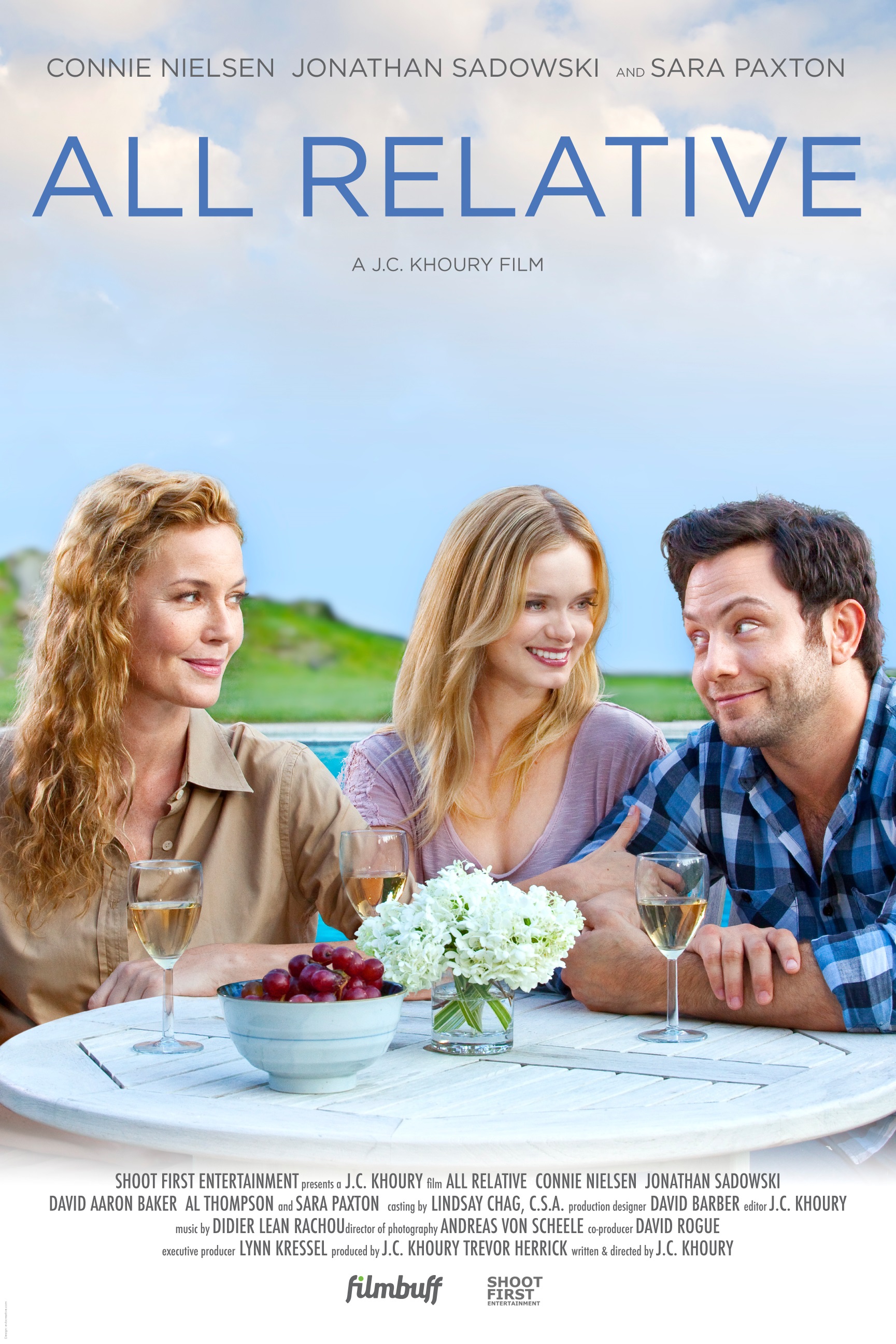
All Relative (2014)

29 Thursday Jan 2015

Posted by dullwood68 in Movies

≈ Leave a comment

Tags

Affair, Comedy, Connie Nielsen, Drama, J.C. Khoury, Jonathan Sadowski, Marital problems, Relationships, Review, Romance, Sara Paxton, Weekend fling

All Relative

D: J.C. Khoury / 85m

Cast: Connie Nielsen, Jonathan Sadowski, Sara Paxton, David Aaron Baker, Al Thompson, Erin Wilhelmi, Liz Fye

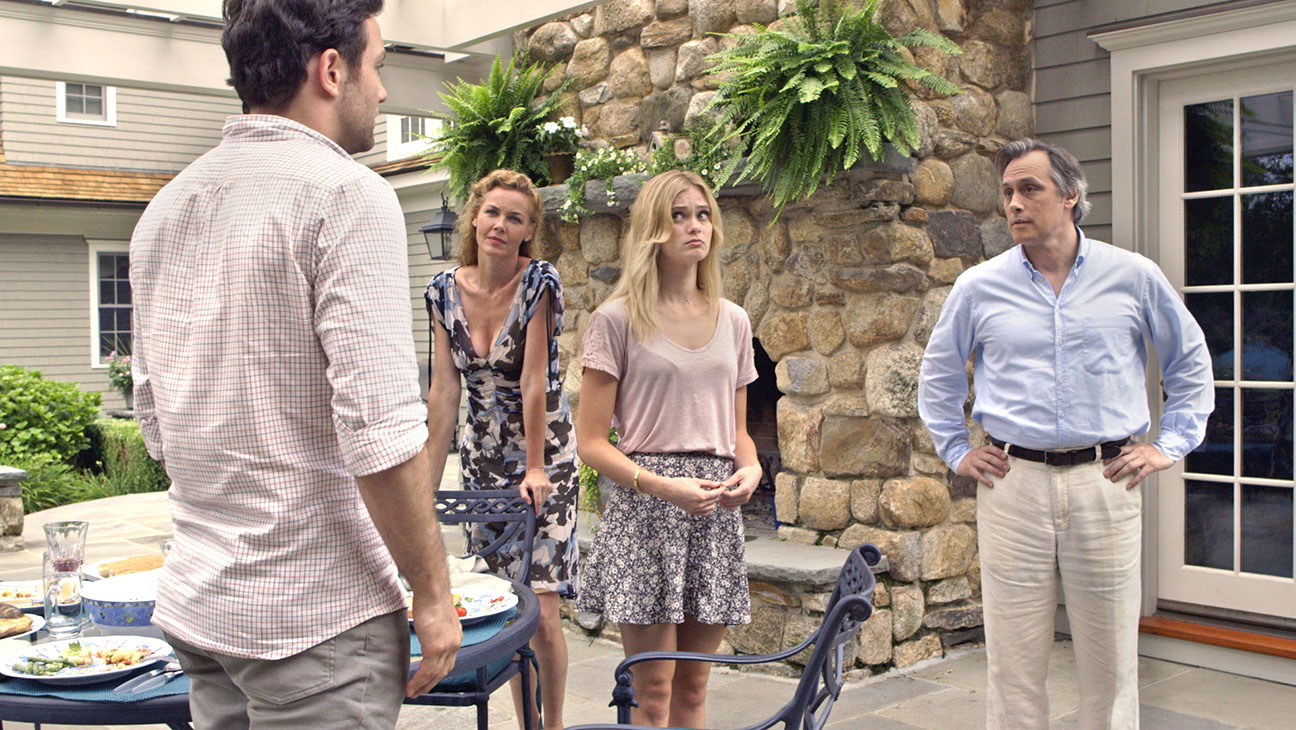
Harry (Sadowski) is still getting over the break up with his fiancée – after a year has gone by. He’s continually encouraged to meet new women by his best friend, Jared (Thompson), but he’s afraid to take the plunge. One night, while out bowling with Jared, Harry meets Grace (Paxton); they hit it off but when he walks her home she reveals she’s seeing someone. They part as friends. Later that evening, Harry is in a hotel bar having a drink when he meets Maren (Nielsen). She’s in New York for the weekend and interested in “having fun”. They have sex in her room, but agree that it’s all purely physical. Over the course of the weekend, Harry tells Maren about Grace and she encourages him to call her. Harry and Grace meet up but she still treats him like a friend. When Harry is next with Maren, Grace texts him urgently and he goes to her, but not before Maren has made clear her disappointment with Harry’s reaction.

A month later, Harry and Grace are on their way to meet her parents. He’s nervous as Grace’s father, Phil (Baker), owns the architectural firm where he’s applied for a job. But his nervousness turns to outright dismay when Grace’s mother turns out to be Maren. With cracks in Maren and Phil’s marriage apparent from the beginning, and both Harry and Maren worried that one of them will tell Grace about their weekend together, the visit becomes bogged down by arguments and misunderstandings. When Harry is persuaded to stay over he finds himself giving marital advice to both Maren and Phil in which he preaches the values of listening and honesty – two things he’s not doing with Grace. When he finally decides to tell Grace about his time with her mother, Maren pre-empts him and sends Grace a text from his phone that ends their relationship but without mentioning their affair.

Unaware of what Maren has done, Harry is told by her as well that Grace no longer believes in his commitment to their relationship and she has ended it. Harry goes back to New York City, but doesn’t give up on Grace, or their relationship, and does his best to win her back.

All Relative - scene

There’s a point about two thirds into All Relative where Maren and Phil sit down and discuss their marriage and where it’s all gone wrong. It’s a long scene, well acted by Nielsen and Baker, but not as dramatic as it’s meant to be, and it’s a good example of the movie’s inability to make the serious parts of the script really dramatic, and to make the humorous parts really comedic. It’s an awkward mix, made more awkward by the movie’s frankly unbelievable sequence of events once Maren and Grace’s relationship is revealed. Suspension of disbelief is one thing, but writer/director Khoury clearly hasn’t worked out how to make Harry’s predicament even remotely credible. And with a conclusion that feels more like a compromise than a realistic outcome, All Relative deprives the viewer of a fully rewarding experience.

Which is a shame as the movie could have been a lot sharper and a lot wittier. The initial scenes between Harry and Jared are handled with a pleasant whimsicality that bodes well for the rest of the movie, and Harry’s bashful approaches to Grace are cute without being overly cringeworthy. It’s all pointing to an enjoyable rom-com with an indie slant, and with the introduction of Maren, an indie rom-com with a slight hint of danger: will Harry have to choose between the two new women in his life?  Alas, any edge is pushed to the kerb as the movie enters farce territory with Maren’s reaction to Harry’s arrival. Nielsen’s performance teeters on the overblown at this point (and is a good indicator as to why this is her first “comedy”), but the script, on its way to being completely schizophrenic in tone, helps her out by reining in her outlandish attitude, but only by making her a relative figure of sympathy. As the movie progresses, Maren veers between being cunning and manipulative, and sensitive and thoughtful, but this inconsistency hurts both the character and the movie.

However, Maren’s uncertain personality is nothing compared to Harry’s unnecessary insistence on being truthful. Only in the movies would someone take another person at their word if they said, let’s be completely honest about everything. Harry’s need to reveal all about his fling with Maren often feels like the character can’t get by without the occasional bit of self-flagellation; here, his need provides the movie with what little real drama it can muster, but it feels forced purely by virtue of its repetition. It also leaves Harry sounding like an emotional misanthrope, as if by being completely honest he’ll be better than everyone around him (even if he doesn’t say this outright). Sadowski looks uncomfortable throughout, as if he’s realised that Harry is a bit of a dumbass and he’s decided to act accordingly (to be fair, the script does paint him that way).

With only Grace and Phil given anything remotely reminiscent of a believable personality or character, All Relative falls back too many contrivances and there-for-the-sake-of-it moments to make it all work. Khoury relies heavily on his cast to make the material more effective but alas they can’t, and while Paxton and Baker come out of things with their reputations intact, sadly, Nielsen and Sadowski give mannered, uneven performances that are often uncomfortable to watch. The movie is also quite bland in its look and feel and there’s no appreciable zing to proceedings, events and occurrences happening with what appears to be a frightening lack of consideration or interest on Khoury’s part (and that’s without taking the viewer into account).

Rating: 4/10 – let down by a script that can’t decide what kind of movie it wants to be, All Relative staggers along without making the audience care about its characters or what happens to them; too awkward to work effectively, the movie runs aground with indecent haste and never recovers its forward momentum.

Share this:

  • Click to share on X (Opens in new window) X
  • Click to share on Facebook (Opens in new window) Facebook
  • More
  • Click to print (Opens in new window) Print
  • Click to email a link to a friend (Opens in new window) Email
Like Loading...

The Hundred-Foot Journey (2014)

24 Saturday Jan 2015

Posted by dullwood68 in Movies

≈ Leave a comment

Tags

Charlotte Le Bon, Drama, France, French cuisine, Helen Mirren, Indian cuisine, Lasse Hallström, Le Saule Pleureur, Maison Mumbai, Manish Dayal, Om Puri, Review, Romance

Hundred-Foot Journey, The

D: Lasse Hallström / 122m

Cast: Helen Mirren, Om Puri, Manish Dayal, Charlotte Le Bon, Amit Shah, Farzana Dua Elahe, Dillon Mitra, Aria Pandya, Michel Blanc, Clément Sibony

Fleeing Mumbai after the loss of their restaurant in a fire that also claimed the life of their matriarch, the Kadam family – Papa (Puri), sons Mansur (Shah), Hassan (Dayal), and Mukhtar (Mitra), and daughters Mahira (Elahe) and Aisha (Panda) – first seek asylum in England but find their new home unsuitable for running a restaurant. They head for Europe, and while travelling through Europe, find themselves stranded in a small French village, Saint-Antonin-Noble-Val, when their van breaks down. Helped by Marguerite (Le Bon), one of the locals, they spend the night there. In the morning, Papa notices an abandoned building that’s up for sale. A quick look at the premises reveals the perfect site for a restaurant.

However, the site is directly opposite Le Saule Pieureur (the Weeping Willow), a Michelin star restaurant owned and run by Madame Mallory (Mirren). She is less than happy to see the Kadam’s open their own restaurant, and does all she can to sabotage their efforts to make Maison Mumbai a success, including buying all their menu’s main ingredients at the local market. This leads to a culinary war of attrition between Madame Mallory and Papa as they try to outdo each other. But Maison Mumbai flourishes, thanks to Hassan who has the makings of a great chef. He begins a romance with Marguerite and starts to learn how to cook French cuisine, albeit with infusions of spices and different flavours.

One night, Maison Mumbai has graffiti sprayed on its outer wall and its interior is fire-bombed. Hassan chases off the culprits but suffers burns to his hands and legs. Madame Mallory fires her chef (who was responsible for the attack) and voluntarily cleans the graffiti; this leads to a rapprochement between her and Papa. Hassan sees a chance to put his culinary skills to the test and “auditions” for Madame Mallory by getting her to make an omelette under his instruction (Hassan has learnt from Marguerite that this is the way Madame Mallory tests any potential new chefs). She recognises his skill and he accepts a job in her kitchen. Papa is dismayed by this turn of events, but not as much as Marguerite, who cools toward Hassan and their relationship becomes more adversarial than romantic. Hassan’s food is a success and with it comes the possibility that, thirty years after gaining her Michelin star, Madame Mallory will attain her second.

THE HUNDRED-FOOT JOURNEY

Adapted by Steven Knight – writer/director of Locke (2013) and Hummingbird (2013) – from the novel by Richard C. Morais, The Hundred-Foot Journey is a feelgood movie that ticks all the boxes on its way to a predictably life-affirming finale, but which remains entirely likeable thanks to the breeziness of its set up, a handful of pleasing performances, and the sure hand of Hallström at the tiller. It’s not a movie to change the way anyone sees the world (though it might inspire some budding chefs out there), but rather is the cinematic equivalent of a comforting three-course meal.

Movies about the importance of food and how it can bring people together occupy a distinct dramatic sub-genre, and The Hundred-Foot Journey (the distance between both restaurants) is just as aware of its responsibilities to the audience as any other culinary-based drama. So we have lots of lovingly filmed shots of food being prepared, tasted and eaten, along with satisfied grins and knowing smiles (though thankfully no one actually rubs or pats their belly). This movie’s own particular hook, the fusion of French and Indian cuisines, isn’t focused on as much as you might expect. It’s a bit of a one-way street, with French dishes being given the upgrade treatment, as if they’re on the way to becoming moribund. At one point, Hassan adds spices to a recipe that’s two hundred years old and when Madame Mallory challenges him, his reply is to imply that perhaps it’s about time the recipe should be changed. And yet there’s no attempt to take Indian cuisine and introduce any French influences. (It’s a brave movie that is willing to say that classic French cuisine needs shaking up.)

The various relationships are handled with an appropriately genial approach, the initial animosity between Madame Mallory and Papa leading to mutual respect which in turn leads to their dancing together (and we all know what that leads to). Mirren is haughty and imperious, and pulls off a passable French accent, though it’s like watching her as the Queen but in charge of a restaurant instead of a country. Puri is as curmudgeonly as ever, but with a big heart beneath all the business bluster; it’s a softer version of his role in East Is East (1999), and like Mirren he goes along with the tried-and-trusted nature of the material. As the ever-experimenting Hassan, Dayal imbues the character with an earnest, willing-to-please demeanour that doesn’t quite gel with his desire to succeed. It’s an agreeable performance that again meets the needs of the movie, but could have been beefed up (excuse the pun). Le Bon at least gets the chance to act against expectations, Marguerite’s antipathy towards Hassan’s success being the only example of a character not behaving as anticipated.

Hallström assembles all the various ingredients with his usual lightness of touch and keeps things from becoming too sentimental (though there’s a liberal amount of sugar sprinkled throughout). The drama is affected as a result – Hassan’s burnt hands and his quick, virtually pain-free recovery become almost incidental to what follows, the clash of cultures barely resonates – and remains superficial from start to finish, the various setbacks and problems the characters have to deal with proving too easy to overcome on every occasion. The movie is beautifully lensed by Linus Sandgren (though some of the matte effects are a little too obvious for comfort), and the French locations provide the perfect backdrop for the action (viewers with a good memory will recognise Saint-Antonin-Noble-Val from 2001’s Charlotte Gray). And A.R. Rahman’s score adds energy to the proceedings, but isn’t enough to offset the dependable nature of the story.

Rating: 5/10 – there are other, better culinary dramas out there – Babette’s Feast (1987), The Secret of the Grain (2007) – but The Hundred-Foot Journey doesn’t aim as high as those movies and treads a more predictable, well-worn path instead; everyone does just enough to make it entertaining but by the end you’ll be wanting more than it’s menu is able to provide.

Share this:

  • Click to share on X (Opens in new window) X
  • Click to share on Facebook (Opens in new window) Facebook
  • More
  • Click to print (Opens in new window) Print
  • Click to email a link to a friend (Opens in new window) Email
Like Loading...

Two Night Stand (2014)

16 Friday Jan 2015

Posted by dullwood68 in Movies

≈ 1 Comment

Tags

Analeigh Tipton, Blizzard, Comedy, Max Nichols, Miles Teller, One night stand, Online dating, Relationships, Review, Romance, Romantic comedy, Sex

Two Night Stand

D: Max Nichols / 86m

Cast: Analeigh Tipton, Miles Teller, Jessica Szohr, Scott Mescudi, Leven Rambin

Megan (Tipton) is unemployed, single, and getting on her roommate’s nerves. She prevaricates over getting a job, and won’t go out and meet new people, preferring to stay in the flat and waste her time. Pushed to do something different she signs up to a dating website but doesn’t arrange to meet anyone. One night she’s finally convinced by Faiza (Szohr), her roommate, to come out with her and her boyfriend, Cedric (Mescudi). But the evening backfires when she sees her ex-boyfriend with his new partner. Upset and angry, she goes home and decides to “get her own back” by meeting one of the men on the dating website. She chooses Alec (Teller) and goes to his apartment where they have a one night stand.

The next morning, a few wrong words leads to an argument and Megan leaving the apartment – but not the building; overnight a blizzard has deposited three feet of snow against the door of the building, and Megan can’t get out. With little choice but to return to Alec’s apartment they slowly, but with some effort, begin to make the best of a bad situation, and get to know each other a bit better. They discuss their views on relationships, and sex, and decide to be brutally honest with each other about how they were during their one night stand. Over the next day, their relationship improves but stalls when Megan finds a closet full of women’s clothes and learns that Alec has a girlfriend, Daisy (Rambin). Alec explains that Daisy is away but the reason Megan is there is that he found a break-up note Daisy had written but not given him. To get back at her, he joined the dating website. Angry, and with the snow having abated enough, Megan leaves.

When Daisy returns home, she finds a note that Megan had written, while he reveals her note to him, and they split up. Later, on New Year’s Eve, Megan is arrested at a party for breaking and entering; while she and Alec were together they broke into his neighbour’s apartment to find a toilet plunger. Alec has planted Megan’s note there in a bizarre attempt at getting back in touch with her as he can’t stop thinking about her, but when he tries to bail her out she refuses to budge. It’s only when Faiza does that she is released, but Alec isn’t giving up…

Two Night Stand - scene

As an attempt to do something slightly different with the rom-com format, Two Night Stand is an awkward mix of the refreshing and the inevitable, as it plays around with an established formula to sometimes winning, but equally distracting effect. Playing Russian roulette with the concept of honesty in a relationship, the movie tries to show that while it’s a wonderful idea in principle, in practice it’s prone to so many pitfalls you might as well not bother.

In rom-coms we’re used to seeing characters hold back on their feelings, or mistrust their partner’s motives, or skirt uncomfortably around the heart of a particular matter, and Two Night Stand does its best to waive all that aside and focus on two people who try to be open and honest from the start rather than finding out the truth about each other much later on. It’s a neat spin on the traditional idea that new partners set out to impress each other at the beginning and present the best version of themselves (only to relax into their usual personalities when the relationship is established). Of course, that kind of grandstanding is essentially unavoidable, and both Megan and Alec still try to impress each other, fanning that spark of attraction that has brought them together in the first place. They’re a match for each other – not that they realise this so much, though – but they have to endure some trials and tribulations before they work this out (and as usual one of them has to be persuaded by the other). It’s standard fare, pleasingly done, but nothing we haven’t seen a thousand times before.

The performances are above average, with Tipton shrugging off her supporting actress mantle and grabbing a lead role with gusto. She’s a gauche, intuitive presence on screen, gangly but with her own peculiar physical grace, and she makes Megan an appealing person to spend time with, insecure, clumsy, self-reliant despite any apparent real experience of life, and despite her reluctance to commit to romance after breaking up with her ex. As she navigates the troubled waters of internet dating, and the Alec’s murkier motives for doing so as well, Tipton maintains an honesty that befits the character and makes her entirely credible. Teller keeps it real as well, investing Alec with a self-protective, evasive veneer that is at first off-putting, but which becomes entirely understandable once Daisy’s note is revealed. He portrays Alec like a man caught between doing what’s right and what’s wrong, and not caring either way. It’s a winning performance, light-hearted when it needs to be, earnest at other times, but always carefully balanced so that Alec’s never too obnoxious or too offhand.

Good as their performances are though, neither Tipton nor Teller can compensate for the narrative version of jumping through hoops that the movie indulges in in its final third. It’s almost as if the script – by Mark Hammer – doesn’t really know what to do with Megan and Alec once she leaves his building, and the manner in which they’re reunited is so contrived as to be incredible. Not even Nichols, making his feature debut, can compensate for the straight up absurdity of the situation, and the result is a movie that goes from mostly entertaining to full-on bizarre in a matter of minutes. Bereft of an organic conclusion, Two Night Stand trusts to the standard emotional outpouring by one of the characters, and the equally standard (blanket) acceptance of same by the recipient. Trust and early love are resumed, and everyone lives happily ever after… probably.

Rating: 6/10 – bright and breezy, with some tellingl insights into modern relationships peppered throughout its first hour, Two Night Stand benefits from two sterling performances and a largely theatrical presentation; heartfelt and amusing for the most part (if not entirely original), the movie runs aground in the final third and never recovers.

Share this:

  • Click to share on X (Opens in new window) X
  • Click to share on Facebook (Opens in new window) Facebook
  • More
  • Click to print (Opens in new window) Print
  • Click to email a link to a friend (Opens in new window) Email
Like Loading...

The Fault in Our Stars (2014)

24 Wednesday Dec 2014

Posted by dullwood68 in Movies

≈ 2 Comments

Tags

Amsterdam, Ansel Elgort, Cancer, Drama, John Green, Josh Boone, Laura Dern, Literary adaptation, Review, Romance, Shailene Woodley, Willem Dafoe

Fault in Our Stars, The

D: Josh Boone / 126m

Cast: Shailene Woodley, Ansel Elgort, Laura Dern, Sam Trammell, Nat Wolff, Willem Dafoe, Lotte Verbeek, Ana Dela Cruz, Mike Birbiglia

Teenager Hazel Grace Lancaster (Woodley) is suffering from stage 4 thyroid cancer; she is on oxygen 24/7. While attending a support group she meets Augustus ‘Gus’ Waters (Elgort), who is in remission after losing his right leg to osteosarcoma. Gus and Hazel hit it off and soon they’re hanging out together and swapping life stories. At one point, Hazel tells Gus about her favourite book, “An Imperial Affliction”, a story about a young girl suffering from leukaemia. Gus reads it and is surprised to find the novel ends in mid-sentence; like Hazel he wants to know what happened next. Hazel tells him she’s written to the author on several occasions but he’s never replied to her.

A few days later, Gus announces he’s found the book’s author and has had an e-mail from him. Hazel is amazed and follows this up; she too receives a reply, one that includes an invitation to visit him in Amsterdam, where he lives. Hazel is overjoyed and tells her mother, Frannie (Dern), but the financial reality is that her parents aren’t able to afford the trip. Gus comes to the rescue when he arranges for the Genies (a make-a-wish organisation) to cover the costs. Hazel, Gus and Frannie travel to Amsterdam and the two teenagers meet the novel’s author, Peter Van Houten (Dafoe). However, their excitement is soon tempered by Van Houten’s behaviour towards them, which is boorish and rude. When they leave, Hazel is angry and upset, but they are followed by Van Houten’s personal assistant, Lidewij (Verbeek) who takes them to the Anne Frank museum. There, Gus and Hazel share their first kiss. With their relationship deepening, everything is looking positive, but before they return home, one of them has some bad news…

Fault in Our Stars, The - scene

A teen version of Love Story (1970), but with less angst and more of a sweet-natured approach, The Fault in Our Stars is a movie with so many good intentions it’s almost overwhelming. First there’s Gus’s unremitting refusal to be anything other than upbeat, a reasonable enough reaction given what he’s gone through personally, but there are times when you wonder if anyone would be like that. Then there’s Hazel’s determination to ignore the limitations her cancer is putting on her, as in the scene where she doggedly climbs to the top floor of Anne Frank’s house, her breathing getting more and more laboured as she ascends. These are two incredibly determined individuals, aware of their circumstances but doing their best (Gus, especially) not to let it interfere with their daily lives and their burgeoning relationship.

This leaves the movie feeling for the most part like a teen romance with “issues”, and ones that threaten to overwhelm the narrative at times. As cancer sufferers, both Hazel and Gus are plucky “survivors”, both of them putting on a brave face while unable to stop doubt and fear from eating away at them on the inside. While the issue of cancer is never very far away – Hazel wears a cannula in her nose for pretty much the entire movie – at the outset it’s treated more as an inconvenience than a life-threatening condition (which it is for both of them). This allows the movie to avoid being too heavy-handed or depressing, but leads to the suspicion that what we’re seeing is two young people who are so well adjusted to the vagaries of their respective diseases that the chance for real drama is going to be avoided as well.

That this doesn’t prove to be the case is, naturally, to be expected, but the movie takes a long time in getting there, and its continual positivity begins to wear as it progresses, with Hazel suffering the kind of occasional setback that happens, is shrugged off, and appears to have no toll associated with it at all. If this is a relatively true depiction of dealing with cancer, then full marks to those dealing with it on a daily basis, but in terms of the movie it’s like a tick-box exercise. Leaving notions of personal courage aside, what The Fault in Our Stars is telling us is, don’t let any disease stop you from living as full a life as possible.

While this is entirely commendable, what it isn’t is fodder for a movie that wants to be as “relevant” as The Fault in Our Stars wants (or tries) to be. If the movie is about anything it’s about the need for reassurance where very little can be given, and in circumstances where each day has be taken as it comes. Hazel and Gus’s meeting with Van Houten highlights this perfectly, his refusal to answer their questions or validate their concerns is the one moment in the movie where their attitudes around cancer are challenged. It’s an abrupt change in both pace and tone, and one that the movie badly needs as it staves off full saccharine overload. The repercussions from the meeting help the narrative immensely in the movie’s final third, and there’s a rewarding pay off at the end that would have seemed false otherwise.

As the embattled teens, Woodley and Elgort are a good match, clearly enjoying their roles and shading them more effectively than the script by Scott Neustadter and Michael H. Weber actually allows. Woodley is as good as you’d expect, investing Hazel with a strained insecurity that keeps her apart from others, including at times her parents. Elgort has the more outgoing role, and while he’s occasionally annoying he makes up for it by balancing Gus’s good nature with an underlying pathos. As Hazel’s mother, Dern does concerned and protective with ease, Wolff cements his reputation as a young actor to watch as fellow cancer victim Isaac, and Dafoe gives the movie a much needed shot in the arm as the truculent Van Houten.

Fault in Our Stars, The - scene2

The movie has humour aplenty in its opening scenes, and its gradual descent into full-fledged drama is handled with consistent surety by director Josh Boone, keeping a tight grip on the script’s more overly sentimental moments and grounding the emotional content without recourse to too much melodrama. The movie is lensed to good effect by Ben Richardson, and there’s a low-key score from Mike Mogis and Nate Walcott that underpins the various elements in an unfussy, often touching way.

Rating: 7/10 – bolstered by good performances and confident direction, The Fault in Our Stars avoids movie-of-the-week mediocrity by approaching John Green’s original novel with an appreciation for its attempt to do something a little different; funny and affecting in equal measure, fans of the book won’t be disappointed, while newcomers should be won over nevertheless.

Share this:

  • Click to share on X (Opens in new window) X
  • Click to share on Facebook (Opens in new window) Facebook
  • More
  • Click to print (Opens in new window) Print
  • Click to email a link to a friend (Opens in new window) Email
Like Loading...

And So It Goes (2014)

21 Sunday Dec 2014

Posted by dullwood68 in Movies

≈ Leave a comment

Tags

Comedy, Diane Keaton, Estranged son, Granddaughter, Lounge singer, Michael Douglas, Realtor, Review, Rob Reiner, Romance, Romantic comedy, Sterling Jerins

Print

D: Rob Reiner / 94m

Cast: Michael Douglas, Diane Keaton, Sterling Jerins, Frances Sternhagen, Annie Parisse, Austin Lysy, Scott Shepherd, Yaya Alafia, Andy Karl, Rob Reiner, Frankie Valli

Since the death of his wife, realtor Oren Little (Douglas) has become self-absorbed and   somewhat of a misanthrope. He’s trying to sell his house – for $8.6m and not a penny less – while living at a waterfront four-plex property he owns. His neighbour, Leah (Keaton) is also widowed, and is trying to make a go of being a lounge singer; she continually tries to be friendly to Oren but he always rebuffs her. Only his fellow realtor, Claire (Sternhagen), is allowed to challenge him, and only because of their long working association.

Oren’s life is turned upside down by the reappearance of his estranged son, Luke (Shepherd). Luke is due to go to prison and wants Oren to look after his nine year old daughter, Sarah (Jerins). Oren reluctantly agrees but palms his granddaughter off on Leah. Leah and Sarah quickly establish a close bond, but Oren is less enamoured, his continuing efforts to sell his home in order to fund his retirement taking up most of his time. His feelings begin to change one evening when Leah has a gig and Oren has to look after Sarah himself. He finds himself getting along with her, and when Leah comes home he feels a twinge of reluctance about Leah taking her back.

With Sarah acting as a common denominator, Oren and Leah begin to spend more time together, and Oren takes an interest in Leah’s singing career. He becomes her manager and gets her a booking at an up-market venue. At the same time they act as grandparents for Sarah and when her tenth birthday comes around, they both take her out for the day. Their relationship becomes closer and closer, and even though it has its ups and downs, they both realise how important they’ve become to each other. And then Oren finds he has a buyer for his home…

And So It Goes - scene

It’s incredible to think that thirty years ago, Rob Reiner made the seminal This Is Spinal Tap (1984), the first in a run of seven movies* that brought him both critical and commercial success. Back then, Reiner could do no wrong, but with the release of North in 1994, his career began to seem less sure-footed and more haphazard. And over the last twenty years, his reputation has increasingly foundered, to the point where movies such as The Story of Us (1999), Alex & Emma (2003) and Rumor Has It… (2005) have slowly but surely eroded his reputation. It would be wonderful to report that And So It Goes is a welcome return to form, but unfortunately, this is Reiner’s worst movie yet.

While the script by Mark Andrus is tired, predictable, corny and nowhere near as funny as it thinks it is (or wants to be), Reiner’s direction is the very definition of uninspired. Simply put, the movie is a lifeless, hapless mess chock full of tedious scenes, cumbersome plot developments, awkward dialogue, poorly drawn and motivated characters, and a central relationship that could only exist in the most perfunctory of romantic comedies. Oren’s granddaughter is unsurprisingly cute but not even manipulative enough to make much of an impact (the script could have had Oren looking after his son’s dog and it would have had the same resonance). Not content with making things as easy as possible for Oren and Leah and Sarah to become their own family unit, the one potential moment of real drama is over in two minutes flat: Sarah’s first meeting with her mother, a terrible instance of misguided gravitas that shows just how much Reiner’s ability behind the camera has waned. If ever a scene could be described as “just sitting there”, that’s the one.

It’s actually hard to describe just how bland and disappointing the movie truly is. With all the talent involved, both in front of and behind the camera, And So It Goes should have been a winner, but there’s a lethargy about it that thwarts any enjoyment the viewer might be expecting to experience. Scenes follow each other without any sense that they have any relation to each other, and there’s a complete lack of credibility in the relationships that make the movie almost unendurable. Oren is another in a (too) long line of cinematic curmudgeons who all have a hidden, kindly nature, and Leah is the earth mother who responds to children with consummate ease despite never having had any of her own. Everyone else is there for Oren to treat appallingly until he proves he’s just a misunderstood, unhappy guy with a real heart of gold – how else do you explain his being allowed to help one of his neighbour’s give birth without her being embarrassed/distressed/anything but insistent?

As Oren, Douglas vacillates between confused and embarrassed, as if even he can’t believe how he wound up in this mishmash of clichés, while Keaton reprises her role in Something’s Gotta Give (2003) to much lesser effect. Sternhagen swaps barbs with Douglas but looks bored throughout, Jerins fails to avoid from almost disappearing when she’s on screen, but the worst turn of all is from the director himself: as Artie, Leah’s badly-wigged pianist, he gives a cringeworthy performance that culminates in one of the worst pratfalls in cinema history. That one moment seems to sum up everything that’s wrong with the movie: when even the director can’t pull off his character’s “best” moment, you know it’s not going to get any better. And that’s the only way in which Reiner, and the movie, doesn’t disappoint.

Rating: 3/10 – complacency and insipidness abound in And So It Goes, making this a movie that audiences will struggle to get through; not even Douglas and Keaton can save this from becoming the latest nail in the coffin of Reiner’s directorial career.

*The other six movies: The Sure Thing (1985), Stand by Me (1986), The Princess Bride (1987), When Harry Met Sally… (1989), Misery (1990), and A Few Good Men (1992).

Share this:

  • Click to share on X (Opens in new window) X
  • Click to share on Facebook (Opens in new window) Facebook
  • More
  • Click to print (Opens in new window) Print
  • Click to email a link to a friend (Opens in new window) Email
Like Loading...

Begin Again (2013)

14 Sunday Dec 2014

Posted by dullwood68 in Movies

≈ Leave a comment

Tags

Adam Levine, Drama, Gregg Alexander, Hailee Steinfeld, John Carney, Keira Knightley, Mark Ruffalo, Music, Record producer, Review, Romance, Singer-songwriter, Songs

Begin Again

D: John Carney / 104m

Cast: Mark Ruffalo, Keira Knightley, Hailee Steinfeld, Adam Levine, James Corden, Yasiin Bey, Catherine Keener, CeeLo Green

Record label executive Dan Mulligan (Ruffalo) is struggling to keep up with the changing pace of the modern music industry. Separated from his wife Miriam (Keener) and estranged from his daughter Violet (Seinfeld), Dan’s partner in the record company he co-founded, Saul (Bey) fires him. He goes on a drinking binge that sees him end up in bar where English singer-songwriter Gretta James (Knightley) is persuaded to take to the stage by her friend, Steve (Corden). The song she sings captivates Dan and he approaches Gretta with the offer of signing her.

Gretta isn’t interested in Dan’s offer because she’s planning to return to England the next day. She’s in the US because she came over with her boyfriend, Dave Kohl (Levine), when he was signed to a record label. While on a promotional jaunt, he slept with a record label executive; unhappy and discouraged, Gretta just wants to leave and put her relationship with Dave behind her. The next morning, though, she takes up Dan on his offer. This forces him to come clean about his position, but he convinces her to go with him to see Saul; Dan is sure Saul will sign her, but without a demo to give him, he passes.

Undeterred, Dan comes up with a plan to make an album of Gretta’s songs by recording them all over the city: on rooftops, subway platforms, alleyways, wherever they can. Dan assembles a team of musicians that includes Steve, while Gretta, in an attempt to reunite him with his daughter, arranges for Violet to play guitar on one of the songs. With the album completed they see Saul again but leave without a deal having been reached (Gretta wants Dan to get his job back as well as a bigger cut of the profits).

Shortly after, Gretta sees Dave accepting an award on TV and believing him to have sold out, pours out her feelings in a song she sings and leaves on his voicemail. Dave gets in touch with her and asks to meet when he’s back in New York. Greta agrees but finds that her feelings for Dan are changing from professional to personal. Unsure of which way to turn, Gretta meets Dave in the hope that she’ll be able to decide which path to take.

Begin Again - scene

A fresh take on an age-old story, Begin Again belies its Svengali-like origins to give its audience a modern day interpretation that sidesteps many of its genre conventions with a knowing wink and a shrug of indifference. Working from his own script, director Carney fashions a story of two peoples’ separate roads to personal empowerment and redemption that neatly avoids the clichés inherent in such scenarios, and makes the movie feel like a breath of fresh air.

Playing around with the structure in the movie’s first half hour, Carney introduces the viewer to Dan and Gretta with a view to telling their back stories in such a way that by the time they begin to make the album they’re like old friends we’ve known for ages. We get to see Dan at his worst and Gretta at her most trusting. We see them come together and start to rely on each other as they begin to rebuild their lives. It’s in these opening scenes that Carney draws the audience in and sets up the dramatic elements that will pay off later on in the movie (but not in the way that you might expect). And he doesn’t fall into the usual traps, for example: despite the predictable nature of Gretta and Dave’s break up, it’s presented in the kind of “adult” way you rarely see in movies. It’s a relatively short scene but Carney packs it with an emotional punch that is frankly disarming (and he’s ably abetted by Knightley and Levine).

With Dan and Gretta’s relationship so well cemented the movie’s central section becomes a joyous evocation of making an album. This is Begin Again at its most winning and infectious, the sheer pleasure of making music in a live environment so evident you can’t help but tap your feet along with the songs. And thanks to the efforts of composer Gregg Alexander these are terrific songs indeed, catchy and effortlessly perceptive about life and love and the pitfalls of both. Knightley, who hadn’t sung before, is assured here, her soft, soulful voice a perfect match for the material.

Alas, the final third, with its need to wrap things up, undermines some of the good work Carney has put in. Gretta and Dan each arrive at a place that befits their individual struggles, but there’s a sense that they’ve been let down by Carney’s determination not to play it safe and to avoid the movie having a predictable ending. Even with this, his leads remain convincing throughout, handling their characters’ journeys from start to finish with skill, confidence and conviction. Ruffalo gives such an impressive performance it’s hard to take your eyes off him, while Knightley invests Gretta with a stubborn, earnest vulnerability that is mesmerising. When on screen together they spark off each other, each raising their game, each making the movie even richer. In support, Steinfeld, Keener and Corden all provide charming turns, while Levine (from Maroon 5) makes his feature debut and is very good indeed.

With its emotional content linked directly to, and expressively through, its songs, Begin Again is a musical drama that packs several unexpected punches, and if its near rags-to-riches feel has an unavoidable touch of whimsy wrapped around it, then it’s no bad thing. This is a feelgood movie, and unashamedly so.

Rating: 8/10 – guaranteed to put a smile on anyone’s face during its musical numbers, Begin Again is a lively, effervescent movie that is both delightful and poignant in equal measure; with assured turns from its two leads, it’s a movie that entertains and rewards far more than it should do given its bittersweet ending.

Share this:

  • Click to share on X (Opens in new window) X
  • Click to share on Facebook (Opens in new window) Facebook
  • More
  • Click to print (Opens in new window) Print
  • Click to email a link to a friend (Opens in new window) Email
Like Loading...

Miss Meadows (2014)

22 Saturday Nov 2014

Posted by dullwood68 in Movies

≈ 1 Comment

Tags

Black comedy, Callan Mulvey, Drama, James Badge Dale, Karen Leigh Hopkins, Katie Holmes, Murder, Review, Romance, Sheriff, Substitute teacher, Vigilante

Miss Meadows

D: Karen Leigh Hopkins / 88m

Cast: Katie Holmes, James Badge Dale, Callan Mulvey, Ava Kolker, Mary Kay Place, Jean Smart, Stephen Bishop

Miss Meadows (Holmes) is a sweet-natured, well-mannered substitute school teacher who hides a dark secret: she’s a vigilante, dedicated to “removing” anyone whose moral compass isn’t attuned as finely as her own. On her way home one day, she’s threatened by a gun-wielding kerb crawler who points a gun at her and tells her to get in his car. Miss Meadows promptly shoots him dead with her own gun… and carries on walking as if nothing has happened.

At the elementary school, Miss Meadows is put in charge of a class whose teacher has just died of cancer. One little girl, Heather (Kolker), has been seriously upset by this and Miss Meadows does her best to console her, and eventually earns her trust. In the meantime, she also meets the town Sheriff (Dale); there’s an immediate attraction but neither of them pursue it immediately. It’s left to the Sheriff to do the pursuing, and he takes Miss Meadows for a drive. As their romance blossoms, a school trip to a local park eventually sees Miss Meadows entering a fast food restaurant in order to get the school children some hot dogs. There she finds a young man has killed all the staff and customers and wants to kill himself. When she tells him he should, he attempts to kill Miss Meadows instead, but she proves quicker on the draw than he does, and she kills him.

Faced with a vigilante in his town, the Sheriff is suspicious that it might be Miss Meadows but he doesn’t have any evidence, other than that she’s lived in previous towns where a vigilante has been on the loose. Meanwhile, Miss Meadows learns that she’s pregnant with the Sheriff’s baby; she doesn’t tell him straight away but when she does he asks her to marry him, and she says yes. Around this time a convicted child molester called Skylar (Mulvey) moves into the neighbourhood. Miss Meadows tries to warn him off but he ignores her and starts hanging around the school. And Heather reveals that she saw Miss Meadows shoot the man in the fast food restaurant.

An incident with a priest leads to Miss Meadows killing him as well but this time she leaves behind a clue, and one that the Sheriff recognises. He confronts her, and out of love for her, tells Miss Meadows her vigilante days are over. But then on their wedding day, Skylar abducts Heather…

Miss Meadows - scene

A quirky mix of drama, comedy, romance and the kind of vigilante thrillers Charles Bronson made in the Seventies and Eighties, Miss Meadows gives Katie Holmes her best role since Batman Begins (2005). As the unfeasibly sweet and wholesome Miss Meadows (we never learn her first name), Holmes embraces the role and gives a tremendous performance, doing full justice to the duality of the character and the changes in tone such a character demands. It’s an assured, confident performance – the kind Holmes hasn’t given in a very long time – but it’s so good that Miss Meadows the movie sadly doesn’t match the  quality of Miss Meadows the character.

While Holmes is mesmerising throughout, her understanding of the role so complete she doesn’t put a foot wrong at any point, the rest of the movie stumbles along around her, the various strands and shifts in tone not quite gelling to create a balanced, effective whole. Matching Miss Meadows with the equally good-natured Sheriff (we don’t learn either of his names) lessens the chance of any real tension between the two when his suspicions are confirmed. Because the script avoids the Sheriff experiencing any personal dilemma at all, the confrontation between the two has no depth to it at all, and it’s almost perfunctory in its execution. Similarly, the scene where Miss Meadows confronts Skylar over tea in his home feels forced because of its mixture of genteel manners and unequivocal threat.
There are other scenes and moments that don’t quite work. The cause of Miss Meadows antipathy towards wrongdoers is due to a childhood trauma that is teased out as the movie progresses, but there are clues to be had in the character’s talks with her mother (Smart). And as those clues are revealed before the full tragedy of the traumatic incident is shown, the viewer is effectively given the same information twice, leaving the incident to play out with little dramatic resonance or emotional impact. It’s poor choices like this that undermine the movie’s persuasiveness, and leave the cast adrift within scenes that often bear no relation to the ones that have gone before, or follow on. The scenes in the Sheriff’s office are the best examples of this, taking place almost in isolation of the rest of the plot, and again feeling more perfunctory than essential to the story.

It’s not all bad, though. Holmes’ mannered, skilful performance anchors the movie, and is so rich it bolsters the movie during those short stretches when she’s not on screen. Dale and Mulvey are more than competent foils for Holmes’ ultra-proper, Fifties influenced femme fatale – the scene where Miss Meadows and the Sheriff make love for the first time is worth seeing all by itself just for her delighted reaction; it’s not just their first time – and the photography by Barry Markowitz is almost painterly in its depiction of small-town life. There’s also an amusing, wistful score courtesy of Jeff Cardoni that is appropriately idiosyncratic, and matches Miss Meadows’ prim nature perfectly. And even though her script doesn’t always meet the challenges it sets itself, Hopkins is on firmer ground in her choice of shots and the way in which she places the camera to achieve the desired comic or dramatic effect (this is a very good-looking, carefully composed movie).

Rating: 5/10 – without Holmes’ assured, ironic performance, Miss Meadows would swiftly become a chore to sit through, even though the premise is a shrewd one; uneven and unsure of which impression to make, the movie aims for a John Waters-style vibe but is ultimately too lightweight to succeed completely.

Share this:

  • Click to share on X (Opens in new window) X
  • Click to share on Facebook (Opens in new window) Facebook
  • More
  • Click to print (Opens in new window) Print
  • Click to email a link to a friend (Opens in new window) Email
Like Loading...

What If (2013)

16 Sunday Nov 2014

Posted by dullwood68 in Movies

≈ Leave a comment

Tags

Adam Driver, Comedy, Daniel Radcliffe, Dublin, Michael Dowse, Rafe Spall, Relationships, Review, Romance, Romantic comedy, Taiwan, Toothpaste & Cigars, Zoe Kazan

What If

D: Michael Dowse / 98m

Cast: Daniel Radcliffe, Zoe Kazan, Megan Park, Adam Driver, Mackenzie Davis, Rafe Spall

Following a difficult break-up, Wallace (Radcliffe) wants nothing to do with love. He no longer believes in it, and is in no hurry to hook up with someone new. At a party held by his best friend Alan (Driver) however, he meets Chantry (Kazan), Alan’s cousin. They hit it off, and he walks her home; at this point she reveals she has a boyfriend. Even so, Chantry gives Wallace her number but feeling that nothing good can come of their new association he doesn’t keep it. Sometime later they bump into each other outside a cinema they’ve just been to, and they pick up from where they left off. This time, when they reach Chantry’s home, she asks if they can be friends, to which Wallace agrees.

Their relationship grows as they spend more time together. Chantry invites Wallace to meet her boyfriend, Ben (Spall), and her sister, Dalia (Park). Ben warns Wallace off, while Dalia finds him attractive. An accident leaves Ben in the hospital overnight, and leads to his revealing why he’s so anti-love: his parents were doctors who cheated on each other until they divorced, and while he was a med student his girlfriend (also a med student) cheated on him with another doctor. Now he’s determined not to behave like his parents did.

Ben takes advantage of a job opportunity and moves to Dublin for six months, though he and Chantry commit to keeping their relationship going despite the distance between them. Alan and his girlfriend, Nicole (Davis) realise that Wallace is falling for Chantry, and even though he denies it, they keep pushing him to tell her how he feels about her, even on the day they get married. A disastrous night left naked and stranded at the beach by Alan and Nicole with just a sleeping bag to keep them warm, leads to an estrangement between Wallace and Chantry that neither knows how to fix. Confused about her feelings for Wallace she flies to Dublin and discovers that Ben has been offered a further job in Rio de Janeiro for another six months.

Alan tries once again to get Wallace to come clean to Chantry. Goaded to the point where he feels he has to come clean about his feelings for her, he follows Chantry to Dublin but receives a voicemail message when he gets there from Chantry that tells him she’s returned home and can he meet her. He rushes back and still feeling it’s best that he tells her how she feels, he tells her about his trip to Dublin and how much she means to him. Angry that he went to break up her relationship with Ben – something he’d promised he would never do – Chantry dismisses his claims that she has similar feelings for him, and they part. She accepts a promotion that means her moving to Taiwan. Realising that she’s not handled things too well, Chantry clings to the hope that Wallace will attend her leaving party, and they will have one last chance to make amends to each other.

What If - scene

Romantic comedies, these days at least, come in two forms: the kind that falls back on  gross-out humour to provide something memorable, and the kind that makes an effort to create memorable characters so that the humour flows organically from the actual set up. What If is definitely in the latter category, a rom-com that pitches two of the most appealing, agreeable characters that we’ve seen for a long while, and develops their relationship with patience and a surprising degree of skill.

Adapted from the play Toothpaste & Cigars by T.J. Dawe and Michael Rinaldi, What If scores highly by virtue of the script by Elan Mastai – coming a very long way from his debut script for MVP: Most Vertical Primate (2001) – and the inspired pairing of Radcliffe and Kazan. As the couple living in mutual denial of their feelings for each other, both actors excel, raising the movie’s standard plotting and set up into something much more worthwhile and affecting. (This isn’t to say that Mastai’s screenplay is lacking in any way, it’s just that it does follow the basic formula of boy-meets-girl, boy-keeps-his-feelings-to-himself-for-too-long, boy-finally-reveals-feelings-but-girl-feels-betrayed, boy-and-girl-may-or-may-not-be-reconciled that holds up most romantic comedies.)

Kazan and Radcliffe are both on terrific form, creating a convincing, captivating couple that makes it easier to root for them both through their personal and united travails. Kazan is a remarkably intuitive actress, able to adequately demonstrate the pain and confusion of unexpected love with an intensity that’s not often called for in a rom-com, but it all leads to a well-rounded, vivid characterisation and performance that elevates the material. She’s a beguiling actress, her unconventional looks and line readings adding to the believability of both Chantry as a character and her reactions to the developments in her relationship with Wallace. There are numerous moments where she reveals both the strength and the insecurity inherent in Chantry’s personality, and each moment is rendered beautifully.

Matching Kazan for believability and commitment is Radcliffe, demonstrating once again that he is one of the most talented actors of his generation. As the conflicted, honourably-minded Wallace, Radcliffe nails yet another role where he’s required (or so it seems) to be the engine that drives the movie on. Here he expertly dissects Wallace’s character and shows us the torment of a man whose experience of love has been so cruelly undermined by the people most important to him, and before he’s really had a chance to participate in it properly. It’s a measured, perceptive performance, full of insight and wit, and it complements Kazan’s role perfectly.

The secondary characters are well-drawn even if they’re unsurprisingly not as alluring or interesting as Chantry and Wallace are, but the supporting cast have fun with them nevertheless. Driver and Davis are a great match as the overly physical Alan and Nicole, their free-spiritedness at odds with the more closed in, hesitant natures of Chantry and Wallace, while Park is daffily amusing as Chantry’s predatory sister. And in the often thankless role of partner-who-must-be-shown-the-door, Spall makes Ben more interesting (and sympathetic) than the viewer might expect.

With a great script and great performances, the romantic aspects are handled with a great deal of delicacy and skill – the scene where Wallace helps Chantry out of a dress she’s trying on but has got stuck in is a superb case in point; the longing both characters display for each other is unexpectedly moving and outstandingly played. In the director’s chair, Dowse orchestrates things with poise and sensitivity, and shows an innate understanding of the characters and the material. He also knows when to let the camera linger on his leads, and when to go for the “killer” close up. It all adds up to a movie that’s not afraid to look good while pointing up the intimacy of the feelings on display. And there’s a wonderfully appropriate indie-style score by A.C. Newman that enhances and embellishes the action with casual aplomb.

Rating: 8/10 – funny, sad, heartwarming, quirky and absorbing, What If is a cleverly constructed, endlessly entertaining rom-com with two hugely impressive central performances; the perfect movie for singles looking for reassurance that love is just around the corner, or couples who want to rediscover that first thrill of finding someone special.

Share this:

  • Click to share on X (Opens in new window) X
  • Click to share on Facebook (Opens in new window) Facebook
  • More
  • Click to print (Opens in new window) Print
  • Click to email a link to a friend (Opens in new window) Email
Like Loading...

Obvious Child (2014)

11 Saturday Oct 2014

Posted by dullwood68 in Movies

≈ 2 Comments

Tags

Abortion, Comedy, Gaby Hoffmann, Gillian Robespierre, Jake Lacy, Jenny Slate, One night stand, Pregnancy, Relationships, Review, Romance, Romantic comedy, Stand up comedy


D: Gillian Robespierre / 84m

Cast: Jenny Slate, Jake Lacy, Gaby Hoffmann, Gabe Liedman, Richard Kind, Polly Draper, David Cross, Paul Briganti

Donna (Slate) is an aspiring comedienne who uses her own life as the basis for her stand up routines. On stage she’s fearless and bold, inviting audiences to share in her bewilderment at the stains she finds in her underwear, and the equally bewildering state of her sex life with boyfriend Ryan (Briganti). When he splits up with her after a gig, Donna doesn’t know what to do. Matters don’t improve when her boss at the bookstore where she works – the wonderfully named Unoppressive Non-Imperialist Bargain Books – tells her it’s going to be closing down. She looks to her parents (Kind, Draper) for advice but they both say the same thing: treat the current changes in her life as a challenge.
Donna uses the break up with Ryan as part of a routine but it goes badly. Afterwards she meets Max (Lacy) and they hit it off and end up having a one-night stand. Weeks later, while out on a shopping trip with best friend Nellie (Hoffmann), Donna realises she’s pregnant. Not ready to have a child yet, she decides to have an abortion. It’s at this point that Max reappears in her life, but while they begin to build a relationship together, Donna doesn’t tell him about the pregnancy. It becomes even more difficult to tell him when he reveals he can’t wait to be a grandfather after they see an elderly couple in a restaurant.

When Donna arranges with Max for him to come to her next show, she leaves with old friend Sam (Cross) before he can get there. They have an awkward moment at the kerbside that derails their relationship, leaving Donna feeling guilty and Max feeling confused. She tells her mother who confides that she was in the same position when she was young. From this, Donna decides to tell Max but he doesn’t find out until he goes to another of her shows and hears her discussing the pregnancy (and her plans to abort it) as part of the routine. The next day, and just as she’s leaving for the clinic, Max turns up with flowers…

Obvious Child - scene

Expanded from a short made in 2009, Obvious Child is an indie movie that mixes traditional romantic comedy fare with more considered dramatic elements and fuses them together to make a curious mix that is both beguiling and intriguing to watch. It all hinges on whether or not you buy into the character of Donna as a confident artist on stage, but an insecure, diffident person off stage. Thanks to Slate and writer/director Robespierre, Donna is someone we can all relate to, her lack of self-confidence away from the mic no different from the way in which any project or hobby or interest can elevate our faith in ourselves, if only for a short while, and allow us to put aside the more humdrum or mundane aspects of our daily lives. Donna’s also in her early twenties, still unsure about a lot of things, and like most of us at that age, still trying to find a place in the world around us. Her stand up routines are the way in which she works things out and puts some perspective on her life.

With Donna so cleverly and concisely drawn as a character, it leaves plenty of room for Slate to develop the role into something with a much greater depth than you’d normally expect from a comedy with such dramatic overtones. Donna is a mass of insecurities, flaws, uncertainties and self-doubts, but once she becomes pregnant she undergoes a sea change. It’s gradual but it’s there, a growing capacity for clear decision making, as the demands of Donna’s life become easier to deal with and her perception of herself becomes less debilitating. In short, deciding to have an abortion proves the making of her.

Abortion as a means to self-empowerment may not be the angle the filmmakers were aiming for, but it’s there nevertheless, and whether by design or not, it makes Donna all the more credible as a character. Cliché or not, adversity often brings out the best in people, and here, despite a couple of wobbles early on, Donna’s decision is one that proves to be a turning point, allowing her to grow and improve as a person. Slate is flawless in the role; she’s funny, poignant, touching, and she doesn’t strike a false note in the entire movie (and it’s helpful that’s she’s reprising her role from the short). It’s a star turn, able and arresting.

The rest of the cast provide more than capable support, with Lacy making Max the kind of amiable, dependable boyfriend material that all mothers would like to see their daughters hook up with, and Hoffmann providing an often acerbic turn as Donna’s best friend. Robespierre provides everyone with great dialogue – the exchange between Donna and her father at the dining table; Nellie’s admonishment, “You’re dizzy because you played Russian roulette with your vagina” – and directs loosely but with a judicious use of close ups. Donna’s stand up routines are darkly hilarious, and it’s great to see a female comic speaking as candidly as she does about such otherwise “hush hush” topics.

The subject of abortion may not be to everyone’s taste, and pro-Lifers may feel angered by the approach the movie takes, but this is one woman’s considered, positive reaction to an event she’s unprepared for, and on that level it works tremendously well. Robespierre and Slate et al should be congratulated for making a movie that doesn’t shy away from its contentious topic and doesn’t seek to complicate matters by referring to all the other agendas out there that relate to the issue.

Rating: 8/10 – an indie movie that is honest, emotive and rewarding, Obvious Child crams a lot into its short running time, and has much to recommend it; a breath of fresh air and seriously funny.

Share this:

  • Click to share on X (Opens in new window) X
  • Click to share on Facebook (Opens in new window) Facebook
  • More
  • Click to print (Opens in new window) Print
  • Click to email a link to a friend (Opens in new window) Email
Like Loading...

Magic in the Moonlight (2014)

28 Sunday Sep 2014

Posted by dullwood68 in Movies

≈ 1 Comment

Tags

Colin Firth, Comedy, Eileen Atkins, Emma Stone, Fraud, Magic, Magician, Medium, Review, Romance, Romantic comedy, Séance, South of France, Wei Ling Soo, Woody Allen

Magic in the Moonlight

D: Woody Allen / 97m

Cast: Colin Firth, Emma Stone, Simon McBurney, Eileen Atkins, Hamish Linklater, Marcia Gay Harden, Jacki Weaver, Erica Leerhsen, Jeremy Shamos, Catherine McCormack

Berlin, 1928.  British magician Stanley Crawford (Firth) astounds audiences as Chinese illusionist Wei Ling Soo, making elephants disappear and appearing to materialise himself out of thin air.  After another successful show, the arrogant, rude-minded Stanley is met by his old friend from childhood Howard Burkan (McBurney).  Burkan is also a magician, and he comes with a proposal: for Stanley to travel with him to the Côte d’Azur and expose a young American woman who is posing as a medium and exploiting Burkan’s friends, the Catledges.  Stanley, who abhors fake mediums and enjoys exposing them, agrees to go.

At the Catledges, Stanley is introduced to the young woman in question, Sophie Baker (Stone), and her mother (Harden).  He pretends to be a businessman called Taplinger but he is unable to restrain his skepticism, and although he does his best to hide his true identity, Sophie proves adept at “receiving” clues as to who he really is.  Still convinced she’s a fraud, he observes her during a séance but is unable to detect any trickery.  The next day, Sophie reveals she knows who Stanley is, and she warns him that she really has a gift, and that he shouldn’t doubt her.  But Stanley is becoming increasingly besotted with her, and while he has some lingering doubts, he finds himself spending more and more time with her, despite Sophie being wooed by Brice Catledge (Linklater).

Stanley takes Sophie to see his Aunt Vanessa (Atkins).  Sophie asks to hold a piece of Vanessa’s jewellery, and when she does, she reveals information about an affair that Vanessa had, and which Sophie couldn’t possibly have any knowledge of.  Now convinced that Sophie has a gift, he determines to hold a press conference where he will admit that his previous disbelief has been overturned.  The results of a further séance reinforces Stanley’s change of mind and heart.  Later, at a ball, Sophie asks him if he has any other feelings about her, but Stanley is baffled by her questions, and she leaves, disappointed.  Things come to a head when Aunt Vanessa is involved in a car crash, and Stanley finds himself praying for her survival on the operating table.  Will he embrace his newfound regard for the unseen, or will his skepticism return in the face of such a calamity?

Magic in the Moonlight - scene

This year’s annual movie offering from Woody Allen follows on from the sublime Blue Jasmine, and in comparison with that movie, Magic in the Moonlight is more Woody-lite than anything more substantial.  It’s a whimsical tale for the most part, anchored by a Scrooge-like performance by Firth that at times skirts perilously close to complete misanthropy, but which is rescued by the sheer pomposity of the character and his outlook on Life.  Crawford’s petulant skepticism and sarcastic attitude verges on the unpalatable throughout, but thanks to Firth, and Allen’s skill as a writer, he has just enough hidden vulnerability for the audience to connect with.  However, for large stretches of the movie he’s deliberately insufferable, and it’s difficult to understand what on earth Sophie could see in him (opposites do attract, but here it’s a little too extraordinary).

With its lead character so defiantly unlikeable for so much of the time, it falls to Stone to put some warmth and heart into the proceedings.  As the good-natured ingénue, Sophie, Stone is affecting, appealing, effortlessly lively, and the complete antithesis to Stanley, her winning smile and wide-eyed features both endearing and captivating.  It’s a more extrovert performance, but with a degree of subtlety that is best seen when Sophie enquires after Stanley’s feelings for her.  Her earnest entreaties, and her reaction to Stanley’s dismissal of the notion that he has a romantic interest in her, is cleverly done, and mesmerising to watch.

However, two good central performances aside, this is still a movie that trundles from one scene to the next without requiring much of a response from the audience, or indeed, any real investment in the plot or the characters.  The plotting is predictable, and the theme of science versus religion (or at least, the paranormal) is handled with Allen’s usual surety, but there’s still something lacking, a spark, perhaps, that stops the movie from being either memorable or touching.  The outcome is never in doubt, and while Allen pulls a dubious sleight-of-hand to get there – as well as twisting Stanley’s arm mercilessly towards the very end – a less conventional conclusion would have made all the difference.  (And how many more times will Allen trot out the old May-December romance we’ve seen so often in the past?)

The supporting cast – Atkins aside – have little to do except make up the numbers, and if no other characters stand out as much then it’s no one’s fault but Allen’s, his less than absorbing approach, and lightweight direction failing to lift the admittedly unsubstantial material.  That said, there are some delicious lines of dialogue here and there (as you’d expect, even in Allen’s lesser works), and the South of France is beautifully lensed by Darius Khondji, the colours (of the surrounding countryside in particular) popping and flaring in a way that hasn’t been seen in any of Allen’s previous work.  There’s the usual round up of jazz favourites from the Twenties and Thirties, but not all the compositions fit in this time, and Alisa Lepselter’s editing often leaves scenes hanging around just those few frames longer than necessary.  It all adds up to a Woody Allen movie that feels like a stopgap before the next really good project.

Rating: 6/10 – there’s just enough here to keep audiences occupied, but Magic in the Moonlight isn’t the romantic comedy delight of say, Midnight in Paris (2011); with a curmudgeonly central character holding it back, the movie ends up feeling like a magician’s parlour trick, but one where everybody knows how the trick is done.

Share this:

  • Click to share on X (Opens in new window) X
  • Click to share on Facebook (Opens in new window) Facebook
  • More
  • Click to print (Opens in new window) Print
  • Click to email a link to a friend (Opens in new window) Email
Like Loading...

Blended (2014)

03 Wednesday Sep 2014

Posted by dullwood68 in Movies

≈ Leave a comment

Tags

Adam Sandler, Africa, Comedy, Divorcee, Drew Barrymore, Frank Coraci, Holiday, Review, Romance, Widower

304053id1c_Blended_Final_Rated_27x40_1Sheet_5C.indd

D: Frank Coraci / 117m

Cast: Adam Sandler, Drew Barrymore, Kevin Nealon, Terry Crews, Wendi McLendon-Covey, Emma Fuhrmann, Bella Thorne, Braxton Beckham, Alyvia Alyn Lind, Joel McHale, Abdoulaye NGom, Kyle Red Silverstein, Zak Henri, Jessica Lowe

Widower Jim (Sandler) and divorcee Lauren (Barrymore) meet on a blind date that goes from bad to worse to disaster and leaves both of them never wanting to see each other again.  The holidays are coming up and both of them are looking to take their kids – Jim has three daughters: teenager Hilary (Thorne), Espn (Fuhrmann), and Lou (Lind), Lauren has two boys: Brendan (Beckham) and Tyler (Silverstein) – away, but neither set of children is looking forward to where they’re going.  When Jim and Lauren bump into each other at the store, their credit cards get mixed up.  Jim realises first and goes to Lauren’s house where Lauren’s friend Jen (McLendon-Covey) is freaking out because her boyfriend, Dick, wanted her to meet his children on a planned trip to Africa.  Having broken up with Dick because of this, the holiday is now available.  Lauren asks Jen if she can go in Jen’s place and take her boys, while Jim discovers Dick is his boss, and he asks Dick to sell the holiday to him.

When they all arrive at the resort in Africa, Jim and Lauren find they’re on a “blended familymoon”, and are surrounded by couples where one of the partners is a step-parent and the idea is to develop stronger ties with their step-children.  They meet Eddy (Nealon) and Ginger (Lowe), and Eddy’s teenage son, Jake (Henri).  Hilary has an instant crush on Jake, but because she looks like a boy she doesn’t think he’ll notice her.  The two families take part in the arranged activities and the children all learn to get on while Jim and Lauren continue to spar and bicker (even though they are clearly starting to like each other).  Lauren arranges for Hilary to have a makeover, and now Jake really does notice her.  With the holiday coming to an end, and with both Jim and Lauren having bonded with each other’s kids, Jim takes Lauren out for a romantic dinner but when they go to kiss, he backs off, unable to commit.

They all return home, and Jim begins to realise his mistake in not kissing Lauren.  He goes to see her but Lauren’s ex-husband, Mark (McHale), answers the door and makes it sound as if he and Lauren are getting back together.  Disheartened, Jim leaves, while Mark tries to persuade Lauren to have him back.  She won’t, but she tells him if he wants to make a good impression with his kids he should turn up for Tyler’s Little League baseball game at the weekend.  But on the day, it’s not Mark who turns up…

Blended - scene

Going by the assumption, “If it ain’t broke, don’t fix it”, Blended is the obvious follow-on from Just Go With It (2011), swapping Hawaii for Africa, and Jennifer Aniston’s dental assistant for Drew Barrymore’s divorced closet organiser, but without the added (and unexpected) star power of Nicole Kidman.  It’s a safe move, and an even safer movie, with Sandler injecting just enough of his loud man-child persona, as well as the standard amount of risqué gags, to ensure Blended is a few steps away from the kind of bland family fare that Disney pumps out with frightening regularity.  It almost feels like a movie made by committee, comfortably ticking off the boxes on its way to the expected happy ending: couple who initially detest each other – check; kids with various problems that will be addressed and dealt with by the end – check; supporting characters who provide most of the goofy humour – check; family values firmly reinforced in time-honoured Brady Bunch fashion – check; and so on.

Love him or loathe him, Sandler has a loyal fan base, and his movies regularly make their money back at the box office – just don’t mention the dreadful That’s My Boy (2012) which couldn’t recoup its $70 million budget even with international sales – so he must be doing something right.  As here, he appears to make little effort in terms of acting, and he’s becoming less and less of a physical performer, but he generally makes good choices in terms of the movies he makes, as well as the people he surrounds himself with.  But it’s with movies like Blended that it really springs to mind he’s just coasting until the next, more interesting project (and 2015’s Pixels may just be that project).

With its predictable plotting, tiresome running gags, and by-the-numbers characterisations, Blended could almost be the cure for insomnia, but it does have some good one-liners – “I naturally assumed your husband shot himself” – and the South African locations are suitably impressive, but the direction is too pedestrian for the movie to take off as effectively as Barrymore does in the parascending scene, and the script takes no chances with the material, leaving the audience amused for the most part but with little that’s truly memorable to take away with them.  It’s also a movie with a good deal of padding, its near two-hour running time stretched out largely because of the unnecessary third act set back in the US.

On the performance side, the various child actors are all appropriately adorable, cute, winsome etc., while the adults, Sandler and Barrymore aside, all blend in with the scenery and make little impression.  Unusually, there aren’t the expected cameos from some of Sandler’s off-screen pals, which may have provided a much-needed distraction, but all in all the performances are perfunctory enough and match the spirit of the script and the direction.

Rating: 5/10 – lacklustre and only sporadically entertaining, Blended is Sandler and co. ably treading on water but to no discernible effect; something to pass the time if you need to, otherwise there are other, better Adam Sandler movies you could be watching.

Share this:

  • Click to share on X (Opens in new window) X
  • Click to share on Facebook (Opens in new window) Facebook
  • More
  • Click to print (Opens in new window) Print
  • Click to email a link to a friend (Opens in new window) Email
Like Loading...

Are You Here (2013)

02 Tuesday Sep 2014

Posted by dullwood68 in Movies

≈ Leave a comment

Tags

Amy Poehler, Comedy, Competency hearing, Drama, Inheritance, Laura Ramsey, Matthew Weiner, Owen Wilson, Review, Romance, Therapy, Weatherman, Zach Galifianakis

Are You Here

D: Matthew Weiner / 112m

Cast: Owen Wilson, Zach Galifianakis, Amy Poehler, Laura Ramsey, Joel Gretsch, Paul Schulze, Alana De La Garza, Edward Herrmann, Peter Bogdanovich, Jenna Fischer, David Selby

Steve Dallas (Wilson) is a weatherman whose easy-going, free-wheeling lifestyle is tempered by his long-time friendship with Ben Baker (Galifianakis).  Ben lives in a rundown trailer and has effectively turned his back on conventional society, preferring to live away from people and challenging most modern day conventions.  He also lacks certain social skills.  When Ben learns that his father has died, Steve agrees to take Ben back to the small town where they grew up for the funeral and to learn what, if any, inheritance Ben will receive.

To both friends’ surprise, and also Ben’s sister, Terri (Poehler), Ben inherits his father’s house and several acres of surrounding land, and his father’s store.  Terri is horrified, as she feels Ben is unable to deal with the responsibilities involved in running the store, and she’s even more horrified when Ben decides he wants to transfer the house and land over to Steve as a gift for all his years of support and friendship.  With the two siblings at loggerheads, there is also the issue of Angela (Ramsey), the young widow of Ben’s father.  Terri dislikes her (even though she clearly made the old man very happy), but Steve is besotted.  He tries to worm his way into her affections but she’s not easily swayed, and Steve, who usually rehearses his pick-up lines before talking to women, finds he has to rethink his approach.

While Ben and Terri fight over Ben’s plans to use the store as the site for a non-profit organisation, Steve returns to work but not before he asks Angela to keep an eye on Ben.  It’s not long, however, before Ben’s behaviour becomes more erratic, and when Steve returns he has to persuade him to see a counsellor (Herrmann) as Terri has insisted on a competency hearing to rule on Ben’s ability to manage his inheritance.  Steve continues to woo Angela and finds his efforts are beginning to pay off.  When the counsellor advises that Ben would need to take medication in order to meet the requirements of managing the store (however he sees fit), the meds prompt a change in Ben’s outlook.  It also brings Ben and Angela closer together, until one night they end up in bed together.  And then Steve finds out…

Are You Here - scene

Ostensibly a comedy-drama, Are You Here – on paper at least – looks like a shoo-in in terms of quality.  Written and directed by the creator of TV’s Mad Men, with two gifted comic actors headlining, and with a storyline ripe with comedic and dramatic potential, there shouldn’t be any reason why this doesn’t score points across the board.

And yet…

There are several problems here, and all of them serve to hold the movie back.  First and foremost is the relationship between Steve and Ben.  Steve is a shallow ladies man whose over-riding commitment in life is to himself, and he has very little time for the feelings of others; he treats his boss (Schulze) with disdain, and the women he meets as objects.  He’s a really selfish, unlikeable character, and while Wilson invests Steve with a certain amount of sympathy, it’s not enough to make him any more palatable as the movie goes on.  He’s supposed to change and become more self-aware as his relationship with Angela develops but the full extent of his selfishness is revealed when he confronts Ben and Angela over their sleeping together: he acts more like someone who’s had his favourite toy taken away from him than someone who’s truly aggrieved.  With this level of insularity, it’s amazing that he could be as selfless and supportive with Ben as he is.

With the central relationship proving unconvincing, the movie’s attempts at drama prove to be off-key and more than a little underwhelming.  Terri’s animosity towards Angela is trite and lacks any credibility, and her attacks soon become boring and gratuitous.  She’s meant to be the uptight older sister who means well but has a hard time showing it, but thanks to Weiner’s muddled script (and despite Poehler’s valiant efforts), Terri comes across as unnecessarily mean and thoughtless (a subplot involving her attempts to fall pregnant is meant to elicit some sympathy for her but it’s never developed fully enough to be effective).  Conversely, Angela is the wise-despite-her-age opposite of Terri, a loving, caring woman who is more accepting of others, and who seems settled in her own skin.  The problem here is that there’s nowhere for such a character to go to, and even though she’s attracted to Steve, the romance between them is so laid-back it barely registers as anything more than something for the characters to do while Ben gets his act together.

As character arcs go, Ben’s transformation from woolly-thinking anti-consumer to gifted businessman is the movie’s biggest stretch, given insufficient credence by his father’s belief that he “has it in him” to succeed.  It’s also a curious conceit that Ben achieves peace and the ability to properly move forward off the back of some mood altering drugs.  Whatever the message here is, it does make the audience wonder if Weiner is saying that success can be achieved through the use of controlled substances.  If he’s not then it’s just a way of forcing a change for the sake of the script and adding a bright bow tie in wrapping up one of the plot strands.  Galifianakis does his best, but falls back on the kind of comedic schtick we’re used to seeing from movies such as The Hangover (2009) and Due Date (2010).

The comedy elements dominate the first forty-or-so minutes, but are slowly discarded in favour of the rambling, sub-par dramatics of the rest of the movie, leaving the audience to wonder if it’s worth staying on til the end (in the vain hope that things will improve, or at least reach an acceptable conclusion – they don’t).  It’s a shame, because with a tighter, more focused script, this could have been an interesting slice of parochial disillusionment, or had something more pointed to say about consumerism, or presented the viewer with at least one character they could care about.  Instead, and thanks to Weiner’s equally undercooked attempts at direction, the movie gives up almost as soon as Steve and Ben reach their hometown.

Rating: 4/10 – for a movie with this much potential and talent (both behind and in front of the camera), Are You Here struggles to involve its audience, and is unlikely to linger in anyone’s memory for longer than an hour or so; somnolent and unrewarding, the answer to the titular question is likely to be, “Not really”.

Share this:

  • Click to share on X (Opens in new window) X
  • Click to share on Facebook (Opens in new window) Facebook
  • More
  • Click to print (Opens in new window) Print
  • Click to email a link to a friend (Opens in new window) Email
Like Loading...

Mini-Review: The Love Punch (2013)

22 Friday Aug 2014

Posted by dullwood68 in Movies

≈ Leave a comment

Tags

Cap d'Antibes, Celia Imrie, Comedy, Diamond, Emma Thompson, Joel Hopkins, Paris, Pierce Brosnan, Review, Robbery, Romance, Timothy Spall, Wedding

Love Punch, The

D: Joel Hopkins / 94m

Cast: Pierce Brosnan, Emma Thompson, Timothy Spall, Celia Imrie, Louise Bourgoin, Laurent Lafitte, Tuppence Middleton, Jack Wilkinson, Olivier Chantreau, Marisa Berenson

When divorced couple Richard (Brosnan) and Kate (Thompson) discover that their pensions are worthless thanks to a company takeover orchestrated by French businessman Vincent (Lafitte), they put aside their differences and set out to steal a diamond worth $10.8 million that he has just purchased.  Their plan sees them travel to the Cap d’Antibes where Vincent is due to marry supermodel Manon (Bourgoin), and for whom he has had the diamond made into a necklace for their wedding day.

Aided by their friends, Jerry (Spall) and Penelope (Imrie), the still-sparring couple plan to attend the wedding disguised as Texans (there to cement a deal with Vincent), steal the diamond and replace it with a fake, and then head back to the UK to sell the diamond and disperse the money from the sale to everyone who’s lost their pension.  But not everything goes to plan…

Love Punch, The - scene

Look through most actors’ filmographies and you’ll see one or two movies that look like they were made a) for the money, b) because of the location, or c) both.  Well, for Messrs. Brosnan, Thompson, Spall, and Imrie, this is that movie, a dreadfully unfunny romantic comedy/caper hybrid that boasts beautiful locations but little else.  It’s a measure of writer/director Hopkins’ script that belief has to be suspended time and time again, from Kate’s unconvincing faint that gets them into Vincent’s building, to the idea of four Fifty-somethings even planning a diamond robbery.  And when they decide the only way to physically attend the wedding is by climbing a nearby cliff face, then you know rampant absurdity is the order of the day.

The performances are hampered accordingly, though Thompson does her best with what she has.  Brosnan tries too hard, Spall is given a military background that no one knows about, and Imrie revisits the sex-hungry character she’s played so many times before (but without bringing anything new to the idea).  The rest of the cast do what they can but it’s an uphill struggle.

The Love Punch was obviously intended as a bit of a light-hearted romp featuring two of Britain’s most popular actors, but instead it’s a stodgy, lumpen mess that never gets off the ground.  Definitely not one for the promo reel.

Rating: 3/10 – awkward and terrible, The Love Punch should be approached with caution; hampered by a dire script and with too many moments where the audience will be wondering if they’re really seeing what they’re seeing, this is one for fans of the principal cast only.

Share this:

  • Click to share on X (Opens in new window) X
  • Click to share on Facebook (Opens in new window) Facebook
  • More
  • Click to print (Opens in new window) Print
  • Click to email a link to a friend (Opens in new window) Email
Like Loading...

The Terminal (2004)

16 Saturday Aug 2014

Posted by dullwood68 in Movies

≈ 1 Comment

Tags

Airport, Catherine Zeta-Jones, Comedy, Drama, Krakozhia, Review, Romance, Stanley Tucci, Steven Spielberg, Tom Hanks, Unacceptable, Viktor Navorski, Zoe Saldana

Terminal, The

D: Steven Spielberg / 128m

Cast: Tom Hanks, Catherine Zeta-Jones, Stanley Tucci, Chi McBride, Diego Luna, Barry Shabaka Henley, Kumar Pallana, Zoe Saldana, Eddie Jones, Michael Nouri

Arriving at JFK International Airport, Viktor Navorski (Hanks) learns that while he was travelling from his home country of Krakozhia, a civil war has broken out and all travel permits and visas have been suspended; this means he can’t return home.  To make matters worse, the US government is refusing to recognise the revolutionary Krakozhian government, so won’t allow anyone from there to enter the US.  This makes Viktor “unacceptable”.  The only place he can stay is in the airport’s international terminal, something that Customs and Border Protection head Frank Dixon (Tucci) isn’t happy about but believes will be only temporary.

Viktor settles in at Gate 67 which is unfinished.  From there he ventures forth each day in the hope that the civil war has ended and he can either go home or go into New York as he’d originally planned (he has made a promise to do something for his father, who has recently died).  Through this he strikes up a friendship with Dolores (Saldana), a Customs officer who processes visa applications.  This in turn leads to a friendship with Enrique (Luna), an airport worker who has a crush on Dolores.  In return for food that hasn’t been used on flights, Viktor learns about Dolores’ likes and dislikes and relays this information back to Enrique.  During this time, Viktor also meets air stewardess Amelia (Zeta-Jones).  His attraction to her is tempered by her seeing a married man, Max (Nouri), but a relationship develops between them nevertheless.

As Viktor gets to know more of the airport staff – including Mulroy (McBride) and Gupta (Pallana) – Dixon becomes more and more irritated by his presence in the airport.  He tries to persuade Viktor to leave the airport but Viktor doesn’t take the bait.  With an important inspection coming up that will help towards an expected promotion, Dixon is anxious that nothing interfere with his plans, yet when a desperate Russian with undocumented drugs for his father arrives on the day of the inspection, Viktor interprets for him and resolves the situation with a lie, making Dixon furious with him. This makes Viktor very popular with the rest of the airport staff.

Viktor also continues to see Amelia when she flies in and when she tells him she’s stopped seeing Max, Viktor arranges a romantic dinner but it turns out Amelia has resumed the relationship (though this has an unexpected benefit later on).  When the war in Krakozhia ends, Dixon tells Viktor he has to return home and that he can’t go into New York; with the plane home ready to take off, Gupta stands on the tarmac and blocks it from moving, giving Viktor the chance to leave the airport and honour the promise he made to his father.

Terminal, The - scene

With a wonderful central performance from Hanks, The Terminal is glossy whimsy of the highest quality, a modern day fairy tale that features a princess in peril (Amelia), a wicked ogre (Dixon), three fairy godmothers (Enrique, Mulroy and Gupta), a maid (Dolores), and a handsome prince (Viktor – kind of).  It’s hugely enjoyable and is the type of movie that you can watch over and over again and still spot things you missed every other time (such as the head of the Statue of Liberty – keep an eye peeled, it’s there).  And like all good fairy tales it has a happy ending (though not the kind you might be thinking of).

Based around the true story of Mehran Karimi Nasseri, an Iranian refugee who spent eighteen years living in the departure lounge of Terminal One at Paris’s Charles de Gaulle airport, The Terminal downplays the drama inherent in such a predicament in favour of a heartwarming tale that is often hilarious, and which adds a romantic element that is both cute and bittersweet.  The script by Sacha Gervasi and Jeff Nathanson is structured much like a play, with act one concerning Viktor’s arrival at the airport, act two detailing his coming to terms with living in the airport, and act three showing his becoming a valued and respected member of the airport “staff”.  It’s a cleverly constructed script, with nods to wider issues such as immigration and racism, but included in such a way that they don’t intrude on the feelgood, aspirational  drive of the movie, or its message that tenacity and self-belief will always see you through.

It’s Viktor’s positive nature – so ably portrayed by Hanks – that is so affecting, his resourcefulness and persistence the very qualities we would like to think we’d have if we were in his position.  Hanks is nothing less than superb in a performance that is as richly nuanced as any other he’s given.  His choice of expressions alone offers a masterclass in acting; the scene in the men’s room when a traveller asks him, “Ever feel like you’re living in an airport?” is worth watching just for the stupefied look Viktor gives as a silent reply – and it’s made all the more impressive for being a reflection (and Hanks makes it all seem so effortless).

He has some great support too.  Zeta-Jones, still fresh from her Oscar-winning turn in Chicago (2002), makes Amelia appealing and sad at the same time, and in doing so makes the character more credible as Viktor’s possible love interest.  As the hard-nosed Customs and Borderland Protection administrator, Tucci is contained and hard to like but it’s a subtler performance than at first meets the eye, with echoes of a more sympathetic man showing through at odd moments.  And then there’s Pallana, whose deceptively expressive features are a joy to watch, his character’s unwavering paranoia amusing and wistful and, ultimately, well justified.  Luna plays Enrique as an adorable puppy, while McBride and Hensley are more stoic, and as Dolores, Saldana’s sunny approach to the character makes her more and more likeable as the movie goes on (it’s also fun to discover that Dolores is a Trekkie).

With all this favourable material allied to a raft of great performances, it comes as no surprise that Spielberg orchestrates everything with consummate ease, employing a lightness of touch that helps elevate Viktor’s plight from personal tragedy to unalloyed victory.  There’s more than a hint of Thirties screwball comedy in The Terminal, especially in Viktor’s confrontations with Dixon, and it’s to Spielberg’s credit that he augments such a contemporary story with such “old-fashioned” elements, and does it so seamlessly.  As with Hanks’ performance, this is one of Spielberg’s less appreciated movies, but one serious misstep aside – would Dixon really have been promoted after he grabbed Viktor by the neck and remonstrated with him? – he hits the movie out of the ballpark.

Rating: 8/10 – ripe for reassessment, The Terminal showcases an actor and a director working completely in synch, and providing their audience with a delightful slice of feelgood entertainment; richly detailed and with a clutch of stand-out moments, this is avowedly superior stuff.


Share this:

  • Click to share on X (Opens in new window) X
  • Click to share on Facebook (Opens in new window) Facebook
  • More
  • Click to print (Opens in new window) Print
  • Click to email a link to a friend (Opens in new window) Email
Like Loading...

Barefoot (2014)

16 Wednesday Jul 2014

Posted by dullwood68 in Movies

≈ Leave a comment

Tags

Andrew Fleming, Black sheep, Camper van, Drama, Evan Rachel Wood, Probation, Psychiatric hospital, Road trip, Romance, Scott Speedman, Wedding

Barefoot

D: Andrew Fleming / 90m

Cast: Evan Rachel Wood, Scott Speedman, Treat Williams, Kate Burton, J.K. Simmons, Ian Nelson, J. Omar Castro, David Jensen

Jay Wheeler (Speedman) is a man with problems.  He doesn’t have a job, he owes $37,000 to a bookie, and to make matters worse, he’s on probation.  When his next brush with the law sees him assigned to community service mopping floors at an L.A. psychiatric hospital, Jay uses his easy-going manner to charm the staff and patients alike – except for sceptical Dr Bertleman (Simmons) who thinks Jay will screw up there just as he has everywhere else.  One day a new patient, Daisy Kensington (Wood), arrives at the hospital.  Jay is immediately attracted to her, but he’s not allowed to have any contact with her.  One night, Jay rescues Daisy from the attentions of another patient; having hit him, Jay knows he’ll end up back in prison and attempts to leave – but not without Daisy who tags along with Jay despite his best efforts to dissuade her.

Having already agreed to attend his brother’s wedding in New Orleans, and having lied to his parents (Williams, Burton) about his work and that he has a girlfriend, Jay decides to let Daisy tag along and be part of “the plan” to hoodwink them.  Daisy, who has never been outside the apartment where she lived with her mother until her mother died recently, has very little social awareness, and is easily stressed.  At the wedding reception she comes under pressure from Jay’s father and has a panic attack.  With his parents realising something isn’t right about Daisy (and her relationship with Jay), a confrontation between them all leads to Jay and Daisy heading back to L.A. in his father’s prized camper van.

As they travel across country, Jay and Daisy’s relationship develops as they try and avoid the police – Jay has violated his probation by travelling outside California, and the hospital authorities view Daisy as potentially dangerous to others (they believe she killed her mother) – and their increasing love for each other prompts Jay to reevaluate his life and turn things around.  But first, he has to get Daisy back to the hospital…

Barefoot - scene

Ostensibly a romantic comedy – albeit a deceptively dry one – Barefoot is a remake of the German movie Barfuss (2005).  It moves at a measured pace that suits the material, and offers the viewer two equally measured performances from its leads.  It’s a movie that treads carefully around the possibility that Daisy may have actually killed her mother, and underplays the seriousness of the plight she and Jay find themselves in while travelling back to L.A. (at one point they’re chased by a police cruiser but make a successful getaway without any other police being involved).  Even Jay’s estrangement from his father, potentially a rich source of drama, is neatly dispensed with after having served its purpose at the wedding celebrations.  Barefoot only makes a real effort with the romance between Jay and Daisy (deliberately named after the characters from The Great Gatsby?).

Fortunately, this is the area in which the movie succeeds the most, and with simple efficiency and a great deal of charm.  As the couple who find they can’t live without each other (even if one of them may be a matricide), Wood and Speedman are a great match, her curious expressions, coupled with wide-eyed amusement at the world she’s only glimpsed via TV, highlighting the naiveté and lack of guile that makes Daisy such an engaging character.  It’s a quietly impressive performance, not too showy and yet not so insular that Daisy lacks depth or is unsympathetic.  Speedman’s performance complements Wood’s, making Jay a good-natured heel who, despite some bad choices, knows when to do the right thing, and knows the value of his relationship and what it’s loss will ultimately cost him.  Like Wood, Speedman keeps it low-key, hitting the emotional beats with quiet intensity, and in doing so, makes Jay’s blossoming sense of responsibility to others entirely credible.

Wood and Speedman are ably supported by Williams et al, and if the script by Stephen Zotnowski opts for secondary characters that often serve as functions of the plot, rather than as fully fledged individuals, then they’re still competently played (Simmons stands out as the doctor who tries to give Jay a second chance).  In the director’s chair, Fleming handles the material well, fashioning an at times offbeat romantic comedy and making a virtue of its lightness of touch.  Even though it’s a predictable journey that Jay and Daisy take together, Fleming still keeps it interesting and draws the audience in with ease.  There’s some beautiful location photography courtesy of DoP Alexander Gruszynski, and Michael Penn’s laid-back score is augmented by the inclusion of songs by the likes of Nick Drake.

Rating: 7/10 – overcoming its lightweight, predictable storyline thanks to two accomplished lead performances, Barefoot won’t get the wider audience it deserves, but those that do find it will be amply rewarded; a treat for fans of romantic movies, and moviegoers in general.

Share this:

  • Click to share on X (Opens in new window) X
  • Click to share on Facebook (Opens in new window) Facebook
  • More
  • Click to print (Opens in new window) Print
  • Click to email a link to a friend (Opens in new window) Email
Like Loading...

Endless Love (2014)

08 Tuesday Jul 2014

Posted by dullwood68 in Movies

≈ Leave a comment

Tags

Adaptation, Alex Pettyfer, Bruce Greenwood, Drama, Gabriella Wilde, High School, Remake, Romance, Scott Spencer novel, Shana Feste, Violent past

Endless Love (2014)

D: Shana Feste / 104m

Cast: Alex Pettyfer, Gabriella Wilde, Bruce Greenwood, Joely Richardson, Robert Patrick, Rhys Wakefield, Dayo Okeniyi, Emma Rigby, Anna Enger

Jade Butterfield (Wilde) is a quiet, studious teenager just graduated from high school.  She hasn’t made many friends, but she has caught the attention of David Elliot (Pettyfer).  He catches her eye at their graduation ceremony, and so begins a tentative romance made awkward by the difference in their social standing.  Jade’s father, Hugh (Greenwood) is an eminent surgeon; David’s father, Harry (Patrick) has an auto shop in town.  Jade is due to take up a medical internship in two weeks and follow in her father’s footsteps; David wants to follow in his father’s footsteps too – each has a sense of familial duty that’s important to them.  When Jade decides to hold a party for everyone in her year, it’s only David who turns up.  With help from his friend, Mace (Okeniyi), David manipulates their high school friends into attending.  Jade and David realise their attraction for each other, and Hugh becomes aware of this as well.  He’s not happy about it, though, and does his best to stop any relationship before it begins.

Despite his best efforts, Jade and David spend more and more time together.  They’re so passionate about each other that Jade decides not to leave to begin her internship, and instead opts to spend the rest of the summer with David.  When she tells her father this he reacts by forcing her to join him and the rest of the family – mum Anne (Richardson), brother Keith (Wakefield) and his girlfriend, Sabine (Enger) – on a trip to their lakeside summer home.  Jade retaliates by inviting David along.  Her father continues his enmity toward David and learns he has a history of violence.  When Jade and David run into Mace and David’s ex-girlfriend Jenny (Rigby), they’re persuaded to go with them to a zoo after it’s closed.  When Jenny (who still harbours hopes of winning David back) sees how Jade means to him, she calls the police and rats them all out.  When the police arrive, David draws them away from everyone else, but is arrested.

Jade expects her dad to help get David out of jail but he refuses and he tells her about David’s violent past.  Seeing how important David is to her, Hugh relents and gets David sprung from jail but they argue and David knocks Hugh to the ground.  When she confronts David about it, it leads to her being in a car accident.  Later, at the hospital, Hugh tells Harry he’s taken out a restraining order to keep David from coming within fifty feet of Jade.  With their relationship apparently over, Jade leaves for college and begins seeing a fellow student.  David meanwhile, stays at home, until a chance encounter with Anne leads to the realisation that, restraining order or not, he has to see Jade and win her back.

Endless Love - scene

The second adaptation of Scott Spencer’s novel, Endless Love is endlessly sappy, and endlessly derivative of just about every other teen romance you’ve ever seen (viewers unaware of the movie’s literary origin could be forgiven for thinking they’re watching another Nicholas Sparks adaptation).  David only has to glance in Jade’s direction and she’s instantly smitten, her years of social and personal reserve dumped by the wayside in a matter of seconds.  She also turns out to be quite the hussy, acting provocatively and kittenish around David until the night she decides it’s time they should take things to the “next level”.  Throughout this period of getting to know each other, it becomes clear that Jade is the subtly demanding modern princess, and David the noble savage she has ensnared.  It’s an interesting take on the standard roles you might expect from the scenario quoted above, but it’s abandoned as soon as the script requires Hugh to take centre stage and amp up the villainy needed to give the story some actual bite.

Of course, Hugh is meant to be a misunderstood, over-protective father (more so in the wake of the recent death of Jade’s other brother, Chris), but as Jade and David are staple characters in this kind of thing, so too is Hugh that other staple of the romantic drama, the man that David has to wrest Jade away from.  Sadly, the script tries to give Hugh some depth, and has him vacillate over whether to welcome David with open arms or closed fists.  With Greenwood required to leap both ways – often in the same scene – and on more than one occasion, Hugh becomes a bit of a distraction, but unfortunately a necessary one, as leading thesps Pettyfer and Wilde have their work cut out for them making their characters worth spending time with in the first place.  It’s not their fault, it’s just that Jade and David are about as exciting to watch as those airplane safety videos.  Once they’ve had sex, their story heads for their inevitable falling out with all the haste of a marathon runner intent on reaching the next water station.

If there’s anything about Endless Love that isn’t dispiriting it’s the performance of Richardson; she at least recognises the paucity of the drama on offer and adapts her depiction of Anne’s unhappiness accordingly.  Whenever she’s on screen the movie seems to improve just by having her there.  The same can’t be said of Pettyfer, who looks uncomfortable throughout, while Wilde seems intent on doing the bare minimum required to  make her dialogue sound just this side of reasonable.  Both actors are more than capable but here they seem unable to raise their game and defeat the shopworn elements that make up writer/director Feste’s lukewarm script.  Her direction is unfortunately quite pedestrian and the movie lacks a definitive visual style that might have lifted it up a little.  With a soundtrack that offers songs as indicators of the emotional content on screen (like Cliff notes, but with added harmonies), Endless Love has the feel of a movie that had better intentions than those that were actually delivered.

Rating: 4/10 – bland, and with plot developments that are signposted in bright neon lights, Endless Love is a remake that probably sounded like a good idea at the time; however, the finished product is a salient reminder that not every “good” idea should be acted upon.

Share this:

  • Click to share on X (Opens in new window) X
  • Click to share on Facebook (Opens in new window) Facebook
  • More
  • Click to print (Opens in new window) Print
  • Click to email a link to a friend (Opens in new window) Email
Like Loading...

Winter’s Tale (2014)

08 Sunday Jun 2014

Posted by dullwood68 in Movies

≈ 3 Comments

Tags

Akiva Goldsman, Colin Farrell, Drama, Fantasy, Good and evil, Jessica Brown Findlay, Mark Helprin, Miracles, Review, Romance, Russell Crowe, Stars, Terminal illness, White Horse, William Hurt

Winter's Tale

aka A New York Winter’s Tale

D: Akiva Goldsman / 118m

Cast: Colin Farrell, Russell Crowe, Jessica Brown Findlay, Jennifer Connelly, William Hurt, Graham Greene, Mckayla Twiggs, Eva Marie Saint, Ripley Sobo, Kevin Corrigan, Kevin Durand, Will Smith

1895.  A couple entering the US at Ellis Island are turned back because the man is terminally ill.  From the ship that is taking them back to their homeland, they set their infant child adrift in a model schooner in the hope that he will be found and given a better life.

1916.  The child is now a young man and a thief, Peter Lake (Farrell).  On the run from local gang boss Pearly Soames (Crowe), Peter is saved by a white horse that appears out of nowhere.  Using the horse both as transport and as an accomplice in his stealing, Peter finds himself outside the house of the Penn family.  Isaac Penn (Hurt) is the editor-in-chief of the New York Sun newspaper; he lives there with his two daughters, Beverly (Findlay) and Willa (Twiggs).  Thinking everyone has left on a trip, Peter breaks in but finds that Beverly has stayed behind.  She is unperturbed by finding a burglar in her home, and invites him to have tea with her.  While they talk, Peter learns she is terminally ill with consumption.

While Peter prepares to leave the city Soames is increasingly determined to track him down.  There proves to be a supernatural reason for Soames’ pursuit of Peter, a reason that involves the balance between good and evil.  Peter has a miracle to give to someone with red hair, and when Soames becomes aware of this, and Peter’s recent association with Beverly, he attempts to take her away from him.  Peter intervenes and they head for the Penns’ country home upstate.  There, their relationship deepens into love, but at a New Year’s Eve ball, Beverly’s drink is poisoned by one of Soames’ men, and she later dies.  Peter allows himself to be found by Soames and is pushed off a bridge into the river.

2014.  Peter is walking through a park one day when he meets a young girl, Abby (Sobo) and her mother, Virginia (Connelly).  He has no memory of who he is and later, attempting to follow up on a clue he’s found, he meets Virginia again at the offices of the New York Sun (where she works).  She helps him and they discover his association with the Penns; he also meets the adult Willa (Saint).  Soames, who is also still alive, becomes aware of Peter’s return and tracks him to Virginia and Abby’s apartment.  Abby wears a red bandanna that looks like she has red hair; she is also ill with cancer.  Realising that Peter’s miracle is for Abby and not Beverly, he tries to escape Soames and his men, and save Abby.

DSC_8310.dng

A pet project is not always the best idea for a first-time director, and it seems especially true if the director is also the screenwriter.  Sadly, with this adaptation of Mark Helprin’s novel, respected wordsmith Goldsman must be added to the list.  Helprin’s tale of magical realism is given a decidedly lacklustre retelling, and while some elements work better than others (as would be expected), those that do work are unable to compensate for those that don’t.  For example, the true nature of Soames – and later, that of the Judge (Smith) – is revealed in a shocking moment that is so unexpected it has the effect of destroying the mood the movie has spent quite some time establishing.  With that particular cat let out of the bag, the movie becomes quite different, and the tone darkens, but without lending the ensuing tragedy of Beverly’s death any real weight.  Coming as it does with around a third of the movie still to run, the audience is left wondering what on earth is going on, and their empathy for Peter and Beverly is wiped away as if it never happened.  And then Peter is killed…

Watching Winter’s Tale is like trying to watch two different movies at the same time.  There’s the syrupy, overly-sentimental movie that will attract fans of romantic dramas, and then there’s the dark supernatural movie that might attract fans of fantasy horror (if they’re aware the movie includes these aspects).  The combination of the two means they cancel each other out, so that neither is as effective or powerful as the other, and neither maintains its grip on the audience’s emotions.  The romance between Peter and Beverly is so cute as to be almost sickly, and their initial conversation – which includes deathless lines of dialogue such as, “What’s the best thing you’ve ever stolen?” “I’m beginning to think I haven’t stolen it yet.” – is so saccharine it’s almost stripping the enamel from the viewer’s teeth as the scene progresses (and there’s worse to come).

As for the fantasy elements, they serve only to confuse matters with their emphasis on souls as stars and the white horse as an agent for good, and Soames as a denizen of the underworld (or just this one – it’s hard to tell for sure).  As the movie reveals more and more of its miraculous background, Soames’ almost psychotic need to stop Peter from delivering his miracle becomes less and less credible by the minute, and Beverly’s innate understanding of the way in which the afterlife works is equally unexplained.  And there’s more dialogue to make a grown man cringe: “Look closely, for even time and distance are not what they appear to be.”

The dialogue, and its woeful attempts to be deep and meaningful throughout, is all the more perplexing given Goldsman’s acuity as a writer, but here he seems in thrall to the archness of the material.  It’s a testament to the acting prowess of Farrell et al. that a lot of it is made to sound more profound than it actually is.  Findlay is given the lion’s share of mystical pronouncements, and amazingly, makes incredibly light work of them, but is still unable to rescue them entirely from being torpid.  Of the acting, Farrell does floppy-fringed lovesick melancholia better than anyone for a long, long while, while Crowe chews the scenery as if it’s his last meal.  Findlay is simply mesmerising, and is sorely missed once Beverly is killed off, while Connelly is impeded from giving any kind of performance by having to accept Peter’s longevity in about two seconds flat.  Hurt essays his patrician role with dismissive ease, and Greene cameos as a friend of Peter who doubles as an agony aunt for him.

Goldsman directs with the finesse of a shovel to the back of the head, and fails to grasp that what may work on the page doesn’t always translate well to the screen.  With the movie being so uneven, and its characters serving as prosaic archetypes rather than fully-fledged people, Winter’s Tale stumbles and stutters its way to a conclusion that seems as rushed as it is unlikely (it also requires a character to make such a mind-bogglingly stupid decision it takes the breath away).  In fairness, though, it’s beautifully mounted with often luminous photography courtesy of Caleb Deschanel, and the movie’s production design is of such a high standard that it wouldn’t be too much of a stretch for it to be nominated come next year’s Oscars.

Rating: 4/10 – a poorly developed adaptation that takes magical realism and softens the edges of both, leaving a mawkish, haphazardly constructed movie to fend for itself; disappointing for fans of the novel, Winter’s Tale has none of the energy needed to make it compelling for newcomers.

Share this:

  • Click to share on X (Opens in new window) X
  • Click to share on Facebook (Opens in new window) Facebook
  • More
  • Click to print (Opens in new window) Print
  • Click to email a link to a friend (Opens in new window) Email
Like Loading...

A Million Ways to Die in the West (2014)

04 Wednesday Jun 2014

Posted by dullwood68 in Movies

≈ Leave a comment

Tags

Amanda Seyfried, Charlize Theron, Comedy, Gunfights, Liam Neeson, Neil Patrick Harris, Old Stump, Outlaw, Review, Romance, Seth MacFarlane, Sheep farmer, The Old West, Western

Million Ways to Die in the West, A

D: Seth MacFarlane / 116m

Cast: Seth MacFarlane, Charlize Theron, Amanda Seyfried, Liam Neeson, Giovanni Ribisi, Neil Patrick Harris, Sarah Silverman, Christopher Hagen, Wes Studi, Matt Clark, John Aylward, Evan Jones

It’s 1882, and on the edge of the wild frontier is the town of Old Stump, a place that epitomises the daily fight for survival, where “everything that isn’t you, wants to kill you”.  So believes Albert Stark (MacFarlane), a sheep farmer with low self esteem and a girlfriend, Louise (Seyfried) who dumps him after he chickens out of a gunfight.  Hurt, angry and depressed, Albert hides away at his farm until his best friend, Edward (Ribisi) persuades him to come back into town and try and win back Louise.  It soon becomes clear though that Louise has moved on, and she’s now seeing smarmy moustache salesman Foy (Harris).  Meanwhile, vicious outlaw Clinch Leatherwood (Neeson), riding nearby on his way to rob a stagecoach with his gang, decides to keep his wife, Anna (Theron) out of harm’s way and tells her to hide out in Old Stump until he can come back for her.

When a fight breaks out in Old Stump’s saloon, Albert saves Anna from being injured and a friendship develops between them.  He tells her about Louise and Anna agrees to help Albert win her back.  At the County Fair, Albert’s attempts to make Louise jealous by pretending Anna is his new girlfriend backfires when he ends up challenging Foy to a gunfight in a week’s time.  Albert has never fired a gun before and proves to be the worst shot in the world, but with Anna teaching him he slowly improves.  As the week progresses, Albert grows in confidence, and he and Anna begin to fall in love.  When Clinch comes to Old Stump he learns that Anna has been seen kissing another man, and he makes it clear that unless the man in question meets him at high noon the next day, he’ll keep killing the townspeople until he does.

Anna is forced to reveal Albert’s identity to Clinch.  She gets away from him and warns Albert who runs away.  An encounter with Cochise (Studi) and some serious peyote reveals Albert’s true courage and he returns to town to face Clinch and go through with the gunfight.

A Million Ways to Die in the West

As you’d expect from a movie starring, and written and directed by, Seth MacFarlane, A Million Ways to Die in the West does its best to raise big laughs, and there are plenty of laugh out loud moments that are either inspired or just plain funny (the movie’s best gag is also its most contentious, the Runaway Slave Shooting Gallery).  But there are also too many occasions when the humour falls flat, though to be fair it’s the attempts at injecting modern, gross-out gags into the mix that generally don’t work (except for one priceless combination of sound effect and line of dialogue that sounds like an outtake from Family Guy).  Albert’s claim that the West is a horrible place to live in is reinforced by some great sight gags, and Foy’s need for a hat at one point is a joy to watch.  And then there’s Edward’s girlfriend Ruth (Silverman), a prostitute who believes they shouldn’t have sex until they’re married, but who sleeps with around ten men each day (when things are slow).  All these aspects help to make A Million Ways to Die in the West one of the most entertaining comedies of recent years (though your appreciation for MacFarlane’s line in humour will go some way to determining that).

What does come as a surprise is MacFarlane’s handling of some of the other elements.  The romance between Albert and Anna is well thought out and handled with care, making it quite affecting, and MacFarlane ups his game during these scenes, matching Theron for soulfulness and charm.  Their romance is the heart of the movie and MacFarlane takes more care with these scenes than he does with most of the comedy, and proves himself a better director here than elsewhere.  He’s matched by Theron – who’s clearly enjoying herself – and even though the movie slows down a bit to accommodate this particular subplot, there’s no harm done.  There’s also some beautiful location photography, with the glories of Monument Valley on display throughout, and the score encapsulates nods to all the great Western musical themes without descending entirely into pastiche.  MacFarlane obviously has a love of the genre, and even though he spends as much time spoofing it as he does celebrating it, that appreciation shines through and provides the soul of the movie.

He’s helped by a great cast.  Theron, as noted above, has a whale of a time.  She hasn’t made a comedy since Waking Up in Reno (2002) – though the uncharitable of you out there might opt for Æon Flux (2005) – but on this evidence casting directors need to be looking at her anew.  She has a lightness of touch that makes her comic timing quite subtle.  Seyfried, unfortunately, is given very little to do except hang on Harris’s arm, though the sight of Louise giving head to Foy’s moustache is definitely an image not to be forgotten.  Harris is an appropriately hissable secondary villain, while Neeson plays it straight as the dastardly Clinch.  As the “virginal” lovers, Edward and Ruth, Ribisi and Silverman are given plenty of opportunities to shine as all good sidekicks should be, and there’s a number of cameos that add to the overall feel good vibe that MacFarlane engenders from start to finish (one in particular, featuring a character from another movie series altogether, is an unexpected delight).

On the minus side, and despite all the positives, MacFarlane’s script is in need of some judicious pruning, and as a result the movie is uneven and the various elements don’t always gel.  Scenes overrun, while others feel in need of further development, as if MacFarlane has thought of a great idea but isn’t sure where to take it; the end result is an addition to the movie that doesn’t feel right (the hallucination sequence toward the end is a good case in point).  Again, there are too many jokes that don’t work, or seem forced, and while the cast all acquit themselves well, there are too many occasions when they’re foundering trying to make a joke work.  Also, the last third plays much as if MacFarlane hadn’t quite worked out the ending, and there’s an air of settlement about the whole thing, as if it was the best conclusion he could think of.  Considering the attention given to the build-up, it’s a major disappointment (and to make matters worse, MacFarlane adds an unnecessary explanation into the mix as well).

Rating: 7/10 – there’s more to like here than not, but a lot will depend on your tolerance for MacFarlane’s sense of humour; not quite the edgy, smut-filled laugh-fest you might be expecting, and with a bigger heart as well, and topped off by a great cast clearly entering into the spirit of things (and we need more Westerns anyway).


Share this:

  • Click to share on X (Opens in new window) X
  • Click to share on Facebook (Opens in new window) Facebook
  • More
  • Click to print (Opens in new window) Print
  • Click to email a link to a friend (Opens in new window) Email
Like Loading...

In a World… (2013)

18 Sunday May 2014

Posted by dullwood68 in Movies

≈ 1 Comment

Tags

Comedy, Don LaFontaine, Father/daughter rivalry, Fred Melamed, Lake Bell, Marital break-up, Movie trailers, Review, Rob Corddry, Romance, The Amazon Games, Voice over

In a World...

D: Lake Bell / 93m

Cast: Lake Bell, Fred Melamed, Rob Corddry, Michaela Watkins, Alexandra Holden, Ken Marino, Demetri Martin, Nick Offerman, Tig Notaro, Stephanie Allynne, Geena Davis, Jason O’Mara

When King of the Voice Overs, Don LaFontaine dies, he leaves a vacuum within the voice over industry, one that veteran Sam Sotto (Melamed) would like to fill but he’s too aware of his own limitations to do so, and decides to support up and coming Gustav Warren (Marino) instead.  His daughter, Carol (Bell) works as a dialect coach, and while she would like to break into voice over work, the industry’s male-dominated nature – as well as Sam’s dismissal of her chances to succeed – keeps her from trying.  One day, while she’s teaching Eva Longoria to speak with a Cockney accent, Carol is asked by Heners (Offerman) to provide the voice over for the trailer for a children’s movie, one that Gustav was meant to do but which he hasn’t shown up for.  Helped by Louis (Martin), a sound engineer at the studio, Carol nails the voice over and begins to gain further trailer work on other children’s movies.

Gustav is upset by this, but Sam regards this development as a flash in the pan (neither of them know it’s Carol at this point).  When Gustav hosts a party for everyone in the industry, Carol attends with her father and sister, Dani (Watkins).  Gustav seduces Carol, much to the disgust and disappointment of Louis who has a crush on her, and the bemusement of her co-workers at the sound mixing studio.  When Carol is picked to voice the trailer for the upcoming futuristic fantasy movie The Amazon Games, and they plan to use the iconic phrase “in a world…” to begin the voice over, the news is greeted less than warmly by Sam.  He forces the issue with the movie’s producers, making them commit to an audition process.  Now facing competition from her father and Gustav, Carol almost throws in the towel, but Louis convinces her to go ahead with her audition tape.  At the Golden Trailer Awards, where Sam is to receive a Lifetime Achievement Award, the trailer’s first showing will reveal the producers’ choice.

In a World... - scene

Riffing off the death of LaFontaine, a real-life voice over artist, In a World… at first appears uncomfortably opportunistic, but thanks to Bell’s sure hand on the tiller, this feeling is soon dispensed with.  Writing as well as directing, Bell brings the audience into a world just as narcissistic and competitive as any other, but imbues it with enough good-natured characters and charm to offset the rampant ambition and casual backstabbing (Sam drops Gustav as soon as he knows Carol’s got the Amazon Games gig).  Indeed it’s only Sam who’s truly horrible, and Bell handles Carol’s scenes with him with understated simplicity, painting a portrait of a fractured relationship that shows no sign of ever being repaired.  Carol’s frustration with her father’s outdated sexist approach, as well as his lack of support for her and her career, are convincingly highlighted, and the way in which she deals with them completely plausible (it helps that Carol doesn’t have all the answers to the problems that beset her).

In her private life, Carol succumbs a little too easily to Gustav’s attentions, but there’s a lovely moment later when Louis declares his “liking” for her, and while this aspect of the script is less than persuasive, by the time it arrives the movie has built up so much good will it doesn’t matter.  There’s a subplot involving Dani and a guest at the hotel where she works, and whether or not she cheats on husband Moe (Corddry), and while it provides some much needed drama, it’s easily and neatly resolved, as are pretty much all the conflicts Bell’s script creates for her characters.  The movie relies on Carol’s placid nature throughout, and though there are plenty of laughs to be had, these are largely due to the activities and actions of the supporting cast – Notaro as deadpan lesbian Cher, Allynne as predatory receptionist Nancy, Offerman and Corddry.  Bell is an appealing presence as Carol, and proves an unselfish actor in scene after scene.  She draws good performances from her cast (Watkins and Corddry shine), and directs with an ease that some veteran directors never attain.  If the movie suffers from anything, it’s a lightness of touch that could have been fatal in the hands of someone less committed to the material.

Rating: 7/10 – satisfying for the most part, In a World… is a treat, but one that might not bear repeated viewings; it’s a great “debut” for Bell to be sure, but a little too lightweight in its execution to be truly memorable.

Share this:

  • Click to share on X (Opens in new window) X
  • Click to share on Facebook (Opens in new window) Facebook
  • More
  • Click to print (Opens in new window) Print
  • Click to email a link to a friend (Opens in new window) Email
Like Loading...

That Awkward Moment (2014)

01 Saturday Mar 2014

Posted by dullwood68 in Movies

≈ 1 Comment

Tags

Bromance, Commitment, Dating, Friends, Imogen Poots, Marriage, Michael B. Jordan, Miles Teller, Relationships, Review, Romance, Tom Gormican, Zac Efron

That Awkward Moment

D: Tom Gormican / 92m

Cast: Zac Efron, Miles Teller, Michael B. Jordan, Imogen Poots, Mackenzie Davis, Jessica Lucas, Addison Timlin, Josh Pais

With the rom-com feeling like it’s hit a bit of a rut at the moment, this male-centric offering from first-time writer/director Gormican seems – at first glance – to offer something a little bit different.

When Mikey (Jordan) tells his friends Jason (Efron) and Daniel (Teller) that his wife, Vera (Lucas) wants a divorce, it prompts them to make a pact: to avoid serious, long-term relationships and revisit their younger days when they partied and flirted and drifted from woman to woman.  For Jason and Daniel this isn’t so difficult as this is what they’re already doing; for Mikey it proves a little bit harder as he still wants to rescue his marriage.

Jason meets Ellie (Poots) at a bar and they go back to her place.  A misunderstanding sees him leave before she wakes the next morning, but already he’s smitten.  When they meet again where he works as a book jacket designer (in tandem with Daniel), they resume their fledgling relationship, and begin spending more time together.  Daniel, who uses his friend Chelsea (Davis) to pick up girls, finds himself becoming attracted to her; their friendship evolves into their becoming lovers themselves.  With Mikey rekindling his marriage to Vera, all three men find themselves reneging on the pact they made.  Afraid of ruining their own relationships, the men find themselves struggling to admit their feelings for the women in their lives, both to themselves and to each other.

Film Review That Awkward Moment

That Awkward Moment is, at heart, more of a bromance than a romantic comedy, with the relationship between Jason, Daniel and Mikey taking centre stage.  With this in mind it’s easy to dismiss the movie as a “guys-can-be-jerks-but-deep-down-they’re-really-sensitive” modern-day fairy tale.  They’re all good guys and they have an obviously close bond but they can’t seem to relate that well to women, until they meet the right ones (or in Mikey’s case, fail to call her back).  There’s the usual missteps and misunderstandings along the way, a couple of minor emotional upheavals, and the sight of Efron and Teller both attempting to pee while dealing with the effects of Viagra.  The humour is generally low-key (there are few laugh-out-loud moments), and some scenes are entertaining in an offbeat way, but the way in which the guys lie and deceive each other is wearing and uninspired.  It’s this haphazard approach that keeps the movie from being as insightful as it would like to be, and as original as it thinks it is.

Of the male leads, Teller (recently revealed to be the new Reed Richards in the Fantastic Four reboot) fares best, his rapid fire delivery and caustic put-downs infused with a nervous energy that suits his often dismissive character.  Jordan is required to look either bemused or credulous a lot, and while his character is the most likeable of the three, he gets less screen time.  It’s Efron, though, who gets a bit of a raw deal.  Jason is, to put it bluntly, a bit of a prick.  He’s a commitment-phobe who balks when the women he’s seeing start to ask where their relationship is going (the awkward moment of the title), and he badly disappoints Ellie at a time when she really needs him.  He views being “serious” as something to be avoided, even when he is clearly falling in love; why he’s so repressed in this area is never satisfactorily explored or explained.  As a consequence, Efron is hard-pressed to make Jason sympathetic; he just makes too many easily avoided mistakes.

As the slightly kooky Ellie, Poots cements her rising star status, while Davis’s confident turn should ensure her career gains momentum, but Lucas is saddled with a one-note character who is never developed in a way that would make her interesting.  The script is at fault here, and it’s this lack of attention to some of the characters that stops the movie from breaking out of its own shell.  That aside, there are some good moments – Jason attending a party and misunderstanding the dress code, Daniel and Chelsea’s friendship evolving into something more serious – but there aren’t enough of them to make up for the shortage elsewhere.

Under Gormican’s direction, That Awkward Moment ambles through its running time, neither pleasing its audience entirely or taking too many risks.  The material wears thin too soon, and there’s not enough depth to make the interplay between the couples anything less than perfunctory.  There’s the germ of a good idea here, but Gormican can’t quite get it to flower.

Rating: 5/10 – below par bromantic comedy that never takes off or seems to want to; a patchy script means a patchy movie and a severely weakened premise.

Share this:

  • Click to share on X (Opens in new window) X
  • Click to share on Facebook (Opens in new window) Facebook
  • More
  • Click to print (Opens in new window) Print
  • Click to email a link to a friend (Opens in new window) Email
Like Loading...

Last Vegas (2013)

19 Sunday Jan 2014

Posted by dullwood68 in Movies

≈ 1 Comment

Tags

Ageism, Comedy, Jon Turteltaub, Kevin Kline, Las Vegas, Mary Steenburgen, May-December relationship, Michael Douglas, Morgan Freeman, Relationships, Review, Robert De Niro, Romance, Stag party

Last Vegas

D: Jon Turteltaub / 105m

Cast: Michael Douglas, Robert De Niro, Morgan Freeman, Kevin Kline, Mary Steenburgen, Jerry Ferrara, Romany Malco, Roger Bart, Joanna Gleason, Michael Ealy, Bre Blair, April Billingsley

Four friends – Billy (Douglas), Paddy (De Niro), Archie (Freeman), and Sam (Kline) – are reunited when Billy is set to get married in Las Vegas.  For three of them it’s a chance to escape from the mundanity of their lives and live a little.  Paddy is still mourning the death of his wife after a year; Archie is living with his son, yet being treated as if he’s too fragile to be trusted even to look after his granddaughter; and Sam is dying a slow death from boredom in a retirement community in Florida.  Meanwhile, Billy is marrying 32-year-old Lisa (Blair), and while he’s outwardly happy, it becomes clear he’s not as committed to the idea as his friends might have expected.  Friends since childhood, the four come together despite Paddy’s animosity towards Billy for not attending his wife’s funeral, and declare they’r going to party “like it’s 1959”.  With a burgeoning romance developing between Billy and lounge singer Diana (Steenburgen) that threatens to undermine his marriage plans, as well as his friendship with equally smitten Paddy, it’s up to Archie and Sam to keep things on track, and ensure everything goes as smoothly as possible…if they can.

As close to a vanity project as you’re likely to get these days, Last Vegas plays like a fever dream for the geriatric community.  With none of its star quartet below the age of sixty-five, seeing them behave as if they were still teenagers is alternately disquieting and off-putting.  Douglas is the lonely Lothario, afraid of getting old and losing out on love and companionship altogether.  De Niro is the devoted husband bereft at losing his wife and retreating from life.  Freeman is the supposedly frail grandfather who whose life is governed by his ill health (not that he displays any of this in the movie).  And Kline is the bored retirement dweller who feels his life and any excitement is behind him.  Frankly, if I was the same age as these guys and I felt they were supposed to represent my age group, I’d want to punch their lights out.

K72A6355.CR2

There’s nothing wrong with wanting to feel young again when you reach a certain age and the things you took for granted have become the things you have to think about before you do them.  But here, all the initial complaints about getting old are soon left behind once everyone’s in Las Vegas, and they can start to “party like it’s 1959”.  Archie busts some serious moves on the dance floor, Sam nearly gets to use the condom his wife has given him (so he can get over his “depression”), Paddy realises his wife wouldn’t want him to hole up in their apartment for the rest of his life, and Billy finds true love with Diana having come to terms – quickly – with his loneliness.  Tonally, Last Vegas is one of those “have your cake and eat it” movies where it’ll all come right if you remain true to yourself, and don’t lose sight of who you are.  It’s a wish fulfilment movie with no sense of irony or its own absurd premise.

It’s a good job then that the movie delivers on the laughter front.  There are some belly laughs to be had, mostly related to Freeman, and the movie has a good time making its characters look foolish before it makes them out to be super-cool.  The script by Dan Fogelman does its best to wring laughs out of the situations the four friends find themselves in, rather than completely at their expense, while most of the supporting characters are there mainly to show how ageist we are as a society, and to be humiliated (see Dean, played by Ferrara).

Of the four leads, it’s Freeman and Kline who come off best but that’s because they’ve got slightly more to work with (and Kline can do this sort of thing in his sleep).  Douglas looks uncomfortable, as if he really would like to be marrying a 32-year-old, while De Niro is just uncomfortable to watch.  Despite the number of comedies he’s made in the last twenty years, De Niro still fumbles the ball when it comes to humour. Here he looks like the guy who not only doesn’t get the joke, but isn’t even aware that a joke’s been told (it doesn’t help that Paddy has to remain angry with Billy for most of the movie).  Steenburgen does well as the singer with a heart of gold, but isn’t given much to do other than listen to the travails of the four friends, or warble a couple of songs.  Of the rest of the cast, only Malco stands out, as the organiser of Billy’s stag party.

The movie is adequately directed by Turteltaub, and there’s fun to be had from seeing a slightly different side of Las Vegas than the one normally seen, but without the committed performances of its leads, and the better-than-expected humour in the script, Last Vegas would be a waste of time and effort.  That it partially succeeds is therefore a surprise, and a pleasant one at that.

Rating: 7/10 – worth seeing for Freeman and Kline alone, and the rare sight of De Niro having a DJ’s crotch thrust at his face repeatedly, Last Vegas works a lot better than you’d think; no awards winner, it’s true, but a pleasing diversion nevertheless.

Share this:

  • Click to share on X (Opens in new window) X
  • Click to share on Facebook (Opens in new window) Facebook
  • More
  • Click to print (Opens in new window) Print
  • Click to email a link to a friend (Opens in new window) Email
Like Loading...

My Top 10 Movies – Part Three

28 Saturday Dec 2013

Posted by dullwood68 in Movies

≈ Leave a comment

Tags

Arletty, Boulevard du Crime, Children of Paradise, Debureau, Drama, French cinema, Garance, Jacques Prévert, Jean-Louis Barrault, Louis Brasseur, Marcel Carné, Marcel Herrand, Mime, Review, Romance

Les enfants du paradis (1945)

Image

aka Children of Paradise

D: Marcel Carné / 190m

Cast: Arletty, Jean-Louis Barrault, Pierre Brasseur, Marcel Herrand, Pierre Renoir, Maria Casares, Louis Salou, Gaston Modot, Fabien Loris

When I first heard about Les enfants du paradis I was fifteen and working my way through that year’s edition of Halliwell’s Film Guide, picking out all the 5-star movies and adding them to a list of “must-see” movies that I was compiling.  It was a long list as it turned out, and although Halliwell’s review was overwhelmingly positive, there were so many others that Les enfants didn’t stand out from the crowd.  Slowly but surely – this was in the days before video – I worked my way through the list, until around a couple of years later, Les  enfants was given an airing on BBC2.  It was on a Bank Holiday afternoon, and if memory serves, was shown with a fifteen-minute programme added during the interval.

I wasn’t entirely sure what to expect.  The setting was unusual: Paris’s Boulevard du Crime in the 1830s and 40s, and the background was intriguing as well: the life and loves and personal trials of a theatre troupe and associated individuals.  The sets, the costumes, the hair and make up, all had an impact on me that was as unexpected as it was welcome.  Up until then, these aspects of the movie making process and end product hadn’t made much of an impression on me; I took it all for granted.  But having an idea of the difficulty the filmmakers had in making the movie made me more aware of these details, and so, for the first time I found myself watching a movie where the details became as important as the overall mise-en-scène.

Les Enfants du Paradis - scene

There are times still when I watch Les enfants du paradis and find myself gazing in awe at the level of detail in any one frame, even a closeup.  And then there are the characters, the alluring, love-weary Garance (Arletty), the tragic-faced mime Debureau (Barrault), the carefree, preening actor Lemaître (Brasseur), the suave yet amoral Lacenaire (Herrand), the jealously scheming Nathalie (Casares), all of them so memorable and so superbly played.  Seeing these characters live and breathe on screen, seeing them behave credibly and realistically (if a trifle theatrically as well) was an enduring joy to watch.  I became swept up in the growing tumult of emotions as the plot unfolded and the various story lines blossomed, as the welter of finely observed detail complimented the highs and lows of the script.  By the interval, when everything seems to say “there will be no happy ending here”, I was desperate to see the rest of the movie, and cursed the BBC for adding an extra programme at its middle.

Of course, the second part was as captivating as the first, and the denouement as affecting and powerful as could have been hoped for.  When the movie ended I gave silent thanks to director Carné and screenwriter Jacques Prévert for making such an enchanting, magical, gripping experience, and under such incredible circumstances: filming in Vichy France at a time when all the materials needed to create the Boulevard  du Crime were being directed towards the war effort, somehow Carné and his team achieved a small miracle in constructing a set that looks so realistic you can believe the characters actually inhabit it when the camera isn’t rolling.

Having seen Les enfants du paradis several more times now, I still get carried away with the love stories, the dizzying photography of the opening minutes (courtesy of Roger Hubert), the threats of danger and violence that lurk at every turn, the peaceful moments that add soothing counterpoints to the frenzy of emotions on display, the disarming elegance of Arletty and Barrault’s performances, Carné’s amazing ability to frame and depict each scene with such skill and dexterity, and the perfect harmony between the visuals and Prévert’s exquisite dialogue.  This is – like the two previous movies discussed in my Top 10 – a masterpiece, pure and simple.  It’s often described or advertised as the “best French film ever made”, and while I think that title belongs to Napoleon (1927), let’s qualify it in order to give it its proper due: it’s the “best French language film ever made”.

Rating: 9/10 – miles upon miles ahead of every other historical romantic drama ever made and one of the true masterpieces of French cinema; a movie to lose yourself in over and over again and to never tire of.

NOTE: The trailer below is an extended promotional piece from 1945.

Share this:

  • Click to share on X (Opens in new window) X
  • Click to share on Facebook (Opens in new window) Facebook
  • More
  • Click to print (Opens in new window) Print
  • Click to email a link to a friend (Opens in new window) Email
Like Loading...

Un prince (presque) charmant (2013)

04 Wednesday Dec 2013

Posted by dullwood68 in Movies

≈ Leave a comment

Tags

Comedy, French movie, Jacques Weber, Luc Besson, Philippe Lellouche, Review, Road trip, Romance, Romantic comedy, Vahina Giocante, Vincent Perez

Un Prince (Presque) Charmant

aka A Prince (Not Very) Charming

D: Philippe Lellouche / 88m

Cast: Vincent Perez, Vahina Giocante, Jérôme Kircher, Chloé Coulloud, Jacques Weber, Nicole Calfan, Côme Levin, Judith Siboni, Astrid Veillon

Businessman Jean-Marc (Perez), along with his partner Bertrand (Kircher), has clinched an important deal with a Russian company, but at the expense of a small, family-run business he’s dealt with for years. Incensed by his attitude, and the fact that her father’s company won’t survive without Jean-Marc’s patronage, Marie (Giocante) heads to Paris to confront him. However, Jean-Marc is heading out of Paris for his daughter’s wedding; her name is also Marie (Coulloud), and she is sure her father won’t make it, so focused is he on his work. A general strike doesn’t help matters, and with one mishap after another – including having to abandon his car and use an electric car instead – Jean-Marc and Marie end up travelling together, he to the wedding, she back to her home town and her parents’ farmhouse. When they arrive at Marie’s parents’, Jean-Marc discovers who Marie is but keeps quiet about his own identity, having begun to realise he is in love with her. With the wedding getting ever closer, and still more hold-ups to come, can Jean-Marc get there on time, and can he find a way to keep his budding romance with Marie from failing when she, inevitably, finds out who he is.

Un Prince (Presque) Charmant - scene

With a script by Luc Besson, this is a charming romantic comedy with a modicum of  dramatic moments dotted here and there. Besson packs a lot in to the short running time, and the story is ably realised by Lellouche, showing off the French countryside to beautiful effect, and his two leads in the same manner. Perez is wonderful, arrogant and egotistical at the beginning but gradually coming to terms with what he’s missed by being so fixated on his work. Giocante matches Perez in the performance stakes, and makes her aggrieved daughter a more fully-rounded character than at first might be expected. The dialogue, while not really that original or sparkling, is still affecting in places and Besson is clever enough to avoid the potential pitfalls from such a clichéd scenario. The supporting cast provide much of the laughs, but it’s a gentle humour that runs throughout the movie, and it never overwhelms the romantic storyline.

To be fair, this is the kind of movie the French can do in their sleep, and if it’s not the most original of storylines or plots, it doesn’t really matter. The familiar set up, the predictable outcome, the warmth even estranged characters have for each other – Jean-Marc and his ex-wife Liliane (Veillon) – all these things act to reassure the viewer that there won’t be any nasty surprises, and the course of true love, while never quite running smooth, will have a satisfactory ending, whatever the obstacles in its way.

Rating: 6/10 – a minor but enjoyable effort, heart-warming and inoffensive at the same time; perfect for a romantic evening in with your partner of choice.

Share this:

  • Click to share on X (Opens in new window) X
  • Click to share on Facebook (Opens in new window) Facebook
  • More
  • Click to print (Opens in new window) Print
  • Click to email a link to a friend (Opens in new window) Email
Like Loading...

Beneath the Blue (2010)

17 Sunday Nov 2013

Posted by dullwood68 in Movies

≈ Leave a comment

Tags

Bahamas, Caitlin Wachs, David Keith, Dolphins, Drama, Michael D. Sellers, Michael Ironside, Paul Wesley, Rasca, Research centre, Review, Romance, Sonar testing

Beneath the Blue

aka Way of the Dolphin

D: Michael D. Sellers / 103m

Cast: Caitlin Wachs, David Keith, Paul Wesley, Samantha Jade, Ivana Milicevic, Michael Ironside, George Harris, Christine Adams, Leah Eneas, Eva-Jean Sophia Young

A sequel to Eye of the Dolphin (2006), Beneath the Blue is a family-oriented movie set in and around a dolphin research centre in the Bahamas, and concerns the attempt to steal one particular dolphin, Rasca.  (I haven’t seen Eye of the Dolphin so I won’t refer to it in relation to this movie.)

The dolphin research centre is run by Hawk (Keith).  His goal is to create a synthetic language that can be understood by dolphins and humans alike, and while he has made some amazing progress, it’s still early days.  Helping him is his daughter Alyssa (Wachs), and a team of dedicated helpers including his wife Tamika (Adams).  Their star dolphin is Rasca; she’s the most intelligent dolphin taking part in the programme and she’s allowed to come and go as she pleases.

Enter Craig (Wesley, from TV’s Vampire Diaries) and his sister Gwen (Milicevic).  While Gwen occupies herself diving and seeing the sights, Craig shows an interest in Rasca and the research centre, but more specifically, in Alyssa.  Alyssa hasn’t got a clue about guys so her friends set her up on a date with Craig and soon he’s helping at the research centre and spending time with Alyssa out on the ocean.  But is Craig all that he appears, or does he have an ulterior motive for spending so much time at the centre and with Alyssa?

Beneath the Blue - scene

While all this is happening, Hawk is fighting a battle with the Navy over sonar testing.  The testing is causing the deaths of numerous dolphins and he wants the Navy to either stop altogether or at least move to waters that would be safer for the dolphins.  He butts heads with Captain Blaine (Ironside), who, while he’s sympathetic to Hawk’s concerns, doesn’t believe the problem is relevant in comparison with the lives sonar testing could save in the long-term.  (As the movie points out at the end, this was a legitimate concern that was being addressed in US courts just before the movie was made; the outcome is delivered on screen.)

Up ’til this point the movie has been fairly predictable and even a little dull.  The script lacks a little ‘zing’ and the cast, as a result, have little to work with.  Then the truth about Craig and Gwen is revealed and now we have a bit of a thriller on our hands… but one that ends up becoming so far-fetched it undermines its own ambitions.  It does make the movie more interesting to watch though, and although the outcome is never in doubt, you’ll be shaking your head and saying, “I know it’s a movie, but come on“.

Of the cast, Wachs is okay, but that’s because she’s not really given anything major to do apart from look doe-eyed at Wesley.  Keith attempts to bring some energy to his role, and his scenes with Ironside certainly raise the dramatic bar but everyone else is pretty much going through the motions.  The fault lies with the script which ambles along from scene to scene without really making an impact.  Michael D. Sellers keeps things moving but again the pace is steady without really stepping up at any point, even during the chase sequence at the end.  However, the photography does make the most of the beautiful locations, and while it may be churlish to say so, Wachs et al do look good in their swimwear.

Rating: 6/10 – dolphins are always a joy to watch so it’s good they get quite a bit of screen time, and as usual with marine based films it’s when this movie is on dry land that it flounders.

Originally posted on thedullwoodexperiment website.

Share this:

  • Click to share on X (Opens in new window) X
  • Click to share on Facebook (Opens in new window) Facebook
  • More
  • Click to print (Opens in new window) Print
  • Click to email a link to a friend (Opens in new window) Email
Like Loading...

Qualche nuvola (2011)

15 Friday Nov 2013

Posted by dullwood68 in Movies

≈ Leave a comment

Tags

Drama, Engagement, Greta Scarano, Housing project, Italian film, Michele Alhaique, Relationships, Review, Romance, Saverio Di Biagio, Scattered Cloud

Qualche nuvola

English title: Scattered Cloud

D: Saverio Di Biagio / 99m

Cast: Michele Alhaique, Greta Scarano, Aylin Prandi, Giorgio Colangeli, Michele Riondino, Paola Tiziana Cruciani, Paolo De Vita

Diego (Alhaique) and Cinzia (Scarano) have been engaged for ten years and finally their wedding is approaching. Diego is having second thoughts about getting married, and while he loves Cinzia, he has the usual young man’s doubts about committing himself. He works as a builder, and while working on a housing project for a Ristoratore (Nick Nicolosi), he’s asked to do some work on the apartment of the man’s niece Viola (Prandi). For Diego, meeting her is like a bolt out of the blue.  Viola is a free spirit, a contrast to the practical-minded Cinzia. Where Cinzia’s focus is purely on the wedding, Viola is carefree and artistic; she and Diego go for walks, she gives him a book to read (Haruki Murakami’s Sputnik Sweetheart), and eventually their relationship becomes more intimate. Soon, Diego is leading a double life, and his relationship with Cinzia begins to break down. And then her friend Maria (Cruciani) sees Diego and Viola together…

Qualche Nuvola - scene

Scattered Cloud is an engaging, simply told movie that holds the attention but for most of its running time doesn’t really offer anything new (although it does wrong foot the viewer a couple of times). The two relationships – Diego and Cinzia, Diego and Viola – are given equal screen time, and all three actors give good performances. Alhaique portrays both his reluctance to marry and his infatuation with Viola skilfully and with confidence, while Scarano ensures that Cinzia, who could have been just a scold, is shown as being tough and vulnerable at the same time. Prandi does well also with a largely underwritten role, providing Viola with a child-like intensity that allows Diego to see the world around him a little bit differently. (It comes as no surprise when the Ristoratore warns Diego that Viola is “unstable”, but this isn’t taken any further.)

Di Biagio handles things with ease, and directs his cast with a confidence that allows them to expand on the characters as written (he also wrote the script). The movie’s visual style is naturalistic, with an emphasis on low-key lighting and tight close-ups on the characters’ faces. While the script anchors the movie in too-familiar territory, including a sub-plot involving discontented workers at Diego’s workplace, there’s enough here to engage the viewer and keep things interesting, even if, at times, you can anticipate a lot of the dialogue. A mention too for Francesco Cerasi’s score, sparsely but effectively used, and using subtle motifs to highlight the characters’ moods.

Rating: 7/10 – an almost traditional romantic drama, with flashes of humour, that is easy to watch but lacks any real depth or packs any real emotional heft; a pleasant enough diversion that relies heavily on its performances.

Share this:

  • Click to share on X (Opens in new window) X
  • Click to share on Facebook (Opens in new window) Facebook
  • More
  • Click to print (Opens in new window) Print
  • Click to email a link to a friend (Opens in new window) Email
Like Loading...

An Arcadian Maid (1910)

12 Tuesday Nov 2013

Posted by dullwood68 in Movies

≈ Leave a comment

Tags

D.W. Griffith, Drama, Gambling, Mack Sennett, Mary Pickford, Peddler, Review, Romance, Silent film, Stolen money

Arcadian Maid, An

D: D.W. Griffith / 16m

Cast: Mary Pickford, Mack Sennett, George Nichols, Kate Bruce

An engaging tale of romantic deception, An Arcadian Maid sees Priscilla (Pickford) finding work on a farm run by a farmer (Nichols) and his wife (Bruce). Shortly after, Priscilla is approached by a peddler (Sennett) who pays attention to her before showing his wares to the farmer’s wife. Unable to make a sale, the peddler speaks again to Priscilla. Before he takes his leave he gives her a ring, and declares them betrothed. Later, in town, the peddler loses what money he has in a gambling den. Aware that the farmer and his wife are in possession of a large sum of money, and determined to clear his gambling debts, the peddler persuades Priscilla to steal the money for him.

An Arcadian Maid was one of 96 short films D.W. Griffith made in 1910 – that’s one movie nearly every four days – and it plays simply and effectively. Pickford may throw her arms in the air a few times to show agitation, and Sennett play with the ends of his moustache a little too often, but this is a pretty straightforward tale of petty larceny and shattered romantic dreams. The pleasure to be had from a lot of movies of this period is the very brevity that forced filmmakers to focus on what was necessary and important to the storyline (here the work of Stanner E.V. Taylor); it wouldn’t be unfair to say this is as lean a piece of filmmaking as you’re likely to see under any circumstances. Griffith marshals his cast to good effect, and keeps a tight grip on proceedings.  G.W. Bitzer’s photography is sharp and well-lit (not always the case with movies of this period), while the two leads work well together, lending an air of credibility that, as with the photography, wasn’t always the case.

Arcadian Maid, An - scene

The ending rounds off proceedings satisfactorily, with the villain punished and the heroine redeemed. Griffith’s strengths as a director are in evidence: the affecting nature of the peddler’s wooing of the naive Priscilla; the tension created when Priscilla steals the couples’ money; the peddler’s dramatic comeuppance; and Priscilla’s redemption thanks to the intervention of Fate. Griffith was a very “proper” director, even for the time, and his moral fables were popular; An Arcadian Maid gives a good indication why.

Rating: 8/10 – an involving and rewarding tale that cements Pickford’s rising stardom, and also gives a clue as to why Sennett moved into the production side of things; a small, rarely seen gem that bolsters the importance of the silent short film.

Share this:

  • Click to share on X (Opens in new window) X
  • Click to share on Facebook (Opens in new window) Facebook
  • More
  • Click to print (Opens in new window) Print
  • Click to email a link to a friend (Opens in new window) Email
Like Loading...
Newer posts →

Blog Stats

  • 492,075 hits

Recent Posts

  • 10 Reasons to Remember Bibi Andersson (1935-2019)
  • Fantasia (1940)
  • Dances With Wolves (1990) – The Special Edition
  • Kiss of the Spider Woman (1985)
  • The Three Musketeers (1973)

Top Posts & Pages

  • Lost for Life (2013)
    Lost for Life (2013)
  • Poster of the Week - Werewolf of London (1935)
    Poster of the Week - Werewolf of London (1935)
  • The Tip of the Iceberg (2016)
    The Tip of the Iceberg (2016)
  • The Corpse of Anna Fritz (2015)
    The Corpse of Anna Fritz (2015)
  • Cardboard Boxer (2016)
    Cardboard Boxer (2016)
  • The Black Panther (1977)
    The Black Panther (1977)
  • The Escape (2017)
    The Escape (2017)
  • Overdrive (2017)
    Overdrive (2017)
  • Death in High Heels (1947)
    Death in High Heels (1947)
  • Groundhog Day (1993)
    Groundhog Day (1993)
Follow thedullwoodexperiment on WordPress.com

Blogs I Follow

  • Rubbish Talk
  • Film 4 Fan
  • Fast Film Reviews
  • The Film Blog
  • All Things Movies UK
  • Interpreting the Stars
  • Let's Go To The Movies
  • Movie Reviews 101
  • TMI News
  • Dan the Man's Movie Reviews
  • Film History
  • Jordan and Eddie (The Movie Guys)

Archives

  • April 2019 (13)
  • March 2019 (28)
  • February 2019 (28)
  • January 2019 (32)
  • December 2018 (28)
  • November 2018 (30)
  • October 2018 (29)
  • September 2018 (29)
  • August 2018 (29)
  • July 2018 (30)
  • June 2018 (28)
  • May 2018 (24)
  • April 2018 (21)
  • March 2018 (31)
  • February 2018 (25)
  • January 2018 (30)
  • December 2017 (30)
  • November 2017 (27)
  • October 2017 (27)
  • September 2017 (26)
  • August 2017 (32)
  • July 2017 (32)
  • June 2017 (30)
  • May 2017 (29)
  • April 2017 (29)
  • March 2017 (30)
  • February 2017 (27)
  • January 2017 (32)
  • December 2016 (30)
  • November 2016 (28)
  • October 2016 (30)
  • September 2016 (27)
  • August 2016 (30)
  • July 2016 (30)
  • June 2016 (31)
  • May 2016 (34)
  • April 2016 (30)
  • March 2016 (30)
  • February 2016 (28)
  • January 2016 (35)
  • December 2015 (34)
  • November 2015 (31)
  • October 2015 (31)
  • September 2015 (34)
  • August 2015 (31)
  • July 2015 (33)
  • June 2015 (12)
  • May 2015 (31)
  • April 2015 (32)
  • March 2015 (30)
  • February 2015 (37)
  • January 2015 (39)
  • December 2014 (34)
  • November 2014 (34)
  • October 2014 (36)
  • September 2014 (25)
  • August 2014 (29)
  • July 2014 (29)
  • June 2014 (28)
  • May 2014 (23)
  • April 2014 (21)
  • March 2014 (42)
  • February 2014 (38)
  • January 2014 (29)
  • December 2013 (28)
  • November 2013 (34)
  • October 2013 (4)

Blog at WordPress.com.

Rubbish Talk

Film 4 Fan

A Movie Blog

Fast Film Reviews

The Film Blog

The official blog of everything in film

All Things Movies UK

Movie Reviews and Original Articles

Interpreting the Stars

Dave Examines Movies

Let's Go To The Movies

Film and Theatre Lover!

Movie Reviews 101

Daily Movie Reviews

TMI News

Latest weather, crime and breaking news

Dan the Man's Movie Reviews

All my aimless thoughts, ideas, and ramblings, all packed into one site!

Film History

Telling the story of film

Jordan and Eddie (The Movie Guys)

Movie Reviews & Ramblings from an Australian Based Film Fan

Privacy & Cookies: This site uses cookies. By continuing to use this website, you agree to their use.
To find out more, including how to control cookies, see here: Cookie Policy
  • Subscribe Subscribed
    • thedullwoodexperiment
    • Join 481 other subscribers
    • Already have a WordPress.com account? Log in now.
    • thedullwoodexperiment
    • Subscribe Subscribed
    • Sign up
    • Log in
    • Report this content
    • View site in Reader
    • Manage subscriptions
    • Collapse this bar
 

Loading Comments...
 

    %d