• 10 Reasons to Remember…
  • A Brief Word About…
  • About
  • For One Week Only
  • Happy Birthday
  • Monthly Roundup
  • Old-Time Crime
  • Other Posts
  • Poster of the Week
  • Question of the Week
  • Reviews
  • Trailers

thedullwoodexperiment

~ Viewing movies in a different light

thedullwoodexperiment

Tag Archives: Sebastian Stan

Destroyer (2018)

27 Sunday Jan 2019

Posted by dullwood68 in Movies

≈ Leave a comment

Tags

Bank robbery, Crime, Drama, Karyn Kusama, Los Angeles, Nicole Kidman, Review, Sebastian Stan, Tatiana Maslany, Thriller, Toby Kebbell, Undercover

D: Karyn Kusama / 121m

Cast: Nicole Kidman, Toby Kebbell, Tatiana Maslany, Sebastian Stan, Scoot McNairy, Bradley Whitford, Toby Huss, James Jordan, Beau Knapp, Jade Pettyjohn, Shamier Anderson, Zach Villa

Seventeen years after an undercover operation in which she was involved went badly wrong, leaving her partner, Chris (Stan), dead, and the head of the gang they’d infiltrated, Silas (Kebbell), vanished along with most of the rest of his gang, LAPD detective Erin Bell (Kidman) learns that Silas is back. She receives a dye-stained $100 bill in the mail that can only have come from Silas, and which relates to the bank robbery that his gang carried out, and which saw Chris killed. Determined to make up for not being able to save her partner, Erin decides to track down the other members of Silas’s enclave, beginning with Toby (Jordan), who leads her to Arturo (Villa), who in turn leads her to a shady lawyer called DiFranco (Whitford). After some “persuasion”, DiFranco confirms that he makes monthly payments to Silas via Silas’ girlfriend, Petra (Maslany). At the next drop off, Erin follows Petra to her home. The next morning, Petra meets up with five men, one of whom could be Silas. But there’s a snag: when Erin sees them meet up, it’s just before they attempt to carry out another bank robbery…

A tense, riveting thriller, Destroyer is also a tough, uncompromising, and visceral crime drama, where almost all of its characters exhibit shifting moral perspectives, and notions of right and wrong are deliberately occluded. It’s hard to think of a recent movie that has been as deliberately and purposefully gruelling as this one, and it’s hard to think of another recent movie that has painted such a bleak portrait of human behaviour. This is not a movie where good fights evil and emerges triumphant. Instead, good takes an early retirement, and bad flourishes in its place. The nominal heroine, Erin is so plagued and consumed by her demons that even when she tries to do the right thing, it’s no good because she’s fatally compromised from the word go. Her motive for catching Silas – Chris’s death – may be the nearest thing to pure that the movie can come up with, but even that reason is revealed to be dubious at best and self-serving at worst. Erin is damaged in ways that even she doesn’t fully comprehend, and she moves forward like a shark, refusing to let anyone stop her. She avoids her colleagues and her superiors, bullies, threatens and cajoles (and in one scene, gives a handjob to) Silas’s accomplices, and retaliates in kind when she’s violently assaulted. It’s tempting to nickname Erin Dirty Harriet, but even that wouldn’t cover the psychological damage that she has failed to deal with over the past seventeen years.

Of course, all this is brought to vivid and impressive life thanks to an incredible peformance from Kidman. With her blank stare and ravaged, withdrawal-like features, she’s impossible to look away from. A physical and emotional mess, it’s only Erin’s recollections of the undercover operation that allow us to see her when she had ambition and hope for the future. As these recollections unfold we see the circumstances that have led her to her current situation: alone, unhappy, and at odds with her teenage daughter, Shelby (Pettyjohn). Spiralling ever further down the rabbit hole, Erin looks to make amends for her past, but she’s a doomed soul, and redemption is frustratingly out of reach. Kusama, making only her fifth feature in eighteen years – we can forget Æon Flux (2005) now, okay? – is on dazzling form, tightly controlling the narrative and doling out pieces of the larger puzzle like all good film noirs, modern or otherwise. However, she’s unable to breathe convincing life into the subplot involving Shelby and her much older boyfriend (Knapp), or make Silas into the badass bogeyman he’s painted as. These issues, and a couple of times when the script connects the dots a little too conveniently, stop the movie from being as all round devastating as it should have been, but this is still a strong, intelligent and bold movie that deserves to be seen by as wide an audience as possible.

Rating: 8/10 – some may complain that the pace lags at times, but Destroyer‘s narrative allows for a slow build up of details that makes the ending all the more effective for making you question everything you’ve seen already; the rest of the cast trail (understandably) in Kidman’s majestic wake, but Julie Kirkwood’s exemplary cinematography paints Los Angeles in gritty, washed out colours tthat make LA seem at times like an alien landscape.

Share this:

  • Click to share on X (Opens in new window) X
  • Click to share on Facebook (Opens in new window) Facebook
  • More
  • Click to print (Opens in new window) Print
  • Click to email a link to a friend (Opens in new window) Email
Like Loading...

I, Tonya (2017)

11 Sunday Feb 2018

Posted by dullwood68 in Movies

≈ 1 Comment

Tags

Allison Janney, Craig Gillespie, Crime, Drama, Figure skating, Jeff Gillooly, Margot Robbie, Nancy Kerrigan, Olympics, Review, Sebastian Stan, Tonya Harding, True story

D: Craig Gillespie / 120m

Cast: Margot Robbie, Sebastian Stan, Allison Janney, Julianne Nicholson, Paul Walter Hauser, Bobby Cannavale, Bojana Novakovic, Caitlin Carver, Mckenna Grace, Anthony Reynolds, Ricky Russert

When a movie is said to be based on a true story, then chances are it won’t bear any resemblance to what actually happened. The movie becomes an approximation, an interpretation of events that took place, of conversations that people had, and their outcomes. Many movies use this idea to tell their own version of what they think happened and why, but often it’s in disservice to the original – and correct – story. If you want the truth, purists might argue, go see a documentary (like they don’t have their own biases). With so many movies released each year that are based on true stories, it’s often difficult to determine which ones are more accurate than others. But the makers of I, Tonya address this issue right from the start, with a caption that states: Based on irony free, wildly contradictory, totally true interviews with Tonya Harding and Jeff Gillooly. It’s a clever, and very effective tactic. By the movie’s end, and with no two individuals agreeing completely on the events that led to Tonya Harding’s fall from grace, the viewer is left to make up their own mind about what really happened. It’s akin to doing cinematic jury service.

Harding’s story (again if true) is another one that’s concerned with achieving the American dream, but it’s also a story that highlights the unspoken class divide that exists in the US and is still prevalent today. Born on the wrong side of the tracks and with a fearsome, domineering mother, LaVona (Janney), Harding (Robbie) was always going to find it difficult to adapt to and fit in with the somewhat rarefied surroundings of US professional figure skating, but even her ability to carry off a triple axel jump (she was the first American female figure skater to do so in competitions) couldn’t offset the disdain that her behaviour both on and off the ice prompted in both judges and followers of the sport. What didn’t help was her relationship with her husband, Jeff Gillooly (Stan). Harding was often the victim of domestic violence – something the movie goes to some uncomfortable lengths to illustrate – and the battles she waged at home were reflected in her demeanour during competitions. The movie doesn’t shy away from any of this, and Harding’s struggles to maintain an acceptable balance on the ice (no pun intended), point toward the reason why she was never entirely accepted by the figure skating cognoscenti.

Steven Rogers’ extremely fascinating and absorbing screenplay tells a mostly linear story but isn’t afraid to take detours that allow the characters to express themselves more fully during recorded interviews. There are other moments where the fourth wall is broken, but these again allow the characters to provide their own opinions on what’s happening, and it’s largely this approach to the material that keeps the movie from feeling routine or a best available reconstruction of recent history. The performances are uniformly superb, with Robbie and Stan giving career-best turns, while Janney almost steals the movie from everyone (everyone that is apart from Hauser, who plays Harding’s bodyguard, and self-professed “spy”, with such unorthodox charm that the character’s innate stupidity remains likeable throughout). Gillespie, bouncing back after the less than stellar The Finest Hours (2016), gives the movie a pace and a vibrancy that is upheld by Nicolas Karakatsanis’s stylish cinematography, and Tatiana S. Riegel’s flawless editing, while the soundtrack is peppered with songs that relate both to the period the movie covers and to the emotional peaks and troughs threaded throughout the screenplay. If Tonya Harding’s story is one that you’re unfamiliar with, then this is a great place to start if you want to find out how someone goes from being arguably the best female figure skater in the world, to someone who ends up being banned from the sport for life.

Rating: 9/10 – a dazzling concoction that mixes high drama with low comedy, and which also has time to be poignant, mournful, ecstatic, sad, joyous, profane, and reproachful, I, Tonya is a whirlwind of a movie that impresses at every turn; based on a true story, and open and honest about its various source materials, this gives everyone involved a voice and treats them all with respect, even when they do things that are irretrievably dumb – and that happens a lot.

Share this:

  • Click to share on X (Opens in new window) X
  • Click to share on Facebook (Opens in new window) Facebook
  • More
  • Click to print (Opens in new window) Print
  • Click to email a link to a friend (Opens in new window) Email
Like Loading...

The Bronze (2015)

05 Friday Aug 2016

Posted by dullwood68 in Movies

≈ Leave a comment

Tags

Amherst, Bryan Buckley, Coaching, Comedy, Gary Cole, Gymnastics, Melissa Rauch, Olympics, Review, Sebastian Stan, Thomas Middleditch

The Bronze

D: Bryan Buckley / 100m

Cast: Melissa Rauch, Gary Cole, Thomas Middleditch, Sebastian Stan, Cecily Strong, Haley Lu Richardson, Christine Abrahamsen

The cast of hit TV show The Big Bang Theory are all talented actors and actresses. But although they’ve all found fame and fortune through appearing on the show, some of them want to be known for more than their TV roles. And that’s a fair enough ambition. In recent years, Kaley Cuoco has broadened her horizons with movies such as Authors Anonymous (2014) and Burning Bodhi (2015), while Simon Helberg has worked with his wife, director Jocelyn Towne, on I Am I (2013) and We’ll Never Have Paris (2014). Now it’s Melissa Rauch’s turn to branch out, and in doing so, she makes sure that the image of her as the helium-voiced, large-breasted Bernadette Wolowitz (neé Rostenkowski) is done away with completely.

With her hair tied back and sporting a mono fringe that keeps her eyes hooded for the most part, Rauch’s incarnation as 2004 bronze-winning Olympic gymnast, and hometown heroine, Hope Ann Greggory is as far from the squeaky, shiny Bernadette as you could get. She’s rude, crude, unnecessarily aggressive, has an ego the size of the Olympic rings, and is content to live off her past glories as an Olympic gymnast. Stores and restaurants in her hometown of Amherst, Ohio let her have freebies, while her long-suffering father, a postman called Stan (Cole), has to contend with her stealing money from the mail he delivers. She won’t get a job, looks down on everyone around her, has never been in a relationship, and always wears her 2004 TeamUSA jacket with sweatpants.

The Bronze - scene1

Years before, after suffering a recurring injury that ended her gymnastics career, Hope fell out with her mentor, Coach Pavleck (Abrahamsen). But with Pavleck’s recent, untimely death, Hope receives a letter that gives her the chance to inherit $500,000 from Pavleck’s estate – but only if she coaches Amherst’s newest hope for gymnastic glory, “Mighty” Maggie Townsend (Richardson), and gets her to the upcoming Olympics. Threatened by the idea that Maggie might eclipse her fame and become Amherst’s new town heroine, Hope agrees to coach her but the training regime she comes up with leads to Maggie putting on weight, being unable to focus, and messing up her gymnastic routines. But Hope’s efforts to sabotage Maggie’s future come to a halt when ex-Olympic Gold medallist Lance Tucker (Stan) baits her into coaching Maggie properly. Now all that remains is for Hope to coach Maggie in such a way that she’ll not only impress at the National Finals, but at the Olympics as well… but can Hope be that selfless?

Well, the answer to that one is obvious. Anyone who’s ever seen this type of movie, where the curmudgeonly, grumpy, outrageously inappropriate central character gets to say outrageously inappropriate things at every opportunity (and get away with them), will be unsurprised by the way in which Rauch and her co-screenwriter husband Winston have dictated the arc of Hope’s redemption. And while there’s more than a whiff of formula about everything, what some viewers may perceive as a major failing on the Rauchs’ part, is actually something that makes the movie far more interesting than expected.

The Bronze - scene2

Although The Bronze is ostensibly a comedy, there are character elements that feel more at home in a drama, particularly a grim psycho-drama about a character who is unable to connect with other human beings due to a lack of compassion, and through mutual dislike. Take away the “humour” in Hope’s situation and you have a scenario that’s terrible for the way in which it shows how a person clinging desperately to fame, paves the way for, and ensures, their own downfall. Hope is a parasite, living off old glories and refusing to adjust to the reality of her present situation; she’s in so much denial she’s practically drowning. As a character with serious mental health problems, Hope is fascinating to watch, but as a foul-mouthed, shameless self-promoter whose attitude is “funny”, she’s not so fascinating.

Rauch appears so determined to portray Hope as a kind of anti-Bernadette that she moves too far in the opposite direction, spraying venom at everyone around her, and particularly at Stan, whose acknowledgment of his daughter’s situation is key to the main storyline. There are moments where Hope’s derisory treatment of her father begs the question, why would she be so dismissive of him and his love for her? On what level does that make her feel better? (Both are unfair questions: the movie makes no effort to explain Hope’s motivation for being nasty, she just is.) With other questions like these bouncing around throughout the movie – would love interest Ben (Middleditch) really find her so attractive as a person after being mistreated by her so often, and so callously? – The Bronze becomes an exercise in belief suspension that is increasingly hard to maintain.

The Bronze - scene3

With its central character proving immensely unlikeable, even when she begins to slowly change into a more rounded individual (it’s a movie convention that seems extra tired here), it’s left to the supporting characters to make an impact, but thanks to the script, no one is allowed to overshadow Hope or her story arc. Cole is as good as ever, though under used; Middleditch and Stan are polar opposites as Ben and Lance, two caricatures of how men apparently behave; Richardson gives new meaning to the phrase “silly goose” (but not in a good way); and Rauch channels her inner bitch  with ruthless determination, setting her jaw against any notion of broadening the character’s appeal.

First-time feature director Buckley fails to make much of an impact, but does manage to generate some interest when Hope and Lance spin and whirl around her hotel room in a wonderfully choreographed sex scene that features sterling work from Rauch and Stan’s body doubles. It’s the one scene in the movie that stands out from all the rest, and without it, The Bronze would remain stubbornly parochial in its approach. Visually there’s nothing new here, and tonally it sticks to its hard-hearted groove even when it’s meant to be uplifting. In trying to move away from her role as Bernadette on The Big Bang Theory, Rauch has certainly managed to create a completely opposite character, but sadly, Hope isn’t someone you want to spend too much time with.

Rating: 4/10 – disappointing and badly misjudged, The Bronze is rarely funny, and thanks to its rampant female misanthropy, something of a chore to sit through; there’s the essence of a powerful drama buried beneath all the name-calling and rude behaviour, but unfortunately, that’s not the story that Rauch has chosen to tell.

Share this:

  • Click to share on X (Opens in new window) X
  • Click to share on Facebook (Opens in new window) Facebook
  • More
  • Click to print (Opens in new window) Print
  • Click to email a link to a friend (Opens in new window) Email
Like Loading...

Captain America: Civil War (2016)

04 Wednesday May 2016

Posted by dullwood68 in Movies

≈ 3 Comments

Tags

Action, Ant-Man, Anthony Russo, Black Panther, Black Widow, Bucky Barnes, Chris Evans, Colonel Zemo, Drama, Elizabeth Olsen, Falcon, Hawkeye, Iron Man, Jeremy Renner, Joe Russo, Marvel Cinematic Universe, Paul Bettany, Paul Rudd, Review, Robert Downey Jr, Scarlet Witch, Scarlett Johansson, Sebastian Stan, Sokovia Accords, Spider-Man, Superheroes, The Avengers, Thriller, Tom Holland, Vision, War Machine, William Hurt, Winter Soldier

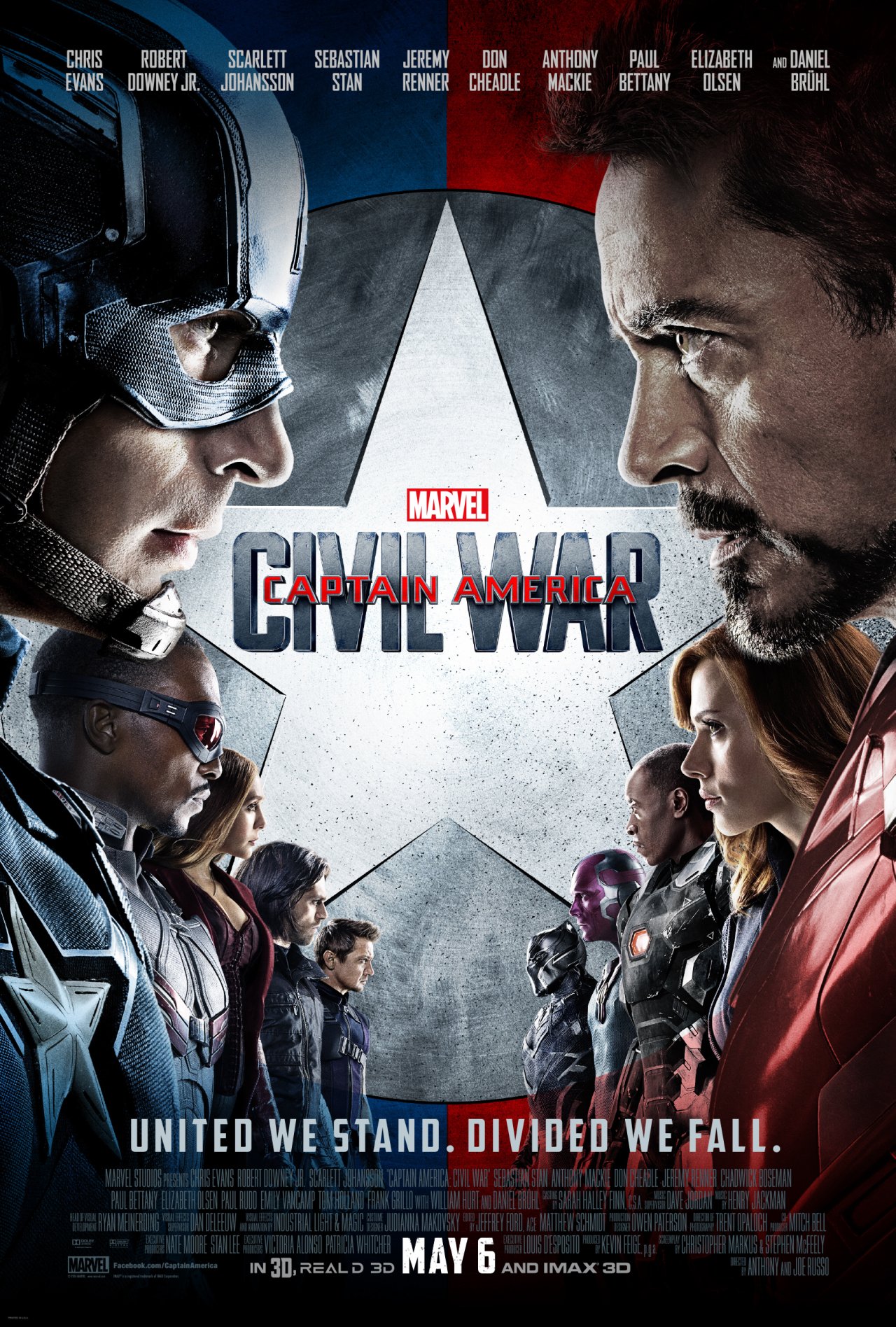
Captain America Civil War

D: Anthony Russo, Joe Russo / 147m

Cast: Chris Evans, Robert Downey Jr, Scarlett Johansson, Sebastian Stan, Anthony Mackie, Don Cheadle, Jeremy Renner, Chadwick Boseman, Paul Bettany, Elizabeth Olsen, Paul Rudd, Emily VanCamp, Tom Holland, Daniel Brühl, Frank Grillo, William Hurt, Martin Freeman, Marisa Tomei, John Kani, John Slattery, Hope Davis, Alfre Woodard

And so begins Phase 3 of the Marvel Cinematic Universe. Though the Marvel formula is pretty well established now, and is beginning to show through a little too often for comfort – Avengers: Age of Ultron (2015) disappoints more and more with repeated viewings, Ant-Man (2015) was fun but too married to the formula for its own good – the company that should finally give us the Spider-Man movie a lot of people have been waiting for, has cannily begun the process of dismantling and rebuilding the work it carried out in Phases 1 and 2. Having introduced us to the more well-known Marvel superheroes – Iron Man, Thor, the Hulk, Captain America etc. – over the next few years we’re going to meet several newer additions to the roster, so that by the time we get to Avengers: Infinity War Part II (2019), the Avengers will hopefully be comprised of a different set of superheroes.

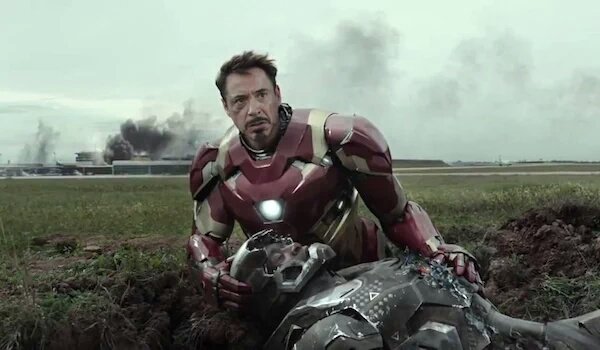
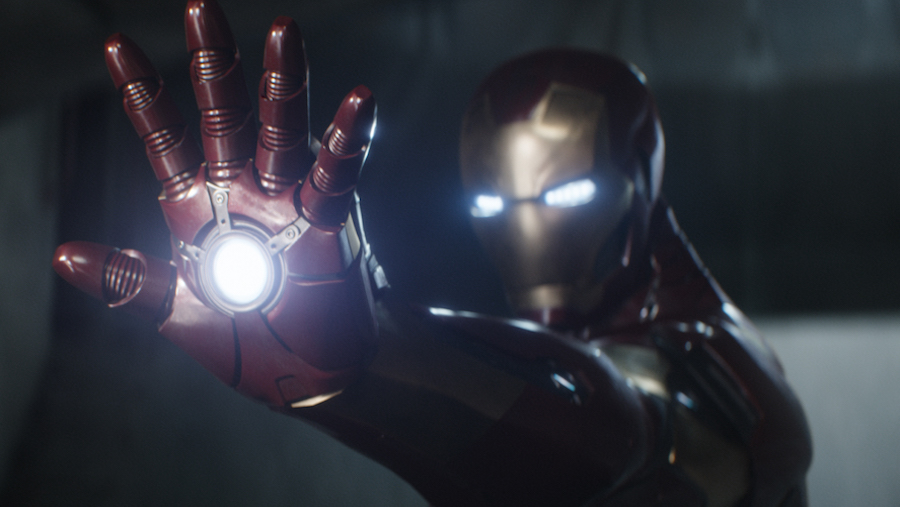
With that in mind, there’s a lot that needs to happen before then, and while Captain America: Civil War looks as if it’s the first step in getting there, and while it’s still the best Marvel movie this side of Guardians of the Galaxy (2014), Marvel are still playing it safe in terms of the characters – contrary to what you may have heard, all the main players survive in this movie – but they are trying to make things grittier and more true to life in relation to the characters’ relationships and feelings. Hence we have a falling out between Tony Stark (Downey Jr) and Steve Rogers (Evans) over whether or not the Avengers should be “policed” following the destructive events in Sokovia. Tony believes that their actions in the past have caused too much death and suffering (even though they’ve saved the world twice), while Steve feels that it shouldn’t be left up to anyone else but the Avengers as to where they go and who they stand up to; what if they’re not asked to go somewhere they should be?

CACW - scene2

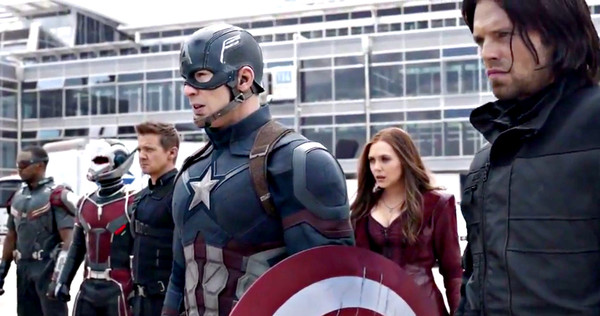
It all leads to the various core Avengers – except for an absent Thor and Bruce Banner – taking sides over the issue, and for each side to bring in back up when it’s clear that a showdown is inevitable. Meanwhile, as if things aren’t bad enough, Steve’s old friend and Winter Soldier, Bucky Barnes (Stan) is still on the run and apparently responsible for the bombing of a United Nations building that has taken the life of T’Chaka (Kani), the king of African nation Wakanda. His son, T’Challa (Boseman), swears to have his revenge on Barnes, and with Steve unwilling to give up on his friend, the battle lines are even more fiercely drawn. (T’Challa is one of the new characters, aka Black Panther, and will have his own movie in 2018.)

What it all boils down to is whether or not the Avengers should be autonomous or inducted into the world’s police force and used accordingly. There are good reasons on both sides for inclusion or exclusion but the interesting thing about the arguments put forward is that Tony’s are emotionally driven by his feelings of guilt over the numerous deaths that occurred in Sokovia, while Steve’s are still rooted in his past. Having fought against Hitler and Hydra both in World War II, Steve knows one thing for sure: if there’s evil to be faced and defeated, then you just do it. It’s a simple idea, but for Steve a very powerful one. And though the movie does its best to keep the narrative focused on this divisive idea, there’s a spanner in the works.

CACW - scene1

The “spanner” is this movie’s principal villain, Colonel Helmut Zemo (Brühl), who is operating in the background and using Barnes’ past to cause maximum distrust between Tony and Steve. He’s doing so for personal reasons, and credible ones at that, and they have a bearing on the division that threatens the future of the Avengers. Zemo may not be trying to destroy the world like Loki or Ultron, but it’s good to see a villain causing so much harm all by himself and without an army of aliens or robots to help him. Brühl puts in a good performance, and its one whose quiet determination isn’t overwhelmed by all the sturm und drang going on around him. But Zemo is also the device by which the Avengers reach their own accord, an uneasy truce if you like, but one that introduces a further interesting dynamic for future movies.

As for the other characters, and with so many to include, the script by Christopher Markus and Stephen McFeely rightly concentrates on the falling out between Tony and Steve, while doing its best to address and develop issues surrounding everyone else. There’s the tentative romance brewing between Vision (Bettany) and Scarlet Witch (Olsen) that has them on opposite sides (as well as Vision’s understanding of the Infinity Stone in his forehead), the return of General Thaddeus Ross (Hurt) as the man charged with bringing the Avengers into line, the various drawbacks encountered by Falcon (Mackie) and War Machine (Cheadle) as the sidekicks of Captain America and Iron Man respectively, Black Widow’s (Johansson) kick-ass yet conciliatory occupation of the middle ground when necessary, the return of Hawkeye (Renner) to make up the numbers on Cap’s side, and the return also of Scott Lang aka Ant-Man (Rudd) who provides much of the comedy that makes the airport confrontation so much fun.

As mentioned before, we’re introduced to one of Phase 3’s newer characters, Black Panther. Originally meant to have a much smaller role in Captain America: Civil War, Boseman’s portrayal is extremely good, and bodes well for his solo outing. The character’s place in the MCU is assured thanks to the way in which the script integrates his own personal mission of revenge into Tony’s attempts to achieve regulation of the Avengers. Neither a part of the Avengers or against them, Black Panther is a neutral figure in terms of the differences affecting them, and acts as a buffer for the audience by following his own path.

CACW - scene3

And then there’s the little matter of finally seeing Peter Parker aka Spider-Man in a Marvel movie – at last. With all due respect to Sam Raimi and Tobey Maguire, and Marc Webb and Andrew Garfield, in the space of roughly half an hour, the Russo brothers and the writers have given us the best Spidey yet seen on the big screen. Holland is terrific as the garrulous super-teen, nervous and perplexed in his meeting with Tony Stark, unabashedly starstruck in his set-to with Captain America et al. It’s an absolute joy to see him portrayed in this fashion, and for fans who stay to (almost) the very end, the caveat “Soider-Man will return” (a la James Bond) will be a welcome sight.

With this movie, Marvel has begun the next Phase of its assault on our hearts and minds and disposable incomes in such an enjoyable way that even though it’s not a movie that takes any real risks with either its characters or the storyline, it’s still a marked improvement on recent outings. The humour is there, the action/fight scenes are as inventive and thrilling as ever, and (some of) the characters are allowed to develop further, thereby consolidating our affection for them. It’s a huge juggling act, but here the writers and the Russo brothers have made such a good job of things that there are only minor gripes to be had, and those aren’t really worth mentioning. Where Guardians of the Galaxy raised the bar considerably for the MCU, Captain America: Civil War has just vaulted over it with accomplished ease.

Rating: 9/10 – while many may regard this as just Avengers 2.5, there’s more to Captain America: Civil War than meets the eye, and Marvel can be rightly proud of what they’ve achieved; as a stand-alone movie it works incredibly well, and as a part of the wider MCU it’s even more effective, being more tightly scripted and more efficiently directed than any other superhero movies out there at the moment – and yes, that does mean Batman v Superman: Dawn of Justice (2016).

Share this:

  • Click to share on X (Opens in new window) X
  • Click to share on Facebook (Opens in new window) Facebook
  • More
  • Click to print (Opens in new window) Print
  • Click to email a link to a friend (Opens in new window) Email
Like Loading...

Blog Stats

  • 486,582 hits

Recent Posts

  • 10 Reasons to Remember Bibi Andersson (1935-2019)
  • Fantasia (1940)
  • Dances With Wolves (1990) – The Special Edition
  • Kiss of the Spider Woman (1985)
  • The Three Musketeers (1973)

Top Posts & Pages

  • Lost for Life (2013) - Another Look
    Lost for Life (2013) - Another Look
  • Lost for Life (2013)
    Lost for Life (2013)
  • About
    About
  • Mr. Topaze (1961)
    Mr. Topaze (1961)
  • Winter's Tale (2014)
    Winter's Tale (2014)
  • Hunt for the Wilderpeople (2016)
    Hunt for the Wilderpeople (2016)
  • Shock and Awe (2017)
    Shock and Awe (2017)
  • Billy Lynn's Long Halftime Walk (2016)
    Billy Lynn's Long Halftime Walk (2016)
  • BFI London Film Festival 2015
    BFI London Film Festival 2015
  • A Brief Word About La La Land (2016)
    A Brief Word About La La Land (2016)
Follow thedullwoodexperiment on WordPress.com

Blogs I Follow

  • Rubbish Talk
  • Film 4 Fan
  • Fast Film Reviews
  • The Film Blog
  • All Things Movies UK
  • Interpreting the Stars
  • Let's Go To The Movies
  • Movie Reviews 101
  • TMI News
  • Dan the Man's Movie Reviews
  • Film History
  • Jordan and Eddie (The Movie Guys)

Archives

  • April 2019 (13)
  • March 2019 (28)
  • February 2019 (28)
  • January 2019 (32)
  • December 2018 (28)
  • November 2018 (30)
  • October 2018 (29)
  • September 2018 (29)
  • August 2018 (29)
  • July 2018 (30)
  • June 2018 (28)
  • May 2018 (24)
  • April 2018 (21)
  • March 2018 (31)
  • February 2018 (25)
  • January 2018 (30)
  • December 2017 (30)
  • November 2017 (27)
  • October 2017 (27)
  • September 2017 (26)
  • August 2017 (32)
  • July 2017 (32)
  • June 2017 (30)
  • May 2017 (29)
  • April 2017 (29)
  • March 2017 (30)
  • February 2017 (27)
  • January 2017 (32)
  • December 2016 (30)
  • November 2016 (28)
  • October 2016 (30)
  • September 2016 (27)
  • August 2016 (30)
  • July 2016 (30)
  • June 2016 (31)
  • May 2016 (34)
  • April 2016 (30)
  • March 2016 (30)
  • February 2016 (28)
  • January 2016 (35)
  • December 2015 (34)
  • November 2015 (31)
  • October 2015 (31)
  • September 2015 (34)
  • August 2015 (31)
  • July 2015 (33)
  • June 2015 (12)
  • May 2015 (31)
  • April 2015 (32)
  • March 2015 (30)
  • February 2015 (37)
  • January 2015 (39)
  • December 2014 (34)
  • November 2014 (34)
  • October 2014 (36)
  • September 2014 (25)
  • August 2014 (29)
  • July 2014 (29)
  • June 2014 (28)
  • May 2014 (23)
  • April 2014 (21)
  • March 2014 (42)
  • February 2014 (38)
  • January 2014 (29)
  • December 2013 (28)
  • November 2013 (34)
  • October 2013 (4)

Create a free website or blog at WordPress.com.

Rubbish Talk

Film 4 Fan

A Movie Blog

Fast Film Reviews

The Film Blog

The official blog of everything in film

All Things Movies UK

Movie Reviews and Original Articles

Interpreting the Stars

Dave Examines Movies

Let's Go To The Movies

Film and Theatre Lover!

Movie Reviews 101

Daily Movie Reviews

TMI News

Latest weather, crime and breaking news

Dan the Man's Movie Reviews

All my aimless thoughts, ideas, and ramblings, all packed into one site!

Film History

Telling the story of film

Jordan and Eddie (The Movie Guys)

Movie Reviews & Ramblings from an Australian Based Film Fan

Privacy & Cookies: This site uses cookies. By continuing to use this website, you agree to their use.
To find out more, including how to control cookies, see here: Cookie Policy
  • Subscribe Subscribed
    • thedullwoodexperiment
    • Join 481 other subscribers
    • Already have a WordPress.com account? Log in now.
    • thedullwoodexperiment
    • Subscribe Subscribed
    • Sign up
    • Log in
    • Report this content
    • View site in Reader
    • Manage subscriptions
    • Collapse this bar
 

Loading Comments...
 

    %d