• 10 Reasons to Remember…
  • A Brief Word About…
  • About
  • For One Week Only
  • Happy Birthday
  • Monthly Roundup
  • Old-Time Crime
  • Other Posts
  • Poster of the Week
  • Question of the Week
  • Reviews
  • Trailers

thedullwoodexperiment

~ Viewing movies in a different light

thedullwoodexperiment

Tag Archives: South America

The Night of the Wild Boar (2016)

07 Thursday Jun 2018

Posted by dullwood68 in Movies

≈ Leave a comment

Tags

Catalina Zahri, Drama, Fernando Kliche, Murder, Mystery, Novelist, Ramiro Tenorio, Review, South America, Thriller
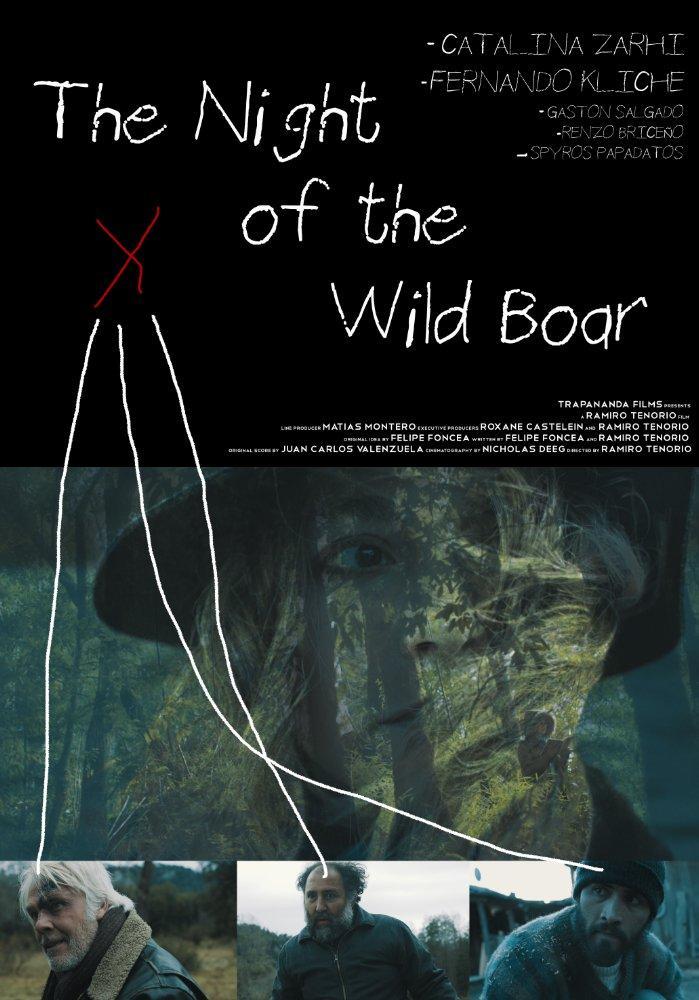
Original title: La noche del jabali

D: Ramiro Tenorio / 71m

Cast: Catalina Zahri, Fernando Kliche, Renzo Briceño, Gastón Salgado, Spyros Papadatos

A writer of romantic fiction, Claudia Moratti (Zahri), travels to the southern most area of South America, and the small town where her partner, the horror novelist Guillermo San Román (Papadatos), grew up. Guillermo’s novels were each inspired by a series of murders that took place in his home town, and specific details of the crimes were always included in his books. Claudia has come looking for answers to the question, did Guillermo commit the murders? The local police chief, Benno (Kliche), seems to think so, and is determined to find evidence that he did. Claudia begins her own investigation, looking through Guillermo’s novels and research materials, until she is faced with the serious possibility that he at least had a hand in the murders. The discovery of another body complicates matters as Guillermo has been dead for a year, having committed suicide. With suspicion falling on both Mario (Briceño), who looks after Guillermo’s home, and Sebastian (Salgado), who helps him, Claudia has to work out who is lying to her, and who is hiding a terrible secret. Things come to a head when she discovers materials in Sebastian’s home that point to him being the killer…
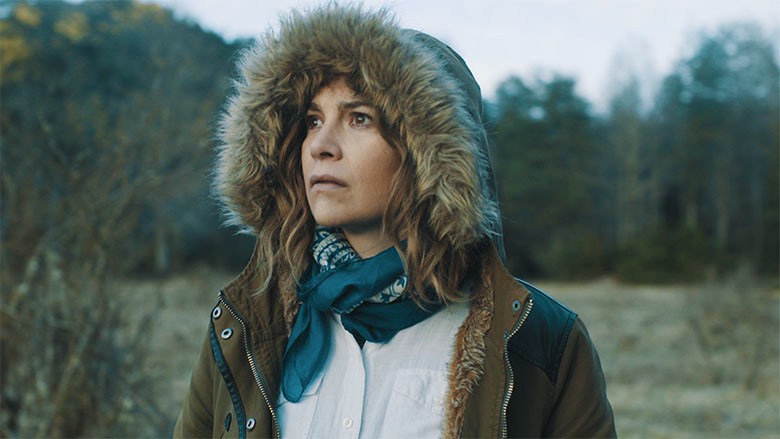
The debut feature of writer/director Ramiro Tenorio, The Night of the Wild Boar is that unfortunate beast, the poorly thought out thriller. It begins well, creating a vivid sense of mystery and a tainted atmosphere for its backdrop. Claudia’s arrival is met with the usual customary suspicion in these cases, with Mario offering her glowering looks, and Benno wasting no time in voicing his opinions about Guillermo’s likely guilt. It’s a strong set up, and even though there are few suspects, each – and including the police chief – appear to have their own fair share of secrets, and each of them could be the culprit. With Claudia feeling like she’s made a big mistake in going there, and her interactions with everyone adding further confusion to the notion of Guillermo’s possible guilt or innocence, Tenorio tightens the screws somewhat, making Claudia – and the audience – feel uncomfortable and more unsafe the more she finds out. But having done a fine job in setting up the central mystery, as well as introducing the suspects, Tenorio then goes ahead and spoils things by having Claudia find copies of Guillermo’s novels and his notes and his research – in his home.

At this stage – and bearing in mind these files have lain untouched for a year – Tenorio’s grip on the narrative begins to unravel, and further developments start to collapse in on one another as the script leads the way to the kind of overly melodramatic conclusion that tests the movie’s internal logic, and makes Claudia’s presence from the beginning entirely problematical. With a relatively short running time as well, the need to wrap things up neatly becomes paramount, but the answer to the mystery of the dead girls is awkward and unconvincing; it feels like a fait accompli. Visually, though, the movie is often lovely if a little gloomy to look at, and Nick Deeg’s cinematography highlights the rugged beauty of the area, while also providing the movie with a sense of unyielding claustrophobia that can feel unnerving. The performances are good, though hampered at times by the demands of the material, and Tenorio handles several tense scenes with aplomb, but remains unable to make up for the way in which the movie sheds any credibility it has built up in favour of a denouement that doesn’t make any sense when judged against what’s happened so far.

Rating: 5/10 – a movie with a lot of early promise that is abandoned thanks to an increasingly muddled script, and a couple of very bad directorial decisions, The Night of the Wild Boar could have been a solid, efficient little thriller; a decent premise finds itself wasted, while moments such as Claudia revealing a personal secret, or a cryptic conversation between Benno and Mario, only add to the confusion.

NOTE: The trailer below doesn’t have English subtitles, but it still provides a good sense of the movie’s atmospheric and slightly uncomfortable nature.
Share this:

  • Click to share on X (Opens in new window) X
  • Click to share on Facebook (Opens in new window) Facebook
  • More
  • Click to print (Opens in new window) Print
  • Click to email a link to a friend (Opens in new window) Email
Like Loading...

The Summit (2017)

17 Tuesday Oct 2017

Posted by dullwood68 in Movies

≈ Leave a comment

Tags

Argentina, Érica Rivas, Brazil, Chile, Dolores Fonzi, Drama, Mexico, Politics, Review, Ricardo Darín, Santiago Mitre, South America, Thriller

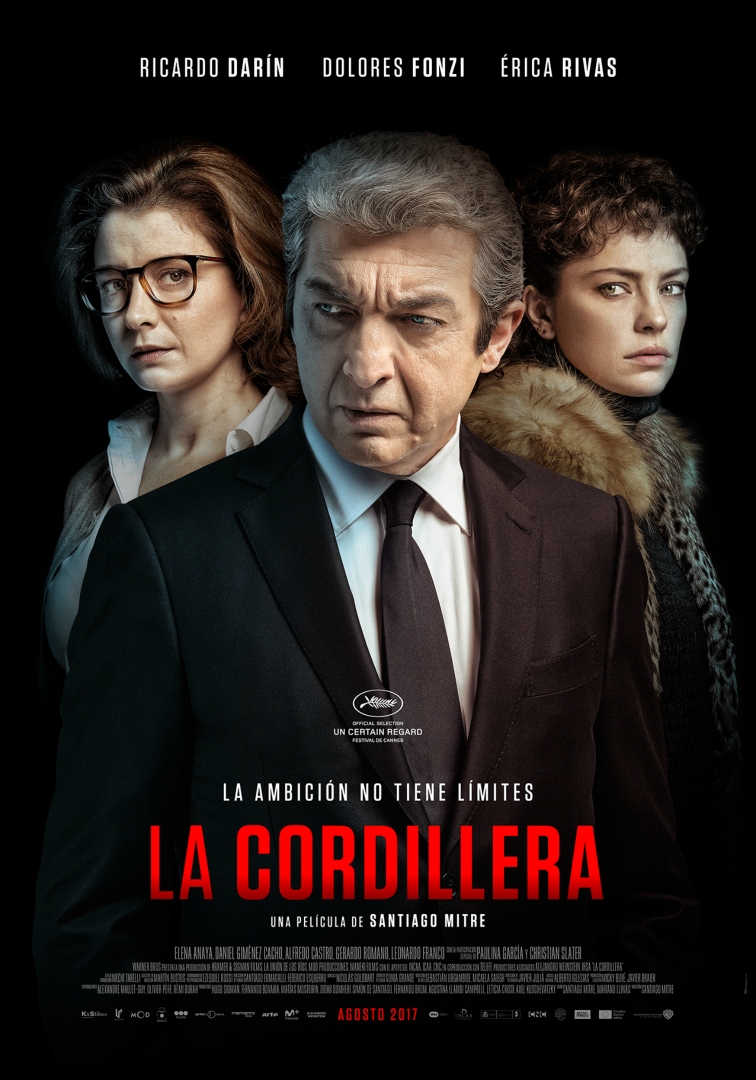
Original title: La cordillera

D: Santiago Mitre / 114m

Cast: Ricardo Darín, Dolores Fonzi, Erica Rivas, Gerardo Romano, Héctor Díaz, Daniel Giménez Cacho, Alfredo Castro, Paulina García, Leonardo Franco, Elena Anaya, Christian Slater

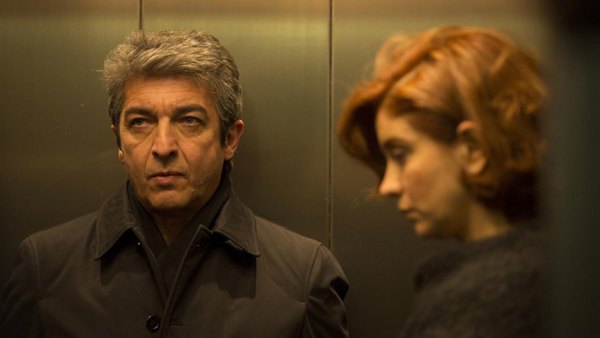
At the beginning of The Summit, one thing is made abundantly clear: that as Argentina’s recently elected President Blanco (Darín) is on the verge of travelling to Chile to take part in a summit arranged to discuss the setting up of a South American version of OPEC, there’s trouble waiting in the wings in the form of his son-in-law. Blanco may have been involved in a misappropriation of state funds before he became president. His team of advisors are worried about the possible repercussions if this knowledge becomes public, but with the summit just a day away, they decide to play a waiting game. Blanco makes one decision, though: he arranges for his daughter, Marina (Fonzi), to be brought out to the remote Andean hotel all the delegates are staying at. Perhaps she can provide some insight into her husband’s motives, even though they’re separated.

And so, the first of four separate plot strands is woven into place. Soon there will be the political machinations that go hand in hand with a number of countries all vying to get a large piece of the pie from assembling a mult-national oil conglomerate. Marina will suffer a breakdown that will reveal one of two things: a dark family secret, or a darker personal tragedy. And to wrap things up, Blanco will be put in a position that will make or break him as a hero of his country (this plot strand arrives a little late but it’s there nonetheless). It’s an ambitious mix of storylines, but stitched together awkwardly and with each strand causing problems for the others. Will Blanco be able to find a way out of the dilemma posed by his son-in-law? Will Marina’s breakdown bring her father’s presidency crashing down around his ears? Will Brazil, the guiding force behind the oil summit, get its own way at the expense of a better option? And will Blanco, faced with making a momentous decision that could backfire on him just as easily as it could be the making of him, survive everything that’s being thrown at him?

To answer all those questions, would inevitably, negate any reasons to watch this movie in the first place. But the answers themselves aren’t as compelling as they could have been. Without giving too much away, one answer can be guessed easily, another is resolved by an unexpected event, one could go either way, and the last is – very strangely – a mix of all three. As to which of those coded answers matches which plot strand, that would be telling, but it’s enough to also say that director Mitre and his co-screenwriter, Mariano Llinás, have attempted to tell a political drama that continually stops to explore the private lives of two of its main characters, and often forgets for long stretches that there’s even a summit going on (for the most part it seems as if the summit takes place for only an hour or so each day, such is the amount of time that Blanco has to deal with all the other issues that crop up).

Where it might have been a good idea to devote equal time and emphasis to all the various strands, and make them part of a slowly evolving (and involving) narrative, Mitre decides instead to concentrate on each one as if they were unconnected to each other. This leads to abrupt transitions of both tone and pacing, as when the summit is forgotten about in order for Marina’s breakdown to be explored in ever greater detail (and long enough for an Argentinian doctor (Castro) to be flown in to treat her). Likewise the arrival of Slater’s US government representative, which requires a hush-hush meeting with Blanco that again calls for him to be away from the summit for a length of time that in any other political thriller, would have the other delegates looking at him with dark suspicion. It’s at moments like these that Mitre seems unable to decide what’s more important: the basic set up of the summit, or the other stories he and Llinás have concocted in order to pad out the running time.

With its inelegant narrative that flits back and forth and never really lets the viewer get comfortable with what’s happening, The Summit has too many longueurs that bring it up sharply and require something of a kick start to get things moving again. Mitre also wants us to invest heavily in the relationship between Blanco and Marina, but thanks to the decision to take a side-step into psychological thriller territory, the issues each has with the other are allowed to be subsumed in a game of guess-the-truth, a game that could have been intriguing and more absorbing if it wasn’t dropped as soon as the movie needed too get back to the summit and wrap things up in a nice neat bow. Like a lot of the movie’s attempts at providing a probing, incisive narrative to draw in its audience, the end result provides instead a feeling that’s more akin to frustration than satisfaction.

Against all this, the cast struggle gamely with roles that often prove perfunctory, with even the usually dependable Darín unable to make much headway with a script that paints Blanco as a politician somewhat out of his depth on the world stage, and never really changes or challenges that assessment. As the daughter with a range of issues that every politican’s daughter seems to have, Fonzi does stary-eyed before emotion, and always seems half a beat behind where her character needs to be in any given scene. Rivas is good as the president’s loyal personal secretary, Cacho makes an impression as a Machiavellian Mexican president, and Anaya has a small role as a journalist who pops up here and there to ask “difficult” questions of the countries’ leaders. But the acting is often left to fend for itself at the expense of the material, and only Javier Julia’s crisp cinematography is allowed to furnish any respite from the dull stetches that hamper the movie’s ability to keep its audience from being truly engaged with it.

Rating: 6/10 – ponderous when it should be exciting, clumsy when it should be gripping, The Summit is an unfortunate title for a movie that never hits any creative heights, and which remains stranded at ground level throughout; somewhere in its screenplay are the makings of two, better, thrillers, but it’s unlikely now that we’ll ever see them, something that is more affecting by itself than the movie as a whole.

NOTE: The following trailer doesn’t have any English language subtitles, but it does give a good sense of the movie itself.

Share this:

  • Click to share on X (Opens in new window) X
  • Click to share on Facebook (Opens in new window) Facebook
  • More
  • Click to print (Opens in new window) Print
  • Click to email a link to a friend (Opens in new window) Email
Like Loading...

The Lost City of Z (2016)

24 Friday Mar 2017

Posted by dullwood68 in Movies

≈ 1 Comment

Tags

Adventure, Charlie Hunnam, Drama, Explorer, Hidden civilisation, Historical drama, James Gray, Perceval Fawcett, Review, Robert Pattinson, Sienna Miller, South America, Thriller, Tom Holland, True story

D: James Gray / 141m

Cast: Charlie Hunnam, Robert Pattinson, Sienna Miller, Tom Holland, Edward Ashley, Angus Macfadyen, Ian McDiarmid, Harry Melling, Franco Nero

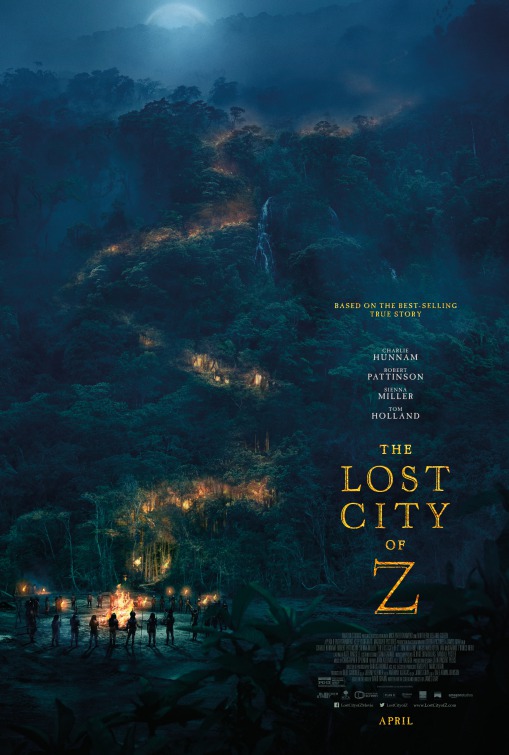
A throwback to the kind of big budget adventure stories made in the Seventies and Eighties, with location filming designed to heighten the events shown, The Lost City of Z concerns the efforts of military man turned explorer Perceval “Percy” Fawcett (Hunnam) to find a city he believes is hidden somewhere in the Amazonian jungle. Covering the years between 1905 and 1925, the movie introduces us to Fawcett the military man while he’s posted to Ireland, and finding it difficult to advance through the ranks thanks to what a senior officer refers to as, “an unfortunate choice in ancestors”. Good fortune arrives in the form of a secondment to the Royal Geographical Society, where he is asked to map an area of jungle on the Brazil-Bolivia border.

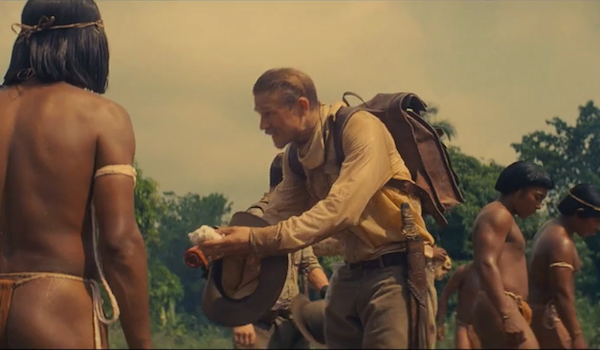
Fawcett accepts the commission, and finds himself in the company of fellow military men Henry Costin (Pattinson) and Arthur Manley (Ashley). While they carry out their task, Fawcett finds what he believes is evidence of an advanced civilisation that once existed within the jungle but which has remained, until now, undiscovered. When he returns to England, and presents his findings to the RGS, they and he are ridiculed, and the idea that the indigenous tribes are anything but “savages” is dismissed. Fawcett does, however, find an ally in RGS member James Murray (Macfadyen), who agrees to fund a further expedition in search of what Fawcett is calling “the lost city of Z”. And so in 1911, Fawcett, accompanied again by Costin and Manley, and with Murray in tow, returns to the Bolivian jungle.

The expedition, however, suffers a series of setbacks, from the loss of equipment to Murray’s inability to deal with the harsh, uncompromising environment. Forced to turn back despite Fawcett’s conviction that they are close to finding the lost city, the trio return home just as war in Europe breaks out. They find themselves fighting together in France, and during a push across the Somme in 1916, Fawcett falls victim to a chlorine gas attack and is temporarily blinded. Invalided out of the Army, Fawcett believes his exploring days are now behind him. That is, until his son, Jack (Holland), convinces him that they should travel together to Bolivia, and make one more effort to find the lost city. And so, in 1925, the pair set off into the jungle in an effort to prove once and for all that the fabled city and its ancient civilisation did exist.

Based on the book The Lost City of Z: A Tale of Deadly Obsession in the Amazon (2009) by David Grann, James Gray’s adaptation is sincere, meticulously researched, beautifully shot by Darius Khondji, engaging on a Boys’ Own adventure level, and yet, despite everyone’s best efforts, not as interesting to watch as it should be. The tale of Fawcett’s obsession should be strong, compelling stuff, but thanks to Gray’s adaptation covering such a long period of time, the movie suffers from being episodic, and as a result, feels hesitant in some scenes and overly confident in others. Gray handles the material well, but the narrative’s stop-start approach – something that Gray in both roles as screenwriter and director fails to find a solution for – means that it’s always difficult for the viewer to maintain interest in a story that, ultimately, isn’t going to lead anywhere.

If you already know the outcome of Fawcett’s third expedition to the Bolivian jungle, then this movie won’t necessarily be of interest. Having to wade through a succession of failures before this point, the movie does its best to make each disappointment and setback in Fawcett’s life part of a never-give-up, never-say-die attitude that drives the man forward, but the key word in Grann’s title – “obsession” – never really applies, and that’s partly due to Gray’s script, which never portrays Fawcett as passionate in his beliefs. It’s also due to Hunnam’s less-than-charismatic performance, one that will have viewers wondering why Costin and Manley stick with Fawcett for so long, and how he managed to attract backers for his second and third expeditions. Watching the movie, it gives the impression that the idea of a hidden civilisation in the Bolivian jungle is more enticing than the idea of Fawcett being the man to lead the search.

The expeditions themselves lack any tension, even when Fawcett and his companions encounter a tribe of cannibals, and though Gray shows an impressive capacity for framing the jungle scenes in such a way that they feel other-worldly, these sections of the movie go by without making as much of an impact as Gray was no doubt aiming for. There are also signposted moments that are straight out of Predictable Storytelling 101, such as when Fawcett holds a book up in front of his face and an arrow pierces it, stopping just inches away from hitting him. Or the moment where Murray demands an apology from Fawcett, and he agrees to do so, and then turns and apologises to Costin and Manley instead.

Also problematical is Fawcett’s relationship with his wife, Nina (Miller). She accepts his going to Bolivia in 1906, and is supportive of the trip. But when it comes time for the 1911 trip, Nina wants to go with him, and the pair have an awkward argument where Fawcett plays down her physical ability to make the journey there and back, and she argues that she has endured childbirth (twice by now) and if she can weather that particular experience then the jungle shouldn’t be any worse. Again, it’s an awkward exchange that feels out-of-place – and designed to give Miller something to do other than play the otherwise doting wife – and feels even more out-of-place when their oldest son, Jack, suggests a third trip and she agrees without so much as a murmur. Perhaps Gray felt the need to include a slice of proto-feminism amongst all the testosterone flying around, but if so, it’s not something that works.

By the time Fawcett and his eldest son get to Bolivia, viewers will probably be wondering how this is all going to pan out. Those in the know will find Gray’s choice of endings (technically, there are three) unlikely, overly poignant, and at odds with the tone of the movie thus far. That said, Gray does give Miller another chance to stand out from the overwhelmingly male cast, and while wish fulfilment is the order of the day, it sits uncomfortably with what we know of Fawcett and that last trip.

Overall, The Lost City of Z is a sterile drama that never hits any emotional highs and struggles to provide the audience with a sense of just how important Fawcett’s search for a hidden civilisation really was back in the Georgian era (or even if it was). There’s the usual degree of sexism sitting alongside the kind of blinkered attitudes that seem to define the period, and though Gray keeps the movie interesting on a visual level, with spectacular scenery and beautifully composed individual shots aplenty, it’s on a dramatic level that the movie fails to gain traction, becoming a succession of scenes that aim for a classic adventure feel, but which lack the depth to elevate it to such lofty heights. An adventure then, but one that offers scant reward for both its characters’ efforts, and the audience’s.

Rating: 6/10 – not as compelling or as rich in detail as viewers will need in order to gain maximum enjoyment from it, The Lost City of Z wastes its potential by making Fawcett’s “obsession” a strictly pedestrian affair; Gray delivers on the production side but can’t seem to work his magic on his own script or the cast, leaving the movie feeling like it’s always about to step up a gear while remaining steadfastly in neutral.

Share this:

  • Click to share on X (Opens in new window) X
  • Click to share on Facebook (Opens in new window) Facebook
  • More
  • Click to print (Opens in new window) Print
  • Click to email a link to a friend (Opens in new window) Email
Like Loading...

Poster of the Week – Megunica (2008)

16 Tuesday Dec 2014

Posted by dullwood68 in Movies

≈ Leave a comment

Tags

Blu, Movie poster, Poster of the week, South America

Megunica

Megunica (2008)

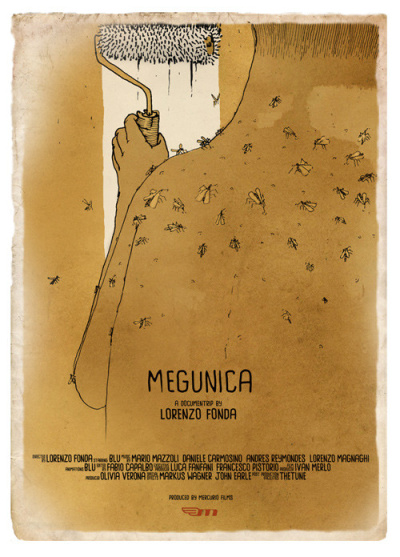
A documentary that follows the Italian artist Blu on a tour of South America, Megunica – the title is an amalgam of the countries visited: Mexico, Guatemala, Nicaragua, Costa Rica and Argentina – is represented by a poster that is literally a work of art. Designed and drawn by Blu, the fun here is in interpreting the image and what it might mean.

I say “fun” because this is a movie I haven’t seen, but the poster is so intriguing it’s already had me trying to locate a copy of Megunica so I can discover if the image is relevant to a sequence in the movie, or if it’s a stand alone piece that the makers felt would be fitting just for the poster. (This is what a really good poster should do: not be just part of a marketing exercise, but grab the attention and be fascinating enough to make someone want to see the movie it’s promoting, even – and especially – if it’s a movie they might not plan to see normally.)

When looking at the poster, two things spring to mind immediately. The first is the idea that the man we see painting a wall and covered in flies is somehow attempting to wipe the slate clean. With South America’s history of exploitation and corruption in mind, Blu’s painter could be trying to make the point that it’s time for change, a time to start over. If so, it’s a powerful statement, at once provocative and profound. The second possibility is that it’s a self-portrait, a representation of Blu himself, an artist known for his murals and graffiti work the world over. What better way to “introduce” him than as the focus of the poster, and doing what he does best?

Both ideas, of course, may be erroneous, but again, that’s part of the fun. The flies may be representative of the conditions where the movie was made, or a metaphor for  South American societies, or they could be “just” flies. But whichever notion is correct, or if they’re there for another reason entirely, the fact that this poster can prompt even this much debate is a triumph.

Agree? Disagree? Feel free to let me know (especially if you’ve seen the movie).

Share this:

  • Click to share on X (Opens in new window) X
  • Click to share on Facebook (Opens in new window) Facebook
  • More
  • Click to print (Opens in new window) Print
  • Click to email a link to a friend (Opens in new window) Email
Like Loading...

Blog Stats

  • 486,559 hits

Recent Posts

  • 10 Reasons to Remember Bibi Andersson (1935-2019)
  • Fantasia (1940)
  • Dances With Wolves (1990) – The Special Edition
  • Kiss of the Spider Woman (1985)
  • The Three Musketeers (1973)

Top Posts & Pages

  • Lost for Life (2013) - Another Look
    Lost for Life (2013) - Another Look
  • Lost for Life (2013)
    Lost for Life (2013)
  • About
    About
  • Mr. Topaze (1961)
    Mr. Topaze (1961)
  • Winter's Tale (2014)
    Winter's Tale (2014)
  • Hunt for the Wilderpeople (2016)
    Hunt for the Wilderpeople (2016)
  • Shock and Awe (2017)
    Shock and Awe (2017)
  • Billy Lynn's Long Halftime Walk (2016)
    Billy Lynn's Long Halftime Walk (2016)
  • Exposed (2016)
    Exposed (2016)
  • 5 Famous Movie Roles That Nearly Went to Someone Else
    5 Famous Movie Roles That Nearly Went to Someone Else
Follow thedullwoodexperiment on WordPress.com

Blogs I Follow

  • Rubbish Talk
  • Film 4 Fan
  • Fast Film Reviews
  • The Film Blog
  • All Things Movies UK
  • Interpreting the Stars
  • Let's Go To The Movies
  • Movie Reviews 101
  • TMI News
  • Dan the Man's Movie Reviews
  • Film History
  • Jordan and Eddie (The Movie Guys)

Archives

  • April 2019 (13)
  • March 2019 (28)
  • February 2019 (28)
  • January 2019 (32)
  • December 2018 (28)
  • November 2018 (30)
  • October 2018 (29)
  • September 2018 (29)
  • August 2018 (29)
  • July 2018 (30)
  • June 2018 (28)
  • May 2018 (24)
  • April 2018 (21)
  • March 2018 (31)
  • February 2018 (25)
  • January 2018 (30)
  • December 2017 (30)
  • November 2017 (27)
  • October 2017 (27)
  • September 2017 (26)
  • August 2017 (32)
  • July 2017 (32)
  • June 2017 (30)
  • May 2017 (29)
  • April 2017 (29)
  • March 2017 (30)
  • February 2017 (27)
  • January 2017 (32)
  • December 2016 (30)
  • November 2016 (28)
  • October 2016 (30)
  • September 2016 (27)
  • August 2016 (30)
  • July 2016 (30)
  • June 2016 (31)
  • May 2016 (34)
  • April 2016 (30)
  • March 2016 (30)
  • February 2016 (28)
  • January 2016 (35)
  • December 2015 (34)
  • November 2015 (31)
  • October 2015 (31)
  • September 2015 (34)
  • August 2015 (31)
  • July 2015 (33)
  • June 2015 (12)
  • May 2015 (31)
  • April 2015 (32)
  • March 2015 (30)
  • February 2015 (37)
  • January 2015 (39)
  • December 2014 (34)
  • November 2014 (34)
  • October 2014 (36)
  • September 2014 (25)
  • August 2014 (29)
  • July 2014 (29)
  • June 2014 (28)
  • May 2014 (23)
  • April 2014 (21)
  • March 2014 (42)
  • February 2014 (38)
  • January 2014 (29)
  • December 2013 (28)
  • November 2013 (34)
  • October 2013 (4)

Create a free website or blog at WordPress.com.

Rubbish Talk

Film 4 Fan

A Movie Blog

Fast Film Reviews

The Film Blog

The official blog of everything in film

All Things Movies UK

Movie Reviews and Original Articles

Interpreting the Stars

Dave Examines Movies

Let's Go To The Movies

Film and Theatre Lover!

Movie Reviews 101

Daily Movie Reviews

TMI News

Latest weather, crime and breaking news

Dan the Man's Movie Reviews

All my aimless thoughts, ideas, and ramblings, all packed into one site!

Film History

Telling the story of film

Jordan and Eddie (The Movie Guys)

Movie Reviews & Ramblings from an Australian Based Film Fan

Privacy & Cookies: This site uses cookies. By continuing to use this website, you agree to their use.
To find out more, including how to control cookies, see here: Cookie Policy
  • Subscribe Subscribed
    • thedullwoodexperiment
    • Join 481 other subscribers
    • Already have a WordPress.com account? Log in now.
    • thedullwoodexperiment
    • Subscribe Subscribed
    • Sign up
    • Log in
    • Report this content
    • View site in Reader
    • Manage subscriptions
    • Collapse this bar
 

Loading Comments...
 

    %d